Logo

Sharad Pawar Hospitalised In Pune, Condition Stable

NCP (SCP) chief Sharad Pawar was taken to Ruby Hall Clinic Hospital in Pune after some complaints of cough and difficulty in breathing. He was in Baramati.

Statesman News Service | New Delhi |

NCP founder president Sharad Pawar was admitted to Ruby Hospital in Pune for examination after he complained about a cough as well as chest congestion on Monday, but his condition is stable, doctors said.

Earlier, a team of doctors had gone to his residence at Govind Bagh in Baramati to examine him, after which he was hospitalised.

Speaking about his illness, Sharad Pawar-led NCP leader Rohit Pawar said, “I request all NCP workers not to come to the hospital. His condition is stable. There is no reason to worry. You should not come here. He has a slight cough. He will be kept here for a few days. He is not in the ICU but in a private room. We have all come to Ruby Hall Hospital regarding Pawar Saheb’s health, and Dr Abhijit Lodha there will inform all of us about Sharad Pawar’s condition,” Rohit Pawar said.

“Sharad Pawar has developed chest congestion due to physical exertion. We have done all the tests, and treatment is going on. Now his condition is stable. After the detailed test report comes, we will make any changes in the treatment, if needed. We cannot give any more information until the detailed test report is out. After the test report is out, we will decide what treatment to do or what changes to make. Everything else is stable. There is nothing to worry about. Pawar Saheb is now in a private room and not in the ICU. There is nothing to worry about now. He is talking normally,” Dr Lodha said in the evening.

On Monday, NCP founder Sharad Pawar’s daughter and party working president Supriya Sule shared an update on her father’s health, mentioning that Pawar is suffering from chest congestion and has been advised a five-day course of antibiotics.

She also expressed gratitude to the medical team treating her father and thanked everyone for the good wishes and support.

Supriya Sule posted on her Instagram account, “Baba has chest congestion. Need 5 days of antibiotics. Fortunately, all other viral parameters are normal. Thank you all for all your good wishes and support. Thank you from the bottom of my heart to all doctors”.

‘Project Hail Mary’ final trailer reveals emotional sci-fi journey with Ryan Gosling

The final trailer of Project Hail Mary gives a glimpse into a high-stakes space mission and a unique bond beyond Earth.

Statesman News Service | New Delhi |

The final trailer of the upcoming sci-fi film ‘Project Hail Mary’, starring Ryan Gosling, was unveiled during the Super Bowl, giving audiences a deeper look into a story that blends space survival with emotional connection, according to The Hollywood Reporter.

Also Read: ‘Disclosure Day’ trailer: Emily Blunt and Josh O’Connor in Spielberg’s new sci-fi film

From schoolteacher to space hero

Directed by Phil Lord and Chris Miller, the film is based on Andy Weir’s 2021 novel of the same name. Gosling plays Mark Grace, a former schoolteacher who unexpectedly finds himself chosen for a life-or-death space mission.

His task: travel to a nearby star system in a last attempt to save Earth.

An unlikely friendship beyond Earth

During the journey, Grace encounters an alien life form, whom he names Rocky. What begins as uncertainty slowly turns into a powerful bond, forming the emotional core of the film.

The trailer suggests that their friendship becomes crucial to the mission’s success.


View this post on Instagram


A post shared by Project Hail Mary (@projecthailmary)

A familiar creative team returns

The screenplay is written by Drew Goddard, who previously adapted Weir’s The Martian for the 2015 Ridley Scott film. That project earned Goddard an Academy Award nomination, as noted by The Hollywood Reporter.

Directors on emotion, humour, and hope

Speaking about the film, Lord described it as genre-breaking. “The movie is emotional, funny, and big. The stakes couldn’t be higher. I’ve never seen a great drama that didn’t make me laugh, or a great comedy that didn’t make me cry,” he said.

Miller added that the bond between Grace and Rocky is central to the story. “It’s about working together and what becomes possible when you do. We hope audiences leave the theatre feeling more hopeful than when they walked in.”

Lord and Miller’s return to direction

‘Project Hail Mary’ marks Lord and Miller’s return to feature film directing after nearly ten years. Their last film as directors was ‘22 Jump Street’ in 2014.

Since then, they have focused on producing, including the Oscar-winning ‘Spider-Man: Into the Spider-Verse’ franchise. They also briefly worked on ‘Solo: A Star Wars Story’ in 2017 before exiting the project.

Release date

The film is scheduled to release in theatres worldwide on March 20, backed by Amazon MGM Studios.


View this post on Instagram


A post shared by Project Hail Mary (@projecthailmary)

Also Read: Minions & Monsters Trailer: Gru’s little helpers go monster hunting in ‘Despicable Me’ spin-off | Release date out

BJD seeks faster execution of rail, NH, aviation infra projects in southern Odisha

The Opposition Biju Janata Dal (BJD) on Monday reiterated its demand before the Union government for the holistic development of southern Odisha, stating that the region’s growth is central to the state’s progress.

Statesman News Service | BHUBANESWAR |

The Opposition Biju Janata Dal (BJD) on Monday reiterated its demand before the Union government for the holistic development of southern Odisha, stating that the region’s growth is central to the state’s progress.

In a statement, the party urged the Centre to prioritize these infrastructure projects without further delay. Thus The roadmap for progress in this region hinges on three pillars like railways, National Highways, and Aviation.

For overall growth of the region, faster execution of Railway & NH projects across Ganjam, Gajapati, Kandhamal, Rayagada, Koraput, Nabarangpur, and Malkangiri is the need of the hour.

The party further urged the Centre for immediate commissioning of the Rangeilunda (Berhampur) Airport.

While Jeypore and Malkangiri airports are commissioned, they are plagued by infrequent schedules and cancellations; this must be rectified to ensure reliable connectivity, it pointed out.

The party further proposed exploring smaller airstrips in other southern districts to unlock the immense eco-tourism potential of the region.

Survey claims size of UP’s economy doubled from ₹13.30 lakh crore to ₹30.25

Uttar Pradesh became the first state of the country to present its own ‘Economic Survey’ report showcasing the pace of development and acceleration in industrialization.

MANOJ BHADRA | Lucknow |

Uttar Pradesh became the first state of the country to present its own ‘Economic Survey’ report showcasing the pace of development and acceleration in industrialization. The state’s contribution to the national economy has increased from 8.6 per cent in the year 2016-17 to 9.1 per cent in the year 2024-25.

According to the survey, “Developed India, Developed Uttar Pradesh @ 2047″ is not just a vision, but a visionary concept of economic self-reliance, social inclusion and administrative transparency. To achieve this goal, special attention will be given to investment, employment and sustainable development, along with priority will be given to digital economy, green energy and environmental balance. Youth will be made self-reliant by connecting them with skill development and startup schemes.”
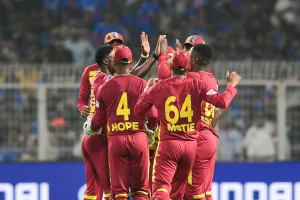
The survey was tabled in the state assembly on Monday after the Governor’s address by state Finance Minister Suresh Kumar Khanna.

“UP’s economy stands on a strong foundation. Balanced growth in agriculture, industry, and services has propelled the state to new heights. Social schemes have provided relief to the common man, and infrastructure projects have shaped its future,” the finance minister said.

The report says the size of UP’s economy has doubled from ₹13.30 lakh crore in 2016-17 to ₹30.25 lakh crore (3.25 lakh crore) in 2024-25, and is poised to reach ₹36 lakh crore in 2025-26.

“Once a state that investors shied away from, it now receives industrial investment proposals worth more than ₹50 lakh crore. Uttar Pradesh’s transparent policies, timely incentives, and the “Triple S” (Safety, Stability, Speed) guarantee have boosted investor confidence,” it claimed.

At the time of independence, Uttar Pradesh’s per capita income was equal to the national average, but it steadily declined to only 50.2% of the national average in 2014-15. In 2024-25, the per capita income ratio will reverse this declining trend and reach a historic 53.5%, and will continue its upward trend.

The state’s per capita income (net product per person) was ₹54,564 in 2016-17, doubling in eight years to reach ₹109,844 in 2024-25. Per capita income is projected to reach ₹120,000 for the 2025-26 fiscal year.

The state’s per capita income, based on gross domestic product (GSDP per capita), is projected to increase from Rs 61,142 in 2016-17 to Rs 1,26,304 in 2024-25.

As per the year 2024-25, the contribution of agriculture and allied sectors in the economy (GSDP) of Uttar Pradesh is 25.8%, industrial sector is 27.2% and service sector is 47 per cent.

The Survey said budget size increased two-fold in the last 19 years. The total budget of the state has been estimated at Rs. 8.33 lakh crore for the year 2025-26, registering an increase of Rs. 4.86 lakh crore in the period (nine years) from the budget of Rs. 3.47 lakh crore in the year 2016-17, whereas in the corresponding previous period from 2008-09 to 2016-17 (eight years), this increase was only Rs. 2.34 lakh crore.

The state’s capital outlay has more than doubled from ₹69.79,000 crore in fiscal 2016-17 to ₹147.72,000 crore in fiscal year 2024-25 . This increase clearly reflects the state’s development-oriented financial priorities.

Uttar Pradesh’s public debt-to-GDP ratio, which was 29.3 percent in 2016-17, is projected to decline to just 28.0 percent in 2024-25, significantly lower than the national average of 81.3 percent and the global average of 92.8 percent. This reflects the state’s fiscal stability and discipline.

UP’s State Own Tax Revenue has increased by almost two and a half times from Rs. 0.86 lakh crore in 2016-17 to Rs. 2.09 lakh crore in 2024-25.

Uttar Pradesh is a leading state in agricultural production – the state’s share in the production of food grains, wheat, paddy, sugarcane, potato, banana, mango, guava, amla, and mint is the highest at the national level.

In the last eight years, there has been an increase of 115.5% in fisheries, first position in the country with 33.6% in milk production, and 167% increase in egg production.

The total irrigated area in the state was 2.16 crore hectares in the year 2016-17, which has increased by 27.8 percent to 2.76 crore hectares in the year 2024-25, which shows a significant increase of about 60 lakh hectares.

The cropping intensity of the state, which was 162.7 percent in the year 2016-17, has increased by 31% to 193.7 percent in the year 2024-25, which is the result of the state’s irrigation expansion schemes, crop insurance, Digicrop survey and agricultural reform policies.

The sugar mills operating in the state crushed 956.09 million tons of sugarcane, producing 9.245 million tons of sugar. New sugar mills were established in Pipraich, Munderwa, and Ramala.

More than 44 sugar mills have been modernized, resulting in the creation of an additional crushing capacity of 125,000 (1.25 lakh) TCD and employment of over 10 lakh people.

The government has made record sugarcane price payments of over ₹3.04 lakh crore to sugarcane farmers since 2017. This payment is approximately ₹90,800 crore more than the combined sugarcane price payments of ₹2 lakh crore in the previous 22 years (from 1995 to 2017). Sugarcane price rates have been increased by ₹30 per quintal for the 2025-26 crushing season.

In the industrial sector investments have increased in industries such as electronics, defense production, textiles, and food processing; incentives worth ₹4,000 crore were paid through various schemes in 2025, boosting investor confidence and attracting them to industrial corridors and expressway projects.

While a total of 14,169 factories were registered under the Factories Act 1948 in the state in 2016-17, this number has more than doubled to 30,695 by November of the financial year 2025-26. This achievement is a strong testament to the state’s industrial progress and investment attraction.

The latest report of the Annual Survey of Industries shows that the state’s industries’ gross value added has increased significantly by 25 percent compared to the previous year. This growth rate not only ranks first among the country’s major states but is also more than double the all-India average growth rate (11.9 percent).

Exports more than doubled. In 2016-17, the state’s total exports amounted to ₹0.84 lakh crore, which more than doubled over the past eight years, reaching ₹1.86 lakh crore in 2024-25. In the 2025-26 fiscal year, a total of ₹1.31 lakh crore has been exported by November. This growth is a strong testament to the state’s manufacturing capabilities, policy-driven development, and presence in global markets.

Uttar Pradesh has made significant improvements, ranking fourth (behind Maharashtra, Tamil Nadu, and Gujarat) in the Export Preparedness Index 2024 released by the Government of India in January 2026, down from seventh in 2022. Uttar Pradesh ranks first among landlocked states in this index. This achievement is a testament to the state’s export potential and policy strength.

Uttar Pradesh Leads in Investment Attraction Uttar Pradesh signed MoUs worth Rs 294,255 crore at the World Economic Forum 2026, including in AI-ready data centres, food processing, renewable energy, waste-to-energy and defence manufacturing.

Uttar Pradesh is included in the top performer category ‘A-1’ in the 5th edition of ‘State Startup Ecosystem Ranking’ released by the Government of India.

The One District One Product (ODOP) scheme has distributed a total of Rs. 890.44 crore margin money from 2018-19 to December 2025, giving global recognition to local industries, thereby creating more than 3.22 lakh jobs.

Uttar Pradesh is moving towards trust-based governance, where a digital, transparent and investment-friendly environment ensures simplicity and speed in every investment at every stage from land to labour; integrated, fast and reliable governance is available through Nivesh Mitra, and deregulation reforms have made it a preferred investment destination.

Decoding Salman Khan’s presence at an RSS event

Bollywood superstar Salman Khan’s presence at an RSS centenary event in Mumbai on Saturday not only sparked widespread interest but also triggered a fierce political debate.

Vibha Sharma | New Delhi |

Bollywood superstar Salman Khan’s presence at an RSS centenary event in Mumbai on Saturday not only sparked widespread interest but also triggered a fierce political debate. While peers such as Akshay Kumar were also present, Khan, as a Muslim attending an event organised by a right-wing Hindu organisation, drew the maximum attention. Khan sat attentively as RSS chief Mohan Bhagwat lauded him as a youth icon, praising the way students emulate his style and highlighting the Bollywood superstar’s influence.

The controversy erupted when Shiv Sena (UBT) MP Sanjay Raut questioned whether Khan’s participation was driven by “coercion or conviction”. Accusing the RSS of anti-Muslim politics, Raut claimed the organisation was using Khan—a prominent Muslim figure—for optics, either to mask ideological biases or boost attendance. He also questioned whether the move represented genuine outreach or a desperate attempt to remain relevant amid shifting political winds.

Amid intense social media speculation and trolling, critics viewed it as an attempt to project Muslim inclusion, boost crowds, or counter the RSS’s Hindu nationalist image. Supporters, meanwhile, described it as a “sincere attempt at dialogue”. Khan remained silent, but the episode underscored India’s deepening cultural and political divides, amplifying debates around nationalism, identity, and secularism.

According to those familiar with the Sangh’s functioning, the aim of the event was to “reach out and involve those unfamiliar with RSS activities”. “Those familiar with the Sangh already understand its functioning and goals. The aim is to familiarise those who are not and broaden outreach, especially during the milestone year. Inviting film stars was part of that effort,” they said.

“Khan’s attendance was part of a high-profile public lecture series marking the organisation’s 100-year journey, featuring prominent and diverse figures such as film stars, scientists, and diplomats to encourage broader national dialogue on important issues. The idea was to present an authentic picture of the Sangh to the public while dispelling long-standing misconceptions.”

Led by Bhagwat, the series focuses on explaining the Sangh’s journey and its vision for nation-building, reaching out to diverse social segments and the international community to foster a sense of “belongingness”, and promoting social harmony and women’s leadership as pillars of India’s progress.

The RSS has also been pursuing structured engagement with Muslim communities for years, focusing on dialogue rather than proselytisation to reduce communal tensions through affiliates such as the Muslim Rashtriya Manch.

Jawaharlal Nehru Port Authority emerges winner at 41st in All India Major Ports Kabaddi Tournament at Paradip

The 41st All India Major Ports Kabaddi Tournament 2025-26 concluded on Monday at the Biju Convention Centre, Paradip, bringing to a close an action-packed three-day sporting event organised under the aegis of the Major Ports Sports Control Board.

Statesman News Service | Bhubaneswar |

The 41st All India Major Ports Kabaddi Tournament 2025-26 concluded on Monday at the Biju Convention Centre, Paradip, bringing to a close an action-packed three-day sporting event organised under the aegis of the Major Ports Sports Control Board.

Jawaharlal Nehru Port Authority emerged as the champions after an electrifying final, while Chennai Port Authority finished as Runners Up. Paradip Port Authority and Mumbai Port Authority jointly secured the 2nd Runners Up position.

The tournament witnessed spirited competition among seven teams representing major ports from across the country. Players showcased exceptional skill, teamwork, and sportsmanship throughout the matches.

The matches were marked by high-intensity raids, disciplined defence, and enthusiastic participation, drawing strong support from spectators and sports lovers. The event highlighted the enduring appeal of Kabaddi and the athletic excellence of port employees.

The valedictory ceremony was held in the evening in a celebratory atmosphere. P. L. Haranadh, IRTS, Chairman, Paradip Port Authority, graced the occasion as Chief Guest and presented trophies and medals to the winning teams. Congratulating the participants, he emphasized the importance of sports in promoting discipline, teamwork, and camaraderie among India’s maritime workforce.

T. Venu Gopal, Deputy Chairman, Paradip Port Authority, along with the office bearers of Gopabandhu Kreeda Sansad—H. S. Rout, President D. P. Sethy, Working President; and Dhuna Chandra Tarai, Secretary—were present on the occasion and felicitated the players, officials, and organisers for the successful conduct of the tournament.

By hosting the 41st All India Major Ports Kabaddi Tournament, Paradip Port Authority reaffirmed its commitment to employee welfare, physical fitness, and the promotion of sports culture. The tournament also provided a valuable platform for port employees from Chennai, Deendayal, Jawaharlal Nehru, Mumbai, New Mangalore, Visakhapatnam, and Paradip to strengthen bonds and promote national integration through sports. The event concluded on a high note, leaving behind a strong spirit of sportsmanship and lasting memories for all participants.

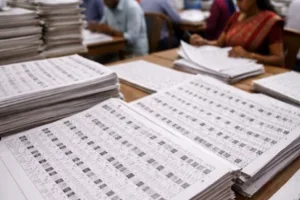
Bengal SIR: Will not allow any impediment, says SC; extends deadline by a week, issues showcause notice to DGP

“Whatever orders or clarification are required, we will issue. But we will not allow any impediment in SIR. This must be understood by all states,” the CJI remarked as both sides argued over the issue of appointment of ‘micro observers’.

Statesman News Service | NEW DELHI |

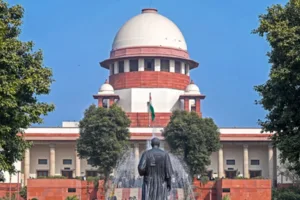
Chief Justice of India (CJI) Justice Suryakant on Monday stated that it will not allow any impediment in the Special Intensive Revision (SIR) of electoral rolls. He made the remarks during the hearing on a batch of petitions challenging the SIR exercise in West Bengal.

“Whatever orders or clarification are required, we will issue. But we will not allow any impediment in SIR. This must be understood by all states,” the CJI remarked as both sides argued.

Noting that the Chief Electoral Officer (CEO) had already written to the Chief Election Commissioner (CEC) seeking additional time to complete the hearing process, the top court extended the deadline for publication of the final electoral roll in West Bengal by one week.

Reiterating its January 19 directions, the apex court also issued additional directions. “Let the state government ensure all the 8505 officers whose list has been handed over in the court, report to duty to the district electoral officials/BROs at tomorrow by 5 PM.”

“The ECI shall have the discretion to replace the existing BRO/AEROs and use the services of officials who have now been placed on deputation with the ECI. Rest of the 8 officers/officials from the list of 8505, the ECI, after deep scrutinization of their bio data and work experience may shortlist these officials equivalent to strength of micro-observers already engaged. These state government officials may be imparted brief training for the purpose of providing assistance to the ERO/AEROs along with microobservers who have already been engaged.”

Showcause notice issued to the Bengal DGP

After ECI complained of vandalism, the Supreme Court issued showcause notice to the West Bengal Director General of Police (DGP). The court noted that it had directed the West Bengal police to maintain law and order and aid the ECI during the SIR exercise in its January 19 order.

The Bengal DGP was asked to give a personal affidavit explaining his conduct and why action was not taken on the Election Commission complaint of vandalism.

Earlier, the hearing began with the top court pulling up the lawyers of both sides for ‘not maintaining discipline’, and asked them to argue ‘one by one’. “If you people do not maintain discipline, then you know the nature of the chief justice. I will adjourn all the matters,” the court said.

Advocate Shyam Diwan, who appeared for West Bengal Chief Minister Mamata Banerjee, told the court that the state government has compiled the names of 8505 officers and sent the particulars to the ECI.

When the court pointed out that the state had given only the numbers and not the names, Diwan said that the names are compiled, district-wise and designation-wise, as your lordships have indicated.

When the court pointed out how does it matter if the micro observers are officials from other states, Diwan said, “These micro observers don’t know anything about the local culture and other aspects.”

The ECI, however, said that it has written five letters saying EROs are a quasi-judicial authority and that we need SDM, etc., but they gave only 64 like that, who can adjudicate and decide. The rest they gave on the basis of pay parity. Like engineers, etc.

“They are in no way conducted adjudicatory processes. They say officers worked in elections. But in SIR, they have to pass decisions that will be challenged in appellate forums. We need to know what work these 8,500 officers were doing,” the lawyer representing the poll panel said.

The petitioners, who also include West Bengal Chief Minister Mamata Banerjee, are seeking that the upcoming assembly elections in the state be held on the basis of the 2025 electoral rolls, citing the ground that there are several irregularities in the process, which may lead to mass disenfranchisement.

CM Banerjee, who had herself appeared in the court during the last hearing, has also flagged issues with the ‘logical discrepancy’ list published by the Eci. She claimed that people were served notices over minor name-spelling errors.

The Bengal CM had also raised objections to the ECI’s appointment of “micro-observers” for the SIR process. She alleged that the ‘micro-observers’ have been appointed from BJP-ruled states to deliberately keep certain voters out of the voter list.

The poll panel, however, argued that it had to appoint micro-observers since the State government did not cooperate with the process and spared its officers for the SIR work.

Excel Entertainment seeks compensation after Ranveer Singh exits ‘Don 3’

Excel Entertainment seeks compensation after Ranveer Singh exits Don 3, with losses estimated at Rs 40 crore, sources claim.

UNI | New Delhi |

Ranveer Singh and Excel Entertainment are reportedly embroiled in a major dispute following the actor’s exit from ‘Don 3’, with the disagreement escalating into a financial standoff estimated at Rs 40 crore, sources told Variety India.

Also Read: Dhurandhar makes history on Netflix: 7.6 million views in just 3 days surpass Animal, Fighter, Pushpa 2

Excel Entertainment cites major losses

According to multiple industry sources, Excel Entertainment has claimed that Singh’s departure led to substantial financial losses, including sunk development expenses and delays related to scheduling, planning, and other pre-production commitments.

Production reportedly put on hold

Variety India has also accessed a letter indicating that the production house has asked heads of various departments to seek work outside the project.

Compensation claim contested by Ranveer Singh

Sources said the banner believes Singh should compensate the company for the losses incurred. Singh, however, is said to be firmly contesting the claim and maintains that he is not liable to pay any amount.

Actor cites precedent from past exits

Individuals close to the actor said he has argued that he has exited projects in the past without facing similar compensation demands and that this case should not be treated differently.

Creative differences at the centre of dispute

Speaking on condition of anonymity, a source told Variety India, “Ranveer claims he left the project because he wasn’t happy with the script. He kept asking for changes to be made and didn’t like what the final draft read. Excel, on the other hand, claims that they went ahead with pre-production only after Singh gave his go ahead.”

Talks fail to reach resolution

The dispute was discussed during a two-hour meeting between Singh and representatives of Excel Entertainment last Friday, but the talks reportedly ended without resolution.

Insiders described the meeting as “contentious,” with both sides disputing accountability and financial responsibility for the project’s derailment.

Producers Guild steps in

As tensions continue to rise, the Producers Guild of India (PGI) has stepped in to mediate between the two parties in an effort to resolve the matter and prevent further escalation.

Also Read: ‘Dhurandhar 2: The Revenge’ teaser X (Twitter) reactions – fans say ‘chuna laga diya’ as video reuses part 1 montage

India records highest-ever tea exports in 2025 on strong demand from West Asia, China

India posted its highest-ever tea exports in 2025, driven by robust buying from West Asian markets such as Iran and Iraq, along with a sharp pickup in demand from China, according to provisional data from the Tea Board of India.

Statesman News Service | New Delhi |

India posted its highest-ever tea exports in 2025, driven by robust buying from West Asian markets such as Iran and Iraq, along with a sharp pickup in demand from China, according to provisional data from the Tea Board of India.

India exported 280.40 million kg of tea during the January-December 2025 period, up from 256.17 million kg in the same period a year earlier.

Export earnings also rose significantly to Rs 8,488.43 crore, compared with Rs 7,167.41 crore in January–December 2024.

Country-wise data sourced from the industry shows a notable increase in offtake from the UAE, Iraq and China, while shipments to Russia and the US declined.

Exports to Iraq surged to 52.59 million kg in 2025 from 40.47 million kg in the previous year. Shipments to the UAE rose to 50.71 million kg from 43.48 million kg.

Iran imported 11.25 million kg in 2025, up from 9.25 million kg in 2024, although industry sources note that a large share of tea destined for Iran is routed through the UAE, a key re-export hub.

The biggest surprise was China, where Indian tea exports jumped to 16.13 million kg in 2025, more than double the 6.24 million kg recorded in the same period last year.

In contrast, exports to the US declined to 15.21 million kg in 2025 from 17.14 million kg in 2024.

However, industry participants remain optimistic that the proposed India–US trade deal could significantly boost volumes going forward.

While the Trump administration’s November decision to exempt food items, including tea, was seen as positive, the sector faced disruptions for several months, tempering near-term gains.

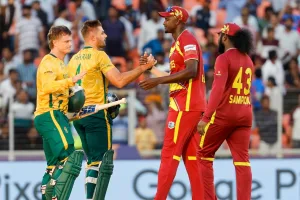
T20 World Cup 2026: Scotland bounce back with 73-run win over debutants Italy in Group C

Batting first, Scotland posted a tournament-high 207/4, the first 200-plus total of the competition and the first time an associate nation has crossed the 200-run mark in a Men’s T20 World Cup.

Statesman News Service | New Delhi |

Scotland registered their first win in Group C of the ICC Men’s T20 World Cup with a commanding 73-run victory over debutants Italy at the Eden Gardens on Monday.

Batting first, Scotland posted a tournament-high 207/4, the first 200-plus total of the competition and the first time an associate nation has crossed the 200-run mark in a Men’s T20 World Cup. George Munsey led the charge with a superb 84 off 54 balls, while Brandon McMullen struck 41 and Michael Leask provided a late flourish with 22 not out.

In reply, Italy’s chase never gathered momentum as they were bowled out for 134 in 16.4 overs, with Michael Leask returning figures of 4/17 and Mark Watt picking up 2/24.

Scotland captain Richie Berrington praised his side’s all-round performance and the importance of the win after their previous defeat to West Indies.

“It’s really important for us to bounce back strong today. Getting that first win was crucial. Two hundred on that was a good score on a very good wicket,” Berrington said.

He highlighted Munsey’s impact at the top of the order, adding:

“He is such an important player for us. He’s a hard batsman to bowl to when he gets going. That partnership gave us the platform to accelerate later.”

Berrington was also pleased with Scotland’s improved death-overs execution and disciplined bowling.

“It was really pleasing to see after the previous game. We nailed that phase today. The bowlers stuck to their plans and getting early wickets really put us on the front foot.”

Looking ahead to their clash against England, Berrington said familiarity with conditions would help:

“It’s great we’ve had two outings here at Eden Gardens. We’ll enjoy this win and prepare for England.”

Scotland innings

After being sent in to bat, Scotland built a strong foundation through Munsey and Michael Jones, who added 126 runs for the first wicket. Munsey struck 13 fours and two sixes in his fluent knock, while Jones contributed 37 off 30 balls.

Following their dismissals, McMullen and skipper Richie Berrington maintained the momentum, before Leask smashed 22 runs in the final over to propel Scotland past the 200 mark. Ali Hasan was Italy’s standout bowler, finishing with 1/21, including a tight 19th over.

Italy chase

Chasing 208, Italy suffered an early setback as Justin Mosca was dismissed for a golden duck. JJ Smuts (22 off 11) and Anthony Mosca (13) provided brief resistance, but wickets fell regularly.

The Manenti brothers offered the only significant fightback, with Harry Manenti scoring 37 off 25 balls and Ben Manenti top-scoring with 52 off 31 balls, including five fours and a six. However, once the duo fell, Italy collapsed rapidly, losing their remaining wickets cheaply to be dismissed for 134.

Leask starred with the ball, while Watt, Brad Currie, Brad Wheal and Oliver Davidson applied sustained pressure throughout the innings.


Govt: Trade deal unlocks US market for exports across key sectors

The government on Monday claimed the India–US trade agreement marks a major milestone in India’s global trade engagement, securing sustained preferential access for Indian exports in the US market valued at over USD 30 trillion.

Statesman News Service | New Delhi |

The government on Monday claimed the India–US trade agreement marks a major milestone in India’s global trade engagement, securing sustained preferential access for Indian exports in the US market valued at over USD 30 trillion.

The agreement delivers comprehensive tariff rationalisation, zero-duty access across large product categories, enhanced digital and technology cooperation, and a carefully calibrated framework to safeguard India’s farmers, MSMEs, and domestic industry.

With India’s total exports to the US standing at USD 86.35 billion in 2024, the agreement significantly enhances competitive access across key sectors, including textiles, leather, gems and jewellery, agriculture, machinery, home décor, pharmaceuticals, and technology-driven industries.

An official press note explained that the Reciprocal Tariffs (RTs) were earlier as high as 50 per cent on several Indian products. These have now been substantially reduced. Of the total exports, USD 40.96 billion were subject to Reciprocal Tariffs.

Under the agreement, tariffs on USD 30.94 billion of these exports have been reduced from 50 per cent to 18 per cent , while tariffs on another USD 10.03 billion have been reduced from 50 per cent to zero. This means a substantial share of Indian goods entering the US market will now face sharply lower tariffs or completely duty-free access, significantly improving price competitiveness.

Additional structural duty relief ensures zero reciprocal duty access for USD 1.04 billion under the exemption category. Within this, agricultural products valued at USD 1.035 billion have been assured zero Reciprocal Tariffs by the US. This provides stability and predictability for Indian agricultural exporters and ensures that key farm products continue to enjoy uninterrupted market access.

Additional Structural Duty Relief assures zero reciprocal duty for USD 28.30 billion under Section 232 (end-use basis). For these products, additional duties that earlier could go up to 50 per cent have been reduced to zero.

The press note said the agreement creates a clear tariff differential in favour of India. While duties on Indian products have been lowered, several competing suppliers continue to face elevated tariffs in the U.S. market, including China (35 per cent), Vietnam (20 per cent), Bangladesh (20 per cent), Malaysia (19 per cent), Indonesia (19 per cent ), Philippines (19 per cent), Cambodia (19 per cent ) and Thailand (19 per cent ).

This tariff differential significantly enhances India’s price competitiveness, strengthens its relative positioning in the US market and expands export opportunities across labour-intensive industries, manufacturing segments and high-value product categories.

Tariffs on textile exports have been reduced from 50 per cent to 18 per cent, while silk receives 0 per cent duty access, opening enhanced opportunities in the US market valued at USD 113 billion.

Major export categories benefiting from the reduced tariff structure include readymade garments, carpets, man-made textiles, cotton textiles, artificial staple fibres, bedspreads, bleached fabrics, curtains, yarn, baby clothing, bed linen, blankets, gloves and related products.

The agreement is expected to provide a significant boost to the textile sector, leveraging economies of scale and strengthening small businesses and production clusters.

India maintains a trade surplus of USD 1.3 billion in agricultural trade with the US, with exports of USD 3.4 billion and imports of USD 2.1 billion in 2024.

The US will apply zero additional duty on Indian exports worth USD 1.36 billion. Beneficiary products include spices; tea and coffee and their extracts; copra and coconut oil; vegetable wax; nuts such as areca nuts, Brazil nuts, cashew nuts and chestnuts; fruits and vegetables including avocados, bananas, guavas, mangoes, kiwis, papayas, pineapples shitake, and mushroom; cereals such as barley and canary seeds; bakery products; cocoa, and cocoa preparations; sesame and poppy seeds; and processed products such as fruit pulp, juices and jams.

Within this, agricultural products valued at USD 1.035 billion have been assured zero Reciprocal Tariffs to avoid uncertainty, providing stability and predictability to Indian farmers and exporters.

Healthy routine is the right of every citizen: UP CM Yogi

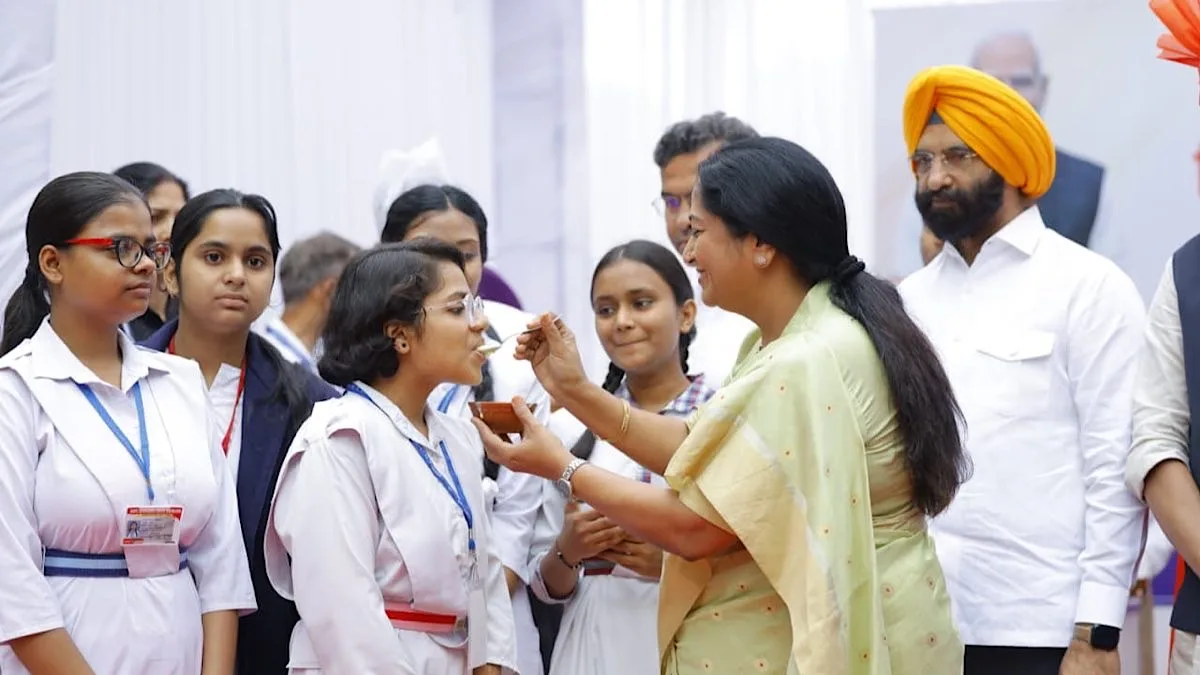
Uttar Pradesh Chief Minister Yogi Adityanath inaugurated a health camp at the Vidhan Bhavan before the commencement of the Budget Session on Monday.

Statesman News Service | Lucknow |

Uttar Pradesh Chief Minister Yogi Adityanath inaugurated a health camp at the Vidhan Bhavan before the commencement of the Budget Session on Monday. The camp was organised for the members of the Legislative Assembly and Legislative Council.

Health check-ups are being conducted by doctors from the KGMU. On the occasion of the inauguration, the Speaker of the Assembly, Deputy Chief Ministers, Ministers, and public representatives also underwent health check-ups.

The Chief Minister stated, “During the Budget Session, the Department of Health and Medical Education has organised this camp for the health examination of all members of the Uttar Pradesh Legislature. The camp will also serve the convenience of the honourable members and others”.

The Chief Minister emphasised that a healthy routine should be the right of every citizen. The government is working with full commitment in this regard. The Chief Minister advised members to pay special attention to their health despite all ups and downs.
He added that every member should maintain a stress-free and open lifestyle, as this will help keep diseases away.

The Chief Minister added, “Every person’s opinion is important. When leaders talk about development, doctors talk about health, and experts in their respective fields discuss their subjects, it creates a positive impact on the general public”. He urged all members to take advantage of this facility.

Deputy Chief Minister and Health Minister Brajesh Pathak expressed gratitude to everyone. During the inauguration of the health camp, Assembly Speaker Satish Mahana, Chairman of the Legislative Council Kunwar Manvendra Singh, and Deputy Chief Minister Keshav Prasad Maurya were present.

Cabinet Ministers Suresh Khanna, Swatantra Dev Singh, Rakesh Sachan, Horticulture Minister Dinesh Pratap Singh, Ministers of State Mayankeshwar Sharan Singh and Baldev Singh Aulakh, KGMU Vice-Chancellor Prof. Sonia Nityanand, and SGPGI Director R K Dhiman, were among those who participated in the camp.

Stalin inaugurates Tata’s JLR passenger vehicle facility & flags off first unit in TN

Inaugurating the Tata Motors Jaguar Land Rover (JLR) manufacturing facility at Panapakkam in Ranipet district, Chief Minister MK Stalin on Monday also flagged off the first unit rolled out from the factory.

Statesman News Service | Chennai |

Inaugurating the Tata Motors Jaguar Land Rover (JLR) manufacturing facility at Panapakkam in Ranipet district, Chief Minister MK Stalin on Monday also flagged off the first unit rolled out from the factory.

The Chief Minister also took a test drive of the vehicle on the occasion. The state government says that this JLR assembling facility, established at a cost of Rs 9000 crore, will provide employment to 5000 people. With this facility turning operations, Tata Motors is looking to strengthen JLR in the market for luxury vehicles.

Commissioned in late 2024 pursuant to an MoU signed with the Tamil Nadu government, the facility, located at the SIPCOT Industrial complex, will supplement the assembly operations at the Chakan plant near Pune in Maharashtra.

According to company sources, capacity as well as expansion constraints at other facilities, including Chakan, were the reasons for the Panapakkam unit, which is ideally located closer to the Chennai port for export and domestic distribution.

Demand for the Land Rover models continues to be on the rise in India, while Jaguar production has slowed down. With sustainability-linked production practices, the Panapakkam manufacturing facility, spread over 470 acres of the 1200-acre SIPCOT complex, will run on 100 per cent renewable energy, maintain company sources. Annual production is expected to be raised in phases to reach 25,000 units.

Tamil Nadu Industries Minister TRB Raaja, Tata Group chairperson N Chandrasekaran and senior executives of the company were present on the occasion.

UP Assembly witnesses uproar during Governor’s address on opening day of Budget Session

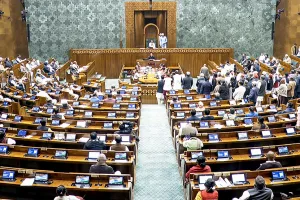
The Uttar Pradesh Assembly witnessed a loud uproar during Governor Anandiben Patel’s address on the opening day of the Budget Session of the state legislature on Monday.

Statesman News Service | Lucknow |

The Uttar Pradesh Assembly witnessed a loud uproar during Governor Anandiben Patel’s address on the opening day of the Budget Session of the state legislature on Monday.

Amid sloganeering by Opposition members and shouts of “Go Back Governor,” the address by Governor Anandiben Patel continued for nearly 30 minutes, though little of it could be heard in the House.

Opposition MLAs raised slogans over issues such as inflation, unemployment, SIR and the UGC.

As the disruption intensified, the Governor briefly interrupted her speech and urged Samajwadi Party (SP) MLAs to maintain calm, remarking that continued shouting would only make their throats sore. After concluding her address, Governor Patel was escorted out of the House by Speaker Satish Mahana and Chief Minister Yogi Adityanath.

Chief Minister Yogi Adityanath later condemned the Opposition’s conduct during the Governor’s address.

“The House runs on dialogue, not disruption of proceedings. The government believes in resolving issues through dialogue. We are ready to answer the questions of every member, but proceedings should not be disrupted,” he said.

Deputy Chief Minister Keshav Prasad Maurya alleged that the SP was protesting out of frustration, stating, “The SP has no issues. That is why they are frustrated.”

However, Leader of the Opposition and senior SP leader Mata Prasad Pandey defended the protest, saying, “The Governor read out the lies of the BJP, which forced us to protest.” He added that the Opposition had raised public issues before the Governor to make her aware of the real situation of the state and its people.

Meanwhile, in her address to the legislature, Governor Anandiben Patel presented a detailed account of Uttar Pradesh’s development journey, good governance initiatives, and achievements. She claimed that nearly six crore people in the state had been lifted out of poverty and that the policy of zero tolerance had significantly improved the law-and-order situation.

Moody’s projects India’s GDP growth at 6.4% in FY27; Fastest among G-20 economies

Moody’s Ratings on Monday projected India’s real GDP to grow at 6.4 per cent in fiscal year 2026–27, the fastest pace among G-20 economies, supported by strong domestic consumption, policy measures, and a stable banking system.

Statesman News Service | New Delhi |

Moody’s Ratings on Monday projected India’s real GDP to grow at 6.4 per cent in fiscal year 2026–27, the fastest pace among G-20 economies, supported by strong domestic consumption, policy measures, and a stable banking system.

Moody’s said Indian banks’ asset quality will remain resilient, although some stress may persist among micro, small, and medium enterprises (MSMEs).

In its banking system outlook report, it added that banks have sufficient reserves to absorb potential loan losses.

The ratings agency said the operating environment for banks will remain strong in 2026, backed by robust macroeconomic conditions and ongoing structural reforms.

“We forecast India’s real GDP will grow 6.4 per cent for fiscal 2026–27, the fastest pace among G-20 economies, driven by strong domestic consumption and policy measures,” Moody’s said.

It noted that the rationalisation of the goods and services tax (GST) in September 2025, along with an earlier increase in personal income tax thresholds, will improve affordability for consumers and support consumption-led growth.

Moody’s FY27 growth projection is lower than the 6.8–7.2 per cent range estimated by the Finance Ministry in the Economic Survey tabled in Parliament last month.

According to official estimates, India is expected to grow by 7.4 per cent in the current fiscal year (2025–26), compared with 6.5 per cent growth in 2024–25.

On monetary policy, Moody’s said that with inflation under control and growth momentum remaining strong, the Reserve Bank of India (RBI) is likely to ease policy further in fiscal 2026–27 only if there are clear signs of an economic slowdown.

The agency expects system-wide loan growth to accelerate slightly to around 11–13 per cent in fiscal 2026–27, compared with 10.6 per cent growth recorded so far in fiscal 2025–26.

“Corporate loan quality will remain healthy, supported by strong balance sheets and improved profitability among large companies,” Moody’s said, adding that recoveries are likely to taper as banks have already resolved most stressed loans of large corporates.

Moody’s also said banks will maintain strong capitalisation, supported by internal capital generation keeping pace with asset growth. Banks’ funding and liquidity positions are expected to remain stable, with loan growth broadly aligned with deposit growth.

“We continue to expect the government to provide strong support for banks in times of need,” the report added.

Punjab Vigilance Bureau nabs 11 people red-handed in 8 bribery cases during January

Punjab Vigilance Bureau (VB), during its ongoing crusade against corruption in the state, apprehended 10 government officials and one private individual red-handed while accepting bribes in eight different trap cases in January.

Statesman News Service | Chandigarh |

Punjab Vigilance Bureau (VB), during its ongoing crusade against corruption in the state, apprehended 10 government officials and one private individual red-handed while accepting bribes in eight different trap cases in January.

Disclosing this here on Monday, an official spokesperson of the State Vigilance Bureau said that the VB has intensified its efforts to eradicate corruption among public servants and others across all spheres.

He informed that during the last month, the Bureau submitted challans in 24 vigilance cases in various competent courts. In addition, four vigilance inquiries were also registered to thoroughly probe allegations of corruption. He further added that 12 criminal cases were registered against 16 accused people, including 11 government employees.

Giving further details, the spokesperson said that different competent courts decided seven bribery cases filed and contested by the Bureau during the month. In these cases, 11 persons were convicted and sentenced to imprisonment ranging up to four years, along with fines ranging from Rs 10,000 to Rs 50,000.

Cybersecurity tops risk agenda for Indian businesses: FICCI-EY Survey

Cybersecurity breaches and attacks have emerged as the single biggest risk, with 51 per cent of senior leaders identifying it as their primary concern, according to the FICCI-EY Risk Survey 2026: Risk Outlook – A Compass to India’s Risk Landscape.

Statesman News Service | New Delhi |

Cybersecurity breaches and attacks have emerged as the single biggest risk, with 51 per cent of senior leaders identifying it as their primary concern, according to the FICCI-EY Risk Survey 2026: Risk Outlook – A Compass to India’s Risk Landscape.

The survey, which draws insights from senior leaders across sectors, highlights how growing pressures across technology, governance, and workforce issues are reshaping business priorities and placing risk management at the core of strategy.

As many as 51 per cent of respondents identified cybersecurity threats as the top risk, underscoring rising concerns around data protection, operational continuity and reputational damage.

This was closely followed by changing customer demands and expectations, cited by 49 per cent of respondents, while 48 per cent pointed to geopolitical events as a key factor influencing business performance.

The survey reveals that technology risk is now deeply intertwined with business continuity. Around 61 per cent of respondents said rapid technological change and digital disruption are impacting their competitive position, while an equal proportion flagged cyber-attacks and data breaches as major financial and reputational threats. More than half of the respondents (57 per cent) reported risks related to potential data theft and insider fraud, and 47 per cent acknowledged difficulties in addressing increasingly sophisticated cyber threats.

Artificial intelligence has emerged as a dual-edged risk. While 60 per cent of respondents believe inadequate adoption of emerging technologies, including AI, could negatively affect operational effectiveness, 54 per cent expressed concern that AI-related risks such as ethical challenges and weak governance are not being effectively managed.

Climate change and ESG-related risks are also gaining prominence. Nearly 45 per cent of respondents cited financial impacts due to climate change as a critical risk to their operations in India.

Additionally, 44 per cent believe non-compliance with ESG disclosure mandates could have significant consequences, while 42 per cent raised concerns about the effectiveness of board oversight on ESG issues.

Operational resilience remains under pressure as companies face a wider and faster-evolving risk landscape.

Supply chain disruptions were identified as a concern by 54 per cent of respondents, while 56 per cent flagged physical events and 52 per cent cited ineffective real-time crisis management as major threats to business continuity.

Talent and culture risks are undergoing a significant reset. The survey shows that 64 per cent of respondents believe talent shortages and critical skill gaps could affect organisational performance. Weak succession planning was cited by 59 per cent as a risk to stability, while 41per cent highlighted ambiguity around remote and hybrid working models as a challenge to corporate culture.

On the regulatory front, 67 per cent of respondents agreed that regulatory changes require urgent attention.

However, 40 per cent said their compliance frameworks struggle to keep pace with evolving regulations, and 39 per cent pointed to gaps in technology, budget, or resources as constraints in managing compliance demands.

Overall, the survey underscores that Indian organisations are grappling with an increasingly complex risk environment, where technology, talent, climate, and regulation intersect, making integrated and proactive risk management more critical than ever.