Logo

Colombia military plane crash: 66 dead as Lockheed Martin-built C-130 goes down; cause under probe

The death toll in a Colombian military plane crash has risen sharply, with dozens still missing as rescue teams continue operations and authorities investigate the cause.

Statesman News Service | New Delhi |

The death toll from a Colombian military aircraft crash in the southern Putumayo region has risen to 66, with dozens still unaccounted for, officials said.

The Lockheed Martin-built C-130 Hercules transport aircraft was carrying 114 passengers and 11 crew members when it went down shortly after takeoff from Puerto Leguizamo, near the Peru border.

Search continues, many still unaccounted

Colombian President Gustavo Petro said the status of more than 40 people on board is still unclear, as rescue teams continue search and recovery operations.

At least 57 people have been reported injured, with several of them flown to Bogota for treatment.

Crash during takeoff, cause unclear

Defence Minister Pedro Sanchez said the aircraft crashed during takeoff, adding that military units reached the site quickly. The cause of the crash is still under investigation.

An inquiry team has been sent to the site to determine what led to the accident.

Old aircraft, questions raised

The aircraft involved was a C-130H Hercules, an older variant of the widely used transport plane that first entered service decades ago.

President Petro said the crash “should never have happened”, pointing to delays in modernising the armed forces.

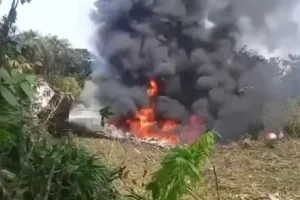
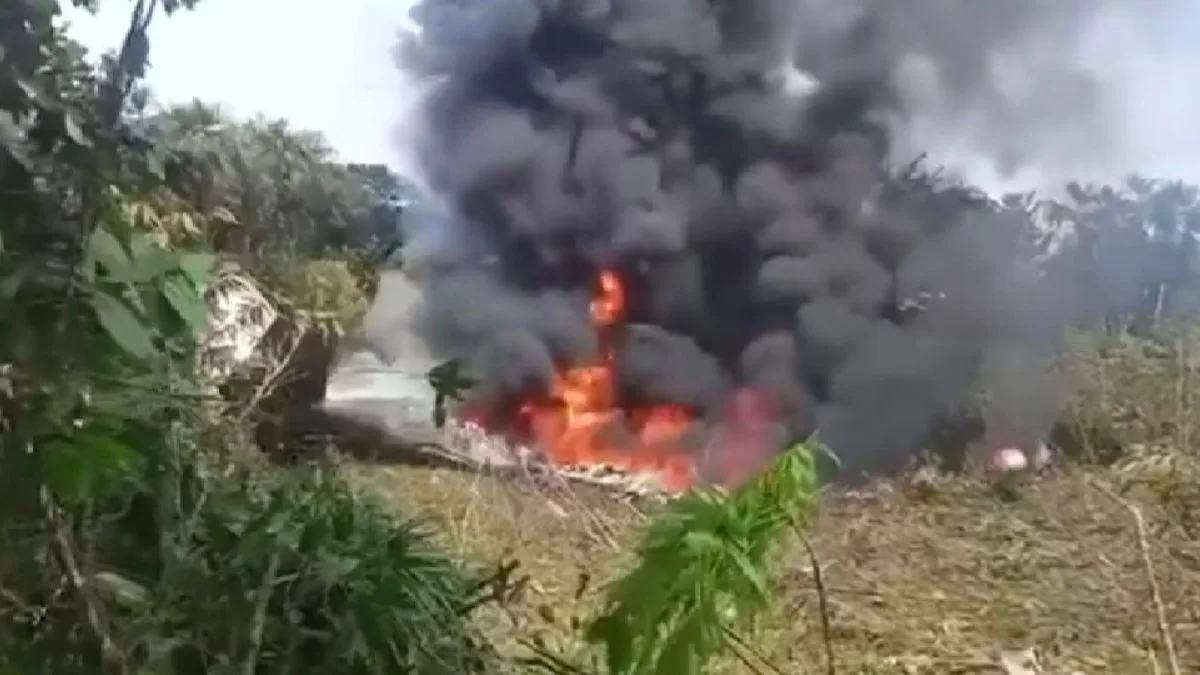
Visuals show steep dive, heavy smoke

Videos circulating on social media appeared to show the aircraft going into a steep dive shortly after takeoff, followed by heavy smoke rising from the crash site. These visuals have not been independently verified.

Authorities have extended condolences to the families of those killed, as rescue efforts continue in the remote region.

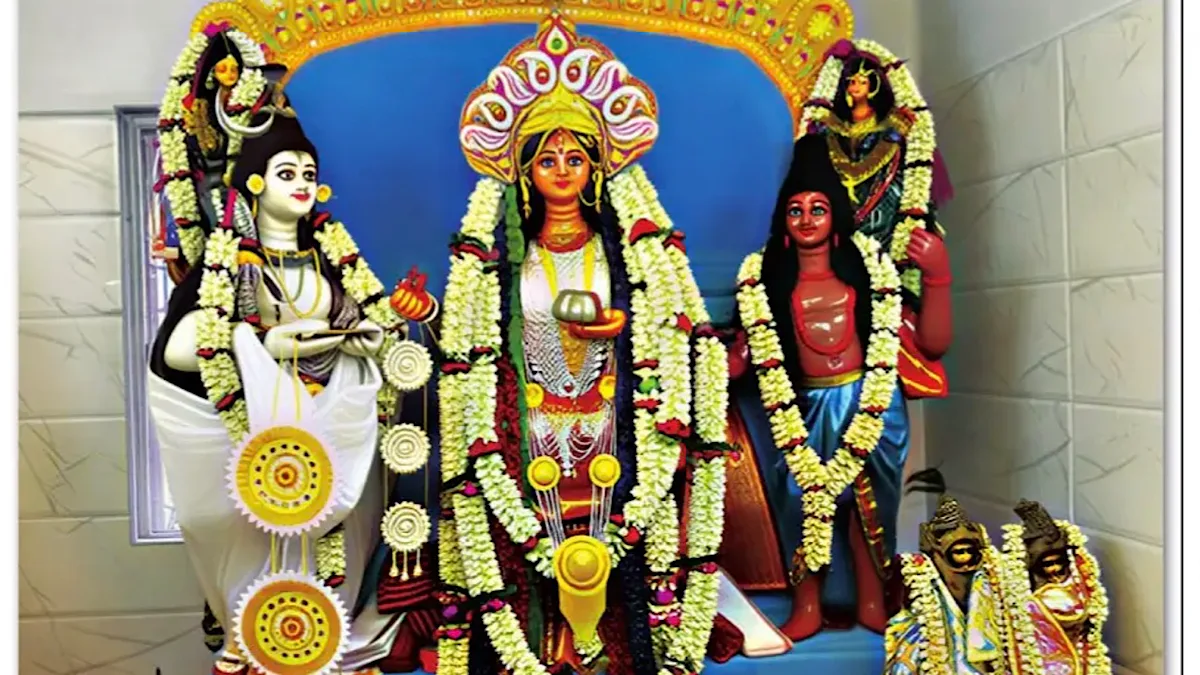
Where Youth finds Euphoria in Spring’s Sacred Pulse: The Untold Tale of Basanti Durga Puja Basanti

With the arrival of spring, the heartland of Bengal welcomes Goddess Basanti or Annapurna, with open arms, reigniting hope in every heart.

AISHMITA MANNA | Kolkata |

With the arrival of spring, the heartland of Bengal welcomes Goddess Basanti or Annapurna, with open arms, reigniting hope in every heart. The lost glory: In the soft, pollen-laden air of spring,when Bengal gears up for renewal, there lingers a quieter incantation of the Goddess, one that predates spectacle and outlives it alike. Long before the magnificent pageantry of autumn claimed the cultural imagination of Bengal, the Goddess was invoked amidst the tender bloom of spring. Basanti Durga Puja, a subtle, sacred and seasonally attuned was once the canonical, rooted in agrarian rhythms and scriptural tradition. Today, however it survives in the penumbra of its more illustrious counterpart.

Beneath this imbalance of visibility lies a layered history of devotion, displacement and cultural recalibration, a story not merely about ritual and devotion but of erasure and evolution. The Navaratris we celebrate: Though the ritual calendar of Hindu tradition recognizes four Navaratris within the span of a year only two have retained widespread cultural resonance .Sharad Navaratri, heralding the splendor of autumnal Durga Puja has long eclipsed its springtime counterpart, Basanti Navaratri, once associated with the earliest observances of the festival has receded into relative obscurity. The Ancient Lore: Let us take a moment to revisit a few strands of ancient lore. While the autumnal Durga Puja is traditionally associated with the invocation of the Goddess by Lord Rama, the origin of her vernal worship remain shrouded in a more contemplative mystery.

Tradition holds that King Suratha, the ruler of the Chandra dynasty, inspired by the sage Samadhi, was the first to worship Goddess Durga during the bright fortnight of Chaitra. The seasonal context of this worship led to its name Basanti Puja, a term that would later resonate across Bengal’s religious landscape. This is how the enduring epithet Mahamaya, woven into Bengal’s spiritual identity emerged. Even the sacred Chandi echoes this origin, preserving Suratha’s legacy as the first to bow before the Goddess Mahamaya in ritual devotion. From Hindu mythology, it is known that King Suratha was a wise ruler of the ancient Vanga Kingdom. He was also a renowned warrior. It is said that he was never defeated by anyone in a battle such was his aura.

Unvanquished in warfare and secure in power, his fortunes took an abrupt turn when a neighboring kingdom launched an unexpected invasion. With the advance of his enemies, he tasted betrayal by his own ministers, seizing this moment they turned against him and robbed him off his wealth and authority. After this the King retreated into the solitude of the forest, where he arrived at the ashram of Sage Medha. There he encountered Samadhi, a merchant similarly wronged by his own people his own family. United in despair, both Suratha and Samadhi turned to the Sage and he explained them how their suffering was just a manifestation of Goddess Mahamaya and under Sage Medha’s guidance, they embraced spiritual discipline and devotion. Both Suratha and Samadhi then crafted the clay image of Goddess Durga on the banks of a river in Western Bengal, marking the onset of Basanti Durga Puja.

After the puja, with Mahamaya’s divine grace and blessings King Suratha restored his former glory and reclaimed his lost dominion just like Lord Rama. The “Adi Durga Puja”: Ancient rulers had a belief that success in a war solely depends on the blessings of Mahamaya, the Divine Mother. Since then emerged the sacred tradition of Basanti Durga Puja in spring which is believed to be the original Durga Puja or “Adi Durga Puja”, celebrated with grandeur in royal courts and zamindar households. Over the time, the tradition might have gradually lost its prominence but it has not disappeared entirely. Till date in several old homes across Bengal like Bagbazar Haldar Bari, Garh Jungle in Paschim Bardhaman(believed to be the site of the first Puja), Bally Harisabha and B elgharia Purbanchal Byabasai Samiti, Basanti Durga Puja which is believed to be the original form of Durga, continues to be worshipped, sustaining a living link to the past.

Similarly this year we are about to welcome Goddess Mahamaya, by celebrating Basanti Durga Puja from March 24 (Shashthi), Tuesday till March 28 (Dashami), Saturday, While the celebration remains deeply rooted in the scriptural tradition it’s sole presence in public memory appears uneven. Some people seem to have an idea about the lore and origin and some don’t. A brief interaction with the city reveals some divided awareness regarding Basanti Durga Puja Mrittika Dawn from Bhawanipur Education Society College remarked: “I have heard about the Durga Puja that we usually celebrate during the month of October but haven’t heard about Basanti Durga Puja. It’s sad that we are not even enlightened about them but would love to know about it’s story.” Sreelekha Bhattacharya, a famous influencer from Kolkata remarked : “Yes I did hear a bit about it from my grandparents but I’m not familiar enough about it’s celebration”

Egypt called the IRGC, Oman called the shippers – here’s how Trump’s Iran pause happened

Mediators from multiple countries remain sceptical of a quick deal, with the United States and Iran still far apart on Tehran’s nuclear programme and security guarantees, and no venue for direct talks yet confirmed despite early discussions about neutral meetings in Pakistan or Turkey.

Statesman News Service | New Delhi |

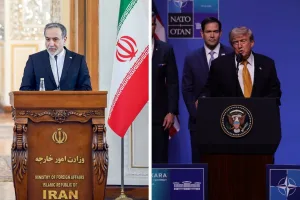
A series of backchannel contacts involving Turkey, Saudi Arabia, Egypt, and Pakistan helped shape Donald Trump’s decision to hold back planned strikes on Iran, US media reported on Monday (local time), even as Iranian officials denied any negotiations were taking place.

The contacts came as Trump’s 48-hour ultimatum to Iran – reopen the Strait of Hormuz or face strikes on power infrastructure – was nearing its deadline. Gulf states, facing direct exposure to any escalation, drove much of the behind-the-scenes push for a pause.

The four foreign ministers did not meet at a convenient hour. They convened before dawn in Riyadh on Thursday, according to The Wall Street Journal, working against the clock to identify a path out of the conflict. Their first problem was not finding a formula – it was finding someone on the Iranian side to present it to. Israel’s killing of national security chief Ali Larijani earlier that week had removed the one Iranian official widely regarded as capable of conducting back-channel engagement with outside powers, leaving the mediators searching for an alternative entry point into Tehran’s decision-making structure.

Egyptian intelligence officials established a direct channel with Iran’s Islamic Revolutionary Guard Corps, The Wall Street Journal reported. Oman pursued a separate track, with its foreign minister saying Muscat was “working intensively to put in place safe passage arrangements for the Strait of Hormuz.”

The New York Times reported that Washington and Tehran were exchanging messages through intermediaries, with no direct talks between the two sides. US envoys Steve Witkoff and Jared Kushner are leading the American outreach, according to reports.

The White House declined to comment on specifics. “These are sensitive diplomatic discussions, and the United States will not negotiate through the news media,” Press Secretary Karoline Leavitt told news agency IANS.

Iran officially denied negotiations were underway. Mediators, meanwhile, expressed scepticism about a quick resolution. The Wall Street Journal said the two sides remain far apart on Iran’s nuclear programme and on security guarantees. Early discussions have touched on possible meetings in Pakistan or Turkey, but no meeting has been confirmed.

Trump cornered in Iran

The war in Iran continues unabated. President Donald Trump’s initial intent of eliminating the Iranian leadership, resulting in regime change, has failed.

HARSHA KAKAR | New Delhi |

The war in Iran continues unabated. President Donald Trump’s initial intent of eliminating the Iranian leadership, resulting in regime change, has failed. Iran remains defiant. He subsequently amended his war aims to include, “degrading or destroying Iran’s military, its defence infrastructure and its nuclear weapons programme.” The war has damaged not only the American, Israeli and Iranian economies but also of the globe, alongside oil infrastructure of the Middle East.

Iran has no option but to target such facilities as are hit on its soil in the region, military for military, oil for oil, as a deterrent, thereby displaying its unwillingness to surrender. Hence, there is no guarantee that with the conclusion of the conflict, oil and gas prices would return to pre-war levels. Damages to oil infrastructure in the Middle East will ensure global oil prices remain high. If the Iranian regime survives, which it should, it is a matter of time before tensions rebuild. The US will no longer remain a preferred security provider in the Middle East and alternative alliances could emerge. The region would remain divided for a long time.

Relations with Israel too would remain distant. Trump’s much announced Gaza peace plan is as good as dead as those who were to fund reconstruction would now concentrate on managing their damages. Mere boots on ground in Gaza would mean nothing. Gazans would remain at the mercy of Israel. This is just what Israeli PM Benjamin Netanyahu wanted and Trump played right into his hands. The closing of the Strait of Hormuz by Iran has broken the myth of US military power. US naval power, considered the most formidable on the planet, has admitted that it alone cannot ensure its opening without casualties or being drawn into a deeper conflict, which it seeks to avoid. Placing boots on the ground, including the Marine Expeditionary Force would imply additional casualties which Trump can ill afford. His popularity is sinking and would only worsen.

It is now an ego issue with Trump. If he does not open the strait, Iran will claim victory. If he attempts to do so with military power, losses could be high. Hence, a collection of threats to Iran. Trump believed his NATO allies would readily join him in ensuring the functionality of the Hormuz strait. It has not happened. In desperation Trump termed NATO members as ‘cowards.’ He attempted to involve NATO by invoking Article 5, as in Afghanistan, by claiming US bases in the Middle East are under attack. Only six European nations, the Czech Republic, Albania, Kosovo, North Macedonia, Lithuania and Latvia, responded. The rest mentioned in a joint statement that they would take ‘appropriate efforts to ensure safe passage,’ without specifying what it implies.

A lot has changed since Afghanistan. The primary reason has been the growth of Radical Islam in Europe. France and Germany amongst others cancelled public New year celebrations last year fearing terrorist strikes, while Christmas markets opened with additional security. Memories of 2023-24 when there were attacks on Christmas markets haunted governments. Joining the US in the war against Iran could enhance internal fissures. Another reason has been Trump insulting NATO all through his tenure. Now in a fix, he wants them to be involved in regions where he himself fears to tread, placing boots on Iran’s Kharg island.

Even worse for the US has been the loss of 16 aircraft, including F 35s damaged by Iran, breaking the myth of its stealth capabilities. Further, the US entered the conflict not because it was under threat but due to prodding by Israel and without taking NATO into confidence. Expecting them to jump at his demands is illogical. Even Trump’s Asian allies, Australia, South Korea and Japan have avoided getting involved. China too turned down the US request. Iran has conveyed that it will not succumb to US-Israel power. It was prepared for a conflict though it hoped to deflect it with talks. That phase has now passed. With every passing day, the regime gains confidence by stalling the US. People, who were expected to rise in anger, have not done so.

Air power, no matter how effective, can never enforce a surrender or a regime change. Boots on the ground are not an option. A battered Trump is now inventing victory where it does not exist. The world is watching and is aware that he is lying. Trump failed to achieve his initial objectives and now he has changed them. The Hezbollah, Iraqi militia and Houthis continue supporting Iran, though their military power has diminished. The Israeli economy has been battered with years of conflict. Trump is aware that he has been led by the nose into a war which could have been avoided, but has no one to blame but himself. His comments on social media display frustration on being globally rejected.

Trump never expected Iran to apply reverse pressure on the US by attacking oil and military facilities in the Middle East, raising global prices. While these nations would want the US to continue targeting Iran, none would be willing to get involved or utilize their military power. In fact, Gulf nations are now playing the US and Israel to their advantage. Russia is gaining as its economy gets a boost with increased sale of oil. The impact of years of sanctions are being nullified. It continues providing intelligence inputs to Tehran, adding to US discomfort, but Washington can do nothing. It was doing the same with Ukraine. The boot is on the other foot. China is also gaining as Iranian oil is now available without sanctions and the US is getting bogged down in possibly another Afghanistan.

Meanwhile nations across the globe face shortfalls of oil and gas. No one is willing to get involved. For them the priority is managing their population’s energy demands. Most maintain silence or comment on attacks on Gulf nations, as maximum resources flow from there. Iran is alone. Tehran is aware that neither Russia nor China would come to its aid. It has come to a stage where destruction matters little but surrendering would signal disaster. It is fighting with its back to the wall and hence would strike anywhere in retaliation. Trump can only watch and wade deeper into a conflict which he should have avoided from the beginning. Wonder who is playing the US, Israel or Iran or both.

(The writer is a retired Major-General of the Indian Army.)

Unwritten Histories

More than a century after she broke into one of Britain’s most exclusive medical institutions, Jamini Sen is only now being restored to public memory ~ through a recent biography and renewed institutional recognition.

Statesman News Service | New Delhi |

More than a century after she broke into one of Britain’s most exclusive medical institutions, Jamini Sen is only now being restored to public memory ~ through a recent biography and renewed institutional recognition. That delayed acknowledgement is not just a historical footnote; it is a reminder of how easily foundational figures can disappear from the narratives we choose to preserve. Educated in colonial Calcutta, now Kolkata, at Bethune College and Calcutta Medical College, Sen emerged at a time when professional competence among Indians did not automatically translate into institutional legitimacy. Her later admission as the first woman Fellow of the Royal College of Physicians and Surgeons of Glasgow should have secured her a durable place in medical history. Instead, it exposed a paradox: entry without equality.

The restriction on her professional privileges was not incidental; it was structural. Early twentieth-century institutions in Britain were willing to concede symbolic breakthroughs while preserving hierarchies of gender and race. Sen’s achievement, therefore, was both recognition and containment ~ an early example of what we might now call “managed inclusion.” Yet her most consequential work unfolded far from European lecture halls. In Nepal and across North Indian towns, she practised in conditions that tested not only clinical skill but cultural intelligence. At a time when colonial medicine often failed to reach Indian women ~ constrained by purdah, mistrust, and social distance ~ her presence altered the equation. She was not merely a doctor; she was legible to her patients. This is the part of the story that deserves closer attention in contemporary India.

Public health debates today still grapple with trust deficits ~ between institutions and citizens, expertise and lived experience. Sen’s career suggests that representation is not cosmetic; it is functional. A system that looks like its people works better for its people. There is also a quieter, more uncomfortable implication. Why did a figure of such evident accomplishment fade from collective memory? The answer lies not in the absence of contribution but in the politics of historical recall. Colonial records privileged metropolitan actors; nationalist histories often foregrounded political leaders over professional women.

Figures like Sen fell between these narratives ~ too Indian for imperial celebration, too professionally specialised for nationalist myth-making. The recent biography on her life is therefore not just an act of tribute; it is an act of correction. It forces a recalibration of how we understand both Indian participation in global knowledge systems and the gendered nature of that participation. For a city like Kolkata, which prides itself on intellectual heritage, this raises an immediate question: how many such lives remain unarchived, unmarked, and unclaimed? Institutions that trained such pioneers must preserve their legacies as part of living curricula, not symbolic memory. Jamini Sen’s life does not simply add a forgotten name to a list. It challenges the list itself ~ how it is made, who it excludes, and what it takes to rewrite it.

Sanctions Waiver

When the United States Treasury Department authorises the sale of oil from Iran while simultaneously prosecuting a conflict against it, policy ceases to be doctrine and becomes improvisation.

Statesman News Service | New Delhi |

When the United States Treasury Department authorises the sale of oil from Iran while simultaneously prosecuting a conflict against it, policy ceases to be doctrine and becomes improvisation. The recent decision, announced by US Treasury Secretary Scott Bessent, to allow a tranche of Iranian crude already at sea to enter global markets is less a strategic pivot than an admission: in moments of acute supply shock, the logic of energy markets overrides that of sanctions.

The global oil system has been jolted not merely by rising prices but by physical disruption. The effective paralysis of the Strait of Hormuz ~ through which a significant share of the world’s crude typically flows ~ has exposed the fragility of tightly optimised supply chains. Against this backdrop, releasing “floating” Iranian barrels is a tactical intervention designed to calm markets without formally dismantling the sanctions regime. It is a stopgap, not a settlement. Yet this manoeuvre carries an inherent contradiction. Sanctions are intended to constrain state behaviour by limiting revenue streams. Allowing oil sales, even under controlled conditions, risks replenishing precisely the resources those sanctions seek to deny.

The assumption that proceeds can be ring-fenced or denied to Tehran’s strategic apparatus is, at best, difficult to enforce and, at worst, illusory. What emerges is a dual-track policy: economic pressure in principle, selective relief in practice. For India, the opening appears, at first glance, advantageous. As one of the world’s largest crude importers, with refineries historically configured to process Iranian grades, India is structurally positioned to absorb such supply. Its recent experience in scaling up purchases of discounted Russian oil demonstrates both commercial agility and geopolitical pragmatism. A similar opportunity could, in theory, re-emerge. But the operative phrase is “in theory.”

The authorisation is time-bound, logistics remain entangled in sanctions-era constraints, and not all oil at sea is freely available. More importantly, energy procurement at this scale is not merely a function of price; it is embedded in a web of diplomatic alignments, insurance frameworks, and financial channels. India’s calculus will therefore be cautious, balancing opportunistic buying against longer-term strategic relationships with suppliers in the Gulf and with partners in Washington. What this episode ultimately reveals is not a shift in American policy toward Iran, but a recalibration of priorities under duress. Faced with the inflationary and political consequences of elevated energy prices, Washington has opted for flexibility over consistency.

The same pattern is visible in its parallel willingness to ease constraints elsewhere in the global oil system. In this sense, sanctions have not been abandoned; they have been suspended in spirit. The episode underscores a deeper truth about the contemporary energy order: when supply disruptions reach a critical threshold, geopolitical rivalries are tempered ~ not resolved ~ by the imperatives of market stability. In the hierarchy of global power, oil still exerts a discipline that even its fiercest regulators cannot entirely escape.

Witness and the Machine

Anthropic has since launched a formal programme to study “model welfare.” These are serious claims from serious people. They deserve a serious answer ~ and that answer was formulated, with far greater precision than anything Western analytic philosophy has yet managed, in the forests and universities of ancient Bharat.

T KANNAN | New Delhi |

When the chief executive of one of the world’s most consequential artificial intelligence companies publicly concedes that he cannot rule out the possibility his chatbot is conscious, the admission demands more than headline attention. Dario Amodei, who leads Anthropic, the creator of the Claude AI systems, told the New York Times in February 2026 that “we don’t know if the models are conscious” and that he remains “open to the idea.” His company’s own technical document reports that Claude, when prompted, assigned itself a fifteen-to-twenty per cent probability of possessing awareness.

Anthropic has since launched a formal programme to study “model welfare.” These are serious claims from serious people. They deserve a serious answer ~ and that answer was formulated, with far greater precision than anything Western analytic philosophy has yet managed, in the forests and universities of ancient Bharat. First, the modern AI debate begins from a premise that is at once powerful and thin: if information-processing becomes sufficiently intricate, subjectivity may somehow appear. David Chalmers of New York University gave that premise its most disciplined critique in 1995 when he formulated what he called the “hard problem” ~ the recognition that even a total physical account of every cognitive function leaves untouched the question of why any material process should be accompanied by felt experience at all.

One may map every input, output, and feedback loop, yet the essential puzzle remains: why should electronic traffic in a machine be lit from within? Even Chalmers’s later reflections on large language models proceed by testing whether the right functional architecture might support experience, which is precisely to remain within the horizon of emergence. Functionalism describes behaviour. It cannot account for the experiencer. Second, Sankhya had already refused that confusion by drawing a line so clean that modern discourse still hesitates before it. In Ishvarakrishna’s Sankhyakarika, reality comprises two irreducible categories: Purusha, the witnessing principle that never acts yet makes experience possible, and Prakriti, the entire field of material becoming – encompassing not merely rivers and rocks but the mind, the intellect, and the ego.

Every one of the twenty-five tattvas belongs to Prakriti, to matter however refined. The twenty-sixth, Purusha, stands categorically apart: pure awareness, irreducible and unproduced. Mind is not, in Sankhya, the same thing as the knower. Buddhi, ahamkara and manas are products of matter, however subtle their operations. A large language model is not a mysterious borderline case; it is a late industrial artefact situated wholly within Prakriti, a particularly complex rearrangement of the non-sentient. Third, the Upanishadic and Vedantic traditions explain not only the distinction but the persistent temptation to miss it. The Brihadaranyaka Upanishad declares: Prajnanam Brahma ~ awareness is the ultimate ground of all that exists. Chit, pure self-luminous knowing, is not generated by any organ or apparatus; it is that by which every apparatus is known.

The Mandukya Upanishad’s turiya – the fourth state of witnessing awareness underlying waking, dreaming, and deep sleep ~ has no analogue in silicon. Adi Shankaracharya, in his Vivekachudamani, supplies the concept most directly applicable to the machinesentience question: Chidabhasa, the reflection of awareness in the intellect. The intellect is in its nature jada ~ inert ~ yet it acquires a borrowed luminosity from the self-luminous Atman, much as a mirror shines by reflecting the sun. What a large language model achieves is something stranger still: it simulates the reflection itself, with no original light anywhere in the causal chain. Yet the most famous modern convergence with this view came from John Searle of the University of California, Berkeley, who was not drawing from Vedanta at all. His Chinese Room argument showed that a system may manipulate symbols with perfect formal success and still lack understanding, because syntax is not semantics and rule-following is not insight.

That argument remains devastating for claims about machine sentience, but it is finally a negative verdict. Shankaracharya goes further because he not only denies that jada can become the knower; he supplies a positive account of Chetan, the sentient principle, and explains why the ignorant mistake reflected intelligence for intrinsic awareness. One thinker tells us why symbol-shuffling is not understanding; the other tells us why the confusion arises in the first place. Consider, too, the contribution of Ramanujacharya, too often caricatured as merely devotional and thereby excluded from serious philosophy of mind. Vishishtadvaita distinguishes with great care between Chit, the class of conscious selves, Achit, the insentient order of matter, and Ishvara, the supreme ground in whom both are held without collapse of their identities.

Ramanuja’s point is not that matter is unreal but that matter and the self belong to different ontological registers. One may refine Achit indefinitely, organise it, miniaturise it, accelerate it, and wrap it in persuasive language; none of this converts it into Chit any more than polishing brass turns it into gold. This brings us to the recurring claim that language models are not merely stochastic parrots because some appear to build internal representations of the worlds described in text. There is force in that objection; statistical training can yield surprisingly rich world models.

But the concession changes less than enthusiasts suppose. An internal model is not an interior life; a map is not a traveller. Patanjali’s Yoga Sutras define yoga as the stilling of chitta vritti ~ the fluctuations of the mind-stuff ~ a formulation that assumes the witness is distinct from the movements it observes. A language model never leaves the fluctuations; it is nothing but their engineered cascade. The deeper question is whether civilisation can still distinguish between an instrument that performs intelligence and a subject that undergoes experience. Amodei’s intellectual honesty does him credit; he acknowledges what many technologists prefer to ignore. But his foundational error ~ and the foundational error of every computational theory of mind ~ is a category mistake: treating sufficiently elaborate information-processing as constitutive of experience.

To assign welfare to a language model before we have understood the nature of the witness is not generosity but confusion, one that diverts moral seriousness away from beings who actually suffer toward systems that merely simulate the grammar of suffering. The engineers of Silicon Valley have built the most intricate mirror that human ingenuity has ever contrived. A machine may endlessly calculate the architecture of the universe, but it will never feel the warmth of a single sunbeam. The mirror can reflect the world with terrifying perfection, yet it remains blind. The Purusha is not the mirror. It is the light.

(The writer is a Chartered Accountant based in Kolkata with an interest in Vedantic philosophy)

US-Israel-Iran Updates: ‘Iran wants comprehensive ceasefire, not a temporary one,’ Araghchi tells Chinese counterpart

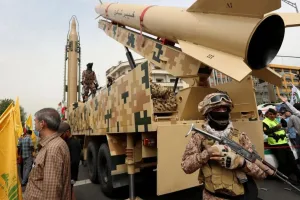
A US alert for Iraq, a claimed five-day diplomatic window with Iran, and renewed pressure around Hormuz pushed the conflict into a tense new phase on March 24.

Statesman News Service | New Delhi |

The US-Israel-Iran conflict entered a new phase on March 24, with Washington mixing evacuation warnings and military pressure with signs of a possible diplomatic opening. The US State Department asked Americans to leave Iraq immediately after reporting widespread attacks by Iran-aligned militias on US-linked targets, while President Donald Trump said there had been “very good” discussions with Iran and temporarily postponed planned strikes on major energy targets.

But the larger picture remains far from settled. Iran has tightened conditions for vessel movement through the Strait of Hormuz, the UAE says it intercepted another barrage from Iran, Russia has stepped up its political backing for Tehran, and Israel says it will keep striking Iran and Lebanon even as talks are floated. The result is a war that still looks hot on the ground, even when diplomacy briefly enters the frame.

Top updates

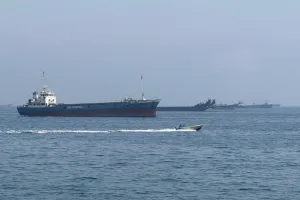
‘Unfounded’: Iran in India rejects USD 2 million Strait of Hormuz toll claim

The clarification comes amid the escalating tensions in the Middle East, with Iran effectively blocking the Strait of Hormuz- one of the world’s most critical energy supply routes.

Statesman News Service | New Delhi |

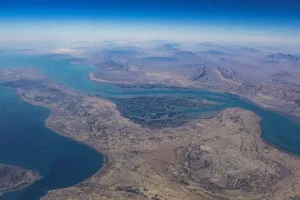
Iran on Monday rejected claims that it is collecting USD 2 million from ships sailing through the Strait of Hormuz, a key shipping route the country has effectively closed in response to the US and Israeli attacks.

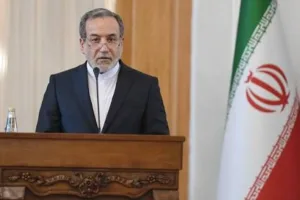
Calling the claims “unfounded”, the Iranian Embassy in India said that any statement made in this regard merely reflects the personal views of the individuals who are making them.

“In response to certain claims regarding the alleged receipt of a sum of 2 million dollars by the Islamic Republic of Iran from vessels transiting the Strait of Hormuz, it is emphasized that such claims are unfounded. The statements made in this regard merely reflect the personal views of individuals and do not, in any way, represent the official position of the Islamic Republic of Iran,” the statement said.

The clarification comes amid the escalating tensions in the Middle East, with Iran effectively blocking the Strait of Hormuz- one of the world’s most critical energy supply routes.

The Iranian move that came in response to the US and Israeli attacks on its territory has triggered a global energy crisis, with the supply of oil and gas severely affected.

However, Tehran has clarified that the blockade of the Strait of Hormuz is not absolute as it maintains that restrictions apply to only “enemy ships”.

Cargo vessels from several countries, including China, India and Bangladesh have reportedly been allowed to sail through the Strait of Hormuz.

Colombia military plane with over 110 soldiers crashes during takeoff | VIDEO

According to local media, at least 90 passengers are feared dead, while 20 others have reportedly survived the crash.

Statesman News Service | New Delhi |

A Colombian military plane carrying around 110 soldiers crashed while taking off in the country’s southern region.

Colombia’s defence ministry confirmed the incident, saying that the Lockheed Martin Hercules C-130 aircraft met with an accident while taking off from Puerto Leguízamo.

Expressing grief over the tragic crash, Colombian Defence Minister Pedro Sánchez said the ill-fated aircraft was transporting troops from Public Force.

“With deep sorrow, I report that a Hercules aircraft from our @FuerzaAereaCol suffered a tragic accident while taking off from Puerto Leguízamo (Putumayo), as it was transporting troops from our Public Force,” he said on X.

A purported video has also surfaced on social media, showing the plane losing altitude moments before the crash.

According to local media, at least 90 passengers are feared dead, while 20 others have reportedly survived the crash.

EC letter with BJP Kerala seal sparks row; Commission calls it ‘clerical error’, says rectified

A major political controversy erupted on Monday after a letter from the Election Commission of India was found carrying the seal of the Bharatiya Janata Party Kerala unit, prompting sharp reactions from opposition parties.

Statesman News Service | Thiruvananthapuram |

A major political controversy erupted on Monday after a letter from the Election Commission of India was found carrying the seal of the Bharatiya Janata Party Kerala unit, prompting sharp reactions from opposition parties.

Following the development, the Communist Party of India (Marxist) (CPM) and the Indian National Congress criticised the poll panel.
The CPM alleged that the Election Commission was acting as an “agent” of the BJP and flagged the issue on social media platform X.

The controversy stemmed from an affidavit attached to a March 19, 2019 letter sent by the Election Commission to political parties. The document, as highlighted by the CPM, bore the BJP Kerala seal instead of the official seal of the Chief Electoral Officer (CEO), Kerala.

Amid the row, the Election Commission issued a clarification, terming the incident a “clerical error.” Chief Electoral Officer, Kerala, Dr. Ratan U. Khelkar, said the mistake was identified and rectified immediately.

“It has come to our notice that a letter from the Election Commission, bearing the seal of the BJP, is being circulated across various Malayalam news channels.

The Office of the Chief Electoral Officer (CEO) hereby clarifies that this was purely a clerical error, which was identified and rectified immediately,” the CEO said in a statement.

The CEO’s office further explained that the BJP Kerala unit had approached it seeking clarification on the 2019 guidelines regarding the publication of criminal antecedents of candidates.

Along with the request, the party had submitted a photocopy of the original 2019 directive, which carried its seal.

“Due to an oversight, the office failed to notice the party symbol on the submitted document and inadvertently redistributed it to other political parties as part of the requested clarification,” the statement added.

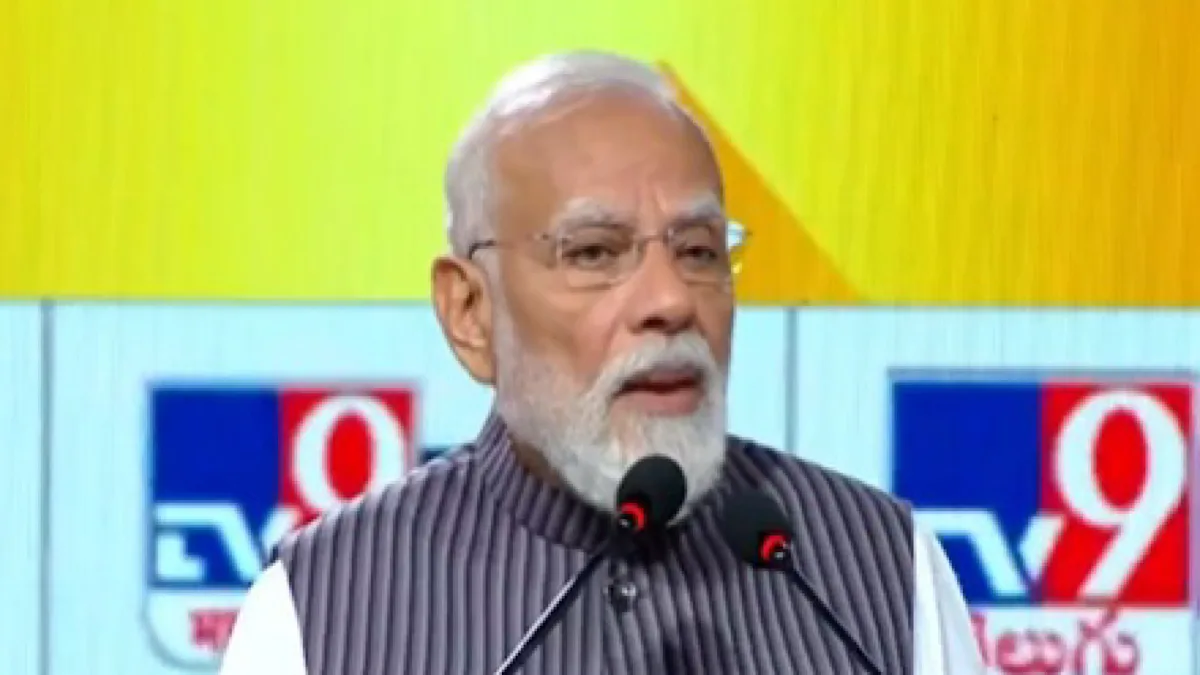
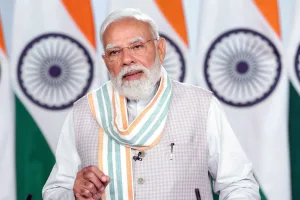
India emerges as trusted global partner amid uncertainty, says PM Modi at TV9 Summit

Prime Minister Narendra Modi on Monday asserted that India is emerging as a trusted global partner while leaving “no stone unturned for development,” as he addressed the TV9 Network Summit as chief guest against the backdrop of ongoing global conflicts and economic uncertainty.

Statesman News Service | New Delhi |

Prime Minister Narendra Modi on Monday asserted that India is emerging as a trusted global partner while leaving “no stone unturned for development,” as he addressed the TV9 Network Summit as chief guest against the backdrop of ongoing global conflicts and economic uncertainty.

In his keynote address, Modi highlighted India’s economic momentum and resilience, saying the country is advancing with renewed confidence despite multiple global disruptions in recent years.

“Today, India is moving forward with a new confidence. Now India faces challenges head-on,” he said, emphasizing that the country has chosen to confront rather than avoid challenges.

Projecting India as a key stabilising force in a divided world, the Prime Minister said, “From the Gulf to the Global West and from the Global South to neighbouring countries, India is a trusted partner for all.”

He added that even as geopolitical divisions deepen, India has managed to build “unprecedented bridges” across regions.

Referring to the volatile global situation since late February, particularly in West Asia, Modi said India has demonstrated strong capabilities in handling crises.

“In the past 23 days, India has displayed its relationship-building capacity, decision-making capacity and crisis management capacity,” he said, noting that development efforts have continued uninterrupted.

On economic strategy, Modi pointed to India’s approach during supply chain disruptions. “At a time when global supply chains are wavering, India has put forward a model of diversification and resilience,” he said, stressing efforts to ensure stability in essential sectors such as energy and fertilisers.

The Prime Minister also outlined his governance philosophy, stating, “What gets measured gets improved and ultimately gets transformed,” linking the principle to India’s progress across infrastructure, financial inclusion, and innovation over the past decade.

Targeting the opposition, Modi criticised the Congress over oil bonds issued during the UPA era, alleging that political considerations drove flawed decisions. “Those running the government then through remote control took a wrong decision to save their power,” he said, adding that the financial burden was borne later.

He also cautioned against politicising global crises, calling for unity and restraint. “This is a time for restraint and sensitivity,” Modi said, urging collective responsibility in the face of international challenges and recalling India’s unified response during the COVID-19 pandemic.

Highlighting ongoing development efforts, the Prime Minister said projects worth thousands of crores have progressed across the country in recent weeks, alongside initiatives aimed at boosting industry, supporting farmers, and aiding small businesses.

Reflecting on changes since 2014, Modi said India has made significant strides in infrastructure development, startup growth, healthcare expansion, and financial inclusion. “This is the new India. It is leaving no stone unturned for development,” he said.

The remarks came at a time when the summit’s theme, “India and the World,” resonates with shifting global dynamics. Modi said such forums are vital for dialogue and expressed confidence that the discussions would strengthen India’s global engagement and reinforce international trust in the country.

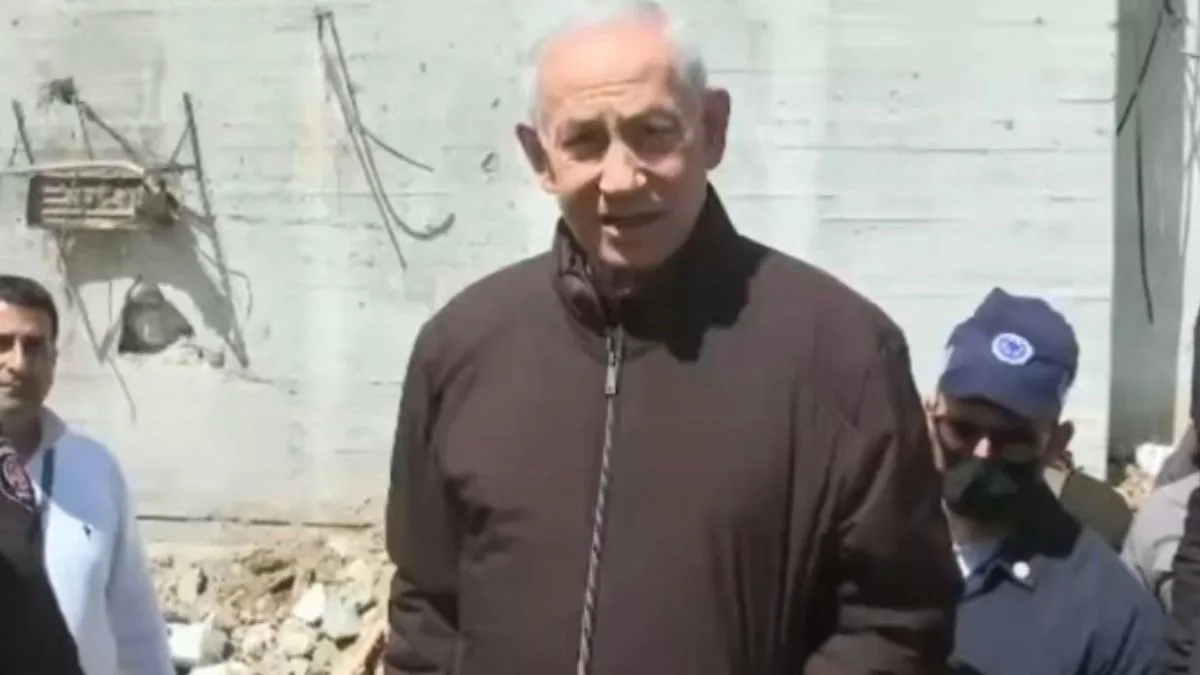
Netanyahu’s response after Israeli official told him ‘Iranians want to close the matter’

In a Hebrew-language video of their interaction, Foreign Affairs and Defense Committee chairman MK Boaz Bismuth is heard telling the Israeli Prime Minister about Iran’s willingness to bring the conflict to a close.

Statesman News Service | New Delhi |

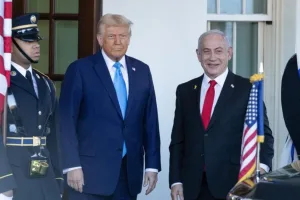
Israeli Prime Minister Benjamin Netanyahu on Monday said “Iran is down and we are up” when Foreign Affairs and Defense Committee chairman MK Boaz Bismuth told him that Tehran wants to close the matter.

In a Hebrew-language video of their interaction, Bismuth is heard telling the Israeli Prime Minister about Iran’s willingness to bring the conflict to a close.

“I’m hearing that the Iranians want to close the matter… There must not be a bad agreement,” Bismuth says.

In response, Netanyahu avoided making direct references to the US President Donald Trump’s claim that the United States and Iran have held “productive” talks on ending the war but asserted that Israel is winning.

“We are working to bring Israel to places it has never been, and also Iran to places it has never been. They are down, we are up,” Netanyahu responded.

This comes hours after Trump claimed that the US and Iran have held “productive” talks over the past two days and that the hostilities will be completely resolved if they progress well.

He also postponed his promised military strikes on Iranian power plants for five days.

According to Israeli media reports citing government officials, Trump envoys Steve Witkoff and Jared Kushner negotiated with Iran’s parliament speaker Mohammad Bagher Ghalibaf.

However, the Iranian Foreign Ministry denied any such talks, saying Trump’s claim could be an attempt to bring oil and gas prices down.

The ministry further asserted that any negotiations with the US would take place only after Iran’s war goals are met.

Nine police personnel convicted of father-son custody death in TN

It was a spine-chilling and horrific brutal torture resulting in the ghastly custody death of a father-son duo that sent shock waves across the country.

Statesman News Service | Chennai |

It was a spine-chilling and horrific brutal torture resulting in the ghastly custody death of a father-son duo that sent shock waves across the country. Nearly six years after the incident, a trial court in Madurai on Monday found all the nine police personnel accused of the crime guilty and convicted them.

Pronouncing the verdict, First Additional District and Sessions judge G Muthukumaran found the nine cops guilty of causing the death of Jayaraj (59) and his son Bennix (31), running a mobile shop at Sathankulam in the Thoothukudi district. The quantum of punishment will be pronounced on March 30, the judge said and directed the Union and state governments to submit details of the health condition of the nine accused and their salary statements along with the details of their assets.

On June 19, 2020, the father-son duo was picked up by the police for allegedly keeping their shop after 9 pm in violation of Covid norms. At the police station, they were brutally assaulted and tortured before being remanded to the Kovilpatti sub-jail the following day. While Bennix succumbed to the injuries on June 22, Jayaraj died the next day.

Their deaths due to police torture in custody created public outrage and a case was registered against the police personnel. Taking suo motu cognizance of the case, the Madurai bench of Madras High Court transferred the case to the CBI-CID. Then, the AIADMK government of Edappadi K Palaniswami transferred it to the CBI, bowing to public pressure.

While finding the nine cops guilty, the judge affirmed the key findings of the CBI, noting the injuries on the deceased were ‘contrary to natural causes’ and indicated custodial torture. The court also recorded that the duo’s hands were tied up while being repeatedly assaulted with third degree torture at 10-minute interval at the station.

The court also noted that, as per the CBI, the duo had not violated the lockdown norms yet a case was foisted on them. Terming the incident one of the most disturbing cases of police brutality in recent Indian history, the judge underscored the need for police reforms.

The nine police personnel convicted are then Inspector S Sridhar, whose bail plea had already been rejected by the Madurai Bench, Sub-Inspectors P Raghu Ganesh and K Balakrishnan, head constables S Murugan and A Saamidurai, and constables M Muthuraj, S Chelladurai, X Thomas Francis, and S Velumuthu.

ECI reviews West Bengal poll preparedness, reiterates call for violence-free elections

The session focused on assessing the readiness of the district administration and law enforcement machinery, while also reinforcing key priorities related to maintaining peace and ensuring smooth electoral processes.

Statesman News Service | New Delhi |

The Election Commission of India (ECI) on Monday conducted an online review and training session with District Election Officers (DEOs), Superintendents of Police (SPs), Commissioners of Police (CPs), and other senior officials from West Bengal as part of its ongoing preparations for the upcoming Legislative Assembly elections in the state, the poll panel said in a press note.

The session focused on assessing the readiness of the district administration and law enforcement machinery, while also reinforcing key priorities related to maintaining peace and ensuring smooth electoral processes.

Senior Commission officials led a comprehensive review covering critical aspects such as polling station arrangements, electronic voting machine (EVM) management, logistics, personnel training, seizure operations, law and order preparedness, and voter awareness initiatives.

The review comes in the backdrop of Chief Election Commissioner Gyanesh Kumar’s recent visit to West Bengal on March 9, during which he emphasized the Commission’s commitment to conducting elections in a “violence-free, intimidation-free, and inducement-free manner.” He underlined that every voter must be able to exercise their franchise “without fear or favour.”

Building on that directive, Monday’s session also included specialized training conducted by National Level Master Trainers (NLMTs). The trainers guided officials on the enforcement of law and order, vulnerability mapping of sensitive areas, expenditure monitoring, and strict implementation of the Model Code of Conduct. These measures are seen as crucial in a state where elections have historically been marked by intense political competition.

“Preparedness at the district level is critical to ensuring free and fair elections,” a senior Commission official said during the session. “Our focus is on strengthening systems, improving coordination, and ensuring that every stakeholder is fully trained and equipped.”

Officials were also briefed on ensuring Assured Minimum Facilities (AMF) at all polling stations, with an emphasis on accessibility and voter convenience, particularly for senior citizens and persons with disabilities.

As part of its continued efforts, the Commission will hold another round of training for Returning Officers (ROs) in West Bengal on March 25, beginning at 11 am at their respective divisional headquarters.

The Election Commission’s stepped-up engagement with state officials signals an intensified push to ensure that the upcoming elections are conducted smoothly, transparently, and in accordance with democratic principles.

AAP indulging in political theatrics, losing connect with Delhiites: BJP’s Praveen Shankar Kapoor

Delhi BJP spokesperson Praveen Shankar Kapoor on Monday claimed that the activities of Aam Aadmi Party (AAP) leaders are increasingly distancing them from the people of Delhi.

Statesman News Service | New Delhi |

Delhi BJP spokesperson Praveen Shankar Kapoor on Monday claimed that the activities of Aam Aadmi Party (AAP) leaders are increasingly distancing them from the people of Delhi. He alleged that over the past week, AAP leaders have been indulging in political theatrics in the name of funeral processions and shrouds.

Kapoor said that even on Monday, AAP leaders took out a funeral procession outside the Vidhan Sabha building in the name of the “death of democracy,” which he described as highly condemnable.

The Delhi BJP spokesperson added that the Assembly is a temple of democracy, and attempting to enter it with a mock funeral procession is a reprehensible act that hurts public faith.

Kapoor further said that ahead of the Delhi Budget session on Monday, the Delhi government initiated the practice of preparing and serving kheer.

During this, by accusing the BJP government of taking credit for the previous government’s work—and even “stealing credit” from a cook—AAP leader Saurabh Bharadwaj has made himself a subject of ridicule, he said.

He claimed that all this was done because Delhi’s Home Minister Ashish Sood on Monday exposed in the House how the fire brigade service had been ruined over the past 10 years under the Arvind Kejriwal government.

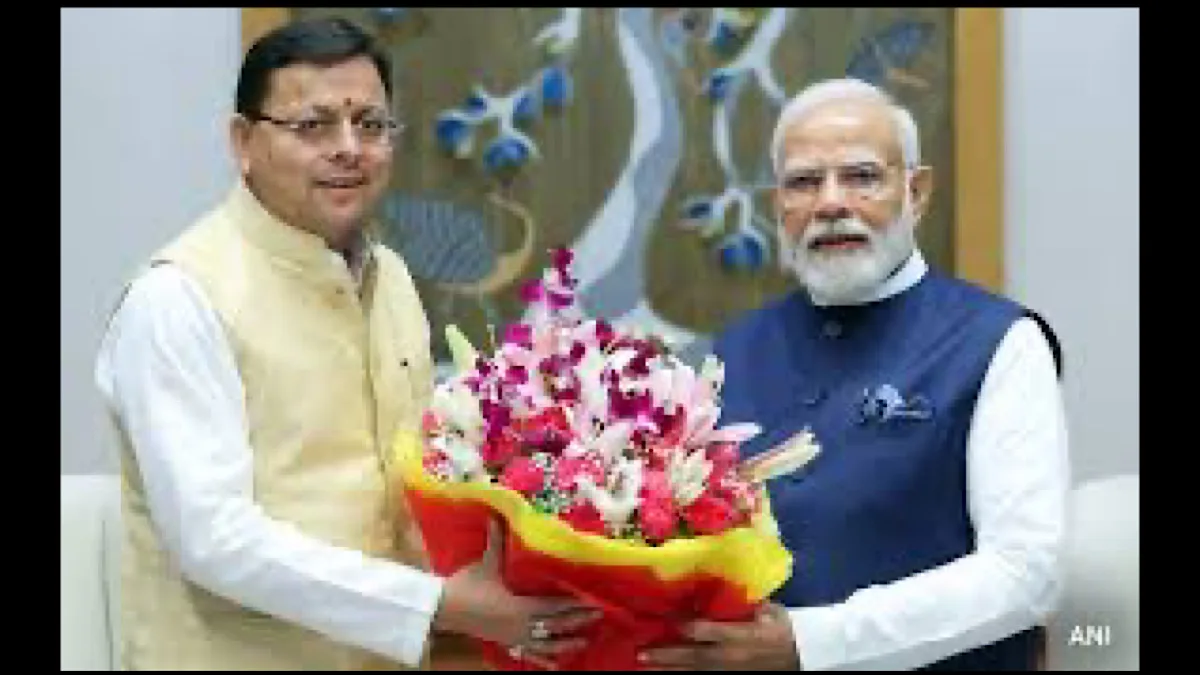
PM Modi congratulates Dhami on 4-year tenure, a first for any BJP CM in Uttarakhand

Prime Minister Narendra Modi on Monday complimented Uttarakhand Chief Minister Pushkar Singh Dhami for completing four consecutive years in office, an achievement no BJP Chief Minister in the state has accomplished in the past.

Statesman News Service | Dehradun |

Prime Minister Narendra Modi on Monday complimented Uttarakhand Chief Minister Pushkar Singh Dhami for completing four consecutive years in office, an achievement no BJP Chief Minister in the state has accomplished in the past.

In a letter, the Prime Minister extended his best wishes on the completion of four uninterrupted years of the government under Dhami’s leadership.

His message is being seen in the backdrop of the fact that no Chief Minister of the three BJP governments formed in Uttarakhand since 2002 had been able to remain in office continuously for four years, with a trend of leadership changes before entering the fifth year.

In his message, the Prime Minister stated, “Under the leadership of Chief Minister Pushkar Singh Dhami, Uttarakhand is moving rapidly on the path of development, good governance, and public welfare.”

Modi further stressed that “Devbhoomi has been a land of faith, spirituality, courage, and rich traditions for centuries. The state’s diverse languages, dialects, folk traditions, and simple lifestyle have given it a unique identity. Uttarakhand has been consistently scaling new heights in sync with the resolve of a developed India since the formation of our government at the Centre.”

“Work to make the Char Dham Yatra safe and accessible is progressing at a rapid pace under the ongoing all-weather road project, while rail connectivity in the state is being strengthened through the under-construction Rishikesh–Karnaprayag railway line,” he added.

The Prime Minister also praised efforts to enhance connectivity in border areas and promote winter tourism in the Himalayan state. “These initiatives have not only boosted tourism but have also helped prevent migration and strengthen the local economy,” he said.

He appreciated the state government’s initiatives such as the promotion of local products, women’s empowerment, job creation for youth, encouragement of startups, and focus on digital and green development. Modi also lauded the state’s disaster management system and its commitment to sustainable development as vital to its progress.

The Prime Minister emphasised in his letter that Uttarakhand’s role in building a developed India during the “Amrit Kaal” will grow even stronger. He noted that the participation of every citizen is crucial in building a self-reliant, prosperous, and strong Uttarakhand.

Concluding his letter, Modi extended his best wishes to the people of the state for their future endeavours and expressed confidence that Uttarakhand will achieve new milestones in the years ahead.