T20 WC: Pakistan Govt makes U-turn, allows team to play India match on February 15
The Pakistan Government has made a U-turn on its earlier stance and has now allowed the men’s cricket team to play its scheduled match against India in the ICC Men’s T20 World Cup on February 15.
IANS | New Delhi | February 10, 2026 10:18 am
Pakistan cricket team and Bangladesh cricket team(Photo: IANS)
The Pakistan Government has made a U-turn on its earlier stance and has now allowed the men’s cricket team to play its scheduled match against India in the ICC Men’s T20 World Cup on February 15.
The Pakistan government has earlier asked the team not to take the field for the clash against archrivals India to show support to Bangladesh, which was thrown out of the ICC T20 World Cup and replaced by Scotland after its demand for relocating its matches from India to Sri Lanka was rejected by the ICC.
But with the ICC taking a hardline stance on Pakistan’s threat to boycott the India match and with the Bangladesh Cricket Board (BCB)_ and the Sri Lanka government requesting Pakistan to reconsider its decision, Prime Minister Shasbaz Sharif has given the green light to the Pakistan men’s team to play the match.
The Pakistan government said it has permitted its team to play the February 15 match because of requests from Bangladesh and Sri Lanka.
“The Government of Pakistan has reviewed the formal requests extended to the PCB by the Bangladesh Cricket Board, as well as the supporting communications from Sri Lanka, the United Arab Emirates, and other member nations. These correspondences sought Pakistan’s leadership in securing a viable solution to recent challenges,” the Pakistan Government said.
“The Government further noted the statement by BCB President, Mr. Aminul Islam. The profound gratitude expressed by our brotherly nation was received with great warmth. Pakistan reaffirms that it stands shoulder to shoulder with Bangladesh.
“This evening, the Prime Minister held a telephone call with H.E Anura Kumara Dissanayake, President of Sri Lanka. During their warm and friendly conversation, they recalled that Pakistan and Sri Lanka had always stood shoulder to shoulder, especially during challenging times. The Sri Lanka President requested the Prime Minister to accord serious consideration to amicably resolving the current impasse.
“In view of the outcomes achieved in multilateral discussion, as well as the request of friendly countries, the Government of Pakistan hereby directs the Pakistan National Cricket Team to take the field on February 15, 2026, for its scheduled fixture in the ICC Men’s T20 World Cup,” said a statement issued by the Pakistan Government on Monday night.
The stand-off between ICC and Pakistan Cricket Board started on February 1 when Pakistan’s premier Shahbaz Sharif cleared the team to feature in the World Cup but barred them from taking the field in Colombo against India.
Pakistan’s boycott came in the aftermath of a stand-off between the ICC and Bangladesh, which started last month. The ICC rejected Bangladesh’s demands to relocate their matches from India to co-hosts Sri Lanka over security fears, replacing them with Scotland.
The Pakistan team is currently in Sri Lanka and will play its second Group A game against the United States on Tuesday.
‘Only references, no evidence’: Tibetan exiles say Dalai Lama never met Epstein, flag China-linked campaign
Tibetan exiles in Dharamshala have rejected allegations linking the Dalai Lama to Jeffrey Epstein, saying he never met the financier and warning of a China-linked disinformation campaign.
Statesman News Service | New Delhi | February 10, 2026 9:49 am
The Dalai Lama during a public engagement in Dharamshala, Himachal Pradesh. | (@RijijuOffice X/ANI Photo)
The exiled Tibetan community in Dharamshala on Monday condemned reports and social media posts attempting to link the Dalai Lama with Jeffrey Epstein, calling the allegations baseless and politically motivated. The Dalai Lama’s office has categorically denied any connection, stating that he has never met Epstein and never authorised any interaction with him.
Community leaders said the claims resurfaced soon after news emerged of the Dalai Lama receiving a Grammy Award, arguing that the timing points to an attempt to defame the Tibetan spiritual leader.
Youdon Aukatsang, a member of the Tibetan Parliament-in-Exile, told ANI she was “really disheartened and sad” by the allegations. “There is nothing that links in with Jeffrey Epstein at all,” she said, adding that those spreading the claims should apologise.
“I think it’s really a handiwork of pro-Chinese propaganda, whether they are Russians or Chinese or whoever is working in collusion with China to defame His Holiness,” Aukatsang said. Referring to the Grammy news, she added that soon after the announcement, references to an acquaintance’s email were used to try to create a link. “There are only references and no evidence. They should show the evidence. And we are 101 per cent sure that this is a totally false and baseless allegation.”
Tenzin Lobsang, the general secretary of the Tibetan Youth Congress, said the group had examined the material being cited. “We have gone through the whole file, and that has been mentioned 169 times, but the reality is that His Holiness, the Dalai Lama, has nothing to do with Jeffrey Epstein,” he told ANI, noting that the Dalai Lama’s private office has already issued a denial.
Lobsang alleged that the information campaign originated abroad and was amplified by state-linked outlets. “The moment the Dalai Lama receives the Grammy Award and the first information spreads from the Russian state agency, it mentions the name of the Dalai Lama 169 times and tries to establish a link with Jeffrey Epstein. And then that’s also used by the Chinese state media,” he said, calling it a deliberate effort to spread disinformation.
He added that some individuals may have used the Dalai Lama’s name without authorisation. “Some individuals have used the name of the Dalai Lama, but there is no evidence and no link. They used His Holiness’ name in their resume to reach out to Jeffrey Epstein for some sort of financial aid,” Lobsang said. “We don’t know what their intention was, but they used His Holiness as a reference, as a backup or as image-building.”
Dalai Lama’s office issues categorical denial
On Sunday, the Dalai Lama’s office dismissed the reports circulating online. “We can unequivocally confirm that His Holiness has never met Jeffrey Epstein or authorised any meeting or interaction with him by anyone on His Holiness’s behalf,” a press statement issued from Dharamshala said.
In a post on X, the office reiterated the position, noting that “some recent media reports and social media posts concerning ‘Epstein files’ are attempting to link His Holiness the Dalai Lama with Jeffrey Epstein.”
Peeragarhi car deaths: CCTV shows tantric with victims, Delhi Police question suspect
Delhi Police are questioning a tantric after CCTV footage showed him with three people later found dead in a parked car near Peeragarhi flyover. Investigation remains open.
Statesman News Service | New Delhi | February 10, 2026 9:30 am
The Delhi Police are questioning a tantric practitioner and one of his associates after CCTV footage showed the man with three people who were later found dead inside a parked car near the Peeragarhi flyover in West Delhi. The development, confirmed by police sources, has widened the scope of the investigation, though officers say no conclusions have been drawn so far.
According to officials, the three deceased, Randhir, Shivnaresh and Laxmi, were found unconscious inside the vehicle on Sunday after a PCR call alerted the police. The car had reportedly been parked at the spot for nearly an hour. Police reached the location, opened the vehicle, and found all three dead.
What police know so far about the Peeragarhi case
Police said CCTV footage from Sunday shows the tantric practitioner seated in the front of the car along with Randhir, one of the deceased. Sources said the man was acquainted with the trio and had met them shortly before their deaths, making him a potentially important link in the case.
However, a senior Delhi Police official cautioned against speculation, stressing that the investigation remains at a preliminary stage.
“All aspects of the investigation are open. We are questioning people and trying to recreate the sequence of events to understand what might have happened,” the official said.
Investigators said the three victims had known each other for a long time. Randhir and Shivnaresh were involved in the property business, while Laxmi worked in home care services. On Sunday morning, the three met in the Peeragarhi area around 10.30 am and later travelled via the Ring Road to northeast Delhi, where they met the tantric practitioner.
Police said the trio remained in constant contact with each other. Laxmi had been married twice; one husband lives in Bihar, while the other lived with her in Delhi. After reviewing their backgrounds, officers said nothing suspicious had emerged so far.
At the scene, police recovered three liquor bottles and three used disposable glasses near the car. Vomit was found in the mouths of Shivnaresh and Laxmi, while no external injuries were visible on any of the bodies.
Postmortem examinations of Randhir and Shivnaresh have been conducted, while Laxmi’s postmortem is pending. Police said the viscera of all three have been preserved for chemical analysis to determine the cause of death, particularly to rule out poisoning or the presence of any harmful substances.
Meanwhile, teams are continuing to scan CCTV footage along the routes taken by the deceased and are questioning the tantric practitioner and his associate to reconstruct the events leading up to the incident. Police reiterated that there has been no detention so far and that the probe remains open on all fronts.
Tamil Nadu electoral rolls: Correction deadline today, final list on February 17
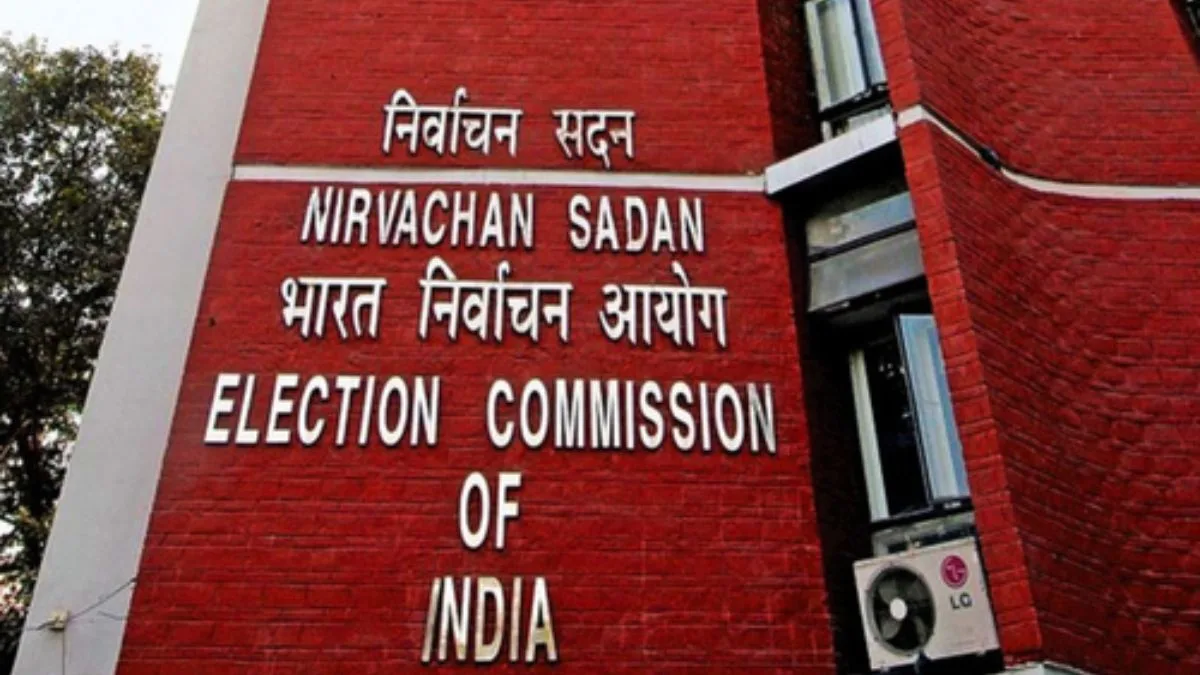
The deadline for voter list corrections in Tamil Nadu ends today, with the Election Commission set to publish the final electoral rolls on February 17 after completing verifications.
Statesman News Service | New Delhi | February 10, 2026 9:10 am
EC purge continues to ensure free and fair polls in second phase of Bengal polls
Today (February 10, Tuesday) is the last day for voters across Tamil Nadu to submit corrections, claims, and supporting documents for the state’s electoral rolls, as the Election Commission brings its Special Intensive Revision (SIR) exercise to a close.
The deadline applies to all pending applications, including requests for inclusion, corrections to personal details and responses to verification notices. Officials said all checks are expected to be completed before the final electoral rolls are published on February 17, which will form the basis for upcoming elections in the state.
The revision is being carried out under the supervision of the Election Commission of India to clean up the voter database and remove errors such as duplicate, outdated or ineligible entries. Once finalised, the rolls are expected to list around 5.65 crore voters in Tamil Nadu.
The process began with the release of the draft electoral rolls on December 19, after booth-level officers carried out extensive field verification across the state. Following the publication of the draft list, voters were given time until January 30 to raise objections, seek corrections or apply for inclusion, either through online portals or at special camps organised in districts.
Officials said the response from the public was substantial. Nearly 34 lakh applications were received during the revision period. These included requests from first-time voters, people who had shifted residence, and those seeking corrections to details such as names, addresses or photographs.
At the same time, election authorities identified entries that required additional verification. About 12 lakh voters, whose names appeared in the draft rolls but who lacked adequate supporting documents, were issued notices asking them to submit proof of identity and eligibility within the stipulated period.
With the correction window closing today, election staff have stepped up field visits and document collection to resolve all outstanding cases. The Commission has instructed officials to complete enquiries without delay so that only eligible voters feature in the final list.
Once the Special Intensive Revision concludes, the final electoral rolls will be released on February 17. Voters have been advised to check their details once the list is published and report any discrepancies immediately, with officials underlining that accurate rolls are critical to the conduct of free and fair elections.
The interim India–US trade arrangement has been predictably misrepresented by our Opposition as a concessionary deal that allegedly compromises Indian farmers and small producers.
TUHIN A. SINHA | New Delhi | February 10, 2026 9:04 am
Photo:SNS
The interim India–US trade arrangement has been predictably misrepresented by our Opposition as a concessionary deal that allegedly compromises Indian farmers and small producers. A closer examination however shows the opposite. It is a calibrated, sector-specific framework that sharply expands opportunities for Indian traders and manufacturers in labour-intensive industries while ring-fencing India’s most sensitive agricultural and dairy interests.
In commercial terms, it is a textbook example of optimising gains where India is globally competitive and protecting sectors where livelihood security is paramount. Labour-intensive industries is where India wins decisively. India’s textiles and apparel ecosystem employs over 45 million people and accounts for close to US$38 billion in annual exports. For the past several months, Indian exporters faced artificially inflated tariffs and uncertainty in the US market, eroding competitiveness against rival suppliers. The new tariff rationalisation sharply reduces this handicap. Even marginal tariff corrections in garments and made-ups have an outsized impact because price sensitivity in this segment is extremely high.
Lower landed costs mean larger and longer-term orders from US buyers, higher capacity utilisation in Indian mills and garment units, and increased employment across cotton-growing regions, spinning, weaving, dyeing and stitching clusters. For MSME exporters who operate on thin margins, predictability itself is a major commercial gain. Leather and footwear exports are similarly labour-intensive, with clusters in Tamil Nadu, Uttar Pradesh , West Bengal and Maharashtra employing lakhs of workers. The restoration of a predictable tariff regime reopens US sourcing pipelines that had slowed due to cost uncertainty.
Indian manufacturers of footwear, travel goods, handbags and leather accessories now regain pricing headroom, allowing them to scale volumes rather than merely chase survival margins. India has steadily emerged as a global sourcing hub for auto components and precision engineering. Auto component exports already exceed US$20 billion, with the US a key destination. Aircraft parts and maintenance-related components, though smaller in absolute value, are high-growth, high-value segments. Tariff easing combined with commitments on standards alignment directly benefits Indian firms embedded in global supply chains.
For traders and manufacturers, this means repeat orders, longer contracts and deeper integration into US OEM ecosystems – exactly the kind of industrial upgrading India has been seeking. The US absorbs roughly 30 per cent of India’s gems and jewellery exports, making it the single most important market for Indian diamond cutters and jewellery manufacturers. Any reduction in duties has an immediate multiplier effect across the value chain – from cutting and polishing units in Gujarat to gold jewellery manufacturers and exporters nationwide. Lower tariffs improve margins for Indian exporters and reduce costs for US retailers, a win-win that strengthens India’s dominance in global diamond processing and jewellery fabrication.
India supplies nearly 40 per cent of generic medicines by volume in the US market. Pharmaceutical exports are already in the US$25-27 billion range annually. The trade framework reinforces predictable market access for formulations and active pharmaceutical ingredients, which is critical for Indian generic manufacturers operating at scale. Given the size of the US healthcare market, even incremental gains in market share translate into billions of dollars in additional exports. For Indian pharma traders and manufacturers, this is not symbolic – it is commercially transformative. The loudest criticism of the deal rests on claims that Indian farmers, dairy producers and poultry growers have b e en “exp ose d” to US competition.
This claim collapses under scrutiny. India has explicitly excluded sensitive agricultural commodities from tariff concessions. Staples such as rice, wheat and other food-security crops remain protected, as do dairy products, poultry and meat. These exclusions follow standard global trade practice and reflect India’s red lines on food security and rural livelihoods. Where certain items like soybean oil or specific processed agricultural inputs are mentioned, it is important to note that these are long-standing imports that India has relied upon for decades. The trade framework does not introduce new exposure; it merely rationalises existing flows already embedded in India’s consumption and processing patterns.
In other words, there is no fresh opening of subsistence agriculture to foreign dumping. The protection architecture for farmers remains intact. Trade is ultimately about margins, scale, and certainty. The India-US framework delivers on all three. Lower tariffs immediately improve price competitiveness for Indian goods in the world’s largest consumer market. Predictable rules allow exporters to plan capacity, invest in tooling and commit to delivery schedules without fear of sudden policy shocks. Concentrating liberalisation in sectors where India has labour cost advantages ensures that export growth translates into jobs, not displacement.
This is not indiscriminate liberalisation. It is targeted expansion. India and the US have jointly articulated a medium-term ambition to scale bilateral trade toward US$500 billion. This is not a leap of faith. If Indian exporters capture even modest additional market share in textiles, gems, pharma, auto components and electronics, cumulative gains over five to seven years can easily reach this threshold. For Indian traders and manufacturers, the message is clear: this framework lowers barriers precisely where India is strongest, while shielding sectors that require protection. Far from being a concessionary pact, the India-US trade deal is a commercially intelligent alignment.
It safeguards farmers, dairy producers and poultry growers, while unlocking unprecedented scale for Indian exporters in labour-intensive and high-value manufacturing sectors. For Indian traders – from MSME exporters to large industrial suppliers – the deal expands markets, improves margins, and restores predictability. With the US market opening wider and a $500-billion trade horizon in sight, the ceiling for Indian enterprise is no longer policy – it is ambition.
(The writer is a national spokesperson of BJP, and a well-known author.)
Historically in the year following a crisis, the defence budget witnesses a jump, whether it be 1962, ‘65, ‘71, Kargil or Sindoor.
HARSHA KAKAR | New Delhi | February 10, 2026 9:00 am
Photo:SNS
Historically in the year following a crisis, the defence budget witnesses a jump, whether it be 1962, ‘65, ‘71, Kargil or Sindoor. The reason claimed is to make up deficiencies but more likely the crisis has been a wake-up call for a government which overlooked defence allocations. This year was no different. Ideally the budget should witness a steady growth year-on-year. As a developing country, possessing the world’s largest population, India faces multiple challenges and hence increasing demands from the budget pie.
The government needs to enhance infrastructure, promote industry and cater for social, medical and skilling needs of its population. This makes balancing the budget difficult. The defence budget this year has witnessed an increase of about 15 per cent over the previous year, rising from Rs 6.81 lakh crore to Rs 7.84 lakh crore. It also includes pensions totalling Rs 1.71 lakh crore. The revenue section, earmarked for sustenance of the force, including salaries, is Rs 3.65 lakh crore. The capital expenditure has risen by 22 per cent to Rs 2.19 lakh crore. According to the government, the focus remains on internal sourcing of defence products with a large part of the capital budget earmarked for domestic procurements. The finance minister also mentioned that the b udget caters for modernization of the armed forces with emphasis on AI, robotics and space.
The NIFTY India Defence index dropp e d with the announcement of the budget, indicating that the industry expected higher funding and increased allocation for domestic products. There is no doubt that when compared to challenges faced by India, two nuclear powered adversaries who have combined in a conflict, the budget is less. Further, air power, a critical component of any military power, has been witnessing a drop in capabilities and needs a boost. There are also increasing challenges in the Indian Ocean region, necessitating a more powerful navy.
The armed forces are imbibing technology while restructuring and modernizing to meet future challenges. Hence, funding to support these initiatives are essential. It must be noted that the primary role of the armed forces is not waging war but war avoidance by developing capabilities which deter adversaries. There has been a constant demand that the defence budget should be a minimum of 3 per cent of the GDP. Europe is moving towards 3.5 per cent in the coming years, while the UK spends 4 per cent. Pakistan also spends 5 per cent on defence. The US exceeds 5 per cent. There is a comparison made with the officially declared budget of China which in 2025 was USD 245 billion, though in reality far more. India’s current defence budget is USD 94 billion.
It is incorrect to compare China’s defence budget with ours. China is competing against the US backed by its alliance partners in the South and East China Seas. It has territorial disputes with most of its neighbours, while claiming Taiwan. India has no offensive intent though territorial disputes exist. It needs strong armed forces to deter misadventures, implying a different set of capabilities which the armed forces are developing. There are op tions for the government to enhance the budget. The first is to announce that allocations would reach 3 per cent over the next few years, increasing steadily year-on-year. The second is implementing the roll-on budget concept for the capital section, wherein amount unspent is carried forward to the next year.
The third is reducing bureaucratic delays in approvals. Delays are responsible for reduction in air and naval capabilities. In addition, each nation has differing priorities for its financial pie. In India’s case it is unknown where defence lies in the government’s priorities. Are funds allocated to other sectors and then defence or vice-versa? There is no doubt that as the economy grows so will the defence budget. Meanwhile, the armed forces need to maximize every penny of the budget in a judicious manner with minimum wastage. For this, joint planning and procurement is essential.
Simultaneously, capabilities can never be created overnight. It takes time. Equipment once inducted, depending on the platform, remains in service for decades, hence needs careful consideration. Detailed trials are essential but once equipment is identified for induction, delays in procurement must be avoided as they impact cost. The revenue and pension share of the budget may witness a drop in the future as the Agniveer scheme gains ground. In the meanwhile, avoiding wasteful expenditure, including delays in approvals, unwarranted court cases related to disability and pensions etc. should be stopped.
There is also a limit to capital expenditure which can be expended by our armed forces in a year. The domestic industry is unable to meet defence requirements in the promised time. The air chief and Chief of Defence Staff have highlighted their frustration on this subject on multiple platforms but to no avail. The MoD needs to deal with defaulting companies firmly. India largely imports its defence equipment from Russia, the US, Israel, and France. There have been delays from the US which are well documented and have been raised with their government, Russia and Israel are involved in their own ongoing conflicts, slowing down exports and at times increasing costs without notice. Joint production with global giants involving multiple rounds of discussions add to time and cost. This makes a roll-on budget essential.
Another problem area is low expenditure in defence R and D. While there has been an increase in allocation to the DRDO, the quantum available for R and D remains roughly 5-6 per cent of the defence budget as compared to 10-15 per cent of leading global powers. Supporting the private sector in R and D and handholding is equally essential. The government has established multiple academiaDRDO-industry centres of excellence; however, a lot more in civil-military fusion needs to be done.
These institutes also need to be financially supported. At the national level the government has earmarked approximately Rs 67,000 crore for R and D. This is just about 0.66 per cent of GDP, which is extremely low. With low levels of R and D funding, the best option for enhancing technology levels is joint ventures between the private sector and global giants. The government is considering joint production of the SU57 which is an ideal option. Such ventures must be with the private sector. We can still exploit the current budget provided the armed forces and bureaucracy work hand in glove in cutting down time and wasteful expenditure. The question is whether they are willing.
(The writer is a retired Major-General of the Indian Army.)
For much of the past two decades, investing in emerging markets has felt like waiting for a train that keeps being announced but rarely arrives.
Statesman News Service | New Delhi | February 10, 2026 8:54 am
File Photo: IANS
For much of the past two decades, investing in emerging markets has felt like waiting for a train that keeps being announced but rarely arrives. The promise was always compelling: faster growth, younger populations, rising consumption and the long, patient convergence with richer economies. Yet for investors, the lived experience was mostly disappointment ~ brief bursts of excitement followed by long stretches of underperformance, volatility, and regret. Equity markets across many developing economies have enjoyed a strong run, currencies have firmed, and local bonds have delivered returns that look surprisingly sturdy next to their counterparts in the richer world.
This revival has tempted some to frame the moment as a simple trade ~ sell America, buy the rest. That is a lazy reading of what is happening. The more interesting story is not about abandonment of one market in favour of another, but about balance being restored after years of distortion. For a long time, global capital was crowded into a narrow corner of the world, chasing a handful of mega-cap firms and a single currency that seemed unassailable. However, when sentiment turned, even briefly, the exits proved narrow. Emerging markets are benefiting partly from that rebalancing. They also bring their own case to the table. Many of these economies are growing faster than their developed peers, not just in headline numbers but in the breadth of activity ~ from manufacturing and services to digital infrastructure and domestic consumption. India, now the world’s fastest-growing large economy, illustrates this shift well: its appeal lies not in a single sector or a short-term story, but in the slow accumulation of scale, productivity, and internal demand. Similar, if uneven, stories can be found across parts of Asia, Latin America and beyond. None of this means that the old risks have vanished. Politics remains noisy, institutions uneven, and capital flows fickle.
A stronger dollar, a sudden tightening of global financial conditions or a geopolitical shock could quickly test today’s optimism. History also warns that emerging markets rarely move in neat, synchronized cycles. Outperformance is usually patchy, with winners and laggards diverging sharply under the same broad label. That is why this moment should not be mistaken for a blanket endorsement or a permanent turn in fortune. What it does suggest is something subtler and more durable: a world in which growth, returns and opportunity are less tightly monopolised by a single geography. For investors, this means selectivity matters more than slogans. For policymakers, it is a reminder that credibility, stability, and openness still do most of the heavy lifting when it comes to attracting long-term capital. The real shift, then, is not from one market to another, but from a period of extreme concentration to one of wider distribution. If that continues, emerging markets will not just be a cyclical trade ~ they will look a little more like what they were always supposed to be: ordinary, essential parts of a diversified global portfolio, rather than a perpetual side bet on hope.
Journalists are easy to dislike. They are often impatient, sometimes smug, occasionally wrong.
Statesman News Service | New Delhi | February 10, 2026 8:40 am
Journalist to representational image
Journalists are easy to dislike. They are often impatient, sometimes smug, occasionally wrong. They compress complex realities into blunt narratives and, in doing so, step on many toes. In an age of social media, every error is amplified, every perceived bias weaponised. It is therefore tempting, even comforting, for those in power ~ and sometimes for the public ~ to treat the troubles of journalism as a minor irritation in an already noisy world. That would be a serious mistake. Across much of the globe, the space for independent reporting is shrinking. This is not only happening in places long accustomed to censorship, but increasingly in countries that still hold elections and call themselves democracies. The methods are rarely dramatic.
Instead of outright bans, there are tax investigations that never quite end, surveillance that is never officially acknowledged, lawsuits designed less to win than to exhaust, and a convenient blindness when “patriotic” mobs decide to rough up inconvenient reporters. Each tactic, taken alone, can be explained away. Together, they form a pattern: scrutiny becomes risky, and risk changes behaviour. The real danger is not merely that fewer scandals are reported. It is that fewer are prevented. Corruption does not thrive in darkness by accident; it thrives because darkness lowers the price of misbehaviour. When exposure is unlikely and consequences uncertain, the calculation changes. Petty favours become routine. Large favours become policy. Public office slowly turns into a private opportunity. Defenders of pressure on the press often argue that journalists are biased, elitist, or irresponsible. Sometimes they are right.
But this misses the point. A flawed watchdog is still a watchdog. Removing its teeth does not produce better journalism; it produces quieter theft. Courts, parliaments and audit bodies matter, but they rarely act without information and public pressure. In many systems, that pressure is generated first by reporters who are willing to dig, document and persist. There is also a comforting myth that corruption is mainly a cultural or moral problem, something embedded in certain societies and absent in others. In reality, it is more often an institutional one. Change the incentives, and behaviour follows. Reduce the chance of being caught, and more people will take the risk. Increase transparency, and even imperfect systems improve.
The relationship is not mechanical, but it is persistent enough to be visible wherever it is measured over time. Public distrust of the media complicates this picture, but it does not negate it. One can be sceptical of headlines and still recognise the value of scrutiny. Indeed, the solution to bad journalism is not intimidated journalism, but better journalism ~ more plural, more competitive, more accountable. When leaders complain that the press is a nuisance, they are often telling the truth. Scrutiny is inconvenient by design. But a society that trades inconvenience for comfort may soon discover it has also traded oversight for opacity ~ and opacity, sooner or later, for abuse. Less light does not produce more order. It usually produces more loot.
The First Amendment in the U.S. Constitution’s Bill of Rights (ratified in 1791) is the bedrock for protecting its citizen’s freedom of expression and belief.
BHOPINDER SINGH | New Delhi | February 10, 2026 8:29 am
Photo:SNS
The First Amendment in the U.S. Constitution’s Bill of Rights (ratified in 1791) is the bedrock for protecting its citizen’s freedom of expression and belief. Encompassing religion/faith, speech, press, assembly, to the right to petition against a perceived wrong ~ it affords invaluable protection to dissent, disagreement, and even offend the dispensation of the day without fearing retaliation.
This allows democracy to thrive by allowing open debate, positing minority viewpoints, and disallowing authoritarian control of ideas. It is a long American tradition in its proud experiment in democracy. Since time immemorial, artists (especially musicians) have often invoked the First Amendment to use their artistic expression, music, and lyrics, as a powerful political tool. Their creativity communicates contrarian/suppressed ideas and emotions. Their output transcends conventional political platforms to become more mainstream and can play a significant role in bringing about social transformation and enlightenment by becoming rallying cries, flashpoints, or even social anthems. Typically, a government cannot directly ban or arrest an artist, deny space to air their creativity, or even insist that the same be more “patriotic” or “neutral.”
That sort of a thin-skinned reaction is only for “strongmen” who are inherently insecure, illiberal, and authoritarian (peddling intolerance as some sort of a “patriotic” duty). This political maturity has allowed artists like Neil Young, Lady Gaga, John Legend, Eminem, Rage against the machine et al, to posit a voice of alternate consciousness and civic duty, to the chagrin of the Donald Trump administration. Increasingly, the small-spirited Trump is doing everything in his power to diminish the sacred spirit of the First Amendment with indirect means of intimidation and coercive allusions.
But many brave Americans believe in the patriotic duty of dissenting with their government, as they know that a “voice” against the government is not the same as a “voice” against the nation, as there is a big difference in the two realms, and usurpation or conjoining of the same is extremely unhealthy in the long run. One artist who can claim to be the conscience keeper of generations and the “American Dream,” who often flits between patriotism and protest as a sacred covenant is the rock star Bruce Springsteen. A moral witness to the American life, the working-class hero routinely speaks about the “unseen” such as the check-out counter girl, coal miners, veterans, immigrants, outsiders etc.
His stories of hope and disillusionment have made him an integral cultural figure to the vital American Stories. His discography about working class dignity finds resonance in Factory, The River, Jack of all Trades etc.; for veterans and their trauma his anthems have included the likes of The Wall, Devil & Dust, Born in the USA etc.; for civil rights and immigration he has given The Ghost of Tom Joad, American Skin, Galveston Bay etc., and for democracy and its accompanying accountabilities he has sung Land of Hope and Dreams, Death to My Hometown, We Take Care of Our Own etc. Yet another proud American who felt honoured to bestow the Presidential Medal of Freedom to Bruce Springsteen in 2016, Barack Obama, was to joke “I am the President, he is The Boss”! Obama noted, “For decades, Bruce Springsteen has brought us all along on a journey consumed with the bargains between ambition and injustice and pleasure and pain; the simple glories and scattered heartbreak of everyday life in America.”
Politically, Bruce could never be anything but an inclusivist, secular, constitutionalist, and liberal ~ basically, everything that is anathema to the mental construct of an exclusivist, supremacist, xenophobic and unconstitutionally-spirited Trump. Today, as Trump has initiated “Operation Metro Surge” (immigration enforcement) with ICE (U.S. Immigration and Customs Enforcement) an intense controversy with multiple deaths and ham-handed handling has escalated to a societal flashpoint with social and psychological fear prevailing on streets. Community tensions and resilience have triggered mass protests and civic mobilization as Trump goes about the same insensitively and relentlessly. The time is ripe for the 76-year-old Springsteen to unleash his protest song “Streets of Minneapolis” in direct response to the unaccountable conduct of the ICE agents following the deaths of Alex Pretti and Renee Good (ironically, both American citizens).
Bruce’s unsparingly brave lyrics go, “King Trump’s private army from the DHS/Guns belted to their coats/Came to Minneapolis to enforce the law ~ / Or so their story goes.” He adds: “And there were bloody footprints where mercy should have stood / And two dead left to die on snow‑filled streets / Alex Pretti and Renee Good.” It is a classic Springsteen style of moral outrage against everyday lives caught in larger social and partisan causes. As always, he blends his anger with empathy and alludes to missing dignity (a word that Trump seldom uses). The working-class hero amplifies the community voices against a dispensation with his protest anthem. It is very necessary to give abstract policy enforcement a human, tangible, and sensitive nuance, beyond the efforts of the dispensation of the day to shroud the same in some form of patriotic necessity, a “correcting history” agenda with fear mongering. Just as Bob Dylan’s The Times They Are a-Changin’ helped define the 1960s cultural landscape, Streets of Minneapolis personifies the necessary voices of minorities and marginalized communities, and galvanises public action.
But such acts of heroic defiance come with a personal price that a true-blooded American like Springsteen is aware of, and willing to play in the winter of his life. But with their valiant and selfless act, artists like Springsteen do not just memorialize victims, but they also crucially hold the power-that-be to accountability ~ they do so by using their art and expression as a means of cultural storytelling and social influence by standing with their own and with their constitution. Like his powerful lyrics in Land of Hope and Dream he movingly says, “This train carries saints and sinners” whilst dreaming of an inclusive America. It takes guts to stand up to the likes of Trump in today’s America and Bruce Springsteen shows exactly why with his protest anthems he is called the “Boss”!
(The writer is Lt Gen PVSM, AVSM (Retd), and former Lt Governor of Andaman & Nicobar Islands and Puducherry)
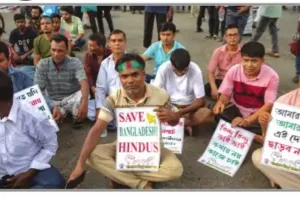
Bangladesh nearing ‘political cliff’, warns US congressional briefing ahead of February 12 elections
A US congressional briefing has warned that Bangladesh is nearing a political tipping point, citing threats to democracy, religious minorities and regional stability ahead of the February 12 elections.
Statesman News Service | New Delhi | February 10, 2026 8:18 am
Participants attend a congressional briefing in Washington focused on Bangladesh’s political situation ahead of national elections. | IANS
A US congressional briefing has warned that Bangladesh is approaching a “political cliff” ahead of its February 12 national elections, flagging mounting pressure on democratic institutions and growing risks for religious minorities. These developments, speakers said, have serious regional and global implications.
The briefing, held at the Rayburn House Office Building in Washington just days before the polls, brought together academics, journalists, and community leaders to assess Bangladesh’s political trajectory, with a sharp focus on religious freedom, electoral credibility, and the rise of Islamist forces.
Speakers cautioned that how Bangladesh navigates this election cycle will not only shape its domestic future but also serve as a broader indicator of stability across South Asia, urging Washington to take a clearer, more proactive stance.
Religious minorities seen as key test of reform claims
Senior fellow at the American Enterprise Institute, Michael Rubin, said the treatment of religious minorities remains the most reliable measure of whether democratic reform claims are genuine.
How a country treats its religious minorities is “a better metric than anything else,” Rubin said.
“When it comes to Islamist parties, like in Bangladesh’s case, like Jamaat Islami, they engage in incitement because they want to use religion to avoid accountability,” he said. “Once tolerance is lost, it’s extremely difficult to win it back.”
Rubin further cautioned that Bangladesh is “well on its way to become a state of particular concern with regard to religious freedom,” adding that the country’s direction should worry Washington irrespective of party lines.
“This is not what we want to see in Bangladesh,” he said. “Bangladesh is one of the most significant countries in terms of population and economy. I would argue that it is very much the barometer for South Asia.”
Call for proactive US response, criticism of diplomatic language
Rubin also criticised what he described as a reactive pattern in US policy towards South Asia.
“The United States across administrations, whether they’re Republican or whether they’re Democratic, has a bad habit of being reactive rather than proactive,” he said.
He took aim at the way political violence is sometimes described in official reporting, warning that vague language can obscure accountability.
“By using the passive voice, what you’re showing is you don’t know who set off the bomb or you’re trying specifically to hide the subject,” Rubin said. “You’re in effect whitewashing terrorism.”
Rubin, during the question-and-answer session, also mentioned that Jamaat-e-Islami should not be treated as a conventional political party.
“I believe it’s a terrorist organisation,” he said.
Election has regional and global security implications
Adelle Nazarian, a journalist and geopolitical analyst with HinduAction, said the February 12 vote must be viewed beyond Bangladesh’s borders.
“This election is not merely a domestic Bangladeshi contest,” she said. “It is a regional and global security event.”
Nazarian warned that the exclusion of the Awami League from the electoral process risks normalising coercive politics.
“When a major party is excluded from the electoral process, the message sent to society is simple and dangerous,” she said. “Power is decided by force, not legitimacy.”
She added that fear is increasingly being weaponised in the political space.
“When rumours become verdicts, when a whisper becomes a death sentence, peace is not merely broken,” Nazarian said. “It is replaced by fear.”
US urged to insist on inclusion, observers and accountability
Nazarian called on Washington to spell out clear expectations for a credible election.
“The United States should state unequivocally that a credible election requires political inclusion, a free press, and equal protection under law,” she said. “International observers are a non-negotiable.”
She stressed that diplomatic statements must be backed by action.
“Words matter, but follow-through matters more,” Nazarian said.
The briefing was organised by HinduAction and the Coalition of Hindus of North America (CoHNA) and took place days before Bangladesh’s scheduled elections, amid intensifying scrutiny of the country’s democratic governance and religious freedom record.
M.P. Birla Foundation celebrates creativity, legacy, community
M.P. Birla Foundation Higher Secondary School, Behala, had recently organised a grand Annual Exhibition–Cum Fete and Cultural Programme, which witnessed enthusiastic participation from students, alumni, parents, staff members and their families.
Statesman News Service | Kolkata | February 10, 2026 7:35 am
Photo:SNS
M.P. Birla Foundation Higher Secondary School, Behala, had recently organised a grand Annual Exhibition–Cum Fete and Cultural Programme, which witnessed enthusiastic participation from students, alumni, parents, staff members and their families. The much-awaited event was marked by creativity, celebration and a vibrant display of talent. The school’s assembly hall showcased a wide range of handicrafts and creative models prepared by students, leaving visitors highly impressed. Alongside the exhibition, several attractive game stalls, including water games and Mickey Mouse-themed activities, were set up for children and adults alike. Numerous food stalls offering a variety of delicious cuisines added to the festive spirit, and visitors thoroughly enjoyed the culinary treats. The programme, held from 2:00 pm to 8:00 pm, was beautifully illuminated with colourful lights, enhancing the charm of the entire campus.
The event was graced by the presence of the Chief Guest, Bishop Sarkar, an alumnus of the school and the SDPO of Diamond Harbour. Eminent personality from the field of art and culture, Ranjit Kaur, attended as the Guest of Honour. The Honourable Secretary of the school, S. K. Daga, Chief Executive Officer S. K. Singh, Principal Purnima Chattopadhyay, and Vice-Principal Shravani Roy Chowdhury were also present on the occasion. The event ended with both the guests praising the students for their creativity, discipline and confident presentations, and wished them a bright future ahead. Parents expressed their happiness, stating that both they and their children thoroughly enjoyed the programme. Alumni associated with reputed organisations shared their pride in seeing the school continue to uphold the same discipline and values that helped shape their successful careers. CEO Shri S. K. Singh stated that the school functions as a collaborative institution where students, parents and management work together for continuous improvement. He highlighted the school’s achievements in both academics and co-curricular activities, adding that the institution has successfully completed 37 years of excellence in education. The event stood not only as a celebration of students’ creative talents but also as a strong symbol of the enduring bond between the school, parents and the wider community.
Academia–industry meet 2026 on 3D printing and additive manufacturing
An academia-industry meet under the finishing school programme on 3D printing and additive manufacturing technology was held at the 3D printing project centre of a state technical university in West Bengal.
Statesman News Service | Kolkata | February 10, 2026 7:27 am
Photo:SNS
An academia-industry meet under the finishing school programme on 3D printing and additive manufacturing technology was held at the 3D printing project centre of a state technical university in West Bengal. The programme is supported by a central government initiative and implemented in collaboration with the university and a national technology organisation.
The meeting brought together participants from academia, industry, research organisations, startups, and government bodies. Discussions focused on current developments, applications and skill requirements in additive manufacturing. The opening session outlined the programme’s objective and the roles of education and industry in this field.
A technical session covered research trends, application areas, design approaches, and business elements of additive manufacturing. Examples were shared from manufacturing and healthcare. Participants even attended the demonstrations and visited the Centre of Excellence.
A panel discussion addressed the startups, skill development, job roles, and challenges associated with the adoption of additive manufacturing. Views were shared from academic, industry, and research perspectives.
During the meeting, joint statements of intent were exchanged with industry and industry-association representatives. These statements relate to collaboration in research, training, and technology development. Announcements were also made on a national-level hackathon and short-term courses for engineering students.
The meeting concluded with a summary of discussions and the need for continued interaction among academics, industry, and government stakeholders.
How Gen Alpha is swiping left and redefining what ‘good education’ means
With technology being a part of almost every aspect of our lives today, Generation Alpha (children born after 2010) are being raised with different ideas about education than earlier generations.
Rima Singh | Kolkata | February 10, 2026 7:23 am
Photo:SNS
With technology being a part of almost every aspect of our lives today, Generation Alpha (children born after 2010) are being raised with different ideas about education than earlier generations. Whereas earlier generations looked at learning as merely acquiring ‘facts,’ Generation Alpha sees the act of learning as much more multidimensional; a way to engage with ideas and experiences. Generation Alpha’s view of the act of learning reflects their view of the future being full of unknown possibilities.
The transformation of education is causing a shift in the definition of what constitutes a good educational experience. Observations made within progressive types of learning environments have shown that Generation Alpha is searching for appropriate, relevant experiences, adaptability/versatility and comprehensive development. The definition of success looks much different than rote memorisation or performance on standardised testing.
The demand for seamless technology integration
Gen Alpha’s worldview is shaped by instant access to information via smartphones, AI assistants, and virtual realities. They want education to reflect this dynamic environment, so instead of using technology as a separate component, they want the integration of technology into education to be as fluid and seamless as possible. Schools that embrace digital technologies in their curriculum create opportunities to encourage a more meaningful and engaged experience for students.
For example, Microsoft-certified schools have shown how platforms like MS Teams can turn remote learning into a collaborative experience, with interactive assignments and virtual explorations.
While helping students maintain continuity in their education through difficult times this way, the method used will help develop digital literacy and good habits for screen time. This is vital for today’s young people, who navigate their way through online worlds intuitively. Teachers have reported that when technology supports inquiry learning rather than simply replacing it, students develop and learn critical thought processes, moving from being passive to active participants in creating content.
The rise of personalised learning pathways
Another key expectation for Gen Alpha is personalisation. Gen Alpha is wary of one-size-fits-all and wants a personalised experience that reflects their interests and allows them to learn at their own pace. Inquiry-based frameworks, like those used in the International Baccalaureate (IB) programs, support this expectation by enabling students to investigate cross-disciplinary units that are driven by real-world problems.
In these environments, smaller classes allow teachers to give focused instruction and for schools to transition from primary to middle school years with orienting activities that help clarify how students progress with assessment criteria. Personalising each student’s learning also includes their social and emotional development, with schools giving as much importance to emotional intelligence as to academic knowledge.
Fostering leadership and community engagement
Initiatives like service projects and student-led senates empower young learners to address community needs, building empathy and leadership from an early age. When education matches these preferences, students become more motivated and see school as a place for self-discovery instead of a duty.
Embracing a global and holistic perspective
A global perspective is equally vital for Gen Alpha, who grow up in interconnected societies. The type of curriculum that they are looking for promotes cultural understanding and how to work together to solve problems, no matter where they are from around the world. Preparation for a global future will include students participating in international competition, exchange programs and multi-lingual offerings.
An example of this type of curriculum is the cross-cultural dialogue and global citizenship projects that students participate in. The intent of these programs is to not only to expose students to experiences outside their own geographical area but to teach students humility and flexibility to adjust to a world that is facing issues related to climate change and global geopolitical shifts.
Holistic development rounds out their redefinition of good education. Creative expression, physical fitness and passion are some of the things Gen Alpha cares about, other than academics. Giving mid-level readers symbolic accomplishments through reading challenges enables those who enjoy reading to become even more passionate. Offering adolescents a variety of co-curricular activities, such as those focused on artistic expression, athletics and music, is an effective means of developing the whole child.
The development of safe and nurturing environments with access to resources for exploration is one way to create facilities that support these types of growth. In addition, schools that were able to pivot to inclusive online programming (including virtual physical education classes and virtual arts classes) during the pandemic demonstrated their resiliency as educational institutions. By providing holistic programming, schools will be better able to help students develop moral virtues, social-emotional resilience, and prepare them for meaningful, productive careers and lives.
Looking ahead: Adapting to an evolving generation
Institutions embracing these expectations often root their approaches in philosophies that prioritise student-centred learning.
As Generation Alpha comes of age, they will continue to influence the development of education. Therefore, education systems need to prepare for Gen Alpha’s entry into the workforce by investing in professional development for educators and creating an environment where teachers can adapt their instructional practices to fit the needs of today’s learners. The new definition of ‘good education’ is not just about passing on knowledge; rather, it is about inspiring young people to develop a sense of wonder and the ability to overcome adversity.
Educators have the ability, through the fulfilment of these expectations, to enable our students to develop the tools and means needed to lead and innovate in the future. This redefinition of the educational process will provide our children with an education that is equitable and meaningful, allowing each child to see education as a means to achieve their individual potential.
(The writer is Head of School – DPS International)
Teddy Day: The soft toy that survived wars, politics and heartbreak to become an emotional lifeline
From a US president sparing a bear to adults hugging plushies after a long workday, the teddy bear has lived many lives. On Teddy Day, we trace how this soft toy quietly grew into one of the world’s most emotional companions.
Statesman News Service | New Delhi | February 10, 2026 1:57 am
Happy Teddy Day!
Teddy Day 2026: Every February 10, ahead of Valentine’s Day, people around the world celebrate Teddy Day. This is a day to give soft, cuddly teddy bears to loved ones. Soft and sweet, teddy bears tell stories of history, childhood, comfort, connection. But how did these fuzzy creatures travel from a moment in political history to living rooms?
Let’s take a stroll through time and understand the journey of teddy bear from its origin to its emotional significance in modern life. Also, happy Teddy Day!
The story of the teddy bear doesn’t start with toy maker. It starts with a US president and a bear hunt.
In November 1902, President Theodore Roosevelt was on a bear hunting trip in Mississippi. After other hunters caught a bear cub and tied it for him to shoot, Roosevelt refused to kill it, calling the act unsportsmanlike.
A political cartoonist named Clifford Berryman drew this moment and published it in the Washington Post, and unintentionally created a cultural icon.
Image Source: Wikipedia
A shop owner in Brooklyn named Morris Michtom saw the cartoon and got an idea. Along with his wife Rose, he made a soft, stuffed bear and displayed it in their candy store with the sign “Teddy’s bear” after the president’s nickname.
The creation became an instant hit, and soon the Michtoms were mass producing the toy, eventually founding the Ideal Toy Company to sell more bears.
At almost the same time in Germany, Margarete Steiff’s company led by her nephew Richard developed a plush bear with movable limbs, based on real bears seen at the zoo. These bears also found success especially in the United States and Europe.
So from the very start, teddy bear was born from unexpected places. A politician, a cartoon, and creativity of everyday toymakers.
Early 20th century: Childhood, holiday gifts, collectibles
By the 1910s and 1920s, teddy bears had become must-have toy for children. They were given as gifts on birthdays and holidays.
The design of teddy bears changed over time. Early bears were made with mohair. This is a wool from goats. They had button eyes. Over time, materials shifted toward softer plush fabrics and safer designs especially for children.
Companies like JK Farnell in Britain joined the trend. They produced some of the first British teddy bears in the early 1900s. They went on to influence characters like Winnie-the-Pooh.
By mid-20th century, teddy bears were everywhere. In nurseries, under Christmas trees, and in arms of children around the world.
Teddy bears in pop culture and war
Teddy bears didn’t just stay in playrooms. They became part of stories, culture, and even history.
In 1921, English author AA Milne created Winnie-the-Pooh, perhaps the most famous teddy bear ever. The stories of Pooh and his friends Christopher Robin, Piglet, Eeyore brought the bear into literature and families’ hearts worldwide.
Teddy bears also appeared in movie culture. In 1957, Elvis Presley performed “(Let Me Be Your) Teddy Bear,” and fans sent him thousands of teddy bears as gifts.
Even difficult times saw teddy bears playing a role. During both World Wars, soldiers often carried small bears with them as reminders of home and comfort.
Why we love teddy bears more than just stuffed toys
A teddy bear is soft, cute, and huggable. But there’s more to it than that.
Scientists call objects like teddy bears “transitional objects”. They help people, especially children, feel secure when separated from loved ones. They bridge the gap between dependence and independence offering comfort when caregivers are not around.
Research from a collaboration of universities in France found that emotional attachment (not size, shape, or fabric) is the most important factor in how comforting a teddy bear is to a person. In experiments involving thousands of participants from ages 3 to 72, attachment mattered more than any physical trait.
Another study published in Discover Magazine notes that characteristics like bigger size and softer fur can enhance comfort, but it’s the emotional bond; the memories, feelings, and personal meaning, that makes a bear comforting.
So when a child hugs a teddy before bed, it’s a source of security and calm. And when an adult holds an old teddy, it’s a memory capsule.
Teddy bears & adults: Nostalgia and emotional well-being
Teddy bears are often seen as children’s toys, but research and surveys show that many adults keep them too.
According to a popular online survey shared by users, as many as 44% of adults have held onto their childhood teddies and soft toys, and around 34% still sleep with them. These numbers reflect not just nostalgia. There’s real emotional comfort that bears provide even to grown-ups.
Psychologically adults may keep teddy bears as emotional anchors. In moments of stress, uncertainty, change, holding something familiar and soft can reduce anxiety. This is much like what security blanket does for a child.
Though the emotional bonds can be strong, mental health professionals regard such attachments as normal and often beneficial. Not something to be ashamed of.
In fact, many adults collect teddy bears too not just as sentimental items but as hobbies. Vintage and rare teddy bears can be valuable. For example, a 1906 Steiff teddy sold for around £10,500 (about $12,746) at auction. A designer teddy bear created with luxury fashion elements sold in 2000 for over $182,000. This is the record for the most expensive teddy bear ever sold.
Teddy bears in today’s world
Today teddy bears live in a world dominated by screens, apps, digital games. So why do they still matter?
Teddy bears offer something digital objects cannot. Tactile comfort. Softness, weight, physical presence of a bear engages our senses in ways screen never can. For many adults, hugging teddy can lower stress, calm nerves, provide sense of grounding.
Meanwhile children still use their bears in imaginative play that develops social skills, empathy, creativity.
Modern teddy bears may also have interactive elements. Sound chips, motion sensors, stories embedded in digital companions. But the core appeal remains the same. Comfort and emotional attachment.
Teddy Day: A celebration of connection
So on Teddy Day, what are we really celebrating?
We’re celebrating innocence, memory, comfort, connection. Be it a small bear on a keychain, a giant plush on a sofa, or a cherished childhood bear passed down through generations, these soft companions are here to tell us that love, comfort, connection matter. Still.
Happy Teddy Day. May your day be soft, warm, and full of connection.
Dharti Ka Chowkidar: Patanjali’s answer to chemical residue, low fertility, and sustainable agriculture
Patanjali’s ‘Dharti Ka Chaukidar’ is giving Indian farmers a green boost! This organic soil enhancer restores fertility, fights chemical residues, and promises healthier, nutrient-rich crops.
Statesman News Service | New Delhi | February 10, 2026 1:55 am
Representative Image
Indian farmers are buzzing about a new hero in the fields: Patanjali’s ‘Dharti Ka Chowkidar’. With more and more crops suffering under the weight of chemical pesticides and fertilizers, many are hailing this organic soil booster as game-changer.
And honestly, it’s hard not to get excited when a product promises healthier soil, happier plants, and better harvests.
Why farmers are talking
The soil in many Indian farmlands has taken a beating over the years. Too many chemicals have left it weak, lifeless, toxic.
Enter ‘Dharti Ka Chowkidar’, a soil bio-enhancer designed to bring the land back to life. The magic? It rebalances soil components, flushes out harmful residues, and revives microbial health. This happens without harsh side effects of chemical inputs. Think of it as a spa day for your farmland!
Works on almost everything
From staples like wheat and rice to legumes such as peas and soybeans, vegetables, medicinal plants, fruits, this product doesn’t play favourites. Its main trick lies in boosting microbes in soil. Microbes are silent heroes helping plants absorb nutrients and grow strong.
Regular use of ‘Dharti Ka Chowkidar’ not only improves microbial activity, but in fact, it also raises bio-carbon levels, strengthens soil structure, increases water retention, enhances aeration. These are all essentials for healthy roots and better yields.
How to use it (the smart way)
Applying this miracle mix is easier than you’d think, but timing and technique matter. Farmers can mix 10-20 kg of the product per acre during the final ploughing, or spread it when the soil is wet.
The exact dose can be tweaked depending on what’s being grown. Over time, these careful applications mean better soil fertility, fewer chemical residues, and crops with improved quantity and nutritional value.
Bonus: spraying on leaves helps correct nitrogen deficiency too.
Health perks for humans
Here’s where it gets really interesting. What’s good for the soil is also good for us. Crops grown organically with ‘Dharti Ka Chowkidar’ are richer in nutrients and minerals. They are free from harmful chemical residues.
That means safer, healthier food for everyone. This also means potentially lower risks of chronic illnesses like hormonal imbalances, cancers, neurological problems linked to chemical exposure.
India is steadily moving toward sustainable farming. And tools like ‘Dharti Ka Chowkidar’ are leading the charge.
Anand revisited: How Hrishikesh Mukherjee, Rajesh Khanna, Amitabh Bachchan redefined life, friendship, Hindi cinema
There are movies, and then there’s ‘Anand’. Rajesh Khanna’s mischief, Amitabh Bachchan’s brooding stare, and Hrishikesh Mukherjee’s magic; somehow it all just sticks with you forever.
Statesman News Service | New Delhi | February 10, 2026 1:35 am
Hrishikesh Mukherjee, Rajesh Khanna and Amitabh Bachchan
If there’s one man who could make ordinary Indian lives feel extraordinary on screen, it was Hrishikesh Mukherjee. 1971 was a year of big wins. India celebrated victories in politics, cricket, and even war. But life was far from easy. Amid national turbulence, Indian cinema quietly offered comfort and laughter. There were moments that made people reflect on what it meant to live fully.
And nowhere was this magic more evident than in ‘Anand’, 1971 classic that still makes us remember the fleeting beauty of life.
Let’s take a deep dive into the world of Mukherjee’s ‘Anand’.
Hrishikesh Mukherjee was a magician of ordinary stories. He could turn mundane city streets, middle-class households, casual conversations into something poetic and relatable.
Mukherjee’s genius lay in his subtle storytelling. Unlike flamboyant directors, he never needed grand sets. He did not demand exaggerated drama to captivate audiences. Instead he drew inspiration from real life weaving in his own experiences, relationships, fears. One of the most poignant examples? His friendship with Raj Kapoor (who was unwell at the time) inspired the dynamic between Anand and Dr Bhaskar in the film.
Mukherjee’s ability to connect with both characters and audience is what made his work timeless. And in ‘Anand’, that skill shines brighter and how!
“Babu moshai, zindagi badi honi chahiye, lambi nahin”
Ask any fan of classic Bollywood. And they’ll tell you that Rajesh Khanna’s line from ‘Anand’. This is a mantra. It was spoken by Anand Sehgal, a terminally ill cancer patient, to his friend Dr Bhaskar Banerjee (played by Amitabh Bachchan).
The film balances despair and hope. Anand’s impending death is looming shadow. But his approach to life is joyful, spontaneous, full of kindness.
This is Mukherjee at his finest. He takes a painful subject like cancer and turns it into celebration of life.
Friendship, laughter, humanity
At its core, ‘Anand’ is a story about friendship. Dr Bhaskar Banerjee is a serious, somewhat disillusioned doctor struggling with inequalities around him. Anand, by contrast, is exuberant, carefree, determined to find joy in every moment.
Their bond is central to film’s magic. Bhaskar worries about poverty, illness, ethics. Then there is Anand who teaches him and the audience the transformative power of laughter and human connection. The film doesn’t shy away from medicine or death. It actually uses these elements as metaphors rather than the main plot.
This interplay of lightness and gravity makes ‘Anand’ universally appealing. Rajesh Khanna’s charming, small-town persona contrasts so, so beautifully with Amitabh Bachchan’s contemplative, slightly brooding presence. And what a real, tender friendship they have created together!
Rajesh Khanna and Amitabh Bachchan
Rajesh Khanna’s performance in ‘Anand’ is often described as effortless. He wasn’t the brooding antihero we later came to know in other films; here, he was the boy-next-door, full of energy, mischief, charm. He could deliver a line, gesture, or even smile in a way that made audiences fall in love instantly.
One remarkable aspect of his performance was his musical expression. Singing while acting; walking, gesturing, emoting is no easy task. But Khanna did it flawlessly. Songs like ‘Kahin Door Jab Din Dhal Jaye’ and ‘Maine Tere Liye’ are emotional windows into Anand’s soul.
Long before he became the “Angry Young Man” of Bollywood, Amitabh Bachchan was a relatively unknown actor. In ‘Anand’, he played Dr Bhaskar with a quiet intensity. He wasn’t tragic or melodramatic; he was thoughtful, ethical, and at times frustrated by the world’s unfairness.
Interestingly, Bachchan’s role was modeled on Mukherjee himself. The director’s own persona which was a mix of practicality, warmth, and moral reflection shines through Bachchan’s Bhaskar.
A city of many lives
‘Anand’ isn’t just about its two male leads. It’s also about the city they inhabit. Bombay, now Mumbai, emerges as a character in itself. The film showcases a bustling, cosmopolitan city where people of different backgrounds coexist.
There was a Bengali doctor (Bhaskar) and Punjabi Anand. Then there was Mrs. D’Souza, the caring Christian matron. There was Isabhai Suratwala, the Gujarati Muslim businessman. Everything diverse! People spoke their own languages. They followed their religions. And yet, they lived in harmony. This is a vision of India that felt aspirational in the 1970s.
There are some minor characters like Raghu Kaka, the servant; Dara Singh, Punjabi wrestler. They contribute immensely to the film’s tapestry.
Music and melody
No ‘Anand’ without its unforgettable music. Salil Choudhury’s compositions elevate every scene. So perfect to complement the narrative!
The songs are character-driven. Anand’s playful, expressive personality comes alive in numbers like ‘Zindagi Kaisi Hai Paheli’, ‘Mere Tere Liye’. Choudhury’s music was storytelling in melody form.
If Salil Choudhury gave us the music, Gulzar gave us the soul. His dialogue, poetry, and lyrical sensibility enriched the film in subtle, unforgettable ways. Who can forget the hauntingly beautiful line, “Maut tu ek kavita hai”?
What could have been
Interestingly the original casting ideas were different. Kishore Kumar was initially considered for Anand. Mehmood was in talks for Dr Bhaskar. However a stage fight involving a Bengali impresario led to changes. This eventually resulted in Rajesh Khanna and Amitabh Bachchan playing the parts.
This twist of fate proved fortuitous. Khanna’s charm and Bachchan’s gravitas created chemistry that became iconic. Sometimes cinematic history is shaped as much by chance as by planning.
The legacy of ‘Anand’ in Indian cinema
‘Anand’ was a statement about Indian life and values. Mukherjee’s vision of ordinary people, real emotions, humour, ethical dilemmas set benchmark for Hindi cinema.
The 1970s were a period of transformation in Indian cinema. The emergence of social realism was on peak. Middle-class narratives, morally complex characters were coming. ‘Anand’ captured all of this while remaining heartwarming and accessible.
In revisiting 1971, we are reminded of a nation finding hope amid challenges… of stories that comforted and inspired… and of a director who understood that cinema’s true power lies in portraying the extraordinary in the ordinary.
King Charles offers palace support as police examine Andrew Mountbatten-Windsor for Epstein Files
King Charles has broken his silence on the Epstein scandal, as Buckingham Palace pledges support for police investigating Andrew Mountbatten-Windsor. New Epstein files suggest the former prince shared confidential information.
Statesman News Service | New Delhi | February 10, 2026 12:43 am
Image Source: X
King Charles has broken his silence on the Jeffrey Epstein files scandal. For the first time, Buckingham Palace has publicly confirmed its readiness to assist police as allegations against Andrew Mountbatten-Windsor, formerly Prince Andrew, are examined.
A palace spokesperson said, “The King has made clear, in words and through unprecedented actions, his profound concern at allegations which continue to come to light in respect of Mr Mountbatten-Windsor’s conduct.”
This royal intervention comes after Thames Valley Police confirmed they are reviewing whether to investigate a complaint lodged by the anti-monarchy group Republic. The complaint alleges Andrew misused his position in public office and breached official secrets.
According to the US Department of Justice documents, Andrew reportedly shared sensitive trade information with Jeffrey Epstein while serving as the UK’s trade envoy in 2010-2011. The revelations include confidential reports on visits to Singapore, Hong Kong, and Vietnam, as well as “confidential” investment opportunities in Afghanistan.
In other words, highly sensitive government intel may have ended up in Epstein’s hands, a stunning betrayal for someone who represented the UK abroad.
The palace statement emphasised that “the King and Queen’s thoughts and sympathies have been, and remain with, the victims of any and all forms of abuse.” Meanwhile, the Prince and Princess of Wales have also expressed being “deeply concerned” about these revelations.
Prince Andrew in the Epstein files
This isn’t Andrew’s first brush with scandal. The December 2023 unsealing of court documents from Ghislaine Maxwell’s 2015 defamation case has reignited scrutiny of numerous high-profile figures. The January 2024 release included mentions US Presidents Bill Clinton and Donald Trump, former New Mexico governor Bill Richardson, lawyer Alan Dershowitz, singer Michael Jackson, and physicist Stephen Hawking.
It’s hard not to shake your head at the cavalier behaviour of these powerful men. And while some of the other men mentioned in the Maxwell case were only in reference in passing, their proximity to Epstein still reflects the toxic network of power and impunity that allowed abuse to flourish.
Even the late model scout Jean-Luc Brunel, accused of sexual abuse by Epstein’s victims, ended his life in 2022 while under investigation.