Logo

T20 World Cup: Important for you to come with your A game to every match, says Tilak Varma

India’s left-handed batter Tilak Varma has cautioned over underestimating any opponent at the Men’s T20 World Cup, saying the tournament’s short format means “any team can defeat anyone” and that one has to come up with their A game in every match.

IANS | New Delhi |

India’s left-handed batter Tilak Varma has cautioned over underestimating any opponent at the Men’s T20 World Cup, saying the tournament’s short format means “any team can defeat anyone” and that one has to come up with their A game in every match. Defending champions India will take on Namibia in their second Group A clash at the Arun Jaitley Stadium on Thursday evening.

“You can’t take any new team lightly, especially in a World Cup. You have seen it in the last match. We haven’t taken it lightly but we need to read the conditions. Surya bhai has helped a lot with the innings he played that night (against the USA).

“At the same point, we have to back our basics and play our best game by looking at the field and the situation they are in. Every ball is of huge importance as T20 cricket is a small format. Anything can happen. Any team can defeat anyone. It is important for you to come with your A game to every match,” Varma said in the pre-match press conference.

While saying that he’s ready to bat in any position in India’s batting line-up, Varma stated that he isn’t shy of positioning himself as an anchor while surrounded by explosive hitters, as per the demand of the situation. “I am always ready to play in any position, but those middle overs are very important to play for a settled batter. The more I take the game deep, if at all we are chasing, then I like to win the game.

“I take the game deep because we don’t have a shortage of power hitting. Everyone is up to smack the ball from opening to number eight. So it is very important to play an anchor in the middle. Like in the batting lineup, one or two batters have to play that role. So I take that pressure on myself, while the rest can go for big hits.

“I think about my batting as per the situation of that day, as every game has a different wicket, atmosphere, and bowler – everything is different. If you play with the same team, every day is different. It doesn’t go the same way. So I go to that zone by being in the present. I just stay there in the present and don’t think about the future. When I go, I react and take the decision that I like,” he elaborated.

He also disclosed that head coach Gautam Gambhir has instructed the team to exercise caution when wickets fall in quick succession, a scenario India faced in their match against the USA, when they were reduced to 77/6. “Head coach has asked us to play cautiously if wickets fall in a cluster like it did against USA. Suryakumar bhai and I can perform the role of anchor if needed.”

“We have discussed that we have done well on numbers three and four, especially me and Surya as we can find gaps in the overs, as Abhishek hits sixes, while Ishan, Sanju bhai and rest of the batters are powerful. The role of a batter in between of it is very important.

“I think that the team that plays well between 6 and 16 overs wins the tournament. That’s why we are taking the responsibility to play at three and four. We have discussed that we will take the responsibility and manage the pressure situation and give the role to the other finishers and that’s the plan,” he said.

Varma, who recently returned from an emergency lower abdomen surgery held in Rajkot last month, expressed gratitude at being back and playing in his first World Cup for India. “Of course, I am really happy that I am back in the World Cup side. I have worked hard for the last few weeks. I have been doing good routines.

“God has been kind to me that I am back in the field. My aim is to win the World Cup. I want to play in the matches. I am ready to play any role that the team requires of me. I always say that I am ready to play for the team and looking forward to it,” he said.

Revealing his mental preparation routines, Varma said he maintains his competitive edge through nightly visualization exercises, even when he was recovering from the lower abdomen injury at the BCCI Centre of Excellence (CoE) in Bengaluru. “First of all, when I don’t have the bat in my hands for a couple of days, I feel strange. It gives a feeling as if I have come to a different world. Before going to sleep every night, I keep visualizing that I am playing in the World Cup final and the big matches.
“I put myself under pressure. But I will not think about it as this has been a habit since childhood. I have been holding the bat for so many years. It comes to my mind automatically before I go to sleep. It is a good thing. That is why I didn’t feel that I had a break as my mind is always in that zone.

“It is always positive for me. That is why I keep preparing. It is the same feeling which came when I played the match. I didn’t feel that I came out of the injury. I came into the zone to win the match and that is the situation of the team. According to that, my body reacted well and everything went well,” he said.

When asked about India’s prospects beyond the group stage, Varma insisted on a match-by-match approach. “There is a lot of time for the Super Eights. There is also still time for the final. We have to go match by match. For now, we have to think about tomorrow’s match and what we can do well in that game. We have to think about it as it’s needed to go match by match. When everything goes well, it feels fine,” he said.

Playing a World Cup on home soil brings its own unique pressures and privileges, according to Varma, who described the experience as a dream for any cricketer in the country. “First of all, it’s a dream to play the World Cup in home conditions, and you have to be very fortunate to get it. We started the first match in Wankhede and were very lucky. I think not every cricketer gets this moment.

“The more you express, the more you enjoy. At the same point, you have pressure in playing in home conditions, as everyone thinks we have to win. You can see in the last match how much the crowd supported us. Expectations are there. At the same point, you have the support of the crowd.

“You can enjoy, as you know the conditions. There are advantages and disadvantages as expectations are there. We have been doing this since childhood. We are used to managing the pressure, as that’s our job. We are enjoying it now. Let’s see what happens next,” he concluded.

Liverpool narrowly defeat Sunderland to close gap

Liverpool kept their hopes of a top-four finish alive with a narrow 1-0 victory over Sunderland, courtesy of Virgil van Dijk’s second-half header.

UNI | New Delhi |

Liverpool kept their hopes of a top-four finish alive with a narrow 1-0 victory over Sunderland, courtesy of Virgil van Dijk’s second-half header.
Arne Slot’s side, coming off a late defeat to Manchester City, secured a vital three points on Wednesday to remain in contention for a Champions League spot, as per the Premier League website.

After a competitive first half, Liverpool broke the deadlock in the 61st minute when Mohamed Salah delivered a corner that Van Dijk glanced goalward. Despite Habib Diarra’s attempt to clear, the ball crossed the line to hand the visitors the advantage.
Florian Wirtz had earlier come closest to scoring before the interval, forcing goalkeeper Robin Roefs into a smart save with a dipping effort before striking the post with a low drive across goal. The German also saw a header comfortably gathered as Liverpool pressed.
Sunderland threatened on the counter-attack in the opening stages, with Brian Brobbey denied by a crucial block from Ibrahima Konate, while Trai Hume and Nordi Mukiele fired off target early in the second half.

Liverpool created further opportunities to extend their lead, with Hugo Ekitike heading wide and Salah sending a volley just past the upright, but they were unable to add to their tally.

The hosts, missing Granit Xhaka once again, pushed late in search of an equaliser but failed to break through as their unbeaten home run in this season’s Premier League came to an end.

Liverpool remain sixth in the standings but close the gap to three points behind fourth-placed Manchester United, while Sunderland stay 11th.
UNI VAN AAB

Four days after Kanpur’s Lamborghini accident, tobacco tycoon’s ‘VVIP son’ Shivam Mishra finally arrested

Tobacco tycoon KK Mishra’s son Shivam was arrested by the Kanpur Police a day after his driver, Mohan, claimed that he was driving the Lamborghini luxury car when the accident took place on February 8.

Statesman News Service | New Delhi |

The Kanpur Police on Thursday arrested Shivam Mishra, who was allegedly behind the wheel when his Lamborghini hit several vehicles in the city four days ago. At least one person was injured in the accident.

Mishra was arrested from a hospital. Police said they have established that Mishra was driving the car when the accident took place on Kanpur’s VIP Road on February 8, Sunday.

Shivam Mishra is the son of tobacco businessman KK Mishra and resides in Arya Nagar. KK Mishra had earlier claimed that his son was undergoing treatment in Delhi.

“We got information that he (Shivam Mishra) is in Kanpur. Five teams were formed, and we have arrested him, and he has been presented in court. In the investigation, it has been found that during the accident, Shivam Mishra was driving the car,” DCP, Central Kanpur, Atul Kumar Srivastava told news agency ANI.

The accident took place on February 8, when the luxury car hit an autorickshaw and a Bullet motorcycle before crashing into a pole near Jhula Park Crossing.

According to eyewitness accounts, the car was moving at a high speed when the accident took place.

Driver claimed he was behind the wheel

The arrest came just a day after Mishra’s driver, Mohan, claimed that he was driving the car at the time of the incident.

Mohan said that Shivam Mishra was sitting beside him and had a seizure and fell on him.

A luxury car crash, a disputed driver, and CCTV evidence: Inside Kanpur’s Lamborghini case

“He had a seizure. Suddenly, his arms and legs started shaking, and he fell on me. I was there (at the spot). I was there on the day the accident happened. The bouncer pulled me out (of the car),” Mohan was quoted as saying.

Narendra Kumar Yadav, Mishra’s lawyer, also stated that driver Mohan, through an affidavit, had claimed responsibility for the accident. Yadav today asserted that Shivam Mishra has been wrongly arrested as he was not driving the car.

“The injured and the plaintiff in the case reached a settlement and have received all the compensation, and after receiving it, he has written a line below that he does not want any action in this case. Now that he has received the compensation, he does not want any action. After this, who can make a better plea than him? He himself has identified the driver,” Narendra Kumar Yadav said.

However, Kanpur Police Commissioner Raghubir Lal had also said that Mishra was driving the car and that is why his name was included in the FIR, which was originally filed against unknown persons. According to Lal, Mishra was established to be driving the car based on the evidence collected so far, including CCTV footage.

“When Shivam’s name comes up in our investigation, it means that we are satisfied that the driver was Shivam, so they can keep saying anything. We have CCTV footage. His name has been included in the FIR,” the Commissioner had stated.

The Kanpur Police had filed the case under relevant sections of the Bharatiya Nyaya Sanhita (BNS), 2023, including Sections 281, 125(a), 125(b), and 324(4).

Instagram on trial: CEO Adam Mosseri confronted on teen mental health, plastic surgery filters, harmful scroll | All details

Instagram CEO Adam Mosseri faced a courtroom storm as families accused the platform of fueling teen depression and addictive use. Under oath, Mosseri denied the app was addictive, but internal emails and controversial design choices put him on the defensive.

Statesman News Service | New Delhi |

It was not a product launch. It was not a flashy tech conference. There were no applause breaks, no influencer selfies, no trending hashtags. Instead, Instagram chief Adam Mosseri sat in a Los Angeles courtroom, under oath, answering questions that could shape the future of social media.

And the biggest word in the room? Addiction.

But Mosseri does not like that word.

“Addiction” or just “too much”?

On Wednesday, during testimony in a high-profile California trial, Adam Mosseri made one thing very clear: he does not believe Instagram is clinically addictive.

“I’m sure I said this,” he told the court, “but I think it’s important to differentiate between clinical addiction and problematic use.”

He repeated several times that he is not a medical professional. And he stressed that there is a difference between saying you are “addicted” to something in a casual way and being medically addicted.

To explain his point, he gave a relatable example. He said he may have once described himself as being “addicted” to a Netflix show. But that does not mean he had a clinical addiction.

“So it’s a personal thing,” Mosseri said. “Yeah, I do think it’s possible to use Instagram more than you feel good about. Too much is relative. It’s personal.”

That statement may sound simple. But inside that courtroom, it carried huge weight.

Because this trial is not about casual scrolling. It is about mental health, teenagers, and whether social media companies knowingly built products that could harm young people.

The girl known as ‘KGM’

At the center of this Los Angeles trial is a 20-year-old woman identified only by her initials: KGM.

She and her mother allege that Instagram’s design especially features like infinite scroll led to addictive behaviour. According to the lawsuit, this behaviour worsened her depression and suicidal thoughts.

The question for the jury is straightforward but serious: was Instagram a substantial factor in her mental health struggles?

A Meta spokesperson pushed back. “The evidence will show she faced many significant, difficult challenges well before she ever used social media,” the spokesperson said.

This case is one of several “bellwether” trials. That means it is a test case. The outcome could influence hundreds of similar lawsuits filed by families and school districts against Meta, YouTube, TikTok, and Snap.

Originally, TikTok and Snap were part of this case. But they settled with one of the plaintiffs and are no longer involved in this specific trial.

Still, the bigger legal storm is far from over.

The bigger legal wave against big tech

Across the United States, hundreds of families are suing major tech companies. They claim these platforms knowingly created addictive products that damaged children’s mental health.

Mosseri is the first major executive to take the stand in this series of trials.

Psychologists do not officially classify social media addiction as a medical diagnosis. But researchers have documented harmful consequences from compulsive use especially among young people.

Lawmakers worldwide are also raising alarms about the addictive potential of these platforms.

Mark Lanier, the lawyer representing the plaintiff in the LA case, asked Mosseri whether Instagram sometimes puts profit before safety. He questioned whether design features were intentionally built to keep users hooked.

Lanier also referred to social media apps as “digital casinos” because of features like endless scrolling.

Mosseri disagreed with the addiction label. But he did acknowledge something important: problematic usage can exist.

“I think it depends on the person,” he said when asked whether problematic usage of Instagram is real.

Profit vs protection

One of the most intense moments in court came when Lanier pressed Mosseri about his role as a decision-maker.

Does he prioritise profit? Or does he prioritise testing and safety first especially when minors are involved?

“In general, we should be focused on the protection of minors,” he said. “But I believe protecting minors over the long run is good for business and for profit.”

Still, some families watching the trial were not convinced.

Matthew P Bergman, founding attorney of the Social Media Victims Law Center, said in a statement:

“Adam Mosseri’s testimony under oath today revealed what families have long suspected: Instagram’s executives made a conscious decision to put growth over the safety of minors.”

That is a serious accusation. And it did not stop there.

The plastic surgery filter controversy

One of the most explosive parts of the trial involved digital filters specifically filters that could make users look like they had plastic surgery.

Mark Lanier introduced a November 2019 email exchange between Meta executives. The subject? Whether to ban these face-altering filters.

In the emails, executives debated concerns from health experts and the press. One subheading even included the phrase: “PR fire on plastic surgery.”

Meta’s tech chief Andrew Bosworth wrote that he had informed CEO Mark Zuckerberg about the issue. According to the email, Zuckerberg was concerned about whether there was solid data proving real harm.

“He is concerned about whether we have good enough data that this represents real harm,” Bosworth wrote.

Another executive, John Hegeman, warned that a blanket ban on filters that could not be replicated with makeup might hurt competitiveness in Asian markets, including India.

Also Read: 2016 trend on Instagram: Detailed look at why 2016’s pop culture, memes, music are going viral again in 2026

“A blanket ban… is going to limit our ability to be competitive in Asian markets (including India),” he wrote.

Hegeman suggested building a “nuanced framework” instead of banning everything outright.

Mosseri testified that he interpreted Hegeman’s comment as being about cultural relevance, not money.

He said Meta does not earn revenue from filters. Instead the company wants to remain culturally relevant so users can enjoy the platform.

“We want to help people express themselves,” Mosseri said. “But when it comes to revenue, that’s based on how many ads people see on Instagram.”

He added that he had not seen data showing that filters increase ad consumption.

“It’s not a revenue decision,” he said.

Three options, one risky choice

Another email exchange presented in court showed Mosseri being asked to choose between three options before going to Zuckerberg for a final decision on the plastic surgery filters.

Here were the options:

Option 1: Temporary ban under current policy, re-evaluate later with more data.
Pros: Reduced well-being concerns, no PR or regulatory risks.
Cons: Limited growth.

Option 2: Lift the ban but stop recommending the filters.
Cons: Still a notable risk to well-being.

Option 3: Lift the ban entirely.
Pros: Lowest impact to growth.
Cons: Highest risk to well-being and bad media attention.

Mosseri said he preferred Option 2.

Margaret Stewart, vice president of product design and responsible innovation, replied to him: “I respect your call on this and I’ll support it, but… I don’t think it’s the right call given the risks.”

She supported banning the filters.

Mosseri told the court that the company ultimately implemented a more “focused ban” involving a subset of digital filters.

Internal warnings: “IG is a drug”

The plaintiffs’ lawyer also brought up internal conversations among Meta researchers.

In one internal message, an employee reportedly wrote: “IG is a drug.”

Another responded: “LOL, I mean, all social media. We’re basically pushers.”

One of them added: “I know Adam doesn’t want to hear it… He freaked out when I talked about dopamine… but it is undeniable. It is biological. It is psychological.”

Mosseri has previously faced scrutiny over whether he dismissed internal warnings about addictive design.

In court, he maintained that Instagram tests features before releasing them to younger users.

“We are trying to be as safe as possible but also censor as little as possible,” he said.

Parents in the courtroom

Some parents who believe their children were harmed, and in some cases died, because of social media were present in court.

One of them is John DeMay.

His son, Jordan, was 17 when he died by suicide in 2022. Hours before his death, Jordan was targeted in an online sextortion scam. Two Nigerian brothers used a hacked Instagram account to pretend they were a girl. After Jordan sent nude photos, they blackmailed him for $1,000 and threatened to send the images to his friends and family.

DeMay spoke before Mosseri testified.

“It’s absolutely a win for us already because the testimony is public, the internal documents are public,” he said. “Now Mr. Mosseri is going to have to go on the stand and try to justify why his company was doing the things they were doing… even though kids are dying over them.”

DeMay said he has more hope in the courts than in lawmakers.

“Every time we try to get something legislatively done it’s a grind,” he said. “I’ve lost a lot of hope.”

He believes financial pressure could force change.

“When they start getting sued for hundreds of millions of dollars… they’re going to be forced to make changes or else they’re going to go broke.”

Bypassing a powerful law

Interestingly, the plaintiffs are not focusing on harmful content posted by users. Instead, they are targeting the design of the platforms themselves.

That strategy is important.

There is a federal law that usually protects tech platforms from being sued over third-party content. By focusing on product design, features like infinite scroll, the plaintiffs are attempting to bypass that legal shield.

Are safety tools really working?

Instagram has added new safety features in recent years, especially for younger users.

But a 2025 review by Fairplay, a nonprofit group advocating to reduce big tech’s influence on children, found troubling results.

According to the review, fewer than one in five safety tools were fully functional. About 64% were either substantially ineffective or no longer existed.

This trial is just the beginning.

It is one of multiple cases questioning what tech companies knew about the potential dangers of their platforms, and when they knew it. For now, the man who runs Instagram says the line between addiction and problematic use matters.

France probes diplomat’s links to Epstein; past allegations of child sex abuse website access resurface

The French government has referred the matter to prosecutors and ordered an internal review after newly released US investigation files revealed past email exchanges between the diplomat and the disgraced financier.

Statesman News Service | New Delhi |

France’s Foreign Minister Jean-Noel Barrot has sought a formal investigation into a senior diplomat accused of corresponding with convicted sex offender Jeffrey Epstein, after separate allegations surfaced linking the official to an earlier inquiry at the United Nations over child abuse websites.

The diplomat, Fabrice Aidan, has denied all accusations.

The development follows the recent release of additional Epstein investigation files by the US Department of Justice.

Foreign Minister Jean-Noel Barrot said he was shocked by the revelations. “When I learnt about it, I was appalled,” he told RTL.

Barrot, in a post on X late Tuesday, said he was talking about the allegations concerning Aidan to the public prosecutor and had ordered an internal probe into the “foreign affairs secretary on leave for personal reasons and holding positions in the private sector.”

Epstein died by suicide in prison in 2019 while awaiting trial on charges of sex trafficking underage girls.

Being mentioned in the newly released files does not in itself suggest criminal conduct.

Past UN-linked allegations resurface after Epstein file release

A review of the documents by news agency AFP indicated that Aidan exchanged emails with Epstein beginning in 2010. At the time, according to French media reports, Aidan was working at the United Nations headquarters in New York.

Some of the correspondence appears to show Aidan forwarding UN documents and reports to Epstein.

One email from 2016 shows Epstein sending Aidan a link to a blog post about the dismissal of a “young French diplomat” from the United Nations. The dismissal followed an FBI inquiry in 2013 that allegedly found the diplomat had accessed child sex abuse websites.

French outlets 20minutes and Mediapart reported on Tuesday, citing multiple sources, that the diplomat referred to in that blog post was Aidan.

His lawyer, Jade Dousselin, rejected the claims outright. She said the allegations were “utterly false.”

“There was never any consultation of child pornography sites. The FBI has already investigated without any charges ever being brought, and the investigations conducted in France reached the same conclusion,” she said.

Swanand Kirkire on turning show creator with Bandwaale: ‘Playing the lead made it even more special’

National Award-winner Swanand Kirkire opens up about creating his first web series Bandwaale and playing the lead, calling the experience humbling and exhilarating.

Statesman News Service | New Delhi |

Music composer, singer, lyricist and actor Swanand Kirkire is entering a new creative space as a show creator for the first time with Bandwaale. The Prime Video series also sees him in the lead role, making the project a deeply personal milestone in his career.

Also Read: Swanand Kirkire on Sandeep Reddy Vanga’s ‘Animal’: “What are we even applauding?”

Swanand Kirkire steps into show creation with Bandwaale

Calling the experience special, Kirkire said that working on his first series while also acting in it has been both humbling and exhilarating.


View this post on Instagram


A post shared by prime video IN (@primevideoin)

‘Stories have lived with me for a long time’

Speaking about his debut as a creator, Swanand shared that storytelling has always been part of his life, even beyond music. “For a very long time, stories have lived with me, some through music, some through characters, and some quietly in my head,” he said.

According to him, Bandwaale is the result of those ideas finally taking shape in a form that allows them to grow over time. “Creating my first series and also playing the lead in it has been humbling and exhilarating,” he added.

A different responsibility as creator and actor

The National Award-winning artist explained that the experience came with a unique responsibility, “you’re shaping an entire world while also living inside it as a character. ”Swanand said.

Also Read: Rajpal Yadav in Tihar Jail as dues remain unpaid; his friend says promised financial help has not arrived yet

“I’ve learned to trust the process, collaborate deeply, and let the story guide me.” He described the project as a natural extension of his creative journey and expressed gratitude to Prime Video for backing a story close to his heart.

A new phase with Bandwaale

The series is created by Swanand Kirkire along with musician and composer Ankur Tewari, marking a significant new phase in Kirkire’s storytelling career.

Release date

Bandwaale will start streaming on Prime Video from February 13.


View this post on Instagram


A post shared by prime video IN (@primevideoin)

A career filled with accolades

Swanand Kirkire has won the National Film Award for Best Lyrics twice, first in 2006 for Bande Mein Tha Dum… Vande Mataram from Lage Raho Munna Bhai, and again in 2009 for Behti Hawa Sa Tha Woh from 3 Idiots.

In 2018, he won the National Film Award for Best Supporting Actor for the Marathi film Chumbak. He was recently seen in cameo appearances as Sansad ji in Panchayat 3 and as Mansoor Khan Sahab in Qala, where he also contributed as a lyricist and singer.

Also Read: O Romeo advance booking report: ₹25.2 lakh without block seats, 12,892 tickets sold across 3,431 shows

Manchester City cut Arsenal’s lead with convincing 3-0 Win over Fulham

Manchester City narrowed Arsenal’s lead at the top of the Premier League to three points with a commanding 3-0 victory over Fulham at the Etihad Stadium.

UNI | New Delhi |

Manchester City narrowed Arsenal’s lead at the top of the Premier League to three points with a commanding 3-0 victory over Fulham at the Etihad Stadium.
Pep Guardiola’s side, who needed late goals to beat Liverpool at Anfield earlier this week, were in control from the outset and surged into a three-goal lead within 39 minutes, as per the Premier League website.

Antoine Semenyo opened the scoring in the 24th minute, turning home after Matheus Nunes’ cross deflected kindly into his path. Semenyo then turned provider six minutes later, slipping a pass through for Nico O’Reilly to finish across goalkeeper Bernd Leno.
Erling Haaland made it 3-0 before the break, ending his eight-game wait for an open-play Premier League goal with a precise finish into the bottom-right corner after being set up by Phil Foden.

City continued to dominate proceedings despite Haaland being withdrawn at half-time, though they were unable to extend their advantage. Fulham, meanwhile, struggled to mount a sustained challenge.

Foden was lively throughout the opening half, seeing a volley deflected wide and forcing a save from Leno. Emile Smith Rowe had Fulham’s best opportunities, with one effort drifting wide before another was pushed into the side netting.
Substitute Omar Marmoush was denied by Leno in the second half, while Rodrigo Muniz and Josh King tested City goalkeeper Gianluigi Donnarumma late on, but the Italian secured a comfortable clean sheet.

The result keeps City firmly in the title race, while Fulham remains 12th in the standings after a third consecutive defeat. Arsenal, who face Brentford on Thursday, now see their lead trimmed to three points.

Late artist Mona Bendre’s quiet vision finds voice

Art Magnum is presently exhibiting the magnificent, The Poetics of the Ordinary, a tribute solo exhibition of works by the late artist Mona Bendre, where one could easily view the 23 artworks (oil on canvas) from 2 February 2026 till 14 March 2026.

Statesman News Service | Kolkata |

Art Magnum is presently exhibiting the magnificent, The Poetics of the Ordinary, a tribute solo exhibition of works by the late artist Mona Bendre, where one could easily view the 23 artworks (oil on canvas) from 2 February 2026 till 14 March 2026.

Curated by Subhra Mazumdar and Gayatri Mathur, the exhibition offers a rare and deeply reflective glimpse into the artistic world of Mona Bendre, whose practice quietly unfolded alongside a life rooted in spirituality, discipline, and sensitivity toward nature and everyday experience. Late Artist Mona Bendre was the wife of the renowned artist Late N.S Bendre.

This posthumous exhibition brings together a carefully selected body of work that reveals how Bendre transformed ordinary spaces, objects, and moments into sites of emotional depth and contemplation. Her paintings do not seek spectacle. Instead, they invite viewers to pause and look again at what often goes unnoticed. Corners of rooms, modest landscapes, still life arrangements, and flower compositions become meditative spaces shaped by memory, presence, and inner reflection.

A defining feature of Bendre’s work is her earthy and restrained palette. Deep maroon browns, muted ochres, and softened tonal layers create a sense of atmosphere and quiet intensity. Her surfaces are textured and thoughtfully built, suggesting time, repetition, and lived rhythms rather than dramatic gestures. The result is work that feels intimate and deeply human.

Recurring floral arrangements appear throughout the exhibition as an emotional and symbolic thread. Often composed from fallen blossoms gathered from her garden, these works reflect her bond with nature and her belief in the dignity of small, everyday acts. Each flower, rendered through varied techniques and tonal shifts, carries its own identity, mirroring individual experiences and personal memory.

Alongside these works, the exhibition also features select landscapes and early paintings, including pieces from the late 1960s that demonstrate her confident use of impasto and expressive texture. A contrasting Still Life series introduces brighter hues such as reds, yellows, and metallic tones, offering a joyful and sensorial counterpoint to her earth-toned compositions.

Together, these works reveal an artist who believed that meaning lives not only in the extraordinary but in attentiveness to the familiar. Bendre’s paintings encourage slowness, reflection, and emotional engagement, asking viewers to linger and connect with their own lived experiences.

The Poetics of the Ordinary stands as both a tribute and an invitation- to rediscover the quiet poetry that exists within everyday life.

Russia moves to block WhatsApp; platform alleges push towards state-owned app

WhatsApp says the Russian government tried to isolate over 100 million users from private communication.

Statesman News Service | New Delhi |

Russia on Thursday attempted to fully block WhatsApp, the messaging platform said, alleging the move was intended to steer users towards a state-owned surveillance application.

In a post on X at 6:22 am on February 12, 2026, WhatsApp said: “Today the Russian government attempted to fully block WhatsApp in an effort to drive people to a state-owned surveillance app. Trying to isolate over 100 million users from private and secure communication is a backwards step and can only lead to less safety for people in Russia. We continue to do everything we can to keep users connected.”

The platform did not immediately provide further operational details on the extent of the disruption or whether access had been restored. There was no immediate response from Russian authorities.

WhatsApp has over 100 million users in Russia, according to the company’s statement.

This is a developing story and will be updated.

‘A complete poem remains forever unfinished’

For poet and academician Ajanta Paul, salt water and the soul’s cry are not distant poles of existence, but intertwined currents of life.

TANMOY BHATTACHARJEE | Kolkata |

For poet and academician Ajanta Paul, salt water and the soul’s cry are not distant poles of existence, but intertwined currents of life. Her “littoral lyrics and litanies” evolve organically into the Beached Driftwood Poems, where we find ourselves affirming her prefatory insight: “They [the poems] carry with them the scent of lost landscapes and strange skies, the ebb and flow of thought and life, and the unheard colloquy of insects nestling in their depths.” Just as salt water preserves and transforms driftwood, so too can tears cleanse and heal the soul. In Paul’s vision, the sea and the spirit share a curative rhythm, each echoing the other’s tides. Thus, her everlasting journeys, borne aloft “on the wings of rhetoric,” draw her back to the melancholic earth, even as she drifts in the exotic haze of memory:

I tasted the sounds

of symphonic compounds

explored the edges

of voices and clauses

roamed its reaches exotic

on the wings of rhetoric,

and curled up and slept

while the earth wept. (45)

Memory, for Ajanta, resists confinement within the neat binaries of the reflective or the introspective. In this context, one recalls Vinayak Krishna Gokak’s attempt to canonise a stereotype in his introduction to The Golden Treasury of Indo-Anglian Poetry: “If the poet reflects on the world around him and registers his reactions to it in a wistful or thoughtful manner, he writes reflective poetry. If his face is turned towards the internal world of memories and dreams and he is weighing the significance or insignificance of his own life, he writes introspective poetry.” While we may gloss over the masculine pronoun in Gokak’s formulation, the rigidity of his bi-generic categorisation remains troubling. The “she” of Beached Driftwood, however, not only disregards this limiting stereotyping, but also interrogates the very rationale of such bifurcation. Ajanta’s engagement with memory achieves an iconoclastic scale, inaugurating what may well be hailed as a new genre in Indian English poetry—memory-poetry. Through a dazzling array of metaphors and modes, she stages life’s manifold encounters with memory and its reciprocal shaping of experience. At times, memory appears as “mothballed,” at others “mangled”; sometimes it unfolds as “creases of coordinates,” “kites that don’t fly,” or “yeast in dough.” Elsewhere, it is mapped in the cartographic distance between “lips and eyes,” or tenderly sheltered “beneath my grandmother’s hands.”

Has anyone ever encountered memory taking on a sinewy form, a fleshy quality, or a muscular integrity? In Indian English poetry, perhaps not—at least until now. In the poem “Felled”, the sudden collapse of the protagonist by the wayside is more than a literal slip followed by an inevitable thud; it is, borrowing the poet’s words, “a coming apart”—a disintegration of thoughts and words. Creative minds often endure the rigours of oblivion, haunted by “a curtain of blankness,” yet the searing pain that follows such a slump paradoxically becomes a mnemonic, a vital reminder. Only the truly creative minds know the excruciating pain through which memories are transmuted into artefacts. Rabindranath Tagore’s song celebrates this process as a heavenly act of edification, an amelioration achieved through great bouts of suffering: “Jokhon tumi bandhchile tar se je bishom byatha” (Gitabitan 93) — “The pain was beyond all measure when you were fine-tuning the instrument!” Yet creativity often confronts the rigours of oblivion, a haunting “curtain of blankness” that threatens to erase. Paradoxically, the searing pain that follows such slumps becomes a vital mnemonic, rekindling memory. In its strange, convalescent way, memory—seemingly amorphous and elusive—strives to embody reality: “A sudden rush of darkness/ invades my eyes,/ in an orthopaedic oblivion,/ as a curtain of blankness/ overtakes the vision,/ and I drop down by the wayside/ nursing the twisted tendon of memory” (36).

This embodied dimension of memory resonates with Professor Thomas S. Eberle’s phenomenological analysis in “Organizational Memories” (Routledge International Handbook of Memory Studies 186), where he distinguishes between two forms: (a) disembodied yet manifested memory, and (b) embodied yet unnoticed memory. His account, curiously, also revolves around a patient who, after a cerebral haemorrhage and sudden fall, could not remember how to rise again. Eberle details the painstaking process of rebuilding both forms of memory—cognitive remembering (linked to biography) and embodied remembering (linked to action). Both these dimensions find poetic articulation in “Present Perfect”, where the coordinates of Atlas are juxtaposed with human affection, correspondence, and memory: “Where am I on affections’ atlas? / What says, the heart’s compass.” Measured against such benchmarks—“affections’ atlas” and “heart’s compass”—the wounds of memory resist purely logocentric description. Language, after all, is but a fragile scaffolding, incapable of bearing the sinewy weight of memory: “Gnarled roots of silence/ probed the dark earth of distrust/ overturning edifices of language/ onto the dust. / And peace lay like heaps of broken china / on the carriageway of time/ under the wheels of fate/ rolling over the same” (94). To do justice to the proposition that not all memories can be contained within words, phrases, or sentences, it is fitting to recall the “down-rippled-the-brown-cascade” lines from Ajanta’s story “Shifting”. For Mallika, the protagonist, memory was intrinsically peripatetic—restless, wandering, and incurably elusive: “She had always felt there is something essentially nude and vulnerable about these household transfers, during which the articles of one’s daily use, inscribed with the pains, pathos and passions of a lifetime, each bearing its little legend, each a testimony to the gradual, incremental growth of the collective life of a family were reduced to a heap of tangled shapes, as it were. It seemed to her so many histories were dusted out with the clearing of the lofts, and narratives nipped in the bud with the reduction of a household into its constituent parts” (The Elixir Maker and Other Stories 131).

Ajanta demonstrates a rare poetic mastery in her uncompromising ability to call the spade a spade—a craft I would describe as a perpendicular directness. Eschewing euphemism, she asserts with striking clarity that “a complete poem remains forever unfinished” (87). This steadfast vision has been germinating in her sensibilities since the publication of her inimitable Earth Elegies, where the poem “True Light” resounds not with a whimper but with a resonant bang: “We knew these things, who doesn’t,/ but not as in, really know,/ inevitably dismissing them/ as the carnival’s collateral,/ the casualties of callousness,/ of festivities without ties” (77). Here, her voice refuses dismissal or dilution, insisting instead on confronting the stark truths that lie beneath the veneer of celebration. This is precisely why Ajanta can so unselfconsciously confide in her readers: “One must wear this legacy humbly,/ not making a travesty of trust” (84). As Malashri Lal observes in the foreword, “Ajanta Paul wears her learning lightly and infuses her poems with literary echoes and civilizational history without over-burdening the utterances” (12). Together, these reflections highlight Paul’s ability to balance erudition with accessibility, allowing her poetry to resonate deeply without sacrificing subtlety or grace.

The writer is an Assistant Professor in the Department of English, Women’s Christian College, Kolkata.

Spotlight

Beached Driftwood Poems

Ajanta Paul

Hawakal Publishers, 2023

Price: RS 450, 139 Pages

The power of the little known: Robin Hood of Kathiawar Rescuing Lost Histories

In an ecosystem where the general attention span is that of gnat; history is what the ruling dispensation insists is true; with semi-baked mindsets lapping it all up as the gospel truth and the WhatsApp university the only centre of academic excellence, one wonders what the Harper Collins publication, Robin Hood of Kathiawar and Other Extraordinary Stories from India’s Freedom Movement, is seeking to sell.

Aditi Roy Ghatak | Kolkata |

In an ecosystem where the general attention span is that of gnat; history is what the ruling dispensation insists is true; with semi-baked mindsets lapping it all up as the gospel truth and the WhatsApp university the only centre of academic excellence, one wonders what the Harper Collins publication, Robin Hood of Kathiawar and Other Extraordinary Stories from India’s Freedom Movement, is seeking to sell.

Is it selling an antidote to the infectious malaise or just trying to sell freedom folklore? Whatever the purpose, this 50-tale anthology by Paperclip has been among the most delightful pieces of non-serious, yet deadly serious, writing one has come across. In this convoluted world of historiography, it burrows thin tunnels into faded history, presenting compelling accounts of how, for instance, symbols of the freedom movement have travelled and mutated to inspire societies across time and space.

It rekindles emotion, stokes curiosity and connects remote facts to establish the far-flung ripples of the Indian freedom movement, its leaders and the perfectly ordinary players alike, often in worlds way beyond its shores. In the process, it literally rescues what were high-impact narratives from obscurity, while sticking to diligent research and transforming its findings into amazingly colourful stories of yesteryears. Robin Hood of Kathiawar breathes energy, enthusiasm and playfulness into encounters long forgotten.

From toddy shops in Kerala, Andhra Pradesh and Tamil Nadu, peddling ‘kallu,’ becoming clandestine conspiracy hubs; of the ascetic Alluri Sitarama Raju from Vishakhapatanam (of natu, natu fame) getting trained in the art of bomb-making by Bengal terrorists, or the broad daylight arms heist in Kolkata and Masterda’s master plans and the eventual betrayal by his nephew Netra Sen or, for that matter, Bangali Tola in Banaras, where the Bengali Tola High School, set up by Keshab Chandra Sen, became the hot spot for anti-imperialism, Paperclip has has travelled the subterranean world of the freedom movement.

Going global, Paperclip sleuths figure out why a group of dancers at the Carnival in Salvador, Brazil, dressed in white and swaying to the deep rhythm of Afro-Brazilian percussion, calls itself Filhos de Gandhy (Sons of Gandhi)? The inquiry takes them to a small group of dockworkers in one of Salvador’s poorest neighbourhoods, who once gathered under a tree, inspired by India’s struggle for freedom and Gandhi’s message of peace and resistance, forming a troupe in his name to fight oppression through dance. The Mahatma had never visited Brazil, but he still inspires them to dance. There is more.

“Gaazion mein boo rahegi jab talak imaan ki, Takht-e-London tak chalegi teg Hindustan ki. (As long as the spirit of faith burns in the hearts of the valiant, the sword of Hindustan will rage all the way to the throne in London.)” No, these words were not uttered on Indian soil, though the British thought so as they desperately tried to nab the source of the radio waves emitting venom against the Raj. This story takes one through the thrilling corridors of time to find the curious connection between Il Duce and Radio Himalaya!

Mohammed Iqbal Shedai, an anti‑British radical from Sialkot, who drifted through Ghadar‑style and socialist circles from Afghanistan to Turkey, Russia, France and Switzerland, ended up meeting Arnaldo Mussolini, Benito’s brother. Legend has it that so impressed were the Italians with his anti‑British rhetoric that they told him, perhaps in not so many words: “You want to rant at the British? Fine, do it from our radio station.” Thus came about Radio Himalaya in 1941, a clandestine broadcast based in Rome, used by Shedai and other Indian revolutionaries, to become a powerful tool in the propaganda war against the British Empire.

There was a sartorial revolution, too. Nehru led the way, statesmanlike, as an icon captivating American and European stylists with his adaptation of the traditional Indian bandhgala and achkan into a sleek jacket, with its high, banded mandarin collar. It radiated Indianness, as opposed to Western blazers. With a red rose in the buttonhole and a crisp white kurta‑pyjama to go with, it represented symbolism at its sharpest. A confident India, rooted in tradition yet totally modern.

With Western fashion designers obsessing over minimalist aesthetics, Europe and America embraced the look. Pierre Cardin adapted it for Western audiences, his ‘Cylinder’ suit becoming a hallmark of 1960s fashion. Then came the Johnny Carson moment: the king of late‑night TV strode on to The Tonight Show wearing a Nehru jacket, designed by the legendary Oleg Cassini, sealing Jawaharlal’s place not just in politics but in global style history.

Not that everything was as sleek and sophisticated; certainly not the wild night watching lucha libre (professional wrestling) in Mexico City, only to land up in the home of Bengali radical M. N Roy! Roy, a political fugitive by around 1917, realised Mexico’s potential as a revolutionary base, which is why he founded the Mexican Communist Party at his Mexico City, Colonia Roma home, which became a political hub. Today, in the exclusive nightclub called ‘M.N. Roy,’ revellers, drinkers and dancers have a blast, quite different from that associated with fighting for freedom or communism.

No account of Indian patriotism is quite done without Netaji, especially with a ‘Netaji in Every Pocket?’ That was when Dr Satyendranath Basu and his comrades in the Azad Hind Fauj (INA), all doctors serving in Burma during World War II, were awaiting a gruelling journey back home after being released from captivity. Exhausted and waiting at Jhikargacha railway station, they spotted a packet of bidis with Netaji’s image on it. Instantaneously, spirits soared as the group bought up every pack in the shop, not for the tobacco but to have his face with them. Netaji was more than their commander; he symbolised sacrifice. At that remote post-war theatre, this pack of bidis shouldered the weight of a freedom struggle.

Nuanced stories such as these, with their simple appeal, democratise history and make for everyday conversations; addas. There are innumerable such historic tales soaked in outstanding resilience, remarkable humour and facets of the freedom movement that were owned by the aam aadmi that no one remembers. Truth to tell, nor did such valiant people seek a spotlight in history. Nor perhaps did the writers at Paperclip, this storytelling collective comprising Abhinabha, Indranath, Priyadarshini, Saumyajit, Srinwantu, Subhajit and Trinanjan, seek out the outstanding; they chanced upon curious connections and followed the leads.

This is what makes the stories, quirky and whimsical as they traipse through the precarious world of the outlaw moving between crime and courage or Rani Lakshmibai’s Australian defender, the maverick John George Lang, riding palanquins enroute to fighting annexation; or the memory of Khudiram’s misdirected bomb triggering such panic amongst the British that even a popping soda‑water bottle inside a European club would be mistaken for a bomb attack, causing the members to flee, helter‑skelter.

History is all about a story well told and truthfully so.

Spotlight:

Robin Hood of Kathiawar and Other Extraordinary Stories from India’s Freedom Movement

The Paperclip

Harper Non Fiction India, 2026

Price: Rs 499, 368 pages

Bharat Bandh today: Rahul Gandhi backs strike as Kerala shuts down; Tamil Nadu, Odisha, WB join protests

Rahul Gandhi extended support to the February 12 Bharat Bandh as Kerala witnessed a shutdown and multiple states reported disruptions over labour codes and trade policy concerns.

Statesman News Service | New Delhi |

A 24-hour nationwide strike, widely referred to as Bharat Bandh, disrupted transport, banking, and public services across several states on Thursday (February 12, 2026), with Kerala witnessing the sharpest impact. The protest has been organised by 10 central trade unions, including the All India Trade Union Congress (AITUC) and the Centre of Indian Trade Unions (CITU).

Amid the shutdown, Congress leader Rahul Gandhi extended support to the agitation, saying he stands firmly with workers and farmers protesting the Centre’s labour and economic policies.

Trade unions called the protest to press the Union government to withdraw the four labour codes and roll back other policy decisions. Union leaders claim participation across nearly 600 districts and say close to 30 crore workers are part of the agitation.

From midnight, buses went off roads in Kerala, shops downed shutters, and offices reported thin attendance. In Tamil Nadu, banking and sections of public services faced disruption. West Bengal and Odisha also saw participation as unions responded to the strike call. Essential services were exempted.

Is today a Bharat Bandh? What to know about the February 12 strike

Yes. Trade unions observed a 24-hour nationwide strike on February 12, commonly described as Bharat Bandh, against labour reforms and other policy measures. The impact varies across states and sectors, with hospitals, ambulance services and other essential operations kept outside the strike.

Rahul Gandhi on Bharat Bandh: ‘Stand firmly with issues and struggles of workers, farmers’

Taking to social media platform X, Rahul Gandhi wrote, “Today, lakhs of laborers and farmers across the country are on the streets to raise their voice for their rights. Workers fear that the four labor codes will weaken their rights. Farmers fear that the trade agreement will hurt their livelihoods.”

He further warned that weakening or eliminating the Mahatma Gandhi National Rural Employment Guarantee Act (MNREGA) could take away the last support system for villages.

“And weakening or eliminating MNREGA could take away the last support of the villages. When decisions were made about their future, their voices were ignored. Will Modiji listen now? Or does someone have a very strong grip on him? I stand firmly with the issues and struggles of the workers and farmers,” Gandhi said.

Kerala bandh today: Transport paralysed, commercial activity hit

Kerala came close to a standstill as Kerala State Road Transport Corporation (KSRTC) buses remained off the roads in most depots. Private buses, taxis, and autorickshaws also stayed off duty, leaving major cities, including Kochi, Thiruvananthapuram, and Kozhikode, largely deserted.

Banks and government offices either remained closed or functioned with skeletal staff. Schools and colleges suspended classes in view of commuting difficulties, and some examinations were postponed.

Markets and small industries shut operations, and sections of the plantation and industrial workforce joined the protest. The Karunya Plus lottery draw scheduled for February 12 was postponed due to logistical constraints.

The Kerala government declared the day as “dies non” for state employees, warning that unauthorised absence would result in loss of pay. Leave was permitted only under specific categories, and department heads were directed to ensure protection for those reporting to duty.

Hospitals, fire and rescue services, milk distribution, pharmacies, and newspaper circulation functioned normally. Arrangements were made to ensure the movement of pilgrims to Sabarimala, and participants attending the Maramon Convention were not obstructed.

Tamil Nadu strike on Feb 12: Banking and public services affected; TNSTC warns staff

In Tamil Nadu, trade unions joined the nationwide strike, raising the possibility of disruptions in banking, insurance and sections of transport services.

The ruling DMK’s trade union wing, the Workers Progressive Association (WPA), extended support. Farmer groups under the Joint Kisan Morcha and several student organisations also backed the agitation.

Protesters demanded withdrawal of the four labour codes, halting amendments to the Electricity Act, ensuring a five-day work week for bank employees, stopping privatisation of public sector undertakings and opposing changes to rural employment schemes.

The Tamil Nadu State Transport Corporation (TNSTC) directed staff to report for duty, cancelled sanctioned leave and warned of strict disciplinary action against those who abstain or disrupt services. Educational institutions, IT companies and most private offices were expected to function as usual.

West Bengal bandh: Strike observed in Kolkata

In West Bengal, a nationwide strike was observed in response to the call by several trade unions protesting the policies of the central government. Visuals emerged from several locations in Kolkata as unions participated in the agitation.

Odisha bandh: Trade unions participate in Bhubaneswar

In Bhubaneswar, the Trade Union Co-Ordination Centre, Odisha State Committee, participated in the nationwide strike called against various policies of the central government.

Bharat bandh trade unions strike protest: Key demands explained

Trade unions have positioned the protest as opposition to labour reforms and other policy decisions. Among the principal demands are withdrawal of the four labour codes, halting amendments to the Electricity Act, opposing privatisation of public sector undertakings, a five-day banking work week and objections to changes in employment guarantee schemes.

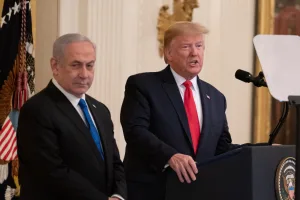
Trump finishes ‘good’ meeting with Netanyahu; says Iran talks will continue, but reminds ‘Op Midnight Hammer’

US President Donald Trump on Wednesday said that his meeting with Israeli Prime Minister Benjamin Netanyahu was a ‘good’ one.

ANI | New Delhi |

US President Donald Trump on Wednesday said that his meeting with Israeli Prime Minister Benjamin Netanyahu was a ‘good’ one.

In his Truth Social post, Trump highlighted that while nothing definitive was reached, he encouraged continued negotiations with Iran to explore the possibility of a deal. He also referenced prior U.S. actions against Iran – “Midnight Hammer,” which he said “did not work well for them.”

On June 21-22, 2025, under “Operation Midnight Hammer,” the United States conducted strikes against Iranian nuclear infrastructure, targeting three key sites in Fordow, Natanz, and Isfahan. Iran strongly condemned the operations, denouncing them as a blatant violation of international law and the UN Charter.

Trump also addressed regional developments, noting discussions on the situation in Gaza and broader Middle East affairs “I have just finished meeting with Prime Minister Netanyahu, of Israel, and various of his Representatives. It was a very good meeting, the tremendous relationship between our two Countries continues. There was nothing definitive reached other than I insisted that negotiations with Iran continue to see whether or not a Deal can be consummated. If it can, I let the Prime Minister know that will be a preference. If it cannot, we will just have to see what the outcome will be. Last time Iran decided that they were better off not making a Deal, and they were hit with Midnight Hammer — That did not work well for them,” his post on Truth Social read.

“Hopefully this time they will be more reasonable and responsible. Additionally, we discussed the tremendous progress being made in Gaza, and the Region in general. There is truly PEACE in the Middle East. Thank you for your attention to this matter! PRESIDENT DONALD J. TRUMP” it further added.
Earlier in the day, Netanyahu met Trump at the White House, marking their sixth meeting since Trump returned to office in early 2025.
“Prime Minister Benjamin Netanyahu is now meeting with US President Donald Trump, at the White House,” Israeli PM’s Office said.

He also met US Secretary of State Marco Rubio.

“Prime Minister Benjamin Netanyahu met, at Blair House in Washington, with US Secretary of State Marco Rubio. Prior to his meeting with President Trump at the White House, Prime Minister Netanyahu signed up, in the presence of Secretary of State Rubio, as a member of the Board of Peace,” as per his office.
Netanyahu said shortly before departing for Washington that Gaza would be among “a series of issues” to be discussed during his meeting with Trump, CNN reported.
The US announced the start of the next phase of the Gaza ceasefire plan in mid-January, following the formation of a new committee intended to administer the battered enclave.

Who is this ‘gori chamdi wala’ to dictate to us?: Owaisi slams US over Russia oil tariff

All India Majlis-e-Ittehadul Muslimeen (AIMIM) chief and MP Asaduddin Owaisi criticised the US trade deal, terming it a disrespect to India’s sovereignty.

ANI | New Delhi |

All India Majlis-e-Ittehadul Muslimeen (AIMIM) chief and MP Asaduddin Owaisi criticised the US trade deal, terming it a disrespect to India’s sovereignty. Owaisi was reacting to US President Donald Trump’s executive order imposing a 25% tariff on Indian imports if the country directly or indirectly purchases Russian oil.

Expressing his discontent with the government’s silence on the issue, the AIMIM leader also asked why India was lowering itself before the US, questioning the country’s self-respect.
Speaking in the Lok Sabha, Owaisi said, “Coming to the US trade deal, Trump signed an executive order – if we directly or indirectly purchase Russian oil, they will impose 25% tariff. Who is this ‘gori chamdi wala’ who will sit there and dictate to us? Did the nation attain freedom for this? We will purchase oil from whoever we want. Who are you to tell us? It is unfortunate that the Govt is silent. Why are we lowering ourselves before this ‘gori chamdi wala’? Where is our self-respect?”

Owaisi also raised concerns over India’s trade agreements with the European Union, warning that the country’s industry is at risk of de-industrialisation.
He said, “With the European Union treaty, our PLI [Production Linked Incentive] will be completely impacted because you have lowered the tariffs. You lowered the tariffs on medical devices; you lowered the tariffs on sophisticated machinery. US industrial goods will come in; there is a danger of de-industrialisation in this country. Are we signing a Free Trade Agreement or a forced purchase order?”

Owaisi further warned about the impact on the textile sector, stating, “The US has told Bangladesh to buy cotton from them at zero tariff. Sir, what will happen to the powerlooms of Bhiwandi, Malegaon, and Banaras? We supply 70 per cent of raw cotton to Bangladesh.”
Last week, White House Press Secretary Karoline Leavitt claimed that India has committed to ending its purchases of Russian oil and will instead source crude oil from the United States, potentially from Venezuela under the newly announced trade agreement between the two countries.

Speaking to reporters outside the White House, Leavitt stated that following direct talks between President Donald Trump and Prime Minister Narendra Modi on Monday, New Delhi agreed not only to halt purchases of Russian oil but also to increase imports of American energy.
She added that India may also consider buying oil from Venezuela, a move she said would benefit the American economy.

“As you all saw yesterday, the President struck another great trade deal with India. He spoke with Prime Minister Modi directly; they share a very good relationship. India committed to not only no longer purchasing Russian oil but also buying oil from the United States, and perhaps also from Venezuela, which we know will now have a direct benefit on the United States and the American people,” Leavitt said.

US deepens minerals, security ties with Pakistan

The United States has described Pakistan as “another important partner” in South Asia, outlining cooperation on critical minerals, trade and counterterrorism even as lawmakers highlighted regional tensions and the risks of instability.

IANS | New Delhi |

The United States has described Pakistan as “another important partner” in South Asia, outlining cooperation on critical minerals, trade and counterterrorism even as lawmakers highlighted regional tensions and the risks of instability.

Testifying before a House subcommittee hearing on US policy in South and Central Asia on Wednesday (local time), Assistant Secretary of State for South and Central Asian Affairs Paul Kapur said Washington is working with Islamabad to strengthen economic and security engagement.

“Pakistan is another important partner in the region,” Kapur told lawmakers.

“We’re working together with Pakistan to realise the potential of its critical mineral resources,” he said, describing efforts that combine “US government seed financing with private sector know-how to the benefit of both of our countries.”

Kapur said economic ties are expanding. “Our trade, energy, and agriculture are expanding as well,” he noted.

He framed the approach within a broader regional strategy, stating, “This will require us to help our partners build strategic capacity, enabling them to integrate into the world economy, preserve their autonomy, and contribute to a free and open region.”

Security cooperation, he added, remains central. “Our ongoing counterterrorism cooperation helps Pakistan combat internal security threats while addressing transnational dangers that could harm our partners.”

The hearing also revisited Pakistan’s long and complex history with militancy. Referencing his academic work, Kapur said: “The point of the book was to look back at Pakistani strategy and discuss how the Pakistanis had interacted with militant and terrorist groups.”

He acknowledged the broader challenge of combating extremist networks. “That’s one of the challenges of dealing with terrorism, that there are small numbers of people that blend into the population. It’s very hard to know,” he said.

Lawmakers underscored the high stakes of regional stability. Democratic Rep. Sydney Kamlager-Dove noted that “India and Pakistan fought their most serious military conflict in decades, risking nuclear escalation in a region of 2 billion people,” describing it as “a reminder of the indispensable role of US Diplomacy.”

Kapur did not elaborate on the current status of India-Pakistan tensions but emphasised that US engagement across South Asia is designed to prevent destabilising dominance by any single power.

“A hostile power dominating South Asia might exert coercive leverage over the world economy,” he said earlier in the hearing.

The renewed US focus on Pakistan’s mineral sector comes amid the broader efforts to diversify global supply chains and reduce strategic dependence on China in key sectors.

The testimony suggested that Pakistan continues to occupy a consequential space in Washington’s calculations — as a security partner, a mineral resource hub, and a key actor in a region where instability can carry global repercussions.

US-Pakistan relations have fluctuated over the past two decades, shaped by counterterrorism cooperation, tensions over Afghanistan, and concerns about extremist networks.

Ex UK PM Sunak to address curtain raiser to India AI Impact Summit 2026

Former Prime Minister of the UK, Rishi Sunak, will address “AI for All: Reimagining Global Cooperation,” a curtain raiser to the India AI Impact Summit 2026, Carnegie India stated.

ANI | New Delhi |

Former Prime Minister of the UK, Rishi Sunak, will address “AI for All: Reimagining Global Cooperation,” a curtain raiser to the India AI Impact Summit 2026, Carnegie India stated.
In a post on X, Carnegie India said, “Pleased to announce that Rishi Sunak, Former Prime Minister of the United Kingdom, will be speaking at “AI for All: Reimagining Global Cooperation,” a curtain raiser to the India AI Impact Summit 2026. Join global experts for an evening of high-impact discussions on AI governance, cooperation, and building an inclusive digital future.”

Additionally, French President Emmanuel Macron will pay an official visit to India at the invitation of Prime Minister Narendra Modi, during which he will participate in the AI Impact Summit, the first global AI summit to be hosted in the Global South, in the national capital, underscoring the importance both countries attach to cooperation in emerging and critical technologies, including artificial intelligence.
According to a statement by the Ministry of External Affairs, the French President will be visiting from February 17 to February 19.

As part of the visit, PM Modi and President Macron will hold wide-ranging discussions to further strengthen bilateral cooperation under the Horizon 2047 Roadmap, which outlines the long-term vision for the India-France Strategic Partnership, and will also jointly inaugurate the India-France Year of Innovation 2026 in Mumbai.

The India-AI Impact Summit will be held from February 16 to 20 at Bharat Mandapam, New Delhi, marking the first global AI summit to be hosted in the Global South.
Designed as a five-day programme covering policy, research, industry and public engagement, the Summit is anchored on three foundational pillars, or “Sutras”: People, Planet and Progress, and is expected to bring together global leaders, policymakers, technology companies, innovators and experts to deliberate on AI’s role in governance, innovation and sustainable development.

The India AI Impact Expo, spanning over 70,000 square metres, is expected to feature more than 300 exhibitors from 30 countries across 10 thematic pavilions, showcasing AI’s transition from research and pilots to large-scale deployment.
The Summit builds on India’s development-focused approach to AI, aligns with the India AI Mission and Digital India Initiative, and emphasises translating global AI discussions into practical, people-centric outcomes.

US ‘excited’ as Bangladesh heads to polls, eyes ‘new chapter’ in South Asia

The United States expressed optimism ahead of Bangladesh’s elections, describing the vote as a new chapter in its engagement in South Asia, even as lawmakers debated how Washington should support democratic transitions in the region.

IANS | New Delhi |

The United States expressed optimism ahead of Bangladesh’s elections, describing the vote as a new chapter in its engagement in South Asia, even as lawmakers debated how Washington should support democratic transitions in the region.

Testifying before a House subcommittee hearing on South and Central Asia on Wednesday (Local time), Assistant Secretary of State for South and Central Asian Affairs Paul Kapur said the administration expects a smooth process.

“We’re excited about it. We’ve been in touch with the interim government. They’ve been — I think they have a strong sense of their responsibility in making this go forward in a way that is secure and peaceful. And we hope that that is in fact what happens, we expect it will be,” Kapur told lawmakers.

“We look forward to working with whatever government is elected there,” he added.

Subcommittee Chair Bill Huizenga framed the election as part of a broader political reset in the region.

Huizenga described the developments, alongside changes in neighbouring countries, as significant turning points.

“Both of these instances offer new chapters for engagement in South Asia. Defining US relations with these new governments,” he said.

Democratic Ranking Member Sydney Kamlager-Dove provided additional context, emphasising the constitutional stakes of the vote.

“Tomorrow, Bangladesh will go to the polls to decide on a new constitution and choose its leadership for the first time since Sheikh Hasina’s ouster,” she said.

“These major political transitions present a rare opportunity for the US to strategically leverage our democracy assistance to support growing regional demand for accountable government governance,” Kamlager-Dove added.

However, she raised concerns about the administration’s broader approach to democracy support.

“The State Department’s rejection of democracy programming and the decimation of USAID has stripped us of the very tools that are needed to advance our interests,” she said.

Kapur reiterated the administration’s readiness to engage constructively.

The exchange highlighted both bipartisan recognition of Bangladesh’s strategic importance and differing views on how the United States should deploy its diplomatic and development resources to support democratic processes.

Bangladesh, one of South Asia’s most populous nations and a key player in Bay of Bengal economic and security dynamics, occupies a sensitive geopolitical space amid broader Indo-Pacific competition.

Lawmakers from both parties suggested that the election’s outcome will shape Washington’s next phase of engagement in the region.