Logo

UPSC CSE 2025 results: City academy’s students achieve multiple all India ranks

APTI PLUS Academy, one of the institutes for civil services preparation, has once again demonstrated its academic strength with multiple successful candidates in the UPSC Civil Services Examination (CSE) 2025 results.

Statesman News Service | Kolkata |

APTI PLUS Academy, one of the institutes for civil services preparation, has once again demonstrated its academic strength with multiple successful candidates in the UPSC Civil Services Examination (CSE) 2025 results. Students from both its Kolkata and Bhubaneswar centres have secured notable All India Ranks (AIR), adding to the institute’s growing list of successful civil servants.

Established in 2006, APTI PLUS Academy has built a strong reputation for UPSC preparation in Eastern India. With centres in Kolkata and Bhubaneswar, the institute is known for its experienced faculty members from Delhi, comprehensive study materials, structured classroom programmes, regular test series, detailed answer writing evaluation, optional subject guidance and modern smart classroom systems.

From the Kolkata Centre, the successful candidates include: Debjyoti Halder – AIR 443; Debabrata Pramanik – AIR 467; Mohsina Bano – AIR 648; Aashish Kumar – AIR 654; Kirti Chowdhury – AIR 760 and Raunak Sharma – AIR 801.

From the Bhubaneswar Centre, the selected candidates include: Sattwik Satyakam Devta – AIR 100; Ankit Agrawal – AIR 217; Sai Raman Patra – AIR 285 and Vishal Pattanayak – AIR 341.

In previous years as well, the institute has mentored several achievers including Ritika Rath (AIR 48, UPSC CSE 2024), Rajdeep Ghosh (AIR 789, UPSC CSE 2024) and Ayushi Pradhan (AIR 36, UPSC CSE 2023), among many others.

The success of these candidates once again reinforces APTI PLUS Academy’s position as a trusted and result-oriented institution for civil services preparation in Eastern India.

President Murmu raises concerns over Santhal people’s unity at Bagdogra meet

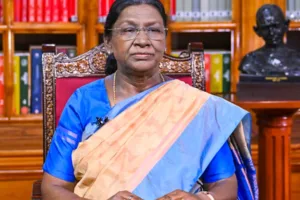
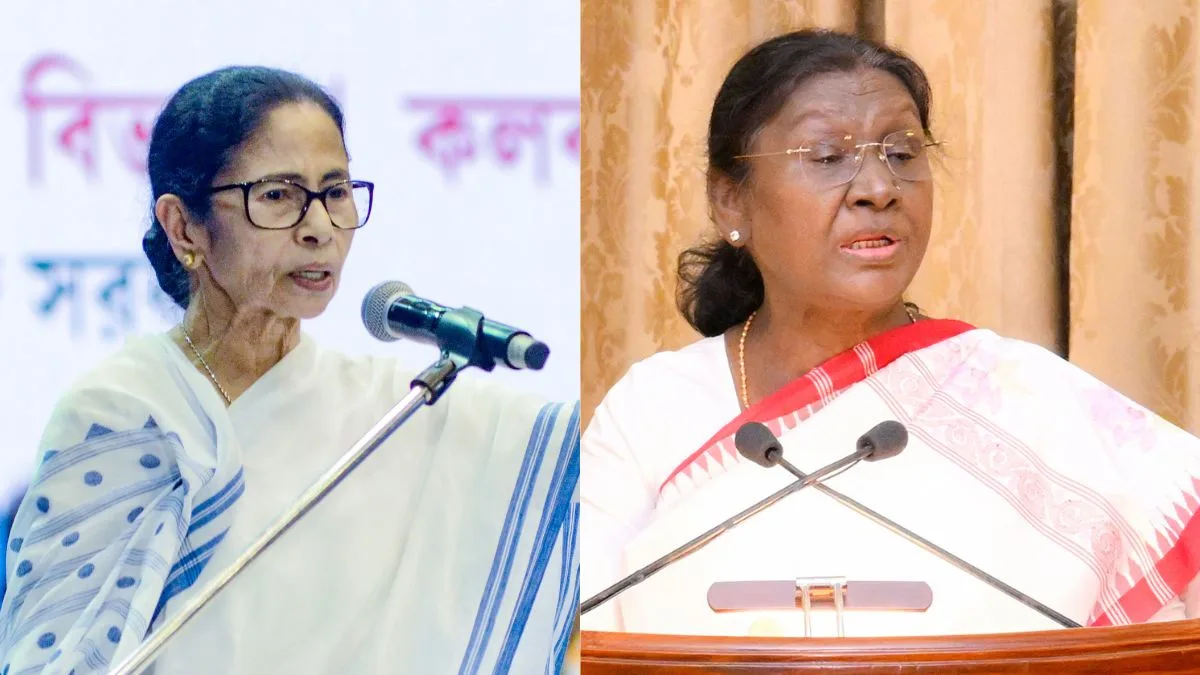
Raising sharp questions over the situation on the ground, President Droupadi Murmu on Saturday expressed concern over what she described as obstacles to the unity and progress of the Santhal community while addressing the 9th conference of the International Santhal Council near Bagdogra in Siliguri.

Statesman News Service | Kolkata |

Raising sharp questions over the situation on the ground, President Droupadi Murmu on Saturday expressed concern over what she described as obstacles to the unity and progress of the Santhal community while addressing the 9th conference of the International Santhal Council near Bagdogra in Siliguri.

Referring to reports that several people were prevented from attending the gathering, the President said such a situation was not befitting an international conference. “It seems some people do not want the Santhal community to unite, move forward and become stronger,” she remarked, after observing that many who wished to participate were allegedly stopped from entering the venue.

The conference was organised on land belonging to the Airports Authority of India near Bagdogra. At the outset of her address, the President thanked the organisers for inviting her and reflected on the identity, heritage and historical struggles of the Santal community, placing them in the broader context of nearly two and a half centuries of governance and socio-political change in the country.

However, she soon voiced dissatisfaction over the situation at the venue. The President said that while seated on the stage she noticed that many people were trying to enter the conference premises but were being stopped. She added that she had witnessed similar scenes on the roads while travelling to the venue.

“I was sitting and watching how many people were being stopped from entering. I also saw the same situation on the way to the venue. From what I observed, it does not appear to be the atmosphere of an international conference,” she said.

President Murmu also raised concerns about the pace of development in the region. She said she was not convinced that development was taking place in the area in the way it should. Questioning the implementation of welfare initiatives, she asked whether the benefits of government schemes were actually reaching tribal communities and whether they were receiving the facilities meant for them.

The President further emphasised that the sacrifices and contributions of the Santhal community in India’s freedom struggle remain a matter of pride for the nation. She questioned whether, as in several other states, special days are observed here to commemorate and honour the role of tribal communities in the freedom movement.

Highlighting the historical legacy of the Santhals, the President referred to the struggles of the legendary leaders of the Santhal rebellion, Sidhu and Kanhu. She said that the contribution and sacrifices of the tribal community have not yet been adequately documented in mainstream historical narratives.

“Numerous books can be written on the struggles and sacrifices of the Santhal community. But that history has not been adequately brought to the forefront. The time has come to rewrite that history, clearly highlighting how the tribal community sacrificed for the nation,” she said.

President Murmu also referred to the constitutional recognition of the Santhali language and paid tribute to former Prime Minister Atal Bihari Vajpayee, noting that it was during his tenure that the path was paved for granting constitutional status to the language along with the Ol Chiki script.

Stressing the importance of education, she called for the promotion of learning in the Ol Chiki script and encouraged the younger generation of the tribal community to pursue education in multiple languages alongside their mother tongue to widen opportunities for growth and development.

She also raised questions about the availability and effectiveness of residential model schools and other educational institutions meant for tribal students in the region, noting that education plays a crucial role in shaping livelihoods and improving the future prospects of the younger generation.

The President further pointed out that the Santhali language has produced several accomplished writers and literary figures. Many of them, she noted, have been honoured with prestigious recognitions such as the Sahitya Akademi Award as well as national honours like the Padma Shri and Padma Bhushan. She also expressed regret, questioning what many of them are doing now even after receiving such prestigious honours and recognition.

City airport sees gradual resumption of West Asia flights after week-long disruption

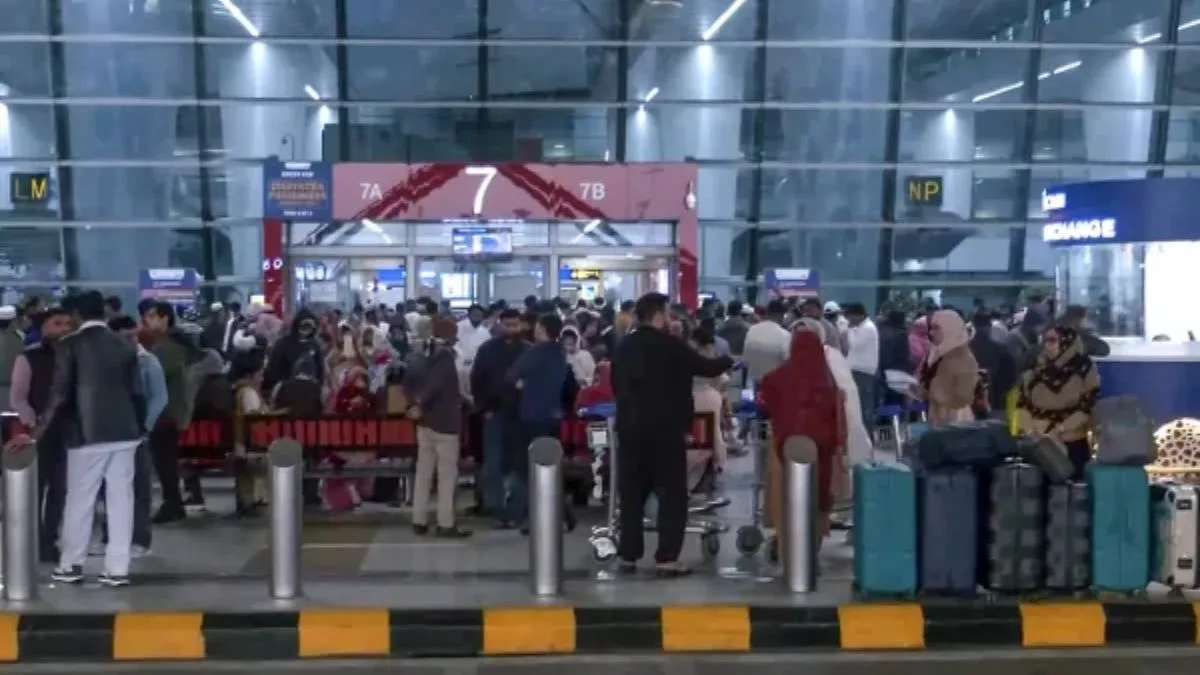
Flight services between Kolkata and several West Asian destinations began returning to normal from Saturday after nearly a week of disruptions triggered by the tense military situation in parts of the region.

Statesman News Service | Kolkata |

Flight services between Kolkata and several West Asian destinations began returning to normal from Saturday after nearly a week of disruptions triggered by the tense military situation in parts of the region.

Officials at Netaji Subhas Chandra Bose International Airport said airlines have gradually started restoring operations while closely monitoring the security situation and reviewing flight routes to ensure passenger safety. A Fly Dubai flight from Dubai landed at the Kolkata airport late on Friday night carrying 163 passengers. The aircraft, operating as flight FZ 461, arrived at 12.53 a.m, slightly behind its scheduled arrival time of 12.25 a.m. The same Boeing 737-800 aircraft later departed for Dubai as flight FZ 462 at 1.59 a.m, carrying 92 passengers, marking one of the first regular movements between the two destinations after the disruption.

Airport sources said the resumption of services is being carried out cautiously in view of the evolving geopolitical situation in West Asia, which had earlier forced several countries to restrict or shut their airspace. Meanwhile, Qatar Airways also operated a diverted service early on Saturday morning. The airline ran a Boeing 777-200 flight, QR 8475, which departed from Kolkata for Jeddah at around 3.58 a.m. The aircraft was originally part of the airline’s Perth-Brisbane service in Australia but has temporarily been redeployed on the Kolkata-Jeddah sector.

Officials indicated that such operational adjustments are being made by airlines to manage schedules and ensure connectivity amid fluctuating airspace conditions in the region. Emirates is also set to resume its scheduled operations between Dubai and Kolkata from Saturday evening. An airport official said authorities are keeping a close watch on developments in West Asia while coordinating with airlines regarding route planning and passenger safety measures. “We are continuously monitoring the situation. Airlines are reviewing flight paths and operational plans depending on developments in the region. Passenger safety remains the top priority,” the official said.

Passengers have been advised to stay updated about their flight status and check with airlines for any changes in schedules or possible cancellations. Flight services between Kolkata and Dubai had remained suspended for several days amid the regional crisis. The last flight from Kolkata to Dubai before the disruption had departed on 28 February at 9.35 a.m, operated by Emirates. No flights operated on the sector for several days thereafter. After nearly 113 hours and five minutes of suspension, limited flight operations between the two destinations resumed earlier this week, with more services gradually returning to normal from Saturday.

Special calendar released on Sholay’s 50th anniversary

The 1975 blockbuster film Sholay by Ramesh Sippy, which created a milestone in Indian cinema, is special in many ways.

Statesman News Service | Kolkata |

The 1975 blockbuster film Sholay by Ramesh Sippy, which created a milestone in Indian cinema, is special in many ways.

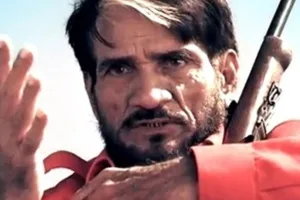
The ‘Sholay 50’, a special calendar was released recently. The two lead vocalists from the Bengali rock band Cactuss, Sidhu and Pota, were present as Jai-Veeru to release the special calendar.

Bengali rock band Cactuss has also crossed thirty years of its journey. On this day, Sidhu-Pota sang the iconic song Yeh Dosti on a sidecar-fitted bike, while Aritra Mukherjee accompanied them on the guitar. Later, in a freewheeling discussion, both Sidhu-Pota walked down the memory lane and spoke about their love for Sholay.

Sanjib Acharya, Chairman of Serum Group, which launched the initiative, said, “Sholay still has a fondness for all of us.” The singer duo, Sidhu-Pota, said: “It is very happy moment and nice that we have been thought of in this special event in the role of Jai-Veeru in this way.”

CBI books Anil Ambani in ₹1,085 crore PNB loan fraud case

According to the FIR, Ambani and former officials of Reliance Communications allegedly defrauded PNB of ₹1,085 crore between 2013 and 2017.

Statesman News Service | New Delhi |

The Central Bureau of Investigation has registered a case against Anil Ambani under Sections 420 and 120B of the IPC based on a complaint by Punjab National Bank Chief Manager Santoshkrishna Annavarpu.

According to the FIR, Ambani and former officials of Reliance Communications allegedly defrauded PNB of ₹1,085 crore between 2013 and 2017.

The bank has alleged that the company took the loan with no intention of repayment and deliberately diverted the funds, amounting to fraud and criminal breach of trust.

The FIR names Reliance Communications, Anil Ambani, Majari Kacker, and other unidentified persons.

Over 52,000 Indians return home from Gulf amid West Asia situation, says MEA

More than 52,000 Indian nationals have returned home from the Gulf region between March 1 and March 7 as the Government of India continues to closely monitor the evolving situation in West Asia and the Gulf, the Ministry of External Affairs said today.

UNI | New Delhi |

More than 52,000 Indian nationals have returned home from the Gulf region between March 1 and March 7 as the Government of India continues to closely monitor the evolving situation in West Asia and the Gulf, the Ministry of External Affairs said today.

‎In an official statement, the ministry said the government remains focused on ensuring the safety and welfare of Indian citizens who were stranded in the region during transit or on short-term visits due to disruptions caused by the unfolding regional situation.
‎“The Government of India is continuously monitoring the evolving situation in West Asia and the Gulf region, especially with regard to the welfare of Indian nationals who have been stranded there during transit or on short duration visits,” the ministry said.

‎According to the statement, more than 52,000 Indians have already travelled safely back to India using commercial and special flights operating after partial reopening of airspace in parts of the region. Of these, 32,107 passengers returned on Indian carriers.

‎Following the gradual resumption of aviation activity, both Indian and foreign airlines have begun operating commercial as well as non-scheduled flights to facilitate the return of stranded travellers. The ministry said additional flights are being planned in the coming days to help more passengers return home.

‎Authorities have also advised Indian citizens currently in West Asian and Gulf countries to remain cautious and follow instructions issued by local authorities as well as advisories released by Indian diplomatic missions in their respective locations.
‎“All Indian nationals in the region are advised to follow the guidelines of the local authorities as well as the advisories being issued by the Indian Embassy or Consulate in their location,” the ministry said.

‎Indian embassies and consulates across the region have set up round-the-clock helplines to assist citizens facing difficulties due to the ongoing developments. The MEA has also established a dedicated Special Control Room to handle queries and coordinate assistance for affected individuals and their families in India.

‎Officials said the control room is actively monitoring the situation and coordinating with missions abroad to address concerns raised by Indian nationals.
‎In countries where commercial flights are still unavailable, Indian citizens have been advised to remain in touch with the nearest embassy or consulate to receive guidance on alternative travel arrangements and the closest available flight options.
‎The ministry reiterated that the government remains engaged with authorities across the region to ensure assistance reaches those who require it.

‎“The safety and welfare of Indian nationals abroad is of utmost priority to the Government, which remains engaged with the Governments across the region to work towards facilitating all those in need of assistance,” the statement added.

Centre seeks report from Bengal over protocol lapses during President Murmu’s visit

Union Home Secretary Govind Mohan has sought a detailed report from the West Bengal Chief Secretary by 5 pm today regarding lapses in the prescribed protocol for receiving President Droupadi Murmu.

Manisha Gupta | New Delhi |

The Central government has sought an explanation from the West Bengal administration over lapses in the protocol during the visit of President Droupadi Murmu to attend a tribal conference in West Bengal on Saturday.

Union Home Secretary Govind Mohan has asked the state Chief Secretary to submit a detailed report by 5 pm today regarding lapses in the prescribed protocol for receiving President Droupadi Murmu. The report also needs to list out reasons for the change of venue of the International Santal Conference in the Darjeeling district, and other related arrangements, according to the officials.

On Saturday, President Murmu expressed disappointment over the arrangements made at the 9th International Santal Conference held in West Bengal and the absence of the Chief Minister. She said that the event earlier scheduled to be held in Bidhannagar but later moved to another venue in Goshaipur near the Bagdogra Airport, citing congestion had left her “sad and upset”.

“I don’t know what went through the administration’s mind that they chose a place for the conference where the Santal people couldn’t go… I am very sad that the people here were unable to reach the conference because it was held so far away. Perhaps the administration had hoped that no one would be able to attend, and the President would simply turn around and leave,” Murmu said.

Reacting to President Murmu’s remarks, PM Modi said the incident was “shameful and unprecedented” and had deeply saddened people across the country.

“This is shameful and unprecedented. Everyone who believes in democracy and the empowerment of tribal communities is disheartened. The pain and anguish expressed by Rashtrapati Ji, who herself hails from a tribal community, has caused immense sadness in the minds of the people of India,” PM Modi posted on X

(With inputs from ANI)

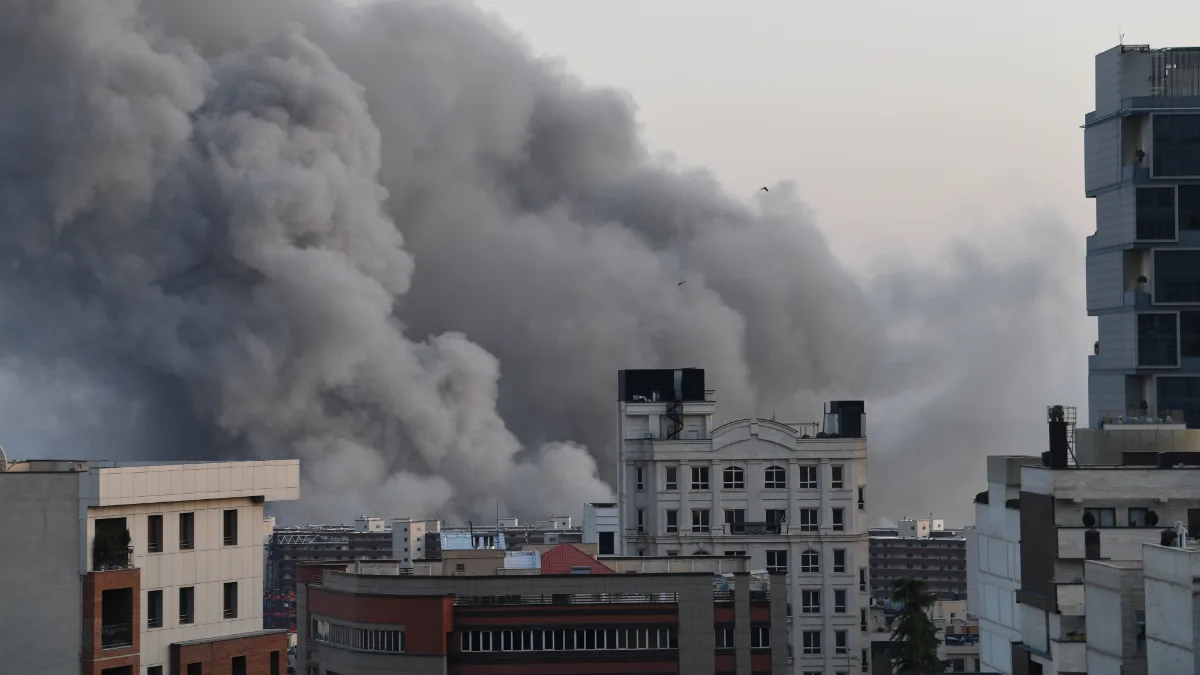
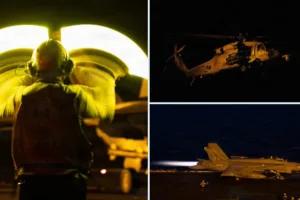
Israel bombs Iran’s fuel storage complexes in Tehran; IRGC escalates missile and drone attacks

The Israeli military today announced that its air force carried out targeted strikes on several Iranian military-linked facilities in Iran’s capital city, Tehran.

Statesman News Service | New Delhi |

The Israeli military today announced that its air force carried out targeted strikes on several Iranian military-linked facilities in Iran’s capital city, Tehran. The strikes further escalated tensions as Iran responded with new missile and drone attacks against Israeli and US-linked positions across the region.

In a post on X, the Israel Defence Forces (IDF) said the Israeli Air Force (IAF) struck multiple fuel storage complexes belonging to Iran’s Islamic Revolutionary Guard Corps (IRGC) in the Iranian capital.

The operation was carried out based on intelligence inputs and targeted sites believed to be used to distribute fuel to various Iranian military units.

“The IAF struck these complexes, where the Iranian terrorist regime would distribute fuel to multiple military entities in Iran,” the IDF said. It stated that the attack had significantly damaged the country’s military infrastructure.

IRGC launches 27th wave under Operation True Promise 4

Following the strikes, Iran’s IRGC announced the launch of its 27th wave under Operation True Promise 4. Iran called it a retaliation move for a fresh wave of “unprovoked US-Israeli aggression” against Iran, according to Iranian state broadcaster Press TV.

In a statement, the IRGC said the latest phase of the operation involved coordinated drone and missile strikes targeting Israeli military infrastructure in northern areas of Israel.

The group said its Aerospace Division used newly developed solid-fuel Kheibar-Shekan missiles equipped with terminal guidance systems to hit what it described as Zionist military targets in Haifa.

Press TV also reported that Iranian drones struck a site housing American personnel in an area identified as “Marina,” located near buildings belonging to Warner Bros. company facilities.

Separately, the IRGC Navy said it targeted facilities linked to the US Fifth Fleet in Bahrain. According to the Iranian military statement, naval forces struck a command centre for unmanned surface vessels and military support hangars at Salman Port.

The IRGC further claimed that Israeli authorities were attempting to shield military personnel by concentrating civilians in northern and central regions, a move it described as the creation of “human shields.”

A review of Where Mayflies Live Forever

They say you cannot quite gauge the depth of a woman’s heart! Even Gods cannot! It is like a quiet, deep, slow-swirling mystery where once you set foot, you will be instantly pulled into its folds! Now whether the mystery that you unveil will take you to an unreal magical realm or to your own burning hell depends on how you ended up reaching the gates of this great mystery in the first place!

Rabina Mitra | Kolkata |

Like the ocean
be vast and unknown,
but if you cannot,
like the river,
be free and forever flowing,
if that too be hard,
then, still as that mystic river,
be whose deeps no eye can see’

They say you cannot quite gauge the depth of a woman’s heart! Even Gods cannot! It is like a quiet, deep, slow-swirling mystery where once you set foot, you will be instantly pulled into its folds! Now whether the mystery that you unveil will take you to an unreal magical realm or to your own burning hell depends on how you ended up reaching the gates of this great mystery in the first place!

At the heart of Anupama Mohan’s debut tale is a brutal gang rape of a woman named Sriveni, in a small town in Tamil Nadu. Sriveni, a girl with long beautiful hair, a darling little child to her mother and grandmother, a girl carrying the ‘siddha’ (divine skills or expertise) within her, as her grandmother believed, a keen observer of nature, a young teacher at the town school gets violated by a powerful political goon Adhiban and his men. Her deep knowledge about women’s bodies and how to protect one under brutal circumstances made her stay alive even after brutal physical assault and it took her four years to recover. When the men attacked her, Sriveni was four months pregnant and though she managed to save her own life somehow, the baby inside her did not survive the attack. Her face, her body was damaged to an extent that seemed beyond repair. Here, what astounds the readers is Veni’s will to live, her will to survive and to heal. Here we find a woman, who knows her worth, who knows the blessings of a life, who gives herself time and accepts the changes in her body. Here we find a woman with a resolve, a woman who does not leave the battleground, a woman whose torn and damaged soul claims recovery, her body a battlefield emerges as a quiet force! Her body absorbs all the benevolent powers of nature and silently taking one step at a time walks towards self-healing. The novel traces how a violated woman gets treated by society, family members, neighbours and acquaintances. How tragedy sets in between the gaps in words, uncanny silences, in the way thoughts turn from something benign to something utterly vengeful. The narrative technique used in the novel is thought-provoking and intriguingly interesting. The novel does not tell us the tale from a single perspective but uses multiple voices. Readers go through the testimonies of Veni’s family members and her childhood friend and also a testimony of a man accused. Mohan uses police case files, forensic details to bring in the seriousness of the crime committed and while in this country rape and gangrape cases have risen more than 20% since 2021, Mohan uses ‘écriture féminine’, which is a style of writing that defies patriarchal, linear way of writing. She avoids providing bodily descriptions, instead she focuses on regeneration of the soul, healing through the quiet, persevering strength of nature.

Mohan’s prose style has a shifting quality. In her recounting of Veni’s childhood days, her days of understanding her own strengths and beauty, the prose almost takes a poetic nature. The tale is punctuated by the use of songs that Aatha (Grandmother) used to sing to Veni. These verses offer a dreamlike setting. Veni’s grandmother was a popular midwife who in her own ways understood female bodies just too well. Veni and her mother helped her grandmother in this very important task of taking care of the pregnant ladies throughout the days. Veni, as a child had a special gift of understanding the women’s bodies too and she always knew what exactly she needed to do for the ladies to put their scared minds and anxious bodies at ease! She was a keen learner of nature’s mysteries! With her father she explored the mysteries of nature, she tried and understood the ways of the natural world, sympathising with the plants and insects, taking in the joy of complenenting each other!

Veni’s healing comes through her self-exploration, that gets velocity when she discovers a mysterious cave-world, hidden from the eyes of people, a place where nature has come alive in its full bounty. She starts spending almost all her time in this cave, achieving little delights in picking up small berries, witnessing a dead patch of land inside the cave suddenly teeming with the vigour of life-force. She starts spending more and more time in this mysterious world. Even in the nighttime she finds peace and solace in the cave-world staring at the darkness lit up by the firefliesjust like stardust hanging in the air, unfolding magic in front of her eyes. Her resilience, tolerance, understanding of nature’s imperceptible wonders, her quiet, inner struggle aimed at healing herself, her attempts at seeking harmony between human experience and natural orders make her fight more enduring and courage-driven.

Mohan’s prose is interspersed with snippets of songs, weaving back softness and melody in the harsh, aching body of the tale! The songs in the text come alive with their healing powers, pushing the wild uproars of the burning soul of the victim inwards, turning them into shining beads of silent meditation. The songs bring new hope, new promise of limitless flights, new dreams of letting go of the past, embracing a sky full of light..
Mohan, creates an alternative space for the tormented souls, and makes a better place for women, whose souls like the mayflies are short-lived, their vigour beaten down, strength drained out. She creates a safe, magical world where the mayflies live forever.

Thoughts on International Women’s Day

Women have always been the quiet architects of humanity — the steady hands that cradle generations and the fierce hearts that challenge injustice. They are the foundation upon which families’ stand, the heartbeat that keeps communities alive, and the moral compass that guides nations forward.

Amita Tripathi | Kolkata |

Breaking Barriers, Building Legacies’

She is strength wrapped in grace,

A gentle heart, a fearless face.

She rises high when storms appear,

Turning doubt into hope, fear into cheer.

With dreams that shine and courage bright,

She changes the world with her light.

.

Women have always been the quiet architects of humanity — the steady hands that cradle generations and the fierce hearts that challenge injustice. They are the foundation upon which families’ stand, the heartbeat that keeps communities alive, and the moral compass that guides nations forward.

From nurturing homes with patience and unconditional love to standing at the frontlines of revolutions demanding dignity and change, women have never been confined to one role. They are life-givers and leaders, teachers and trailblazers, healers and history-makers. In classrooms, they ignite curiosity and shape young minds. In boardrooms, they break barriers and redefine leadership.

In laboratories, courtrooms, farms, and parliaments, they prove that strength and compassion are not opposites, but powerful partners. A woman’s resilience is forged in the face of challenge. She rises after setbacks, rebuilds after storms, and continues to give even when the world demands more than it returns. Her courage is not always loud — sometimes it is the quiet decision to keep going, to keep believing, to keep fighting for a better tomorrow.

Women do not merely exist within society — they shape it. They cultivate values, preserve culture, spark innovation, and inspire movements that change the course of history. Their empathy strengthens relationships. Their determination drives progress. Their vision expands possibilities.

To honour women is to honour perseverance. To celebrate women is to celebrate progress. To empower women is to empower humanity itself. For when women rise, families thrive, communities flourish, and nations prosper.

Women’s Day is not just about celebrating achievements; it is also about recognizing the struggles women have overcome and the progress that still needs to be made. It is about acknowledging the power, potential, and voice of every woman and girl. Observed every year on March 8, it began in the early 1900 during time of labour movements and women’s campaigns for better working conditions, voting rights and equal pay. The United Nations officially recognised that March 8, would be celebrated all over the world as Woman’s day in 1977.We commemorate this day to celebrate achievements , raise awareness about inequality, promote women’s rights and inspire future generations. A girl is not meant merely to be fed and clothed, but to be raised in a way that allows her to truly live—not just exist. Living means growing into her own identity rather than conforming to ideas set by others. She is not meant to silently absorb roles assigned to her in the name of being simple, homely, calm, or agreeable. The unspoken barter of respect, love, and care in exchange for obedience and compliance has long been an invisible tool of oppression. The women of today carry the thoughts of their mothers and grandmothers—embodied and alive. A thousand generations stand behind us; millions of women who came before are speaking through us today. They are the dreams that were once whispered in silence, the ambitions that circumstances did not allow to bloom, and the courage that had to be hidden behind duty and tradition. Every step a woman takes toward education, independence, and self-expression is built upon the sacrifices and resilience of the generations before her. Our grandmothers may not have had the freedom to choose their paths, yet they planted seeds of strength through endurance. Our mothers may have balanced expectations and aspirations, quietly challenging limitations in their own ways. Today, women stand taller because those before them dared, endured, and hoped. We are not beginning the journey—we are continuing it. A thousand generations stand behind us, and through our voices, choices, and achievements, they finally speak freely.

So let us not mute or postpone our passions. Let us embrace ourselves and acknowledge our worth. Have a reunion with self. We can spend our lives drawing lines, or we can live by crossing them. Perhaps, in doing so, we will create a legacy that inspires others to dream more, dare more, and become more.

(The writer is a freelance contributor)

Creating My Own Chapter: A personal journey from legacy publishing to entrepreneurship

Journeys often begin where we least expect them to. Mine certainly did. When I look back today, my path into the world of publishing seems less like a planned career and more like a gradual unfolding shaped by circumstance, learning, and an inner determination to evolve.

Rupa Majumdar | Kolkata |

Journeys often begin where we least expect them to. Mine certainly did. When I look back today, my path into the world of publishing seems less like a planned career and more like a gradual unfolding shaped by circumstance, learning, and an inner determination to evolve.

My association with the world of books began after my marriage into the family that runs the well-known legacy publishing house Deb Sahitya Kutir, a name deeply woven into Bengal’s literary heritage for decades. Yet literature was not my first academic inclination. I was a student of science and pursued my postgraduate studies in Chemistry. My early professional years were spent in the corporate sector, working in fields related to my discipline.

Life, however, rarely follows a straight line. I later moved into academia and worked as a lecturer in a college. Soon thereafter, another important phase of life began — motherhood. For nearly fifteen years I devoted myself to raising my son and nurturing my family. Those years, though away from the formal professional sphere, were far from idle. They quietly shaped my patience, resilience, and perspective.

My formal entry into publishing happened when I joined the family business at Deb Sahitya Kutir. Working within an established publishing house allowed me to observe closely the many layers that shape the life of a book — from manuscript development and editorial processes to design and production. I began engaging deeply with manuscripts, conceptualising books, and interacting with authors.

Gradually I also found myself writing articles and reading widely across genres. One of the most enriching aspects of this journey was the opportunity to meet and interact with eminent writers, scholars, and thinkers from different disciplines. Each interaction broadened my understanding and became a quiet lesson in itself.

However, time and experience often compel us to examine our own place within a structure. While the environment of an established institution offers stability and valuable learning, circumstances eventually arose that required me to step beyond that framework and prove my own capabilities independently.

Like many women navigating professional spaces, I encountered subtle yet unmistakable forms of gender bias. These experiences did not come as loud confrontations but as quiet reminders that one sometimes needs to assert one’s space and credibility more strongly.

Rather than allowing these moments to discourage me, I chose to transform them into a turning point.

This turning point led to the creation of Raunaq Publication.

Starting a publishing house from scratch is a humbling and demanding process. Within an established organisation, systems, networks, and reputations are already in place. In contrast, an entrepreneurial venture requires building those very foundations from the ground up.

It demands not only leadership but also vision, adaptability, and an unwavering inner drive. Every decision carries weight, every step involves risk, and every achievement comes through perseverance.

Three years into this journey, Raunaq Publication has gradually evolved into a vibrant platform for publishing and content development. Our work spans a wide range of publications: journals, institutional books, coffee-table editions, and works of fiction. We also collaborate with organisations and individuals across the country on content development, editorial work, and book design.

More importantly, the experience of building something independently has transformed me as a person. Entrepreneurship forces one to confront uncertainty, overcome doubts, and develop resilience.

Through this process, I have come to believe that the discourse around gender must ultimately move beyond limitation and towards possibility. At the core, we are human beings endowed with varied abilities and aspirations. What truly defines us is not gender, but our willingness to grow, learn, and evolve.

In today’s rapidly changing world, technology has opened unprecedented opportunities for communication and creativity. When used responsibly and thoughtfully, it becomes a powerful tool for collaboration and progress. At the same time, personal grounding — emotional and ethical — remains essential for meaningful growth.

My journey as an entrepreneur continues to bring challenges. There are moments of uncertainty and setbacks along the way. Yet each challenge has strengthened my resolve and reaffirmed an important truth: growth often begins where comfort ends.

On this International Women’s Day, my message is simple. A balanced society cannot emerge from competition between men and women. It can only emerge through partnership.

Men and women must walk side by side, recognising and complementing each other’s strengths. Empowerment is not about standing apart; it is about building together.

And sometimes, the most meaningful chapters of our lives are written when circumstances compel us to begin a new one of our own.

(The writer is an entrepreneur and e founder of publishing house Raunaq)

US-Israel-Iran War: Indian among 2 killed in Iranian strike on Saudi Arabia, 12 injured

As the conflict marks a week, US President Donald Trump today claimed that the United States had wiped out the entire leadership in Iran and called the actions getting rid of a major ‘cancer’ off the face of the earth.

Statesman News Service | New Delhi | Updated :

As the conflict marks a week, US President Donald Trump today claimed that the United States had wiped out the entire leadership in Iran and called the actions getting rid of a major ‘cancer’ off the face of the earth.

Trump said, “We’re winning the war by a lot. We’ve decimated their whole evil empire. It’ll continue I’m sure for a little while…The war itself is going unbelievably. It’s as good as it can be.”

He made the remarks aboard Air Force One en route to Miami.

Meanwhile, the Islamic Revolution Guards Corps (IRGC) has declared the commencement of its 27th offensive under Operation True Promise 4, targeting American and Israeli positions in response to a new wave of “unprovoked US-Israeli aggression towards the Islamic Republic,” reported the Iranian state broadcaster.

In a formal announcement, the elite military wing detailed the latest phase as a series of integrated drone and missile barrages. The operation specifically directed missile counter-offensives against Israeli military infrastructure located in the northern regions of the occupied territories.

LIVE UPDATES

The Freedom of Being A Woman Entrepreneur

I always loved freedom, be it the freedom of running aimlessly in the middle of a widening horizon, or the freedom at the workplace.

Saheli Mitra | Kolkata |

I always loved freedom, be it the freedom of running aimlessly in the middle of a widening horizon, or the freedom at the workplace. After 21 years working at a leading media house of India, I realised that yearning for freedom is always a far cry if you are doing a job because whatever post you are in, and how much high up the ladder you are, there is always that ‘someone’ hovering above you, whose whims and fancies will always dictate your job life – be it taking leave, or be it what you exactly wish to do with your career.
Then why not turn into an entrepreneur, where you will be the boss of whatever you do? An idea that had been nagging quite ferociously within me for years. And finally, I had to take the plunge. I remember the day I resigned from my job, the very next day, offers from rival newspapers poured in. I was not tempted, for by then I had made up my mind, come what may, I shall henceforth be my own boss.

Well, there was a flip side to that too – the fat pay cheque that came at the beginning of every month, would be elusive henceforth. And there was the band of so-called well-wishers, who kept on discouraging me and pointed out what a phenomenal mistake I had done to my life and career! Thankfully they have been proved wrong after a decade of running my own company and the pay is fatter than before!

More than 10 years down the line, with my Content and Creative Company TTW (Tales Talks Walks) making a name for itself not just nationally, but also internationally, I realised that I have done something on my own and chose my path, my dreams, and it clicked. Yes, the road was tough, but over a decade I survived on my own, created a fabulous editing and design team, both young, old, experienced and some even from my previous media house who joined me! The satisfaction of an entrepreneur being able to sustain a business started from scratch for more than a decade and maintaining a team, is by itself a feat.

And what more, as a woman entrepreneur it was double whammy. A mother of a very naughty boy, I often missed being with him in my job life. By the time I returned home, and needless to say they were odd hours, my son had had his dinner, or even went off to sleep. While I trudged up the stairs, with a sadness in me of missing a child’s growing up years. For a mother, believe me, that was a big let-down. But once I started life as an entrepreneur, time was in my sails and I could manipulate it as per my wish. Working from home office gave me immense closeness with my family, which in return, doubled my satisfaction as a complete woman.

Did I face gender bias? Well, not at all – on the contrary most of my clients, including big corporate clients, industrial leaders, poets, authors and even government officials who come to us for content, for editing books, newsletters, brochures, coffee table books, videos and much more, have always shown me immense respect. I always believed in hard work and honesty, far away from the usual perception that ‘a pretty woman gets clients for her looks or even because she sleeps around!’ Trust me, I had to hear that too, but I was not affected, I knew if you have the grit in you to do what you love the most, be it a man or woman, he or she will succeed in the end.

On this international woman’s day, I would love to say, that though for some women sisterhood works, for me the men have also been my greatest supporters. Be it my husband, my son, my clients, my team members – everyone stood by me and that’s needed to be a complete woman for sure. The rhetoric of a male free world is not what I dream or propagate. I believe a woman’s success in life or work can only happen when her counterparts make her life easy, yes, I too had difficulties, life can never be a bed of roses or a cakewalk. But as a woman the usual resilience that God has given us or even Nature has made us, we can overcome anything and still shine on!

(The writer is an entrepreneur; she is founder of Tales, Talks and Walks, a content creation, editing and designing enterprise)

The perfect woman in back history?

The month of February every year is designated as the “Black History Month” in the US while March is celebrated world-wide as the “International Women’s Month”.

Basab Dasgupta | Kolkata |

The month of February every year is designated as the “Black History Month” in the US while March is celebrated world-wide as the “International Women’s Month”. Three issues emphasized during the celebration of Women’s Month are “women’s rights”, “equality” and “empowerment”. I would like to take the opportunity to combine these two occasions to pay my tribute to a black woman who is an embodiment of these three concepts and the perfect woman in black history in my view.

In my definition, a perfect woman must be beautiful in physical appearance, must have an intelligent mind, documented by strong academic credentials and a pleasant personality. She must excel in her profession and be proud and confident in being who she is. Finally, she must have strong moral and family values.

As an artist, whenever I look at a woman, I immediately evaluate her looks. I examine the shape of her face as well as facial features (eyes, nose, lips, forehead, hair etc.), in addition to the usual “hour-glass statistics” related to a female figure.

Being born in India and being familiar with all shades of gray in people’s complexion, skin color is less important to me. My mother was relatively dark and of course, we worshipped goddess Kali. Many black women have caught my attention over the years for their beauty in addition to their achievements.

My first black female of fascination was Jayne Kennedy in the seventies. A former Miss USA, she succeeded Phyllis George as the anchor of CBS’s Sunday news hour on sport, “NFL Today”. She was gorgeous and successful in her career; I adored her. Other beautiful black celebrities of that period included singers Diana Ross and Dione Warwick. Being a Michael Jackson (MJ) fan, I got to see many stunning black beauties in his music videos, especially Naomi Campbell who is sensational. MJ’s own sister Janet is a beautiful woman. Nigeria-born singer Sade has a unique exotic beauty displayed in her music videos. However, they all appeared to be deficient in the area of intellect, quantifiable by a good college education.

If we ignore the visual appeal and rank black women by their achievements and/or contributions to society many names surface from Hariette Tubman to Oprah Winfrey. I admire them but would not call anyone a perfect woman.

Many popular good-looking celebrity black women did not make any lasting impression on me, including Beyonce, Hally Berry and Rihanna; perhaps because they appear to be somewhat stuck-up in their personality.

While watching the Paris Olympics in 2024, I finally identified who my perfect black woman is. Her name is Gabrielle (Gabby) Thomas, the US track and field athlete who won an individual gold medal in 200-meter race and two more gold in relay races. There is something about her looks that instantly captivated me. It is her facial features, her bright smile and perhaps some resemblance to Indian actresses of my youth (Waheeda Rehman? Supriya Choudhuri?) or my beloved aunt “Chhoto Masi”. Of course, being a runner, she has a great figure. Judging by all her interviews that I have seen on TV she has a warm and pleasant personality. She is articulate and knows how to express herself.

However, it is her academic credentials that floored me. She went to Harvard University for her undergraduate studies majoring in neurobiology and minoring in global health. She received a master’s degree in public health specializing in epidemiology from the University of Texas. I am a strong advocate for higher education since my own drive for higher education brought me to the US and gave me professional success. My daughter went to Stanford and is a medical doctor. As far as Gabby is concerned, I never heard accounts of such dual excellence in both academics and sports from one person, male or female and of any race. Gabby is the only athlete in the world who went to Harvard and won an Olympic gold.

Her education was not just for getting a degree in the medical field for earning money or participating in college sports. She is passionate about fighting the disparity in health care in our society. Currently she volunteers for a clinic in Austin. Her ambition is to enter the health care administration as a profession and someday run a hospital free of any discrimination. I have no doubt that she will achieve it.

I admire Gabby’s focus and determination in achieving her goals. She won an individual bronze model and a silver medal in relay in the Tokyo Olympics but really wanted to win individual gold. She prepared for three years, practicing every single day and decided to compete only in the 200 m race to concentrate all her efforts on it, which paid off. She commented after winning that she knew she would win because “she envisioned herself winning that race over and over again the entire time she was in Paris”.

My most joyful image of Gabby was her photo wrapped in an American flag after winning the 200 m race in Paris. She said in an interview, “There is nothing like getting that flag after you cross the finish line …..and America is watching”. This was in such a contrast to those football players a few years ago who were taking a knee during the playing of the national anthem showing utter disrespect to their country and flag. Gabby loves her country and loves God. She had a health scare just before the Olympics but believes that it is her faith that pulled her through. She did not tweet any political message on social media nor played the race card showing a “victim mentality”; even Simone Biles could not resist declaring “I love my black job” in a social media post.

Unlike her male counterpart, Noah Lyles, Gabby is modest and acknowledges inspirations she received from the female Olympian Allyson Felix, her high school math teacher/track coach Martha McCullagh and most importantly her mother Jeniffer Randall, a professor and PhD holder, who raised Gabby and her brother as a single mother in extremely difficult situation. Gabby always seems to be a happy and positive person, a perfect role model for the younger generation.

The key to Gabby’s success is her balanced approach to all her interests –from academics to sports to professional ambition as well as her personal life. She was in a steady and healthy relationship with Spencer McManes, an athlete himself, who was there in Paris to cheer her on; they finally got engaged in March of 2025. My admiration for Gabby is paternal and I will not hesitate even for a second to adopt her as my second daughter.

After only a six-week downtime following the Paris Olympics Gabby started her preparations for the 2028 Olympics in Los Angeles. She participated in the ATHLOS NYC tournament in the fall of 2024.

Unfortunately, she has recently suffered an achilles injury which forced her to withdraw from the World Athletic Championship in Tokyo. I pray to God that she heals quickly. I look forward to seeing her compete in the 2028 Olympics in Los Angeles.

The writer, a physicist who worked in academia and industry, is a Bengali settled in America.

Give to Gain: The Women Rebuilding Junglemahal

In the red-soil villages and forest fringes of Junglemahal, dawn arrives long before the sun touches the sal and mahua trees.

Biswabrata Goswami | New Delhi |

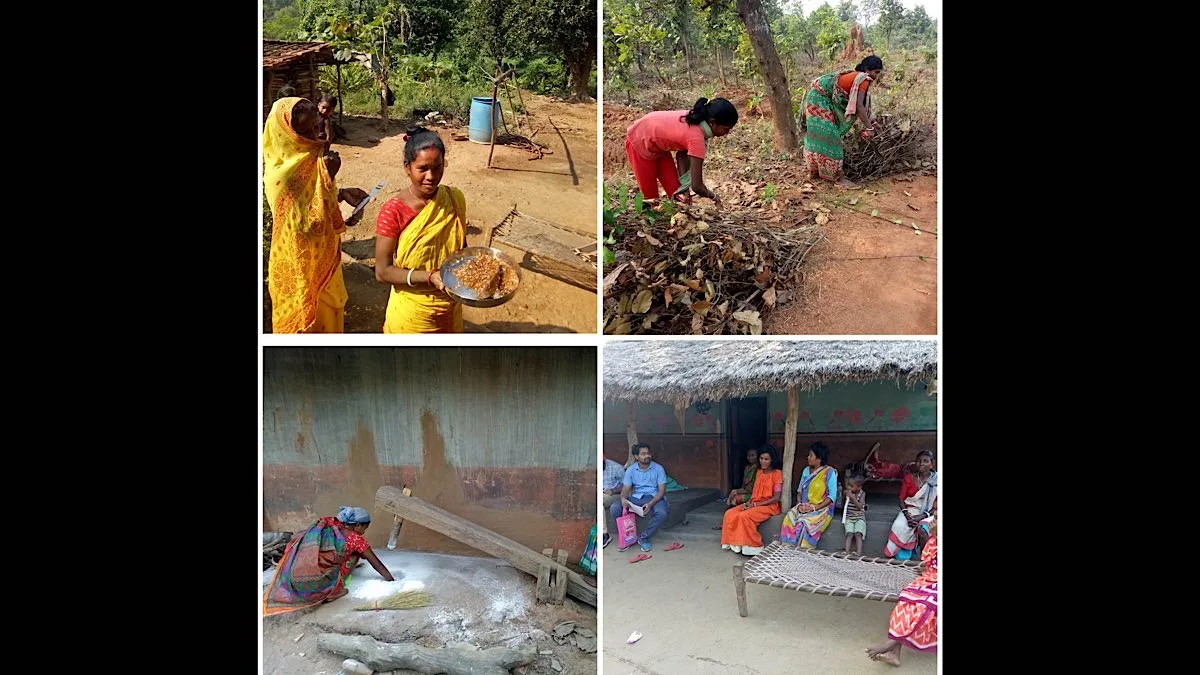
In the red-soil villages and forest fringes of Junglemahal, dawn arrives long before the sun touches the sal and mahua trees. Women step out into the cool morning air carrying baskets, sickles and water pots, beginning a day that will stretch from agricultural fields to forest paths and finally to the hearth of their homes. Their labour is constant, their responsibilities multiple, and their voices often unheard. Yet these women—farmers, forest gatherers, mothers and wage workers—have become the quiet force behind a region gradually emerging from decades of poverty, conflict and neglect.

Once synonymous with insurgency and fear, the names of villages such as Lalgarh, Ramgarh, Netai and Bhimpur carried the weight of a troubled past. In the forested belts of West Midnapore and Jhargram districts, the years of Maoist violence left communities trapped between security forces and insurgent groups. Explosions, gunfire and political uncertainty shaped everyday life, and development remained distant.

Today the atmosphere has changed. Though economic hardship persists, the spectre of violence has receded and daily life has begun to reclaim its rhythm. Villagers move more freely across markets and forest roads, children attend schools, and agricultural cycles have resumed with renewed stability. At the centre of this fragile transformation are the women of Junglemahal, whose labour sustains both household economies and local agriculture.

For most families, livelihoods remain precarious. Farming small plots of land, collecting dry firewood from forests and working as daily wage labourers form the backbone of rural survival. The reality of poverty is stark. In Nayagram of Jhargram district, 53-year-old Balki Hembram sits beside an empty cooking pot in the early afternoon, waiting for her husband to return from selling bundles of firewood in the market so that rice can be purchased for the evening meal. For families like hers, the margin between sustenance and hunger remains painfully thin.

Yet subtle changes are taking root, particularly through welfare schemes that seek to place economic resources directly in the hands of women.

Welfare schemes and women’s financial agency

One of the most significant policy interventions in West Bengal in recent years has been the Lakshmir Bhandar scheme introduced by the state government. The programme provides monthly financial assistance to women from economically weaker households, particularly those belonging to landless families, Scheduled Castes and Scheduled Tribes.

In regions like Junglemahal, where women traditionally manage household expenditure but rarely control formal income, such direct financial transfers have begun to alter spending patterns and decision-making dynamics within families.

A recent field survey conducted across more than one hundred villages in the Junglemahal region covering approximately 600 households indicates that the scheme has had varied but meaningful outcomes. Nearly 78 per cent of marginal and forest-dependent families reported using Lakshmir Bhandar funds to purchase essential commodities such as rice, oil and vegetables. Others channel the money toward agricultural inputs, repayment of small loans, LPG cylinder refills or children’s education.

For many women, the scheme has also created opportunities to save or invest modestly.

Namita Majhi, a resident of Kankabati in West Midnapore district, deposits the monthly amount into a post office account opened in her daughter’s name. In Shaldanga village, Rina Singh uses the financial support to pay for her daughter’s private tuition classes. Meanwhile in Taldi village of Jhargram district, Sonia Tudu has used the funds to begin small-scale poultry farming, gradually building a supplementary income source.

These examples illustrate how targeted welfare programmes can strengthen women’s economic agency within households, enabling them to prioritise children’s education, healthcare and long-term financial stability.

However, gaps in the scheme’s reach remain visible.

Approximately 15 per cent of surveyed households reported that eligible women were unable to access the scheme due to age-related eligibility conditions. In many tribal communities, where early marriage remains common due to economic pressures, young married women often fall outside the programme’s eligibility criteria.

In Bhumij Dhansol village, 22-year-old Babli Sabar is among those who remain excluded. Similarly, Alpana Singh, aged 20 from Betkundri village, faces similar constraints. Their experiences highlight how policy frameworks sometimes fail to reach the most vulnerable segments of rural society.

Dr Pravat Kumar Shit, a researcher at Raja Narendralal Khan Women’s College in Midnapore, believes the scheme carries significant developmental potential but requires targeted implementation.

According to him, Lakshmir Bhandar can serve as an effective tool for uplifting economically marginalised communities if the programme is expanded carefully. He emphasised that priority should be given to tribal women living below the poverty line, and that allocation should ideally be guided by economic vulnerability rather than purely universal criteria.

He further argued that such welfare initiatives could become pathways to women’s economic independence, strengthening household resilience while simultaneously contributing to broader social development.

Poverty, forests and everyday resilience

Beyond welfare programmes, the lives of Junglemahal’s women remain deeply intertwined with forests and natural resources.

In Balivasa village of Salboni block, 23-year-old Lakshmi Murmu cooks a modest meal on a clay stove while her young daughter crawls nearby, her thin frame revealing signs of malnutrition. The meal consists largely of pumpkin flowers, jute greens and wild mushrooms collected from the surrounding forest. For Lakshmi, the forest functions as both marketplace and medicine cabinet. When her daughter catches a cold, she plucks tulsi leaves from the courtyard and prepares a home remedy.

Her husband grazes cattle in nearby forest patches, while the family’s small agricultural plot yields crops only during the monsoon. However, irregular rainfall in recent years has made harvests increasingly uncertain.

Researchers estimate that nearly 22 per cent of forest-dwelling tribal households in Junglemahal face similar livelihood precarity, balancing subsistence agriculture with forest-based collection.

Government programmes aimed at environmental conservation sometimes complicate these relationships. Policies often assume that forest-dwelling communities contribute to deforestation or ecological degradation. Yet for many tribal households, sustainable forest use is not merely tradition but necessity.

The Pradhan Mantri Ujjwala Yojana, designed to replace firewood with LPG cooking fuel, illustrates this tension. Surveys of more than 3,500 forest-dwelling households indicate that approximately 83 per cent continue to rely on firewood. Rising LPG refill costs, limited access to distribution centres and entrenched cooking practices make regular LPG usage difficult for low-income families.

For women in remote villages, the shift from firewood to LPG is not simply a technological change but an economic challenge.

Education, early marriage and the cycle of vulnerability

While economic empowerment is slowly expanding through welfare schemes and self-help groups, social challenges continue to shape the lives of young girls.

In Kalabani village of Jhargram district, preparations are underway for a wedding as the rhythmic beats of dhamsa and madal drums echo through the settlement. Fourteen-year-old Pratima Hembrom sits quietly in a newly painted mud house, soon to be married to Sagen Soren of Taldangra in Bankura district.

Pratima had once studied in Class VII, but the financial strain of the pandemic years forced her family to discontinue her education. Her father, Sanatan Hembrom, previously worked as a train hawker but lost his livelihood during prolonged lockdowns. Without income or access to digital learning facilities, continuing her schooling became impossible.

For families facing severe poverty, early marriage often appears as an unavoidable economic decision.

State initiatives such as the Kanyashree Prakalpa programme attempt to address this challenge by providing financial incentives to encourage girls to remain in school and delay marriage. While the scheme has achieved significant success across West Bengal, awareness and accessibility remain uneven in remote tribal areas.

Women, forests and representation

Another area where gender inequality remains pronounced is in forest governance.

Joint Forest Management Committees (JFMCs), which are responsible for community-based forest management, continue to exhibit low participation by women. Across the Jhargram, Midnapore, Rupnarayan and Kharagpur forest divisions, women constitute only about 5.22 per cent of total committee membership. Leadership positions are overwhelmingly held by men.

Research conducted by Soumen Bisui and Dr Pravat Kumar Shit highlights the structural barriers behind this imbalance. Interviews with 258 committee members reveal that women rarely attend meetings due to social norms, household responsibilities and limited awareness about their legal rights.

Yet evidence from various forest management programmes suggests that women-led conservation initiatives often yield stronger ecological outcomes. Enhancing women’s participation through training, education and recognition of rights under the Forest Rights Act could simultaneously strengthen conservation efforts and improve livelihood security.

Water, infrastructure and everyday burdens

Basic infrastructure challenges also continue to shape women’s daily lives.

Across villages in Bankura, Purulia, Jhargram and West Midnapore districts, many women still walk long distances to collect drinking water from ponds or dug wells. Fetching water remains a routine yet time-consuming responsibility.

To address this, the Jal Jeevan Mission has been implemented to provide safe piped water to rural households under the “Har Ghar Jal” initiative. In West Midnapore district alone, authorities have planned the installation of more than 400 pumping systems aimed at supplying tap water to over one million households.

Despite these efforts, field observations indicate that many villages continue to rely on traditional water sources, highlighting persistent gaps in infrastructure delivery.

The broader meaning of empowerment

For the women of Junglemahal, empowerment rarely arrives as a single transformative moment. Instead, it unfolds gradually through small but meaningful changes: a monthly welfare transfer, a daughter staying in school, a poultry coop built behind a mud house, or a post office savings account opened for the next generation.

Women’s participation in self-help groups, agricultural labour and small-scale enterprises has begun to strengthen their decision-making roles within households. Studies indicate that women who contribute to family income often gain greater influence in matters relating to education, health expenditure and financial planning.

Yet the path toward gender equality in rural and tribal regions remains uneven. Structural poverty, limited education, cultural norms and environmental uncertainties continue to shape opportunities for women across Junglemahal.

The theme of International Women’s Day 2026, “Give to Gain,” resonates deeply in this context. When societies invest in women—through education, healthcare, financial inclusion and institutional participation—the benefits extend far beyond individual households.

Improved nutrition, higher school attendance, better health outcomes and stronger community institutions often follow.

In the sal forests and red earth fields of Junglemahal, these changes are already visible in quiet ways. Women who once had little control over financial resources are gradually becoming decision-makers within their homes and communities.

Their resilience, often invisible to the outside world, continues to sustain families, protect forests and nurture the next generation.

And in doing so, they demonstrate a simple but powerful truth: when women gain strength, entire societies move forward.

(Writer is a senior staff correspondent at The Statesman)

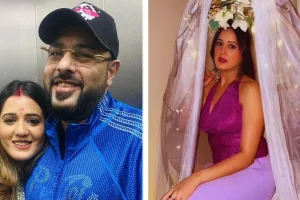
Badshah apologises and pulls ‘Tateeree’ amid furious backlash: ‘I hope you forgive me, considering me a son of Haryana’

Badshah’s latest track ‘Tateeree’ sparked outrage in Haryana over its lyrics and visuals. The rapper has now apologised, calling himself a ‘son of Haryana’ and pulling the song from all platforms.

Statesman News Service | New Delhi |

Rapper Badshah with his latest release ‘Tateeree’ has landed in hot water. The song ignited outrage over its lyrics and visuals especially from the Haryana community.

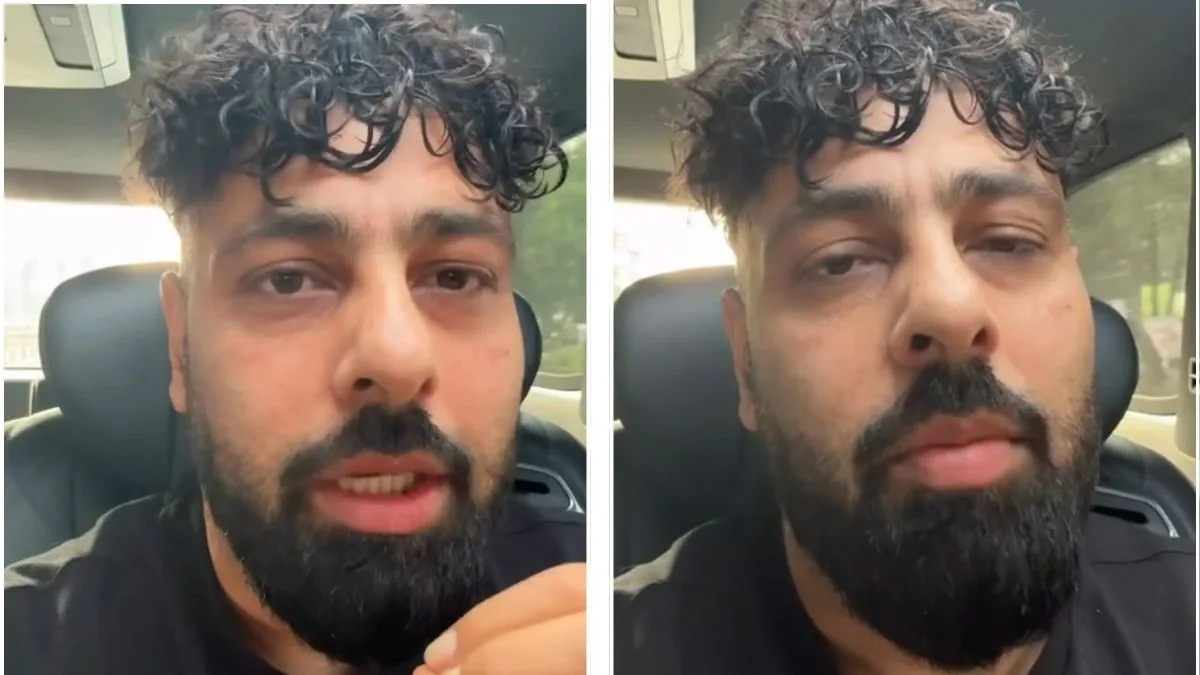
On Saturday, Badshah took to Instagram to directly address the uproar. In a video, he acknowledged that the song had hurt many, particularly his fellow Haryanvis.

“My new song Tateeree has been released, and I see that the message conveyed by a part of the song and its visual representation has hurt many people, especially the people of my Haryana, and their sentiments,” he said.


View this post on Instagram


A post shared by BADSHAH (@badboyshah)

He didn’t stop there. The rapper emphasised his deep roots in the state. “First of all, I want to say that I myself am from Haryana. Those who know me know that my language, food habits, lifestyle, my identity is from Haryana. I am a very proud Haryanvi,” he added.

Artistic intentions or missteps?

Badshah attempted to clarify his creative choices. “I never intended to say such nonsense about any child or any woman from Haryana. I come from the hip-hop genre, where songs often demean the competition. This was never about any woman or child. Nor will I ever do that,” he explained. He stressed that his goal has always been to take Haryana’s culture and dialect to a global stage.

Also Read: Haryana Women’s Commission questions how ‘Tateeree’ lyrics passed censor clearance, summons Badshah

Despite the explanation, the visuals of ‘Tateeree’, which featured girls in school uniforms and a school-like setting, provoked severe criticism. Many viewers interpreted the imagery as offensive and bordering on obscene.

Recognising the intensity of the backlash, Badshah offered a full apology. “If I have hurt anyone by this, I wholeheartedly apologise to you all. I hope that you will forgive me, considering me a son of Haryana, your own son,” he said.

Alongside the apology, the rapper confirmed he removed the song from all digital platforms. His Instagram caption read, “The song is being taken off from everywhere.”

FIR and legal action

The uproar wasn’t just online chatter. A formal complaint was lodged at Cyber Crime Police Station in Panchkula, Haryana by Abhay Chaudhary. Complainant argued that lyrics and video went too far, potentially sending harmful message to young audiences.

Following the complaint, police have registered an FIR and initiated investigation under relevant Indian law sections.

Destruction can never be a strategy

Shortly after the opening salvo of U.S.-Israeli attacks on Iran on 28 February 2026 – with missiles targeting cities across the country, some of which killed Supreme Leader Ayatollah Ali Khamenei – President Donald Trump declared the objective was to destroy Iran’s military capabilities and give rise to a change in government.

FARAH N JAN | New Delhi |

Shortly after the opening salvo of U.S.-Israeli attacks on Iran on 28 February 2026 – with missiles targeting cities across the country, some of which killed Supreme Leader Ayatollah Ali Khamenei – President Donald Trump declared the objective was to destroy Iran’s military capabilities and give rise to a change in government. Framing the operation as a war of liberation, Trump called on Iranians to “take over your government.” In the first days alone, Israel dropped over 2,000 bombs on Iranian targets, equal to half the tonnage of the 12-day Israel-Iran conflict in June 2025. Heavy U.S. bombing, meanwhile, has targeted Iran’s Revolutionary Guard as well as ballistic missile and aerial defence sites.

The destruction is real. But, as an international relations scholar, I know that destruction is not the same as political success. And the historical record of U.S. bombing campaigns aimed at regime change shows that the gap between the two – the point at which Afghanistan, Iraq and Libya campaigns all stalled – is where wars go to die. Decades of scholarship dating back to World War I on using air power to force political change has established a consistent finding: Bombing can degrade military capacity and destroy infrastructure, but it does not produce governments more cooperative with the attacker. Political outcomes require political processes – negotiation, institutionbuilding, legitimate transitions of power.

Bombs cannot create any of these. Instead, what they reliably create is destruction, and destruction generates its own dynamics: rallying among the population, power vacuums, radicalization and cycles of retaliation. The American record confirms this. In 2003, the George W. Bush administration launched “Shock and Awe” in Iraq with the explicit aim of regime change. The military objective was achieved in weeks. The political objective was never achieved. The U.S. decision to disband the Iraqi army created a vacuum filled not by democratic reformers but by sectarian militias and eventually ISIS. The regime that eventually emerged was not friendly to American interests.

It was deeply influenced by Iran. In 2011, the Obama administration led a NATO air campaign in Libya that quickly expanded from civilian protection into regime change. Dictator Moammar Gadhafi was overthrown and killed. But there was no plan for political transition. Chaos and political instability have endured since. Asked what his “worst mistake” was as president, Barack Obama said, “Probably failing to plan for the day after, what I think was the right thing to do, in intervening in Libya.” Libya remains a failed state today. The intervention also sent a powerful signal to countries pursuing nuclear weapons: Gadhafi had dismantled his nuclear programme in 2003.

Eight years later, NATO destroyed his regime. Even Kosovo, often cited as the success story of coercive air power, undermines the case. Seventy-eight days of NATO bombing did not, by themselves, compel Slobodan Milosevic, president of the Federal Republic of Yugoslavia, to withdraw. What changed was the credible threat of a ground invasion combined with Russia’s withdrawal of diplomatic support. The political outcome– contested statehood, ongoing ethnic tensions–is hardly the stable governance that air power advocates promise. The pattern is consistent: The United States repeatedly confuses its unmatched capacity to destroy from the air with the ability to dictate political outcomes.

The recent U.S. attacks on Iran raise a fundamental question: Why is the United States fighting this war at all? The administration has declared regime change as its objective, justifying the campaign on the grounds of Iran’s nuclear programme and missile capabilities. But that nuclear programme was being actively negotiated in Geneva days before the strikes. And Iran’s foreign minister told NBC the two sides were close to a deal. Then the bombs fell. Iran did not attack America. And it currently does not have the capability to threaten the American homeland. What Iran challenges is Israel’s regional military dominance, and I believe it is Israel’s objective of neutralizing a rival that is driving this operation.

Israel targeted 30 senior Iranian leaders in the opening strikes. Israeli officials described it as a preemptive attack to “remove threats to the State of Israel.” I see the strategic logic for these killings as Israel’s, and Americans are absorbing the costs. U.S. military bases in Bahrain, Qatar, Kuwait, the UAE, Jordan, and Saudi Arabia have taken Iranian missile fire. American service members are in harm’s way not because Iran attacked them, but I believe because their president committed them to someone else’s war without a clear endgame. Each coercive step in this conflict – from the 2018 withdrawal from the nuclear deal, to the 2020 assassination of Qasem Soleimani, Iran’s most powerful military commander, to the June 2025 strikes – was framed as restoring leverage.

Each produced the opposite, eliminating diplomatic off-ramps, accelerating the very threats it aimed to contain. Decapitation strikes assume that removing a leader removes the obstacle to political change. But Iran’s political system is institutional — the Guardian Council, the Assembly of Experts and the Revolutionary Guard have survived for four decades. The system has succession mechanisms, but they were designed for orderly transitions, not for active bombardment. The group most likely to fill the vacuum is the Revolutionar y Guard, whose institutional interest lies in escalation, not accommodation. There is a deeper irony. The largest protests since 1979 swept Iran just weeks ago.

A genuine domestic opposition was growing. The strikes have almost certainly destroyed that movement’s prospects. De cades of re search on rally-around-the-flag effects – the tendency of populations to unite behind their government when attacked by a foreign power – confirms that external attacks fuse regime and nation, even when citizens despise their leaders. Iranians who were chanting “death to the dictator” are now watching foreign bombs fall on their cities during Ramadan, hearing reports of over 100 children killed in a strike on a girls school in Minab. Trump’s call for Iranians to “seize control of your destiny” echoes a familiar pattern.

In 1953, the CIA overthrew Iran’s democratically elected prime minister in the name of freedom. That produced the Shah, the Shah’s brutal reign led to the Iranian Revolution in 1979, and the revolution produced the Islamic Republic now being bombed. What comes next? And what guarantee is there that whatever emerges will be any friendlier to Israel or the United States? This is the question no one in Washington has answered. If the objective is regime change, who governs 92 million people after? If the objective is stability, why are American bases across the Middle East absorbing missile fire? There is no American theory of political endgame in Iran — only a theory of destruction.

That theory has been tested in Afghanistan, Iraq and Libya – and Iran itself over the preceding eight months. It has failed every time, not because of poor execution, but because the premise is flawed. Air power can raze a government’s infrastructure. It cannot build the political order that must replace it. Iran, with its sophisticated military, near-nuclear capability, proxy networks spanning the region and a regime now martyred by foreign attack, will likely not be the exception. U.S. law prohibits the assassination of foreign leaders, and instead Israel killed Iran’s supreme leader while American warplanes filled the skies overhead. Washington has called the result freedom at hand, but it has not answered the only question that matters: What comes next?

(The writer is Senior Lecturer in International Relations, University of Pennsylvania. This article was published on www.theconversation.com)