Logo

Kaziranga Model

In conservation, success stories are rare enough that they often sound improbable.

Statesman News Service | New Delhi |

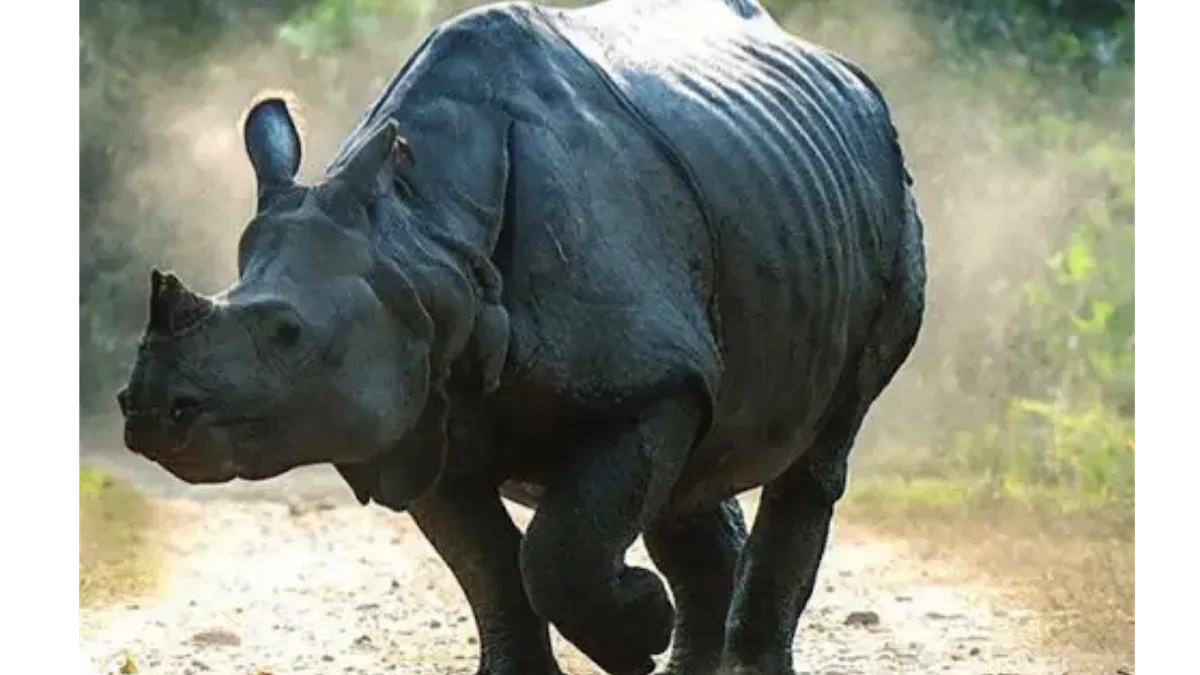
In conservation, success stories are rare enough that they often sound improbable. Yet in Assam, the recovery of the greater one-horned rhinoceros at Kaziranga National Park demonstrates that determined policy and relentless enforcement can rescue a species that once seemed destined for decline. A century ago, the rhinoceros that has become the emblem of Assam hovered near extinction. At the beginning of the twentieth century barely a dozen survived in the marshes along the Brahmaputra.

Today the population has climbed into the thousands across the state, with Kaziranga holding the world’s largest concentration of the species. The turnaround did not happen by accident. It required a deliberate shift in how wildlife protection was conceived and enforced. The modern phase of that shift began roughly a decade ago when rhino poaching surged sharply. Horns were fetching astronomical prices in international illegal markets, driven by demand in parts of East and Southeast Asia where myths about their medicinal value persist. Faced with the possibility that decades of conservation gains could unravel, the Assam government adopted a zero-tolerance strategy.

Forest guards were armed, intelligence networks strengthened, and patrols intensified across the park’s grasslands and wetlands. Technology was added to the traditional ranger’s toolkit. Drone surveillance, digital patrol tracking systems originally developed for tiger reserves, and a dense network of anti-poaching camps allowed authorities to monitor vulnerable zones far more closely than before. The message to organised poaching syndicates became unmistakable: Kaziranga was no longer easy terrain. Leadership also mattered. Officials in Assam’s forest department, including Indian Forest Service officers such as Sonali Ghosh, pushed for a conservation model that combined strict enforcement with public engagement.

Women forest guards ~ popularly called “Van Durgas” ~ were recruited and trained alongside male counterparts, reinforcing the sense that protecting the rhino was a collective mission rather than a specialised bureaucratic task. Political endorsement amplified the effort. Visits by Prime Minister Narendra Modi drew national attention to Kaziranga and reinforced the rhino’s status as a symbol of Assam’s natural heritage. The results are striking. Rhino poaching has fallen dramatically, and recent years have recorded no killings at all. For conservationists accustomed to grim statistics about endangered wildlife, that outcome is extraordinary. Yet success has created its own challenge.

As rhino numbers grow, Kaziranga’s landscape ~ bounded by the Brahmaputra and human settlements ~ faces the risk of ecological overcrowding. Conservation planners are increasingly discussing translocating animals to other protected areas such as Manas National Park to create new populations and reduce pressure on the park’s habitat. Kaziranga, therefore, offers more than a story of recovery. It provides a template for how political will, scientific management, and public support can converge to protect wildlife. The next task is to ensure that the success of that model does not become its limitation.

Her Words, Our Worlds

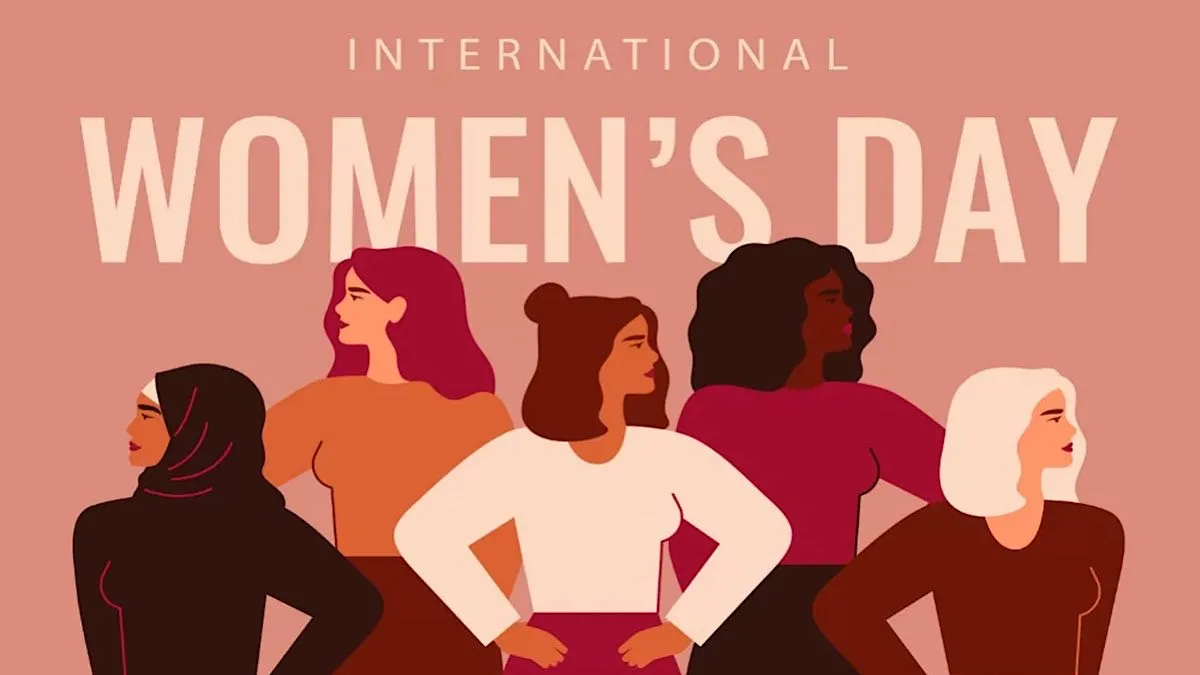
Every year, the world pauses to celebrate the social, economic, cultural and political achievements of women on International Women’s Day (IWD).

RUDRASHIS DATTA | New Delhi |

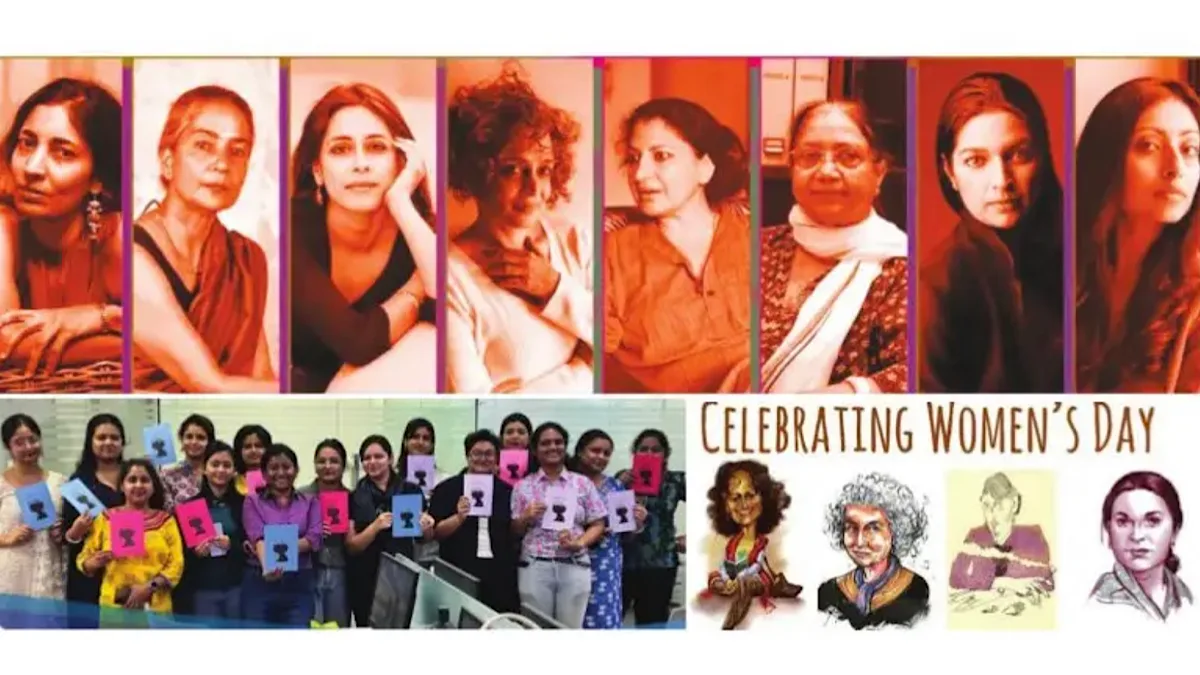
Every year, the world pauses to celebrate the social, economic, cultural and political achievements of women on International Women’s Day (IWD). It is also a moment to reflect on the work still to be done. Nowhere is that reflection more profound ~ or more enduring ~ than in literature. Across centuries and continents, women writers have challenged conventions, redefined storytelling, and insisted that women’s lives, inner worlds, and ambitions belong at the centre of the intellectual and creative history of the human race.

For much of literary history, women were present in stories but absent from authorship. When they did write, they often did so under pseudonyms or within constrained genres. Yet even in restrictive eras, their voices found ways to resonate. In 19th-century England, novelists crafted works that subtly but powerfully critiqued the social and economic limitations imposed on women. Austen’s keen observations of marriage and money exposed the transactional realities facing women without fortune, while Brontë’s passionate heroines demanded emotional and intellectual equality.

At the same time, Mary Shelley could transcend the limitations of women-centric plots to author one of the most powerfully written novels in world literature, Frankenstein. Across the Atlantic, a writer offered readers in Little Women a portrait of sisterhood and self-determination that continues to inspire. Jo March’s refusal to conform to expectations was more than a character trait; it was a declaration of independence. Such characters became early templates for readers hungry for representations of women as thinkers, dreamers, and creators.

Even in the Indian context, Rassundari Debi could go beyond the call of her domestic duties to pen an autobiography, ‘Amar Jibon’ ~ My Life, in 1876, which redefined not only women’s literature but the very basis of autobiographical writing. The 20th century witnessed a seismic shift as women began to claim greater authority over their narratives. Few works encapsulate this transformation more vividly than A Room of One’s Own by Virginia Woolf. The work is an extended essay that argued for women’s financial independence and private space as prerequisites for artistic creation. Woolf’s assertion that “a woman must have money and a room of her own if she is to write fiction” remains a rallying cry.

It reframed literature not as a neutral field of talent, but as one shaped by access, privilege, and gender. Meanwhile, writers like Toni Morrison expanded the scope of whose stories were told and how. Morrison’s novels centred on Black women’s experiences with poetic intensity and unflinching honesty, confronting histories of enslavement, trauma, and resilience. Her Nobel Prize in Literature in 1993 was not only a personal milestone but also a recognition of voices long marginalized in the literary canon. Latin America, Africa, and Asia have likewise produced formidable literary figures whose works interrogate gender, tradition, and power.

Nigerian author Chimamanda Adichie bridges fiction and feminist discourse, exploring identity and inequality in novels and essays that resonate globally. In South Asia, authors such as Arundhati Roy have intertwined literary craft with activism. Roy’s fiction and essays challenge political orthodoxies while foregrounding women’s agency in turbulent contexts. Similarly, Egyptian writer Ahdaf Soueif confronted taboos around sexuality, religion, and patriarchy, insisting that literature could be both art and instrument of liberation. Yet celebrating women in literature is not only about authorship; it is also about representation. The evolution of female characters tells its own story of cultural change.

Once confined to archetypes ~ the dutiful wife, the tragic heroine, the temptress ~ women in fiction now inhabit roles as complex and contradictory as real life. From detectives and antiheroes to scientists and revolutionaries, contemporary literature reflects a widening horizon of possibility. Children’s and young adult literature, too, has been transformed with powerfully crafted women characters. Characters like Hermione Granger in the Harry Potter series demonstrate intellect and courage as central traits rather than exceptions. Meanwhile, authors across genres are increasingly attentive to intersectionality, portraying women whose identities are shaped not only by gender but also by race, class, sexuality, disability, and migration.

Despite these gains, disparities persist. Studies of publishing trends continue to show gender imbalances in bylines, review coverage, and literary prizes. The conversation sparked by initiatives such as the VIDA Count ~ Women in Literary Arts, which tracks representation in major literary publications, underscores that equality in literature ~ like equality in society ~ is an ongoing project. Digital platforms have opened new avenues for women writers, democratizing access to audiences and bypassing traditional gatekeepers. Social media, independent presses, and online literary journals have enabled emerging voices to find readerships that might once have been unreachable.

At the same time, these spaces can expose women to disproportionate harassment, reminding us that progress often arrives with new challenges. On this IWD, the significance of women in literature lies not only in past triumphs but also in future potential. Literature shapes how societies imagine themselves. When women write and are read, they expand the boundaries of empathy and understanding. They complicate narratives that have long centered male experience as universal and female experience as peripheral. Importantly, the call to celebrate women in literature is not a call for segregation but for inclusion.

The goal is not a separate shelf but a shared canon that recognizes excellence wherever it appears. It is about ensuring that a young reader, browsing a library or scrolling through an online bookstore, encounters a tapestry of voices that reflect the diversity of human experience. The act of reading itself can be transformative. To read a woman’s story ~ told in her own words ~ is to step into a consciousness shaped by distinct pressures and possibilities. It is to witness the alchemy by which personal experience becomes art. And it is to acknowledge that the literary landscape, once narrow and exclusionary, has been irrevocably enriched by women’s contributions.

As celebrations and panel discussions unfold worldwide on IWD, bookstores and libraries often curate displays highlighting women authors. These gestures, though symbolic, serve as entry points into deeper engagement. They invite readers not only to honour established icons but also to discover emerging writers. The story of women in literature is, ultimately, a story of persistence. It is about women who wrote when discouraged, published when doubted, and imagined when told their imaginations were secondary.

It is about readers who recognized themselves in those pages and dared to envision broader futures. In marking this day, we do more than celebrate individual achievements. We affirm a principle: that literature thrives when all voices are heard. As long as stories are told, women will not merely inhabit them ~ they will author them, redefine them, and ensure that the narrative of humanity is richer, more inclusive, and truer.

(The writer is Assistant Professor in English, Pritilata Waddedar Mahavidyalaya, Nadia)

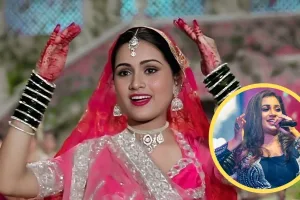
‘India is still patriarchal’: Shreya Ghoshal slams music industry over disappearing female voices on charts

Ghoshal says the country’s music charts show a clear gender imbalance. She also recalled how legends like Lata Mangeshkar and Asha Bhosle once dominated the industry, unlike the current trend.

Statesman News Service | New Delhi |

The music industry loves a good melody. But sometimes, the silence between the notes says more than the song itself. (Also Read: Yeh Galiyan Yeh Chaubara: Padmini Kolhapure joins Shreya Ghoshal on Indian Idol to recreate Lata Mangeshkar’s classic)

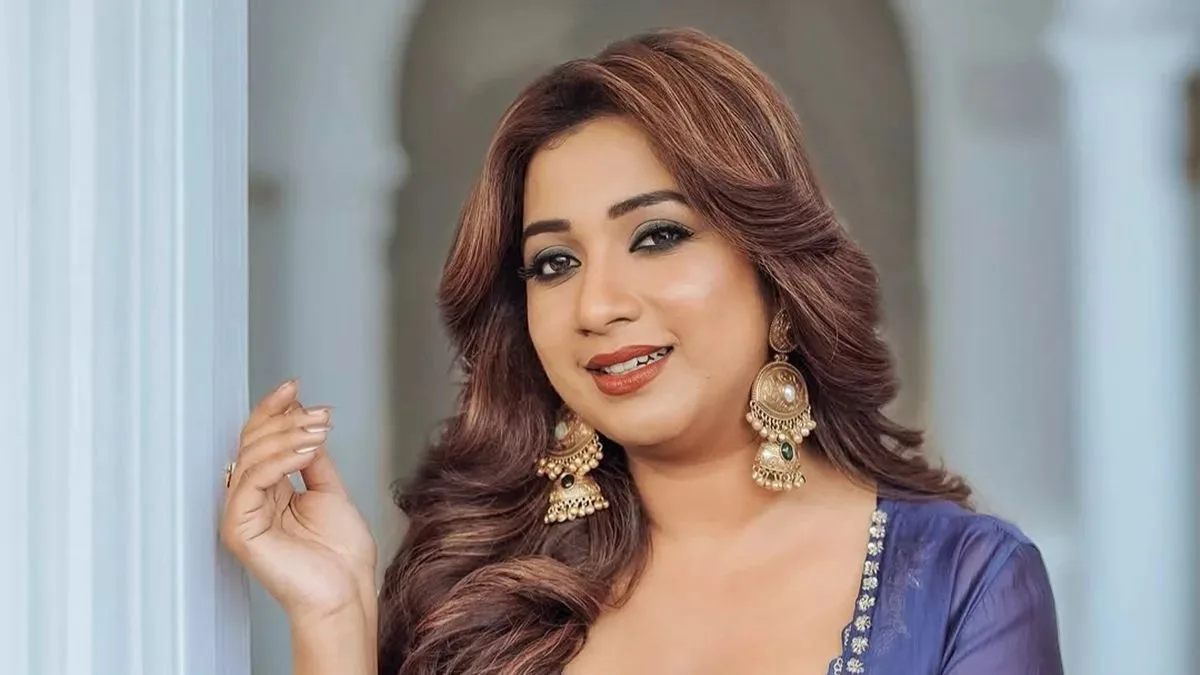
In a recent podcast chat, playback queen Shreya Ghoshal didn’t just talk about music; she spoke about something deeper. Why, she wondered, are female singers in India missing from the top charts when globally, women are ruling the stage?

Speaking with podcaster Raj Shamani, Shreya opened up about changing face of Indian music. Her words have sparked bigger conversation about gender, charts, shifting sound of Bollywood.

Global stage dominated by women

Shreya pointed out that internationally, female artists often sit comfortably at the top of the music world. Stars like Taylor Swift and Rihanna dominate charts, stadium tours, streaming platforms.

According to Shreya, their success is not accidental. She praised artists like Swift for mastering their craft and working relentlessly for years to reach that level of global dominance.

In many countries, the biggest pop voices today belong to women who not only sing but shape the entire industry around them. But Shreya says India tells a different story.

“India is still patriarchal”

During the conversation, Shreya didn’t sugarcoat her view of the industry. She said the truth is simple: India still carries a patriarchal mindset.

She explained that the imbalance becomes obvious when you look at music charts. Instead of women leading playlists, male voices dominate them.

According to Shreya, if you scan the top songs in India today, the difference becomes clear.

She said even within the Top 50 songs, only around six or seven are sung by female singers. And she stressed that she wasn’t even talking about the Top 10, just the larger list.

To her, this gap shows how uneven the space has become.

A very different past

What makes the situation surprising, Shreya said, is that it wasn’t always like this.

There was a time when female playback singers were the undisputed queens of Indian music. Names like Lata Mangeshkar and Asha Bhosle didn’t just participate in the industry. They ruled it.

According to Shreya, these legendary singers commanded the era so strongly that they were often bigger than their male counterparts.

They recorded an enormous number of songs every year and became the defining sound of Indian cinema.

That kind of dominance, she believes, has faded over time.

The last decade of “confusion”

Shreya believes the imbalance is a fairly recent development. She pointed out that the shift has become noticeable over the last decade.

According to her, the industry is currently going through a phase of experimentation and confusion. Genres are blending, musical styles are fusing, and trends are constantly changing.

Shreya described the current phase as a time where the music industry is still trying to figure out its direction.

She believes current “fusion and confusion” phase will eventually lead to clarity. As industry evolves, the balance could return and female voices might once again take a stronger place in mainstream music.

Wonder Women

On International Women’s Day, we bring you a range of stories…about women, for women and of course, by women.

Dola Mitra | New Delhi |

On International Women’s Day, we bring you a range of stories…about women, for women and of course, by women.

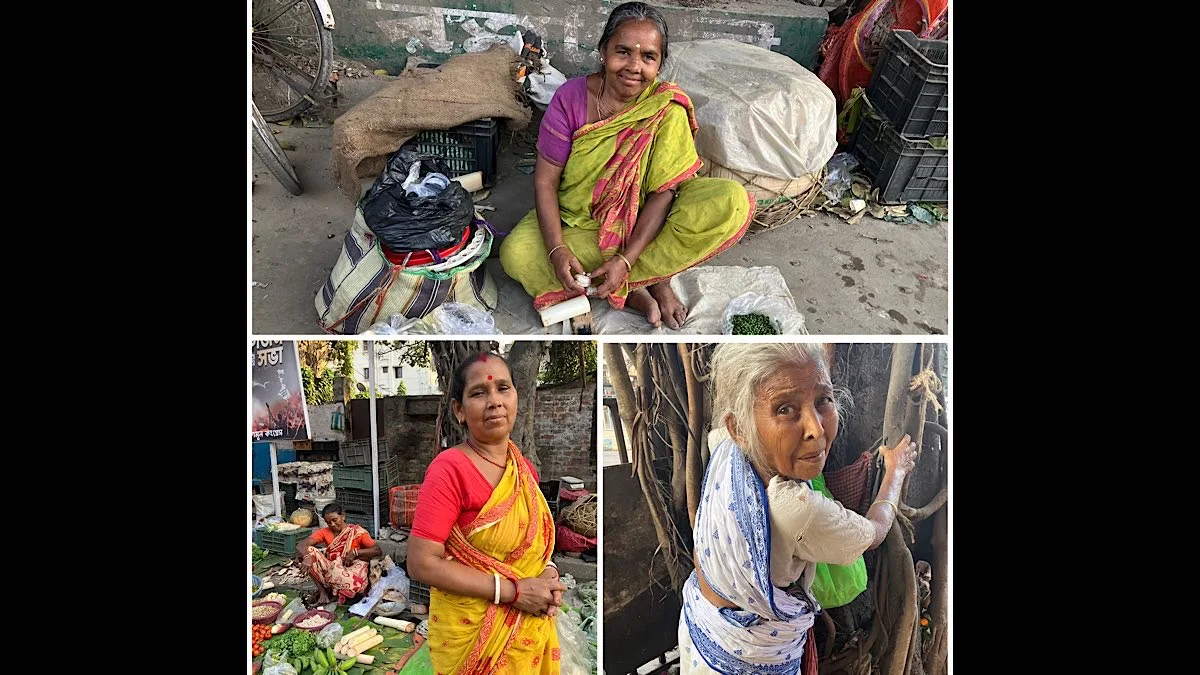
I thought I would share some snippets about and photos of different women I interviewed on reporting assignments over the years. They are ordinary women who work and live in and around Kolkata or in the towns, districts and villages of West Bengal. But when we talk to them we find out how extraordinary their lives are because their tales are really of amazing resilience. Recently I hopped onto a bus going to Howrah Station at dawn. I wanted to feel the pulse of the people whose lives are actually very different from ours even though we inhabit the same space, the same time. The vegetable vendors whom I interviewed on many occasions often told me how they board the train from Howrah Station with their fare procured from wholesale markets or even brought by train from their villages. I wanted to witness the process. Of course, I also wanted to feel the cool breeze of the Ganges. Though it is getting hotter, there was still a chilly breeze blowing over the river and as we crossed the First Howrah Bridge I could feel the zephyr.

The morning stillness suddenly dissipated as the bus reached the terminal point. When the passengers alighted, there was a scurry of people trying to board the bus on the return journey. There were men and women carrying huge sacs filled with flowers, fruits, vegetables and other perishable goods. Climbing the two-three steps of the bus really seemed like a precarious exercise as they lugged the bags up within splits of seconds with the conductor telling them to hurry it up. They would get off at different retail markets and hawk their fares. They did this daily. Day in and day out. There was no respite. They did not require it. “Ki korbo chuti korey? Kaaj kamai korina ami,” a woman in their fifties dismissed my query. Don’t you ever want to rest at home? That was the question. The answer was, “What’s the point? Don’t want to miss out on the income.”

The bus, now stuffed to capacity, chugged along over the river.

Here are a few of the women who do this kind of journey day in and day out….they are flower and fruit sellers and vegetable vendors….you may bump into them at any market in Kolkata.

(The writer is Editor, Features)
(I dig into the phone photo album and discover these. These are from earlier reporting times)

Digital empowerment vs digital danger: A double-edged sword

Can a device small enough to fit into a schoolbag shape the destiny of a generation or subtly jeopardise it? The paradox of our times is defined by this question. The smartphone is more than just a device for today’s students; it is a gateway.

Bidisha Ghosh | Kolkata |

Can a device small enough to fit into a schoolbag shape the destiny of a generation or subtly jeopardise it? The paradox of our times is defined by this question. The smartphone is more than just a device for today’s students; it is a gateway. It provides opportunities beyond the realm of imagination, friendships beyond geography, and education beyond textbooks. However, risks that are subtle, persistent, and occasionally extremely harmful can be found within the same glowing screen. The internet is now both a revolution and a responsibility, for digital empowerment and digital danger are inextricably linked.

A world unlocked by Wi-Fi

The opportunity landscape has changed significantly as a result of the emergence of digital platforms. A schoolgirl in a far-off town can study astronomy, learn to code, take part in online workshops, or publish her artwork for a worldwide audience. Learning is now more accessible than ever, thanks to educational resources provided by businesses like Google and Zoom-hosted virtual classrooms. Knowledge is no longer limited to urban areas or prestigious institutions. Gaps that previously appeared insurmountable have closed thanks to the democratisation of information. With internet access, an inquisitive mind can travel across continents in a matter of seconds.

Beyond academics, digital spaces have also nurtured creativity and confidence. Young creators have been able to turn their hobbies into influence with the help of platforms such as YouTube and Instagram. Teenagers teach mathematics, review books, advocate for climate justice, and discuss mental health with candour that might be difficult in physical spaces. Previously unheard voices have gained traction thanks to the internet. When young girls open up on gender equality, body positivity, or educational rights, their words travel further than ever before. Malala Yousafzai’s story serves as a reminder that digital platforms have the power to spread a message of bravery across national boundaries, transforming personal fortitude into a shared consciousness.

From consumers to creators

Access, agency, and amplification are the empowering aspects of the digital age. Independence is promised. It fosters aspiration. It promotes communication. The internet offers many young girls a place where their dreams can be freely expressed, particularly in environments that are conservative or constrictive. Platforms that give voice to some people can also incite animosity.

The same platforms that elevate voices can also invite hostility. One of the most prevalent threats in the digital ecosystem today is cyberbullying. Online harassment persists longer than traditional bullying, which might stop at the end of the school day. Sometimes, the anonymity provided by screens encourages behaviour that would be uncommon in person. A cruel comment, an altered photograph, or a rumour shared widely can haunt its target long after the initial incident. Young girls are disproportionately affected by trolling, body shaming, and unsolicited messages, which undermine confidence at a time when self-identity is still developing.

The shadows behind the screen

There are dangers even more insidious. Online grooming, identity theft, and phishing scams exploit trust and inexperience. A seemingly cordial exchange may conceal malicious intent. Errors committed during adolescence may reappear years later due to the permanence of digital footprints. Once compromised, privacy is hard to recover. Consent must transcend physical boundaries into the virtual world, in a world where images can be shared in a matter of seconds.

The pressure of perfection

The psychological strain created by carefully manicured digital perfection is equally worrisome. Social media algorithms often reward aesthetics over authenticity. Highlight reels hide reality, while filters blur flaws. Constant exposure to idealised images can skew how impressionable minds perceive themselves. Seeking ‘likes’ could subtly turn into a quest for approval. Once developed via success and morality, confidence runs the risk of being quantified. Comparison can be taught using the same tool that teaches programming.

Protection or prohibition?

Society frequently reacts to these realities by imposing restrictions. Parents confiscate phones; schools impose bans; adults advise silence. Although prudence makes sense, overly strict prohibition may unintentionally restrict empowerment.

Therefore, digital literacy needs to become fundamental. Students need to learn cyber ethics to navigate responsibly, just as they need to learn grammar to communicate effectively. Comprehending privacy settings, identifying dubious links, reporting harassment, and engaging in courteous communication are all just as important as academic subjects. Workshops on internet safety can be incorporated into schools, promoting candid communication as opposed to secrecy motivated by fear.

Building a culture of conscious connectivity

Crucially, the responsibility of digital safety cannot rest solely on girls. Boys must be educated about empathy, accountability, and consent in virtual spaces. Respect is not gendered. Collective participation is necessary for a culture of conscious connectivity. To build safer digital ecosystems, families, educators, tech companies, and students themselves must work together. Corporate obligations that cannot be disregarded include more robust reporting systems, open moderation guidelines, and moral algorithm design.

Mindful habits have the power to turn vulnerability into vigilance on an individual basis. Simple yet effective strategies include thinking before posting, checking before sharing, and stopping when comparison breeds insecurity. Solidarity is fostered by helping peers who are harassed online. Digital prudence must be combined with digital bravery.

Digital competency is now essential for today’s generation, particularly for young girls who are destined to become leaders, businesswomen, scientists, and storytellers. It is essential to take part in public life. Making sure empowerment doesn’t come at the expense of well-being is the challenge. Caution should not take the place of confidence, nor should fear obscure an opportunity.

Balancing the blade

The tiny gadget in a schoolbag has a lot of potential. It can foster a student’s aspirations, amplify her ideas, and connect her to classrooms around the world. It may also put her safety and fortitude to the test. Awareness, education, and group responsibility will determine whether it turns into a labyrinth of risk or a rung on the ladder to success.

The internet is neither inherently benevolent nor malicious. The question, then, is not whether the digital world is safe or dangerous. It is whether we are prepared to navigate its complexity wisely. Safety is the assurance that opportunity can be pursued without risk, if empowerment is the ability to access opportunities. The screen becomes what it was always intended to be—a window to possibility, framed by responsibility and illuminated by informed confidence—when these two ideas coexist.


‘To take a little pressure off’: Trump says on US granting ‘permission’ to India to accept Russian oil

US President Donald Trump spoke to the media about several developments in the wake of the unfolding security situation in West Asia and the Gulf and responded to the announcement by US Treasury Secretary Scott Bessent on temporarily allowing India to purchase Russian oil.

ANI | New Delhi |

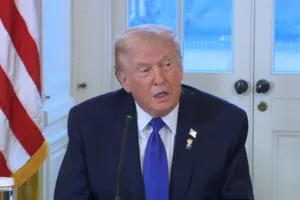
US President Donald Trump on Saturday (US local time) spoke to the media about several developments in the wake of the unfolding security situation in West Asia and the Gulf and responded to the announcement by US Treasury Secretary Scott Bessent on temporarily allowing India to purchase Russian oil.

He made the remarks aboard US Air Force One.
When asked about Bessent’s announcement of temporarily allowing certain Russian oil sales to India and whether the US is considering any other moves, including the SPR, Trump said, “If there were some, I would do it just to take a little of the pressure off.”
He added, “I think that the oil pressure– there’s a lot of oil. We’ve got a lot of oil. Our country has a tremendous amount and we have, there’s a lot of oil out there. That’ll get healed very quickly.”

His remarks come after Scott Bessent, the US Treasury Secretary, yet again said that the United States has given India the “permission” to accept Russian oil in the wake of the developing security situation in West Asia.

In an interview with Fox Business, Bessent said, “The Indians have been very good actors. We had asked them to stop buying sanctioned Russian oil this fall. They did. They were going to substitute it with US oil. But to ease the temporary gap of oil around the world, we have given them permission to accept Russian oil. We may un-sanction other Russian oil.”
With the crisis in the Gulf severely hampering shipping routes that pass through the Strait of Hormuz, the United States on Thursday (local time) allowed a 30-day waiver for India to purchase Russian Oil to meet its energy requirements.

India sources nearly 40 per cent of its oil imports from the Middle East, with a significant portion transported through the strategically important Strait of Hormuz.
Notably, according to sources, India is reviewing its energy situation twice a day and is in a very comfortable position regarding its energy security. India’s current stock position is also seen to be comfortable, with stock being replenished every day.
As per the sources, there is no shortage of LPG or LNG, as well as crude oil, in the world.
Petroleum Minister Hardeep Puri on Friday said there is no shortage of energy in India and there is no cause of worry for its energy consumers. The minister discussed various aspects of India’s uninterrupted energy imports despite geopolitical challenges with the media.
“Our priority is to ensure availability of affordable and sustainable fuel for our citizens, and we are doing it comfortably. There is no shortage of energy in India and there is no cause of worry for our energy consumers,” the minister posted on X.

According to the sources, the country currently has access to more energy supplies from diversified sources than the volume that could potentially be impacted through the Strait of Hormuz. India’s existing stock of crude oil and petroleum products is also adequate to meet domestic demand.

Sources said the government is closely monitoring the situation and plans to ramp up supplies from alternative geographies to offset any potential supply constraints linked to the Strait of Hormuz.

They highlighted that India has significantly diversified its crude import basket over the past few years. Since 2022, India has been importing crude oil from Russia. While Russia accounted for only 0.2 per cent of India’s total crude imports in 2022, the share has risen substantially in the following years.

“In February, India imported about 20 per cent of its total crude oil imports from Russia, amounting to around 1.04 million barrels per day,” government sources said.
Also on Friday, US Energy Secretary Chris Wright said that Washington’s decision on issuing a 30-day waiver to India to purchase certain Russian oil supplies is part of “short-term measures” aimed at keeping global oil prices under control amid supply pressures linked to tensions in the Middle East.
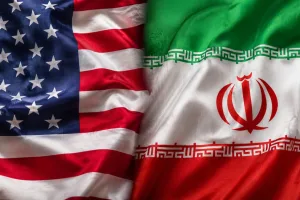
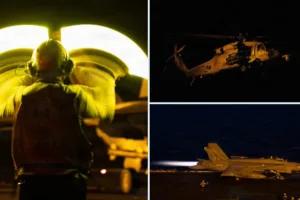
This comes amid escalating tensions in West Asia after a joint US-Israel military strike on February 28 on Iranian territory resulted in the death of its Supreme Leader, Ayatollah Ali Khamenei and other senior figures, prompting a fierce response from Tehran.
In retaliation, Iran launched waves of drone and missile attacks across multiple Arab countries.

Netanyahu says attack on Iran to continue with ‘full force’

Israeli Prime Minister Benjamin Netanyahu said in a live broadcast statement that Israel’s attack on Iran will continue with “full force and uncompromising momentum.”

IANS | New Delhi |

Israeli Prime Minister Benjamin Netanyahu said in a live broadcast statement that Israel’s attack on Iran will continue with “full force and uncompromising momentum.”

Israel has a well-prepared plan with many surprises to undermine “Iranian regime” and “enable change,” Netanyahu said on Saturday.

Addressing the Iranian people, he said, “The moment of truth is approaching. We do not seek to divide Iran, but to liberate it and live with it in peace.”

He condemned the United Nations for “condemning us without reason in our just war against Iran’s murderous proxies in Gaza and doing nothing about the massacre in Iran.”

He also demanded that the Lebanese government enforce the ceasefire agreement and disarm Hezbollah, Xinhua news agency reported.

“If you do not do this, Hezbollah’s aggression will have disastrous consequences for Lebanon,” he warned.

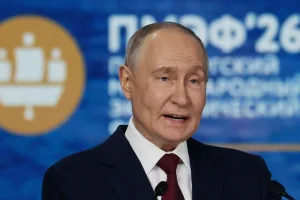
Meanwhile, US President Donald Trump said the United States had severely weakened Iran’s military after a week of fighting, while signalling that Washington holds strong negotiating leverage but is not actively pursuing a settlement with Tehran.

Speaking to reporters on Saturday during a press gaggle aboard Air Force One, Trump described the early phase of the conflict as a decisive blow against Iran’s armed forces. The United States and Israel launched a joint military operation against Iran on February 28.

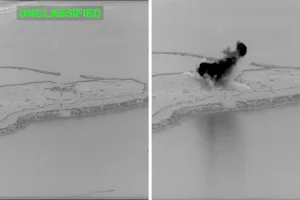
“We’ve wiped out their Navy, 44 ships. We’ve wiped out their Air Force. Every plane,” Trump said. He said American strikes had also crippled Iran’s missile capabilities and launch infrastructure.

“We’ve knocked out about 70 per cent of the rocket launchers,” he said, adding that the systems were “very hard to get, very expensive.”

According to Trump, the reduction in launchers and manufacturing capacity has sharply reduced Iran’s ability to retaliate. “They’re at about 9 per cent of what they sent out in the first two days,” he said.

‘Shameful and unprecedented’: PM Modi slams TMC govt over alleged ‘insult’ to President Murmu amid tribal event row

West Bengal CM Mamata Banerjee hit back at the BJP, saying the saffron party was using President Murmu to malign the state.

Statesman News Service | New Delhi |

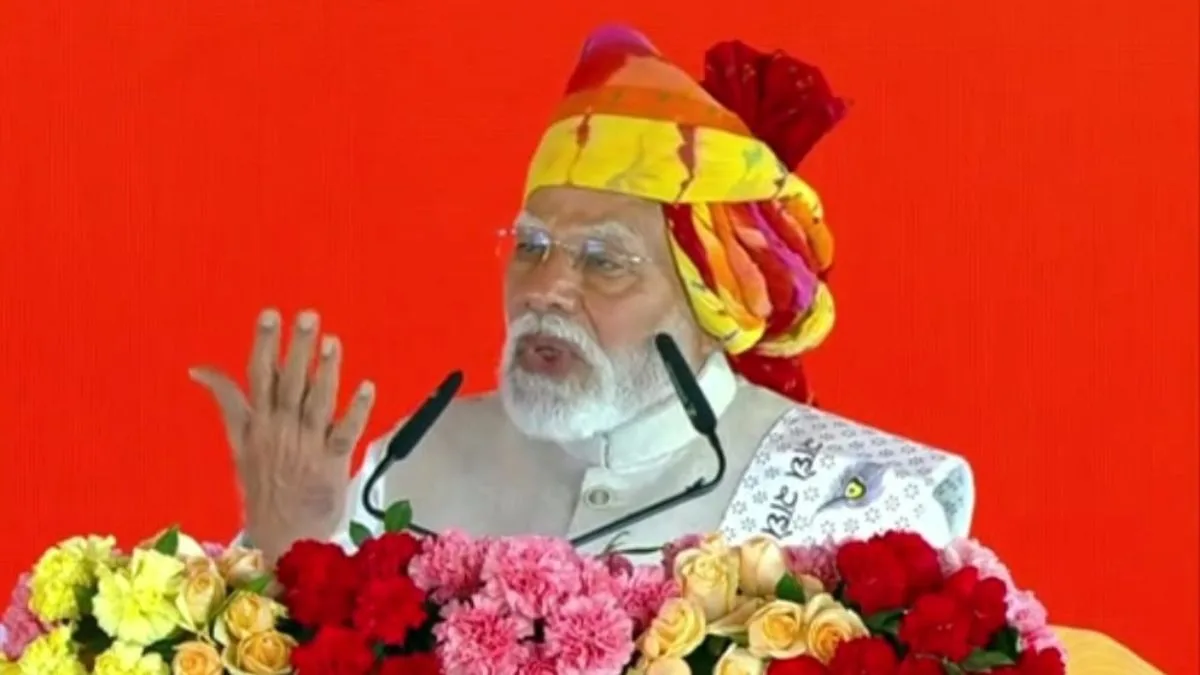
Prime Minister Narendra Modi on Saturday launched a no holds barred attack on Mamata Banerjee-led Trinamool Congress government over the alleged insult to President Droupadi Murmu after the venue of the International Santal Conference was shifted by the local administration.

President Murmu had expressed her frustration over the administration’s decision to change the venue of the event she addressed. She said that the event earlier scheduled to be held in Bidhannagar but later moved to another venue in Goshaipur near the Bagdogra Airport citing congestion has left her “sad and upset”.

“I don’t know what went through the administration’s mind that they chose a place for the conference where the Santal people couldn’t go… I am very sad that the people here were unable to reach the conference because it was held so far away. Perhaps the administration had hoped that no one would be able to attend, and the President would simply turn around and leave,” Murmu said.

She further added that usually the Chief Minister and other ministers should also come when a President visits any place. “But she (Mamata Banerjee) did not… I am also a daughter of Bengal… Mamata Didi is also my sister, my younger sister. I don’t know if she was angry with me, that’s why this happened…,” she added.

Murmu mauls Mamata, stops short of saying West Bengal CM tried to sabotage global Santhal conclave

Calling the incident “shameful and unprecedented”, PM Modi said everyone who believes in democracy and the empowerment of tribal communities is disheartened.

“The pain and anguish expressed by Rashtrapati Ji, who herself hails from a tribal community, has caused immense sadness in the minds of the people of India,” Modi said.

The Prime Minister said that the TMC Government of West Bengal has “truly crossed all limits” and that the administration is responsible for this “insult” to the President.
He said that it was “unfortunate” that a subject as important as Santal culture is being treated so casually by the West Bengal Government.
PM Modi further added that the office of the President is above politics and that the sanctity of this office should always be respected. “One hopes better sense prevails among the West Bengal Government and TMC.”

‘BJP using the President to malign Bengal’: Mamata hits back

Amidst the criticism, West Bengal CM Mamata Banerjee hit back at the BJP, accusing the saffron party of using President Murmu to malign the state.

“BJP has stooped so low that they are using President Droupadi Murmu to malign the state,” Banerjee said during an event in Kolkata.

Responding to President Murmu’s remark that the Bengal CM should have attended the event, Banerjee said that it was not possible for her during elections.

“I can welcome you if you come once a year, but if you come during elections, it won’t be possible for me to attend your programmes as I am busy with people’s rights,” CM Banerjee added.

Vijay promises ₹2,500 monthly aid for women, gold for marriages, free LPG cylinders

The announcements were made during the party’s International Women’s Day celebrations in Mamallapuram, a coastal heritage town near Chennai.

Statesman News Service | Chennai |

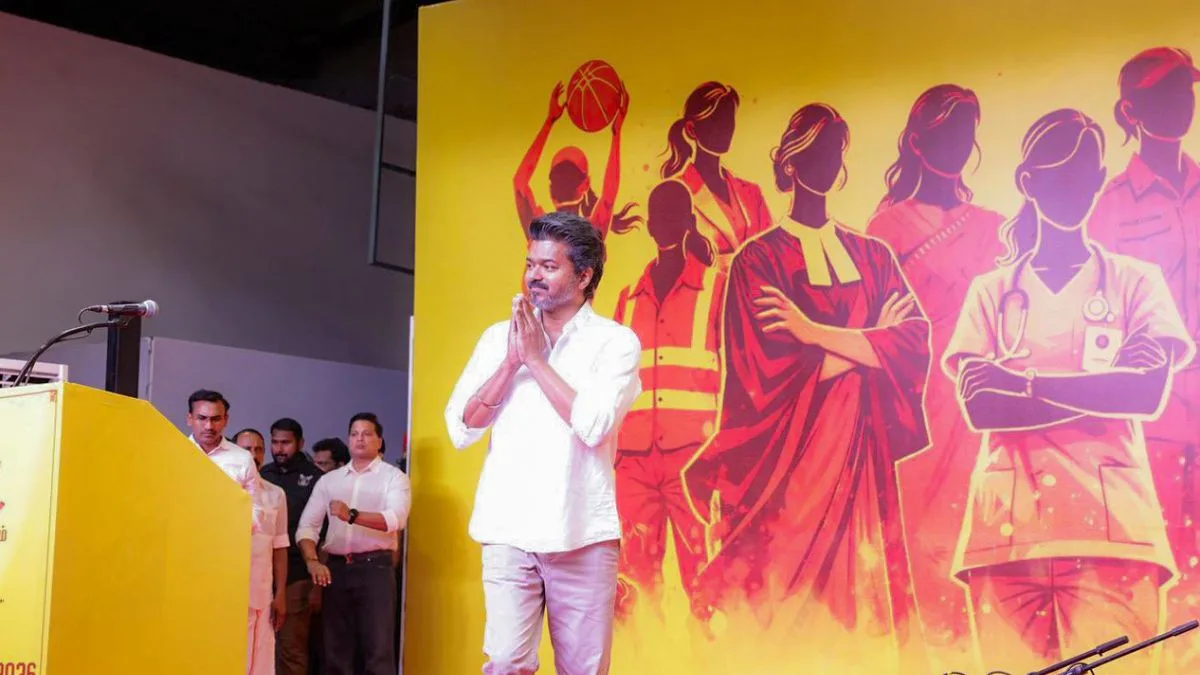
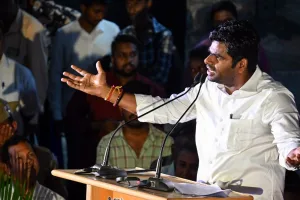
Actor-turned-politician Vijay, president of the Tamilaga Vettri Kazhagam (TVK), on Saturday unveiled a fresh set of welfare promises including ₹2,500 monthly assistance for women heads of households, eight grams of gold for women’s marriages, and six free LPG cylinders annually, if his party comes to power.

The announcements were made during the party’s International Women’s Day celebrations in Mamallapuram, a coastal heritage town near Chennai.

Under the proposed “Mathippuru Women’s Scheme”, women heads of households up to the age of 60—excluding government employees—would receive ₹2,500 per month, Vijay said.

The party also promised six free LPG cylinders per year under the “Annpoorani Scheme”, and eight grams of gold for women at the time of marriage through the “Annan Seer Scheme.”

The ₹2,500 monthly assistance is an enhanced version of the ₹1,000 monthly aid currently provided by the government led by M. K. Stalin of the Dravida Munnetra Kazhagam (DMK) and higher than the ₹2,000 assistance earlier promised by the All India Anna Dravida Munnetra Kazhagam (AIADMK).

The eight grams of gold for marriages expands on the earlier half-sovereign gold scheme introduced during AIADMK governments.

To reduce school dropouts, Vijay also proposed the “Kamaraj Educational Assurance Scheme,” named after former Congress leader K. Kamaraj, under which ₹15,000 annually would be provided to mothers or guardians of students studying from Classes I to XII.

The TVK chief also announced the “Vettri Travel Scheme,” which would allow free bus travel for women in all state-run buses, expanding on the current free travel facility in city buses introduced by the DMK government.

On women’s safety, Vijay pledged zero tolerance for crimes against women and proposed the creation of a 500-member “Rani Velu Nachiyar Brigade,” named after the historic queen Velu Nachiyar, to patrol public spaces in civil dress with body cameras.

He also promised fast-track courts named after freedom fighter Anjalai Ammal to expedite cases related to crimes against women.

Additional measures include installing smart panic buttons in all public transport vehicles, connected to command centres aimed at providing response within five minutes, and distributing free sanitary pads through schools and the public distribution system.

Vijay said the schemes could be implemented if corruption and misuse of public funds were curbed. Referring to the state’s estimated ₹4.39 lakh crore budget, he alleged that a significant portion of public funds was lost to corruption under the present government, a charge rejected earlier by the ruling DMK.

Touching briefly on personal controversies without naming them, Vijay told supporters that he was aware of attempts to target him politically but urged them to stay focused on issues affecting the public.

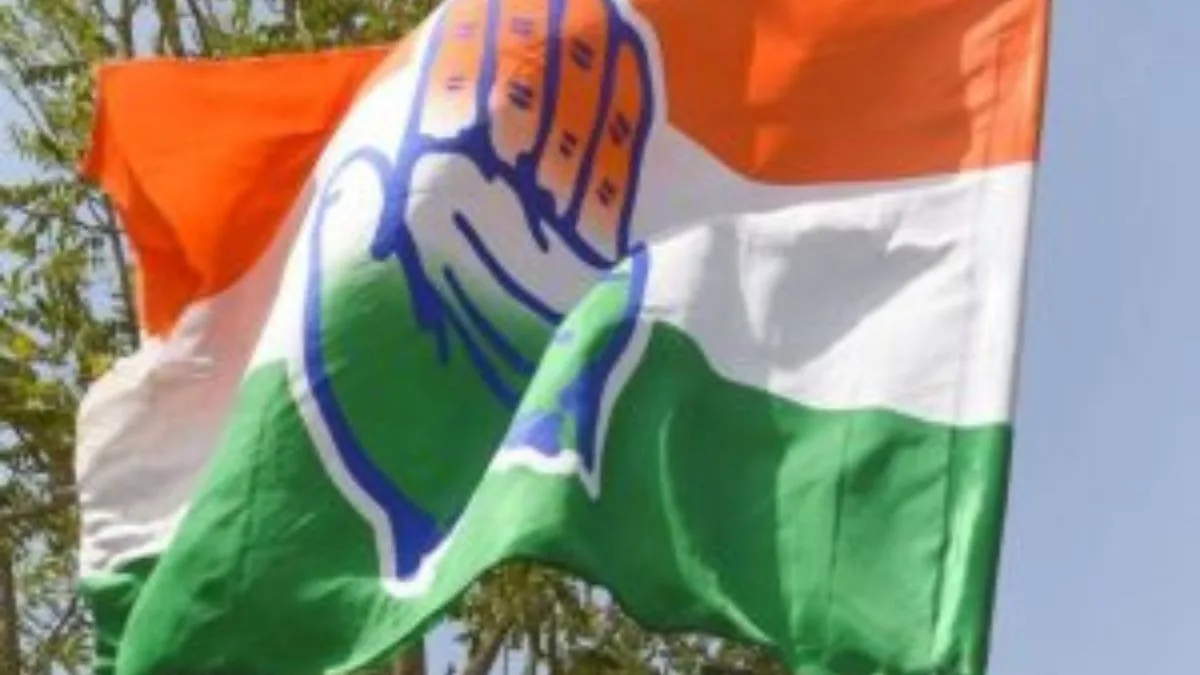
Rahul Gandhi announces five guarantees if UDF comes to power in Kerala

Addressing a rally marking the conclusion of the Puthu Yuga Yatra, led by Leader of Opposition V. D. Satheesan, Gandhi outlined a series of welfare initiatives proposed by the Congress-led alliance.

Statesman News Service | Thiruvananthapuram |

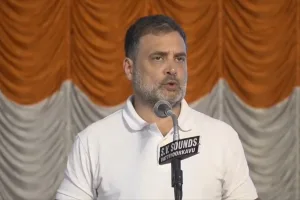
Senior Congress leader Rahul Gandhi on Saturday announced a set of five “guarantee” schemes that would be implemented if the United Democratic Front (UDF) comes to power in Kerala.

Addressing a rally marking the conclusion of the Puthu Yuga Yatra, led by Leader of Opposition V. D. Satheesan, Gandhi outlined a series of welfare initiatives proposed by the Congress-led alliance.

Among the promises are free travel for women in buses of the Kerala State Road Transport Corporation (KSRTC), a monthly allowance of Rs 1,000 for college students, and an increase in welfare pensions to Rs 3,000.

The Congress leader also announced free health insurance coverage of up to Rs 25 lakh per family, to be named after former Kerala Chief Minister Oommen Chandy.

Other proposals include interest-free loans of up to Rs 5 lakh for youth to start businesses and the creation of a dedicated department for senior citizens.

During his speech, Gandhi also launched a sharp attack on Prime Minister Narendra Modi, alleging that the Centre had compromised India’s interests by signing agreements with the United States.

He claimed that opening India’s agricultural sector to the US would harm farmers and affect the country’s energy security.

Gandhi further alleged that certain individuals, including industrialist Anil Ambani and Union Minister Hardeep Singh Puri, were mentioned in the so-called Epstein files, and accused Modi of being under pressure over the issue.

He also targeted Kerala Chief Minister Pinarayi Vijayan, questioning why central agencies such as the Enforcement Directorate had not taken action against him.

Alleging a tacit understanding between the Communist Party of India (Marxist) and the Bharatiya Janata Party, Gandhi said the two parties were working together to defeat the UDF.

He also accused the Left Democratic Front government of favouring corporate interests and failing to protect workers.

India’s rise ‘unstoppable’, says Jaishankar at Raisina Dialogue

Speaking during a session titled ‘Heart of the Seas: Future of the Indian Ocean’, alongside Barry Faure, Foreign Minister of Seychelles, and Vijitha Herath, Foreign Minister of Sri Lanka, Jaishankar said that while challenges exist, the direction of India’s rise is clear.

Statesman News Service | New Delhi |

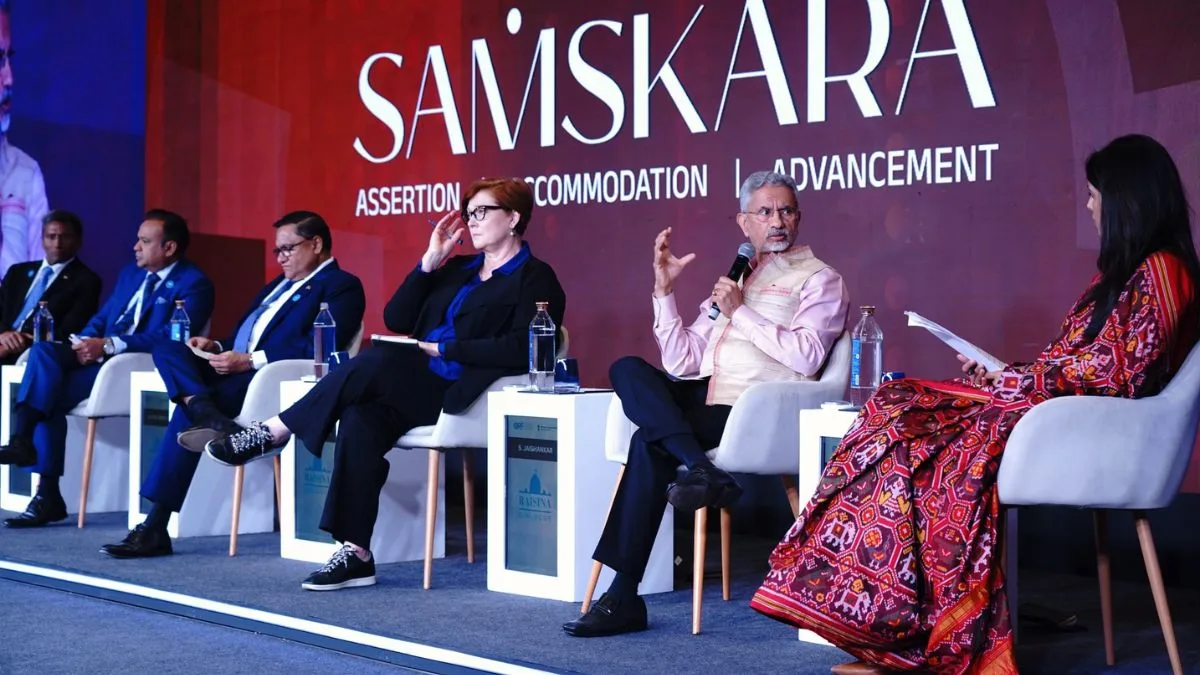
External Affairs Minister S Jaishankar on Saturday asserted that India’s rise is “unstoppable”, adding that the country’s growth would benefit the wider Indian Ocean region.

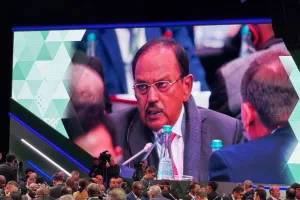
“I do want the rest of the Indian Ocean to appreciate that India’s rise is, in a way, a lifting tide. With our growth, other countries of the Indian Ocean stand to benefit. Those who work with us, obviously, will get more benefits. In a way, it is a trend,” Jaishankar said at the Raisina Dialogue in New Delhi.

Speaking during a session titled ‘Heart of the Seas: Future of the Indian Ocean’, alongside Barry Faure, Foreign Minister of Seychelles, and Vijitha Herath, Foreign Minister of Sri Lanka, Jaishankar said that while challenges exist, the direction of India’s rise is clear.

“I’m not saying there are no challenges to India’s rise; there are. But the direction of India’s rise, I think, is very clear. In a way, it is unstoppable,” he said.

The minister emphasised that the trajectory of a nation’s rise ultimately depends on its own strengths. “The rise of countries is determined by the countries themselves. The rise of India will be determined by India. It will be determined by our strength, not by the mistakes of others,” he added.

Jaishankar also noted that the Indian Ocean region is undergoing a phase of recovery and rebuilding, particularly in terms of trade routes and connectivity.

Highlighting India’s connectivity initiatives, he said New Delhi is working to restore links to the east through Myanmar and Southeast Asia, while strengthening western corridors through the India–Middle East–Europe Economic Corridor into the Arabian Peninsula and further via the International North–South Transport Corridor through Iran into Eurasia.

KPCC chief Sunny Joseph’s brother attends BJP programme

Shaji participated in a mega adalat held under the leadership of BJP state president Rajeev Chandrasekhar. Speaking to reporters, he said he had attended the event to file a complaint but added that he was also considering joining the BJP.

Statesman News Service | Thiruvananthapuram |

VJ Shaji, brother of Sunny Joseph, president of the Kerala Pradesh Congress Committee (KPCC), attended a programme organised by the Bharatiya Janata Party in Dharmadom in Kannur district on Friday.

Shaji participated in a mega adalat held under the leadership of BJP state president Rajeev Chandrasekhar. Speaking to reporters, he said he had attended the event to file a complaint but added that he was also considering joining the BJP.

Responding to a query, Shaji remarked that if the children of senior Congress leaders K Karunakaran and AK Antony could join the BJP, “then why shouldn’t I?”

Meanwhile, prominent Congress leader and vice president of the Thrissur District Congress Committee, M. S. Anil Kumar, formally joined the BJP. Chandrasekhar welcomed him into the party by draping a shawl over his shoulders at a function held at the BJP state committee office.

The event was attended by B. L. Santosh, national general secretary (organisation) of the BJP; former Union Minister Prakash Javadekar, the party’s state in-charge; and Union Minister Shobha Karandlaje.

Anil Kumar began his political career through the Kerala Students Union (KSU) and later held several positions within the Congress organisation.

He served as chairman of Christ College Irinjalakuda, state general secretary of the Indian Youth Congress, secretary of the DCC, and eventually vice president of the Thrissur DCC.

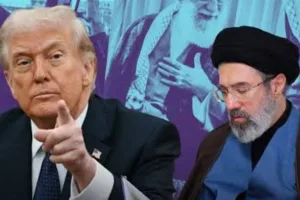
Iranian Prez asserts right to defend against US and Israeli military aggression after Trump’s ‘apology means defeat’ remark

He said that Iran has not attacked its friendly neighbours but targeted US assets in the region.

Statesman News Service | New Delhi |

After US President Donald Trump interpreted Iran’s apology to its Gulf neughbours as an admission of defeat, Iranian President Masoud Pezeshkian on Saturday reasserted that Tehran has always emphasised the maintenance and continuation of friendly relations with regional governments based on good neighbourliness and mutual respect for national sovereignty and territorial integrity.

However, he added, this does not negate Iran’s inherent right to defend itself against US and Israeli military aggression.

“We stand and resist to the end to defend our country. Iran’s defensive operations are exclusively against targets and facilities that are the origin and source of aggressive actions against the Iranian nation, and we consider them to be our legitimate goals,” he vowed.

He said that Iran has not attacked its friendly neighbours but targeted US assets in the region.

“We have not attacked our friendly and neighbouring countries, but have targeted US military bases, installations and facilities in the region,” he added.

Earlier today, Pezeshkian had apologized to the neighbouring countries, saying Iran had no intention of invading other countries.

The temporary leadership council announced yesterday that there will be no more attacks on neighbouring countries and no missile launches, unless attacks originate from those countries against Iran.

Reacting to his apology, Trump said that Iran is being beaten to HELL and therefore, it has apologized.

He claimed that the country was planning to take over and rule the Middle East. However, it is the first time that Iran has ever lost, in thousands of years, to surrounding Middle Eastern Countries, according to Trump.

Pure electoral rolls are bedrock of democracy: CEC

Addressing a press conference in Kochi after reviewing preparations for the upcoming Kerala Assembly elections, the CEC said maintaining the purity of electoral rolls is fundamental to a healthy democratic system.

Statesman News Service | Thiruvananthapuram |

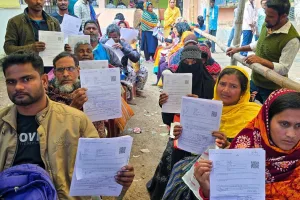
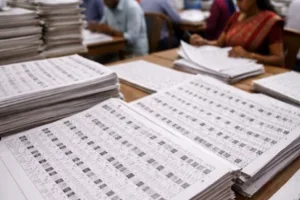
Chief Election Commissioner Gyanesh Kumar on Saturday emphasised that pure electoral rolls are the bedrock of any democracy, asserting that the Special Intensive Revision (SIR) of voter lists was conducted to ensure that no eligible voter is excluded and no ineligible person is included.

Addressing a press conference in Kochi after reviewing preparations for the upcoming Kerala Assembly elections, the CEC said maintaining the purity of electoral rolls is fundamental to a healthy democratic system.

“Pure electoral rolls are the bedrock of democracy. The Special Intensive Revision undertaken recently had a single and clear objective—that no eligible voter should be excluded and no ineligible person should be included. It was carried out in a fair and transparent manner,” he said.

Recalling the state’s role in electoral innovations, Kumar noted that Kerala witnessed the first pilot use of Electronic Voting Machines (EVMs) in the Paravoor Assembly constituency in 1982, adding that the state has long served as a model for democratic practices.

The CEC also said Kerala had been his workplace for nearly 18 years and that he had served as the District Collector of Ernakulam around 22 years ago.

Kumar said eligible voters who may have been excluded from the electoral rolls following the SIR exercise can still apply for inclusion until the last date for filing nominations for the Assembly elections.

Such applicants must submit Form 6 of the Election Commission of India, the prescribed application form for enrolling new voters, along with relevant documents.

Complaints regarding wrongful inclusion of names in the electoral roll can be raised through Form 7, which allows objections to inclusion or requests for deletion of names due to death, relocation, or other reasons.

The CEC also announced that, for the first time in Kerala, coloured photographs of candidates will be displayed on EVMs to help voters identify candidates more clearly.

“In order to enable electors to select the candidate of their choice without any doubt, coloured photographs of candidates will be displayed on EVMs for the first time in Kerala,” he said.

90-year-old woman allegedly gang raped in MP’s Khandwa; SIT formed

According to police, the incident occurred in Punasa area two nights ago. After the assault, the accused allegedly attempted to kill the woman by throwing her, along with her cot, into a nearby well.

Statesman News Service | Bhopal |

A 90-year-old woman was allegedly gang raped by four masked men inside her hut in an agricultural field in Khandwa district of Madhya Pradesh, in a shocking incident that came to light on Friday.

According to police, the incident occurred in Punasa area two nights ago. After the assault, the accused allegedly attempted to kill the woman by throwing her, along with her cot, into a nearby well. However, they failed and fled the spot, leaving the victim critically injured.

The matter surfaced when villagers found the injured woman in the field on Friday morning and informed her married daughter, who lives at her in-laws’ house.

The daughter reached the spot later in the evening and took her mother to the Punasa government hospital around 10 pm after the victim narrated the ordeal.

Doctors referred the woman to the district hospital in Khandwa at around 2 am on Saturday for advanced treatment as her condition was serious.

Superintendent of Police Manoj Rai said on Saturday that a Special Investigation Team (SIT) has been constituted to probe the case. Police have also announced a reward of Rs 10,000 for information leading to the arrest of the accused.

The victim reportedly lives alone in her hut located in an agricultural field. Police have registered a case and launched a search operation to identify and apprehend the culprits.

Amit Shah launches e-Zero FIR system in Uttarakhand under BNSS to curb cybercrime

The e-Zero FIR system has been introduced under Section 173 of the Bharatiya Nagarik Suraksha Sanhita (BNSS) as an important cybersecurity measure.

PRITHVIRAJ SINGH | Dehradun |

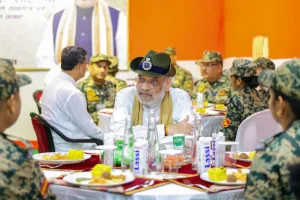
Union Home Minister Amit Shah on Saturday launched the e-Zero FIR system in Uttarakhand at a state government function in Haridwar.

The e-Zero FIR system has been introduced under Section 173 of the Bharatiya Nagarik Suraksha Sanhita (BNSS) as an important cybersecurity measure. It is a specific feature aimed at providing immediate assistance to victims of financial cyber fraud involving amounts exceeding Rs 1 lakh.

According to a state government statement, complaints received through the 1930 cybercrime helpline or the National Cyber Crime Reporting Portal will now be registered as e-Zero FIRs at the State Cyber Police Station in Dehradun. These e-Zero FIRs will be immediately forwarded to the police station concerned through the CCTNS system for further action.

A statement from the Uttarakhand Home Department said the new cybercrime mechanism would enable the police to initiate prompt action during the “golden hour,” begin evidence collection quickly, and freeze suspicious transactions, thereby increasing the chances of recovering money swindled in cyber fraud cases.

The occasion was also marked by the release of a book, “Vikalp Rahit Sankalp,” based on the speeches of Chief Minister Pushkar Singh Dhami. Earlier, Union Home Minister Amit Shah was shown a short film highlighting historic decisions taken by the state government as well as public welfare schemes being implemented in the state.

Congress, AAP leaders’ remarks on gas prices politically motivated: Kapoor

Kapoor said that leaders of the Congress and AAP, whom he accused of indulging in opportunistic politics, should understand that nearly three-fourths of the country’s gas supply comes from Central Asia.

Statesman News Service | New Delhi |

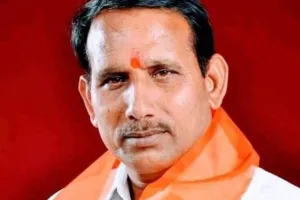
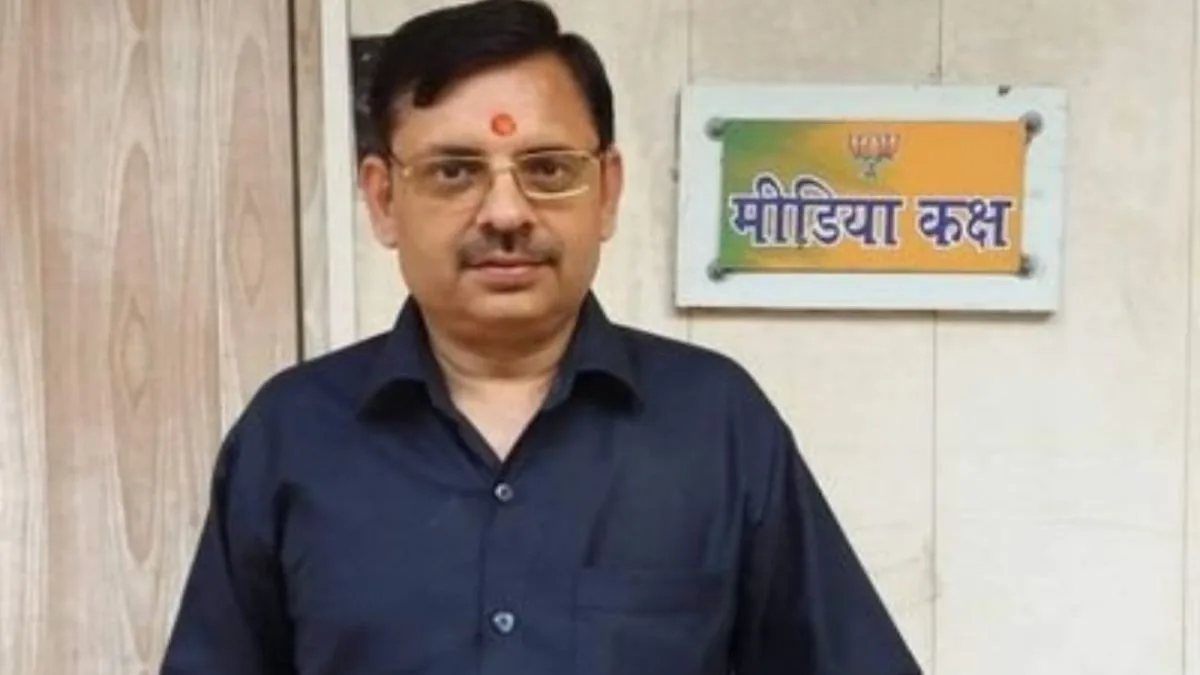
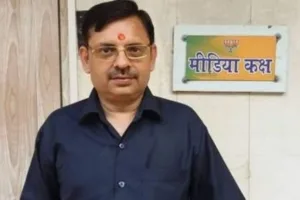
Praveen Shankar Kapoor, spokesperson of the Bharatiya Janata Party (BJP) in Delhi, on Saturday criticised statements made by leaders of the Indian National Congress and the Aam Aadmi Party (AAP) over the recent increase in petroleum gas prices, describing them as politically motivated.

Kapoor said that leaders of the Congress and AAP, whom he accused of indulging in opportunistic politics, should understand that nearly three-fourths of the country’s gas supply comes from Central Asia.

He further noted that international prices of gas and other fuels have remained volatile for some time and have been witnessing a steady rise.

According to the BJP leader, the situation has become more challenging due to ongoing tensions in Central Asia, from where India sources a significant portion of its gas supply.

Kapoor added that the cost of ensuring gas supply through alternative and new routes from the region has increased substantially, and the present hike in gas prices is meant to compensate for these additional costs.