Logo

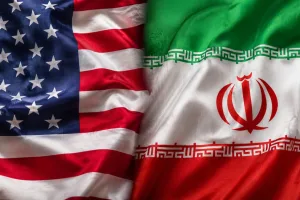
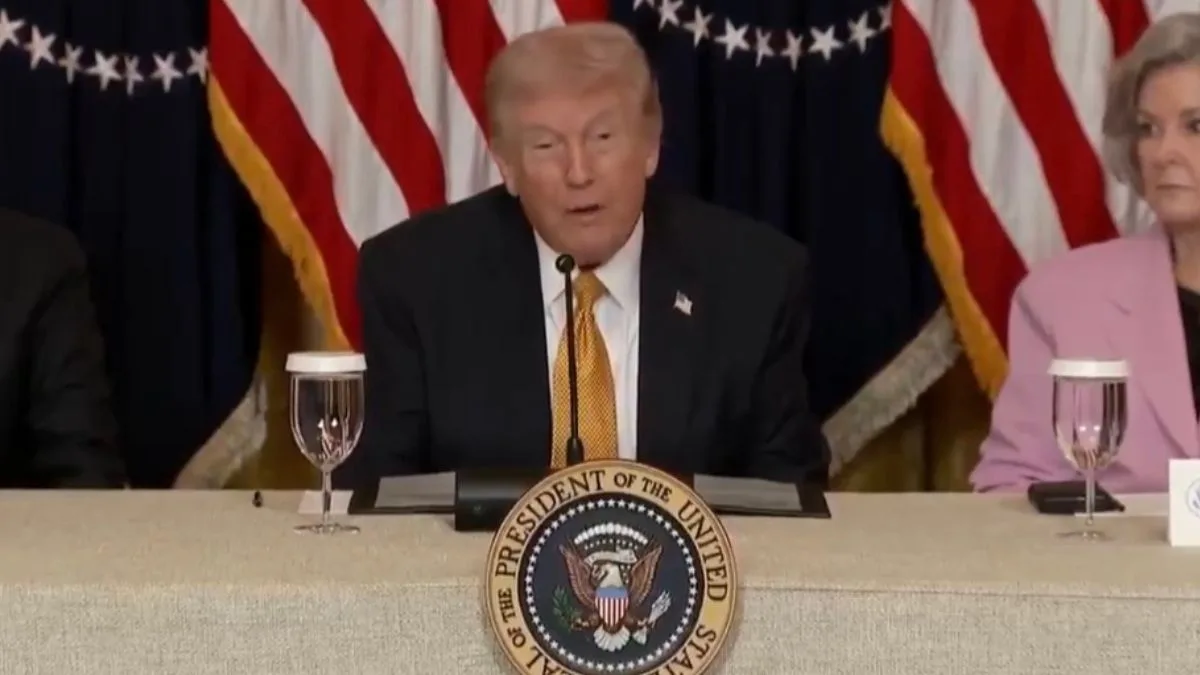
US-Israel-Iran war: Trump fumes at allies, says US no longer need NATO assistance in Iran

Oil routes reopen even as drone strikes hit Baghdad and Gulf infrastructure. Allies hesitate, sanctions tighten, and fresh missile attacks signal the conflict is entering a more volatile phase.

Statesman News Service | New Delhi |

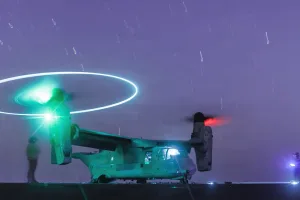
The war that began on February 28 has now spilled across airspace, sea routes and energy hubs, with fresh strikes and political pressure reshaping the conflict’s next phase. The area continues to be tense, with drone strikes in Baghdad and missile firings throughout the Gulf.

Even as fighting continues, Washington appears to be balancing military action with economic caution. Oil routes are slowly reopening, but attacks on critical infrastructure and diplomatic sites underline how fragile the situation remains.

Top pdates: Middle East tensions | March 17

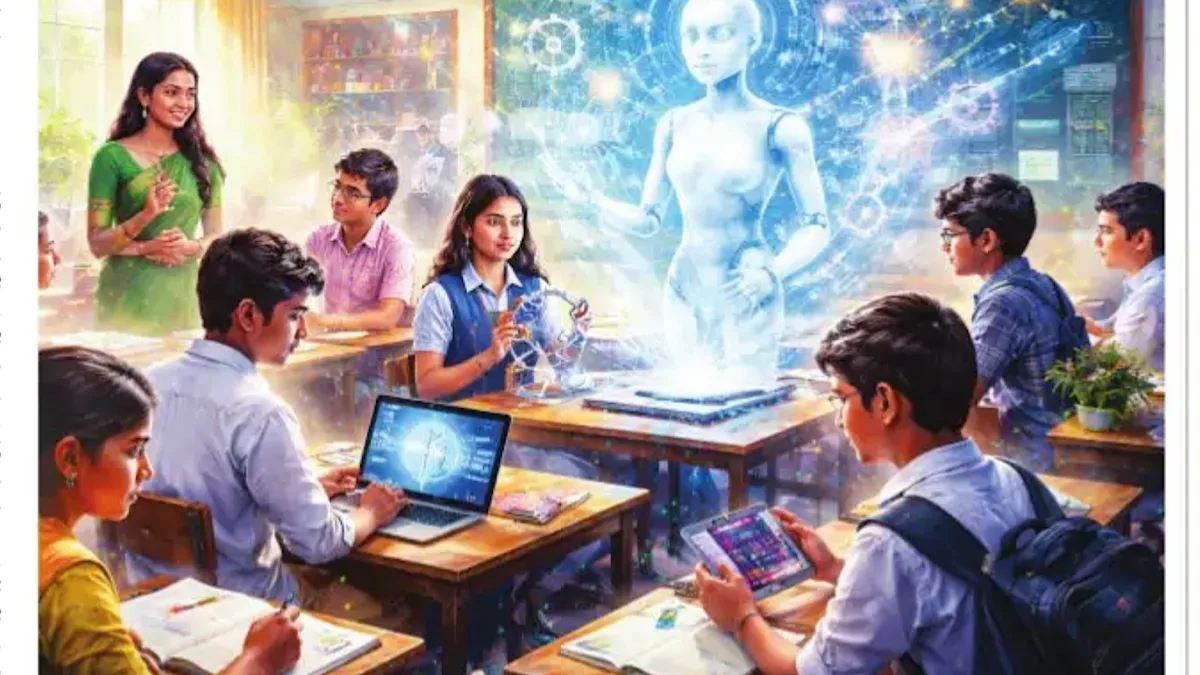
From Classroom to Chatbot: Can AI Be a Student’s Best Study Partner?

Imagine the typical Indian evening: a student hunched over a table, notebook open, struggling to come to terms with equations or the reasons behind the Revolt of 1857.

PROF. DIPANKAR BHATTACHARYAY | New Delhi |

Imagine the typical Indian evening: a student hunched over a table, notebook open, struggling to come to terms with equations or the reasons behind the Revolt of 1857. For generations, the solution has been a predictable one: teachers, parents, and textbooks. A new player has entered this scenario: the AI chatbot, radiating from a smartphone or laptop screen, answering in seconds. For the generation that grew up in the post-Covid era, it is even more difficult than before for students to listen to lectures, and AI emerged as a miracle. They do not have to raise their hands, wait, and feel embarrassed.

They can ask the same question ten times, and the bot will not lose patience. As AI becomes more of a habit than a novelty, an important question arises: is it a real study buddy, or a tempting shortcut that undermines the mind it is supposed to strengthen? The allure is obvious. One can have a five-minute conversation, get a crisp explanation, ask for examples, and move on. In crowded classrooms, often 40 or 50 students with mixed abilities and mixed languages, personal attention is scarce. AI can act like an always-available tutor. It can rephrase concepts in simpler terms, translate a paragraph into Bengali or Tamil, generate practice questions, and even role-play an interviewer for a mock job. For students in smaller towns, where good coaching may be expensive or simply unavailable, this is not a small shift.

A chatbot can produce JEE-style problems, summarize a chapter, or walk through a coding bug at midnight. It narrows the gap between a student with access and one without it. Another benefit is learning to ask better questions. AI outputs improve when prompts are clear and specific. A vague question “Explain the Bengal Famine” yields a generic reply, but a sharper prompt, “Describe the 1943 Bengal Famine from a peasant’s viewpoint” pushes students to think about framing, perspective and evidence. In that sense, AI can train a modern academic skill: precision in inquiry, often called Prompt Engineering. Used wisely, AI can act like a Socratic tutor. Rather than giving solutions, it can push students to explain their logic: why does this step work or what assumption is hidden? A history student can simulate a debate between rival ideologies.

An economics student can test how GST might alter profits for a small shop. Here, AI becomes a tool for discovery, not just answers. All these promises come with risks. A real study partner does not just reduce effort. It builds ability. Learning has always involved struggle: those frustrating minutes

All these promises come with risks. A real study partner does not just reduce effort. It builds ability.

when a concept refuses to settle, when we make a mistake, correct it, and strengthen the mental muscle needed for exams and life. If AI becomes the default solver, summarizing every chapter, writing every paragraph, cracking every problem, then the student may finish the homework while skipping the thinking. Convenience, in that case, is not help. Foundational knowledge is non-negotiable. Without basics, a student cannot judge whether the bot is correct. AI tools can be impressively fluent and still wrong. If a student has never written a solid paragraph himself, how will he spot weak arguments or hallucinations? The human must remain the editor, the auditor, the final authority.

India’s digital divide is real: devices, data, and stable connectivity are unevenly distributed. The temptation of prompt-based plagiarism is also real: copy, paste, submit, especially in a system that often rewards output more than understanding. In the worst scenario, AI is the ultimate rote-learning device in a nation that is already attempting to move away from rote learning. The future is a conscious blend where AI is a co-pilot, not the captain. Let the chatbot handle the drills, quick explanations, language barriers, and practice tests. But let the student do the heavy lifting: try first, ask second, and check always. The teacher’s role, too, will become even more strategic than before.

It is no longer just about imparting knowledge, but imparting judgment: how to question the AI, how to check, and how to identify poor reasoning. Assignments can be made this way. Instead of “Write a report on photosynthesis,” teachers can assign students to get the AI to give them several explanations and then check and defend the best explanation from the textbook. This way, the student’s brain is engaged at a high level. AI can be the ultimate study partner for students only if they use it as a training aid, and not a shortcut to the finish line. It should supplement thinking, not substitute for it. AI will find its proper use, not as a substitute for hard work, but as a catalyst that helps more students unlock their potential.

(THE WRITER IS PRINCIPAL, TECHNO MAIN SALT LAKE)

Beyond Exams: How AI Is Shaping Critical Thinking and Creativity in Young Minds

For many years, academic success has been gauged by a familiar set of standards — grades , rankings, and the ability to memorize course material.

ADITI MISRA | New Delhi |

For many years, academic success has been gauged by a familiar set of standards — grades , rankings, and the ability to memorize course material. However, as artificial intelligence (AI) swiftly reshapes the landscape of work and decision-making, the traditional focus on exams is coming under scrutiny. In classrooms around the world, a subtle yet significant change is taking place: we’re moving from rote memorization to understanding, from simply providing answers to fostering inquiry, and from passive learning to engaging thinking. Central to this evolution is AI—not as a substitute for teachers, but as a dynamic force that enhances critical thinking and creativity in young minds.

FROM INFORMATION CONSUMPTION TO INTELLIGENT QUESTIONING

Today’s learners are navigating a world overflowing with information. While facts are abundant, the ability to discern and analyze them is what truly matters. AI-driven educational tools are empowering students to go beyond just absorbing information; they’re encouraging them to question it. Adaptive learning platforms assess not only how students respond but also how they think, prompting them with follow-up questions, alternative scenarios, and variations of problems that stimulate deeper reasoning. Rather than simply asking, “What’s the right answer?”, AI encourages students to delve into why an answer is valid, how it might change, and what occurs when different factors come into play. This shift nurtures analytical thinking—an invaluable skill in a world where solutions are seldom straightforward.

PERSONALIZED LEARNING, DEEPER THINKING

One of the most groundbreaking ways AI is changing education is through personalization. In traditional classrooms, the pace can often feel like a one-size-fits-all approach, which can leave some students struggling while others feel unchallenged. But with AI, the content can be tailored to fit each student’s unique learning style and progress, enabling them to connect with concepts on a deeper level. When students aren’t pressured to “keep up” or limited by generic teaching methods, they’re more inclined to experiment, reflect, and explore—essential elements for fostering critical thinking and creativity. Personalized learning paths empower students to take intellectual risks, something that standardized tests often overlook.

CREATIVITY BEYOND THE ARTS

For a long time, creativity in education has been mostly linked to art, music, or creative writing

Today’s learners are navigating a world overflowing with information. While facts are abundant, the ability to discern and analyze them is what truly matters.

But now, AI is shaking things up and broadening that definition. It empowers students to dive into designing simulations, building models, coding, crafting data-driven stories, or even prototyping solutions for real-world challenges. This means creative thinking is now flourishing in all sorts of subjects, including science, math, and social studies. With project-based learning backed by AI tools, students can explore concepts in a more open-ended manner. There’s no one “right” answer—just better questions, smarter iterations, and more innovative strategies. This approach fosters originality and problem-solving skills, which are becoming increasingly important in both higher education and the workforce.

LEARNING TO COLLABORATE WITH MACHINES

Instead of making students reliant, AI is actually helping them learn how to work together—with both their peers and smart systems. When students engage with AI to test out ideas, spot patterns, or brainstorm, they’re picking up a crucial skill for the future: the ability to work with technology in a thoughtful way, rather than just taking its results at face value. Teachers are putting a greater focus on AI literacy—showing students how to spot bias, check sources, and grasp the ethical issues surrounding AI-generated content. This not only hones their critical thinking skills but also fosters a sense of responsible digital citizenship.

IN THE AGE OF AI, WE NEED TO RETHINK HOW WE ASSESS LEARNING

As education evolves, so should our methods of measuring student progress. Instead of sticking to traditional timed exams, educators are now looking into continuous assessment models that focus on tracking skills like reasoning, creativity, collaboration, and problem-solving over time. Tools like portfolios, projects, and performance -based evaluations—often enhanced by AI analytics—provide a more comprehensive picture of student development. They celebrate effort, growth, and originality, rather than just the final answers.

THE ROAD AHEAD AI

alone can’t change education. It’s essential for teachers, curricula, and policies to evolve together. However, when used wisely, AI can free young minds from the restrictive nature of exam-focused learning , equipping them for a future filled with complexity, creativity, and constant change. By moving past exams, education is rediscovering its true mission—not just to churn out high scorers, but to cultivate thinkers, creators, and problem-solvers. When AI is in the right hands, it’s becoming one of the most powerful tools on this journey.

(THE WRITER IS DIRECTOR, DHARAV HIGH SCHOOL GURUGRAM)

A deal under doubt: Malaysian minister’s ‘null and void’ remark throws US trade deal into confusion

Opposition leaders in Malaysia are seeking answers after conflicting government statements raised doubts about a major US trade agreement worth billions in investments and purchases.

Statesman News Service | New Delhi |

Malaysia’s government has found itself under pressure over its much-publicised tariff agreement with the United States, after a senior minister appeared to contradict the administration’s position on the deal’s status. The confusion began when a minister suggested that a recent ruling by the US Supreme Court had effectively cancelled the agreement, a remark that was later walked back by his own ministry.

The trade arrangement, signed in October by Prime Minister Anwar Ibrahim’s government, was presented as a major step to secure continued access to the US market. In return, Malaysia pledged investments and purchases of American goods worth about US$240 billion, including items such as beef and aircraft, while benefiting from a tariff rate of 19 per cent in the world’s largest consumer economy.

Minister’s remark triggers political backlash

Questions about the agreement intensified after the US Supreme Court ruled in February that President Donald Trump had exceeded his constitutional authority by invoking emergency powers to introduce his “Liberation Day” tariffs. That decision raised doubts about the legal basis of several trade arrangements built around those tariffs.

The issue escalated on Sunday when Trade Minister Johari Abdul Ghani told reporters that the court ruling meant the Malaysia-US deal was no longer valid. “It is not on hold. It is no longer there, it’s null and void,” he was quoted as saying.

Hours later, however, his ministry issued a clarification saying the minister had “misspoken”, without providing additional details.

The episode quickly drew criticism from the opposition. Takiyuddin Hassan, secretary general of the Perikatan Nasional coalition, said the minister’s remarks had only deepened uncertainty about the commitments Malaysia had made and their possible impact on the country’s export-driven economy, where overseas trade accounts for more than three-quarters of output.

“At a time of growing global trade uncertainty, clarity in policy direction and investor confidence in Malaysia are increasingly important,” Takiyuddin said while seeking a special parliamentary session to address the issue.

Deal already faced criticism at home

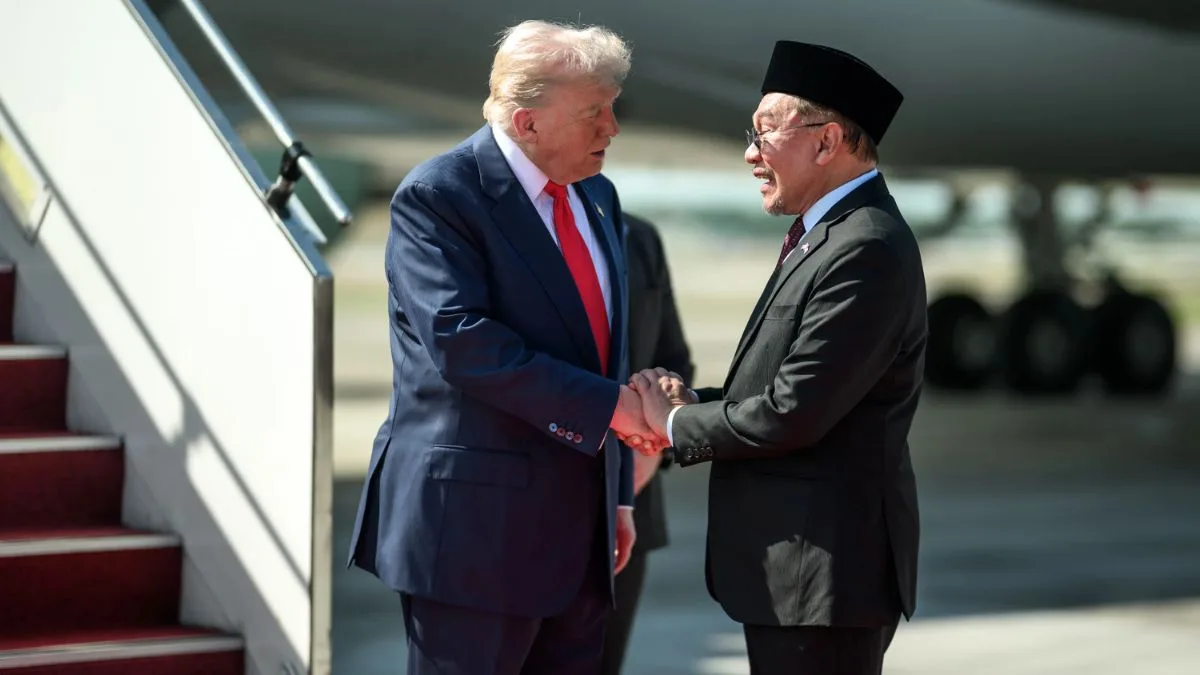
From the outset, the agreement had attracted scrutiny within Malaysia. It was signed during Donald Trump’s visit to Kuala Lumpur last October, a period marked by volatile US trade policies that were unsettling global supply chains.

Trump defended his tariff strategy as necessary to correct what he described as long-standing trade imbalances, accusing both allies and rivals of taking advantage of the United States.

For Malaysia’s leadership, entering into the deal was seen as a way to maintain stability in trade ties with Washington. Critics, however, argued that the arrangement was rushed and risked pushing Malaysia closer to US geopolitical positions, potentially straining relations with China, its largest trading partner.

On Monday, eight government lawmakers also called for greater transparency about the agreement. In a joint statement, they urged the administration to seek clarification from Washington and warned that unresolved questions could leave Malaysia stuck with less favourable terms than initially expected.

They also criticised the negotiation process, saying that advice to delay signing the agreement until after the US Supreme Court ruling had been overlooked. According to the lawmakers, the final deal appeared “one-sided” and raised concerns about its implications for national sovereignty.

Global trade landscape shifting

The court’s decision striking down Trump’s emergency tariffs has complicated several similar agreements the United States had reached with other countries, including Japan, South Korea, Vietnam, Bangladesh and Indonesia.

Following the ruling, the Trump administration replaced earlier arrangements with a blanket tariff of 10 per cent on all trading partners. At the same time, Washington launched investigations into alleged unfair trade practices involving nearly 60 countries, including Malaysia.

Can AI reach rural India’s classrooms?

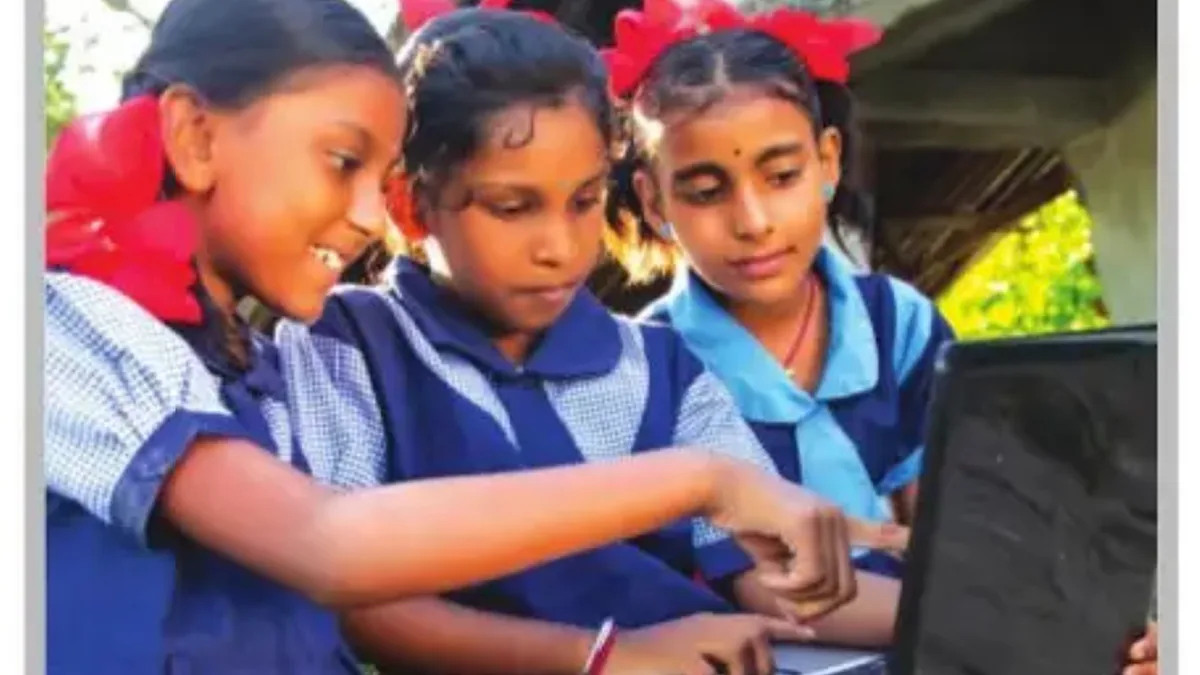
Artificial intelligence (AI) has emerged as a pivotal force in reconfiguring India’s educational landscape, enhancing pedagogy, boosting classroom effectiveness, and contributing to national development.

AKSHATA AND R. SREEJITH VARMA | New Delhi |

Artificial intelligence (AI) has emerged as a pivotal force in reconfiguring India’s educational landscape, enhancing pedagogy, boosting classroom effectiveness, and contributing to national development. The International Monetary Fund’s recent upward revision of India’s gross domestic product (GDP) growth projections to 7.3 per cent for 2026 and 4.6 per cent for 2027 partly attributes this momentum to AI-driven investments. Notably, India accounted for 16 per cent of global generative AI application downloads in 2025, evincing its crucial role in the digital economy.

AI’s integration into teaching-learning processes has already proven to be a game changer in the Indian educational sector although equitable access for rural learners confronting the systemic barriers remains a challenge that needs to be urgently addressed. AI facilitates a transition from traditional, unidirectional instruction to dynamic, data-informed personalisation. Automated systems for grading, attendance tracking, and curriculum adaptation are increasingly liberating educators for facilitative roles, and fostering deeper cognitive engagement. Adaptive platforms, powered by machine-learning algorithms, deliver multilingual content and instantaneous feedback, aligned with India’s linguistic heterogeneity.

A 2025 study featuring 30 Indian Higher Educational Institutions found that over 50 per cent of them used generative AI to develop study materials, while over 60 per cent allowed student use of AI tools. India’s National Education Policy (NEP) 2020 provides the doctrinal foundation for mainstreaming AI. The All-India Council for Technical Education (AICTE) designated 2025 as the ‘Year of AI’, targeting 14,000 technical institutions and equipping 40 million students with AI competencies through dedicated laboratories and certificate programmes. Complementarily, the Central Board of Secondary Education (CBSE) is set to implement an AI curriculum from class III commencing in 2026-27, spanning 18,000 schools, emphasising computational thinking, ethical considerations, and practical applications. The University of Madras has pioneered AI in distance education, offering personalised schedules, 24/7 virtual tutors, predictive analytics to identify at-risk students, and virtual labs.

In January 2026, its Samsung Innovation Campus trained 5,000 Tamil Nadu youth in AI, IoT, and coding as a part of a national goal for 20,000 skilled students. For rural students hindered by infrastructural and socioeconomic constraints such as poor transport, family responsibilities, and difficult living conditions, several AI-based platforms now offer asynchronous learning alternatives. Government education platforms like DIKSHA and SWAYAM enable offline, self-regulated learning through pre-downloaded modules, while phoneme-based tools such as Google Bolo support literacy development without requiring continuous connectivity.

Initiatives like these make it possible for students to continue their education without the demands of physical attendance, thereby mitigating exclusionary dynamics. The deployment of predictive analytics by the Andhra Pradesh government in collaboration with Microsoft to reduce student attrition by 20-30 per cent through targeted familial interventions, the development of Iris, ‘India’s first AI teacher robot’ in a Kerala school, and the rollout of PARKAH (Performance Assessment, Review, and Analysis of Knowledge for Holistic Development), the conversational AI chatbot platform for assessment practice in all schools in Goa, and the AI-integrated smart classrooms in schools in West Bengal are just a few other subnational educational initiatives that leverage the quantum leaps in AI.

Reports of an AI-enabled Anganwadi centre in Nagpur bring to focus the transformative capacity of AI in pre-primary education sectors. India’s EdTech market reports a growth rate (CAGR) of 28.7 per cent during 2025-2033. Indian users downloaded 0.6 billion generative AI apps in 2025, a 204 per cent increase from the previous year, driving productivity and human capital formation. Despite progress, India’s digital disparity remains a significant hurdle as only 83.3 per cent rural households have Internet access, compared with 91.6 per cent in urban areas. This digital divide in turn creates an “intelligence divide”, further destabilising the standardisation efforts by governments and education boards.

Research has noted how algorithmic biases, stemming from historical and societal biases, in educational technologies accentuate concerns about fairness and inclusivity. For instance, algorithmic bias has shown to diminish diversity in college admissions processes, highlighting the need for more refined models. AI-learning platforms must account for diverse cultural perspectives to prevent student alienation and loss of trust. Other challenges such as limited teacher training and privacy concerns underscore the high stakes of AI-driven educational practices. According to the 2025 National Sample Survey, only 3.2 per cent of rural households in India are connected via optical fibre cable. Equitable AI deployment necessitates sustained investment in rural broadband, subsidised hardware, and continuous professional development.

Urgent policy measures include algorithmic audits to ensure impartiality and sovereign data governance frameworks. Impartiality in AI systems is essential to safeguard fairness and inclusivity in India’s educational transformation. Without deliberate checks, algorithms risk amplifying existing biases whether linguistic, regional, or socioeconomic, thereby excluding vulnerable learners. By embedding thorough regular audits, transparent data practices, and ethical oversight, AI tools can deliver equitable opportunities, foster trust among both learners and educators, and prevent the emergence of ‘intelligence divide.’ By expanding flexible, attendance-free learning options, India can use AI to reach all 260 million students including those in rural areas and ensure that the benefits of technology- driven education are shared widely.

(The writers are, respectively, a PhD research scholar and an assistant professor at the Department of English, Vellore Institute of Technology.

Regaining the neighbourhood

Who could have predicted that India’s vicinity would change for the better so soon. A year ago, threats to India were rising as countries in the region displayed anti-India sentiments.

HARSHA KAKAR | New Delhi |

Who could have predicted that India’s vicinity would change for the better so soon. A year ago, threats to India were rising as countries in the region displayed anti-India sentiments. In Bangladesh, the Mohamad Yunus-led caretaker government supp or te d the Jamaat-e-Islami and its anti-India agenda. Further, Yunus’s nemesis, Sheikh Hasina, was in India as a guest of the state and, despite all demands, was not being extradited. Her statements from Delhi added to Yunus’s concerns. Yunus had also made multiple requests to visit New Delhi but these were rejected.

Yunus was aware that attacks on minorities would ignite anger within India and pose a challenge to the Modi government, which if it acted in retribution, would worsen ties for a prolonged duration. He further instigated India by making controversial statements, including while on a visit to Beijing, claiming China could utilize Bangladesh ports for trade with India’s North East. Yunus had hoped that the Jamaat-e-Islami would make substantial gains in the elections and add to India’s insecurity.

Yunus enhanced ties with Pakistan, opening doors for the ISI to exploit Bangladesh territory against India. There were reports that China was being given major construction contracts including a dam as well as airfields close to the Chicken’s Neck. India was forced to open new military bases close to the border to monitor these threats. India knew Yunus was a product of the deep state and was performing on their directions. New Delhi responded with maturity. It did close a few land ports restricting Bangladesh’s access to Indian ports, slowing exports. It also curtailed aid and support to the country. All this time, army to army contacts remained strong and stable.

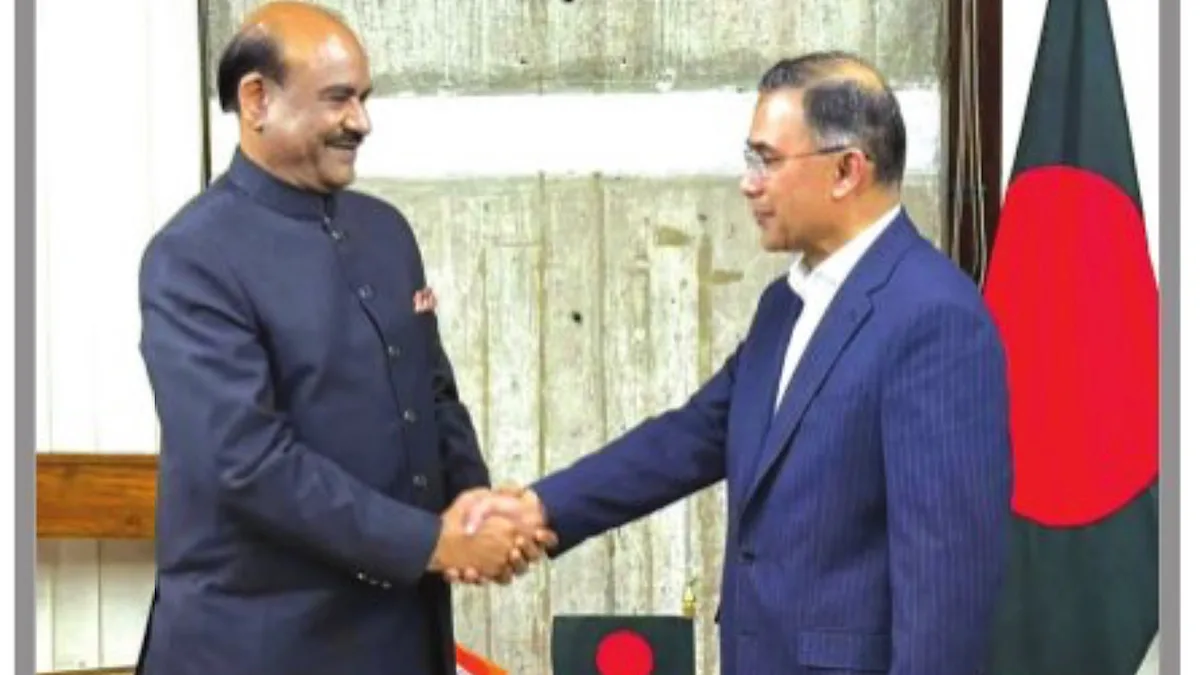
After all, in Bangladesh, it is the army which ensures the survival of the government. The elections bringing the BNP (Bangladesh Nationalist Party) led by Tarique Rahman to power were a welcome change. Almost immediately the government began acting to reverse the soiled relationship. Tarique invited the Indian PM for his swearing in. India was represented by the Lok Sabha Speaker, Om Birla, who conveyed PM Modi’s invitation to Tarique Rahman to visit India. Om Birla posted on X, ‘India stands ready to support Bangladesh’s endeavours to build a democratic, progressive and inclusive nation.’

Bangladesh has faced coups before and hence having a strong army chief who backs democracy is a pre-requisite. Understanding the need to strengthen the hands of the army chief, G eneral Waker-Uz-Zaman, Tarique began his tenure by weeding out pro-Pakistan, pro-Jamaat and pro-Yunus members within the armed forces. They were either posted to inconsequential appointments or assigned to the Ministry of Foreign Affairs for future posting abroad. This also sent a positive message to India. The newly appointed Bangladeshi Director General of Forces Intelligence, Major G eneral Kaiser Rashid Chowdhary, made a quiet visit to India, soon after assuming his appointment.

During the visit he interacted with the head of India’s RAW as also the Director General of Military Intelligence. A quiet dinner with the RAW chief conveys positivity. A lot would have been exchanged as also Indian concerns highlighted. It is possible that sharing of intelligence between the two states on national security would now increase. Another first was the visit to Mhow by Bangladesh’s envoy to India, Riaz Hamidullah. During the visit he addressed the Joint Capsule on ‘ bilateral ties and cultural connections shaping the future of both nations.’ Riaz wrote on X, ‘With 180 sr. military officers of Higher Command Course from (Indian) Tri Forces, shared perspectives on the state of #Bangladesh | #India ties, ways to address issues/challenges and curve ‘road ahead’ in shared interests.’ India on its part has also moved forward.

It supplied 5,000 tons of diesel via the 131-km India-Bangladesh Friendship Pipeline to help ease critical shortages in Bangladesh. This is part of an existing agreement and India did not shy away. Reports of attacks on minorities or violence against Hindu places of worship have reduced. Both sides are moving forward cautiously, seeking to mend ties. India is Bangladesh’s largest trading partner and can assist in revival of the Bangladesh economy. Demands for extradition of Sheikh Hasina have reduced as have anti-government comments by her. There are stumbling blocks but these can be overcome if both sides display positivity in the days ahead. A lot would depend on which country Tarique Rahman visits first, India or China. It is also hoped that the Bangladesh army chief visits India soon. Nepal was another state where relations wavered and anti-India sentiments ran high.

Since 2008, after the end of the monarchy, Nepal had three individuals, Sher Bahadur Dueba, KP Sharma Oli and Pushpa Kama Dahal, playing musical chairs as the PM. It has had 14 governments during this time. The Gen Z movement flowed from frustration with a failing economy, high debt, and poor governance. The recent elections threw up a new leadership, Balendra Shah’s Rastriya Swatantra Party, which swept the polls. The youth believe this party has the will to change their fortunes and usher in growth. In reply to congratulations by PM Modi, Balendra stated, “I express my confidence that we will work together to further strengthen, de ep en and make more outcome-oriented the historic, close, and multi-dimensional relations existing between Nepal and India in the coming days.”

Despite both nations possessing cultural and religious ties, relations have been wobbly. The refusal of Nepal to permit its citizens to serve in the Indian army due to the Agniveer policy has impacted both sides. The armed forces veterans in Nepal maintain close ties with their Indian counterparts. It is hoped that the new government would change its policies. New Delhi must now look at completing its stalled projects and find solutions to the border issues. It must exploit its soft power to overcome the ‘big brother’ image and b e more of a par tner in development.

Simultaneously, Nepal would need to balance its ties between India and China, which would continue to attempt to interfere in Nepal’s functioning while projecting an image of cooperation. It is early days, but there is hope that if Delhi and Kathmandu work together, a lot can be achieved, benefitting both nations. No one could have imagined this sudden change in the neighbourhood a year ago. India navigated the past with patience and maturity. It is now time to push steadily enhancing ties with the younger leadership in both nations and reshape the neighbourhood.

(The writer is a retired Major-General of the Indian Army.)

Hormuz Gamble

When a narrow strip of water becomes the centre of global politics, it usually means something larger is unfolding.

Statesman News Service | New Delhi |

When a narrow strip of water becomes the centre of global politics, it usually means something larger is unfolding. The latest confrontation around the Strait of Hormuz is not merely a regional crisis between the United States and Iran. It is a reminder that the world economy still rests on fragile geographic chokepoints that can be disrupted with alarming ease. Roughly a fifth of the world’s traded oil passes through this narrow corridor linking the Persian Gulf to the Arabian Sea.

For decades, the assumption underlying global energy markets was simple: the route would remain open, even during moments of tension. That assumption is now under strain. Attacks on commercial shipping and threats to tanker traffic have turned the strait into a contested maritime zone. In response, President Donald Trump has urged major economies to send warships to safeguard the shipping lane. The logic behind this appeal is straightforward. Countries whose industries and cities depend on Gulf oil ~ including Japan, South Korea, and China ~ have as much stake in the security of the strait as Washington does. If tankers cannot move safely, the consequences will be measured not only in military tension but also in inflation, disrupted supply chains, and economic slowdown across continents.

Energy security has quietly become the hidden battlefield of modern geopolitics, where shipping lanes, insurance premiums, and tanker routes can influence global stability as much as armies. Yet turning the strait into a theatre of multinational naval deployments carries its own risks. The geography favours disruption. The shipping lanes are narrow, and the surrounding coastline allows even a weaker power to threaten traffic through mines, drones, or short-range missiles. In such an environment, a single miscalculation can escalate rapidly. A damaged tanker, a mistaken radar signal, or an overzealous patrol could transform a limited confrontation into a broader maritime conflict. The crisis also exposes a deeper strategic paradox.

Globalisation has dispersed manufacturing and consumption across the planet, but the arteries that sustain it remain concentrated in a few vulnerable passages ~ Hormuz, the Bab el-Mandeb, and the Malacca Strait among them. The world economy has grown more interconnected, yet the physical routes that sustain it remain perilously narrow. For countries like India, the stakes are immediate and practical. Much of the country’s imported energy flows through the Gulf.

A prolonged disruption in tanker traffic would translate quickly into higher fuel prices, currency pressure, and domestic economic strain. New Delhi, like many Asian capitals, must therefore balance diplomacy with preparedness, ensuring that its energy lifelines remain secure without becoming entangled in a widening conflict. The unfolding contest around the Strait of Hormuz is therefore about more than ships and missiles. It is a warning that the stability of the global economy still depends on a handful of vulnerable sea lanes. When those chokepoints become battlegrounds, the consequences travel far beyond the waters where the first shots are fired.

Gods of Small Things

The phrase “God of Small Things” often evokes the idea that the divine does not manifest only in grand miracles, temples, or world-changing events.

SAUMITRA MOHAN | New Delhi |

The phrase “God of Small Things” often evokes the idea that the divine does not manifest only in grand miracles, temples, or world-changing events. Rather, the divine intelligence that governs the universe often works quietly through ordinary people and seemingly insignificant circumstances. In the theatre of life, not every person appears on the main stage, yet many of those who stand in the wings quietly determine the course of the drama. These individuals ~ sometimes unnoticed, sometimes underestimated ~ are what we may call the “gods of small things.”

In this understanding, “god” does not mean a supernatural being sitting in heaven, but rather any human soul who becomes an instrument of the larger cosmic design. Every individual we encounter carries within them a spark of the same universal consciousness. Through their actions, words, or even chance presence, they may influence the direction of our lives. Some shape our destiny directly; others do so subtly, even unknowingly. Human history provides numerous examples where the actions of apparently ordinary individuals altered the course of events. Consider the life of Alexander Fleming. In 1928, Fleming discovered penicillin, the world’s first antibiotic.

The discovery itself was accidental: a petri dish he had left unattended became contaminated with mould, and he noticed that bacteria around the mould had died. What seemed like a trivial laboratory mishap turned out to be one of the most important medical discoveries in human history. Yet Fleming himself was only the first link in a chain of individuals whose contributions transformed medicine. Scientists such as Howard Florey and Ernst Boris Chain later developed penicillin into a usable drug. Each played a role ~ small or large ~ in saving millions of lives. The discovery was not the work of a single hero but a network of people, circumstances, and quiet contributions.

Another powerful example comes from the life of Mahatma Gandhi. While Gandhi became the symbol of India’s freedom movement, a pivotal turning point in his life occurred in 1893 in South Africa. A railway official ordered him to leave a first-class compartment despite his valid ticket. That single act of humiliation awakened Gandhi’s resolve to fight injustice through nonviolent resistance. The railway official, whose name history scarcely remembers, inadvertently triggered a movement that later inspired millions across the world. A seemingly minor incident became a spark that lit the flame of civil resistance. The life of Abraham Lincoln also demonstrates the influence of humble figures.

Lincoln’s early education came largely from borrowed books and the encouragement of local teachers and neighbours. These individuals were not famous intellectuals or political leaders; they were ordinary people who believed in a young boy’s curiosity. Yet their encouragement helped shape the mind of a man who would later guide the United States through its most difficult crisis, the American Civil War. Similarly, the success of great leaders often rests on the invisible work of countless others. During the struggle for India’s independence, figures like Jawaharlal Nehru or Subhas Chandra Bose commanded global attention, but the movement itself survived because of thousands of unnamed volunteers ~ villagers who sheltered activists, workers who organized protests, printers who secretly circulated pamphlets, and ordinary citizens who risked imprisonment.

Without these “small” contributors, the freedom movement would have collapsed. History also shows how people considered insignificant at a particular moment can transform the future. When Rosa Parks refused to surrender her bus seat in Montgomery, Alabama, in 1955, she appeared to be just one ordinary passenger among many. Yet her quiet act of defiance ignited the Montgomery Bus Boycott, which became a turning point in the American civil rights movement. Through her courage, she inspired leaders like Martin Luther King Jr. and millions of others to challenge systemic injustice. Even in scientific progress, small acts of mentorship or recognition often determine whether talent blossoms or withers. The young Albert Einstein struggled to find academic employment after graduating from university. Eventually, he found work as a patent clerk in Bern.

The job itself seemed mundane, but it gave him the mental freedom to think deeply about physics. In 1905, while working there, Einstein published the revolutionary papers that would reshape modern science, including the formulation of the Theory of Relativity. One might say that the humble administrative job ~ and the supervisors who allowed him the intellectual freedom to think ~ were part of the cosmic arrangement that allowed genius to flourish. These examples illustrate a profound philosophical truth: the web of life is interdependent. Each individual, no matter how ordinary she or he may appear, may carry a piece of the larger puzzle. The universe unfolds not only through the decisions of kings and presidents but also through the unnoticed gestures of teachers, clerks, friends, strangers, and even critics.

This perspective has deep roots in spiritual traditions. Many philosophies hold that every soul is an expression of a universal consciousness. The ancient Indian idea of the Atman suggests that the same divine essence resides within every living being. If this is true, then each person we meet becomes a messenger or instrument of the larger cosmic intelligence. Sometimes they guide us, sometimes they challenge us, and sometimes they obstruct us ~ yet each role contributes to our growth. In our personal lives, we can easily recall individuals who changed our direction in subtle ways: a teacher who encouraged us when we doubted ourselves, a colleague who introduced us to a new opportunity, or even a critic whose harsh words pushed us to improve. These people may never realize the depth of their influence. Yet their actions become turning points in our life’s narrative.

The opposite is also true. When we dismiss or disrespect people because they appear unimportant, we may unknowingly close doors that destiny intended to open. History contains many stories of powerful individuals who underestimated others and paid the price for their arrogance. Humility, therefore, is not merely a moral virtue; it is also practical wisdom. Every person we encounter may hold a key ~ perhaps to knowledge, opportunity, protection, or transformation. The stranger who offers timely advice, the junior colleague who provides crucial information, the worker who quietly maintains a system that everyone depends on ~ each may exercise a hidden influence over our journey.

Recognizing the “gods of small things” encourages us to cultivate respect for all human beings. It reminds us that greatness does not belong exclusively to those who appear powerful. Often, the true architects of destiny are those whose contributions are woven quietly into the background of events. This realization also deepens our understanding of the cosmic plan. Life is not simply a sequence of random encounters; it is a complex network of interactions where every soul plays a role in the evolution of others. Just as cells within a body cooperate to sustain life, human beings cooperate ~ consciously or unconsciously ~ to sustain the progress of civilization and the spiritual evolution of humanity. When we adopt this perspective, our attitude toward people changes.

Instead of seeing individuals as obstacles or tools, we begin to see them as participants in a shared journey. The office assistant, the driver, the teacher, the rival, the friend ~ all may become channels through which life teaches us lessons. Ultimately, the concept of the “god of small things” invites us to live with humility and gratitude. It teaches us that every interaction carries meaning and that every soul deserves dignity. The universe often chooses the most ordinary instruments to accomplish extraordinary purposes.

If we remember that every person embodies a fragment of the same cosmic consciousness, we will naturally treat others with respect and kindness. We will realize that the person standing quietly beside us today may become the turning point of our tomorrow. In that sense, the divine does not reside only in distant heavens or monumental events. It lives in the countless human beings who cross our path ~ each carrying a spark of the same universal intelligence, each playing a role in the mysterious unfolding of our lives. These are the true gods of small things.

(The writer is an IAS officer, presently working as the Transport Secretary, West Bengal. The views expressed are personal)


400 killed after Pakistan airstrike hits Kabul rehab hospital; blasts reported as tensions with Taliban escalate

Reports of multiple explosions across Kabul emerged after Pakistani strikes targeted a rehabilitation hospital and other sites, deepening tensions between Islamabad and the Taliban administration.

Statesman News Service | New Delhi |

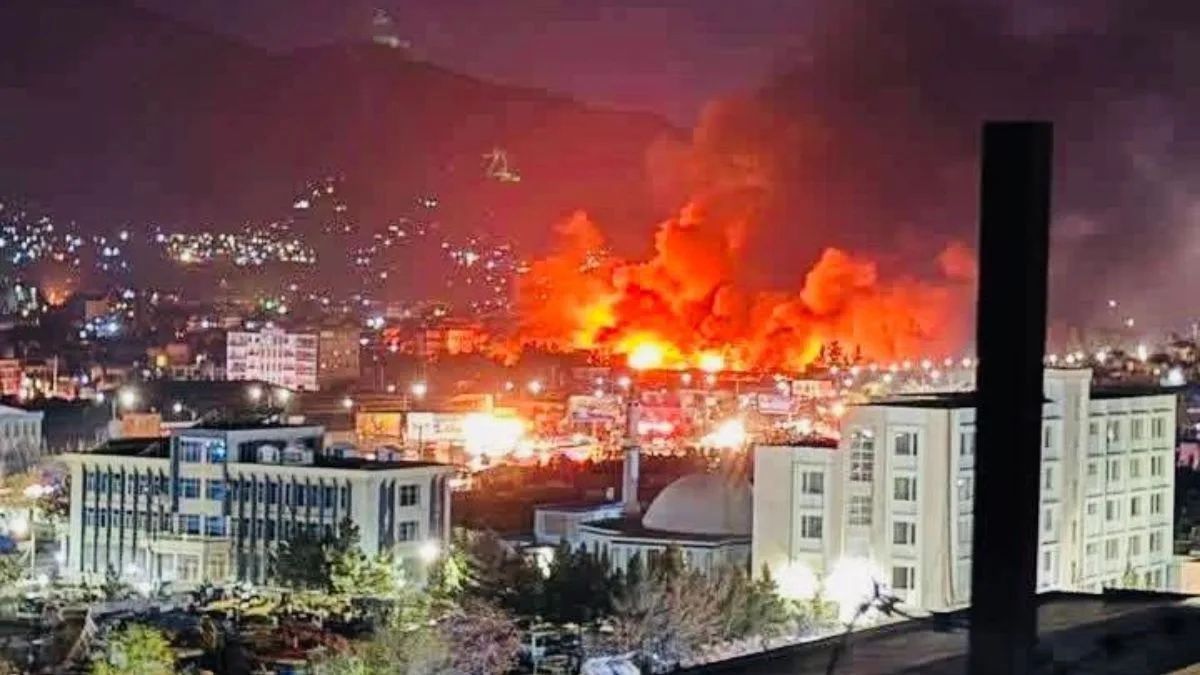
The death toll from a Pakistani airstrike on a drug rehabilitation hospital in Kabul has climbed to 400, with about 250 others injured, according to Taliban officials.

Hamdullah Fitrat, deputy spokesperson of the Islamic Emirate of Afghanistan, said the strike hit the 2,000-bed Omid Addiction Treatment Hospital at around 9 pm, leaving large sections of the facility destroyed. Rescue teams are still at the scene trying to control the fire and retrieve bodies from the rubble.

The incident has sharply escalated tensions between Pakistan and Afghanistan’s Taliban administration, with Kabul accusing Islamabad of targeting civilian infrastructure. The attack has raised serious concern among human rights groups and international observers because of the large number of civilians reported killed.

Fitrat said the airstrike caused extensive damage to the hospital, which is dedicated to treating people struggling with drug addiction. In a post on X, he said rescue workers were still searching the damaged building and feared the number of victims could rise further.

Richard Bennett, the United Nations Special Rapporteur on human rights in Afghanistan, said he was deeply concerned by the reports of civilian deaths. Offering condolences to the families of the victims, Bennett urged both sides to reduce tensions and respect international law, including the protection of hospitals and other civilian facilities.

Human rights organisations have also condemned the attack. The International Human Rights Foundation said hospitals and treatment centres must never be targeted, calling the strike a violation of international humanitarian law. The group urged the global community to launch an independent investigation and ensure accountability for those responsible.

Taliban spokesperson Zabihullah Mujahid warned in an interview with Tolo News that diplomatic engagement with Pakistan had reached its limit and said the attack would have to be answered.

Afghanistan cricketer Rashid Khan also reacted to the reports, saying attacks on homes, schools and medical facilities amount to war crimes. In a post on X, he urged the United Nations and human rights bodies to probe the incident and support civilians affected by the violence.

Multiple explosions reported across Kabul

Separate reports indicated that the airstrike was part of a wider bombardment targeting areas in and around Kabul.

According to Khaama Press, Taliban officials and residents reported several explosions across the Afghan capital during the strikes. Videos shared by locals showed large fires and blasts in different parts of the city, with witnesses saying the explosions were powerful enough to shake nearby neighbourhoods.

The news outlet reported that Pakistani aircraft also bombed a Taliban military facility in the Ghani Khel district of Nangarhar province late on Monday night.

Cross-border tensions fuel fresh strikes

The bombardment followed reports that Taliban forces had launched drone attacks on areas inside Pakistan, raising tensions along the border.

Pakistani President Asif Ali Zardari condemned the alleged drone strikes on civilian areas in Pakistan, saying the Afghan Taliban had crossed a “red line”, Khaama Press reported.

Clashes between Pakistani troops and Taliban fighters have increased in recent weeks, with civilians on both sides of the frontier caught in the violence.

Khaama Press also reported that China had attempted to mediate between Islamabad and Kabul, though Pakistan reportedly rejected the proposal.

The latest airstrikes underline the rapidly worsening relations between Pakistan and Afghanistan’s Taliban government, as both sides accuse each other of fuelling instability along the border.

Federal fault lines

India’s latest round of assembly elections across West Bengal, Tamil Nadu, Kerala, Assam, and Puducherry will test far more than the electoral strength of individual parties.

Statesman News Service | New Delhi |

India’s latest round of assembly elections across West Bengal, Tamil Nadu, Kerala, Assam, and Puducherry will test far more than the electoral strength of individual parties. They will measure the durability of India’s federal political diversity at a time when the national landscape has been increasingly shaped by the rise of the Bharatiya Janata Party (BJP). Over the past decade, the BJP has built an electoral machine capable of dominating national politics and expanding into states once considered outside its ideological reach.

Yet the southern and eastern frontiers of India’s political map remain resistant terrain. These elections therefore represent a critical moment: either the party deepens its footprint across the country or regional political traditions reassert their resilience. Nowhere is this contest sharper than in West Bengal, where Mamata Banerjee and her Trinamool Congress have built a formidable political fortress over the past decade and more. Welfare schemes, linguistic identity and a combative regional narrative have helped the party fend off repeated advances by the BJP. Yet the opposition’s organisational expansion in the state ensures that Bengal remains a high-stakes battleground rather than a settled contest. In Tamil Nadu, the story is different but equally revealing.

The Dravidian political tradition represented by the Dravida Munnetra Kazhagam (DMK) continues to frame politics around language, social justice, and regional pride. The BJP’s challenge here is not merely electoral but cultural: it must adapt its national narrative to a state whose political vocabulary has long been shaped by Dravidian ideology. Kerala presents yet another political model. The cyclical contest between the Congress-led opposition and the Left coalition anchored by the Communist Party of India (Marxist) has historically kept national parties from dominating the state’s politics. For Congress, a victory here could offer a rare psychological boost after years of electoral setbacks across India. Meanwhile, in Assam, Chief Minister Himanta Biswa Sarma has turned the election into a referendum on identity politics, migration debates, and regional security concerns.
The BJP’s ability to consolidate its position in the Northeast has become a crucial pillar of its broader national strategy. Beyond individual states, the elections unfold against a larger institutional debate. Questions about the credibility and functioning of the Election Commission of India have entered public discourse with unusual intensity, particularly in relation to voter roll revisions and administrative oversight. In a democracy where electoral legitimacy is paramount, the perception of institutional neutrality matters almost as much as the result itself.

Ultimately, these elections highlight a central paradox of Indian politics. Even as national leadership and messaging become increasingly centralised, the country’s electoral outcomes remain deeply shaped by regional histories, identities, and political cultures. Whether the BJP expands further or regional parties hold their ground, the verdict from these five elections will underline a familiar truth: India’s democracy still speaks in many political languages, and none can yet claim to speak for the entire nation.

UAE shuts skies, then reopens within hours: What triggered the sudden disruption

Air travel stabilises in the UAE after emergency curbs are lifted, even as regional tensions continue to impact flight operations and key energy installations.

Statesman News Service | New Delhi |

Air travel across the United Arab Emirates has returned to normal, with authorities confirming that all flight operations have resumed after a brief but tense disruption earlier this week.

The move comes after officials said the situation had stabilised enough to roll back the temporary restrictions imposed on the country’s airspace. The General Civil Aviation Authority (GCAA) said it had taken the decision after reviewing both safety and operational conditions in coordination with other agencies.

Why UAE airspace was briefly shut

The airspace had been closed as a precaution when the country’s defence systems responded to missile and drone threats believed to have come from Iran. The step, described as exceptional, was taken to safeguard passengers, crew, and infrastructure.

Authorities in Dubai later clarified that loud blasts heard across the city were linked to successful interceptions by air defence systems. Even so, the wider escalation had a spillover effect, including a drone strike that triggered a fire at Abu Dhabi’s Shah gas field.

Officials said the fire has since been brought under control, but work at the facility remains paused while the extent of damage is assessed.

Monitoring continues as tensions persist

The aviation authority said it continues to track developments closely, with real-time monitoring systems in place to respond quickly to any changes in the region’s security environment.

The disruption comes as tensions between the US, Israel and Iran stretch into a third week. The latest round of conflict began on February 28. Since then, there have been repeated attacks across the region.

As flights resume, the GCAA thanked airlines and passengers for their cooperation during the disruption and said its teams remain fully prepared to handle any further developments. It also advised travellers to rely only on official updates for accurate information on flight schedules and airspace status.

Trump claims Iran’s military capabilities ‘obliterated’, but still seeks allies’ help to secure Strait of Hormuz

Trump said that the new Iranian Supreme Leader, Ayatollah Mojtaba Khamenei, has not been seen and there are chances he is “badly disfigured” or even “dead”.

Statesman News Service | New Delhi |

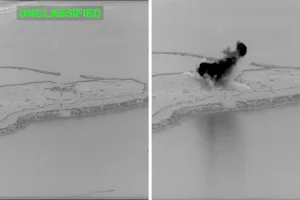
US President Donald Trump on Monday claimed to have “obliterated” the military capabilities of Iran, saying the American forces have struck around 7,000 targets in Iran and destroyed over 100 Iranian naval vessels since the ‘Operation Epic Fury’ began on February 28.

Addressing a briefing in Washington DC, the US President also pointed to a significant reduction in Iranian missile and drone strikes. He claimed that Iran’s missile strikes have reduced by 90 per cent and drone attacks by 95 per cent.

Trump said that the new Iranian Supreme Leader, Ayatollah Mojtaba Khamenei, has not been seen and there are chances he is “badly disfigured” or even “dead”.

“A lot of people are saying that he’s badly disfigured. They’re saying that he lost his leg… Other people are saying he’s dead. Nobody is saying he’s 100% healthy, and he hasn’t spoken…,” he said.

Mojtaba Khamenei has indeed not been seen since the first day of the war when US and Israeli strikes killed his father and former Iranian Supreme Leader Ayatollah Ali Khamenei. A Reuters report citing an unnamed Iranian official also claimed that he was “lightly injured” in the US and Israeli attack.

However, Iran has claimed that Mojtaba is alive and healthy. He has also released a statement vowing to avenge the killing of Iranians and especially the little girls killed in the US attack on a primary school. Though there was no audio or video of Mojtaba and his message was read out by a news anchor of the Iranian state television.

Trump repeated his claim that Iran wants to make a deal and accused Tehran of spreading disinformation using fake AI videos.

“They’re talking to our people. I don’t know if they say that to you. Don’t forget, they’re a country based on disinformation. And now, they’re using disinformation and AI. They showed all sorts of things happening in the last 2 weeks that never happened, between their kamikaze boats that don’t exist, between blowing up an aircraft carrier, etc,” he said.

He also claimed to have “literally destroyed everything” on Kharg Island except for oil pipes.

“We attacked Kharg Island and literally destroyed everything on the island except the area where the oil is. We left the pipes. We didn’t want to do that, but we could do that at 5 minutes notice. But for purposes of someday rebuilding Iran, we did the right thing,” he said.

Urges allies to help in securing Hormuz Strait shipping route

The US President urged allies and countries dependent on the Strait of Hormuz to help the United States in reopening the shipping route in the Persian Gulf.

“We strongly encourage other nations whose economies depend on the strait, far more than ours… we want them to come and help us with the strait,” he said.

When a reporter asked him whether he has spoken with French President Emmanuel Macron about the coalition to reopen the Strait of Hormuz, Trump said. “Yeah, I have spoken to him. He’s been, on a scale of 0-10, I’d say he’s been an 8. Not perfect — but it’s France.”

He said some countries have agreed to join the US efforts but refused to name which countries. He informed that US Secretary of State Marco Rubio will be making that announcement soon, adding that “some countries are local to the area and others are further away.”

UK and Germany have already refused to join the wider war in Iran. They have refused to send troops and are non-committal on sending their navies to the Hormuz Strait.

Trump said that he asked other nations to help out in the Strait of Hormuz “not because we need them, but because I want to find out how they react”.

“We don’t need anybody. We’re the strongest nation in the world. We have the strongest military, by far, in the world,” he added.

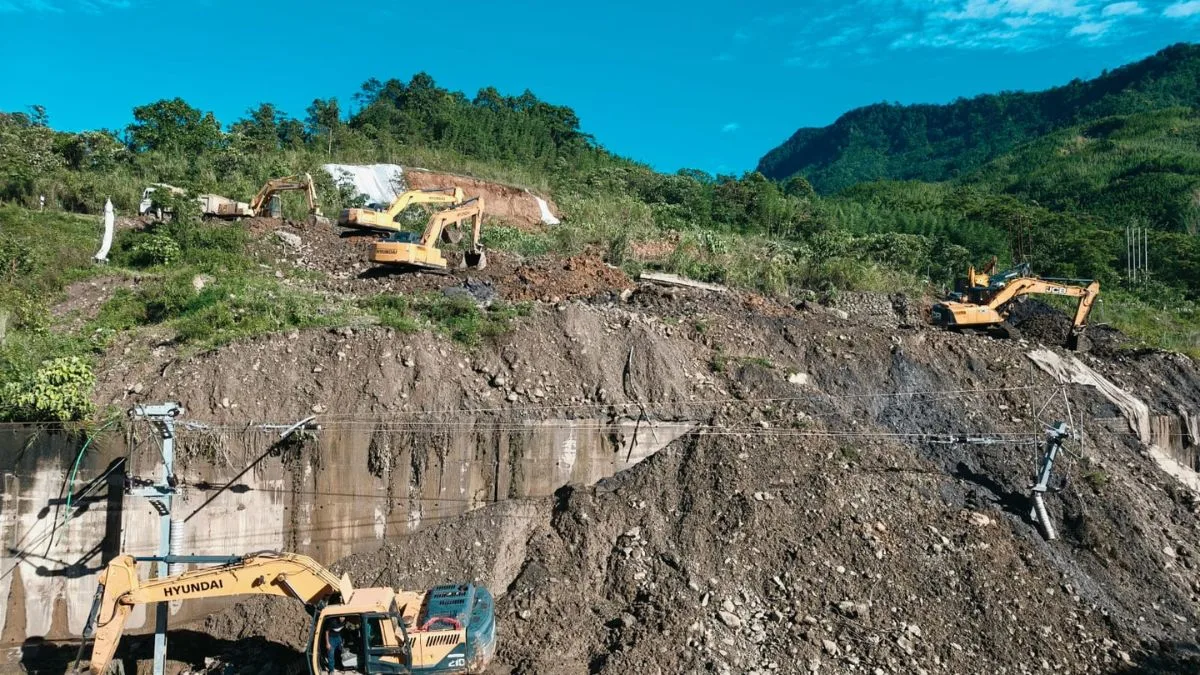
4 killed, 3 injured as landslide triggers wall collapse in Itanagar

Four people were killed and three others injured after a landslide triggered the collapse of a protection wall at Niti Vihar here on Monday evening.

UNI | Itanagar |

Four people were killed and three others injured after a landslide triggered the collapse of a protection wall at Niti Vihar here on Monday evening.

The deceased have been identified as Choki Tasar, Godak Raja, Godak Tabin, and Ratan Barman, police said.

According to the Officer-in-Charge of Niti Vihar Police Station, Takhe Tasso, the incident occurred at around 4 pm when seven construction workers were working at the site.

Following the incident, personnel from the State Disaster Response Force (SDRF), the Itanagar Capital Region district administration, and the police rushed to the spot and launched a rescue operation.

The OC said the three injured workers were immediately rushed to Heema Hospital for treatment. Their identities had not been confirmed at the time of filing this report.

Expelled CPI MLA CC Mukundan, KPCC Secretary Thodiyur Ramachandran join BJP

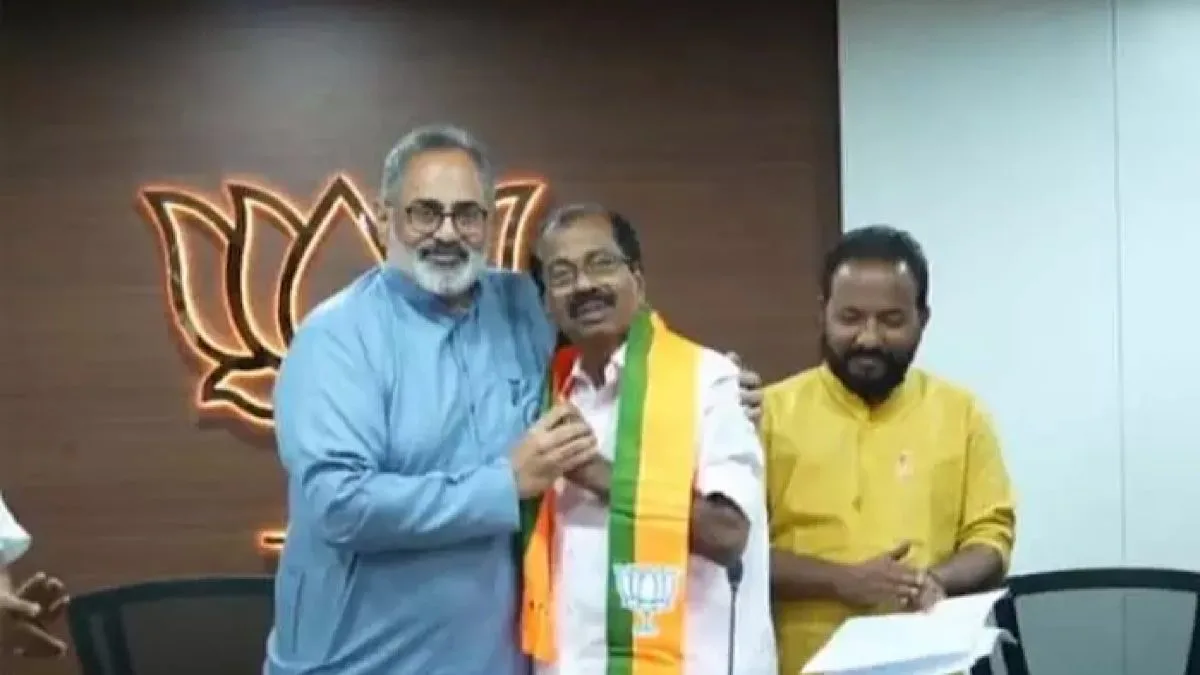
Nattika MLA CC Mukundan, who was recently expelled from the CPI, joined the BJP on Monday.

Statesman News Service | Thiruvananthapuram |

Nattika MLA CC Mukundan, who was recently expelled from the CPI, joined the BJP on Monday.

Mukundan joined the BJP at an event held at the party’s office in Thrissur. BJP senior leaders AN Radhakrishnan and B Gopalakrishnan were present at the event.

Mukundan was expelled from the Left party after he expressed his displeasure with the CPI for not considering him again to contest from the Nattika constituency.

Speaking after joining the BJP, Mukundan said that the BJP is a party with the potential to protect the interests of SC/ST communities.

“I joined the party with the expectation that there will be more changes. My biggest desire is to protect the interests of the people and provide them with better facilities,” he said.

Meanwhile, KPCC secretary Thodiyur Ramachandran also joined the BJP on Monday. He accepted BJP membership from the party’s state president, Rajeev Chandrasekhar at a function held at Mararji Bhavan here.

Meditrina Hospital MD Dr Prathap Kumar, CPM Kovalam area committee member NA Rasheed and NCP leader Devaprashanth also joined the BJP at the function.

Indian Navy deploys warships to escort vessels after crossing Hormuz Strait

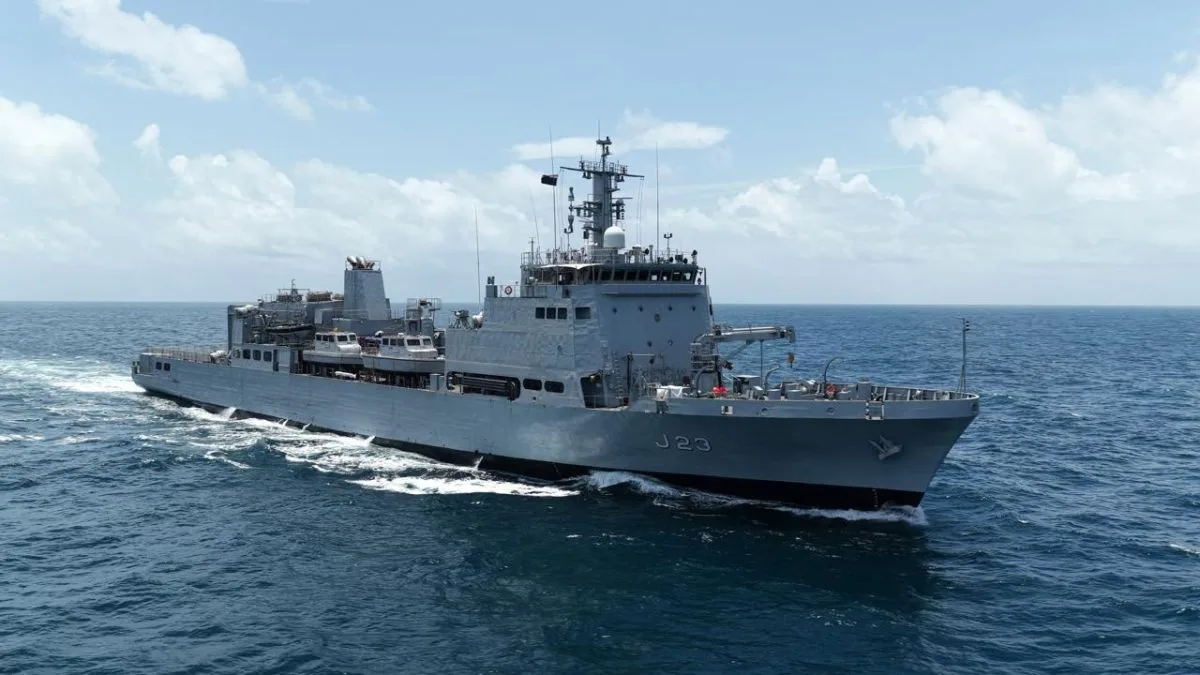
According to sources, the navy has deployed two task forces of warships to escort merchant vessels and tankers after crossing the Strait of Hormuz.

Statesman News Service | New Delhi |

In a major development amid the ongoing conflict in the Middle East that has disrupted energy supplies, Indian Navy has deployed warships to help in the safe transit of vessels carrying oil and LPG.

According to news agency ANI, the navy has deployed two task forces of warships to escort merchant vessels and tankers after crossing the Strait of Hormuz.

“The Indian Navy has deployed two task forces of warships to help in the safe transit of merchant vessels and tankers, bringing gas and crude oil to India after crossing the Strait of Hormuz near Iran,” said sources, according to ANI.

The sources further added, “All possible assistance and support are being provided to the vessels which are escorted by the Indian Navy warships.”

The development comes days after an India-bound cargo ship was attacked by Iran while sailing through the Strait of Hormuz.

Iran has warned that it will not allow ships bringing oil to the US and its allies to pass through the Hormuz Strait, a key shipping route in the Persian Gulf.

However, Tehran has said it is open to talks with countries seeking permission to allow their ships to pass through the Strait. Iran has also allowed two Indian ships to safely cross the Hormuz after negotiations with the government.

India unlikely to join US efforts in reopening Hormuz Strait

The closure of Hormuz has prompted US President Donald Trump to urge naval forces of several countries to join the United States and deploy warships to secure the shipping route.

Meanwhile, India has indicated that it is unlikely to join the US efforts in reopening the Hormuz Strait. Ministry of External Affairs spokesperson Randhir Jaiswal said that India is aware that the matter is being discussed by several countries, adding that New Delhi is not part of any such discussion.

“We are aware that this matter is being discussed bilaterally by several countries. We have had no such bilateral discussion yet,” Jaiswal said in response to a question about whether New Delhi would send naval ships to join the United States.

Thalassery Sessions Court orders further probe into ADM Naveen Babu’s death

The Thalassery District Sessions Court on Monday ordered a further probe into the death of late Additional District Magistrate (ADM) Naveen Babu.

Statesman News Service | Thiru Ananthapuram |

The Thalassery District Sessions Court on Monday ordered a further probe into the death of late Additional District Magistrate (ADM) Naveen Babu.

Sessions Court Judge Titty George allowed two petitions filed by Manjusha, Naveen Babu’s wife, seeking to retrieve the call data of CPM leader and former district panchayat president P. P. Divya and to examine whether corruption complaints had been filed against Naveen Babu, particularly by T. V. Prashanthan, regarding the alleged demand for a bribe by the late ADM for facilitating a no-objection certificate (NOC) for a petrol pump.

Manjusha approached the court pointing out 13 errors in the charge sheet. The plea argued that the Special Investigation Team (SIT) did not examine the phone call records and chats between P. P. Divya and Prashanthan. It also sought recovery of Divya’s deleted chats and requested that the accused’s phone be subjected to forensic examination.

ADM Naveen Babu was found dead in his official quarters at Pallikkunnu in Kannur on the morning of October 15, 2024. He allegedly died by suicide after facing public humiliation and corruption accusations made by P. P. Divya, then president of the Kannur District Panchayat, at a farewell meeting on October 14.

The Supreme Court in April this year dismissed the petition filed by Manjusha, wife of late Additional District Magistrate Naveen Babu of Kannur, seeking a CBI probe into the death of her husband.

Earlier, a Division Bench of the Kerala High Court on March 3 dismissed the writ appeal filed by Manjusha against a single judge’s order rejecting her plea for a CBI probe into her husband’s death.

A single bench of the Kerala High Court on January 6 had rejected Manjusha’s plea seeking transfer of the probe into her husband’s alleged suicide to the CBI, observing that the accused merely having ties with the ruling political dispensation was not sufficient ground to transfer the investigation to the CBI.

SAD committed to correcting historical injustices done to Punjab: Sukhbir Singh Badal

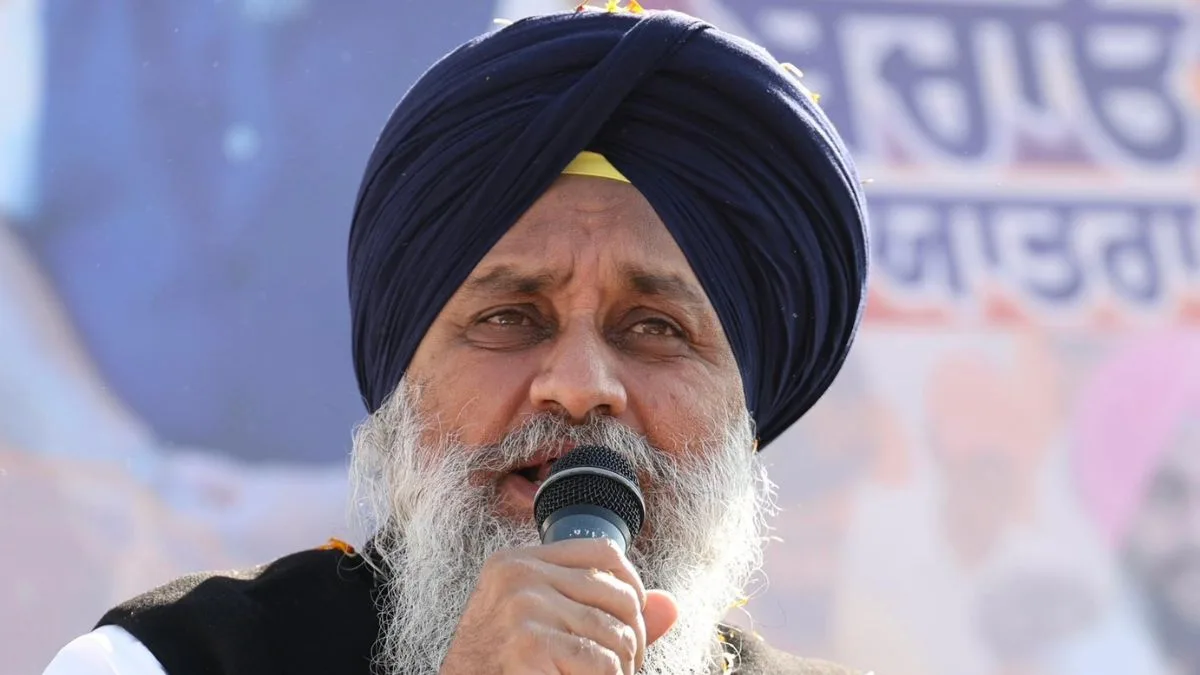
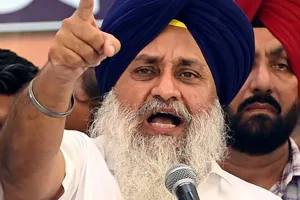
Sukhbir Singh Badal, president of the Shiromani Akali Dal (SAD), said on Monday that the party was committed to correcting the historical injustices inflicted on Punjab by parties in Delhi that had denied the state its own capital, excluded Punjabi-speaking areas while reconstituting the state on a linguistic basis, and diverted half of its river waters to Rajasthan.

Statesman News Service | Faridkot |

Sukhbir Singh Badal, president of the Shiromani Akali Dal (SAD), said on Monday that the party was committed to correcting the historical injustices inflicted on Punjab by parties in Delhi that had denied the state its own capital, excluded Punjabi-speaking areas while reconstituting the state on a linguistic basis, and diverted half of its river waters to Rajasthan.

Addressing a mammoth rally here as part of the Punjab Bachao movement along with senior leader Parambans Singh Romana, Mr Badal said, “Punjab is the only state which does not have its own capital.”

He added that this happened because the Congress party favoured Haryana over Punjab. “We are also the only state in the country in which Punjabi-speaking areas were left out while reconstituting it on linguistic lines. Half of our river waters were also arbitrarily given to Rajasthan by the Congress in violation of the Riparian Principle, which clearly states that states through which rivers flow have the sole right over their waters.”

Asserting that parties in Delhi had destroyed Punjab, Badal said, “These parties still want to take away the remaining water of the state by completing the Sutlej Yamuna Link Canal (SYL). If this water has not flowed through the canal till now, it is because of the SAD. If it had flowed to Haryana, our state would have turned into a desert.” In an emotive address, he added, “Parties in Delhi can never have the same concern for you as the SAD. They come to rule and loot; our purpose is to serve you.”

The SAD president also appealed to Punjabis to stop experimenting. “Tomorrow a person may appear who gives the impression that he is even more Panthic than us. Remember, such persons are puppets of agencies. They are planted to weaken the SAD as well as capture the religious institutions of the Sikh community. We should beware of such stooges and work to strengthen the SAD in order to save Punjab from their clutches.”

Badal reminded Punjabis that if the Malwa belt was prosperous today, it was because of the SAD. “We are responsible for Punjabis getting a Minimum Support Price (MSP) on wheat and paddy. Parkash Singh Badal removed the problem of waterlogging in this area. He also established the Baba Farid University of Health Sciences, which has ensured the provision of quality health services in this and neighbouring districts.”

Asserting that the Aam Aadmi Party (AAP) had deceived Punjabis to win the 2022 election, Badal said, “This corrupt and anti-Punjabi party is up to its old tricks again.” He added that the AAP government had announced it would pay Rs 1,000 per month to women for six months. “This is being achieved by taking a loan of Rs 52,000 crore and by selling government properties. It will also result in the government defaulting on the power subsidy, which will cause untold misery for farmers.”

Stating that the AAP government had bankrupted Punjab, Badal said, “This government has taken on debt of Rs 2 lakh crore in four years, whereas earlier governments took 56 years to accumulate a debt of Rs 2.5 lakh crore.” He also spoke about the false cases registered against political opponents by both the erstwhile Congress government and the present AAP government, and announced that a commission would be formed to review all these cases.

Later, while talking to newsmen, Badal said the chief minister was trying to deceive new investors at the Invest Punjab summit by claiming responsibility for development in the state, including four-lane highways, airports, and the power-surplus status.

“He should know that the SAD is responsible for each and every achievement about which he is boasting. He should be honouring us for these achievements.” He added, “The chief minister does not have even one achievement of his own to cite. I challenge him to name a single thing he has done for Punjab in the last four years.”

Laying out his vision for Punjab, Badal said the SAD would not allow water to flow into the Rajasthan canal. “All water diverted through the Rajasthan canal will instead be diverted to the fields of Punjab.” He also announced that he would not allow even a single drop of industrial or sewage effluent to enter the Sutlej and Beas rivers.

“Violators will be dealt with sternly. This is absolutely essential to tackle the scourge of cancer in the Malwa belt.” He further announced that the ‘Rahat’ scheme initiated by the erstwhile SAD government would be revived to end the tax harassment faced by traders during both the previous Congress government and the present AAP government.

The SAD president also announced that an interest-free loan of Rs 10 lakh would be offered to youth. He promised to restart an expanded Atta-Dal scheme, raise old-age pension to Rs 3,100 per month, and increase the Shagun allowance to Rs 1 lakh. He further announced that all farmers without a tubewell connection would be provided one, along with a 12-hour daytime power supply.