Logo

‘Unacceptable’: India summons Russian diplomat, condemns missile strike on MV Golden Leo near Odesa that killed 4 Indian sailors

The cargo vessel was carrying 17 crew members, including five Indians, when it was struck while leaving Ukraine’s Odesa port on July 19.

Statesman News Service | New Delhi |

India on Tuesday summoned Russia’s Charge d’Affaires Vladimir Ladanov and lodged a strong protest over an attack on the commercial vessel MV Golden Leo near Ukraine’s Odesa port that killed four Indian crew members.

The Ministry of External Affairs conveyed India’s “grave concerns and unequivocal condemnation” of the July 19 attack, saying strikes on civilian commercial vessels threatened the safety and stability of international maritime trade.

“The targeting of commercial shipping and the resulting loss of innocent civilian lives are unacceptable and must be avoided,” the MEA told the Russian diplomat, asking him to convey New Delhi’s concerns to Moscow.

One Indian crew member critically injured

The MV Golden Leo was attacked on Sunday evening while departing the Ukrainian port of Odesa.

There were 17 crew members aboard the vessel, including five Indian nationals, according to the MEA.

Four Indians died in the attack, while the fifth was admitted to hospital in a critical condition.

India’s mission in Ukraine is monitoring the situation and extending assistance to those affected, the ministry said.

The MEA offered condolences to the families of the deceased and wished the injured crew member a full recovery.

India condemns attacks on commercial shipping

New Delhi said attacks that endanger civilian crew members or obstruct maritime navigation and commerce were deplorable.

“Such attacks undermine the safety, security and stability of international maritime commerce,” the ministry said.

India reiterated that civilian shipping and freedom of navigation must be protected in accordance with international norms.

Ukraine blames Russia for missile strike

The Ukrainian Navy accused Russian forces of attacking the civilian cargo vessel, which was reportedly carrying grain and sailing under the flag of Guinea-Bissau.

According to Ukrainian authorities, the ship was struck by Kh-59/Kh-69 cruise missiles as it was leaving the area.

The strike reportedly hit the starboard side of the vessel’s superstructure and triggered a fire onboard. Ukrainian naval units and maritime rescue services subsequently launched an emergency operation.

Russia’s Defence Ministry said on Sunday that its forces had conducted strikes on Ukrainian ports and vessels that it alleged were operating in the interests of the Ukrainian armed forces.

It said port infrastructure and two bulk carriers carrying military cargo near Odesa were among the targets. The Russian statement cited in the source material did not identify the MV Golden Leo by name.

‘Hi’ censor update: Nayanthara-Kavin romantic drama cleared with U/A certificate, set for August 14 release

A fresh on-screen pairing, a feel-good love story and a family-friendly plot are coming together in ‘Hi’. The romantic entertainer is all set to arrive in theatres this Independence Day weekend.

Statesman News Service | New Delhi |

The wait for ‘Hi’, starring Nayanthara and Kavin, is getting shorter. Director Vishnu Edavan’s upcoming romantic entertainer has officially received a U/A certificate from the Central Board of Film Certification (CBFC), clearing the way for its theatrical release.

The makers also confirmed that the film will arrive in cinemas on August 14, 2026.

Production house shares official announcement

Production banner Seven Screen Studios announced the update through its official social media handles. Along with confirming the censor certification, the studio revealed the film’s release date with a heartfelt message.

The post read, “A tale that will steal your heart now has its date locked. Censored with a UA and on the way to theatres — Aug 14, 2026! A Jen Martin Musical.”

The announcement has increased excitement among fans who have been eagerly waiting to see Nayanthara and Kavin share screen space for the first time.

Story set across three Tamil Nadu cities

According to sources close to the film’s team, the story unfolds across Chennai, Coimbatore and Pollachi. While the makers have not revealed the full plot, insiders say the film has been designed as a family entertainer with an emotional love story at its heart.

Interestingly, the sources also claim that the film does not feature a traditional villain, choosing instead to focus on relationships and emotions. This approach is expected to make the story different from many commercial entertainers.

Earlier, director Vishnu Edavan had described the project as a wholesome family film that speaks about true love, hinting at a feel-good experience for audiences of all ages.

Vishnu Edavan makes his directorial debut

‘Hi’ marks the directorial debut of Vishnu Edavan. Before stepping into the director’s chair, he worked as an associate director with filmmaker Lokesh Kanagaraj on several successful films, including ‘Kaithi’, ‘Master’ and ‘Vikram’.

His experience on these major productions has created curiosity about how he will present his first film as a director.

Strong cast and experienced technical team

Apart from Nayanthara and Kavin, the film features a supporting cast that includes K. Bhagyaraj, Prabhu, Radhika, Sathyan, Adithya Kathir and Kureishi, among others.

The project is jointly produced by Zee Studios South, The Rowdy Pictures and Seven Screen Studios.

The film also brings together an experienced technical crew. Jen Martin has composed the music, while Rajesh Shukla has handled the cinematography. Philomin Raj is in charge of editing, and Shekhar B serves as the art director. The dance sequences have been choreographed by Brinda, with Dinesh Kasi designing the action scenes.

Spain’s FIFA World Cup heroes receive rousing welcome from 2 million fans in Madrid

Nearly two million fans filled the streets of Madrid as Spain celebrated its FIFA World Cup triumph with an open-top bus parade following its 1-0 extra-time victory over Argentina.

Statesman News Service | New Delhi |

Nearly two million jubilant fans lined the streets of Madrid on Monday as Spain’s FIFA World Cup-winning team returned home to celebrate its historic triumph with an open-top bus parade before a packed Plaza de Cibeles.

Spain secured its second World Cup title on Sunday after Ferran Torres struck the decisive extra-time winner in a 1-0 victory over Argentina in the final in New Jersey.

The celebrations began soon after the squad landed in Madrid at around 1 p.m. local time. The players first attended official receptions hosted by King Felipe VI and Prime Minister Pedro Sánchez, both of whom had travelled to New Jersey to watch the final.

Praising the team’s achievement, King Felipe VI highlighted the unity and spirit that carried Spain to world football’s biggest prize.

The squad then boarded an open-top bus from Moncloa Palace, the prime minister’s official residence, making its way through the Spanish capital as an estimated 1.8 million supporters packed the streets to celebrate the world champions, according to Xinhua.

Also Read: ‘It was written’: Pedri’s cryptic post from 2025 goes viral after Spain’s FIFA World Cup triumph

The celebrations culminated at the iconic Plaza de Cibeles, where another 120,000 fans had gathered hours in advance, enjoying live performances from Spanish pop stars before the team’s arrival.

Players took turns lifting the World Cup trophy, singing with supporters and soaking in the atmosphere despite temperatures exceeding 35 degrees Celsius. Defender Marc Cucurella added to the festivities by entertaining the crowd on the drums as celebrations continued until nearly midnight.

The celebrations, however, were also marked by tragedy. A 13-year-old fan died in Ciudad Rodrigo after being struck by part of a fountain during the festivities.

Elsewhere, police arrested three people, and around 30 others required medical treatment after celebrations in Barcelona turned violent.

Also Read: Argentina’s Paredes shown red card after grabbing Spain’s Garcia by the throat following FIFA World Cup final

’60 BJP-backed goons damaged our stage’: Mamata Banerjee alleges bid to sabotage Trinamool’s Martyrs’ Day rally

Around 1,000 police personnel have been stationed at each of the three central Kolkata venues, with drones, RAF teams and central forces deployed to prevent clashes between rival groups.

Statesman News Service | New Delhi |

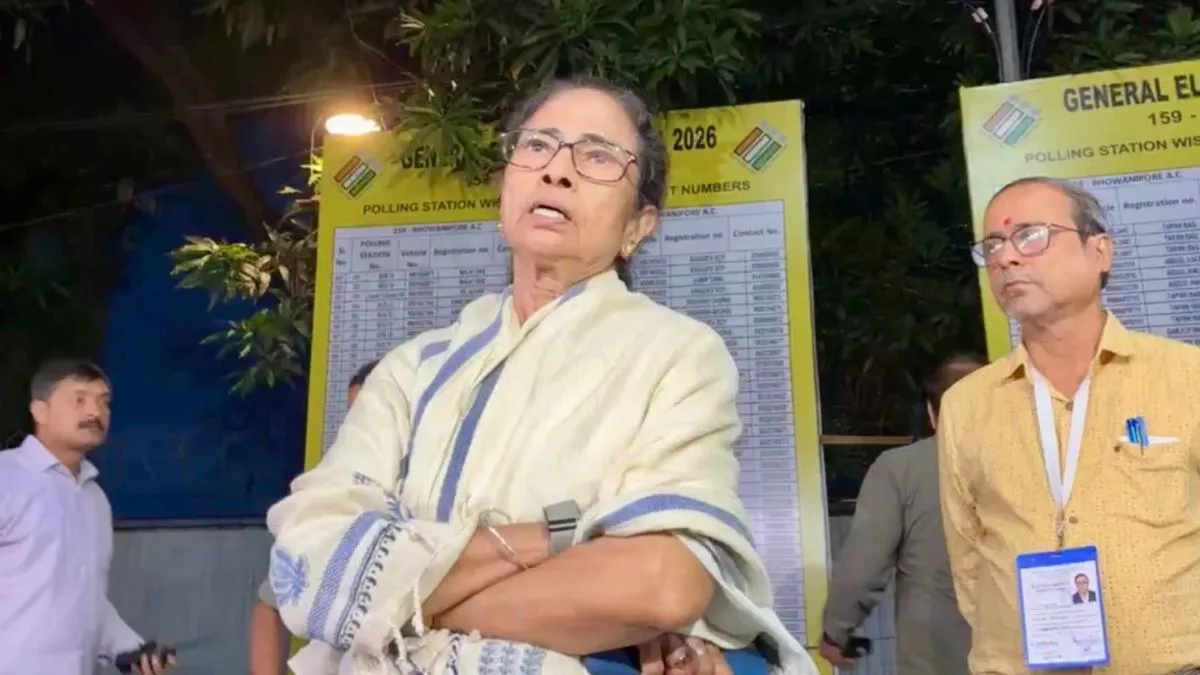
Former West Bengal chief minister Mamata Banerjee on Tuesday accused the BJP and the state administration of trying to sabotage her faction’s Martyrs’ Day rally in Kolkata, alleging vandalism at the venue and attempts to prevent supporters from reaching the gathering.

Her allegations came as Kolkata Police mounted extensive security arrangements for three parallel July 21 rallies being held within a short distance of one another in central Kolkata.

Banerjee’s faction of the Trinamool Congress is holding its programme outside the Birla Planetarium, while a rival Trinamool faction led by expelled legislator Ritabrata Banerjee has organised a gathering on Jawaharlal Nehru Road. The West Bengal Congress is holding a separate rally near Shahid Minar.

Mamata alleges attack on rally arrangements

Banerjee claimed that BJP activists attempted to damage the stage erected outside the Birla Planetarium on Monday night.

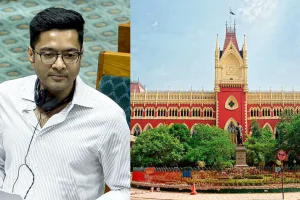
She said she rushed to the venue with Trinamool Congress general secretary Abhishek Banerjee and other leaders after being informed about the alleged vandalism. Party leaders then took turns guarding the stage overnight, she claimed.

“Our supporters are being prevented from coming to the meeting. The police are threatening the families of the martyrs not to come to the meeting,” Banerjee said.

She alleged that the stage had been damaged, electricity and microphone connections disconnected, and posters and banners torn.

“Around 60 BJP-backed goons did all these,” she claimed, alleging a coordinated attempt by the BJP and the police to disrupt the programme.

Mamata threatens contempt proceedings

Banerjee said her faction was holding the rally outside the Birla Planetarium in accordance with an order of the Calcutta High Court.

She accused the police administration of violating the court’s directions and threatened legal action if the alleged interference continued.

“Do not play with the law of the land. If you continue to do that, we will file a contempt of court petition against the state government and the police administration,” she said.

Congress reports attacks on supporters

The West Bengal Congress also alleged that its supporters were being prevented from travelling to Kolkata for its parallel Martyrs’ Day rally near Shahid Minar.

State Congress president Subhankar Sarkar claimed that BJP workers vandalised a bus carrying party supporters from Durgapur in West Burdwan district.

He alleged that another attack was reported from Potashpur in East Midnapore district.

Three rallies under heavy security

Kolkata Police deployed around 1,000 personnel at each of the three rally venues, according to the agency report.

Drone surveillance is being used, while personnel from the Rapid Action Force, Heavy Radio Flying Squad and Central Armed Police Forces have also been stationed in the area.

At least five deputy commissioners, including officers heading the Central and South divisions, are overseeing the arrangements.

The simultaneous rallies are expected to draw large crowds to central Kolkata and could affect traffic movement around the Birla Planetarium, Jawaharlal Nehru Road, Esplanade and Shahid Minar.

Rival groups stake claim to July 21 legacy

The rallies commemorate the Youth Congress workers killed in police firing during a protest in Kolkata on July 21, 1993, when the Left Front government led by Jyoti Basu was in power.

Mamata Banerjee, then the state Youth Congress president and a Lok Sabha member, had led the protest.

The Congress maintains that it has the principal claim to the observance because the victims were Youth Congress workers and the firing occurred before the Trinamool Congress was formed.

A separate programme is also being held at Rajghat in New Delhi by former Trinamool Congress MPs who recently joined the Nationalist Citizens Party of India.

Not in favour of suppressing the voice of students: Chirag Paswan on CJP Protest

The ‘Chalo Sansad’ march was organised on Monday over alleged irregularities in the NEET-UG medical entrance examination and included demands for the resignation of Union Education Minister Dharmendra Pradhan.

Statesman News Service | New Delhi |

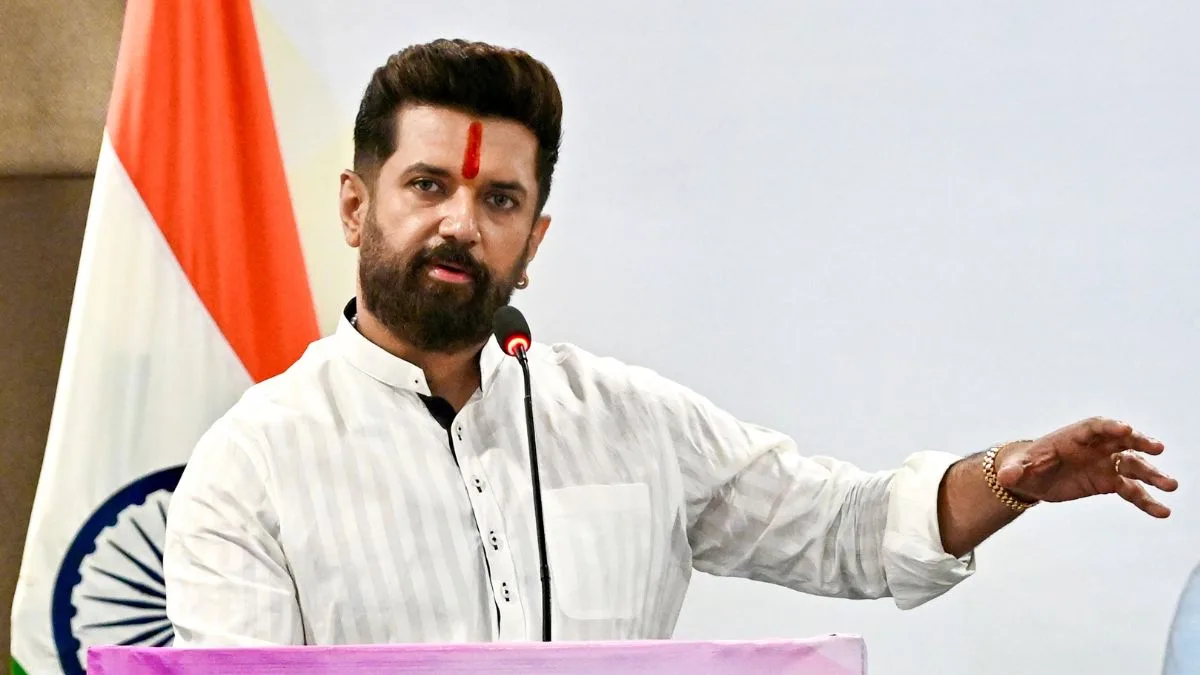
A day after the Cockroach Janta Party (CJP) carried out the ‘Chalo Sansad’ march in the national capital, Union Minister and LJP president Chirag Paswan on Tuesday said that he respects the sentiments of the students, adding that he is not in favour of suppressing their voice.

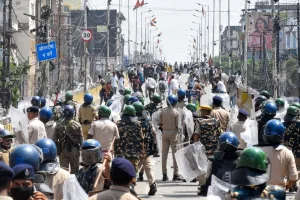
On Monday, security personnel allegedly used tear gas to disperse a large group of CJP supporters who had gathered in Delhi for a march towards Parliament. The demonstration was organised over alleged irregularities in the NEET-UG medical entrance examination and included demands for the resignation of Union Education Minister Dharmendra Pradhan.

“I respect the sentiments of the students. Obviously, there must have been outrage and worry regarding different issues that the students had to come onto the roads. At the same time, I am not in favour of suppressing the voice of the students,” ANI quoted Chirag Paswan as saying.

He added, “Dialogue is a good medium. The way their delegation met JP Nadda ji yesterday (July 20), the government has always kept its door open to dialogue. Sometimes the outrage is so much that people come onto the roads. If limits are crossed and law and order is obstructed, then some stringent actions are taken. I do not support that. I believe students and youth are the future of our country, and we should respect their sentiments, to which my government is committed.”

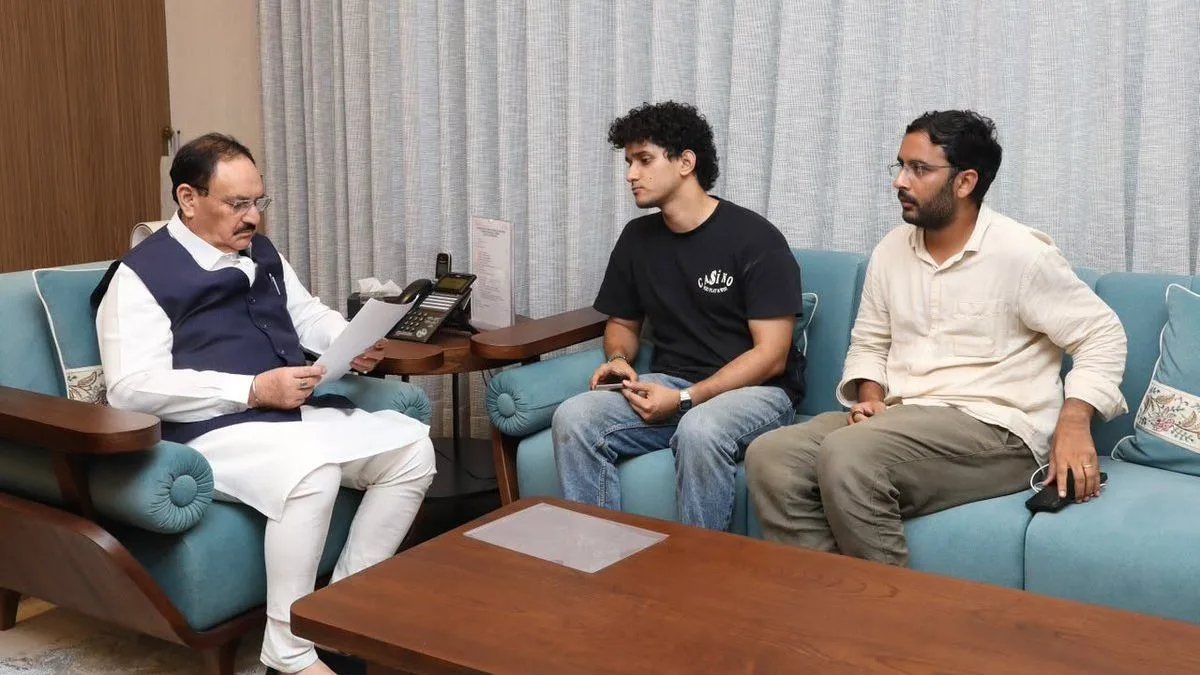
Union Health Minister JP Nadda on Tuesday stated that his meeting with CJP members was “fine,” as per IANS.

Notably, two representatives of the CJP met Nadda at his residence on Monday and submitted a written memorandum outlining the group’s three key demands after holding detailed discussions earlier in the day.

On being questioned about his meeting with the CJP members, Nadda said, “It went well. It (a meeting) always goes well.”

However, Nadda did not comment on the “assurances” given to the protestors.

The CJP delegation was represented by spokespersons Saurav Das and Ashutosh Ranka.

Overall, they have demanded the release of social activist Sonam Wangchuk without any restrictions on his movement, the resignation of Union Education Minister Dharmendra Pradhan as well as ₹1 crore compensation for the families of NEET-UG aspirants who allegedly died by suicide following the alleged paper leak controversy.

Lionel Messi shares emotional message after Argentina lose FIFA World Cup final

Lionel Messi has spoken of the “immense pain” following Argentina’s 1-0 FIFA World Cup final defeat to Spain, thanking fans and praising his teammates after another memorable tournament.

Statesman News Service | New Delhi |

Lionel Messi has broken his silence following Argentina’s heartbreaking FIFA World Cup final defeat, admitting the pain of losing to Spain is “immense” and will take time to heal.

Ferran Torres’ extra-time winner in New Jersey handed Spain a 1-0 victory on Sunday, ending Argentina’s hopes of retaining the World Cup and denying Messi the chance to lift a second world title.

At 39, the Argentine icon is unlikely to feature at the 2030 World Cup, although he has not announced any plans to retire from international football.

Reflecting on the defeat in a heartfelt social media post, Messi thanked fans for their unwavering support while acknowledging the disappointment of falling short.

“The pain is immense, and this wound will take time to heal. But I also hold onto all the good things,” Messi wrote.

“The matches we turned around by giving it our all – moments that will remain in our memories forever – and the support of an entire country which, combined with this group’s hard work and effort, brought us back among the world’s elite once again.”

Argentina eased through the group stage before producing a series of dramatic comeback victories in the knockout rounds to reach a second consecutive World Cup final.

Messi finished the tournament with eight goals and four assists and was widely regarded as one of the standout performers, despite missing out on the Golden Ball award.

The eight-time Ballon d’Or winner also praised his teammates for their resilience throughout the campaign.

“It is hard to fully appreciate our achievement right now, but this group reached two consecutive World Cup finals,” he said. “Thank you from the bottom of my heart for every greeting and message. Once again, we managed to unite as a country and stand together, sharing the immense pride of being Argentine. I also want to congratulate Spain on winning the championship.”

‘It went well’: Nadda says CJP meeting was cordial, offers no clarity on demands

The delegation submitted a written memorandum seeking Dharmendra Pradhan’s resignation, compensation for NEET aspirants’ families and unrestricted movement for Sonam Wangchuk.

Statesman News Service | New Delhi |

Union Health Minister JP Nadda on Tuesday described his meeting with representatives of the Cockroach Janata Party as “fine”, but did not clarify whether the government had accepted or offered any commitment on their demands.

“It went well. It always goes well,” Nadda said when asked about Monday’s talks while arriving for the NDA’s ‘Mangal Milan’ programme.

CJP national spokesperson Ashutosh Ranka and chief spokesperson Saurav Das met Nadda at his residence as protests over the alleged NEET-UG 2026 paper leak intensified in the national capital.

CJP submits three demands

The delegation sought the resignation or removal of Union Education Minister Dharmendra Pradhan, compensation of Rs 1 crore each for the families of NEET aspirants who allegedly died by suicide, and the immediate release of activist Sonam Wangchuk without restrictions on his movement.

According to Nadda, discussions began at around 11.50 am on Monday. The delegation initially presented its demands verbally and later submitted a written petition at around 4 pm.

Nadda said the meeting was held in a cordial atmosphere and appealed to protesters to end their sit-in and help the administration restore normalcy near Parliament.

Conflicting accounts over assurances

There was no clear agreement between the two sides on whether any assurance had been given.

Government sources cited by IANS said Nadda made no commitment on any of the three demands.

Ranka, however, said the minister had assured the delegation that the issues would be discussed at the appropriate level, while adding that no firm commitment had been made.

“The demands have been conveyed, including the immediate resignation or sacking of Dharmendra Pradhan,” Ranka said.

“The minister assured us he will discuss this at the appropriate level. However, no commitments have been made so far,” he added.

Das said the protest would continue until Pradhan resigned.

Protest continues after clashes

CJP supporters returned to Jantar Mantar on Tuesday, a day after the ‘Sansad Chalo’ march ended in clashes between demonstrators and security personnel.

Police and Rapid Action Force personnel remained deployed at the protest site as demonstrators resumed their sit-in after the stage and tents were removed.

Delhi Police said more than 118 police and central force personnel, including several senior officers and women personnel, were injured during Monday’s violence.

Around 60 protesters were also reported injured.

Police have registered an FIR at Connaught Place police station over alleged vandalism and unrest. Investigators are examining more than 250 videos, including CCTV footage, mobile phone recordings, drone visuals and police body-camera footage, to identify those allegedly involved.

PM Modi says govt ‘stands with students’, seeks strict action on paper leaks: Kiren Rijiju

PM Modi told NDA MPs the government acted immediately after reports of the NEET-UG paper leak surfaced, while Opposition parties demanded accountability and raised the issue inside and outside Parliament.

Statesman News Service | New Delhi |

Union Parliamentary Affairs Minister Kiren Rijiju on Tuesday said Prime Minister Narendra Modi told the NDA Parliamentary Party that the government acted swiftly after reports of the NEET-UG 2026 paper leak surfaced, with 13 accused arrested so far, and that it “stands with the students” while favouring the strictest punishment for those behind the racket, as the Opposition stepped up attacks over the handling of the controversy.

The NEET-UG 2026 controversy dominated political activity inside Parliament a day after the Cockroach Janta Party’s march towards the complex ended in clashes between protesters and the Delhi Police.

While PM Modi described paper leaks as a national concern that should not be politicised, Congress leaders accused the government of using force against students instead of addressing their grievances.

PM Modi calls for action by Centre, states

Parliamentary Affairs Minister Kiren Rijiju said PM Modi raised the NEET controversy during the NDA Parliamentary Party’s ‘Mangal Milan’ meeting.

Rijiju said the Prime Minister told NDA MPs that the government acted immediately after reports of the paper leak emerged, leading to the arrest of 13 accused.

According to Rijiju, PM Modi said conducting the NEET re-examination without delaying the declaration of results was treated as a priority to minimise disruption for students.

“On the NEET exam, the PM said we stand with the students. Those involved in paper leaks must face strict action, in consultation with top lawyers,” Rijiju told reporters after the meeting.

“Paper leaks are a matter of national concern and must not be politicised. Strict action should be taken not only by the Centre but also by states wherever paper leaks occur,” he added.

PM Modi also appealed to senior lawyers to support efforts to secure the strictest possible punishment for those involved in paper leak rackets so that future offences are effectively deterred.

He said paper leaks were not confined to any one state or the Centre and called on all governments and political parties to work together to tackle the problem.

The remarks came amid continuing protests over the alleged NEET-UG 2026 paper leak and demands for Union Education Minister Dharmendra Pradhan to step down.

‘Gunde bhare the Delhi Police ki vardi mein kal’: CJP escalates brutality allegations as protest continues

Priyanka Gandhi attacks police action

Congress MP Priyanka Gandhi Vadra described the police action against protesters as “absolutely disgusting” and said students had a genuine grievance.

She said families often take loans and make considerable sacrifices to pay for coaching and education in the hope of securing a better future for their children.

“They face immense hardships because they want a bright future. They see a possibility for that future, and you are just destroying it,” she said.

Priyanka Gandhi said examination irregularities were a deep-rooted problem that had persisted for years.

Congress Parliamentary Party chairperson Sonia Gandhi also backed the party’s position. Asked about Monday’s police action, she said the Congress had already spoken on the matter.

Congress MP Manish Tewari expressed support for the protesters and said an agitated student community must be taken seriously by the government.

Kharge skips birthday celebration

Congress president and Rajya Sabha Leader of the Opposition Mallikarjun Kharge said he would not celebrate his birthday on Tuesday because of the alleged police action against students.

Kharge accused the government of responding to demands for justice with batons and tear gas.

“This is not how a ‘Mother of Democracy’ treats its young children,” he said in a post on X.

He demanded a full discussion in Parliament and called for Pradhan’s resignation on grounds of moral and political responsibility.

Kharge also sought a student-centred examination system with secure digital question banks and randomised papers.

He called for statutory safeguards requiring re-examinations and compensation whenever serious examination irregularities occur.

“Our children deserve justice, not repression,” he said.

INDIA bloc discusses floor strategy

Leaders of the INDIA bloc met at Parliament House on Tuesday to coordinate their approach during the Monsoon Session.

The meeting included Rahul Gandhi and representatives of allied parties, including the Samajwadi Party, Left parties and Shiv Sena (UBT).

Opposition leaders also held discussions with the Lok Sabha Speaker as they prepared to press for a debate on the NEET controversy and Monday’s police action.

The Opposition has stepped up its criticism since the clashes. Shiv Sena (UBT) MP Sanjay Raut said July 20 should be observed as “Coward Day”, while Trinamool Congress MP Mahua Moitra shared an image of the police-protester confrontation with a critical comment on the state of democracy.

Wangchuk remains in hospital

Climate activist Sonam Wangchuk remained under treatment at Safdarjung Hospital, where a multidisciplinary team was monitoring his condition.

According to the hospital bulletin cited by ANI, his vital parameters were stable, though his blood sugar remained low and his serum potassium level was recorded at 3.2 mEq/L.

The hospital said Wangchuk was receiving oral rehydration therapy and potassium supplements but continued to decline intravenous fluids and glucose despite medical advice.

He was taken to the hospital by the Delhi Police on July 18 while observing a hunger strike over the NEET controversy.

Sonam Wangchuk’s health stable but doctors flag dehydration, low blood sugar amid hunger strike

PM Modi discusses FTAs, farmers’ interests

Rijiju said the NDA meeting also discussed India’s recent Free Trade Agreements and their impact on farmers.

PM Modi said India’s recent Free Trade Agreements were in the interest of both farmers and the country and assured NDA members that farmers’ welfare would not be compromised in any trade agreement, Rijiju said.

‘Why is the govt afraid of us?’: Haryana seals Shambhu border, detains BKU chief, stops farmers’ Delhi march

Rijiju said the Prime Minister also congratulated Skyroot Aerospace on the successful launch of Vikram-1 and highlighted the achievements of India’s youth, saying the government’s time, energy and focus should remain centred on creating opportunities for young people.

The meeting also welcomed newly elected Rajya Sabha members, including Nitin Nabin.

Rijiju also appealed to the Opposition to ensure the smooth functioning of Parliament during the Monsoon Session, saying political differences should not come in the way of legislative business and issues concerning the country’s future.

The Monsoon Session of Parliament began on Monday and is scheduled to continue until August 13.

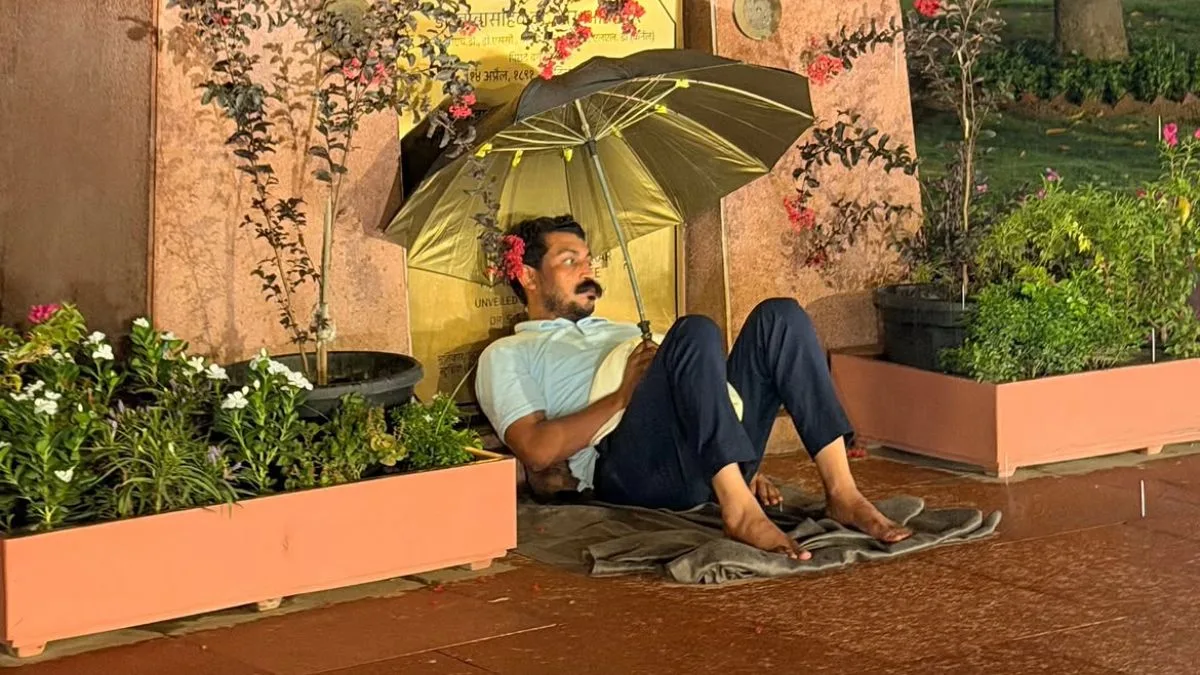
‘Reminded me of Jallianwala Bagh’: Chandra Shekhar Azad begins sit-in inside Parliament over Delhi Police action on students

By the time the tear gas cleared at Jantar Mantar, Chandra Shekhar Azad had already found his next battleground, the lawns of Parliament itself. He sat where Ambedkar’s statue stands watch.
Statesman News Service | New Delhi |

Azad Samaj Party national president Chandra Shekhar Azad started a sit-in protest within the Parliament premises on Monday night. He announced the move on social media, sharing pictures from the spot. The Nagina MP said he was taking a stand against the treatment meted out to young protesters at Jantar Mantar earlier that day.

In his post, Azad wrote that oppression, when it crosses its limits, gives rise to change. He said the manner in which students were treated at Jantar Mantar had shaken him deeply. He added that he had not witnessed the Jallianwala Bagh massacre, but the visuals from Monday reminded him of that chapter of history.

Azad said peaceful protest is a constitutional right of every citizen. He argued that meeting this right with force amounts to an attack on democratic values, not just on individuals. He said he was sitting in protest at the base of BR Ambedkar’s statue inside the Parliament complex.

The leader vowed to continue his peaceful struggle until justice is delivered and those responsible for the police action face consequences.


View this post on Instagram


A post shared by Chandra Shekhar Azad (@bhimarmychief)

Azad’s presence at Jantar Mantar earlier in the day

Azad had joined the Cockroach Janta Party protest at Jantar Mantar on Monday morning, before the clashes broke out. He told reporters that tolerating injustice was a bigger crime than committing it. And, he said both the government and the police were following their own duties, and he saw himself as part of the same struggle for the country.

He said he understood the pain of the youth as an Indian himself and had come to stand with them. He said injustice was being done to students and that the government was allowing it to happen. Also, He also said he would raise the issue in Parliament.

Reports from the protest site said Delhi Police stopped Azad from moving forward with the march, leading to a heated exchange between him and police personnel.

Context of the student protest

The Cockroach Janta Party has been leading protests for close to a month, demanding the resignation of Union Education Minister Dharmendra Pradhan and the scrapping of the National Testing Agency. The trigger was a string of alleged paper leaks in major competitive exams, including NEET-UG.

Climate activist Sonam Wangchuk had been on a hunger strike in support of the protest for 21 days. Police shifted him to Safdarjung Hospital on July 18, reportedly against his wishes, two days before the planned march to Parliament.

On Monday, police used tear gas and baton charges to stop protesters from reaching Parliament.

‘Gunde bhare the Delhi Police ki vardi mein kal’: CJP escalates brutality allegations as protest continues

Doctors said Sonam Wangchuk continues to refuse intravenous fluids and glucose despite persistent dehydration and blood abnormalities caused by his prolonged hunger strike.

Statesman News Service | New Delhi |

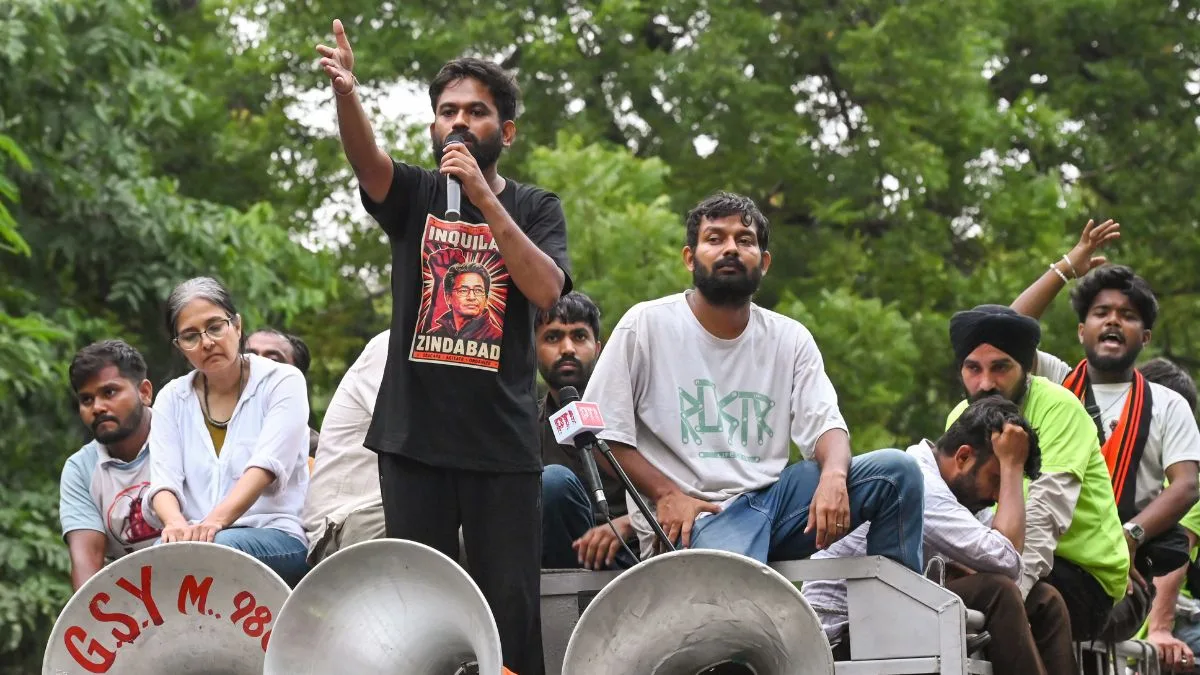
The Cockroach Janata Party (CJP) on Tuesday intensified its attack on the Delhi Police, alleging excessive use of force during the ‘Sansad Chalo’ protest, even as the police defended their action, cited injuries to over 118 personnel and registered FIRs over alleged violence and vandalism.

Protesters gathered again at Jantar Mantar a day after clashes broke out when demonstrators attempted to march towards Parliament, demanding the resignation of Union Education Minister Dharmendra Pradhan over the NEET-UG 2026 paper leak.

The Delhi Police have maintained a heavy deployment at the protest site, with prohibitory orders continuing in sensitive areas.

Dipke alleges assault on protesters

CJP activist Abhijeet Dipke accused the police of using disproportionate force against protesters, including women and minors.

He alleged that police personnel assaulted young protesters during Monday’s clashes and claimed a female protester remained in critical condition after being struck on the neck with a baton.

“Yesterday we saw with what brutality and cruelty the Delhi Police beat the children. They cracked the heads of 12-year-old girls. And it was male police officers who did this,” claimed Dipke.

Gunde bhare the Delhi Police ki vardi mein kal (Thugs were filled in Delhi Police uniforms yesterday),” he added.

Dipke also questioned why stones were allegedly found near the protest site and claimed the violence had been “planned and orchestrated” by the Delhi Police. He further alleged that some individuals in plain clothes were given batons and dressed in police uniforms.

He claimed police could have used water cannons instead of resorting to baton charges to disperse the crowd.

“And where did all those trucks full of stones come from yesterday? The Delhi Police aren’t even letting a bird flap its wings here. Every one of our members is being searched, their bags are being checked, their pockets are being checked. Barriers were blocking everything; people weren’t being allowed in. In such a situation, where did the trucks full of stones around Jantar Mantar come from? The Delhi Police should answer this,” he said.

In another interaction with ANI, Dipke alleged police carried out another baton charge on Tuesday morning and accused personnel of assaulting women protesters, including Sonam Wangchuk’s wife Geetanjali.

“Today, the Police staged lathi charge in the morning. They have filled their hearts with blood.”

When asked about reports of his detention, Dipke said, “Police were attacking Geetanjali ma’am. Later, they tried to charge me with a lathi. A male police officer pulled Geetanjali ma’am’s hair. I was not there. But they tried their best.”

The activist said the protest would continue despite the police action.

Protest continues at Jantar Mantar

CJP spokesperson Ashutosh Ranka said demonstrators would remain at Jantar Mantar until Pradhan resigned.

He alleged that several protesters, including women volunteers, were assaulted during Monday’s clashes and claimed the protest site had been damaged by police action.

“You are beating our children and injuring them. Girls were assaulted, and Geetanjali ma’am, Sonam ji’s wife, was dragged by her hair. Even our volunteers, who were helping manage the protest, were beaten. It is clear that instructions were given to suppress and intimidate our children. The entire protest site has been damaged, but the agitation will now grow bigger. We will not move until Dharmendra Pradhan resigns,” Ranka said.

Ranka also criticised Monday’s meeting between a CJP delegation and Union Minister JP Nadda, describing it as “a waste of time”. He alleged that some delegation members were prevented from leaving during the meeting and had their mobile phones taken away.

Delhi Police cites injured personnel, FIRs

Delhi Police said more than 118 personnel from the Delhi Police and Central Armed Police Forces were injured during Monday’s violence, including officers of senior ranks.

According to police, protesters attempted to breach barricades, attacked personnel with stones and other objects, vandalised police and government vehicles, and damaged public property.

The force said FIRs have been registered at Parliament Street and Connaught Place police stations against unidentified persons under various provisions of the Bharatiya Nyaya Sanhita relating to rioting, damage to public property, obstruction of public servants and other offences.

Police also released footage that they said showed stone-pelting near Connaught Place and appealed to protesters to maintain peace.

Delhi Police Commissioner Anurag Kumar visited injured personnel in hospital and said every injury sustained by officers reflected their commitment to duty.

Delhi Police file multiple FIRs over CJP ‘Chalo Sansad’ violence, probe conspiracy angle and Pakistan-linked misinformation

Violence erupted on Monday after thousands of CJP supporters and students marched from Jantar Mantar towards Parliament despite restrictions in place. The protest is centred on demands for Dharmendra Pradhan’s resignation over alleged examination irregularities, including the NEET-UG 2026 paper leak.

The CJP has also demanded compensation for families of deceased NEET aspirants and raised concerns over climate activist Sonam Wangchuk, who is undergoing treatment at Safdarjung Hospital.

Introducing Shakespeare at School

Have you ever tried reading Charles and Mary Lamb’s Tales from Shakespeare, out of sheer curiosity? As a middle schooler, when it was passed down to me by my cousin, I held the much revered title in my hands.

CHANDRANI MUKHERJEE | New Delhi |

Have you ever tried reading Charles and Mary Lamb’s Tales from Shakespeare, out of sheer curiosity? As a middle schooler, when it was passed down to me by my cousin, I held the much revered title in my hands. It was my first introduction to the name Shakespeare. In school, Shakespeare was a mystery . A man whose plays were read with the same reverence as the holy books. My ever curious classmates had already begun exploring Julius Caesar.

But jumping from Agatha Christie to Shakespeare was like aiming for the stars in a paraglider. I can almost recollect the absolute confusion I felt when I discovered Twelfth Night. Who in their right mind ever confuses a girl for a boy, even though the character is dressed as a man? Why would a young man ever trust a ghost? Or, why would a king give up his throne? Having grown up in a family where the only luxury was a second hand book and every one read a book of fiction for hobby, I too was taken in by the whirlwind of excitement.

With determination, I decided to open my mind to the fictitious world of Arden and Venice, Denmark and Britain and many more. Back then, I had very little idea about stage performances. Of course, I watched televised drama. But Lamb’s tales were told with a different flavour – a taste that I still enjoy in the classroom. So, how do I encourage my students to explore the famous mystic – Shakespeare ? My strategy is simple. I familiarise the learners with works of Shakespeare in capsules. Once I invited three learners to play the opening scene of Macbeth.

Once I conducted a quiz on the tragedies of Shakespeare – King Lear, Hamlet, Julius Caesar and Macbeth. I even assigned students to integrate digital art medium to design commercial posters of As You Like It. What fascinates the students is discovering the poetry of the language – “Fair is foul, foul is fair, Hover through the fog and filthy air.”- Macbeth, Act I Scene 1 the variety of emotions they encounter, – “How sharper than a serpent’s tooth it is / To have a thankless child!” — King Lear, Act 1, Scene 4 the scope for performance and the majesty of the characters. Ideally I enjoy introducing a mix of Shakespeare’s plays at school level – from the comic Comedy of Errors, to the wise The Tempest, from the tragic Hamlet to the tragi-comic The Merchant of Venice.

Learners are encouraged to read and discover sibling relationship, plight of the colonised, hunger for revenge and friendship through the Lambs’ Tales. I have even experimented by encouraging learner to compare these aspects with their real life experiences or comment on any episode that they might have heard on the news. Subsequently, when they present their findings and discuss characters, plots and even lines – they realise what a treasure they have unearthed! To summarise, in the words of the poet David McCord – Books fall open, you fall in. So enjoy the Tales and grow with the children.

(THE WRITER IS THE COORDINATOR, MAHADEVI BIRLA SHISHU VIHAR, SERIES EDITOR, ENGLISH PRESS, MEMBER, IPPL)

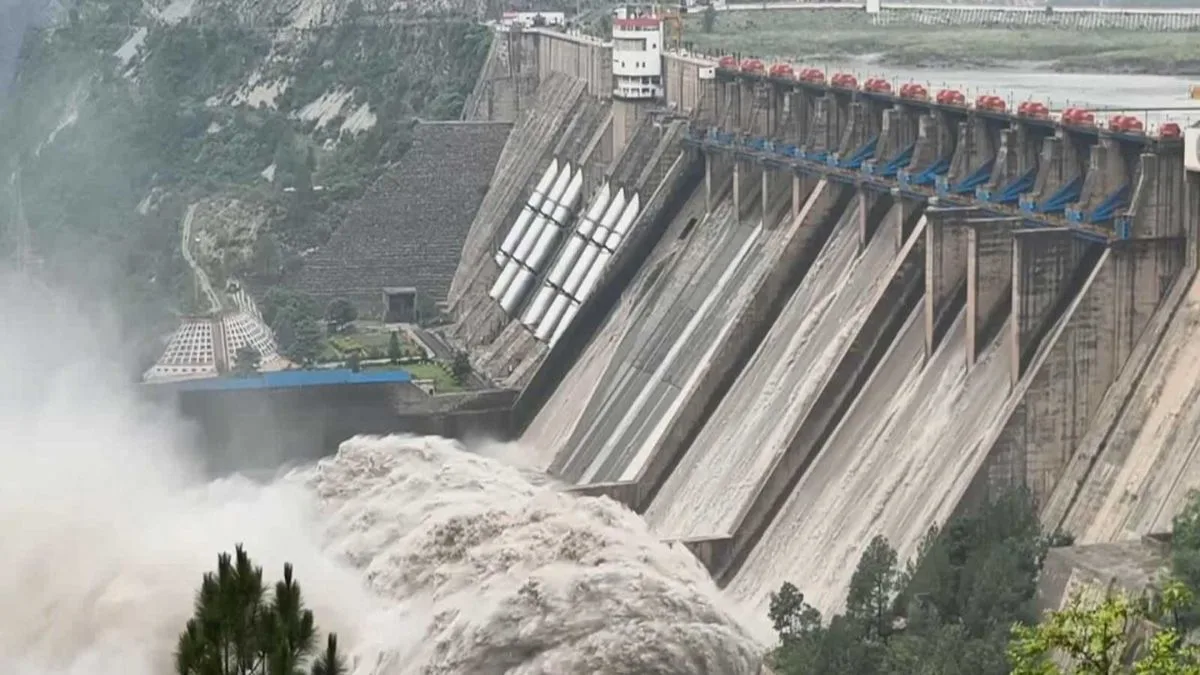
India to keep Indus Waters Treaty in abeyance; renegotiation only after Pakistan acts on terror: Report

India will continue humanitarian flood warnings to Pakistan, but all institutional mechanisms under the 1960 water-sharing pact remain suspended as New Delhi pushes ahead with hydropower projects in the Chenab basin.

Statesman News Service | New Delhi |

India will not restore the Indus Waters Treaty (IWT) unless Pakistan “credibly and irrevocably” ends its support for cross-border terrorism, news agency ANI mentioned government sources as saying on Tuesday, asserting that the 1960 agreement cannot operate under the current circumstances.

According to the sources, any discussion on reconsidering or renegotiating the treaty can begin only after Pakistan fulfils this condition. They said the agreement remains in abeyance following the Cabinet Committee on Security’s decision of April 23, 2025, taken after the Pahalgam terror attack in Jammu and Kashmir that killed 26 people.

Treaty no longer reflects present-day realities

The sources said India had asked Pakistan in 2023 to review the treaty, arguing that it no longer reflects current realities, including India’s growing population, rising water demand, climate challenges and advances in engineering.

They said Pakistan declined to discuss the proposed changes.

“The Treaty was based on the engineering techniques of the 1950s. Since then, India’s population demographics, need to generate clean energy, water demand for irrigation and drinking water, climate change challenges and technological capabilities have changed fundamentally,” the sources said.

India accuses Pakistan of misusing dispute mechanism

The sources alleged that Pakistan repeatedly used the treaty’s dispute-resolution provisions to delay Indian hydropower projects by escalating technical disagreements to international forums.

They also reiterated India’s position that the Court of Arbitration examining disputes under the treaty was “illegally constituted” and that its proceedings and decisions have no legal validity.

According to the sources, Pakistan bypassed the treaty’s prescribed sequence for dispute resolution by approaching the Court of Arbitration directly instead of first pursuing bilateral engagement and the Neutral Expert mechanism.

Institutional mechanisms remain suspended

The sources said all institutional arrangements under the treaty, including meetings of the Permanent Indus Commission, inspections and routine exchange of hydrological and project-related data, remain inoperative while the agreement stays in abeyance.

However, they said India will continue issuing flood warnings to Pakistan on humanitarian grounds. According to the sources, India voluntarily shared 23 such warnings during the previous flood season outside the treaty framework and intends to continue doing so to protect lives and property.

Hydropower projects to be accelerated

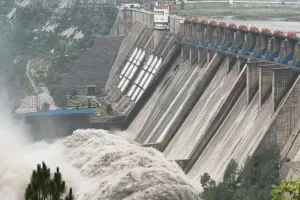
The sources said India will accelerate work on several hydropower projects in the Chenab basin, including the Sawalkote, Pakal Dul, Ratle, Kiru and Kwar projects.

They added that reservoir management and sediment flushing at projects such as Salal and Baglihar will be undertaken to restore storage capacity, improve dam safety and enhance power generation, describing these as internationally accepted engineering practices.

Pakistan’s water problems are domestic: Sources

The sources maintained that Pakistan’s water challenges stem largely from inadequate storage capacity, ageing irrigation infrastructure and inefficient water management rather than upstream projects in India.

They said India’s focus during the suspension of the treaty will remain on optimal use of its legitimate share of Indus waters through scientific basin management, infrastructure upgrades, clean energy generation and stronger water security.

“The Treaty will remain in abeyance until Pakistan credibly and irrevocably abjures its support for cross-border terrorism. This is the threshold condition. The question of reconsideration or renegotiation would arise only after this condition is fulfilled,” the sources said.

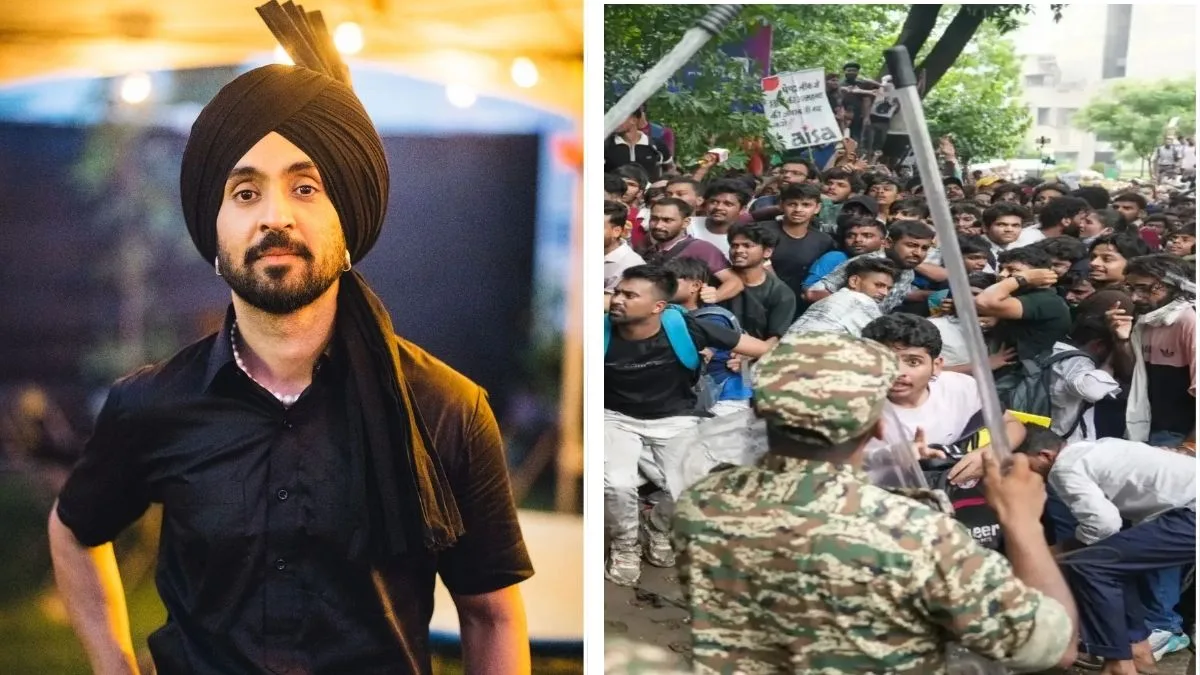
‘I’ll be called anti-national again’: After saying ‘keep me away from politics,’ Diljit Dosanjh finally backs students

As the NEET protest movement intensified, Diljit Dosanjh urged authorities to listen to students, saying dissent should not invite labels or silence. His remarks came after clashes during the CJP’s ‘Sansad Chalo’ march.

Statesman News Service | New Delhi |

Actor-singer Diljit Dosanjh has extended support to students participating in the ongoing CJP protests over alleged NEET irregularities and demands for education reforms. On Tuesday, he said the way the students were treated during the demonstrations was “very wrong” and appealed to the authorities to hear their concerns.

His statement came after the CJP’s ‘Sansad Chalo’ march from Jantar Mantar towards Parliament on the opening day of the Monsoon Session, where protesters and security personnel clashed.

Also Read: ‘It exposes the doings of BJP and Congress’: Punjab minister Cheema questions why ‘Satluj’ was banned

Diljit Dosanjh urges authorities to hear students

Through a series of Instagram Stories, Diljit appealed to the government to listen to the students instead of ignoring their demands. He said the voices of the people deserve to be heard and respected.

In his post, he wrote that what happened to the students during the protest was wrong and requested the authorities to listen to their demands. He also shared the message, “Voice of the people is the voice of God.”

These protests have focused on alleged irregularities in NEET examination, demands for education reforms across country, and the resignation of Union Education Minister Dharmendra Pradhan.

Says he expects criticism again

Diljit also said he expects to face criticism for speaking on the issue. Referring to his past experiences, he wrote that he has been called “anti-national” many times and believes similar allegations will be made again.

He recalled the backlash he received after supporting the 2020-21 farmers’ protests. According to the actor-singer, he faced legal issues and criticism following his public support for the farmers, adding that there are matters from that period that he still cannot discuss. He concluded his message by saying that God is watching everything and prayed for everyone’s well-being.

Earlier when a fan asked about the Jantar Mantar protest on Instagram Live, he dismissed the question. The singer asked all his fans to keep him away from politics.

Sonam Wangchuk’s health stable but doctors flag dehydration, low blood sugar amid hunger strike

Doctors said the activist continues to refuse intravenous fluids despite medical advice and remains under continuous observation for dehydration, electrolyte imbalance and blood count abnormalities.

Statesman News Service | New Delhi |

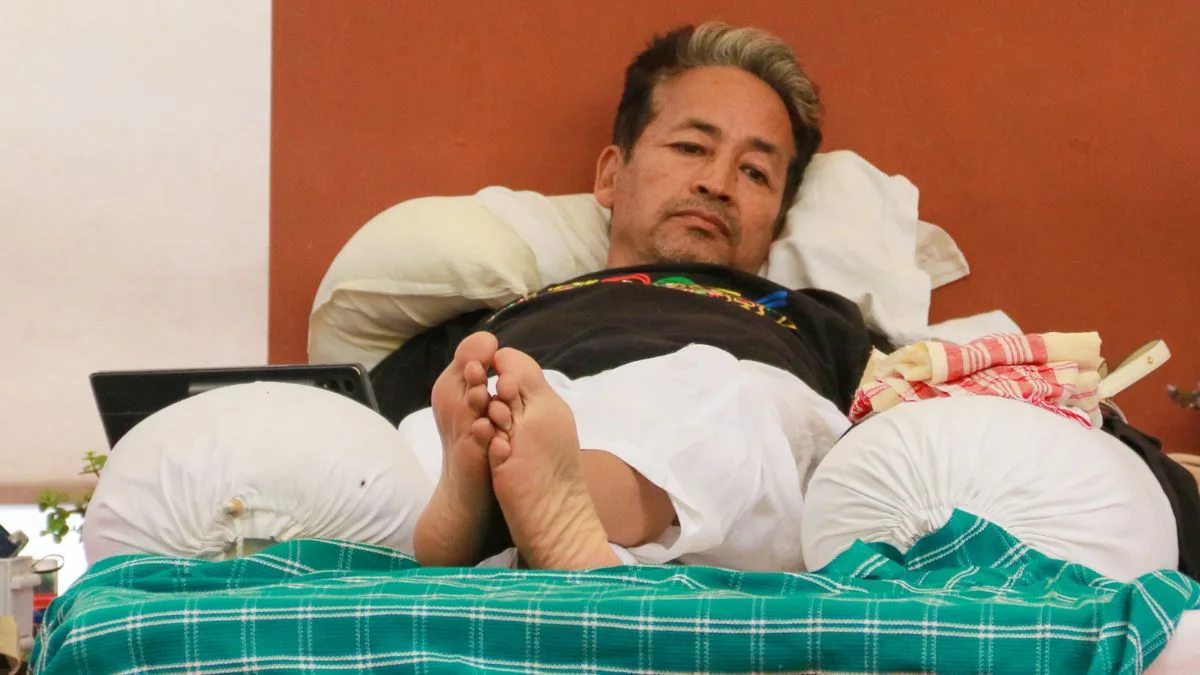
Climate activist Sonam Wangchuk remains under close medical supervision at Safdarjung Hospital, where doctors said on Tuesday that his condition is stable despite persistent concerns over low blood sugar, dehydration and laboratory abnormalities linked to his prolonged hunger strike.

According to a health bulletin issued by Vardhman Mahavir Medical College (VMMC) and Safdarjung Hospital, Wangchuk’s vital parameters remain stable, but his blood sugar levels continue to stay on the lower side.

Dr Manisha Thakur, Head of the Department of Medicine at Safdarjung Hospital, said he is being treated by a multidisciplinary team comprising experts from Safdarjung Hospital and AIIMS Delhi.

Doctors said laboratory tests conducted overnight showed his serum potassium level at 3.2 mEq/L. He also continues to have persistent pancytopenia, marked by anaemia, low haemoglobin and a reduced white blood cell count, requiring regular clinical monitoring and serial investigations.

The hospital said Wangchuk is receiving oral rehydration therapy and oral potassium supplements in syrup form. However, he continues to decline intravenous fluids and glucose despite repeated medical advice.

Image

Doctors said his prolonged fast has resulted in mild to moderate dehydration, persistent laboratory abnormalities and physiological stress, making continuous medical supervision necessary to monitor his recovery and identify any complications at the earliest.

The bulletin said all necessary treatment is being provided and that his condition remains under close observation.

Wangchuk was admitted to Safdarjung Hospital on July 18 after being removed from Jantar Mantar, where he had been observing a hunger strike demanding the resignation of Union Education Minister Dharmendra Pradhan over the alleged NEET paper leak.

Separately, Delhi Police have registered FIRs against unidentified persons over alleged stone-pelting, vandalism and attacks on police personnel during protests linked to the march towards Parliament.

According to police sources, miscreants allegedly damaged police vehicles and pelted stones at a police team near Regal Cinema in the Outer Circle of Connaught Place. FIRs have been registered at Connaught Place and Parliament Street police stations under various provisions of the Bharatiya Nyaya Sanhita (BNS), including charges related to rioting, damage to public property, obstructing public servants from discharging their duties and allegedly snatching police safety gear such as jackets and helmets. The investigation is ongoing.

Why Industry Academia Collaboration Is No Longer Optional in India’s Education System

Every campus placement season, the same conversation plays out between recruiters and university leadership.

DR. SOMNATH P. PATIL | New Delhi |

Every campus placement season, the same conversation plays out between recruiters and university leadership. Students arrive with strong transcripts and solid theoretical knowledge but employers want assurance that this knowledge will translate into actual on-the-job performance. This isn’t unique to India; campuses worldwide are having the same conversation. And it isn’t about student intelligence or effort.

It comes down to how quickly workplaces are changing, and how curricula by design take time to catch up. For decades, universities and industry operated as two separate worlds that occasionally shook hands at convocation. Academia built knowledge for its own sake; industry hired whoever showed up with a degree and trained them from scratch. That arrangement is no longer sustainable not because either side has failed, but because the pace of change around both has accelerated beyond what a once-in-four-years curriculum revision cycle can keep up with.

GLOBAL SHIFT IN HIGHER EDUCATION

This is not a uniquely Indian anxiety. Over the last decade, Canadian universities have switched to a model based on applied learning, co-op programmes, and research linked to industry. Germany’s dual education system regards industry exposure as essential and credit-bearing part of the programme and not just an optional add-on. The academic calendar of Singapore’s polytechnics integrates structured, paid industry attachments. The World Economic Forum’s recurring work on the future of jobs makes the same point year after year: a large share of the skills employers value most did not exist, or did not matter, a decade ago. And tech skills will be important in the next five years. Institutions that keep producing graduates for a job market that no longer exists are doing their students a quiet disservice.

EMPLOYABILITY IN INDIA

There is good news buried in India’s data, and it is worth pausing on: Overall employability has climbed to 56.35 percent in 2026, up from under 47 percent just four years ago, according to the India Skills Report 2026. Women’s employability has overtaken men’s for the first time in five years, aided by hybrid work and industry-linked digital skilling. These are not accidents of demography. They are, in large part, the visible outcomes of industry and institutions beginning to work together with intent. However, the reports serve as a reminder of the remaining distance: Nearly 93% of students say they want internships and real-world experience, according to the India Skills Report 2025, indicating that there is a far greater need for practical learning than there is supply. There is still a chronic disconnect between what companies require and what courses teach, especially in rapidly evolving fields like cybersecurity, data, and artificial intelligence.

ACADEMIA AND INDUSTRY

When academia and industry stay apart, everyone pays a price: Students graduate with credentials that promise more than they deliver, and spend their first working years unlearning and relearning on the job — an expensive, demoralising detour for both the individual and the employer footing the bill for that training. Even after a million graduates on board, employers face issues regarding the gap in talent. It has been pointed out that more graduates does not refer to more employable graduates. As families increasingly ask a fair question – what will this degree actually let their child do? – institutions lose relevance, credibility and, eventually, enrollment. Research quality suffers quietly. When academic research is disconnected from the problems industry and society are actually grappling with, it risks becoming an exercise conducted for its own sake rather than one that moves the needle on real challenges in healthcare, climate resilience, manufacturing, and public infrastructure.

WHAT INDUSTRY�ACADEMIA COLLABORATION LOOKS LIKE?

Meaningful industry-academia collaboration is built on a handful of unglamorous, hard-to-fake practices not one-off memoranda of understanding that gather dust after a signing ceremony. l Co-created curricula – Industry practitioners should sit at the table when courses are designed, not just when graduates are interviewed. Curriculum committees that include working professionals from relevant sectors tend to catch obsolescence far earlier than academic review cycles alone. l Embedded, credit-bearing experience – Internships, live projects, and apprenticeships should count toward a degree rather than sit outside it as an afterthought. When nearly all students say they want this kind of exposure, offering it as a scarce, competitive extra rather than a structured entitlement is a missed opportunity. l Engagement with industry mentors – Universities who welcome people from real industries and allow students to engage with them bring that industry outlook back into the classroom in ways no textbook knowledge can match.

FUTURE OF INDIA’S HIGHER EDUCATION REFORM

India’s National Education Policy has opened the door to much of this multidisciplinary learning, credit flexibility, and stronger vocational integration is all written into its intent. But policy intent and campus reality are still two different things, and closing that gap will take sustained effort from university leadership, not just compliance with new frameworks. Industry-academia collaboration is not a favour either side does the other. It is closer to a shared responsibility toward the young people caught in the middle, who deserve an education that prepares them for the world as it actually is, not as it existed when their syllabus was last printed. The institutions, and the industries, that treat this as core work rather than a side project will be the ones that matter most to the next generation of India’s workforce. The rest will simply be teaching yesterday’s answers to tomorrow’s questions.

(THE WRITER IS THE PRO-CHANCELLOR, DNYAAN PRASAD GLOBAL UNIVERSITY (DPGU) BY DR. D.Y PATIL UNITECH SOCIETY)

‘Why is the govt afraid of us?’: Haryana seals Shambhu border, detains BKU chief, stops farmers’ Delhi march

BKU (Charuni) chief Gurnam Singh Charuni was detained as police tightened security and barricaded key entry points into Haryana to prevent the proposed Kisan Mahapanchayat in Delhi.

Statesman News Service | New Delhi |

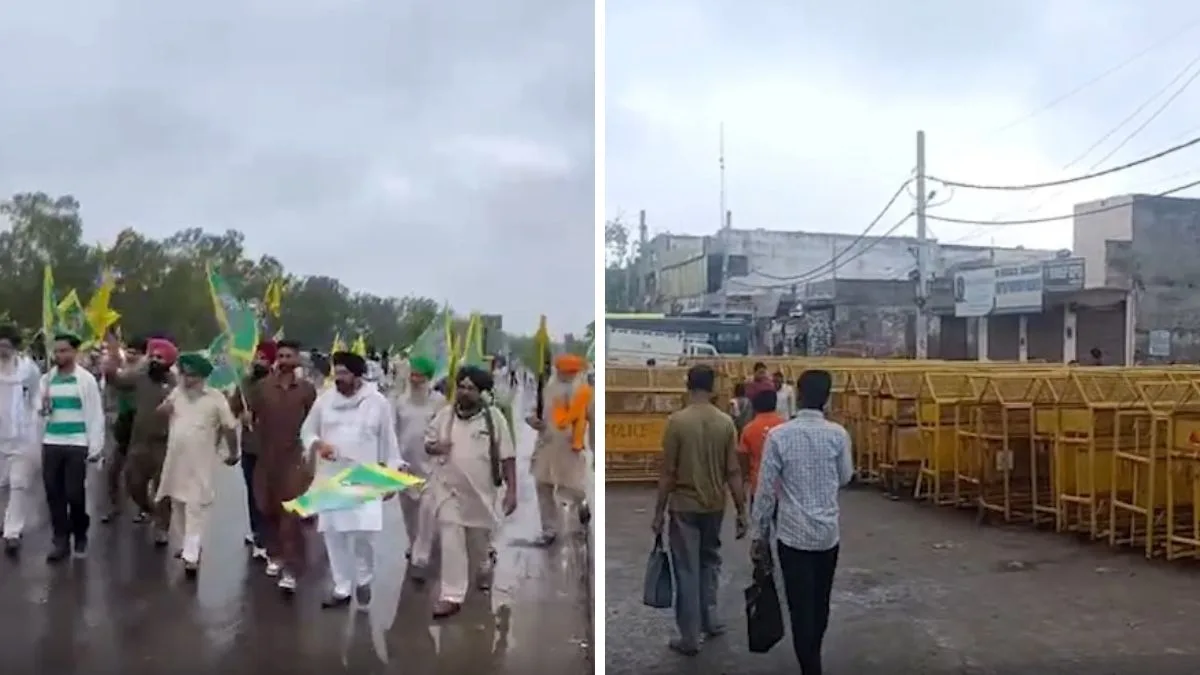
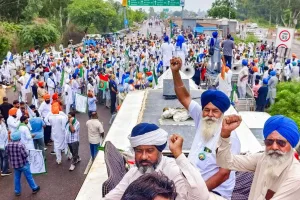
Hundreds of farmers from Punjab were stopped at the Shambhu border on Tuesday after the Haryana Police sealed the state’s entry points to prevent them from marching to Delhi for a Kisan Mahapanchayat against the proposed India-US trade deal.

The police also detained Bharatiya Kisan Union (Charuni) chief Gurnam Singh Charuni and blocked major highways leading towards the national capital as part of heightened security measures.

The protesting farmers said they were travelling peacefully in buses and private vehicles, not on tractor-trailers, to attend the gathering in Delhi. They alleged they were prevented from crossing into Haryana despite carrying no weapons.

“We are carrying the flag of our farmers’ organisation and a stick. Why is the government feeling fearful of us? We are not carrying any weapons. Why were we stopped from moving forward? If the government stops us here, we will sit here for an indefinite sit-in protest,” a protester at the Shambhu border in Punjab’s Patiala district said.

Farmer leader Sarwan Singh Pandher criticised the Haryana government for barricading the Shambhu border to stop participants from reaching Delhi.

The proposed Kisan Mahapanchayat is being organised under the banner of the Desh Bachao Morcha. Farmer leaders claim the proposed India-US trade agreement could hurt Indian agriculture by allowing cheaper agricultural imports, affecting farmers, farm labourers and the wider rural economy.

To prevent the march, Haryana deployed heavy police forces along national highways and other major roads connecting Punjab with the state. The restrictions forced many commuters to take village roads to continue their journey.

A senior Haryana Police official told IANS that adequate security arrangements had been made to prevent any untoward incident.

The Punjab-Haryana border has been fortified with barricades, boulders, sand-filled tippers, barbed wire and iron spikes, leading to long traffic jams in the area. Paramilitary personnel have also been deployed.

Police said all four entry points into Haryana have been sealed. Security has also been strengthened at the Singhu, Ghazipur and Tikri borders to prevent protesters from entering Delhi.

Fragmented climate responses won’t work

For much of the past three decades, climate change occupied a distinct corner of public policy.

SIDDHARTH ROY | New Delhi |

For much of the past three decades, climate change occupied a distinct corner of public policy. It was largely discussed through the lens of environmental conservation, carbon emissions and international climate negotiations. Governments treated it as an ecological challenge while economists, urban planners and public health experts often addressed it separately within their respective domains.

That distinction is no longer sustainable. Climate change has evolved into a systemic risk that increasingly shapes economic growth, public health, national security and social stability. Treating it as a specialised environmental issue understates both its scale and its consequences. The evidence is visible across India. Record-breaking heatwaves, erratic monsoons, flash floods, prolonged droughts and coastal erosion are no longer isolated events but recurring features of an altered climate. Cities from Delhi to Guwahati have experienced extreme rainfall that overwhelms drainage systems, disrupts transport and damages infrastructure.

Himalayan States confront landslides and glacial risks with increasing frequency, while coastal communities face stronger cyclones and rising sea levels. These events are not simply environmental disasters; they impose heavy economic costs and expose the vulnerability of existing development models. Agric ulture illustrates this transformation most clearly. Despite structural changes in the economy, millions of Indians continue to depend directly or indirectly on farming for their livelihoods. Unpredictable rainfall, rising temperatures and changing pest patterns reduce crop productivity and increase uncertainty for farmers. The consequences extend far beyond rural incomes.

Food inflation, supply chain disruptions and fiscal pressures frequently follow climatic shocks, affecting consumers and policymakers alike. Climate resilience has therefore become integral to food security and macroeconomic stability. Urban India faces an equally complex challenge. Rapid urbanisation has expanded economic opportunities but has also increased exposure to climate-related risks. Heatwaves raise electricity demand as cooling requirements grow, placing additional pressure on power systems. Flooding damages transport networks, disrupts businesses and imposes significant repair costs on municipal authorities. Water scarcity threatens both households and industries, while poorly planned construction often amplifies the effects of extreme weather.

Climate resilience can no longer remain an optional consideration in urban planning; it must become one of its central organising principles. Public health presents another compelling reason to rethink climate policy. Rising temperatures increase heat-related illnesses, particularly among children, older persons, outdoor workers and economically vulnerable populations. Air pollution interacts with higher temperatures to ag gravate re spirator y and cardiovascular diseases. Changes in climatic conditions also influence the spread of vector-borne diseases, creating new burdens for healthcare systems already under pressure.

Climate adaptation, therefore, is inseparable from preventive healthcare and public health preparedness. The social consequences of climate change are equally profound. Environmental shocks rarely affect all sections of society in the same way. Small farmers, informal workers, fishing communities, tribal populations and low-income urban households often bear the greatest burden despite contributing the least to global greenhouse gas emissions. Climate change therefore raises questions not only of sustainability but also of equity. Policies that overlook these disparities risk widening existing inequalities and undermining inclusive development.

These realities demand a broader policy response. Mitigation remains indispensable because reducing emissions is essential for limiting long-term warming. Yet adaptation deserves equal priority. India must invest in climate-resilient infrastructure, water conservation, sustainable agriculture and early warning systems that minimise loss of life and livelihoods. Urban development plans should integrate heat-action strategies, flood-resilient drainage, green public spaces and nature-based solutions instead of relying solely on conventional engineering interventions.

Such investments should be viewed not as environmental expenditure but as economic safeguards that reduce future losses. India has already demonstrated leadership in renewable energy and international climate diplomacy. Initiatives such as the International Solar Alliance and the expansion of solar and wind capacity reflect a commitment to balancing development with environmental responsibility. However, climate considerations must now extend beyond the energy sector. Decisions relating to transport, housing, industrial policy, financial regulation, healthcare and disaster management increasingly have climate implications. A whole-of-government approach is therefore essential. The private sector also has a pivotal role.

Climate risks are no longer abstract concerns confined to sustainability reports. They directly affect supply chains, insurance costs, infrastructure, labour productivity and long-term profitability. Businesses that integrate climate resilience into investment decisions are likely to remain more competitive in an increasingly uncertain global economy. Financial institutions must similarly strengthen climate-risk assessment so that capital flows support resilient infrastructure and sustainable economic activity. Equally important is recognising climate change as a governance challenge. Effective adaptation depends upon stronger coordination among the Union, States and local governments.

Municipal bodies require greater technical capacity and financial resources to implement climate-resilient urban planning. Panchayats must be equipped to support local adaptation measures, while scientific institutions should work more closely with policymakers to translate climate projections into practical planning tools. Fragmented responses will prove inadequate against a challenge that cuts across every sector. The debate is often framed as a choice between economic growth and environmental protection. That binary has become increasingly misleading.

Climate resilience is now a prerequisite for sustained economic development. Infrastructure repeatedly damaged by floods, declining agricultural productivity, rising healthcare costs and disrupted supply chains ultimately impose far greater economic burdens than preventive investments ever would. Climate change has outgrown the confines of environmental policy. It now influences fiscal stability, food security, public health, urban governance, infrastructure planning and social justice.

India’s development trajectory will increasingly depend on how effectively these interconnected risks are addressed. The question is no longer whether climate policy deserves a place in economic planning. It is whether economic planning can remain credible without placing climate resilience at its very centre. The writer is a civil engineer, and consultant (invitee) to Rashtriya Raksha University under the Ministry of Home Affairs.

(The views are personal. He can be reached at siddharth001.roy@gmail.com)