Logo

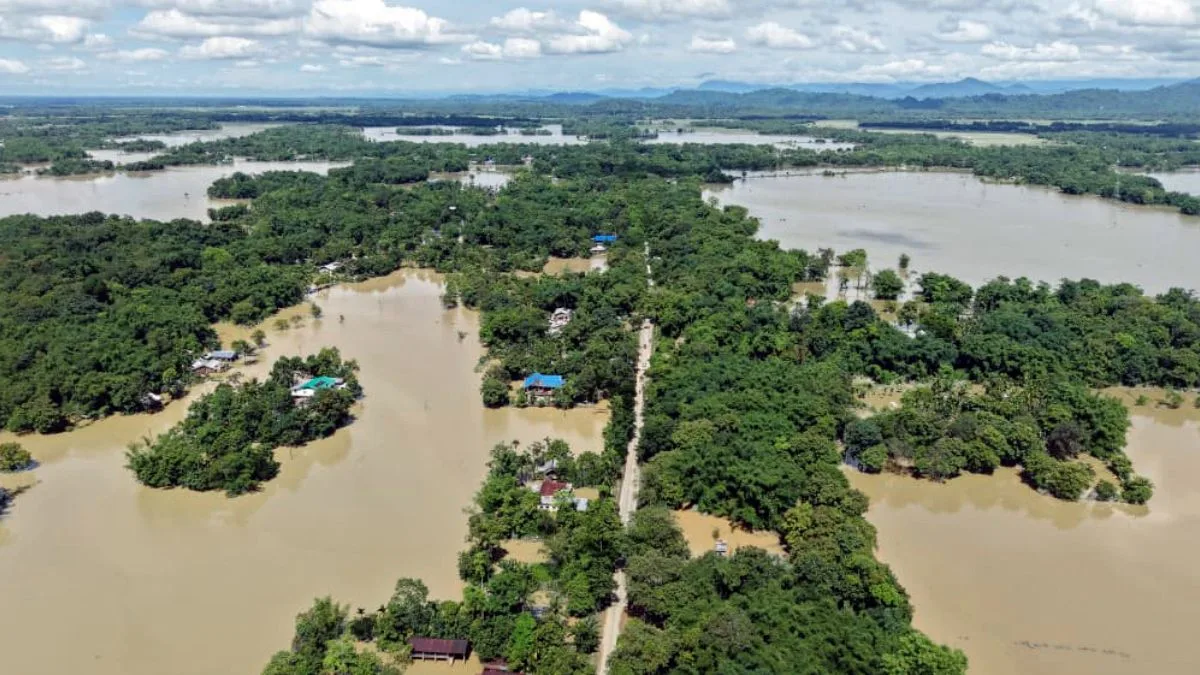
Assam floods kill 10, including four children, in 24 hours; death toll rises to 41

More than 3.13 lakh people are staying in relief camps as rivers continue to flow above danger levels in several parts of the state, with rescue operations still underway.

Statesman News Service | New Delhi |

Ten people, including four children, died in Assam due to floods over the past 24 hours, taking the overall death toll in the current wave of flooding to 41, according to the Assam State Disaster Management Authority (ASDMA).

The latest deaths were reported from Sivasagar, Jorhat, Charaideo, Dhemaji and Karbi Anglong districts. Three people each died in Sivasagar and Jorhat, two in Charaideo, and one each in Dhemaji and Karbi Anglong, the ASDMA said in its latest flood report.

Six people – three men and three women – remain missing.

The floods have affected more than 6.53 lakh people across 11 districts: Karbi Anglong, Golaghat, Charaideo, Kamrup, Sivasagar, Jorhat, Dibrugarh, Nagaon, Dhemaji, Hojai and Kamrup (Metro).

Sivasagar is the worst-hit district with 3,92,195 affected people, followed by Charaideo (1,10,755), Jorhat (97,690), Golaghat (25,591) and Dibrugarh (13,390).

According to the ASDMA, 939 villages across 40 revenue circles remain inundated.

Heavy rainfall has pushed up water levels in the Brahmaputra and several of its tributaries. The Disang river is flowing above the highest flood level at Nanglamuraghat, while the Burhidihing at Chenimari (Khowang), Dikhou at Sivasagar, Dhansiri (South) at Numaligarh and Kushiyara at Sribhumi are above the danger mark.

More than 3.13 lakh flood-hit people are currently staying in 487 relief camps and relief distribution centres set up by district authorities.

The floods have also affected 1,38,965 animals, the report said.

Rescue teams from the Indian Army, National Disaster Response Force (NDRF), State Disaster Response Force (SDRF), Fire and Emergency Services, Police, Civil Defence volunteers, the Indian Air Force and District Disaster Response Force (DDRF) continue relief operations. On Wednesday, the teams rescued 8,409 people from affected areas.

The floodwaters also damaged 53 roads, six embankments and other public property during the day, according to the ASDMA.

Inputs from ANI

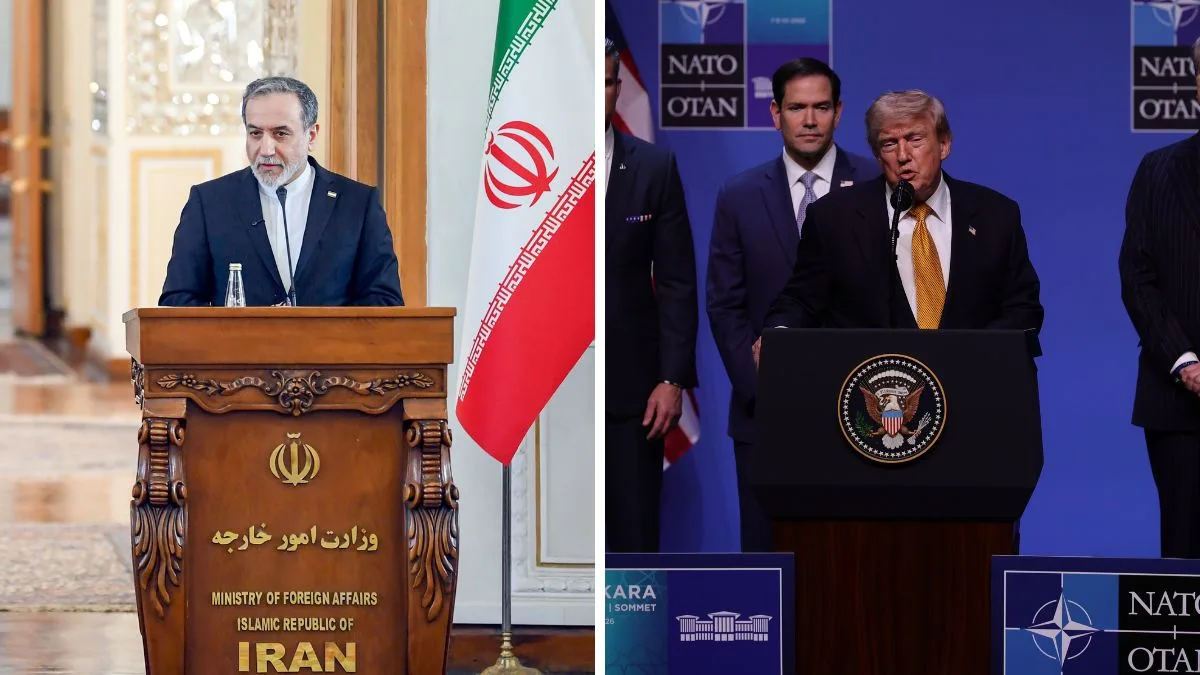
‘Eye for an eye’: Iran warns backers of US strikes are targets too; Trump calls conflict a ‘skirmish’, says deal is near

Fresh statements from Tehran and Washington point to deepening confrontation, with both sides hardening their public positions even as the US says it remains open to diplomacy.

Statesman News Service | New Delhi |

Iran has warned that any attack on its infrastructure will trigger a “powerful and decisive response”, as US President Donald Trump claimed Tehran wants to negotiate despite the continuing military confrontation.

The latest exchange comes amid heightened tensions around the Strait of Hormuz, where maritime disruptions have intensified concerns over regional security and global oil supplies.

Iran warns supporters of attacks could become targets

Iranian Foreign Minister Seyed Abbas Araghchi said any aggression against the country, including strikes on civilian infrastructure, would be met with retaliation.

“Our defense doctrine is clear: eye for an eye. Any aggression against Iran, including our infrastructure, will compel a powerful and decisive response. Those who contribute to such aggression, whatever the kind of support, will also be considered as legitimate targets,” Araghchi wrote on X.

Iranian Parliament Speaker Mohammad Bagher Ghalibaf also warned that regional infrastructure would not remain secure if Iran’s security was threatened.

“The equation of this war is clear: either all or none. In a region where we do not sell oil, no one will sell oil. If our security is not ensured, no infrastructure will be safe,” he said, adding that the Strait of Hormuz would not return to its pre-war situation.

Strait of Hormuz remains flashpoint

Iran’s state broadcaster Press TV, citing the Khatam al-Anbiya Central Headquarters, reported that the Strait of Hormuz remains closed and that vessels can only pass through designated routes under previously announced arrangements.

According to the report, the headquarters warned that if US threats against Iran’s civilian infrastructure were carried out, Iranian forces would prevent oil exports through the region and target oil, gas, electricity and economic infrastructure.

Press TV also quoted the headquarters as saying that continued US threats would only expand the conflict across the region and beyond.

Trump says Iran wants a deal

Speaking in Marietta, Georgia, Trump described the conflict as a “skirmish” and claimed Iran would soon return to negotiations.

“This skirmish that we have with the Islamic Republic of Iran, and I call it that because let me tell you they’re getting hit so hard, and they want to make a deal,” Trump said.

“They’re not ready to make a deal because every time they make a deal they want to change it… They’ll be ready very soon,” he added.

Earlier in the day, Trump attended the dignified transfer ceremony at Dover Air Force Base for four US service members killed in connection with the ongoing conflict. During the Georgia event, he also honoured the family of Lt. Tyler Feehan.

US maintains military pressure

Trump has recently warned that Washington would strike Iranian infrastructure if commercial vessels in the Strait of Hormuz were attacked.

“Any time the Islamic Republic of Iran shoots at a ship in the Strait of Hormuz… the United States will bomb and destroy ONE BRIDGE OR POWER PLANT,” he wrote on social media.

On Tuesday, he also signalled that US operations would continue.

“We’re not finished at all… we’re not leaving right now,” Trump said.

The conflict around the Strait of Hormuz has disrupted oil shipments and pushed Brent crude prices higher, adding to fuel price concerns in the United States.

US Secretary of War Pete Hegseth said the military campaign has so far cost USD 37.5 billion while defending the administration’s request for additional emergency military funding.

Despite the increasingly hostile rhetoric, US Secretary of State Marco Rubio said Washington remained willing to pursue negotiations with Tehran.

“We remain open to working it out in a negotiated way. But right now, they don’t seem to be serious about that,” Rubio said during a visit to Manila.

India’s blunt warning to Pakistan at UN: Indus Waters Treaty to stay in abeyance until cross-border terror ends

India has told the UN Security Council that the Indus Waters Treaty will remain in abeyance until Pakistan abandons cross-border terrorism, while reaffirming that Jammu and Kashmir is an integral part of India.

Statesman News Service | New Delhi |

India has reiterated that the Indus Waters Treaty will remain in abeyance until Pakistan ends its support for cross-border terrorism, delivering a sharp rebuke to Islamabad during a United Nations Security Council debate where Pakistan raised the treaty and the Kashmir issue.

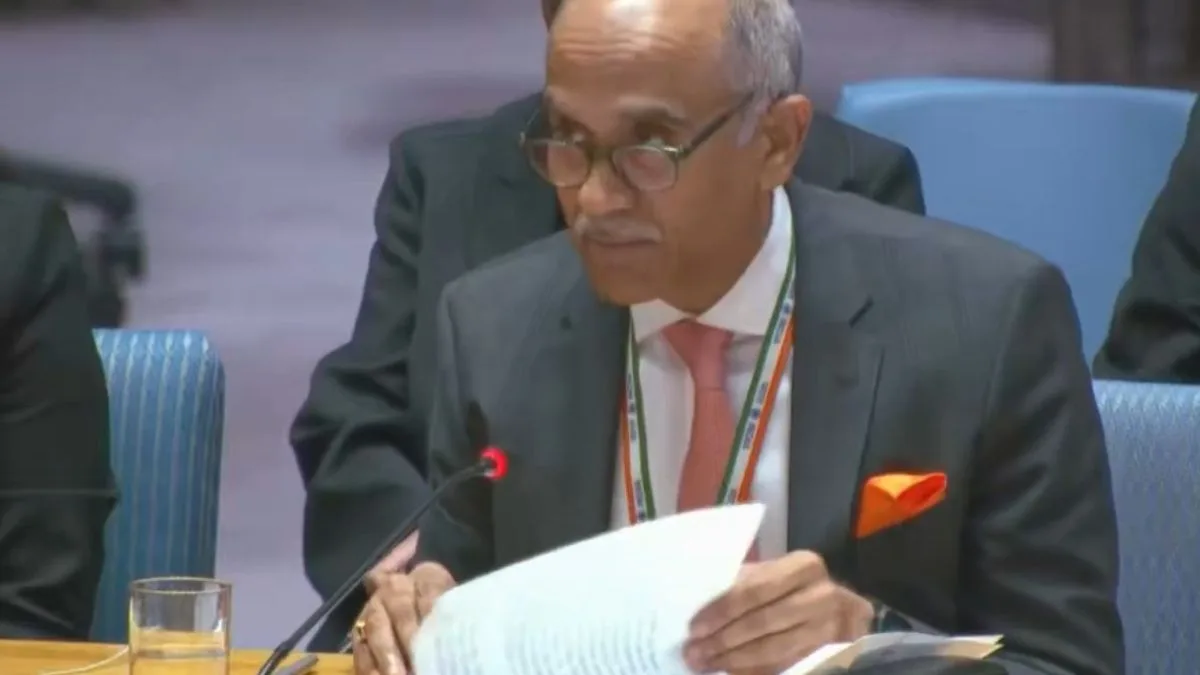
India’s Permanent Representative to the UN, Ambassador P Harish, said cooperation under the 1960 water-sharing agreement cannot continue in an atmosphere where terrorism is used as an instrument of state policy.

“Our position on the Indus Water Treaty remains clear and consistent,” Harish said during the UNSC’s high-level open debate on ‘Natural Resource Governance: The Foundation of Peace, Security and Prosperity’.

“Cooperation on the basis of mutual trust and goodwill cannot be expected when cross-border terrorism is regularly deployed as an instrument of State policy,” he added.

Pakistan raises Indus treaty, Kashmir at UNSC

Harish’s remarks came after Pakistan’s Permanent Representative, Asim Iftikhar Ahmad, criticised India’s decision to place the Indus Waters Treaty in abeyance and linked it to the Kashmir issue during the debate.

Responding to Pakistan, Harish accused Islamabad of misusing the forum to advance what he described as a “false narrative”.

“It was not our intention to bring other issues in this forum, but my delegation is compelled to respond to Pakistan, as it has chosen to misuse today’s discussion to peddle its false narrative,” he said.

India reiterates position on Jammu and Kashmir

Reaffirming New Delhi’s long-standing stand, Harish said Jammu and Kashmir “has always been, is, and will remain an integral and inalienable part of India”.

He said this was India’s constitutional and legal position and asserted that the only unresolved issue related to Jammu and Kashmir was what he described as Pakistan’s “illegal occupation” of Indian territory.

“The only outstanding issue with regard to Jammu and Kashmir is the naked aggression and illegal occupation of India’s sovereign territory by Pakistan,” he said.

Treaty suspended after Pahalgam terror attack

India placed the 1960 Indus Waters Treaty in abeyance after the April 2026 terror attack in Pahalgam in Jammu and Kashmir, in which 24 people were killed. New Delhi blamed Pakistan-based terrorists for the attack.

Following the suspension, Prime Minister Narendra Modi said that “water and blood cannot flow together”, linking the move to India’s response against cross-border terrorism.

India asks Pakistan to address internal issues

Concluding his remarks, Harish urged Pakistan to focus on its own challenges instead of criticising India.

“Instead of pointing fingers at India, Pakistan would serve itself and its people far better by putting its own house in order,” he said.

Space Balance

Vikram-1 reaching orbit marks an important transition in India’s space journey.

Statesman News Service | New Delhi |

Vikram-1 reaching orbit marks an important transition in India’s space journey. Built by Skyroot Aerospace, the rocket demonstrates that private enterprise can develop capabilities once concentrated almost entirely within ISRO. Yet its success coincides with reports of an exodus of experienced personnel from the national space agency. India must ensure that one achievement does not come at the expense of the institution that made the other possible. Skyroot’s accomplishment is unquestionably its own.

Vikram-1 was designed and manufactured largely at the company’s facilities in Hyderabad by a remarkably young workforce. This is not an ISRO rocket carrying a private label. But neither did its technological ecosystem emerge from nowhere. Skyroot’s founders, Pawan Kumar Chandana and Naga Bharath Daka, are former ISRO engineers. Former ISRO chairman S. Somanath later became an adviser. The rocket’s large first stage was tested using ISRO infrastructure and Vikram-1 flew from the national agency’s launch facility at Sriharikota. This is precisely how a healthy space ecosystem can work. Public investment creates knowledge and infrastructure that subsequently enables private innovation.

The concern arises when the flow of expertise becomes disproportionately one-way. More than 100 scientists and technical personnel have reportedly left ISRO in recent months, prompting the Department of Space to tighten procedures governing resignations and voluntary retirement from critical programmes. Private space companies can offer higher salaries, equity and faster advancement. Bureaucratic hierarchies, slower promotions and delayed missions make the contrast sharper. Preventing departures administratively is no durable solution. ISRO must instead remain a place where India’s best scientists can pursue work unavailable elsewhere, with better career progression, professional autonomy and rewards for exceptional technical expertise.

The financing of India’s private space revolution adds another dimension. Skyroot has attracted substantial global capital, including investment led by Singapore’s sovereign wealth fund GIC and participation from BlackRock, alongside other investors. Foreign capital itself is not the problem; it can help Indian technology compete globally. But public institutions should not bear the long-term cost of creating scarce expertise while commercial value steadily migrates elsewhere. The relevant model remains the relationship between NASA and America’s private space industry. SpaceX did not make NASA redundant. It flourished partly because decades of public investment had created an immense technological base, while NASA continued undertaking science, exploration and high-risk missions that commercial companies could not replace.

India needs the same complementarity. Private companies should increasingly handle commercial launches, satellites and services, freeing ISRO to move up the technological ladder, pushing deeper into reusable launch systems, human spaceflight, advanced propulsion, lunar infrastructure, planetary science, deep-space missions and technologies whose commercial payoff may be decades away. The measure of reform, therefore, is not how many space unicorns India creates. It is whether, a decade from now, the country possesses both globally competitive private companies and an even stronger ISRO. Vikram-1 shows that India can turn public knowledge into private innovation. The harder task is ensuring that the process multiplies national capability rather than merely redistributing it.

Mumbai tightens security, imposes prohibitory orders till August 6 after NEET protests

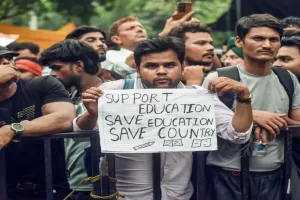
The restrictions come days after police booked nearly 900 people over demonstrations linked to the NEET paper leak agitation, citing intelligence inputs about possible disturbances to public order.

Statesman News Service | Mumbai |

Mumbai Police have imposed prohibitory orders across the city from Thursday until August 6, barring unlawful assemblies and several other activities after recent demonstrations held in support of the Cockroach Janata Party’s (CJP) campaign over the NEET paper leak.

The restrictions, issued on Tuesday under Section 37 of the Maharashtra Police Act, 1951, are aimed at preventing any breach of peace and maintaining public order. Police said intelligence inputs indicated the possibility of disturbances and threats to life and property.

The order follows a series of protests organised in solidarity with the CJP movement at Jantar Mantar in New Delhi. Earlier, Mumbai Police registered eight FIRs against nearly 900 people who participated in demonstrations over the alleged examination irregularities.

Security has also been stepped up at sensitive locations across the city to prevent fresh protests or any law-and-order issues during the period the restrictions remain in force.

What the prohibitory orders ban

Under the order, carrying arms or explosives has been prohibited. The restrictions also bar unlawful assemblies and prohibit public slogans, speeches, songs and music linked to demonstrations.

The order further bans the display of effigies, placards, symbols, pictures or other material that, in the opinion of the competent authority, could undermine public order, offend decency or morality, or affect the security of the State.

Action against unauthorised protests

Police warned that any protest held without prior permission could invite legal action.

Violators may face cases under Section 223 of the Bharatiya Nyaya Sanhita (BNS) and Section 135 of the Maharashtra Police Act for disobeying lawful orders. Authorities may also invoke Sections 189 and 190 of the BNS, which relate to unlawful assembly.

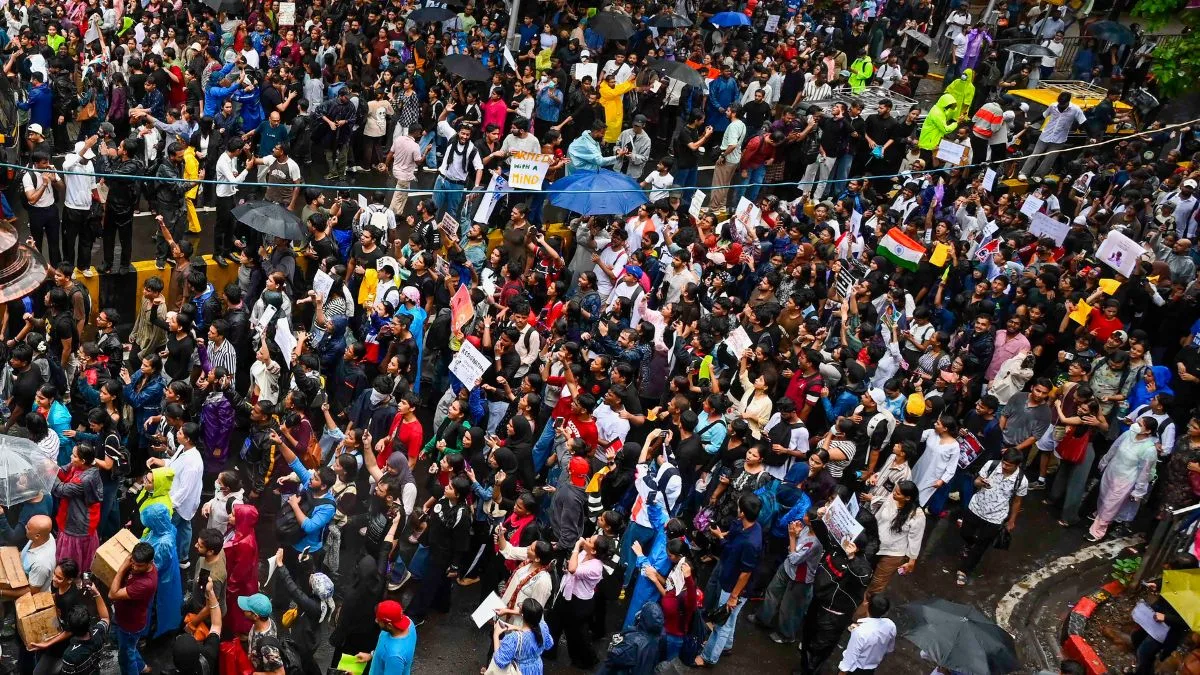
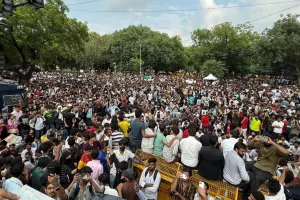
The restrictions come after large-scale demonstrations on July 20, when thousands of CJP supporters and students marched from Jantar Mantar towards Parliament, demanding the resignation of Union Education Minister Dharmendra Pradhan over recurring examination irregularities, including the NEET-UG paper leak.

16 Delhi Metro stations shut after Jantar Mantar protest violence; Rajiv Chowk, Central Secretariat among affected

Interchange services remain operational at Rajiv Chowk, Mandi House and Central Secretariat even as entry and exit have been suspended at 16 stations across the national capital.

Statesman News Service | New Delhi |

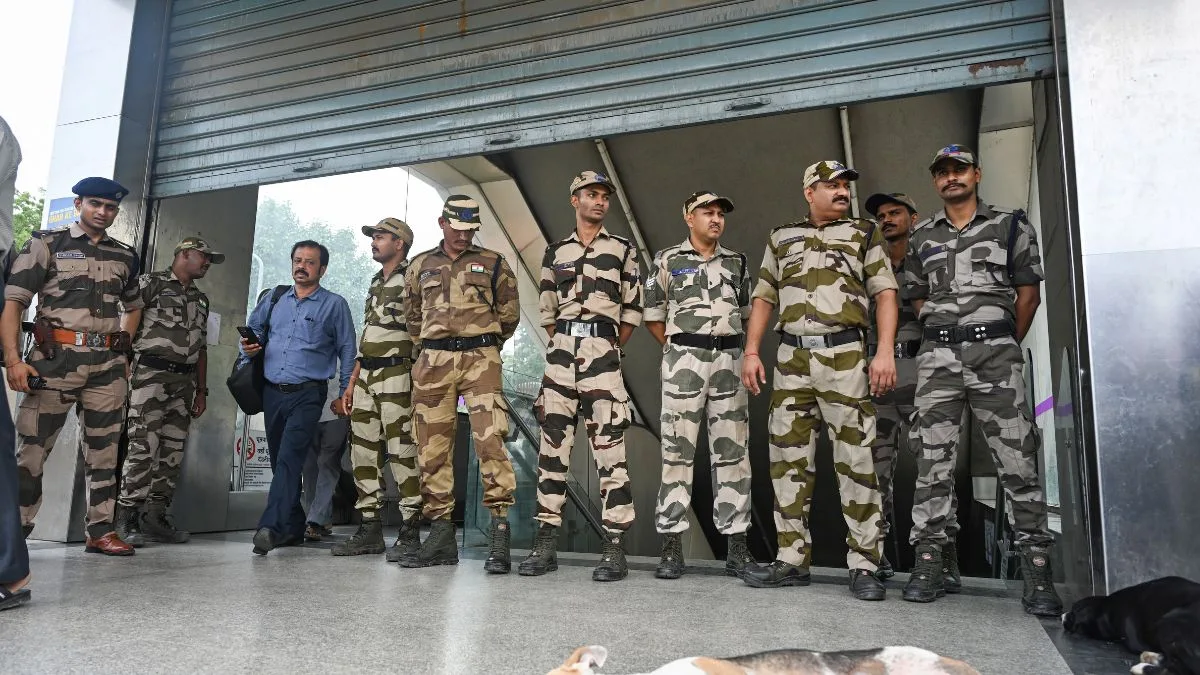
Sixteen Delhi Metro stations remained closed for passenger entry and exit on Thursday as authorities stepped up security across the national capital following violence linked to the Jantar Mantar protest and fresh clashes reported on Wednesday night.

The Delhi Metro Rail Corporation (DMRC) said stations including Lok Kalyan Marg, Rajiv Chowk, Patel Chowk and Central Secretariat have been shut as a precautionary measure. However, commuters can continue to use interchange facilities at Rajiv Chowk, Mandi House and Central Secretariat to switch between Metro lines.

The affected stations are:

  1. Lok Kalyan Marg
  2. Rajiv Chowk
  3. Patel Chowk
  4. Ramakrishna Ashram Marg
  5. Barakhambha Road
  6. Supreme Court
  7. Seva Teerth
  8. Janpath
  9. Mandi House
  10. Central Secretariat
  11. ITO
  12. Delhi Gate
  13. Indraprastha
  14. Khan Market
  15. Jor Bagh
  16. Shivaji Stadium

Image

The restrictions follow violence during the July 20 protest, when supporters of the Cockroach Janata Party (CJP), along with students, marched from Jantar Mantar towards Parliament demanding the resignation of Union Education Minister Dharmendra Pradhan over alleged examination irregularities, including the NEET-UG paper leak.

The demonstrations drew students, activists and opposition leaders seeking accountability in the education system. Delhi Police said security has been strengthened in sensitive areas and assured a thorough investigation into the violence.

Fresh unrest was reported on Wednesday evening near Tolstoy Marg in the Connaught Place area. According to police, a group of miscreants allegedly hurled stones and bottles at security personnel at around 8.30 pm.

Assistant Commissioner of Police (Connaught Place) Vivek Bhagat sustained injuries in the incident, police said.

Reconciliation Gamble

The latest Republican US budget package is about far more than allocating another $95 billion in federal spending.

Statesman News Service | New Delhi |

The latest Republican US budget package is about far more than allocating another $95 billion in federal spending. It represents an ambitious attempt to reshape the legislative battlefield itself by using the budget reconciliation process to advance politically contentious priorities that would ordinarily struggle to overcome the Senate’s filibuster.

Defence funding, aid for farmers and election reforms have been bundled into a single measure, signaling that the party intends to make national security, rural America and electoral integrity the defining themes of the coming midterm campaign. Budget reconciliation was created to expedite legislation directly affecting federal revenues and expenditure. It was never designed as a vehicle for sweeping policy changes. Yet successive administrations and congressional majorities have stretched its boundaries, from tax cuts to healthcare reforms.

Republicans are now testing those limits again by attaching funding to measures that would tighten voter registration requirements, including proof of US citizenship, while avoiding the 60-vote threshold that would otherwise make such legislation virtually impossible to pass in a closely divided Senate. Whether this strategy succeeds is far from certain. Reconciliation does not exempt legislation from the Senate’s Byrd Rule, which bars provisions whose budgetary effects are merely incidental to broader policy objectives. If the Senate determines that key election provisions are primarily regulatory rather than fiscal, they could be stripped from the bill before it reaches the President’s desk.

Even a unified Republican majority cannot simply wish away the chamber’s procedural guardrails. Nor does enactment guarantee immediate implementation. Elections in the United States are administered principally by individual states, each with its own laws, databases and administrative machinery. Even if Congress approves funding to encourage new voter registration requirements, state legislatures and election officials would still need time to adapt procedures, train staff and educate voters. Any significant changes introduced barely three months before a national election would almost certainly invite legal challenges from voting rights groups, creating further uncertainty.

This explains why the political value of the proposal may ultimately outweigh its practical impact before November. Republicans can campaign on having acted to strengthen election integrity while Democrats can argue that the legislation risks disenfranchising eligible voters and stretches reconciliation beyond its intended purpose. The legislative fight itself becomes an electoral message. The episode also illustrates a broader transformation in Washington. As bipartisan compromise becomes increasingly elusive, procedural innovation has become a substitute for consensus.

Both parties have relied on reconciliation to enact major priorities when conventional lawmaking has stalled. The immediate controversy concerns election rules, but the larger issue is institutional. Every expansion of reconciliation as a tool for advancing contentious policy further weakens the Senate’s traditional role as a chamber designed to encourage deliberation and cross-party agreement. Whatever the fate of this particular bill, the precedent it seeks to establish could prove more consequential than the legislation itself. The contest is no longer merely over what Congress legislates, but over how Congress chooses to legislate.

Rot at the top

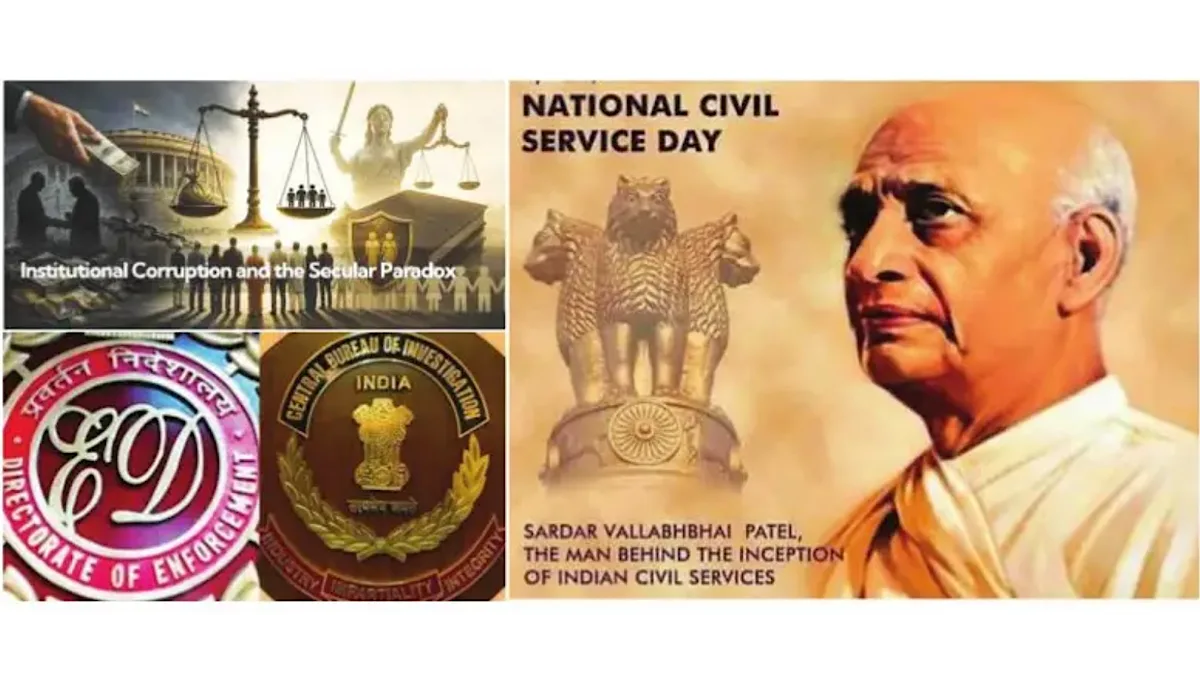
Indian administration has always had a fantastic worldwide reputation. Sardar Vallabhbhai Patel once referred to our civil services as the “steel frame” of the nation.

Statesman News Service | New Delhi |

Indian administration has always had a fantastic worldwide reputation. Sardar Vallabhbhai Patel once referred to our civil services as the “steel frame” of the nation. However, the Indian civil services, which were intended to serve as an apolitical backbone for the country’s prosperity in accordance with his vision, are currently losing their identity. Institutionalised corruption is seriously undermining the fundamental pillars of public service, integrity, and honesty.

There is rising evidence that government officials are misusing their positions and authority to build unlawful fortunes worth crores of rupees on a daily basis. Armed with unlimited power, some authorities are willing to sacrifice public welfare for political and business objectives. Recent raids across the country by agencies ranging from the Central Bureau of Intelligence (CBI) and Enforcement Directorate (ED) to state Anti-Corruption Bureaus (ACBs) ~ targeting both high-ranking officials and judges ~ clearly demonstrate the cancerous spread of systematic corruption. At the Central government level, Union Minister Dr. Jitendra Singh revealed in a written response to a Rajya Sabha question in 2022 that the CBI had filed cases against 1,281 officers from various departments on bribery and corruption allegations.

He stated that the appropriate cadre-controlling bodies handle individual situations in accordance with applicable disciplinary procedures. Furthermore, figures show that over 150 corruption charges against IAS and IPS officers are still pending with the CBI alone. At the state level, regular raids by enforcement agencies in Telangana are exposing deep-seated, high-level corruption. A senior IAS officer’s case is a great example of administrative rot. The central government has approved an investigation against this officer for financial irregularities in organising the coveted Formula-E competition. The main accusation is the unauthorised transfer of Rs 54.88 crores of public cash to foreign business companies for a cancelled event, without cabinet clearance and in breach of central banking standards.

Around the same time, ACB searches on the residence of the Engineer-in-Chief of the Roads and Buildings Department sent shockwaves, discovering disproportionate assets of Rs 17.94 crores. More recently, ACB agents raided the home of a Multi-Zone Deputy Director of Land Records, seizing crores of rupees in cash and gold biscuits. Similar administrative malpractices have become common in Andhra Pradesh. The ACB determined that a Senior Assistant at the Kakinada Collectorate held assets worth crores of rupees and luxury automobiles that were disproportionate to his known sources of income. Meanwhile, the number of Tahsildars, Revenue Divisional Officers (RDOs), surveyors, and other revenue department officials caught red-handed continues to rise, with little regard for gender. A broader look across the country indicates that the corruption plague has spread to all states.

In Rajasthan, the ACB detained a retired IAS officer for allegedly participating in the coveted ‘Jal Jeevan Mission’ tender scam. It is said that even this critical welfare system, created to supply citizens with safe drinking water, was not spared; private corporations were permitted to gain contracts using forged certifications in exchange for enormous bribes, diverting crores of public funds. In Chhattisgarh, the Economic Offences Wing (EOW) and the Anti-Corruption Bureau (ACB) targeted a suspended IAS officer. As Director of the Department of Geology and Mining, he allegedly exploited his position to run a huge extortion mafia and money laundering network under the premise of coal taxes, causing authorities to seize commercial and residential properties worth crores.

A similar story of administrative theft played out in Bihar, where the Special Vigilance Unit uncovered a large network that collected contract commissions. Two mid-career IAS officers were suspended and are currently missing. Investigations indicated that they manipulated government tenders for infrastructure and rural livelihood projects. They accepted exorbitant bribes from contractors, including pricey electronics, a private terrace garden worth Rs 9 lakhs, and luxury holidays across Europe. The CBI arrested an IAS officer in Haryana for allegedly misappropriating Rs 504 crores in government cash. While acting as the Commissioner of the Panchkula Municipal Corporation, the officer alleg

edly collaborated with private bank officials to syphon about Rs 79.46 crores in public monies to shell businesses under the premise of fixed deposits. The Indian Police Service (IPS) is not immune to this rot. A 2009-batch IPS officer serving as the Deputy Inspector General (DIG) of the Ropar Range in Punjab fell into the CBI’s strategic trap. He was caught collecting a bribe of Rs 8 lakhs through an intermediary from a scrap dealer to resolve an old police case. Subsequent raids at his apartment found five crore rupees in unaccounted cash, 1.5 kg of gold, and unlicensed weapons.

Meanwhile, a big issue broke out in Madhya Pradesh in April 2026 when it was revealed that a group of senior IAS and IPS personnel had collectively purchased 2,000 hectares of agricultural land in a single village. Within 16 months of their purchase, the state government approved a Rs 3,200 crore highway bypass approximately 500 meters away from their land. Using their intimate knowledge to acquire these properties resulted in windfall gains of Rs 50-60 crores. Alarmingly, this cancer of corruption has infiltrated the judiciary. In Telangana, the state ACB arrested an Additional District Judge on the High Court’s directives.

Simultaneous raids in Hyderabad, Siricilla, and areas of Maharashtra revealed disproportionate assets of over three crore rupees belonging to the sitting judge. In a similar enforcement effort within the Telangana judiciary, the ACB raided the residence of the First Additional Junior Civil Judge of Jagtial, seizing unaccounted cash and arresting him. Investigations into bribery charges against a sitting judge of the Hyderabad Labour Court found illicit assets worth over Rs 3.5 crores, resulting to his suspension and incarceration.

In Delhi, a Senior Civil Judge from the Tis Hazari Court was caught in a CBI trap after requesting a bribe of Rs 20 lakhs through a court-appointed Local Commissioner to deliver a favourable judgement in a property dispute. Raids at her home reportedly resulted in Rs 94 lakhs in cash. The main reasons of this severe corruption include systemic failure, the premature conferring of huge discretionary powers on relatively young officers, and administrative arrogance based on the notion that “nobody can touch us.” Despite amendments to the Prevention of Corruption Act, the requirement to obtain political or central government sanction before prosecuting All India Services officers, combined with the states’ lack of effective control over officers appointed through the Union Public Service Commission (UPSC), has slowed legal proceedings.

This legal barrier, originally meant to protect honest officers from harassment, has sadly evolved into an impregnable fortress enabling the guilty to dodge justice. Complicating matters is the unholy alliance between local politicians and bureaucrats; cooperative personnel are rewarded with lucrative loop-hole posts and legal immunity, while honesty is punished with persistent, punitive transfers. To deconstruct this system of administrative theft, cosmetic vigilance raids and token punishments are insufficient; India demands profound, structural reforms.

Administrative data must be completely democratised by utilising blockchain technology to publicly track every single paisa of public expenditure via blockchain-based public ledger systems. Automated procurement systems powered by artificial intelligence must be implemented in government bids and public works allocations to entirely eliminate human intervention and arbitrary official discretion. To promote accountability, independent fast-track tribunals should be formed solely to prosecute corruption in the public service and judiciary. These courts must work without the constraints of political consequences and deliver rulings within a specific timetable.

Furthermore, states should be able to hire administrative officers without relying on the UPSC, and whistleblower rights should be strengthened significantly to protect them from any type of administrative reprisal. Finally, civil service training academies must shift toward a modern, ethical governance framework in order to dismantle the outdated, colonial-era bureaucratic mindset, and the process of transfers and postings must be delegated to independent boards that are completely free of political interference. Only then can honesty be properly recognised and the flow of corruption truly stemmed.

(The writer is former Senior Adviser, United Nations)

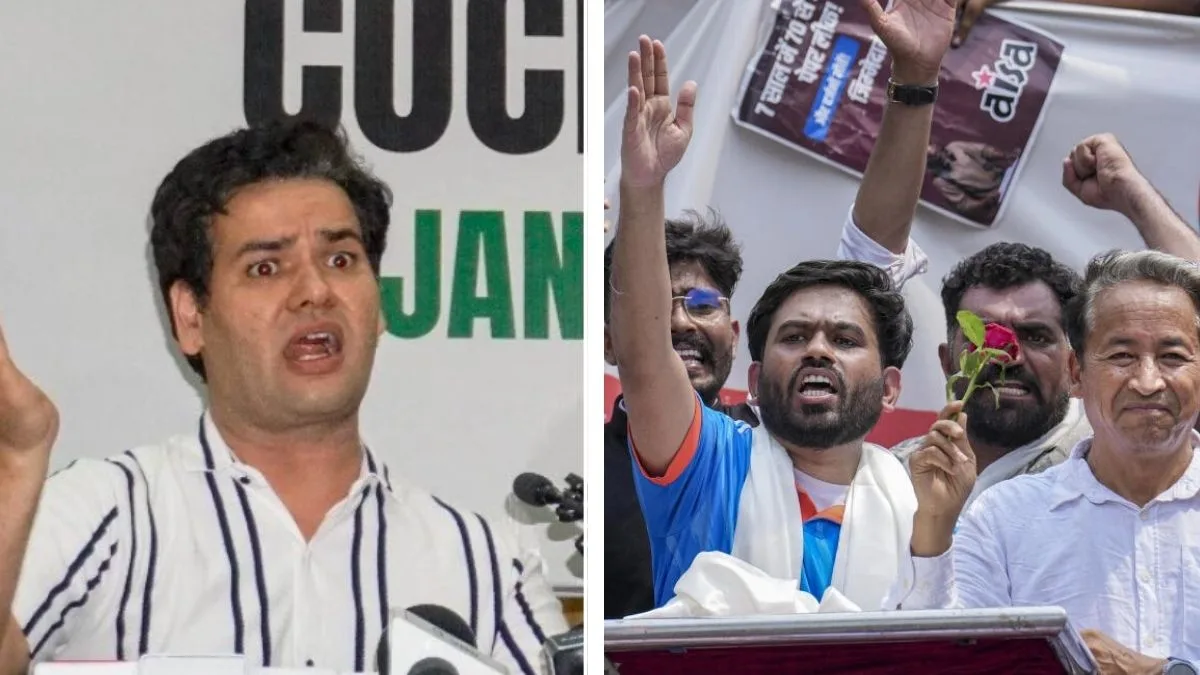
CJP draws red line: No end to protest without Dharmendra Pradhan’s resignation

Saurav Das said he and Sonam Wangchuk had appealed for calm amid concerns that outside elements could attempt to derail the agitation.

Statesman News Service | New Delhi |

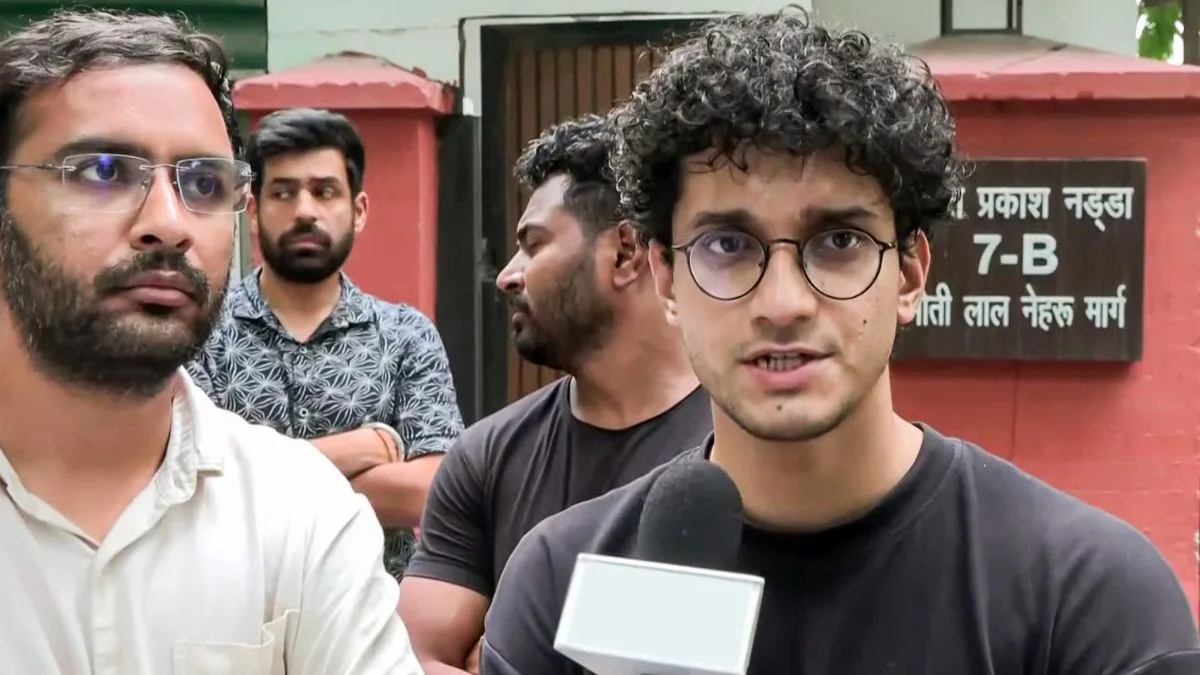
The Cockroach Janta Party (CJP) on Wednesday said its agitation over the NEET-UG paper leak would continue until Education Minister Dharmendra Pradhan resigned, describing the demand as “non-negotiable”.

CJP chief spokesperson Saurav Das said there could be no compromise on Pradhan’s removal, even as the organisation appealed to protesters to keep the agitation peaceful.

“Dharmendra Pradhan’s resignation is non-negotiable. Without this, the protest will continue. It will continue for as long as it has to,” Das said.

CJP appeals for peaceful protest

Das said he had spoken to Sonam Wangchuk several times during the day and both agreed that the demonstrations must remain peaceful.

“I spoke with Sonam Wangchuk several times today. The conclusion was that this protest should remain peaceful. He has also publicly appealed to all protesters to maintain peace and conduct this protest in the right manner,” he said.

Das alleged that “anti-social elements” had infiltrated protests in the past and created disturbances for which peaceful demonstrators were later blamed.

He said the movement must guard against any attempt to derail the agitation.

Das targets Nadda over protest remarks

The CJP spokesperson also criticised JP Nadda following his press conference on the paper leak controversy.

“JP Nadda should be ashamed. People have been sitting here for over 30 days. He is the one doing the politics,” Das said.

Nadda, however, called for the paper leak issue to be discussed in Parliament rather than turned into a political confrontation.

He said the government was ready for a detailed discussion on the NEET-UG controversy, including the causes of paper leaks, those involved and the steps taken by the Centre.

“We should move beyond blame and counter-allegations and discuss this. The best medium for discussion is Parliament, and we are ready for that discussion,” Nadda said.

He added that lawmakers should examine how paper leaks could be prevented and how the interests of millions of students could be protected.

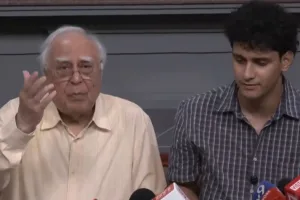
Ex-CJP spokesperson Vijeta Dahiya opens up about being sacked by Abhijeet Dipke over viral burger video

Dahiya said that he defended Abhijeet when his Kachori video went viral on social media but the CJP founder sacked him for having a burger.

Statesman News Service | New Delhi |

Vijeta Dahiya, the former Cockroach Janta Party (CJP) spokesperson, on Wednesday opened up about how he was sacked by CJP founder Abhijeet Dipke over his viral burger video.

In a video message, Dahiya said that he was getting ready to go to Jantar Mantar when he received a call from Abhijeet Dipke.

“I thought he would ask me how I was doing after the assault… However, Abhijeet called me and said I don’t need to come to Jantar Mantar…,” he said.

When Dahiya tried to explain to Dipke, he was shunned by the CJP leader, who was also on the call, saying that the burger video had gone viral and that it would be better for the movement if he resigned.

Dahiya said that he defended Abhijeet when his Kachori video went viral on social media but the CJP founder sacked him for having a burger.

“I stood behind Dipke even when people were questioning him for being on a truck during the Parliament march while students were being lathicharged by the police…,” he said.

Dahiya was sacked by CJP over “deeply insensitive” conduct after a video of him having a burger during CJP’s Parliament march went viral on social media.

“We strongly condemn the deeply insensitive actions of our spokesperson Vijeta Dahiya, whose videos surfaced while peaceful protesters and our team were facing brutal police violence. Such conduct is unacceptable, shows a complete lack of judgment, and is wholly inconsistent with the values and principles of our movement. In response, we are removing Vijeta Dahiya as spokesperson of the Cockroach Janta Party and relieving him of all official duties,” the CJP said.

Dahiya was also heckled by some of the protesters who confronted him during his visit to a local eatery.

A video of the alleged assault went viral on social media. The video shows Dahiya being heckled by some men, who questioned why the CJP leader was not at the protest when protesters were facing a police crackdown.

One of the individuals who also recorded the video is heard asking Dahiya why he was at the eatery while other protesters were braving the rain and facing police crackdown at Jantar Mantar.

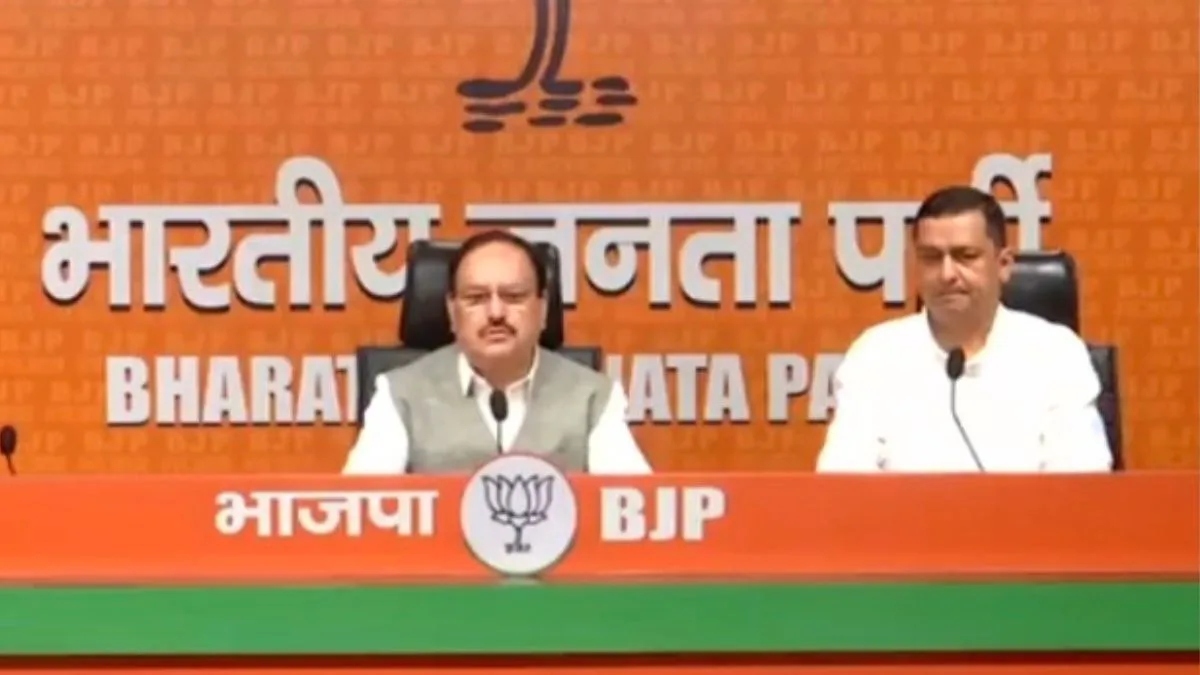
JP Nadda hits back at Rahul Gandhi over paper leak claims, cites similar cases in Opposition-ruled states

Nadda said that the Congress leader was being selective in raising the issue of paper leaks.

Statesman News Service | New Delhi |

Union Health Minister JP Nadda on Wednesday hit back at Congress MP Rahul Gandhi over the latter’s claims on paper leaks, accusing him of using student issues to gain political mileage.

Addressing a press conference shortly after Rahul Gandhi accused the government of failing students, Nadda said that the Congress leader was being selective in raising the issue of paper leaks.

The Union Minister cited alleged incidents of paper leaks in several states, and said the Opposition was using student issues to gain political mileage instead of focusing on their welfare.

He further highlighted paper leak incidents in Jammu and Kashmir, Himachal Pradesh, Jharkhand, Telangana, Tamil Nadu, West Bengal, Punjab, Kerala and Karnataka, and questioned why Rahul Gandhi had not raised such cases in Congress and Opposition-ruled states.

“If I talk about the paper leak in the Service Selection Board examination in Jammu and Kashmir, where the government is of the Congress and the National Conference. Similarly, in Himachal Pradesh, the paper leak happened in Himachal Pradesh School Examination Board where the government is of Congress. Similarly, in Jharkhand, Hindi and Science papers were leaked in JAC, where the government is of the Congress and Jharkhand Mukti Morcha. In Telangana, the language paper of Intermediate was leaked and there too we know that the government is supported by Congress and CPI. In Telangana, the language paper was leaked in SSC and there too the government is supported by the Congress Party and CPI. In Tamil Nadu, the paper leak happened in the B.Ed course paper of what we call the Tamil Nadu Teachers Education University Board; there was an opposition government there too at that time. In West Bengal, the recruitment exam paper of Police Constable was leaked,” Nadda said.

“There was a TMC government there at that time. In Punjab, the Punjab Subordinate Service Selection Board experienced paper leaks and malpractices in the Group B examination. Similarly, in Keralam, irregularities occurred in 26 PSC exam papers. In Karnataka, where the Congress government is, there was a paper leak in the Preparatory Board exam. The PUC paper was leaked. This is a fairly long list, which we’ll want to discuss whenever it’s time. I’d like to ask the LoP, Rahul Gandhi, why you are so selective? Why haven’t you discussed the UPA and UPA-supported governments? Why have you distanced yourself from them? This clearly shows that your objective isn’t the welfare of students. Your objective is to improve education, improve the quality of education, and ensure justice for students. You’re not interested in this. You want to gain political mileage from student issues and demands. You want to make political gains, which is unfortunate,” he said.

What Rahul Gandhi said on paper leaks

Earlier in the day, Congress MP Rahul Gandhi slammed police action on protesters over their demands about issues in the education sector and claimed that 152 paper leaks occurred in the last decade, affecting 7.5 crore students and their families.

Gandhi said that Dharmendra Pradhan has “failed as an Education Minister” and “has literally destroyed India’s biggest asset”.

He also said that the Congress fully supports the demand for his resignation, while also demanding accountability for police action against protestors during their ‘Sansad Chalo’ march on July 20.

‘Govt examining Rahul Gandhi’s claims’

Nadda said that the government was examining Rahul Gandhi’s claims about around 150 paper leaks and would respond to every point, placing the facts before the people and the country with complete transparency.

“I also want to point out that at 4 pm today, the Leader of the Opposition in Lok Sabha, Rahul Gandhi, made a presentation in which he referred to around 150 paper leaks. The matter is under examination, and as a responsible government, we will certainly respond to every point. We will place the facts before the people and the country with complete transparency. However, I would like to share some preliminary observations that have come to my attention and that I have noted down,” Nadda said.

Govt ready for detailed discussions on paper leaks in Parliament

Meanwhile, Nadda reiterated that the government was ready for a detailed discussion on paper leaks in Parliament for a duration as long as the Opposition wants.

“We have wanted it (paper leaks) to be discussed in Parliament. Short duration discussion, long duration discussion, in the Business Advisory Committee, you decide how much time you want to take. You can take 12 hours, you can take 18 hours. In the Rajya Sabha, as the leader of the house, I have always believed that we are ready for discussion for whatever number of hours the opposition decides. The government is ready for discussion and the opposition should keep this in mind and should not change the goal post,” Nadda said.
“We should think about how we can solve this problem and the Parliament is the most appropriate forum where we can think about it deeply. The opposition should decide the duration and every aspect should be discussed in it and we should come up with a concrete policy. Children are ours, yours, and the future of the country. It is our responsibility to care for the future of the country. This responsibility includes the government as well as the opposition. Therefore, I urge the opposition to fulfill its responsibility, and we should all work together to address this issue and move forward toward a lasting solution,” he added.

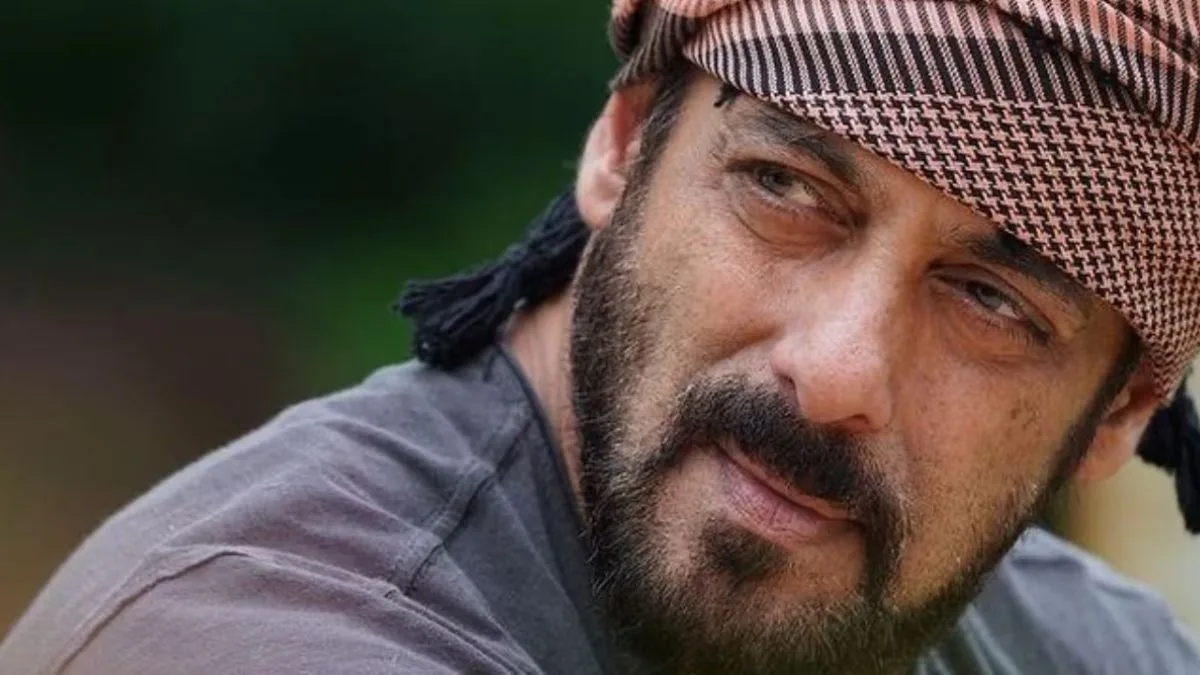
‘Credit should only go to the students of our country’: Salman Khan pens long note on paper leak protests turning violent

A Bollywood star’s reaction to a nationwide student movement, in his own words. Salman Khan writes about the protests, the violence, and what he hopes comes next. Here’s what he had to say.

Statesman News Service | New Delhi |

Bollywood star Salman Khan has finally spoken up on the nationwide student protests over exam paper leaks. The actor took to social media with a lengthy post expressing solidarity with protesting students while urging that the issue not be turned into a political battle.

In his post, Salman Khan called the movement peaceful and said he felt sad that it turned violent at some point. He extended sympathy to students and families who were hurt during the protests.

Also Read: Aamir Khan’s nephew Imran Khan joins CJP protest in Mumbai; viral video shows him marching with students

The actor praised young Indians for uniting over the paper leak issue and credited parents for backing their children. He described the protest as courageous and said this generation is driven towards building a stronger, more educated India.

Salman Khan also made a clear appeal. He said this issue is between students and the educational system, and should not be hijacked politically. He said credit should go only to the students. Also, he added that he hopes the government will support the cause and strengthen the education system, calling it a win-win situation. He ended the post with a wish for education to become as trendy and aspirational as fashion, so that India turns into a global hub for learning.

Background of the protests

Salman Khan’s post comes amid growing unrest linked to the alleged NEET-UG paper leak. Protests have spread from Delhi to smaller towns and cities across the country in recent days.

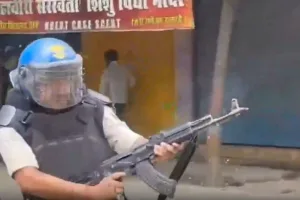
Trouble intensified after the Cockroach Janta Party’s Chalo Sansad march, where police used force on protesters marching toward Parliament. Delhi Police fired tear gas and used batons to stop thousands of students from marching toward Parliament. The protesters have been demanding the resignation of Union Education Minister Dharmendra Pradhan.

Amnesty International raised concerns over the police response, calling it excessive force against a largely peaceful crowd. Opposition leader Rahul Gandhi criticised the government over the crackdown and repeated his demand for Pradhan’s resignation.

The anger has since spread far beyond Delhi. Students have taken to the streets in Shimla, Itanagar, Goa, Kerala’s Thrissur, Mumbai, Bengaluru, Kolkata and even Ladakh. Political parties have also joined protests in cities like Chandigarh and Hyderabad.

Officials have responded differently across states. In Maharashtra, Chief Minister Devendra Fadnavis accused opposition parties of hijacking the protests for political gain. He maintained that authorised, peaceful protests would be allowed but warned against violence.

BPCL Reinforces India’s Energy Security Amid a Challenging Global Environment

BPCL strengthened national energy security by maintaining seamless operations across its refining, marketing, and distribution network.

Statesman News Service | New Delhi |

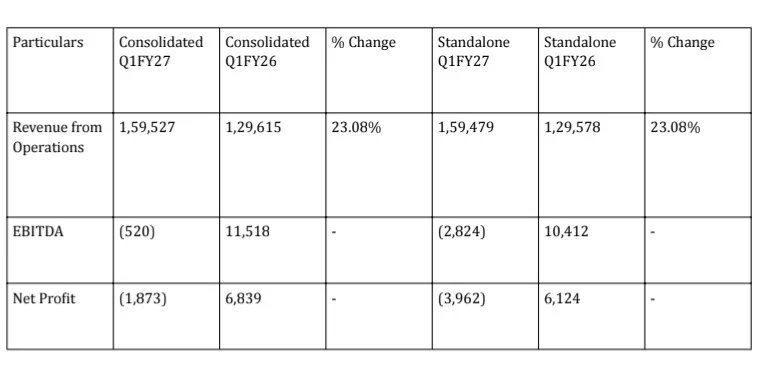
Bharat Petroleum Corporation Limited (BPCL), a Fortune Global 500 company and a Maharatna PSU, announced its financial results for the quarter ended June 30, 2026. Despite geopolitical uncertainty and volatility in global energy markets, BPCL maintained its commitment to ensuring uninterrupted energy supply nationwide.

BPCL strengthened national energy security by maintaining seamless operations across its refining, marketing, and distribution network.

Through a resilient supply chain and disciplined execution, the company ensured uninterrupted availability of petroleum products in urban, industrial, and rural markets.

The company continued to invest in refining and marketing infrastructure, pipeline connectivity, city gas distribution, digital capabilities, and emerging energy businesses.

BPCL also accelerated technology-driven initiatives in supply chain management, retail operations, and customer engagement to deliver reliable and efficient energy solutions.

During the quarter, BPCL optimized product placement nationwide using advanced planning systems, digital monitoring tools, and real-time supply chain coordination. These measures enabled effective responses to changing demand, operational continuity, and reliable product availability in a dynamic global environment.

Key Highlights – Q1 FY2026-27

  • Refinery Throughput: 10.15 MMT, with capacity utilisation of 115%
  • Domestic Market Sales: 13.62 MMT
  • Continued investments in infrastructure, supply chain resilience and digital transformation
  • Ensured uninterrupted fuel supplies across the country

Q1 FY27 FINANCIAL HIGHLIGHTS

Marathas will march to Delhi when time comes, Jarange assures students

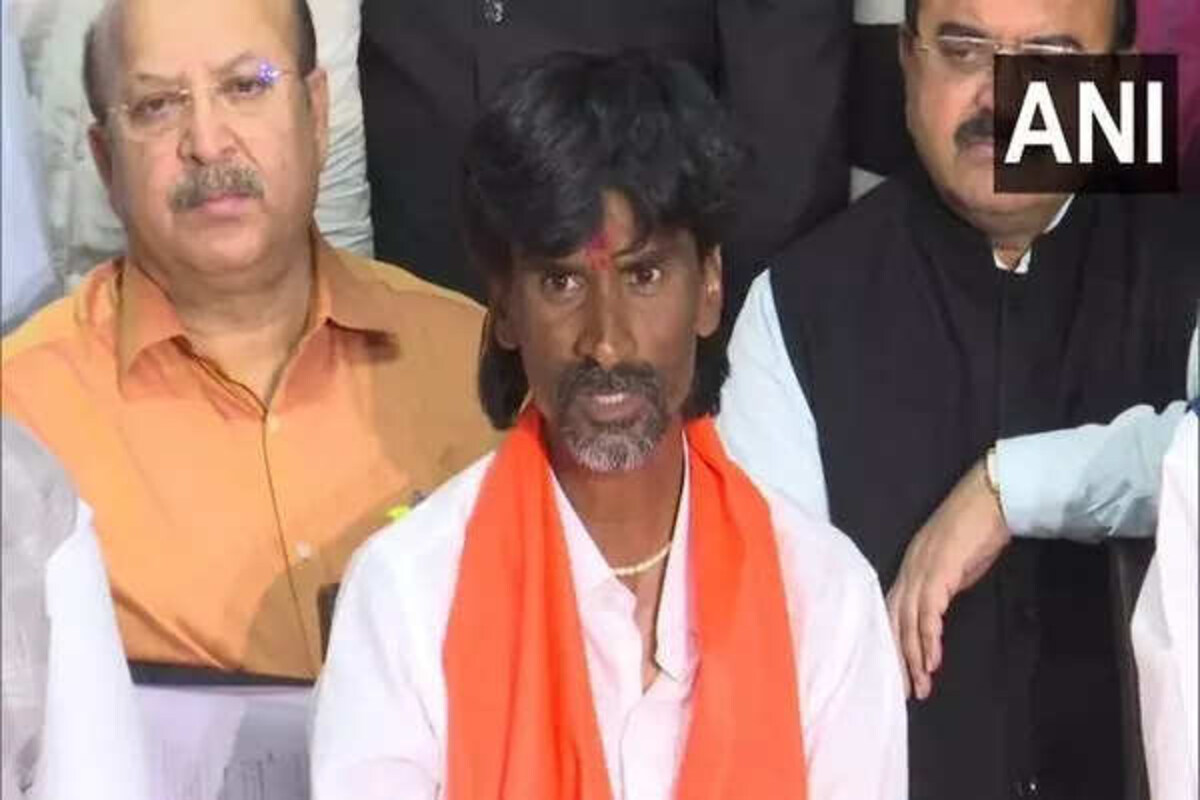
Maratha job reservation agitation leader Manoj Jarange Patil met students protesting in Jantar Mantar on Wednesday and assured them that if there is further police brutality against them, BJP leaders will find it difficult to move around in Maharashtra and that Marathas will march towards Delhi when the time is right.

Statesman News Service | Mumbai |

Maratha job reservation agitation leader Manoj Jarange Patil met students protesting in Jantar Mantar on Wednesday and assured them that if there is further police brutality against them, BJP leaders will find it difficult to move around in Maharashtra and that Marathas will march towards Delhi when the time is right.

Interacting with students at Jantar Mantar on Tuesday, Jarange urged them to stand firm in this fight. “Through the Maratha reservation agitation, we have shown how powerful a peaceful movement can be. We are also with you. However, do not leave the protest site under any circumstances. If you leave Jantar Mantar, the government will weaken your movement. Protest peacefully and do not leave this place no matter what happens,” he advised the protesters.

“When we Marathas protested in Antarwali Sarati village, the police attacked the children of the poor people, their mothers, girls and the elderly there too. They even used bullets. My only request to the students is that you should not leave this place. The entire country is behind you. If you go elsewhere, the government will break your protest. We have elected this government, but this is what they have done to our children. They do not realise that the students and the poor people have the power to bring their misrule to an end,” Jarange Patil said.

Jarange Patil assured the Jantar Mantar protestors that he and his Maratha community would stand by the students with all their might. “Students only need to raise a call, we will join this protest in large numbers. When the time comes, all Marathas will come to Delhi and we also have the strength to overthrow this government,” he said.

He met Abhijeet Dipke, founder of the Cockroach Janata Party, who translated his Marathi speech to Hindi at Jantar Mantar.

When Manoj Jarange stood up to speak, many students present there urged him to speak in Hindi, which prompted Jarange Patil to say, “I don’t know Hindi, that’s the problem. But if I speak Hindi, then you will forget your Hindi,” he said, as he and the protestors listening to him burst into laughter.

Kerala HC allows state to reconstitute Waqf Board, appoint non-Muslim interim members

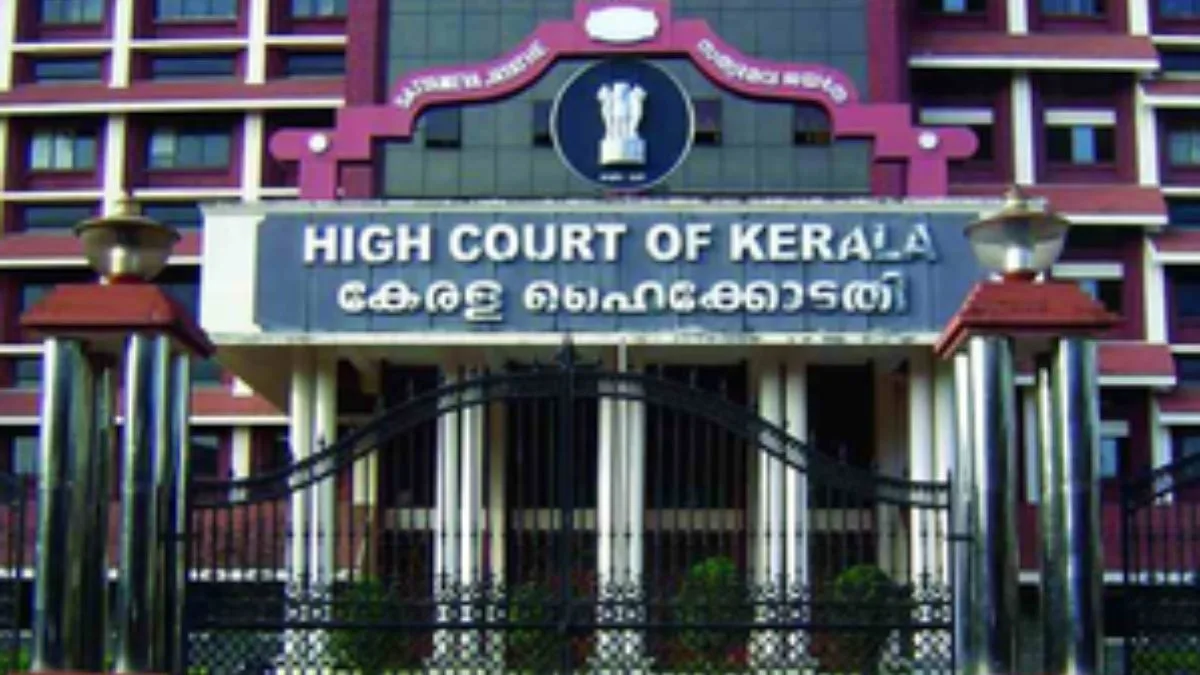
The Kerala High Court ruled on Wednesday that the state government is free to reconstitute the Kerala State Waqf Board and appoint statutorily mandated non-Muslim members to the board on an interim basis so that the Board can continue to function.

Statesman News Service | Kochi |

The Kerala High Court ruled on Wednesday that the state government is free to reconstitute the Kerala State Waqf Board and appoint statutorily mandated non-Muslim members to the board on an interim basis so that the Board can continue to function.

A Division Bench comprising Chief Justice Soumen Sen and Justice Syam Kumar V. M. made the oral observation while considering four public interest litigations challenging the constitution of the State Waqf Board, over non-inclusion of non-Muslim persons.
The Bench clarified that although it could not order the removal of current members, the state has the authority to fully reshuffle or reconstitute the Board if deemed necessary.
“We cannot say that the existing member has to go…For the time, you have to nominate two non-Muslims. The Board has to function. Your reconstitution may take some time. But for the time being, you appoint two non-Muslim members. You said that the state government is in the process of reconstituting the Board…No one has prevented you from reshuffling.

There is no order of preventing you from reshuffling. For the time being, till you reshuffle, you have to nominate non-muslim members. One Shia, one Bohra, whatever is there..For the time being, non-Muslim members are not there. So that has to be nominated by the government. If that nomination takes place, then the Board can function…Whether you’ll reconstitute or not, that is entirely your decision.

It has nothing to do with this. It is for you to find out, on a review, it has not been properly constituted, what is required to be done….It is your subjective satisfaction. Whatever the process, you have to complete it within a certain time. In the meantime, without prejudice to your contentions, you can appoint two non-Muslims,” the Court observed.

The Court also clarified that Waqf Board is not restrained from taking quasi-judicial decisions and that the same does not fall within policy decisions or incurring of capital expenditure.

“We have stopped the Waqf Board from incurring any capital expenditure or taking any major policy decisions. Of course, it can continue with the quasi-judicial function…Quasi judicial is not a capital expenditure or policy decision, .” the court said
On Tuesday,, the Supreme Court had deleted the High Court’s direction that the Board shall function under supervision of the government’s Joint Secretary/Additional Secretary. It, however, did not interfere with the direction that the Board shall not make any major decisions without permission of the Court.

The Court on Wednesday orally questioned the State over the delay in appointing non-Muslim as well as Shia and Bohra community members to the Board, observing that such appointments are mandated under the Waqf Act.

“Act requires two non-Muslims as well as Shia and Bohra. These have to be nominated by the State. So why you are deferring it?” the Court asked
The Advocate General Jaju Babu appearing for the state submitted that the Government was prepared to comply with Section 14 of the Waqf Act but faced practical difficulties because only two vacancies presently exist on the Board.

Odisha assures COVID preparedness

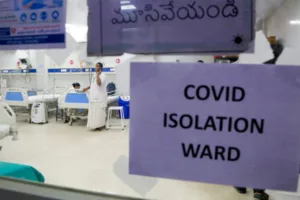
The Odisha Health and Family Welfare Department on Wednesday assured that the State is fully prepared to tackle any possible resurgence of COVID-19, while urging the public not to panic over recent reports on the disease.

Statesman News Service | Bhubaneswar |

The Odisha Health and Family Welfare Department on Wednesday assured that the State is fully prepared to tackle any possible resurgence of COVID-19, while urging the public not to panic over recent reports on the disease.

The department said independent assessments by the Integrated Disease Surveillance Programme (IDSP) and the Indian Council of Medical Research (ICMR), based on data shared by the Centre, indicate that the current level of COVID-19 activity remains very low.
It said regular disease surveillance and clinical monitoring are continuing in accordance with the protocols issued by the Union government.

A senior health official said Odisha has put in place all necessary preparedness and contingency measures and is maintaining close coordination with the Union Ministry of Health and Family Welfare to ensure a swift and effective response to any eventuality. The department reiterated that there is no cause for alarm and appealed to people to remain vigilant without panicking.

BJP and Congress in Rajasthan attempt to gherao each other’s headquarters; police use water cannons

In an unusual show of political street power in Jaipur, the ruling BJP and the Congress on Wednesday held protest marches to gherao each other’s state headquarters, forcing the police to use water cannons and mild force to prevent the protesters from advancing.

Statesman News Service | Jaipur |

In an unusual show of political street power in Jaipur, the ruling BJP and the Congress on Wednesday held protest marches to gherao each other’s state headquarters, forcing the police to use water cannons and mild force to prevent the protesters from advancing.

The ruling BJP was offended by the dharna led by Leader of the Opposition (LoP) in the Lok Sabha Rahul Gandhi outside the Prime Minister’s residence in New Delhi on Tuesday.

The saffron party was also upset over the Congress’ move to express solidarity with Rahul Gandhi by burning effigies of Prime Minister Narendra Modi in Jaipur and at several district headquarters on Tuesday evening.

Accordingly, the ruling BJP organised the march in response to the nationwide call given by the party leadership in New Delhi to lay siege to Congress offices on Wednesday morning. In response, the Congress also decided to hold a counter-march to the BJP state headquarters later in the afternoon.

A large number of BJP workers gathered at the party office, from where they began their march towards the Congress headquarters under the leadership of state BJP president Madan Rathore. They raised slogans in support of Prime Minister Narendra Modi, including “Narendra Modi Zindabad”, and against Rahul Gandhi, chanting “Rahul Gandhi Sharm Karo”.

The BJP protesters were stopped at Shaheed Smarak, in front of the Jaipur Police Commissionerate. While some protesters attempted to move ahead, the police used water cannons to stop them. This triggered an immediate reaction from the Congress, as a large number of party leaders and workers, including several MLAs, assembled at the party headquarters to launch a retaliatory march.

The Congress march, led by former Chief Minister Ashok Gehlot and Rajasthan Congress president Govind Singh Dotasra, began later in the afternoon. The police had erected heavy barricades at three locations to prevent any direct confrontation between the two rival parties.

The Congress workers raised slogans against Prime Minister Narendra Modi and Union Education Minister Dharmendra Pradhan. They crossed the first barricade near the party office but were stopped at the second barricade erected by the police near the Shaheed Smarak roundabout. As they attempted to push through, the police used mild force and water cannons to disperse them.

Former Chief Minister Ashok Gehlot alleged that the Congress was holding a peaceful demonstration and raising democratic slogans, but the police, acting under pressure from the ruling party, unnecessarily used force and water cannons.

Rajasthan Congress president Govind Singh Dotasra said, “The police discriminated against our workers and acted atrociously towards us. The government’s high-handed behaviour against the people and the Congress will cost the BJP dearly. The party will lose power in the state in the 2028 Assembly elections.”