Logo

Best left in the drawer?

A government report that spends more than a decade in a drawer tells a story regardless of what is written on its pages.

Statesman News Service | New Delhi |

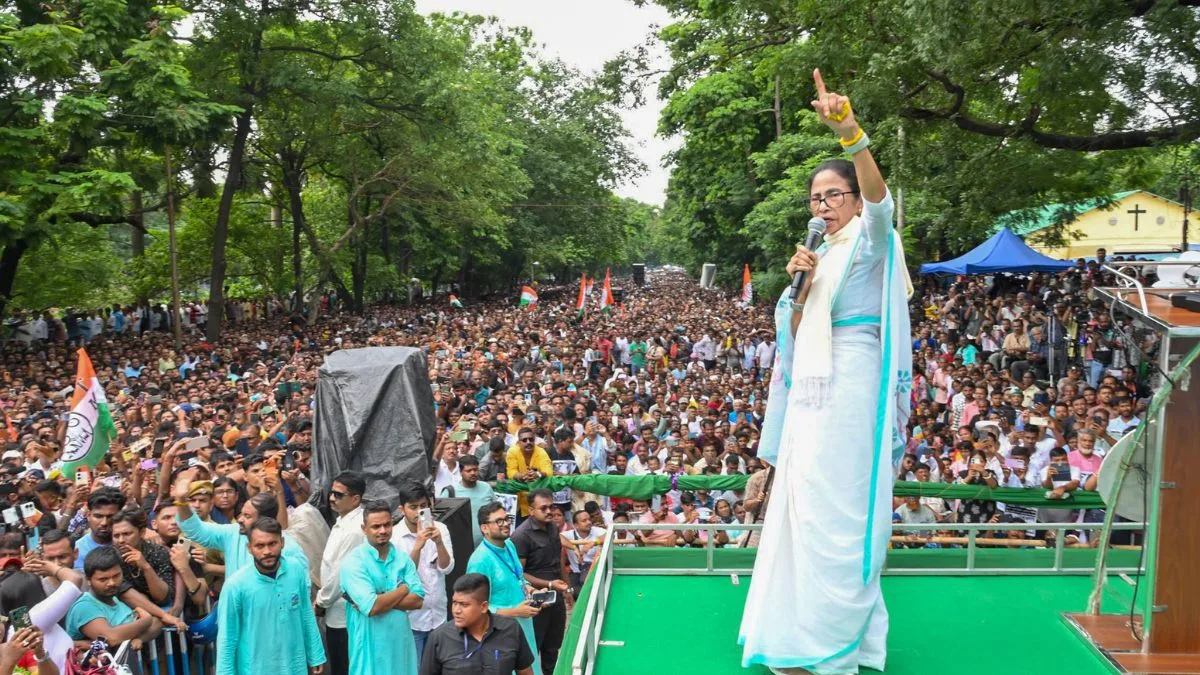
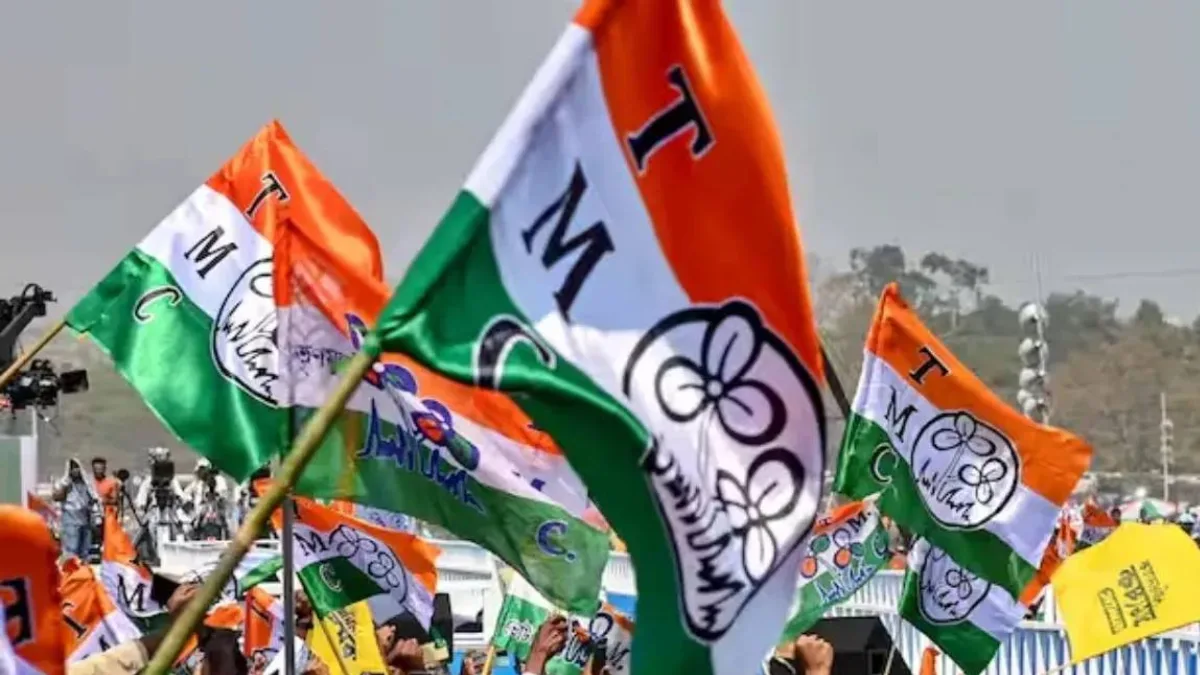
A government report that spends more than a decade in a drawer tells a story regardless of what is written on its pages. In Bengal, the story of the Justice Chatterjee Commission’s report is not really about the firing of 21 July 1993 – that account has been public, in substance, since the commission concluded its work in 2014. The real story is about what happens to inconvenient documents in Indian state administration, and about a political establishment’s calculated relationship with its own archives.

Consider the timeline. Mamata Banerjee’s government constituted the commission in 2011, within months of taking power, fulfilling a pre-election promise that was central to her party’s founding narrative. The commission worked for three years and delivered its findings in 2014. Under the Commission of Inquiry Act, 1952, the report was legally required to be placed before the Assembly, alongside the government’s action-taken response within six months. That deadline came and went.

It came and went again the following year, and the year after that, through eleven subsequent Martyrs’ Day observances, each one drawing hundreds of thousands of TMC workers to hear Banerjee speak of justice for the fallen – even as the state’s own commissioned account of that injustice remained unpublished by her administration. Bengal, it turns out, is no stranger to this pattern. A 2018 audit found the state had spent roughly Rs 32.5 crore across thirteen commissions of inquiry into politically sensitive incidents, with only three reports ever tabled in the Assembly.

Among the untabled was the Shyamal Kumar Sen commission report on the Saradha ponzi scheme, in which TMC figures were named as key accused, submitted in 2014 and never placed before the House either. The pattern suggests something structural rather than incidental – a government apparatus in which commissions serve a useful purpose at the moment of their announcement, generating headlines and satisfying demands for accountability, and a far less useful purpose once their findings are ready to be read. This is where the sharper charge against TMC gains its force.

It is one thing for a report to be delayed by bureaucratic friction. It is another for an entire category of politically sensitive reports – on a scam implicating the ruling party’s own leaders, and on the founding tragedy of the ruling party’s own political identity – to share the same fate of indefinite non-tabling, year after year, election after election, while the government that shelved them continued to campaign on the moral authority those very documents were meant to formalize. Whether that pattern reflects deliberate strategy or a permissive culture of institutional neglect that nonetheless serves the ruling party’s convenience is a matter for voters and historians to weigh – but the pattern itself is documented, not alleged.

Chief Minister Suvendu Adhikari’s government now has every incentive to frame its release of the July 21 report as an act of transparency his predecessor withheld for eleven years, and there is a straightforward reading in which that framing is simply accurate: a legal obligation went unmet for over a decade, and a new government met it. But governments that table old reports belonging to their predecessors are rarely acting from pure institutional conscience, and it would be naive to treat this release as anything other than what it plainly also is – a calculated strike delivered in the exact week it would cause maximum discomfort to a rival preparing her most important annual address.

TMC’s defenders will point out, correctly, that the underlying findings of the report do not accuse Banerjee or her party of the firing itself; that tragedy occurred under a Left Front government seven years before TMC’s founding. They may also argue that a government juggling thousands of files across fifteen years cannot be expected to treat every commission’s report as an urgent priority, and that selective outrage over one unpublished document, out of thirteen commissions with similarly unpublished findings, says more about the current government’s political timing than about any unique culpability on TMC’s part. That argument has some force, and a fair account of this episode should register it.

But it does not fully answer the more specific question the tabling has now placed on Bengal’s public record: why a party whose entire political identity rests on public commemoration of these thirteen deaths chose, for eleven consecutive years, not to make public the one official document that formally examined them. Institutional inertia is a real phenomenon in Indian administration, and it is possible that is all this was.

It is also possible, and Adhikari’s government is plainly betting the public will conclude that a report is easier to leave in a drawer when its publication would complicate the story a government prefers to tell about itself. Bengal’s voters will decide which explanation they find more persuasive. What is not in dispute is the document itself, now finally before the Assembly it was always legally required to reach – eleven years, and one change of government, later than the law demanded.

(THE WRITER IS A RETIRED CIVIL SERVANT.)
KC Venugopal moves adjournment motion over NEET row, alleges 152 paper leaks and police brutality

The Opposition has stepped up pressure on the Centre over the NEET controversy, demanding accountability for alleged exam paper leaks and action against those responsible.

Statesman News Service | New Delhi |

As the Monsoon Session of Parliament entered its fourth day, confrontation between the government and the Opposition intensified over examination paper leak issue. Congress MP KC Venugopal submitted an Adjournment Motion notice in the Lok Sabha, asking the House to suspend its regular business and hold an urgent discussion on what he described as a “severe and ongoing crisis” in India’s examination system.

The notice also demanded a debate on the police action against students who protested at Jantar Mantar in New Delhi on July 20.

Also Read: ‘You protected every person responsible’: Rahul Gandhi hits back at PM Modi over NEET leak, demands Pradhan’s sacking

Congress raises questions over exam system

In his notice, Venugopal alleged that India has witnessed 152 question paper leak incidents involving major competitive examinations, including NEET. He claimed that the repeated failures of the examination system have deeply affected students across the country.

The Congress leader also referred to the emotional impact of the controversy, alleging that nearly 12 students died by suicide after losing hope in the examination process. He argued that these incidents reflected larger crisis in the country’s education system that required immediate parliamentary attention.

Allegations against Education Minister

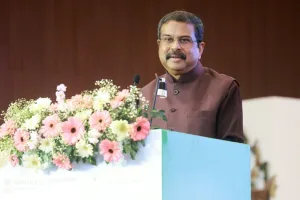
Venugopal strongly criticised Union Education Minister Dharmendra Pradhan, accusing him of failing to ensure accountability despite repeated examination controversies.

According to the notice, no meaningful arrests or criminal action have been taken against those allegedly responsible for the paper leaks, including coaching syndicates, officials, or other accused individuals.

The notice stated that Pradhan continues to remain in office despite presiding over an examination system that, according to the Congress, has repeatedly failed students. It argued that this violates the principle of ministerial responsibility and called for accountability.

Protest at Jantar Mantar linked to paper leak issue

The motion also connected the examination controversy with the July 20 protest organised during the CJP Parliament march in the national capital.

Venugopal alleged that students and young people who had gathered peacefully to demand accountability were subjected to police action. The notice claimed that protesters faced lathi charges, tear gas and suppression by the Delhi Police despite holding a peaceful demonstration.

It further alleged that Members of Parliament from the Congress and other Opposition parties who later staged a peaceful protest were also met with police force. According to the notice, the Leader of the Opposition and several MPs were attacked by Delhi Police personnel and dragged across the road.

Three key demands placed before the house

The Congress leader urged that the Lok Sabha be adjourned so that the Education Minister could make a suo motu statement explaining the alleged 152 paper leak cases and the reported lack of arrests in the matter.

The notice also placed three major demands before the government:

– Dharmendra Pradhan should accept moral and constitutional responsibility and resign from his post.

– Parliament should hold a full discussion on the NEET and CBSE issues, examination-related student suicides, and the broader education crisis.

– All police cases filed against students and youth who participated in the peaceful July 20 protest should be withdrawn.

Parliament deadlock continues

The latest notice comes as Parliament remains locked in a political standoff over the NEET-UG paper leak issue. Both the Lok Sabha and the Rajya Sabha have seen repeated adjournments this week as the INDIA bloc continues to demand the resignation of Education Minister Dharmendra Pradhan before any discussion takes place.

The government has maintained that it is prepared for a debate on the issue and has accused the Opposition of attaching fresh conditions. However, Rajya Sabha Leader of the Opposition Mallikarjun Kharge has insisted that Pradhan must resign first to ensure fair and meaningful discussion in Parliament.

The need for clarity

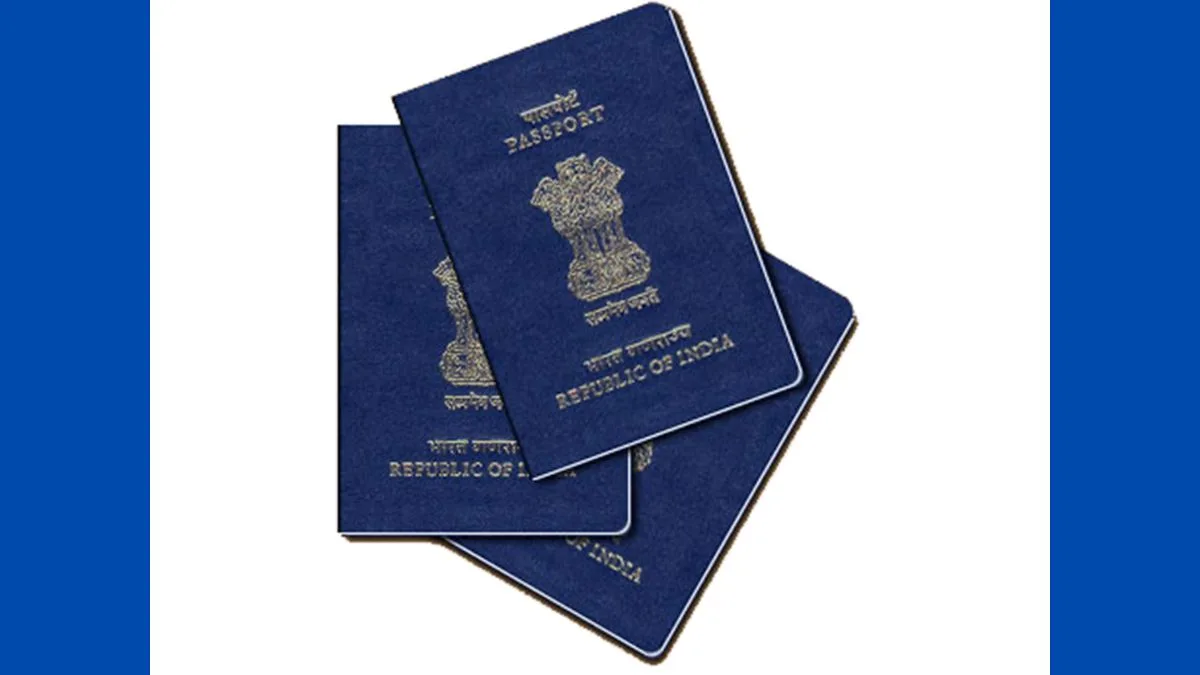
The public debate about whether an Indian passport proves citizenship has brought back an important legal question.

Thajaswini CB and Pasapala Syed Mustaq | New Delhi |

The public debate about whether an Indian passport proves citizenship has brought back an important legal question. This issue matters not only during controversies but also in everyday life. Many people assume that an official document confirms their identity without any doubt. The Constitution established the basis for Indian citizenship in Part II, especially through Article 5 and related provisions. When it was adopted, citizenship was defined by constitutional criteria.

During the debates in the Constituent Assembly, it was clear that anyone born in India would be considered a citizen, and Parliament was empowered to enact laws as needed. In this context, the Citizenship Act, 1955 was created to cover citizenship by birth, descent, registration, and naturalisation. Over the years, many citizens have come to think that documents like passports, PAN cards, voter IDs, and sometimes Aadhaar are enough to prove their identity as Indian citizens, without considering how the law actually works today. Undoubtedly, a passport is an important document issued by the government.

It is issued only after careful examination and generally indicates that the holder has the right to travel abroad as a citizen of India. However, the legal system does not regard it as conclusive proof of citizenship in every situation. Although this distinction may seem technical, it is crucial. Citizenship, identity, residence, and travel are interconnected concepts, but they are not the same. This is why the debate cannot be simplified into a slogan.

The Ministry of External Affairs has confirmed that a passport cannot serve as definitive proof of citizenship; it is only a travel document for movement between India and other countries. This view has its basis in the Passports Act, 1967. However, issuing a passport usually assumes Indian citizenship, which makes the practice seem self-contradictory at first glance. The challenge is that the law treats a passport as a travel document, not as a final certificate of citizenship. This difference is why public understanding remains split on the issue.

Documents like Aadhaar, PAN, and voter identity cards are important in their own aspects, but they serve different uses and purposes. Aadhaar is an identity document for residents. PAN mainly serves as a tax identification number, and a voter ID enables a person to participate in elections. However, none of these documents alone determines legal citizenship in every situation. This distinction has been recognised in official statements and judicial reasoning.

The Gauhati High Court in its recent judgement in Aminul Hoque vs Union of India &Ors held that neither the PAN Card nor the Voter ID serves as a proof of citizenship; The Bombay High Court in Babu Ashraf Ruf Sardar vs State of Maharastra also opined on similar lines that an Aadhar Card, PAN card, or a Voter ID cannot be considered sufficient enough to prove citizenship in India. The Unique Identification Authority of India (UIDAI) had stated in its Press Release dated 18.02.2020 that the Aadhaar Card has nothing to do with confirming citizenship and cancelling the same is in no way related to the nationality of any resident.

Even in the Special Intensive Revision Rules, an Aadhaar Card was made optional to be produced as an identity. At the same time, it would be unfair to ignore the practical reality faced by many citizens. In India, a large number of people still do not possess complete documents going back to birth. Records may be missing, schools may not have been attended, municipal registration may have been delayed, etc. For such persons, the law’s insistence on proof can sometimes feel distant from lived reality. What is needed now is not alarm, but lucidity.

The public should not be left to guess whether a passport proves citizenship, whether Aadhaar does, or whether some combination of records is required. If the present framework is not sufficiently clear for ordinary citizens, then Parliament may consider whether further legislative precision is necessary. In a mature democracy, identity should not become a source of anxiety for honest citizens. The law must be firm enough to prevent misuse, but clear enough to protect the ordinary person who simply wishes to prove who he or she is.

Countries like the United States of America, the United Kingdom, Australia and European Countries treat a passport as the conclusive proof of citizenship for domestic employment. India need not muddle with this question, but needs an uncluttered and humane framework that respects both legal doctrine and the practical realities of life. Therefore, there must be certitude of Citizenship in India, with clear documentary rules and official records that work together to serve the citizen rather than confounding him. A passport may accompany a person, but citizenship must rest on a clearer legal foundation.

(THE WRITERS ARE ADVOCATES.)
‘You protected every person responsible’: Rahul Gandhi hits back at PM Modi over NEET leak, demands Pradhan’s sacking

Congress leaders intensified their offensive during the Monsoon Session, arguing that accountability must extend beyond legal action against those accused in the alleged exam paper leak.

Statesman News Service | New Delhi |

Congress leader Rahul Gandhi on Thursday sharpened his attack on the Centre over the alleged NEET paper leak, saying the government’s announcement of fast-track courts would not address what he described as the failure of the country’s education system.

His remarks came shortly after Prime Minister Narendra Modi announced that fast-track courts would be set up to ensure swift punishment for those involved in paper leaks.

Responding to the Prime Minister’s post on X, the Leader of Opposition in the Lok Sabha accused the government of protecting those responsible for the alleged lapses.

“You are the one who has harmed the future of our youth the most. You allowed and encouraged the total capture and destruction of our education system – and protected every person responsible for it,” Gandhi said.

Reiterating the Congress’ position, he renewed the demand for Union Education Minister Dharmendra Pradhan’s removal and an apology to students affected by the controversy.

Jairam Ramesh questions PM’s response

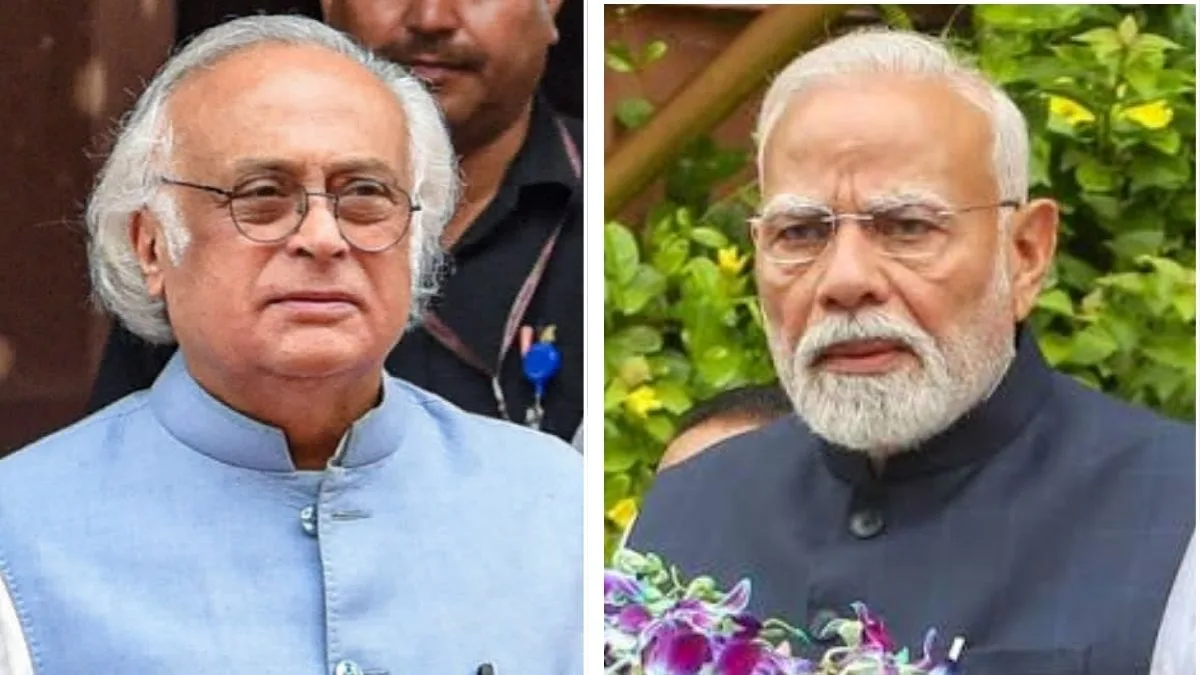
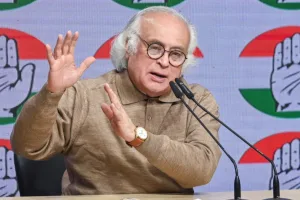
Congress general secretary Jairam Ramesh also criticised the Prime Minister, alleging that he had avoided addressing Parliament on the issue.

“The PM does not have the courage to stand up in Parliament, speak and engage in serious debate like all his predecessors did when the occasion demanded,” Ramesh wrote on X.

He claimed the Prime Minister’s social media post showed he was “shaken and rattled” by the protests over the alleged paper leak.

Congress MP Pramod Tiwari also questioned the government’s approach, arguing that legal action alone was insufficient. He asked why the minister in charge of the department where the alleged leaks occurred had not been held accountable.

PM announces fast-track courts

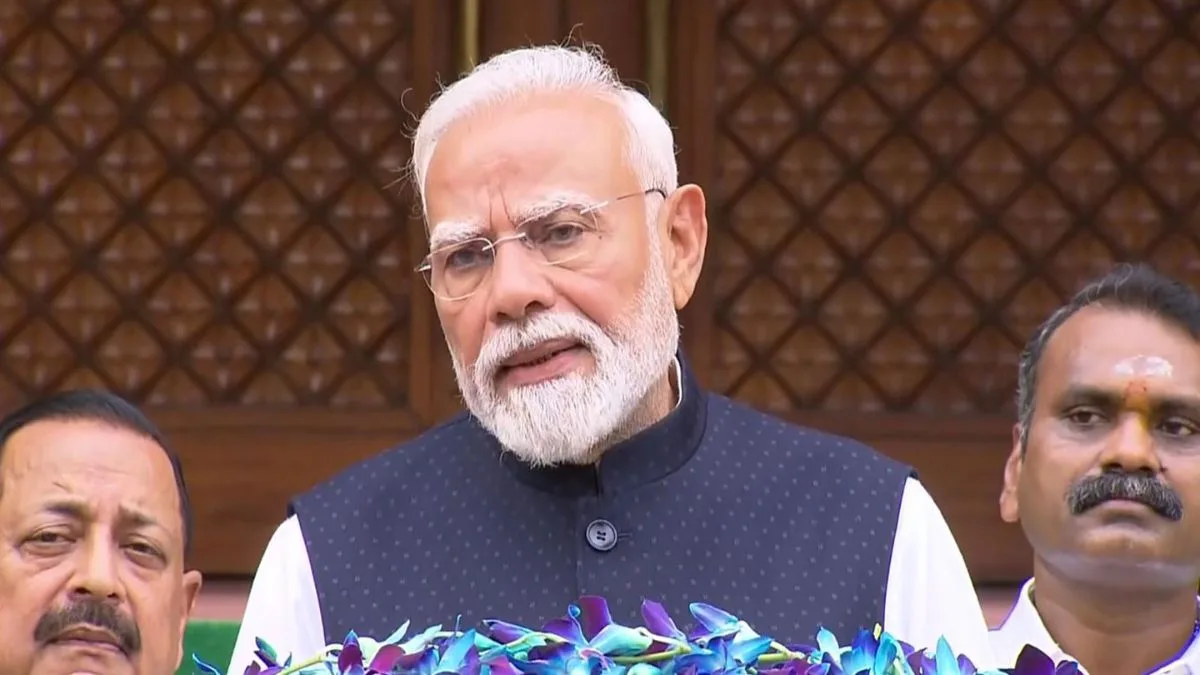
Earlier in the day, Prime Minister Modi announced that the government would establish fast-track courts to ensure swift and stringent punishment for those involved in paper leaks.

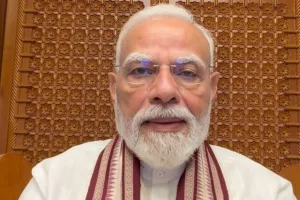
“Nothing is more important than the welfare and future of our youth,” the Prime Minister said on X.

He added that the government had directed the concerned authorities to take all necessary steps and said the move was part of a series of measures aimed at safeguarding students’ interests.

“Those who try to harm the future of our youth will not be spared,” he said.

Also Read: PM Modi announces fast-track courts for paper leak cases, says ‘those harming youth’s future won’t be spared’

Protests continue in Delhi

The political exchanges came as protests over the alleged NEET paper leak continued in the national capital.

Demonstrators gathered around Tolstoy Marg and Janpath yesterday, raising slogans against the BJP, the RSS and the Delhi Police. According to ANI, some protesters attempted to block traffic, threw water bottles onto the road and lay on the carriageway, leading to traffic disruptions.

A protester from Bihar told ANI he had been participating in demonstrations for nearly a month and would continue attending protests at Jantar Mantar until their demands were met, including the resignation of Union Education Minister Dharmendra Pradhan.

The issue is expected to remain a key flashpoint during the ongoing Monsoon Session of Parliament.

Jairam Ramesh targets PM Modi over NEET paper leak response on X, says ‘he lacks courage to stand in Parliament and speak’

The war of words over the NEET paper leak intensified after the Prime Minister announced fast-track courts, with Congress accusing the government of avoiding accountability and parliamentary scrutiny.

Statesman News Service | New Delhi |

The political fight over the NEET paper leak controversy grew sharper on Thursday after Prime Minister Narendra Modi announced the creation of fast-track courts to deal with those involved in exam paper leaks. While the Prime Minister said the move was aimed at protecting students, the Congress quickly questioned both the timing and the government’s approach.

The exchange comes as protests over the NEET paper leak continue in different parts of the country, with the issue becoming one of the biggest political debates surrounding education and student welfare.

PM announces fast-track courts for paper leak cases

In a post on X, Prime Minister Narendra Modi said the government would establish fast-track courts to ensure quick and strict punishment for those responsible for exam paper leaks.

He stressed that protecting the future of young people remains the government’s top priority.

“Nothing is more important than the welfare and future of our youth,” the Prime Minister wrote. He added that he had instructed the concerned authorities and officials to take all necessary steps to implement the decision.

According to PM Modi, the move is part of a broader effort to safeguard students’ interests. He also warned that anyone attempting to damage the future of India’s youth would face strict action and would not be spared.

Jairam Ramesh says PM avoiding parliamentary debate

Congress general secretary Jairam Ramesh strongly criticised the Prime Minister’s announcement, accusing him of avoiding a direct discussion on the issue in Parliament.

In a post on X, Ramesh said PM Modi “does not have the courage” to stand in Parliament and participate in a serious debate, unlike previous prime ministers who addressed major national concerns in the House.

He claimed that the social media post reflected pressure on the government rather than confidence.

According to Ramesh, the Prime Minister appeared “shaken and rattled” by the concerns being raised by students during the Cockroach Janta Party (CJP) protests at Jantar Mantar and other demonstrations taking place across the country.
He also used the slogan, “Vote Chori, Seat Chori, Chanda Chori, Exam Paper Chori… the list goes on and on,” while attacking government over multiple issues.

Jantar Mantar protest: ACP among police personnel injured in overnight violence; Special CP visits RML Hospital

Police said CCTV footage confirmed stone-pelting and vandalism during the protests, while 16 Delhi Metro stations remain closed amid heightened security across central Delhi.

Statesman News Service | New Delhi |

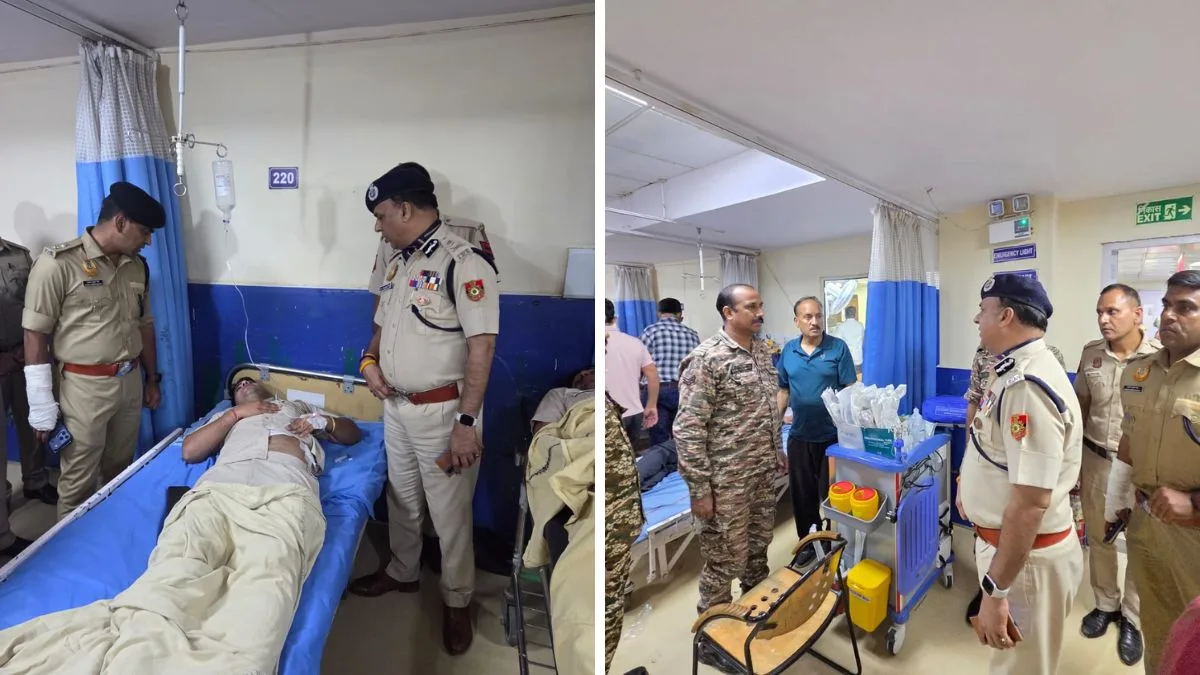
Fresh violence linked to the Cockroach Janta Party’s (CJP) protest in central Delhi left several police personnel injured, including an Assistant Commissioner of Police (ACP), prompting Special Commissioner of Police (Law and Order, Zone-I) Devesh Chandra Srivastava to visit the injured officers at Ram Manohar Lohia (RML) Hospital.

Delhi Police said the latest incident took place around 8.30 pm on Wednesday near Tolstoy Marg in Connaught Place, where a group allegedly pelted stones and bottles at security personnel deployed to maintain law and order.

ACP among injured in Connaught Place clash

Police said officers repeatedly appealed to protesters to remain peaceful, but a section of the crowd continued pelting stones. The Rapid Action Force (RAF) and Delhi Police then used limited force and fired tear gas shells to disperse the crowd.

ACP (Connaught Place) Vivek Bhagat was among those injured in the violence and was shifted to RML Hospital along with other injured personnel.

During the night, Special CP Devesh Chandra Srivastava met the injured officers at the hospital and enquired about their condition.

CCTV footage confirms stone-pelting, says police

Meanwhile, Delhi Police on Thursday confirmed the authenticity of CCTV footage circulating on social media that allegedly captured violence during the July 20 CJP protest.

According to police, the footage shows incidents of stone-pelting and vandalism, including damage to shops and a petrol pump during the demonstration.

Police said more than 118 personnel, including senior officers and women officers, have sustained injuries since the protests intensified. Around 60 protesters were also reported injured in the clashes.

Security tightened; 16 Metro stations remain closed

Security has been stepped up across central Delhi following the violence.

The Delhi Metro Rail Corporation (DMRC) closed 16 Metro stations from Thursday morning until further notice. These include Rajiv Chowk, Patel Chowk, Central Secretariat, Mandi House, ITO, Janpath, Lok Kalyan Marg and several others.

However, interchange facilities continue to operate at Rajiv Chowk, Mandi House and Central Secretariat.

16 Delhi Metro stations shut after Jantar Mantar protest violence; Rajiv Chowk, Central Secretariat among affected

Protests continue over NEET paper leak

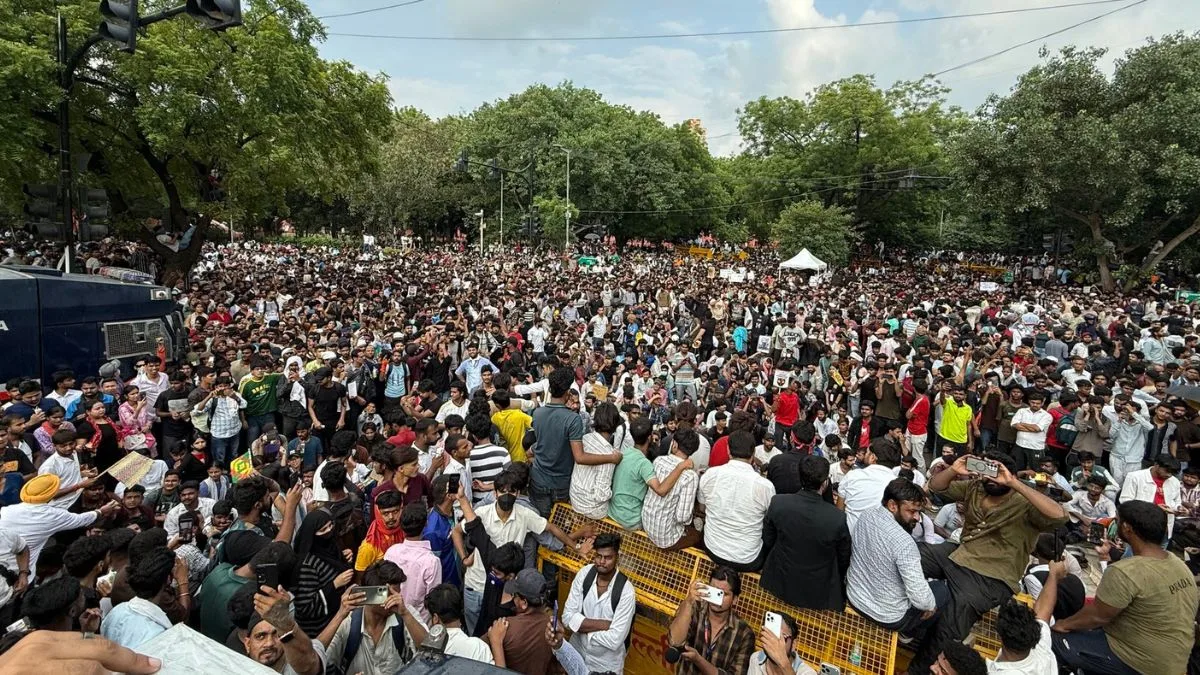
The demonstrations began at Jantar Mantar before protesters attempted to march towards Parliament, demanding the resignation of Union Education Minister Dharmendra Pradhan over the NEET-UG paper leak controversy and other examination-related issues.

The protests have triggered repeated confrontations between demonstrators and police, with both sides accusing each other of using excessive force.

CJP founder Abhijeet Dipke alleged that male police personnel assaulted women protesters during the crackdown, while opposition leaders also criticised the police action.

Separately, opposition MPs claimed they were stopped from meeting activist Sonam Wangchuk at Medanta Hospital, where he remains admitted during his hunger strike.

Delhi Police said investigations into the violence are underway and security arrangements have been strengthened to prevent further disturbances.

Kolkata Police book Trinamool organisers for alleged High Court order violations during July 21 rally

What was meant to be a tightly regulated political gathering has now turned into a legal controversy, with police alleging that court-imposed conditions were ignored.

Statesman News Service | Kolkata |

Kolkata Police have registered a suo motu case against the Mamata Banerjee-led faction of the Trinamool Congress (TMC), alleging that organisers failed to follow the Calcutta High Court’s directions during the party’s Martyrs’ Day rally held on July 21 at Cathedral Road near Birla Planetarium in central Kolkata.

The complaint was lodged at Hastings Police Station under the South Division of Kolkata Police. According to the police, the organisers violated conditions laid down by the Calcutta High Court while granting permission for the political gathering.

High Court had set clear conditions

Before allowing the rally earlier this month, the Calcutta High Court had imposed two important conditions. The court had limited the number of participants to 2,500 and directed that the event should take place only on one lane of Cathedral Road. The second lane was to remain open so that normal traffic could continue without interruption.

Police officials say these conditions were to ensure public convenience and avoid traffic congestion in the busy area.

Police say crowd exceeded approved limit

According to the complaint, the number of people attending the rally went beyond the court-approved limit. As more supporters gathered at the venue, the situation reportedly became difficult to manage.

Police alleged that workers and supporters occupied not just the permitted lane but both sides of Cathedral Road. With the crowd spreading across the entire stretch, traffic movement came to a halt, forcing officers to close both lanes temporarily.

Officials said they had no choice but to divert vehicles to other routes to prevent any law and order issues, resulting in disruption of normal traffic.

‘Contempt of court’ allegation

A senior police insider explained that the High Court’s order had specifically allowed the rally on only one side of Cathedral Road. However, once the programme began, supporters reportedly assembled on both the eastern and western sides of the road.

The police claim this directly violated the court’s instructions. Because of the resulting traffic obstruction and the need to divert vehicles, the organisers have been accused of committing “contempt of court.”

Based on these allegations, Hastings Police Station has registered a case against the conveners and organisers of the July 21 rally.

Separate complaint filed over stage vandalism

Apart from the case related to the rally itself, Kolkata Police have also filed another suo motu complaint regarding an alleged incident of vandalism at the rally venue on the night of July 20.

According to the police report, around 15 youths arrived near the stage on motorcycles late at night. The group allegedly shouted slogans, created a disturbance and tore banners put up for the event.

Police personnel stationed at the venue immediately chased the group, but the youths managed to escape.

While fleeing the area, the suspects allegedly abandoned two motorcycles, which the police later recovered.

(With input from IANS.)

Should courts plug these holes?

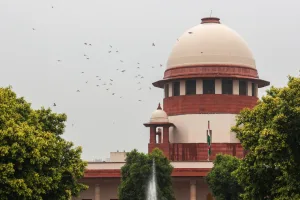
In a short span of time, the Supreme Court used Article 142 in two Tamil Nadu cases involving intimate relationships.

Sunil Garodia | New Delhi |

In a short span of time, the Supreme Court used Article 142 in two Tamil Nadu cases involving intimate relationships. In one, it dissolved a marriage that the law could not practically end. In the other, it erased a POCSO conviction that Parliament had deliberately made difficult to escape. The two orders point in opposite directions. Together, they reveal how an extraordinary constitutional power is steadily becoming an instrument of judicial policymaking.

That transformation deserves scrutiny. This columnist argued in these pages on 25 June 2026 that such intervention in dead marriages fills a vacuum Parliament has left open, and separately, on 9 July 2026, that its use in the POCSO case pushes against a statutory framework Parliament deliberately built. Read together, the two orders reveal something neither could show alone. The Constitution empowers the Supreme Court to pass such orders as are necessary to do “complete justice” in any cause or matter pending before it. The provision is deliberately open-ended.

It was designed as a safety valve – a mechanism to prevent technical or procedural constraints from producing outcomes that are plainly unjust in the circumstances of a particular case. It was not designed to fill legislative vacuums permanently. It was not designed to override statutory frameworks that Parliament deliberately constructed. And it was certainly not designed to become a recurring route by which inconvenient legal outcomes are erased. Yet that is increasingly what it has become. In a recent case involving a couple separated for fifteen years, the Supreme Court dissolved their marriage under Article 142, observing that preserving a union “already decayed and decomposing day by day” served neither the parties nor society.

Forcing them to remain legally married, the Court said, would amount to “cruelty to both parties.” The Court is right on the merits. Indian matrimonial law remains fault-based. A spouse seeking divorce must establish cruelty, desertion, adultery or another recognised ground. Where a marriage has simply collapsed – gradually, without a single dramatic incident that fits a statutory category – the law offers no exit unless both parties consent. The result is years of litigation, financial ruin and emotional exhaustion, all in pursuit of a legal dissolution that everyone involved knows is inevitable.

The Law Commission recommended including irretrievable breakdown of marriage as a ground for divorce as far back as 1978, and again in its 217th Report in 2009. The Supreme Court urged legislative action in Naveen Kohli vs Neelu Kohli in 2006. Two amendment bills – in 2010 and 2013 – both sought to introduce irretrievable breakdown as a ground for divorce. Parliament has repeatedly declined, or failed, to convert these recommendations into law. In this context, the Court’s use of Article 142 to dissolve dead marriages is understandable. The intervention is humane.

The relief is often just. But a legal principle recognised by the Supreme Court and unavailable to ordinary Family Courts creates a two-tier system of justice – one for litigants with the resources and stamina to reach the apex court, another for everyone else. Article 142 cannot be a permanent substitute for legislation that Parliament has declined to pass. On 8 June 2026, the Supreme Court set aside the conviction of Maruthupandi, a Tamil Nadu resident found guilty under Section 6 of the POCSO Act – one of its most serious provisions, covering aggravated penetrative sexual assault. The Court invoked Article 142. It cited the victim’s subsequent marriage to the convicted man, a payment of Rs. 10 lakh and the passage of time.

This is a different use of Article 142 entirely – and a far more troubling one. POCSO is a strict liability statute. Parliament deliberately chose not to distinguish between predatory abuse and adolescent romance, because the power imbalances and social pressures surrounding minors make claims of consent structurally unreliable. The Court did not dispute the facts of the offence. It expressly said it was not entering the merits. But a court that refuses to examine the merits cannot then act as though the merits were examined. Supporters of the order may argue that imprisoning a husband and father years after the relationship matured into a stable family serves no practical purpose. That concern is understandable.

But it is precisely the sort of policy consideration that legislatures weigh when designing criminal law. If Parliament believes such cases deserve different treatment, it can amend POCSO. A court exercising Article 142 cannot effectively create a new exception while insisting that the statute remains unchanged. The concerns run deeper than legal architecture. The conviction had survived the criminal process and appellate scrutiny. Between that confirmed conviction and its erasure lies a marriage of uncertain origin and a Rs. 10 lakh payment the Court recorded approvingly – without once examining whether the victim’s change of position was freely arrived at or financially induced.

Once the conviction is set aside, nothing protects her if the marriage fails. The money is spent. No condition was imposed, no verification required, no warning of the kind inserted in the earlier K. Kirubakaran case in October 2025, where the Court at least warned the husband that future default would have consequences. The June 8 order offers unconditional finality – to him. This is not the first such case. Two Supreme Court orders, both Tamil Nadu, both Section 6 POCSO convictions, both set aside under Article 142 after the accused married the victim.

The Court appends “not a precedent” disclaimers. An increasingly visible pattern has rendered those disclaimers unconvincing. That is not a coincidence. That is a route. The two deployments of Article 142 are mirror images of the same institutional failure – but they implicate Parliament in opposite ways. In the matrimonial breakdown cases, Parliament has failed to act. The Court steps in to fill a vacuum that democratic deliberation should have addressed decades ago. The use of Article 142 here is constitutionally strained but morally sympathetic.

The remedy is legislative reform. In the POCSO cases, Parliament has already acted – deliberately, after consideration, constructing a strict liability framework for good reasons. The Court steps in not to fill a vacuum but to mitigate outcomes that it considers unduly harsh in particular cases. The use of Article 142 here is neither constitutionally comfortable nor morally straightforward.

And crucially, it relieves Parliament of pressure to undertake the harder work: debating whether the age of consent should be revisited, whether “Romeo and Juliet” provisions that decriminalise consensual adolescent relationships while preserving full penalties for predatory adults should be introduced, and what safeguards genuine reform would require. Many democracies have addressed exactly this question through legislation. India can do the same – but only if the Court stops providing an ad hoc exit that makes legislation feel unnecessary.

The rule of law depends not merely on justice, but on predictability. Citizens should be able to understand the consequences of their actions by reading the statute book. When outcomes increasingly depend on whether the Supreme Court chooses to invoke Article 142 in a particular case, legal certainty gives way to discretionary justice. What appears compassionate in one case may become arbitrary in another. A criminal statute whose application turns on the sympathies of a particular bench on a particular day is not a statute in any meaningful sense. It is a guideline.

Every time Article 142 substitutes for legislation – whether by filling a vacuum or bypassing a statute – Parliament is relieved of pressure to act. The law remains unreformed. Judicial discretion expands. And the constitutional boundary between the Court’s role and Parliament’s role blurs a little further. In matrimonial cases, the cost of inaction falls on estranged couples trapped in dead marriages. In POCSO cases, the cost falls elsewhere – on the integrity of a protective statute and, potentially, on the deterrent message the law sends to those it was built to restrain.

Every time the Court intervenes this way, it inevitably creates expectations that similar relief may be available in future cases. Article 142 exists to do complete justice in exceptional cases. It was not built to carry the weight of legislative failure. When it is deployed routinely – sometimes to fill gaps Parliament left open, sometimes to close doors Parliament deliberately kept shut – it ceases to be an exceptional power. It becomes policy. And policy made by a bench of two or three judges, case by case, without the transparency or accountability that legislation demands, is a poor substitute for the real thing. Parliament needs to act on irretrievable breakdown of marriage.

Parliament needs to debate the age of consent and adolescent relationships under POCSO. Both conversations are overdue. Both require democratic mandate, open deliberation and statutory precision. The Supreme Court cannot – and should not – be expected to do that work. The more it tries, the more Article 142 drifts from a safety valve into something else entirely: a standing invitation for the legislature to remain silent.

(THE WRITER IS AN AUTHOR, LEGAL COMMENTATOR AND EDITOR-IN-CHIEF OF INDIACOMMENTARY.COM)

‘Jana Nayagan’ finally reaches theatres, fans celebrate Vijay’s big release across Tamil Nadu

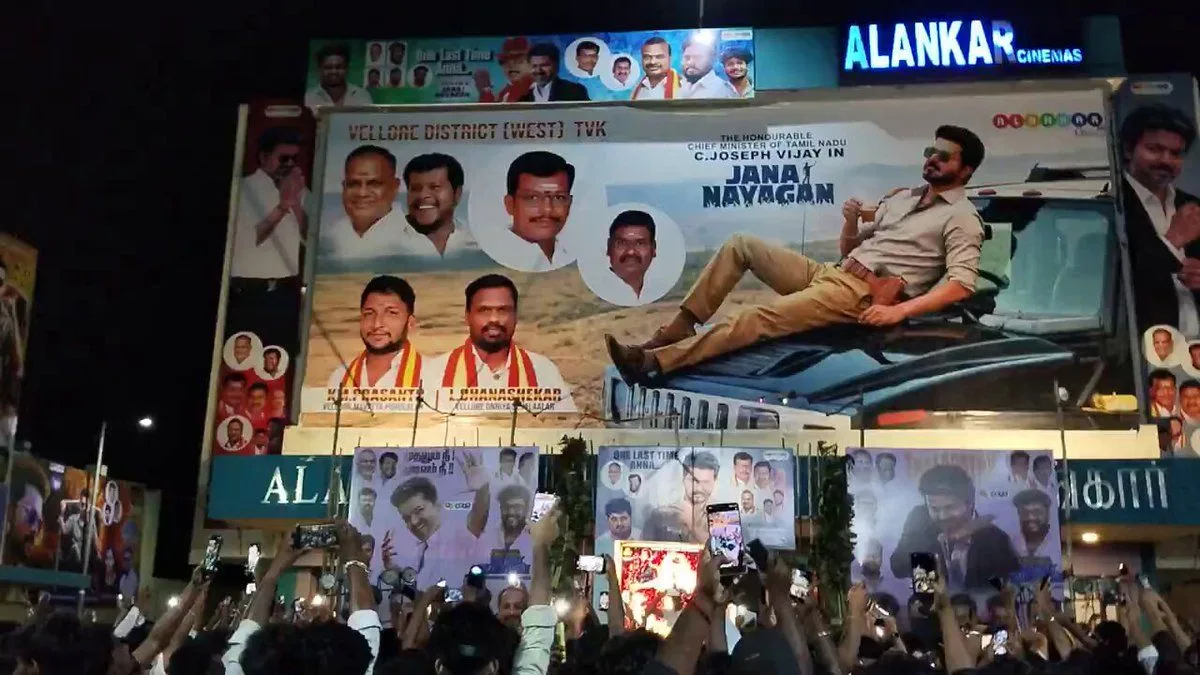
The long wait is finally over, with fans turning theatres into celebration zones across Tamil Nadu. Massive crowds, dancing supporters and giant cut-outs marked Vijay’s much-awaited return.

Statesman News Service | New Delhi |

After a string of delays that tested everyone’s patience, Tamil Nadu Chief Minister and actor Joseph Vijay’s much-anticipated film ‘Jana Nayagan’ opened in theatres on Thursday. Given how long fans had been waiting, it’s no surprise the first-day-first shows were packed.

Jai thanks fans for sticking around

Actor Jai spoke to reporters after the release and had nothing but praise for Vijay’s fans, who stuck with the project through all the setbacks. He said the film had cleared plenty of obstacles and opposition before finally making it to theatres, and that fans were always going to insist on watching it on the big screen, no matter what. Even if it had dropped on a mobile platform first, he joked, people still would have wanted the theatre experience.

He also brought up the line “I’m Waiting” while thanking audiences for their patience, saying their loyalty throughout this whole journey meant a lot.

Jai on Vijay’s new political chapter

Jai didn’t stop at the film. He also touched on Vijay’s political career, congratulating him on becoming Chief Minister and wishing him well in the role. He said he hoped Vijay’s leadership wouldn’t just last five years but would carry on for generations, and asked people to keep backing him fully.

Outside the theatres, it felt like a festival

Across Tamil Nadu, the release turned into something close to a celebration. Fans started lining up outside cinemas from the early morning to grab seats for the first show. At Rohini Theatre in Chennai’s Koyambedu, the queues stretched on for quite a while, with people clearly in no hurry to leave.

Outside, the mood was electric. Fans danced, cheered, and generally made a scene of the whole thing, which says a lot about how big Vijay’s following really is.

Also Read: Director explains why CM Vijay stayed silent on ‘Jana Nayagan’ leak ahead of release

Cut-outs and posters everywhere

As expected, fans went all out with giant cut-outs and posters of Vijay and the film. These spots quickly turned into unofficial photo points, with people gathering to take pictures and soak in the release-day buzz.

The release date announcement

Vijay had confirmed the date earlier this month through an Instagram post, sharing a new poster and revealing July 23 as the day. That announcement alone got fans talking again after the earlier delays had left things uncertain.

Cast and crew

Directed by H. Vinoth, ‘Jana Nayagan’ brings together Mamitha Baiju, Pooja Hegde, Prakash Raj, Bobby Deol, Gautham Vasudev Menon, Priyamani, and Narain alongside Vijay. Anirudh Ravichander composed the music, Sathyan Sooryan handled the cinematography, Pradeep E. Ragav edited the film, and V. Selvakumar took care of production design.

PM Modi announces fast-track courts for paper leak cases, says ‘those harming youth’s future won’t be spared’

The Prime Minister said authorities have been directed to take all necessary steps to safeguard students’ interests as protests over the NEET paper leak continue across the country.

Statesman News Service | New Delhi |

Prime Minister Narendra Modi on Thursday announced that fast-track courts will be set up to ensure speedy trials in paper leak cases, saying those responsible for jeopardising the future of students would face stringent punishment.

In a post on X, the Prime Minister said the Centre had directed the concerned authorities to take all necessary steps to protect the interests of students and curb examination-related malpractices.

“Nothing is more important than the welfare and future of our youth! We have decided to set up fast-track courts to ensure swift and stringent punishment for those involved in paper leaks. Have directed the concerned authorities and officials to take all necessary steps in this regard. This continues our series of steps for safeguarding the interests of students. Those who try to harm the future of our youth will not be spared,” PM Modi said.

Announcement comes amid NEET paper leak protests

The announcement comes as protests over the alleged NEET paper leak continue in Delhi and several other cities, with activists demanding action against those responsible.

The protesters have placed three key demands before the government. According to Cockroach Janta Party spokesperson Sourav Das, they are seeking the resignation of Union Education Minister Dharmendra Pradhan, compensation of Rs 1 crore for the families of students who allegedly died by suicide in connection with the controversy, and the withdrawal of FIRs filed against peaceful protesters. They have also sought an assurance that no fresh cases will be registered against peaceful demonstrators over the agitation.

Das described Pradhan’s resignation as “non-negotiable” and said the protest would continue until the demand was met.

Protest organisers appeal for peaceful agitation

Das said he had spoken to Sonam Wangchuk, who remains on a hunger strike after being admitted to hospital, and that both agreed the movement should remain peaceful.

“I spoke with Sonam Wangchuk several times today. The conclusion was that this protest should remain peaceful. He has also publicly appealed to all protesters to maintain peace and conduct this protest in the right manner,” Das said.

He also alleged that anti-social elements had infiltrated previous protests and urged participants not to allow the agitation to be derailed.

Meanwhile, Union Health Minister JP Nadda on Wednesday said paper leaks were a serious issue that should not be politicised and required detailed discussion.

According to Delhi Police, more than 118 police personnel, including senior officers, were injured during recent clashes with protesters. Around 60 protesters were also reported injured.

Delhi Police removes ADCP Sandeep Lamba from CJP protest duty after video shows him slapping woman

The viral video not only sparked widespread public outrage but also reached the Delhi High Court, where the officer’s alleged conduct was sharply questioned. As the controversy grew, Delhi Police removed him.

Statesman News Service | New Delhi |

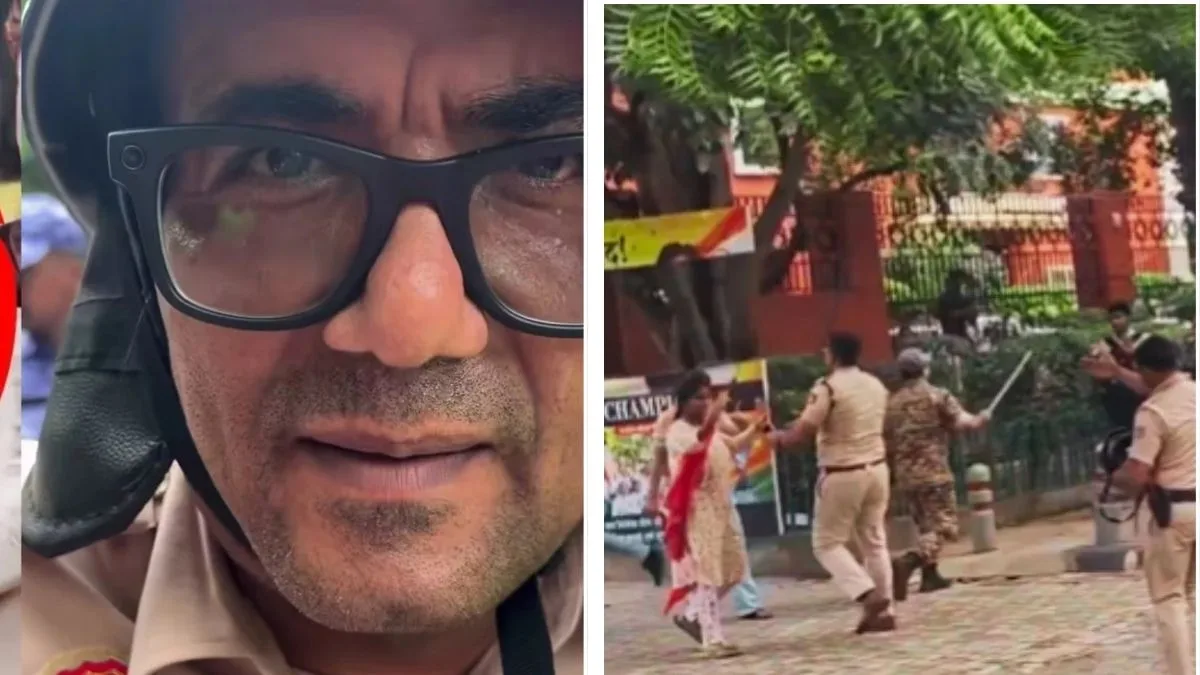
Additional DCP (North East District) Sandeep Lamba has been removed from duty at the Cockroach Janta Party (CJP) protest site at Jantar Mantar after a video allegedly showing him slapping a female protester spread widely across social media. Police said on Wednesday that Lamba has been directed to leave the protest deployment and report back to his district posting.

The action came a day after the video from Monday’s CJP-led march to Parliament triggered sharp criticism online and raised fresh questions over the police handling of the protest.

Viral video draws public attention

The controversy began after videos from Monday’s protest appeared online, showing Lamba striking a woman near the Parliament complex. The incident took place during clashes between protesters and security personnel as police tried to stop the march.

On Monday, police used lathi-charge and tear gas shells to disperse protesters after the demonstration escalated. Amid the crackdown, the assault on the woman quickly became one of the most discussed moments from the protest.

Following the controversy, Delhi Police removed Lamba from protest duty at Jantar Mantar and instructed him to return to his district assignment.

Incident raised before Delhi High Court

The matter also reached the Delhi High Court during a hearing on Wednesday.

Senior advocate Gopal Sankaranarayanan referred to the incident while highlighting police excesses during the July 20 protest. Referring to the widely circulated 36-second video, he identified the officer by name and questioned his conduct before the court.

According to Sankaranarayanan, the footage showed ADCP Sandeep Lamba slapping a woman who was standing to the side and not provoking anyone. He argued that officers accused of misconduct should be held accountable for their actions and described the assault as completely unprovoked.

The video reportedly shows Lamba slapping the woman near the Parliament complex.

Police explain officer’s conduct

A Deputy Commissioner of Police (DCP)-rank officer, speaking on the development, said the incident happened in the “spur of the moment.”

According to the officer, the woman allegedly had a nail-like object in her hand and did not leave the area despite repeated instructions from police. The official claimed she continued arguing with Lamba during the confrontation.

The officer admitted that Lamba lost his temper during the exchange and said he had since been warned to follow proper crowd-control protocols. Police also instructed him to maintain discipline while dealing with women protesters in future situations.

Officer has long service record

Sandeep Lamba belongs to the 2011 batch of the Delhi, Andaman and Nicobar Islands, Lakshadweep, Daman and Diu, and Dadra and Nagar Haveli Police Service (DANIPS) cadre.

Within the police force, he has built a reputation as an experienced investigator. In 2021, he received Union Home Minister’s Medal for Excellence in Investigation.

After serving lengthy tenure in Crime Branch as Assistant Commissioner of Police, he returned to the Delhi segment of the cadre in 2024 and has since been posted in North East district.

Delhi Police tightens uniform rules

The controversy also brought attention to another issue after several police personnel were seen operating in plain clothes during the protest, leading to criticism and questions on social media.

Police sources clarified that those individuals were members of special police teams deployed for the operation.

Following the backlash, Delhi Police on Wednesday directed all personnel deployed on duty to remain in full uniform and wear their official badges and insignias while performing their responsibilities. This instruction was issued to ensure that officers are clearly identifiable during public deployments.

‘BJP sent stone-pelters, police brought trucks of stones’: CJP’s Abhijeet Dipke alleges as NEET protest enters Day 34

CJP founder Abhijeet Dipke said the protest has entered its 34th day and appealed to Sonam Wangchuk to end his 26-day hunger strike, saying the movement cannot afford to lose his life.

Statesman News Service | New Delhi |

Cockroach Janta Party (CJP) founder Abhijeet Dipke on Thursday alleged that outsiders were being sent to disrupt the party’s ongoing protest over the alleged NEET-UG paper leak, while reiterating that the agitation would continue until its demands were fulfilled.

Speaking to reporters at Delhi’s Jantar Mantar, Dipke alleged that the police action against protesters was “very brutal” and said the party would take legal action against the officers involved.

“I have already spoken about the lathi charge. It was very brutal, and we will take the police officers who carried it out to court,” he said.

Dipke said the protest had entered its 34th day, while activist Sonam Wangchuk’s hunger strike had reached its 26th day.

“Our protest will continue until our demands are met. But we are requesting Sonam Sir to end his hunger strike because we cannot afford to lose his life,” he said.

Dipke also accused the BJP of attempting to provoke violence at the protest site.

“We have been sitting here for a month. No such incident happened during this period. Now, as the protest has grown, goons are being sent from outside to deliberately incite people,” he alleged.

He further claimed that BJP workers were pelting stones and alleged that police had brought trucks carrying stones to the area.

The remarks came a day after CJP chief spokesperson Saurav Das described Union Education Minister Dharmendra Pradhan’s resignation as “non-negotiable” and said the protest would continue until the demand was met.

Das said he had spoken several times with Sonam Wangchuk and both agreed that the agitation should remain peaceful.

“He has publicly appealed to all protesters to maintain peace and conduct this protest in the right manner,” Das said.

He also alleged that anti-social elements were attempting to infiltrate the protest to discredit peaceful demonstrators.

Also Read: CJP draws red line: No end to protest without Dharmendra Pradhan’s resignation

Meanwhile, heavy security remained in place around Jantar Mantar as the protest continued.

On Wednesday evening, a Delhi Police officer was injured after miscreants allegedly pelted stones and bottles at police personnel near Tolstoy Marg in Connaught Place, according to Delhi Police. ACP Connaught Place Vivek Bhagat sustained injuries and was taken to RML Hospital. Police said the situation was later brought under control.

Separately, opposition MPs alleged that they were prevented from meeting Wangchuk at Medanta Hospital.

JMM MP Mahua Majhi claimed they were stopped at the hospital gate despite there being no court order restricting visitors, while RJD MP Sanjay Yadav accused the government of ignoring the concerns of protesting students.

The protest centres on demands linked to the alleged NEET-UG paper leak, including the resignation of Union Education Minister Dharmendra Pradhan. Wangchuk has also maintained that he will end his hunger strike only after receiving an assurance that no legal action will be taken against protesters.

Education without entrance examinations

India’s entrance exam regime has grown into a parallel economy, draining families and destroying young lives.

DR O. PRASADA RAO | New Delhi |

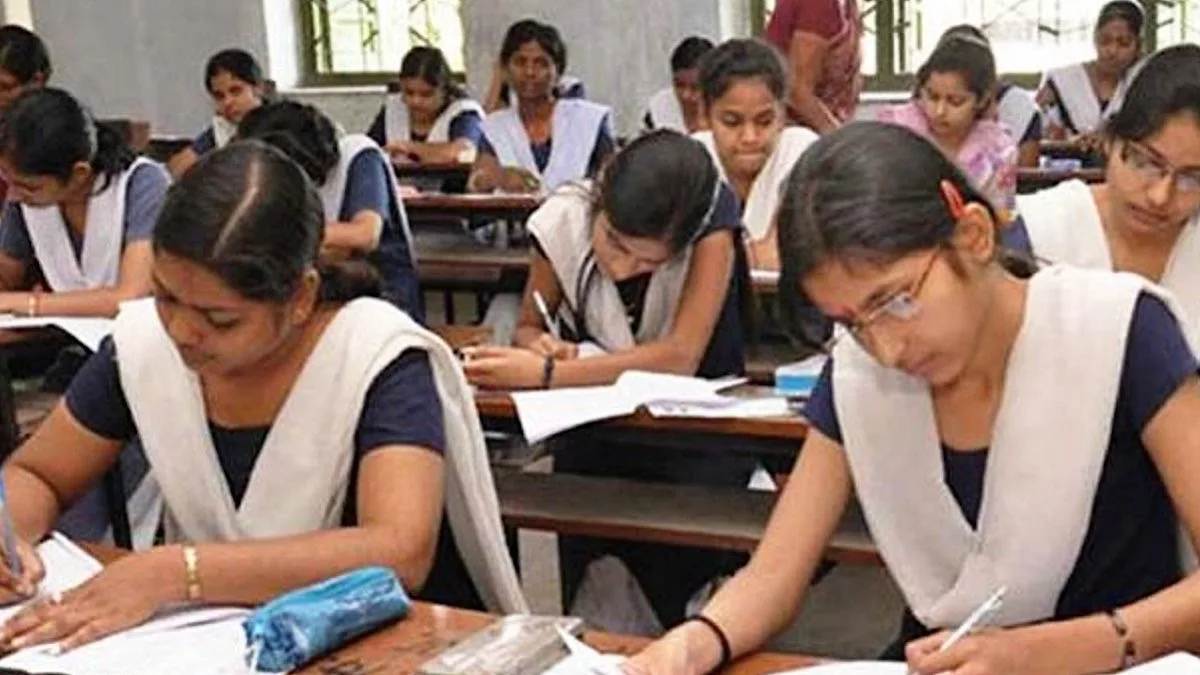
India’s entrance exam regime has grown into a parallel economy, draining families and destroying young lives. Coaching centres charge lakhs of rupees, promising success in NEET or JEE, but often delivering only stress and despair. Students are subjected to relentless schedules, mental agony, and physical exhaustion. The tragic rise in suicides among aspirants is the most painful indictment of a system that equates failure in one exam with failure in life.

The recent NEET leak only exposed what was already broken: centralised, high-stakes testing is fragile, unjust, and unsustainable. This obsession with entrance tests has hollowed out school education. Board exams are treated casually, while coaching dominates. The result is a distorted pedagogy where knowledge is secondary to rote drills. Worse, the infrastructure required to conduct exams for 20-30 lakh students are massive, costly, and nearly impossible to secure against leaks. The NEET fiasco proves that mass-scale testing is both vulnerable and corrosive to trust.

A return to marks-based admissions offers a humane alternative. SSC, Class XI, or Class XII results – moderated and standardised across boards – can serve as the basis for entry into engineering, medicine, and other courses. Decentralised admissions, managed state-wise, would reduce pressure while still allowing pan-India opportunities. Expand IITs, AIIMS etc. all over the country and admit students from across India based on marks obtained in the above said exams; and to achieve this, standardise board results for equal opportunity to every Indian. Crucially, school exams must be upgraded to test analytical skills, making them equivalent in rigour to entrance tests.

This would restore dignity to school education and reduce dependence on costly coaching centres. Equally important is a shift in mindset. Education must be delinked from job guarantees and aligned with industry needs. Today’s generation often aspires to abandon family professions- even after studying abroad-in pursuit of white-collar jobs. This trend has contributed to rising unemployment, while valuable family trades and businesses are left to decline. Instead of chasing elusive jobs, students should be encouraged to modernise their family professions with contemporary knowledge and technology. Agriculture, crafts, and small industries can be transformed into sustainable ventures with the help of knowledge and abilities acquired from education.

Curricula must be reoriented toward skill development, innovation, and entrepreneurship. Degrees alone no longer guarante e employment; practical training and adaptability are the real currency of opportunity. By aligning education with industr y and b usiness requirements, India can produce graduates who are employable, creative, and capable of strengthening local economies. Vocational pathways, apprenticeships, and industry-linked curricula should be prioritised alongside traditional academics. Self-employment potential can be enhanced by integrating vocational training, entrepreneurship modules, and industry partnerships into education.

Students should be taught financial literacy, digital skills, and practical know-how to modernize family professions or start small ventures. Challenges include social stigma around non-white-collar work, lack of access to credit, and uneven training quality. The benefits are significant: reduced unemployment, stronger local economies, and empowered youth who create jobs rather than chase them. Government must provide skill hubs, low-interest loans, mentorship networks, and incentives for innovation, ensuring self-employment becomes a respected and viable career path. This can reduce demand for engineering and medicine, and as a result for entrance examinations too. The socio-economic benefits of such reform are immense.

Families would be spared the financial ruin of coaching fees. Students would be protected from despair and suicides caused by examination pressure. Local businesses and professions would be revitalised by educated youth bringing modern skills to traditional livelihoods. And the nation would gain a workforce that is both rooted in community and responsive to global industry demands. Reform must dismantle the coaching trap, restore trust in schools, and reorient education toward skills, dignity, and sustainable professions. India’s future lies not in mass exams and rote learning, but in empowering students to build livelihoods, modernise family professions, and contribute meaningfully to society.

Education must evolve from being a ticket to employment into a foundation for civic growth, innovation, and generational progress. Lakhs of coaching centres across India cannot be dismantled overnight, but their role must be redefined. The government should gradually integrate them into formal education by accrediting centres that provide genuine skill training , while discouraging rote-based exam coaching. Incentives can be offered for centres that shift toward vocational courses, digital literacy, and entrepreneurship programs. At the same time, strict regulation is needed to curb exploitative fees and false promises. To tackle their lobby, transparent reforms, public awareness campaigns, and strong political will are essential, ensuring that education policy prioritises students’ welfare over commercial interests.

(The writer is a retired Scientist, CSIR)

Sikkim tunnel tragedy: Death toll rises to 22 as rescue teams continue search for remaining workers

Specialised rescue teams, including experts from Eastern Coalfields Limited, worked overnight under hazardous conditions as efforts continued to locate the remaining trapped workers.

Statesman News Service | New Delhi |

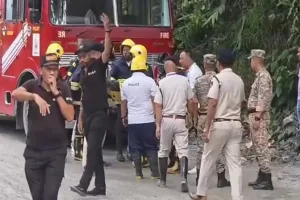
The death toll in the tunnel accident at the NHPC Teesta Stage VI Hydropower Project in Sikkim’s Namchi district has risen to 22 after nine more bodies were recovered during overnight rescue operations, officials said on Thursday.

Search and recovery efforts continued through the night as multiple agencies intensified operations inside the under-construction tunnel to locate the remaining trapped workers.

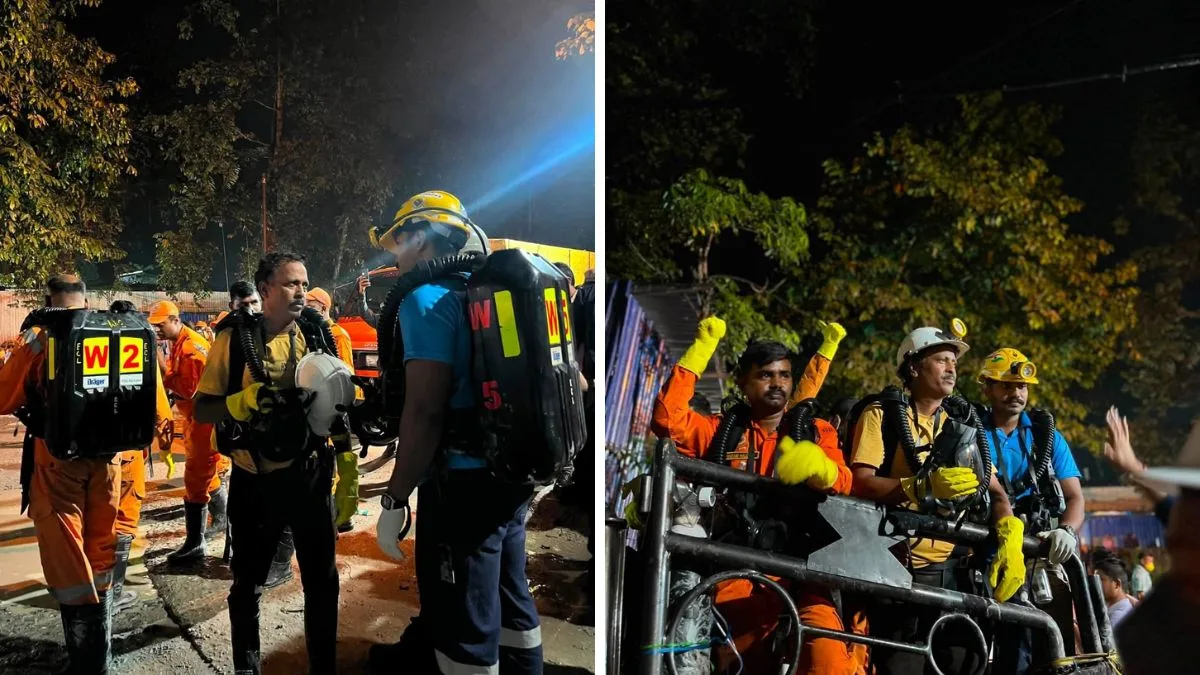
Officials said the bodies of 22 workers have now been recovered. Around 10 pm on Wednesday, a second rescue team from Eastern Coalfields Limited (ECL), Asansol, reached the site and joined the operation immediately. Rescue personnel worked until midnight despite difficult conditions inside the tunnel.

Authorities said specialised teams remain engaged in the operation in coordination with various emergency response agencies. The state government, district administration and other agencies are continuing to monitor the situation while providing assistance to the affected families and rescue personnel.

Rescue operation resumed after brief halt

Rescue work had resumed on Wednesday after being temporarily suspended due to a large accumulation of mud and water inside the tunnel, which hampered access and recovery efforts.

With conditions improving, personnel from the National Disaster Response Force (NDRF), coal mining experts from Asansol and other emergency teams re-entered the tunnel and resumed search operations.

Officials said rescue teams continue to work under hazardous conditions to locate and recover those still trapped.

CM announces aid, orders inquiry

On Tuesday, Sikkim Chief Minister Prem Singh Tamang announced financial assistance for the victims and said a detailed inquiry would be be conducted into the incident.

He said strict action would be taken if any negligence by the executing company is found during the investigation. The Chief Minister also said the state administration had mobilised multiple rescue agencies immediately after the accident.

Methane gas suspected behind explosion

According to NHPC officials, the accident took place on July 20 inside the under-construction Head Race Tunnel at Samardung.

Preliminary information indicates that a sudden burst of suspected methane gas trapped within rock formations triggered an explosion, filling the tunnel with dense fumes and toxic gases, leading to the tragedy.

Inputs from ANI

Student protests must not be hijacked by Opposition

In a healthy democracy, student activism has always been a vital force – a crucible where ideas are sharpened , injustices challenged, and futures forged.

TUHIN A. SINHA | New Delhi |

In a healthy democracy, student activism has always been a vital force – a crucible where ideas are sharpened , injustices challenged, and futures forged. But what we are witnessing today is a cynical hijacking of impressionable minds by India’s beleaguered and power-starved Opposition parties, desperate to manufacture anarchy where none exists. The protests over exam irregularities have been completely commandeered by the usual suspects – Congress, AAP, and their ecosystem of professional disruptors – turning legitimate grievances into a street veto.

Genuine student activism strengthens democracy, but when depraved and despondent opposition parties exploit impressionable students for their vested political gains, as is happening now, it does irreparable harm to the very cause of students. These parties, devoid of any constructive agenda after repeated electoral defeats, are using young minds as cannon fodder to create chaos and destabilise a system that is actively reforming itself. Let us be clear: the Modi government has never shied away from dialogue. Union Health Minister JP Nadda himself met the protesting students, extending an olive branch in good faith.

Democratic maturity demands conversation, not confrontation; reform, not disruption. This year’s unfortunate paper leak incident was unacceptable, and the government acted with decisive speed. Post the leaks, the government has initiated a major systemic overhaul. It was PM Modi’s government that had brought the country’s first-ever legislation against paper leaks. We stand committed to conducting the NEET exam digitally next year to eliminate vulnerabilities once and for all. Unlike the previous regimes that let leaks fester for decades without any accountability or structural fixes, this government is overhauling a flawed system inherited from the past.

While the Opposition peddles victimhood and selective outrage, the facts on youth empowerment under PM Narendra Modi tell a dramatically different story. In the last 12 years, medical and engineering seats have witnessed an exponential rise. MBBS seats have surged from 51,348 in 2013-14 to over 1,28,976 today — an increase of more than 151 per cent. Medical colleges have more than doubled from 387 to over 819. Postgraduate medical seats have grown by over 135 per cent, from around 31,000 to more than 78,000. Recent data from the National Medical Commission shows an addition of 48,563 MBBS seats and 29,080 PG seats just between 2020-21 and 2025-26, with further expansions of over 10,000 seats approved under Centrally Sponsored Schemes.

In engineering, opportunities have expanded significantly through premier institutions, with the JoSAA seat matrix crossing 67,000 seats in 2026. Apprenticeship programmes have scaled massively under the National Apprenticeship Promotion Scheme, engaging over 56 lakh apprentices since 2016, with annual figures now nearing 12 lakh. The Khelo India mission has transformed the sports landscape, supporting over 30,000 athletes with training, coaching, equipment, and financial assistance, directly contributing to India’s record medal hauls at the Asian Games and Olympics.

Emerging sectors are creating unprecedented avenues. India’s space economy is projected to reach $44 billion by 2033, backed by over 400 private start-ups under IN-SPACe. Students are actively involved in designing satellites, payloads, and incubation programmes, while ISRO continues to expand its workforce for ambitious missions like Gaganyaan. The creative economy – spanning animation, gaming, VFX, and digital content – is booming, generating lakhs of jobs. Add to this skilling initiatives like PMKVY, which has trained over 1.64 crore youth, and the picture is clear: this is not mere rhetoric but a silent revolution reshaping India’s demographic dividend into a powerful asset.

Millions of young Indians are quietly building careers in AI, semiconductors, defence manufacturing, green energy, and more. They are the ones driving Viksit Bharat, not those shouting slogans on streets funded by shadowy toolkits. Speaking of which, the so-called “Coordinating Committee” of CJP’s protests have been farcical. It does not represent the aspirations of India’s ambitious youth, who are immersed in the country’s growth story. Instead, it amplifies the voice of an ignorant, entitled fringe that even confuses the Prime Minister with the President of the country.

The very trigger for its formation – a casual judicial reference – exposes their fundamental confusion between the judiciary and the legislature, two distinct pillars of our democracy. This is not student leadership; this is political illiteracy dressed up as activism. Toolkit politics has a limited shelf life. We have seen this script before – from Shaheen Bagh to farm laws to now. Once the sinister motives of Congress and AAP are fully exposed, as they inevitably will be, this manufactured movement will fizzle out like the damp squib it is. The “andolanjeevis” will move on to the next disruption, chasing TRPs and foreign applause, while real India marches ahead.

The Modi government’s commitment remains steadfast and unequivocal: to build a prosperous, fully developed Bharat by 2047 where every young Indian has the opportunity to soar. The silent, determined youth who are studying, skilling, innovating, and contributing know the difference between constructive criticism and destructive politics. They understand that India’s rise is not a zero-sum game but a shared destiny. To the genuine students with real concerns: your voice matters. Come to the table.

Engage with the system that is reforming itself faster than ever before in independent India. Do not let vested interests derail your future for their political avarice. The Opposition’s desperation is understandable — they have nothing positive to offer. But let them not mistake India’s patient democracy for weakness. The youth of India have chosen progress over compulsive protesting. And that choice will define the next two decades.

(The writer is a national spokesperson of BJP and an acclaimed author)

Assam floods kill 10, including four children, in 24 hours; death toll rises to 41

More than 3.13 lakh people are staying in relief camps as rivers continue to flow above danger levels in several parts of the state, with rescue operations still underway.

Statesman News Service | New Delhi |

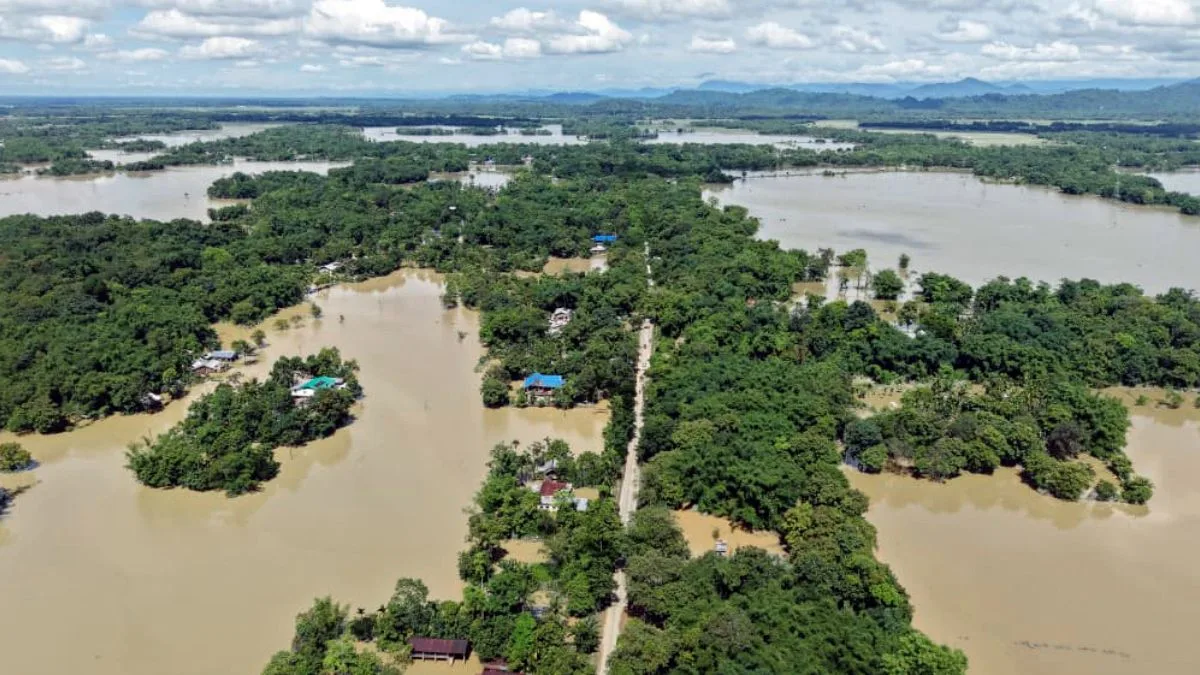
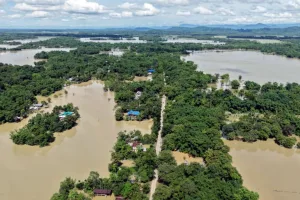
Ten people, including four children, died in Assam due to floods over the past 24 hours, taking the overall death toll in the current wave of flooding to 41, according to the Assam State Disaster Management Authority (ASDMA).

The latest deaths were reported from Sivasagar, Jorhat, Charaideo, Dhemaji and Karbi Anglong districts. Three people each died in Sivasagar and Jorhat, two in Charaideo, and one each in Dhemaji and Karbi Anglong, the ASDMA said in its latest flood report.

Six people – three men and three women – remain missing.

The floods have affected more than 6.53 lakh people across 11 districts: Karbi Anglong, Golaghat, Charaideo, Kamrup, Sivasagar, Jorhat, Dibrugarh, Nagaon, Dhemaji, Hojai and Kamrup (Metro).

Sivasagar is the worst-hit district with 3,92,195 affected people, followed by Charaideo (1,10,755), Jorhat (97,690), Golaghat (25,591) and Dibrugarh (13,390).

According to the ASDMA, 939 villages across 40 revenue circles remain inundated.

Heavy rainfall has pushed up water levels in the Brahmaputra and several of its tributaries. The Disang river is flowing above the highest flood level at Nanglamuraghat, while the Burhidihing at Chenimari (Khowang), Dikhou at Sivasagar, Dhansiri (South) at Numaligarh and Kushiyara at Sribhumi are above the danger mark.

More than 3.13 lakh flood-hit people are currently staying in 487 relief camps and relief distribution centres set up by district authorities.

The floods have also affected 1,38,965 animals, the report said.

Rescue teams from the Indian Army, National Disaster Response Force (NDRF), State Disaster Response Force (SDRF), Fire and Emergency Services, Police, Civil Defence volunteers, the Indian Air Force and District Disaster Response Force (DDRF) continue relief operations. On Wednesday, the teams rescued 8,409 people from affected areas.

The floodwaters also damaged 53 roads, six embankments and other public property during the day, according to the ASDMA.

Inputs from ANI

‘Eye for an eye’: Iran warns backers of US strikes are targets too; Trump calls conflict a ‘skirmish’, says deal is near

Fresh statements from Tehran and Washington point to deepening confrontation, with both sides hardening their public positions even as the US says it remains open to diplomacy.

Statesman News Service | New Delhi |

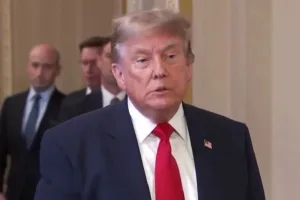
Iran has warned that any attack on its infrastructure will trigger a “powerful and decisive response”, as US President Donald Trump claimed Tehran wants to negotiate despite the continuing military confrontation.

The latest exchange comes amid heightened tensions around the Strait of Hormuz, where maritime disruptions have intensified concerns over regional security and global oil supplies.

Iran warns supporters of attacks could become targets

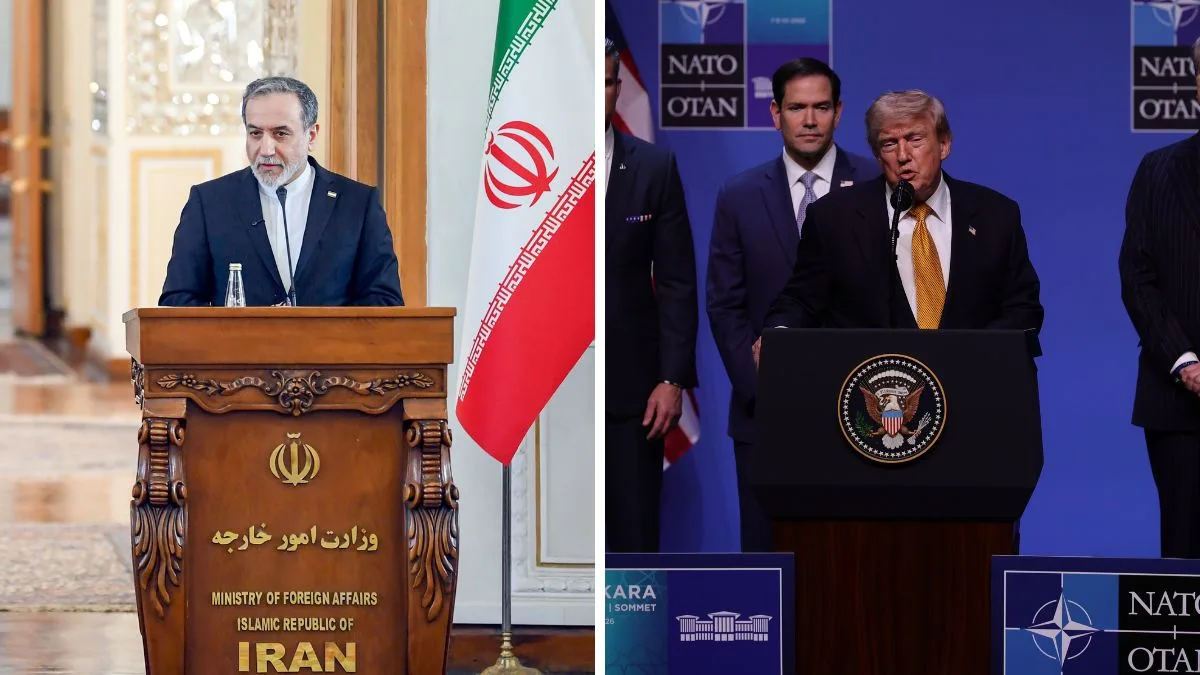
Iranian Foreign Minister Seyed Abbas Araghchi said any aggression against the country, including strikes on civilian infrastructure, would be met with retaliation.

“Our defense doctrine is clear: eye for an eye. Any aggression against Iran, including our infrastructure, will compel a powerful and decisive response. Those who contribute to such aggression, whatever the kind of support, will also be considered as legitimate targets,” Araghchi wrote on X.

Iranian Parliament Speaker Mohammad Bagher Ghalibaf also warned that regional infrastructure would not remain secure if Iran’s security was threatened.

“The equation of this war is clear: either all or none. In a region where we do not sell oil, no one will sell oil. If our security is not ensured, no infrastructure will be safe,” he said, adding that the Strait of Hormuz would not return to its pre-war situation.

Strait of Hormuz remains flashpoint

Iran’s state broadcaster Press TV, citing the Khatam al-Anbiya Central Headquarters, reported that the Strait of Hormuz remains closed and that vessels can only pass through designated routes under previously announced arrangements.

According to the report, the headquarters warned that if US threats against Iran’s civilian infrastructure were carried out, Iranian forces would prevent oil exports through the region and target oil, gas, electricity and economic infrastructure.

Press TV also quoted the headquarters as saying that continued US threats would only expand the conflict across the region and beyond.

Trump says Iran wants a deal

Speaking in Marietta, Georgia, Trump described the conflict as a “skirmish” and claimed Iran would soon return to negotiations.

“This skirmish that we have with the Islamic Republic of Iran, and I call it that because let me tell you they’re getting hit so hard, and they want to make a deal,” Trump said.

“They’re not ready to make a deal because every time they make a deal they want to change it… They’ll be ready very soon,” he added.

Earlier in the day, Trump attended the dignified transfer ceremony at Dover Air Force Base for four US service members killed in connection with the ongoing conflict. During the Georgia event, he also honoured the family of Lt. Tyler Feehan.

US maintains military pressure

Trump has recently warned that Washington would strike Iranian infrastructure if commercial vessels in the Strait of Hormuz were attacked.

“Any time the Islamic Republic of Iran shoots at a ship in the Strait of Hormuz… the United States will bomb and destroy ONE BRIDGE OR POWER PLANT,” he wrote on social media.

On Tuesday, he also signalled that US operations would continue.

“We’re not finished at all… we’re not leaving right now,” Trump said.

The conflict around the Strait of Hormuz has disrupted oil shipments and pushed Brent crude prices higher, adding to fuel price concerns in the United States.

US Secretary of War Pete Hegseth said the military campaign has so far cost USD 37.5 billion while defending the administration’s request for additional emergency military funding.

Despite the increasingly hostile rhetoric, US Secretary of State Marco Rubio said Washington remained willing to pursue negotiations with Tehran.

“We remain open to working it out in a negotiated way. But right now, they don’t seem to be serious about that,” Rubio said during a visit to Manila.