Logo

Govt forms high-level committee to probe Sikkim tunnel disaster

The committee has been directed to submit its findings and recommendations to the competent authority within 15 days.

Statesman News Service | Kolkata |

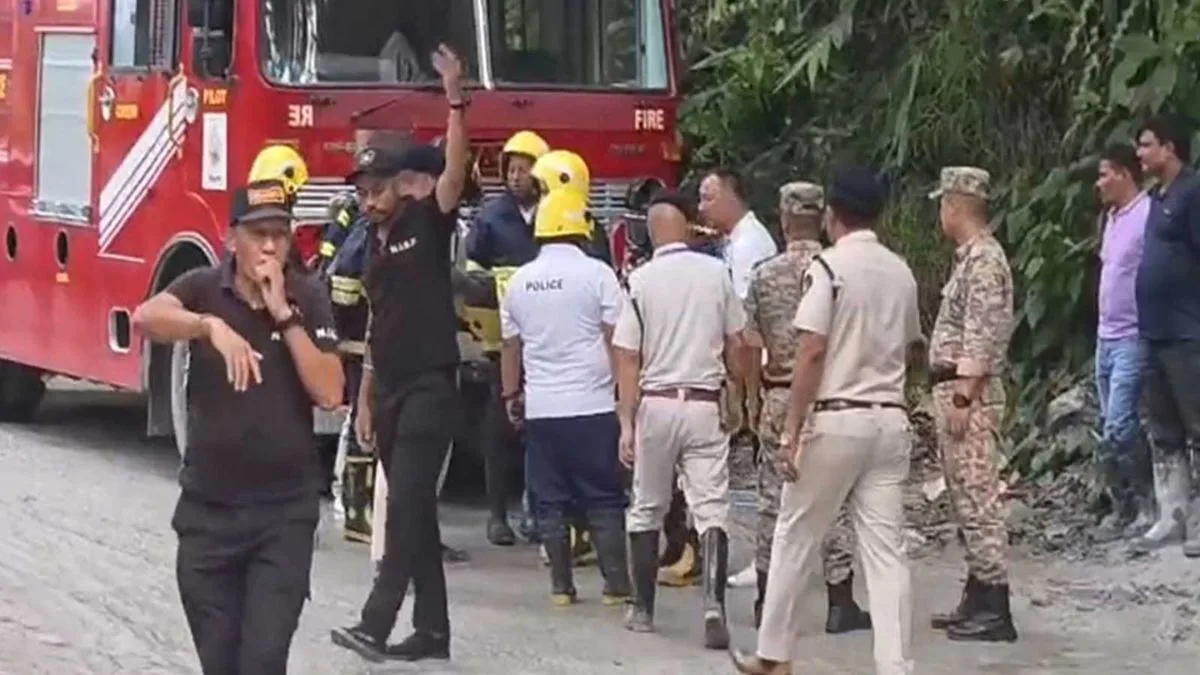
A High-Level Committee (HLC) has been formed to probe the tunnel tragedy at the under-construction Teesta Stage-VI Hydro Electric Project in Sikkim’s Namchi district that has so far claimed 22 lives.

The committee has been directed to submit its findings and recommendations to the competent authority within 15 days, a senior official said on Thursday.

According to a notification issued by Chief Secretary R. Telang, an explosion-like incident occurred on 20 July inside the under-construction ADIT-III tunnel at Samardung in Jholungey, prompting the state government to order an inquiry into the causes and circumstances leading to the tragedy and to recommend measures to prevent such incidents in future.

The committee will be headed by Tashi Wangyal, Inspector General of Police (Law and Order), Sikkim Police. Its other members are Phigu Tshering Bhutia, Principal Director, Mines and Geology Department; Keshar Luitel, Additional Director, Mines and Geology Department; and Tenzing Loden Lepcha, Deputy Inspector General of Police, CID.

The HLC has been tasked with establishing the sequence of events and the exact cause of the explosion-like incident and the subsequent build-up of gas inside the tunnel. It will examine whether the incident resulted from blasting operations, methane or other noxious gases, equipment failure, or any other factor.

The committee will also review compliance with safety norms, including Standard Operating Procedures (SOPs), the Mines Act, 1952, Tunnel Safety Guidelines and the Explosives Rules, 2008. It will examine the adequacy of ventilation systems, gas detection mechanisms, emergency exhaust systems and the use of personal protective equipment (PPE).

Besides determining the type and source of the leaked gas, the committee has been authorised to examine any other matter relevant to the incident during the course of its inquiry.

Raja Raghuvanshi murder case: SC sets aside Sonam’s bail, gives two weeks to surrender

The Supreme Court said Sonam Raghuvanshi’s continued release could impede the ongoing trial, directed her to surrender within two weeks and allowed her to seek fresh bail if proceedings are not completed within six months.

Statesman News Service | New Delhi |

The Supreme Court on Thursday cancelled the bail granted to Sonam Raghuvanshi, the prime accused in the alleged murder of her husband Raja Raghuvanshi during their honeymoon in Meghalaya, holding that her release at this stage could affect the ongoing trial.

A Bench of Justices MM Sundresh and PB Varale directed Sonam to surrender within two weeks. It, however, said she would be free to move a fresh bail plea before the trial court if the trial is not completed within six months.

The Court set aside the bail orders passed in her favour, observing that the gravity of the allegations and the stage of the proceedings warranted her custody.

“We are inclined to observe that continued enlargement on bail of the respondent at this stage might hinder the ongoing trial,” the Bench said while allowing the Meghalaya government’s appeal.

The appeal challenged an order of a Meghalaya court that granted Sonam bail after additional charges were framed following a supplementary chargesheet filed on February 10, 2026.

According to the prosecution, Sonam travelled to Meghalaya with Raja Raghuvanshi for their honeymoon after their marriage. Raja was allegedly murdered there with the help of three accomplices.

Investigators said Sonam went missing after the incident, leading to the registration of an FIR. She later surrendered before the Nandganj Police Station in Uttar Pradesh’s Ghazipur district on June 9, 2025, and was produced before the Chief Judicial Magistrate for transit remand.

Before the Supreme Court, the Meghalaya government argued that the allegations against Sonam were serious and that she had failed to explain her disappearance after the alleged murder.

The prosecution also submitted that she had received the grounds of arrest and relevant documents on June 9, 2025. It said the reference to Section 403(1) instead of Section 103(1) in the arrest papers was only a typographical error.

Sonam opposed the appeal by relying on the Supreme Court’s judgment in Mihir Rajesh Shah v. State of Maharashtra. She argued that Article 21 requires the grounds of arrest to be properly communicated and claimed the actual reasons for her arrest had not been conveyed.

The apex court rejected the argument, distinguishing between a complete failure to furnish the grounds of arrest and a dispute over whether the reasons provided were adequate.

“It is not as if she was not served grounds of arrest. There is a difference between non-service of grounds of arrest and giving adequate reasons thereunder. In the second one, one has to see the prejudice. Secondly, such a plea has to be raised at the earliest,” the Bench observed.

The Court also noted that Sonam had earlier expressed satisfaction with the reasons communicated for her arrest. It therefore declined to examine whether the case involved a voluntary surrender or an arrest.

The Bench further clarified that even if there is non-compliance with the requirement to furnish grounds of arrest, the investigating agency is not barred from carrying out a fresh arrest in accordance with law.

Setting aside the bail order, the Supreme Court held that the courts below had erred in granting bail despite the seriousness of the allegations and the fact that earlier orders refusing bail had already attained finality.

Police recover massive cashe of illegal arms from taxi in Howrah, driver held

The STF conducted a thorough search of the vehicle taking the help of local cops from the Nishchinda Police Station.

Statesman News Service | Kolkata |

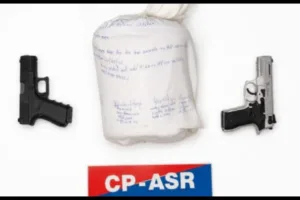
The Kolkata Police have arrested a taxi driver and recovered a large cache of illegal firearms and live ammunition from his vehicle in Bengal’s Howrah district.

According to police sources, a Special Task Force (STF) team of the Kolkata Police intercepted a white-and-blue taxi, having registration number WB23C8793, near the Abhaynagar playground, which comes under the jurisdiction of Nishchinda Police Station in the Howrah Police Commissionerate.

The STF conducted a thorough search of the vehicle taking the help of local cops from the Nishchinda Police Station.

The operation took place at around 8.05 pm on Tuesday, police said.

According to police sources, four improvised 7 mm pistols, one country-made single-shot pistol, four magazines, six rounds of 9 mm live ammunition, 19 rounds of 7.65 mm live ammunition, and four rounds of 7.62 mm live ammunition were recovered.

The driver, identified as Rajesh Kanwar (54), son of Ramnagina Kanwar and a resident of BT Road at Baranagar, was taken into taken.

An investigation has been launched to ascertain the source of the weapons and ammunition, and where they were being transported. It is also being investigated whether the accused has links to any organised illegal arms trafficking network.

Police have registered a case under the relevant provisions of the Arms Act.

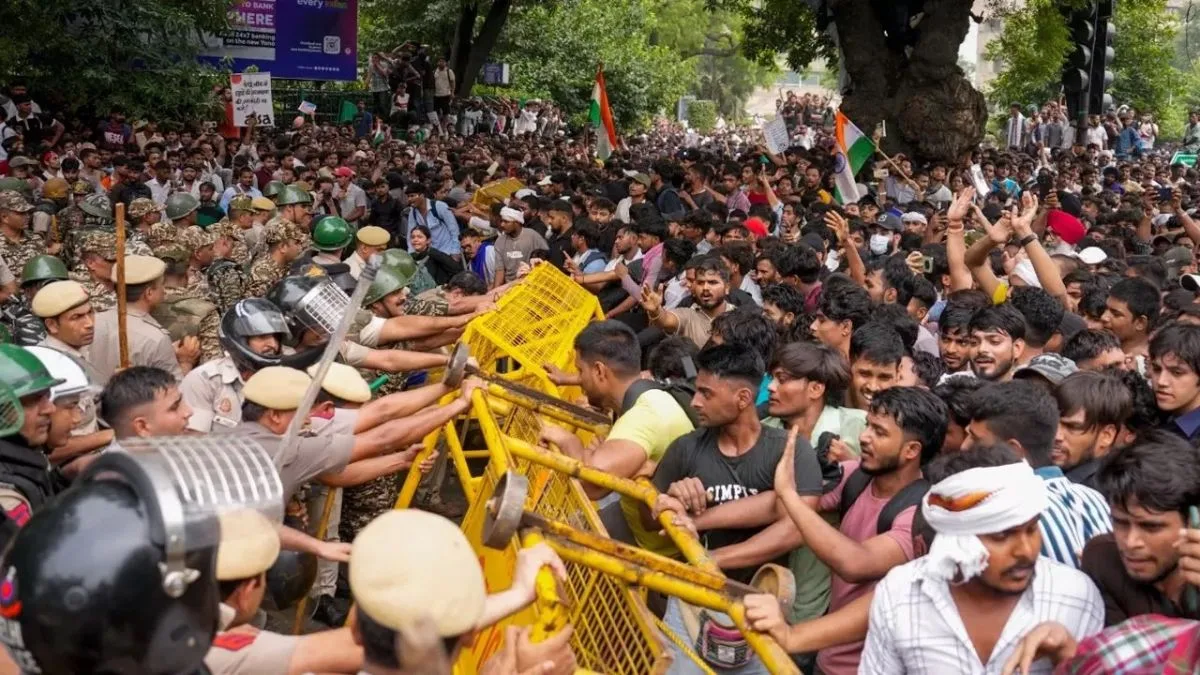
Amid CJP protest, Delhi LG authorises police commissioner to detain people under National Security Act for three months

The move comes after authorities raised concerns over maintaining law and order in the national capital. The special powers allow action against individuals whose activities are considered harmful to public security.

Statesman News Service | New Delhi |

Delhi Police have just been handed some serious extra power, and it’s tied to the ongoing protests by the Cockroach Janta Party (CJP) that have been ramping up across the city. The central government has authorised Delhi Police Commissioner Anurag Kumar to order preventive detention under the National Security Act, commonly known as the NSA.

This came out through an Extraordinary Delhi Gazette notification published on July 22, though the actual order behind it is dated July 15, according to reporting from The Tribune. Kumar, who only recently took over as Delhi Police Commissioner, now has access to these special powers, but only for a set window of time.

The powers run from July 19 to October 18

According to the order, Kumar can use preventive detention powers starting July 19 and running through October 18, 2026, giving him a three month window to exercise this authority.

For context, the NSA lets authorities detain someone without pressing formal criminal charges against them. Depending on the specifics of a case, that detention can last anywhere from 12 days up to a full year. The whole point of the law is to head off potential threats to public safety before they happen, rather than punishing someone after the fact.

Why the Lieutenant Governor signed off

The order makes clear that Delhi’s Lieutenant Governor felt this delegation of power was necessary to keep public security intact. Specifically, using authority under Section 3(3) combined with Section 2(e) of the National Security Act, 1980, the LG has named the Delhi Police Commissioner as a detaining authority for this stretch of time.

The order also spells out that Kumar can exercise detention powers under Section 3(2) of the Act specifically between July 19 and October 18, 2026.

What the NSA actually lets authorities do

At its core, the National Security Act allows officials to issue preventive detention orders against anyone whose actions are seen as a threat to public order, national security, or the flow of essential goods and services.

This is different from how normal criminal cases work. There’s no requirement to file immediate charges. Instead, the law exists to stop people before they can act in ways that officials believe would spark serious law and order issues.

It’s also worth noting that the NSA gives governments the flexibility to designate district magistrates or police commissioners as detaining authorities whenever they judge it necessary for maintaining order, which is exactly the mechanism being used here.

Rains batter Pakistan: 37 killed, Khyber Pakhtunkhwa and Gilgit-Baltistan among worst affected

Asif Ali Zardari has asked all federal, provincial and local authorities to intensify coordinated preparedness, rescue and relief measures, with Pakistan entering a “critical phase of the monsoon season”.

Statesman News Service | Islamabad |

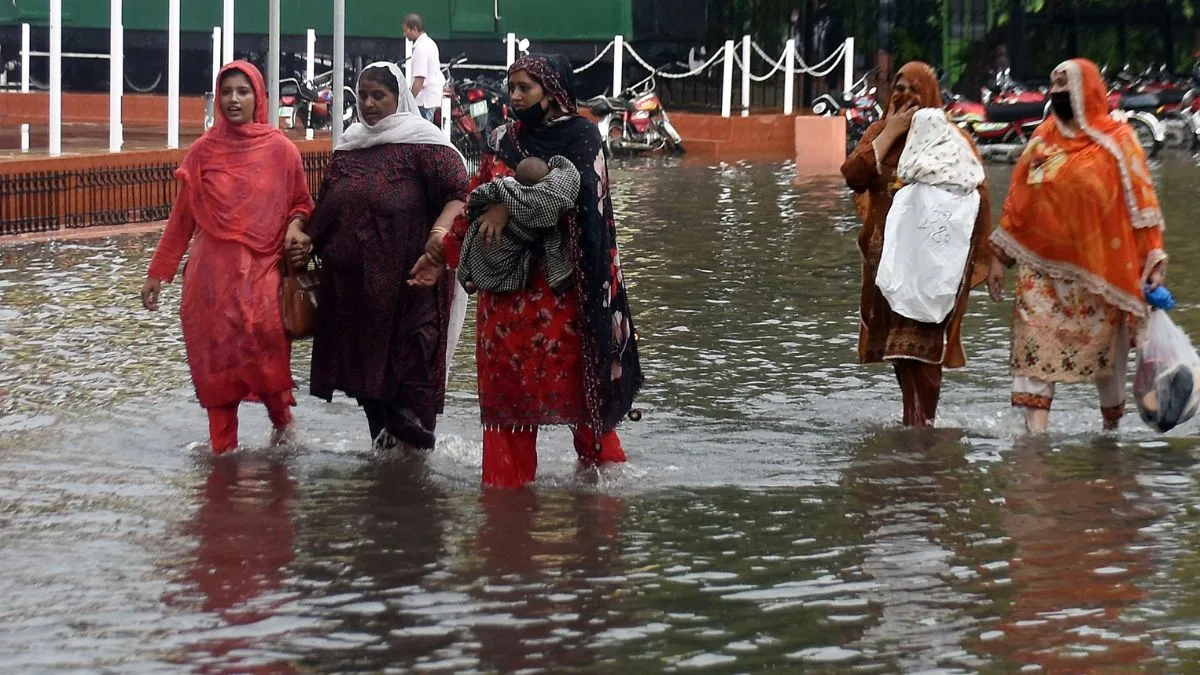
At least 37 people have died in rain-related incidents in Pakistan, with the ongoing monsoon triggering flash floods and landslides across several regions, including Khyber Pakhtunkhwa, Gilgit-Baltistan, Punjab and Pakistan-occupied Kashmir.

According to Dawn, the death toll from flash floods and other rain-related incidents has jumped to 20 in Khyber Pakhtunkhwa and 17 in Punjab. On the other hand, landslides triggered by heavy rains have significantly damaged crops, houses and roads in Khyber Pakhtunkhwa, Gilgit-Baltistan, Punjab and Pakistan-occupied Kashmir.

The rains, which started on July 19, are expected to continue in Khyber Pakhtunkhwa till July 23, the Pakistan Meteorological Department said.

Pakistani President Asif Ali Zardari has asked all federal, provincial and local authorities to intensify coordinated preparedness, rescue and relief measures, with Pakistan entering a “critical phase of the monsoon season,” read an official statement.

“The President expressed deep sorrow over the loss of precious lives and damage to homes, infrastructure and property caused by the recent rains and related incidents. He extended his heartfelt condolences to the families who have lost loved ones and expressed solidarity with all those affected,” added the statement shared on X.

Further, National Disaster Management Authority (NDMA) and Provincial Disaster Management Authorities (PDMAs) have been directed to maintain close coordination and ensure timely dissemination of early warnings.

Zardari has called for continuous monitoring of rainfall, river flows and water levels in upper catchment regions, especially in Gilgit-Baltistan and Pakistan-occupied Kashmir and directed downstream areas to make advance preparations for possible flooding.

Among the latest fatalities from the Khyber Pakhtunkhwa region have been reported from North Waziristan, where two men drowned after being swept away by a flash flood in the Tochi river.

In Pakistan’s Punjab, Gujranwala has been the worst hit region.

Of the 17 deaths reported in Punjab, 12 were caused by the collapse of buildings or other structures, two by lightning strikes and three from electrocution, local authorities said.

Notably, water levels in the Chenab river continues to rise, with a moderate flood recorded at Marala Headworks on Wednesday. At Marala Barrage, inflows increased from 84,895 cusecs on Tuesday morning to 132,169 cusecs by Wednesday noon and then to 275,608 cusecs at night, local media reports said.

Humidity triggers acne in monsoon season, Acharya Balkrishna suggests rose water remedy

Monsoon air holds more than moisture. It carries the quiet chaos of clogged pores and stubborn breakouts. In this season, one humble bottle of rose water may hold the answer skin has been asking for.

Statesman News Service | New Delhi |

Patanjali Ayurved co-founder Acharya Balkrishna recently shared a simple skincare tip on Facebook, and it’s got people talking. His point: monsoon humidity messes with your skin more than you’d think, and rose water might be the easy fix you’re overlooking.

Here’s his reasoning. When humidity spikes during the rainy season, skin pores tend to get blocked more easily. That blockage is often what triggers those annoying acne breakouts on your face. His suggested fix is straightforward: use rose water daily as a toner. He calls it natural, safe, and something anyone can slot into their existing routine without much hassle.

Why monsoon weather is rough on skin

There’s actual science behind why your skin acts up this time of year. Oil glands go into overdrive when it’s humid out, and you sweat more too. That combo means more sebum sitting on your skin than usual. Add in everyday dust and dirt, and you’ve got a recipe for clogged pores. Bacteria move in, inflammation follows, and acne shows up. It’s basically why so many people notice their skin getting worse specifically during monsoon.

What the research actually says about rose water

People have used rose water in skincare for ages, and there’s some real research backing it up too.

In one study, rose petal extract protected fibroblast cells from damage caused by hydrogen peroxide. Another found it suppressed a cellular stress pathway. It’s also loaded with antioxidants, which help fight off free radical damage, and there’s evidence it helps with mild acne, eczema, psoriasis, and dry or flaky skin.

One interesting detail: rose water contains eugenol, a compound shown to slow the growth of Propionibacterium acnes, the bacteria that causes inflammatory acne. Using it regularly is also thought to help cut down excess oil.

That said, it’s not a slam dunk with everyone. Some experts point out there isn’t solid research specifically proving rose water treats acne or other skin conditions outright. So most dermatologists treat it as a helpful add-on rather than a cure.

How to actually use it

Nothing complicated here. Put some on a cotton pad and wipe it across your face, or keep it in a spray bottle and mist it on like a toner. Best time is right after you wash your face. It helps balance your skin’s natural pH and keeps pores from getting clogged in the first place.

It’s gentle enough for most skin types, including sensitive and acne-prone skin. You can also layer it under something like a hyaluronic acid serum if you want extra hydration.

But don’t rely on it alone

Experts are clear that rose water by itself won’t solve an acne problem. You still need the basics: wash your face twice a day, stick to oil-free products, eat reasonably well. And if your skin is on the sensitive side, do a patch test before making rose water part of your daily routine.

Bihar Assembly erupts over Patna student protest; Opposition slams police lathi-charge

The paper leak controversy spilled into the Bihar Assembly as ruling and Opposition leaders traded allegations over the Patna student protest and the police response.

Statesman News Service | New Delhi |

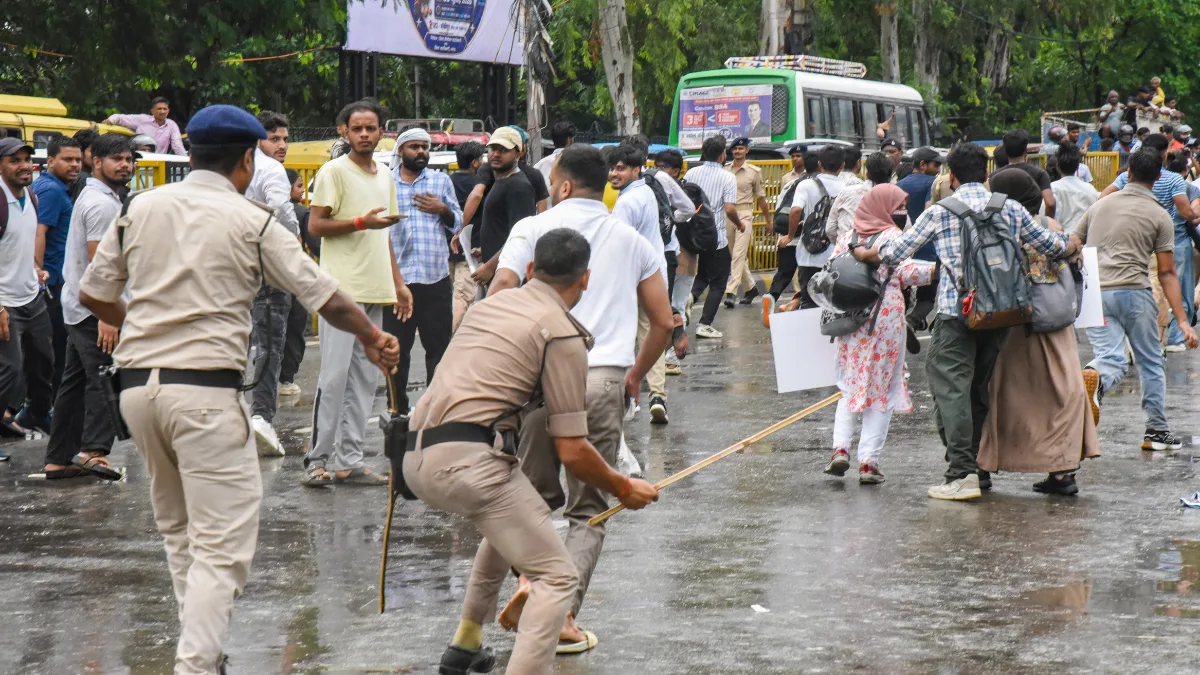
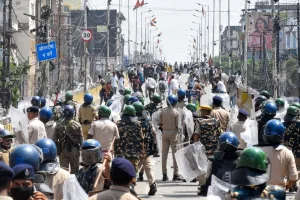
The Bihar Legislative Assembly witnessed dramatic scenes on Thursday as the Monsoon Session opened with fierce arguments over the police action against students protesting in Patna. The protest, organised over alleged paper leaks in the country, turned into a major political controversy after police used lathi-charge and tear gas to disperse demonstrators on Wednesday.

The issue dominated the Assembly from the very beginning, with the ruling National Democratic Alliance (NDA) and the Opposition blaming each other for the violence and disruption linked to the protest.

Student protest becomes centre of Assembly debate

Even before the Question Hour began, a BJP MLA raised the matter in the House. He claimed that the protest was not led by genuine students but by politically motivated people who had joined the demonstration to create unrest.

The legislator alleged that he and several other BJP MLAs faced a life-threatening attack during the protest. According to him, while every citizen has the democratic right to protest peacefully, violence and destruction of property cannot be accepted.

He further claimed that members linked to certain political parties had entered the protest under the name of a student movement and attempted to disturb law and order. The BJP MLA also alleged that vehicles belonging to BJP leaders and legislators were attacked during the demonstration, saying such actions did not represent the behaviour of students.

He added that students have every right to raise genuine concerns, but attacks on public representatives and damage to public property cannot be justified.

Government calls protest “sponsored”

Cabinet Minister Shravan Kumar also defended the government’s stand. He said protests and public demonstrations are a part of democracy, but claimed the current agitation was not being led by students themselves.

According to Kumar, the protest was a “sponsored affair” where political leaders had encouraged people to create unrest. He accused the Rashtriya Janata Dal (RJD) and Congress of playing a role in the events that unfolded in Patna on Wednesday.

He said that everyone has the right to express their views peacefully, but violence should never be accepted. Kumar also insisted that Bihar’s law functions independently and stated that the government neither falsely implicates anyone nor protects anyone from legal action.

Opposition slams police action

The ruling party’s statements immediately drew strong protests from Opposition MLAs. They accused the government of trying to silence students who were raising concerns over paper leaks.

Opposition members strongly criticised the police lathi-charge and tear-gas action against the protesters. They demanded that the government explain why force was in use and called for accountability over the incident.

The sharp exchanges between both sides led to loud protests inside the Assembly, disrupting normal proceedings.

Speaker appeals for order

As the arguments grew louder, Assembly Speaker Prem Kumar stepped in to restore order. He reminded members that every legislator has the right to raise issues affecting the public but urged them to maintain the dignity of the House.

The Speaker appealed to both the ruling party and the Opposition to hold discussions peacefully and present their arguments in an organised manner so that Assembly proceedings could continue smoothly.

Opposition stages protest outside Assembly

The political confrontation was not just on the Assembly floor. Before the session began, Opposition MLAs reached the Assembly complex carrying banners and posters against the NDA government.

They raised slogans condemning the police action against students and staged a sit-in protest outside the Assembly. Protesters repeatedly shouted, “Remove BJP, Save Education,” while demanding the resignations of Prime Minister Narendra Modi and Union Education Minister Dharmendra Pradhan.

Senior RJD leader Alok Mehta accused the government of using excessive force against students and attempting to suppress their voices. He questioned why the government had failed to properly investigate the paper leak issue and described both the alleged paper leak and the police action as serious failures that deserved condemnation.

Govt says ready for NEET debate; Opposition demands Dharmendra Pradhan’s resignation

The government accused the Opposition of stalling Parliament despite repeated offers for a discussion on the NEET paper leak, while Opposition parties maintained that the Education Minister must resign before any debate begins.

Statesman News Service | New Delhi |

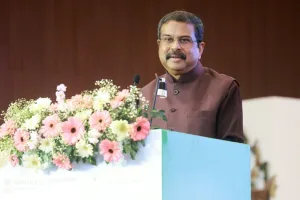
The government on Thursday accused the Opposition of preventing a discussion on the NEET paper leak controversy, saying it has been prepared for a debate from the outset while Opposition parties continue to insist on Union Education Minister Dharmendra Pradhan’s resignation.

The remarks by Parliamentary Affairs Minister Kiren Rijiju came as Parliament remained deadlocked for the fourth straight day over the issue, with repeated disruptions in both Houses.

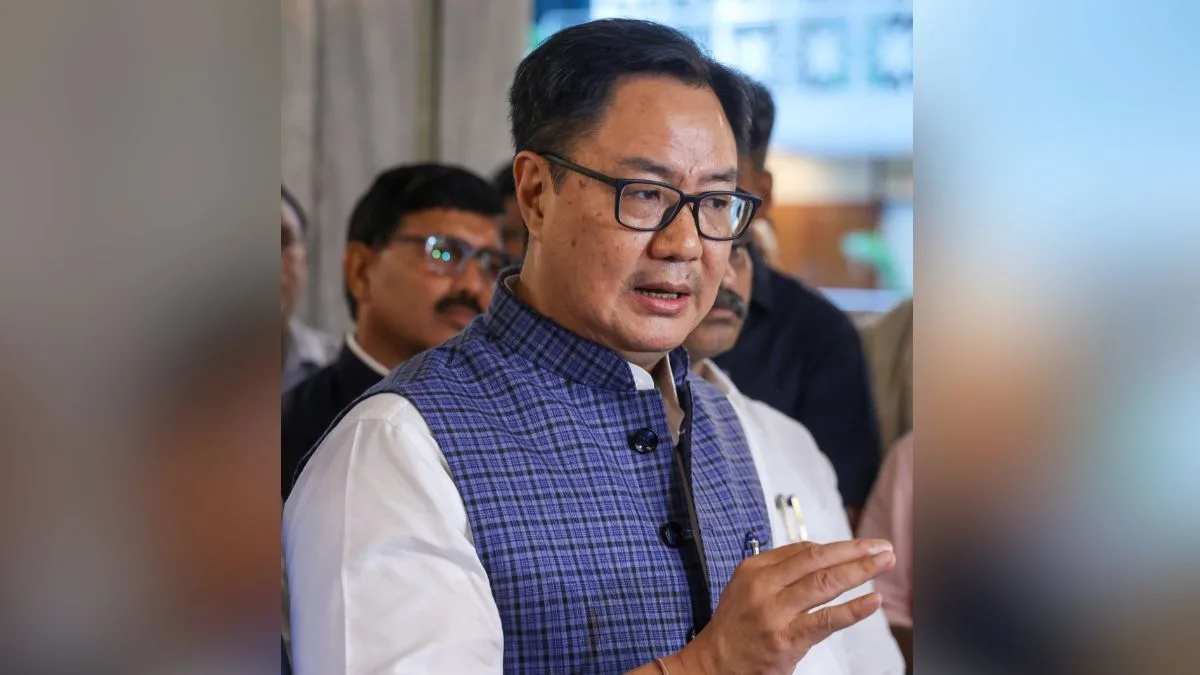
Speaking in the Rajya Sabha, Rijiju said the government had held consultations with Opposition leaders, including Congress president Mallikarjun Kharge, to facilitate a discussion. He said the Centre had asked Opposition parties to mutually decide the format and duration of the debate, but objected to what he described as “preconditions”.

“The government has been in favour of a discussion since the beginning,” Rijiju said, adding that all NDA allies supported a detailed debate on the issue.

He alleged that the Opposition was unwilling to discuss an issue affecting students and was instead using the controversy to disrupt Parliament.

Govt seeks wider debate on paper leaks

Later, speaking to reporters, Rijiju said discussions with Opposition leaders had initially been positive but claimed they later began attaching fresh conditions.

He said any parliamentary debate should cover examination paper leaks across the country rather than focusing only on the NEET controversy.

According to Rijiju, the government wants to present before Parliament the steps taken after the NEET paper leak, including re-examinations where required, timely declaration of results and measures to prevent future leaks.

He also informed the House that the government has decided to establish fast-track courts for paper leak cases to ensure speedy trials and strict punishment for those found guilty.

Rijiju said Prime Minister Narendra Modi had directed authorities to take stringent action against those responsible for examination leaks and appealed to Opposition parties to withdraw their conditions to allow Parliament to function.

Opposition sticks to resignation demand

Opposition parties rejected the government’s position and reiterated that Union Education Minister Dharmendra Pradhan must resign, holding him accountable for alleged irregularities in competitive examinations.

Outside Parliament, Leader of Opposition Rahul Gandhi criticised the Centre and demanded both the minister’s dismissal and an apology to students.

Congress leader Jairam Ramesh also questioned the Prime Minister’s response, saying he should address the issue in Parliament instead of through social media.

Parliament witnesses protests

The political confrontation spilled outside the two Houses as NDA and INDIA bloc MPs held rival protests near Makar Dwar inside the Parliament complex.

During the demonstrations, CPI(M) MP John Brittas was seen pulling a placard from BJP MP Arun Singh, prompting Parliament security personnel to form a human chain between members from both sides. Slogans were also exchanged between Congress MP Priyanka Gandhi Vadra and BJP leaders.

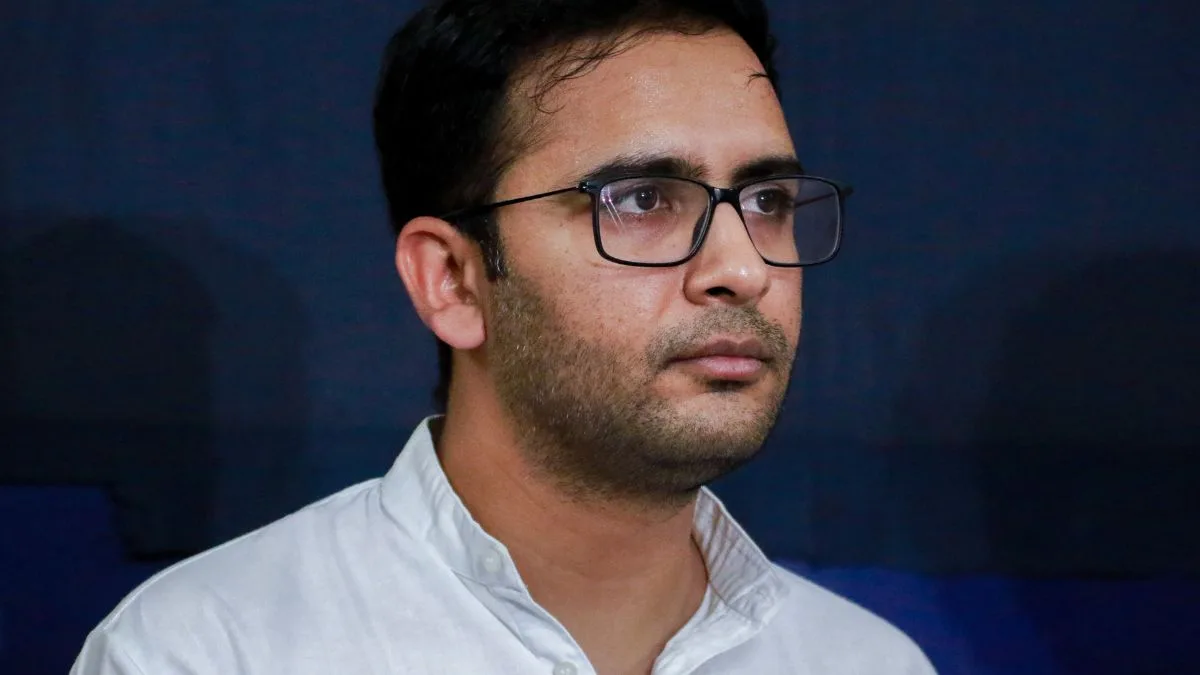
CJP Protest: ‘My apologies if you don’t see me at Jantar Mantar today,’ says Abhijeet Dipke

Abhijeet Dipke has assured the protesting students that he will be back at the Jantar Mantar by evening.

Statesman News Service | New Delhi |

Cockroach Janta Party (CJP) founder Abhijeet Dipke said he would remain away from the students protest at Jantar Mantar for a few hours on Thursday, July 23, as he is down with “fever and severe body pain.”

“I’ve been down with a fever and severe body pain for the last few days, but I’ve been pushing through with painkillers. My apologies if you don’t see me at Jantar Mantar today. I need to get a few hours of rest and recover,” he wrote on X.

However, Dipke assured the protesting students that he will be back at the Jantar Mantar by evening.

Earlier in the day, the CJP stated that it will not negotiate on the demands seeking the resignation of Union Education Minister Dharmendra Pradhan over exam paper leaks. Further, it maintained that if the government wants to communicate with the agitators, it will have to hold a meeting at the protest site at Jantar Mantar.

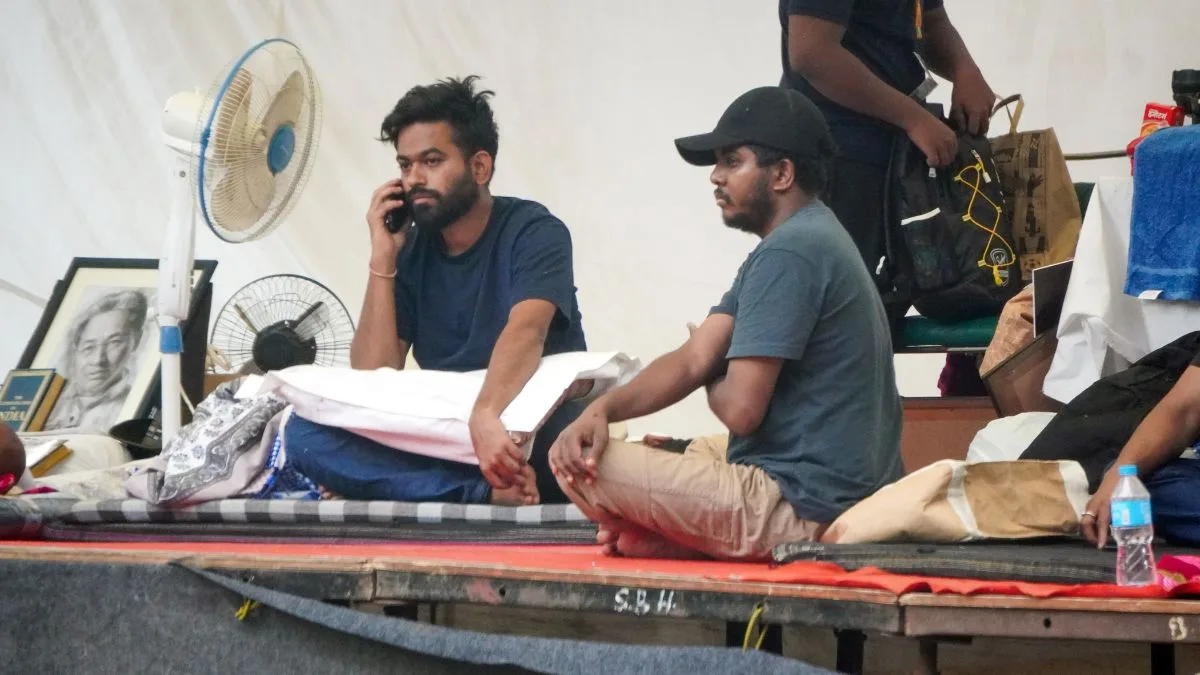
“Our protest will continue as it has been. We will not withdraw it until Dharmendra Pradhan resigns. We also want Sonam sir (Wangchuk) to end his hunger strike because we do not want him to put his life at risk. His life is very valuable for the country,” IANS quoted Dipke as saying.

Wangchuk, who entered the 26th day of his hunger strike on Thursday, is currently undergoing treatment at the Medanta Hospital in Gurugram. The activist on Wednesday said he would end his fast if the Centre assured that no action would be taken against the protesters.

On being asked about the talking with the central government, Dipke alleged that the CJP delegation was kept waiting for hours during their meeting with Union Minister JP Nadda.

“We had been kept waiting for five hours, and out of which the conversation was held for only 10 minutes. Who does like that? It was a total wastage of time,” he said.

The CJP founder added: “On one hand we were called for a meeting, while students were brutally beaten up on the other. Whatever the government wants to communicate, the next meeting will take place at Jantar Mantar.”

‘Bandage after the wound’: CJP dismisses PM Modi’s response, says paper leaks are run by ‘organised mafia’

As Prime Minister Narendra Modi announced fast-track courts for paper leak cases, the political row intensified, with the CJP and Opposition accusing the Centre of failing to address alleged systemic failures in the education system.

Statesman News Service | New Delhi |

The political battle over alleged exam paper leaks intensified on Thursday after Prime Minister Narendra Modi announced fast-track courts to deal with offenders, with the Cockroach Janata Party (CJP) accusing the Centre of ignoring the root causes of the problem and the Opposition renewing its demand for Union Education Minister Dharmendra Pradhan’s resignation.

Responding to the Prime Minister’s first public remarks on the issue, CJP representative Ashutosh Ranka alleged that paper leaks would continue unless accountability was fixed within the system.

“The Prime Minister is talking about what punishment should be given after a paper leak occurs, but why is there no discussion on why paper leaks are happening in the first place?” Ranka told ANI.

He alleged that corruption and incompetence within the education system had allowed paper leaks to become an “organised mafia” and claimed the problem would persist as long as those responsible remained in office, including the Education Minister.

“Paper leaks are happening because the system–from top to bottom–is filled with incompetent and corrupt individuals, with the Education Minister at the very top. These people operate paper leaks like an organised mafia; they receive money, make money, and run their governments off it. This is an organised syndicate. As long as you do not bring accountability to the system–a system in which people like Dharmendra Pradhan are involved–paper leaks are not going to stop. You are talking about applying a bandage after inflicting a wound, but the real question is: why is the wound being inflicted in the first place?” said Ranka.

Earlier in the day, PM Modi announced that fast-track courts would be set up to ensure swift punishment for those involved in paper leaks.

In a post on X, the Prime Minister said protecting the future of young people remained the government’s priority.

“Nothing is more important than the welfare and future of our youth! We have decided to set up fast-track courts to ensure swift and stringent punishment for those involved in paper leaks… Those who try to harm the future of our youth will not be spared,” he wrote.

PM Modi announces fast-track courts for paper leak cases, says ‘those harming youth’s future won’t be spared’

Leader of Opposition Rahul Gandhi criticised the Prime Minister’s remarks, accusing the government of shielding those responsible for failures in the education system.

In a post on X, Gandhi alleged that the Centre had “allowed and encouraged the total capture and destruction” of the education system and reiterated the Opposition’s demand for Dharmendra Pradhan’s removal as Union Education Minister, along with an apology to students.

‘You protected every person responsible’: Rahul Gandhi hits back at PM Modi over NEET leak, demands Pradhan’s sacking

Congress MP Jairam Ramesh also attacked the Prime Minister, alleging he had avoided a direct discussion in Parliament and was responding through social media instead.

The issue has continued to disrupt proceedings during the Monsoon Session, with further confrontations between the government and the Opposition expected.

ASEAN forum: Jaishankar says attack on merchant ships unacceptable, international waters must be safe

He noted that India advocates for the Coalition for Disaster Resilient Infrastructure, regularly deploys field hospitals, provides search and rescue teams, and sends relief materials and medical supplies.

Statesman News Service | New Delhi |

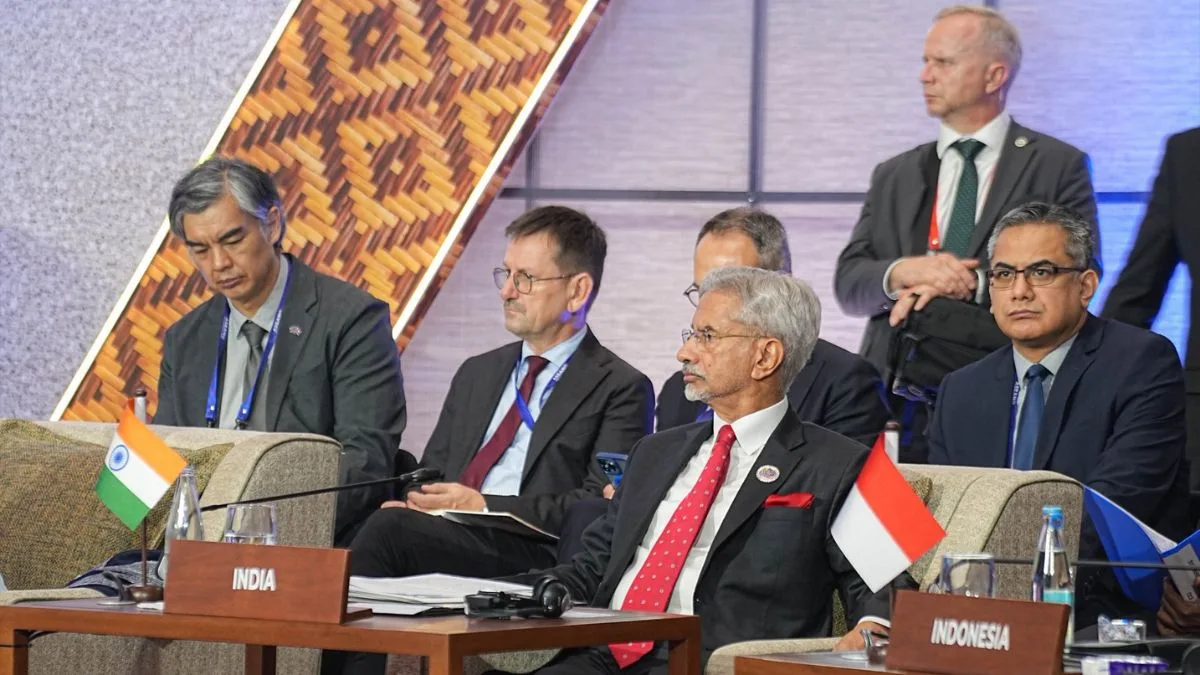
Calling the attacks on merchant shipping and civilian infrastructure as “unacceptable,” External Affairs Minister (EAM) S Jaishankar on Thursday said that commerce through international waterways needs to remain safe and free from disruptions.

While addressing the 33rd ASEAN Regional Forum (ARF) Ministerial Meeting in Manila, Jaishankar highlighted the forum’s importance for discussing political and security issues in the Indo-Pacific amid global uncertainties, IANS reported.

“Welcomed the Manila Plan of Action and highlighted that its five pillars are aligned with India’s own approach to the Indo-Pacific. India promotes a collaborative approach to disaster relief, sharing best practices, developing common SOPs and undertaking real-time & table top exercises,” the Union Minister wrote on X, following the ARF Ministerial Meeting.

“Highlighted that attacks on maritime shipping and civilian infrastructure are unacceptable, and commerce through international waterways should remain safe and unimpeded,” he added.

He noted that India advocates for the Coalition for Disaster Resilient Infrastructure, regularly deploys field hospitals, provides search and rescue teams, and sends relief materials and medical supplies.

“India has undertaken rehabilitation recently ranging from the cyclone in Sri Lanka, the Philippines and Jamaica to earthquakes in Myanmar, Venezuela and Afghanistan,” he wrote.

The External Affairs Minister further emphasised the need for zero tolerance against terrorism and said there should be no doubt that terrorist acts would have consequences.

Further, he called for prioritising efforts to choke financing resources that fuel it, adding that India co-chairs the ASEAN Defence Ministers’ Meeting Plus (ADMM) Experts’ Working Group on Counter-Terrorism with Malaysia and is taking the lead in producing a compendium of best practices.

Alia Bhatt shares Instagram note on NEET protests, writes ‘their courage humbles me’

Her note comes as Bollywood stars including Sonakshi Sinha, Pooja Bhatt, and Salman Khan have voiced support for the protesting students. The demonstrations continue.

Statesman News Service | New Delhi |

Bollywood actor Alia Bhatt has finally spoken up on the ongoing student protests in Delhi. She shared a note on Instagram on Thursday, calling the recent events heartbreaking yet hopeful.

In her post, Alia wrote that the past few days had left her heart broken and then mended, again and again, by hope. She said every student who stood their ground carried a family’s dreams and years of sacrifice with them. She called their courage humbling and said their resolve should make everyone ask if they are really listening to the people who will shape the country’s future. And, she ended the note with a simple line: for the students, by the students, the future is theirs.


View this post on Instagram


A post shared by αlia bhatt 💛 (@aliaabhatt)

The backdrop

The protests trace back to late June, when Ladakhi activist Sonam Wangchuk joined demonstrators at Jantar Mantar. He began an indefinite hunger strike, demanding the resignation of Union Education Minister Dharmendra Pradhan over alleged irregularities in the NEET medical entrance exam. The stir, led by the Cockroach Janata Party, has now stretched close to a month.

Things escalated in mid-July after a change in Delhi Police leadership. Officers removed barricades at the protest site and shifted Wangchuk to Safdarjung Hospital, a move protesters called forced. Around the same time, an ink-throwing incident and a march from Jantar Mantar toward Parliament turned tense.

Bollywood steps in

Alia is not the only star to weigh in. Pooja Bhatt, Sonakshi Sinha, Aditi Rao Hydari and Genelia Deshmukh have all posted messages backing the students. Shabana Azmi and Prakash Raj went a step further and joined the march in Delhi themselves.

Singer Arijit Singh also condemned the police action, writing that everything will be remembered. Salman Khan, too, backed the students, saying the issue should stay between students and the education system and not turn into a political fight. He said the credit for change should go only to the students.

Also Read: ‘Credit should only go to the students of our country’: Salman Khan pens long note on paper leak protests turning violent

NDA, Opposition MPs clash during parallel protests at Parliament over NEET issue

Rival protests by the NDA and the Opposition outside Parliament turned confrontational, while political exchanges intensified over the Centre’s response to the alleged NEET paper leak.

Statesman News Service | New Delhi |

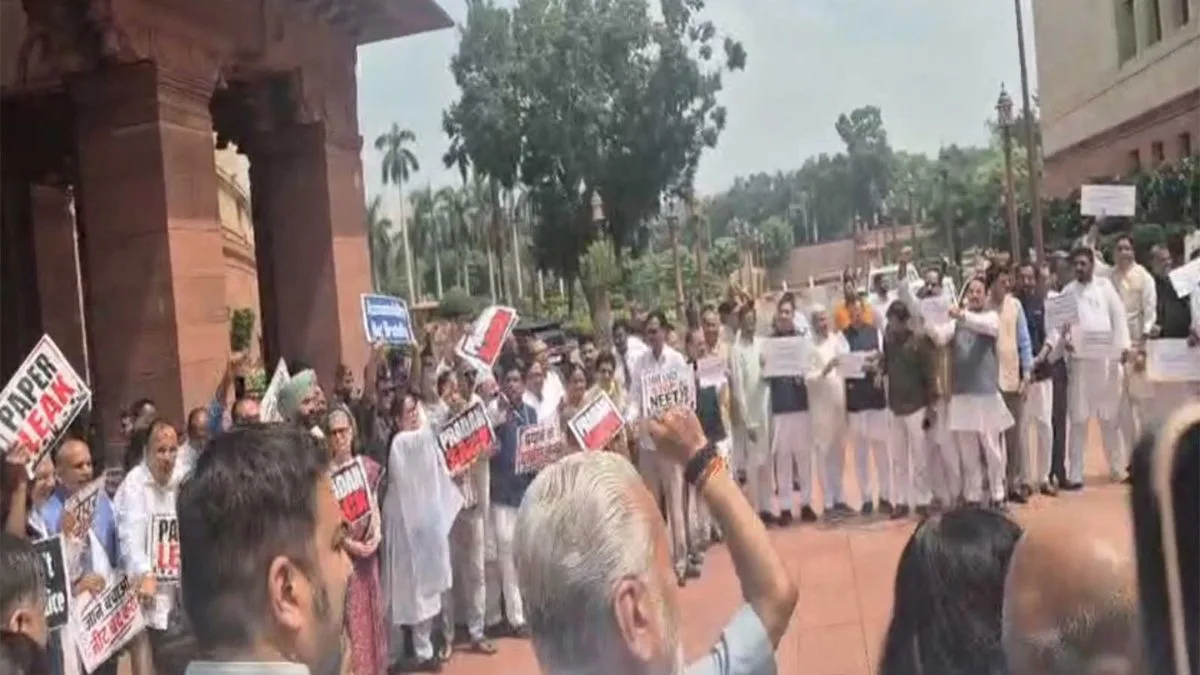
Rival demonstrations by NDA and INDIA bloc MPs outside Parliament on Thursday briefly turned confrontational as both sides protested over the alleged NEET paper leak and the deadlock over a discussion on the issue in the House.

The standoff unfolded at Makar Dwar, where Opposition MPs protested against Union Education Minister Dharmendra Pradhan over the alleged examination paper leak. NDA parliamentarians, meanwhile, accused the Opposition of refusing to participate in a parliamentary debate and of spreading misinformation on the issue.

Tensions escalated when CPI(M) MP John Brittas was seen pulling a poster from BJP MP Arun Singh. Members from both camps gathered face-to-face before Parliament security personnel intervened, forming a human chain to separate the groups. Slogans were also exchanged between Congress MP Priyanka Gandhi Vadra and BJP leaders.

BJP accuses Congress of avoiding debate

Reacting to the confrontation, BJP MP Sambit Patra alleged that the Congress was trying to avoid a discussion on the issue inside Parliament.

Patra said BJP leaders had interacted with students and activist Sonam Wangchuk over the past few days, and claimed there was broad agreement that Parliament should hold a detailed discussion on examination paper leaks and enact stricter laws to prevent future incidents.

He accused the Congress of preferring political protests over parliamentary debate.

BJP MP Sudhanshu Trivedi also said the ruling alliance wanted a discussion on the education system and the alleged paper leak in Parliament.

He said the government remained committed to protecting students’ interests and referred to the Centre’s decision to establish fast-track courts to ensure speedy punishment for those found guilty in paper leak cases.

PM Modi announces fast-track courts

Earlier in the day, Prime Minister Narendra Modi issued his first public response to the ongoing agitation, announcing that fast-track courts would be set up to ensure swift and stringent punishment for those involved in examination paper leaks.

In a post on X, the Prime Minister said protecting the welfare and future of young people remained the government’s priority and warned that those responsible for compromising students’ futures would not be spared.

He also said authorities had been directed to take all necessary steps to safeguard students’ interests.

Rahul Gandhi, Jairam Ramesh hit back

Leader of Opposition Rahul Gandhi dismissed the Prime Minister’s remarks and accused the government of damaging the country’s education system.

In a post on X, Gandhi alleged that the government had allowed the education system to be captured and had protected those responsible for its failures. He reiterated the Opposition’s demand for the dismissal of Union Education Minister Dharmendra Pradhan and sought an apology to students.

Congress MP Jairam Ramesh also criticised the Prime Minister, alleging that he had avoided addressing Parliament directly on the issue and instead responded through social media.

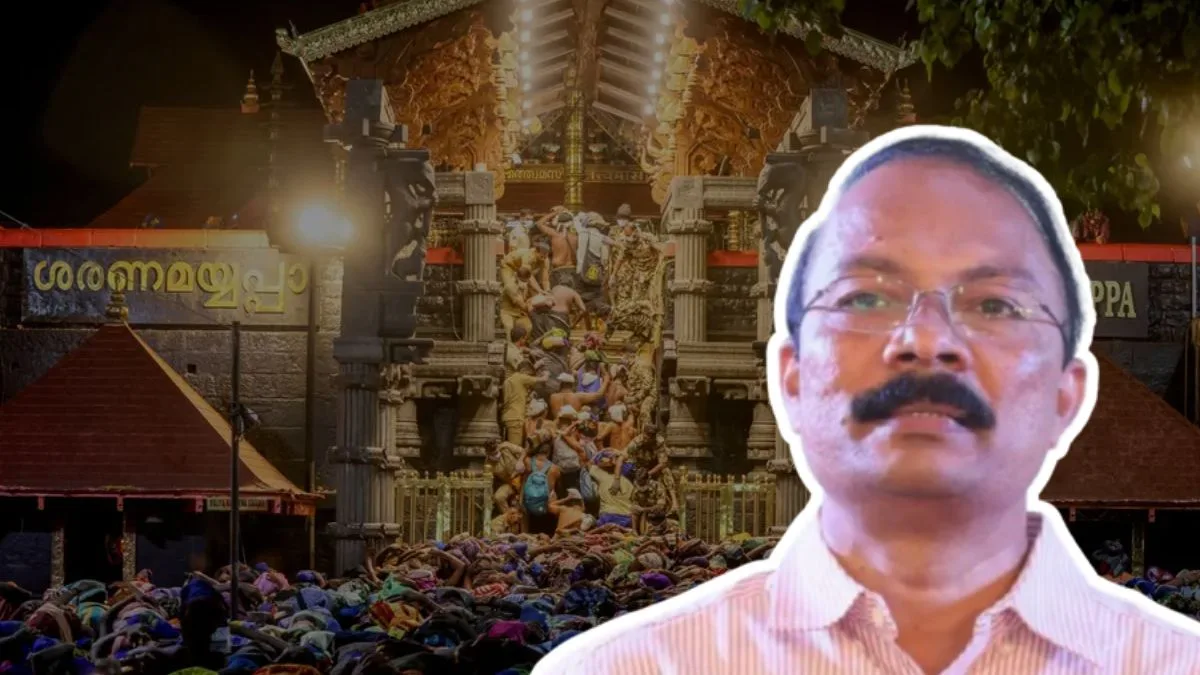
Sabarimala gold case: Former Travancore Devaswom Board chief taken into custody, probe intensifies

The SIT’s investigation has entered a crucial phase as fresh arrests and new evidence bring the alleged Sabarimala gold misappropriation case back into focus.

Statesman News Service | New Delhi |

The Special Investigation Team (SIT) investigating the alleged Sabarimala gold misappropriation case took former Travancore Devaswom Board (TDB) president P.S. Prasanth into custody from his home in Thiruvananthapuram on Thursday. The action came shortly after the Kerala High Court directed investigators to speed up the long-running probe.

High Court pushes investigation forward

The latest action follows the Kerala High Court’s instruction to the SIT to complete the investigation without further delay. Only a few days earlier, the SIT informed the court that it planned to submit the final report in one of the two registered cases within the next 30 days.

According to investigators, scientific examination of temple artefacts has helped them understand how the alleged offence was carried out. The High Court has scheduled the next hearing of the matter for September 3.

Officials have also indicated that they are examining evidence to decide whether a third criminal case should be registered in connection with the alleged scam.

Two cases, several arrests and more action expected

The SIT has already registered two separate cases related to the alleged disappearance and misappropriation of gold from temple artefacts.

Several people named in the investigation were arrested earlier. However, they later secured statutory bail because the investigating agency could not file charge sheets within the legally required time. One of the accused has since died.

Investigators are now expected to take two more members of the administrative team that worked under Prasanth into custody as the probe continues.

Political journey and role at the Devaswom Board

P.S. Prasanth was earlier associated with the Congress party. After losing the 2021 Kerala Assembly election, he joined the CPI(M). He was later appointed president of the Travancore Devaswom Board, the statutory body that manages temples across south Kerala, including the Sabarimala temple.

With his detention, two former TDB presidents, both linked to the CPI(M), have now faced arrest in connection with the investigation. Both were jailed earlier but are currently out on bail.

Restoration work triggered questions

The controversy began during Prasanth’s tenure when concerns were raised over the restoration of the temple’s Dwarapalaka, or guardian, sculptures. The SIT questioned him several times regarding the decision to send the sculptures for restoration.

Investigators are examining whether the restoration process was connected to the alleged disappearance of gold from the temple artefacts.

Prasanth rejects allegations, calls case politically motivated

Just hours before he was taken into custody, Prasanth shared a detailed Facebook post defending his actions and claiming he was being targeted unfairly.

He said he was being made an accused not because he had committed any wrongdoing, but because his Board had exposed the alleged 2019 Sabarimala gold theft. Asking, “What was our mistake in 2025?”, he claimed his administration had worked honestly and transparently and had helped bring the alleged theft to public notice.

Prasanth also said he had expected his arrest and described the action against him as politically motivated.

Claims of no financial loss to the temple

Defending the restoration of the Dwarapalaka sculptures, Prasanth said they were sent to Chennai only to remove ritual impurity after the damaged sculptures had reportedly injured temple staff during cleaning.

He insisted that the Travancore Devaswom Board did not suffer even a single rupee in financial loss. According to him, the restored sculptures actually weighed more and contained a higher quantity of gold after they were reinstalled.

He further argued that the failure to inform the Special Commissioner before moving the sculptures was merely an administrative lapse by officials and not a decision taken by the Board.

Prasanth also maintained that it was his Board that submitted the 2019 records before the Kerala High Court and later handed over every document requested by the SIT, which, he claimed, ultimately helped uncover the alleged gold scam.

(With input from IANS.)

NEET-UG protest: CJP demands Dharmendra Pradhan’s removal, claims movement has spread nationwide

CJP representatives said they were open to talks with the Centre but insisted that any dialogue must address their core demands, including compensation for affected families and protection for protesters.

Statesman News Service | New Delhi |

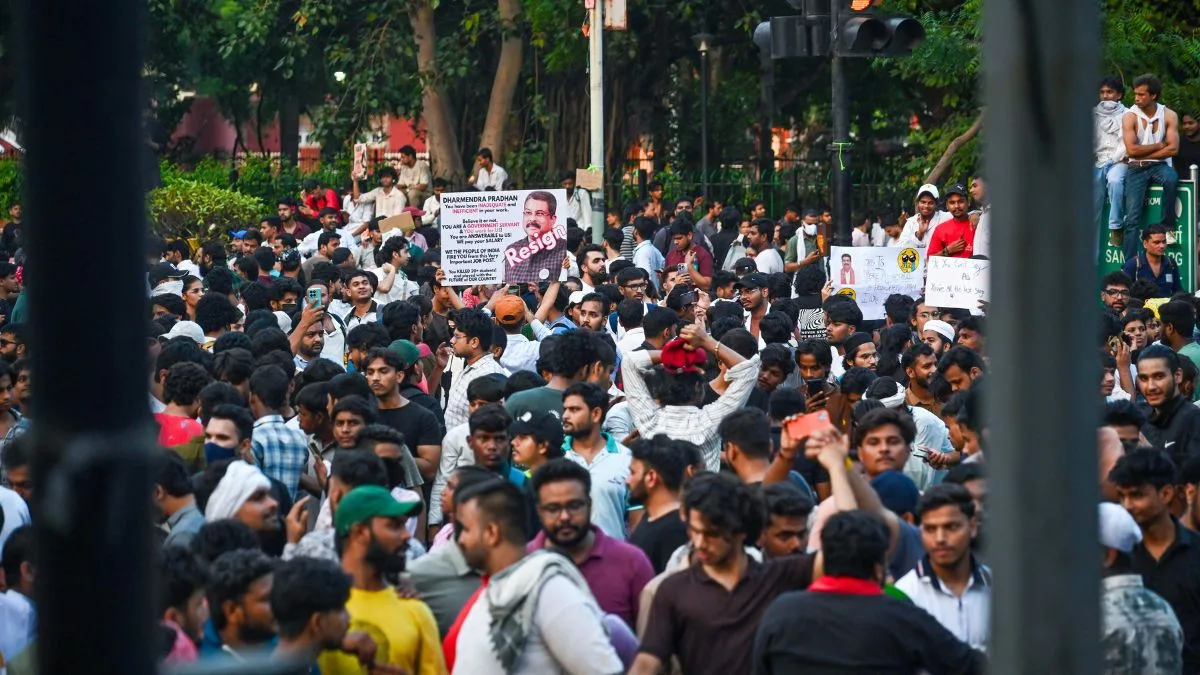
Representatives of the Cockroach Janata Party (CJP) on Thursday claimed that their student protest at Delhi’s Jantar Mantar had evolved into a nationwide movement and renewed their demand for the removal of Union Education Minister Dharmendra Pradhan over the NEET-UG paper leak issue.

Addressing reporters at the protest site, CJP representative Ashutosh Ranka said the agitation, which has been underway for over a month, had drawn support from across the country.

He claimed thousands of people remained at Jantar Mantar while millions were participating in protests elsewhere, calling it a major achievement for the movement.

CJP renews demand for minister’s removal

Ranka said the protesters remained willing to engage with the government but questioned the purpose of further discussions if their demands had already been conveyed.

“Our demands are clear. We want the resignation of Dharmendra Pradhan,” he said, adding that the government should decide whether it intended to remove the minister instead of prolonging negotiations.

He also said the protesters had provided clear timelines during discussions with the government and had kept the media informed after regaining access to their mobile phones, which he claimed had been confiscated for a period before the first round of talks.

Protesters seek compensation and protection

Ranka said the protesters were seeking compensation of Rs 1 crore, the removal of Pradhan and an assurance that no action would be taken against those participating in the agitation.

Referring to a meeting with Union Health Minister JP Nadda, he alleged that the minister had presented the government’s version of events and said the sit-in would not continue if the protesters’ concerns were addressed.

On Sonam Wangchuk’s condition, Ranka claimed his vital signs were stable but alleged that his health was deteriorating. He also expressed concern about the possibility of police action against demonstrators.

Ranka said volunteers were being deployed in greater numbers to maintain order at the protest site and minimise any untoward incidents.

BJP accused of trying to disrupt protest

Meanwhile, CJP founder Abhijeet Dipke alleged that outsiders had been sent to disrupt the month-long protest.

He accused BJP workers of attempting to incite violence and defame the demonstrators by pelting stones.

Also Read: ‘BJP sent stone-pelters, police brought trucks of stones’: CJP’s Abhijeet Dipke alleges as NEET protest enters Day 34

On Wednesday, Union Health Minister JP Nadda said the NEET-UG paper leak issue should not be politicised and described it as a serious matter requiring detailed discussion. He said the government was prepared to discuss all aspects of the issue in Parliament.

Best left in the drawer?

A government report that spends more than a decade in a drawer tells a story regardless of what is written on its pages.

Statesman News Service | New Delhi |

A government report that spends more than a decade in a drawer tells a story regardless of what is written on its pages. In Bengal, the story of the Justice Chatterjee Commission’s report is not really about the firing of 21 July 1993 – that account has been public, in substance, since the commission concluded its work in 2014. The real story is about what happens to inconvenient documents in Indian state administration, and about a political establishment’s calculated relationship with its own archives.

Consider the timeline. Mamata Banerjee’s government constituted the commission in 2011, within months of taking power, fulfilling a pre-election promise that was central to her party’s founding narrative. The commission worked for three years and delivered its findings in 2014. Under the Commission of Inquiry Act, 1952, the report was legally required to be placed before the Assembly, alongside the government’s action-taken response within six months. That deadline came and went.

It came and went again the following year, and the year after that, through eleven subsequent Martyrs’ Day observances, each one drawing hundreds of thousands of TMC workers to hear Banerjee speak of justice for the fallen – even as the state’s own commissioned account of that injustice remained unpublished by her administration. Bengal, it turns out, is no stranger to this pattern. A 2018 audit found the state had spent roughly Rs 32.5 crore across thirteen commissions of inquiry into politically sensitive incidents, with only three reports ever tabled in the Assembly.

Among the untabled was the Shyamal Kumar Sen commission report on the Saradha ponzi scheme, in which TMC figures were named as key accused, submitted in 2014 and never placed before the House either. The pattern suggests something structural rather than incidental – a government apparatus in which commissions serve a useful purpose at the moment of their announcement, generating headlines and satisfying demands for accountability, and a far less useful purpose once their findings are ready to be read. This is where the sharper charge against TMC gains its force.

It is one thing for a report to be delayed by bureaucratic friction. It is another for an entire category of politically sensitive reports – on a scam implicating the ruling party’s own leaders, and on the founding tragedy of the ruling party’s own political identity – to share the same fate of indefinite non-tabling, year after year, election after election, while the government that shelved them continued to campaign on the moral authority those very documents were meant to formalize. Whether that pattern reflects deliberate strategy or a permissive culture of institutional neglect that nonetheless serves the ruling party’s convenience is a matter for voters and historians to weigh – but the pattern itself is documented, not alleged.

Chief Minister Suvendu Adhikari’s government now has every incentive to frame its release of the July 21 report as an act of transparency his predecessor withheld for eleven years, and there is a straightforward reading in which that framing is simply accurate: a legal obligation went unmet for over a decade, and a new government met it. But governments that table old reports belonging to their predecessors are rarely acting from pure institutional conscience, and it would be naive to treat this release as anything other than what it plainly also is – a calculated strike delivered in the exact week it would cause maximum discomfort to a rival preparing her most important annual address.

TMC’s defenders will point out, correctly, that the underlying findings of the report do not accuse Banerjee or her party of the firing itself; that tragedy occurred under a Left Front government seven years before TMC’s founding. They may also argue that a government juggling thousands of files across fifteen years cannot be expected to treat every commission’s report as an urgent priority, and that selective outrage over one unpublished document, out of thirteen commissions with similarly unpublished findings, says more about the current government’s political timing than about any unique culpability on TMC’s part. That argument has some force, and a fair account of this episode should register it.

But it does not fully answer the more specific question the tabling has now placed on Bengal’s public record: why a party whose entire political identity rests on public commemoration of these thirteen deaths chose, for eleven consecutive years, not to make public the one official document that formally examined them. Institutional inertia is a real phenomenon in Indian administration, and it is possible that is all this was.

It is also possible, and Adhikari’s government is plainly betting the public will conclude that a report is easier to leave in a drawer when its publication would complicate the story a government prefers to tell about itself. Bengal’s voters will decide which explanation they find more persuasive. What is not in dispute is the document itself, now finally before the Assembly it was always legally required to reach – eleven years, and one change of government, later than the law demanded.

(THE WRITER IS A RETIRED CIVIL SERVANT.)
KC Venugopal moves adjournment motion over NEET row, alleges 152 paper leaks and police brutality

The Opposition has stepped up pressure on the Centre over the NEET controversy, demanding accountability for alleged exam paper leaks and action against those responsible.

Statesman News Service | New Delhi |

As the Monsoon Session of Parliament entered its fourth day, confrontation between the government and the Opposition intensified over examination paper leak issue. Congress MP KC Venugopal submitted an Adjournment Motion notice in the Lok Sabha, asking the House to suspend its regular business and hold an urgent discussion on what he described as a “severe and ongoing crisis” in India’s examination system.

The notice also demanded a debate on the police action against students who protested at Jantar Mantar in New Delhi on July 20.

Also Read: ‘You protected every person responsible’: Rahul Gandhi hits back at PM Modi over NEET leak, demands Pradhan’s sacking

Congress raises questions over exam system

In his notice, Venugopal alleged that India has witnessed 152 question paper leak incidents involving major competitive examinations, including NEET. He claimed that the repeated failures of the examination system have deeply affected students across the country.

The Congress leader also referred to the emotional impact of the controversy, alleging that nearly 12 students died by suicide after losing hope in the examination process. He argued that these incidents reflected larger crisis in the country’s education system that required immediate parliamentary attention.

Allegations against Education Minister

Venugopal strongly criticised Union Education Minister Dharmendra Pradhan, accusing him of failing to ensure accountability despite repeated examination controversies.

According to the notice, no meaningful arrests or criminal action have been taken against those allegedly responsible for the paper leaks, including coaching syndicates, officials, or other accused individuals.

The notice stated that Pradhan continues to remain in office despite presiding over an examination system that, according to the Congress, has repeatedly failed students. It argued that this violates the principle of ministerial responsibility and called for accountability.

Protest at Jantar Mantar linked to paper leak issue

The motion also connected the examination controversy with the July 20 protest organised during the CJP Parliament march in the national capital.

Venugopal alleged that students and young people who had gathered peacefully to demand accountability were subjected to police action. The notice claimed that protesters faced lathi charges, tear gas and suppression by the Delhi Police despite holding a peaceful demonstration.

It further alleged that Members of Parliament from the Congress and other Opposition parties who later staged a peaceful protest were also met with police force. According to the notice, the Leader of the Opposition and several MPs were attacked by Delhi Police personnel and dragged across the road.

Three key demands placed before the house

The Congress leader urged that the Lok Sabha be adjourned so that the Education Minister could make a suo motu statement explaining the alleged 152 paper leak cases and the reported lack of arrests in the matter.

The notice also placed three major demands before the government:

– Dharmendra Pradhan should accept moral and constitutional responsibility and resign from his post.

– Parliament should hold a full discussion on the NEET and CBSE issues, examination-related student suicides, and the broader education crisis.

– All police cases filed against students and youth who participated in the peaceful July 20 protest should be withdrawn.

Parliament deadlock continues

The latest notice comes as Parliament remains locked in a political standoff over the NEET-UG paper leak issue. Both the Lok Sabha and the Rajya Sabha have seen repeated adjournments this week as the INDIA bloc continues to demand the resignation of Education Minister Dharmendra Pradhan before any discussion takes place.

The government has maintained that it is prepared for a debate on the issue and has accused the Opposition of attaching fresh conditions. However, Rajya Sabha Leader of the Opposition Mallikarjun Kharge has insisted that Pradhan must resign first to ensure fair and meaningful discussion in Parliament.