Logo

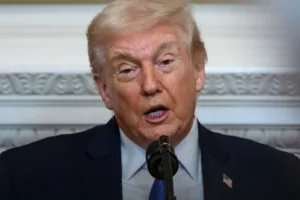
End of US war with Iran depends on whether Trump loses the war within

Fifty-five days after the first US strikes on Iran, the guns have fallen silent temporarily, but the war is far from over.

Arti Bali | New Delhi |

Fifty-five days after the first US strikes on Iran, the guns have fallen silent temporarily, but the war is far from over. After weeks of bombing, a two-week ceasefire was announced to create space for a deal.

Trump’s terms are unambiguous: Iran must transfer its enriched uranium and yellow cake stockpiles out of the country, dismantle its missile capabilities, and reopen the Strait of Hormuz. For Washington, these are the non-negotiables, the minimum price of peace.

As ceasefire talks were underway, Trump moved to blockade Iranian ports, a decision that blurred the line between pause and escalation. When the ceasefire’s original April 22 deadline arrived, rather than a deal, there was an extension. Trump, characteristically, signaled confidence, a deal with Iran would happen, he said, just not in haste.

Tehran sees it differently. Iranian officials have pushed back, barely concealing their contempt, insisting the US arrived expecting quick capitulation and got something else entirely. Iran will not surrender its right to enrich uranium for civilian purposes, will not dismantle the missiles it considers its core deterrent, and will not accept terms from a country it regards as the aggressor. Iranian point of view is America is not a victor setting conditions, it is a frustrated superpower that failed to break them. The Strait stays closed. The standoff holds.

The bombs haven’t stopped falling entirely, but the real war is now being fought through a different weapon: economic suffocation. The US has blockaded Iranian ports, strangled energy exports, and squeezed Tehran’s finances in ways that airstrikes alone never could. Iran, for its part, has responded not with surrender but with mines in the water and missiles that rattled Gulf nations into an uncomfortable realisation, Washington may not be able to protect them after all.

This is the shape of 21st century conflict. It doesn’t always announce itself with shock and awe. Sometimes it arrives through frozen assets, redirected tankers, and the slow grinding pressure of a country being cut off from the global economy.

What makes the conflict particularly difficult to read is Trump himself. Throughout the war, his messaging has lurched between threat and reassurance with remarkable fluidity. One day he promises to strike Iran’s power grid and energy infrastructure, the next, his administration quietly signals that a deal is close. Markets have swung on these signals and critics argue that is no accident.

The pattern is familiar. Markets are being manipulated to an extent that escalation of the conflict is generating fear and in that volatility, those positioned correctly stand to gain. Whether this is a deliberate strategy, instinctive deal-making, or simply the chaos of an improvised foreign policy cum economic policy, the effect turns out to be uncertainty emerging as a tool.

The Iran war did not emerge from a vacuum. Neither did the pressure on Venezuela, where Trump effectively forced a leadership realignment by making defiance economically unbearable. President Trump has reshaped US foreign policy to assert dominance over the Western Hemisphere, called the “Donroe Doctrine.” it has been quietly updated for an era of energy geopolitics.

He is using military pressure, tariffs, sanctions, aid cuts, and selective rewards to influence Latin American countries.Iran controls the Strait of Hormuz. Venezuela controls some of the world’s largest oil reserves. The logic connecting these pressure campaigns is not difficult to trace.

Meanwhile, the institutions that were formed to manage these conflicts are struggling to stay relevant. The United Nations has watched this war unfold largely from the sidelines, hamstrung by veto politics and decades of stalled reform. This erosion didn’t begin with Iran. It was visible in the slow annexation of Palestinian territories in the West Bank, where international objections produced little beyond statements, and in proposals to redevelop Gaza as a resort, a vision that treats one of the world’s most traumatised places as real estate.
Apart from foreign policy, Pentagon is hit with departures. More than 30 senior military officers have been removed under Defense Secretary Hegseth. The Army chief of staff is gone. The chief of naval operations is gone. The Air Force’s vice chief of staff is gone.

The Pentagon is simultaneously being asked to fight a war with Iran, enforce a naval blockade, deter China, and overhaul its shipbuilding program, all while its leadership is being purged at an unusual pace.

Trump’s vision of a “Golden Fleet” anchored by battleships costing up to $26 billion each has military experts skeptical. The timeline is unrealistic, the cost staggering, and the strategic logic questioned even by those broadly sympathetic to the administration.

Perhaps the most underreported dimension of this conflict is Iran’s durability. Gulf states that tolerated the US campaign have watched uneasily as Iranian missiles reached American bases on their soil. The message Tehran delivered was pointed, US air power cannot guarantee your safety. That will shape Gulf diplomacy long after any ceasefire holds.

Iran’s missile capabilities, its fast boats, its ability to mine critical shipping lanes, none of it was eliminated in the opening campaign. You can bomb a great deal around the Strait of Hormuz without actually reopening it.

For now, the ships remain anchored, the Strait stays closed, and the world waits to see which version of Trump shows up tomorrow.
@⁨Mitali Gautam⁩ Pls publish and rank in world section
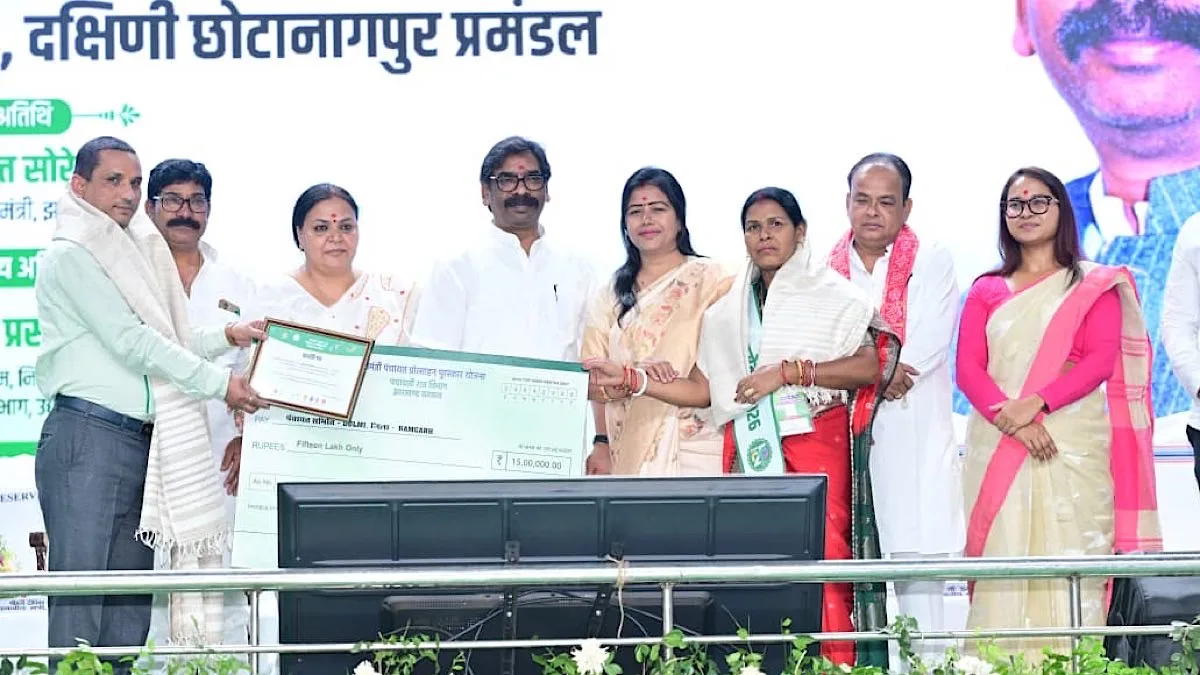
Funds, incentives strengthen panchayat system in Jharkhand

The event, held at the Harivansh Tana Bhagat Indoor Stadium, saw incentives being distributed to performing gram panchayats, gram sabhas, panchayat samitis and zila parishads for their contribution to rural governance.

Statesman News Service | Ranchi |

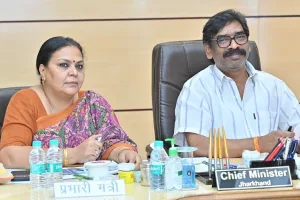
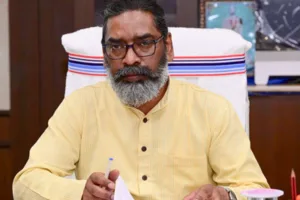
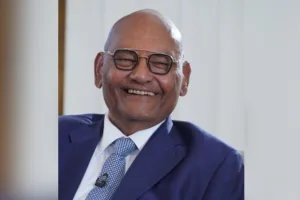
The Jharkhand government on Friday reiterated its focus on decentralised governance and rural development as Chief Minister Hemant Soren and Rural Development and Panchayati Raj Minister Dipika Pandey Singh addressed a Panchayat Incentive Awards ceremony and Mukhiya conference in Ranchi.

The event, held at the Harivansh Tana Bhagat Indoor Stadium, saw incentives being distributed to performing gram panchayats, gram sabhas, panchayat samitis and zila parishads for their contribution to rural governance.

Addressing representatives, Hemant Soren said village development remains central to the state’s progress and called for stronger coordination between elected representatives and officials to ensure effective delivery of welfare schemes. He also urged panchayats to prioritise water conservation measures and explore solar power generation to boost rural incomes.

Dipika Pandey Singh highlighted the role of mukhiyas as the key link in the three-tier Panchayati Raj system, saying they are crucial in implementing government schemes at the grassroots. She said panchayats are receiving increased financial support, with Rs 412 crore in tied funds and Rs 555 crore in untied funds already released under the 15th Finance Commission, and additional allocations expected soon. Around Rs 600 crore is also likely to be provided through the State Finance Commission.

She added that panchayat buildings are now receiving monthly operational support of Rs 15,000, while digital systems are being introduced to improve service delivery.

The state also formalised an arrangement to extend Aadhaar-related services at the panchayat level, enabling residents to access facilities closer to home.

The Mukhyamantri Panchayat Protsahan Puraskar, introduced to promote performance-based governance, aims to recognise effective and transparent functioning of local bodies.

Senior ministers, legislators and panchayat representatives were present at the event.

Former Kerala DGP asks Rahul Gandhi why not consider Kodikunnil Suresh for CM’s post

As debate over who would become the next Chief Minister in Kerala is getting thicker in Congress, former Director General of Police (DGP) T P Senkumar advocated Kodikunnil Suresh, a senior Congress leader who belongs to the Dalit community, to be considered to lead the government, if the UDF gets a majority in the assembly polls

Statesman News Service | Thiruvananthapuram |

As debate over who would become the next Chief Minister in Kerala is getting thicker in Congress, former Director General of Police (DGP) T P Senkumar advocated Kodikunnil Suresh, a senior Congress leader who belongs to the Dalit community, to be considered to lead the government, if the UDF gets a majority in the assembly polls

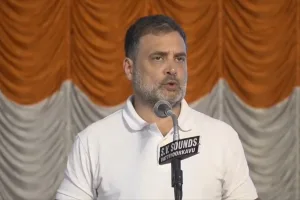
In a Facebook post on Friday, Senkumar accused Rahul Gandhi of hypocrisy, questioning why the fiery support he shows for Dalits and OBCs in speeches doesn’t translate into actual leadership roles for those communities within the Congress party. “Why Rahul Gandhi, who makes fiery speeches for Dalits and OBCs empowerment every day, doesn’t translate into actual leadership roles for those communities within the Congress party,” Senkumar asked.

Senkumar questioned the perceived lack of high-level leadership opportunities for Suresh Kodikunnil, effectively asking what his “disqualification” is for the top state role

Stating that his opinion is that if the UDF wins, Kodikunnil Suresh should lead Kerala, Senkumar asked why is the Congress not considering him for the Chief Minister’s post

Kodikunnil Suresh is a senior leader in the Congress, what are the reasons that disqualify him from the post of Chief Minister of Kerala, Senkumar asked.

By asking what disqualifies Suresh, Senkumar is pointing toward potential caste-based discrimination or internal party hierarchies that have historically overlooked Suresh Kodikunnil for the Chief Minister’s position despite his eight terms as an MP.

Kodikunnil Suresh is an eight-term Member of Parliament representing the Mavelikara constituency. He serves as the Chief Whip of the Congress Parliamentary Party in the Lok Sabha and was previously the Union Minister of State for Labour and Employment

RBI revokes licence of ‘Paytm Payments Bank,’ bars banking operations

The RBI said the action was taken as the affairs of the bank were being conducted in a manner “detrimental to the interest of the bank and its depositors.” Following the cancellation, Paytm Payments Bank is prohibited from undertaking the business of banking.

Statesman News Service | New Delhi |

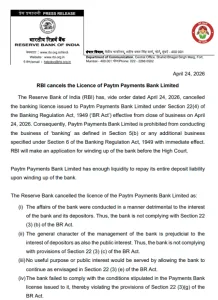
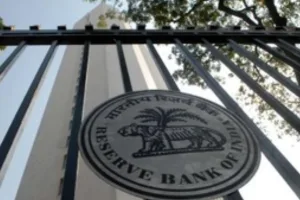
The Reserve Bank of India (RBI) today cancelled the banking licence of Paytm Payments Bank with effect from April 24, 2026, barring it from carrying out any banking operations.

The RBI said the action was taken as the affairs of the bank were being conducted in a manner “detrimental to the interest of the bank and its depositors.” Following the cancellation, Paytm Payments Bank is prohibited from undertaking the business of banking.


The Reserve Bank of India cancelled the banking licence of Paytm Payments Bank Limited under Section 22(4) of the Banking Regulation Act, 1949, with the decision coming into effect from the close of business on April 24, 2026. Following the cancellation, Paytm Payments Bank Limited has been barred from carrying out the business of “banking” as defined under Section 5(b), as well as any additional activities permitted under Section 6 of the Act, with immediate effect.

The RBI also said it will initiate the process of winding up the bank by filing an application before the High Court.

According to the RBI’s official statement, the bank was directed previously as well to stop onboarding new customers with effect from March 11, 2022. Thereafter, on January 31, 2024 and February 16, 2024, certain business restrictions were also imposed on the bank, which, inter alia, disallowed any further deposits/credits/top-ups in existing customer accounts, prepaid instruments, wallets, etc.
 

Myth of historic voter turnout in TN: Decoding the highest polling per cent in assembly polls

A misplaced euphoria and excitement is there about the ‘historic voter turnout’ of 85.14 in the April 23 polling for the Tamil Nadu Assembly elections which masks the ground reality of the voter cake shrinking, pushing the percentage higher with no remarkable jump in the actual votes cast.

Statesman News Service | Chennai |

A misplaced euphoria and excitement is there about the ‘historic voter turnout’ of 85.14 in the April 23 polling for the Tamil Nadu Assembly elections which masks the ground reality of the voter cake shrinking, pushing the percentage higher with no remarkable jump in the actual votes cast.

Since the state has never recorded 80 per cent turnout in either Assembly or Lok Sabha elections, from drawing rooms to street corner tea shops, the public discourse is about decoding this myth. The present figure cannot be seen in isolation so as to conclude that this is the result of a desire for change. Tamilaga Vettri Kazhagam (TVK) president and actor Vijay was quick to predict that this ‘unprecedented overwhelming massive and historic turnout’ was an indication of the winds of change’. In a post on ‘X’ he thanked the children for ensuring that their parents and relatives exercised their franchise in large numbers.

The reasons attributed for this hike range from the Election Commission’s Special Intensive Revision (SIR) of electoral rolls, which has shrunk the electoral cake by purging over 68 lakh voters. Post SIR, the total electorate of Tamil Nadu was 6.41 crore, which has come down to 5,73 crore. The second one is the Vijay factor, said to have galvanised the youth and first-time voters as well as women to participate in the democratic process.

While the sharp jump is statistically true, the figure also conceals the fact that there is only a marginal increase in actual polling. In 2021, the poll percentage was 73.63 per cent with the previous high turnout of 78.01 per cent in 2011. In this Assembly election, the figures present a sober picture: the total number of people who voted had gone up by 24 lakh – from 4.63 crore in 2021 to roughly 4.87 crore in 2026. It was 4.39 crore in the 2024 LS polls. Comparison of any assembly constituency with previous voting figures would establish this.

Dismissing the ‘historic turnout’ as a jugglery in numbers devoid of any significance indicating a desire for change among the electorate, DMK spokesperson TKS Elangovan asked this to be viewed in context. “There is no significant jump or difference in the total votes polled. There is only a moderate increase of about 24 lakh in 234 constituencies. It is none too significant and assessing in absolute terms as higher turnout would be misplaced as a huge jump in voter participation,” he explained.

On the Vijay factor, analysts are divided and those discounting it cite the West Bengal voter turnout and ask whether Vijay had any impact in that. Voter enthusiasm post SIR cannot be ignored, it is pointed out.

Historic turnout, peaceful polling in West Bengal: SC expresses satisfaction, notes slow pace of appeals

The Supreme Court on Friday lauded the record voter turnout of around 92% in the first phase of the West Bengal assembly elections held on Thursday, April 23, noting with satisfaction that the elections were largely peaceful with only stray incidents reported.

Parmod Kumar | New Delhi |

The Supreme Court on Friday lauded the record voter turnout of around 92% in the first phase of the West Bengal assembly elections held on Thursday, April 23, noting with satisfaction that the elections were largely peaceful with only stray incidents reported.

Expressing satisfaction on the voters’ turnout, Chief Justice Surya Kant, heading a bench also comprising Justice Joymalya Bagchi and Justice Vipul M. Pancholi, said, “As a citizen of India, I was very happy to see the voting percentage. When people exercise right to vote, this strengthens the democratic setup,”

Echoing the sentiment, Justice Bagchi noted the absence of violence during polling. “There have been no incidents of violence also,” he said, with Chief Justice Surya Kant observing that “When people acknowledge their power in the ballot, they do not indulge in violence.”

The Court was informed that voters, including migrant workers, have come out to cast their votes, contributing to what was described as a historic turnout. The Bench noted this as a positive sign amid concerns raised earlier over the revision of electoral rolls. The last highest turn out was about 84% in 2011.

However, the court was also informed with concern over the slow progress in adjudication of appeals against the exclusion of names from the electoral rolls. The court was told that out of 27 lakh appeals only 136 have been decided. There are 19 Appellate Tribunals headed by the former Chief Justices and senior judges of the Calcutta High Court hearing appeals against deletion from the voters list.

These appeals arise from the adjudication of claims and objections of 60 lakh names categorised as ‘logical discrepancy’ and ‘unmapped’ voters. The adjudication was done by 700 judicial officers – 500 from West Bengal and 200 from Odisha and Jharkhand.

Taking note of the situation, the Chief Justice Kant said that the Chief Justice of the Calcutta High Court could be approached to address issues relating to the functioning and pace of the appellate tribunal. It reiterated that appeals involving exclusion from voter lists must be taken up urgently, particularly in view of the ongoing election process.

The Bench also granted additional time to the National Investigation Agency (NIA) to file its chargesheet in a separate case relating to the gherao of judicial officers engaged in the SIR process.

The court was hearing petitions challenging the Special Intensive Revision (SIR) of electoral rolls in West Bengal,

The matter will be taken up for further hearing on May 11, 2026.

12.38 lakh Indians return from West Asia since Feb 28, says MEA

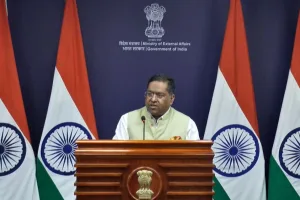
The Ministry of External Affairs (MEA) on Friday informed that around 12,38,000 passengers have returned to India from West Asia since February 28.

Statesman News Service | New Delhi |

The Ministry of External Affairs (MEA) on Friday informed that around 12,38,000 passengers have returned to India from West Asia since February 28.

The MEA said it remains actively engaged with the evolving developments in the Gulf and West Asia region, prioritising the well-being, safety and support of the Indian community residing there.

Addressing an inter-ministerial briefing in the national capital on recent developments in West Asia, Additional Secretary (Gulf), MEA, Aseem R Mahajan, said, “The overall flight situation continues to improve, with additional flights operating from the region to India. Since 28 February, around 12,38,000 passengers have travelled from the region to India.”

“An update- Kuwait airspace is now open. Jazeera Airways and Kuwait Airways have announced that they will be resuming limited flight operations from Kuwait to India soon. They continue to operate non-scheduled commercial flights from Dammam Airport in Saudi Arabia to various destinations in India,” he said.

Israel’s airspace is open, and limited flight operations have resumed to destinations in the region, which can be used for onward travel to India, he stated.

Mahajan added that airlines continue to operate limited commercial flights based on operational and safety considerations between the UAE and India.

Today, around 110 flights are expected to operate from the UAE to India. He stated that flights are operating from various airports in Saudi Arabia and Oman to different destinations in India.

“Qatar airspace is partially open. Qatar Airways is operating flights to various destinations in India. Bahrain airspace is open. Gulf Airways is operating flights from Bahrain to various destinations in India. Iraq’s airspace is open with limited flight operations to destinations in the region, which can be used for onward travel to India,” he said.

“Iran’s airspace is partially open for cargo and chartered flights. Our embassy in Tehran yesterday reiterated its earlier advice for Indian nationals to avoid travelling to Iran, and for those Indians in Iran to leave through land border routes, which the embassy continues to facilitate,” Mahajan informed.

He noted that so far, the Indian embassy has facilitated the movement of 2,432 Indian nationals out of Iran into Armenia and Azerbaijan. This includes 1,096 Indian students and 657 Indian fishermen.

Israel airspace is open, with limited flight operations resumed for onward travel to India, Mahajan said.

Speaking at the press briefing, MEA spokesperson Randhir Jaiswal noted that a serious situation persists in Iran and that region. “While a ceasefire has occurred now, you are aware of the difficult circumstances that have prevailed in Iran and other countries from the beginning until now,” he said.

He hailed the Indian Ambassador and embassy in Tehran for continuing the operations and inspiring everyone as the team continues to closely provide assistance to the people.

“With their support, we have been able to safely evacuate more than 2,400 Indian citizens and bring them back to the country. Their commitment deserves appreciation”, he said.

Mahajan underlined that the welfare of Indian seafarers in the region is of high priority for the government and that the missions are extending all assistance to them, including coordination with the local authorities and agencies, extending consular assistance, and assisting with return requests.

He reaffirmed that the MEA continues to closely monitor the developments in the Gulf and the West Asia region and that the government’s efforts are focused on ensuring the safety and welfare of the large Indian community in the region.

He informed that the dedicated special control room in the ministry is operational to respond to queries from Indian nationals and their families and that updated advisories are being issued, including information related to local government guidelines, flight and travel situation, consular services, and the various welfare measures being undertaken for the community.

Resignations from AAP show Kejriwal & party’s deviated from ideology: Sachdeva

Sharpening his attack on Kejriwal and his party, the Delhi BJP president said everyone is witness to how they ran a governance model of exploitation in the national capital for for 10 years to expand the party chief’s political base.

Statesman News Service | New Delhi |

Following a major blow to the Aam Aadmi Party (AAP) with several of its Rajya Sabha MPs including Raghav Chadha, Sandeep Pathak, Ashok Mittal, and others distancing themselves from the party, Delhi BJP chief Virendra Sachdeva on Friday alleged that Arvind Kejriwal dragged his party into a mire of corruption by misusing power which resulted in the exodus.

Sharpening his attack on Kejriwal and his party, the Delhi BJP president said everyone is witness to how they ran a governance model of exploitation in the national capital for for 10 years to expand the party chief’s political base. For more than four years now, he alleged Kejriwal has not only been exploiting Punjab’s industry and farmers to fund political expansion in Gujarat and Goa but has also been pushing Punjab’s youth into drug addiction.

Perhaps troubled by this, seven of the influential Rajya Sabha MPs from Punjab and Delhi have announced their decision to leave the AAP on Friday which clearly reflected their inner conscience, said the Delhi BJP chief.

He further said that among those announced their resignation from the AAP, the party’s organization general secretary Sandeep Pathak’s resignation has shocked everyone across the country. According him, being the guardian of the party’s ideology, his resignation raises several questions, indicating that both the party and its convener, Kejriwal, have deviated from their ideological path.

Six detained under PSA for ‘instigating’ violence during student protest in Sopore

Acting firm against elements involved in disturbing public order, police in Sopore have booked six persons under the Public Safety Act (PSA) on charges of instigating violence during a recent student protest.

Statesman News Service | Jammu |

Acting firm against elements involved in disturbing public order, police in Sopore have booked six persons under the Public Safety Act (PSA) on charges of instigating violence during a recent student protest.

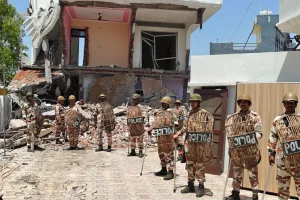
The police said on Friday that the detained individuals were involved in disturbing the law and order situation by indulging in acts of vandalism during a recent student protest in Sopore.
The accused have been identified as Umar Akbar Hajam, Salman Ahmed Shala, Altaf Ahmed Sheikh, Mubashir Ahmed Gilkar, Muzammil Mushtaq Changa and Majid Firdous Dar. They have been detained under PSA after obtaining proper detention warrants from the competent authority (District Magistrate) and have been lodged in District Jail Bhadarwah, Police said.

“These miscreants were actively involved in instigating unrest, indulging in vandalism and attempting to disturb peace during a recent protest by students. Their activities posed a serious threat to public order and safety,” the police stated.
The J&K Police reiterated their commitment to zero tolerance towards any unlawful activity that threatens peace and stability.

Meanwhile, more individuals involved in the said incidents are being identified and are under the process of similar legal action, including detention under PSA. The J&K Police have issued a stern warning that any attempt to exploit sensitive situations or engage in acts that disturb public order will invite strict and immediate action under law.
The Police advised the general public, especially youth, to stay away from such unlawful activities and not to fall prey to instigation by anti-social elements. Parents and community leaders are urged to guide their wards and ensure their constructive engagement, Police added.

Delhi govt resumes wheat procurement from farmers at MSP

A prominent voice of Delhi’s rural belt Chaudhary Surender Solanki on Friday welcomed the government’s decision to resume procurement of wheat from the farmers of the national capital at Minimum Support Price (MSP), something that had not happened for a couple of years.

Statesman News Service | New Delhi |

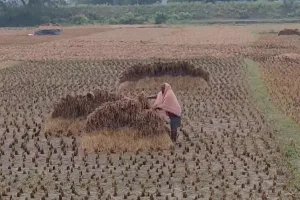
A prominent voice of Delhi’s rural belt Chaudhary Surender Solanki on Friday welcomed the government’s decision to resume procurement of wheat from the farmers of the national capital at Minimum Support Price (MSP), something that had not happened for a couple of years.

Now, Delhi’s farmers will be able to sell their produce at the Narela FCI center and the Najafgarh grain market.
Sharing the development on social media on Friday, Delhi Chief Minister Rekha Gupta said, “Good news for Delhi’s farmers. Starting today, April 24, the government’s procurement of wheat at MSP has resumed.”

She stated that the decision would give new momentum to the honour of the food providers and a resolve to make prosperous farmers.
The move is expected to reduce the hassles of traveling for the farmers and save their time and money.

According to Solanki, the decision will bring relief to the farmers of the national capital. The Pradhan of Palam 360 Sakal Panchayat said the decision would benefit hundreds of villages and thousands of farmers across the national capital’s rural region, especially outer Delhi. However, most of them have to wait until the next season to reap the benefits.
The Delhi government under the leadership of CM Gupta has been laying emphasis on the rural belt that had faced neglect for a very long time. Basic infrastructure projects and development works are being undertaken in the rural belt as the government has prioritized support to the Gram Vikas Board for providing momentum to the works across Delhi’s villages. The aim is to not only upgrade infrastructure in Delhi’s villages but also improve connectivity, sanitation, in a bid to bridge the gap between rural and urban amenities.

Punjab Congress chief says AAP MLAs too ready to defect to BJP

Punjab Congress president Amarinder Singh Raja Warring warned that the crisis could deepen, claiming that up to 50 AAP MLAs might also consider switching sides.

Statesman News Service | New Delhi |

The exit of several Aam Aadmi Party (AAP) Rajya Sabha MPs to the Bharatiya Janata Party (BJP) has intensified speculation about a possible ripple effect within the party’s legislative ranks. Punjab Congress president Amarinder Singh Raja Warring warned that the crisis could deepen, claiming that up to 50 AAP MLAs might also consider switching sides.

While he called this split “natural,” Warring cautioned AAP to stay alert. “Only MPs have left so far, but many MLAs could also move to the BJP,” he said while speaking to reporters. He further questioned the party’s ideological grounding, alleging that AAP no longer represents a clear political vision.


His remarks come shortly after senior AAP leaders Raghav Chadha, Sandeep Pathak, and Ashok Mittal announced a breakaway faction in the Rajya Sabha, claiming that two-thirds of the party’s upper house members had decided to merge with the BJP. The leaders cited a shift away from AAP’s founding principles and accused the leadership of prioritising personal interests.

The development follows AAP’s recent decision to remove Chadha as Deputy Leader in the Rajya Sabha, a move seen by many as a trigger for the internal rift.

While AAP has yet to issue a detailed response to Warring’s latest claims, the party now faces growing pressure amid signs of instability both in Parliament and at the state level.


India–US trade talks gain momentum as delegation concludes Washington visit

Under the proposed interim trade deal, the US has reduced tariffs on Indian goods from 50 per cent to 18 per cent.

Statesman News Service | New Delhi |

An Indian delegation has concluded its visit to the United States after holding in-person meetings to finalise details of an interim trade agreement and advance negotiations under the broader Bilateral Trade Agreement (BTA), the Ministry of Commerce & Industry said in a statement on Friday.

A 12-member Indian delegation, led by Darpan Jain, Additional Secretary in the Department of Commerce, held detailed discussions with the US side, headed by Brendan Lynch.

According to the statement, key areas discussed included market access, non-tariff measures, technical barriers to trade, customs and trade facilitation, investment promotion, economic security alignment, and digital trade.

India and the US had earlier issued a joint statement on February 7, 2026, agreeing on a framework for an interim agreement focused on reciprocal and mutually beneficial trade. The framework also reaffirmed both countries’ commitment to ongoing negotiations for a comprehensive India–US Bilateral Trade Agreement.

“The meetings were conducted in a constructive and positive spirit, with meaningful and forward-looking discussions enabling progress on key matters. Both sides agreed to remain engaged to maintain this momentum as they move forward,” the Commerce Ministry said.

Under the proposed interim trade deal, the US has reduced tariffs on Indian goods from 50 per cent to 18 per cent. India, in turn, is seeking improved access to American markets, with both countries aiming to expand bilateral trade to $500 billion by 2030.

US Trade Representative Jamieson Greer told lawmakers in Washington that negotiations were progressing, but flagged longstanding sensitivities. “India is a tough nut to crack. They have protected their agricultural markets for a very long time,” Greer told the Committee on Ways and Means of the US Congress.

In August last year, former US President Donald Trump had imposed a 25 per cent reciprocal tariff on India, along with an additional 25 per cent penal tariff linked to India’s crude oil purchases from Russia.

However, the US Supreme Court on February 20 struck down the reciprocal tariffs introduced under the International Emergency Economic Powers Act.

Fresh bomb hoax at Rajasthan Assembly; offensive email triggers high alert

No bomb, explosive material, or suspect was found during an intensive three-hour search carried out by sniffer dog squads and bomb disposal teams.

Statesman News Service | Jaipur |

A fresh bomb hoax, the second such threat within less than a fortnight, at the Rajasthan Legislative Assembly complex here on Friday kept security agencies on high alert and assembly staff stranded outside for over three hours.

No bomb, explosive material, or suspect was found during an intensive three-hour search carried out by sniffer dog squads and bomb disposal teams.

However, the contents of the email, which contained derogatory, vulgar, and offensive threats, are being scrutinised by officials of various agencies.

The email, received on the Assembly’s official email ID at around 8:16 am, claimed that two “volunteers” allegedly trained by LTTE and Pakistan’s ISI had been brought from Chennai to Jaipur. It further alleged that they would wear “electronic vests” concealed under sarees or shirts.

The message also claimed that four cyanide gas-filled bombs had been planted in the Assembly complex. According to the email, the devices were linked to GPS and would be triggered when the individuals approached them. It warned that a blast would occur at 1:00 pm and called for evacuation.

The sender further claimed that even if the bombs were neutralised, the two individuals would be carrying belt bombs filled with explosive material, which they could detonate.

In the message, the sender asserted that the intention was to cause damage to property rather than loss of life. However, it also contained highly objectionable remarks and threats targeting specific communities and women, which authorities are taking seriously.

Security agencies have launched an investigation to trace the origin of the email and assess any potential threat.

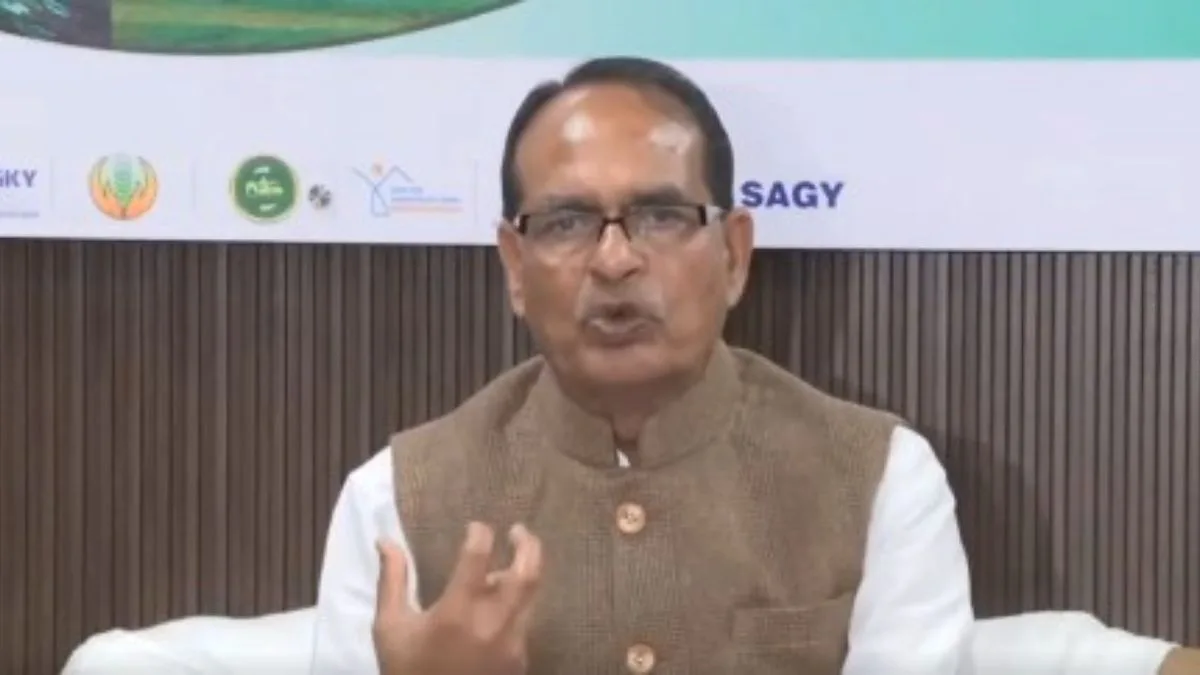
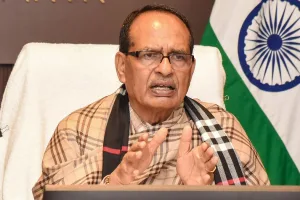
Centre, states to jointly chart roadmap for profitable, sustainable farming: Shivraj Chouhan

Addressing a press conference here on Friday, he announced that the Centre and the states will jointly develop a concrete roadmap to make farming more profitable, sustainable, and farmer-friendly.

Statesman News Service | Lucknow |

Union Minister for Agriculture, Farmers’ Welfare and Rural Development, Shivraj Singh Chouhan, has said that the path to agricultural development will no longer be determined by a uniform policy, but will instead be tailored to regional needs, climate, water availability, and local crop conditions.

Addressing a press conference here on Friday, he announced that the Centre and the states will jointly develop a concrete roadmap to make farming more profitable, sustainable, and farmer-friendly.

The Union Minister was in Lucknow to attend the day-long North Regional Agriculture Conference. He said the Central Government has positioned this conference as a platform for comprehensive regional coordination.

Chouhan noted that climate, water, soil, and crop conditions vary across the country, making a single national conference insufficient. Accordingly, the government decided to organise five regional agricultural conferences by dividing the country into five zones, with the Lucknow meet being the second in the series.

He said that while the Government of India has schemes, officials, research institutions, and strong scientific capabilities for agricultural development, agriculture remains a state subject. Therefore, effective implementation is possible only with active cooperation from state governments.

“In this conference, a comprehensive roadmap for Kharif and Rabi crops is being prepared in collaboration with the states, along with discussions on critical issues directly impacting farmers’ income, production, and markets,” he said.

The minister added that the scope of discussions will not remain limited to Kharif and Rabi crops. “Key focus areas include agricultural diversification, enhancing farm profitability, achieving self-sufficiency in pulses and oilseeds, and promoting horticulture and processing,” he said.

Highlighting recent achievements, Chouhan said India has set new records in foodgrain production and made significant progress in wheat and rice output. “India has attained a leading position in rice production, and with improved wheat output, the government has approved the export of 5 million metric tonnes of wheat,” he said.

However, he stressed that achieving self-sufficiency in pulses and oilseeds remains crucial. “Providing adequate foodgrains and nutritious food to 1.4 billion people is the government’s responsibility. Therefore, our agricultural policy is guided by three key objectives—ensuring food security, enhancing farmers’ income and livelihoods, and providing nutritious food to the public,” he said.

Chouhan outlined a six-pillar strategy for agricultural growth: increasing production, reducing costs, ensuring fair remuneration to farmers, providing compensation for losses, promoting diversification, and strengthening market linkages.

He emphasised that reliance solely on wheat- and rice-based farming will not be sustainable in the future. “Strengthening pulses, oilseeds, horticulture, fruits and vegetables, processing, and value addition is the need of the hour,” he said.

The minister also highlighted the importance of the Kisan Credit Card (KCC) scheme, noting that millions of farmers still lack access to affordable institutional credit. “A special campaign will be launched to ensure that every eligible farmer is covered under KCC,” he said.

Describing the Farmer ID initiative as a major reform in agricultural governance, Chouhan said it will integrate land records, Khasra numbers, livestock details, and other key information on a single platform. “This will eliminate the need for repeated documentation and enable faster, transparent, and targeted delivery of benefits. Farmer IDs have already been generated for millions, and states have been asked to expedite the process,” he added.

Referring to Uttar Pradesh, he said the Centre stands firmly with state governments in all situations. To support farmers affected by falling potato prices, he said permission has been granted to procure 2 million metric tonnes of potatoes under the Market Intervention Scheme (MIS).

He also announced plans to establish an International Processing Centre in Uttar Pradesh to strengthen potato production, research, processing, and storage infrastructure, thereby ensuring better price realisation and value-addition opportunities for farmers.

Responding to a query on fertiliser prices, Chouhan assured that the burden of rising global prices will not be passed on to farmers. He said that in a recent Cabinet meeting chaired by Prime Minister Narendra Modi, an additional ₹41,000 crore was approved to maintain urea prices at ₹266 per bag and DAP at ₹1,350 per bag.

“The Government of India is absorbing the impact of global inflation in fertilisers to ensure that farmers’ costs do not rise,” he said.

Tahir, who helped crush terror in Hill Kaka 23 years ago, laid to rest with full honours

The network of hideouts built by terrorists in an area of about 150 sq km, found during this operation, was among the largest ever detected in the known history of insurgency in Jammu and Kashmir.

Statesman News Service | Jammu |

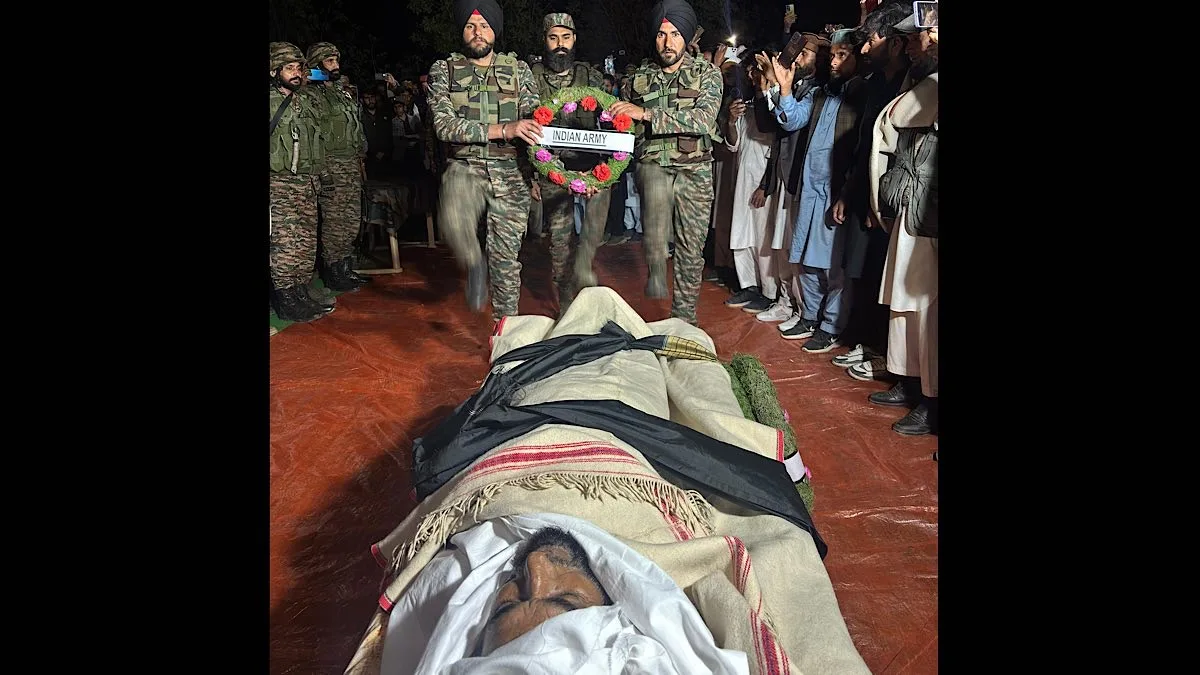
A chapter of quiet heroism came to a close as the Indian Army accorded a solemn, honour-laden farewell to a local resident, Fazal Hussain Tahir, who played a key role in the success of ‘Operation Sarp Vinash’ — which broke the back of Pakistani terrorists — in his native Murrah village in Poonch district.

The network of hideouts built by terrorists in an area of about 150 sq km, found during this operation, was among the largest ever detected in the known history of insurgency in Jammu and Kashmir.

A central figure in the decisive 2003 operation to flush out terrorists in the rugged Hill Kaka–Murrah belt, the 62-year-old Tahir passed away in Uttarakhand on April 22. His mortal remains reached home late at night to a sea of mourners, as soldiers and civilians came together to pay tribute to a man whose courage helped restore peace in the region.

Eyes went wet as Tahir’s legacy returned home draped in respect. He was a member of the Village Defence Committee (VDC) who guided the Indian Army to the deep forests where Pakistani terrorists had built concrete bunkers.

The White Knight Corps of the Indian Army described him as “a valiant son of the soil who stood shoulder to shoulder with his own troops during Operation Sarp Vinash in 2003. His daring spirit, unwavering courage and strong bond with the Indian Army remain a testament to his exceptional character. His indomitable valour will forever be etched in our hearts,” the Indian Army said.

He was a symbol of courage and unity, playing a pivotal role in the successful operation that eradicated terrorism in the Hill Kaka and Murrah areas of Jammu & Kashmir in 2003. His mortal remains were transported to Murrah late at night, and the Indian Army organised his last prayers, ensuring the presence of a large crowd.

The ceremony was conducted with the highest respect and military traditions. The local community and the Indian Army paid tribute to Tahir’s sacrifice, acknowledging his extraordinary courage in the fight against terrorism.

A wreath-laying ceremony was held and a two-minute silence was observed in honour of his memory. The people of Murrah and Kulali expressed gratitude for the Army’s support, as the region mourns the loss of a true hero.

Operation Sarp Vinash (Snake Destroyer) was an operation undertaken by the Indian Army to flush out terrorists who made concrete bases in the Hill-Kaka Poonch-Surankot area of the Pir Panjal range during April–May 2003. As many as 64 terrorists belonging to various jihadist outfits were killed in the operation.

Over several years, terrorists of groups like Lashkar-e-Taiba (LeT), Harkat-ul-Jihad-e-Islami, Al-Badr and Jaish-e-Mohammad (JeM) had been building up safe houses and bunkers in strategic areas of the region of Pir Panjal in Poonch, measuring 150 sq km.

The network of bunkers and shelters around the Hill Kaka region in Surankote numbered over a hundred and were intermingled with shelters used by local herdsmen. An extensive communications system using portable satellite phones was also found, which allowed the terrorists to contact handlers in Pakistan.

Samrat wins trust vote in Bihar; unveils governance priorities, sharpens focus on ‘Triple C’

One seat is vacant following the resignation of BJP national president Nitin Nabin, the MLA from Bankipur, after his election to the Rajya Sabha.

IMRAN MOJIB | Patna |

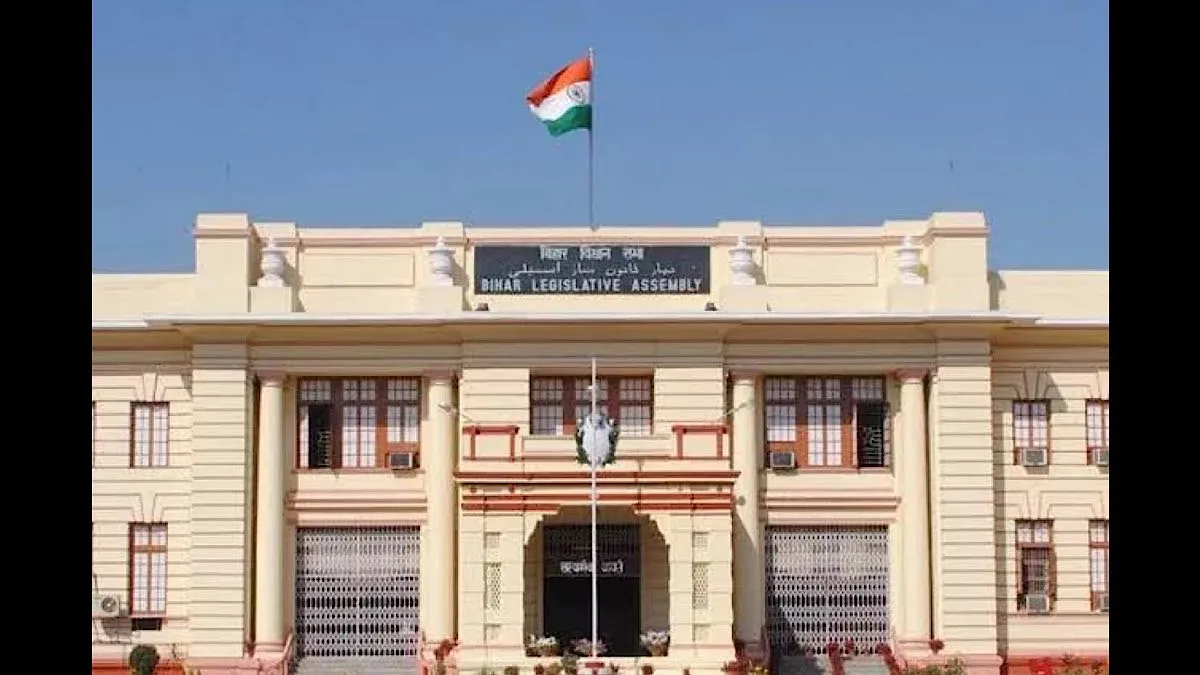
In a special session of the Bihar Legislative Assembly on Friday, the Chief Minister Samrat Choudhary government proved its majority, with the confidence motion being passed by voice vote in the 243-member House, where the BJP-led NDA enjoys strength of 201.

One seat is vacant following the resignation of BJP national president Nitin Nabin, the MLA from Bankipur, after his election to the Rajya Sabha.

Leaders of all NDA constituents rose one by one in the House to declare their support for the government.

Outlining his government’s vision, Choudhary said that, like the previous NDA dispensation, his administration would not compromise on the ‘Triple C’ — crime, corruption, and communalism.

Choudhary said the Chief Minister’s Office (CMO) would directly monitor the functioning of police stations, block development offices and circle offices to strengthen administration at the grassroots level. This, he said, would ensure better access to government schemes for rural residents and reduce harassment at police stations.

The Chief Minister also announced that in cases of death due to road accidents, the victim’s family would receive Rs 8 lakh — Rs 4 lakh from the insurance company and Rs 4 lakh from the state government. The decision, he said, was taken in response to demands raised by MLAs.

On education, Choudhary said the government would work towards creating a system in which even the children of officers and ministers opt to study in government schools. He noted that during Nitish Kumar’s tenure, nearly five lakh teachers were recruited, and said this effort would be further strengthened.

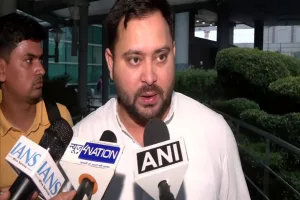
Earlier, Leader of the Opposition Tejashwi Yadav criticised the government, saying its leaders came from varied political backgrounds. “Samrat Choudhary comes from Lalu Yadav’s school, Vijay Choudhary from Congress, and Bijendra Yadav from Janata Dal. None of them come from the BJP’s school,” he said.

Tejashwi also claimed that questions were being raised across the country about the Chief Minister’s age and educational qualifications, alleging that Choudhary was elevated to the post under political pressure.

Responding sharply, Choudhary said power was not inherited and that he had become Chief Minister with the support of NDA leaders and the people of Bihar. He first became a minister in 1999 and has held ministerial office six times before assuming the top post, adding that his political journey spans 27 years.

He maintained that his qualifications and documents are fully transparent.

Further, Choudhary said he entered politics in response to injustices during Lalu Yadav’s tenure, adding that his political journey began with a struggle against injustice and opposition to what he described as misgovernance under the RJD.

2 tiger cubs die in 3 days at Kanha Tiger Reserve

Two tiger cubs died within a span of three days in the world-famous Kanha Tiger Reserve (KTR) in Madhya Pradesh, taking the toll in the state to 22 since the beginning of the year.

Statesman News Service | Bhopal |

Two tiger cubs died within a span of three days in the world-famous Kanha Tiger Reserve (KTR) in Madhya Pradesh, taking the toll in the state to 22 since the beginning of the year.

A tiger cub was found dead in the reserve’s core area on Thursday evening, while its sibling was found dead three days ago.

According to KTR Deputy Director Amita B, the cub found dead on Thursday was around one-and-a-half years old. Its carcass was found in the Sargi region of the reserve.

The official said a post-mortem was conducted on Friday, and the report is awaited to ascertain the exact cause of death.

She said a tigress had delivered four cubs, of which two have died. “We are closely monitoring the tigress and the remaining two cubs”, she added.

According to data from the National Tiger Conservation Authority, Madhya Pradesh has recorded 22 tiger deaths, including cubs, so far this year.

The first death was reported on January 7 in the Bandhavgarh Tiger Reserve.