Logo

JP Nadda rejects Kharge’s fertiliser shortage claim, says stocks adequate and supply stable

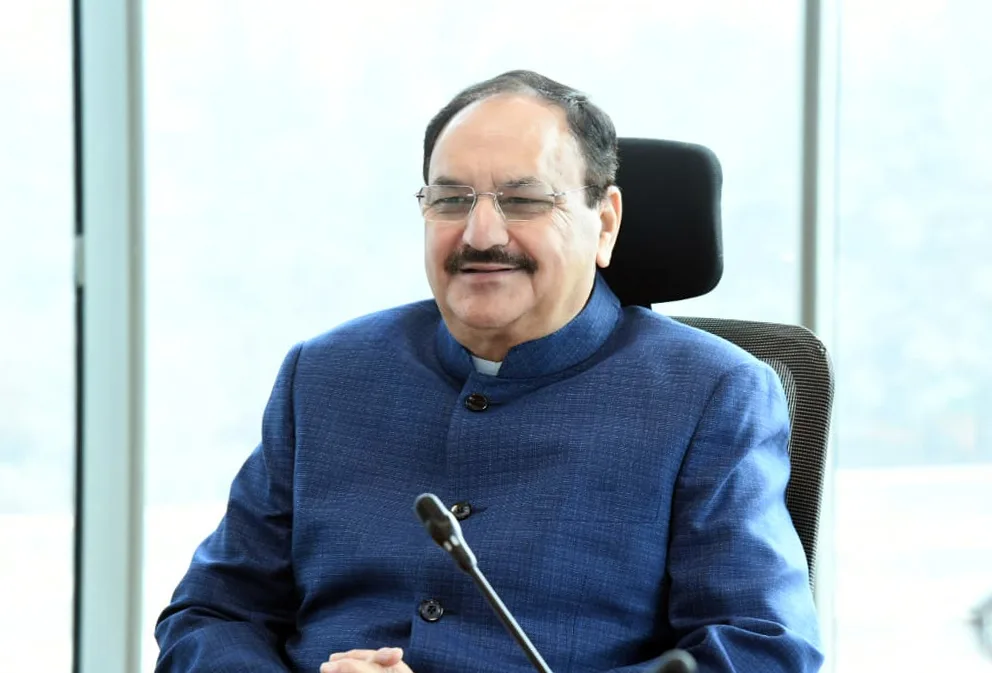
Union Minister J.P. Nadda on Friday dismissed Congress president Mallikarjun Kharge’s remarks on fertiliser shortage as “politically motivated”, asserting that there is no crisis and that farmers are being misled.

IANS | New Delhi |

Union Minister J.P. Nadda on Friday dismissed Congress president Mallikarjun Kharge’s remarks on fertiliser shortage as “politically motivated”, asserting that there is no crisis and that farmers are being misled.

Taking to X, the Union Minister wrote, “The Leader of Opposition (Rajya Sabha) Mallikarjun Kharge’s statement on fertiliser shortage is a politically motivated attempt to mislead farmers and manufacture panic where none exists”.

“It is unfortunate that the Congress continues to treat our ‘annadatas’ as a vote bank, peddling misinformation instead of standing with them in good faith. The facts speak for themselves. The Modi government has always stood firmly with our farmers. The availability of fertilisers has consistently outpaced requirement across the country,” Nadda said.

He said Indian farmers continue to receive fertilisers at highly subsidised rates despite global price pressures.

“While a bag of urea costs over Rs 4,000 internationally, our farmers receive it for just Rs 266.5. Similarly, since the Covid period, a bag of DAP is available to farmers at Rs 1,350, while global prices are over Rs 4,000,” he said.

Nadda said it was “hard to believe” that Kharge could be so “misinformed”, adding that such statements could also reflect the influence of those around him.

He further stated that fertiliser stock positions are stronger compared to last year, claiming that DAP stocks are higher by over 50 per cent, NPK stocks have increased by around 30 per cent, and urea availability remains stable.

The Union minister said he has personally spoken to Chief Ministers and Agriculture Ministers of major states to ensure smooth availability and added that the Centre is in constant coordination with state authorities to act against hoarding, diversion, black marketing, and attempts to create panic.

He also noted that the government has secured 25 lakh metric tonnes of urea through global tendering, with Indian missions working to facilitate alternative sources of supply.

On April 23, Kharge had written on X, criticising the Central government: “Even before geopolitical disruptions, fertiliser shortages were already being reported across multiple seasons. Indian farmers painfully suffer the consequences of the BJP’s apathy.”

“Fertiliser production has now fallen to a five-year low in March 2026, with a massive 24.6 per cent year-on-year drop. China had already restricted specialised fertilisers in July 2025, but the Modi government did not diversify imports. Russia has also now halted fertiliser exports.”

No repoll recommended in any of Tamil Nadu’s polling stations

No repoll has been recommended in any of the 75,064 polling stations across Tamil Nadu where voting was held on April 23, officials said on Friday.

IANS | New Delhi |

No repoll has been recommended in any of the 75,064 polling stations across Tamil Nadu where voting was held on April 23, officials said on Friday.

Sources citing officials said that the polling process passed off without any incident that would warrant re-conducting voting in any constituency.

According to sources, the absence of repoll requests suggests that polling staff were able to manage the process smoothly across urban and rural segments alike.

Tamil Nadu witnessed a high-voltage electoral contest on Thursday as polling for all 234 Assembly constituencies concluded with a robust voter turnout of over 84 per cent, reflecting strong public participation in one of the state’s most closely watched elections in recent years.

The election on April 23 marked a significant shift from the traditional Dravidian two-party dominance, evolving into a multi-cornered contest involving the DMK-led Secular Progressive Alliance (SPA), the AIADMK-led NDA, actor Vijay’s Tamilaga Vettri Kazhagam (TVK), and Seeman’s Naam Tamilar Katchi (NTK).

The ruling DMK, led by Chief Minister M.K. Stalin, is seeking a second consecutive term, banking on welfare schemes and governance claims.

The AIADMK, under Edappadi K. Palaniswami, is attempting a comeback despite internal factional challenges, making this election a crucial test of its political relevance.

Adding a new dimension to the contest is Vijay’s TVK, which has contested all 234 seats, aiming to convert its growing popularity—especially among youth—into electoral gains. Alongside, Senthamizhan Seeman’s NTK has once again fielded candidates across constituencies, focusing on Tamil nationalism, environmental issues, and an alternative political narrative that appeals to sections of young and first-time voters.

The presence of these emerging players has effectively turned the election into a four-cornered fight, potentially fragmenting vote shares and altering traditional electoral arithmetic.

While polling was largely peaceful, a few isolated incidents of tension and logistical challenges were reported, including crowd management issues at some booths and minor disruptions.

However, authorities ensured smooth conduct overall, with extensive security arrangements in place.

With over 5.7 crore eligible voters participating in the democratic exercise, the 2026 Tamil Nadu Assembly election is poised to be a defining political moment.

The results, to be declared on May 4, will determine whether the Dravidian stronghold continues under the DMK or witnesses a shift amid the rise of new political forces like TVK and NTK.

7-year-old girl among 4 people burned alive as scrap warehouse catches fire in Neemrana

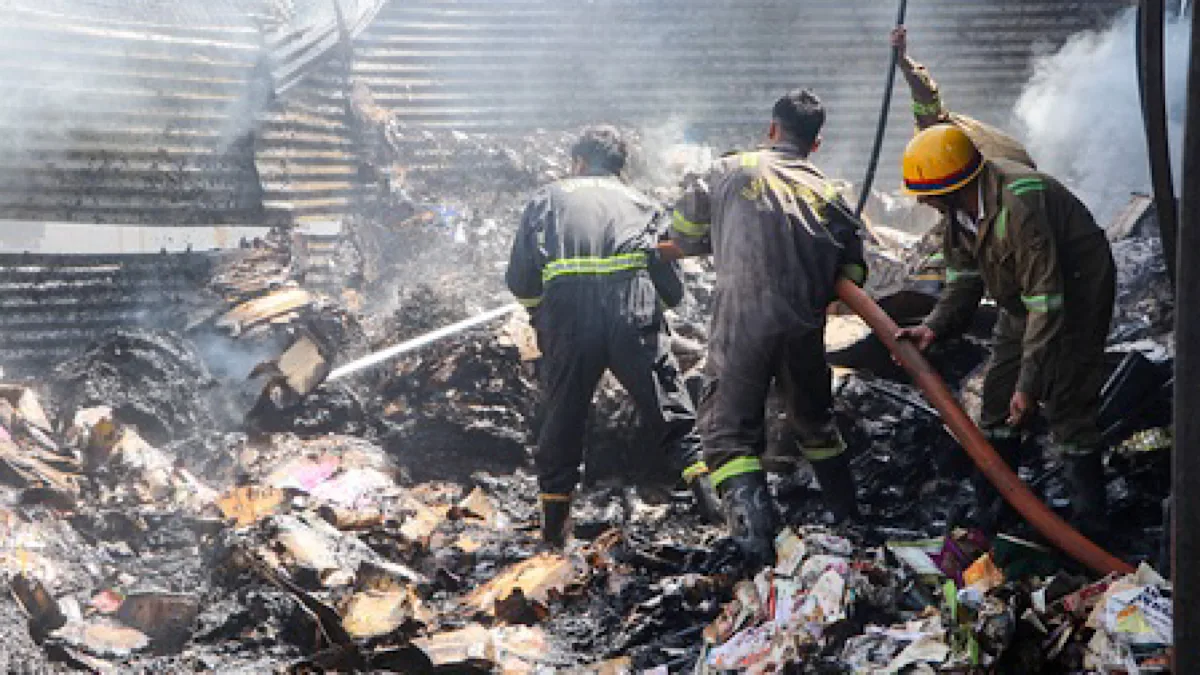
A devastating fire at a scrap warehouse in the Neemrana area claimed four lives, including that of a 7-year-old girl, after a massive blaze and subsequent explosion triggered panic late on Friday evening, said officials on Saturday.

IANS | New Delhi |

A devastating fire at a scrap warehouse in the Neemrana area claimed four lives, including that of a 7-year-old girl, after a massive blaze and subsequent explosion triggered panic late on Friday evening, said officials on Saturday.

“All four bodies have been recovered, and a thorough search of the entire area has been completed. The FSL team has also begun its investigation at the site. The exact cause of the fire is being ascertained,” said Satvir Singh, Superintendent of Police, Kotputli-Behror.

The incident occurred at a warehouse located on Bichpuri Road in Mohladia village, where large quantities of scrap material, including empty perfume bottles, were stored.

According to officials, several labourers working inside the premises were trapped when the fire broke out. Four people, including a minor girl, were burned alive, and their bodies were later shifted to a government hospital.

Eyewitnesses reported that the flames quickly spread to an adjoining plastic granule manufacturing unit within the same premises.

A loud explosion in the factory intensified the blaze, sending panic across the area, which lies close to an industrial zone and nearby residential societies. Initial accounts suggest that workers attempted to escape but were unable to do so as a truck parked at the warehouse gate caught fire and blocked the exit. Trapped inside, they tried to scale a boundary wall towards the adjoining unit but failed due to its height, leading to the tragic loss of lives.

Multiple fire tenders from Neemrana, Ghiloth, and the Japanese Zone were rushed to the spot. After nearly two hours of firefighting efforts, the blaze was brought under control.

Teams from the SDRF and forensic experts were also deployed to assist in rescue and investigation operations. Senior officials, including district administration and police authorities, reached the site to oversee relief efforts. Authorities fear that more workers may have been inside at the time of the incident, raising concerns that the death toll could increase.

In fact, locals said that two people remained missing till the date of filing of this report. The identities of the deceased are yet to be confirmed, and DNA sampling will be conducted.

Officials stated that the exact cause of the fire is still unknown. Preliminary findings, however, indicate a lack of adequate firefighting arrangements at the warehouse and factory, which may have contributed to the rapid spread of the blaze.

LoP Rahul Gandhi to hold rallies in West Bengal today after rescheduling row

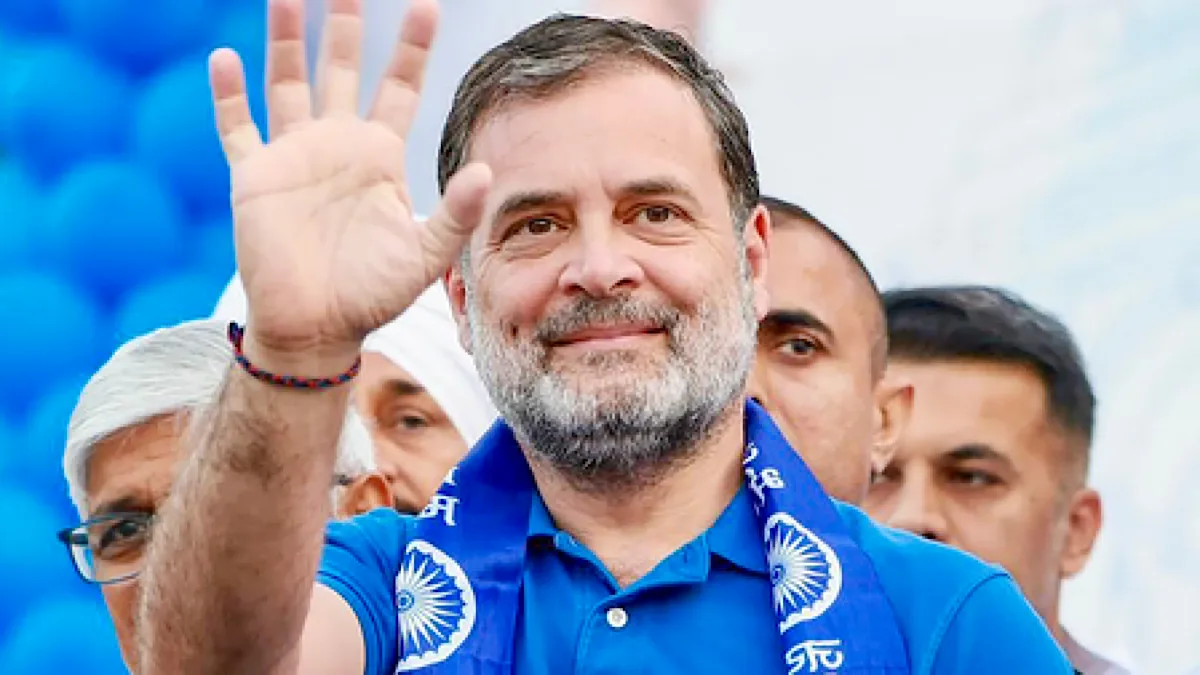
Congress leader Rahul Gandhi is set to address election rallies in West Bengal on Saturday, with public meetings scheduled in Kolkata and Serampore after an earlier setback when permissions for the events were initially denied.

IANS | New Delhi |

Congress leader Rahul Gandhi is set to address election rallies in West Bengal on Saturday, with public meetings scheduled in Kolkata and Serampore after an earlier setback when permissions for the events were initially denied.

The Leader of Opposition (LoP) in the Lok Sabha’s campaign schedule was disrupted before being put back on track, albeit with a change of date.

LoP Gandhi’s planned April 23 rallies in Kolkata and Serampore were initially cancelled due to a lack of police permission.

The development triggered sharp political reactions, with the Congress accusing the state administration of bias and obstruction.

The party alleged that the denial of permission was influenced by the ruling Trinamool Congress, escalating tensions between Opposition parties in the state. However, the situation was resolved shortly thereafter. By April 22, authorities granted fresh clearance, allowing the rallies to be rescheduled for April 25.

According to the revised plan, LoP Gandhi will address a major public meeting at Shahid Minar Maidan in Kolkata at around 2:30 P.M. today. The venue, a historic political ground in the city, has long been associated with significant political mobilisations.

Following the Kolkata event, LoP Gandhi will travel to Serampore in Hooghly district, where he is set to address another key election rally later in the day.

Earlier, Congress leaders had strongly criticised the initial denial of permission, claiming it reflected an attempt by the state government to curb Opposition campaigning. The episode briefly added to the already charged political atmosphere in West Bengal, where multiple parties are vying for influence ahead of ongoing electoral contests.

Meanwhile, LoP Gandhi sharpened his attack on both the ruling Trinamool and the BJP during his remarks on Thursday. He argued that the BJP’s rise in West Bengal was a direct consequence of governance failures by Chief Minister Mamata Banerjee’s administration.

“If Mamata Banerjee had run a clean government and had not polarised Bengal, the BJP would not have been able to rise,” Rahul Gandhi said, as polling for the first phase of elections in the state was held on April 23. The second phase of voting is scheduled for April 29.

Boatman turns ‘hero’ after ferrying PM Modi on the Ganges

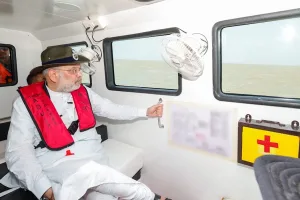
What began as an ordinary Friday morning turned extraordinary within minutes for a city boatman, who found himself rowing none other than Prime Minister Narendra Modi across the Ganga in Kolkata.

Statesman News Service | Kolkata |

What began as an ordinary Friday morning turned extraordinary within minutes for a city boatman, who found himself rowing none other than Prime Minister Narendra Modi across the Ganga in Kolkata.

Gouranga Biswas, the boatman operating out of Princep Ghat, had little inkling that his routine assignment would transform into an once-in-a-lifetime experience. Within hours, he went from being an unrecognised face along the riverfront to a subject of curiosity and admiration among peers and locals. Biswas works on boats owned by Mohammad Iftikar Ahmed, who reportedly received an urgent requisition on Friday morning from higher authorities for several boats to be made available for a VVIP visit. “We were told that someone important would be taking a ride and that the payment would be made accordingly. We had no idea who it was,” Biswas said.

The surprise came moments later when he saw the Prime Minister approaching his boat. Dressed in simple attire, wearing sunglasses and carrying a camera, Modi boarded the vessel and expressed his wish to take a ride midstream and capture photographs of the cityscape. “I was stunned. It felt like a dream,” Biswas recounted. “He asked me to steer the boat towards the middle of the river. I followed his instructions while he kept taking pictures with his own camera.” The Prime Minister spent some time on the boat, interacting informally with the boatman during the ride.

According to Biswas, Modi also spoke about the importance of harmony and coexistence. At the end of the brief journey, he greeted the boatman warmly and even embraced him before disembarking. The episode has since made Biswas something of a “hero” among fellow boatmen, many of whom gathered around him to hear the account of his unusual passenger.

The Prime Minister’s river ride, however, also drew political reactions. West Bengal Chief Minister Mamata Banerjee criticised the visit, terming it “photo politics”. She contrasted the condition of the Ganga in West Bengal with that of the Yamuna in Delhi, alleging that while the Ganga here remains relatively clean, the Yamuna continues to suffer from severe pollution. “Good that he took a boat ride here. He should also take a dip in the Yamuna in Delhi and see its condition,” she remarked, sharpening the political exchange amid the ongoing election season. Even as political sparring continues, for Gouranga Biswas, the brief encounter remains a personal milestone ~ an unforgettable morning when an ordinary day on the river turned into an extraordinary memory.

BJP will bring jobs, industries: Shah at Uttarpara

Union home minister Amit Shah launched a sharp attack on the Trinamul Congress and Chief Minister Mamata Banerjee, raising multiple issues during the meeting.

Statesman News Service | Kolkata |

Union home minister Amit Shah launched a sharp attack on the Trinamul Congress and Chief Minister Mamata Banerjee, raising multiple issues during the meeting.

He was addressing a ‘Vijay Sankalp’ sabha in Uttarpara, organised in support of BJP-nominated candidates for Uttarpara, Chanditala, Chapdani and Serampore Assembly seats.

Referring to the closure of Hindustan Motors and several other industries, including jute mills, the Union minister stated that during the tenure of the TMC government, more than 41 industries had left Bengal and not a single major industry was established capable of generating employment for educated youth. He assured that if the BJP comes to power in Bengal, an industry-friendly atmosphere would be created to attract major investments, leading to job opportunities for thousands of unemployed educated youths.

He further claimed that once the BJP forms the government, 3,000 jobs per month and one lakh jobs annually would be provided to educated youths. He also promised that women would benefit through various initiatives, including three thousand seats for female students, 50,000 opportunities for higher education, 33 per cent reservation in jobs, and free rides for women in state transport. He added that the poor would be brought under health schemes providing coverage of up to Rs 5 lakh for treatment and critical operations.

Mr Shah assured that law and order would be restored in Bengal, ensuring safety and security for all. He stated that women would feel safe travelling even late at night and that anti-social elements and miscreants would be dealt with strictly.

He also asserted that construction of a mosque in the name of Babar would not be allowed under any circumstances. He claimed that a BJP victory in Bengal would end communal riots and create a state free from infiltrators and terrorist activities.

Speaking on infiltration, Amit Shah said, “It is time to say bye-bye to Didi. Didi is on her way out, Padma (lotus) is on the way in.” He claimed that infiltrators would be identified and expelled if the BJP came to power.

People voted wholeheartedly against SIR harassment: Abhishek

Trinamul Congress national general secretary Abhishek Banerjee today urged the people to cast their vote in favour of the Trinamul Congress to ensure that the deposits of the BJP contenders are forfeited.

Statesman News Service | Kolkata |

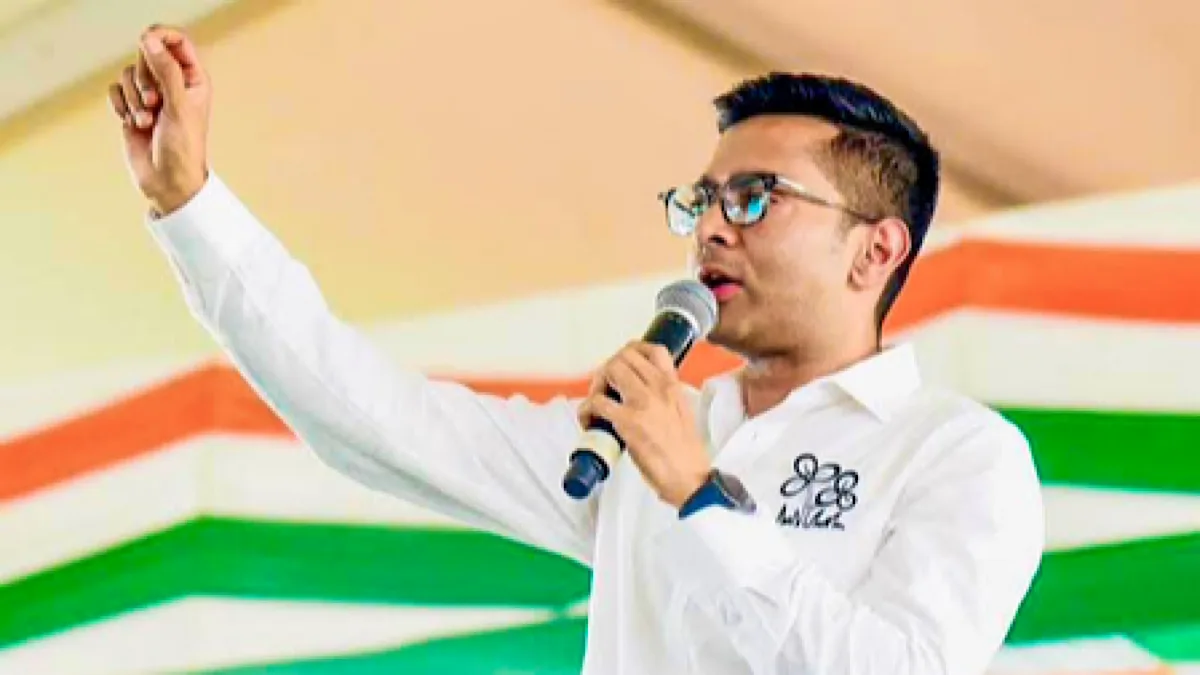
Trinamul Congress national general secretary Abhishek Banerjee today urged the people to cast their vote in favour of the Trinamul Congress to ensure that the deposits of the BJP contenders are forfeited.

He was addressing a public rally at a ground adjacent to Nilanjana Park, Jagatballavpur, this afternoon. The rally was held in support of the party’s nominee in Jagatballavpur and Domjur, Samir Chatterjee and Tapas Maity.

“I am not a soothsayer but I had predicted the election results in 2021 and 2024 more or less correctly. Rest assured that Trinamul has got more than 100 seats in the first phase of the election, held yesterday. People have voted for us and we express gratitude towards them,” he said.

Abhishek also criticised the home minister for his ‘hang-upside down’ remark.

“The leader from Gujarat has come here and on our soil is threatening Bengalis to hang them upside down! I dare him to stay here till 4 May evening and see what the people of Bengal have to say to him!” he said.

He added: “BJP leaders have so much audacity that they have threatened the sons of the soil. People came out to vote against the harassment due to SIR.”

He said: “Trinamul has selected those candidates who will work for the people round the clock. Our candidates from Domjur and Jagatballavpur have worked for the people and will continue to serve them,” he said, adding, “Go to the polling station in the morning and cast your vote. It is your constitutional right,” he maintained.

He said: “The BJP is full of people with tarnished images. Many of them were caught on charges of embezzlement of funds or holding firearms without licence. They were given clean chit by the BJP. It is perhaps the only party in the world that had felicitated the rapists. Do not waste your vote by supporting the saffron party.”

He said in Howrah, 18,500 youths have received Banglar Yuba Sathi in Domjur and 18,000 youths in Jagatballavpur. More than 91,000 women have received Lakshmir Bhandar in Domjur and 90,000 in Jagatballavpur. “People feel safe and protected under Trinamul Congress rule. Women in thousands came out and voted for us and we are indebted to them,” he said.

Mr Banerjee added BJP is a party of people who seldom speak the truth. “No sober person can support the BJP. The leaders come to Bengal and speak volumes of lies. They never hesitate to tell lies. Take your revenge politically and vote against them,” he said.

High turnout of elderly, women voters amid heat raises questions over SIR fears

With temperatures touching 42°C, polling percentages surged beyond 90 per cent in several districts. The turnout was largely driven by women and elderly voters, many of whom queued for hours despite the harsh weather.

Kanchan Siddiqui | Kolkata |

The unusually high voter turnout in the first phase of polling across South Bengal, conducted under intense heat, has triggered debate over whether it reflected a strong democratic impulse or anxiety among voters over possible exclusion from electoral rolls following the Special Intensive Revision (SIR).

With temperatures touching 42°C, polling percentages surged beyond 90 per cent in several districts. The turnout was largely driven by women and elderly voters, many of whom queued for hours despite the harsh weather.

West Bengal recorded an overall turnout above 92 per cent in the first phase, significantly higher than 82.30 per cent in 2021 and 83.02 per cent in 2016.

A notable presence of elderly voters was seen across Durgapur, the coal belt of Raniganj and the lateritic districts of Bankura. Their participation left both the Trinamool Congress and the BJP optimistic, while also highlighting the determination of senior citizens to exercise their franchise.

According to Subhas Sarkar, state vice-president of the BJP, the turnout reflected a desire for political change. He said elderly citizens had defied the heat to actively participate in shaping the state’s future, dismissing fears of voter list deletion as a driving factor.

However, incidents on the ground pointed to a more complex picture. An 81-year-old voter, Kasem Chowdhury, died while standing in a queue at a polling booth. Another voter, Istara Biwi, died shortly after casting her vote in Keshpur in West Midnapore. She had reportedly been under severe stress after four members of her family were removed from the electoral rolls during the SIR process.

Many elderly voters admitted that concerns over losing their voting rights influenced their decision to turn out. Eighty-year-old Lilly Palit from City Centre said she did not want to risk being excluded after witnessing neighbours struggle with adjudication issues. Similarly, 72-year-old Shibani Chowdhury waited in a long queue to ensure her vote was recorded.

Seventy-four-year-old Vidya Adhikari from Benachity alleged that her vote had already been cast by someone else when she reached the booth, leaving her distressed about her electoral status.

Pradip Majumdar, a former state minister, attributed the high turnout to public anxiety over the SIR process. He said that deletion of names from electoral rolls had created widespread concern, prompting many, particularly the elderly, to secure their voting rights.

CPI-M Central Committee member Amio Patra said the turnout reflected both political dissatisfaction and institutional concerns. He noted that elderly voters were motivated not only by the desire for change but also by the need to assert their democratic rights.

Bankura recorded a turnout of 92 per cent across its 3,643 polling booths, including 220 marked as sensitive by the Election Commission. Despite the scale of participation, no incidents of political violence were reported.

Apart from a few isolated complaints regarding the movement of central forces, polling remained largely peaceful, with no major allegations of rigging or booth capturing.

For many voters, the election appeared less like a contest between political parties and more like a direct engagement between citizens and the Election Commission of India.

BSF nabs 3 Bangladeshi infiltrators in Malda after first phase

Barely a day after the conclusion of the first phase of polling in the West Bengal Assembly elections on 23 April, the issue of cross-border infiltration has once again come into sharp focus.

Statesman News Service | Kolkata |

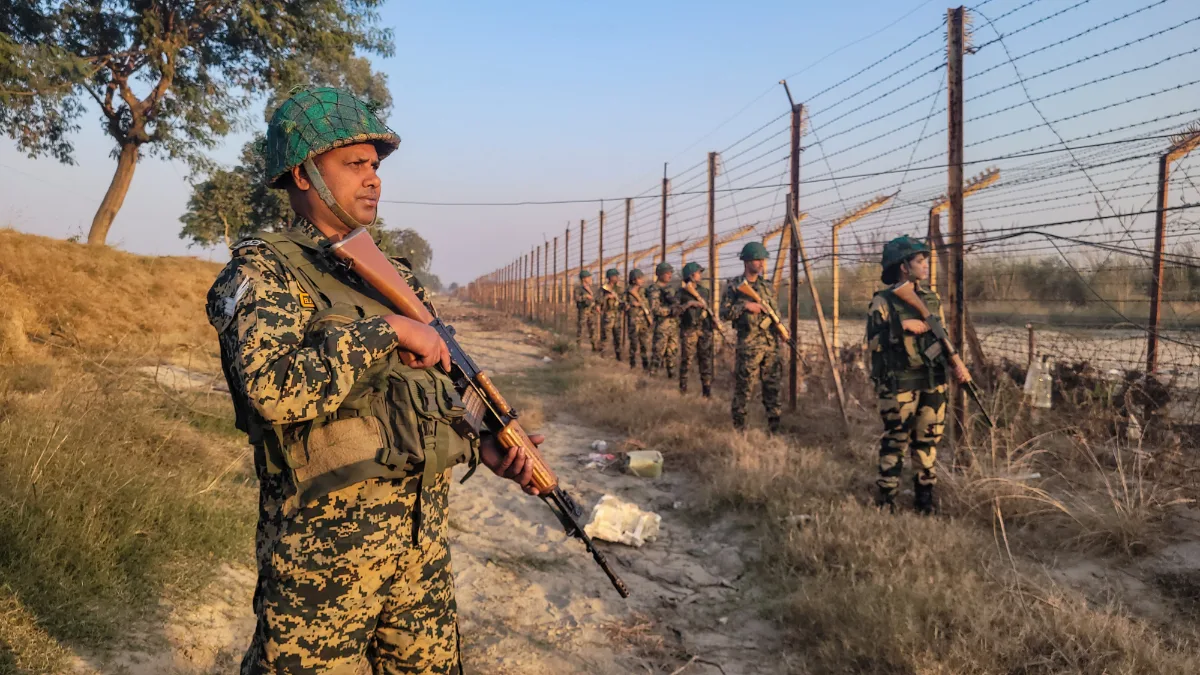
Barely a day after the conclusion of the first phase of polling in the West Bengal Assembly elections on 23 April, the issue of cross-border infiltration has once again come into sharp focus. Three Bangladeshi nationals, who had allegedly entered Indian territory without valid documents, were apprehended by the Border Security Force (BSF) along the India-Bangladesh border in Malda district.

The arrests were made in the Kedaripara camp area under Baidyapur along the Habibpur police station limits, a sensitive stretch along the international border. The apprehension has triggered concern in the region, especially at a time when infiltration remained a key political flashpoint during the ongoing elections.

According to BSF sources, one of the accused was caught on Thursday night while attempting to cross over to Bangladesh through the border fencing under the 88 Battalion. Acting on suspicion, BSF personnel on patrol intercepted and detained him. Subsequently, in the early hours of Friday, two more individuals were apprehended from the same area while trying to make a similar illegal crossing.

The three arrested individuals have been identified as Mamun Sheikh, Ripon Roy, and Tarekul Islam. Of them, Tarekul Islam is reportedly a resident of Kumarpur in Bangladesh, while the other two hail from Chapainawabganj district.

Following their detention, the BSF conducted preliminary questioning before producing them for medical examination at Bulbulchandi Rural Hospital. They were later handed over to the Habibpur police station for further legal proceedings.

During interrogation, the accused reportedly claimed that they had entered India illegally through the Lalgola border area in Murshidabad in search of work. After staying and working for some time, they were attempting to return to Bangladesh through the Habibpur sector when they were caught.

Police officials have initiated an investigation to ascertain the exact purpose of their entry into India and whether any larger network is involved in facilitating such cross-border movements.

The incident comes against the backdrop of heightened political rhetoric around infiltration during the election campaign. Senior leaders, including Prime Minister Narendra Modi and Union home minister Amit Shah, had repeatedly raised concerns over illegal immigration from Bangladesh, promising stricter border controls if voted to power.

With the first phase of polling now over, the latest apprehension has once again underscored the persistence of the infiltration issue in border districts like Malda, raising fresh questions about surveillance and enforcement along the porous stretches of the international boundary.

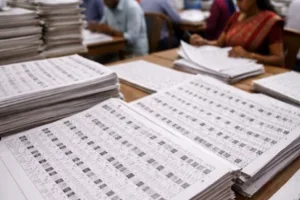
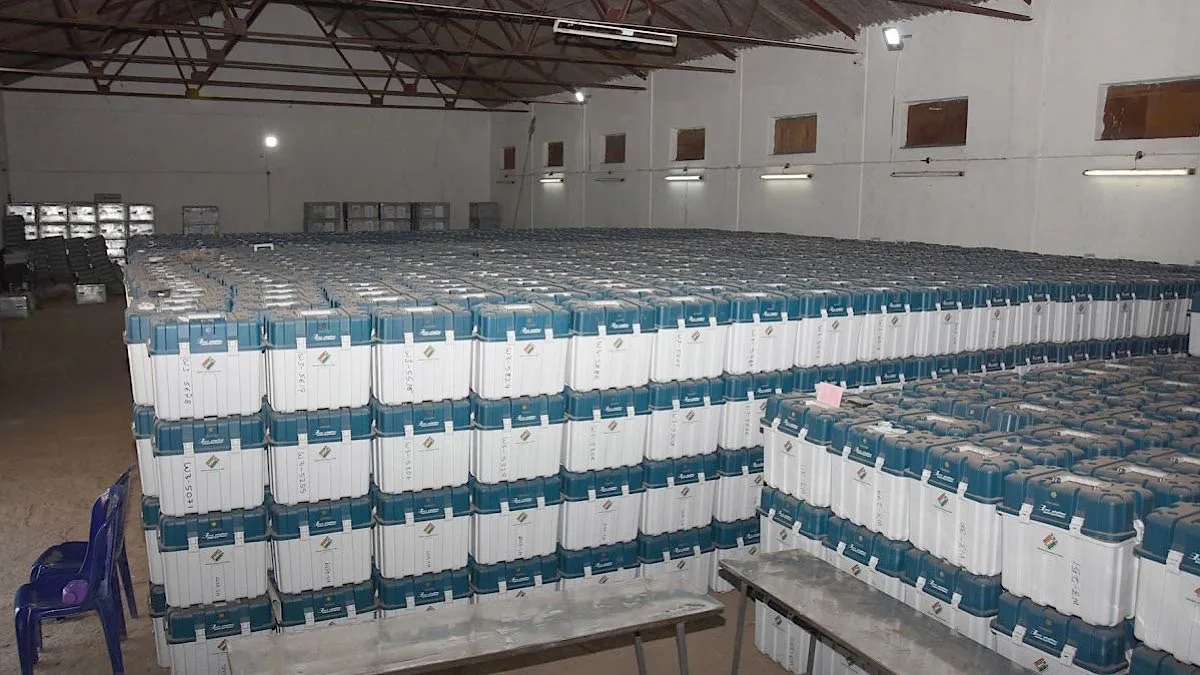
Political workers escort EVMs while being shifted to strong rooms in N Bengal

The ballots may have been cast, but in parts of North Bengal, the real drama unfolded after polling ended ~ on dark village roads, outside strong rooms, and under the unblinking gaze of mobile phone cameras.

Statesman News Service | Kolkata |

The ballots may have been cast, but in parts of North Bengal, the real drama unfolded after polling ended ~ on dark village roads, outside strong rooms, and under the unblinking gaze of mobile phone cameras.

Across districts like Malda and Alipurduar, an unusual trend emerged following the first phase of polling on 23 April. Groups of alert, anxious, villagers and political workers turning into self-appointed watchdogs, tracking every movement of vehicles carrying Electronic Voting Machines (EVMs), often halting them mid-route over fears of tampering.

One such striking episode played out in Malda’s Habibpur constituency, where tension gripped Gholadanga village under Bamongola block late Thursday night. As officials transported EVMs from Booth No. 29, locals blocked the road, alleging that the vehicle was carrying “extra” machines, raising suspicions of possible replacement.

What followed was a scene that blended protest with theatre ~ villagers shouting slogans, recording videos with running commentary, and demanding answers under torchlight. The situation escalated enough to draw Central forces to the spot, while BJP candidate Joel Murmu and local party leaders rushed in, echoing the villagers’ concerns.

Eventually, two additional EVMs ~ later clarified by officials as “reserve machines” meant for contingencies ~ were shown publicly. The presiding officer dismissed allegations of foul play, stating that such backup units are standard protocol in case of malfunction. But by then, suspicion had already gone viral.

A similar script unfolded in Alipurduar, where BJP leaders intercepted a vehicle entering a strong room premises through what they described as a “rear gate” of an educational institution. Claiming the presence of unidentified individuals who allegedly fled upon confrontation, the leaders demanded a thorough explanation, further fuelling speculation.

What makes these incidents stand out is not just the allegation, but the method. Armed with smartphones, locals documented each moment, layering it with personal commentary before uploading clips on social media. Within hours, narratives of “EVM swapping” began circulating widely, often without verification, putting election officials on the defensive.

For the administration, the night turned into a delicate balancing act ~ transporting sensitive equipment while simultaneously calming a charged and mistrustful public. Officials were seen engaging with villagers till well past midnight, explaining procedures and attempting to dispel rumours.

While the Election Commission of India has repeatedly maintained that EVMs are secure and tamper-proof, these incidents underline a growing trust deficit on the ground ~ where perception, amplified by digital platforms, can sometimes overshadow protocol.

Historic turnout, peaceful polling in WB: SC expresses satisfaction

The Supreme Court on Friday lauded the record voter turnout of around 92 per cent in the first phase of the West Bengal assembly election held on Thursday, 23 April, noting with satisfaction that the elections were largely peaceful with only stray incidents reported.

Parmod Kumar | Kolkata |

The Supreme Court on Friday lauded the record voter turnout of around 92 per cent in the first phase of the West Bengal assembly election held on Thursday, 23 April, noting with satisfaction that the elections were largely peaceful with only stray incidents reported.

Expressing satisfaction on the voters’ turnout, Chief Justice Surya Kant, heading a Bench also comprising Justice Joymalya Bagchi and Justice Vipul M. Pancholi, said: “As a citizen of India, I was very happy to see the voting percentage. When people exercise right to vote, this strengthens the democratic setup,”

Echoing the sentiment, Justice Bagchi noted the absence of violence during polling. “There have been no incidents of violence also,” he said, with Chief Justice Surya Kant observing that “When people acknowledge their power in the ballot, they do not indulge in violence.”

The court was informed that voters, including migrant workers, have come out to cast their votes, contributing to what was described as a historic turnout. The Bench noted this as a positive sign amid concerns raised earlier over the revision of electoral rolls. The previous highest turnout was about 84 per cent in 2011.

However, the court was also informed of concerns over the slow progress in adjudication of appeals against the exclusion of names from the electoral rolls. The court was told that out of 27 lakh appeals only 136 have been decided. There are 19 Appellate Tribunals headed by former Chief Justices and senior judges of the Calcutta High Court hearing appeals against deletion from the voters list.

These appeals arise from the adjudication of claims and objections of 60 lakh names categorised as ‘logical discrepancy’ and ‘unmapped’ voters. The adjudication was done by 700 judicial officers ~ 500 from West Bengal and 200 from Odisha and Jharkhand.

Taking note of the situation, Chief Justice Kant said that the Chief Justice of the Calcutta High Court could be approached to address issues relating to the functioning and pace of the appellate tribunal. It reiterated that appeals involving exclusion from voter lists must be taken up urgently, particularly in view of the ongoing election process.

The Bench also granted additional time to the National Investigation Agency (NIA) to file its chargesheet in a separate case relating to the gherao of judicial officers engaged in the SIR process.

The court was hearing petitions challenging the Special Intensive Revision (SIR) of electoral rolls in West Bengal.

The matter will be taken up for further hearing on 11 May 2026.

Shah claims high turnout signals pro-change wave in Bengal

Union home minister Amit Shah on Friday asserted that the massive voter turnout in the first phase of the West Bengal Assembly elections reflects a strong mandate for change, claiming it indicates that people are ready to bring the Bharatiya Janata Party (BJP) to power in the state.

Statesman News Service | Kolkata |

Union home minister Amit Shah on Friday asserted that the massive voter turnout in the first phase of the West Bengal Assembly elections reflects a strong mandate for change, claiming it indicates that people are ready to bring the Bharatiya Janata Party (BJP) to power in the state.

Addressing a Press conference today at a city hotel after the conclusion of polling, Mr Shah said the recorded turnout of 92.98 per cent across 152 constituencies in 16 districts “clearly shows that the people of Bengal have decided to bid farewell to ‘Didi’ and are moving towards the BJP.” Citing the party’s internal assessment, he claimed that the BJP is poised to win more than 110 seats in this phase alone. Congratulating voters for their enthusiastic participation, the home minister said the electorate had voted for “change, trust and freedom from fear.” He expressed confidence that the same trend would continue in the subsequent phases, adding that a “wave of transformation” is sweeping across the state.

Mr Shah also praised the role of the Election Commission of India, Central forces and the state police, stating that the first phase was conducted in a largely peaceful manner. “After a long time, Bengal has witnessed an election without any loss of life. It is nothing short of a miracle,” he remarked. Highlighting comparative data from previous elections, he said that incidents of violence had significantly declined this time. According to figures cited by him, 1,278 people were injured in the 2016 Assembly polls, 1,681 in 2021, 664 in the 2023 panchayat elections, and 761 during the 2024 general elections. “In contrast, fewer than 30 people were injured in yesterday’s polling, and there were no fatalities,” he said, adding that the process appeared largely fear-free.

Outlining the BJP’s governance agenda, Mr Shah said ensuring women’s safety would be a top priority. He asserted that under a BJP government, women would feel secure enough to move freely even late at night. Referring to incidents such as those in RG Kar and Sandeshkhali, he said the party’s decision to field victims as candidates symbolises its commitment to justice and empowerment. The home minister also promised to dismantle what he termed the “syndicate raj” and end the alleged “nephew tax” if voted to power.

He announced that a special committee headed by a retired Supreme Court judge would be constituted to investigate corruption worth Rs 10,000 crore reported in recent years. Mr Shah further clarified that the BJP’s chief ministerial face in Bengal would be “a son of the soil” ~ someone who speaks Bengali and has studied in a Bengali-medium school. On cultural and religious issues, he said a BJP government would ensure that festivals such as Ram Navami, Saraswati Puja and Durga immersion are observed without restrictions.

Emphasising the party’s broader vision, he said “parivartan” for the BJP means not merely a change of legislators, but the creation of an infiltration-free state, a corruption-free administration, and greater employment opportunities for the youth. He also urged voters in the remaining phases to exercise their franchise without fear, reiterating his confidence that the BJP is heading towards a decisive mandate in West Bengal.

The Photograph Within: Seeing Without Seeing

The urge to photograph or videograph is now a global phenomenon. The age of selfies points to the complex and unfolding realities of self-creation, self-actualisation, self-care and self-absorption.

NESSA BOSE | New Delhi |

The urge to photograph or videograph is now a global phenomenon. The age of selfies points to the complex and unfolding realities of self-creation, self-actualisation, self-care and self-absorption. Yet the genesis of photography in the early twentieth century, though it began with portraiture, likely arose from a stirring romance with the other. It came from a need to look more closely, to understand what lay near and what remained hidden, and to move towards a public opinion shaped by political agencies defining justice, equality, beauty, freedom and independence.

As these agencies proliferated, the public imagination blossomed and ripened. Historically, the photograph fulfilled the need for documentation. But something in the way it generated a quiet, negotiable interiority made it an experience in itself, unforgettable. Making and seeing a photograph became a story that spoke to many stories. Multiple voices emerged to interpret India in the years following Independence, carrying new-found hope and a spirit of experimentation nurtured by study, public discourse and courage. A Photographer’s Diary by Arun Ganguly stands as proof of this enriching dialogue between the artist and his role models, between the artist and his own remembrance of things past and the act of returning.

Written in simple, evocative Bengali prose, it is an unforgettable read, drawing one inward into an old and still growing passion for photography. It chronicles, with a Blakelike innocence and honesty, a wealth of personal anecdotes and offers an opportunity to understand the diverse influences, encounters and practices that shaped a deeply sensitive and intuitive photojournalist in the years following the Second World War. The book contains not a single photograph, and yet while reading it I moved through endless still and cinematic images. Each chapter made me pause to absorb the minute details of imagery and feeling tones.

One chapter did not necessarily lead to another, so each rose like a wave and held its form, what Roland Barthes calls the punctum, the point at which the photograph animates the viewer and meets the studium, the intention of the photographer. And yet I was not reading Barthes. I was poring over text, only to realise on repeated readings that each chapter was itself a photograph I was composing. As Barthes writes, “The photograph is in no way animated, but it animates me; this is what creates every adventure.” A cat drinking water and a prize of fifteen rupees in a magazine were enough to kindle early explorations in writing and photographing trees and insects for a publication called Tropical Photography.

The journey of writing photo essays that began on a children’s page in Amrita Bazar Patrika and the literary pages of The Statesman, moved into advertising, and then returned to photography as a true calling twenty years later, was shared by a growing tribe of enthusiastic photographers and filmmakers in the 1950s. But who would have noticed trees and insects without the open sky and grounds around a bungalow home in Dacca, without Hemendranath Chatterjee’s book on trees, and without their constant presence as companions? There was also the mathematics professor father, fond of gardening and crosswords, whose lessons in English and comprehension, and whose insistence on planting seedlings at the exact centre of a circular planter, would later shape the foundations of visual composition.

The tribute to Life magazine and photographers like Gordon Parks and Eugène Atget emerges from intense observation and study. In the homage to Parks lies a deep understanding that a life lived through many small, unseen jobs can give birth to vision, that a photographer may also write poetry and compose music and ballet. Photography becomes both a beginning and an arrival, opening into many modes of perception, seemingly incoherent yet quietly decisive, and increasingly cherished over time. It carries both edge and ease. Ganguly’s diary also encapsulates the history of Indian photography through the 1940s, 50s and 60s. Barthes points to the intersection of photography with sociology, anthropology, history and psychoanalysis as the source of the visual medium’s power.

Even as contemporary conflicts unfold, the account of wartime scarcity during the Second World War resonates deeply. There are memories of baffle walls built in anticipation of bombings, of stirrup pumps set up to douse fires, of an elder brother in the Royal Air Force bringing home mosquito repellents, Baby Ruth chocolate, dehydrated potatoes and eggs from American supplies. There is also the pencil with improved graphite, its lines rising clearly on the page. If you recognise the small bookstall in Golpark that shut down in the rain and drew him back again and again, hoping that a coveted issue of Life featuring Hitler’s private photographs would remain unsold, you are not alone. That tiny, cavernous, magical stall lives on in shared memory, a reminder that a magazine seller can offer a ticket to a lifelong journey.

Photography magazines and state associations that offered diplomas and training in printing and technique formed the fertile ground from which Indian photography grew and flourished, spreading across the country. Alongside this came a celebration of diversity and the quiet assertion of the individual voice. Life magazine and the new wave of cinema laid down larger outlines, “To see life; to see the world; to eyewitness great events,” as Henry Luce wrote. They transmitted a rare and startling idiom of freedom to a generation of Bengali youth eager to explore identity, for both self and nation. Ganguly’s diary stands as a testament to the making of an artist driven to portray life as it was lived, close to nature, in villages, by rivers, along mountain paths, an enquiry into what is fleeting and what endures, creating his own small, intimate version of Life.

Getting off at small stations, making repeated journeys to Benaras, trekking through hills, writing an ode to the bokul tree or to a dog that guided lost trekkers, nature appears in Wordsworthian splendour. He recalls friends who found recognition abroad: Tito Nandy at the Fashion Institute of Technology in New York, with a solo exhibition at ICCR titled Winter in New York; his guru Parimal Goswami, a prolific writer and photographer whose manual became a guiding text despite their never meeting; Siddhartha Ghosh, who compiled a book on Bengali photographers; and Ami Vitale, who captured Durga Puja and moments of human tenderness amidst conflict.

The move from advertising to photojournalism formed part of a larger journey towards discovering a deep love for one’s own country and its people, and a desire to be one with them. This indefatigable urge to travel from the Himalayas to Tamil Nadu, from Assam and Meghalaya to Manipur and Rajasthan, reveals the living truth of an inexhaustible pluralism that continues to be cherished. A special note of thanks to Madhuchanda Sen and Maya Books for bringing forth this invaluable piece of photojournalistic history.

Can China break NVIDIA’s grip?

For more than a decade, NVIDIA’s CUDA platform has been the backbone of modern artificial intelligence.

PRAVIN KAUSHAL | New Delhi |

For more than a decade, NVIDIA’s CUDA platform has been the backbone of modern artificial intelligence. It is not just a software framework but a deeply embedded ecosystem that powers how AI models are trained, deployed, and scaled. China now recognises that NVIDIA’s dominance does not come from hardware alone but from this tightly integrated ecosystem built over decades. As a result, Huawei is developing CANN as an alternative, and emerging models such as DeepSeek V4 may soon deploy on it.

CUDA enables developers to harness the parallel processing power of GPUs for complex computations. Unlike traditional CPUs that handle tasks sequentially, GPUs process thousands of operations simultaneously. This makes them ideal for AI workloads, particularly deep learning, which relies heavily on matrix computations. However, CUDA’s strength lies beyond raw performance. It integrates hardware, compilers, libraries, and developer tools into a unified ecosystem. Frameworks such as PyTorch and TensorFlow are deeply optimised for CUDA, making it the default platform for AI development globally. Over time, this has created a powerful lock in effect.

Developers, enterprises, and researchers are all deeply embedded with in the CUDA ecosystem. Geopolitical pressures, particularly restrictions on advanced GPU exports, have accelerated China’s push for technological independence. Huawei’s CANN platform is at the centre of this effort. Designed as a CUDA like environment, it provides libraries, compilers, and runtime systems tailored for AI workloads. Unlike CUDA , which evolve d as a general-purpose parallel computing platform, CANN is designed primarily for artificial intelligence. It is tightly integrated with Huawei’s Ascend chips, creating a vertically aligned stack.

The goal is clear: reduce dependence on foreign technology and build a self-sufficient AI ecosystem. Despite strong state support and rapid progress, CANN faces significant challenges. CUDA’s maturity is the result of years of development, optimisation, and community building. Replicating this depth will take time. One of the biggest barriers is the developer ecosystem. Millions of developers are trained in CUDA, and shifting them to a new platform requires retraining and rebuilding tools. In addition, performance gaps remain. While China’s chips are improving quickly, they still lag behind the most advanced GPUs in efficiency and scalability.

Another challenge is fragmentation. Multiple Chinese companies are developing their own chips and frameworks, which may lead to a less unified ecosystem compared to CUDA’s global standard. DeepSeek V4 represents a potential turning point. By focusing on algorithmic efficiency rather than brute force computing, it aims to reduce the cost of training and inference. Techniques such as mixture of experts and optimised architectures allow mo dels to achieve high performance with fewer computational resources. If DeepSeek V4 is successfully integrated with CANN and Huawei’s hardware, it could demonstrate that competitive AI systems can be built without relying on CUDA.

This would not only validate China’s approach but also reshape the economics of AI by making it more accessible. The emerging divide in AI infrastructure offers important lessons. First, control over the software ecosystem is as important as hardware leadership. Second, technological dependence can become a strategic vulnerability. Third, building an alternative ecosystem requires long term investment across multiple layers including hardware, software, and talent. For countries like India, the challenge is to balance participation in global ecosystems with the development of domestic capabilities. Investing in open standards, fostering developer communities, and supporting indigenous innovation will be critical.

China’s effort to build an alternative to CUDA is not just a technological project but a strategic shift in the global AI landscape. While CUDA remains the dominant standard today, the rise of CANN and innovations like DeepSeek V4 indicate that the future may be shaped by competing ecosystems rather than a single global platform. The battle for AI supremacy is no longer limited to models or data. It has moved to the foundational infrastructure that powers the entire ecosystem. And in this deeper contest, the stakes are far higher.

(The writer is director-Mrikal (AI/Data Center) and a young alumni member, Government Liaison Task Force, IIT Kharagpur. He tweets as @ipravinkaushal.)

‘Politics must embrace spirituality’

Sadhguru, a Indian yogi, mystic, author, and founder of the Isha Foundation, is a prominent global spiritual leader known for “Inner Engineering” yoga programmes.

Anurag Kumar | New Delhi |

Sadhguru, a Indian yogi, mystic, author, and founder of the Isha Foundation, is a prominent global spiritual leader known for “Inner Engineering” yoga programmes. His advocacy for inner transformation and blending ancient yogic practices with modern science has inspired lakhs of people. In an exclusive interview, Anurag Kumar delved into Sadhguru’s concept of “inner engineering,” his views on politics, and how he responds to skepticism, among other topics.

Q: You often say inner engineering is the solution to human problems – how can ordinary people realistically practice this in a fast-paced world?

A: Most people are not busy; they are just preoccupied. If you are disorganised and unfocused, you think there is no time. If we are organised and focused human beings, we can do plenty in 24 hours’ time. If you invest, let us say, even 30 minutes a day into Yoga or meditation, you will enhance your capabilities, and you will gain immensely, even in terms of time. The first thing that happens for many people is that their sleep quota comes down. Apart from that, with simple practices, your body and mind get more organized. You will see that your level of performance becomes such that whatever you are doing in eight hours, you should very easily be able to do in three to four hours. You feel more energetic and will also have a lot of time. The Shambhavi Mahamudra Kriya that is taught in the Inner Engineering programme needs 21 minutes. These 21 minutes are an investment you make in your life. The practice greatly enhances your health and mental focus, and there is enough medical evidence to prove that a host of other chemical changes occur in the body. It also reduces your sleep quota, so you gain those 21 minutes anyway. But there is something else happening within you that you can only know by experience – you are blissful throughout the day.

Q: Young people today face anxiety, burnout, and uncertainty. What is the first step they should take toward mental clarity?

A: Today, as societies evolve into higher levels of economic well-being, comfort, and technology, every kind of convenience is available. But mental health issues are rising across the planet in such a way that it is no longer an individual experience – it has become a societal experience. Scientists and global health organisations are predicting a mental health pandemic. Most people experience the mind as a misery manufacturing machine that is constantly turning against them because they have not been given the tools to take charge of this fantastic mechanism. Meditation is the process through which you learn to operate your mind so that it functions as a miracle. Towards this, in February 2025, we launched the ‘Miracle of Mind’ app, which offers a simple 7-minute meditative process that can be practiced anywhere to bring a sense of peace, joy, and exuberance into one’s life. It is my wish and my blessing that every human being on the planet experiences the Miracle of Mind.

Q: You’ve interacted with many political leaders. How do you maintain neutrality while engaging with power?

A : Someone once asked me, “Sadhguru, are you a BJP supporter?” I said, “I am two-thirds BJP.” They asked, “What is that?” I said, “Bharatiya Janata – I am 100 per cent, Party – no. That is not my business.” It is not for me to decide whether some politician or party is good or bad. Once people have elected someone, I bow down to people’s will and see how to support them for the next five years to do their best, rather than pulling their leg. I have not been a member of any party, institution, or club ever. I do not even have a membership at a single golf club, though I play all over the place. If they allow me, I play. If they do not, I am okay. People have taken identities like this – someone is an environmentalist, someone is a politician, someone is a spiritual person. What we need is inclusive human beings, that means every one of us will do whatever is possible within our capability for the well-being of all life around us. That is what I do, and that is what I have inspired people to do. Only because people recognise that I do not belong to any group or party, everyone responds the way they do.

Q: Do spiritual leaders have a responsibility to speak more directly on political or social injustices?

A: Whatever you are into – politics, spirituality, or commerce – or if you are doing nothing, you are a citizen of this nation. You have rights and responsibilities for being in this country. Each person, according to their understanding of their rights and responsibility and their intelligence and capability, should act to better everything around us because we are all benefiting from the platform of nationhood. That said, I feel it is imperative in today’s world that people in the political sphere be touched by the spiritual process. If you look back at the sages of the past, they were always in touch with the kings and rulers of this land. This is because once you are a leader, every thought you generate and every action you perform will impact millions of people. When your work is so important, the most important thing is that you work on yourself. So, the political leadership definitely needs to have a spiritual process. I am definitely working towards making political people spiritual. There must be a spiritual element in all politicians. Then the country will do well.

Q: What was the turning point that shaped you into who you are today?

A: I started an enterprise early and was very successful by small-town standards of the 1970s. Everything I wanted was happening in my life, so I was not looking for anything. I had been practicing Yoga since I was 12 years of age for physical and mental well-being, but I never thought of anything spiritual. Me being spiritual was impossible because till then, I was a skeptic’s skeptic. One afternoon, on 23 September 1982, I had a little time to spare between two business meetings. So, I rode up Chamundi Hill in Mysuru. There, I sat on a huge rock, which was my usual place, with my eyes open. After a few minutes, I had an experience that left me forever transformed. Suddenly, I did not know which was me and which was not me. I was all over the place. Every cell in my body was bursting with a new, indescribable level of ecstasy. All I knew was that I had hit upon a goldmine within myself that was dripping ecstasy, that I did not want to lose even for a moment. Since then, my life has been an effort to rub this bliss off on people because every human being can know this. My effort has been to create mechanisms so people can experience this.

Q: How do you handle skepticism from those who question your methods or teachings?

A: Today, there are millions of people whose experience of life has become blissful and ecstatic simply by employing the powerful methods of well-being we offer. There are also many scientific studies from reputed universities that clearly show the impact of the practices we teach, such as Inner Engineering and Isha Kriya, on stress levels, immunity, the functioning of the brain, and many more aspects. All the research is available on the internet. Anyone can look it up. There is something called “doubt,” and there is something called “suspicion.” Suspicion is sickness, because you are assuming that something has to be wrong. Doubt is different – it means you do not know. It is not a crime not to know. If someone says something and you trust that person, you can invest some time, energy, and resources to explore and know. Otherwise, you cannot invest that time and energy. Basically, life is a certain amount of time and energy. If it is a bundle of lies and you invest your time and energy, it would be a waste of life. In that context, you need trust, but you should neither try to trust nor distrust. How do you come to trust? One thing is, if it makes sense to you. Another thing is if it has worked. Even if it has not worked for you, but it seems to have worked for everyone around you, you can invest some time to explore, not to believe. If you explore with the necessary keenness, you will see. Do not jump from trust to distrust, belief to disbelief.


Silent Voter

In election seasons, noise is often mistaken for momentum. Rallies swell, slogans sharpen, and television debates grow louder by the day.

Statesman News Service | New Delhi |

In election seasons, noise is often mistaken for momentum. Rallies swell, slogans sharpen, and television debates grow louder by the day. Yet, in West Bengal today, the most telling political signal is not noise but its absence. The voter, unusually, is quiet. This silence is not accidental. It emerges from a political culture where allegiance has often carried consequences. Episodes of post-election violence, most notably after the 2021 Assembly polls, have left behind a memory that shapes present behaviour.

In such an environment, discretion becomes a survival strategy. When political preference can invite social or physical risk, silence is not apathy; it is caution. But to interpret this quiet solely as fear would be incomplete. There is another, less visible force at work: calculation. Voters are not merely withholding their choices; they are insulating them. The refusal to speak openly may reflect a deliberate attempt to resist the pressures of persuasion, intimidation, or herd behaviour. In a hyper-politicised state, silence can serve as a shield against both coercion and expectation. This duality ~ fear and calculation ~ has precedent. Indian electoral history offers moments when the loudest predictions failed because the electorate chose not to reveal itself.

The unexpected outcome of the 2004 Indian general election was preceded by an inability among observers to accurately read voter sentiment. In each case, the ballot box became the first true expression of public mood. What distinguishes the present, however, is the layering of additional uncertainties. Questions around electoral roll revisions, shifting alliances, and the fragmentation or consolidation of vote banks have complicated the political arithmetic. Voters are aware that outcomes may hinge on factors beyond individual choice ~ administrative decisions, candidate credibility, and local dynamics. In such a scenario, speaking out offers little advantage; it may even distort one’s own strategic clarity. There is also a subtler transformation underway.
The Bengali voter, long stereotyped as politically expressive, appears to be adapting to a new equilibrium, one where public articulation yields diminishing returns. The spectacle of politics has grown, but its persuasive power may have weakened. When every side claims certainty, silence becomes the only honest position. The deeper implication is that democracy here is not retreating but recalibrating. Participation is not declining; it is becoming more private. The performative aspects of politics ~ crowds, slogans, visibility ~ are increasingly disconnected from the final act of decision-making.

The voter listens, observes, and then withdraws from the conversation until the moment of choice. This makes the coming verdict inherently unpredictable. Not because voters are confused, but because they are disciplined. They are choosing to speak only once, and when they do, it will not be through words but through the voting button. In West Bengal, the silence is not empty. It is loaded ~ with memory, with caution, and perhaps with intent.

Calculated Pause

When a war pauses without moving closer to peace, the pause itself becomes the strategy.

Statesman News Service | New Delhi |

When a war pauses without moving closer to peace, the pause itself becomes the strategy. That is the significance of President Donald Trump’s decision to extend the ceasefire with Iran while maintaining a naval blockade that continues to squeeze the country’s economic lifelines. At first glance, the move appears conciliatory.

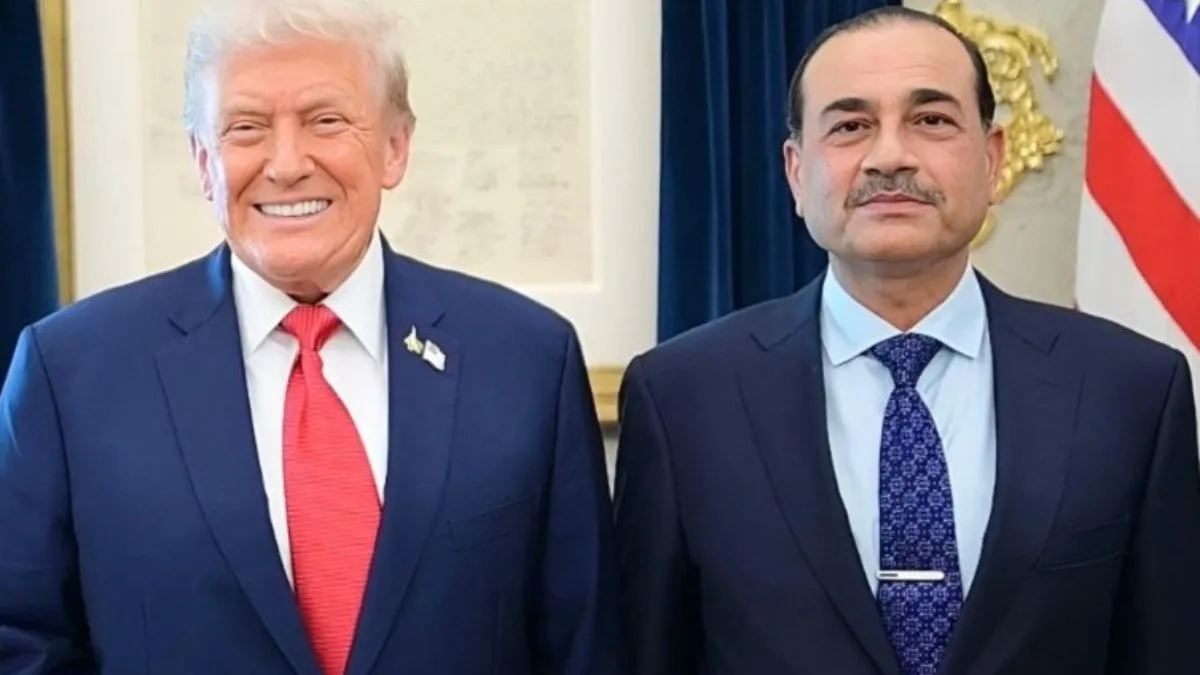
A ceasefire extension suggests restraint, even a willingness to allow diplomacy space to operate. But the conditions attached to it tell a different story. By insisting that Tehran produce a “unified proposal” before further progress can be made, Washington has shifted the burden of de-escalation onto a leadership it openly describes as fractured. This is not merely diplomacy; it is calibrated pressure dressed in the language of negotiation. The involvement of Pakistan, with Prime Minister Shehbaz Sharif and Army Chief Asim Munir stepping in as intermediaries, adds a layer of regional legitimacy.

Yet mediation here functions less as a pathway to resolution and more as a diplomatic holding mechanism. Talks are anticipated, postponed, and reconfigured, but never quite realised. The result is a process that sustains the appearance of engagement without guaranteeing its substance. For regional actors beyond Pakistan, the message is equally clear. Countries like Saudi Arabia and the United Arab Emirates, long dependent on stability in Gulf shipping lanes, are being forced to recalibrate their positions as prolonged uncertainty threatens both energy revenues and internal economic planning. Meanwhile, the blockade of Iranian ports and the effective closure of the Strait of Hormuz ensure that the conflict remains active in all but name.

Oil flows are disrupted, global markets are unsettled, and the economic costs ripple far beyond the Gulf. By preserving this pressure, the United States retains escalation dominance without incurring the immediate risks of renewed military strikes. It is a form of coercion that operates below the threshold of open warfare, yet shapes outcomes just as forcefully. This dual-track approach ~ pausing attacks while intensifying leverage ~ reveals a broader pattern in President Trump’s conduct of the conflict. Military threats are alternated with diplomatic openings, deadlines imposed and then extended, red lines asserted and then deferred.

The effect is not confusion but an illusion of control. By keeping both allies and adversaries uncertain about the next move, Washington seeks to dictate the tempo of the crisis. For Iran, the implications are stark. A divided leadership is now expected to negotiate under siege, its internal cohesion tested by external pressure. Any delay or disagreement can be interpreted as bad faith, justifying a return to escalation. In this sense, time itself becomes a weapon, wielded to expose vulnerabilities rather than resolve them. The ceasefire, then, is not a bridge to peace but a suspension designed to reshape the battlefield ~ politically, economically, and diplomatically. It postpones decisions without reducing stakes. And in doing so, it reinforces a dangerous equilibrium: a war neither advancing nor ending, but carefully managed in a state of permanent uncertainty.