Logo

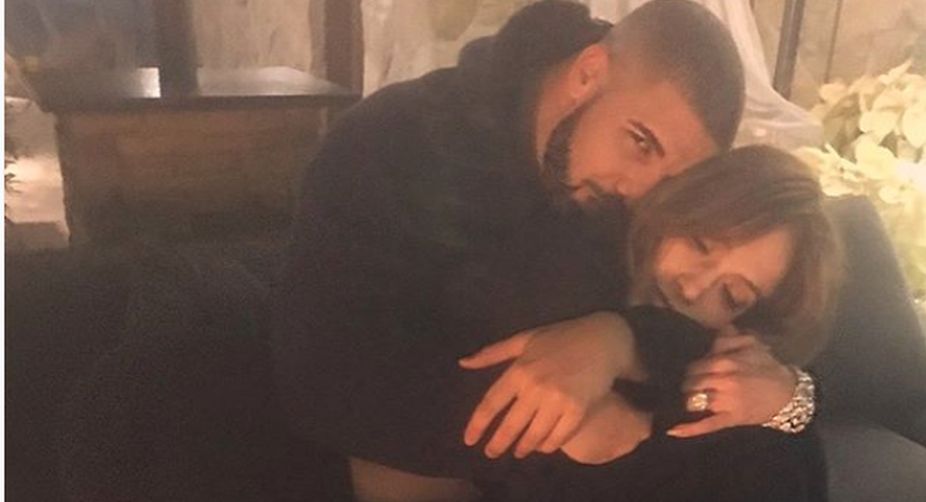
Jennifer Lopez, Drake attend romantic prom night

PTI | Los Angeles |

 Singer Jennifer Lopez and rapper Drake attended a romantic prom party together in Las Vegas.

The pair, who have sparked romance rumours ever since they shared their pictures with each other on social media, went for a winter wonderland-themed "prom" during which they were crowned King and Queen, reported Us weekly.

The "Shades of Blue" actress donned a white dress with a choker neckline for the night as she was crowned Prom Queen, while Drake, who was clad in a classic black tuxedo, scored the title of "King." 

After celebrating the sweet moment, they took over the dance floor and even shared a kiss.

‘I really related to Dev Patel as a mother’

IANS | London |

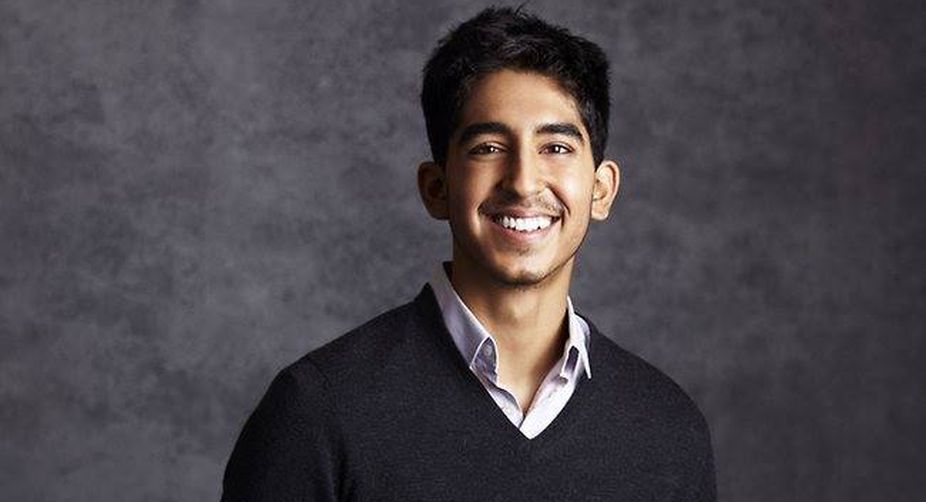
Oscar-winning actress Nicole Kidman, who played the adoptive mother of Dev Patel's character in "Lion", says she could really relate to him as a maternal figure on the film's sets.

The 49-year-old star said she is looking forward to seeing where Patel's career takes him in the future, reported Femalefirst.

"I was maternal to him. I was pretty much in character playing the role… I really just related to him as a mother.

I would go up to him and stroke his hair and touch his face and hold his hand. He gave permission for that, which was terrific…

"I also think now you'll see Dev as a leading man, not as an Indian man or anything other than a leading man. I look forward to his journey into all of that now," Kidman said.

The movie directed by Garth Davis is creating major Oscar buzz, thanks to its successful run in Hollywood award season.

The movie is based on the true story of Saroo Brierley, a young Indian boy who gets separated from his brother and mother when he ends up 1,000 miles away from his home, lost at a train station in Kolkata.

He gets adopted by an Australian family but eventually tracks down his lost family in India via Google

PM wishes nation on New Year

PTI | New Delhi |

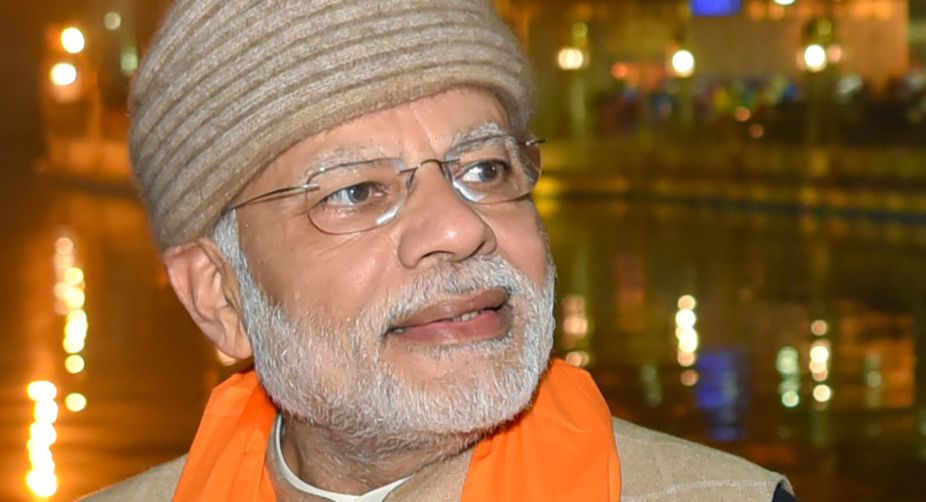
Prime Minister Narendra Modi on Sunday greeted the nation on New Year.

He hoped the New Year brings good health and prosperity in everyone's lives.

"Greetings on the start of 2017. May this year bring good health, happiness and prosperity in everyone's lives," he said in a tweet.

5 global events that made headlines in 2016

SNS | New Delhi |

From India’s demonetisation to controversial tycoon Donald Trump winning the US Presidential Election, the year 2016 witnessed many interesting events around the globe. As the leap year comes to a hurling end, here's a flashback of the top five events that created quite a stir.

Surgical Strike on ‘black money’

Taking the nation by surprise, Prime Minister Narendra Modi on November 8 banned Rs.500 and Rs.1000 notes starting November 9 as a crackdown on black money.

The newly minted Rs.2000 and Rs.500 were dispensed at the ATMs; however withdrawal limit was imposed. Shrouded under extreme secrecy, Modi’s ‘Coupe de maitre’ triggered mayhem as the country witnessed long queues outside banks and ATMs. However, the majority seemed to support the move to curb black money.

Hillary ‘Trumped’

Against all odds, polls and projections business tycoon and reality TV star Donald Trump won the US Presidential race on November 9. One of the ugliest campaigns in the US history, Trump's Republican Party clinched 288 seats defeating formidable opponent Hillary Clinton of the Democratic Party.

The celebrity businessman with no political background and marred with scandals and gaffes made some controversial statements like calling for a ban on Muslims entering the US, revoking visas of Mexicans, and building a wall between the US-Mexico border to keep out illegal immigrants.

Britain closes door on EU

Rocking political establishments throughout the world, Britain exited European Union on June 23 following a public referendum in which 52 per cent voted to leave the EU.

Prime Minister David Cameron announced his resignation soon after and Theresa May was appointed as the new prime minister.

Soon after the vote, the British economy tumbled with the Pound dropping to its lowest level since 1985.

The Dictator laid to rest

Cuba plunged into mourning as former President and dictator Fidel Castro breathed his last on November 25 at the age of 90.

Thousands lined up the streets waving Cuban flags chanting “Long live Fidel” for the man who ruled Cuba for 49 years with charisma and iron will.

Castro, a fiery revolutionary leader known to have brought the Cold war to the Western Hemisphere in 1959 and defying the US for several decades, survived many assassination attempts.

Black Ops: India spanks Pakistan

Nearly 10 days after the Uri attack, India conducted surgical strikes on September 29 in the de facto border of Kashmir, Line of Control (LoC) in the wake of the increase in infiltration bids.

Indian army’s elite forces entered the LoC barricades with snipers and paratroopers. The commandos were airdropped in the LoC to cross over to the Pakistan occupied Kashmir. The strikes were carried out in Pakistan’s Bhimber, Hotspring, Kel and Lipa sectors.

However, Pakistan dismissed the surgical strike terming it as an ‘illusion’.

Tourists make beeline for Shimla to celebrate New Year

Statesman News Service | Shimla |

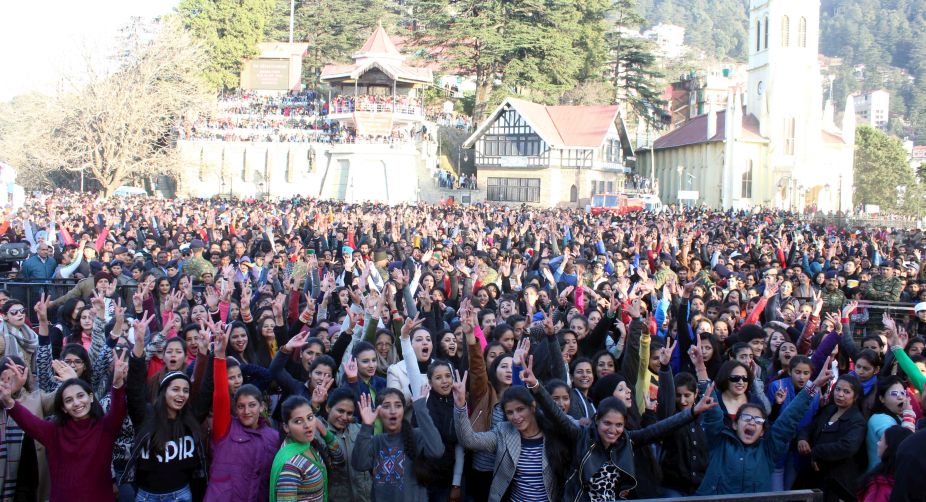
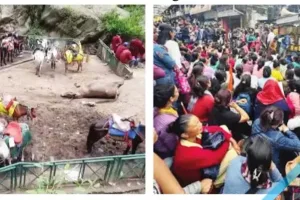
The  Queen of Hills, Shimla on Saturday saw huge rush of tourists, both domestic and foreign, to welcome the New Year.

The other popular hill stations of Himachal Pradesh also witnessed sudden influx of tourists with the hope of  snowfall in the first week of 2017.

The Winter Carnival in Shimla virtually turned the historic Ridge Ground and Mall Road area into a human sea.

With more and more tourists heading towards Shimla  for the New Year celebration, there were long queues for parking in ‘Queen of Hills’, adding to traffic jams and parking woes.

All the hotels and other tourist accommodations in the hill station were full to the capacity bringing cheers on the faces of hoteliers who did brisk business, especially after snowfall on Christmas on December 25.

The administration made elaborate arrangements to maintain law and order and deployed additional security on The Mall and Ridge to avoid any untoward incident. However, the rules, as usual, were relaxed to make the tourists enjoy to the full and dance with music in the open spaces.

Over the years, the winter tourism which lasts about three weeks from mid December to first week of January has picked up very fast in Shimla and the rush during the peak days from Christmas to New Year is even more than summer tourist rush.

Tourists make beeline for Shimla to celebrate New Year

Statesman News Service | Shimla |

The  Queen of Hills, Shimla on Saturday saw huge rush of tourists, both domestic and foreign, to welcome the New Year.

The other popular hill stations of Himachal Pradesh also witnessed sudden influx of tourists with the hope of  snowfall in the first week of 2017.

The Winter Carnival in Shimla virtually turned the historic Ridge Ground and Mall Road area into a human sea.

With more and more tourists heading towards Shimla  for the New Year celebration, there were long queues for parking in ‘Queen of Hills’, adding to traffic jams and parking woes.

All the hotels and other tourist accommodations in the hill station were full to the capacity bringing cheers on the faces of hoteliers who did brisk business, especially after snowfall on Christmas on December 25.

The administration made elaborate arrangements to maintain law and order and deployed additional security on The Mall and Ridge to avoid any untoward incident. However, the rules, as usual, were relaxed to make the tourists enjoy to the full and dance with music in the open spaces.

Over the years, the winter tourism which lasts about three weeks from mid December to first week of January has picked up very fast in Shimla and the rush during the peak days from Christmas to New Year is even more than summer tourist rush.

New UN chief wants consensus but faces antagonistic Trump

AP | United Nations |

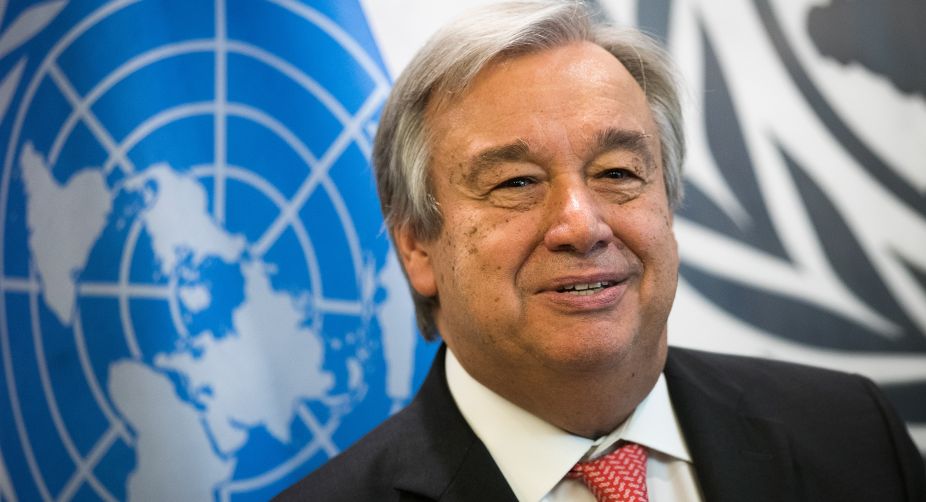
Antonio Guterres takes the reins of the United Nations on New Year's Day, promising to be a "bridge-builder" but facing an antagonistic incoming US administration led by Donald Trump who thinks the world body's 193 member states do nothing except talk and have a good time.

The former Portuguese prime minister and UN refugee chief told reporters after being sworn-in as secretary-general on December 12 that he will engage all governments "and, of course, also with the next government of the United States" and show his willingness to cooperate on "the enormous challenges that we'll be facing together."

But Trump has shown little interest in multilateralism, which Guterres says is "the cornerstone" of the United Nations, and a great attachment to the Republicans' "America First" agenda.

So as Guterres begins his five-year term facing conflicts from Syria and Yemen to South Sudan and Libya and global crises from terrorism to climate change, US support for the United Nations remains a question mark.

And it matters because the US is a veto-wielding member of the UN Security Council and pays 22 per cent of the UN's regular budget and 25 per cent of its peacekeeping budget.

Immediately after the United States allowed the Security Council to condemn Israeli settlements in the West Bank on December 23 in a stunning rupture with past practice, Trump warned in a tweet: "As to the UN, things will be different after Janusry 20th," the day he takes office.

Trump followed up three days later with another tweet questioning its effectiveness. "The United Nations has such great potential but right now it is just a club for people to get together, talk and have a good time. So sad!"

John Bolton, a conservative Republican and former US ambassador to the United Nations, said in an interview with The Associated Press that Guterres would be well advised "especially given the incoming Trump administration" to follow the model of his predecessor, Ban Ki-moon, and do what member governments want.

If he tries to follow what Ban's predecessor, Kofi Annan, did as secretary-general and try to be the world's top diplomat and what some called "a secular pope," Bolton said, "I think especially in the Trump administration, he would run into big trouble very quickly."

Guterres has made clear that his top priority will be preventing crises and promoting peace.

New UN chief wants consensus but faces antagonistic Trump

AP | United Nations |

Antonio Guterres takes the reins of the United Nations on New Year's Day, promising to be a "bridge-builder" but facing an antagonistic incoming US administration led by Donald Trump who thinks the world body's 193 member states do nothing except talk and have a good time.

The former Portuguese prime minister and UN refugee chief told reporters after being sworn-in as secretary-general on December 12 that he will engage all governments "and, of course, also with the next government of the United States" and show his willingness to cooperate on "the enormous challenges that we'll be facing together."

But Trump has shown little interest in multilateralism, which Guterres says is "the cornerstone" of the United Nations, and a great attachment to the Republicans' "America First" agenda.

So as Guterres begins his five-year term facing conflicts from Syria and Yemen to South Sudan and Libya and global crises from terrorism to climate change, US support for the United Nations remains a question mark.

And it matters because the US is a veto-wielding member of the UN Security Council and pays 22 per cent of the UN's regular budget and 25 per cent of its peacekeeping budget.

Immediately after the United States allowed the Security Council to condemn Israeli settlements in the West Bank on December 23 in a stunning rupture with past practice, Trump warned in a tweet: "As to the UN, things will be different after Janusry 20th," the day he takes office.

Trump followed up three days later with another tweet questioning its effectiveness. "The United Nations has such great potential but right now it is just a club for people to get together, talk and have a good time. So sad!"

John Bolton, a conservative Republican and former US ambassador to the United Nations, said in an interview with The Associated Press that Guterres would be well advised "especially given the incoming Trump administration" to follow the model of his predecessor, Ban Ki-moon, and do what member governments want.

If he tries to follow what Ban's predecessor, Kofi Annan, did as secretary-general and try to be the world's top diplomat and what some called "a secular pope," Bolton said, "I think especially in the Trump administration, he would run into big trouble very quickly."

Guterres has made clear that his top priority will be preventing crises and promoting peace.

Istanbul terror attack: 35 killed, 40 injured

IANS | Istanbul |

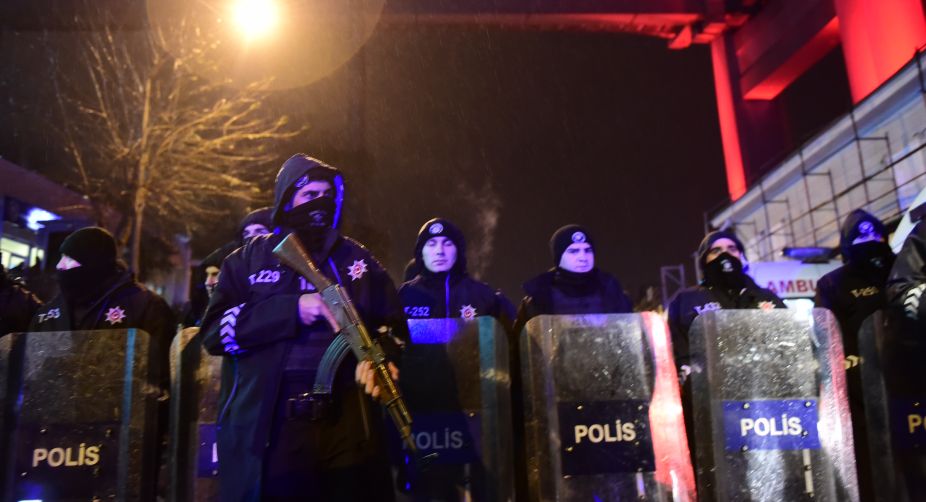
At least 35 people were killed in a gun attack on a popular nightclub in Istanbul, city's Governor Vasip Sahin said on Sunday morning.

Hurriyet Daily News quoted Sahin as saying that the attacker killed a police officer and a civilian at the gate of the nightclub, before entering inside and raving through the crowd celebrating the new year.

At least another 40 were injured in the "terrorist" attack which took place in the Reina nightclub, in the Ortakoy area, at about 1.30 local time (22:30 GMT).

One attacker was involved, the Governor said, while CNN Turk reported he was dressed in a Santa Claus costume.

"A terrorist with a long-range weapon … brutally and savagely carried out this incident by firing bullets on innocent people who were there solely to celebrate the New Year and have fun," BBC quoted Sahin as telling reporters at the scene of the upmarket Reina nightclub, which sits on the banks of Bosphorus in the city's European side.

According to a witness, there were upto 700 people in the nightclub at the time of the attack, some of whom are believed to have jumped into the river to escape.

Some 50 to 60 ambulances were dispatched to the scene.

"The inglorious (attacker) raved through the place with Kalashnikovs. The US intelligence warned over such an attack about one week or 10 days ago and measures have been taken, including the sea front. And look what has happened then," Mehmet Koçarslan told Hürriyet reporter Toygun Atilla adding that such an attack was coming, but could not be prevented.

Turkish television channel NTV said special force police officers were searching the nightclub.

Reina is one of the international night clubs in Istanbul frequented by the high-society, celebs, artists and football stars.

Some 25,000 police officers have been on duty against a possible terror attack in Istanbul during the New Year's Day celebrations in the wake of consecutive bomb attacks across the country in 2016, which claimed hundreds of lives, Hurriyet Daily News added.

Turkey's Radio and Television Supreme Council (RTÜK) also announced a gag order regarding the attack.

President Recep Tayyip Erdogan expressed deep sadness over the attack, Anadolu Agency cited government sources, and received updates from Prime Minister Binali Yildirim and Governor Sahin on the casualties as well as the details of the terrorist act.

Less than a fortnight ago, the Russian ambassador, Andrei Karlov, was shot dead by off-duty Turkish policeman Mevlut Mert Altintas as he gave a speech in the capital Ankara in December.

After the shooting, the killer shouted the murder was in revenge for Russian involvement in the conflict in the Syrian city of Aleppo.

Three weeks ago twin bombings in Istanbul killed at least 45 people, mostly police officers.

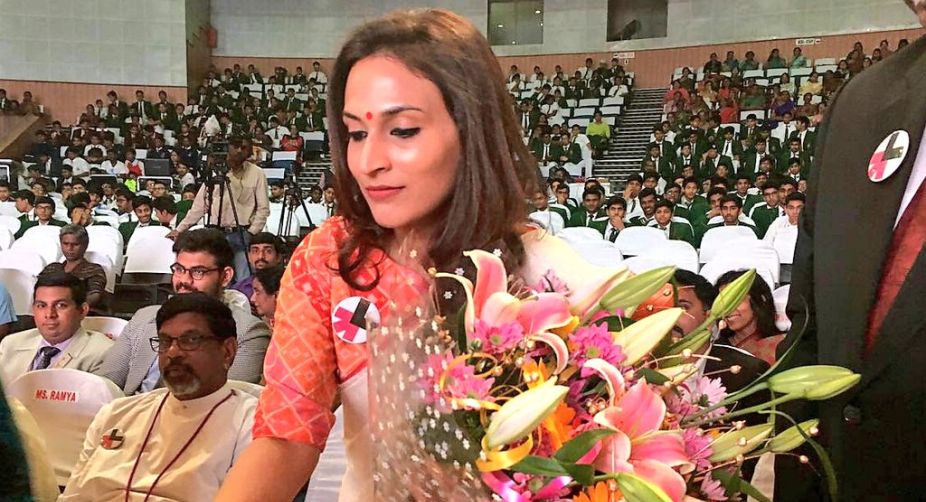
Aishwarya Dhanush’s next a biopic on Paralympian Thangavelu

IANS | Chennai |

Filmmaker Aishwarya Dhanush Rajinikanth's next Tamil directorial will be a biopic on Indian Paralympic high jumper Mariyappan Thangavelu, and it was announced on Sunday to coincide with the New Year.

Titled "Mariyappan", the film will throw the spotlight on the life of the 21-year-old high jumper from Salem district in Tamil Nadu.

In 2016 Summer Paralympic games held in Rio de Janeiro, Mariyappan won gold for India in high jump in T-42 category.

The film's first look poster was unveiled by Shah Rukh Khan, and he wrote on his Twitter page: "Here's presenting the first look of the biopic on Mariyappan Thangavelu, our very own national hero. All the best Aishwarya."

The film will have music by Sean Roldan, cinematography by Velraj and dialogues by filmmaker Raju Murugan.

The poster also revealed that the film will be simultaneously shot in English as well.

Photo

  • img
  • img
  • img
  • img
  • img

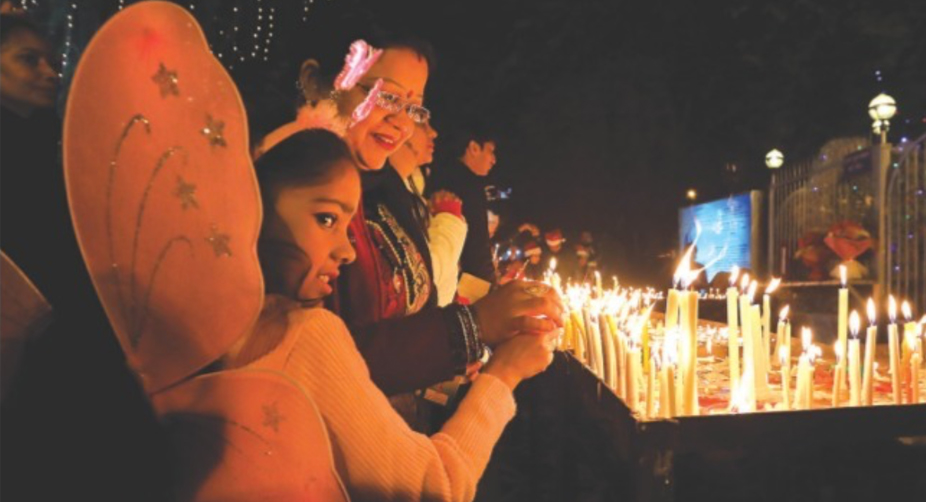
Christmas Cheer

Christmas Cheer

MORE Photo STORIES

No solution in sight to two-month-old Manipur blockade

IANS | Imphal |

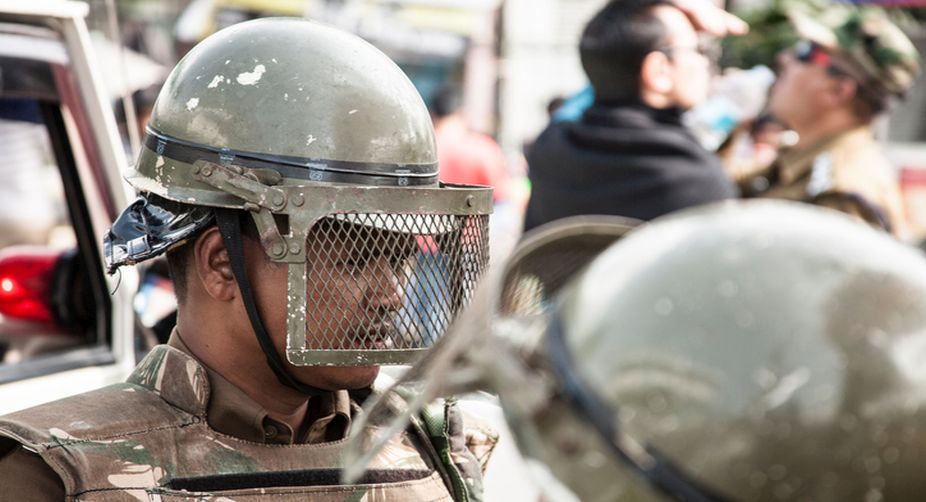
A solution to the two-month-old crippling Naga indefinite economic blockade of Manipur is nowhere in sight with Manipur Chief Minister Okram Ibobi Singh and the United Naga Council (UNC) not budging from their respective stands, officials said.

The UNC had imposed the indefinite blockade on November 1 in protest against the government's plan to create two new districts.

According to the UNC, several "lands of the Nagas" will be usurped by the new districts.

However the government responded by creating seven, and not two, new districts.

All sections of people welcomed it saying that apart from administrative convenience this has been their long standing demand for speedy development.

Ibobi said that first UNC should call off the blockade and give an assurance that it will not be repeated.

Only after that can talks be held and Gaidon Kamei and Stephen Lamkang, two UNC leaders, may be released to create a conducive atmosphere.

Chief Secretary Oinam Nabakishore said: "One of the conditions of UNC is that the talks should be held in the district headquarters of Senapati".

In response Ibobi said, "The UNC is a club of a handful of persons. If the government goes to Senapati district all other organisations may put such conditions in future. At the most we are ready to go to Delhi for the proposed tripartite talks".

Kiren Rijiju, the Union Minister of State for Home Affairs, recently said that the Manipur government is not serious about ending the blockade.

However Ibobi denies it saying that there was no question of playing politics since it is a question of starving the people of the state.

Manipur has been without consumer items, baby foods, building materials and other items since November 1 as a result of the blockade.

Rijiju who said that the "blockade is totally unacceptable" had despatched additional paramilitary personnel who are being used to escort trucks and oil tankers along NH 37.

But the UNC said that it shall intensify the agitation.

From Saturday, it is picketing government offices in the Naga dominated areas in the hill districts. 

Only Anna, MGR and Jayalalithaa will be projected: Sasikala

IANS | Chennai |

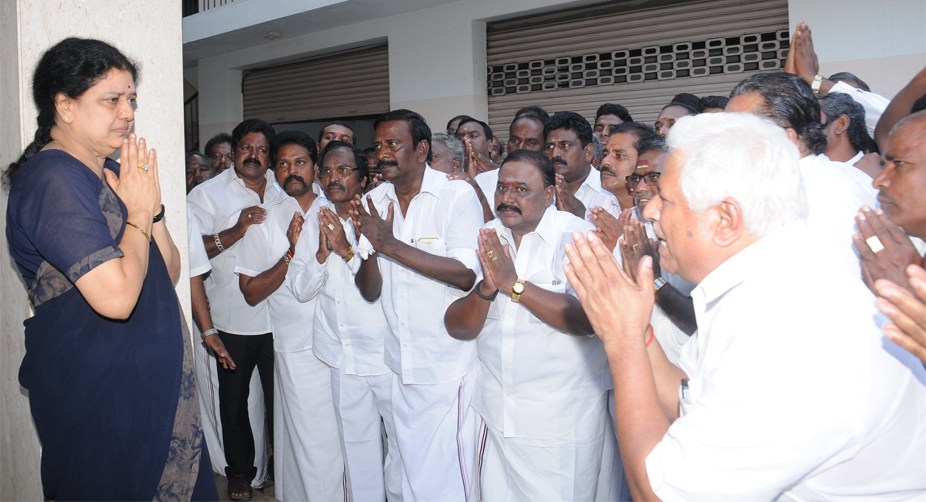
The ruling AIADMK's newly elected General Secretary VK Sasikala on Saturday said the party would not project any individual other than late party founder MG Ramachandran, late CN Annadurai and the late J Jayalalithaa.

Sasikala formally took charge as the party's General Secretary after she was elected unanimously on December 29 at the AIADMK's general council meeting.

A close aide of late Chief Minister and party General Secretary J. Jayalalithaa for the past 33 years, Sasikala came to the party headquarters and took charge signing some papers.

Addressing party members, Sasikala said Annadurai, MGR and Jayalalithaa are the identities of this massive organisation.

"Other than these people nobody else will be projected in the forefront," Sasikala said.

She said MGR and Jayalaltihaa were leaders beyond caste and religious lines and the party would continue to follw their path.

Sasikala said the birth centenary of party founder MGR begins on January 17, 2017 and the party would celebrate that in a grand manner throughout the year.

She said the party would urge the central government to issue a commemorative stamp and also a currency coin with MGR's image.

In her first public speech, Sasikala recalled her more than three decade long association with Jayalalithaa and paid rich tributes to the late leader.

Sasikala said the loss of Jayalalithaa is a personal loss for her and cannot be described in words.

Earlier arriving at the party office, she garlanded MGR's statue installed there.

Chief Minister O. Panneerselvam, state ministers, party leaders and legislators greeted her. Outside the party office there was a sizeable crowd of party cadres who greeted Sasikala.

New Army, IAF chiefs take over

IANS | New Delhi |

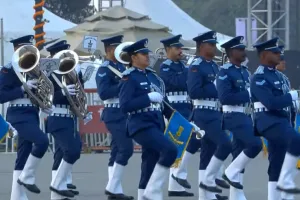
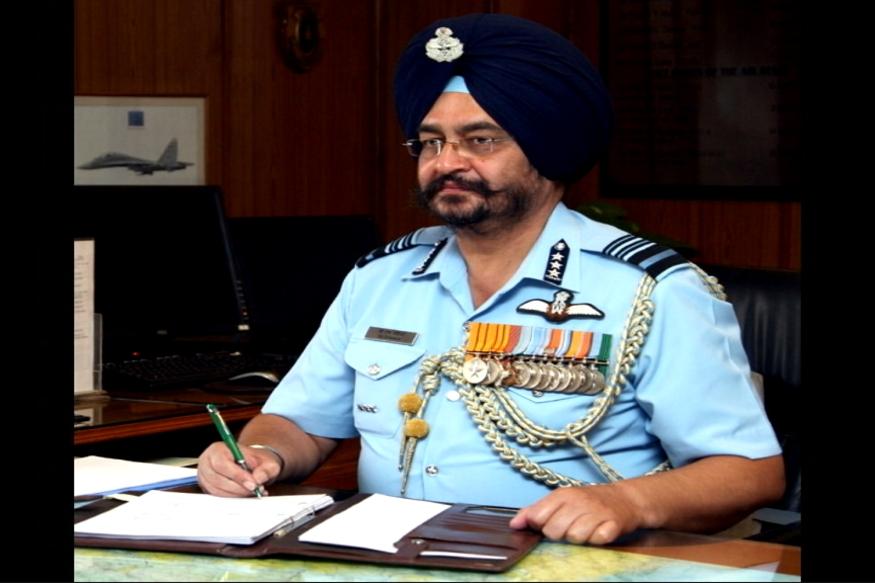
New Army chief General Bipin Rawat and Air Force chief Marshal Birender Singh Dhanoa on Saturday took over as the chiefs of the two services, with outgoing General Dalbir Singh and Air Chief Marshal Arup Raha handing over charge.

A Guard of Honour was conducted for General Singh on the lawns of South Block before he handed over charge to General Rawat.

In Vayu Bhawan, which houses the air headquarter, a Guard of Honour was presented to both outgoing chief Raha and incoming Air Chief Marshal B. S. Dhanoa.

Both General Singh and Air Chief Marshal Raha retired on Saturday.

Buxar jailbreak: 5 prisoners escape

PTI | Buxar (Bihar) |

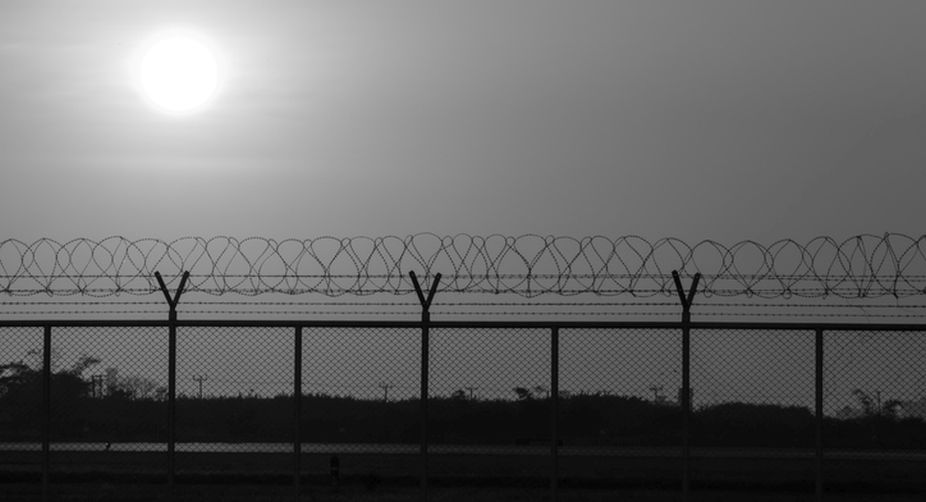
Five convicts, including four serving life imprisonment, escaped from the Buxar Central Jail late last night by scaling the prison wall.

District Magistrate Raman Kumar said today that the jailbreak took place between 12 midnight and 3 AM.

Iron road, pipe and 'dhoti' have been found at the spot from where the prisoners scaled the wall, he said.

Superintendent of Police Upendra Sharma said those who escaped included Prajit Singh hailing from Motihari, Girdhari Rai of Chapra, Sonu Pandey and Upendra Sah of Ara, all four serving life imprisonment and Sonu Singh of Brahampur, Buxar, convicted for 10 years.

The DM said that after probing the incident, responsibility would be fixed on the erring jail officials for the jail break.
 

The SP admitted that security has been breached and said thick fog must have helped them in escaping.

An inescapable future

Govind Bhattacharjee | New Delhi |

After my last article (A Cashless Future, 23 November) in these columns, many readers had reacted with an understandable sense of outrage. While some thought that it would be insane to talk of a cashless country where more than half the population still defecate in the open and about a quarter of the population are illiterate, others pointed out that in a cashless economy, there is a cost for every digital transaction which will place an avoidable burden upon the poor. Yet others suggested that the country has to grow and evolve before we can think of a cashless future. This, in my opinion, will require an eternity.
The post-demonetisation nightmares that the people are still passing through and the prevailing confusion, being aided and abetted by the RBI’s relentless directives, have led to helplessness and frustration. Going by the daily reports of raids and unearthing of huge loads of cash, including old and new notes all over the country, the hoarders of black money are probably exploring ingenuous ways of changing the colour of their money with the Jugaad mindset. The anger and discomfort over these developments may justifiably blur our objective reasoning.
What is relevant and important for a cashless economy is not the penetration of toilets or literacy, but the penetration of mobiles and financial inclusion. Increasing digitisation of transactions is also essential for the success of GST which will have to be introduced  by 15 September 2017. This could have  been a very important, even if unstated, objective behind the  demonetisation move, as it is for improving the direct tax collections.
As regards the transaction cost of digital payments, every transaction carries an economic cost, including cash. According to a Bloomberg report, merely transporting cash to and from the villages in India had cost about $ 335 million last year, equivalent to about Rs 2200 crore. This is a poorly targeted indirect subsidy benefiting the rich and poor,  the rich obviously more than the poor. Once digital transactions  become the norm, the economics of scale is sure to bring down the cost of such transactions, and if it still remains unreasonable, a similar amount of subsidy can be distributed through the Jan-Dhan accounts to compensate only the poor. This will reduce the inherent inequity of the present system.
For digital transactions, all one needs are a mobile phone (preferably a smartphone with internet connection) and a bank account. As regards mobile penetration, going by the latest data released by the Telecom Regulatory Authority of India on 30 September 2016, there were 105 crore mobile subscribers in India (60 crore urban and 45 crore rural). Of the estimated population of 133.6 crore in 2016, roughly 67 per cent, or about 90 crore are rural, thus the distribution remains skewed between urban and rural subscribers, though it is reasonable to assume that most households have access to a mobile phone. With overall tele-density ~ the number of mobile connections per 100 population ~ of 84, the basic infrastructure is already in place. Of course the tele-density points to  wide variation across the states, from 56 in Bihar to 119 in Tamil Nadu, but it is
only a matter of time before this unevenness gets diminished gradually.
Internet connectivity is of course a different story. With only 46 crore internet connections, more than 70 per cent in urban areas in June 2016, most of the rural population still remains unconnected. There are also various infrastructure bottlenecks, such as  availability and reliability of connections, besides electricity in many rural outposts. With internet connectivity, Mobile Wallets and United Payments Interface (UPI) can enable seamless digital payments across the banks. But apart from the internet, they also require a smartphone, which may not be affordable to many Indians as yet, even with their prices nose-diving sharply.  The number of internet connections grew by 30 per cent last year and the growth rate is likely to be sustained. Indeed, internet penetration can be increased from the current 35 per cent to 70 per cent within only 4-5 years, assuming there is a concomitant expansion of the attendant infrastructure.
However, technology has already addressed this problem and with the Unstructured Supplementary Service Data (USSD), even a basic mobile handset (feature phone) without internet connection can facilitate cashless payment, through the IFSC Code of the Bank and the Aadhaar number. One can transfer money up  to Rs 5000 using only the recipient’s IFSC code, mobile number and Aadhaar  number ~ 83 per cent of India’s population is now covered by Aadhaar.
The last element is the financial inclusion ~ and it is indeed difficult to estimate.  Taking the Census 2011 figure of 4.45 for the average household size in India, there are about 30 crore households to be covered for full financial inclusion, which can be ensured if each of these households has at least one bank account amongst its members.
As per the latest RBI data furnished in March 2015, the total number of savings bank accounts with the scheduled commercial banks was 11.7 crore (19.6 per cent growth over the  previous year). These included multiple accounts in the name of a single individual, the precise number of which is indeterminate. Making allowance for even 25 per cent redundancy on this count, we have about 8.8 crore unique individual accounts. This will still include multiple members of the same households having separate accounts. The growth rate of 19.6 per cent would yield 9 crore separate household accounts by December 2016.
Under the Pradhan Mantri Jan Dhan Yojna launched in August 2014, as of December 2016, there were 25.98 crore Jan Dhan accounts, more than half of which have been opened since March 2015, and hence excluded from the 9 crore accounts computed above. Add to this nearly 3 crore “No Frill Accounts” with the Regional Rural Banks, when these accounts were converted to “Basic Savings Deposit Accounts” in August 2012 by the RBI. Many of these may be inoperative, but from these statistics, it is likely that at least 20 crore of the estimated 30 crore households have already been covered by the banking network. Opening an account has also become much simpler, with the Aadhaar Card and a photograph being the only requirements.
Thus a substantial part of the infrastructure essential for going cashless is already in place, and India can leapfrog into a digital economy without major disruptions. It is no longer an impossible dream if we only dare to dream, despite 90 per cent of our informal economy today being based on cash. In fact, it is this informal sector that is the target of demonetisation and naturally this is the sector that has been hit the hardest. If India is to become cashless, this sector has to be brought into the formal stream. This is also essential to expand our absurdly narrow direct taxpayer base.
Of the 52 crore strong workforce, 29 crore are engaged in the primary sector outside the tax net (using 2011 census percentages). The rest of the 23 crore employed in the secondary and tertiary sectors constitute our potential direct taxpayers’ base. Of this 23 crore, only 5 crore file tax returns, 1.5 crore pay taxes and only about 20 lakh people pay taxes at the highest slab rate of 30 per cent, with annual income exceeding Rs 10 lakh. Consequently 85 per cent of the net national income goes outside the tax net and our tax-to-GDP ratio remains among the lowest even among the emerging economies. Add to this the substantial evasion in indirect taxes ~ excise, service tax and sales tax (VAT) ~  the evasion unearthed by the Government in the last two years amounted to Rs 50,000 crore and the undetected evasion is anybody’s guess.
The evasion is enabled by the use of cash ~ the anonymous, fluid unit of transaction that leaves no trail and cannot be tracked. With such endemic evasion of indirect taxes, GST which subsumes most indirect taxes does not stand an iota of chance to succeed, unless the informal sector is included in the tax net. Besides, GST being a technology-driven tax, the primary prerequisite is a substantial digitisation of most transactions.
Life will not be the same in India ever again. Not all of the Rs 15 lakh crore withdrawn from the monetary system
is ever going to be returned, and the withdrawal ceilings
are also not going to be removed anytime soon. The Government is pushing the envelope hard to prod the informal
sector into cashlessness, to enable the authorities check tax evasion. Demonetisation is basically a political decision with economic ramifications. It is not about curbing 
black money but eliminating the source of black money which is cash.

(The writer is a commentator and the views expressed are personal.)

Fitting tribute

Sudipta Chanda  | New Delhi |

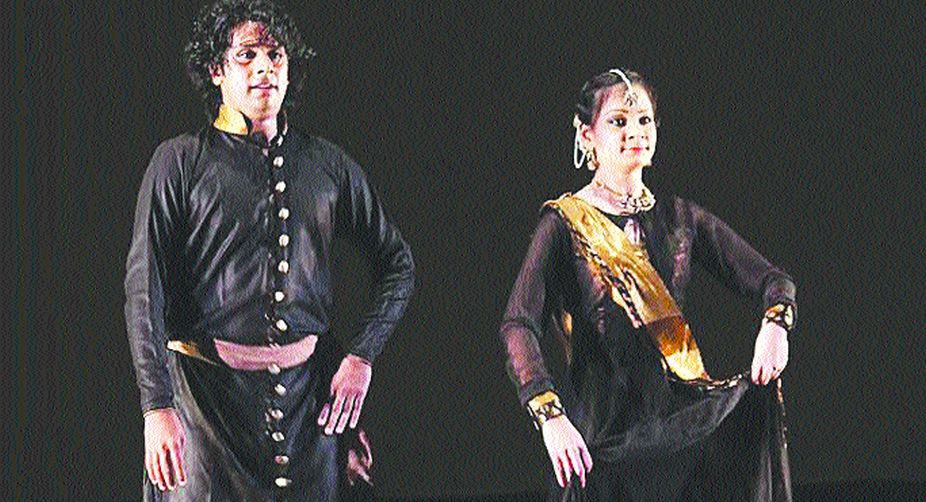
Very few of us know that Sitara Devi had a very close connection with Bengal. She was born and brought up in Kolkata was very fluent in Bengali. At a tender age she got the chance to perform in front of Gurudev Rabindranath Tagore in Shantiniketan. After watching her perform Tagore offered her some gifts while she requested for something which was eternal. Finally, he blessed her with the title queen of kathak.
Then she joined film industry, earned adequate stardom but didn’t continue in the long run. She made her film debut with ‘Usha Haran’ in 1940 and appeared in films like Roti, Anjali, Mother India and so on. She left films soon after to follow her passion for Indian classical dance. 
She was fortunate to perform at the Royal Albert Hall, was given the Sangeet Natak Akademi Award, Padma Shree, Kalidas Samman but she refused to take Padma Bhusan, as she once said, “”is this government not aware of my contribution to Kathak? I will not accept any award less than Bharat Ratna.”
Coming back to the event Smaran 2016 , it featured the performances of  exponents from Delhi- Amit Khinchi (disciple of Pt. Rajendra Gangani ) & Subhi Johri ( student of  Pt. Jay Kishan Maharaj ).But the main performances was offered by both  artists who are the grandsons of  Sitara Devi Vishal Krishna (Kathak exponent) & Kushal Krishna (tabla exponent ) from Benaras. Other performers included Anasua Majumdar, Gargi Mukherjee, Rudrani Konar from Kolkata with their exciting presentations. Danseuse Alokananda Roy was the chief guest, and two other special exponents Chitra Bishwanathan from Mumbai and Saraswati Rajathesh from Bangalore were the special guests. Vishal Krishna felicitated all of them on behalf of Kalindi Darpan.

Next, a short documentary on Sitara Devi was screened which featured her interviews, film clips, rare photographs and so on. It was about her journey into the film industry, her global connection as cultural ambassador, and as a mentor to Bollywood stars, and also her many achievements.