


It will be appropriate to recall some of the important events that took place in the North-east in the year that is bowing out this week. There was quiet satisfaction and rejoicing in Assam following the installation of the first-ever BJP government headed by Sarbananda Sonowal. The election threw a surprise in the defeat of All India United Democratic Front leader Badruddin Ajmal, who with a sizeable number of MLAs, was projected as the king-maker in the event of the Congress/ BJP not securing the magic figure. The six-year-old peace talks continue to remain on the back-burner.
Arunachal Pradesh witnessed the swearing in of three chief ministers, showing the extent of degradation in terms of moral values among Congress politicians. One of the chief ministers even allegedly committed suicide, the cause
of which is yet to be known though he reportedly left behind a suicide note. The BJP’s efforts to meddle in the state’s politics did not materialise but there has been quiet satisfaction that the regional party in power now is pro-Centre.
Politically Meghalaya was quiet. The state lost the charismatic PA Sangma. He never looked back after his election to the Lok Sabha in 1977 from the Tura constituency when then Prime Minister Indira Gandhi spotted his potential and accommodated him in her Cabinet. Later he served as the Lok Sabha Speaker and even contested the Presidential election against Pranab Mukherjee. At the time of his death, Sangma headed a local party. There was no let-up in insurgency in the Garo hills.
Mizoram is yet to complete the repatriation of nearly 30,000 Bru refugees living in Tripura camps after they fled the state in October 1997 following ethnic clashes. Reports speak of 20,000 being identified as genuine. The state earned the reputation of over 50 per cent of its population being addicted to smoking.
Manipur continued to be the most disturbed in the region. The government’s decision to create seven new districts ~ four in the Naga-dominated areas ~ has infuriated the NSCN(IM) leadership, which says it will harm its cause of a Greater Nagaland concept. The bodies of nine protesters, killed in Churachandpur clashes in September last year following the Ibobi government’s passing of three “controversial” Bills, are yet to be buried.
Nagaland spent one more peaceful year but there was no word on the follow-up to the August 2015 “framework agreement”. Tripura witnessed the state Trinamul Congress chief running away with the Speaker’s mace in the assembly, a manifestation of his desperation.
Looking back
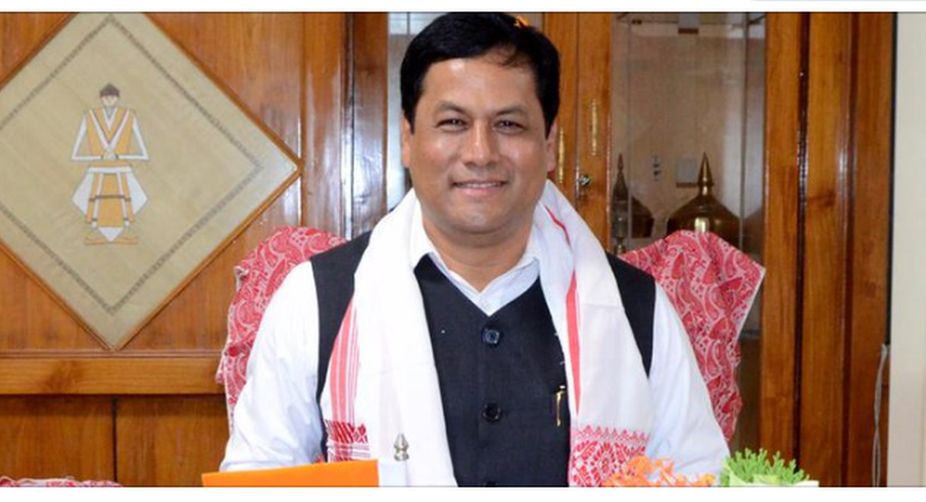
Sarbananda Sonowal (Photo: Facebook)
No exit from Rajiv Chowk Metro on Dec 31 evening
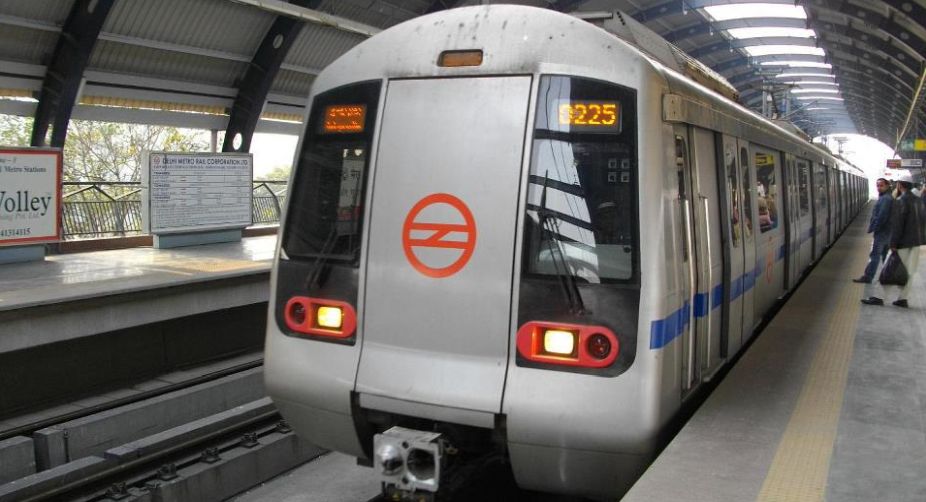
Photo: Facebook
Commuters will not be allowed to exit the Rajiv Chowk Station after 9pm on December 31, while entry will be confined to two gates, the Delhi Metro said on Thursday.
This decision has been taken to keep the revellers away and to maintain peace in the New Delhi district area on the New Year's Eve, said the Delhi Metro Rail Corporation.
Passengers will be allowed to enter the station from 'F' and 'B' gates after 9pm.
The Connaught Place area in central Delhi is one of the favourite night-out haunts for city residents, and in particular, sees increased footfall during the holiday season. It has a heavy police presence on the New Year's Eve to prevent any untoward incident.
Twinkle pens tribute to father Rajesh Khanna on birth anniversary
(Photo: Facebook)
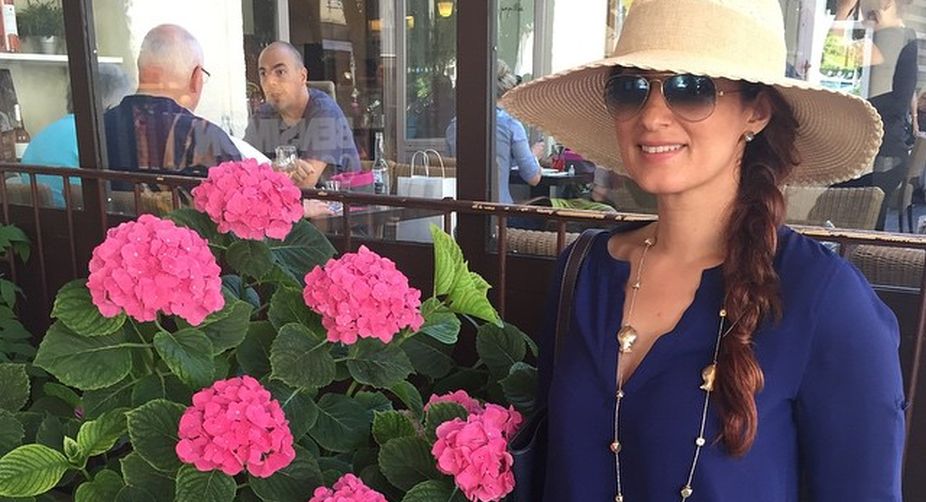
On her late father and superstar Rajesh Khanna's 74th birth anniversary, actress-writer Twinkle Khanna penned an emotional tribute, recounting how she is a reflection of him.
Twinkle posted a black and white image, featuring her and her father, on Twitter on Thursday.
"I see you, in my reflection off the back of a gleaming spoon, in a gesture my sister makes, in the arch of my son's eyebrows — I still see you," Twinkle captioned the image.
Filmmaker Madhur Bhandarkar also tweeted: "Remembering the man who defined superstardom and one of my favourite actors Rajesh Khanna on his 74th birth anniversary."
Rajesh, who died in 2012 aged 69 due to cancer, was often referred to as the "first superstar" of Indian cinema. He starred in 15 consecutive solo hit films from 1969 to 1971, said to an unbroken record yet.
He was posthumously awarded India's third highest civilian honour Padma Bhushan in 2013 for his work in the entertainment industry.
The actor was known for his work in films like "The Train", "Kati Patang", "Anand", "Haathi Mere Saathi", "Namak Haraam" and "Amar Prem".
Centre charts roadmap to complete 99 irrigation projects
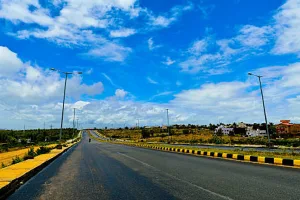
The Union government on Thursday charted out a roadmap for the early completion of 99 irrigation projects under the Accelerated Irrigation Benefits Programme (AIBP) and Pradhan Mantri Krishi Sinchayee Yojana (PMKSY), an official release here said.
Of the 99 projects, the maximum 26 are in Maharashtra, eight in Andhra Pradesh and one in Gujarat.
Of the identified projects, the Centre aims to complete 23 by 2016-17 and 31 other projects (Priority-II) by 2017-18.
The remaining 45 projects (Priority-III) are to be completed by December 2019, the release said.
National Bank for Agriculture and Rural Development (NABARD) has released Rs 3,274 crore for the projects, including Rs 1,981 crore to Andhra Pradesh, Rs 830 crore to Maharashtra and Rs 463 crore to Gujarat.
The Union Cabinet approved the pan-India PMKSY in July last year with an outlay of Rs 50,000 crore in five years.
All eight Andhra Pradesh projects are in priority-II category whereas in Gujarat, Sardar Sarovar is the lone project in the priority-III category. It is likely to be completed by 2018.
Funds required to complete all the 99 identified projects are an estimated Rs 77,595 crore, with an estimated central assistance of Rs 31,342 crore. The likely potential utilisation of land through these projects is estimated to be 76.03 lakh hectare.
"Keeping in view the budgetary constraints, it has been decided to borrow central share/assistance from NABARD as per year-wise requirements which could be paid back in 15 years along with a grace period of three years. Further, the proposal envisages that the state governments may borrow funds from NABARD for the state share," the release added.
Ana Ivanovic announces retirement from tennis
Tall and elegant on the court, graceful and inspiring off it, Ivanovic’s winning smile will be missed.

Ana Ivanovic (Photo: AFP)
Tennis star Ana Ivanovic announced her retirement from professional tennis on Facebook, directly broadcasting her decision to millions of fans by virtue of the social media platform’s Live feature on Wednesday night.
The 29-year-old, who got married to Manchester United footballer Bastian Schweinsteiger in July this year, has been struggling with injuries for the past couple of seasons and cited that as the chief reason behind her decision.
“It is a difficult decision but I feel the time is right to move on. I have been hampered by injuries recently and unable to maintain the top physical form that is required for the sport. My own standards are set quite high and I feel I have been unable to match them for a while" explained the frank Serbian in the video.
Ivanovic turned pro when she was just 16, back in 2003, and 13 years on the WTA Tour seem to have taken a toll on her body. Her finest year was in 2008, when she reached the final of the Australian Open, won the French Open and even held the World No. 1 ranking for a while.
An offensive right-handed baseliner, her form dropped steadily after the lofty heights of 2008, and ended 2016 with a ranking of just 65.
Giving a clue as to what comes next she added “I still love Tennis but now I can devote time to my philanthropic activities and of course continue my role as UNICEF ambassador to promote sports among the youth.”
“What I have achieved in my career is much more than what I dreamed of, not bad for a little girl from Serbia no? Watching Monica Seles on the television for the first time when I was five inspired me to play tennis and my parents have been extremely supportive of my career.”
Tall and elegant on the court, graceful and inspiring off it, Ivanovic’s departure will leave many to think perhaps she retired too soon and her winning smile will be missed on the court.

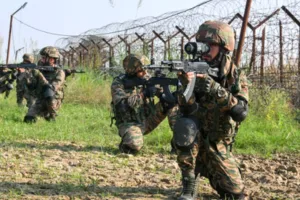
2 soldiers injured in gunfight in J-K
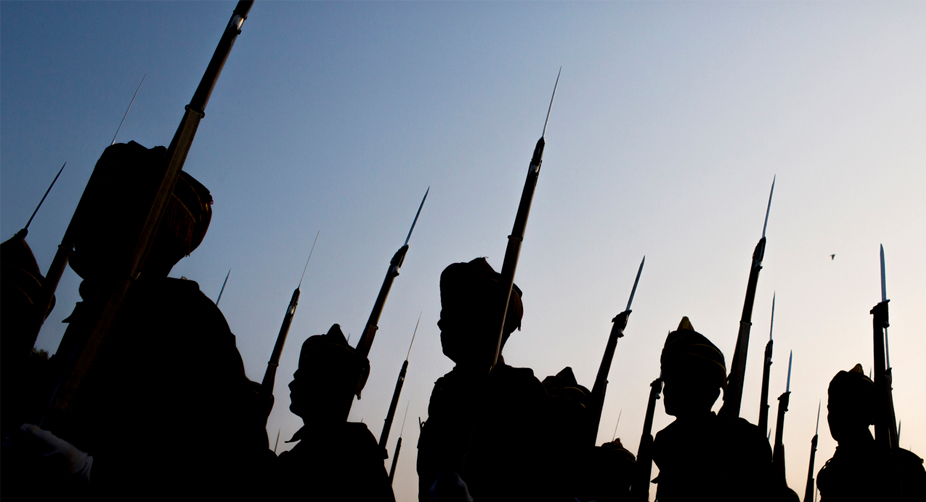
Representational Image (Photo: Getty Images)
Two army soldiers were injured in Jammu and Kashmir on Thursday in an operation against the militants, police said.
The incident occurred when following a tip off, security forces surrounded Shahgund (Hajin) village of Bandipora district early morning.
There was information about some militants holed up in the area, the police revealed.
"When the security forces were tightening the cordon, militants fired at them injuring two army soldiers who were shifted to hospital.
"The perimeter was further tightened and searches are on to locate the hide outs," the police added.
Debbie Reynolds dies day after daughter Carrie Fisher

Debbie Reynolds (Photo: AFP)
Hollywood legend Debbie Reynolds — who graced the silver screen, Broadway, and television during her decades-long career — has died, media reports said .
The 84-year-old actress and singer was rushed to a hospital on Wednesday after suffering a stroke, New York Times reported.
Reynolds passed away a day after her daughter — "Star Wars" actress Carrie Fisher died aged 60.
"She wanted to be with Carrie," Reynolds' son Todd Fisher said.
Reynolds – best known for her roles on stage and screen, including the 1952 movie musical classic "Singin' in the Rain" – was reportedly "distraught" in the hours after Fisher's death Tuesday.
She had been discussing funeral plans with Todd when the stroke occurred, reports said.

Tweak federalism to make it work
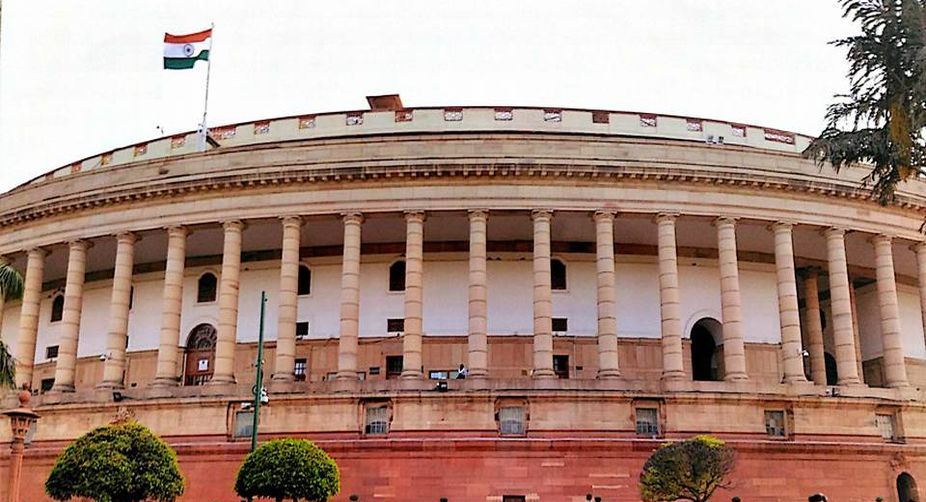
Photo: Facebook
It is known to all that the Indian Constitution has created a federal system. However, the term ‘federal’ has not been mentioned in the legal document. On the contrary, Article 1 describes India as a ‘union of states’. But, as a stark reality, our Constitution contains all the requisites of a federal system which implies the co-existence of two sets of Government, distribution of powers between them and the presence of a Supreme Court for the settlement of legal disputes between the Centre and the States.
The Founding Fathers fondly hoped that such a co-operative federation was the only coveted system for a country so vast and diverse in size, content and ethnology.
In fact, for nearly two decades after the inception of the Constitution it worked smoothly and no problems in Centre-State relations came to the fore.
The Congress, as a political colossus, ruled the country without any sizeable opposition and the differences in were silently ironed out within the party.
But, after 1967, the Congress lost its monopoly of power and various non-Congress parties took the reins in nine states. The ruling coalitions soon became vocally assertive and they, in unison, clamoured for real autonomy within the framework of the Constitution.
Most of these parties were regional in structure and they were not prepared to remain under the thumb of the rulers of Delhi. Thus DMK, Jharkhand Party, Bangla Congress, AIADMK, CPI, CPI-M, SP, Forward Bloc, SUCI, Kerala Congress etc. bitterly demanded more power in their hands. Their leaders pleaded that they only wanted a level playing field and no favour.
But, the rulers at the Centre argued that the Constitution expressly conferred upon the states sufficient power and requisite money to run administrations and that the non-Congress leaders had kicked up a fuss over a non-issue. Though states decried the Centre for its close-fisted policies, they were ultimately brought to bay by the arguments of the latter.
However, in 1971, the Congress, under Indira Gandhi, again came to power at the Centre and in almost all the states. Naturally, the cry for more autonomy was buried for some years. As such, the attempt to alter the federal scheme ultimately drew a blank.
However, in 1977, the Janata Party came to power at the Centre. The existence of some governments of different colours in some states again created a stand-off. Naturally, the demand for a change in Centre-state relations once again was loudly raised. But in spite of its lenient attitude, the Janata regime was not prepared to weaken to the Centre by any major Constitutional change.
Thereafter, there have been various changes in the political scenario and the demand for greater autonomy for the states has often been raised with louder voices.
However, it bears recall that some factors have often embittered Centre-state relations in the past. First, some states have resented the deployment of the Central Reserve Police (CRP) in states for the preservation of law and order. In their view, it is a state subject and so the Centre ought not to get involved.
Secondly, the behaviour of some Governors has also been a matter of heated controversy. Of course the Governor has a dual role – he is the Head of the province and, at the same time, an agent of the Centre. So, when different parties occupied power at the Centre and in the states, some of them suddenly leaped into importance as desired by the Centre. As they owed a Constitutional duty to act upon the Central directives, they had to exercise their powers in defiance of the ministerial advice in the state.
For example, NB Bhandari of Sikkim, SS Dhawan and Dharma Veera of West Bengal, Ramlal of Andhra and some others earned the wrath of some local leaders at different times for their unfavourable decisions. Thirdly, the misuse of Article 356 has also been a source of contention in the federal relation. It is a legal device by which some state governments have been prematurely ousted on the plea of their failure to rule the state according to the letter and spirit of the Constitution. As a matter of fact, this central weapon has been more abused than used.
Fourthly, the existence of the Planning Commission, with its centralising activities, was another factor that often aggravated the crisis. Some of the non-Congress Chief Ministers have fired their salvo at the Centre for its alleged violation of local autonomy by its emphasis upon a deadening unity of the nation.
Fifthly, they have also voiced their grievances regarding their financial deprivation. It is alleged that their sources of income are very limited, the taxes they collect are too little to serve the local people and often the Centre deprives them of their fair share of the tax-proceeds in various ways. They also have alleged that the Constitution provides for three types of central grants – but, in this matter, much depends upon the whim and favouritism of the Centre.
For all these reasons, Centre-state relations have often been fragile. Some disgruntled leaders once set up a conclave in order to fight for greater autonomy of the states. But, ultimately, its efforts ended in smoke due to the Centre’s opposition.
However, in September 1969, the Tamil Nadu government set up the Rajamannar Committee to look into the matter. It came down heavily on Article 356 and sought its deletion from the Constitution. It also suggested the setting up of an Inter-state Council and recommended that state legislatures should have the power to reject or repeal an Act of Parliament passed under Art. 252. It further suggested that the major part of the Centre’s power of taxation should be transferred to the units, and also that the Governor’s power should be curtailed in order to make him the nominal Head of the state.
But, surely, its report was one-sided and unsatisfactory, because, it meant a total re-writing of the Constitution. In fact, it went against the original intention of the makers who desired to establish unity in the diversity of the polity.
Significantly, the Sarkaria Commission, appointed by the Centre in 1983 put forward some impressive and valuable suggestions on this burning issue. It did not suggest any radical and basic departure from the original Constitution for some cogent reasons. It only showed the ways and means for bringing the federal scheme more in tune with the changed needs of the day.
It deplored the frequent use of Article 356, suggested sparing application of Article 256 by which the Centre intervenes in the state-administration, stood for restricting gubernatorial power, advised the Centre to choose the Governor in consultation with the relevant Chief Minister, opposed the existing system of transfer of Judges and favoured the setting up of an Inter-state Council.
In its view, these changes were enough to make the Constitution a leak-proof document and to restore the desired harmony in the Centre-state relations.
Thus, it may be held that there is no need for any major and drastic change in the existing Constitutional set-up. It is a cardinal truth that India is a federal polity and that there are several units in it with varied ideas and beliefs. But, the original Constitution earnestly sought to strike a balance between the Indian unity and provincial autonomy.
So, in order to cope with the changes of time, some minor adjustments in Centre-state relations are absolutely necessary – but the basics of the Constitution should remain unchanged, because it is a wonderful creation of some brilliant and wise persons.
The writer is a Griffith Prizeman and former Reader, New Alipore College.
A change for good

Kinjal knew nothing except Maths. One can call him a ‘Mathematics-Maniac’. He studied in class IX and being a good student, was very serious. Whenever he got spare time he would sit with his favourite Maths note-book and at a go, within an hour, he could complete 30 sums, which would be the toughest 30 sums imagined by the mathematicians too. This tremendous passion for Maths came from his parents, who were in the teaching profession. His mother was a Maths teacher in a renowned school of Kolkata and his father, a professor of Maths in one of the city’s finest universities.
Interestingly, throughout 2016, Kinjal’s Maths textbook remained his relentless companion. Sadly the year also was about to end but his yearning for Maths didn’t change at all. His parents were glad to see the love for Maths but at the same time they got scared for their son too.
His endless longing for Maths made him blind to choose other hobbies like his friends had. He didn’t like to involve himself in outdoor activities not even reading storybooks. Till class IX he had only read school English textbooks and rapid readers. He had no interest in reading Bengali novels too. It was indeed a crucial reason to be worried. Although, Kinjal excelled in the subject, but his general knowledge was weak and he didn’t even know that a writer called Enid Blyton actually existed, leaving aside reading books of Agatha Christie or J.K Rowling.
As always, this time also he was going to get a new-year gift. For a change, he thought that this time that his parents will choose the gift instead of him deciding what he wished. He had enough of Maths books. So his parents took a wise decision accordingly. They bought the perfect possible gift for their son.
It was the 1 January 2017.The clock had just struck 12, Kinjal found a newly packed paper parcel lying on his study table. It looked like that once again a Maths book awaited his fate. He was a bit disappointed as he had expected something different this time. Still, with utmost patience he slowly unwrapped the paper covering and what peeked out of the half opened parcel was a brand new storybook, Tintin it was.
It was a matter of a few days when a new desire got ignited in Kinjal’s life. With the existence of Maths, Tintin too became his beloved companion. Now he couldn’t live without it. Like a ray of hope this new-year turned Kinjal into a fresh leaf.
Coordinator, Class X, Gokhale Memorial Girls’ School
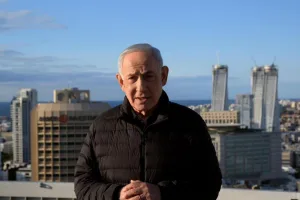
Netanyahu slams Kerry speech as biased against Israel
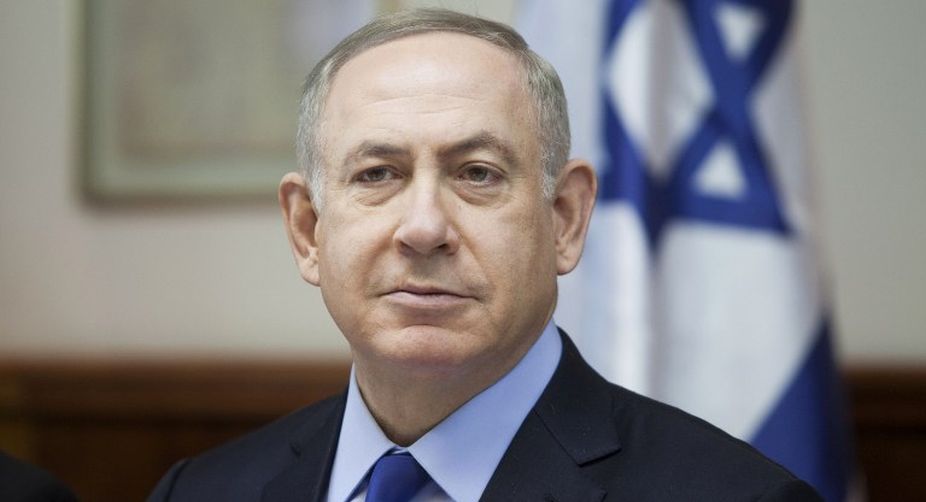
Prime Minister Benjamin Netanyahu (Photo: AFP)
Prime Minister Benjamin Netanyahu condemned a speech by US Secretary of State John Kerry on the Israeli-Palestinian conflict on Thursday as biased against Israel and more focused on settlements than Palestinian violence.
Speaking from his office following Kerry's speech in Washington, Netanyahu said the outgoing secretary of state paid only "lip service" to Palestinian violence against Israelis.
"What he did was he spent most of his speech blaming Israel for the lack of peace," Netanyahu said.
He added later that "Israelis do not need to be lectured about the importance of peace by foreign leaders".
In an earlier statement from Netanyahu's office, the premier said "like the Security Council resolution that Secretary Kerry advanced in the UN, his speech tonight was skewed against Israel".
"For over an hour, Kerry obsessively dealt with settlements and barely touched upon the root of the conflict — Palestinian opposition to a Jewish state in any boundaries."
Kerry's speech included sharp criticism of Israeli settlement building and came after last week's UN Security Council resolution calling for an end to such activity.
The United States abstained at the Security Council, allowing the resolution to pass 14-0.
The United States and others say continued settlement building is steadily eating away at the possibility of a two-state solution to the Israeli-Palestinian conflict.
Netanyahu has accused US President Barack Obama's administration of being behind the resolution, which it denies, and vowed not to abide by it.
Netanyahu said today it "reflects a radical shift in US policy towards the Palestinians on final status issues, those issues that we always agreed, the US and Israel, have to be negotiated directly face to face without preconditions".
Travelogue of a wanderlust
(Photo: SNS)
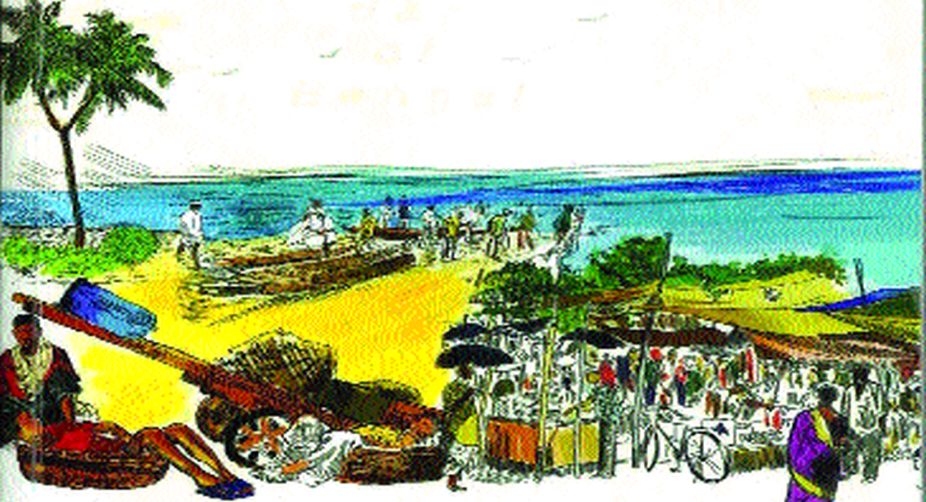
Scottish author and inveterate traveler Robert Louis Stevenson (1850 -1894) wrote in his essay, On going a journey, that the small change of events and incidents can be as rewarding as the satisfaction of arriving at a destination. On nautical forays for years, sailing to distant shores as a deck hand manning an international environmental conservation campaign sail ship’s riggings, did not quench first time author Samir Nazareth’s wanderlust. Turning “land lubber’’, he spent his savings travelling for six months through fishing villages and semi-urban kasbahs on the edges of rural India. An unusual lone Odyssey for a young man with a public school education and a Master’s degree, to see how life is lived in the coastal districts, from the parched outback of Saurashtra in Gujarat to the wetlands of West Bengal, resulted in a travel journal ~ “1400 Bananas 76 Towns and one million people” (Wordizen Books, Mumbai) ~ an engaging narrative with interludes of local history, food and conversation.
Budgetary constraints in this quest to visit lesser known habitations, collect broad outlines of oral history, take photographs ~ and sample regional food, needed keeping expenses down with nutritive bananas as a dietary mainstay. Episodic and replete with sharp socio-economic observations on life, as it is lived in remote parts of the country ~ along local bus routes ~ and off road, the tale is enlivened by the author’s sparkling humour. He explores and reaches where Jesus Christ’s Apostle St Thomas came ashore in 51-52 AD, at recently excavated Muziris port area, near Kerala’s Periyar River’s confluence with the Arabian Sea. He learns about two-millenniums-old local history from the Pastor of the first Syrian Christian Church the evangelist founded, on a backwater’s shore.
Rambling around Khambhat at Mahi River mouth, where it flows into the Gulf of Cambay, the author stumbles on perhaps the only location in India, where the ancient Harappan technique of Agate bead making is still practised. The craft is sustained by stones brought from Rajpipla Hills, about 200 km from Khambhat. In archaeological records, the origin of the craft is traced to nearby Lothal, a Harappan outpost with a dock yard that flourished about 4,000 years ago. A cottage industry surviving only in Khambat, the semi-precious Agate stones are placed with ash in small earthen pots and baked on wood-fired open ovens. Covered with a white crust in their natural state, the Agate glows red and turns black when cooled. Craftsmen chip the crust away. The kernels are cut, shaped and polished, to make sparkling lockets and bead necklaces ~ just as they were crafted, during the Harappa-Mohenjo-Daro era, for trade with Mesopotamia and Persian Gulf.
Nazareth describes how the heady Goan brew Feni is distilled in home backyards by moon shiners, from shredded Cashew fruit, fermented in vats. How itinerant tailors visit neighbourhoods in Tamil Nadu’s Toothakodi on cycle rickshaws with the sewing machine table replacing the passenger seat. While Puducherry is turning ultra-touristy, restoring French place names, pulling down nondescript buildings to rebuild with white colonial heritage facades.
“Travel without access to the internet could be a process of de-toxification from the absurd fixation with communication technology. Craving for checking smart phones for missed calls or a daily e-mail fix, reduces greatly ~ but does not vanish”, he says.
Alumnus of Ahmedabad’s National Institute of Design, Suhita Mitra ably renders the author’s photographically recorded vignettes, into vibrant line drawings brightening up the 378 page travelogue that may inspire aspiring adventurers.

China transports water from Tibet by chartered trains

Representational image (Photo: Getty Images)
China, for the first time, has started to transport Tibetan bottled water to its inland areas by cargo trains.
Tibet, often called Asia's Water Tower, is rich in water resources.
A train full of bottled water from Tibet left Lhasa, the capital of south-west China's Tibet Autonomous Region, and headed for the city of Ningbo in eastern China's Zhejiang Province on Wednesday, Xinhua news agency reported.
Carrying 1,890 tonnes of bottled water in 35 carriages from Tibet, the train will travel 4,500 kilometres and reach its destination in six days.
Tibet produced over 400,000 tonnes of natural drinking water in 2015, but high transport costs made it difficult to reach the inland market.
The new trains will facilitate trade in areas along the railway route and help Tibet shift its resource advantages into economic ones, said Yu Heping, a local official.
Identifying its freshwater resources as a new sustainable economic pillar of growth, Tibet plans to raise its annual production capacity of drinking water to five million tonnes in the next three to five years.
There are also plans to run trains between Lhasa and other cities such as Beijing, Qingdao, Zhengzhou, Guangzhou, Chengdu and Lanzhou.
Assam Cabinet likely to get 8 more ministers soon
(Photo: Getty Images)
The much-awaited expansion of the Assam Cabinet will take place sometime during the week-long Bhogali Bihu festival that starts on January 14, said state BJP President Ranjit Das on Wednesday.
Das, the newly-elected President of the Assam unit of BJP, told the media that he is scheduled to meet Chief Minister Sarbananda Sonowal on Thursday, when the matter is likely to come up for discussion.
"I am supposed to meet the Chief Minister tomorrow (Thursday). Eight new ministers will be inducted, including six BJP legislators and one each from the alliance partners the Asom Gana Parishad (AGP) and the Bodoland People's Front (BPF)," he said.
Apart from Chief Minister Sonowal, there are 10 ministers in the Assam Cabinet, including two AGP leaders and two BPF leaders.
Das was elected as the Speaker of the Assam Legislative Assembly earlier, but he relinquished his post on Monday after the BJP top brass elected him as the President of the state unit of the party.
There has been a demand to expand the ministry for smooth functioning of all the departments.
The alliance partners, AGP and BPF, had also been demanding induction of two more legislators each from the two parties into the Cabinet.

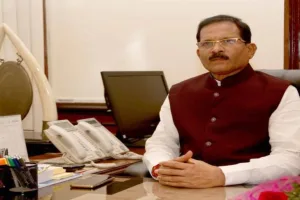
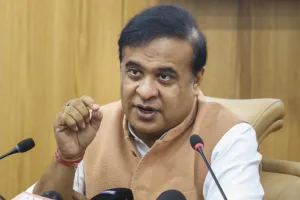
Assam Cabinet likely to get 8 more ministers soon
(Photo: Getty Images)
The much-awaited expansion of the Assam Cabinet will take place sometime during the week-long Bhogali Bihu festival that starts on January 14, said state BJP President Ranjit Das on Wednesday.
Das, the newly-elected President of the Assam unit of BJP, told the media that he is scheduled to meet Chief Minister Sarbananda Sonowal on Thursday, when the matter is likely to come up for discussion.
"I am supposed to meet the Chief Minister tomorrow (Thursday). Eight new ministers will be inducted, including six BJP legislators and one each from the alliance partners the Asom Gana Parishad (AGP) and the Bodoland People's Front (BPF)," he said.
Apart from Chief Minister Sonowal, there are 10 ministers in the Assam Cabinet, including two AGP leaders and two BPF leaders.
Das was elected as the Speaker of the Assam Legislative Assembly earlier, but he relinquished his post on Monday after the BJP top brass elected him as the President of the state unit of the party.
There has been a demand to expand the ministry for smooth functioning of all the departments.
The alliance partners, AGP and BPF, had also been demanding induction of two more legislators each from the two parties into the Cabinet.
Assam Cabinet likely to get 8 more ministers soon
(Photo: Getty Images)
The much-awaited expansion of the Assam Cabinet will take place sometime during the week-long Bhogali Bihu festival that starts on January 14, said state BJP President Ranjit Das on Wednesday.
Das, the newly-elected President of the Assam unit of BJP, told the media that he is scheduled to meet Chief Minister Sarbananda Sonowal on Thursday, when the matter is likely to come up for discussion.
"I am supposed to meet the Chief Minister tomorrow (Thursday). Eight new ministers will be inducted, including six BJP legislators and one each from the alliance partners the Asom Gana Parishad (AGP) and the Bodoland People's Front (BPF)," he said.
Apart from Chief Minister Sonowal, there are 10 ministers in the Assam Cabinet, including two AGP leaders and two BPF leaders.
Das was elected as the Speaker of the Assam Legislative Assembly earlier, but he relinquished his post on Monday after the BJP top brass elected him as the President of the state unit of the party.
There has been a demand to expand the ministry for smooth functioning of all the departments.
The alliance partners, AGP and BPF, had also been demanding induction of two more legislators each from the two parties into the Cabinet.
Modi scared of questions, has lot to hide: Yechury
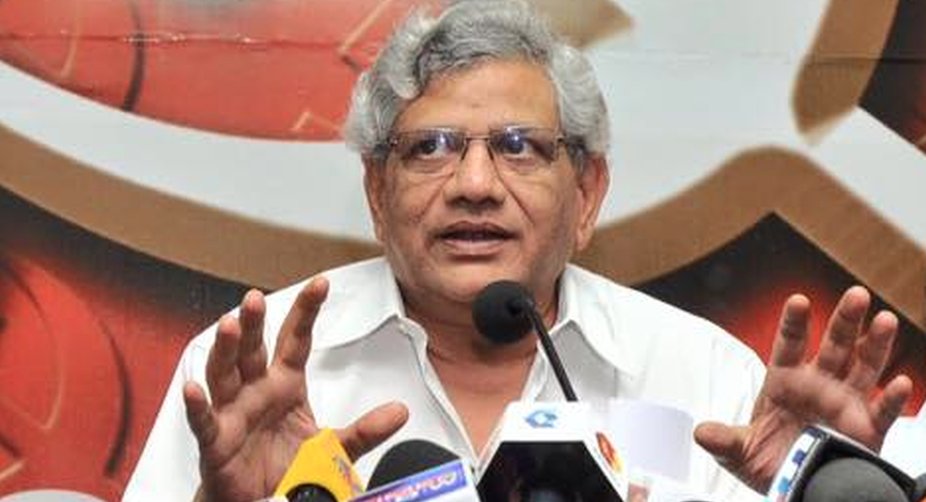
Sitaram Yechury (Photo: Facebook)
Hitting out at Prime Minister Narendra Modi over demonetisation and corruption charges, CPI-M General Secretary Sitaram Yechury on Wednesday said he "has a lot to hide".
The Marxist leader also slammed the Centre for its "ordinance raj" after the cabinet approved an ordinance criminalising possession of demonetised Rs.500 and Rs.1,000 notes beyond March 31, 2017.
"The government has no option but take the ordinance route because unless the law is changed, demonetisation is not legal. Ideally this law should have been brought in parliament in the winter session," Yechury told the media.
"The government is increasingly relying on ordinance because it doesn't want to be answerable We are opposed to this Ordinance Raj," he said.
Questioning Modi's silence over demonetisation in parliament and not ordering a probe into the Sahara-Birla diaries, Yechury said Prime Minister to be "running scared of questions".
"There are questions in every Indian's mind which remain unanswered. These questions pertain to their suffering, their livelihoods, their well-being and their future. But no answers are forthcoming.
"This is the essential characteristic of Modi as PM. He runs scared from answering any questions," Yechury said later on Facebook.
"Modi doesn't face parliament where representatives of the people can question him on behalf of the vast masses. He doesn't take any questions from the media… He doesn't answer any serious questions from the public which come through the RTI.
"Why is Modi so scared of questions? One, he clearly doesn't have answers. And two, he has a lot to hide," said the Communist Party of India-Marxist veteran.
He also questioned why Modi was not seeking an impartial probe into the Sahara-Birla diaries wherein he has been alleged to have received kickbacks as the Gujarat Chief Minister.
"Why wouldn't a PM answer questions about CAG's indictment of his Gujarat State Petroleum Corporation Ltd (GSPC) deals as the CM," asked Yechury referring to the Comptroller and Auditor General (CAG) questioning the GSPC's investment of Rs.19,576 crore in its Krishna Godavari (KG) block project.
"Why does he not answer questions about Rs.1.12 lakh crore of bank loans he has written off for rich corporates in past two years? Why does he not answer questions about top businessmen accompanying him on his foreign jaunts?" he asked.
"The basic foundation of a democratic dispensation is accountability based on questioning. Modi's evasion of answering any questions goes against that fundamental principle and needs to be reversed.
On the 50th day of his self-imposed deadline, will Modi at least answer as to what was the fault of 105 honest, hardworking people who died standing in bank queues while trying to access their own legitimate money," added Yechury.
Modi scared of questions, has lot to hide: Yechury
Sitaram Yechury (Photo: Facebook)
Hitting out at Prime Minister Narendra Modi over demonetisation and corruption charges, CPI-M General Secretary Sitaram Yechury on Wednesday said he "has a lot to hide".
The Marxist leader also slammed the Centre for its "ordinance raj" after the cabinet approved an ordinance criminalising possession of demonetised Rs.500 and Rs.1,000 notes beyond March 31, 2017.
"The government has no option but take the ordinance route because unless the law is changed, demonetisation is not legal. Ideally this law should have been brought in parliament in the winter session," Yechury told the media.
"The government is increasingly relying on ordinance because it doesn't want to be answerable We are opposed to this Ordinance Raj," he said.
Questioning Modi's silence over demonetisation in parliament and not ordering a probe into the Sahara-Birla diaries, Yechury said Prime Minister to be "running scared of questions".
"There are questions in every Indian's mind which remain unanswered. These questions pertain to their suffering, their livelihoods, their well-being and their future. But no answers are forthcoming.
"This is the essential characteristic of Modi as PM. He runs scared from answering any questions," Yechury said later on Facebook.
"Modi doesn't face parliament where representatives of the people can question him on behalf of the vast masses. He doesn't take any questions from the media… He doesn't answer any serious questions from the public which come through the RTI.
"Why is Modi so scared of questions? One, he clearly doesn't have answers. And two, he has a lot to hide," said the Communist Party of India-Marxist veteran.
He also questioned why Modi was not seeking an impartial probe into the Sahara-Birla diaries wherein he has been alleged to have received kickbacks as the Gujarat Chief Minister.
"Why wouldn't a PM answer questions about CAG's indictment of his Gujarat State Petroleum Corporation Ltd (GSPC) deals as the CM," asked Yechury referring to the Comptroller and Auditor General (CAG) questioning the GSPC's investment of Rs.19,576 crore in its Krishna Godavari (KG) block project.
"Why does he not answer questions about Rs.1.12 lakh crore of bank loans he has written off for rich corporates in past two years? Why does he not answer questions about top businessmen accompanying him on his foreign jaunts?" he asked.
"The basic foundation of a democratic dispensation is accountability based on questioning. Modi's evasion of answering any questions goes against that fundamental principle and needs to be reversed.
On the 50th day of his self-imposed deadline, will Modi at least answer as to what was the fault of 105 honest, hardworking people who died standing in bank queues while trying to access their own legitimate money," added Yechury.