Logo

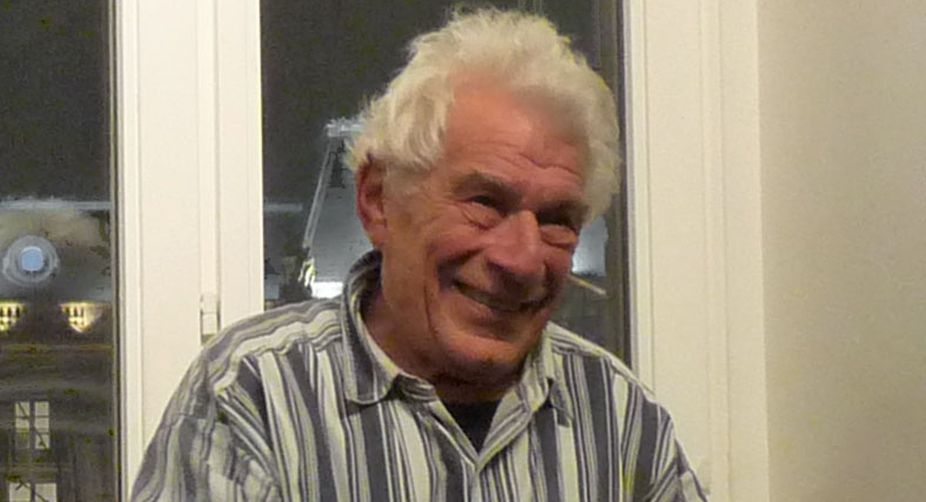
Booker prize-winning author John Berger no more

PTI | London |

John Berger, the Booker prize-winning novelist and pioneering art critic, has passed away at the age of 90.

The Marxist intellectual, whose BBC series, Ways of Seeing, brought a political view to art criticism, died at his home in the Paris suburb of Antony on Monday. He had been ill for about a year, reported Telegraph.

Berger won the Booker Prize in 1972 for his novel G, and pledged to give half the prize money to the radical African-American movement, the Black Panthers.

Born in Hackney, North London, Berger began his career as a painter.

Soon after his work was exhibited in the 1940s, he tried his hand at writing. His works ranged from poetry to screenplays, writings on photography, the exploitation of migrant workers and the Palestinian struggle for statehood.

The famed Scottish author Ali Smith described Berger as "one of the world's most vital corresponders".

"In John Berger's work love and art and political and historical understanding are always in layered combination.

"There are many other writers and artists who work with this relation, but none with quite the transformatory fusion of his combining, which is a bit like encountering what clarity really is, what the word means, like looking through pure water and seeing things naturally magnified," she said.

In reaction to the news of his death, artist David Shrigley called Berger "the best ever writer on art", and author Jeanette Winterson praised him as "an energy source in a depleted world."

"Goodbye John Berger. You will be greatly missed. The ever best writer on art," Shrigley tweeted.

"John Berger gone. That is hard. He was an energy source in a depleted world," Winterson wrote.

Booker prize-winning author John Berger no more

PTI | London |

John Berger, the Booker prize-winning novelist and pioneering art critic, has passed away at the age of 90.

The Marxist intellectual, whose BBC series, Ways of Seeing, brought a political view to art criticism, died at his home in the Paris suburb of Antony on Monday. He had been ill for about a year, reported Telegraph.

Berger won the Booker Prize in 1972 for his novel G, and pledged to give half the prize money to the radical African-American movement, the Black Panthers.

Born in Hackney, North London, Berger began his career as a painter.

Soon after his work was exhibited in the 1940s, he tried his hand at writing. His works ranged from poetry to screenplays, writings on photography, the exploitation of migrant workers and the Palestinian struggle for statehood.

The famed Scottish author Ali Smith described Berger as "one of the world's most vital corresponders".

"In John Berger's work love and art and political and historical understanding are always in layered combination.

"There are many other writers and artists who work with this relation, but none with quite the transformatory fusion of his combining, which is a bit like encountering what clarity really is, what the word means, like looking through pure water and seeing things naturally magnified," she said.

In reaction to the news of his death, artist David Shrigley called Berger "the best ever writer on art", and author Jeanette Winterson praised him as "an energy source in a depleted world."

"Goodbye John Berger. You will be greatly missed. The ever best writer on art," Shrigley tweeted.

"John Berger gone. That is hard. He was an energy source in a depleted world," Winterson wrote.

Man United beat 10-man West Ham for 6th successive win

PTI | Manchester United, west ham |

Manchester United benefited from a controversial red card and an equally debatable goal to beat 10-man West Ham 2-0 in the English Premier League, earning a sixth successive victory.

Substitute Juan Mata gave United the lead before Zlatan Ibrahimovic secured victory from what clearly appeared to be an offside position, after referee Mike Dean had controversially dismissed Sofiane Feghouli in the opening stages.

Despite its numerical advantage, United struggled to break down the home side for long spells and required a number of saves from goalkeeper David de Gea to keep West Ham out.

"I think it was not a very good performance," United manager Jose Mourinho said. "I think it's very difficult to play football in these circumstances, 48 hours," after both teams' previous fixtures.

"Only when I brought fresh people on, Mata and (Marcus) Rashford, the team was different," Mourinho added. "We gave width with Rashford, we gave an extra body in the creative area with Mata."

West Ham manager Slaven Bilic said his club would appeal against the three-game ban Feghouli is facing after his challenge on Phil Jones.

"I was very surprised (at the red card), I wouldn't have been happy with a yellow. The more times I've seen it, it's the other way round, it was Jones who made a more dangerous tackle than Feghouli," Bilic said.

"We are gutted and frustrated, but I'm very proud of the team and I told them after the game that if we continue to work hard and play for each other, we don't have to worry, we're going to be very high on the table."

Feghouli, making his first Premier League start for West Ham, was sent off after just 15 minutes in what replays suggested was a harsh decision.

Manuel Lanzini brought two strong saves from De Gea before the break, while Michail Antonio was crucially denied by the Spanish goalkeeper when through one-on-one on the hour mark.

West Ham was made to pay just three minutes later with Mourinho's alterations proving crucial as Rashford beat two defenders before setting up Mata to finish from close range.

United wrapped up the victory 12 minutes from time when Ibrahimovic reacted first as the ball bounced off Ander Herrera to fire low and hard past Darren Randolph from just inside the box, with replays showing the striker had been marginally offside.

United had struggled to create chances before the break, but did draw one of the saves of the season from West Ham keeper, Randolph, in the 35th, before Jesse Lingard produced an equally spectacular miss.

Antonio Valencia was set up at the back post after good work from Ibrahmovic and Henrikh Mkhitaryan, but was foiled by the sprawling Randolph, who prevented the ball from crossing his line by the narrowest of margins.

The rebound fell to Lingard with the goal at his mercy, but he could only direct his effort onto the post from two yards out, with West Ham somehow escaping as the ball bounced into Randolph's hands.

United remains sixth in the table, but has now moved within five points of second-place Liverpool, which was held to a 2-2 draw at Sunderland earlier on Monday.

West Ham dropped to 13th.

Sensex slips 75 pts; Infosys, HDFC lead losers

SNS | New Delhi |

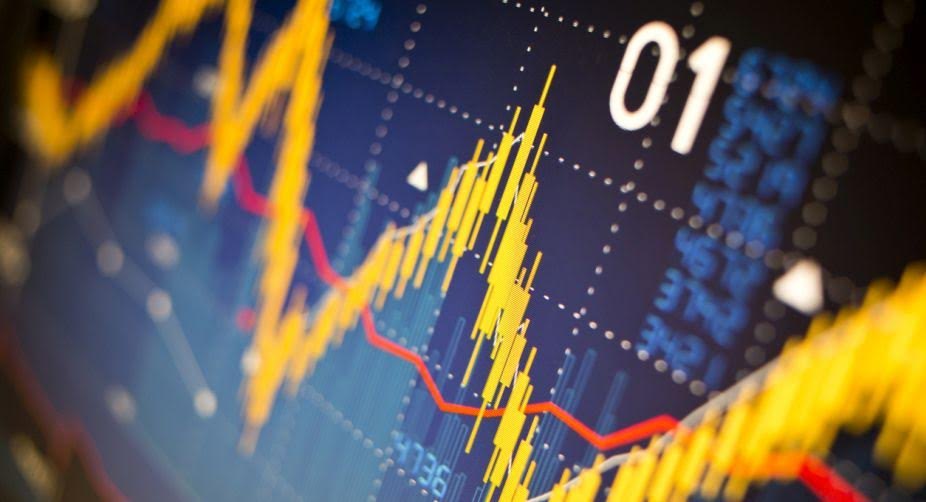
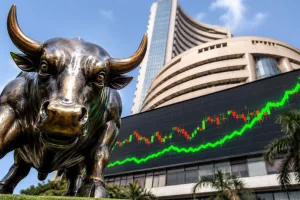
Domestic benchmark indices started Tuesday’s trading session in the negative zone amid mixed global cues. At 9:50 am, the Sensex at the BSE was trading 75 points lower at 26,520 and the Nifty at the NSE was trading 19 points down at 8,161.

However broader markets were trading in the positive zone. BSE Midcap index increased 0.2 per cent while Smallcap index jumped 0.4 per cent.

Among the BSE sectoral indices, Consumer Durables index registered the biggest gain with a jump of 2.2 per cent while Telecom index became the top loser with a cut of 0.9 per cent.

On Monday, the Sensex had closed 31 points down at 26,595 and the Nifty had ended six points down at 8,180.

Top gainers in the Sensex-30 pack: Power Grid (up 1.4 per cent), Tata Motors (up 0.9 per cent), Cipla (up 0.8 per cent), Reliance Industries (up 0.7 per cent) and ICICI Bank (up 0.7 per cent).

Top losers in the Sensex-30 pack: Infosys (down 1.7 per cent), HDFC (down 1.3 per cent), Bharti Airtel (down 1.2 per cent), Hero Motocorp (down 1.2 per cent) and Wipro (down 1.2 per cent)

However, the Rupee was trading 15 paise higher at 68.07 against the US Dollar.

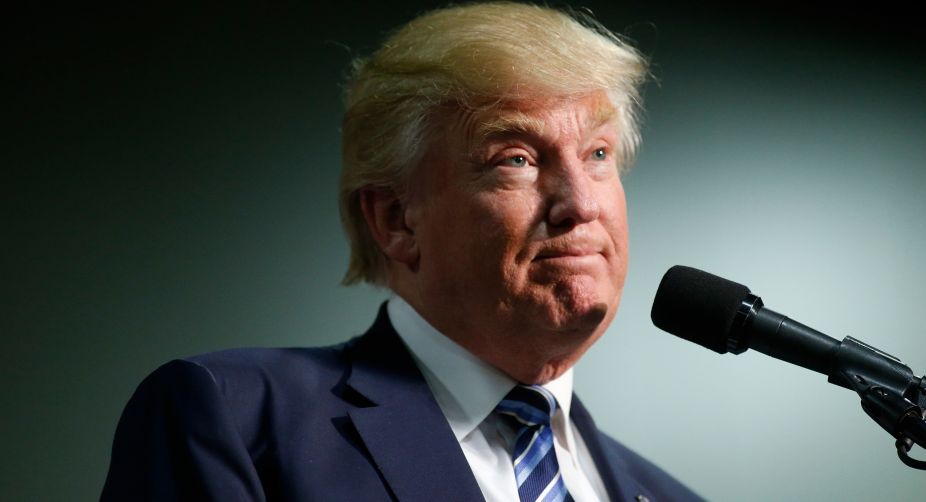
Trump dismisses North Korea nuclear threat

IANS | Washington |

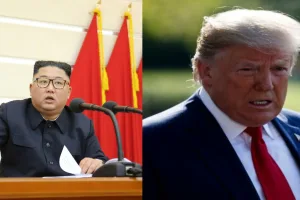
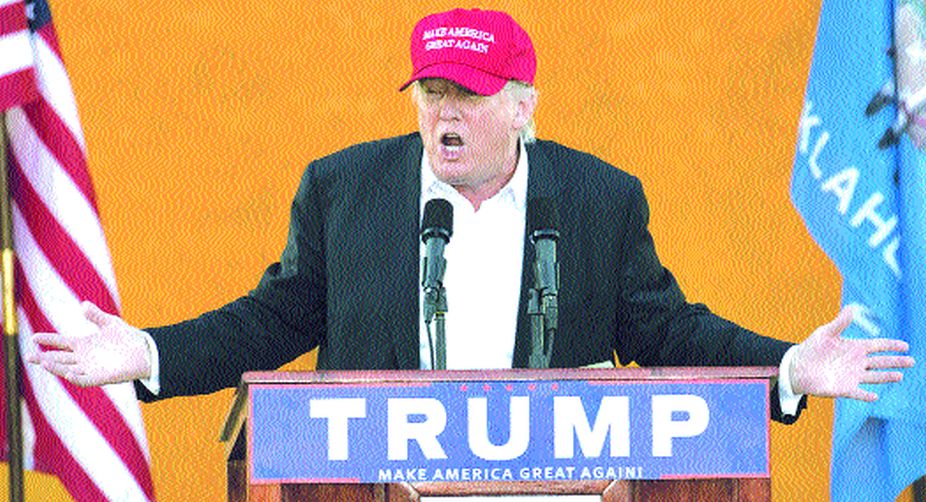
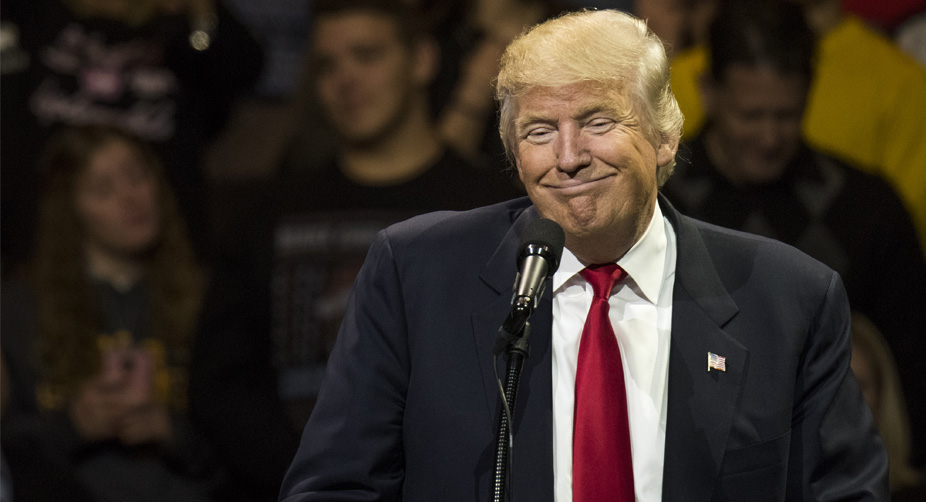
United States President-elect Donald Trump on Monday responded on Twitter to North Korea's threats, stating that Pyongyang would not develop a nuclear weapon that could endanger US security.

Trump was responding to the New Year's speech given on Sunday by North Korean leader Kim Jong-un, who announced that Pyongyang is finalising preparations to launch another intercontinental ballistic missile, underscoring once again the regime's commitment to its nuclear and missile programmes, EFE news reported.

In a tweet, Trump said, "North Korea just stated that it is in the final stages of developing a nuclear weapon capable of reaching parts of the United States. It won't happen!"

A few minutes later, Trump hit out at China for benefiting from trade with the US while not helping to rein in Pyongyang.

He said: "China has been taking out massive amounts of money & wealth from the US in totally one-sided trade, but won't help with North Korea. Nice!"

During the election campaign, Trump called Kim a "maniac", but later said that the North Korean leader had to be given credit.

North Korea has launched six intercontinental ballistic missiles on six occasions, claiming that the launches were to orbit observation satellites.

However, the North Korean tests failed to achieve accuracy.

If its goal is reached, North Korea would have atomic weapons that could reach US territory and be used as a deterrent to ensure the survival of the regime.

For decades, Pyongyang has been irked by joint military exercises conducted annually by South Korea and the United States, a legacy of the 1950-53 Korean War, which ended with an armistice never replaced by a definitive peace treaty.
 

Trump dismisses North Korea nuclear threat

IANS | Washington |

United States President-elect Donald Trump on Monday responded on Twitter to North Korea's threats, stating that Pyongyang would not develop a nuclear weapon that could endanger US security.

Trump was responding to the New Year's speech given on Sunday by North Korean leader Kim Jong-un, who announced that Pyongyang is finalising preparations to launch another intercontinental ballistic missile, underscoring once again the regime's commitment to its nuclear and missile programmes, EFE news reported.

In a tweet, Trump said, "North Korea just stated that it is in the final stages of developing a nuclear weapon capable of reaching parts of the United States. It won't happen!"

A few minutes later, Trump hit out at China for benefiting from trade with the US while not helping to rein in Pyongyang.

He said: "China has been taking out massive amounts of money & wealth from the US in totally one-sided trade, but won't help with North Korea. Nice!"

During the election campaign, Trump called Kim a "maniac", but later said that the North Korean leader had to be given credit.

North Korea has launched six intercontinental ballistic missiles on six occasions, claiming that the launches were to orbit observation satellites.

However, the North Korean tests failed to achieve accuracy.

If its goal is reached, North Korea would have atomic weapons that could reach US territory and be used as a deterrent to ensure the survival of the regime.

For decades, Pyongyang has been irked by joint military exercises conducted annually by South Korea and the United States, a legacy of the 1950-53 Korean War, which ended with an armistice never replaced by a definitive peace treaty.
 

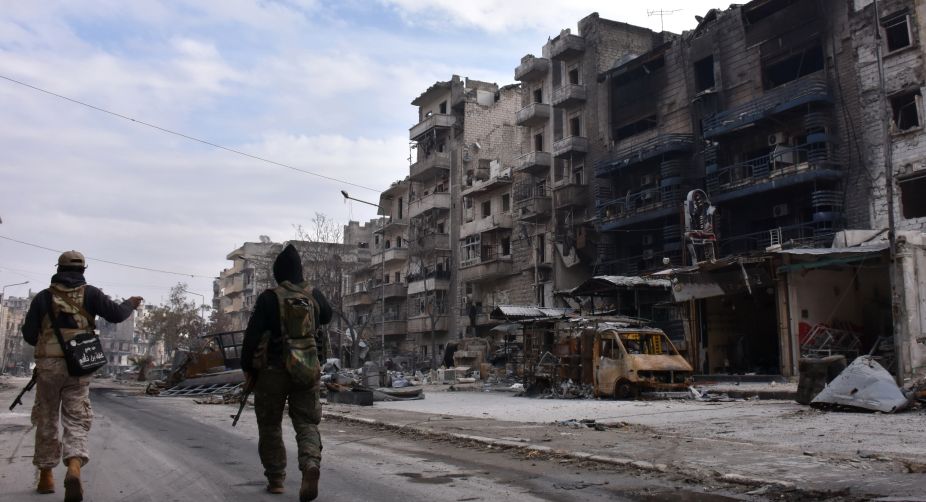
Syrian army advances as rebels put peace talks on hold

AFP | Beirut |

Syria's ceasefire appeared under threat as government forces intensified their attacks near Damascus and around 10 rebel groups said they were suspending talks about planned peace negotiations this month.

The talks are due to take place in the Kazakh capital Astana in late January but the rebels said they were pulling out of discussions due to "violations" by Damascus of a four-day old truce.

The talks are being organised by Russia, which supports the Syrian regime, and Turkey and Iran, which back the rebels.

"As these violations are continuing, the rebel factions announce… the freezing of all discussion linked to the Astana negotiations," they said in a joint statement.

The rebels said they "respected the ceasefire across the whole of Syria… but the regime and its allies have not stopped shooting and have launched major and frequent violations, notably in the (rebel) regions of Wadi Barada and Eastern Ghouta", near Damascus, they said.

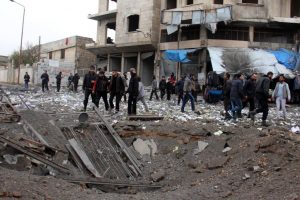
For the past two weeks, even before the start of a nationwide truce brokered by Ankara and Moscow, Syria's air force has launched almost daily bombing raids on Wadi Barada, some 15 kilometres from Damascus.

"Any (advance) on the ground goes against the (ceasefire) agreement and if things don't return to how they were before, the accord will be considered null and void," the rebel statement added.

On Tuesday, the Syrian army backed by air strikes and artillery fire advanced as it battles to capture the area, which is key to the capital's water supply, the Syrian Observatory for Human Rights said.

"Regime forces and fighters from Lebanon's Hezbollah group are advancing in the region and are now on the outskirts of Ain al-Fijeh, the primary water source in the area," said Rami Abdel Rahman, director of the monitoring group.

He said government troops and allied fighters were engaged in fierce clashes with rebels, including former Al-Qaeda affiliate Fateh al-Sham Front, a claim denied by opposition fighters.

Two civilians were shot dead by snipers and two other civilians were killed in regime bombardment of the town of Rastan in central Homs province, the Observatory added.

Government forces have surrounded Wadi Barada since mid-2015, but the siege was tightened in December as the army piled on the pressure.

The Syrian government says rebels have targeted key water infrastructure, causing leaking fuel to poison water supplies and then cutting it off altogether.

The United Nations says at least four million people in Damascus have been without water since December 22

Syrian army advances as rebels put peace talks on hold

AFP | Beirut |

Syria's ceasefire appeared under threat as government forces intensified their attacks near Damascus and around 10 rebel groups said they were suspending talks about planned peace negotiations this month.

The talks are due to take place in the Kazakh capital Astana in late January but the rebels said they were pulling out of discussions due to "violations" by Damascus of a four-day old truce.

The talks are being organised by Russia, which supports the Syrian regime, and Turkey and Iran, which back the rebels.

"As these violations are continuing, the rebel factions announce… the freezing of all discussion linked to the Astana negotiations," they said in a joint statement.

The rebels said they "respected the ceasefire across the whole of Syria… but the regime and its allies have not stopped shooting and have launched major and frequent violations, notably in the (rebel) regions of Wadi Barada and Eastern Ghouta", near Damascus, they said.

For the past two weeks, even before the start of a nationwide truce brokered by Ankara and Moscow, Syria's air force has launched almost daily bombing raids on Wadi Barada, some 15 kilometres from Damascus.

"Any (advance) on the ground goes against the (ceasefire) agreement and if things don't return to how they were before, the accord will be considered null and void," the rebel statement added.

On Tuesday, the Syrian army backed by air strikes and artillery fire advanced as it battles to capture the area, which is key to the capital's water supply, the Syrian Observatory for Human Rights said.

"Regime forces and fighters from Lebanon's Hezbollah group are advancing in the region and are now on the outskirts of Ain al-Fijeh, the primary water source in the area," said Rami Abdel Rahman, director of the monitoring group.

He said government troops and allied fighters were engaged in fierce clashes with rebels, including former Al-Qaeda affiliate Fateh al-Sham Front, a claim denied by opposition fighters.

Two civilians were shot dead by snipers and two other civilians were killed in regime bombardment of the town of Rastan in central Homs province, the Observatory added.

Government forces have surrounded Wadi Barada since mid-2015, but the siege was tightened in December as the army piled on the pressure.

The Syrian government says rebels have targeted key water infrastructure, causing leaking fuel to poison water supplies and then cutting it off altogether.

The United Nations says at least four million people in Damascus have been without water since December 22

I found ‘Ghost In A Shell’ to be alluring: Scarlett Johansson

PTI | London |

Actress Scarlett Johansson said she her role in the upcoming live-action remake of Japanese anime classic "Ghost In The Shell" very alluring.

The 32-year-old spoke at a fan event in Japan about her lead role as 'The Major', a cyborg counter-cyberterrorism field commander tasked with thwarting an outfit that aims to bring down a new artificial intelligence program, reported Contactmusic.

"I didn't actually know the material. When the script came to me it came with a copy of the anime, and when I first saw it seemed quite daunting, I think, because the anime is so philosophical and I didn't know how it would translate to a live-action film or how I could contribute to it. But it was alluring, definitely!" she said.

The anime version of "Ghost In The Shell" came out back in 1995, which in turn had been adapted from a manga series, and is generally regarded as one of the finest movies of its genre.


I found ‘Ghost In A Shell’ to be alluring: Scarlett Johansson

PTI | London |

Actress Scarlett Johansson said she her role in the upcoming live-action remake of Japanese anime classic "Ghost In The Shell" very alluring.

The 32-year-old spoke at a fan event in Japan about her lead role as 'The Major', a cyborg counter-cyberterrorism field commander tasked with thwarting an outfit that aims to bring down a new artificial intelligence program, reported Contactmusic.

"I didn't actually know the material. When the script came to me it came with a copy of the anime, and when I first saw it seemed quite daunting, I think, because the anime is so philosophical and I didn't know how it would translate to a live-action film or how I could contribute to it. But it was alluring, definitely!" she said.

The anime version of "Ghost In The Shell" came out back in 1995, which in turn had been adapted from a manga series, and is generally regarded as one of the finest movies of its genre.


Militant killed in encounter with security forces in J-K

PTI | Srinagar |

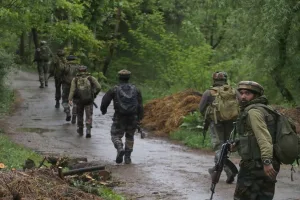
An unidentified militant was on Tuesday killed in an encounter with security forces in Sopore area of North Kashmir's Baramulla district, police said.

Security forces had laid an ambush at Haritar in Sopore during the intervening night following information about movement of militants through the area, a police official said.

He said security forces on noticing suspicious movement in the wee hours challenged the persons who opened fire.

"In the retaliatory firing, one militant was killed.

Further details are awaited," the official said.

Taking the lead

Sivaramakrishnan V |

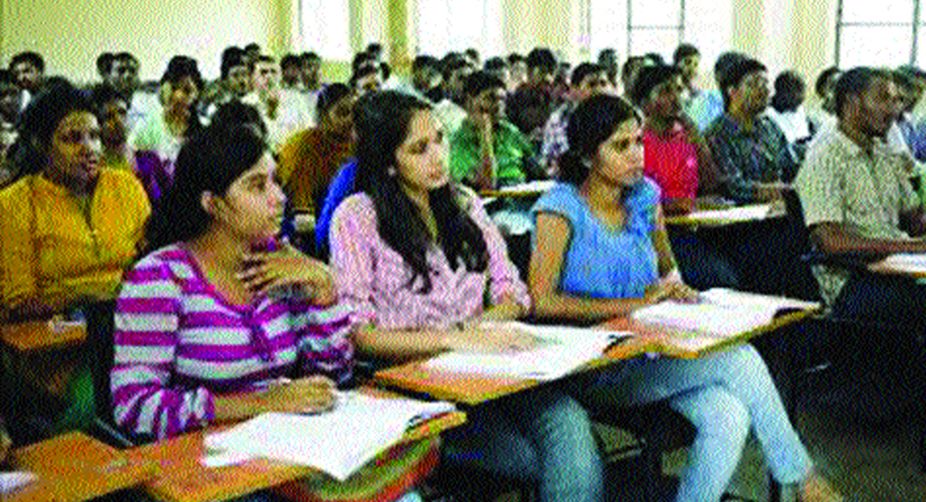
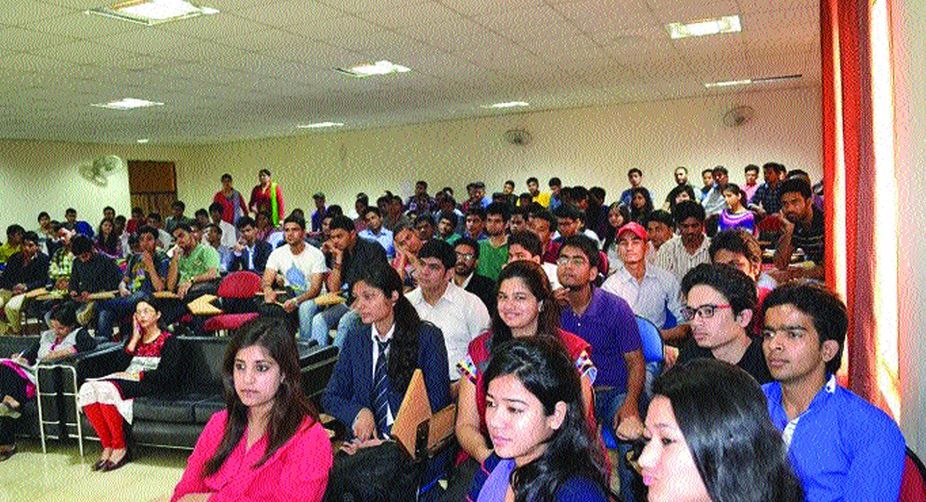
The year 2016 was a vibrant one for the education sector. Several new developments took place and a gamut of themes and issues gathered pace to further transform the education landscape for the better. The two biggest beneficiaries of these changes have been the learner and the teacher. Below are the top five themes that dominated the education landscape and will continue to impact the sector through this year as well.

Integrated and theme-based learning: Integrated learning solutions that seamlessly combine print and digital modes have made their presence felt and will potentially disrupt the school education sector in a big way this year. It is important that the content, being delivered in a classroom setting via different mediums, is consistent to provide context and enable optimum learning outcomes. In addition to print and digital integration, it is important for such solutions to be teacher-friendly, assessment-enabled, theme or activity-based, among other things. Theme-based learning modules enable contextual learning through a cross-disciplinary approach which aids conceptual clarity for the learner. This approach will probably be the biggest disrupter in modern-day schooling, if delivered to high quality standards with adequate teacher support.

Assessments: This is established as a potent tool to not just measure the learner’s performance but also modulate the overall teaching strategy, especially with the help of analytics in formative assessments. The year 2016 saw a massive focus on measurement of student outcomes and performance, in both online and offline mediums. Integrated and more developed assessment solutions that provide detailed analytics on performance should get further traction in 2017.

Professional Development of Teachers: There was a lot of focus on professional development of teachers in 2016, starting with the introduction of the Pandit Madan Mohan Malviya New Teachers Training Programme announced by the Government in the Union Budget. Shortage of trained teachers is a recognised hurdle in improving learning outcomes in the country. A continued focus on the professional development of teachers through a combination of online and offline learning modules is critical, given their pivotal role and contribution in the education eco-system.

Bilingual as medium of learning for young adults: India has a large and diverse learner base which is multilingual. In order to expand reach, it becomes imperative for learning organisations to develop content that is either in the native language of the learner or bilingual recognising that commerce and industry uses the English language. Experiments have shown that the use of mother tongue while delivering learning instructions enables faster and better understanding of learning outcomes, especially in the case of young adults. Given India’s young demographic and their linguistic characteristics, bilingual learning material is probably more relevant than ever before.

Digital proliferation in education: The Internet and its proliferation, and affordable and accessible devices have redefined learning ability unconstrained by factors like time and place. While digital proliferation in education is not a new trend, it saw a bigger push in 2016. Digital Literacy Mission was announced as part of the Union Budget to cover 60 million rural households within the next three years.

Digital Highways that are being created as part of the Digital India Mission will play an important role in connecting “India and Bharat”. We do believe that the full impact of digitisation in education will play out even stronger in 2017 and beyond.

The writer is managing director, Oxford University Press India.

Myths dispelled

Stephen Robinette |

Setting a foreign degree has always fascinated Indian students and their parents, who are committed to offer the best possible education to their children. Admission at an international university not just provides an opportunity to be trained at a globally-recognised university/college but also provides an opportunity to learn about new people and their culture.

A degree opens up innumerable opportunities too, helping fulfil dollar dreams of many Indians. As they say “no knowledge is better than knowing less about any subject,” the same can be said about studying abroad which comes with its fair share of myths. From choosing the right institute to selecting the city, even the thought of getting enrolled in a foreign university may seem like a mammoth task for many, till these myths are busted.

It costs a lot: General belief in India is that a foreign degree comes at an exorbitant cost. This is a generic view, which is contrary to the actual cost that varies depending on the type, duration, and location of the programme. A detailed analysis would show that foreign education could be within the reach of many Indians. To top it up, scholarships, financial aid and educational loans are some ways, which can ease the burden on students and their parents, respectively. Since the curriculum abroad allows flexibility in choosing a course of your interest, narrowing it down to the most suitable gets easy and helps save time and money.

Dearth of scholarships: A very common myth amongst students is that foreign universities do not provide enough financial help through scholarships. As a matter of fact, there are numerous scholarships that you can take advantage of either through merit or for financial need. Make sure, you do your research before-hand and make use of all the opportunities you have at hand to minimise your financial burden. Most colleges have a straight forward and clear scholarship application process — be sure to hand in all the materials before the due date.

It delays graduation: Many students who study abroad graduate in four years. With proper guidance or consulting with academic advisors students can study overseas for an academic year without affecting their graduation date. In fact, some students study abroad two or three times and still graduate on time. Like others this is also one of the most prevalent misconceptions in students. In depth search about a university and when the courses begin and end is needed before taking admission. Being in touch with the administrative staff and academic counselor from the beginning also helps. A degree from a good university gives students the opportunity to gain exposure in a world that requires international experience to succeed. Students learn a new language, see how business is conducted over international boundaries, and develop lifelong relationships around the world.

It is for non-serious students: A perception that students, who take admission overseas, are on a vacation is not based on facts. Fact is that the courses abroad are not based more on theories and less on practical courses but it gives equal importance to practical and theory. In fact, adjusting to a new kind of education system, away from their home country, would require a student to put in much more emphasis to education than other activities.

Not everyone gets accepted: Due to lack of knowledge, a large number of Indian students are not able to plan their studies abroad. The truth, however, is that most of them who meet the minimum qualification and successfully complete the application process, get accepted at foreign universities.

A lot of universities counsel students to increase the number from countries beyond their own country. These universities work closely to find a programme that meets their needs and qualifications.

The writer is Associate Vice-President for International Programmes, Missouri State University.

With the changing dynamics

Kalpana Sinha |

For a country as vast as India, it is a matter of immense concern that despite the whole expansion of education in universities it is able to satisfy only 17 per cent of the employers while leaving the 83 per cent dissatisfied. According to a study by the Confederation of Indian Industry, out of five million graduates every year only 34 per cent of them are employable.

Setback is the employer’s notions about the perfect candidate. They generally consider and focus on the hard skills while recruiting and the soft skills remain ignored. Communication, cognitive abilities and analytical thinking are not as easy to teach or develop as they are thought to be. And that is why the recruited candidates with underdeveloped skills, fail to work in real time situations. However, the scenario now is taking a slow but positive turn. There is a paramount and momentous need to look for an answer to the question that “What actually is being fuelled into the graduate market that is giving house to this vicious cycle?”

The vital components that form this economy are globalisation, change and the war for talent that have apparently become the norm. While giving a reality check, there is more graduate talent to choose from but not all of them are going to fit in your business. The workplace dynamics are hugely impacted by the changing demographics. Companies are being flooded with Gen-Y and millennial workforce, forcing them to re-think about their strategies to attract and develop the talent sub-set and also to manage and engage a multi-generational workforce effectively.

Shortages in talent and shifts in employer presence in geographies, such as China, are already proving challenging in achieving MNCs' aspirations for growth. A major factor in graduate recruitment is emigration for better educational and job opportunities, therefore giving more scope of growth and attracting graduates to move abroad. The Organisation for Economic Cooperation and Development has conducted surveys that show the number has doubled for students enrolling in educational programmes outside their own country. Now one-in-five graduates are looking to get employment in the country of study like the USA, Australia and UK being the most popular destinations.

The dynamics and landscape of the market are changing and are evolving and will continue to do so. These aren’t the only factors that are responsible in increasing the global skills shortage but definitely they highlight the significant role of the graduates in the business environment and accentuate the urgency of searching graduates that are work-ready.

Current recruitment practice is the second challenge. Both, the companies and the graduate talent are finding it difficult to get the right person. Many graduates apply for jobs that are not mapped to their education or their skills. It's been researched that at least one- in-five graduates (21 per cent) apply for jobs that do not complement their interests.

The third challenge is to foster the leaders of the future who will take the organisational objectives and business success way ahead. According to a research by the Ceb, approximately one-in-10 graduates penetrating the workforce will have the prospect to be an effective leader in the future. The skills that the graduates have and the skills that the businesses need, do not match each other. These skills need to be defined by the organisations and they must ensure a consistent, accurate and scalable approach to calculate against certain criteria.

Generally, job applicants seek for companies which have a strong employee value proposition. Firms shouldn't presume that graduates are enticed by salary and material reward. Today, the graduates are actually motivated by the scope of growth and opportunities that the organisation provides them. These days, most graduates spend reasonable amount of time researching employers, before applying. This leaves the organisations with a tight window to communicate. Almost all graduates check their prospective employer online before approaching them for jobs. Various social media websites have become the key to research on the employer.

Employability should be framed in a simple model that provides a clear picture that helps organisations know the talent they employ. This model could consist of key behaviours that promote effective job performance in the short-term and provide broader potential for the future.

Framing this model with intelligence could really motivate graduates and could be a powerful tool to accelerate the investment done in recruitment. Further, this intelligence goes in increasing the probability that graduates make an au courant choice when they apply to an employer, that they commit to and persist through an organization’s recruitment process, and also stay with the business once they are hired.

for the workforce is probably the highest priority business leaders globally. This reflects the mushrooming importance of using data to forecast the needs for future staffing. Short-term and long-term business outcomes depend on how well the connectors, in the form of big data or talent intelligence, are working with people planning, investment and decisions. The new world of work requires recruitment done on the basis of talent intelligence. This is certainly going to help organisations stay way ahead of competition.

The writer is a Student Welfare and Development Department Head, Institute of Management Studies, Noida.

Russia to dominate world stage in 2017

Harsha Kakar |

Russia annexed Crimea in March2014 and commenced supporting pro-Russian rebels in the Ukrainian civil war. In its aftermath, the US and EU imposed sanctions. Thisinitially had its effect and Russia began to hurt, butVladimir Putin refused to back down. He continued with his actions, irrespective of western criticism. Russia was supporting the Syrian regime of Bashar al-Assad with weapons and equipment since the start of the Syrian conflict in 2011 while the US had been supporting anti-Assad rebels with equipment and firepower and was seeking the ouster of the Syrian regime. In September 2015, Russia commenced its military intervention in support of the Syrian regime, surprising the world. It clashed with Turkey over the downing of a Russian aircraft, but employing economic and diplomatic measures compelled Turkey to seek a rapprochement.

When western sanctions began impacting Russia, it turned to China for support. Simultaneously, it grew closer to Pakistan. Its relations with India, though close, appear to be affected by India's growing proximity to the US. In recent days, it is claimed that Russia directly interfered in the US Presidential elections, by hacking into their servers and releasing valuable data into the public domain. This adversely impacted the chances of Hillary Clinton, who Putin did not favour and resulted in the election of Donald Trump, known to be pro-Russia. Last week, Obama reacted to the Russian action and expelled 35 Russian embassy staffers. While Putin avoided tit-for-tat actions, relations have plummeted to its lowest ebb, since the Cold War. Nothing seemed to have affected the Russian mindset as 2016 ended. It only emerges stronger and more impactful as 2017 commences

Its military intervention in Syria changed the landscape of the war. With its offensive air support, it put western-backed rebels on the defensive. The US was apprehensive of engaging with Russia in an open proxy war, which could have resulted in a NATO-Russian conflict. Every time they attempted to involve Russia in peace talks, they failed. The fact that Russians had support from Iran altered regional dynamics. Putin's plans were clear, establish the authority of the Bashar regime in Syria and degrade the IS, whom it considers its biggest threat. It achieved its aim, pushing the US into the background. It now has a permanent base in Syria at Tartus much to the discomfiture of the US. Once Aleppo (held by western supported rebel groups) fell to the Bashar regime, Russia along with Turkey, ignoring the US, brokered a ceasefire, which continues to hold.

Russia and China, both currently anti-US, have grown closer. Russia has supported Chinese claims over the South China Sea and disputed the international tribunal's verdict. It has also conducted naval exercises with China in the region, cementing its support. Russia, with Chinese influence, has moved closer to Pakistan, including agreeing for arms sales. It even conducted joint military exercises with them, post Uri, much to the anger of India. During the BRICS summit, it joined China in blocking Indian efforts to name Pakistan as a sponsor of terror.

Russia was nowhere in the scene in Afghanistan, post its withdrawal in 1979. However, since the Central Asian Republics (CAR), still under Russian influence, border Afghanistan, Russia was wary of the overflow of the conflict in West Asia and Afghanistan, into the region. The growing presence of the IS in Afghanistan was the catalyst.Hence, it along with China and Pakistan set up an unofficial alliance on Afghanistan, ignoring the base country, Afghanistan. To openly counter US and Indian actions, the alliance in its last meeting agreed to provide support to the Afghan Taliban on the diplomatic front,since it battles to contain the IS. It openly advocated approaching the UN Security Council to remove some members of the Afghan Taliban from the international terrorist list, much against Indian and US desires.

Russia had openly threatened NATO and the US on deploying nuclear weapons and anti-ballistic missiles in nations which formed a part of the erstwhile USSR. Its annexation of Crimea compelled the EU to seek alternate solutions including possibly allowing Russia to keep Crimea, while withdrawing its support to rebel groups in Ukraine. It has challenged the US, EU and NATO at every stage and compelled them to back down.

India, though a major defence procurer from Russia, has been losing out on Russian support, mainly due to its alliancewith the US. Indian-Russian agreements have only been restricted to defence procurement and nuclear reactors, limiting our influence. Russia's main concerns of the IS in Afghanistan and its supposed support to the Afghan Taliban, counter India's perception, as India considers the latter a threat. It will take strong diplomatic effort by India to change Russian perception and wean it away from Pakistan, at the least.

The election of Donald Trump,his nomination of a pro-Russian ambassador and announcements of mending ties would only enhancetheir leverage. This would alter the dynamics in Europe and West Asia. It could also signal a change for the sub-continent. Russia would now need to make a choice, of either remaining close to China (with whom Trump already has issues) or the US. The fact that it avoided a tit-for-tat retaliation against US expulsions of Russian diplomats and Putin's statements of awaiting the ascendency of Trump as President, indicates the likely choice that he may make. This could result in global realignment and NATO could lose its importance and sole purpose for its existence. In such a scenario, its support to China and Pakistan may wane. This would benefit India.

As stated by Lord Palmerston, 'in international relations, there are no permanent allies or enemies, only permanent interests'. Russia, while continuing as a major international player in 2017,could alter its existing alignments based on its national interests.In either case, the flow from 2016 to 2017 would ensure that the current year would be the year of Russia, as its support would be most sought after.

The writer is a retired Major General of the Indian Army.

Breakdown of the liberal order

Shubham Sharma |

The most truthful thing about the modern post-truth world is that the liberal order is crumbling. What G. John Ikenberry refers to as the ‘liberal leviathan’ is in throes of a protectionist demagogue who promises to deliver the American working class from the afflictions of neo-liberal capitalism and make ‘America great again’.

Ironically, promises of emancipation are coming from a businessman, soon to assume office as the President of the United States, whose destiny had been tied to the unimpeded freedom of market forces and speculative finance which were the cornerstone of US economic policies, both under the Democrats and Republicans. The victory of Donald Trump reflected the fact that citizens cannot always be treated as customers, a fact which has played out in the three decade long history of neo-liberalism.

Although, it is sure that the President elect will have to renege on many of the promises which had been made by him, ostensibly because of the structural constraints imposed by neo-liberalism, the failing however would lead to a fresh search for culprits within. The Blacks, Hispanics, Muslims and others who constitute the peripheral tapestry would be implicated for all that is bad and stops America from being great again.

None of it would slake the demands of the workers of the ‘rust belt’ who overwhelmingly voted not for Trump but against the neo-liberal policies of Barack Obama. They would remain where they are until a progressive political mobilisation would allow them to see the elephant in the room, neo-liberal capitalism, under whose weight the liberals have recently crumbled.

The veracity of ‘liberalism’ as a coherent political philosophy is contestable as it had meant different things in different epochs. For the English it meant curbing the power of the monarchy in the face of rising bourgeoisie culminating in the Glorious Revolution of 1688; for the French it meant the end of the exploitative Bourbons who directed the starving populace to eat cakes in the unavailability of bread; for the Americans it served as a philosophy to reject the authority of the British monarch and Parliament.

the political moorings, liberalism has one thing in common which cuts across all epochs, ‘property’. Right to acquire property and its perpetuation has been the cornerstone of liberal creed. In other words, it has tried to sober the acquisitive nature of humans under the euphemism of ‘wealth of nations’, absolving the process of ‘accumulation’ of its vices. This subterfuge had its egregious intertwining with politics resulting in modern liberal democracies operating under the exploitative hood of capitalism. The citizens of such systems enjoyed the fruit of a tree over which the snake hung. Barring the low hanging fruits, any attempt to fetch the juiciest fruit, which lay atop, was met with a poisonous sting.

Erstwhile liberals had their worst nightmares in the inter-war years which saw the rise of fascism as a force to reckon with in Europe. Contra the dominant view that the rise of fascism was fomented by the policy of appeasement followed by Britain, it was the conscious policy of the liberal capitalists in Britain to establish London as the finance capital of the world which led them to stay away from the dirt and muck of European politics. It was the same dirt in which the blood of the British youth flowed unabated for a period of five years.

The post-war world order saw an even more rejuvenated liberal creed whose battered torso was supported by Keynesianism and permanent political hostility vis-à-vis the communist bloc. Generous funding by America of the western European states, perennial hostility of anything ‘red’ and institution-building with special onus on structural adjustment norms characterised the liberal order on the other side of the ‘iron curtain’.

All was good on the western front as the post-war economy accentuated massive growth in the liberal democracies, especially America and Britain until the economic policies of Keynes started losing their vigour by the 1970s. Former American judge Lewis Powell indicted state welfarism and circulated a secret memo to the US Chamber of Commerce calling for a new ‘collective project’ which capital needed. He wrote, “We in America already have moved very far indeed towards some aspects of state socialism, as the needs and complexities of a vast urban society requires types of regulations and control that were quite unnecessary in earlier times. In some areas, such regulation and control already have seriously impaired the freedom of both business and labour, and indeed of the public generally”.

The memo was received with great aplomb by both corporates and politicians. Initiated by the outgoing governments of Jimmy Carter in the US and Jim Callaghan in Britain the memo saw its full fruition under Reaganite America and Thatcherite Britain.

The new beast came to be christened as ‘neo-liberalism’ which was marked by massive privatisation of public services, tax cuts for the super-rich and pulverisation of trade unions. David Harvey points out that the American Supreme Court allowed reforms that treated financial emoluments on the part of corporates towards electoral campaigns as a form of ‘free speech’. The new ideology remained anonymous yet omnipresent as the liberals did not care much about both the wreckage it was causing and the semantic quibble around it. They went with the saccharine approval of the new creed under the name of freedom, democracy and human rights. This happened in blithe disregard of indigenous labour, whose jobs were jeopardised by the mobility of capital and its flight to low-wage countries which would fetch maximum profits.

The system saturated in 2008 when the global economic system came to a standstill, courtesy speculative finance capital and credit bubble formed because of this. The bailout came from the state, not by printing more currencies, an erroneous policy practiced by governments under immense pressure, but from the state exchequer. The hard earned money of the people of America was used to finance bankrupt private banks and speculative institutions. Again the liberals had a cake walk by calling the crisis a tragic repeat of history and absolved themselves of any responsibility.

backlash to this was political in nature. The workers, the middle class, small entrepreneurs and petty merchants organized, in not so progressive a manner, to select the most conservative from the menagerie which included Trump, May and more are to come. Failing to get returns of their hard-work and seeing their hard earned money go down the liberal gutter of bailouts and war, they elected people who promised good days no matter how racist, sexist and obnoxious their public personalities were.

The failure to break away from the EU and the calls for a ‘soft Brexit’ has showcased the systemic compulsions faced by Theresa May. However, the failure of the protectionist demagogues to deliver on their promises should not be a welcome call for the ‘liberal’ agenda to fill the gap; rather a more progressive pro-labour agenda should be in the offing. If the majority of the society is allowed to bleed at the altar of ‘liberalism’ which, in the words of George Monbiot, has meant “freedom for the pike, not for the minnows”, the disgruntled of the society would throw up many surprises not all of which would go down well with the liberals.

The writer is Research Scholar, Department of International Relations, Faculty of Social Sciences, South Asian University, New Delhi.


New Year thoughts

Salman Haidar |

The New Year brings with it an unusual amount of questioning and uncertainty. The festive season is marked not so much by the customary sense of renewal as by the feeling that the times are unpredictable and full of challenge. Globally, the predominant consideration must be the impact of the impending change of incumbency in the US White House. Over the years, Obama became a valued interlocutor for India and developed relations of mutual respect and confidence with his successive counterparts in New Delhi, irrespective of party allegiance. The striking turnaround in Indian politics with Mr.Modi's electoral triumph had a strong impact within the nation but did not greatly affect the country's relations with the world, and the ties between India and the USA continued to develop and remain productive. Now, with the imminent advent of Mr. Trump, the balance has to be renewed and reshaped. It had seemed at one stage during the prolonged US election campaign that India-US relations could be affected by the populist rhetoric associated with Mr. Trump, especially his anti-immigrant attitudes, but adjustments of approach have already begun to take shape. Mr. Trump has begun to sound more like a mainstream US leader as he readies to move into the White House and his appointments of top officials in his Administration give much the same picture. It can thus be expected that the advances in India-US relations of the Obama era will essentially be maintained, and there is little present apprehension of any reduction of the important links developed in the days of the Obama Administration, including expanded ties in defence matters.
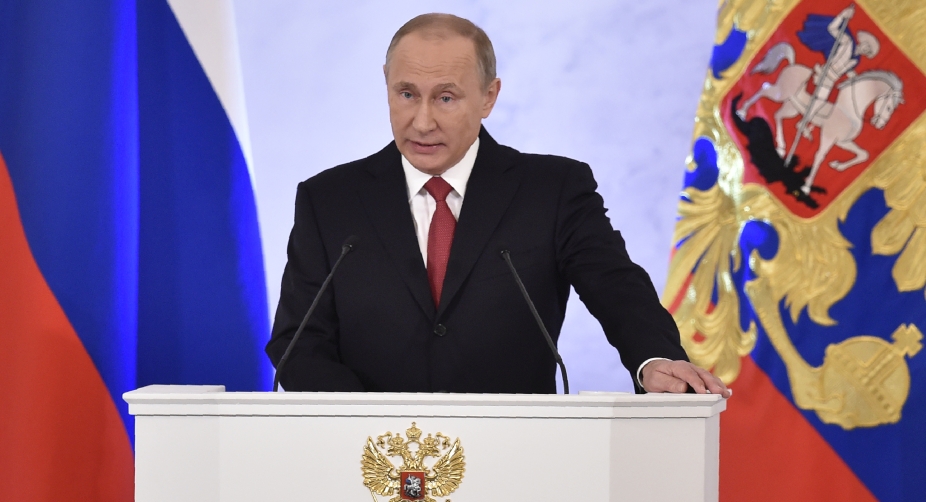
Elsewhere, however, continuity may be interrupted and New Delhi may need to do some repair work. In recent months its very important relationship with Russia, on which India has always relied, has been under discussion as a result of some new Russian regional initiatives in South Asia. The hitherto limited relations between Russia and Pakistan have been significantly upgraded as a result of these two countries, along with China, entering into political consultations on the subject of Afghanistan. This is a consultation from which Afghanistan itself was excluded, to its considerable displeasure, and India too, among others of the contiguous countries, was not among those that took part. Another new development with substantial regional impact was the Russian decision to sell a certain amount of military equipment to Pakistan, something that has often been in the air but is now brought to implementation. The implications of these developments need careful assessment in the context of the long established structure of India-Russia relations.

In this recent phase, India-China ties have also displayed some unwelcome features from India's point of view. Notwithstanding the considerable international dismay at the ambiguities of Pakistan's policy towards identified individuals and groups responsible for terrorist activities, of which India is the main target, China has not abated its support for men like the Jaish chief, Masood Azhar, and has successfully blocked action against him at the UN. China has also not agreed to the entry of India into the NSG (Nuclear Suppliers Group), which is an important Indian goal, and has insisted on linking Indian entry with that of Pakistan. Despite these setbacks, trade and economic relations between India and China have continued to prosper but their divergences on important global and regional matters need to be addressed. To be noted, too, is that the more active Chinese policy in Asia has brought it into closer proximity with regions where Indian interests are paramount, including its land and its maritime frontiers. These are matters that will need continued attention in the coming year and on into the future, as they have in the past.

As ever, some of the most demanding issues for India lie in its immediate neighbourhood and must figure in any forward view for the coming year. Neighbouring Nepal has done much to come to terms with its internal problems but it remains divided and fractious, and its internal divisions encourage the kind of external initiatives that can create complications in its regional dealings. The basic understanding for India-Nepal bilateral relations is the 1950 treaty that confers important reciprocal benefits to the two countries, and provides the necessary assurance of security on the Himalayan frontier. On the other side of the mountain barrier is the rapidly advancing capacity of China whose plans and projects for closer linkages with the Himalayan states have economic and strategic implications that India has always found uncomfortable. Maintaining the security provided by the mountain ramparts requires constant updating of the close understanding that has always existed between India and Nepal, especially now when fresh challenges have taken shape.

How to handle relations with Pakistan is the abiding issue for policy makers in New Delhi and the new year comes at a time of particular stress in this always strained relationship. Repeated terror attacks on India from across the border have triggered demands for an active response, which can have dangerous consequences. Throughout the previous year, the border has been unquiet and there is nothing to suggest any significant change in the coming year ~ if anything, the rhetorical exchanges have become more strident and less compromising. Yet even in the midst of the high decibel exchanges there are moments of easing up and abated hostility ~ one such was provided by PM Modi when just a few days ago he sent a word of birthday greetings to his counterpart Mr. Nawaz Sharif. Though neither side has made much of this gesture, it is nevertheless a reminder of what could become possible if proper conditions existed. This year, as in every previous year, ameliorating this bilateral relationship cannot but be near the forefront of the foreign policy challenges before the country.

There are many other issues to be faced, familiar ones in the main that continue to demand attention. What is to be noted is that matters are in a flux and some of the normal assumptions that have guided foreign policy for so long may require readjustment. Major global players are shifting ground, established partnerships have come under question, and new leaders have emerged who may put a different stamp on events. In these circumstances the MEA establishment will need to hone its professional skills and come up with innovative answers to keep abreast of the new situation. MEA has been in some sort of eclipse in recent times, overshadowed as it is by a flamboyant top leadership. But in the coming months what is needed is the re-emergence of a weighty MEA to provide the solid professional advice needed to face the mounting challenges ahead.

The writer is India’s former Foreign Secretary.