Logo

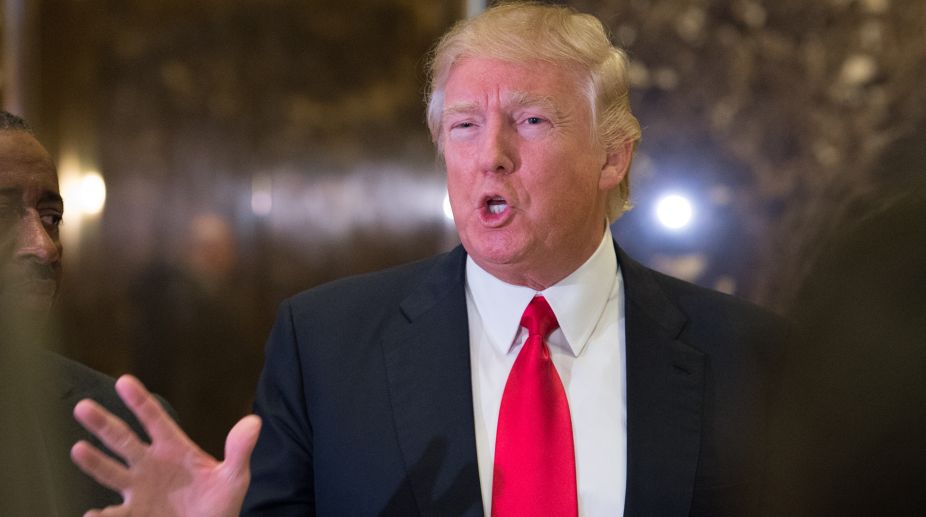
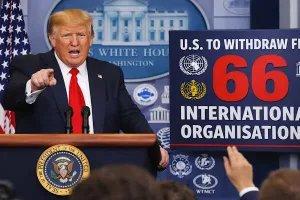
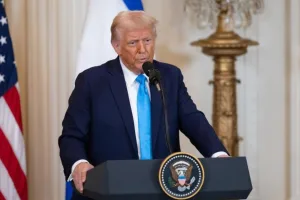
Trump says remark about Sweden referred to something on TV

AP |

Swedes have been scratching their heads and ridiculing President Donald Trump's remarks that suggested a major incident had happened in the Scandinavian country.

The American president now says he was referring to something he saw on television.

During a rally in Florida on Saturday, Trump said "look what's happening last night in Sweden" as he alluded to past terror attacks in Europe. It wasn't clear what he was referring to and there were no high-profile situations reported in Sweden on Friday night.

The comment prompted a barrage of social media reaction on Sunday, with hundreds of tweets, and a local newspaper published a list of events that happened on Friday that appeared to have no connections to any terror-like activity.

On Sunday, Trump took to Twitter to explain: "My statement as to what's happening in Sweden was in reference to a story that was broadcast on @FoxNews concerning immigrants & Sweden." A White House spokeswoman, Sarah Huckabee Sanders, says that Trump was talking about rising crime and recent incidents in general, not referring to a specific issue.

The president may be referring to a segment aired Friday night on the Fox News Channel show "Tucker Carlson Tonight" that reported Sweden had accepted more than 160,000 asylum-seekers last year but that only 500 of the migrants had found jobs in Sweden.

The report, which was illustrated with video of broken windows and fires, went on to say that a surge in gun violence and rape had followed the influx of immigrants.

Reacting to Trump's original remarks, Foreign Ministry spokeswoman Catarina Axelsson said that the government wasn't aware of any "terror-linked major incidents." Sweden's Security Police said it had no reason to change the terror threat level.

"Nothing has occurred which would cause us to raise that level," agency spokesman Karl Melin said.

Former Swedish Foreign Minister Carl Bildt tweeted , "Sweden? Terror attack? What has he been smoking? Questions abound."

Addressing Trump in an article yesterday, the Aftonbladet tabloid wrote, "This happened in Sweden Friday night, Mr President," and then listed in English some events that included a man being treated for severe burns, an avalanche warning and police chasing a drunken driver.

One Twitter user said, "After the terrible events #lastnightinSweden, IKEA have sold out of this" and posted a mock Ikea instruction manual on how to build a "Border Wall." Sweden, which has a long reputation for welcoming refugees and migrants, had a record 163,000 asylum applications in 2015.

FA Cup: Kane hat-trick powers Tottenham Hotspur past Fulham

Tottenham's 'golden boy' struck yet again, this time in their golden jersey!

SNS | New Delhi |

Harry Kane shrugged off any concerns about a knee injury to hit his maiden FA Cup hat-trick as Tottenham Hotspur eased past derby-rivals Fulham into the quarterfinals of England’s premier cup competition.

Spurs manager Mauricio Pochettino put out a fairly strong XI against the Championship side, with Kane starting alongside Christian Eriksen and Dele Alli. Spurs were playing in a somewhat unfamiliar 4-4-2 formation, as Hugo Lloris, Danny Rose and Kyle Walker were among those given a rest ahead with Thursday’s Europa League tie against Gent on the horizon.

The tie at Craven Cottage started with the away side firmly in the driver’s seat, monopolising possession and went ahead fairly early, thanks to their star striker.

Kieran Trippier’s quickly taken throw released Eriksen on the right wing and the Danish midfielder delicately placed cross was met by a sliding Kane to open the scoring in the 15th minute. While the cross was excellent, it was at an awkward height and Kane had to really reach to score his 17th goal of the season.

Despite the early deficit, Fulham were fairly organised in defence and didn't let Spurs double their lead in the first half, with the teams heading to their dugouts with the slightest of margins separating them.

And the second goal came six minutes into the second period, with the same trio heavily involved as they were in the first. Trippier’s overlapping run was found by Harry Winks and while the fullback was closed down, the passed it back to Eriksen, who took a touch before delivering an inviting cross which was promptly guided into the back of the net by Kane. While replays suggested the striker was marginally offside, the goal stood and with over 40 minutes remaining, the tie was effectively over.

Fulham responded with a couple of substitutions, including 16-year-old Ryan Sessegnon, but were unable to fashion any meaningful chances as Michel Vorm probably put in a fairly quiet shift in the Spurs goal.

And Kane was to get his hat-trick, with Dele Alli the provider this time. His perfectly weighted through ball set up Kane for a one-on-one with Fulham goalkeeper Marcus Bettinelli and it never looked like the striker would miss from there. His low finish whizzed past the keeper in the 73rd minute, allowing Pochettino to make changes as he looks to keep his players fresh for upcoming games.

Spurs’ reward for their Fulham triumph is a home quarterfinal clash with League One side Millwall, who upset Leicester City 1-0 on Saturday, scheduled for the 11th of March.


‘Pak shrine attacker bypassed security check’

IANS | Islamabad |

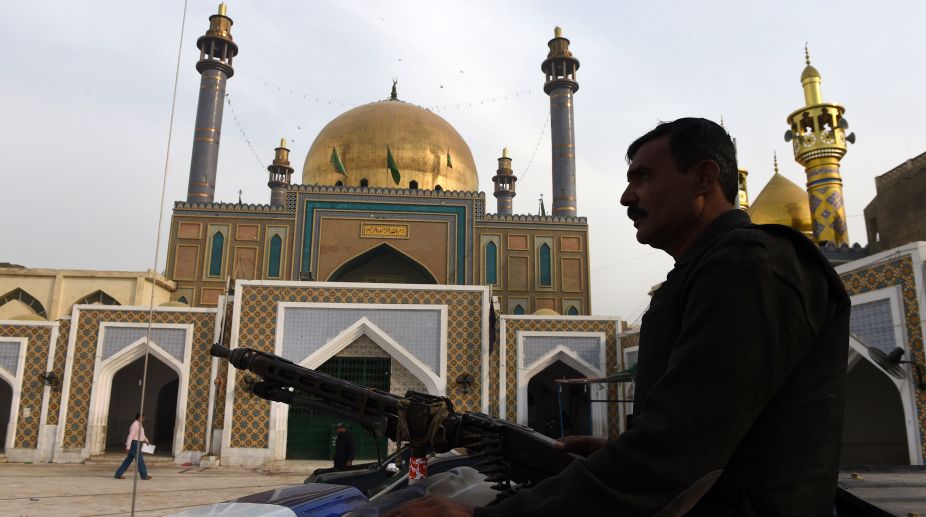
The police in Pakistan's Sindh province released a video allegedly showing the Sehwan attacker bypassing a security check at the Lal Shahbaz Qalandar shrine last week.

The suicide attack targeting a Sufi shrine on February 16 killed at least 88 people and injured hundreds others. It is one among a deadly series of attacks carried out by militants in recent weeks.

Inspector General Police Sindh A.D. Khawaja was quoted by the Dawn on Sunday as saying during a press conference that the man shown in the CCTV footage was "99 per cent" the suicide bomber.

He described the man as an Afghan national, saying that the 'attacker' saw the police officer at the gate and decided to go the other way.

The attacker is suspected of involvement in the Shikarpur and Jacobabad blasts, the IGP said, adding that the involvement of a man named Hafeez Brohi in the Sehwan attack could not be ruled out, as he had a terrorist network in Sindh.

The IGP said that police have arrested one man in connection to the Sehwan carnage in Johi, a town in Sindh's Dadu district. The suspected facilitator has been shifted to an undisclosed location for further investigation, he added.

The Sindh government will have the case investigated through Sindh police's Counter-Terrorism Department (CTD), as was done in suicide bombings in Jacobabad during Ashura and at Shikarpur's shrine, and then again last year in Shikarpur on the second day of Eidul Azha.

Sehwan police had lodged a case on February 17 against one suicide bomber and three facilitators involved in the suicide bombing. The accused remained unidentified.

The shrine has now been opened for the general public.

Photo

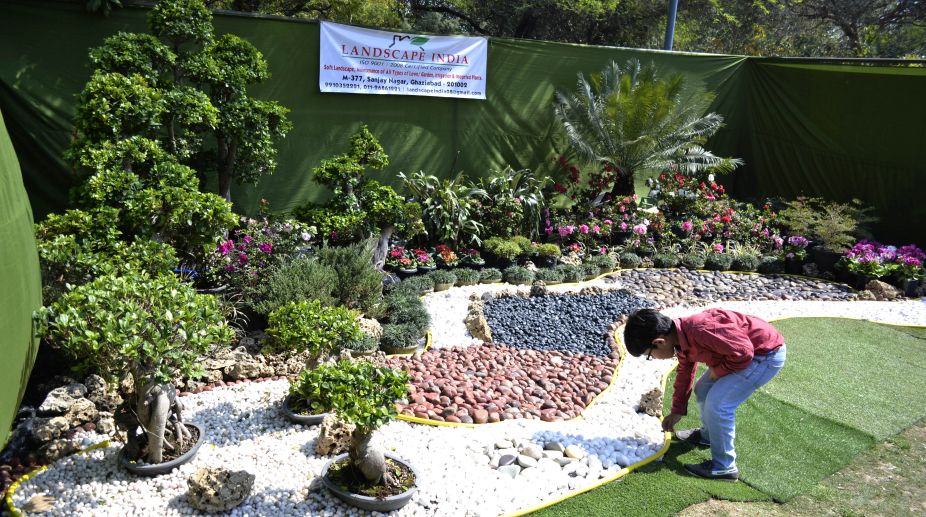
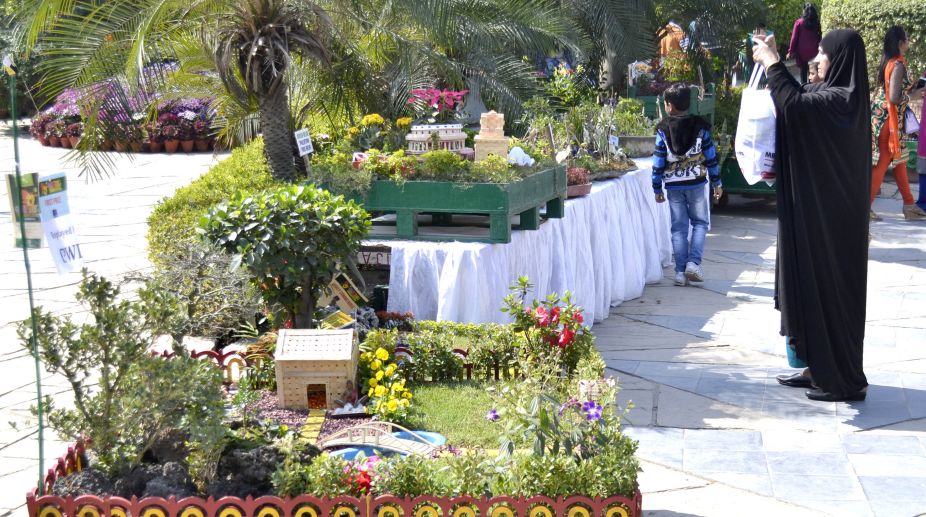
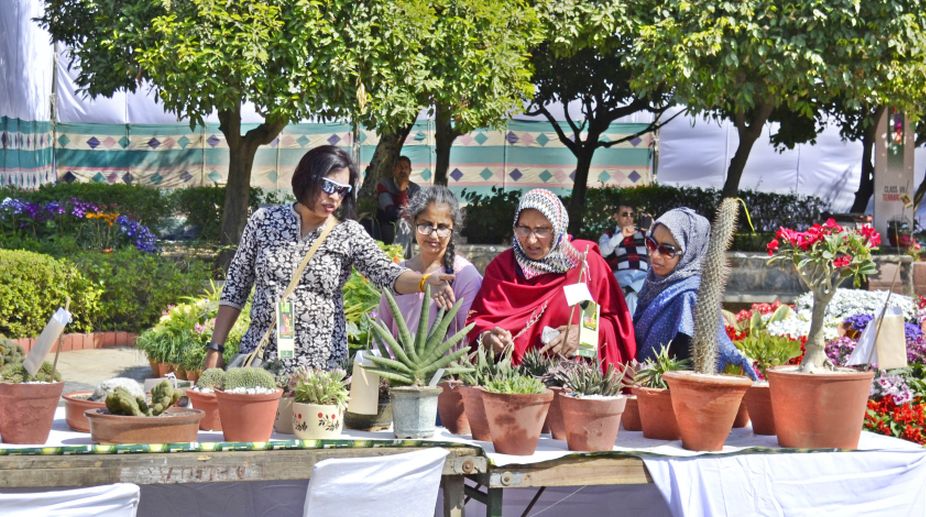
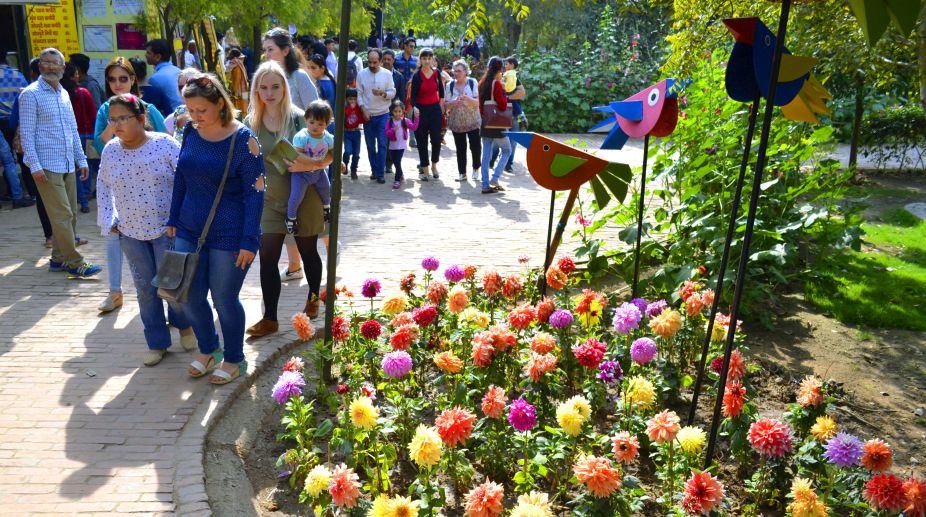
  • Visitors can be seen enjoying the display of vibrant and fragrant flowers at the 30th Garden Tourism Festival (Photo: Subrata Dutta/SNS)

    " alt="img" />
  • The three-day long flower festival celebrates plants and gardening in all its glory (Photo: Subrata Dutta/SNS)

    " alt="img" />
  • Saplings were distributed to the visitors as part of making the city greener drive (Photo: Subrata Dutta/SNS)

    " alt="img" />
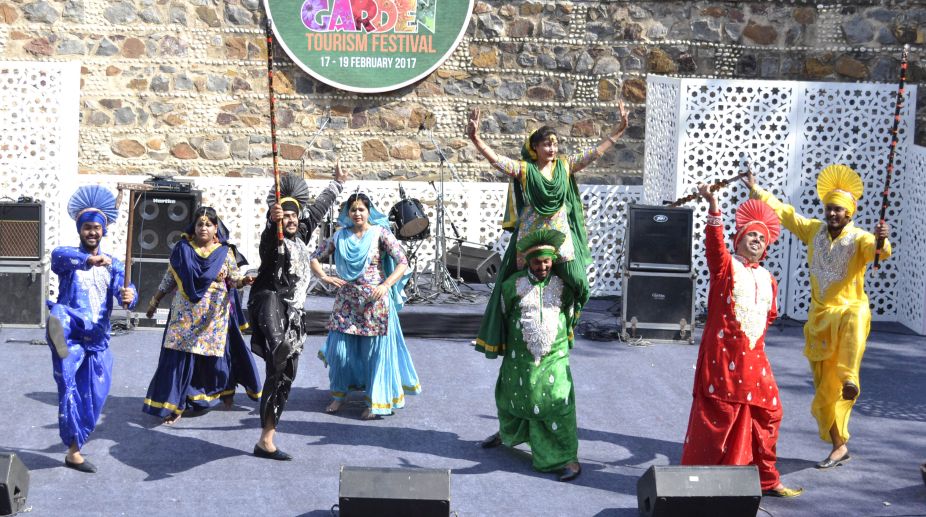
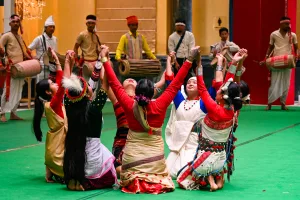
  • Dancers from various parts of the country participate in a cultural extravaganza during the festival (Photo: Subrata Dutta/SNS)

    " alt="img" />
  • The 30th Edition of Garden Festival saw footfalls from all across the world this year (Photo: Subrata Dutta/SNS)

    " alt="img" />

30th Garden Tourism Festival

30th Garden Tourism Festival

MORE Photo STORIES

Thousands in US plan protest on President’s Day

IANS | New York |

Thousands of people across the US are planning to protest on President's Day against President Donald Trump and his policies, according to media reports.

The President's Day is a federal holiday observed on the third Monday of February in honour of George Washington, the first US President.

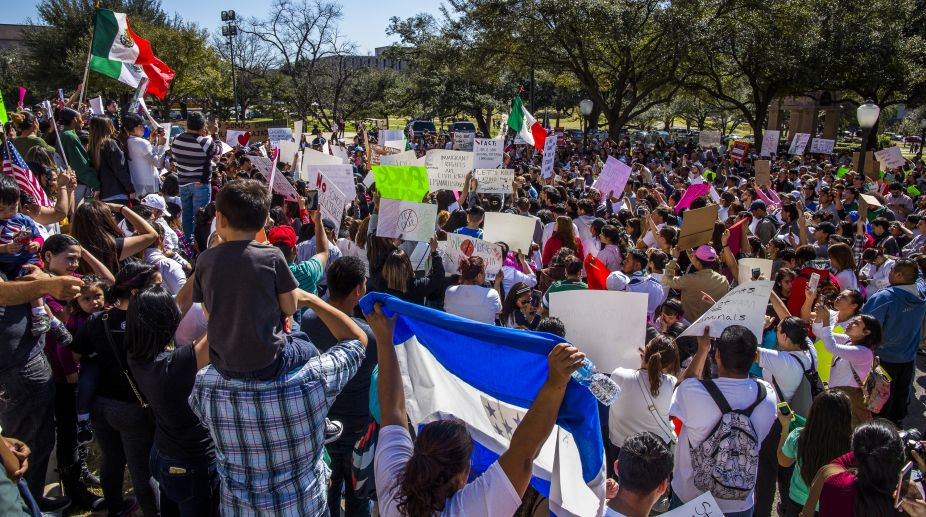
According to a report in NBC News, people in large numbers spent their President's Day Weekend at "Not My President's Day" rallies and more such rallies are expected to take place in at least 25 cities across the US on Monday.

On Facebook, more than 12,000 New Yorkers said they would attend "Not My President's Day" on Monday while 47,000 have showed their interest in the event.

Another rally that is expected to take place on Monday in Chicago is claimed to be aimed at uniting the people.

"Focusing on just one issue, like immigration, would serve the administration's purpose and further divide the country," Laura Hartman, Chicago rally coordinator, was quoted as saying.

"We want to fight the entirety of the administration," she said.

The rally is expected to witness a gathering of around 3,000 people and members from the American Federation of Government Employees, Sousaphones Against Hate, and others are scheduled to speak at the event.

According to the report, Georgia organisers are planning a 'peach-ful' march in Atlanta that hundreds of demonstrators have signed up for on Facebook.

Nearly 1,000 protesters in Dallas took to streets on Saturday and chanted "Immigrants are welcome here" slogans.

"My parents are immigrants, they came here in the late 1980s, and I can't allow their memory of what they've done and I can't let their sacrifices be impugned by people wanting to scapegoat brown people and black people for all the problems US has," one protester was quoted as saying.

"We're not the problem, we're the solution," the protestor added.

The organiser of the protests, Eric Ramsey, said he hoped that the rallies would let the establishment know that people do not agree with its policies.

"We do not agree with the hateful policies they are putting into place that further marginalise these communities," Ramsey was quoted as saying.

Protesters also demanded "an immediate stop to the ICE raids and deportations," and pressed for Los Angeles to be established as a sanctuary city.

Dressed in black, hundreds of protesters in New York City's Washington Square attended a mock funeral for President's Day and listened as a eulogy was delivered for the US presidency.

Hitler’s phone sells for more than $240,000

AFP | Washington |

Adolf Hitler's personal telephone, which the Fuehrer used to dictate many of his deadly World War II commands, sold at auction for USD 243,000, the US house selling it announced.

Originally a black Bakelite phone, later painted crimson and engraved with Hitler's name, the relic was found in the Nazi leader's Berlin bunker in 1945 following the regime's defeat.

The auction house Alexander Historical Auctions, which did not reveal the winning bidder's identity, had estimated its worth between USD 200,000 and USD 300,000. The starting bid was set at USD 100,000.

The Maryland company auctioned off more than a thousand items including the phone and a porcelain sculpture of an Alsatian dog for USD 24,300.

Both winners bid by telephone.

More than 70 years old, the Siemens rotary telephone is embossed with a swastika and the eagle symbolic of the Third Reich.

Alexander House dubbed the phone — which Hitler received from the Wehrmacht, Nazi Germany's armed forces — as "arguably the most destructive 'weapon' of all time, which sent millions to their deaths." 

It said Hitler used it to give most of his orders during the last two years of World War II.

Russian officers gave the device to British Brigadier Sir Ralph Rayner during a tour of the bunker shortly after Germany's surrender.

Rayner's son, who inherited the phone, put it up for sale, its paint now peeling to reveal the original synthetic black resin surface.

Andreas Kornfeld of Alexander House told AFP its estimates were based on a number of factors, including "rarity and uniqueness." 

"It would be impossible to find a more impactful relic than the primary tool used by the most evil man in history," the auction house said in a statement. "This was not a staid office telephone." 

"This was Hitler's mobile device of destruction." 

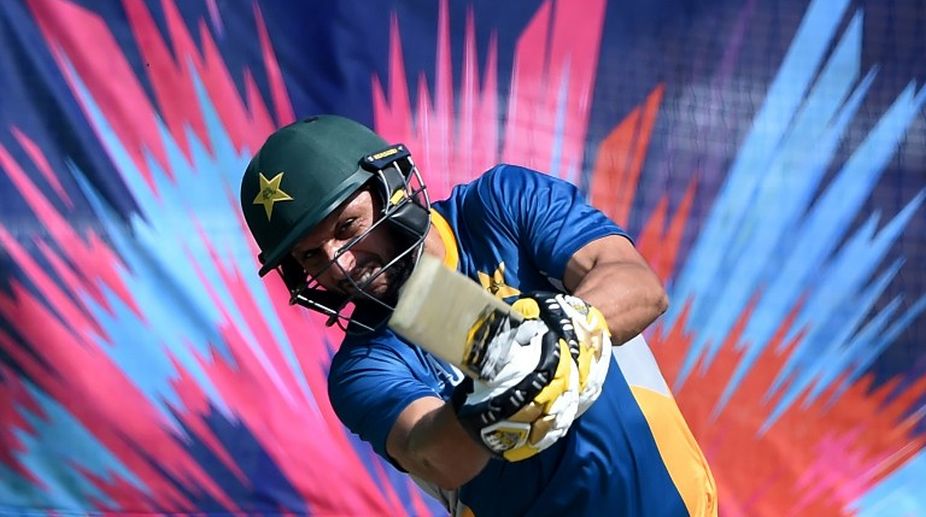
Shahid Afridi announces international retirement

Afridi announced his retirement from international cricket, ending an illustrious and sometimes controversial 21-year career.

AFP | Sharjah (United Arab Emirates) |

Legendary Pakistan all-rounder Shahid Afridi on Monday announced his retirement from international cricket, ending an illustrious and sometimes controversial 21-year career.

The 36-year-old star had already quit Tests in 2010 and ODI cricket after the 2015 World Cup but still captained the Pakistan Twenty20 team at the 2016 World T20 in India.

He stepped down as captain after the tournament although he retained his slender hopes of continuing his career in the sport's shortest format as a player.

Afridi had been a fan favourite since he burst onto the scene in 1996, striking a 37-ball century against Sri Lanka in only his second match to set a world record that was unbeaten for 17 years.

He became known as a bowling all-rounder in the second half of his career and was instrumental in Pakistan's early successes in Twenty20, including their 2009 victory.

Afridi finishes his international career having played just 27 Test matches which yielded 1,176 runs with a highest score of 156 and 48 wickets.

He played 398 one-day internationals with 8,064 runs, a highest score of 124 while taking 395 wickets with his leg spin.

His Twenty20 international career saw him play 98 matches with 1,405 runs and 97 wickets. 

A trust to say thank you

Charles Chasie |

When you go home
Tell them of us, and say
For your tomorrow
We gave our Today

One thing that never misses the eyes of a visitor to Kohima is the  heart-rendering words above written on the tableau erected at the war cemetery in memory of the soldiers of the Second Division British Army (comprising British and Indian soldiers) who laid their lives. The words are borrowed from the historic battle of Thermopylae. The Kohima war cemetery is the only one in the world that is located at the site where the war was fought.

Its significance could not remain obscure. In 2012, British historians voted Field Marshal Viscount William Slim, commander of the 14th Army, as the greatest general in the history of Britain. The next year, the battle of Kohima-Imphal was voted the greatest in British history, overtaking even the ones like that of Waterloo and Normandy. Moreover, with the passage of time and the Centre easing travel restrictions for foreigners to the North-east, many tourists are now coming to Nagaland.  

But what do the Nagas feel about the war? Several books have been written about the Burma campaign and the Battle of Kohima (April-June1944). But, there has hardly been any book recording the experiences of the Nagas who neither considered this battle as their war nor even as part of their history until recently. The remained neutral. 

In 1879, the Angamis fought the British, laid siege to their garrison at Kohima and it lasted till the battle of Khonoma in 1880. That memory is still in their minds. And they had no reason to fight for the Japanese who they were encountering for the first time. But Nagas helped both sides.

It is true that the majority of Nagas helped the British. On the eve of the arrival of the Japanese, the British Army withdrew from Kohima and also advised the then deputy commissioner, CR Pawsey, to leave. But Pawsey refused to abandon the Nagas and that earned him the undying loyalty of the Naga dobashis (interpreters) and other employees. Their loyalty for Pawsey was transferred to the Allied Forces and the Nagas started working as porters, stretcher-bearers, guides, scouts, spies, levies and even soldiers in the British India Army.

By the time the war was over, the British Army and the Nagas found they had become comrades-in-arms, having trusted one another throughout the war. For his work with the Nagas, Pawsey was rewarded with the knighthood. 

The Battle of Kohima devastated not only Naga homes and property but their values as well and their traditional community-based society changed forever. What was worse, the tentacles of this war continue to grip Naga society. While the continuing violence with the rise of Naga nationalism was a most visible one, the other was the flow of money in a big way.

Naga society operated barter economy and was suddenly plunged into war economy. After India attained Independence, the inflationary trend caused by this was sustained by Naga nationalism or insurgency, with the Government of India not being too mindful about how the money it pumped into the region for development purposes was used.  Kohima is still one of the costliest places in India. Because of the unsustainable nature of inflation, corruption continued and everybody paid merely lip service in fighting against this menace. So, was it all gloom and doom after the Battle of Kohima.

Scotsman Gordon Graham from the Queens Own Cameron Highlanders fought at the battle of Kohima as a captain. He won two gallantry awards, MC and Bar, one at Kohima and the other in Burma. He was promoted to Major and retired as a Colonel. He was a journalist before the war in India and later, after it was over, he returned to India as a journalist. But soon he ventured into the field of publications and actually be-came one of the most successful publishers in the world. He was also founder-editor of “Logos” the international publishers’ magazine. Gordon’s experiences are beautifully recounted in his book, The Trees are All Young on Garrison Hill, 2005 (www.kohimaeudcationaltrust.net).

Gordon had always felt that without the help of the Nagas, the British and Allied Forces could not have won the Battle of Kohima and would not have survived in the numbers they did. Gordon kept thinking about how to repay this debt of honour to the Nagas. In 2004, during the 60th anniversary of the Battle of Kohima, and the last reunion of the veterans of the British 2nd Division, Gordon urged his friends to commemorate the Battle of Kohima in a more permanent way by doing something good for  the Nagas.
 His friends supported the idea and soon the Kohima Educational Trust was set up as a charitable foundation to assist descendants of their Naga allies in the war. Soon after, the Kohima Educational Society came into being as the Ket’s Nagaland counterpart.

The Ket started with the veterans of the British 2nd Division donating from their pension. Slowly, it caught the eyes of the British public but they took a few years to fund projects. The first of these, naturally, was providing scholarship to Naga high school children. Slowly, others came forward to sponsor scholarships and also projects.

Ray Jackson was a pilot whose plane was shot down during the war. Two men from Phek village, found him in the forest, looked after him and brought him back to British lines. For that act of kindness  he  wanted to do something for the people of Phek. The elders suggested a basketball court. Thus was built the Ray Jackson basketball court at Phek. Similarly, like this, other projects become operational. But the scholarship rem-ained the flagship of the project.

The Kes also raises funds for the common kitty. About a year ago, a concert was held in Kohima to raise funds and several well-known Naga artistes came and performed free. Kes is possibly the only Naga body that honours veteran soldiers and sponsors projects along with Ket. Thus, more than 70 years after World War II, the British-Naga friendship, forged in the heat of the Battle of Kohima, continues to take root at the people-to people level even while the governments may have largely forgotten it.

Ket trustees and Kes officials work on a voluntary basis. In Gordon Graham’s words, “Memory is a great gift, which we all share and which too often we take for granted. Like dreams memories come unbidden. Unlike dreams, they are calls to action. In addition to their basic message about the continuity of life and their evocations of nostalgia or regret, they pose the question, ‘How can we use the past to benefit the future?’”

(Those interested,visit www.kohimaeducationaltrust.net or write to kohimaeducationalsociety@gmail.com)

The writer is a Kohima-based veteran journalist and author of the Naga Imbroglio. He is also the president of the Kohima Educational Society.

A quirk of history

Rangan Dutta |

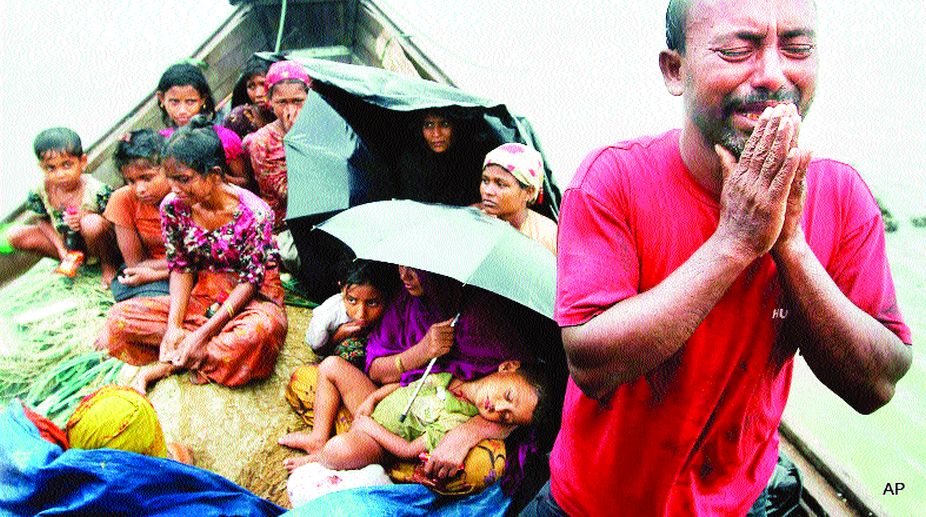
It is strange that the sufferings of Rohingya, an ethnic Muslim group of Rakhine province in Myanmar, which is separated from Mizoram by a small segment of the Chin Hills, have largely gone unreported in the North-east media even after Jammu and Kashmir chief minister’s announcement in January that the state had provided shelters to 5,700 of them. They possibly might have crossed over to India through the porous borders of the North-east with Bangladesh along the Mizoram-Cachar-Tripura sector.

Rakhine, known for centuries as Arakan, with Akyab, now known as Sittwe  is a  major deep sea port. It evokes memories of past trade links of Assam with Rangoon, now Yangon, through Chittagong and Sittwe ports, which carried tea and brought back Burma rice. Until the 1930s, it was the main source of supply for sustenance of Assam’s vast tea garden labour community and other non-farming groups.

In fact, the disruption in supply of Burma rice later prompted then Assam government, early in the 1940s, to start the “grow more food campaign” by getting lands reclaimed for rice cultivation, which entailed bringing in land-hungry peasants, mostly Muslims from  eastern Bengal.

Now, by a quirk of history, the Kaladan Multi Modal Transport Project, is designed to connect the North-east once again with  Sittwe through construction of a Kaladan Inland waterway, a road connecting Sittwe to Lawngtlai in Mizoram and improvement of the Sittwe deep sea port. Once these are  ready, possibly by 2019, the $480 million project will open the direct sea trade from Kolkata  to the  North-east and from there to the Association  of the South-east Asian Nation countries through Sittwe port.

The fact that India is financing the project, while Myanmar makes land available for the 129-km highway in that country and facilitates improvement of the  Sittwe port and navigability of the Kaladan river, indicate the strategic importance of the Kaladan project for both India and Myanmar to expand trade and technological cooperation.

Once trade picks up at Sittwe, it might even create an incentive for Bangladesh to grant surface transit facility to Chittagong port from the North-east. Indeed the Kaladan project is the first Indo-Myanmar strategic initiative to restore the pre-1947 vibrant regional economy that encompassed east and North-east India, Myanmar, Malaysia and Thailand. And, therefore, its early completion and  smooth functioning thereafter are vital for revival of the old trade links and progress of the sub-region.

From this perspective, the continuing civil strife in Rakhine and violence against Rohingyas are matters of concern for the North-east, as it may  impact the Kaladan project. The Army’s crackdown in Rakhine following the  “9th October”Rohingya militants attack on the border posts  near  Muangdaw, a town of northern Rakhine, killing nine Myanmarese border guards, led to mass arrests, torture and killing of at least 86 Rohingyas , also burning and destruction of their villages. Thousands of Rohingya were  forced to move north to seek shelter in Bangladesh where they are not really welcome.

In Rakhine, a full-scale Rohingya insurgency has begun, supported by foreign radical Islamic groups, which as reported in the Western media, have been training Rohingyas in guerrilla warfare and also supplying them with modern weapons .This is bound to have repercussions in the east and the North-east. Analysts see the hand of Pakistan behind this and also little chance of an early resolution of the conflict, on the following grounds.

Firstly, the  roots of the Rohingya problem lie deep in history and the refusal of post-colonial Burma to accept the demographic reality did not help matters. No doubt, there was migration but entirely caused by the “extractive” colonial mode of production based on cheap migrant labour.

The Arakan vegetation varies from tropical and sub- tropical to temperate, Alpine and valley lands. For centuries it was a powerful independent kingdom that periodically dominated southern part and even received tributes from Dacca and Murshidabad and often hosted Portuguese pirates.

During the Mughal period, trade and cultural contacts of Arakan with Bengal thrived and Islam spread to Arakan from Bengal. Shah Shuja, son of Shahjahan, sought shelter in Arakan after his defeat in the battle of succession to Aurangzeb only to be massacred later with his family; and a dargah is possibly still in Rakhine and visited by many Muslims.

Thus the Muslim presence in Arakan is old. Much later in 1783 Arakan was conquered by King Bodawpaya and made a part of the Third Burmese empire, which brought the Burmese border to Bengal Presidency, the engine powering the British East India company in India. However,  the control of Mandalay over Arakan was short-lived as the latter  was incorporated into the British domain following the Burmese defeat in the first Anglo-Burmese war (1824) and it was placed under the Bengal Presidency.

The colonial phase of Arakan history bears remarkable similarity with the North-east  experience, whi-ch saw  the same movement of mig-rant labour for extraction of natural resources and to run administration essential for extractive activities, which caused demographic change s in Assam. However, the state policy to the Rohingyas right from 1948 and, especially after the 1962 Army take over, was the refusal to accept the reality of historic presence of Rohingya Muslims in Myanmar. 

 Instead,  the entire community has been branded  “illegal Bengali migrants”  from Bangladesh and that has led to the conflict. The Rohingya are a stateless people in their own home where they lived for centuries and the stand of the Myanmar government is untenable from a human rights perspective. The plight of the Rohingya therefore has attracted global attention and sympathy.

While there could be some migration after 1935, when Burma was separated from India,  but even such people and their descendants, who were born in Myanmar, are entitled to citizenship in a modern state. Interestingly,  the state recognises some Muslim groups as citizens but not over a million Rohingya who are not even included in 135 sub- categories of eight major  “national ethnic races” and, therefore, they do not exist in official records.

Their presence is seen only when they face atrocities or resist oppression. The Rohingya problem is part of a bigger issue of the political identity of other ethnic groups of Arakan who consider themselves different from the majority Burman. Its  armed wing, the Arakan Independence Army,  is part of Northern Alliance, a group of several such ethno-centric militias fighting for substantial political space within Myanmar, even when their stated goal is independence. The Rohingya are thus caught in this internal power game involving 20 ethnic insurgencies, which  only shows the complexities of formation of a modern nation state in Myanmar, which is emerging from a multi-religious and ethnic colonial state.
The Rohingyas suffer from an added disadvantage as their proximity to Islamic Bangladesh gives credence to the apprehension that once granted political space, they might demand partition of Rakhine — a repeat of the Partition, which is totally unacceptable to the Buddhist majority.

While the Rohingyas are in a bind, the government at Naypyidaw has not been able to take a bold initiative to resolve the Rohingya problem. It is basically a part of the unfinished task of nation-building that  General Aung San began at the Pangong conference with all ethnic groups in 1948 for reconciliation within the newly-independent  Burma.

Over half a century of military rule saw destruction of governance on the basis of rule of law and separation of executive from judiciary and an orderly form of district administration designed to address local issues of governance that Burma, like India, inherited.

And, while India could retain it because of democracy,  albeit with some aberrations, the military junta, which still occupies seats in the legislature reserved for the military and a has a decisive say in administration of provinces under the 2008 constitution, destroyed it to an extent that presently allows little scope for decentralised governance capable of meeting the aspirations of its diverse “ geo-political minorities”.  That is, ethnic groups which are “minorities” in the country but majority in their provinces and hence draw their political strength from their hold over the land.

There is thus hope for the Rohingya only if the international community could prevail upon Myanmar to adopt a sensible approach to their problem. But  even to earn this they have to severe their links with Islamist extremism to establish their case. 

A major lesson of the post World War II development experience is that economic progress of a nation is a product measurable in terms of development indicators  as well as a process that must be inclusive and doesn’t exclude any group. Nothing impairs  development more than insurgency. It is time Myanmar, under the leadership of Aung San Suu Kyi, dismantled the dysfunctional military-dominated state and established an inclusive state with space for all, including the Rohingyas for sustainable peace and progress.

The writer is a Retired IAS Officer of the Assam-Meghalaya Cadre and has served as a Scientific Consultant in the Office of the Principal Scientific Advisor to the Government of India.


An ideal couple

Manish Nandy |

Rachel and her husband Dylan had always seemed an ideal couple to me and to our friends.
They clearly enjoyed each other’s company and enthusiastically shared the responsibility of their household and care of their only child, Peter. When Dylan suddenly died of cardiac failure at 47, we all considered it a great tragedy.

So it was a surprise to me when, six months later, Rachel approached me with a request to secure the services of my lawyer friend, saying she needed his help in arranging an adoption. She wanted to adopt an orphan girl who had grown up with an out-of-state family and she wanted it done quickly.
When I sought to understand the circumstances, especially the need for urgency, Rachel told me an unexpected story.

Apparently she had had a last-minute bedside conversation with Dylan before he died. He told her that he had, unknown to Rachel, had an affair with her best friend, who had quietly gone out of town and given birth to a girl. The girl had then been growing up with the friend’s sister’s children in rural Pennsylvania.
Dylan had a strong sense of guilt for not having looked after the daughter well, let alone acknowledge her, and confessing his lapse to Rachel, begged her to do something about the girl.

I told Rachel that it was good of her to want to give the girl a loving home and asked if she was quite clear in her mind about adopting Dylan’s love child with her best friend. She paused and impressed me with her firm response. Yes, she was certain that she wanted to adopt Dylan’s child and she felt she could lovingly bring her up and give her every opportunity.

“You see,” she added, “I listened to Dylan and promised him that I would take care of the child.”
Then she added, “But there wasn’t time enough to tell him what I really wanted to speak to him about. Well, Peter wasn’t Dylan’s son. He was the unexpected result of a fleeting relationship I had with his brother when Dylan was out of the country. I could not bring myself to divulge it to him earlier, and then there just wasn’t the time.”

The writer is a Washington-based international development advisor and had worked with the World Bank. He can be reached at mnandy@gmail.com

Cultural diplomacy or nationalist sentiment?

Sunil Gupta |

The despicable attack on the Indian Army camp in Uri by Pakistani infiltrators last September and the incident’s precursor at the Air Force base at Pathankot led to a rather piquant situation in the world of art and culture in India. 

Whether you call it a storm in a teacup or an issue of great import and appeal to a proud Indian’s nationalist sentiments, every well-informed Indian chose to own up to a view, one way or the other. Notwithstanding the ease with which Pakistani artistes had always had access to an Indian visa either for sashaying a grand entry into the hallowed chamber of fame and success – our own tinsel town of Bollywood – and becoming a familiar face in every nook and cranny of the country and wherever the global Indian resided, or for the purpose of performing ghazals for the elite and discerning Indian music lovers, the recalcitrant behaviour of India’s north-western neighbour turned the tide of goodwill for visiting artistes into hostility.

Ghastly reports about torture of Indian soldiers at the border and the horrendous mutilations of their dead bodies by the Pakistanis shook the collective conscience of Indians. Meanwhile, some ultra-nationalist political outfits as well as strongly opinionated individuals who were repulsed by the thought of Pakistani artistes having the time of their lives and earning fortunes in India stood up and protested. In such circumstances, how could anyone allow Pakistani male actors to serenade Indian actresses on screen, while female Pakistani artistes reaped “oohs” and “aahs” of the Indian audience in adulation, they asked.
Moreover, they stressed that no one should allow the “soul-stirring ghazal renditions by the Pakistani ustads” lead unsuspecting Indian audiences into a stupor of indifference to the fate of the families of soldiers who had become martyrs to the cause of defending the country’s territorial integrity. Enough was enough; there was no way the cultural ambassadors of Pakistan would be allowed any further to camouflage the evil designs of their political masters. They further demanded that Pakistani artistes who were already in India should leave the country immediately, the films in which they had worked be banned, and no artiste from across the border be allowed to visit India in the future. In the event of these demands not being met, there would be trouble ahead, they warned.

With the protestors trying to stall the release of at least one mammoth production, which had Pakistani actors on board, Bollywood filmmakers bemoaned the bleak prospects of recovery of the hundreds of crores invested in their projects. Although they reserved their inalienable right to defend their artistic freedom to work with actors of their choice regardless of their national identity, they lamented that their filmmaking prowess and familiarity with the ways of the film world, fraught with its own professional and occupational hazards, had not empowered them to study the undercurrents of geopolitics.

How were they to know at the time of launching their productions and hiring Pakistani actors, all done when relative normalcy prevailed, that there would soon be turbulence in bilateral relations, they asked. All that they could do now was to be more circumspect in hiring such actors for their future ventures. Soon, every Indian cultural aficionado jumped into the fray and bandied his opinion. Not to be left far behind, his Pakistani counterpart joined the chorus, nay, cacophony and questioned the audacity of politicking in matters of culture. Those who jumped to the defence of the Pakistani artistes included quite a few stalwarts from Bollywood.

Artistes were sensitive people whose performances in Indian films contributed to the strengthening of cultural bonds between the two countries and, as such, should not be treated as lumpen elements who had no empathy for the sensibilities of Indian soldiers’ families, they averred. Besides, hadn’t they come to our country with valid visas to work in Indian films? So, why pull the plug on them? How could the artistes, as private individuals be charged with a feigned anti-Indian stance and penalized for their government’s activities, they argued.

Emphasizing that the demand by the “self-styled guardians and champions of nationalism to boycott Pakistani artistes was both unjust and unfair”, they said “such loose cannons needed to be reined in” by the state and Central governments. Besides the hundreds of crore rupees that had gone into the making of the film, would it not be a shame if the labour of love of scores of Indian artistes, technicians, et al associated with the movie were to be lost if it were banned or blocked, argued the affected filmmakers. They also tried to reason things out with the unobliging political forces, which had a limited reach among the audience and then sought intervention by the Central and state governments. 

The state and Central governments, which did not want to get embroiled in the brouhaha, soft-pedalled the issue and were quick to assure the film fraternity of protection and full cooperation in preventing untoward incidents. With the idea of diffusing the tension, tripartite talks between movie makers, protestors and the State government were facilitated, at the end of which it was agreed that the screening of the film would be allowed with some conditions.

It was also accepted that makers of the film would make a compulsory contribution from box office collections to the army welfare fund; however the state CM clarified that this was voluntary and no such covenant was part of the deal. In the meanwhile, the targeted Pakistani actors had returned to their country. Their sound bytes were, as expected, in tune with the official line and popular local sentiment. This was construed by cynics in India as proof of the complicity of the Pakistani actors in the evil designs of their State against India and, in turn, with their own position. To make matters murkier, the Pakistani authorities banned telecast or broadcast of Indian programmes in their country.

Meanwhile, the mainstream media was not to be outdone by individual voices raised for and against the issue. Furious panel discussions, spirited op-eds and critical blogs on the burning issue became the order of the day. Social Media was rife with seemingly endless debates. Nobody liked the idea of the society being vertically split into two, with the self-styled guardians of nationalism on the one side and those who questioned them on the other, although something close on such lines was already happening.  Although the controversy over Pakistani actors has blown over, the idea of sterilising the rich talent pool of the world of culture on the basis of national identity is still alive. But aren’t actors free birds averse to being caged?

Aren’t they like river waters which know no national boundaries? Hadn’t the people of the two nations lived together in peace and amity for centuries before partition? Having partitioned the landmass, how do you partition the thought processes of the artiste fraternity of the subcontinent, intertwined by the umbilical cord of a common culture? Why not allow the audiences of the two nations to enjoy the best of both the worlds? These and countless more are the questions of those who dare defy the restrictions sought to be imposed on the flow of artistic genius.

The questions are answered by counter-questions by the nationalists. Isn’t talent available in plenty in our country? Why make out a case as if the cultural scene in India is parched for talent in the absence of concerts by musicians from across the border or that filmmaking would be rendered incomplete without the Pakistani stars coming to the rescue?  Why hanker after artistes from a recalcitrant country who need us more than we need them? Are they not morally and ethically bound to repay the Indian hospitality (read fabulous amounts of remuneration) in terms of empathy for the victims of brutalities committed by their army and raise their voice to condemn the barbarity? How could Indians be expected to turn a blind eye to the plight of the families of soldiers and civilians killed by Pakistani terrorists during peace time?
At the end of the day, it is for every Indian to individually answer the questions and independently take a call on the issue. But the call must be taken. Either we live by our nationalist sentiments or junk the mushy pop-patriotism depicted in our Bollywood tearjerkers. For Art tends to imitate Life.

The writer is a chartered accountant and former member of the boards of public sector banks and corporations.

Cultural diplomacy or nationalist sentiment?

Sunil Gupta |

The despicable attack on the Indian Army camp in Uri by Pakistani infiltrators last September and the incident’s precursor at the Air Force base at Pathankot led to a rather piquant situation in the world of art and culture in India. 

Whether you call it a storm in a teacup or an issue of great import and appeal to a proud Indian’s nationalist sentiments, every well-informed Indian chose to own up to a view, one way or the other. Notwithstanding the ease with which Pakistani artistes had always had access to an Indian visa either for sashaying a grand entry into the hallowed chamber of fame and success – our own tinsel town of Bollywood – and becoming a familiar face in every nook and cranny of the country and wherever the global Indian resided, or for the purpose of performing ghazals for the elite and discerning Indian music lovers, the recalcitrant behaviour of India’s north-western neighbour turned the tide of goodwill for visiting artistes into hostility.

Ghastly reports about torture of Indian soldiers at the border and the horrendous mutilations of their dead bodies by the Pakistanis shook the collective conscience of Indians. Meanwhile, some ultra-nationalist political outfits as well as strongly opinionated individuals who were repulsed by the thought of Pakistani artistes having the time of their lives and earning fortunes in India stood up and protested. In such circumstances, how could anyone allow Pakistani male actors to serenade Indian actresses on screen, while female Pakistani artistes reaped “oohs” and “aahs” of the Indian audience in adulation, they asked.
Moreover, they stressed that no one should allow the “soul-stirring ghazal renditions by the Pakistani ustads” lead unsuspecting Indian audiences into a stupor of indifference to the fate of the families of soldiers who had become martyrs to the cause of defending the country’s territorial integrity. Enough was enough; there was no way the cultural ambassadors of Pakistan would be allowed any further to camouflage the evil designs of their political masters. They further demanded that Pakistani artistes who were already in India should leave the country immediately, the films in which they had worked be banned, and no artiste from across the border be allowed to visit India in the future. In the event of these demands not being met, there would be trouble ahead, they warned.

With the protestors trying to stall the release of at least one mammoth production, which had Pakistani actors on board, Bollywood filmmakers bemoaned the bleak prospects of recovery of the hundreds of crores invested in their projects. Although they reserved their inalienable right to defend their artistic freedom to work with actors of their choice regardless of their national identity, they lamented that their filmmaking prowess and familiarity with the ways of the film world, fraught with its own professional and occupational hazards, had not empowered them to study the undercurrents of geopolitics.

How were they to know at the time of launching their productions and hiring Pakistani actors, all done when relative normalcy prevailed, that there would soon be turbulence in bilateral relations, they asked. All that they could do now was to be more circumspect in hiring such actors for their future ventures. Soon, every Indian cultural aficionado jumped into the fray and bandied his opinion. Not to be left far behind, his Pakistani counterpart joined the chorus, nay, cacophony and questioned the audacity of politicking in matters of culture. Those who jumped to the defence of the Pakistani artistes included quite a few stalwarts from Bollywood.

Artistes were sensitive people whose performances in Indian films contributed to the strengthening of cultural bonds between the two countries and, as such, should not be treated as lumpen elements who had no empathy for the sensibilities of Indian soldiers’ families, they averred. Besides, hadn’t they come to our country with valid visas to work in Indian films? So, why pull the plug on them? How could the artistes, as private individuals be charged with a feigned anti-Indian stance and penalized for their government’s activities, they argued.

Emphasizing that the demand by the “self-styled guardians and champions of nationalism to boycott Pakistani artistes was both unjust and unfair”, they said “such loose cannons needed to be reined in” by the state and Central governments. Besides the hundreds of crore rupees that had gone into the making of the film, would it not be a shame if the labour of love of scores of Indian artistes, technicians, et al associated with the movie were to be lost if it were banned or blocked, argued the affected filmmakers. They also tried to reason things out with the unobliging political forces, which had a limited reach among the audience and then sought intervention by the Central and state governments. 

The state and Central governments, which did not want to get embroiled in the brouhaha, soft-pedalled the issue and were quick to assure the film fraternity of protection and full cooperation in preventing untoward incidents. With the idea of diffusing the tension, tripartite talks between movie makers, protestors and the State government were facilitated, at the end of which it was agreed that the screening of the film would be allowed with some conditions.

It was also accepted that makers of the film would make a compulsory contribution from box office collections to the army welfare fund; however the state CM clarified that this was voluntary and no such covenant was part of the deal. In the meanwhile, the targeted Pakistani actors had returned to their country. Their sound bytes were, as expected, in tune with the official line and popular local sentiment. This was construed by cynics in India as proof of the complicity of the Pakistani actors in the evil designs of their State against India and, in turn, with their own position. To make matters murkier, the Pakistani authorities banned telecast or broadcast of Indian programmes in their country.

Meanwhile, the mainstream media was not to be outdone by individual voices raised for and against the issue. Furious panel discussions, spirited op-eds and critical blogs on the burning issue became the order of the day. Social Media was rife with seemingly endless debates. Nobody liked the idea of the society being vertically split into two, with the self-styled guardians of nationalism on the one side and those who questioned them on the other, although something close on such lines was already happening.  Although the controversy over Pakistani actors has blown over, the idea of sterilising the rich talent pool of the world of culture on the basis of national identity is still alive. But aren’t actors free birds averse to being caged?

Aren’t they like river waters which know no national boundaries? Hadn’t the people of the two nations lived together in peace and amity for centuries before partition? Having partitioned the landmass, how do you partition the thought processes of the artiste fraternity of the subcontinent, intertwined by the umbilical cord of a common culture? Why not allow the audiences of the two nations to enjoy the best of both the worlds? These and countless more are the questions of those who dare defy the restrictions sought to be imposed on the flow of artistic genius.

The questions are answered by counter-questions by the nationalists. Isn’t talent available in plenty in our country? Why make out a case as if the cultural scene in India is parched for talent in the absence of concerts by musicians from across the border or that filmmaking would be rendered incomplete without the Pakistani stars coming to the rescue?  Why hanker after artistes from a recalcitrant country who need us more than we need them? Are they not morally and ethically bound to repay the Indian hospitality (read fabulous amounts of remuneration) in terms of empathy for the victims of brutalities committed by their army and raise their voice to condemn the barbarity? How could Indians be expected to turn a blind eye to the plight of the families of soldiers and civilians killed by Pakistani terrorists during peace time?
At the end of the day, it is for every Indian to individually answer the questions and independently take a call on the issue. But the call must be taken. Either we live by our nationalist sentiments or junk the mushy pop-patriotism depicted in our Bollywood tearjerkers. For Art tends to imitate Life.

The writer is a chartered accountant and former member of the boards of public sector banks and corporations.

Post-Truth Europe ~ II

Arunabha Bagchi |

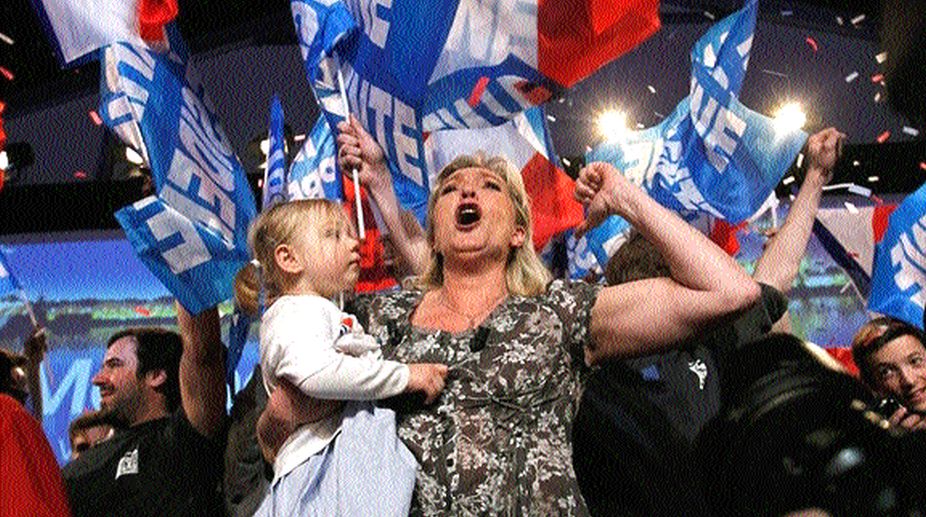
More important, of course, is the election in France due to take place in two rounds ending in May. France has a presidential form of government and all eyes are directed towards the presidential candidates running in the first round. France has an even longer history of strong right-wing movement, started by the uncouth nationalist leader, Jean-Marie Le Pen. The traditional coalition of parties to the right and to the left were able until now to put National Front of Le Pen behind them in the first round, exept once when National Front came in second and competed in the direct fight for presidency against Jacques Chirac of the right-wing coalition. To stop Le Pen, the entire left threw their support for the “hated” Chirac to ensure his victory. This time it is more complex. Le Pen’s daughter Marine has now taken over the leadership of the party and modernized it with somewhat broader message to attract new voters. Opinion polls show her winning the first round with about 25 per cent  of the votes.

The question is: Who will be the runner-up to qualify for the direct election in the second round. There were surprises galore during the primaries of both the recently named Republicans and the Socialist camps. Early favourites on the right, Nicolas Sarkozy and Alan Juppe were soon out of the race and finally an ultra-conservative and champion of morality, Francois Fillon, became their candidate. On the left, voters in the Primary elected the left fringe candidate Benoit Hamon to run as their presidential candidate. Then the French satire magazine, Le Canard, published the damning report that Fillon emloyed his wife with huge pay as his private assistant while holding the Prime Minister’s office. Either candidate may not get enough  votes of the other camp to defeat Marine Le pen in the second round. There is total confusion among traditional parties, and this led the current socialist industries minister, Emmanuel Macron, to start a new party, En Marche!, meaning “Onwards”, and run for the for the first round of the presidential election. If he makes to the second round, opinion polls show Macron defeating Le Pen by a margin of 65 per cent to 35 per cent!

The climax of all will be the election in Germany in early autumn. The electoral system there is very similar to that in the Netherlands. There are two major parties in Germany, the centre-right Christian Democrats CDU/CSU  and the cenre-left Socialist Party SPD. Then there are smaller parties that often join coalition governments, like the Free Democrats on the right and the Greens on the left. After the unification, the Communists of erstwhile East Germany also formed a minor force in Germany. When the last SPD Chancellor Gerard Schroder made drastic cuts in social welfare programmes, many disillusioned socialists formed with the Communists a new party, called Die Linke. The party has considerable clout in the eastern part of Germany. One feature of the German eletion is the five per cent  threshold, with any party failing to reach that threshhold being denied seats in the Bundestag. This was designed to stop the Nazis, after the Second World War, to enter the Parliament. But now this is going to change, with a new “post-truth” party dominated by neo-Nazis, Alternative for Germany  (AfD), expected to win more than 15 per cent of the votes, according to all opinion polls.

This is threatening the chance of Angela Merkel to be re-elected as the Chancellor. Merkel is the leader of CDU, whose sister party CSU that represents Christian Democrats in the ultra-conservative mountain region of Bavaria is on a collision course with her. Its leader, Horst Seehofer, is against the sanction of Russia and openly supports Donald Trump. This makes the “post-truth”  politics a formidable force in Germany. On the other side, SPD after Schroder suffered from lacklustre leaders. That too changed suddenly this month when the President of the European Parliament, Martin Schultz, took over the leadership of SPD, which seems to have chnrged the political base of the party. The whole of Europe is waiting.

Richard Rorty’s vision of an ideal society in a world with multiple truths are  being tested in the West with the traditional politics on a collision course with the “post-truth” brand. European elections will determine the course of politics in the West for years to come. The situation is different in India. Enlightenment was imposed on us by the English educated elites. It never got diffused into our society. To this was added the post-modernist phenomenon of “post-truth”, driven by the digital hype. This is another illustration of the Bharat-India dichotomy.

(Concluded)

Post-Truth Europe ~ II

Arunabha Bagchi |

More important, of course, is the election in France due to take place in two rounds ending in May. France has a presidential form of government and all eyes are directed towards the presidential candidates running in the first round. France has an even longer history of strong right-wing movement, started by the uncouth nationalist leader, Jean-Marie Le Pen. The traditional coalition of parties to the right and to the left were able until now to put National Front of Le Pen behind them in the first round, exept once when National Front came in second and competed in the direct fight for presidency against Jacques Chirac of the right-wing coalition. To stop Le Pen, the entire left threw their support for the “hated” Chirac to ensure his victory. This time it is more complex. Le Pen’s daughter Marine has now taken over the leadership of the party and modernized it with somewhat broader message to attract new voters. Opinion polls show her winning the first round with about 25 per cent  of the votes.

The question is: Who will be the runner-up to qualify for the direct election in the second round. There were surprises galore during the primaries of both the recently named Republicans and the Socialist camps. Early favourites on the right, Nicolas Sarkozy and Alan Juppe were soon out of the race and finally an ultra-conservative and champion of morality, Francois Fillon, became their candidate. On the left, voters in the Primary elected the left fringe candidate Benoit Hamon to run as their presidential candidate. Then the French satire magazine, Le Canard, published the damning report that Fillon emloyed his wife with huge pay as his private assistant while holding the Prime Minister’s office. Either candidate may not get enough  votes of the other camp to defeat Marine Le pen in the second round. There is total confusion among traditional parties, and this led the current socialist industries minister, Emmanuel Macron, to start a new party, En Marche!, meaning “Onwards”, and run for the for the first round of the presidential election. If he makes to the second round, opinion polls show Macron defeating Le Pen by a margin of 65 per cent to 35 per cent!

The climax of all will be the election in Germany in early autumn. The electoral system there is very similar to that in the Netherlands. There are two major parties in Germany, the centre-right Christian Democrats CDU/CSU  and the cenre-left Socialist Party SPD. Then there are smaller parties that often join coalition governments, like the Free Democrats on the right and the Greens on the left. After the unification, the Communists of erstwhile East Germany also formed a minor force in Germany. When the last SPD Chancellor Gerard Schroder made drastic cuts in social welfare programmes, many disillusioned socialists formed with the Communists a new party, called Die Linke. The party has considerable clout in the eastern part of Germany. One feature of the German eletion is the five per cent  threshold, with any party failing to reach that threshhold being denied seats in the Bundestag. This was designed to stop the Nazis, after the Second World War, to enter the Parliament. But now this is going to change, with a new “post-truth” party dominated by neo-Nazis, Alternative for Germany  (AfD), expected to win more than 15 per cent of the votes, according to all opinion polls.

This is threatening the chance of Angela Merkel to be re-elected as the Chancellor. Merkel is the leader of CDU, whose sister party CSU that represents Christian Democrats in the ultra-conservative mountain region of Bavaria is on a collision course with her. Its leader, Horst Seehofer, is against the sanction of Russia and openly supports Donald Trump. This makes the “post-truth”  politics a formidable force in Germany. On the other side, SPD after Schroder suffered from lacklustre leaders. That too changed suddenly this month when the President of the European Parliament, Martin Schultz, took over the leadership of SPD, which seems to have chnrged the political base of the party. The whole of Europe is waiting.

Richard Rorty’s vision of an ideal society in a world with multiple truths are  being tested in the West with the traditional politics on a collision course with the “post-truth” brand. European elections will determine the course of politics in the West for years to come. The situation is different in India. Enlightenment was imposed on us by the English educated elites. It never got diffused into our society. To this was added the post-modernist phenomenon of “post-truth”, driven by the digital hype. This is another illustration of the Bharat-India dichotomy.

(Concluded)

ISIS vs Sufis

Editorial |

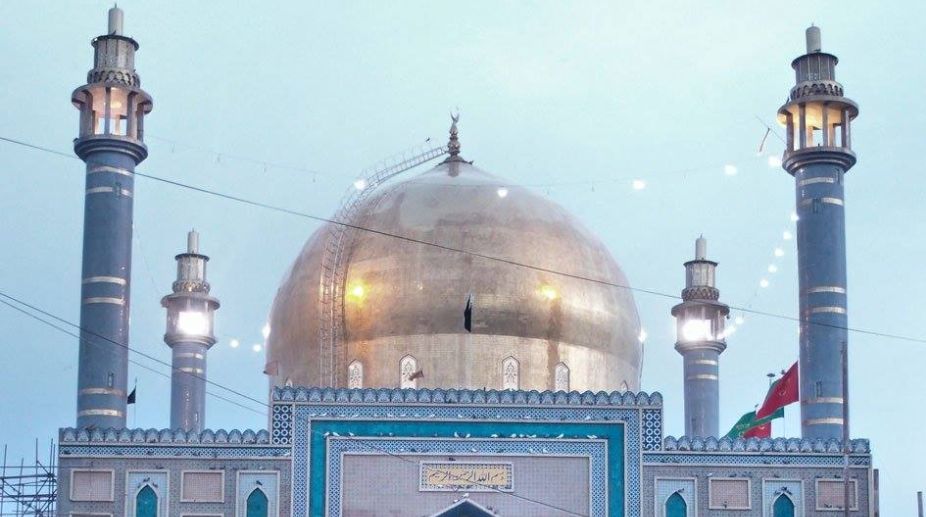
Fundamentalist fury has roiled Pakistan yet again, indeed twice in a span of 72 hours. Three days after the outrage near the Punjab provincial assembly in Lahore, it is the Islamic State of Iraq and Syria that has perpetrated Thursday's butchery at the shrine of the Sufi saint Lal Shahbaz Qalandar in Sehwan, a town in Sindh province.

More accurately, ISIS has buttressed its presence within Pakistan and the conflict within a religion has assumed mortal proportions, pre-eminently the culture of tolerance propagated by the Sufi philosophy. It was an attack by radical fundamentalists on a mystical and generally moderate form of Islam.  Sindh is a long way from Lahore, and not merely in terms of distance; both are far removed from the Af-Pak frontier, the nerve-centre of extremist activity.  Whether it is a Taliban affiliate (as in Lahore) or ISIS,  the butchery in a Sufi shrine ~ killing 70 devotees ~ would suggest that the Caliphate has buttressed its position in Pakistan, thus far relatively unscathed.

And it has buttressed its mortal fundamentalism by carrying out one of  the deadliest attacks in Pakistan, including one on peaceful protesters in the heart of Lahore, a bombing in Quetta that killed two police officers and an explosion in  Peshawar. Small wonder that the Rawalpindi GHQ has  emitted an immediate signal  to the civilian dispensation, with the Army chief, General Qamar Javed Bajwa, calling for  an end to  “restraint”, a pregnant expression given the context  ~  “Each drop of the nation's blood shall be revenged, and revenged immediately. No more restraint for anyone.”  The military's robust response is in stark contrast to the Prime Minister's somewhat emotive allusion to history ~ “The attack on the Sufis is a direct threat to Jinnah's Pakistan, an attack on the progressive and inclusive future of Pakistan.”

Theoretically, Nawaz Sharif may be right; but the narrative has changed dramatically over the past 70 years, almost relegating to the footnotes the philosophy that shaped its foundation.

As yet, mercifully there has been no major surgical strike on the Shias, but the Sunnis of the ISIS variety have targeted a decidedly liberal sect of the religion. The triangular  conflict can turn out to be hideous if the Sunnis of Pakistan ~ under the aegis of ISIS ~ are intent on confronting the Shias and the Sufis. Markedly, there is an indication of retaliation from the military, but not from Pakistan's traditionally dithering civilian administration.

In the midst of the bedlam and butchery in a remote corner of Sindh, the military has been remarkably prompt in identifying the Afghan factor, stressing the point that the “acts of terrorism were being carried out by hostile powers and from sanctuaries in Afghanistan”.  The fundamentalist plot thickens in South Asia.

ISIS vs Sufis

Editorial |

Fundamentalist fury has roiled Pakistan yet again, indeed twice in a span of 72 hours. Three days after the outrage near the Punjab provincial assembly in Lahore, it is the Islamic State of Iraq and Syria that has perpetrated Thursday's butchery at the shrine of the Sufi saint Lal Shahbaz Qalandar in Sehwan, a town in Sindh province.

More accurately, ISIS has buttressed its presence within Pakistan and the conflict within a religion has assumed mortal proportions, pre-eminently the culture of tolerance propagated by the Sufi philosophy. It was an attack by radical fundamentalists on a mystical and generally moderate form of Islam.  Sindh is a long way from Lahore, and not merely in terms of distance; both are far removed from the Af-Pak frontier, the nerve-centre of extremist activity.  Whether it is a Taliban affiliate (as in Lahore) or ISIS,  the butchery in a Sufi shrine ~ killing 70 devotees ~ would suggest that the Caliphate has buttressed its position in Pakistan, thus far relatively unscathed.

And it has buttressed its mortal fundamentalism by carrying out one of  the deadliest attacks in Pakistan, including one on peaceful protesters in the heart of Lahore, a bombing in Quetta that killed two police officers and an explosion in  Peshawar. Small wonder that the Rawalpindi GHQ has  emitted an immediate signal  to the civilian dispensation, with the Army chief, General Qamar Javed Bajwa, calling for  an end to  “restraint”, a pregnant expression given the context  ~  “Each drop of the nation's blood shall be revenged, and revenged immediately. No more restraint for anyone.”  The military's robust response is in stark contrast to the Prime Minister's somewhat emotive allusion to history ~ “The attack on the Sufis is a direct threat to Jinnah's Pakistan, an attack on the progressive and inclusive future of Pakistan.”

Theoretically, Nawaz Sharif may be right; but the narrative has changed dramatically over the past 70 years, almost relegating to the footnotes the philosophy that shaped its foundation.

As yet, mercifully there has been no major surgical strike on the Shias, but the Sunnis of the ISIS variety have targeted a decidedly liberal sect of the religion. The triangular  conflict can turn out to be hideous if the Sunnis of Pakistan ~ under the aegis of ISIS ~ are intent on confronting the Shias and the Sufis. Markedly, there is an indication of retaliation from the military, but not from Pakistan's traditionally dithering civilian administration.

In the midst of the bedlam and butchery in a remote corner of Sindh, the military has been remarkably prompt in identifying the Afghan factor, stressing the point that the “acts of terrorism were being carried out by hostile powers and from sanctuaries in Afghanistan”.  The fundamentalist plot thickens in South Asia.

Not exemplary

Editorial |

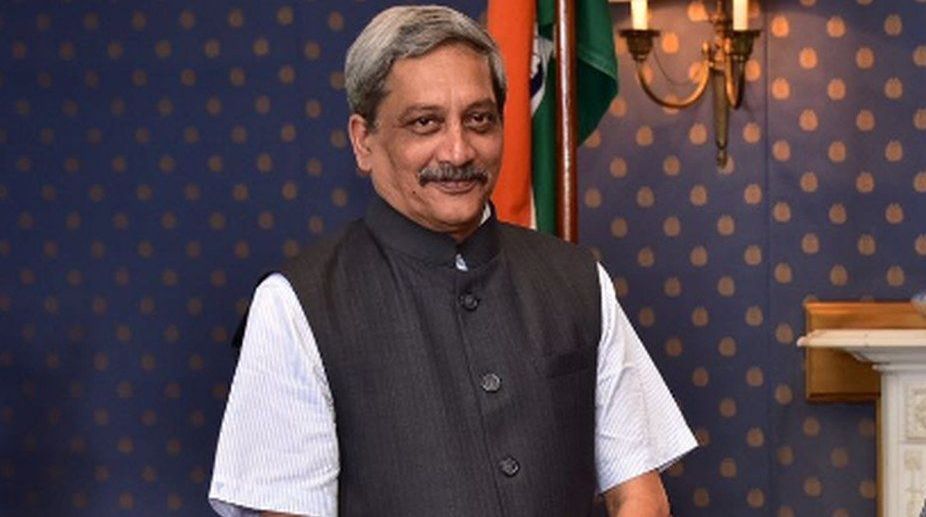
The Defence minister holds a special place in the Indian political firmament. Not only is he one of the “Big Four” in the ministerial council, the raksha mantri is perceived as a representative of the 1.3 million men and women in the armed forces. And consequently is expected to enhance the high behavioural standards which stamp the “uniforms” unique ~ even though adhering to generally accepted norms is not a strong point with the NDA government. At a point in time when even the slightest criticism of the forces is slammed as anti-national, it ought to cause severe embarrassment on Raisina Hill that the Election Commission has taken Manohar Parrikar to task for some of the remarks he made when electioneering in Goa: where he was chief minister before being moved to South Block (and the grapevine suggests he might return there if the verdict on 11 March so dictates). It was not a simple case of a loose cannon firing an electoral barrage, the Commission declined to accept his tendering the standard alibi of his message having got distorted in translation. For a senior minister to be directed to be “more circumspect and careful in future” is indeed a slap on the wrist that will have the faujis wonder if he is well-suited to playing the lead role in the national security effort.

The EC was clearly cognizant of his slot in the scheme of things when it proceeded to observe that “all leaders, especially those who occupy high constitutional positions, are expected to ensure and promote the sanctity of the electoral process. Public utterances by such persons, which even remotely give an indication of condoning the act of accepting bribes in connection with elections are not acceptable”. The order from Nirvachan Sadan also noted that such utterance could amount to encouraging bribery, which apart from being an electoral offence, is also a corrupt practice.

A virtual indictment is what the EC order constitutes, and in some ways it puts the NDA government at large under the scanner. For if the Defence minister is not instructed to mend his ways and function with the sense of responsibility required by the office he holds, the moral authority of the Prime Minister stands diminished. Though it is true that in the prevailing political environment “morality” counts for next to nothing, yet the nation’s chief executive would be ducking his duty if he is perceived as allowing dubious persons a free hand. This is not the only occasion when Parrikar has allowed his tongue to run away with him. But after the rebuke from the Election Commission he must be cautioned against repetition. The forces are owed at least that.