Logo

INLD fails to win ‘water war’, leaders arrested on Punjab border

Shiv Rawal | Ambala |

The much hyped political drama created by Haryana's main Opposition party, the Indian National Lok Dal (INLD) over re-digging of the controversial Sutlej-Yamuna Link (SYL) canal finally ended here on Thursday with arrest of party leaders and workers at Haryana-Punjab border before they could reach the targeted destination
in the neighboring state.

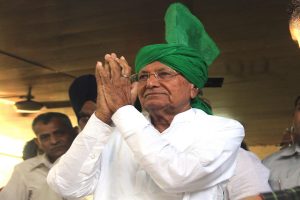
Despite its tall claims on, the party failed to dig up the canal in a bordering village in Punjab as its leaders including leader of Opposition Abhay Singh Chautala and party's state president Ashok Arora along with their supporters were barred here by the Punjab police at Shambhu barrier in Ambala.

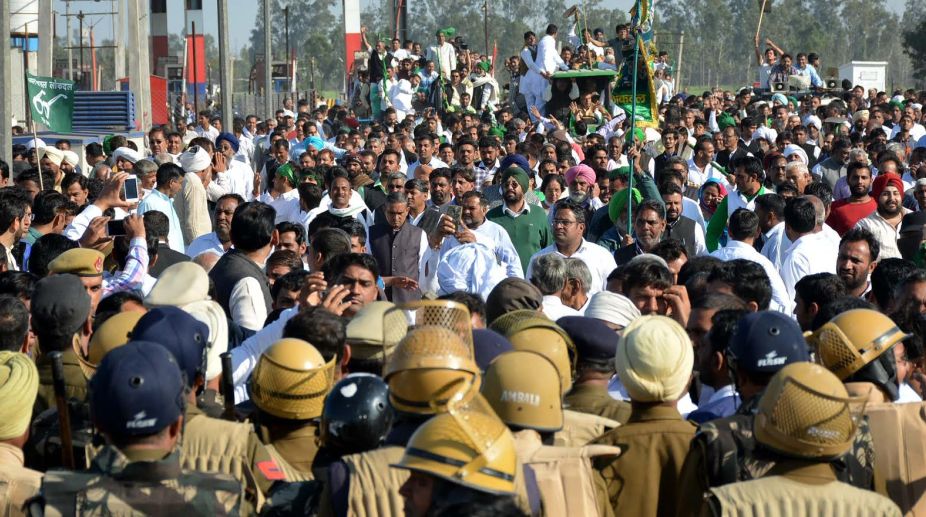
INLD workers from across the state gathered at vegetable market near the Punjab border and held a rally that was addressed by Chautala and other senior party leaders calling upon the party workers to march towards Kapuri village in the neighboring state for digging up the canal.

Over 10,000 INLD workers led by Chautala carrying grub hoes in their hands started marching towards the Punjab border but were stopped by the Haryana police saying as ordered by the Supreme Court's for maintaining the law and order on the issue. The protestors, however, succeeded in breaking Haryana police's three-tier security arrangements and headed towards the Punjab police barricades on river Ghaggar.

Though the INLD brigade failed to breach the Punjab police barricades as the nearly 5000 police personnel were deployed here following the
sabre-rattling by the INLD. Apart from heavy deployment, drone cameras, water cannons and chilly guns were put in to take care of the INLD protestors threatened to
enter the Punjab for digging up the canal at Kapuri village in district Patiala.

After a standstill for nearly an hour between the protestors and the Punjab police, the INLD Leaders and supporters were asked by the Punjab administration leave the spot as Section 144 of the CrPC was imposed there but the INLD men refused to leave the venue, more than 90 INLD leaders including Chautala, Arora along with other sitting and former MLAs and workers arrested by the Punjab police.

Nearly three month ago, the INLD had announced that it would re-dig the controversial canal on February 23 in Punjab's village. While the political parties including the ruling BJP and the Congress had termed it mere a gimmick.

Decades-old contentious issue between the two states again hit the headlines during the previous year when the Supreme Court on November 10, held as unconstitutional the 2004 Punjab Termination of Agreements Act passed by Punjab State Legislative Assembly to terminate the SYL canal water sharing agreement with neighbouring state. The decision led a political storm in both of the states.

INLD fails to win ‘water war’, leaders arrested on Punjab border

Shiv Rawal | Ambala |

The much hyped political drama created by Haryana's main Opposition party, the Indian National Lok Dal (INLD) over re-digging of the controversial Sutlej-Yamuna Link (SYL) canal finally ended here on Thursday with arrest of party leaders and workers at Haryana-Punjab border before they could reach the targeted destination
in the neighboring state.

Despite its tall claims on, the party failed to dig up the canal in a bordering village in Punjab as its leaders including leader of Opposition Abhay Singh Chautala and party's state president Ashok Arora along with their supporters were barred here by the Punjab police at Shambhu barrier in Ambala.

INLD workers from across the state gathered at vegetable market near the Punjab border and held a rally that was addressed by Chautala and other senior party leaders calling upon the party workers to march towards Kapuri village in the neighboring state for digging up the canal.

Over 10,000 INLD workers led by Chautala carrying grub hoes in their hands started marching towards the Punjab border but were stopped by the Haryana police saying as ordered by the Supreme Court's for maintaining the law and order on the issue. The protestors, however, succeeded in breaking Haryana police's three-tier security arrangements and headed towards the Punjab police barricades on river Ghaggar.

Though the INLD brigade failed to breach the Punjab police barricades as the nearly 5000 police personnel were deployed here following the
sabre-rattling by the INLD. Apart from heavy deployment, drone cameras, water cannons and chilly guns were put in to take care of the INLD protestors threatened to
enter the Punjab for digging up the canal at Kapuri village in district Patiala.

After a standstill for nearly an hour between the protestors and the Punjab police, the INLD Leaders and supporters were asked by the Punjab administration leave the spot as Section 144 of the CrPC was imposed there but the INLD men refused to leave the venue, more than 90 INLD leaders including Chautala, Arora along with other sitting and former MLAs and workers arrested by the Punjab police.

Nearly three month ago, the INLD had announced that it would re-dig the controversial canal on February 23 in Punjab's village. While the political parties including the ruling BJP and the Congress had termed it mere a gimmick.

Decades-old contentious issue between the two states again hit the headlines during the previous year when the Supreme Court on November 10, held as unconstitutional the 2004 Punjab Termination of Agreements Act passed by Punjab State Legislative Assembly to terminate the SYL canal water sharing agreement with neighbouring state. The decision led a political storm in both of the states.

Govt taking steps to curb fake notes

Prashant | New Delhi |

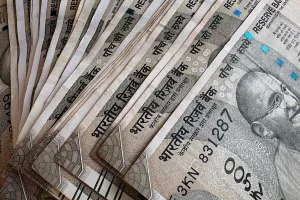
The recent episode of Rs.2,000 fake currency notes dispensed from a State Bank of India ATM in south Delhi has upset the government. Santosh Gangwar, Minister of State for Finance, said on Thursday,

"The government is taking measures to control fake currency generation. Some people are trying to create problems in the country. We will be able to say (who they are) only after investigation."

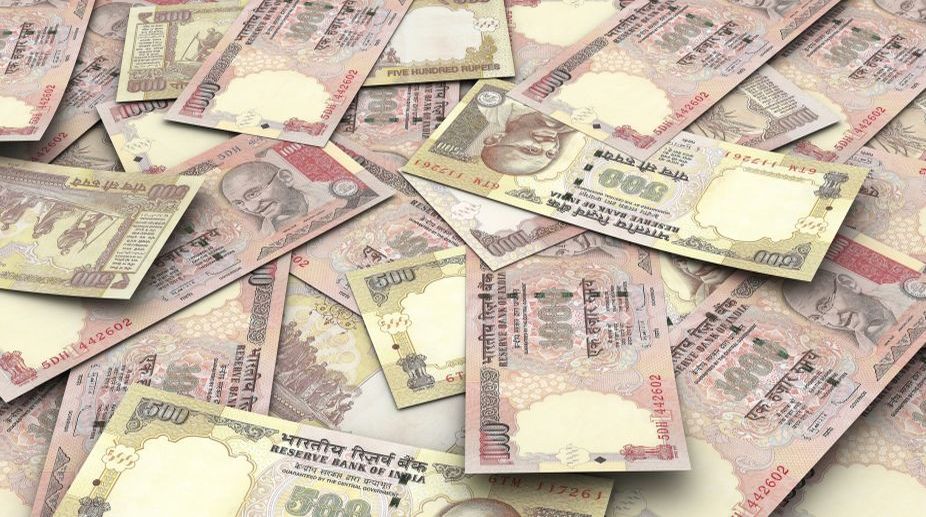
The higher denomination currency note was introduced by the Prime Minister after demonetising the Rs.500 and Rs.1,000 note. Though the government's narrative was to eradicate black money and counterfeit currency from the entire process of demonetisation, experts believe that any currency can be counterfeited after a point of time. "Counterfeiting of currency cannot be stopped, but by increasing security features, the design of a currency can be an impediment to faking it," a senior government official said. 

Market experts believe that the process of remonetisation becomes easier with a higher denomination note but the government will slowly phase out Rs.2,000 currency once the economy is back to normal. 

However, the country's largest public sector bank State Bank of India had stated that "the possibility of fake notes from the bank's ATMs is very remote" and it "suspects involvement of some miscreants with mischievous intent". 

Gangwar said the government is not perturbed by the stray incident of fake 2,000 rupee notes bearing 'Children Bank of India' being dispensed from a SBI ATM in South Delhi's Sangam Vihar. The minister added that the SBI's claim of fake currency being introduced during transportation of bank notes by third parties will be investigated.

SBI in its statement said it has in place "a very robust system for monitoring the quality of notes" at all its currency chests. "All notes received by the bank and to be dispensed by the bank, either through its ATMs or its branches, are processed through the latest state-of-the-art note sorting machines."

SBI is examining the notes in all other ATMs handled by the same custodians of the bank and replenished by the same cash replenishment agency.

Govt taking steps to curb fake notes

Prashant | New Delhi |

The recent episode of Rs.2,000 fake currency notes dispensed from a State Bank of India ATM in south Delhi has upset the government. Santosh Gangwar, Minister of State for Finance, said on Thursday,

"The government is taking measures to control fake currency generation. Some people are trying to create problems in the country. We will be able to say (who they are) only after investigation."

The higher denomination currency note was introduced by the Prime Minister after demonetising the Rs.500 and Rs.1,000 note. Though the government's narrative was to eradicate black money and counterfeit currency from the entire process of demonetisation, experts believe that any currency can be counterfeited after a point of time. "Counterfeiting of currency cannot be stopped, but by increasing security features, the design of a currency can be an impediment to faking it," a senior government official said. 

Market experts believe that the process of remonetisation becomes easier with a higher denomination note but the government will slowly phase out Rs.2,000 currency once the economy is back to normal. 

However, the country's largest public sector bank State Bank of India had stated that "the possibility of fake notes from the bank's ATMs is very remote" and it "suspects involvement of some miscreants with mischievous intent". 

Gangwar said the government is not perturbed by the stray incident of fake 2,000 rupee notes bearing 'Children Bank of India' being dispensed from a SBI ATM in South Delhi's Sangam Vihar. The minister added that the SBI's claim of fake currency being introduced during transportation of bank notes by third parties will be investigated.

SBI in its statement said it has in place "a very robust system for monitoring the quality of notes" at all its currency chests. "All notes received by the bank and to be dispensed by the bank, either through its ATMs or its branches, are processed through the latest state-of-the-art note sorting machines."

SBI is examining the notes in all other ATMs handled by the same custodians of the bank and replenished by the same cash replenishment agency.

ABVP endorses nationalism, NSUI demands peace in DU

IANS | New Delhi |

A day after fierce clashes broke out between two student groups in Delhi University, on Thursday the ABVP raised nationalism slogans and vowed that it would not allow "anti-nationals" into the varsity, while the NSUI held a peace march and condemned the violence in Ramjas College.

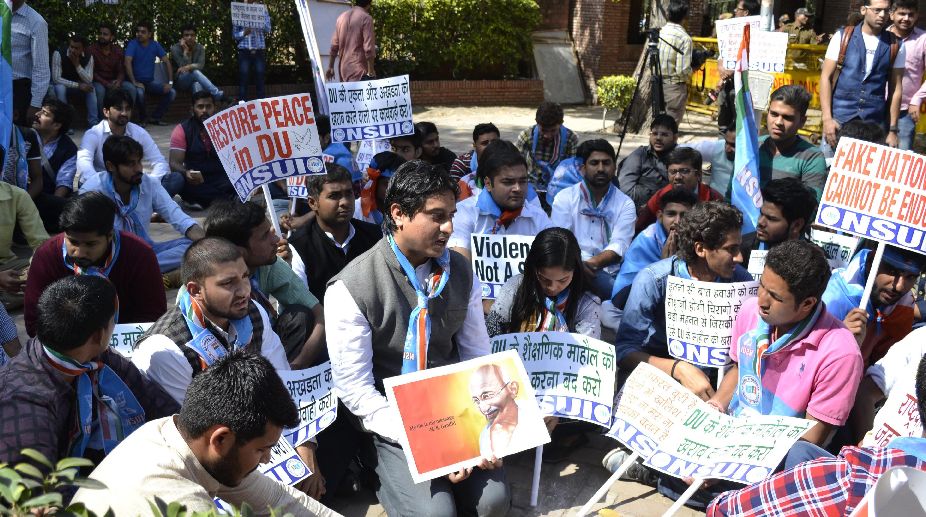
The National Students' Union of India (NSUI) held a peace march from Arts Faculty to Maurice Nagar Police Station in an attempt to restore peace and safety in the campus.

The peace march came in the wake of clashes between the RSS-affiliated Akhil Bharatiya Vidyarthi Parishad (ABVP) and the left-wing All India Students' Association (AISA) outside Ramjas College on Wednesday, after the ABVP forced the suspension of an event to be addressed by JNU student Umar Khalid on February 21.

Khalid was jailed last year for allegedly shouting anti-national slogans.

"AISA and other parties have created turmoil in the campus. They have been raising slogans about the independence of Kashmir. Our country is already independent. What sort of a freedom are they demanding?" DUSU President Amit Tanwar of the ABVP questioned.

"They crossed all limits by disparaging Bharat Mata in JNU last year. There have been slogans to divide the country into pieces. They've ruined the picture of JNU and are now targeting Delhi University. We will not let that happen," Tanwar told IANS. 

He justified the action of forcefully suspending the Ramjas College event, saying "anti-nationals cannot break into the university". 

"Sedition charges have been filed against Umar Khalid. We cannot let an anti-national enter the campus." 

"Next, we would ask the government to take action against the communist teachers in the university," he said. 

The Congress student wing NSUI, in its peace march, condemned the violence in Ramjas College. 

"We are saddened to see the unfortunate degradation of discourse in DU. What happened yesterday was shameful. Women were harassed during the clashes," NSUI's National President Amrita Dhawan told IANS. 

"We believe in one's right to dissent and peaceful protest, but we don't endorse the atmosphere of violence that the ABVP and Left organisations has turned the campus into," she said.

"Since 2014 when BJP came into power, Delhi Police has always worked in their direction. Their student wing is endorsing fake nationalism even when their own party workers have been known to have had links with the ISI," Dhawan said.

She added, "We will not allow ABVP's agenda in the campus."

According to her party, ABVP has been "continuing thuggery with impunity" across universities in the country, curbing liberty of thoughts, ideas and discussions in academia ever since the Modi government came to power in 2014. 

ABVP endorses nationalism, NSUI demands peace in DU

IANS | New Delhi |

A day after fierce clashes broke out between two student groups in Delhi University, on Thursday the ABVP raised nationalism slogans and vowed that it would not allow "anti-nationals" into the varsity, while the NSUI held a peace march and condemned the violence in Ramjas College.

The National Students' Union of India (NSUI) held a peace march from Arts Faculty to Maurice Nagar Police Station in an attempt to restore peace and safety in the campus.

The peace march came in the wake of clashes between the RSS-affiliated Akhil Bharatiya Vidyarthi Parishad (ABVP) and the left-wing All India Students' Association (AISA) outside Ramjas College on Wednesday, after the ABVP forced the suspension of an event to be addressed by JNU student Umar Khalid on February 21.

Khalid was jailed last year for allegedly shouting anti-national slogans.

"AISA and other parties have created turmoil in the campus. They have been raising slogans about the independence of Kashmir. Our country is already independent. What sort of a freedom are they demanding?" DUSU President Amit Tanwar of the ABVP questioned.

"They crossed all limits by disparaging Bharat Mata in JNU last year. There have been slogans to divide the country into pieces. They've ruined the picture of JNU and are now targeting Delhi University. We will not let that happen," Tanwar told IANS. 

He justified the action of forcefully suspending the Ramjas College event, saying "anti-nationals cannot break into the university". 

"Sedition charges have been filed against Umar Khalid. We cannot let an anti-national enter the campus." 

"Next, we would ask the government to take action against the communist teachers in the university," he said. 

The Congress student wing NSUI, in its peace march, condemned the violence in Ramjas College. 

"We are saddened to see the unfortunate degradation of discourse in DU. What happened yesterday was shameful. Women were harassed during the clashes," NSUI's National President Amrita Dhawan told IANS. 

"We believe in one's right to dissent and peaceful protest, but we don't endorse the atmosphere of violence that the ABVP and Left organisations has turned the campus into," she said.

"Since 2014 when BJP came into power, Delhi Police has always worked in their direction. Their student wing is endorsing fake nationalism even when their own party workers have been known to have had links with the ISI," Dhawan said.

She added, "We will not allow ABVP's agenda in the campus."

According to her party, ABVP has been "continuing thuggery with impunity" across universities in the country, curbing liberty of thoughts, ideas and discussions in academia ever since the Modi government came to power in 2014. 

‘SYL completion could trigger serious law and order problem’

Statesman News Service | Chandigarh |

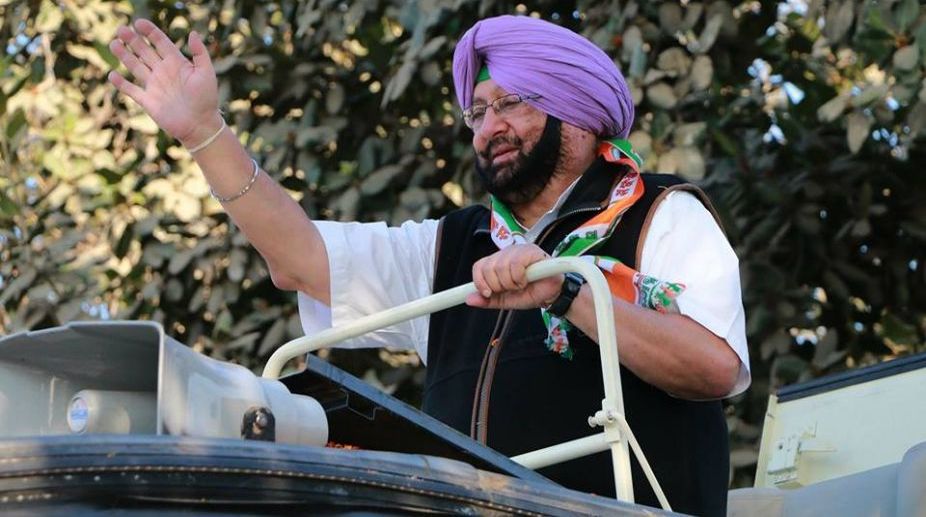
Punjab Congress president Captain Amarinder Singh on Thursday warned of a serious law and order problem in the old Naxalite and Khalistani belt of southern Punjab if the Satluj Yamuna Link (SYL) canal construction is completed without taking the ground realities into account.

He said an estimated 10 lakh acres of land in southern Punjab are expected to go dry as a result of SYL, the 6 lakh odd people of the region, which has a history of militancy and extremism, would be forced to resort to violence to feed their children. The Congress leader aid Supreme Court's directive on the SYL completion before going into the question of availability of water amounted to putting the cart before the horse.

Pointing to the huge infrastructural cost involved in the canal construction, which would all come to naught if there was no water found subsequently to share with the neighbouring states, Captain Amarinder urged the Apex court to take cognizance of the situation on the ground in terms of water availability and quantum in Punjab. It was imperative first to make an independent and fresh assessment to check if there was water available in Punjab, and how much, if any, could be spared for sharing with other states, said Captain Amarinder.

If the court, in its wisdom, later discovers that there is no water then the money invested in SYL construction would go down the drain, he pointed out, adding that the cash crunched state of Punjab could ill afford the same.

Captain Amarinder’s comments came even as tensions between Punjab and Haryana touch a high amid the Indian National Lok Dal’s attempts to force entry into Punjab to start digging for SYL.

Reacting to Abhay Chautala's threat not to allow any Punjab leader to enter Haryana, Captain Amarinder termed it totally irresponsible and a desperate bid to revive INLD following Thursday's flop show. No Indian citizen can be prevented from going to any part of the country, he added.

‘SYL completion could trigger serious law and order problem’

Statesman News Service | Chandigarh |

Punjab Congress president Captain Amarinder Singh on Thursday warned of a serious law and order problem in the old Naxalite and Khalistani belt of southern Punjab if the Satluj Yamuna Link (SYL) canal construction is completed without taking the ground realities into account.

He said an estimated 10 lakh acres of land in southern Punjab are expected to go dry as a result of SYL, the 6 lakh odd people of the region, which has a history of militancy and extremism, would be forced to resort to violence to feed their children. The Congress leader aid Supreme Court's directive on the SYL completion before going into the question of availability of water amounted to putting the cart before the horse.

Pointing to the huge infrastructural cost involved in the canal construction, which would all come to naught if there was no water found subsequently to share with the neighbouring states, Captain Amarinder urged the Apex court to take cognizance of the situation on the ground in terms of water availability and quantum in Punjab. It was imperative first to make an independent and fresh assessment to check if there was water available in Punjab, and how much, if any, could be spared for sharing with other states, said Captain Amarinder.

If the court, in its wisdom, later discovers that there is no water then the money invested in SYL construction would go down the drain, he pointed out, adding that the cash crunched state of Punjab could ill afford the same.

Captain Amarinder’s comments came even as tensions between Punjab and Haryana touch a high amid the Indian National Lok Dal’s attempts to force entry into Punjab to start digging for SYL.

Reacting to Abhay Chautala's threat not to allow any Punjab leader to enter Haryana, Captain Amarinder termed it totally irresponsible and a desperate bid to revive INLD following Thursday's flop show. No Indian citizen can be prevented from going to any part of the country, he added.

Controversy hit Uttarakhand Congress chief Kishore Upadhyay 

Statesman News Service | Dehradun |

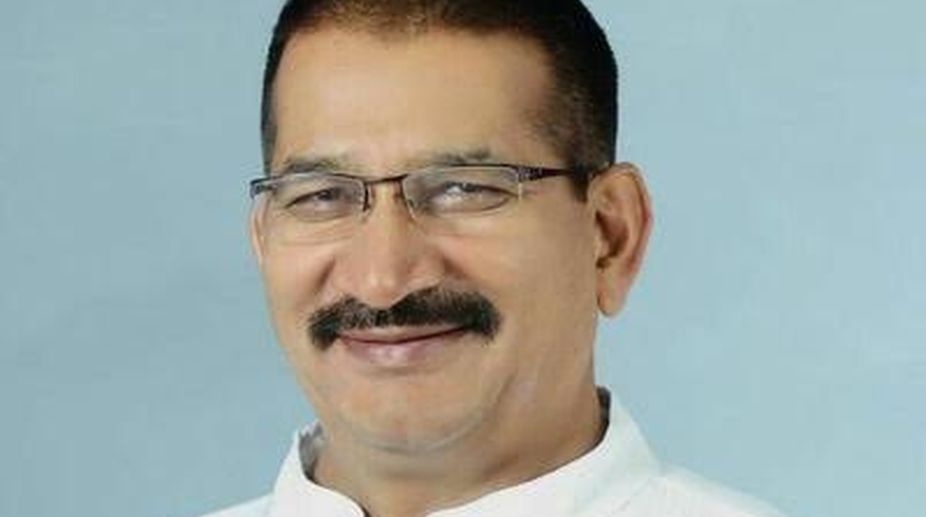
Uttarakhand Congress president Kishore Upadhyay is in the centre of a controversy. Dinesh Dhanai, a cabinet minister of Harish Rawat government and who contested as independent candidate from Tehri Assembly seat, alleged that Upadhyay asked his party workers to support BJP candidate from his seat.

The allegation of Congress working for creating Modi wave in Tehri has badly rattled the Uttarakhand Congress chief. Kishore Upadhyay had to issue a clarification on Thursday claiming, “Don’t work for BJP win, I live-die for Congress.”

Dinesh Dhanai is considered close to Uttarakhand Chief Minister Harish Rawat. The whole controversy has hit the state Congress chief in some way. That too at a time when Upadhyay is not confident of winning the Sehaspur Assembly seat- from where he contested as official Congress candidate and faces stiff competition from a BJP and a Congress rebel . 

The action of the Uttarakhand Congress also indicates this as so far over four dozen party workers have been expelled so far for their involvement in anti-party activity in Sehaspur seat. No such action has been taken in any other Assembly constituencies in Uttarakhand- where other contesting candidates had faced similar situations.

Dinesh Dhanai alleged, “Kishore Upadhyay asked Congress workers to work for ensuring win for BJP candidate win in Tehri. The Congress high command should conduct an inquiry in the episode.”

Controversy hit Uttarakhand Congress chief Kishore Upadhyay 

Statesman News Service | Dehradun |

Uttarakhand Congress president Kishore Upadhyay is in the centre of a controversy. Dinesh Dhanai, a cabinet minister of Harish Rawat government and who contested as independent candidate from Tehri Assembly seat, alleged that Upadhyay asked his party workers to support BJP candidate from his seat.

The allegation of Congress working for creating Modi wave in Tehri has badly rattled the Uttarakhand Congress chief. Kishore Upadhyay had to issue a clarification on Thursday claiming, “Don’t work for BJP win, I live-die for Congress.”

Dinesh Dhanai is considered close to Uttarakhand Chief Minister Harish Rawat. The whole controversy has hit the state Congress chief in some way. That too at a time when Upadhyay is not confident of winning the Sehaspur Assembly seat- from where he contested as official Congress candidate and faces stiff competition from a BJP and a Congress rebel . 

The action of the Uttarakhand Congress also indicates this as so far over four dozen party workers have been expelled so far for their involvement in anti-party activity in Sehaspur seat. No such action has been taken in any other Assembly constituencies in Uttarakhand- where other contesting candidates had faced similar situations.

Dinesh Dhanai alleged, “Kishore Upadhyay asked Congress workers to work for ensuring win for BJP candidate win in Tehri. The Congress high command should conduct an inquiry in the episode.”

Registers to be maintained under labour laws reduced from 56 to 5

Razdan | New Delhi |

The government has simplified the maintenance of labour registers for about 5.85 crore establishments in agriculture and non-agriculture sectors. The exercise has brought down the number of the registers to be maintained from 56 to just five.

These registers carry details of employees, their salaries, loans and recoveries, and attendance. A review exercise by the Labour and Employment Ministry has reduced the number of registers to be maintained by the establishments from 56 to only five by doing away with overlapping and redundant fields. This will help these
establishments to save cost and efforts and ensure better compliance of labour laws.

Various Central Labour Acts require maintenance of registers depending upon the threshold of the number of employees with the establishments in agriculture and non-agriculture sectors. As per the Sixth Economic Census of Central Statistical Office conducted during 2013-2014, India has about 5.85 crore establishments in agricultural and non-agricultural sectors combined.

Out of this, 4.54 crore establishments are in non-agricultural sector. While reviewing the requirement of filing various returns and registers and forms provided under the nine Central Acts, there were several overlapping and redundant fields that could be rationalised.

An intention notification was issued on 4 November, 2016, for reducing the number of registers and data fields and the same was widely circulated to concerned Ministries  and Departments, and other stakeholders. After this, all previous registers envisaged under the various Acts and Rules have been omitted and replaced with only five common Registers. Such an exercise has reduced number of data fields in the five registers to only 144 from the earlier 933 fields in 56
registers.

The Ministry of Labour & Employment has also simultaneously undertaken to develop a  software for these five common Registers. After development of the software, the same will be put on the Shram Suvidha Portal of the Ministry for free download with an aim to facilitate maintenance of those registers in a digitised form.

Registers to be maintained under labour laws reduced from 56 to 5

Razdan | New Delhi |

The government has simplified the maintenance of labour registers for about 5.85 crore establishments in agriculture and non-agriculture sectors. The exercise has brought down the number of the registers to be maintained from 56 to just five.

These registers carry details of employees, their salaries, loans and recoveries, and attendance. A review exercise by the Labour and Employment Ministry has reduced the number of registers to be maintained by the establishments from 56 to only five by doing away with overlapping and redundant fields. This will help these
establishments to save cost and efforts and ensure better compliance of labour laws.

Various Central Labour Acts require maintenance of registers depending upon the threshold of the number of employees with the establishments in agriculture and non-agriculture sectors. As per the Sixth Economic Census of Central Statistical Office conducted during 2013-2014, India has about 5.85 crore establishments in agricultural and non-agricultural sectors combined.

Out of this, 4.54 crore establishments are in non-agricultural sector. While reviewing the requirement of filing various returns and registers and forms provided under the nine Central Acts, there were several overlapping and redundant fields that could be rationalised.

An intention notification was issued on 4 November, 2016, for reducing the number of registers and data fields and the same was widely circulated to concerned Ministries  and Departments, and other stakeholders. After this, all previous registers envisaged under the various Acts and Rules have been omitted and replaced with only five common Registers. Such an exercise has reduced number of data fields in the five registers to only 144 from the earlier 933 fields in 56
registers.

The Ministry of Labour & Employment has also simultaneously undertaken to develop a  software for these five common Registers. After development of the software, the same will be put on the Shram Suvidha Portal of the Ministry for free download with an aim to facilitate maintenance of those registers in a digitised form.

Centre nod for SJVN’s 900 MW Arun-III Hydro Electric Project in Nepal

Statesman News Service | Shimla |

The Cabinet Committee on Economic Affairs on Tuesday approved the investment proposal for 900 MW Arun-III Hydro Electric Project in Nepal, Satluj Jal Vidyut Nigam (SJVN) Chairman and Managing Director R N Mishra said.

The project is located in Sankhuwasabha District of Nepal on the river Arun and is a run-of-the-river project.

Misra said a 70 meter high gravity dam will be constructed from which water will be diverted into 11.74 Kilo Meter Head Race Tunnel (HRT). “The power house will consist of 4 Vertical Francis type generating units of 225 MW each amounting to 900 MW of electricity.  In a 90 percent dependable year, the power station will generate 4018 Million Units of electricity,” he said.

He said the project will be executed through SJVN Arun-III Power Development Company (SAPDC) which is a wholly owned subsidiary of SJVN.

The company has already been registered in Nepal as per Nepalese Companies Act on April 25, 2013. The estimated cost of project is Rs 5723.72 crore at May 2015 price levels, Misra said, adding completion Period of the project shall be 60 months from the date of financial closure which is planned for September 2017.

It is worthwhile to mention here that SJVN bagged the project through International Competitive Bidding and Memorandum of Understanding (MOU) was signed with the Govt. of Nepal for the execution of 900 MW Arun-III HE Project on BOOT basis.  The project will generate employment for around 3000 persons in the construction phase.

 The Project Development Agreement (PDA) signed on November 25, 2014 which provides 21.9 percent free power to Nepal for the entire concession period of 25 years. The surplus power from the project shall be exported from Dhalkebar in Nepal to Muzaffarpur in India.

The project will provide surplus power to India strengthening power availability in the country and will also strengthening economic linkages with Nepal.

Centre nod for SJVN’s 900 MW Arun-III Hydro Electric Project in Nepal

Statesman News Service | Shimla |

The Cabinet Committee on Economic Affairs on Tuesday approved the investment proposal for 900 MW Arun-III Hydro Electric Project in Nepal, Satluj Jal Vidyut Nigam (SJVN) Chairman and Managing Director R N Mishra said.

The project is located in Sankhuwasabha District of Nepal on the river Arun and is a run-of-the-river project.

Misra said a 70 meter high gravity dam will be constructed from which water will be diverted into 11.74 Kilo Meter Head Race Tunnel (HRT). “The power house will consist of 4 Vertical Francis type generating units of 225 MW each amounting to 900 MW of electricity.  In a 90 percent dependable year, the power station will generate 4018 Million Units of electricity,” he said.

He said the project will be executed through SJVN Arun-III Power Development Company (SAPDC) which is a wholly owned subsidiary of SJVN.

The company has already been registered in Nepal as per Nepalese Companies Act on April 25, 2013. The estimated cost of project is Rs 5723.72 crore at May 2015 price levels, Misra said, adding completion Period of the project shall be 60 months from the date of financial closure which is planned for September 2017.

It is worthwhile to mention here that SJVN bagged the project through International Competitive Bidding and Memorandum of Understanding (MOU) was signed with the Govt. of Nepal for the execution of 900 MW Arun-III HE Project on BOOT basis.  The project will generate employment for around 3000 persons in the construction phase.

 The Project Development Agreement (PDA) signed on November 25, 2014 which provides 21.9 percent free power to Nepal for the entire concession period of 25 years. The surplus power from the project shall be exported from Dhalkebar in Nepal to Muzaffarpur in India.

The project will provide surplus power to India strengthening power availability in the country and will also strengthening economic linkages with Nepal.

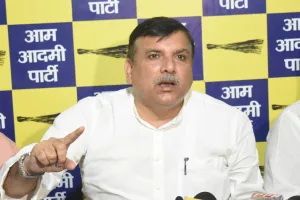
SAD, INLD blowing SYL issue to create problem: AAP

Ranjeet | Chandigarh |

With Haryana's Indian National Lok Dal (INLD) on Thursday, taking out the march towards Punjab for re-digging the Satluj Yamuna Link (SYL) canal, the Aam Aadmi Party (AAP) alleged the Shiromani Akali Dal (SAD) and INLD are blowing the issue of SYL out of proportion to create law and order problem for political motives.
Cautioning the people of Punjab and Haryana against dangerous designs of SAD and INLD, AAP leader Bhagwant Mann said the INLD kept quite on SYL canal for ten years when their alley SAD was ruling in Punjab. He said that when it was imminent that SAD was going out of power, INLD suddenly decided to dig the SYL canal. He told SAD and INLD to stop gimmickry and not to create a situation for bloodshed.

Mann said SAD behavior was like a defeated army, which is laying land mines before retracting from the battle field. He said that SAD had supported INLD in the 2014 assembly elections in Haryana and the friendship between Chautala and Badal families was not a secret. He said that by raking up the SYL issue these parties were fooling people of Punjab and Haryana.  He said that they were raising the canal issue at a time when the Supreme Court is hearing the case and an atmosphere of undesired tension was being created at the Punjab and Haryana border. He appealed to people of both the states not to be misled by motivated actions of SAD and INLD. 

AAP leader said that Devi Lal had given 18 acres of prime land to Badal family in Gurgaon for Orbit resorts in lieu of compromising Punjab’s interest to Haryana. He said that when the Badal family was in rule for the last ten years, they never petitioned Supreme Court for Punjab’s right over river waters and put up a weak case in defense to Haryana government’s petition against Punjab. 

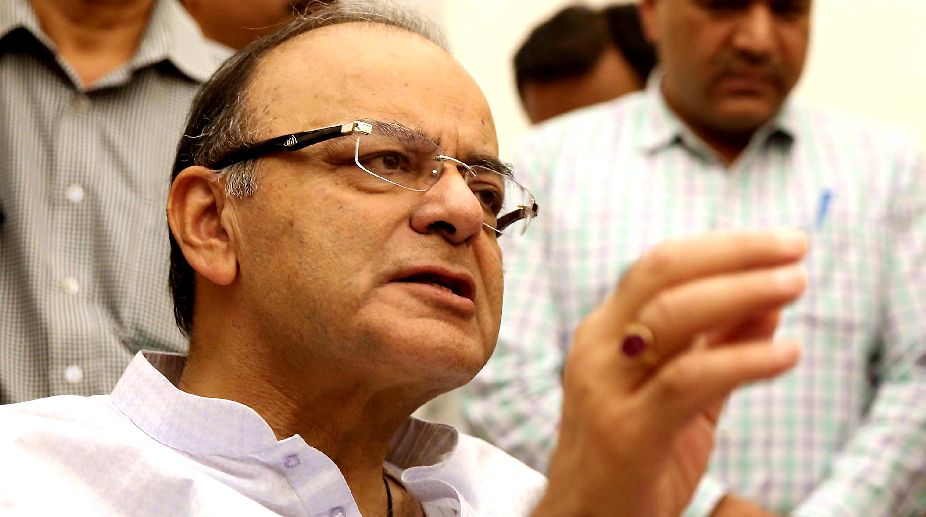
Congress’ stand on demonetisation costing it dearly: Jaitley

SNS | New Delhi |

Following Congress’ decimation in the Maharashtra civic polls, Union Finance Minister Arun Jaitley on Thursday said Congress was paying for its “stand on demonetisation” and that the party has “lost” its poor electorate.

“Congress party's stand on demonetisation of high value currency notes is costing it dearly. Poor have overwhelmingly supported demonetization. Congress has lost its traditional constituency of poor electorate to the BJP,” Jaitley said.
"Congress has lost its image as a responsible political organisation; from a natural party of governance, it has moved to the fringe," he added.

Reacting to Bharatiya Janata Party (BJP) registering its best ever showing in the Maharashtra civic polls, Jaitley said: "Results of civic polls show BJP is capable of winning major states on its own… It's now a pan-India party spreading roots in east and south."

BJP made massive gains in BrihanMumbai Municipal Corporation (BMC), winning 81 of the total 227 seats, up from the 31 seats it bagged in 2012.

The Shiv Sena finished on top of a hung BMC even as the BJP said it could take control of India's richest civic body with the backing of independents.

However, it was the Congress that was left decimated winning just 31 seats. An embarrassed state unit chief, Sanjay Nirupam accepted moral responsibility and submitted his resignation to the party high command.
 

AAP approaches rights panel over BJP’s ‘atrocities’ on farmers, tribals

IANS | New Delhi |

The AAP on Thursday accused the BJP governments in Gujarat and Chhattisgarh of "committing atrocities" on farmers and tribals on the orders of party chief Amit Shah, and approached the NHRC over the matter.

Talking to reporters here, Delhi Labour Minister Gopal Rai said on the one hand farmers in Gujarat were being beaten up by the police for demanding water for irrigation, while on the other tribals in Chhattisgarh were facing atrocities at the hands of the administration.

Accompanied by representatives from Gujarat and Chhattisgarh, Rai filed a complaint with the National Human Rights Commission (NHRC) on Thursday afternoon.

The Aam Aadmi Party (AAP) leader said that farmers in 32 villages near Sanand city (Gujarat) had no water for drinking and irrigation whereas the industries in the area were getting adequate supply of water.

"On February 14, thousands of farmers set out to meet Chief Minister Vijay Rupani with their demands but they were surrounded by the police and beaten up badly. The police even entered the village and beat up women and children," Rai said.

Rai alleged the police action was carried out on the directions of BJP President Amit Shah.

He added that similar atrocities were being meted out to the tribals in Chhattisgarh's Bastar region on Shah's orders.

"In Uttar Pradesh, the Bharatiya Janata Party-led central government is talking about farmer welfare. At the same time, it is brutally suppressing farmers and tribals in Gujarat and Chhattisgarh," Rai said.