
Logo

Boosting employability skills

Dipanjan Sujit Roy |

Healthcare is among the fastest growing sectors of Indian economy today. It comprises hospitals, medical devices, clinical trials, outsourcing, telemedicine, medical tourism, health insurance and equipment. The factors that have contributed to the growth include government policies, tax benefits, health awareness, rising incomes, lifestyle diseases, medical tourism, and increasing access to insurance.

According to the Indian Brand Equity Foundation, a trust set up by the commerce department, the overall healthcare market is worth around $ 100 billion and is expected to grow to $ 280 billion by 2020, a compound annual growth rate of 22.9 per cent.

Similarly, Indian medical tourism is expected to reach $ 6 billion by 2018, and the healthcare information technology market is estimated to grow 1.5 times by 2020, from the current $ 1 billion.

One of the inferences that can be drawn from the data mentioned is that this industry promises to give a big boost to employment opportunities in the coming years. And one of the important areas where these jobs are going to be created is healthcare management.

Several business houses have made big investments in this sector, and made it absolutely necessary for the healthcare delivery system to function in a professional, organised, and efficient manner. There is an urgent need for not only trained doctors and nurses, but also qualified healthcare and hospital managers to handle these challenges.

Besides operational and financial necessities, efficient management is also required to save more lives. Whether it is maintenance of general hygiene or biomedical waste, optimal utilisation of equipment, availability of life saving drugs and essential materials, efficient functioning of OPDs, emergency wards and operation theatres various measures help in saving lives besides, of course, availability of good doctors.

In fact, the role of hospital administration has undergone a major change over the past decade or so. Most modern hospitals and healthcare establishments today need managers equipped with multi-disciplinary skills such as hospitality management, understanding of medico-legal litigation, data management, environment conservation, human resource development, quality and risk management, marketing and product diversification and logistic emergency management.

Growth in science and technology and the increasing use of medical apps have made it necessary for healthcare managers to have considerable understanding of information technology as well. And in a more general way, a hospital manager is also required to act as an intermediary between clinical staff, departmental heads, and governing bodies to ensure overall smooth functioning of the organisation.

As far as job opportunities are concerned, hospital management professionals are required not only in hospitals and clinics, but also in healthcare NGOs, hospital consultancy companies, health insurance firms, and IT industry involved in developing software for hospitals and healthcare institutions.They can work as hospital superintendents, heads of departments, deans, directors and chief executive officers.

This is a profitable career option because, besides getting lucrative remuneration, it helps you to achieve the goal of service to mankind.

Many students nowadays are highly confused with what to do after graduation. Few lucky ones get a job after graduation, but majority have to get a post graduate degree to have a decent job. Healthcare management is one such field that has brilliant prospects in job environment. Currently the demand outweighs the supply and this is likely to be in the coming decade. First of the hirers are the traditional hospitals of various magnitude and size, then there are health programmes like national health mission, control programmes, etc.

The other opportunities are IT firms like Dell, ZS Associates and consulting agencies like Accenture, PwC, Delloite that hire such professionals. NGO working in health sector is another favoured destination. In fact, professionals have the luxury to choose from government to high level private players in India and abroad. In case of fresh graduates without any work experience, the industry would hire them as middle to upper middle level managers in hospitals or health programmes. But if one has some years of experience, they could start up higher enough and reach the zenith in a few years time.

Many healthcare management professionals do not wish to join any industry but start a venture of their own. Given the rigors of healthcare management trainings and practicals, this is emerging as one of the new and interesting option. It could be hospitals, consulting firms, management agencies or even healthcare IT firms.

However, there is catch in all of these. This is a specialised field and need professionals to impart the appropriate knowledge and skills. Not all the institutes and academies have the required capabilities to provide curriculum and training to create job ready candidates. One should select the right career with a couple of things in mind, the foremost being interest in that field. As the old saying goes, if you are doing what interests you, sky is the limit.

The writer is director, IIHMR, Delhi.
Running mates of the powerful

FS Aijazuddin |

During the presidency of George HW Bush, his Secret Service detail was reputedly under orders that if anything happened to him, they should immediately shoot his vice president Dan Quayle — to prevent him becoming president. In the present US administration, the orders are: if anything happens to Vice President Mike Pence, first shoot President Donald Trump.

The selection of a US vice president is always a tricky business. Every president hopes to find a person who can complement, not supplant him. Invariably, the choice falls on someone with more experience than ambition, on a man who can be trusted to remain a patient Prince of Wales than a restless heir apparent in waiting.

Some US presidents suffered the same disease that the Guelph Georges did: they hated their potential successors. President Dwight Eisenhower disliked his vice president Richard Nixon, refusing on one occasion to defend him during a corruption investigation. Then Nixon endured being spat upon by angry Venezuelans during a tour to their country in 1958. John F. Kennedy saw his VP Lyndon B. Johnson as a useful Mr Fix-it Southerner rather than his anointed torch-bearer. Nixon, when finally president, in the few hours that he did sleep never dreamed that his VP Gerald Ford would succeed him.

Dan Quayle reached the highest level of his incompetence when he became Bush senior’s VP. The White House must have quaked when Quayle pronounced: “I have made good judgements in the past. I have made good judgements in the future,” or misspelt before an elementary class the vegetable as ‘potatoe’.

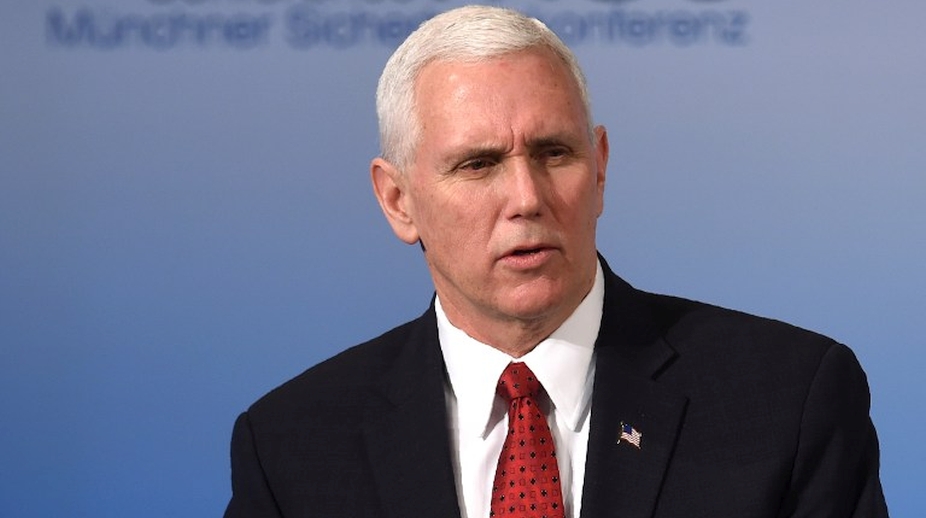
Today, Trump’s White House must be watching with apprehension whenever his Vice President Mike Pence opens his mouth. Pence, like Quayle, is from Indiana, but there the similarity ends. Anyone, though, who saw VP Mike Pence at his press conference with Nato Secretary General Jens Stoltenberg in Brussels this week realised that while Trump may well be a Svengali, Pence was certainly not his Trilby.

Pence articulated US foreign policy regarding shared financing of Nato with consummate diplomacy and precision. Within a few sentences, he restored the confidence of the Europeans in US’s leadership of the English-speaking world. And with a snake-oil salesman’s sleight of tongue, he explained away the inconsistencies between his president’s indefensible pronouncements and US’s more enduring global commitments and interests. At a stroke, he demonstrated why a good vice president can be more precious than a bad president. VP Mike Pence is not a mouthpiece VP: in time he may well reveal himself as the Svengali behind Svengali.
The US experience with VPs may explain why Pakistani leaders are loath to nominate deputies. Where others look for running mates, they prefer accomplices. Ayub Khan as a former chief of army staff-turned-elected president did not choose Yahya Khan as his successor. He chose the Pakistan Army whose head happened to be Gen Yahya Khan. Zulfikar Ali Bhutto saw his own successor in Benazir and, after her, Bhutto-ism. Ziaul Haq anointed Ghulam Ishaq Khan, the man who had midwifed him into power. Asif Zardari and Mian Nawaz Sharif share a disease known as congenital myopia: they cannot see a successor outside their family circle.
Mr Sharif must envy Zardari’s Houdini-like skills in being able to escape with such oily dexterity from every trap. Ironically, while Zardari and Gen Musharraf enjoy their retirement abroad, Prime Minister Nawaz Sharif is finding his retirement home in Park Lane in jeopardy. Like some modern Laocoön, he finds himself and his two sons entangled in the suffocating coils of the serpentine judicial system.

Neither he nor his protagonist Imran Khan had expected the delivery of a judicial verdict on Panamagate to be such prolonged labour. The public is tired, the press is tired, court functionaries are tired, my lordships must be tired. Only the legal counsel are not. They remain indefatigable in their pursuit of the elusive white stag of truth.

Now that civil courts have been supplemented by military courts, is it time to practise reverse osmosis, to let military jargon seep into judicial parlance? If so, shouldn’t the concept of surgical verdicts become a feature of the judicial process?

The new Chief of Army Staff Gen Qamar Bajwa, in making punitive strikes against terrorist bases in Afghanistan and within Pakistan, has demonstrated that while he may be Nawaz Sharif’s choice, he is his own COAS, and that even Punjab’s administration can no longer enjoy a fraternal exemption.

When Gen Bajwa took over, he said that terrorism, not India, was the prime enemy. Today, he uses his double-barrelled guns to fire in two directions — westwards against Afghanistan and simultaneously eastwards against its behind-the-curtain Svengali.

Meanwhile, the Pakistani public, to its cost, has learned a new adage: power corrupts, and corruption in power all too often leads to immunity.

Dawn/ANN

Running mates of the powerful

FS Aijazuddin |

During the presidency of George HW Bush, his Secret Service detail was reputedly under orders that if anything happened to him, they should immediately shoot his vice president Dan Quayle — to prevent him becoming president. In the present US administration, the orders are: if anything happens to Vice President Mike Pence, first shoot President Donald Trump.

The selection of a US vice president is always a tricky business. Every president hopes to find a person who can complement, not supplant him. Invariably, the choice falls on someone with more experience than ambition, on a man who can be trusted to remain a patient Prince of Wales than a restless heir apparent in waiting.

Some US presidents suffered the same disease that the Guelph Georges did: they hated their potential successors. President Dwight Eisenhower disliked his vice president Richard Nixon, refusing on one occasion to defend him during a corruption investigation. Then Nixon endured being spat upon by angry Venezuelans during a tour to their country in 1958. John F. Kennedy saw his VP Lyndon B. Johnson as a useful Mr Fix-it Southerner rather than his anointed torch-bearer. Nixon, when finally president, in the few hours that he did sleep never dreamed that his VP Gerald Ford would succeed him.

Dan Quayle reached the highest level of his incompetence when he became Bush senior’s VP. The White House must have quaked when Quayle pronounced: “I have made good judgements in the past. I have made good judgements in the future,” or misspelt before an elementary class the vegetable as ‘potatoe’.

Today, Trump’s White House must be watching with apprehension whenever his Vice President Mike Pence opens his mouth. Pence, like Quayle, is from Indiana, but there the similarity ends. Anyone, though, who saw VP Mike Pence at his press conference with Nato Secretary General Jens Stoltenberg in Brussels this week realised that while Trump may well be a Svengali, Pence was certainly not his Trilby.

Pence articulated US foreign policy regarding shared financing of Nato with consummate diplomacy and precision. Within a few sentences, he restored the confidence of the Europeans in US’s leadership of the English-speaking world. And with a snake-oil salesman’s sleight of tongue, he explained away the inconsistencies between his president’s indefensible pronouncements and US’s more enduring global commitments and interests. At a stroke, he demonstrated why a good vice president can be more precious than a bad president. VP Mike Pence is not a mouthpiece VP: in time he may well reveal himself as the Svengali behind Svengali.

The US experience with VPs may explain why Pakistani leaders are loath to nominate deputies. Where others look for running mates, they prefer accomplices. Ayub Khan as a former chief of army staff-turned-elected president did not choose Yahya Khan as his successor. He chose the Pakistan Army whose head happened to be Gen Yahya Khan. Zulfikar Ali Bhutto saw his own successor in Benazir and, after her, Bhutto-ism. Ziaul Haq anointed Ghulam Ishaq Khan, the man who had midwifed him into power. Asif Zardari and Mian Nawaz Sharif share a disease known as congenital myopia: they cannot see a successor outside their family circle.

Mr Sharif must envy Zardari’s Houdini-like skills in being able to escape with such oily dexterity from every trap. Ironically, while Zardari and Gen Musharraf enjoy their retirement abroad, Prime Minister Nawaz Sharif is finding his retirement home in Park Lane in jeopardy. Like some modern Laocoön, he finds himself and his two sons entangled in the suffocating coils of the serpentine judicial system.

Neither he nor his protagonist Imran Khan had expected the delivery of a judicial verdict on Panamagate to be such prolonged labour. The public is tired, the press is tired, court functionaries are tired, my lordships must be tired. Only the legal counsel are not. They remain indefatigable in their pursuit of the elusive white stag of truth.

Now that civil courts have been supplemented by military courts, is it time to practise reverse osmosis, to let military jargon seep into judicial parlance? If so, shouldn’t the concept of surgical verdicts become a feature of the judicial process?

The new Chief of Army Staff Gen Qamar Bajwa, in making punitive strikes against terrorist bases in Afghanistan and within Pakistan, has demonstrated that while he may be Nawaz Sharif’s choice, he is his own COAS, and that even Punjab’s administration can no longer enjoy a fraternal exemption.

When Gen Bajwa took over, he said that terrorism, not India, was the prime enemy. Today, he uses his double-barrelled guns to fire in two directions — westwards against Afghanistan and simultaneously eastwards against its behind-the-curtain Svengali.

Meanwhile, the Pakistani public, to its cost, has learned a new adage: power corrupts, and corruption in power all too often leads to immunity.

Dawn/ANN

Many strands of the Kashmir muddle

Amit Kushari |

Before partition of the Indian sub-continent in 1947, the state of Jammu and Kashmir, located in the northern most corner, adjoining Central Asia and Tibet had a population which was 80 per cent Muslim. Now the Indian state of Jammu and Kashmir has 68 per cent Muslim population – the rest are mainly Hindus Buddhists and Sikhs.

Hindus are dominant in the Jammu region, Buddhists in Ladakh and Muslims are dominant in Kashmir (almost 99 per cent after the exodus of the Pundits who made up nearly five per cent of the population prior to the exodus). Each of these religious and ethnic groups of J & K have their own cups of joy and sorrow – their own share of good or bad luck.

First let me discuss the good and bad luck of the non-Muslims. I consider them extremely lucky since by a strange chain of events in 1947-48, fate allowed them to remain with India. Had there been no Maharaja in Jammu and Kashmir and had it been a part of British India, the entire state of J&K from Gilgit to Lakhanpur would have automatically merged with Pakistan. The Maharaja saved them by signing on the accession treaty. In the normal course they would have faced a disaster. Everyone knows that most Muslim nations, particularly Pakistan, do not have an admirable track record of protecting minorities.

Most of the Punjabi Hindus and Sikhs, Sindhi and Baluchi Hindus , Bengali Hindus had to seek shelter in India in millions. Even the Kashmiri Hindus were thrown out from their homes but luckily for them, they got 43 years time and half of their state was still available for their relocation. The Jammu Hindus were very lucky that they did not have to relocate after the huge upheaval in the sub continent. For this great favour they have to thank their fate first and then the Maharaja.

The Hindus and Sikhs of Pakistan Occupied Kashmir were both lucky as well as unlucky. Unlucky, because they had to leave their hearths and homes, and lucky because they had Jammu next door to settle down again.

The major sorrow for Jammuites is that they have very little political and bureaucratic clout. That they have very little clout is apparent from the fact that the state civil service is called Kashmir Administrative Service and not J & K Administrative Service; All India Radio Jammu is called Radio Kashmir; no Hindu or Sikh was ever allowed to head the state government, and of the 87 assembly constituencies, the Hindus are in an important position in less than 30 constituencies.

The Muslims dominate 57 out of 87 constituencies and naturally the state government will always remain under the thumb of Muslim-oriented parties like the National Conference or PDP. The Hurriyat Conference does not participate in elections. Had they participated, they would have also been dominant in the government even if they had been parrots of our enemy.

In such a scenario, it is but natural that Jammu ministers and bureaucrats, specially if they are non-Muslims, do not get their rightful share in government and in portfolios. The coveted portfolios, like Home, Planning, Finance, Agriculture etc. are usually not earmarked for them. Exceptions, of course, were sometimes there. Devi Das Thakur had been Finance minister in Sheikh Abdullah’s cabinet.

But even as Deputy Chief Minister from the Congress party, Mangat Ram Sharma was allotted only Industries and Transport which were considered relatively unimportant. Sharma had told me privately, after the allotment of portfolios, “Humein mehkumey kuchh naram miley hain” (I have got soft portfolios). He was a bit disappointed.

Even the present Deputy Chief Minister, from Jammu BJP, does not have A-plus category departments. I don’t know about his satisfaction or dissatisfaction because when I knew him he was a Reader in the university.

Now let us discuss the fate of the Muslims in J & K. In normal circumstances they should have been in the grip of army dictators of Pakistan. They would have not known the flavour of democracy and secularism and an impartial Supreme Court. They would have been deprived of human rights like the people of Balochistan/Sindh. It is their good fortune that India took them under its benevolent democratic umbrella.

Unfortunately they do not realise this and they cannot integrate themselves with India mentally. They feel that it is their misfortune that destiny has thrown them on the wrong side of the international border. The recent expressions of religious bigotry by a large number of Hindus in northern and western India has unnerved them. Immature statements of our army generals and the Defence Minister have frightened them. They feel that the Indian armed forces are terrorising them…… their freedom fighters (whom Indians call terrorists) are being brutally massacred. That is their cup of sorrow. How much of that is genuine and how much of it is unjustified only history will determine, because Pakistan and India have not yet arrived at an amicable settlement on this issue. We can only pray that all misunderstandings are removed and the Kashmiris can live with dignity and honour within the framework of India.

Indo-Pak talks must go on continuously without any third party interference. My personal opinion is that the cup of sorrow for the Muslims of J & K will be emptied if India recognises POK as a part of Pakistan, Pakistan recognises Ladakh and Jammu as an integral part of India, and India recognises Kashmir valley as an autonomous region under her own benevolent umbrella.

The writer, a retired IAS officer, is former Financial Commissioner, Jammu and Kashmir.

Many strands of the Kashmir muddle

Amit Kushari |

Before partition of the Indian sub-continent in 1947, the state of Jammu and Kashmir, located in the northern most corner, adjoining Central Asia and Tibet had a population which was 80 per cent Muslim. Now the Indian state of Jammu and Kashmir has 68 per cent Muslim population – the rest are mainly Hindus Buddhists and Sikhs.

Hindus are dominant in the Jammu region, Buddhists in Ladakh and Muslims are dominant in Kashmir (almost 99 per cent after the exodus of the Pundits who made up nearly five per cent of the population prior to the exodus). Each of these religious and ethnic groups of J & K have their own cups of joy and sorrow – their own share of good or bad luck.

First let me discuss the good and bad luck of the non-Muslims. I consider them extremely lucky since by a strange chain of events in 1947-48, fate allowed them to remain with India. Had there been no Maharaja in Jammu and Kashmir and had it been a part of British India, the entire state of J&K from Gilgit to Lakhanpur would have automatically merged with Pakistan. The Maharaja saved them by signing on the accession treaty. In the normal course they would have faced a disaster. Everyone knows that most Muslim nations, particularly Pakistan, do not have an admirable track record of protecting minorities.

Most of the Punjabi Hindus and Sikhs, Sindhi and Baluchi Hindus , Bengali Hindus had to seek shelter in India in millions. Even the Kashmiri Hindus were thrown out from their homes but luckily for them, they got 43 years time and half of their state was still available for their relocation. The Jammu Hindus were very lucky that they did not have to relocate after the huge upheaval in the sub continent. For this great favour they have to thank their fate first and then the Maharaja.

The Hindus and Sikhs of Pakistan Occupied Kashmir were both lucky as well as unlucky. Unlucky, because they had to leave their hearths and homes, and lucky because they had Jammu next door to settle down again.

The major sorrow for Jammuites is that they have very little political and bureaucratic clout. That they have very little clout is apparent from the fact that the state civil service is called Kashmir Administrative Service and not J & K Administrative Service; All India Radio Jammu is called Radio Kashmir; no Hindu or Sikh was ever allowed to head the state government, and of the 87 assembly constituencies, the Hindus are in an important position in less than 30 constituencies.

The Muslims dominate 57 out of 87 constituencies and naturally the state government will always remain under the thumb of Muslim-oriented parties like the National Conference or PDP. The Hurriyat Conference does not participate in elections. Had they participated, they would have also been dominant in the government even if they had been parrots of our enemy.

In such a scenario, it is but natural that Jammu ministers and bureaucrats, specially if they are non-Muslims, do not get their rightful share in government and in portfolios. The coveted portfolios, like Home, Planning, Finance, Agriculture etc. are usually not earmarked for them. Exceptions, of course, were sometimes there. Devi Das Thakur had been Finance minister in Sheikh Abdullah’s cabinet.

But even as Deputy Chief Minister from the Congress party, Mangat Ram Sharma was allotted only Industries and Transport which were considered relatively unimportant. Sharma had told me privately, after the allotment of portfolios, “Humein mehkumey kuchh naram miley hain” (I have got soft portfolios). He was a bit disappointed.

Even the present Deputy Chief Minister, from Jammu BJP, does not have A-plus category departments. I don’t know about his satisfaction or dissatisfaction because when I knew him he was a Reader in the university.

Now let us discuss the fate of the Muslims in J & K. In normal circumstances they should have been in the grip of army dictators of Pakistan. They would have not known the flavour of democracy and secularism and an impartial Supreme Court. They would have been deprived of human rights like the people of Balochistan/Sindh. It is their good fortune that India took them under its benevolent democratic umbrella.

Unfortunately they do not realise this and they cannot integrate themselves with India mentally. They feel that it is their misfortune that destiny has thrown them on the wrong side of the international border. The recent expressions of religious bigotry by a large number of Hindus in northern and western India has unnerved them. Immature statements of our army generals and the Defence Minister have frightened them. They feel that the Indian armed forces are terrorising them…… their freedom fighters (whom Indians call terrorists) are being brutally massacred. That is their cup of sorrow. How much of that is genuine and how much of it is unjustified only history will determine, because Pakistan and India have not yet arrived at an amicable settlement on this issue. We can only pray that all misunderstandings are removed and the Kashmiris can live with dignity and honour within the framework of India.

Indo-Pak talks must go on continuously without any third party interference. My personal opinion is that the cup of sorrow for the Muslims of J & K will be emptied if India recognises POK as a part of Pakistan, Pakistan recognises Ladakh and Jammu as an integral part of India, and India recognises Kashmir valley as an autonomous region under her own benevolent umbrella.

The writer, a retired IAS officer, is former Financial Commissioner, Jammu and Kashmir.

Pakistan’s Hafiz factor

Sankar Sen |

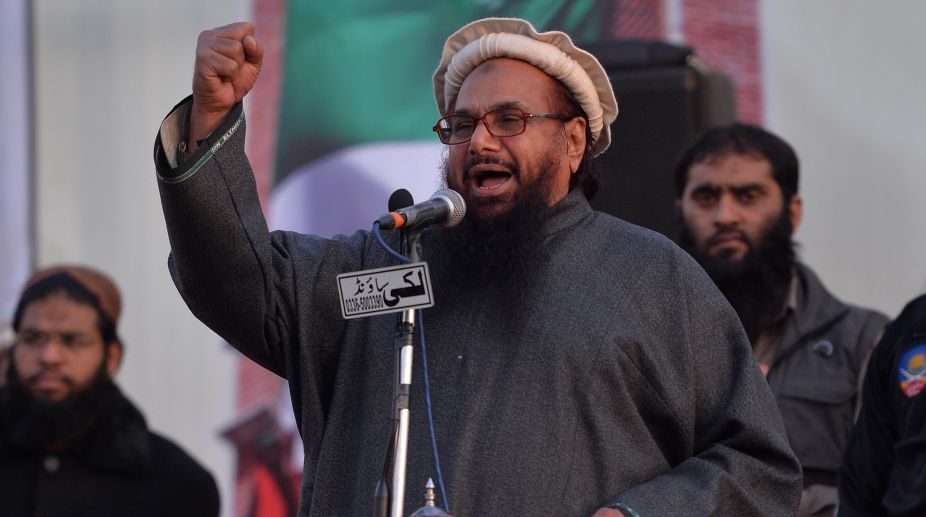
The Pakistan Government has listed Hafiz Saeed, founder of Lashkar-e-Taiba, and four of his associates, under the country’s Anti-Terrorism Act, which provides for the imposition of restriction on their movements and opportunities to address the media. On 30 January, Saeed and his associates were placed under house arrest in Lahore, provoking protests from his supporters and other political parties. Saeed, in a video shortly after his detention, claimed that Pakistan was compelled to act against him because of President Trump’s cordial relations with Narendra Modi. He also described the step as an attempt to sabotage what he called the “freedom movement” in Kashmir. In an editorial, Pakistan’s influential newspaper, Dawn, said that from among the many explanations for detention and subsequent arrest of Hafiz, the obvious inference is that Washington exerted pressure on Islamabad to make it amenable to New Delhi’s demands. The paper also remarked that Pakistan has an appalling record of bringing to justice those who are wanted for terrorism here or abroad.

There is little doubt that the house arrest and the listing of Saeed under the Anti-Terrorism Act was an attempt by Pakistan to reaffirm the man’s anti-terrorism bona fides to the US administration and to dissuade Trump from adding Pakistan to the list of countries that cannot send their citizens to the United States for 90 days. Trump’s Chief of Staff had suggested that Pakistan may also be added to the list. This may have upset and frightened the administration in Islamabad, and hence this response.

Michael Kugalman of Woodrow Wilson Centre, in his article in Dawn on February 1 said some pressure on Pakistan may also have come from China. Though Hafiz does not pose a threat to China, Beijing fears that his rantings against India might jeopardize the China-Pakistan economic corridor. At present, China does not want strained relationship between India and Pakistan lest a souring of ties threatens Chinese workers and investments in Pakistan. According to the Pakistan Army, action against Hafiz was taken in the national interest.

Hafiz was branded as the mastermind behind the 26/11 terror attacks in Mumbai. The UN has declared Lashkar-e-Taiba as a terrorist organization. Hafiz was placed under house-arrest, but later released by the Lahore High Court citing lack of evidence. Under US pressure, Pakistan’s federal and provincial governments did make halfhearted appeals against these orders, but these were dismissed by the Pakistan Supreme Court due to lack of proof, despite several Indian dossiers.

Hafiz is today a very powerful man in Pakistan, running charities and educational facilities all over the country. His Fatah-Il-Insaniyat Foundation (FIF) is the largest NGO in Pakistan with vast financial and human resources. In the wake of the 2005 earthquakes in Kashmir and the 2010 floods, LeT activists had come to the rescue of the affected. It has now become a mass organization, particularly in Punjab, and its conventions draw huge crowds. It has set up up a vast religio-political training centre at Muridke near Lahore, reportedly from funds donated by Arab businessmen. Students in the academy are imparted spiritual as well as martial training. JUD, according to Mir Amir, has transformed the area between Lahore and Gujaranwala into an Islamic state.

Many in Pakistan are sympathetic towards LeT. A public opinion survey conducted by Pew in 2010 showed that 58 per cent of the respondents nationwide had an adverse impression about Taliban and other extremist groups. As regards LeT, public opinion was evenly split — 34 per cent in favour and 34 per cent against. Hafiz even runs “stealth courts” that decree punishment. It is also the rallying point of anger and frustration against India. It is difficult for the army to dump Hafiz Saeed and take firm action against him. LeT has always remained loyal to the military establishment. The consistent feature of this relationship with the army is explained by LeT’s obsession with India which resonates with that of the Pakistan military. Indeed, LeT shares with the army its Punjabi base.

Christian Fair in her book, Fight to the End, refers to the 2004 manifesto of LeT — Hum kyon jihad kar rahe hai. It concedes that the Pakistan army helps and supports LeT — “Muslims are brothers, and an organization should not target them.” In operations in Kashmir, LeT militants displayed more discipline and restraint than other terrorists and compared to other groups they were involved in fewer cases of rape of Indian-Kashmiri women. It did not resort to suicide attacks but introduced a new form of violence — the suicide missions.

The army fears that if it goes in for total confrontation with LeT, it will drive more and more of its cadres into the Pakistani Taliban as has happened with such outfits as Sipahi Sahaba, Lashkar-e-Jhangvi and some sections of Jaish-e-Mohammad. According to Stephen Tankel (Storming the World Stage), some members of Lashkar-e-Taiba did call for a revolt against the Pakistan government when Musharraf decided to side with America after 9/11. But this contention was rejected by its leadership. Lashkar-e-Taiba has remained focused on Kashmir and after the 2006 outrage in Afghanistan, it has not attacked Pakistan. Which is why the army did not feel compelled to go against it.

Pakistani officials and generals fear a mass revolt if Lashkar-e-Taiba and Jamaat-ud-Dawa used their extensive network to mobilize and foment unrest. But for all its strategic restraints in the aftermath of 9/11, Lashkar is a jihadi organization with a record of waging Pan-Islamic campaigns. India-held Kashmir may be its primary target but not the apotheosis of Lashkar-e-Taiba’s jihad. The Pakistan authorities may not be willing now to initiate firm action against LeT, but it can do something to restrain its leaders and contain its activities. But it will be difficult for Pakistan to put them on public trial because that will expose ISI’s links and support to this organization.

The writer, Senior Fellow of the Institute of Social Sciences, had served as Director-General, National Human Rights Commission, and National Police Academy.

Pakistan’s Hafiz factor

Sankar Sen |

The Pakistan Government has listed Hafiz Saeed, founder of Lashkar-e-Taiba, and four of his associates, under the country’s Anti-Terrorism Act, which provides for the imposition of restriction on their movements and opportunities to address the media. On 30 January, Saeed and his associates were placed under house arrest in Lahore, provoking protests from his supporters and other political parties. Saeed, in a video shortly after his detention, claimed that Pakistan was compelled to act against him because of President Trump’s cordial relations with Narendra Modi. He also described the step as an attempt to sabotage what he called the “freedom movement” in Kashmir. In an editorial, Pakistan’s influential newspaper, Dawn, said that from among the many explanations for detention and subsequent arrest of Hafiz, the obvious inference is that Washington exerted pressure on Islamabad to make it amenable to New Delhi’s demands. The paper also remarked that Pakistan has an appalling record of bringing to justice those who are wanted for terrorism here or abroad.

There is little doubt that the house arrest and the listing of Saeed under the Anti-Terrorism Act was an attempt by Pakistan to reaffirm the man’s anti-terrorism bona fides to the US administration and to dissuade Trump from adding Pakistan to the list of countries that cannot send their citizens to the United States for 90 days. Trump’s Chief of Staff had suggested that Pakistan may also be added to the list. This may have upset and frightened the administration in Islamabad, and hence this response.

Michael Kugalman of Woodrow Wilson Centre, in his article in Dawn on February 1 said some pressure on Pakistan may also have come from China. Though Hafiz does not pose a threat to China, Beijing fears that his rantings against India might jeopardize the China-Pakistan economic corridor. At present, China does not want strained relationship between India and Pakistan lest a souring of ties threatens Chinese workers and investments in Pakistan. According to the Pakistan Army, action against Hafiz was taken in the national interest.

Hafiz was branded as the mastermind behind the 26/11 terror attacks in Mumbai. The UN has declared Lashkar-e-Taiba as a terrorist organization. Hafiz was placed under house-arrest, but later released by the Lahore High Court citing lack of evidence. Under US pressure, Pakistan’s federal and provincial governments did make halfhearted appeals against these orders, but these were dismissed by the Pakistan Supreme Court due to lack of proof, despite several Indian dossiers.

Hafiz is today a very powerful man in Pakistan, running charities and educational facilities all over the country. His Fatah-Il-Insaniyat Foundation (FIF) is the largest NGO in Pakistan with vast financial and human resources. In the wake of the 2005 earthquakes in Kashmir and the 2010 floods, LeT activists had come to the rescue of the affected. It has now become a mass organization, particularly in Punjab, and its conventions draw huge crowds. It has set up up a vast religio-political training centre at Muridke near Lahore, reportedly from funds donated by Arab businessmen. Students in the academy are imparted spiritual as well as martial training. JUD, according to Mir Amir, has transformed the area between Lahore and Gujaranwala into an Islamic state.

Many in Pakistan are sympathetic towards LeT. A public opinion survey conducted by Pew in 2010 showed that 58 per cent of the respondents nationwide had an adverse impression about Taliban and other extremist groups. As regards LeT, public opinion was evenly split — 34 per cent in favour and 34 per cent against. Hafiz even runs “stealth courts” that decree punishment. It is also the rallying point of anger and frustration against India. It is difficult for the army to dump Hafiz Saeed and take firm action against him. LeT has always remained loyal to the military establishment. The consistent feature of this relationship with the army is explained by LeT’s obsession with India which resonates with that of the Pakistan military. Indeed, LeT shares with the army its Punjabi base.

Christian Fair in her book, Fight to the End, refers to the 2004 manifesto of LeT — Hum kyon jihad kar rahe hai. It concedes that the Pakistan army helps and supports LeT — “Muslims are brothers, and an organization should not target them.” In operations in Kashmir, LeT militants displayed more discipline and restraint than other terrorists and compared to other groups they were involved in fewer cases of rape of Indian-Kashmiri women. It did not resort to suicide attacks but introduced a new form of violence — the suicide missions.

The army fears that if it goes in for total confrontation with LeT, it will drive more and more of its cadres into the Pakistani Taliban as has happened with such outfits as Sipahi Sahaba, Lashkar-e-Jhangvi and some sections of Jaish-e-Mohammad. According to Stephen Tankel (Storming the World Stage), some members of Lashkar-e-Taiba did call for a revolt against the Pakistan government when Musharraf decided to side with America after 9/11. But this contention was rejected by its leadership. Lashkar-e-Taiba has remained focused on Kashmir and after the 2006 outrage in Afghanistan, it has not attacked Pakistan. Which is why the army did not feel compelled to go against it.

Pakistani officials and generals fear a mass revolt if Lashkar-e-Taiba and Jamaat-ud-Dawa used their extensive network to mobilize and foment unrest. But for all its strategic restraints in the aftermath of 9/11, Lashkar is a jihadi organization with a record of waging Pan-Islamic campaigns. India-held Kashmir may be its primary target but not the apotheosis of Lashkar-e-Taiba’s jihad. The Pakistan authorities may not be willing now to initiate firm action against LeT, but it can do something to restrain its leaders and contain its activities. But it will be difficult for Pakistan to put them on public trial because that will expose ISI’s links and support to this organization.

The writer, Senior Fellow of the Institute of Social Sciences, had served as Director-General, National Human Rights Commission, and National Police Academy.

Changes in Nagaland

Editorial |

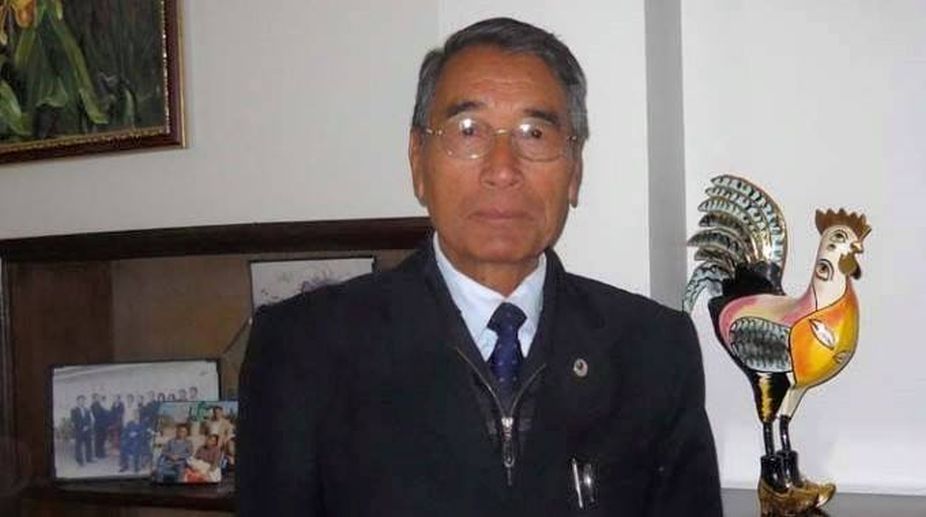
Nagaland’s new chief minister, sworn in on Wednesday, is none other than the ruling Naga People’s Front president, 81-year-old Shurhozelie Liezietsu. A veteran politician, he took over from TR Zeliang, who had to step down for trying to trifle with Naga customary law that forbids women’s participation in any decision-making body.

Had he obliged the Nagaland Tribe Action Committee and the Joint Action Committee’s plea to postpone polls to the local urban bodies (on 1 February) to enable them to further discuss the matter, Zeliang may have been able to save his chair. The leaders of the two organisations had said they were not against the election being held, but their ire was against reservation of 33 per cent seats for women.

Nagaland enjoyed comparative political stability when Neiphiu Rio was chief minister from 2003 to 2014 though, at one point of time, the state had to be brought under a short spell of President’s rule. Rio quit to contest the parliamentary election and is now the state’s lone MP.

He could have been the natural choice to take over from Zeliang but for the fact that he is under suspension for anti-party activities. It is not surprising that Shurhozelie said he became the chief minister because of circumstances, would not stick to the post for long and make room for the younger generation. Rio made the big mistake of quitting when he was in his third term, his ambition then was to become a Central minister.

When that did not materialise, he started dabbling in state politics and also supported the dissidents against Zeliang.

The NPF-led Democratic Alliance of Nagaland led by Zeliang took office in June 2014 but within six months his government turned shaky when 11 of his ministers deserted him, expressing lack of confidence in his leadership.

They also accused him of financial mismanagement and arbitrarily appointing MLAs as chairpersons of various government corporations, just to keep them in good humour.

An astute politician, adept at defending his post, Zeliang sought a trial of strength on the floor of the House and luckily for him the entire eight-member Congress opposition voted as a bloc in his favour. Little wonder all of them were suitably rewarded and later merged with the NPF.

His government also included four BJP members. He claimed it was done for the sake of unity and for early settlement of the Naga problem. Zeliang’s position was always shaky with the dissidents constantly in action, their objective being not to break the government, but to seek a change in leadership. Whether Shurhozelie’s entry will end dissident activity remains to be seen.

Changes in Nagaland

Editorial |

Nagaland’s new chief minister, sworn in on Wednesday, is none other than the ruling Naga People’s Front president, 81-year-old Shurhozelie Liezietsu. A veteran politician, he took over from TR Zeliang, who had to step down for trying to trifle with Naga customary law that forbids women’s participation in any decision-making body.

Had he obliged the Nagaland Tribe Action Committee and the Joint Action Committee’s plea to postpone polls to the local urban bodies (on 1 February) to enable them to further discuss the matter, Zeliang may have been able to save his chair. The leaders of the two organisations had said they were not against the election being held, but their ire was against reservation of 33 per cent seats for women.

Nagaland enjoyed comparative political stability when Neiphiu Rio was chief minister from 2003 to 2014 though, at one point of time, the state had to be brought under a short spell of President’s rule. Rio quit to contest the parliamentary election and is now the state’s lone MP.

He could have been the natural choice to take over from Zeliang but for the fact that he is under suspension for anti-party activities. It is not surprising that Shurhozelie said he became the chief minister because of circumstances, would not stick to the post for long and make room for the younger generation. Rio made the big mistake of quitting when he was in his third term, his ambition then was to become a Central minister.

When that did not materialise, he started dabbling in state politics and also supported the dissidents against Zeliang.

The NPF-led Democratic Alliance of Nagaland led by Zeliang took office in June 2014 but within six months his government turned shaky when 11 of his ministers deserted him, expressing lack of confidence in his leadership.

They also accused him of financial mismanagement and arbitrarily appointing MLAs as chairpersons of various government corporations, just to keep them in good humour.

An astute politician, adept at defending his post, Zeliang sought a trial of strength on the floor of the House and luckily for him the entire eight-member Congress opposition voted as a bloc in his favour. Little wonder all of them were suitably rewarded and later merged with the NPF.

His government also included four BJP members. He claimed it was done for the sake of unity and for early settlement of the Naga problem. Zeliang’s position was always shaky with the dissidents constantly in action, their objective being not to break the government, but to seek a change in leadership. Whether Shurhozelie’s entry will end dissident activity remains to be seen.

More embarrassment

Editorial |

November 8, 2016, is fast beginning to “rival” June 25, 1975, as a Black Day in Indian democracy. Like Banquo’s ghost, the demonetisation exercise (fiasco?) keeps cropping up to cause considerable embarrassment to the government in general, its finance managers in particular.

So while the ATM that dispensed “toy” notes in South Delhi may turn out to be a one-off goof-up, it only reconfirms that the banking sector is riddled with an inefficiency that the government refused to recognise before it undertook its “historic” exercise that has blundered on so many fronts.

And that serves to bolster the criticism that, for all its laudable objectives, inept implementation has reduced the term demonetisation to the equivalent of a four-letter word. Even if the bewildered young man who was issued the toy notes is compensated by their being replaced by the bank, the incident further shatters the public’s confidence in the system — a slur that could prove difficult to erase given the beating that the common man took in the aftermath of Modi sarkar’s gamble. This is, perhaps, not the appropriate occasion to recall the horror stories

that were told from November 8 onwards, but it would be opportune to remind those in North Block that their sense of comfort at having overcome a crisis is gossamer-thin, and that redeeming the image of banks remains an arduous exercise.

The claim of the State Bank of India that its mechanisms are “robust” and that an investigation is underway have been ripped apart, and the suggestion that some persons delivering cash to ATMs are responsible for the bungle is so typical of sustained sarkari endeavours to pass the buck down to someone too “small” to defend himself.

Has a single bank official been penalised for the hardships, deaths included, to which the common man was subjected? Surely the citizens deserve better: even if their plight seldom impacts those ensconced at the crest of Raisina Hill.

The common folk would be little impressed by the “speed” with which Opposition politicians used the incident at the Sangam Vihar ATM to further split the people on party lines. Just as they have been unimpressed by the BJP leadership’s bid to project any electoral success as certifying demonetisation. And that would hold true regardless of what the EVMs throw up on March 11.

Such over-simplification of what “concerns” the people is insulting, as indeed is the comparing of the number of cemeteries and crematoriums, or the quality of the electricity supply during Ramzan and Diwali.

Viewed against a broader canvas of national (mis)governance that otherwise little-known ATM does tell a powerful story — of how ministers and officials consistently “toy” with the aam janta.

More embarrassment

Editorial |

November 8, 2016, is fast beginning to “rival” June 25, 1975, as a Black Day in Indian democracy. Like Banquo’s ghost, the demonetisation exercise (fiasco?) keeps cropping up to cause considerable embarrassment to the government in general, its finance managers in particular.

So while the ATM that dispensed “toy” notes in South Delhi may turn out to be a one-off goof-up, it only reconfirms that the banking sector is riddled with an inefficiency that the government refused to recognise before it undertook its “historic” exercise that has blundered on so many fronts.

And that serves to bolster the criticism that, for all its laudable objectives, inept implementation has reduced the term demonetisation to the equivalent of a four-letter word. Even if the bewildered young man who was issued the toy notes is compensated by their being replaced by the bank, the incident further shatters the public’s confidence in the system — a slur that could prove difficult to erase given the beating that the common man took in the aftermath of Modi sarkar’s gamble. This is, perhaps, not the appropriate occasion to recall the horror stories

that were told from November 8 onwards, but it would be opportune to remind those in North Block that their sense of comfort at having overcome a crisis is gossamer-thin, and that redeeming the image of banks remains an arduous exercise.

The claim of the State Bank of India that its mechanisms are “robust” and that an investigation is underway have been ripped apart, and the suggestion that some persons delivering cash to ATMs are responsible for the bungle is so typical of sustained sarkari endeavours to pass the buck down to someone too “small” to defend himself.

Has a single bank official been penalised for the hardships, deaths included, to which the common man was subjected? Surely the citizens deserve better: even if their plight seldom impacts those ensconced at the crest of Raisina Hill.

The common folk would be little impressed by the “speed” with which Opposition politicians used the incident at the Sangam Vihar ATM to further split the people on party lines. Just as they have been unimpressed by the BJP leadership’s bid to project any electoral success as certifying demonetisation. And that would hold true regardless of what the EVMs throw up on March 11.

Such over-simplification of what “concerns” the people is insulting, as indeed is the comparing of the number of cemeteries and crematoriums, or the quality of the electricity supply during Ramzan and Diwali.

Viewed against a broader canvas of national (mis)governance that otherwise little-known ATM does tell a powerful story — of how ministers and officials consistently “toy” with the aam janta.

Afghanistan wants reopening of border with Pakistan

IANS | Islamabad |

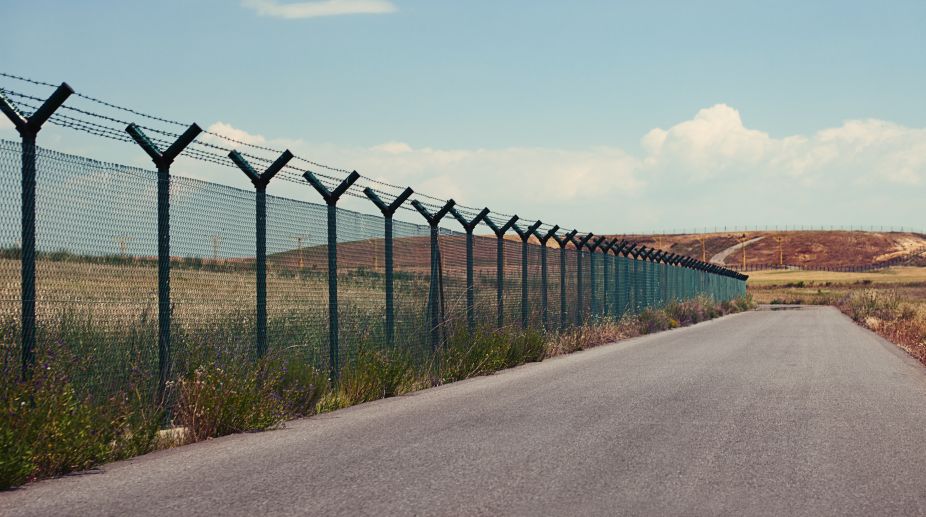
Afghan Ambassador Omar Zakhilwal on Thursday called for reopening of the border that Pakistan closed a week ago due to a series of terrorist attacks that killed over 100 people in Pakistan.

Pakistan said that it closed the border over "security concerns" as those who claimed last week attacks were "from the Afghan side of the border". However, Afghanistan denies the statements.

"As part of the quick de-escalation of the prevailing tension between Afghanistan and Pakistan, as agreed in our talks with the relevant Pakistan authorities a couple of days ago, Torkharm, Spin Boldak and other crossing points should have reopened by now, but unfortunately still remain shut," Zakhilwal said in a statement.

"In fact, formal trade and transit crossing points between our two countries, under no circumstances, should have been closed in the first place, both as per Afghanistan-Pakistan Trade and Transit Agreement and also Afghanistan's land-locked country transit right as per international rules," the Afghan envoy said in the statement which was posted on social media.

Meanwhile, Pakistan Foreign Ministry spokesman Nafees Zakaria has said that a decision regarding opening of Pakistan-Afghan border will be taken in due course of time.

"Pakistan has continued to maintain and emphasize that effective border management is vital for preventing cross border movement of terrorists. Pakistan is ready to work with Afghanistan on those issues in a spirit of mutual respect, trust and cooperation," the spokesman said at his weekly briefing.

The spokesman said issues between Pakistan and Afghanistan need to be addressed through constructive and positive engagements.

TFA pact to help facilitate movement of goods: Nirmala

PTI | New Delhi |

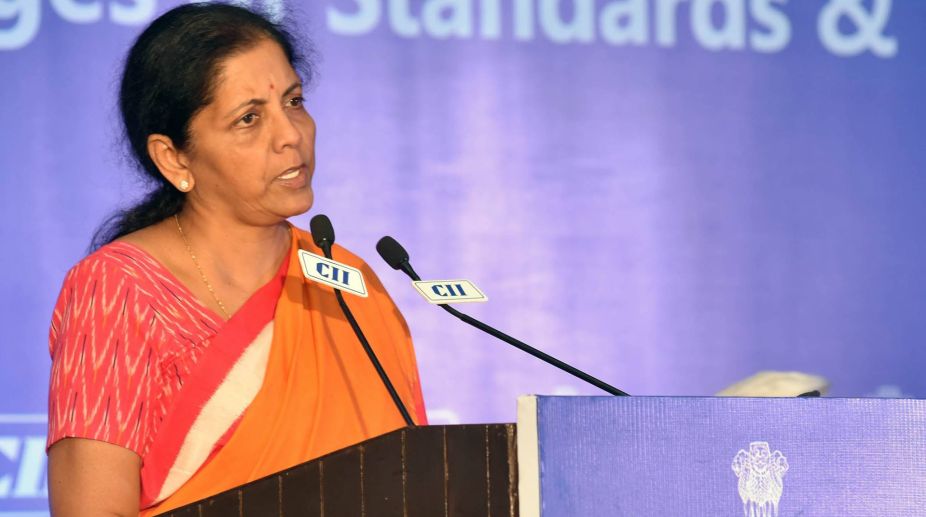
The WTO's trade facilitation pact will help promote global trade in several ways such as facilitating movement of goods and effective functioning of ports, Commerce Minister Nirmala Sitharaman on Thursday said.

She said that the implementation of the agreement will also help in reducing transactions costs, cut turnaround time of ships, which comes with cargo and provide real time information on data.

"I look forward for the rapid improvement in the ways in which we handle our trade. Customs and Commerce will work together," she told reporters here.

The agreement, which seeks to ease customs norms, came into effect yesterday with two-thirds of WTO members ratifying the pact.

The minister said India would fund all its projects like upgradation and digitising infrastructure for implementation of the WTO's trade facilitation agreement (TFA).

She also said that the Shipping Ministry along with the Customs and the Commerce departments are working to strengthen logistics support for traders.

"It will lead to reduction in transactions cost," she added.

The ministry, she said, is also talking with Railways Ministry on this issue.

They are also identifying areas which requires legislative changes for the smooth implementation of TFA.

Ansari concludes 5-day Rwanda, Uganda visit, calls it fruitful

PTI | Kamapala |

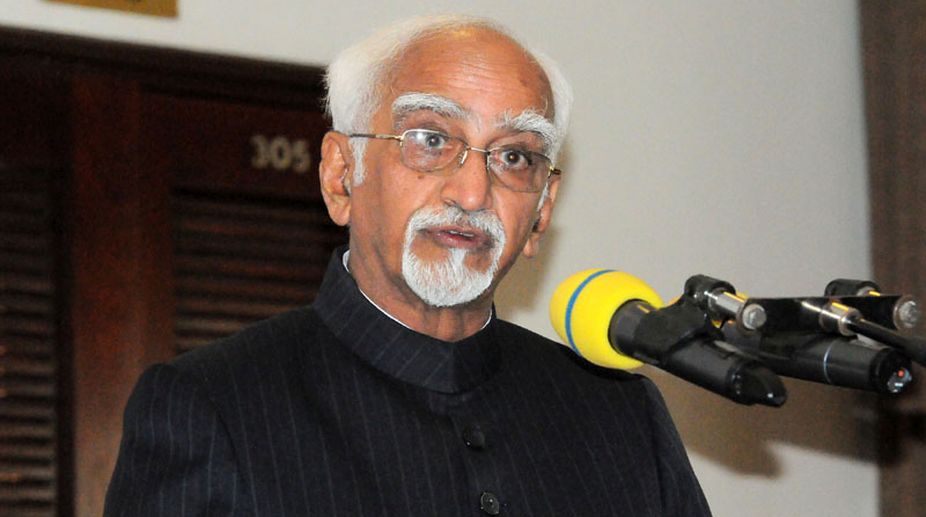
Vice President Hamid Ansari on Thursday left for home after concluding his five-day visit of Rwanda and Uganda during which India signed three major bilateral agreements in Kigali and decided to boost cooperation with the two East African countries.

The Vice President left the Ugandan capital on Thursday night at the end of his three-day visit of the country. Ansari held bilateral talks with the top leadership here, including President Yoweri Museveni, Vice President Edward Kiwanuka Ssekandi.

India and Uganda have decided to expand cooperation in the field of energy sector and training of personnel for space programme and peaceful use of atomic energy, even as the resource-rich East African country pitched for Indian companies to manufacture automobiles locally to discourage import of cars.

On the last day of his Uganda leg of the two-nation visit, the Vice President also paid floral tribute to the bust of Mahatma Gandhi at Jinja, a town about 80 km from here, which is also the source of River Nile.

Ansari had arrived in Kampala on February 21, after winding up his three-day Rwanda visit during which he held bilateral talks with President Paul Kagame, President of the Senate Bernard Makuza and attended India-Rwanda Business Forum.

At the forum, India and Rwanda signed three MoUs to boost bilateral cooperation in areas of innovation, aviation and visa regime, which includes setting up of an entrepreneurship development centre in that country and starting of a direct flight to Mumbai.

In Kigali, Ansari also paid tribute to the victims of the 1994 massacre at the Kigali Genocide Museum and hailed the "resilience and courage" demonstrated by Rwandans in putting behind the hatred and moving ahead on the path of "reconciliation and inclusion".

This was the first high-level bilateral visit to Uganda from India since 1997 and first high-level visit to Rwanda.

The Vice President along with wife Salma was traveling with Union Minister of State for Social Justice and Empowerment Vijay Sampla, four MPs — Kanimozhi, Ranvijay Singh Judev, Ranee Narah and P K Biju, and senior officials.

The Vice President had said that this visit was part of a "conscious effort" by the Indian government to "intensify interactions" with Africa.

Congress says will introspect the Maha civic polls rout

PTI | New Delhi |

The Congress, which suffered a rout in Maharashtra civic polls, on Thursday said it will introspect on the reasons for the loss, even as the issue of infighting continued to haunt the grand old party.

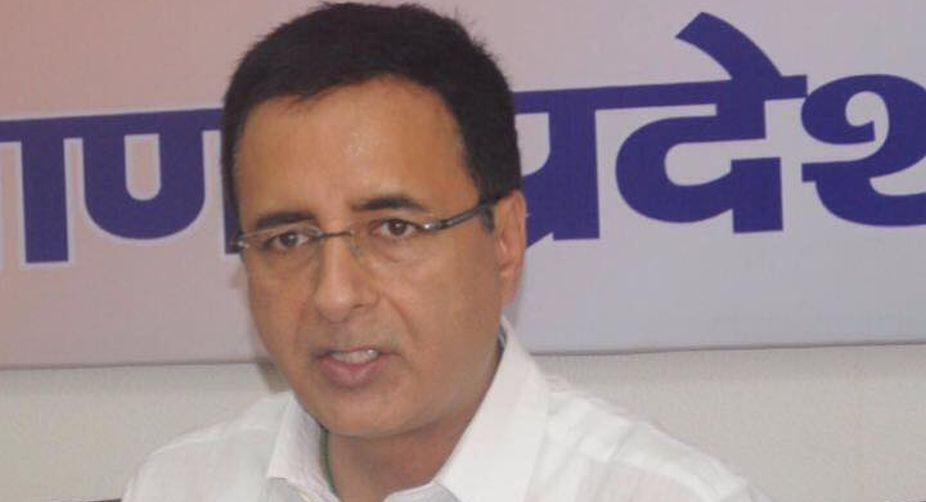
"We will introspect. We will look for the reasons why Congress party did not do as well. We need to sit down and introspect about the reasons," Congress chief spokesperson Randeep Surjewala said.

"We will rebuild our cadre, we will look at the reasons and we will ensure that Congress party emerges out stronger as a voice of people of Mumbai," he said.

However, senior party leader Milind Deora said the Congress failed to check infighting and expose the Shiv Sena-BJP's backdoor alliance and inspire the people of Mumbai.

"Sadly, Congress failed to halt infighting, play up local issues, expose Shiv Sena-BJP's backdoor alliance and inspire Mumbai to vote for change," the former Congress MP from South Mumbai said.

Deora later tweeted, "Congress needs to regain Mumbai's trust and re-establish relevance by replacing current urban narrative with a more credible alternative one."

Congratulating the BJP and the Shiv Sena for their good performance in Brihanmumbai Municipal Corporation (BMC) polls, Surjewala said the two parties will now have to provide good governance and fulfil their promises made to people of Mumbai.

He said the Congress, as a responsible party, will sit in opposition and continue to strive for all the issues dear to the public.

The Congress was routed in civic polls in Maharashtra, with BJP winning 82 seats in the fiercely fought BMC polls, just two seats behind the estranged saffron ally Shiv Sena.

Both, however, were well short of the magic figure of 114 needed to control the civic body.

In the counting of votes held on Thursday, the Congress was relegated to the third position with 31 seats, whereas the NCP and Raj Thackeray's MNS were reduced to single digit figures of 9 and 7 seats, respectively.

Surjewala said, "We humbly accept the verdict of the people of Mumbai. Why we were unable to win over the hearts of the people of Mumbai and why we could not win more seats despite the fact that Shiv Sena and BJP have jointly ruled over BMC for last 20 years."

He said one thing is extremely clear that in BMC, Shiv Sena and BJP have ruled together for last 20 years, but the problems of people of Mumbai, be it potholes, be it drinking water, be it immeasurable traffic, be it transparency and absence of corruption, be it excessive regulatory controls has not ended. .


Terror activities on the rise in Jammu and Kashmir

SP Sharma | Jammu |

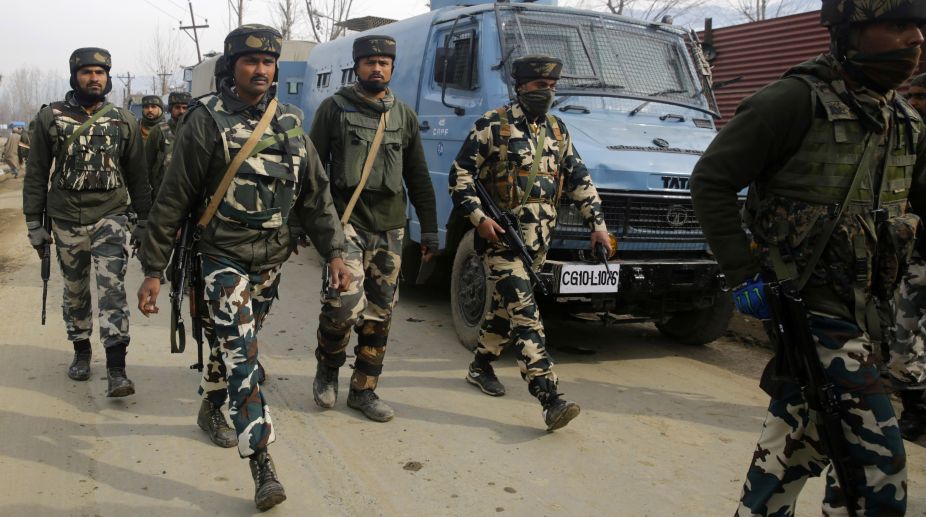
The surge in terrorist activities in Jammu and Kashmir that has claimed lives of about 15 soldiers in the past four months is causing concern among the political and defence analysts in the state.

These soldiers were martyred in counter-insurgency operations. Besides, 20 soldiers lost their lives due to avalanches in the Kashmir valley. The troops succeeded in eliminating more than 22 terrorists in encounters.

Kulgam, Bandipora, Pulwama and Shopian in the valley have emerged as hotspots following the killing of a local Hizbul Mujahideen terrorist Burhan Wani in South Kashmir on July 8, 2016.

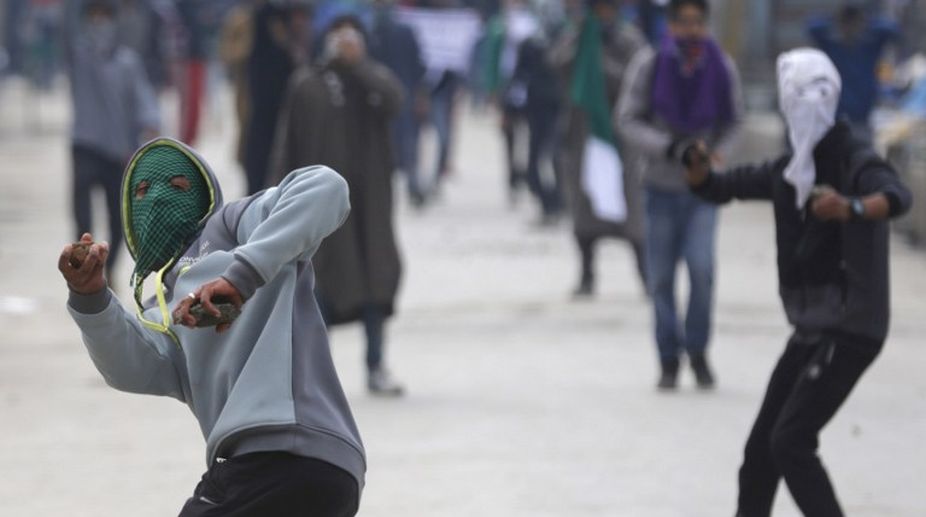
The new phenomenon of local villagers pelting stones at the troops during encounters with terrorists was also a matter of concern. There were reports of at least 26 terrorists having escaped in the past few months when the local villagers diverted attention of the army personnel by pelting stones at them during encounters. Three terrorists managed to escape in the Hajin village when local men, women and children surrounded the encounter site and started pelting stones at the soldiers.

Clamping restrictions on movement of civilians in an area of 3 km around the encounter site in the Kashmir valley has not deterred the miscreants.

Army Chief Bipin Rawat had recently warned of tough action against those who tried to interfere in the counter-insurgency operations. The incidents of stone pelting have failed to provoke the troops and security forces who have maintained restrain.

According to official figures, 59 local Kashmiri youth joined various terrorist outfits during the past seven months and more than 60 sophisticated guns and other weapons were snatched from police personnel and looted from police stations during the same period.

The army and security forces resumed counter-insurgency operations in January as these remained virtually suspended for nearly five months since July when there was widespread violence in the valley.

The army and security forces were also concentrating on crushing the networks of overground workers (OWGs), who were undertaking the task of providing logistics to terrorists and passing to them information about soft targets. One such group of OWGs was last week cracked down in north Kashmir and arms and ammunition recovered from them. 

Bangladesh PM Sheikh Hasina to visit India in April

Statesman News Service | New Delhi |

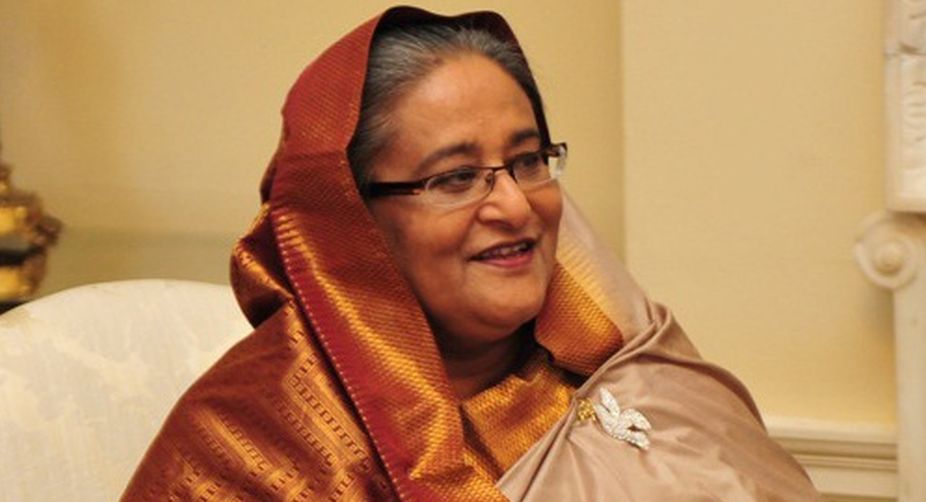
The decks were cleared on Thursday for the much-anticipated visit of Bangladesh Prime Minister Sheikh Hasina to India in April during which she will have substantive talks with Prime Minister Narendra Modi on bilateral issues as well as the situation in the region.

Foreign Secretary S Jaishankar met Sheikh Hasina in Dhaka this evening and renewed Modi’s invitation to her to visit India at an early date.

According to the MEA, Jaishshankar discussed with Sheikh Hasina and her aides the preparatory aspects of her visit.

Sheikh Hasina’a Deputy Press Secretary M Nazrul Islam told the media in Dhaka that the twice-postponed visit would take place in the first half of April.

Jaishankar arrived in the Bangladesh capital this morning from Beijing on a two-day tour to finalise the details of Sheikh Hasina’s visit and brief her about the preparations.

Bangladesh is keen to ink the Teesta water sharing accord during Sheikh Hasina’s visit. However, New Delhi is not sure if the deal would fructify at this point of time, given the current hostility between the Modi government at the Centre and the Mamata Banerjee-led government in West Bengal. India has already made it clear to Bangladesh that the accord would be signed only after New Delhi had succeeded in building domestic consensus on it.

The MEA said Jaishankar briefed Sheikh Hasina on the recent developments in India-Bangladesh relations and the region. He also had separate meetings with senior officials of Bangladesh to take stock of decisions taken during the meetings of various bilateral mechanisms in the areas of security and border management, trade and commerce, power, energy, shipping and railways.