Logo

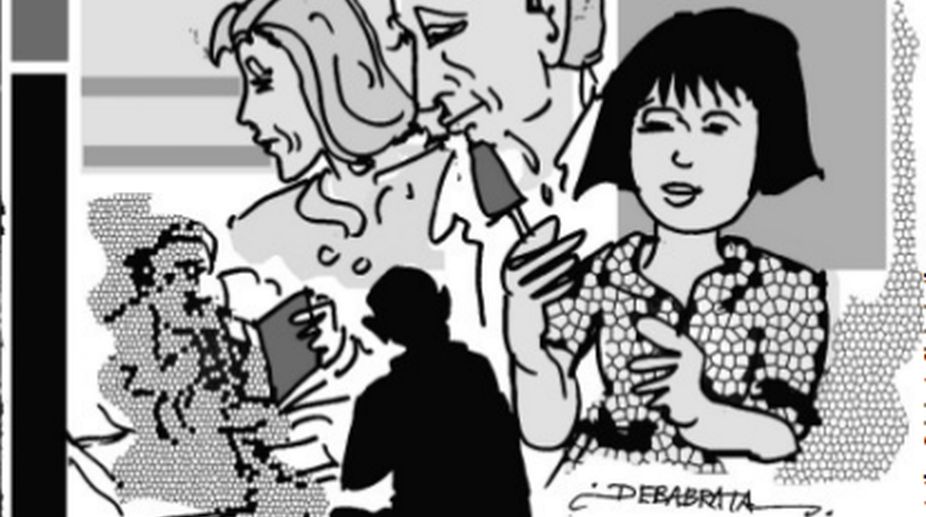
Tale of a beautiful girl

Manish Nandy |

I was working late in the US Consulate in Kathmandu when the telephone rang. As the secretary had left, I answered, and when the caller said, “Namaskar,” I responded with the same word.

The caller continued in Nepali and explained his problem. I listened and suggested a solution, also in Nepali. He thanked me and said he would call the American officer the next day. I told him that he was indeed talking with an officer: I was the Consul. Clearly surprised, the caller said, “But you speak Nepali!” I laughed and said, “You don’t have a law that foreigners cannot speak your language.”

I explained that I had learned the language in Haiti as the liaison for the Nepalese contingent in a UN multinational force. The caller complimented me on my accent and said, “I work at the Home Ministry. Why don’t you drop in for a cup of tea some day? Do let me know if I can be of help any time. My name is Khadka.”

I might have forgotten about the exchange, but for what happened three weeks later. I was scrutinising visa applications, when my secretary reported that a young couple was waiting in the hall and the wife was visibly distraught and in tears. I asked the couple in.

The story they narrated was intriguing. Craig, from an affluent Kansas family, had joined a private voluntary organization in Chicago that sent him to work on a water project in southern Nepal. His wife, Clara, taught basic English and mathematics to village children. As she did so on front porch of her home, she would notice a girl, five or six, skeletal and filthy, clearly a waif, playing on the street.

Passing her one day, Clara gave her a candy. The next day, the girl, possibly trying to get Clara’s attention, was playing in front of her home. She got another candy. From then on she got a candy or cookie each day. A week later Clara was in a local bazaar and bought a girl’s dress. As she was about to replace the girl’s tattered frock the next day, she realized how dirty she was, living on the street. She gave her a bath and put her in the dress. The girl was pleased and surprised in equal measure, wearing the only new dress she had ever worn.

From then on the girl – her name was Maya – imperceptibly became a part of Clara and Craig’s village life. Two years later, when the project ended and the time came for them to return to the US, they realized to their surprise that they could not leave without Maya. They came to Kathmandu, went to the Home Ministry and applied for adoption, expecting no glitches, since she was an orphan, with no relations to claim her.

Then they came up against a legal wall. Craig could not adopt, for under Nepal’s law a person had to be at least 30 to adopt a child, and Craig was nine months short. Clara was even younger. They were despondent and had turned to me as a last recourse. I had no reassuring word for them. I could not contend against a well-intentioned law designed to protect children. Then I thought of Khadka, who, I had found out, was the Deputy Minister. I called and said I would indeed like to join him for tea.

He was gracious, and said I could come right away. I took Craig and Clara with me, but left them in the waiting room. Khadka was a sun-tanned, heavybrowed man, squat but nimble. He greeted me warmly, but he knew that I had come with a purpose. I chose to be candid. “I want to show you something,” I said, and pulled out a photograph of Maya. “I see it is a very young girl,” he responded, with a questioning look. “You will also notice that it is an ordinary girl. She isn’t pretty at all.” I added bluntly. “Now I want you to see her medical file.

” I pushed a file toward him, “You will find she has a large number of health problems: of eyes, ears, skin, stomach and general health.” I proceeded, “That isn’t surprising. She is an orphan and has lived most of her life on the street, eating scraps and spoiled food neighbours have thrown out. Nobody has cared for her, nobody wanted her.” Khadka listened intently.

“Now a miracle has happened. Somebody loves her and wants to adopt her. It is the first and possibly the only break in her miserable life. But the couple who want to take her are less than thirty years, and the law stands in the way. I have no way to solve that problem. So I am asking for your help.”

I added, “Because the couple is American, I am pleading their case. But, believe me, I am pleading even more for a little girl who has this one chance for a better life. Your life and mine will go on as before if the adoption doesn’t go through; even this couple will eventually reconcile to their loss. It is only Maya who would have lost her one opportunity to not be just another waif on the street.”

The secretary had brought the tea, and Khadka asked him for Maya’s adoption application file. He signaled me to drink the tea while he studied the file. He quickly reached the last page and started writing. When he had finished, he gave me the file to read. Invoking the appropriate section and subsection of the law, Khadka had written that he was granting a humanitarian exception to the law and the adoption would be allowed to proceed.

I thanked Khadka, saying that Nepalese tea had never tasted better, and left. In the waiting room, when I had explained the outcome, Craig hugged me and Clara wept some more. I know I had said something wrong to the Nepalese minister. Every Christmas Craig and Clara send me a family photo, and this year I looked carefully at their adolescent daughter. I had told Khadka that Maya was an ordinary girl, not pretty at all. I was wrong. She is beautiful.

The writer is a Washington-based international development advisor and had worked with the World Bank. He can be reached at mnandy@gmail.com.
IT and the big divide

Basab Dasgupta |

India has made a dramatic turnaround in the past 20 years or so as far as its economy, prosperity and recognition of its importance in the world are concerned. The key to this transformation has been the dominance of Indians in Information Technology or “IT”. Indians are genetically analytical. At the same time our educational system emphasises memorisation and theoretical understanding mainly because schools cannot afford fancy laboratory equipments.

Opportunities of software development, modification and maintenance provided a perfect niche for Indians. There was no need for expensive equipment to train technical people; all one needed was a laptop computer. Furthermore these computers became more powerful and less expensive every year.

Combination of easy availability of computers and the analytical minds of Indians constituted a match made in heaven for the emergence of “new India”. Coincidentally, the demand for IT people in the USA started to increase exponentially from the late 1990s and technology companies realised that America did not have enough technical people to provide the needed talents. The answer was recruiting Indian and Chinese engineers. There was the added bonus that they were willing to work for a lower salary than their American counterparts. The US Government increased the quota of H1B visas to pave the way for an unprecedented influx of Indian engineers into the country.

The larger tech companies all established facilities in India and many engineers could travel back and forth between the US and Indian locations of these companies. All software giants as well as virtually all other major companies that needed IT professionals employed huge numbers of Indians. Some smaller US companies relied on Indian companies like Infosys which provided Indian engineers to work in the US on a contract basis. This phenomenon has resulted in major social and political consequences both in India and in the USA. First consider the positive impacts in India.

Such engineers transferred most of their savings in US dollars back to India which resulted in an increase in their living standards in India and contributed to a boost in the domestic economy. The upper middle classes started to see significant increase in their wealth. Foreign travel became very common. The availability of IT jobs in USA and/or India prompted establishments of educational institutes specialising in curricula customized to such careers. ITtrained graduates found job opportunities not only in USA, but all over the world. There has been a definite shift in the mindset of younger people towards more materialism.

Success of IT professionals abroad encouraged start up of domestic companies and development of new computer-related technologies in India. This new way of empowered thinking and emphasis on technology among young people have definitely contributed to the popularity of BJP and election of Narendra Modi as Prime Minister of India. American technology companies have, of course, benefited tremendously, not just from “using” the Indian professionals as glorified “cheap labor”, but allowing them to manage and lead their product innovations.

In addition to the Indian engineers on temporary visas, a large number of Indians have green cards/citizenship, which they obtained on their own or with sponsorship from their US employers. Many of them succeeded in climbing up the corporate ladder. It is a testament to the ingenuity of these engineers that the CEOs of both Microsoft and Google (Satya Nadella and Sundar Pichai, respectively) are first generation Indians with their educational base built primarily in India. In addition, many of the major divisions of virtually all Silicon Valley companies are headed by Indian immigrants.

The large presence of Indians in the US, although not entirely because of spread of IT, has resulted in a substantial increase in Indian influence on the population. Indian restaurants popped up in almost every neighborhood of big cities.

Bollywood style outfits and music are finding wider acceptance. Actors and actresses of Indian origin are common in TV shows and even movies these days. lT engineers have opened the eyes of American high-tech companies to the analytical strengths of Indians and made it easier for them to get jobs in areas other than lT, such as telecommunication, semiconductors and hardware design.

On the negative side a widening financial gap in India between the “haves” of IT and “have nots” can certainly be a concern. However it seems that a “trickle down” economy is working in improving living conditions at all levels and most Indians are probably satisfied enough not to express any widespread discontent. However there is a potential dark social side of this success for Indians in US. IT engineers on temporary visas have created a new “class” among Indians in this country who are neither here nor there.

Unlike the Indian immigrants they have not embraced USA as their country simply because it is not their country and probably they cannot become US citizens for one reason or another. As a result they have made no effort to assimilate into the American culture. They tend to live in their own world of Bollywood movies, Indian food, cultural practices and conversation in their native tongues.

Moreover, they tend to socialise only with people who are in the same boat. Their mannerisms may even be described as “unfriendly” by American standards. Secondly, since they view USA and the companies providing employment only as a source of financial affluence, their thought processes might be centred around money. They may feel oblivious to the political and social issues in USA because they know they can go back to India any time.

Unlike first-generation immigrants, the “IT crowd” enjoys the convenience of internet, skype, Indian TV channels, cheap phone calls, cheap airfare etc. and do not feel that they have to live their lives in this country any differently from how they lived in India. I worry that average Americans who may not know the difference between “IT Indians” and the traditional Indian immigrants might end up putting all of us in the same class and categorise us as rude, unfriendly, snobbish and apathetic people and perhaps even develop animosity towards us.

The Americans have been remarkably open in welcoming and accepting immigrants throughout history. They understand that it takes a lot of effort to learn a new language, adjust to new social customs and get used to different food and clothing items. All hard-working immigrants who truly love their new country have established good lives for themselves.

However I believe that a large number of Americans view all immigrants who cannot or do not want to assimilate into this society with a degree of apprehension if not resentment. This is not a recent phenomenon but has always been the case. This may not be obvious because of the politeness in their formal behavior or the fever of political correctness might have suppressed their candid views. Their reasoning is not racism based on skin color or religion and is really very simple: if immigrants come to America in search of a better life, they should embrace their new country instead of hanging on to everything they left. Unfortunately the communities of IT engineers stick out like sore thumbs.

On top of this there may also be a belief that IT engineers are taking away American jobs. There is certainly some truth to that. Technology companies have not made enough efforts to ensure they have exhausted supply of American engineers before jumping on the bandwagon of recruiting foreigners on temporary visas. After all many of these jobs involve fairly routine functions of writing various codes.

The recent shooting death of an Indian IT engineer in Kansas is a horrific wake-up call about the potential danger although it was probably motivated by the mistaken belief that he was a Muslim and not based on his profession. In any case the incident should be taken very seriously in order to address future problems because there are crazy bigoted people in every community.

One can certainly blame the anti-Muslim sentiment that has been fostered by Donald Trump’s rhetoric but I believe that all IT engineers on H1B visas and their employers bear a responsibility for social integration. Engineers must be provided extensive orientation sessions when they come here about how they can appear to be more comfortable in this country. Otherwise this could result in a loselose situation for both countries.

The writer is a physicist who worked in Academia and Industry, is a Bengali settled in America.

Racist Raj ~ II

Abhik Roy |

The racist colonial discourse of the British Raj often described the seemingly unbridgeable chasm between the colonizer and the colonized as a gap between the “civilized” and the “savage,” “logical adult” and the “irrational child,” and the “manly Englishman” and the “effeminate Hindu.” This last stereotype became a justification of British colonial rule in India. The British determined that since Indian men were weak, lacking in both the physical and mental ability to defend their nation, the British were justified in protecting India.

The popularity of the idea of Hindu men being effete in British colonial literature can be traced back to the 18th century, with ill-founded theories of climatic influences in which oppressive heat and humidity were considered to be the main reason for lack of manliness, resolve and courage among Hindu men. Like many other British colonialists, Robert Orme, British historian in the eighteenth century, concluded that along with the inhospitable climate, the staple diet of rice, an “easily digestible” food obtained with minimum labour, was “the only proper one for such an effeminate race.” In their efforts to glorify the Raj, British imperialist rhetoric often constructed English colonialists as heroes who, by defeating the natives, would create order out of chaos and disorder in India. From a British standpoint,

Indian men, especially upper caste Hindus, were effeminate men who had been vanquished and turned into British subjects. James Mill wrote in The History of British India in the early 19th century that the Hindus were endowed with some unique characteristics at the core of which lay effeminacy and dishonesty. According to Mill, since Hindus could not deal with the “manliness and courage of our ancestors,” the vanquished Hindus with their “slavish and dastardly spirit” were ready to use “deceit and perfidy” to achieve their goals.

British colonial discourse was replete with images of Hindus as being weak and ineffectual who were devoid of any form of masculinity. Thomas Babington Macaulay wrote about the effeminacy of Hindus in blatantly racist terms: “The dark, slender, and timid Hindoo [sic] shrank from a conflict with the strong muscle and resolute spirit of the fair race, which dwelt beyond the passes.”

Sir George MacMunn, the author of The Martial Races of India, ridiculed Gandhi, wondering how some Hindus, namely Rajputs, turned out to be brave Indian warriors when Hindus in general were such weaklings: “Who and what are the martial races of India, how do they come, and in what crucible, on what anvil’s [sic] hot with pain spring the soldiers of India, whom surely Baba Ghandi [sic] never fathered?” MacMunn chastised Gandhi and the “mass of (Indian) people (who) have neither martial aptitude nor physical courage, the courage that we should talk of colloquially as ‘guts.’ ”

He blamed the “varying religions, early marriage, premature brides, and juvenile eroticism” of Hindus for their lack of martial spirit. Similarly, among British colonial representation of Hindus, the most common construction of the effeteness of Indians was the Bengali babu who worked for the British bureaucracy. In fact, it was the Bengali babu (often spelled as baboo to suggest a link with the primate) who was the butt of crude, vulgar and blatant racist attacks by English men and women in their writings.

It was the Bengali man’s “extraordinary effeminacy” as displayed by his diminutive physique, flowing dhoti that resembled a woman’s dress, and worship of goddesses that best explained for the British colonialists why he, and by extension, India, needed to be guided by the strong, assertive hand of the superior masculine English race. Rudyard Kipling frequently depicted the Bengali civil servant as a fool who, when confronted with crisis, would inevitably flee the scene and left the “real” men to salvage the situation.

Macaulay seems to have dwelt considerably on the effeteness of Bengali babus. In one of his essays, he described a Bengali babu thus: “The physical organization of the Bengalee [sic] is feeble even to effeminacy. He lives in a constant vapour bath. His pursuits are sedentary, his limbs delicate, his movements languid. During many ages he has been trampled upon by men of bolder and more hardy breeds. Courage, independence, veracity, are qualities to which his constitution and his situation are equally unfavorable. . . . [He] would see his country overrun, his house laid in ashes, his children murdered or dishonoured, without having the spirit to strike one blow.”

In another essay, Macaulay described the Bengalis in the most denigrating ways: “Whatever the Bengali does he does languidly. His favourite pursuits are sedentary. He shrinks from bodily exertion; and though voluble in dispute, and singularly pertinacious in the war of chicane he seldom engages in personal conflict, and scarcely ever enlists as a soldier. There never perhaps existed a people so thoroughly fitted by habit for a foreign yoke.”

Very much akin to Macaulay, George Warrington Steevens’ depiction of the Bengali is not only overtly racist but also dehumanizing: “By his legs you shall know the Bengali … The Bengali’s leg is either skin and bone, the same size all the way down, with knobs for knees, or else it is very fat and globular, also turning in at the knees, with round thighs like a woman’s.

The Bengali’s leg is a leg of a slave.” British colonialists did not spare the Hindus from South India, who were also portrayed as non-martial by them. General Frederick Sleigh Roberts, for example, writing about South Indian Hindus, concluded that the “ancient military spirit had died in them, as it had died in the ordinary Hindustani of Bengal and Mahratta of Bombay, and that they could no longer with safety be pitted against warlike races, or employed outside the limits of South India.”

Similarly, Sir O’Moore Creah considered South Indian Hindus to be “timid both by religion and habit, servile to their superiors and tyrannical to their inferiors, and quite unwarlike.” Within these examples that are overtly racist, one can see the emergence of a common narrative form.

The British colonial discourse begins with the establishment of the Hindu male as a weak, lazy, cowardly, slave. But not only does the colonial discourse establish a negative construction of Indian males’ character and physicality, it also links this negative construction to military inaction thus, providing a justification for the British colonial rule as the able protector of India. While the British racist ideology endeavoured to construct the Hindu men as effeminate, we must not forget that this ideology was ably challenged by several Indians, notably Bankimchandra, Swami Vivekananda, and Tilak, among others.

The warrior monks in Bankimchandra’s famous nationalist novel Anandamath embodied military valour while Swami Vivekananda sought to construct a Hindu manhood that was a unique combination of Christian manliness and Hindu ideals of spiritual power. Tilak, on the other hand, used Shivaji, who was known for his indomitable courage and military prowess, for his political mobilization.

(Concluded)

People’s power wins

Editorial |

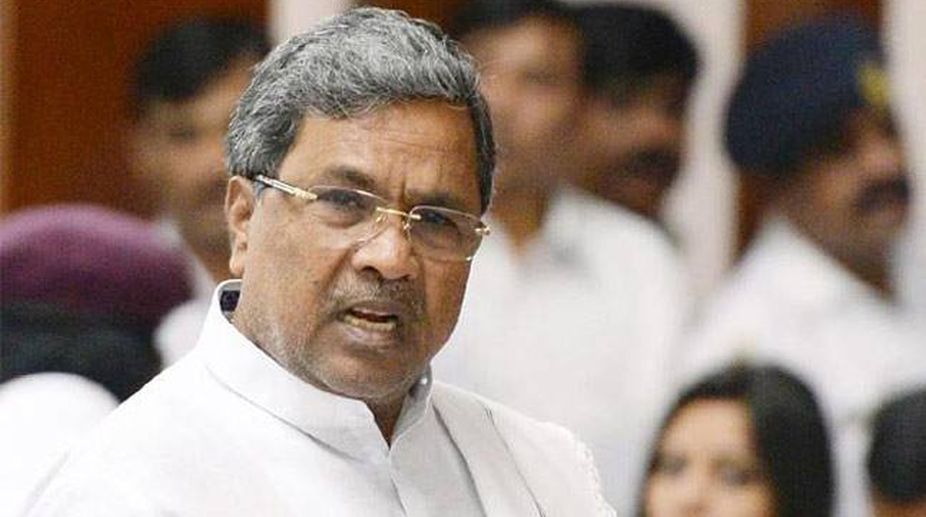
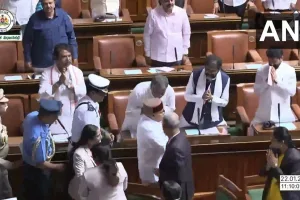
Bowing to public pressure and afraid of the prospects of having to face CBI raids and Lokayukta cases, the Karnataka government on Thursday announced abandonment of the controversial Rs.2,100-crore steel flyover project in Bengaluru city. The six-lane 6.9 km flyover from Basaveshwara Circle in the city centre to Hebbal junction in the northern suburb connecting the road to Kempegowda International Airport at Devanahalli and National Highway 4 leading to Hyderabad has been a pet project of Karnataka Chief Minister Siddaramaiah. To be implemented by the Bengaluru Development Authority, the project was intended to decongest the Bellary road leading to the airport. The proposal for the steel flyover was mooted in Siddaramaiah’s first budget in 2013. At that time its estimated cost was only Rs.1,130 crore. Since then it has been galloping. Opposition to the project was instant, not only because of allegations of huge kickbacks to top Congress leaders, but also because it was to be built in one of the greenest parts of the city and involved the felling of 812 fully grown trees. A citizen’s action forum was formed to launch an agitation against the project which, in October 2016, formed a massive human chain covering the entire distance of the proposed flyover. V Balasubramaniam, former additional chief secretary of Karnataka, together with NS Mukunda, president of the citizen’s action forum, filed a writ petition before the Chennai Bench of the National Green Tribunal and obtained an interim order on 28 October 2016 restraining the Karnataka government from executing the project.

The proverbial last straw that broke the camel’s back was the surfacing of a diary entry that alleged a donation of Rs 65 crore was paid to the Congress for awarding the contract for the steel flyover to L & T and Nagarjuna Construction Company. Dinesh Gundu Rao, working president of the Karnataka Pradesh Congress Committee, exerted pressure on KJ George, Minister for Bengaluru development in the Siddaramaiah cabinet, to give up the project saying that it was being portrayed as “a monument of Congress corruption” by the opposition parties when the intention is to improve Bengaluru. A few Congress MLAs also joined the demand for dropping the project as they faced the people’s ire in their constituencies. George was forced to yield to the people’s will. The state government has not carried out any proper study whether the proposed flyover would actually relieve traffic congestion. Nor has it searched for any alternative routes. No permission was taken to cut the 800-odd trees on its path or any public hearings conducted before awarding contracts to private firms. Eventually George was forced to concede defeat. Announcing cancellation of the project, he said, “We do not want to take the blame for something that we have not done. So we are dropping the project”. He was silent on the Rs 65 crore donation allegation. Forcing the government to abandon the project is a major victory for the people of Karnataka.

Unstated reprimand

Editorial |

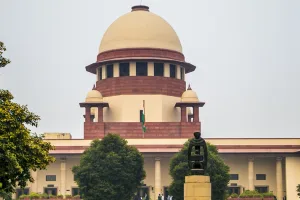
"Nobody listens to our orders, police reforms are going on and on”. The brevity of that observation from a three-member bench of the apex court headed by the Chief Justice of India, as it dismissed a plea for early hearing of a PIL on the matter, reflected deep frustration rather than annoyance. It served as nothing less than an indictment of a series of Union home ministers that included both Rajnath Singh and P Chidambaram (along with a string of their counterparts in the state governments) and underscored the shameful lack of political will to remedy a critical aspect of nationwide mis-governance. For it underscored a sick reality that regardless of their party complexion, governments believed that “favoured” police forces were the most effective means for ensuring that their political agenda was furthered ~ at the cost of the wellbeing of the common citizen. Not just local police organisations functioned at the beck and call of the chief minister, even supposedly prime outfits like the Central Bureau of Investigation and the National Investigation Agency (along with the enforcement agencies of the finance ministry, etc.,) have lost their credibility in the public eye. No wonder then that the common demand is now for a “court-monitored” probe, the cops have forfeited the confidence of the public. Now, none other than the Chief Justice of India has slammed the lip service paid to police reform.

It would also appear ironic that the court’s “vision” was articulated when it dismissed a petition from a Delhi lawyer and BJP activist, for at this point in time the Delhi Police is the subject of much criticism for its permitting “saffron” to unleash a reign of violence in the two major universities in the Capital. The petition may have been drafted earlier, but there would be many who would “smell a rat” in its’ stating that “arbitrary and unaccountable functioning of the police has led to complete alienation of many citizens from the state. Complete politicisation of the police has led to highly partisan crime investigation”. The court declined to enter into any discussion on the subject, but if the petitioner was nobly motivated he might do better to press his “case” with his party’s leadership. Rather than have the judiciary do the dirty work. The reality is that there has been no comprehensive re-working of the law under which the police functions: the marginal tinkering and tweaking at various levels has hardly impacted the “philosophy” of the Police Act of 1861, drafted with a colonial mindset in the wake of the 1857 uprising. In 2007 the Supreme Court had issued a seven-point reform blueprint, but the best comment on its implementation is what their Lordships have just averred.

Ustad Asad Ali Khan: The pedagogue who taught honesty through music

Akash Khanna | New Delhi |

"A teacher affects eternity; he can never tell where his influence stops," Henry Adams once said. Such was the charm of rudra veena maestro and Padma Bhushan awardee Ustad Asad Ali Khan, who taught his students a lesson of honesty through music.

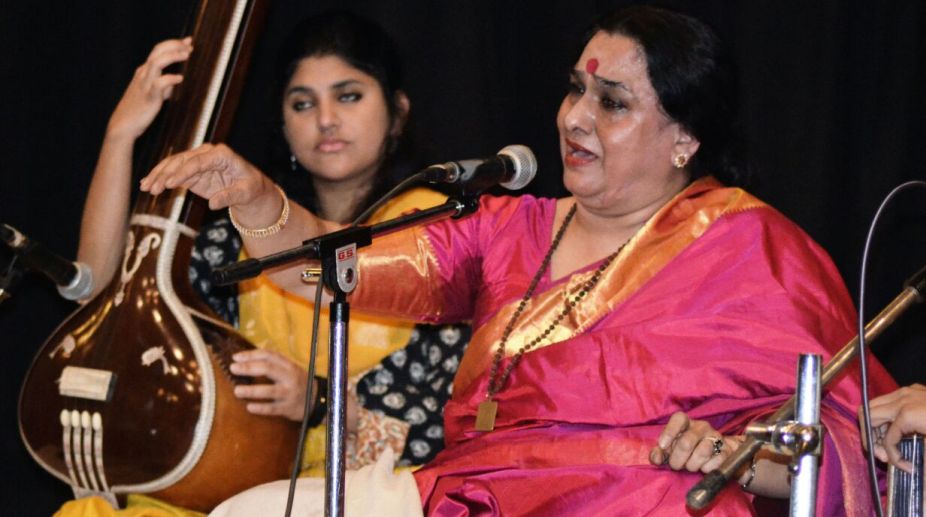
“He was the torch bearers of the ‘Dhrupad Shayli’, a great rudra veena player and undisputedly one of the greatest musicians of the century. He had the complete purity of ragas. His aesthetics, techniques and accuracy were the factors that set him apart,” Madhumita told thestatesman.com, hailing the legend at a classical music concert she organised in the capital to pay tribute to him.

Madhumita Ray is a Khyal singer, the modern genre of Hindustani classical developed from the Dhrupad Shayli introducing frequent alankars and taans. Having trained under Khan for almost 18 years, she recalled some of his inspiring ideas at 'The Maestro and His Music: Tribute to Ustad Asad Ali Khan' — at the India International Centre here on February 26. 

“What’s the point of practising if there isn’t any perfection in it? Everything you do should be relevant to your style. How you start with a raga, extend, and carve ways to the other ragas,” she said.

“He didn’t compromise at all, in anything. He will never tell a lie. If he thinks something is not right, he will tell straight away. He was absorbed in his music and belonged to another place,” she said, adding, "When I met him first, he decorated my own song without disturbing my style. He instilled discipline in us and the accuracy of being aesthetic.”

Khan, who breathed last on 14 June 2011, was the custodian of the rudra veena, a large plucked string instrument, at a time when the deep-sounding instruments were being pushed toward obscurity by the likes of sitar and santoor.

“A maestro, who had such an immense contribution to Hindustani classical, is needed to be remembered every year so that we don’t forget what he was. We want to emulate him in ways he wanted us to function and perform with divinity,” Madhumita said, when asked about the inspiration behind the event.

Madhumita has performed in numerous prestigious festivals and venues in India and abroad, and has collaborated with other forms such as jazz, folk, baul and sufi to produce some of the greatest music blends with Indian classical.

“You have to be a bit open-minded for fusion. When you blend your work with someone else’s, you need to forget a bit of yours. You need to explore facets of your music that matches with the other form of music. It’s a different type of challenge and imagination.”

The Delhi-based artiste, who obtained her Sangeet Alankar from the Gandharv Mahavidyalaya in 1984, is also a music educationist specialising in voice culture therapy.

Talking about the voice culture therapy and its aesthetics, she explained: “If there’s a bush which is wild, you trim it to give it an appealing shape. This is what voice culture therapy is. If your voice is good but there is no discipline, no modulation in it, it's of no use. It’s just like education, where you can write poetry, but accurate grammar is needed to strengthen the case.”

“Picking out the facets of a human voice, like if the voice is heavy, we range it accordingly. Modulation is all about how you control your breath, how to raise the voice and how to take it down effortlessly and uniformly,” she added.

Concluding with a pride in the gleaming auditorium, Madhumita emphasised there’s no music restricted for a specific group of people and said it’s important to connect with the audience, be it through any form of music.

“I always try to have a social message as I feel music is a very powerful medium. If someone prominent says something, a lot of people listen. From the contribution aspect, I would like to teach more, have workshops, and have lecture demonstrations so that the music becomes very much part of the everyday lives.”

Madhumita organised the concert under the aegis of Vageeshwari Foundation. It was graced by artistes like rudra veena player Carsten Wicke, a German-born Kolkata-based student of Khan, Sarod virtuoso Pandit Biswajit Roy Chowdhury, a student of Ustad Amjad Ali Khan and Pandit Mallikarjun Mansoor, besides finale performance by herself.

SC gives life term to two for murder over tamarind plucking

Statesman News Service | New Delhi |

Nearly two decades after a murder was committed over plucking of tamarind in Karnataka, the Supreme Court awarded life imprisonment to two men. 

Families of two brothers had been quarreling "every now and then" over property and plucking of tamarind that led to the murder of the elder sibling's son in 1998. 

The trial court in Karnataka's Shimoga district had acquitted four members of one of the families in 1999 due to lack of evidence after which the police had filed an appeal in the high court. 

In February 2006, the high court convicted three of them on the charge of murder and awarded life term to them while proceedings against the fourth accused were abated owing to his death. 

The high court's verdict was challenged in 2006 by the three convicts in the Supreme Court which upheld the jail term and abated the proceedings against one of them as he died during adjudication of the case. 

A bench of Justices N V Ramana and P C Pant directed M G Shivaraj and H Shivappa, who were out on bail, to surrender forthwith before the trial court to undergo the jail term. 

The apex court noted that prior to the incident in March 1998, the families had a dispute over plucking of tamarind and the issue had calmed down after the intervention of neighbours. 

Later, victim Basavaraj was attacked by his uncle and three others when he and his sister were returning home. He succumbed to the injuries while undergoing treatment. 

The victim's father had lodged a case against his younger brother and three others after which a charge sheet was filed against them in the trial court. 

While upholding the high court's judgement, the apex court said, "We find no force in this appeal which is liable to be dismissed." 

Transaction fees: NCDRC asks Spicejet to pay Rs.50k to two flyers

Statesman News Service | New Delhi |

The apex consumer commission has directed Spicejet to pay a little over Rs.50,000 to two persons for charging transaction fees despite a DGCA circular and a Supreme Court order banning such levies. 

The National Consumer Disputes Redressal Commission (NCDRC) directed the airlines to pay an amount of Rs.25,125 each to Rajasthan natives Sujata Chaudhary and Sanjay Rahar. 

The NCDRC order came while dismissing the revision petition filed by the airline against the state commission's dismissal of its appeal. 

The budget carrier approached the state commission after the district consumer forum directed it to pay the compensation to both the passengers. 

“We find both the forums below have returned a concurrent finding of fact that by charging transaction fees, the petitioner (Spicejet) had violated the directions issued by the DGCA, a statutory body, whose directions are binding on all the airline operators,” the Commission said. 

According to the complaint, Chaudhary and Rahar booked air tickets for their journey from Delhi to Coimbatore. 
When they received the tickets, they found that a sum of Rs.125 had been charged by the airlines on account of transaction charges, whereas as per the December 17, 2012 order, issued by the Director General of Civil Aviation (DGCA), the airlines could not have charged it. 

It further alleged that legal notice was sent to the airline and it was asked to refund the amount. 

The airline denied all the allegations and opposed the contentions of the flyers. 

The district forum allowed the complaint, and directed the airlines to pay to each of the complainants a total sum of Rs.25,125 i.e. Rs 125 towards excess charges recovered from them, Rs.20,000 as compensation and Rs.5,000 as litigation costs. 

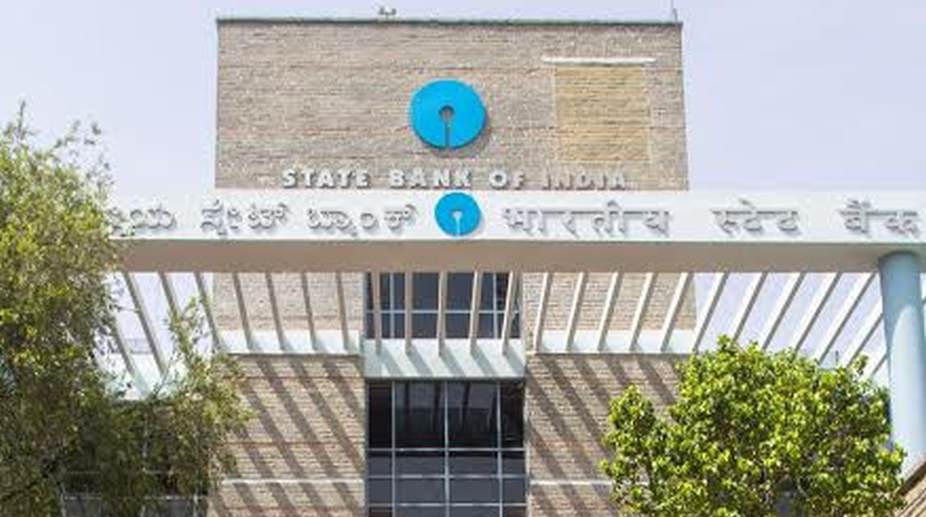
SBI to charge for breach of minimum balance from April

PTI | New Delhi |

After a gap of five years, State Bank of India has decided to reintroduce penalty on non-maintenance of minimum balance in accounts from April 1, and revised charges on other services, including ATMs.

The country's largest bank will permit savings bank account holders to deposit cash three times a month free of charges and levy Rs.50 plus service tax on every transaction beyond that.

In case of current account, the levy could go as high as Rs.20,000.

As per the list of revised charges of SBI, failure to maintain Monthly Average Balance (MAB) in accounts will attract penalty of up to Rs.100 plus service tax.

In metropolitan areas, there will be a charge of Rs.100 plus service tax, if the balance falls below 75 per cent of the MAB of Rs 5,000. If the shortfall is 50 per cent or less of the MAB, then the bank will charge Rs.50 plus service tax.

The charges and MAB varies according to the location of bank. It is minimum in case of rural branches.

A senior SBI official said the bank had suspended levying charges on breach of minimum balance requirements in 2012 to acquire new customers.

The charges are now being reintroduced from April 1.

The Reserve Bank has permitted banks to levy charges for breaching minimum balance limit.

Withdrawal of cash from ATMs will attract a charge of up to Rs.20 if the number of transactions exceeds three from other bank's ATMs in a month and Rs.10 for more than five withdrawals from SBI ATMs.

However, SBI will not levy any charge on withdrawals from its own ATMs if the balance exceeds Rs.25,000. In case of other banks' ATM there will be no charge if the balance exceeds Rs.1 lakh.

SBI will charge Rs.15 for SMS alerts per quarter from debit card holders who maintain average quarterly balance of up to Rs.25,000 during the three months period.

There will be no charge for UPI/ USSD transactions of up to Rs.1000.

Modi govt declined to waive farmers’ loans: Rahul Gandhi

PTI | Sonbhadra (UP) |

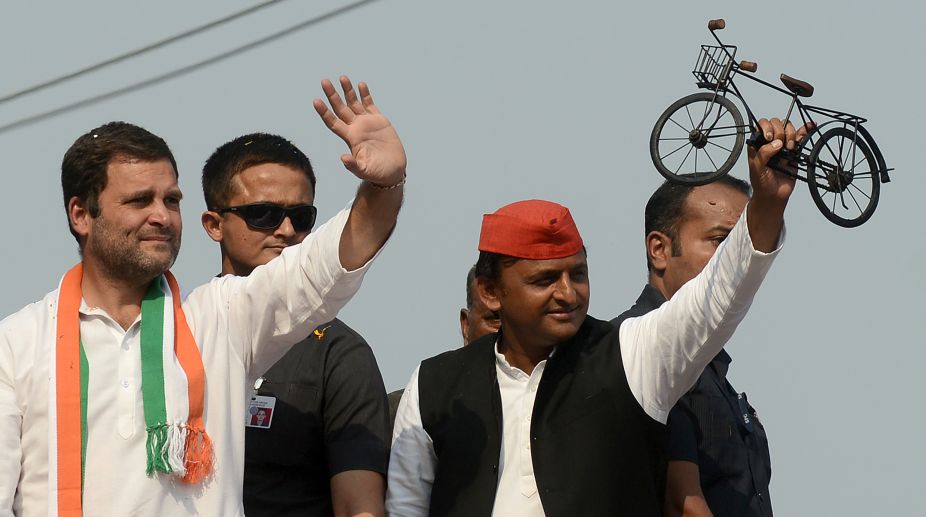
The Narendra Modi government has waived loans worth Rs.1.40 lakh crore owed by 50 rich people but it has refused to write-off Rs.50,000 crore due to the poor farmers, Congress Vice President Rahul Gandhi said Sunday.

Addressing an election rally here, Gandhi said, "I have myself seen the plight of poor farmers who are under tremendous debts. I met the 'benevolent' Prime Minister and urged him to waive the loans of farmers worth Rs.50,000 crore, but he declined." 

Seeking to strike a contrast, he said the previous UPA government headed by Manmohan Singh had waived the farmers' loans amounting to over Rs.70,000 crore within 10 days of coming to power.

The Congress Vice President also accused the Modi government of not fulfilling its electoral promise of tackling unemployment, which he termed as the biggest challenge before the people.

"Prime Minister Narendra Modi has completed more than two-and-half years in office. He had promised that every year, he would give employment to two crore youngsters in the country. But till date, no significant employment has been provided," he said.

Speaking about the hardships faced by farmers, Gandhi said they get meagre prices for their agricultural produce after putting in days of hardwork.

"Potato is being purchased from the farmers at just Rs.2 per kg. If our government is formed, we would bring down the difference of price (between the raw product and finished product)," he said.

He slammed BJP and BSP and said only the Congress-SP alliance could bring development to UP.

"Five women's universities would be established in the state, free coaching would be ensured to poor children, loans of the farmers would be waived, and students studying in government schools would get Rs.500 per month, while those who pass class 12th would get Rs.30,000," Gandhi said.

He also promised that women police stations would be established in every block of the state and reservation would be given to women in police recruitment.

He also said that if his party comes to power in the state Duddhi, a tehsil headquarters would be made a district headquarters.

The agitation to make Duddhi a district headquarters has been going on for the past 5 years.

SC asks MP govt to approach HC on Narmada compensation

Statesman News Service | New Delhi |

The Supreme Court has asked the Madhya Pradesh government to approach the high court for sparing two judicial officers to preside over the grievance redressal authorities for deciding compensation disputes of oustees of Sardar Sarovar Project (SSP) on river Narmada. 

A bench headed by Chief Justice J S Khehar directed the state chief secretary to approach the registrar general of the high court and seek a recommendation in this regard. 

The apex court expressed the hope that the chief justice of the high court would make such a recommendation after which the state government would notify the names. 

“With the consent of the counsel for the rival parties, we consider it just and appropriate to allow the chief secretary of the State of Madhya Pradesh to approach the registrar general of the high court…and to request him to seek a recommendation from the chief justice of the High Court of Madhya Pradesh, for appointment of two judicial members to the two additional grievance redressal authorities. 

“We hope and expect, that the chief justice shall be in a position to make such a recommendation, on or before March 8. Thereupon, the State of Madhya Pradesh shall notify the two additional grievance redressal authorities, by issuing an appropriate notification, by March 9,” said the bench, also comprising Justices D Y Chandrachud and S K Kaul. 
The matter has been posted for next hearing to March 10. 

The apex court had earlier said that to ensure “better deal” for the project-affected families, it is willing to “twist” the arms of the executive and had asked the Narmada Bachao Andolan (NBA) and states — Madhya Pradesh, Gujarat and Maharashtra — to suggest names of experts who could be appointed to the committee which would deal with the issue of resettlement and rehabilitation of the oustees. 

The court had made it clear to the parties, including activist Medha Patekar-led NBA, that it would not allow stalling of the project. 

The issue of compensation will cover 193 villages in Madhya Pradesh, 33 in Maharashtra and 19 in Gujarat. 

The apex court is hearing petitions pertaining to rehabilitation of oustees of the project. 

PM Modi calls Akhilesh, Rahul ‘delicate people’

PTI | Varanasi |

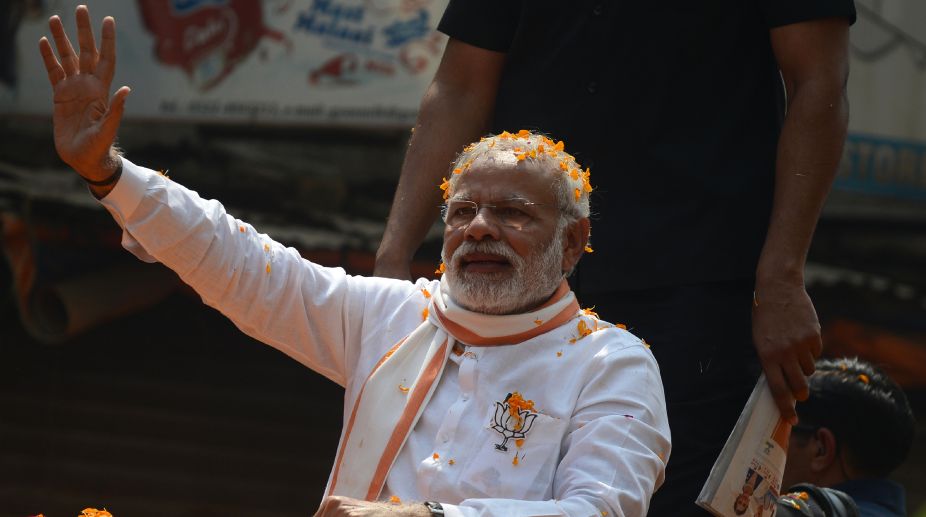
Prime Minister Narendra Modi on Sunday mocked at UP Chief Minister Akhilesh Yadav and Congress vice president Rahul Gandhi as "delicate" people incapable of taking hard decisions while pitching himself as a grassroots leader who can develop the state.

Addressing a public meeting in his parliamentary constituency, Modi said the SP and the BSP are two sides of the same coin with the former being A (Akhilesh) SP and B (Bahujan) SP.

Taking potshots at the Congress over its run of losses in the recent polls, he said one day, research would be done to find out if it once existed, as it is "disappearing from everywhere." 

While Akhilesh has inherited his political powers from his father Mulayam Singh Yadav, Gandhi has got it from "so many of his forefathers", Modi said while using a local term, 'ghelua' (what comes free of cost) for the two leaders.

"They are such delicate people who cannot take hard decisions. They think what if they lose what they got. I have not got anything in inheritance.

"Whatever I have got is due to the blessing of the people of Kashi. I can take hard decisions to rid the country of its problems. I have the courage to do so," the Prime Minister said.

Demonetisation, he said, has brought the SP, BSP and the Congress on the same side in its opposition while the country was supported it.

Modi presented himself as the one who will take up the job of developing the state, especially the eastern parts which are going to polls on March 8, if the BJP is voted to power.

Reaching out to small traders who are in significant numbers here, he said they would not be touched by his government's drive against corruption as the politicians and 'babus' have looted the country all these years.

Falling in love with Indian flavours

"There is none more sincere a love than the love of food," the legendary playwright George Bernard Shaw said. 

Akash Khanna | New Delhi |

"There is none more sincere a love than the love of food," the legendary playwright George Bernard Shaw had once said. Similar to some extent, Taiwan’s Master Chef Hugo Wang fell in love with India, its food and sweets in general and decided to stay here to merge into the shades of Indian culture.

Keeping both the Taiwanese culture that he was oriented with since birth and the Indian culture he was soaked into later, Hugo wants to serve India with his confectionery delight blended with exotic flavours of the two Asian culinary giants.

Hugo was certified as a Master Chef, specialised in sushi cuisine, in 2013 and now located in New Delhi, serving the Indian foodies from past one-and-half year.

“The most beautiful thing about India is that people here respect traditions a lot. They’re so humble. They’ll ask you to try their food, flavours and cousins. And, they all love sweets,” Hugo said in an interview to thestatesman.com.
Certified with Hazard analysis and critical control points (HACCP standards), Hugo started an exclusive food chain ‘Moon of Taj’ here in Lajpat Nagar, New Delhi with the idea of imbibing Indian traditions.

Hugo's one-of-its-kind desserts include Taiwanese Fruit Tart and Taiwanese Nougat that are exclusively available only here in the whole world. Blending the Taiwanese and Indian food aesthetics, Hugo’s Moon of Taj offers light sugary and healthier sweets for Indians to exchange on cultural gatherings.

Hugo was the first Taiwanese to graduate from the Indian Institute of Management (IIM), Ahmedabad and during that period (2011-14) he attended a lot of Indian weddings that introduced him to the Indian cuisine and sweets.

“Sweets symbolises celebration here. I tried a lot of sweets here during the weddings and saw how people gifts their loved ones sweets to mark the celebration,” he said.

“However, the sweets here are very different to the sweets we eat there in Taiwan. Here people want more sugary, glittery and colourful that harms the human body in a long run. So when I was planning to start the Moon of Taj, I wanted to keep five basic principles in mind – exclusivity, less sugary, containing dry fruits, nice packaging, and hygiene.”

When asked about the idea behind the name ‘Moon of Taj’, the 36-year-old chef cum food technician said, “They allow you to watch Taj Mahal in the night on five days in a month, which is on full moon night, and two nights before and two after the full moon. So I witnessed that moment and it was so charming that I fell in love with the country.”

Hugo was first introduced to the culinary by his grandmother at an early age. “Our family owns a successful breakfast chain in Taiwan, which is renowned for assorted range of baozi, steamed buns with assorted fillings. It was through her initial guidance that I learnt to identify all kinds of breads, spices and herbs.”

After completing his graduation from IIM Ahmedabad, he returned to Taiwan, worked as a Sushi chef for a while, and later earned the title of Master Chef in 2013.  

Revealing why he chose Delhi over other cities in India, Hugo said: “Delhi offers a blend of different cultures and communities. It signifies variety and a fusion of civilisations at the same time. Punjabi, South Indians and Jains are living here all together in harmony and people from other parts of the city also come here now and then for various reasons. Also, there come foreigners from different parts of the world.”

When asked if he’s planning to open new branches in other parts of the country, Hugo said, “No, I love Delhi. This is the place my wife chose for me. It’s going fine so far, though we may shift to a bigger place to serve other parts of the country and the world.”

In the midst of the ambience highly influenced by the Taiwanese culture, Hugo’s sweet shop had a miniature Tricolor-flag. Hugo’s favourite dessert is Kheer, he named his son Vishnu, has faith in Indian gods and loves to spend time with local chaps here.

Watching the spirit of the humble Taiwanese and tasting his tarts and nougats filled with rich and authentic flavours and fruits-fillings, no one can resist trying. “To try is to believe,” Hugo concluded, referring to his desire to make people here celebrate their happy moments with his exclusive and one-of-its-kind desserts.

ID cards for all differently abled soon

Statesman News Service | New Delhi |

Social Justice and Empowerment Minister Thaawarchand Gehlot on Sunday said the Rights of Persons with Disabilities law passed by Parliament in December, 2016 will be implemented within four months and Universal ID Cards for all Divyangjans will be issued shortly. 

At a camp here to distribute ‘Free Aids and Assistive Devices to Persons with Disabilities’ under the ADIP (Assistance to Disabled Persons) scheme of Government of India’ he said there would be no delay in the distribution of the assistive devices and transparency would be maintained in the programme. 

He said that more such ADIP camps will be organised in Delhi for distribution of Free Aids and Assistive Devices to Persons with Disabilities. A total of 894 Persons with different kind of disabilities were provided with 1,402 aids and assistive devices valued at over Rs 89 lakhs under the ADIP scheme. The beneficiaries were pre-identified during the assessment camps conducted in North West Delhi District during May and June 2016.

The high quality contemporary aids and assistive devices distributed at the camp were manufactured by Artificial Limbs Manufacturing Corporation of India (ALIMCO), and included 85 motorised tricycles.

I’ve never seen Aussie spinners putting so much pressure: Ganguly

Steve O'Keefe's 12/70 in the first Test in Pune was the best figures by a visiting spinner on Indian soil.

PTI | Kolkata |

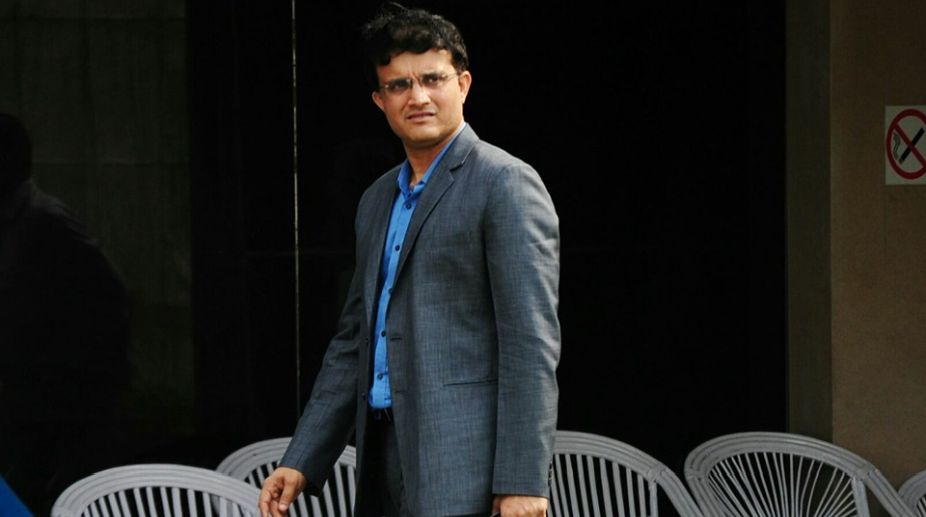
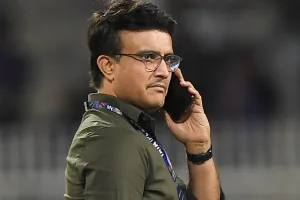
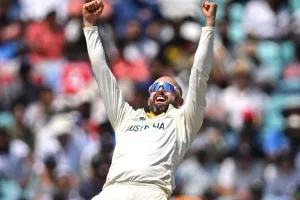
Former captain Sourav Ganguly on Sunday said that he has never seen Australian spinners before the duo of Nathan Lyon and Steve O'Keefe put so much of pressure on an Indian batting line-up in sub-continental conditions.

"Their two spinners are creating pressure from both ends. It's a strategy which was used by Team India previously. But I've never seen Aussie spinners putting so much pressure," Ganguly said at the launch of former Bengal speedster Shib Shankar Paul's academy in Bagha Jatin.

Aussie rookie left-arm spinner Steve O'Keefe's 12/70 in the first Test in Pune was the best figures by a visiting spinner on Indian soil as India faced a 333-run humiliation.

Over to the Bengaluru Test, and it was offspinner Nathan Lyon's 8/50 shot out India for 189 in the first Innings as the home team are in danger of losing their first Test series since their 1-2 defeat to England in December 2012.

Ensure foolproof security on vote counting day: EC to CEOs

Statesman News Service | New Delhi |

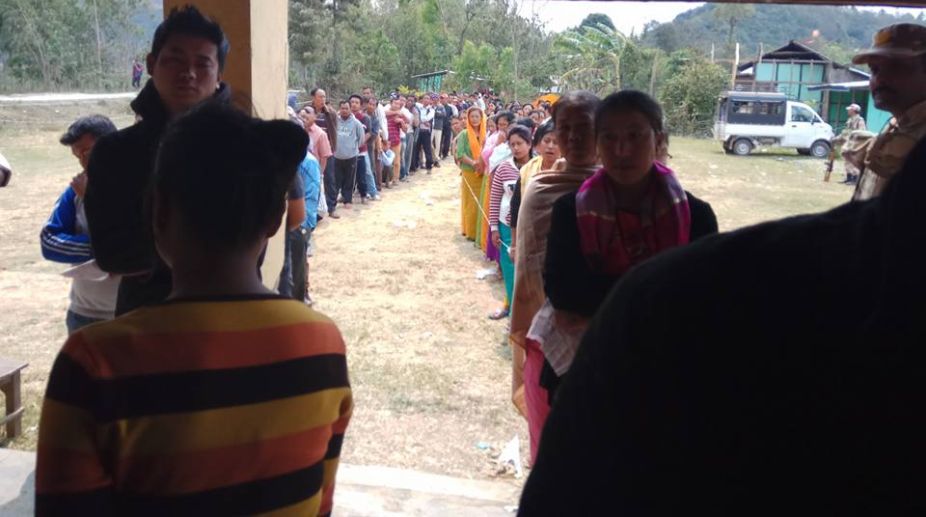
The Election Commission on Sunday issued directions to Chief Electoral Officers (CEOs) of the five poll-bound States of Punjab, Uttarakhand, Uttar Pradesh, Goa and Manipur to ensure foolproof security arrangements for vote-counting on March 11. 

The Election Commission has already issued instructions regarding storage and safety arrangements for EVMs, appointment of counting staff and counting agents, along with counting procedures. 

The Commission had several rounds of video-conferences with the CEOs and ROs of the five states to take first hand inputs on the preparedness of the counting arrangements. Giving details of the security mechanism set-up, a senior Election Commission officer said that the commission was not leaving any stone unturned for a fair and transparent counting arrangements at all the 157 counting centres viz., Punjab (53), Goa (2), Uttar Pradesh (75), Uttarakhand (15) and Manipur (12). 

The Election Commission has taken feedback from all political parties and candidates, based on which these additional instructions have been issued with a view to further bolster security arrangements to tackle both general as well as situation-specific exigencies and ensure a smooth counting process in a transparent manner. 


The Election Commission has instructed all the CEOs and District election officers to make the arrangements and undertake counting process cautiously, step by step and without undue haste so as to make them foolproof, the EC officer added. 

The instructions include proper barricading arrangements to be ensured inside each of the counting hall with weld wires-mesh to segregate the counting agents from the counting personnel and EVMs etc. as per the Commission’s instructions. 

In each of the counting halls, proper arrangement for videography should be made to record the general happenings in the counting hall for effective monitoring of the counting process as per the Commission’s instructions. There has to be effective barricading from the strongroom door up to the counting hall door made in such a way that EVMs of each constituency should go to its respective counting hall only, and shall not criss-cross each other.

The CEO shall personally monitor and ensure that all the counting arrangements are done as per the instructions of the Commission.

Ensure foolproof security on vote counting day: EC to CEOs

Statesman News Service | New Delhi |

The Election Commission on Sunday issued directions to Chief Electoral Officers (CEOs) of the five poll-bound States of Punjab, Uttarakhand, Uttar Pradesh, Goa and Manipur to ensure foolproof security arrangements for vote-counting on March 11. 

The Election Commission has already issued instructions regarding storage and safety arrangements for EVMs, appointment of counting staff and counting agents, along with counting procedures. 

The Commission had several rounds of video-conferences with the CEOs and ROs of the five states to take first hand inputs on the preparedness of the counting arrangements. Giving details of the security mechanism set-up, a senior Election Commission officer said that the commission was not leaving any stone unturned for a fair and transparent counting arrangements at all the 157 counting centres viz., Punjab (53), Goa (2), Uttar Pradesh (75), Uttarakhand (15) and Manipur (12). 

The Election Commission has taken feedback from all political parties and candidates, based on which these additional instructions have been issued with a view to further bolster security arrangements to tackle both general as well as situation-specific exigencies and ensure a smooth counting process in a transparent manner. 


The Election Commission has instructed all the CEOs and District election officers to make the arrangements and undertake counting process cautiously, step by step and without undue haste so as to make them foolproof, the EC officer added. 

The instructions include proper barricading arrangements to be ensured inside each of the counting hall with weld wires-mesh to segregate the counting agents from the counting personnel and EVMs etc. as per the Commission’s instructions. 

In each of the counting halls, proper arrangement for videography should be made to record the general happenings in the counting hall for effective monitoring of the counting process as per the Commission’s instructions. There has to be effective barricading from the strongroom door up to the counting hall door made in such a way that EVMs of each constituency should go to its respective counting hall only, and shall not criss-cross each other.

The CEO shall personally monitor and ensure that all the counting arrangements are done as per the instructions of the Commission.