Logo

Delhi govt to include bananas, eggs in midday meals

PTI | New Delhi |

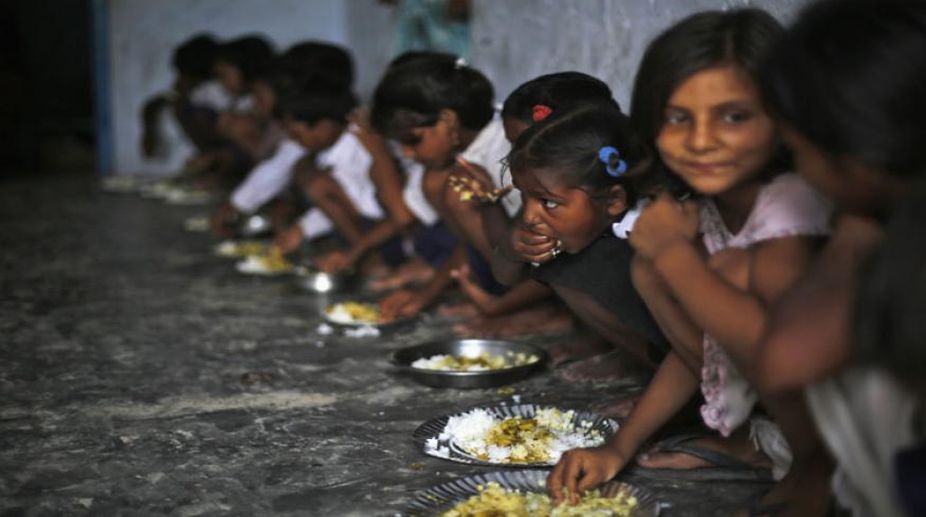
Midday meals served in Delhi government schools are set to get healthier with bananas and eggs being included in the menu.

While the expenditure for midday meals is borne by the Centre, the Delhi government has decided to pump in extra money to enhance the nutritional value.

Delhi Deputy Chief Minister Manish Sisodia had announced this while presenting the budget for 2017-18 yesterday.

Earmarking Rs 55 crore in its annual budget for the mid-day meal scheme, the Delhi Government has also planned to expand its coverage to all students of class IX to XII in girls schools.

"The Centre provides complete assistance for implementation of the midday meal scheme in government schools for students of Class I to VIII. However, the grant is hardly sufficient to ensure desired levels of calorie and nutrition with quality in the meals," a senior official of Directorate of Education (DoE) said.

"We have decided to supplement the existing nutrition content by providing banana/boiled egg to each student from Delhi government's resources," she said.

Questions have been raised time and again over the quality of the midday meals being served in schools.

A committee formed in 2015 by the HRD Ministry which had experts from AIIMS had recommended that items like milk and milk products, eggs and bananas be included in midday meals.

However, the upgradation is yet to take off at national level.

Delhi govt to include bananas, eggs in midday meals

PTI | New Delhi |

Midday meals served in Delhi government schools are set to get healthier with bananas and eggs being included in the menu.

While the expenditure for midday meals is borne by the Centre, the Delhi government has decided to pump in extra money to enhance the nutritional value.

Delhi Deputy Chief Minister Manish Sisodia had announced this while presenting the budget for 2017-18 yesterday.

Earmarking Rs 55 crore in its annual budget for the mid-day meal scheme, the Delhi Government has also planned to expand its coverage to all students of class IX to XII in girls schools.

"The Centre provides complete assistance for implementation of the midday meal scheme in government schools for students of Class I to VIII. However, the grant is hardly sufficient to ensure desired levels of calorie and nutrition with quality in the meals," a senior official of Directorate of Education (DoE) said.

"We have decided to supplement the existing nutrition content by providing banana/boiled egg to each student from Delhi government's resources," she said.

Questions have been raised time and again over the quality of the midday meals being served in schools.

A committee formed in 2015 by the HRD Ministry which had experts from AIIMS had recommended that items like milk and milk products, eggs and bananas be included in midday meals.

However, the upgradation is yet to take off at national level.

President returns minimum wages amendment bill to Delhi Assembly

PTI | New Delhi |

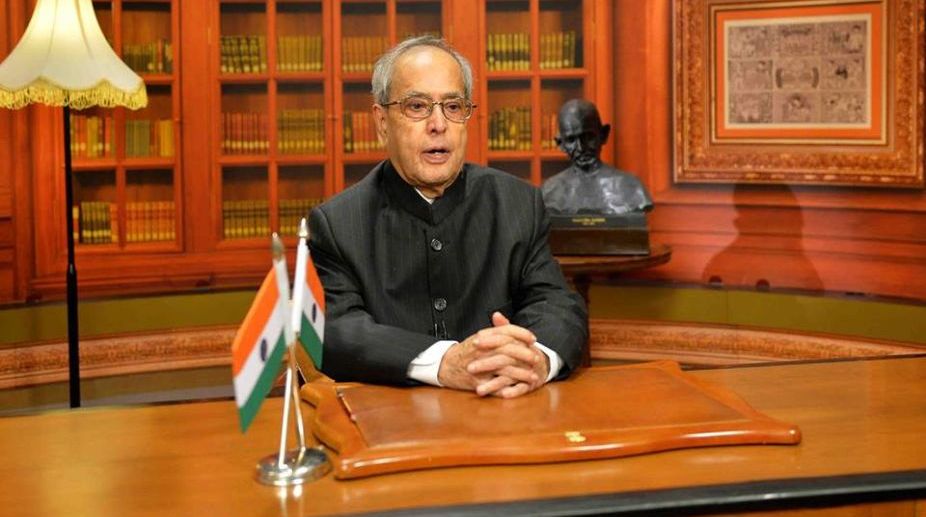
President Pranab Mukherjee has returned a Bill, that stipulates steep penalty for violating labour laws in the national capital, to the Delhi Assembly.

Speaker Ram Niwas Goel said on Thursday that the Bill, that was cleared by the assembly in December 2015, has been returned for "reconsideration".

Incidentally, it was returned once before and was sent back to the President with the required changes, Labour Minister Gopal Rai said.

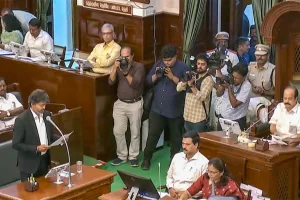
"We have received a letter from the Lt Governor (Anil Baijal) dated March 8 in which he has apprised me that the President has returned the Minimum Wages (Delhi) Amendment Bill 2015 for reconsideration," Goel told the House.

The proposed law has recommended imprisonment of up to three years and penalty amounting Rs.50,000 for violators of the Minimum Wages Act.

Under the proposed amendments, companies will also have to upload the data of their employees on their websites in the manner as may be prescribed by the Delhi government.

"The financial condition of the labourers in Delhi is quite bad. Keeping this in mind, minimum wages have been hiked recently. But the biggest problem has been violation of the law and the lack of options to penalise violators.

"The returning of the Bill is unfortunate. We will sit with the Chief Minister and work out the details and resend it," Rai told reporters.

President returns minimum wages amendment bill to Delhi Assembly

PTI | New Delhi |

President Pranab Mukherjee has returned a Bill, that stipulates steep penalty for violating labour laws in the national capital, to the Delhi Assembly.

Speaker Ram Niwas Goel said on Thursday that the Bill, that was cleared by the assembly in December 2015, has been returned for "reconsideration".

Incidentally, it was returned once before and was sent back to the President with the required changes, Labour Minister Gopal Rai said.

"We have received a letter from the Lt Governor (Anil Baijal) dated March 8 in which he has apprised me that the President has returned the Minimum Wages (Delhi) Amendment Bill 2015 for reconsideration," Goel told the House.

The proposed law has recommended imprisonment of up to three years and penalty amounting Rs.50,000 for violators of the Minimum Wages Act.

Under the proposed amendments, companies will also have to upload the data of their employees on their websites in the manner as may be prescribed by the Delhi government.

"The financial condition of the labourers in Delhi is quite bad. Keeping this in mind, minimum wages have been hiked recently. But the biggest problem has been violation of the law and the lack of options to penalise violators.

"The returning of the Bill is unfortunate. We will sit with the Chief Minister and work out the details and resend it," Rai told reporters.

Ex-IAF man, ‘mastermind’ of terror group, held in Kanpur

PTI | Lucknow |

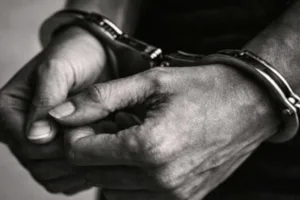
Police on Thursday arrested a former IAF employee who they believe is the "mastermind" of a terror module that included Saifullah, a suspected terrorist killed in an encounter on Wednesday.

Mohd Ghaus Khan was picked up from Kanpur by the Anti- Terrorist Squad, and revealed vital information during questioning, said Additional Director General of UP Police Daljit Chaudhary.

He said another suspect, identified only as Azhar, was also arrested by the ATS.

Khan "is a technical man and a hardcore member of the module," Chaudhary said, adding he was the "main accused and mastermind" of the module.

He said Azhar, the second suspect, was the main supplier of arms to the module. He did not say where he was arrested from, or in what capacity Khan worked in the air force.

The UP police claimed that with these two arrests, all the main members of what they alleged was an ISIS influenced module are in custody.

The latest arrests raised to five the number of people in the UP police custody in connection with the blast on the Bhopal-Ujjain train in Madhya Pradesh on Tuesday. The MP police also has arrested some people.

Yesterday the UP police arrested three men after an encounter on the outskirts of Lucknow in which Saifullah was killed after a 12-hour ATS operation. Police say he and his alleged accomplices carried out the train blast in which at least ten persons were injured.

Police say he was self-radicalized and was influenced by the Middle Eastern terror group, ISIS. Saifullah's father has refused to claim his son's body, saying anyone who carries out a terror attack is a traitor to the nation.

Bypolls to two assembly seats in MP on April 9

PTI | Bhopal |

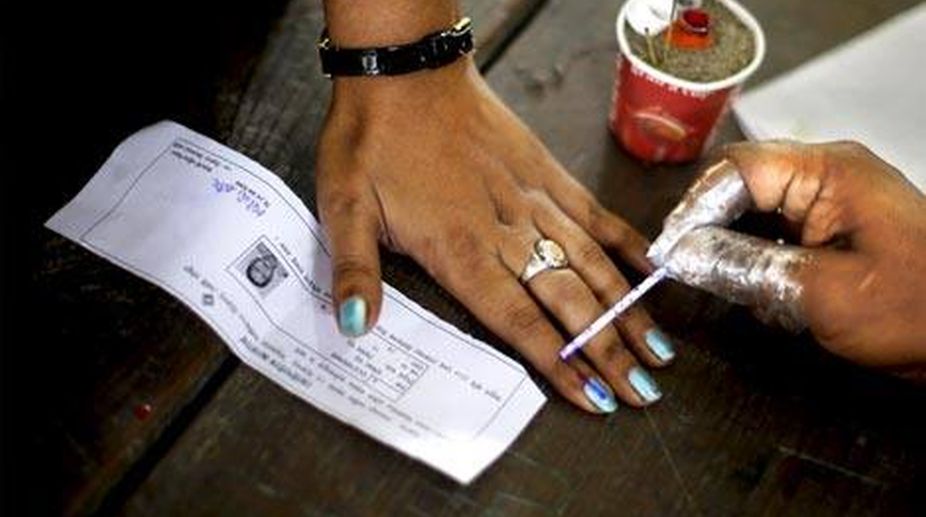
Bypolls to two assembly seats in Madhya Pradesh—Ater and Bandhavgarh–will be held on April 9, the Election Commission announced on Thursday.

The bypoll to Ater seat in Bhind district was necessitated after the death of sitting Congress MLA Satyadev Katare on October 21, 2016.

Whereas at Bandhavgarh (ST) in Umaria district, the seat fell vacant after sitting BJP MP Gyan Singh won the Lok Sabha bypoll from Shahdol, in November last year.

The counting will take place on April 13, an EC official said here.

The nominations for the bypolls will be filed between March 14-21, while the scrutiny will be done on March 22. The last date for the withdrawal of candidature is March 24, he said.

The model Code of Conduct in these constituencies came into force from today and the district collectors concerned have been directed by the Commission to keep a vigil in view of Holi, the official said.

Kashmir Bypoll: Acid test for PDP-BJP government

Statesman News Service | Jammu |

The by-election for the two Lok Sabha seats in the Kashmir valley in April will be an acid test for the PDP-BJP coalition government headed by Mehbooba Mufti.

The Election Commission on Thursday announced that the by-election for the Srinagar and the Anantnag seats will be held onApril 9 and 12 respectively.

Reports were circulating that the coalition government might again try to get the elections postponed on the issue of the ongoing unrest in certain parts of the valley. The state government had pleaded that the panchayat elections should be held before the bypolls for the vacant Lok Sabha seats. The Congress had recently accused the coalition government of running away from the elections in the valley.

The general atmosphere in the valley at this point of time is not congenial particularly for the PDP because of the recent long stretched unrest that claimed 80 lives in Kashmir following the killing of a local terrorist leader Burhan Wani in an encounter in July last.

The Anantnag Lok Sabha seat was vacated by Mehbooba Mufti in June last year after she won the assembly election to become Chief Minister following the death of her father Mufti Syeed. The Srinagar Lok Sabha seat fell vacant when the sitting PDP MP Tariq Hameed Karra resigned as a protest against what he called “brutalities” on the people who were protesting killing of Burhan Wani.

Karra has now joined the Congress and was expected to again contest the seat in the by-election.

The atmosphere in Anantnag that was considered a stronghold of the PDP during the lifetime of Mufti Sayeed was also not in favour of the PDP at this point of time as South Kashmir has become epicenter of the current unrest in the valley.

However, Mehbooba was making efforts to politically mellow down the anger among the electorate. The BJP had failed to win even a single seat in the valley in the last Assembly elections.

Tapsee’s new mission ‘Naam Shabana’

SNS | New Delhi |

The team of film Baby is back together for another mission led by Shabana Khan which was played by Taapsee Pannu. to take forward the legacy of unique movies with an impact. 

Akshay Kumar and Tapsee Pannu starrer Baby released in 2015 and gave Tapsee the much awaited recognition. Neeraj Pandey’s directorial Baby had proven to be a hit among the audience.

Naam Shabana has the unique distinction of being India's first spin-off of a successful franchise. Taapsee's character had resonated in an impactful manner with Baby's audience and the same character is now spun-off into a full length film of its own.

Baby had several memorable characters like Akshay Kumar who played Ajay Singh Rajput, Anupam Kher as Shukla Ji, Rana Daggubati played Jai Singh Rathore and Danny Denzongpa as Feroze Khan. The film is one of the pioneers in a new era of action-thrillers for Indian cinema.

Neeraj Pandey adds, "I remember sharing this idea of a spinoff with the principal crew and cast and the one thing that struck me was that everyone was extremely positive and inquisitive about what all could be done with it. Each one of us felt that this was that just needed to be told. Shivam's take on this story is a treat for the audience that liked Baby."

With Naam Shabana, the team heads off for more daring missions as they put country before self just like in Baby. The spin-off will see new characters emerge which are played by Manoj Bajpayee and Prithiviraj Sukumaran who joined the Baby team for this film.

 Neeraj Pandey's Naam Shabana directed by Shivam Nair is all set to release on March 31, 2017.

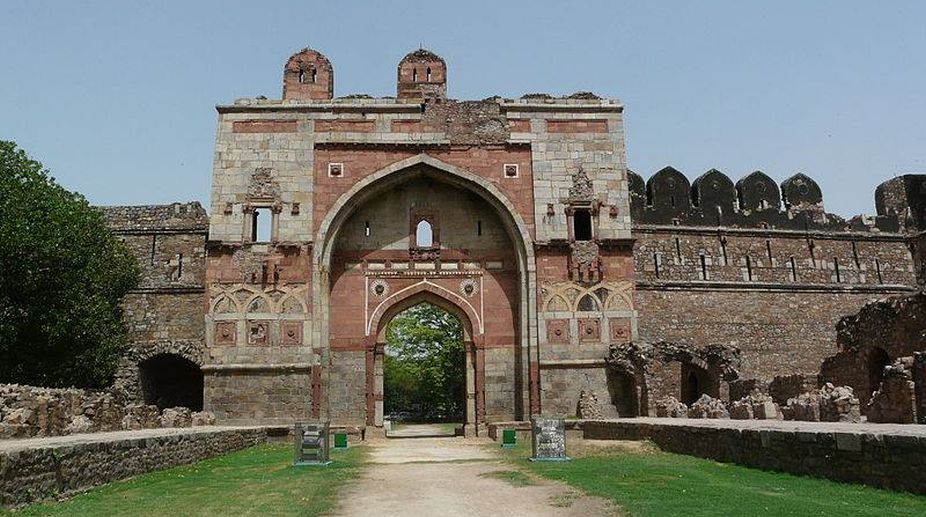
The Delhi of 14 gates, 14 windows

R V Smith | New Delhi |

Delhi of the Mughals never ceases to astonish one. Besides the vast literature on the subject one sometimes gleans gems of information that lie buried in obscurity. Would it surprise modern readers to know that Shah Jahan (whose birthday fell on 15 January) built not only a new Capital but also imparted a certain unique tradition to it.

According to Shama Mitra Chenoy, Delhi was not only Darul Khalifa but also 22 Khawaja-ki-Chaukhat (royal patronage hub and threshold of 22 saints). The city had 14 gates: Delhi Darwaza, Rajghat Darwaza, Khizri Darwaza, Calcutta Darwaza, Nigambodh Ghat Darwaza, Kela Ghat Darwaza, Lal Darwaza, Kashmiri Darwaza, Badarroo Darwaza, Kabuli Darwaza, Pathar Ghat Darwaza, Lahauri Darwaza, Ajmeri Darwaza and Turkman Darwaza.

There were also 14 Khirkis or windows in the Walled City. According to Prof Aleem Ashraf Khan, writing in the Indo-Persian Society’s publication, Delhi of the Mughals, printed by Mohammed Anees, the enclosing wall of the city, a mud one, built in four months, crumbled a year later in heavy rain and the emperor ordered it to be rebuilt in stone and lime-mortar.

It was about 6,664 yards in circumference, four yards in width and nine yards in height with 27 bastions, each 10 yards in diameter. The cost was Rs.4 lakh though the mud one had cost Rs.1.5 lakh. But the value of the rupee at that time was more than a hundred times of what it is now.

The saying was that Delhi had many gates of entry but none for departure (meaning that those who came to the city just stayed on). And why would anyone want to leave a city, which was grander than any in the world at that time? European travellers like Manucci were amazed by the beauty and variety of Shahjahanabad, whose Chandni Chowk was like a fairyland (the meeting place of writers,poets and storytellers), where one could buy anything from an elephant to a pin or even an afrit or jinn. There were precious stones as big as turkey's eyes and enchanted maidens, who could sing one to the land of the Lotus Eaters and bewilder both the residents and visitors.

The poet Bedil, records Prof Rehana Khatoon, was witness to the Rasm-e-Sati in the 26th year of Mohammad Shah’s reign in 1156 A H (corresponding to 1745 AD).

He says: "On 2nd Jamadus Sani, the wife of Bhagwan Narain Khatri, who lived in Vakilpura, became sati with her husband at the age of 35. His father was a friend of Rai Rayan Nagarmal and Nagarmal tried this not to happen but she (the wife) did not accept his advice and went to a jungle with the body of her husband. Bedil saw this rasm and remained disturbed for the whole day. Then he went to the Dargah of Qutubuddin Bakhtiyar Kaki (in Mehrauli) and wrote some rubais (quatrains)."

Dr Narayani Gupta says the city was divided into 12 thanas or wards, each in charge of a Thanedar. The thana was a honeycomb of mohallas, each of which was sealed off from the other and could be entered only by one gate. Each mohalla was named after the affluent resident, whose haveli dominated it.

The Thanedar of Daryaganj saved the life of Sir Theophilus Metcalfe when he was fleeing to Rajputana during the revolt of 1857. Incidentally, each ward also had the house of some prominent Iranian official, who exercised good control.

Dr Khalid Alvi of Zakir Husain College recounts that Sufis and poets would always gravitate towards Jama Masjid. There were many Kehwa Houses in Chandni Chowk (kehwa is a Kashmiri green tea). Coffee was introduced to India by Sufi Buddhan Baba in the 14th century. Incidentally, tobacco came in Akbar's time but smoking became popular only in Shah Jahan's reign.

After Aurangzeb there was a deluge of courtesans and cadamites in Delhi. In Moraqquae-Delhi Dargah, Quli Khan writes that Kasalpura and Nagul were the slums where prostitutes were habilitated. Delhi residents used to go to Arab-ki-Sarai to watch Arab cadamites. A rich man named Meeran hosted an all-night cadamites' revelry on the 11th of every month. Homosexuality was so common in the 18th century that both the feudals and commoners showed interest in it. Effeminate boys were frequently found dancing in Chandni Chowk and Chowk Sadullah. Besides the Armenian Sarmad, who befriended Abay Chand, Wali Dakhini, who came to Delhi in the 17th century, fell for a boy named Amrit Lal. Faiz composed poems on a boy, Ramzani.

Another poet, Mazhar-Jan-e-Jana loved Abdul Hai Taban and Mohammed Yar Khaksar was in love with the great Mir Taqi Mir. There were many other aspects of Delhi, which made one fall in love with it.And this holds true even today.

Sadly, Delhi's glorious heritage is fast getting eroded because of rampant despoliation, encroachment, urbanisation and neglect. Nawab Dojana's haveli, known as Dojana House in Matia Mahal, is now a flatted building, which is already showing signs of deterioration. Haveli Sadr Sadur, bang opposite it, has been so encroached upon and rebuilt in parts that it is hard to recognise it.

The haveli of Nawab Buddan, said to be a great fashion trendsetter, could not be traced, perhaps because of alterations. The old hamam in the same street, which had become a shop, is also not easily recognisable. The building behind Jama Masjid associated with Dara Shikoh had become a school.

The monuments of Mehrauli that are not among the official list (despite Maulvi Zafar Hasan's classification) are slowly disappearing as most of the care and attention is lavished by the Archaeological Department on the well-known edifices. The same is the case in Nizamuddin area. The gateway of the house of Mirza Jahangir, favourite son of Akbar Shah II and Queen Mumtaz Mahal II, in the Nizamuddin Dargah complex is showing signs of deterioration. His tomb and that of Mohammad Shah Rangila (which look almost identical) are also showing signs of wear and tear.

Mirza Jahangir is the one whose return from exile in Allahabad in the early 19th century resulted in the institution of the annual Phool Walon-ki-Sair. The Tughlak period Langar Khana in the same complex is a picture of neglect as is the eastern gateway of the Dargah.

However, the two dalans, or verandahs, of Atgah Khan's tomb complex, which were used as khanqas, or hospices, in Mughal times, look less dilapidated after repairs. Atgah Khan was the husband of Ji Ji Angah, a wet nurse of Akbar, who was murdered by Adham Khan, son of the other wet nurse, Maham Anga,out of jealousy. Atgah's mausoleum lately been renovated under the restoration plan of the Aga Khan Trust. But Bari-ka-Gumbad, east of Atgah Khan's tomb, is deteriorating, so also a gateway north of the Chausath Khamba.

The gateway of Inner Kot, west of Kali Masjid, is in a bad state. It leads to a small fortification which, according to INTACH, once had the houses of the Pirzadas of the Nizamuddin Dargah.

Khan-iJahan Tighlinani's tomb in Nizamuddin village shows signs of serious deterioration. He was the Wazir of Firoz Shah Tughlak and father of Khan-i-Jahan Junan Shah, who succeeded him as Wazir. It is supposed tobethe first octagonal tomb built in Delhi. New buildings have come up close to the tomb so that it is hedged in between them. Such grand monuments would have been preserved with care elsewhere but not in the capital.


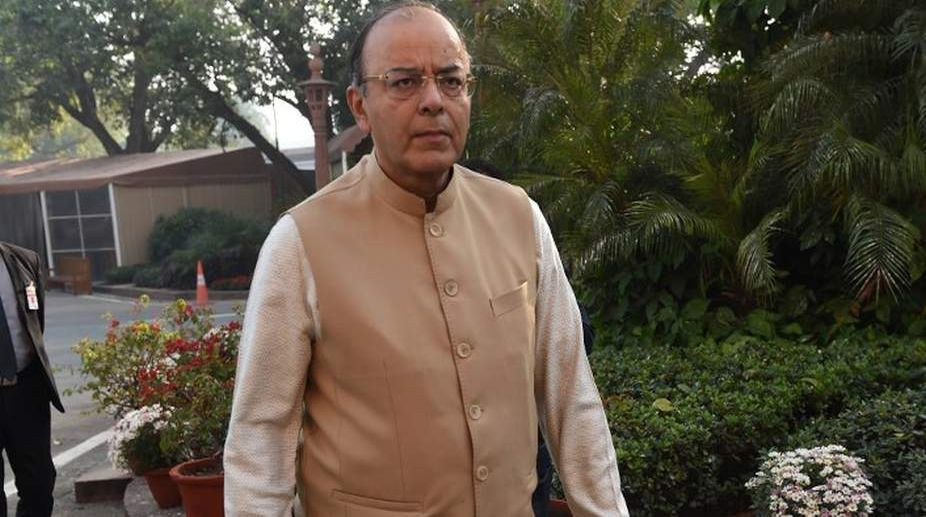
Jaitley to hold talks with RBI officials on NPAs

Statesman News Service | New Delhi |

In an effort to address the problem of rising non-performing assets of banks, Union Finance Minister Arun Jaitley is likely to hold a high-level meeting with senior officials of Reserve Bank of India on Friday.

Banking Secretary Anjuly Chib Duggal along with senior Finance Ministry officials will also be present at the meeting. 

Reserve Bank Deputy Governor Viral Acharya had floated the twin concept of Private Asset Management Company (PAMC) and National Asset Management Company (NAMC) for resolution of stressed assets. In his first public speech after assuming office, Acharya had suggested on 28 February fresh structures through which the non-performing assets faced by Indian banks could be resolved and called for the need for greater reforms in the sector. 

Gross non-performing assets across 42 listed banks in India have increased to Rs 7 lakh crore by the end of December 2016, nearly double the amount reported at the end of the September 2015 quarter.  A proposal to push private asset reconstruction companies (ARCs) to take on the toxic assets of public sector banks is gaining traction within the government as the most practical way to resolve the banking sector mess, which is seen as hampering the Indian financial sector’s ability to fund productive sections of the economy.

Chief Economic Advisor Arvind Subramanian had suggested setting up a public sector asset rehabilitation agency (PARA), proposed in the Economic Survey of 2016-17.  It was being looked at as an in-principle instrument for resolution of the twin balance sheet problem of “over-leveraged companies and bad-loan-encumbered banks”. However, it has so far not found any backing either from the finance ministry or from the central bank. 

Acharya acknowledged that there has been little resolution of stressed assets. This is despite the fact that the RBI has put in place a number of mechanisms through which bad loans can be resolved. The PAMC plan, as suggested by Acharya, could be for sectors such as metals, construction, telecom and textiles, where the assets will have economic value in the short run.

Different measures tried out by policy makers have failed to adequately stem the rot in the country's banking sector. In 2014, the RBI had come up with a scheme that permitted banks to extend the maturity of loans given to companies in the infrastructure sector. In 2015, it extended banks the option of converting a part of the debt into equity and taking a controlling stake in over-leveraged companies. In June last year, the central bank floated yet another instrument called the Scheme for Sustainable Structuring of Stressed Assets (S4A plan), which allowed lenders to split the outstanding debt of a stressed company into sustainable debt and equity with some riders. The Bankruptcy Code is not expected to yield results in the next couple of years.

Two terrorists, one civilian killed in Kashmir encounter

SP Sharma | Jammu |

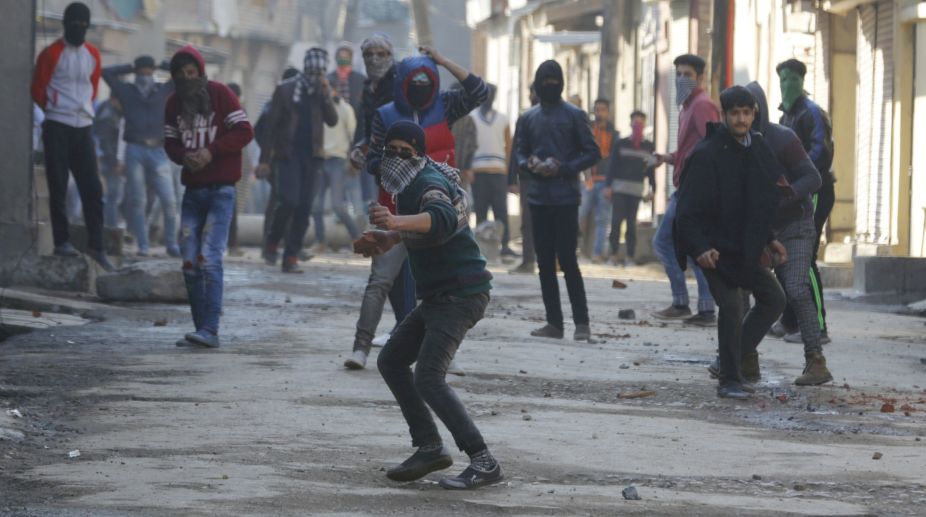
Two terrorists and a stone pelting civilian were killed on Thursday during an encounter with security forces in the Padgampora village in the Pulwama district of South Kashmir.

This is the first civilian killing following warning of Army Chief Bipin Rawat to the civilians not to indulge in stone pelting on security forces during an encounter as the terrorists could escape in such situation.

Deputy Commissioner of Pulwama, Muneer-ul-Islam, told the SNS over the telephone that the civilian identified as Aamir Nazir did not belong to the village where the encounter was in progress and had come from the Begum Bagh village about 4 kms away probably with a mob to pelt stones at the security forces and distract their attention from the terrorists.

The DC said that the encounter has been called off but cordon of the village has not been lifted so far as search operations in the area were continuing.

The Northern Command of the army confirmed that two terrorists have been killed in the encounter.

The police said in the evening that the two killed terrorists were involved in the recent bank robberies and hurling grenades at security personnel.

These terrorists were also wanted in cases of snatching rifles of policemen.

They were motivating the youth in South Kashmir to join militancy and were also threatening people to keep away from the Mom Sabha and pancetta elections, police said.

One of the slain terrorist has been identified as Jehangir Ganai who was a top commander of the Lashkar-e-Taiba (LeT) who was operating in South Kashmir and the Doda and Kishtwar districts of Jammu.

Three of his accomplices, including a teacher, were yesterday arrested by the police and large quantity of arms and ammunition recovered from them. The other terrorist has been identified as Shaffi Sher Gujri.

The 15-year-old civilian Aamir, who was a student of 9th class, got killed as the police fired at a mob that was pelting stones and other missiles at the security forces although restrictions under the Section 144 CR.PC. prohibiting assembly of people were promulgated in the area.

Two other civilians are also reported to have been injured in the police action. One person received bullet injury on his leg and was stated out of danger.

Residents of the surrounding villages descended at the place of encounter where the army, CRPF and the J&K police had laid a cordon to nab the terrorists last night.

They started pelting stones from all sides while the security forces zeroed in on the house from where the terrorists were firing at them as such the police had no alternative but to open fire at the surging crowd.

Reports said that Ganai was killed in the initial bout of gunfight, while the police called Gujri’s wife and mother to the encounter site in an attempt to make him surrender. However, the effort failed and the terrorist kept firing at the security forces.

Train services from Banihal to the valley remained suspended as a precautionary measure.

Reacting to the killing of Aamir during clashes, Hurriyat (M) chairman Mirwaiz Umar Farooq said the warning of Indian army chief Bipin Rawat has been put to action.

Earlier on Sunday, the security forces had killed two terrorists in an encounter at Tral. A policeman also lost his life in the encounter.


Delhi govt sets aside Rs 1,600 crore for power subsidy

PTI | New Delhi |

The Delhi government has set aside Rs 1,600 crore for its flagship subsidy scheme for power consumers.

Deputy Chief Minister Manish Sisodia, presenting the budget for 2017-18 in the Delhi Assembly, proposed Rs 2,194 crore expenditure in the energy sector, including Rs 1,600 crore for subsidy to power consumers.

Under the subsidy programme, in the last two years domestic consumers using up to 400 units of electricity per month are charged at half the rate.

The scheme will continue to benefit over 36 lakh domestic consumers in the national capital who come under the prescribed limit of electricity use.

The budget also highlighted the government's steps towards harnessing solar energy and waste energy to meet the need of consumers.

The solar policy of the government was notified in September 2016. The government proposed installation of solar photo-voltaic cells generating 1000 MW power in the next five years and double it by 2025.

The government has approved setting up of three waste-to-energy plants in Okhla, Gazipur and Bawana. These plants will have a combined capacity of 52 MW.

‘Training may give you super-sized memory in 40 days’

PTI | London |

You can achieve a super-sized memory like that of a world champion, suggests a new study which found that the ability to perform astonishing feats of memory can be learned.

After 40 days of daily 30-minute training sessions using a strategic memory improvement technique, people who had typical memory skills at the start and no previous memory training more than doubled their capacity.

From recalling an average of 26 words from a list of 72, the participants were able to remember 62, researchers at Radboud University Medical Centre in The Netherlands found.

Four months later, without continued training, recall performance remained high.

Brain scans before and after training showed that strategic memory training altered the brain functions of the trainees, making them more similar to those of world champion memory athletes, researchers said.

"After training we see massively increased performance on memory tests," said Martin Dresler, assistant professor at Radboud University Medical Centre.

"Not only can you induce a behavioral change, the training also induces similar brain connectivity patterns as those seen in memory athletes," said Dresler.

Dresler, who began the work at Stanford University School of Medicine in the US, examined the brains of 23 world-class memory athletes and 23 people similar in age, health status, and intelligence but with typical memory skills.

He used functional magnetic resonance imaging (fMRI), a means of measuring brain activity by detecting blood flow changes inside the brain, to measure differences in the strengths of communications between brain regions. He used structural MRI to measure differences in sizes.

Initially, Dresler expected that memory champions might have notable differences in brain anatomy, the same way one might expect a world champion body builder to have unusually large muscles. Using structural MRI, however, they did not see differences.

The differences they detected between memory athletes and non-athletes were in connectivity patterns spread across 2,500 different connections in the brain.

A subset of 25 connections most strongly differentiated athletes from those with typical memory skills.

The athletes Dresler studied were not born with exceptional memory skills.

"They, without a single exception, trained for months and years using mnemonic strategies to achieve these high levels of performance," Dresler added.

The research was published in the journal Neuron.

Racial discrimination getting worse in US: China

PTI | Beijing |

The 2016 US Presidential poll was a "farce" as it was fought with lies exposing hypocritical nature of the democracy in America where racial discrimination is "worsening", a Chinese report on America's human rights record said on Thursday.

In a tit-for-tat report on the US which every year releases human rights record of China and other countries, a Chinese official report said money politics and power-for-money deals had controlled the presidential election between Republican Donald Trump and Democrat Hillary Clinton.

Voter turnout and support rate reached new low, the report, 'The Human Rights Record of the United States in 2016' released here said.

Only about 55 per cent of voting age citizens cast ballots in the 2016 election, lowest in 20 years, the report said, adding that a growing number of Americans were disappointed or even angry about the election.

It was the most expensive election ever and Americans running for federal offices spent about USD 6.8 billion, more than what consumers spend on cereal, it said.
 

Suspending fast track H-1B visas to hurt US economy: Basu

PTI | New Delhi |

The decision of the US to suspend fast-track H-1B visas will hurt India in the 'short run' but will hugely damage the American economy, former chief economist of the World Bank Kaushik Basu said on March 8.

"US suspension of fast track H-1B visas. Will hurt India in the short run & then help. But will do huge damage to US," Basu, who is currently professor of economics at Cornell University, said in a tweet.

The US has announced that from April 3, it would temporarily suspend the 'premium processing' of H-1B visas, which allowed some companies to jump the queue, as part of overall efforts to clear the backlog.

The suspension came even as New Delhi pressed for a fair and rational approach on the matter from a trade and business perspective.

By paying an additional premium of $1,225, companies were able to get an H-1B application processed within 15 days, whereas a standard process takes 3-6 months.

The suspension of the fast-track processing widely used by the Indian IT industry may last six months.

It also puts pressure on Indian IT companies as any changes in visa regime may result in higher operational costs and shortage of skilled workers for the Indian outsourcing industry.

In the past few weeks, there have been proposals to overhaul the popular H-1B visa regime through various legislations which have added to the worries of the Indian IT sector that is battling slower growth, currency fluctuation and cautious client spending.

The US accounts for over 60 per cent of the Indian IT export revenues.

Pakistan gives China contracts for dam construction on Indus

PTI | Islamabad |

Energy-deficient Pakistan has awarded two contracts worth Rs.180 billion to a Chinese firm for the construction of a part of a hydropower project on the Indus river in the northwestern Khyber-Pakhtunkhwa province.

Pakistan's Water and Power Development Authority (Wapda) and China Gezhouba Group Company (CGCC) signed the agreements on Wednesday for carrying out main civil works in the first stage of the Dasu hydropower project.

This stage of the project, expected to be completed in 2021, would generate 2,160 MW of electricity. The selection of the contractor was through international competitive bidding among pre-qualified Chinese firms, Dawn reported today.

The project is being constructed on the Indus river, upstream of Dasu town in Kohistan district of the province.

The World Bank is partially funding the Stage-I, while a major chunk of funds is being arranged by Wapda from its own resources and with the sovereign guarantee of the Pakistan government.

Power Minister Khwaja Mohammad Asif said the project is critical to Pakistan's energy needs and will herald a new era of affordable electricity generation.

Pakistan faces a huge energy crisis and governments have failed to rapidly augment its electricity generation capacity.

It faces a shortage of up to 8,000 megawatts, according to reports, leading to load shedding for hours in several parts.

Asif said the government would lay foundation stones for two other dams this year.

Wapda chairman Lt Gen (retired) Syed Muzammil Hussain said the total cost of the first phase of the project was estimated at USD 4.2 billion.

Hussain assured the second phase – capable of generating 2,160MW – would not take a long time given the fact that the main dam would already be available and the second stage would involve only setting up a power house at an estimated cost of USD 2 billion.

Dasu Project Director Javed Akhtar and CGGC representative Tan Bixuan signed the contracts on behalf of the two firms.

PM to address conclave on ‘Politics of Disruption’ in Mumbai

PTI | New Delhi |

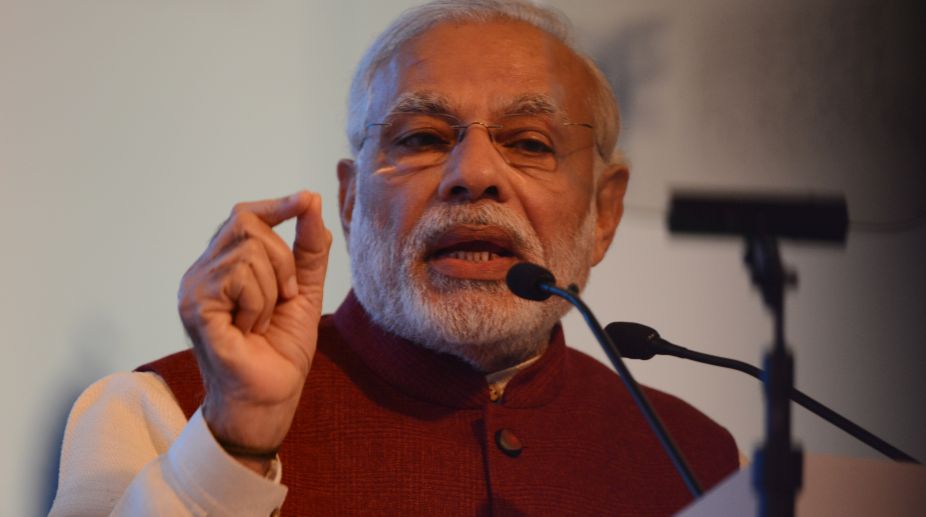
Prime Minister Narendra Modi will address a conclave on 'Politics of Disruption' in Mumbai on March 18.

President Pranab Mukherjee will be the chief guest at the two-day conclave, organised by the India Today group, starting on March 17.

Former French President Nicolas Sarkozy is among the list of speakers at the event.

Modi will speak on the topic- Politics of Disruption, setting India's new agenda – while Mukherjee is expected to deliberate on his long political career, the organisers said.