Logo

Strong order or strong action?

Armin Rosencranz and Dushyant Kishan Kaul | New Delhi |

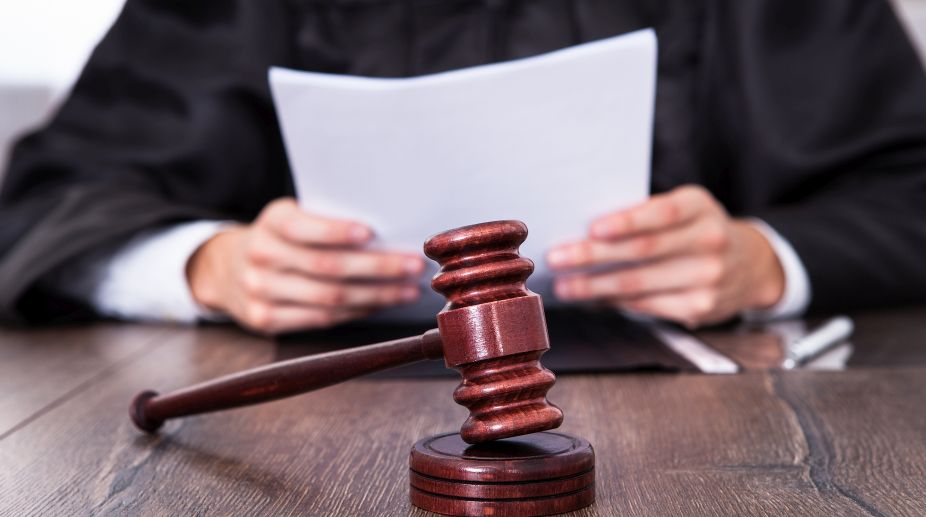
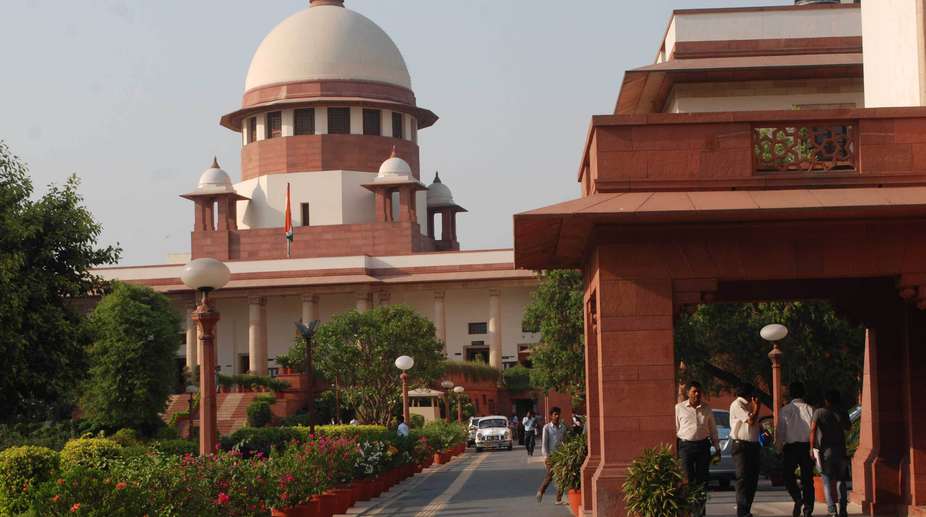
The Supreme Court on 22 February lashed out at polluting industries, giving them a three-month ultimatum to install Primary Effluent Treatment Plants (PETP’s). Tackling the issue of river pollution, this order came in an effort to prevent untreated wastes from being discharged into water bodies. A failure to do so would lead to the shutting down of these non-compliant industries.

A bench headed by Chief Justice J. S Khehar issued stern directions to the concerned state pollution control boards to issue a common notice to all industries and have proper mechanisms to treat effluvia. In fact, directions of a similar nature were issued to set up sewerage treatment plants (STPs) for other types of wastes as well within the same time span. The state boards and environmental secretaries have been entrusted with the task of assessing all units and monitoring the implementation post this three-month period.

This order carries some weight as Justice D.Y Chandrachud and Justice S.K. Kaul said that defaulting industries would lose their supply from electricity distribution companies if they fail to abide by its terms. This seems to be an appropriate threat issued by the Court to ensure that adherence to norms would not just be empty promises by polluting industries. While some industries like Dabur and Bajaj Auto assured the Court that they had working sewage treatment plants, the majority of the units are currently operating with impunity.

The PIL was filed by an NGO named Paryavaran Suraksha Samiti in 2012 on the issue of pollution in water bodies, including ground water and seawater. The petition had sought directions from the Court to curb the “massive” industrial pollution that was well beyond the prescribed limits. It said that the livelihood of millions of people as well as of flora and fauna have been endangered by this pollution. It was also argued that effluents in excess of norms should not be allowed to enter water bodies.

The Court — though initially seeking an explanation from Gujarat — later widened the scope of the matter by issuing a notice to the Ministry of Environment and Forests (MoEF), the Central Pollution Control Board (CPCB) and 19 state governments in January this year and directed them to furnish affidavits.

Even though the PIL was disposed of, the order signaled a long-term goal given to the government too and not just private industries when it said that the state governments as well as private industrial units must set up Common Effluent Treatment Plants (CETPs) within three years of acquiring the land.

In addition, the State Pollution Boards will also conduct the “online real time continuous monitoring process” to treat wastes and to display the emission levels on public portals.  The findings will then be passed on to the Central Ground Water Authority for evaluation after which they shall present the same to the National Green Tribunal (NGT). The prospect of the NGT dealing with the issue has been viewed as a positive step as the tribunal has had a better implementation record than the Supreme Court at imposing large damages in civil law matters.

Furthermore, while discussing the constitutional provisions with regard to waste management, sanitation and public health, the Court said that municipal authorities may also levy an impost from the users, but only if they do not face a financial predicament in complying. In case it was not done, the state governments will be responsible for setting up these plants and were asked to bear all costs.

However, the Supreme Court gave quite a lot of time to the concerned authorities to set up zero liquid discharge (ZLD) plants. This system has been seen as an environmentally sound and sustainable alternative and was recommended by the Central government itself in the Ganga matter. What is a cause of concern is that courts have been slow in getting this system functional. The setting up of the ZLD plants will happen six months after the first round of CETPs are in operation.

The statistics produced have displayed the alarming condition of rivers in India. For instance, the CPCB study in 2015 revealed that at least 302 river stretches had high levels of Biological Oxygen Demand, a key measure of organic pollution. The statistics also point towards the fact that for the amount of sewage that is generated annually, the treatment capacity covers only half that amount. These shocking figures have put further pressure on the highest court in the country to address this drastic situation.

While many have praised the order, the Court has merely been more strident in its language. This sturdy approach can be ascribed to the Court’s sudden ambition of changing public perception, when it has effectively done nothing for almost three decades. The bench clearly said, “It is an important issue. If the country does not act now, it can never be retrieved.” Though the state governments will carry out the inspections, the Court criticised them for their inaction all this time, by saying, “You (governments) can see everything else but not how people are suffering.”  

While the order can be seen as a firm stand adopted by the highest court in the country, one ought to recall that a crackdown on defaulters has been done in the past without reaping significant results. The apex court has been remarkably ineffective in implementing such orders. The three-month period provided in this case give the impression that the Court will close industries that do not obey this order.

Only if the judiciary consciously decides to depart from its past practice, and not merely use strong language to express its disapproval can one hope to save the water bodies vital to the nation.

The writers are, respectively, professor of law and a student at the Jindal Global Law School, Sonipat.
With the law above

Yogesh Pratap Singh and Sanjeeb Panigrahi | New Delhi |

Be you ever so high the law is above you, Lord Denning would proclaim enthusiastically, often while interpreting “the Law” in idiosyncratic ways that its makers never intended. Recent TV reports covering elections of UP, Punjab, Uttarakhand and the Panchayat election in Odisha portrayed the rising number of VIPs on roads, in cordoned off streets, in queue for casting votes. The media also highlighted the diversion of police strength to VIP security through banner headlines such as 1,200 per cent rise in cop cover for VIPs in city of Mumbai over 5 years.

Even many of our self-righteous ministers lead long convoys as they pass through, bringing traffic to a halt and creating miles of traffic jams. This goes against the fundamental precept of democratic governance i.e. equality of all citizens before the law regardless of status, gender, age, race, ethnicity, religious or political beliefs and affiliations, caste, class or economic status. The VIP culture in India is inherently undemocratic and undermines Rule of Law embodied in Article 14 of the Constitution.           

The VIP culture in vogue in the political/administrative sphere has reinforced a kind of social stratification and promoted feudalism that hurts the collective psyche of citizens. Even in the most developed countries of the world the State protects only a selected few like the constitutional functionaries and the rest have to manage their own security.
In our country even the kin of political leaders, ministers, spiritual gurus, top bureaucrats and even the criminals are extended VIP healing. Where there is hopeless shortage of policemen on the ground for law and order problems, thousands of policemen are engaged in VIP security at the expense of the security of the common man.

According to a newspaper report, more than 47,000 policemen are engaged in protecting our VIPs and VVIPs. There are on an average three policemen engaged in the protection of one VIP and in cases of VVIPs the number is far more. Ironically, there is one policeman for about 700 ordinary citizens. The common man pays the bill for the security of the so-called VIPs and VVIPs while he himself remains exposed to so many types of crimes and remains unsafe in the street, public places and at times in his own house. Deeply embedded in our political and social culture, this has become an endemic problem.

Providing security and use of beacon lights are being misused recurrently which is against the spirit and ethos of equality. The Governments both at the Centre and in states are worried about the rising burden on the exchequer created by the so-called VIP culture and the protection they are forced to provide. But to tinker with it would be like touching the hornet’s nest as so many political leaders are the direct beneficiaries of the VIP culture. There seems to be genuine lack of political will to end this evil system.

The Apex Court in Abhay Singh v. State of U.P. (red beacon judgment) deprecated the misuse of red beacon on the vehicles of public representatives and civil servants and laid down certain guidelines which are persistently being violated.

Right to Know

Every citizen has the right to know the raison d’être behind protecting the so-called VIPs when many of them are criminals and kin of big political leaders. Every citizen is indignant because of the system of stopping traffic due to VIP convoys. Even ambulances carrying serious patients are not allowed to go. Flights get delayed due to the late arrival of VIPs whereas common citizens are denied entry into the airport even if they are one minute late.
An Air India plane in Delhi was delayed for hours allegedly because the airline was eager to help out some VIPs. In yet another incident, on 24 June 2015, in a flight from Leh to Delhi, three passengers, said to be an Indian Air Force officer and his family, were asked to leave the plane when one MOS, Ministry of Home Affairs and Deputy CM of Jammu and Kashmir were to be accommodated on the flight. So many other instances are available. This gives rise to a common question, as to why our money is being utilised to make some people superior and offering them official status differentiator.  

It is proven that Article 14 of the Constitution forbids class legislation but permits classification which rests upon reasonable grounds of distinction. In order to pass the test for permissible classification two conditions are required to be fulfilled: (1) the classification must be founded on an intelligible differentia which distinguishes persons or things that are grouped together from others left out of the group, and (2) the differentia must have a rational nexus with the object sought to be achieved by the statute in question.

The VIP treatment to certain constitutional offices like the President of India, the Prime Minister, the Vice-President, the Governors of States, the Chief Ministers, the Chief Justice of India etc. is indubitably founded on intelligible differentia but other extra-constitutional and extra-legal VVIPs and VIPs will not pass the test of reasonable classification. While there is so much clamor and murmur in the Indian landscape against the VIP culture, no statutes or rules carry any definition of the term “VIP” or “VVIP.”

The “Warrant of Precedence” issued by the Ministry of Home is often cited as the reasons for the VIP treatment to certain people. But Note 1 clearly states: “The order in this Table of Precedence is meant for state and ceremonial occasions and has no application in the day-to-day business of the government.”

Separate facilities for VIPs, preferential plot allotment to VIPs under discretionary quota, VIP rooms in Railway station, airports, separate routes for VIPs, separate seats for VIPs, separate entitlement and privileges for VIPs and so on would not pass the test of reasonable classification by elongating any liberal and creative rule of interpretation. In a globalised world faced with similar problems of human misery, currently or historically, comparisons are inevitable. If we do so, we find perhaps no parallel in the world democracies.    

The obnoxious arrogance of power with huge motorcade is a blow to our republicanism and erodes our constitutional conscience. The deep seated feudal culture of public servants seems to be the bane of our public administration and results in lack of sensitivity, efficiency and accountability in public service. With such a wall of separation from the so-called VIPs, a common citizen feels demeaned and realizes that he is a lesser human being. Hence, another ideal of the constitution—ensuring human dignity to all – stands desecrated.

What is at stake here is not government, the governors or governance, but the very process of human and economic capital building and accumulation – to meet India’s international commitment at the UN and to achieving the millennial goals through sustainable development. Ignorance is perilous and ignorance that demoralises dignity of citizens is inhuman and makes the very ethos of our Constitution tremble. We therefore, urge the governments to define, refine and confine the horizons of VVIP concept.  

The authors are, respectively, Associate Professor of Law at the National Law University, Odisha and an advocate.

The M factor in historic UP win

Aftab Alam | New Delhi |

The BJP must give credit to Muslims f or its resounding victory in assembly elections in the politically crucial state of Uttar Pradesh (UP). It may appear to be paradoxical as Muslims are normally believed not only to never vote for the BJP but also to do their best to ensure that its candidates never win by voting tactfully and en bloc. It is this very factor the BJP turned  into its favour by steadily building a Hindu vote bank by arousing communalist sentiments from Muzaffarnagar riots and kairana exodus to raising the Shamshan-Kabristan and Eid-Diwali divide.

It is a matter of fact that as per the 2011 Census Muslims account for 19.3 per cent of the state’s population and if they vote ‘strategically’ may decide the fate of candidates in roughly 150 assembly constituencies. This has led many to project the myth of Muslims as a monolithic vote bank.

This time while the BSP and the SP-Congress combine remained busy crafting new strategies to woo Muslims, the BJP concentrated silently and singularly on consolidating non-Yadav backward caste and non-Jatav Dalit Hindu vote bank who had felt ignored during a decade of BSP-SP rule in the state. The BJP also generated a feeling among them that their deprivation was due to Muslims who enjoyed undue weightage during SP-BSP reigns.

The BJP not only gave these communities due representation in the party organisation, it even appointed Keshav Prasad Maurya as its State President. It also organised a series of ‘caste meetings’ and celebrated many ‘caste festivals’ to lure them.

The decision of not fielding any Muslim candidate was also a well crafted conscious choice and not because it could not find a single winnable Muslim candidate in the entire State, as claimed by it, despite the party's Muslim membership count having swollen to over 200,000. The BJP had calculated that despite its best efforts it would not be able to snatch any sizable number of Muslim votes from SP-BSP-Congress, for whom Muslims have been voting traditionally.
On the contrary by giving tickets to them it would not have been able to project itself  as an exclusive Hindu party concerned with interests of the majority community and could not have sharpened attacks on ‘pseudo secular’ parties for their ‘minority appeasement’ and ignoring the majority. 

The BSP and SP, on the other hand played the Muslim card very ineptly by fielding more than 150 Muslim candidates in the election. BSP chief Mayawati even cautioned Muslims not to split their votes. She repeatedly stated in different rallies that her party has given highest number of tickets to Muslims and thus they should vote en masse for the BSP as only it would be in a position to defeat the BJP with solid support of Dalits who constitute 20.7 per cent of the population.

To counter this, the SP and Congress forged an alliance to prevent split of Muslim votes. All this created an impression that if BSP or SP won the election Muslims would be over-represented and that actually went in favour of the BJP as Hindu voters in reaction solidly consolidated behind it.

The BJP’s game plan was made easier by some Muslim clerics like the Shahi Imam of Delhi’s Jama Masjid Maulana Ahmed Bukhari, Maulana Aamir Rashadi of the Rashtriya Ulama Council and Shia cleric Maulana Kalbe Jawad appealing to Muslims to vote for the BSP and another cleric Maulana Khalid Rashid Firangi Mahali extending his support to the Samajwadi Party and Congress alliance. Their appeals though usually have limited impact but they not only confused Muslim voters but also proved counterproductive as BJP also played the Hindu card more carefully.
The BJP also did not fail to recognise the importance of raising communally sensitive issues during the election campaign. It gave due importance to controversial issues like the construction of Ram Mandir, ban on triple talaq, closure of slaughter houses and prevention of Hindu exodus from Kairana in its manifesto making it amply clear that it was not averse to polarisation of Hindu votes in its favour as it was uncertain whether the development agenda alone would ensure its victory in the state.

The BJP was successful in falsely convincing voters from the majority community that both the SP and BSP Governments have unduly favoured Muslims and discriminated against Hindu in the state whether in the distribution of freebies like laptops or scholarships and even in compensating the riot victims.

In an election rally in Chauri Chaura the BJP President Amit Shah said that “They will ask your religion and caste first, if that doesn’t seem favourable to them, they won’t give you laptop.” The Prime Minister himself accused the ruling SP of discriminating between communities in Uttar Pradesh in distribution of land for kabristan and shamshan and supply of electricity during Holi and Eid and insisted that there should not be any discrimination.

Though these charges were found to be untrue, they  succeeded in giving the message that the SP Govt. was working in a prejudiced manner against the Hindus. 

Overall the BJP was successful in projecting SP, BSP and Congress as Muslim parties and itself as the only party that cares for Hindus. It also convincingly projected minority Muslims as a pampered lot and majority Hindus as aggrieved in UP resulting in creation of a brand new Hindu vote bank solidly standing behind it in reaction to the mythical Muslim vote bank. The challenge before the new government would be to keep the different communities united, which is sine qua non for the development of the state. These communities were, after all, pitched against each other by all political parties for their selfish political interests.
 
The writer is a Professor of Political Science at Aligarh Muslim University, Aligarh.

Discrimination that haunts campuses

Kuldip Nayar | New Delhi |

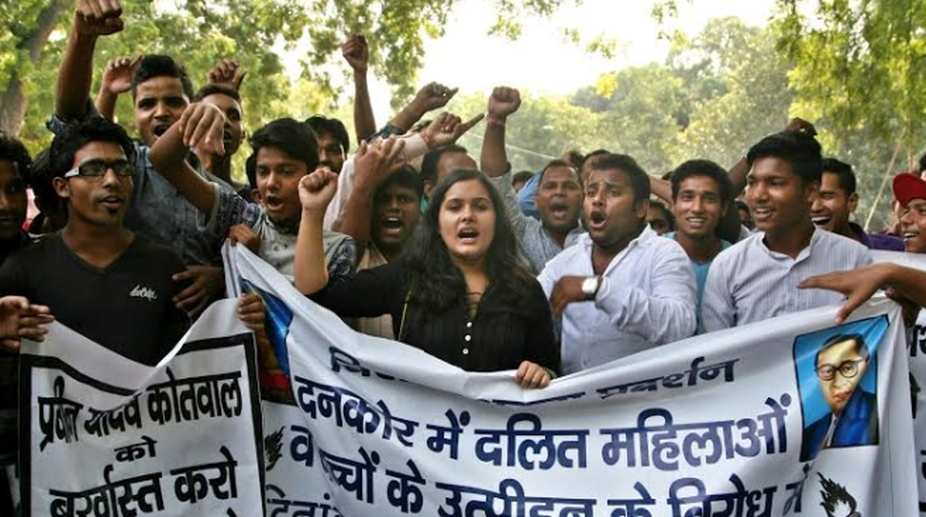
However democratic we may be, discrimination on the basis of caste has not diminished. Every day, in some part or the other of the country, there are atrocities on Dalits. Only the other Dadri, near Delhi, was the scene of a Dalit family being consigned to fire.

In the national capital itself, a JNU student hung himself because he could not stand the jibe of discrimination. The 28-year-old M.Phil student had dreamt of studying in JNU and was fortunate to get through on his fourth attempt. Hailing from the South, Muthukrishnan was reportedly a sober personality and generally kept to himself.

Surprisingly, there is very little impact on society or, for that matter, on India. It was just an incident and forgotten. Instead, the country on the whole should have been shaken. Had this been the case of an upper caste student, there would have been many statements and calling attention notices in Parliament. But there was not even a whisper in the present case.

The media was equally guilty because it reported the incident only as a periphery to other bigger stories. This only underlined that the media persons, generally belonging to the upper caste, have the same old mindset. The youth is supposed to be radical, but this was not the case.

Obviously, the deceased student’s father and even some students believe that there was some foul play. The police was led to record FIR under relevant provisions because the police thought that it was a case of suicide. The parents have demanded a CBI inquiry. I don’t know how it would make any difference because the CBI would itself depend on Delhi Police which is in the doghouse.

A similar issue had cropped up when Rohith Vemula, a Dalit research scholar from Hyderabad University, committed suicide last year. However, unlike in the JNU student’s death case, there was a big hue and cry and students took to the streets and the agitation even led to a change of guard in the university department.

Incidentally, Muthkrishnan had recalled Rohith’s death and condemned Hyderabad University’s alleged role in the scholar’s suicide. The JNU student had a Facebook post in which he had criticized JNU’s new admission policy, obviously recounting several instances where he had to face discrimination.

What do these incidents in varsities indicate? We need to apply our minds to address the problems that Dalit students face in institutions of higher education. Not long ago, Hyderabad University had to revoke the suspension of students after Rohith’s death. Indeed, his suicide had caused great shock and resulted in outrage, but similar sentiments were expressed when Senthil Kumar from Salem, another student from the University of Hyderabad, killed himself in 2008. Muthukrishnan, too, is from Salem in Tamil Nadu.

There have been over a dozen cases of suicide by students, mostly Dalits, in various institutions in Hyderabad between 2007 and 2013. In the north, besides two cases of suicide by Dalit students at the All India Institute of Medical Sciences in Delhi, 14 other cases of suicide by Dalit students were reported between January 2007 and April 2011.
It is almost as if we have become immune to these frequent instances of suicide mainly by Dalit students. The student population on campuses of higher education has become increasingly diverse. According to 2008 data, of the total number of students in higher education in the country, four per cent are Scheduled Tribes, 13.5 per cent Scheduled Castes and 35 per cent Other Backward Classes. Hindus alone accounted for about 85 per cent of students, followed by Muslims (8 per cent) and Christians (3 per cent). And yet, 23 out of 25  suicides were of Dalits!

There are several researches which indicate that experiences of discrimination, exclusion and humiliation are the predominant reasons. After analyzing some cases of suicide, the conclusion seems to be that there seems to be more than enough evidence to believe that caste discrimination played a significant role in driving these extraordinary individuals into committing suicide, and that elite professional institutions are the places where caste prejudice is so firmly entrenched that it has become normal.

A study in 2010 by Professor Mary Thornton and others of five higher educational institutions in India and the United Kingdom observed that “separation of groups on the higher education campus is pervasive and ubiquitous. While some such separation may be for supportive reasons, at other times it is due to overt discrimination on the grounds of race, region, nationality, caste, class, religion, or gender”.

In 2013, Samson Ovichegan, in a study on the experience of Dalits in an elite university in India, observed that “this university is yet another arena in which the practice of caste division continues to exist. The university environment reinforces and maintains a divide between Dalit and non-Dalit. Dalit students do, indeed, experience overt and covert discrimination based on caste at this premier university”.

As much as we admit to the persistence of caste discrimination and stigmatization as a problem plaguing higher education campuses, there is also a constant denial or attributing of suicides to incident-specific situations with total disregard for links with the larger social milieu of exclusion. True, there are incident-specific reasons, but it cannot be a coincidence that out of 25 cases of suicide, 23 were of Dalits. Thus, the first thing for policymakers is to come out of denial mode.

No doubt, the situation may have improved. But the shame of caste system continues in one form or the other. Relations between the Dalit students or, for that matter, with other students and teachers and administrators, have always been questioned. In my view, we need to takes steps to address the problems of Dalit and other marginalized students. The only solution I can think of are legal safeguards against discrimination, civic education, academic assistance to students who need support, and participation of Dalits in all decision-making bodies of universities and colleges. 

The writer is a noted journalist, columnist and commentator.

Education of the Mind

Tarun Kumar Choudhury | New Delhi |

The Committee on evolution of the New Education Policy (NEP) has reportedly submitted its report along with recommendations  to  the Human Resources Development ministry. The new HRD minister has recently announced  the constitution of  another committee, to be headed by an eminent educationist, to take yet another call  on the issue before  NEP is finalised. Incidentally, in an effort to change and cleanse the system of corruption and generation of black money, the Prime Minister demonetised high-value currency as a step in that direction.  Interestingly enough, human thought  and action are correlated with the mind, which is an entity beyond  a person’s  body and intellect as Arjuna had told  Lord Krishna in the Mahabharata.

Regretfully, the legacy of colonial education, formulated by Lord Macaulay, is still the foundation of education policy in post-independent India with cosmetic experiments and changes  based on the recommendations of various Education Commissions. In 1835, Lord Macaulay told the British Parliament that he had dislodged India’s traditional moral principles and value lessons in the scheme of Raj education to make people forget their own culture, their self-esteem and to imagine  that all that was foreign and  British  were good and greater than their own. The objective was to put in place a totally dominated nation, bereft of  self-respect and  subservient to the interests of the Empire.  Educationists of the era and even now, with a myopic vision and an eye on material gains, had accepted the argument  that moral lessons and cultivation of values had outlived  their utility with the advent of the scientific renaissance.

However, Swami Vivekananda had anticipated  its implications. He pointed out  unambiguously that if traditional morality and values are not stimulated and developed in the minds of young boys and girls at their tender age in school education, the nation is destined to die in spite of all social reforms, acts of law and material gains. True to his visionary forecast, the trend of  developments in India today show that the nation is running along a downward curve of evolution with aggravated desires, multiplied wants, clashes and conflicts resulting in degeneration of the society. The supreme edifice of philosophical thoughts of the nation has been pulled down to the level of sordid utilitarianism undermining in the process the very foundation of its spiritual and cultural beliefs. Sadly, lack of morality and value cultivation swept the nation off its moorings, in the process destroying the  love for one’s own language and literature and the  arts. There was unhappiness at home and this was reflected in society.

The tide can yet be turned with the restoration in people’s minds of  the values of morality  through the inculcation of gospels and the scriptures of all religions ~ Hinduism, Buddhism, Islam, Christianity, Jainism and so on ~ in the school curricula. The Committee of Religion and Moral Instruction, set up by what was then called the Central Education Ministry, had strongly suggested  that “the cure of growing maladies and ills of the society lies in deliberate inculcation of moral and spiritual values from the early years of our life.”

Again, modern researchers have revealed what our rishis were well aware of, specifically that human faculties and character are in a formative stage right from the stage of the  toddler and continues up to the teenage phase when the minds are impressionable. Incidentally, with the adoption of the Right to Education Act  for all,  school education has become a platform for mass education and can help to impart moral and value lessons to all boys and girls through a revamp of the school curriculum and thus usher in an era of morally disciplined people. If a nation is to become strong, virile and prosperous in real terms, its activities need to be based  on the foundation of morality and values. This was the thesis of Swami Vivekananda.

Training of the mind  to impart morality and cultivate values in students at their tender age during school education cannot be overlooked by the proposed new Committee, announced by present HRD Minister, while formulating NEP. Inclusion of comprehensive moral science text books, based on scriptures of all religious sects, highlighting such virtues as truthfulness, honesty, integrity, love, respect, faith, tolerance, gratitude, devotion, piety, forgiveness, modesty, fellow feelings, selflessness, compassion, service to others and so on can combat human vices like greed, corruption, violence, terrorism, excessive materialism, divisiveness, cruelty, selfishness, and other harmful traits of the personality. Provision of weightage for proficiency in moral science subjects in employment interviews can be another  step to awaken the parents to the need to improve the right social and domestic environment for their children.

Ironically, the recommendations of a Group of Secretaries, set up by the Prime Minister, have, reportedly, laid stress on physical and skill development as part of the curricula, but is unfortunately silent on enlightenment of the mind. The British accorded short shrift to the training of the mind in their own interest to make Indians a dominated nation.  Hopefully,  there is no agenda of our governments in independent India to maintain the status quo with regard to mental education. The government appears to have succumbed to the pressure of powerful vested interests. It is also expected that the  educationist, who will head the proposed Committee for framing NEP, would be suitably foresighted to understand the effects of indisciplined minds on the country’s future.

Let the Preamble of NEP be based on India’s greatest modern thinker Swami Vivekananda’s idea of education ~ “We want that education by which character is formed, strength of mind is increased, the intellect is expanded and by which one can stand on one’s feet”. This is possible only on a strong foundation of  mental  training and a basic condition for the fulfillment of Prime Minister Narendra Modi’s  Ek Bharat, Shreshta Bharat dream.

The writer, an IIT alumni, is a freelance contributor and is associated with the NGO called Society of Elders.

Framework for confusion

Editorial | New Delhi |

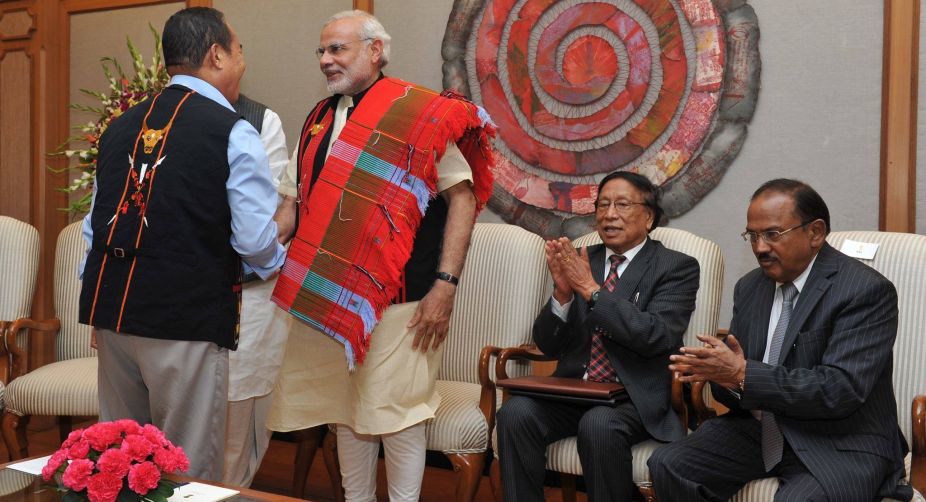
Prime Minister Narendra Modi, Union Home Minister Rajnath Singh and his deputy Kiren Rijiju made good use of their pre-election missions to Manipur to convince the people of the Imphal Valley (Meiteis) that in the 3 August 2015, “Framework Naga Peace Accord” Indian interlocutor RN Ravi signed with NSCN(IM) chairman Isak Swu and general secretary Th Muivah, there is no mention of integration of all contiguous Naga-inhabited areas in Arunachal Pradesh, Assam and Manipur. The underlying message was that the Meiteis should repose their faith in the BJP and vote for it. Any agreement or understanding , inspired by the intention to restore peace, foster tolerance and ethnic harmony/goodwill, is welcome.

But what is questionable about the “framework” accord is the hasty and secretive manner in which it was concluded. There was no need to rush things through when the NSCN(IM)’s core demand ~ greater Nagaland – was not even on the agenda. The Naga leaders had raised this demand upon landing in New Delhi in February 2003 for talks on the ground for the first time after the July 1997 Nagaland ceasefire. Then BJP Prime Minister Atal Behari Vajpayee even acknowledged the Nagas’ “unique history” ~ that they had never been under subjugation.

Former Nagaland chief Minister Neiphiu Rio, now an MP, even changed the name of his ruling Nagaland People’s Front to enable it to contest in the Manipur assembly polls to fight for the cause of Greater Nagaland. In the 2012 Manipur assembly poll his party was able to win four seats. As a matter of fact, the NSCN (IM) leaders had often iterated their stand that there can be no compromise on the integration issue. Yet no sincere efforts were made to consult the chief ministers of Assam, Arunachal Pradesh and Manipur. In fact, after the signing of the Framework agreement, the Prime Minister reportedly spoke to most national/opposition leaders, and even chief ministers, but conveniently ignored the incumbents in Itanagar, Dispur and Imphal.

Now comes the moment of truth for the BJP. Taking cognizance of what the Cenral leaders had to say, the working group of Naga National Political Groups has, in a statement, appealed to the people of Nagaland in particular and the Nagas in general “to prepare themselves for greater responsibilities in future”. This sounds ominous.

Vajpayee had tried to appease the Nagas by giving them a homeland but at the fag end of his tenure he turned out to be too mature a politician to suggest that the contentious integration issue should be left to the people concerned to decide.

Two more wangled…

Editorial | New Delhi |

Will be a 4-1 final tally? Power attracts, it proverbially corrupts too. After the BJP’s runaway successes in UP and Uttarakhand, the “bounce” (to use jargon of American political analysts) is clearly with the Modi-Shah combine. Hence in the two states that returned fractured verdicts the floating numbers seem to have fallen in favour of the Bharatiya Janata Party. For all its crying “foul” over Goa in every possible forum, the Congress secured only nominal relief in the one that mattered ~ the Supreme Court. No “stay” was secured on the swearing-in of Manohar Parrikar, only an advancement of the floor-test, and the observations of their Lordships indicated that they found little merit in the objections the Congress was raising, which could prove relevant in a somewhat similar stand-off in Manipur. Their Lordships, rightly, did not get bogged down in arguments whether in a hung Assembly the single largest party or the largest combine should get the first shot at government and iterated that the test of numbers should take place only in the House. Technically that does provides the Congress party opportunity to prove its strength, but with the BJP having submitted the names of its supporters ~ which the Congress failed to do even in court ~ the chances of reversing the 
scenario in Panaji, and Imphal too (though there are marginal differences in form) appear rather slim.

The Congress has tried unsuccessfully to wipe the egg off its face by levelling an array of allegations against Governors, claiming the use of “inducements” etc, but failed to counter the argument that what the BJP was doing today was no different from what the Congress had done in the past except it was outgunned this time. Propriety and morality, alas, have ceased to play a role in political affairs, and to identify who triggered the decline in standards would prove embarrassing to Rahul Gandhi.

The man who has led the party to successive electoral reverses now faces some internal rumblings for having allowed the BJP to “steal” victory in a dirty game first played by his own outfit. For had the Congress allowed its “local” 
leadership a greater share of political management instead of trying to dictate terms from 
24 Akbar Road things might have turned out a little different. 

The delay in seeking support from smaller parties is indicative of a brand of arrogance ~ the “family” still believes it retains a divine right to rule. Not that the Modi-Shah duo is devoid of arrogance, but it indicated it was pragmatic enough to know when to put its pride in its pocket and flatter the smaller groups into extending support. Even if it might prove to be a case of flattering to deceive.

Cabinet nod for pricing, marketing freedom in CBM gas

IANS | New Delhi |

A Cabinet committee on Wednesday approved pricing and marketing freedom to producers of coal bed methane (CBM) gas and also allowed them to sell the fuel to affiliates.

"The Cabinet Committee on Economic Affairs today (Wednesday) gave its approval for marketing and pricing freedom to the CBM contractors to sell the CBM at arm's length price in the domestic market," a Petroleum Ministry statement said here.

"While discovering the market price for arms length sales, the contractor has to ensure a fully transparent and competitive process for sale of CBM with the objective that the best possible price is realised for the gas without any restrictive commercial practices," it said.

Besides, the companies have been permitted to sell the CBM gas to any of their affiliates in the event they cannot identify any buyer.

"Royalty and other dues to the government, however, shall be payable on the basis of Petroleum Planning and Analysis Cell (PPAC) notified prices or selling prices, whichever is higher," the statement said.

The policy is expected to incentivise the CBM operation in the country to boost gas production, it added.

Most of the natural gas produced in the country is priced as per the formula for domestic natural gas producers.

According to officials, the CBM gas pricing policy approved is in line with the recently unveiled regime governing small and marginal oil and natural gas blocks.

Meanwhile, Minister Dharmendra Pradhan said on Wednesday that the government plans to offer more discovered oil and gas fields of state-run ONGC and OIL in the next auction during next fiscal.

Speaking to reporters here, he said the next round of auctions of Discovered Small Fields (DSF) will comprise of idling discoveries of Oil and Natural Gas Corp (ONGC) and Oil India and the auction would be held sometime in the 2017-18 fiscal.

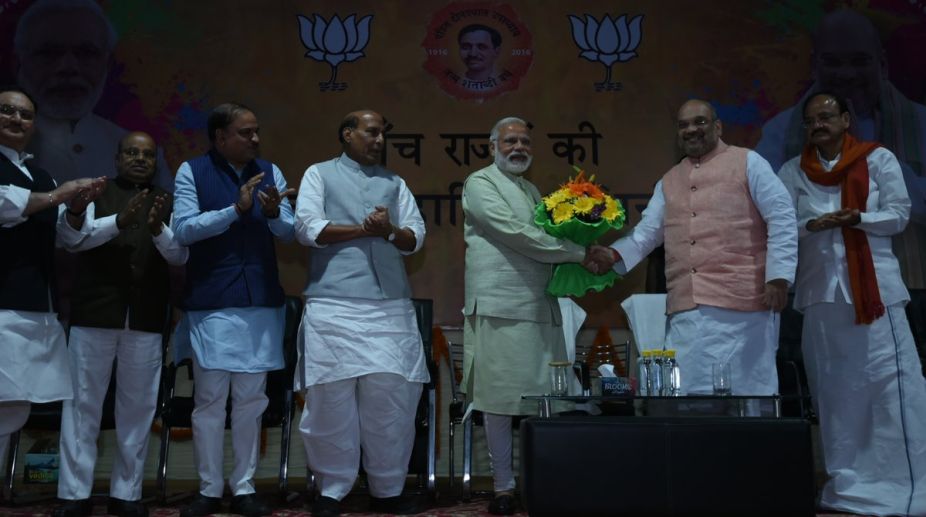
BJP to pick Uttar Pradesh CM today, tough task ahead

Statesman News Service | New Delhi |

Four days after the Bharatiya Janata Party's (BJP) landslide victory in the Uttar Pradesh Assembly elections, the party is finally expected to take a call on the ticklish issue of naming its chief ministerial candidate on Thursday.

A few names such as Union Home Minister Rajnath Singh and his Cabinet colleague Manoj Sinha, BJP UP unit president Keshav Prasad Maurya and Lucknow Mayor Dinesh Sharma are doing the rounds here and in the state capital Lucknow. But as of now there is no definite word on who will finally get the call for the top job in Uttar Pradesh. There are unconfirmed news reports here that BJP president Amit Shah has made an offer to Rajnath Singh for the post who in turn has sought time to take a call on the matter.

When the BJP’s highest decision making body, BJP Parliamentary Board, begins the process of zeroing in on a suitable candidate tomorrow at a meeting chaired by Prime Minister Narendra Modi, it may pose the most difficult of challenges for the party post the historic victory. In Lucknow 325 newly-elected legislators (including allies) are likely to formally elect their leader tomorrow after the Central leadership's nod.

Sources said one way of addressing the challenge of finding a suitable chief minister will be to swear in a person who will be like a puppet in the hands of Delhi’s top leadership. This may to a great extent help the BJP fulfill promises it has made in its ‘sankalpa patra’ or manifesto. Another and more appropriate way of building on the party’s UP victory in preparation for the 2019 Lok Sabha elections will be to find a person who is capable of taking along all those sections of society who have not only just ensured the party’s landslide victory in the just concluded assembly polls.

Does the BJP have among its UP leaders a person who commands the respect of all and sundry in the party? This is one question that the BJP’s top leaders including Shah and Modi will have to find an answer to as they meet to find the party’s next chief minister for the country’s most populous and backward state that also returns the maximum number of Lok Sabha MPs to Parliament.

Rajnath Singh when asked by reporters in the Parliament complex today about his chances of shifting to Lucknow, quipped in Hindi ‘Faltu baat hain (needless speculation)." However, there were reports later in the day that said Singh’s security staff had visited the official residence of the UP Chief Minister at 5, Kalidas Marg in Lucknow.

The choice could also be Keshav Prasad Maurya, a Most Backward Caste or MBC having less friction with upper castes who played an important role in the BJP's win, or Manoj Sinha an MTech and Bhumihar Brahmin, Lucknow Mayor Dinesh Sharma a low-profile Brahmin leader, Rajnath Singh or a surprise candidate only Amit Shah and Narendra Modi may know about.

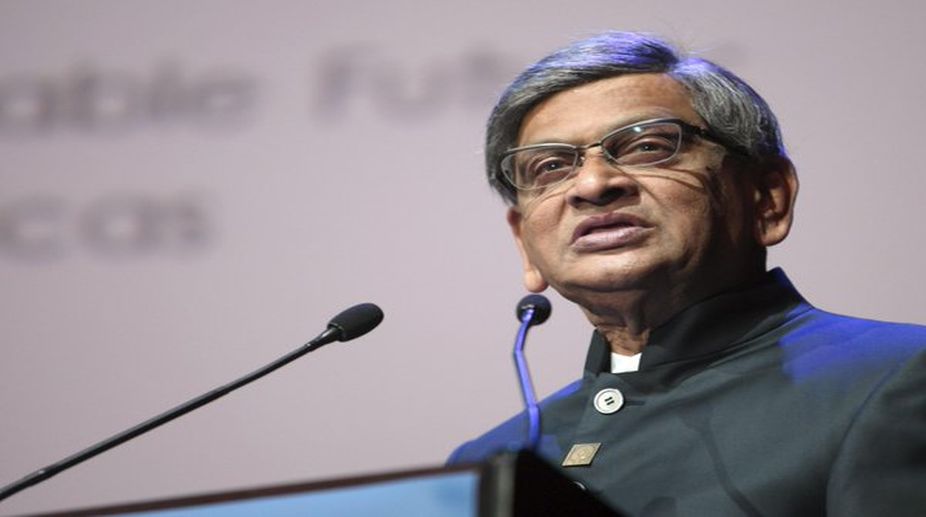
Sister’s death makes S.M. Krishna postpone move to join BJP

IANS | Bengaluru |

There is no uncertainty about former External Affairs Minister S.M. Krishna's plan to join the BJP and the move has only been postponed following his younger sister's death here on Tuesday night, a party leader said on Wednesday.

"Though Krishna flew to Delhi on Tuesday to meet our party President Amit Shah on Wednesday and join the party this week, he rushed back after coming to know of his sister Sunitha's death," said the Bharatiya Janata Party official.

The 84-year-old former Chief Minister, who quit the Congress on January 29, also could not meet Shah in Delhi, as the latter was on way to Imphal to attend the swearing-in of the BJP-led coalition government in Manipur on Wednesday.

"There is no uncertainty about Krishna joining the BJP. It has been put off due to bereavement in his family and unavoidable circumstances, as the party leaders are busy with the formation of the governments in Manipur, Uttar Pradesh and Uttarkhand," asserted the official on the condition of anonymity.

After joining the BJP formally, Krishna was to call on Prime Minister Narendra Modi in New Delhi along with the party's state unit President B.S. Yeddyurappa and Union Ministers from the state — D.V. Sadananda Gowda and Anantha Kumar.

"We will inform the media when will Krishna join the BJP after we finalise the date in consultation with him and our national leaders in Delhi," added the official.

Since leaving the Congress after nearly five decades of association after he was "sidelined by its leadership", Krishna was bidding time to join the BJP but was told to wait, as Shah and Modi were busy with the assembly elections in the five states, especially Uttar Pradesh, and their results.

Yeddyurappa invited Krishna to join the party at the latter's house here on March 6.

With the BJP securing thumping majority in Uttar Pradesh and Uttarkhand and forming governments in Goa and Manipur, Krishna thought it was the right time to join the BJP and strengthen the party in Karnataka, where the assembly elections are due in April 2018. 

Santosh Trophy: Kerala register win, Mizoram, Punjab in goalless draw

IANS | Bambolim |

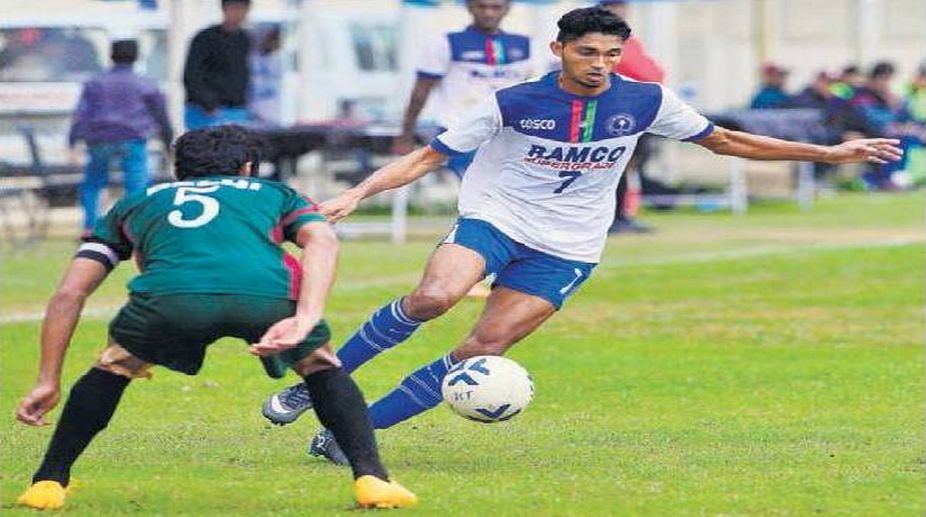
Kerala rode Joby Justin's hat-trick to beat Railways 4-2 in their opening Group B match of the Santosh Trophy national football championship here on Wednesday.

Captain P. Usman completed the tally for Kerala, while Railways' Malayali player Rajesh netted both their goals.

It was Railways who drew first blood as Rajesh scored in the 17th minute making the most of a defensive lapse.

However, Joby restored parity for Kerala just four minutes later with a header. The striker put Kerala ahead in first-half injury time by converting a free-kick.

Joby completed his hat-trick in the second half, before Usman made it 4-1 with another header. Rajesh netted his and Railways' second goal but it was too little too late.

Meanwhile, at the Tilak Maidan in Vasco, Punjab and Mizoram played out a goalless draw that did both of their chances no harm. 

Playing their first game in the tournament, Mizoram would have been happy with a point in their first game while for Punjab, after a win in their opening game, a draw in this game consolidated second place in the group and they remain in contention for a semi-final berth.

Delhi airport to expand passenger capacity to 109.3 million

IANS | New Delhi |

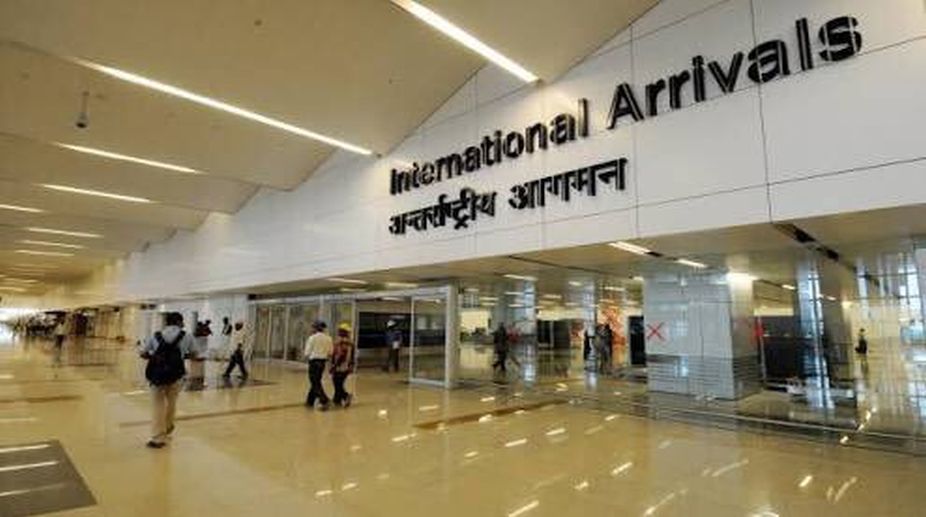
The Centre on Wednesday said it plans to expand passenger handling capacity at the Indira Gandhi International Airport (IGIA) here to 109.3 million passenger per annum (mppa) in a phased manner.

"The updated master plan envisages expansion of passenger handling capacity at the IGIA from existing 62 mppa to 109.3 mppa in a phased manner by way of both airside and terminal side developments," Minister of State for Civil Aviation Jayant Sinha told the Rajya Sabha.

The Minister said the developmental works include expansion of Terminals 1 and 3, construction of Terminal 4, and construction of new runways in three phases from 2017 till 2034.

"The total area of IGI Airport demised to DIAL (Delhi International Airport) is 4,608.90 acres. The land available is sufficient for executing the expansion plan under the master plan 2016," Sinha said in a written reply.

"The design, project cost and other details etc. are finalised during the finalisation of the major development plan in compliance with the OMDA (Operation, Management and Development Agreement)."

The minister added that the development works under the updated plan are based on factors such as traffic triggers, optimum utilisation of capex and induction of new technologies and best industry practices to enhance passenger experience.

Bihar plans to Adhaar-link entire adult population

IANS | Patna |

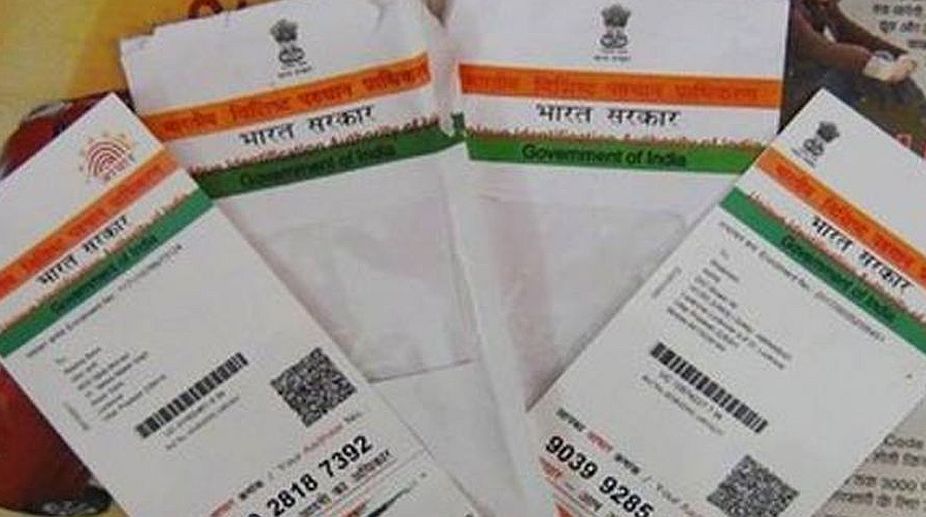
Bihar plans to link with Adhaar its entire adult population by March 31 to launch online payment to beneficiary of different schemes, official said on Wednesday.

"Till date, eight crore of the 10.5 crore Bihar residents have been linked to Adhaar card whereas the remaining 2.5 crore adult population will be linked by March-end," the Social Welfare Department official said.

The state government has also decided to link all pensioners under its social welfare schemes.

Seven teams qualify for Indian private moon mission

IANS | Bengaluru |

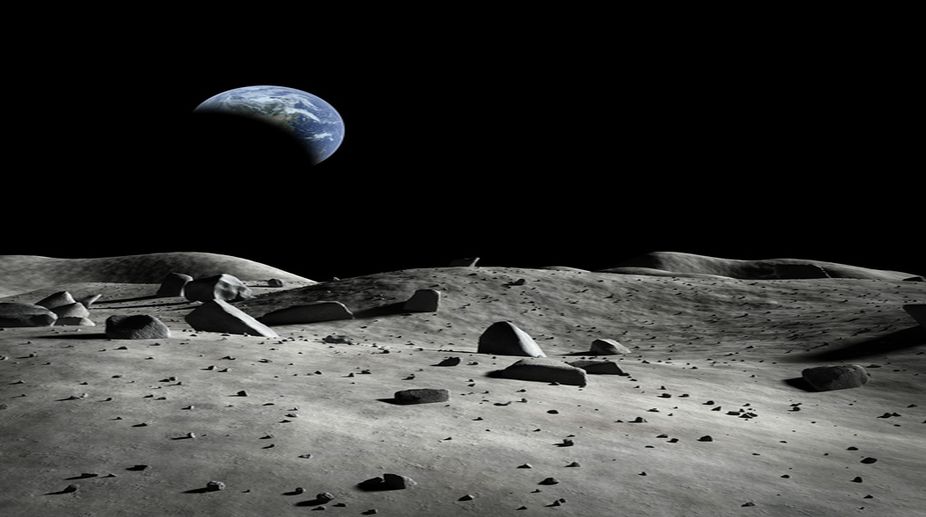
Seven teams, including three from India, have qualified for the country's first private moon mission in December, space technology start-up TeamIndus said on Wednesday.

"Teams Callisto, Ears and Kalpana from India, Space4Life from Italy, Lunadome from Britain, Killa Lab from Peru and Regolith Revolution from the US have qualified to fly their experiments to the lunar surface in our spacecraft," said a TeamIndus statement here.

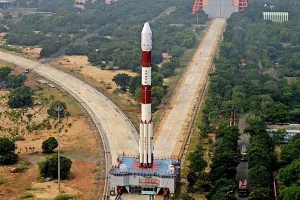
The state-run Indian Space Research Organisation (ISRO) will fly TeamIndus spacecraft (robot) on its PSLV (Polar Satellite Launch Vehicle) or rocket from its Sriharikota spaceport in Andhra Pradesh, about 80 km northeast of Chennai.

The city-based TeamIndus is competing in the 30-million dollar Google Lunar Xprize, a global contest to develop low-cost methods of robotic space exploration.

"Space4Life from Naples in Italy will send an experiment to the lunar surface under the Lab2Moon Challenge to test the effectiveness of using a colony of cyanobacteria as a shield against harmful radiation in space," the statement added.

Cyanobacteria are micro-organisms capable of photosynthesis to produce oxygen using sunlight. They represent the earliest known form of life on earth.

The India-based team, which proposed an experiment to explore photosynthesis on the moon, will fly along with Space4Life to the lunar surface.

"Team Space4Life will work with TeamIndus engineers to make the experiment space worthy for the journey of a lifetime," said the statement.

An international jury comprising former ISRO Chairman K. Kasturirangan, former European Space Agency Chairman Alain Bensoussan and Yale University's Astronomy Professor Priyamvada Natarajan examined the prototypes of the experiments in granular detail over the last three days here.

"Congratulations to Space4Life. The data from its experiment have the potential to dramatically impact mankind," said Kasturirangan in the statement.

Launched in mid-2016, Lab2Moon, a global challenge for youth, inspired about 3,000 teams to send in ideas for experiments.

The Lunar Xprize requires privately funded teams to land their rovers on the surface of the moon, travel 500 metres and broadcast high-definition video, images and data back to earth.

In a launch window starting on December 28, the PSLV will inject the spacecraft into an orbit 880km x 70,000km around the earth. The spacecraft will then undertake a 21-day journey to soft land in Mare Imbrium, a region in the North-Western hemisphere of the Moon.

After landing, the spacecraft will deploy its payload, including theATeamIndusArover that will traverse 500 metres on the moon's surface to accomplish its objectives.

TeamIndus' rover has been designed and developed in Bengaluru by a 100-person engineering team, including 20 retired Indian space scientists.

Cabinet nods revised pact over Indo-Bangla Border Haats

IANS | New Delhi |

The Union Cabinet on Wednesday accorded its approval to the revised Memorandum of Understanding (MoU) and Mode of Operation (MoO) between India and Bangladesh for establishing Border Haats along the border.

The Cabinet meeting was chaired by Prime Minister Narendra Modi.

"The Border Haats aim at promoting the well-being of the people dwelling in remote areas across the borders of two countries, by promoting traditional system of marketing the local produce through local markets.

"These measures help to improve economic well-being of marginalised sections of society," reads a release.

At present, four Border Haats are operational — two each in Meghalaya and Tripura. Those were established and operationalised under the MoU and MoO for Border Haats signed between the two countries in October 2010.

Cabinet approves National Health Policy

IANS | New Delhi |

The Union Cabinet on Wednesday approved the National Health Policy, official sources said.

They said that the nod was given at the Cabinet meeting chaired by Prime Minister Narendra Modi.

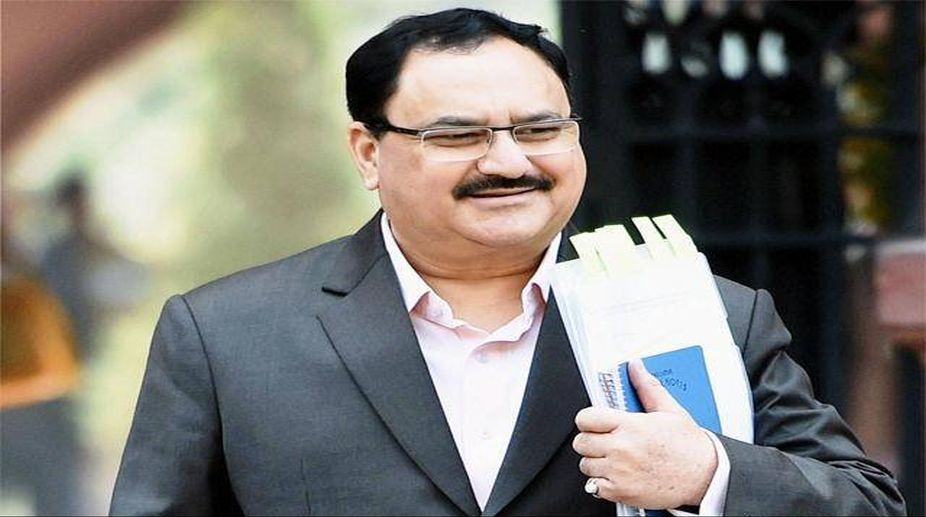
Health Minister J.P. Nadda is likely to make a statement in both Houses of Parliament on Thursday about the main features of the policy, the sources said.

The government has said that it is committed to providing "affordable and quality healthcare" to all people of the country. 

Probe ordered against 185 firms for fraud

IANS | New Delhi |

The government has ordered investigation into 185 companies for alleged fraud in the last four years, Parliament was informed on Wednesday.

"Based on the complaints received, the Ministry of Corporate Affairs has ordered investigation through Serious Fraud Investigation Office (SFIO) into the affairs of 185 such companies during the last three years and up to January in the current fiscal," Minister of State for Finance Santosh Kumar Gangwar said in a written reply in the Rajya Sabha here.

Gangwar said that out of 185 companies, the cases pertaining to West Bengal are as many as 135. 

"The government has received various complaints regarding cheating of small investors, particularly by the companies involved in ponzi/chit fund activities in different states in the country," he said.

Chit fund companies are registered and regulated under Chit Funds Act, 1982 and administered by the Registrar of Chits of the state government.

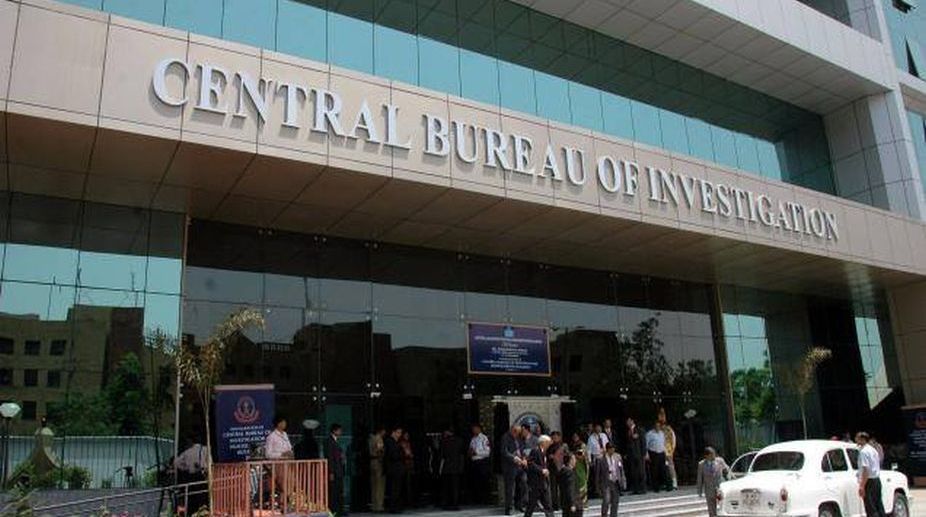
"The Central Bureau of Investigation (CBI) has also informed that it has registered 30 cases relating to chit fund and ponzi schemes in West Bengal. At present these cases are under investigation," he said.

The Reserve Bank of India has indicated that out of 486 cases pertaining to unauthorised collection of money by entities in various states/union territories considered in state level coordination committee, 116 cases pertain to West Bengal.

The State Level Coordination Committee (SLCC) is the joint forum formed in all states to facilitate information sharing among the regulators and enforcement agencies of the state with the objective to control the incidents of unauthorised acceptance of deposits by unscrupulous entities. 

The SLCCs were reconstituted in May 2014 with renewed focus on unauthorised collection of money by unscrupulous entities.