Logo

15 killed in Baghdad car bomb attack

IANS | Baghdad |

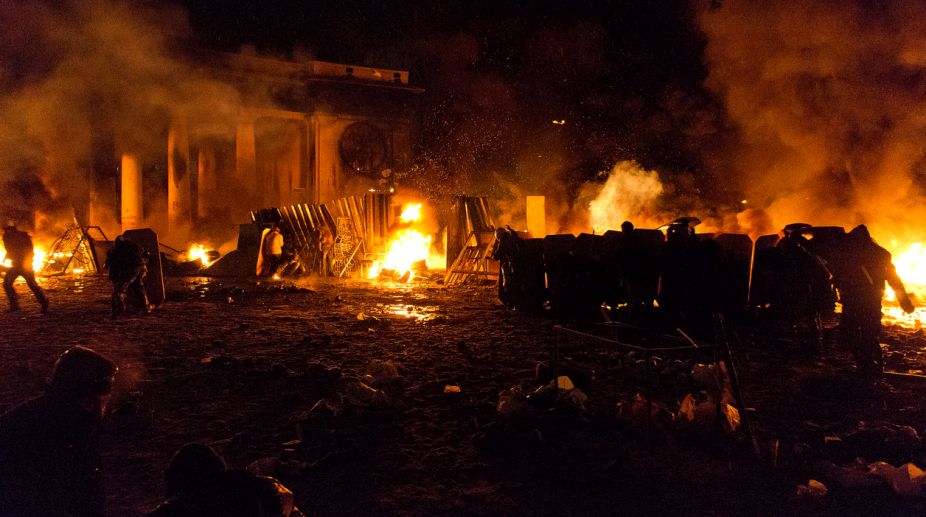
At least 15 people were killed and 33 others wounded on Monday in a car bomb explosion at a marketplace in the Iraqi capital of Baghdad, a police source told Xinhua.

The attack occurred in the evening when a booby-trapped car parking at a crowded marketplace detonated at the predominantly Shiite neighbourhood of Amil in southern Baghdad, the source said on condition of anonymity.

The massive explosion destroyed several nearby shops and many stalls, along with damaging several nearby civilian cars and buildings, the source said.

The toll could rise as ambulances, police and civilian vehicles were evacuating the victims to the city's hospitals and medical centres, the source added.

No group has so far claimed responsibility for the attacks, but the Islamic State, in most cases, was responsible for such attacks targeting crowded areas, including markets, cafes and mosques across Iraq.

Terrorist acts, violence and armed conflicts killed 385 Iraqis and wounded 609 others in February across Iraq, the United Nations Assistance Mission for Iraq said.

The attacks came as the Iraqi security forces backed by anti-IS international coalition are carrying out a major offensive to drive out the IS militants from its last major stronghold in Iraq's northern city of Mosul.
Towards freedom

AK Ghosh | New Delhi |

The University Grants Commission has decided to grant autonomy to more colleges even without on-the-spot inspection by an expert committee. This is a major development in the academic sphere under the BJP dispensation. However, the concept still seems to be a mirage as the criteria for granting autonomy have been left rather vague.
The establishment of autonomous colleges, as envisaged under the New Policy of Education of 1986, was expected to be a trend-setter. But the “centres of excellence” proved to be a non-starter. The idea was welcome as the plan envisaged that autonomy would be granted on the basis of good performance. It was intended to decentralise authority from university administrators to university departments and from universities to colleges. The faculty would be responsible and accountable for all the academic programmes, including restructuring of courses, the quality of teaching and assessment of students’ performance. The idea was to allow these colleges to become centres of excellence without being affected by the over-bureaucratisation of the decision-making processes.
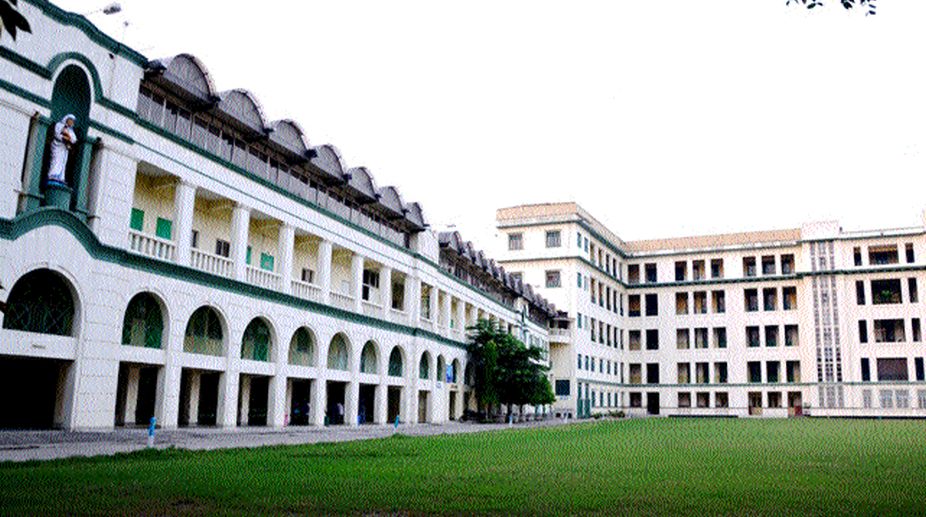
When the UGC announced that St Xavier’s College in Kolkata would become the first undergraduate college in Bengal to acquire the status of an autonomous institution, it was supposed to be in fulfilment of the state government’s pledge to have at least one autonomous college. But the issue of autonomy for Presidency College turned out to be a dilemma. Autonomy still remains an ill-defined term and this has given rise to misplaced fears among academics.
Although the scheme has been a grand success in many advanced countries, it is yet to make substantial headway in India. Certain pronouncements from Delhi nearly four decades ago sounded like a recognition that an autonomous college was an idea whose time had come. Official circulars were issed throughout the country. Theoretically, the concept, as enunciated in 1978, became a significant step towards improving the quality of higher education in India.
However, it was in 1948 that the first proposal for autonomous colleges was mooted by the erstwhile University Education Commission. In 1964, the committee on colleges, with Professor Mahajani in the chair, advised the UGC “to select a few colleges and give them an autonomous status with freedom to experiment with new ideas”. A committee on standards of university education reiterated the need in 1965, and the National Policy on Education for 1986 stated: “Autonomous colleges will be helped to develop in large numbers until the affiliation system is replaced by a free and more creative association of universities and colleges”. The first such college came into existence in Tamil Nadu in 1978 and the number started growing, but rather sluggishly.
In 1981, an Indian delegation studied the functioning of autonomous colleges in the USA and recommended to the UGC that “the process of establishing autonomous colleges should be accelerated”. So the idea was strongly recommended in the National Policy, 1986, and confirmed again in the Programme of Action 1986 and 1992, and all these documents were approved by Parliament. While the Seventh Plan envisaged autonomy to 500 among 7000 colleges, only 100-odd colleges were made autonomous.
If Presidency College had decided in the past not to seek autonomy, it is also a matter of concern that none of the leading colleges in Delhi ever expressed its willingness to enjoy autonomous status due to opposition from the teachers’ associations as also the unwillingness of the university to amend its acts to make autonomy possible.
In fact, the initial enthusiasm for the novel scheme has waned considerably. What is worse, there is lack of awarness in the institutions themselves that they are in need of liberation. True, teachers sitting in the staff rooms denounce their university for the deficiencies of the curriculum and the unreliability of the education procedures. But if the syllabus is defective, would they draw up a better one? If the teaching routine that the university prescribes is not agreeable, would they suggest a more effective way of teaching and learning? If the present style of examination and evaluation needs change and improvement, what would they want to do? To answer these questions and put the answers into practise is the true meaning of autonomy. What autonomy would facilitate is a deliberate and conscious use of the freedom to frame and develop the syllabus.
Freedom from self-governance ought to be manifest in two levels: i) the institutional level where the college is free to determine its policy and programme; ii) the individual level where the teacher is given the freedom to learn and to teach. Learners should also have the freedom to choose those courses which they think would help them grow (Carneigie Commission Summary Report, 1974). Autonomy envisages a two-pronged liberation ~ first, liberating the universities from the burden of conducting examinations for numerous students which deters them from fulfilling their responsibilities of giving academic and administrative leadership in the higher educational field. Second, autonomy is also intended to liberate the colleges from excessive control of the universities and allow them the freedom to chart out their plan of action, including courses, curriculum and examination management … subject to the overall supervision and control of the universities.
However, the setting up of autonomous colleges has been very slow largely on account of the indifference of the universities. This is reinforced by the strong resistance from teachers’ unions.  The teaching fraternity is also concerned over the increase in workload, paucity of funds and the operational problems in implementing the scheme. Furthermore, as autonomous colleges are non-conventional institutions, the degrees offered by them might be suspect. Grades or marks may be manipulated in the absence of an external monitoring agency. Moreover, they might foster eliticism.
Autonomous colleges have been remarkably successful in effecting innovations in higher education by introducing new courses relevant to the needs of students and society. Besides, they are able to continuously restructure their approach and methods to cope with the changing global educational scenario.
Tamil Nadu has the highest number of autonomous colleges in the country. At another remove, autonomy has been a failure in Ravenshaw College, Cuttack. According to UGC officials, the process was not fully implemented. Besides, funds were also held back by the state government. Autonomy, thus, calls for a supportive role of the universities and the state governments. The success of the scheme depends largely on the level of cooperation between the teachers and the managements. It is time for direct intervention by the UGC in order to ensure that autonomy for colleges is not merely a policy document but an example worthy of emulation throughout the country.

(The writer is former Associate Professor, Dept. of English, Gurudas College, Kolkata)


Deluded losers

Editorial | New Delhi |

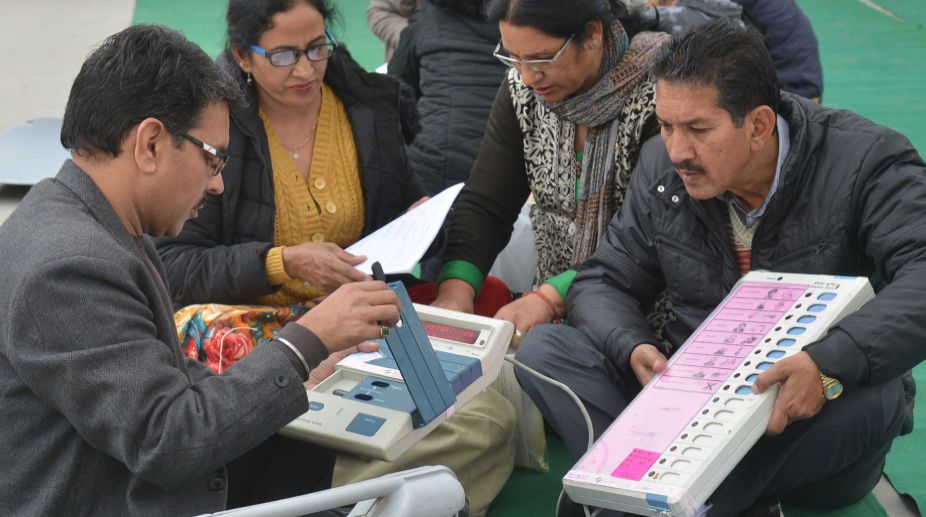
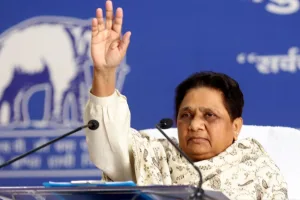
By calling for an EVM ban, losers in the just concluded Assembly elections are only deluding themselves. The Election Commission of India, instead of dismissing calls of the Bahujan Samaj Party chief Mayavati and Delhi Chief Minister Arvind Kejriwal questioning the reliability of the Electronic Voting Machines by stating they are infallible and tamper proof, should have brought out the voter-verified paper audit trails (VVPATs) introduced at random in 20 constituencies, counted them to validate the EVM count, and dispelled all doubts for the future. VVPAT allows a voter to print out his vote which is dropped in a ballot box and kept sealed. To claim that the EVMs manufactured by the public sector Bharat Electronics and the Electronic Corporation of India, the two suppliers to ECI, cannot be tampered with, is not true. Not so long ago a Hyderabad technologist procured one EVM of the ECI from Mumbai and demonstrated in a television show how it could be hacked. Instead of accepting the reality, ECI launched a witch-hunt against the technologist. The integrity of Indian EVMs is derived from the fact it has just a one-time programme built into it, like a calculator, and it is not networked. For a huge country like India having the world’s largest electorate, EVMs are a necessary tool to facilitate timely elections. The ECI has close to two million EVMs. When elections are called, a computer makes randomised selection of which machine should be sent to which constituency as a first step to avoid tampering. As soon as the final candidate list is out, which is about two weeks prior to polling date, the machines are tested in the presence of the candidates or party agent, and their signatures obtained in a certificate that the EVMs are in order. On polling day, a mock polling for an hour is conducted to see all the buttons are working properly and not rigged.
A decade ago Subramanian Swamy, then president of the Janata Party, organised an international convention on the use of electronic voting machines in Chennai. Among the participants were scientists and psephologists, including GVL Narasimha Rao, present national spokesman of the BJP, who presented his seminal book, Democracy at Risk, Can We Trust Our Electronic Voting Machines? One of the positive outcomes of the international convention was the Supreme Court ordering the ECI to allow demonstration of hacking an EVM before its technical committee then headed by the late Professor Inderesan, former director of Madras IIT. When the demonstration was progressing and finding it was succeeding, he walked out. The Supreme Court eventually ordered the ECI to incorporate VVPAT in all its EVMs and the ECI has given an undertaking to have them ready in the 2019 general election. It is left to the Narendra Modi government to release adequate funds to the EC to enable it achieve the target.

Sinister signal

Editorial | New Delhi |

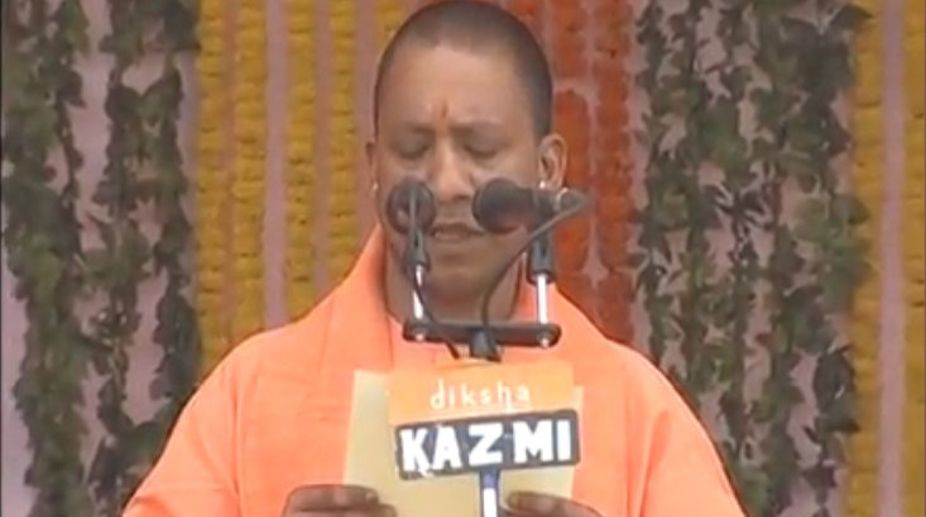
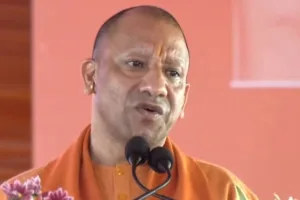
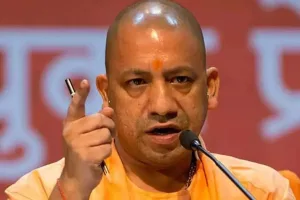
It is, admittedly, unfair to make quality assessments on an entity before it gets down to business. It is also impossible not to permit track-records and history to influence such assessments. The elevation of the ever-controversial Yogi Adityanath is a clear signal that the BJP, under the Modi-Shah leadership, has cynically opted to further the divisive politics that propelled it to an overwhelming majority in the recent elections in UP. The five-times Lok Sabha MP from Gorakhpur has always been a powerful force in the state, but even insiders are amazed at the turn of events that saw him quash the purported administrative abilities of others initially in the race. The only conclusion being that “development” and “good governance” which the BJP had sought to project as election planks were overtaken by the undercurrent of religious consolidation that had worked a mini-miracle at the polls. And the Hindutva firebrand was the man chosen to cement the “all Hindu” appeal, with an obvious eye on the parliamentary polls two years down the road. The Yogi’s upgrade was the culmination of the process that did not issue a single “ticket” to a Muslim candidate: the political logic being that since the minority community did not vote in favour of the party, it did not merit anyone contesting on the Lotus symbol. A ground reality that will hardly be impacted by one Muslim bring accommodated in the ministerial council that was sworn in in Lucknow on Sunday.
To be fair to Yogi Adityanath, he has never made hypocritical pretence to being “secular”, and has ever relished his role as a showboy of Hindutva (not to be confused with Hinduism), and provocative comments about Muslims best relocating to Pakistan, etc., have seldom embarrassed him and his flock. Hence the apprehension in some quarters, that despite having a pair of “deputies” to inject a degree of balance, the communal pot will be kept simmering all through his tenure as chief minister. To fall back on the clichéd adage about a leopard not changing its spots, few political analysts expect a change in Yogi Adityanath’s thinking now that he has assumed administrative responsibilities. While double-speak is not a crime of which he can be accused, it would be pertinent to ask how his being the “chosen one” matches up with the sentiments that the Prime Minister had articulated from the victory podium at the BJP headquarters. Mr Narendra Modi has clearly accorded higher priority to winning elections than injecting “inclusiveness” into his style of administration. Just one sobering after-thought: Among the first persons to be taken to task by the Election Commission for intemperate comments during the recent campaign is the man the “national” leadership has just anointed in Lucknow.


Manish Gupta takes oath as RS member

Abhijeet Anand | New Delhi |

Manish Gupta of the Trinamul Congress on Monday took oath as a member of the Rajya Sabha. Gupta, who was earlier this month elected to the Upper House following the resignation of actor Mithun Chakraborty, took oath in Bengali.

The House also mourned the death of its former member Pyarimohan Mohapatra on March 19 at the age of 77. When the House met for the day, Chairman Hamid Ansari mentioned Mohapatra passing away. He was a member of the Upper House for two terms from July 2004 to July 2010 and July 2010 to July 2016.

“In passing away of Pyarimohan Mohapatra, the country has lost a noted civil servant, a distinguished parliamentarians and a dedicated social worker,” Ansari said in his obituary reference.

Members stood in silence for a moment in the memory of the departed soul.

Non-fulfillment of promise by the BJP led government led to suicides

Abhijeet Anand | New Delhi |

The non-fulfilment of the promise by the BJP-led government to waive farm loans has led to 117 farmers committing suicide in Maharashtra alone, the Opposition Congress alleged in the Rajya Sabha on Monday.

Raising the issue during Zero Hour, Congress member Pramod Tiwari said of the 117 farmers who committed suicide in Maharashtra, 46 have been given compensation and the cases of another 58 is under consideration.

Compensation claims of remaining 13 have been rejected, he said, adding that payment of compensation was an admission of the suicides taking place.

The deaths, he said, were not a result of drought but because of their bumper crop not getting the right price and the hardships caused to them by the note ban. “They (the government) did not waive loans of farmers”, causing financial miseries, he said. “The Government of India is responsible for the suicides as it did not waive loans.”

He said it was promised that the loans of farmers in Uttar Pradesh will be waived at the first meeting of the Cabinet if the BJP comes to power in the state. The first meeting of the Cabinet was held yesterday and no decision of farm loan waiver was announced, he said.

Apollo Hospital official meets Mamata, to make amends

IANS | Kolkata |

Amid allegations of medical negligence and fleecing of patients, the Apollo Gleneagles Hospital authority on Monday promised West Bengal Chief Minister Mamata Banerjee to rationalise tariffs if needed and admitted its level of care has deteriorated.

"I think from the past one and half year, the level of care has not been what it had been. If we have to rationalise our tariffs, we are quite happy to do it," Apollo Hospitals Group vice chairperson Preetha Reddy told the media after the meeting.

Reddy promised to work with the regulatory commission set up by the state government to monitor private hospitals.

"The Chief Minister has set up a commission. We will be working with them. The CM was extremely gracious and pointed out certain facts, which I think is something all hospitals have to look into. And patients have to be treated well.
"Patients coming to the Emergency have to be given the level of care which they need," she said.
Reddy pointed out that the hospital had treated almost nine million people from the state and would continue to do so.

Apollo Gleaneagles is facing a police probe following the death of Sanjoy Roy, a resident of Dankuni in Hooghly district who was critically injured in a road accident. 

Roy died on February 23 at the state-run SSKM Hospital after being shifted from Apollo.

Later, his relatives and friends accused Apollo of "inadequate treatment" even while raising a huge bill and refusing to allow him to be shifted to SSKM unless they paid up the full amount. 

They alleged the hospital delayed his discharge and relented only after they submitted fixed deposit certificates.

A six-member health department team set up to probe the allegations against the leading private city hospitals found "overall negligence" and multiple other anomalies like improper billing, multiple charges and evidence of not following proper medical procedure during treatment.

Police have so far questioned a number of doctors and senior officials of the hospital in connection with the death.

During a meeting with representatives of private hospitals and nursing homes last month, the Chief Minister said that the most allegations, particularly related to exhorbitant charges, were against Apollo.

Parl Panel moots merger of MPLADS, MNREGA funds

Statesman News Service | New Delhi |

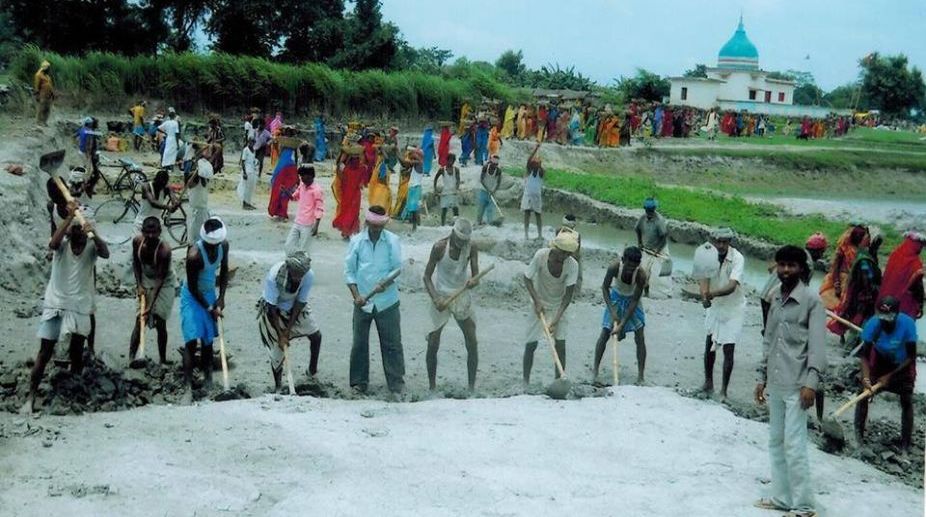
The Parliamentary Standing Committee on Rural Development on Monday asked the Government to explore convergence of MPLADS funds with the Mahatma Gandhi Natural Rural Employment Guarantee Act (MGNREGA) Scheme as it would create a wider resource pool for creation of work, the common objective of the two schemes.

The Union Budget for 2017-18 has allocated Rs 48,000 crore for the MGNREGA Scheme, which is demand driven, and guarantees 100 days’ unskilled work to every rural household in a year. MPLADS (Members of Parliament Local Area Development Scheme) allows each MP to suggest to the District Collector works worth Rs 5 crore in his constituency
every year.

After a scrutiny of the Ministry of Rural Development budgetary demands for the coming financial year, the Standing Committee headed by Dr P Venugopal, said the convergence of MPLADS with MGNREGA would only “augment the fulfillment of providing more number of persons with work and income,” and asked the Ministry to “concretise the holistic plan as early as possible.”

Expressing concern over the disparity in the minimum wages notified by different state governments, and the minimum wages paid under the MGNREGA scheme, the committee said the situation created a “discrepancy at ground level in the implementation of the MGNREGA provisions.” When the ministry disclosed that a committee under the chairmanship of Dr Mahendra Dev was examining the issue, the Parliamentary panel said the government should expedite building a consensus on it.

The Standing Committee regretted “the linkage of Aadhaar numbers with the bank accounts of labourers under MGNREGA Scheme was still no complete and was lagging behind drastically in certain States”.

Stating that the scheme for the rural poor needs to be efficient in grievance redressal, the Committee asked the Ministry to complete the process of appointing Ombudsmen in all states earnestly.

Commenting on the recently-framed scheme of Saansad Adarsh Gram Yojana (SAGY), the Standing Committee said despite maximum efforts by MPs, “there seems to be total absence of requisite coordination between the Department of Rural Development and the State Governments about the manner to achieve the  desired goals envisaged under the SAGY Scheme.” Many projects were agreed upon under the scheme but there was no headway in their implementation so far.

The Government schemes should give priority to the villages selected by the MPs for their
development as model villages, the report said.

Four teams to check cyber threats to power systems: Goyal

Statesman News Service | New Delhi |

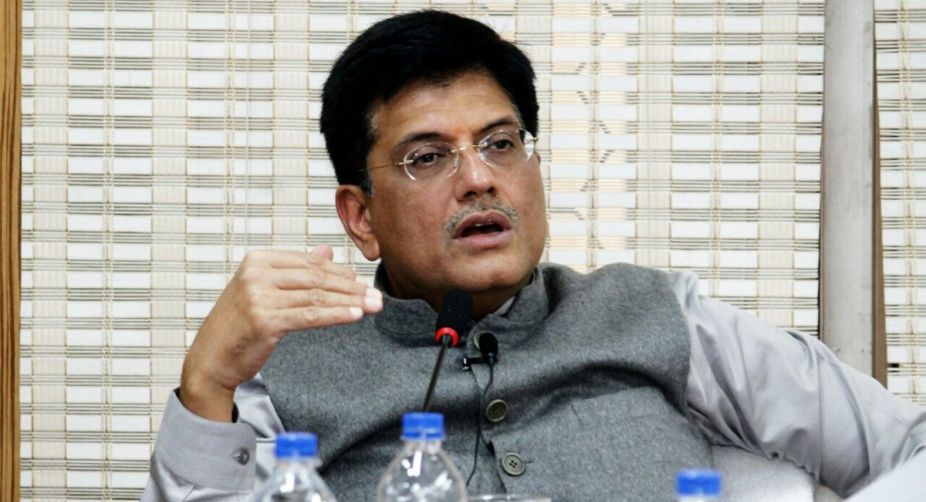
The government has created four emergency response teams to check increasing cyber security threats to the country’s power systems, Power Minister Piyush Goyal told the Rajya Sabha on Monday.

So far India has only one CERT-In (Indian Computer Emergency Response Teams) on the lines of CERT-US to keep a check on cyber attack and issued advisories from time to time, he said. Security to power systems has been considered at a great risk as the modern power systems are connected to net for data transfer, he added.

The Power Ministry through the Ministry of Electronics and Information Technology (MEITY) and National Critical Information Infrastructure Protection Centre (NCIICPC) has formed four sectoral CERTs ~ CERT (Transmission), CERT (Thermal), CERT (Hydro) and CERT (Distribution) ~ to coordinate with power utilities, said Goyal.

To make stakeholders aware of cyber threats in the power sector, the government has also asked all the relevant stakeholders of Smart Grid to identify critical infrastructure and use end-to-end encryption for data security, the minister said. “All utilities have been asked to identify a nodal senior executive as its Chief Information Security Officer (CISO) to lead the process of strengthening organisational systems with respect to cyber security and implement an Information Security Management System as recommended by rules framed under the Information Technology (IT) Act 2008,” Mr Goyal informed the house.


President honours surgical strike heroes with gallantry awards

IANS | New Delhi |

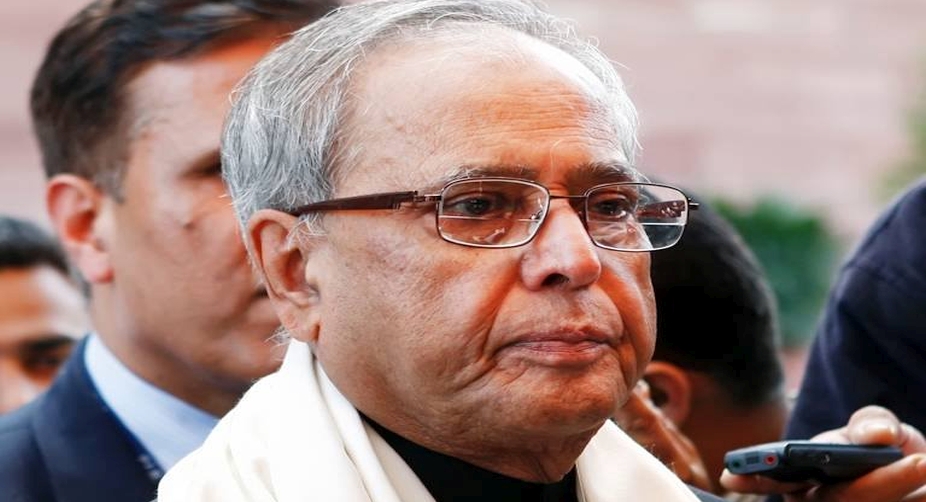
Major Rohit Suri of the Parachute Regiment was conferred the second highest peacetime gallantry award Kirti Chakra by President Pranab Mukherjee here on Monday for successfully leading the army team that carried out cross-border surgical strike last year.

Suri, who was the mission leader of the team which was tasked to carry out the operation against the hideouts of the terrorists across the border, ensured the execution of the task by "his exemplary leadership and courage beyond the call of duty" and eliminated four terrorists in close-quarter combat, an official release said.

Member of the same team, Naib Subedar Vijay Kumar of the Parachute Regiment was presented the Shaurya Chakra for gunning down two terrorists.

Corporal Gursevak Singh of the Indian Air Force (Security), who was killed while fighting terrorists at the Pathankot air base in January last year, was posthumously conferred the Shaurya Chakra.

The Gallantry Awards and Distinguished Service Decorations were presented by the President at a Defence Investiture Ceremony held at Rashtrapati Bhavan in the presence of Vice President Hamid Ansari, Prime Minister Narendra Modi and Union Finance and Defence Minister Arun Jaitley.

The President awarded 13 Shaurya Chakras, which include six posthumous awards.

Posthumous winners of the third highest peacetime gallantry award are: Ashu Singh, a Chief Mechanical Engineer who died while trying to control a fire onboard aircraft carrier INS Viraat last year; Naik Shinde Shankar Chandrabhan who died in an operation against terrorists in Kupwara; Captain Tushar Mahajan, Lance Naik Om Prakash and Captain Pawan Kumar who died fighting terrorists hiding in a Pampore building in February 2016.

The President also presented 22 Ati Vishisht Seva Medals, one Bar to Ati Vishisht Seva Medal, three Uttam Yuddh Seva Medals and 15 Param Vishisht Seva Medals.

Param Vishisht Seva Medal winners included Lt. Gen. Praveen Bakshi, head of Eastern Command of the Indian Army, and Lt. Gen. Manoj Kumar Unni, Director General Armed Forces Medical Services.

The surgical strikes on terrorist launchpads across the Line of Control were conducted in September last year following a militant attack on an Indian Army camp in Uri district of Jammu and Kashmir that left 19 jawans dead.

Govt okays BMB-SBI merger

Statesman News Service | New Delhi |

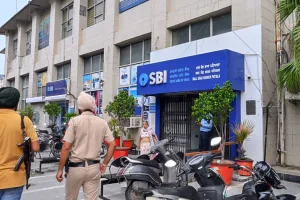
The Central government has decided to merge the Bharatiya Mahila Bank (BMB) with the State Bank of India (SBI) so that women of the country can avail banking services in a better way.

"The decision has been taken in view of the advantage of the large network of SBI. The objectives of affordable credit to women as well as propagation of women-centric products need to be quickly achieved through a wider network and lower cost of funds," the Finance Ministry said in a statement. 

The SBI has a large outreach of over 20,000 branches and lowest cost of funds in the sector.  Out of the total workforce of around 2 lakh employees in SBI, 22 per cent are women.

 "SBI group already has 126 exclusive all-women branches across the country while BMB has only seven. The proportion of administrative and managerial cost in BMB is much higher to reach the same coverage. For the same cost, a much higher volume of loans to women could be given through SBI," it said. 

The BMB, which was set up in 2013, has 103 branches across the country. As per a report, the total business of the bank is around Rs.1,600 crore, out of which Rs.1,000 crore is that of deposits and Rs.600 crore for advances. As per the bank’s website, the majority is retail business. In the meantime, the integration process of all five associates with SBI would begin from 1 April as a part of the consolidation exercise.

As per reports, the assets of State Bank of Mysore (SBM), State Bank of Bikaner and Jaipur (SBBJ), State Bank of Patiala (SBP), State Bank of Travancore (SBT) and State Bank of Hyderabad (SBH) will be transferred to the SBI and will function as its branches.

Last week, SBI said it would increase its stake in its two credit card joint ventures with General Electric Company to 74 per cent. Its board has already given a green signal to infuse Rs 1,160 crore in the two JVs ~ SBI Cards and Payment Services Pvt Ltd (SBICPSL) and GE Capital Business Processes Management Services Ltd (GECBPMSL).

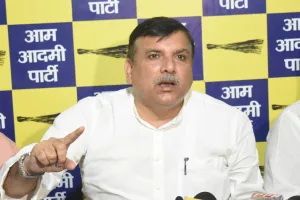
AAP replaces tainted candidate for MCD polls

PTI | New Delhi |

The Aam Aadmi Party (AAP) on Monday said it has replaced a candidate for the upcoming municipal corporation polls here after finding that a criminal case was registered against him.

The party has cancelled candidature of Vijay Pawadia who was declared as party's candidate from Dwarka for election to the municipal corporation of Delhi (MCD).

"The party received a complaint about the candidate that he had a criminal case against him. On investigation, it was found to be true, so his candidature had to be cancelled," said AAP's Delhi unit secretary Saurabh Bharadwaj.

The MCD polls are scheduled to be held next month.

Meanwhile, the party has decided to show Delhi Chief Minister Arvind Kejriwal's video message in different parts of the city using projectors as part of its campaign strategy.

In his message, Kejriwal is seen attacking the BJP-led MCDs for its alleged financial irregularities, and promising a clean Delhi.


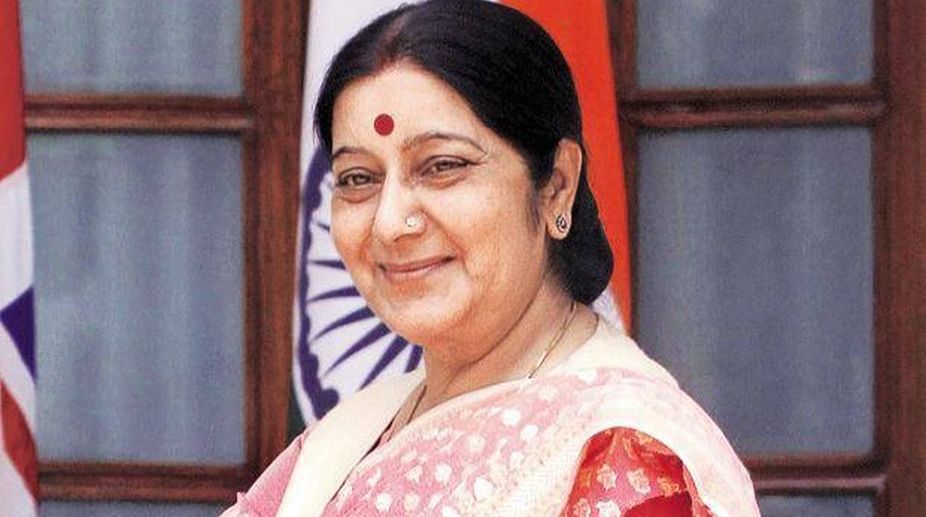
Ties with US secondary to Indians’ security: Sushma Swaraj

Statesman News Service | New Delhi |

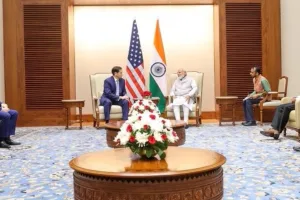
Strategic partnership with the United States would not come in the way of ensuring the safety and security of Indians living in that cuntry, said External Affairs Minister Sushma Swaraj on Monday.

Sushma, while making a statement in the Rajya Sabha on the recent 'hate crimes against people of Indian origin settled in the US, said strategic partnership with the US is secondary and India would not keep mum on hate crime against Indians just because the two countries are strategic partner. She was replying to clarifications sought by Opposition members.

Swaraj said India was committed to ensure security of Indians living abroad and would do its best to help Indians in distress who are living abroad. She said the recent attack on Indians in the United States was more than a law and order problem and India has taken enough steps to prevent such incidents in future.

“India has received very positive and timely response from US authorities…. everyone in US has condemned the attacks,” the minister said, clarifying that “such attacks would not become a trend in future”.

Sushma was responding to CPI-M leader Sitaram Yechury’s query if "hate crime against Indians" was a growing trend in the US. He also asked what steps the government planned to take to prevent such incidents in future. Yechury asked the minister to find out what was the motive behind these recent acts. Opposition members, including Sharad Yadav and Digvijay Singh expressed concern and asked the government to take steps to prevent such incidents.

My teaching making mass impact on common Chinese: Dalai Lama

PTI | Mathura (Uttar Pradesh) |

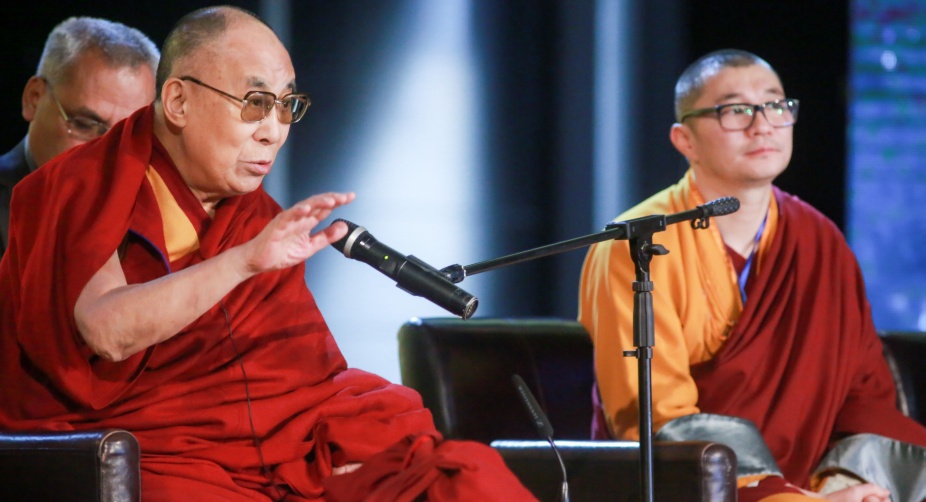
Tibetan spiritual leader the Dalai Lama on Monday refuted claims that his preaching has not had any impact in China and said its "mass impact" was evident from the fact that 400 million people have adopted Buddhism in that country.

"Adopting of Buddhism by 400 million in China is a witness that my preaching is making mass impact on common Chinese," the Dalai Lama told reporters at Karshni Ashram Raman Reti here.

He said the majority of people in China is using internet to access his discourse.

He also stressed the need for better understanding between India and China for economic growth.

Stressing the need for propagation of love, he said, "All religions have stressed the need to increase love and tolerance…Unity in the society is necessary and for this, awakening of the feelings is important." 

He attributed most of the problems like global warming, terrorism, etc. to the narrow outlook of the people.

"Except (the Donald) Trump administration (in the US)," he said, "almost the rest of the world is desisting from arms race after the mass devastation of the Second World War." 

For attaining peace, he stressed the need for reducing fear, frustration and anger as without inner peace of human being, world peace would remain a dream.

To a question, the Dalai Lama said that in the political arena of the world there has been a lot of changes and during last two years India has emerged as a great country.

He said he failed to understand why China objected to his visit to Arunanchal Pradesh as the purpose of his visit was spiritual preaching.

‘Large number of food, liquor sold in defence canteens unfit for consumption’

Statesman News Service | New Delhi |

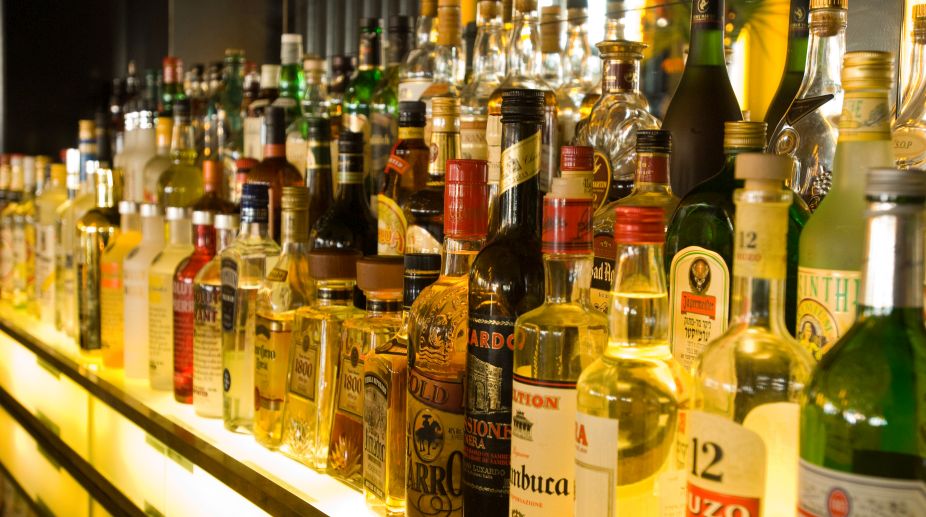
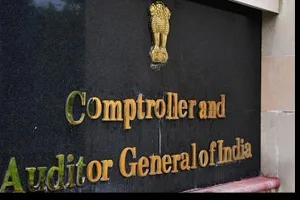
A large number of food and liquor items sold to service personnel and defence civilians by Canteen Stores Department (CSD) through its about 4000 Unit Run Canteens (URCs) have been found to be ‘unfit’ for consumption.

Citing a specific instance wherein a large stock of unchecked substandard beer was sold to customers, the Comptroller and Auditor General (CAG) of India in its report laid in both houses of Parliament on 10 March, stated: “Audit apprehension about issue of substandard items was established by an instance when a sample of Kingfisher beer referred to laboratory for testing in January 2014, by Area Depot Baghdogra (through Area Depot Delhi) was found unfit for consumption.”

During audit the CAG found that despite being found unfit for consumption the stock of beer worth Rs 8.43 lakh was already sold to the customers, mainly defence personnel and defence civilians.

The report pointed out that despite the mandatory 100 per cent sample testing of food and liquor items, in a number of instances such products are being sold without going through the laid down quality checking procedure.

Underlining the seriousness of the issue, the CAG noted: “Given the fact that some of samples were fond unfit during tests, there is likelihood that some of the remaining food items issued and consumed without testing might not be of standard quality. This reflects that the depots failed in assuring the quality of food products issued to URCs and finally to the consumers.”

The matter related to the poor quality of food and liquor items was subsequently referred to the DDGCS for its opinion. The DDGCS came out with its response in July 2016, which the CAG said was ‘not convincing’. The CAG pointed out that the number of food and liquor testing labs has also come down to three from six.

“The issue assumes serious significance in light of the fact that 46 per cent of the food samples were found substandard. These verdicts raise question marks about the credibility of the companies being introduced and the quality of food products supplied by them (to CDS and URCs),” the report further underlined. It underlined the need for putting in place an ‘effective mechanism’ to ensure effective implementation of the quality control measures at all levels of the supply chain in CSD and URCs.

Billionaire Gates meets with Trump to talk foreign aid

AP | Washington |

Tech billionaire Bill Gates is meeting with President Donald Trump to discuss progress in programs for global health and development as well as domestic education.

Gates, who as the co-founder of Microsoft is the world's wealthiest man, will highlight the "indispensable role that the United States has played in achieving these gains," his foundation said in a statement.

Today's meeting comes just days after the administration submitted a budget blueprint that cuts foreign aid.

The Trump administration's budget message said it was time "to prioritise the security and well-being of Americans" and "ask the rest of the world to step up and pay its fair share."

World Happiness: Pakistanis happier than Indians!

IANS | Oslo |

India ranked 122nd, behind terror-riven Pakistan and poorest-of-poor Nepal in the global list of the happiest countries, according to a United Nations report released on Monday.

India came down by three slots, as last year it was placed at 118th spot. It was behind the majority of South Asian Association for Regional Cooperation (Saarc) nations, apart from war-ravaged Afghanistan, that stood at 141. 

Among the eight Saarc nations, Pakistan was at 80th position, Nepal stood at 99, Bhutan at 97, Bangladesh at 110 while Sri Lanka was at 120. However, Maldives did not figure in the World Happiness Report.

Norway took the top spot from Denmark as the happiest country in the world.

The Scandinavian nation, which was ranked fourth in last year's report, jumped to the top this year on the basis of several key calculations, including levels of caring, freedom to make life decisions, generosity, good governance, honesty, health and income.

Other factors by which 155 countries were measured in the annual World Happiness Report are: inequality, life expectancy, GDP per capita, public trust (i.e. a lack of corruption in government and business), and social support.

Denmark, Iceland, Switzerland and and Finland round out the top five, while the Central African Republic came last in the World Happiness Report.

Western Europe and North America dominated the top of the table, with the US and Britain at 14th and 19th positions, respectively.

Syria placed 152 of 155 countries — Yemen and South Sudan, which are facing impending famine, came in at 146 and 147.

The World Happiness Report was released to coincide with the United Nations' International Day of Happiness on March 20.