Logo

After Forty Years

Manish Nandy | New Delhi |

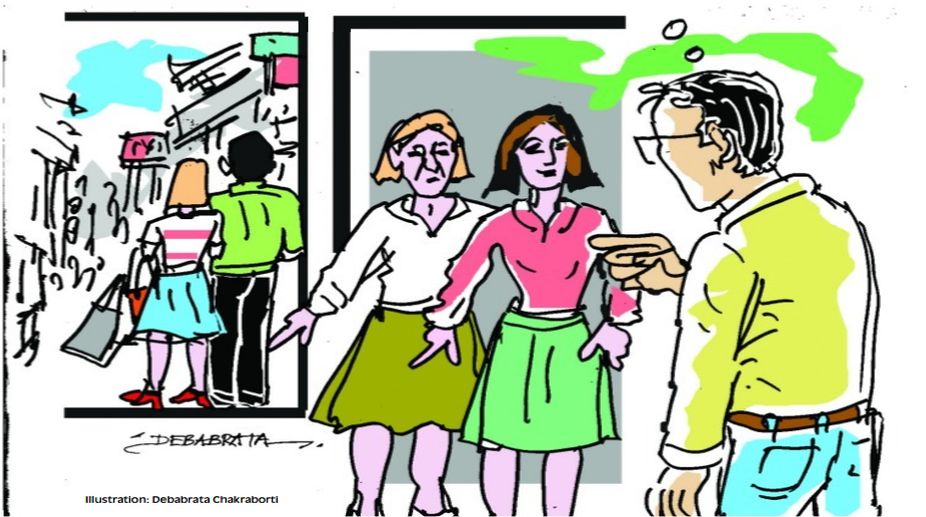
I drove six hours, knocked on the door and a young girl opened the door. Behind her stood a middle-aged woman with short hair and a smiling face. I would not have recognized her on the street, for I was seeing her after forty years. But I knew she was Cathy. Cathy was unforgettable.

Forty years earlier, I was a sophomore student in Kolkata, India, when Dick Johnson, my father’s new colleague from New York, moved into the apartment next door. With him came his wife Esther and daughter, Catherine Isabella.

Cathy could not bear the burden of her polysyllabic name and promptly reduced it to a short, spiffy Cathy. It fitted her better, for she was lively, brisk and direct. Meeting me for the first time, she smiled shyly, but then quickly took my hand and said, “I’ll be your friend.”

I was her friend if only because I was the only one around of her age who spoke English.

She did not speak a word of the local language and needed someone to explain the strange new world around her.

I felt important showing her around, walking crowded streets and narrow lanes through throngs who marvelled at the odd pair of a gangly youth and a pretty foreigner with flowing tresses. She wore Madras shirts and denim pants and explored with me noisy bazaars, smelly fish markets, decaying old palaces and, when our joint resources permitted, cheap roadside tea shops.

We took long walks in the dusk on the crumbling boardwalk on the Hooghly River, and flouted, with unspeakable joy, our parents’ firm instruction not to go anywhere near unhygienic street snacks.

We had our parents’ liberal permission to go to the libraries – they believed it would broaden our minds – and we took full advantage of it, sitting for hours with open books, our fingers discreetly interwoven under the desk, conveying messages our intermittent whispers could not. On rare occasions, we were permitted the other mind-broadening luxury of going to selected plays in local theaters. We dressed specially, which meant I wore cologne and a decent pair of trousers, while Cathy looked resplendent in a cardigan and her mother’s lipstick. We could stay out later than usual, and on the way back we huddled close on the backseat of a taxi.

I left town when I graduated, and Cathy went about the same time to a boarding school far away. A few years later the Johnsons returned to the US.

Forty years later I moved to Washington with a UN job, and, in a remarkable coincidence, had lunch with a colleague who had known the Johnsons when they were alive and living in New York. He found Cathy’s address for me: married and divorced, she now lived with her daughter in Maryland and worked as a teacher.

As Cathy came forward and kissed me, I whispered the words I had always wanted to tell her but never dared to articulate, “You look beautiful!”

The writer is a Washington-based international development advisor and had worked with the World Bank. He can be reached at mnandy@gmail.com.

Cop-out verdict that pleases both sides

Irfan Husain | New Delhi |

In a nation of some 200 million, I doubt if a handful could pinpoint Panama’s location. And yet, this tiny Central American state has dominated Pakistan’s political discourse for the last year to the point of tedium.
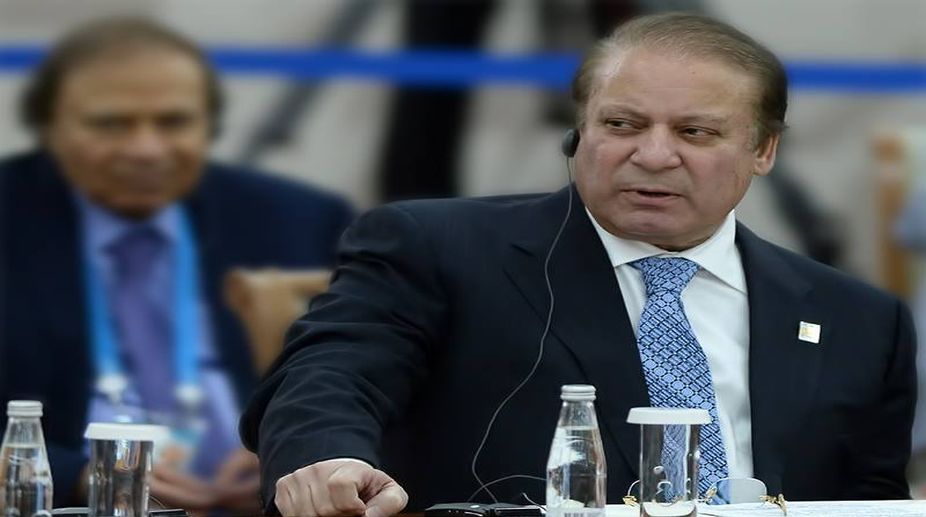
Finally, after nearly two months of hearings before a Supreme Court bench, the verdict is here. And, as I had predicted to friends a few weeks ago, it is a cop-out that has both sides declaring victory.

For me, the abiding image is of the Sharif brothers, Nawaz and Shahbaz, embracing and beaming at each other. In the PTI camp, we watched Imran Khan and senior party members pass sweetmeats around.

For the SC, the verdict gave the impression of balance and fairness, with something for both sides to cheer about. Imran Khan had a lot of praise for the two dissenting judges who declared the prime minister ineligible to rule because he didn’t meet the criteria of honesty and integrity laid down in the Constitution.

The ruling PML-N is gloating over a verdict that, for the time being, has let their leader off the hook. As far as the party is concerned, it has every chance of hanging on to power until the 2018 election. Here, according to opinion polls, it is most likely to win a majority. So who’s the real winner in the verdict?

When the Panama brouhaha began a year ago, I had suggested that the Sharif brothers were masters of kicking the can down the road, and would drag matters out indefinitely. Now, with a joint investigative team (JIT) being set up, expect more of the same.

Even though the SC has required the JIT to submit fortnightly progress reports, the fact remains that members of this committee will all be serving members of the civil and military bureaucracy. To expect them all to perform their tasks independently is a rather big ask.

Then there is the problem of the team having to obtain and verify information in different jurisdictions. Will they be able to force banks and government departments in Dubai and Qatar to hand over documents? And all this in two months? Forgive my scepticism, but having first-hand knowledge of the pace at which our bureaucracy works, I have some doubts.

No wonder that Imran Khan is demanding the PM’s resignation. He knows how difficult it will be to get a group of civil servants to report against a sitting PM. But he’s right in underlining Nawaz Sharif’s loss of moral authority to rule.

Irrespective of the legal rights and wrongs of the case, it is clear that the daily drip-dripdrip of corrosive evidence against Sharif and his family has done much to strip away the aura of decency he had tried to project. And his disqualification by the two dissenting judges on the bench has reinforced the impression of corrupt practices at the heart of the Sharif empire.

With supreme irony, Asif Zardari has also demanded Nawaz Sharif’s resignation, and asked if he would be taken to the local police station for questioning, or would the JIT go the PM House? The reference here was to his own vicious treatment over a decade of incarceration.

Indeed, the PPP has good reason to be aggrieved at what has often appeared to be its targeting by the judiciary, starting with Zulfikar Ali Bhutto’s judicial murder to the sacking of another elected PM, Yousuf Raza Gilani. In many other cases, the judiciary has displayed an apparent animus against the PPP.

And yet, despite demands for his resignation from the opposition, Nawaz Sharif isn’t going anywhere. He didn’t get to where he is by being sensitive to corruption charges. Throughout his political career, he has shown himself to be tough and opportunistic.

Imran Khan has given examples from other countries where leaders tainted by the Panama Papers have either provided full disclosure (David Cameron), or resigned (Iceland’s Sigmundur Gunnlaugsson). However, members of Putin’s and Bashar al-Assad’s inner circle have not even bothered denying the allegations against them contained in the leaks.

As we know, there is no tradition of resignations in Pakistan. Even in Israel, Bibi Netanyahu is mired in corruption charges, but is refusing to step down. But in Israel, the police are far more independent than they are in Pakistan, and have investigated similar charges against presidents and prime ministers before.

Whatever happens next, Panama is a name that will continue to resound on our TV chat shows for some time to come. But will the verdict reduce corruption? I doubt it. But it will force crooked politicians to be more careful about their bookkeeping. A final factoid: the verdict triggered the stock exchange’s biggest bull run, with the index shooting up by 1,800 points in a single session. Do investors know something we don’t?

Dawn/ANN.

End of History?~II

Arunabha Bagchi | New Delhi |

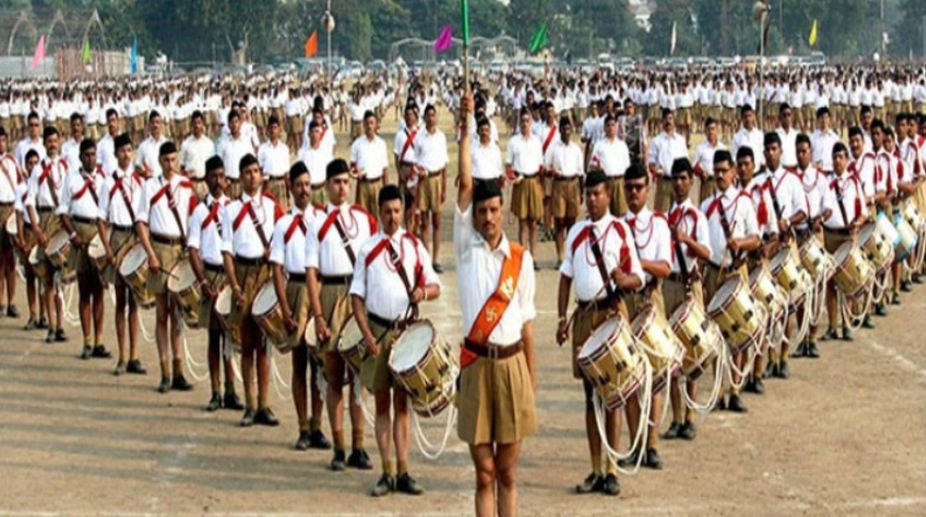
The other movement was for the unadulterated Hindu Rashtra. It was the fusion of the erstwhile Hindu Mahasabha, the RSS and the ideas of Vinayak Savarkar. But Mahatma Gandhi made them ineffective with his own lifestyle and political leadership. After Independence, Jawaharlal Nehru tried to modernise India on the western model of enlightenment. Our Constitution mandated adult franchise, including women, despite abysmal level of literacy. The Hindu Code Bill gave property rights to women, rights of divorce and alimony for the female partners. Freedom of speech, press freedom, rights of individuals, affirmative actions for the Scheduled Castes and Tribes and many other liberal ideas are enshrined in our Constitution. The only problem was that the West gave a damn about their values being introduced in a newly independent nation with one-sixth of the world’s population. Outside their own borders, they do not care about those values. It is all about economic benefits and military influence that matters to them. On both scores, India offered them nothing at that point and we were marginalised in international affairs.

The Islamic revolution in Iran gave Hindus in India a new sense of identity. Kapil Dev leading India to victory in the World Cup Cricket gave us a new form of self-confidence. Our success in the IT and BPO sectors drew international attention and respect. Finally, our economic growth starting in the 1990s based on consumption led to huge import of foreign goods, paid for by remittances of Indian diaspora in the Middle East and elsewhere.

This gave us some clout in international affairs. All these gave the better-off Indians a new sense of pride, almost a false sense of vanity, and the feeling of our unique Hindu heritage as the propellant for future development. In the eyes of many in the resurgent India, Nehru’s liberal ideals had no link to our traditions and no economic benefit either. The West would rather trade with the totalitarian Communist regime in China that exploits mercilessly the labour force there, than with India with strong labour laws borrowed from the West.

The most controversial issue was secularism. For us it meant equal treatment to all religions, and not the separation of the Church and the State as is understood by secularism in the West. I do not even know the Bengali term for secularism. It was kept deliberately vague for us. This caused huge controversy and vote-bank politics that alienated most Hindus.

All these frustrations, international developments with resurgent Islam and China, and our pride in some of our economic achievements revived the sense of Hindu identity that has now taken its hold On our nation.

Both Mahatma Gandhi and the Hindu Mahasabha/RSS combine used our Hindu symbols to mobilise the nation. They created the only two Pan-India political parties in India. All efforts to create other Pan-India parties after Independence led to nowhere. The liberal experiment was just a blip in our history. The discussion of our post Independence politics by our political analysts to predict our future may, therefore, be useless. It is true that Hindus are divided along caste lines and regional feelings.

But neither any caste, including the Dalits, nor inhabitants of any region in the heartland want to leave the Hindu fold. All Hindus, the vast majority of people in India, have the same devout feelings about temples and religious festivals of all parts of India. This religious fervour seems to be increasing by the day, as I noticed to my surprise during the current stay in India. The BJP/RSS combine can cleverly play on this religious sentiment by implementing some social and economic measures to reduce the friction among various castes in India. This is the task Narendra Modi is performing splendidly. His calls to motivate the nation to attain new heights appeal to all Hindus and some non-sectarian Muslims. This is the modern version of Hindu Rashtra of pre-historic days in the minds of most of our countrymen.

Although deeply disturbing, it is my opinion that this new found identity through the sense of being a Hindu is here to stay. Our pre-independence politics of mass arousal through Hindu symbols, both by the Congress and Hindu Mahasabha, clearly indicated the trend as started by Bankimchandra. It is no wonder that Bande Mataram was the rallying cry of the Congress during our struggle for Independence and is also considered to be our true National Anthem by the current rulers in India.

Are we reaching the “end of history” in India? To mimic the Marxist analogy, our history went through the “unorganised” form of Hindutva at the dawn of history, followed by invaders from the North who settled in India, thereby leading to a cultural fusion and expansion of commerce. The next stage was the imperialistic rule by the “enlightened” Europeans. The final phase, after a chaotic period, started taking shape with the BJP winning absolute majority in Parliament in 2014. Hegelian ideas of linear progress until the “end of history” is, however, not in our philosophical tradition. We believe in historical cycles. Many Hindus are hoping that 2014 signifies the beginning of the cycle from Kalyug to Ram Rajya. How we can bypass the Satya Jug remains a mystery.

The writer is former Dean and Emeritus Professor of Applied Mathematics, University of Twente, The Netherlands.

(Concluded)

Missile misadventure

Editorial | New Delhi |

It must rank as an irony of international relations that last Sunday’s missile misadventure in North Korea has staved off a crisis in the peninsula. Nonetheless, it has been a major loss of face for Pyongyang as the missile ~ part of a military parade ~ exploded seconds after it was launched on the 105th birth anniversary of Kim Il-sung. The failure of a missile-launch isn’t exactly breaking news for the North, but direly embarrassing is that the disaster had marred the ceremonial grandstanding associated with North Korea’s founder. Not that a confrontation with the US was dangerously imminent, but the threat of a catastrophe appears to have receded for now.

Neither Donald Trump nor Kim Jong-un have followed up on their threats; equally neither has compromised on their respective positions, when not a defiant show of belligerence. No wonder the retreat from the brink has been fraught on both sides of the divide. The scaling down of tension is inherently deceptive as there has been no change in the fundamental positions and causes of the friction.

The North Korean regime remains ruthless and firm in its determination to buttress its nuclear programme. President Trump is much too impetuous to even attempt a sober evaluation of the US equation with President Kim Jong-un. A North Korean general’s bluster that his country could defeat all its enemies so that there would be nothing left even to sign a ceasefire mirrors the escalating fantasies provoked by tension.

No less belligerent was Trump’s tweet ~ “North Korea is looking for trouble. If China decides to help, that would be great. If not, we will solve the problem without them! U.S.A.” The war of words has not abated even in the aftermath of the missile misadventure if the caveat of the US Vice-President, Mike Pence is any indication ~ “The era of strategic patience is over.”

The nub of the matter must be that strategy and patience are not exactly Mr Trump’s forte. The outlook today is more awesome than what it was in 1994, when the Clinton administration had considered a pre-emptive war with North Korea. A war is the worst possible outcome to the crisis; the devastation can be unimaginable both in terms of human suffering and the world economy. North Korea, like perhaps Iran, is loath to give up its nuclear arsenal.

One could even argue that the recent cruise missile attack on Syria has served to strengthen Pyongyang’s resolve… though one country is a long way from another and not merely in terms of distance. Given the opaque administration, details of the North’s nuclear arsenal may never be known; but it is generally believed that its missile is capable of targeting Japan. However daunting the crisis, a jaw-jaw is better than war-war, as Winston Churchill had once remarked.

La Liga: Lionel Messi lights up El Clasico as Barcelona stun Real Madrid

Simply Messi! 500 goals and counting for the Argentine superstar!

Prithviraj Dev | New Delhi |

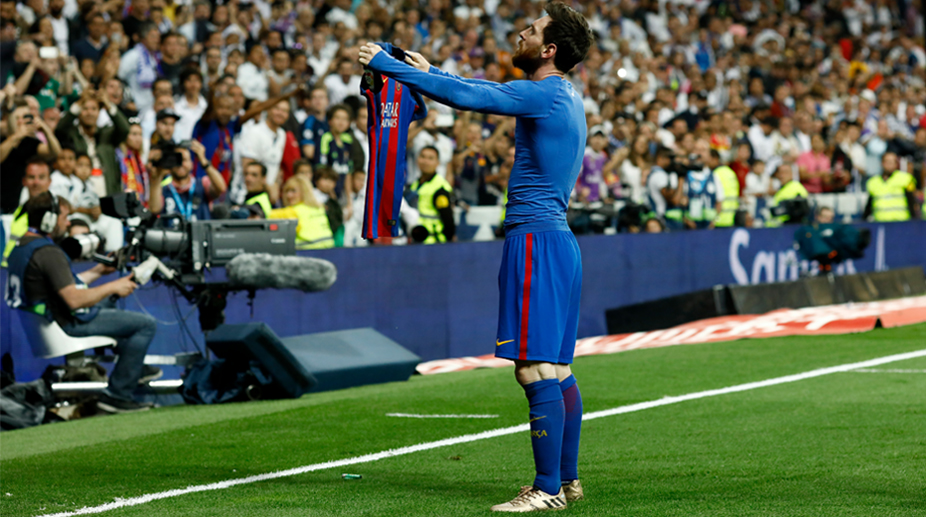
Lionel Messi’s 92nd-minute strike broke Real Madrid hearts as Barcelona stunned their arch-rivals 3-2 in the El Clasico at the Santiago Bernabeu on Sunday to go top of the La Liga table, with the 29-year-old Argentine proving once again just why he is considered the best player in the world.

Messi struck a brilliant brace, neutralising Casemiro’s opener in the 33rd minute, slaloming past Madrid defenders before beating Navas with a cool finish but it was his second, deep in injury-time that proved that when he wants to be, he can be unstoppable.

Credit must be given to Sergi Roberto, as the Barcelona full-back started the attack brilliantly, accelerating past a few Madrid defenders before spreading the ball to the left wing. Jordi Alba looked up once, saw Messi making his run and sent in a perfectly weighted cut-back which the Argentine struck home for his 31st league goal of the season.

Barely minutes earlier, the visitors had a look of despair around them as substitute James Rodiriguez seemed to have forced a share of the spoils with his 86th minute strike. Marcelo had made an overlapping run and sent in a bouncing ball which was guided into the back of the net by Rodriguez to get the Bernabeu roaring again, for after captain Sergio Ramos’ dismissal in the 78th minute, the home fans seemed to have lost their voice.

Ramos had needlessly slid in dangerously on Messi near the halfway line, leaving match referee Alejandro Hernandez Hernandez with no chance but to give the defender his marching orders. 

Madrid started with their famed ‘BBC’ at the tip of their 4-3-3 formation but Zinedine Zidane’s gamble on Gareth Bale went awry as the Welshman was unable to continue after having played barely half an hour. Marco Asensio came on and while the young winger had a fine game, questions will be asked of the French tactician as to why he was not given the start ahead of the obviously-unfit Bale, especially as Asensio has been in fine form in recent weeks.

Barcelona had confirmed Neymar’s three-match suspension had not been overturned prior to the match and Paco Alcacer started in his stead, with the rest of the line up unchanged from their scoreless draw against Juventus in the Champions League.

The first-half began with some brilliant end-to-end action, with both keepers being called upon on several occasions. Casemiro took advantage of some slack defending to turn home Ramos’ shot which came off the post in the 28th minute but Messi’s leveller five minutes later ensured that Barcelona always were in the tie.

The second period began with Madrid pressing the Catalans high up the pitch but Cristiano Ronaldo was having a rare off day, seemingly unable to beat Marc-Andre ter Stegen on several occasions. In fact, Asensio laid it in a plate for Ronaldo in the 67th minute, but somehow the Portuguese sent his tap-in over the bar to let Barcelona off the hook.

And when Ivan Rakitic scored a golazo in the 71st minute, one sensed the momentum had shifted to the visitors. The Croatian had not been having a good game but all that was forgotten when his left-footed shot from outside the box rifled past Keylor Navas to put Barcelona ahead for the first time. 

Yet despite being a man down after Ramos’s dismissal, Madrid didn't give up and had looked like they had salvaged a draw when James came off the bench to equalise with a well-taken volley, but they hadn't accounted for the genius of Messi. The Argentine scored his 500th goal in a Barcelona jersey in stunning fashion, arriving in the box at the right time to beat Navas and put the Catalans on top of the table with just five matches remaining. 

While Real still have a game in hand, the pressure is well and truly on them and since Barcelona have a better head-to-head, they will be under the spotlight as they know another loss could scupper their chances of winning their first league title since 2012.

Pass/fail construct

Editorial | New Delhi |

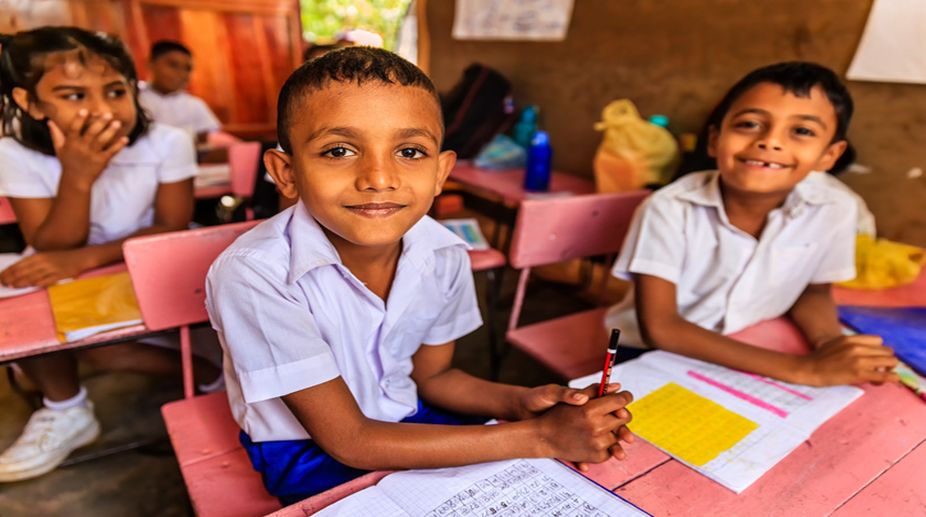
The sheer absurdity of the no-detention policy till Class 8 will hopefully be corrected with states being accorded permission to detain students in Class 5 ~ the conclusion of the primary stage ~ and then again in Class 8, which marks the transition point from middle to senior school. HRD minister Prakash Javadekar’s statement signals a welcome deviation from the Right to Education Act which makes it mandatory to ensure automatic promotion till Class 9… with no evaluation whatsoever for the better part of school life. In many or most schools, especially those run by state governments, there is no praxis to evaluate what has been taught or to assess what the students have assimilitated, if anything.

The fact that 25 states have already agreed to withdraw the “no-detention policy” reaffirms the inbuilt opposition to a breathless provision of the RTE Act. In West Bengal, from one dispensation to another and cutting across party lines, the authorities are seemingly in favour of promotions… with no questions asked. Both the advancement of learning and assessment will be taken care of with the overwhelming majority of states set to revert to the pass/fail construct. The minister has been remarkably forthright to admit that the “no-detention policy has led to deterioration in the quality of education”.

The proposal to give the student two chances to clear the Class 5 and 8 exams is reasonable enough just as the provision for “remedial classes” is geared to help students who cannot easily attain the benchmark. However, this ought not to be confused with the booming business of private tuition. Schools have been given the responsibility to smoothen out the transition to the extent possible. It is fervently to be hoped that the amendment to the RTE Act, now before the Cabinet, will be cleared with urgent despatch.

A logical objective of the changes that are on the anvil is to improve the quality of school education. Towards that end, the HRD ministry plans to notify the “learning outcomes” in the refashioned RTE Act. Not that the provision on the impact of education is not integral to the “flagship legislation”; close to a decade after the Act came into effect, the feedback on the “learning outcomes” is yet to be notified.

Happily, the data will now be advanced to parents as well. Clearly, it is a three-pronged approach towards school education, one that involves teachers, the taught and the parents no less. Teachers will be made accountable and responsible, and this duty towards the profession makes it essential to notify the “learning outcomes”. At the end of the day, however, the chief merit of the RTE amendment is that the no-detention policy is set to be junked.

Sonu Nigam posts Azaan video amid controversy

PTI | Mumbai |

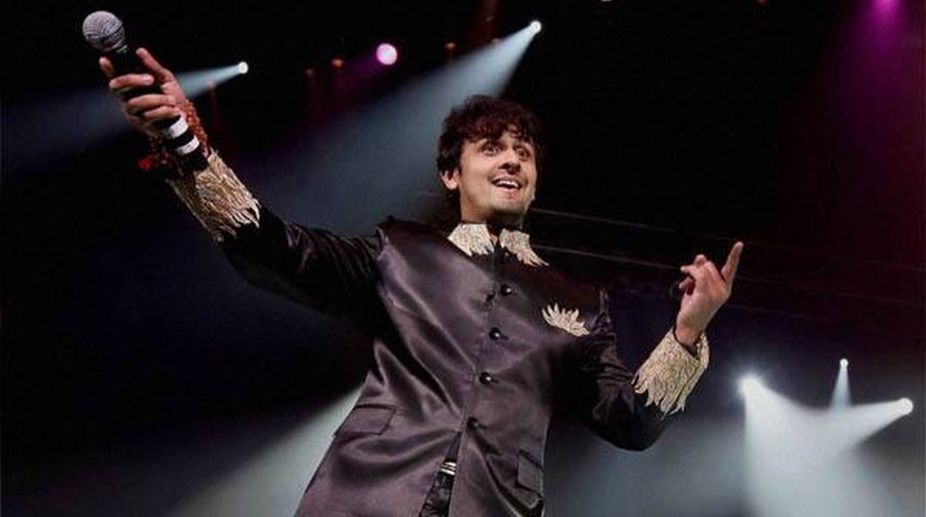
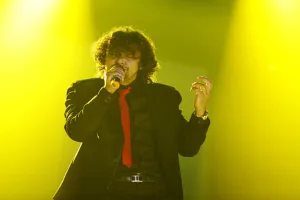
Bollywood playback singer Sonu Nigam, who is embroiled in a controversy for criticising sermons from the loudspeakers, has shared a video of Azaan.

The 43-year-old singer took to Twitter to post the over two-minute-long clip, which he seems to have recorded.

Nigam captioned the video as, "Good morning, India". He, however, did not mention the time or place.

On April 17, the singer had described the loud sermons from the loudspeakers as hooliganism in a series of tweets.

This was followed by a fatwa being issued against Nigam by Kolkata-based cleric, Syed Sha Atef Ali Al Quaderi, who asked him to shave off his head for his tweets.

In a surprising move, the singer had himself tonsured by a celebrity hairstylist at a press conference.

Nigam had stressed that his tweets were against the use of loudspeakers in morning sermons and not aimed at any particular religion.

"I only spoke against the use of loudspeakers. Everybody has a right to his opinion. I have the right to have an opinion and it should not be misconstrued. Loudspeakers are not a necessity; they are not a part of any religion," he said.

Amid the controversy, actress Kangana Ranaut said she has no problems with Azaan but felt what the singer said should be respected and discussed.

While, lyricist and scriptwriter Javed Akhtar said that prayers at any place of worship should not disturb others.

8 killed, 60 injured as bus overturns near Ranchi

PTI | Ranchi |

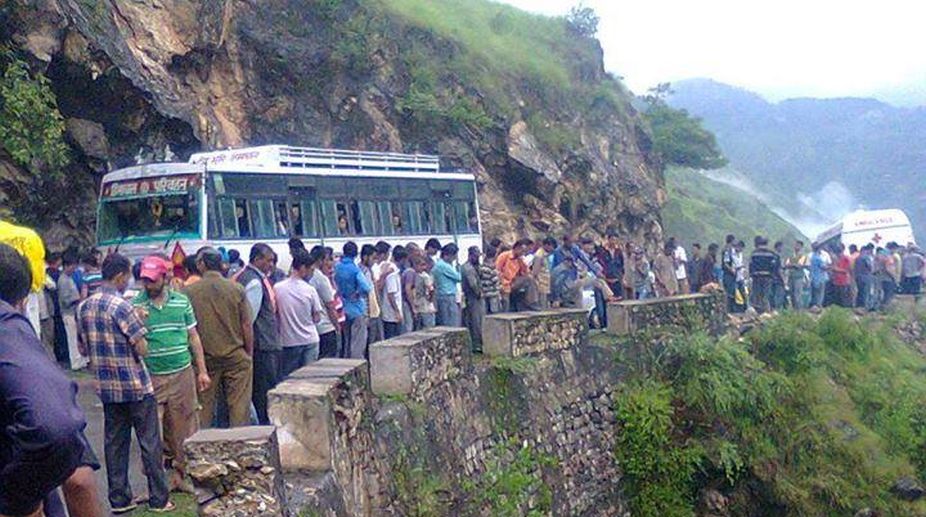
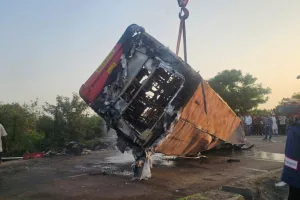
Eight persons, including seven children, were killed and 60 others injured as the bus they were travelling in overturned at a sharp bend on Pithoria- Patratu road near here.

"Seven children and a woman were killed on the spot and 60 others were injured when their bus overturned at a sharp bend on Pithoria-Patratu road," said Superintendent of Police (Rural), Ranchi, Raj Kumar Lakra.

The victims were all residents of Nagri in Kanke district. They were on their way to attend a marriage in Patratu when the mishap occurred, said Lakra.

The injured have been admitted to the Rajendra Institute of Medical Sciences in Ranchi, he said.

"Senior police officers have rushed to the spot. We are investigating as to how the accident took place," the SP said.

Expressing grief over the loss of lives, Jharkhand Chief Minister Raghubar Das has announced an ex-gratia of Rs.1 lakh each to the bereaved families and Rs.20,000 each to the injured.

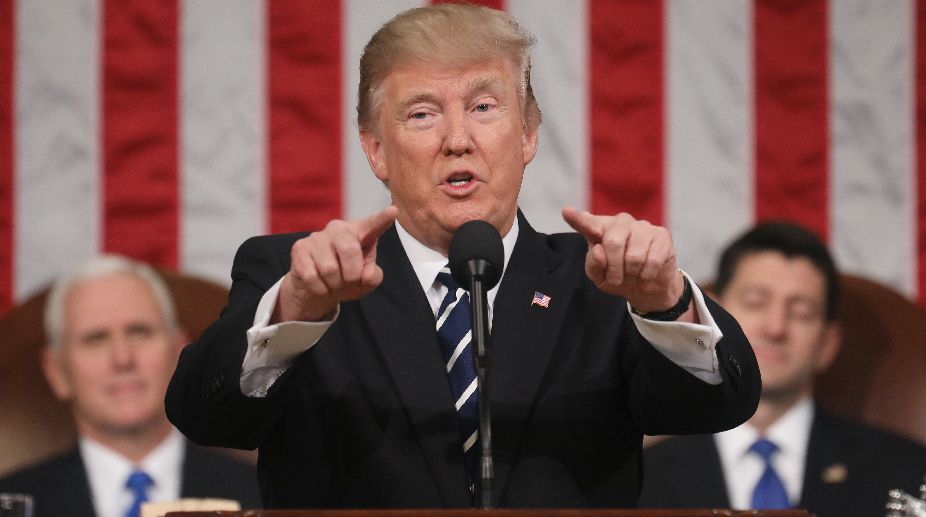
French presidential election will be very interesting: Trump

IANS | Washington |

US President Donald Trump said on Twitter that the first round of French presidential election will be "very interesting", a contest that is widely acknowledged to be the most up-in-the-air and unpredictable in recent years.

"Very interesting election currently taking place in France," Trump tweeted on Sunday.

Trump did not specify what, in particular, he finds interesting about the vote in a brief post on his personal account on the social network, Efe news reported.

The President has expressed his support on several occasions for the leader of the National Front (FN), Marine Le Pen, with whom he began contacts shortly after winning last November's election.

Nevertheless, White House Press Secretary Sean Spicer said on Friday that Trump has no favorite among the 11 candidates in the French contest.

Ultra-rightist Le Pen, in the first electoral round, is going up against 10 other candidates, including social liberal Emmanuel Macron, conservative François Fillon and leftist Jean-Luc Melenchon.

It is these four candidates who have the best chance of qualifying for a May 7 runoff election between the two top vote-getters.

Meanwhile, former President Barack Obama also appears to be taking an interest in the French election, having on Thursday placed a friendly telephone call to Macron.

Kailash Satyarthi given P C Chandra award

IANS | Kolkata |

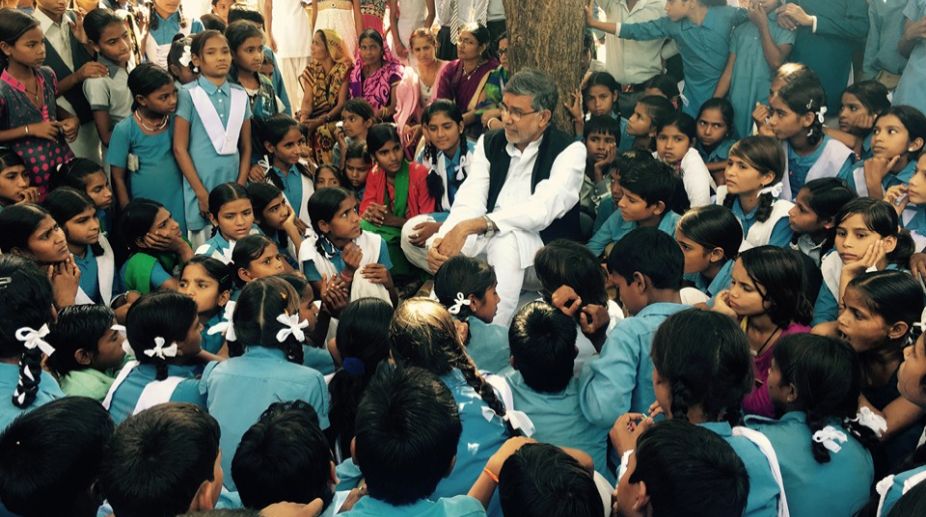
Nobel laureate and social activist Kailash Satyarthi was on Sunday presented the P C Chandra Purashkar (award) for his global crusade against child slavery and exploitative child labour.

The 63-year-old Satyarthi was handed over a citation, a trophy and a cheque of Rs.10 lakh at an awards ceremony here.

Satyarthi, who shared the Nobel Peace Prize in 2014 with Malala Yousafzai of Pakistan, urged everyone to work towards making India a "child-friendly country".

Ramakrishna Mission Institute of Culture Secretary Swami Suparnananda Maharaj and noted Bengali author Sirshendu Mukhopadhyay attended the function at Science City.

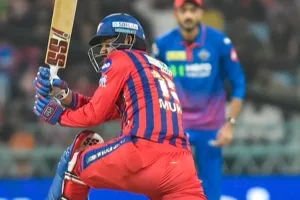
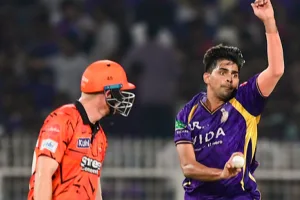
IPL 2017: Coulter-Nile, Woakes, De Grandhomme claim 3 wickets each as KKR thrash RCB

Kolkata Knight Riders thrash Royal Challengers Bangalore by 82 runs in an IPL 2017 match.

PTI | Kolkata |

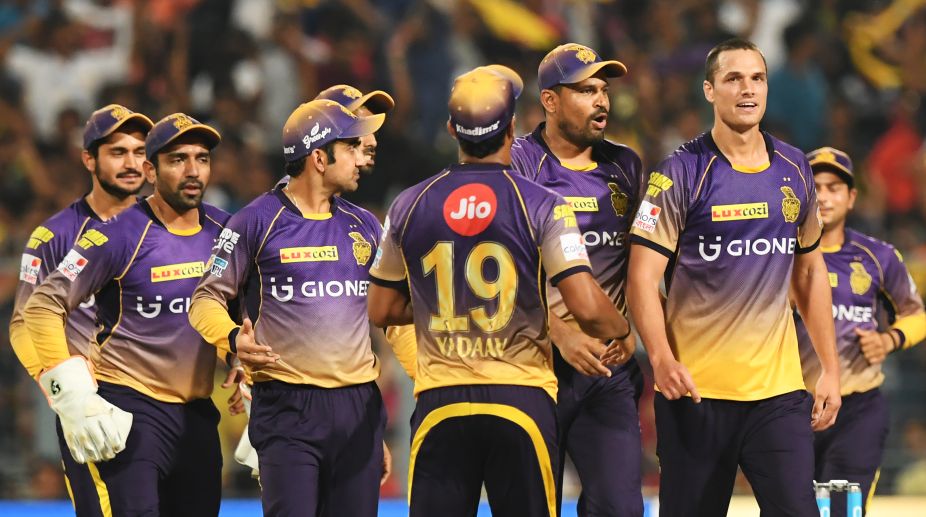
In a stunning collapse, Royal Challengers Bangalore were all out for 49, the lowest score in the history of IPL as Kolkata Knight Riders spanked them by 82 runs at the Eden Gardens in Kolkata on Sunday.

The hosts had put up a modest total on the board as they were all out for 131 with RCB leg-spinner Yuzvendra Chahal taking three wickets.

However, the hosts defended the total despite facing one of the biggest hitters in the game in the rival camp.

Australian paceman Nathan Coulter-Nile ripped apart the Bangalore top-order by dismissing skipper Virat Kohli (0), AB de Villiers (8) and Kedar Jadhav (9).

Pacemen Chris Woakes (3/6) and Colin de Grandhomme (3/4) also took three wickets each to bowl out RCB for 49 in just 9.4 overs.

Opting to bowl, RCB skipper Virat Kohli was in for a shock as KKR's new opener Sunil Narine hammered Samuel Badree for 18 runs in the opening over, hitting three fours and a six.

The next over, Gambhir had some tough time against Mills before using the Englishman's pace to guide the ball over third-man boundary.

It was raining boundaries and sixes as KKR raced to 39 in three overs before Mills finally gave the breakthrough dismissing KKR skipper for 14 when the ball kissed Gambhir's bottom-hand thumb and went to the wicketkeeper.

Narine though lived up to his new-found opening role pushing them to 65/2 in Powerplay but what unfolded next was a batting harakiri and the sellout Eden crowd switched loyalty Kohli and Co and kept chanting 'RCB, RCB'.

Narine slammed six boundaries and one six before holing out at deep square leg off Stuart Binny in the last over of Power Play.

Kohli introduced his ace spinner Chahal in the eighth over as the Haryana leggie bowled his quota at one go and rattled KKR who managed just 20 runs from 10 to 15 overs.

An alert Chahal quickly altered his line seeing Yusuf Pathan (8) stepping out for his first wicket and had him stumped while in the 12th over he struck twice to remove Manish Pandey (15) and Colin de Grandhomme (0).

The home team lost five wickets for 28 runs with Chahal making the difference in his 4-0-16-3 spell while Pawan Negi (2/15) and Tymal Mills (2/31) added to their misery.

Left-arm spinner Negi took wickets of Nathan Coulter-Nile (2) and Suryakumar Yadav (15) in successive balls in the 18th over while Sreenath Aravind cleaned up Kuldeep Yadav (4) to bowl KKR out in 19.3 overs.

This is for the first time KKR were bowled out by RCB who would be sniffing the second win in a row, as it's a big ask for Gautam Gambhir to defend the modest total.

Having been smashed by Narine in his first over, Badree returned to trap Uthappa LBW in his second spell, a twin blow for KKR in four balls with the addition of one run.

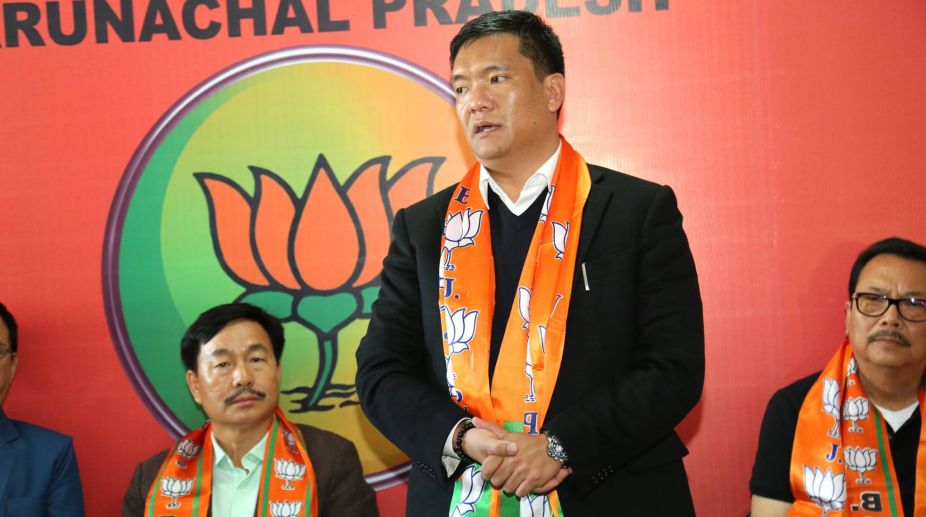
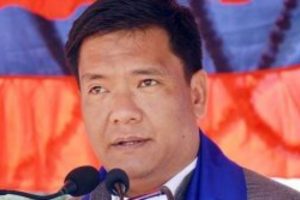
Khandu calls to fast track connectivity to transform Arunachal

IANS | New Delhi |

Arunchal Pradesh Chief Minister Pema Khandu on Sunday stressed on the need to augment and fast track connectivity including IT to transform the Northeastern border state.

Participating in the discussion the third Governing Council Meeting of NITI Aayog chaired by Prime Minister Narendra Modi, he threw light on the enormous strength and potential of the state in the field of agri and allied sectors, tourism and hydro power, which he said, if systematically harnessed would lead the state to new heights.

He also underscored the need to augment and fast track communication like rail, road and air as well as IT to bring in transformational change in the process of development in Arunachal Pradesh.

The chief minister also emphasised over the connectivity issues which has been hampering the growth of this potential economic sectors and sought continued support from the centrasl government.

He credited the Modi government with reinvigorating the policy orientation towards the northeast which has resulted to a palpable change in the support being extended from the Union government to catalyse growth of Arunachal Pradesh and hoped for continued support, particularly in the field of communication networks. 
 

Land records in Himachal Pradesh to be only a click away

PTI | Shimla |

The computerisation of land records in Himachal Pradesh has come up as a big relief to the state residents as updated revenue records are available online.

The implementation of Digital India Land Records Modernisation Programme (DILRMP) in the state is aimed at ushering in a system of updated land records.

The programme is also aimed at automated and automatic mutation, integration between textual and spatial records, inter-connectivity between revenue and registration, an official spokesman here said.

The computerisation of land records of Mandi, Hamirpur and Sirmour districts were taken up as the unit for implementation of the programme on pilot basis in the year 2008-2009 and the project proposal of Rs 1319.57 lakh (Rs 718.33 lakh as Centre share and Rs 601.24 lakh State share) were sanctioned for these districts.

Take care of students from J-K: PM tells CMs

PTI | New Delhi |

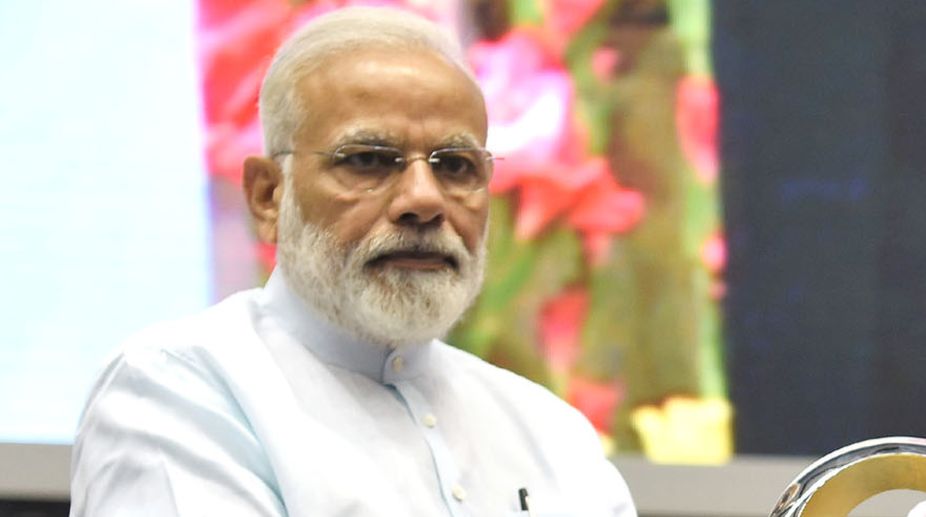
Prime Minister Narendra Modi on Sunday urged all chief ministers to take care of students from Jammu and Kashmir in their respective states, a remark that assumes significance in view of some recent untoward incidents against them.

Modi's advice at a meeting with chief ministers here came after Jammu and Kashmir Chief Minister Mehbooba Mufti raised the issue.

At the meeting of the NITI Aayog Governing Council, Modi "seconded" Mehbooba's suggestion that states should take interest in the students from Jammu and Kashmir who are studying in other states.

The Prime Minister "urged states to reach out to these students (of J-K) from time to time", said a statement by the PMO quoting Modi's concluding remarks.

This comes days after six Kashmiri students of Mewar University in Rajasthan were thrashed by some locals there.

Two local youths were arrested later in connection the incident. The accused were not students.

Following the arrest, state Chief Minister Vasundhara Raje had tweeted, "Kashmiri students are our children. The Police have taken prompt action and apprehended the culprits."

Also, in Meerut last week, a hoarding had been put up by a right wing activist, asking Kashmiris to leave Uttar Pradesh. He too has been arrested.

The Prime Minister also took note of the invitation extended by Mehbooba to various state governments to organise events in her state.

"The Prime Minister suggested that states could organize events there," the statement said.

Later tonight, Modi tweeted, "Appreciable gesture by J&K CM @MehboobaMufti to invite other states to organise events there. Urged CMs to accept this invite from J&K CM.

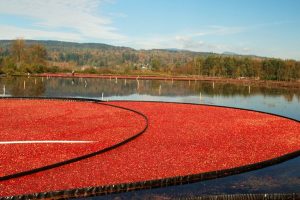
World cranberry leader Ocean Spray eyes Indian market

IANS | Vancouver |

With Indians reporting high rate of urinary tract infections, the world's top cranberry producer Ocean Spray is eying the huge Indian market for its products.

An egg-shaped dark red fruit native to North America, cranberry is a natural remedy or antibiotic for urinary tract infections and stomach ulcers.

With annual sales of over $2.5 billon last year, Ocean Spray — which is the marketing cooperative of cranberry farmers in the US and Canada — operates in over 90 countries where it sells over 1,000 products that include fresh and dried fruits, juices, snacks, cocktails and sauces.

The move by Ocean Spray to enter India now assumes significance after a recent World Health Organization report that increasing resistance to antibiotics could become a major threat to people's health.

Indo-Canadian Peter Povitar Dhillon, the Ocean Spray chairman who recently visited India as part of a seven-member delegation, said: "We went India to explore opportunities of doing business there."

"As a global company, we recognise the huge potential of the Indian marketplace. India has the fastest growing middle class and it is the world's youngest country in terms of the age of its people."

During their 72-hour trip, Dhillon and his team met Food Processing Minister Harsimrat Kaur, the CEO of Invest India, the chairman of Tata Global Beverages and many senior government and business leaders.

According to Dhillon, considering that young people and pregnant women in India report higher incidents of urinary tract infections, cranberry products can be the best natural remedy to prevent bladder problems.

"We went there to understand the marketplace because the culture of doing business in India is very different. It was a very positive trip. Now we are thinking about the best ways to educate Indians about the unique benefits of cranberry," he said.

"India's growing middle class is very affluent and they are becoming very health conscious."

Citing the WHO report about growing resistance of the human body to antibiotics, Dhillon said: "But cranberry is the nature's way to give you natural antibiotics and prevent infections."

Dhillon, who also is the biggest cranberry farmer in Canada, said he has personal reasons to see Ocean Spray enter India as early as possible.

"My parents came to Canada from Punjab and they started growing cranberry here. Now I have the unique opportunity to take this fruit to India. So in a way, things are coming full circle."

As a follow-up to his team's visit to India, Dhillon said: "We have some people from Ocean Spray going to India next month. It is a marketplace that we must understand first before we take steps to enter it."

Fewer sun hours increase alcoholic cirrhosis

IANS | London |

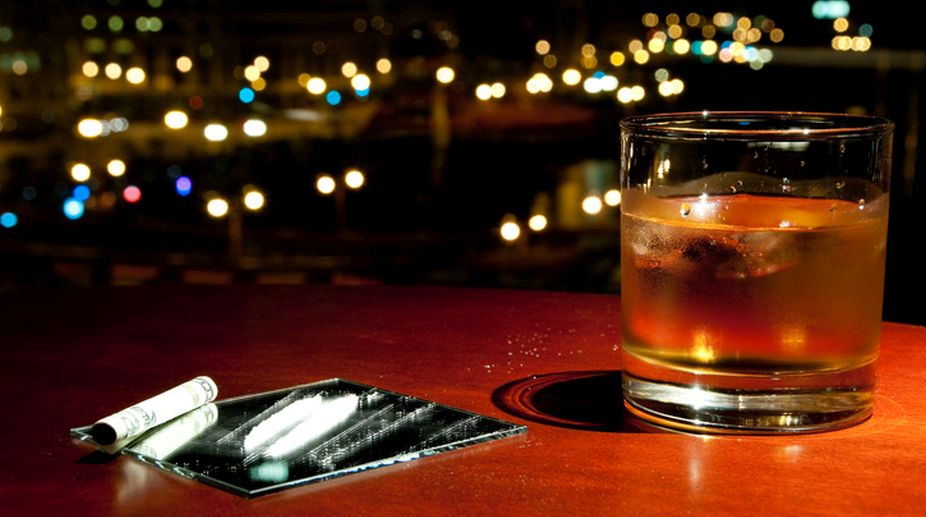
People in colder and less sunny regions of the world have higher rates of alcoholic cirrhosis, a disease caused by excessive drinking which results in irreversible scarring of the liver, scientists have found.

A new data from more than 190 countries presented on Saturday at the International Liver Congress 2017 in Amsterdam, the Netherlands, suggests that every increase in temperature of one degree Celsius was linked with a decrease in the alcohol-attributable fraction (AAF) of cirrhosis of 0.3 per cent. 

Heavy alcohol intake causes a perception of warmth, while fewer sunlight hours have been linked to depression, which, in turn, may lead to alcohol abuse. As a result, the researchers hypothesised that colder countries would have higher rates of alcohol consumption and therefore an increased burden of alcoholic cirrhosis.

"Our research reveals that a country's climate and geographical location have a startling influence on the burden of liver cirrhosis," said lead author Dr Neil D Shah, and senior author Dr Ramon Bataller from the University of North Carolina. 

"As average temperatures and yearly hours of sunshine decrease and latitude increases, rates of alcohol-attributable cirrhosis increase. This suggests that drinking alcohol excessively to combat the cold and dark could put people at increased risk of suffering from alcoholic cirrhosis."

In the univariate analysis conducted by researchers, there was an inverse association between mean average temperature, mean annual sunshine hours and a positive association with absolute latitude with AAF. 

In the multivariate analysis, average temperature and sunshine hours remained independently associated with the burden of alcohol-attributable liver cirrhosis or AAF after adjusting for the percentage of binge drinkers among active drinkers and alcohol consumption.

AIIMS is India’s first public hospital for eye tumours

IANS | New Delhi |

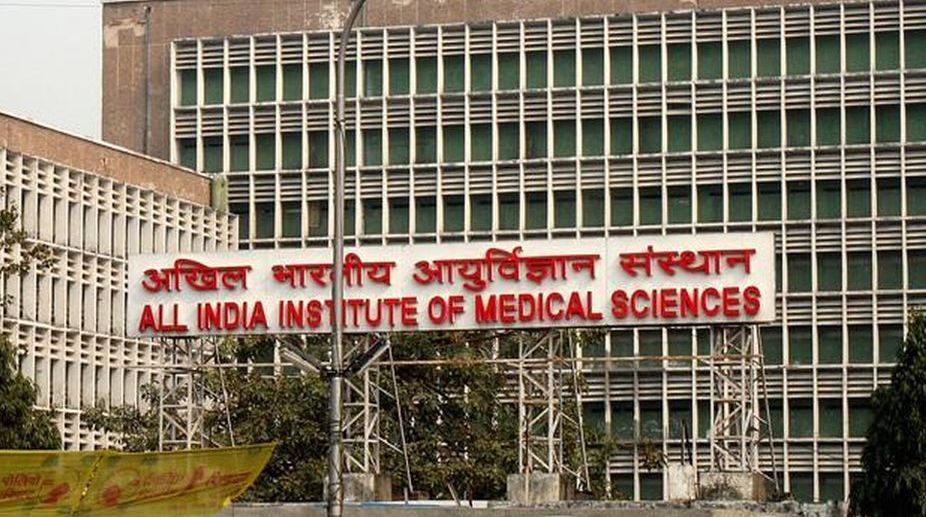
The All India Institute of Medical Sciences (AIIMS) is India's first public hospital to start plaque brachytherapy facility for the treatment of eye tumours, a statement said on Sunday.

The facility is a form of local radiation delivered to the eye through a radioactive device which is attached to the eye for a temporary period of time. 

The facility at the Rajendra Prasad Centre for Opthalmic Sciences will treat children suffering from a type of cancer called Retinoblastoma and adults who suffer from melanoma.

"Both the cancers are life threatening, and plaque brachytherapy can help to save not only the life of the patient, but also the vision," the statement said.