Logo

Global cues, Q4 results to chart course of equity indices

IANS | Mumbai |

Global cues, especially the upcoming US Federal Reserve's rate-setting meet, are likely to chart the course of major domestic equity indices during the week starting May 2, 2017.

"US Fed speeches, FOMC (Federal Open Market Committee) rate decision and jobs data shall mean that US equities' moves would be in focus next week," Anand James, Chief Market Strategist of Geojit Financial Services, told IANS.

Consequently, investors will remain cautious over the possibility of an interest rate hike during the FOMC meet.

A hike in the US interest rates can potentially drive away Foreign Portfolio Investors (FPIs) from emerging markets such as India.

Later in the week, the US Bureau of Labor Statistics will report the latest US macro-statistic on non-farm payrolls.

Further, market observers termed rising global geo-political tensions, the ongoing fourth quarter (Q4) results' season and upcoming macro-data as other major themes for the trade week.

"Local liquidity, earnings and geopolitical risks would dominate the market sentiment," Devendra Nevgi, Chief Executive of Zyfin Advisors, told IANS.

"The markets would look for support from earnings and the signs of economic growth."

Companies like HDFC, MRF, ICICI Bank, L&T Finance, DHFL, HCC, Apollo Tyre and Marico are expected to announce their quarterly results in the coming trade week.

Apart from the quarterly results, market participants will track the monthly automobile sales figures and the PMI (Purchasing Managers' Index) data.

"Auto sector's earnings being mixed, auto sales numbers will be closely followed, while PMI figures will shift focus to macros again," James observed.

Besides, the Ministry of Commerce and Industry will release the Index of ECI (eight core industries) for April 2017 on May 2.

According to DK Aggarwal, Chairman and Managing Director, SMC Investments and Advisors, investments by foreign and domestic investors, and the movement of the rupee against the US dollar will also dictate the near-term trends of the domestic markets.

Figures from the National Securities Depository (NSDL) revealed that FPIs invested in equities worth Rs 1,262.68 crore, or $195.62 million, during April 24-28.

Provisional figures from the stock exchanges showed that foreign institutional investors (FIIs) sold stocks worth Rs 1,925.39 crore, while domestic institutional investors (DIIs) bought scrip worth Rs 4,911.56 crore during the week.

On the currency front, the Indian rupee strengthened against the US dollar, appreciating by 36-37 paise to 64.24-25 from last week's close of 64.61.

On technical levels, analysts said that they expect the short term trend of Nifty to be choppy with a negative bias. 

"Some more downward correction is likely by the early part of next week," Deepak Jasani, Head – Retail Research, HDFC Securities, told IANS.

"However this downward correction could be considered as a corrective phase in an uptrend and is unlikely to damage the broader uptrend of Nifty as per larger timeframe."

"Immediate supports to be watched for next week is around 9,230-9,200 points levels."

Last week, the barometer 30-scrip Sensitive Index (Sensex) of the BSE gained 553.1 points or 1.88 per cent to 29,918.40 points.

Similarly, the NSE Nifty rose by 184.65 points or 2.02 per cent to wind up the week's trade at 9,304.05 points.

NITI Aayog presses for major labour reforms

PTI | New Delhi |

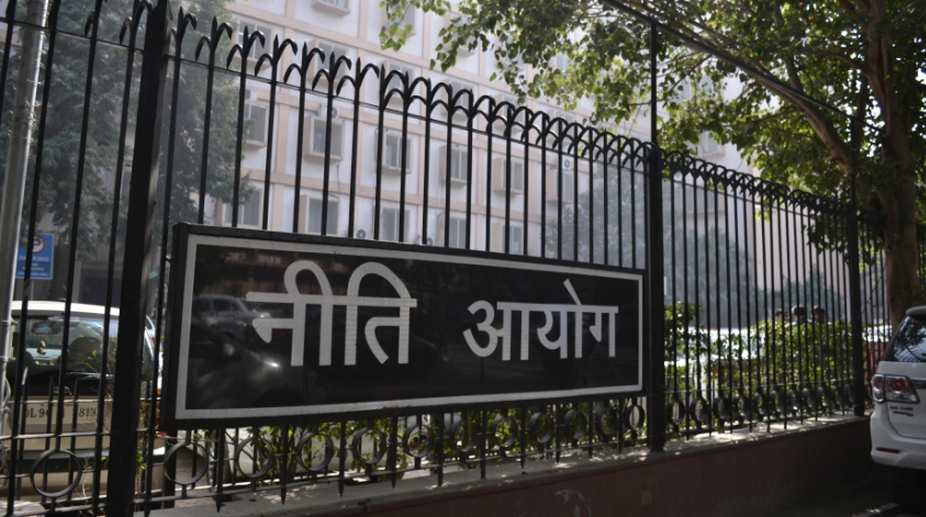
NITI Aayog has pressed for 'substantive' reforms in labour laws to take the country out of the current low-productivity and low-wage jobs situation.

It has also said that unifying the existing large number of labour laws into four codes without reforming them will serve little purpose.

A panel, headed by Finance Minister Arun Jaitley, is mulling converting 44 labour laws into four simplified codes.

They relate to industrial relations, wages, social security and safety.

"These (labour) reforms must begin as soon as possible even though their completion may take some years," said the government's thank tank in its 3-year draft action agenda.

"Unless, we bring about substantive change either by amending the existing laws or rewriting them afresh, we can not expect to change the current situation where low productivity and low-wage jobs dominate the landscape," the draft action agenda stated.

Noting that overly high levels of protection discourage employers to hire workers on a regular basis, it said that in order to "incentivise entrepreneurs to accelerate creation of regular salaried jobs, greater flexibility in labour law is required".

In the organised sector, the draft action agenda pointed out that entrepreneurs choose to stay away from labour- intensive industries and opt for highly capital or skilled labour-intensive technologies in the industries that they enter.

It also said that any enterprise which is less than five years old, with less than Rs 25 crore turnover, may be permitted to declare itself a start up, with no subsidies in any form provided to it.

This would ease up the burden of compliance of vast array of labour laws on the enterprise and pave the way for greater creation of jobs, the draft action agenda noted.

Anthony Joshua defeats Wladimir Klitschko in world heavyweight epic

Joshua defeated veteran Ukrainian Klitschko in a world heavyweight title fight epic.

AFP | London |

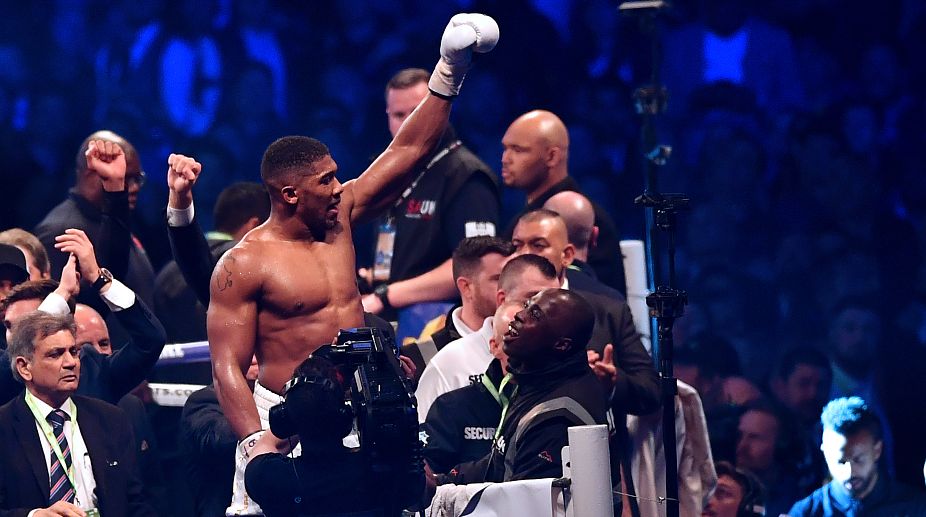
Britain's Anthony Joshua defeated veteran Ukrainian Wladimir Klitschko in a world heavyweight title fight epic in front of 90,000 people at Wembley, taking victory on an 11th round stoppage.

Joshua added the WBA title to his IBF belt but only after being knocked to the canvas by the 41-year-old Klitschko in the sixth round.

The Ukrainian was also sent crashing to the floor in the fifth round and twice more in the pivotal 11th as the 27- year-old British fighter took his record to 19 wins in 19 fights.

"What can I say? 19-0, three and a half years in the game. As I said, I'm not perfect but I'm trying and if you don't take part you're going to fail," said Joshua who was put on the canvas for the first time in his career.

"As boxing states, you leave your ego at the door and you respect your opponent. So a massive shout out to Wladimir Klitschko."

A third defence of his IBF world heavyweight title also earned Joshua the vacant WBA belt as he became the first British heavyweight since Lennox Lewis in 2002 to hold two versions of the world title.

It was Klitschko's first stoppage defeat since Lamon Brewster beat him in 2004 and leaves his record at 64 wins and five defeats.

"The best man won tonight and it's a massive event for boxing," Klitschko told Sky Sports.

"Two gentleman fought each other. Anthony was better today. It's really sad I didn't make it tonight."

Klitschko was trying to reclaim two of the three belts he lost to Joshua's fellow Briton Tyson Fury by an upset on points in November 2015.

The Ukrainian had not fought since then after Fury twice pulled out of rematches and entered the ring as the underdog.

It was Joshua, after 18 straight knockouts as a professional, who was the 1/2 betting favourite and he smiled as he walked to the ring in front of Britain's largest boxing attendance since 1939.

Klitschko could not establish his jab in the first round and it was Joshua who landed more punches, with the best being a left hook in the opening minute.

The 27-year-old began the second confidently and repeatedly found Klitschko with his jab.

The Briton missed with a big overhand right at the start of the third round but then connected with a big sledgehammer of a left hand.

After a telling off in the corner, Klitschko began the fourth full of intent and landed a couple of right hands.

But it was Joshua who started quicker in a thunderous fifth round.

The Briton wobbled Klitschko with a left before landing a series of clubbing blows, including a cracking right uppercut, which sent the Ukrainian to the canvas.

Klitschko got up but was on unsteady legs and began swinging wildly.

But the fight turned again later in the fifth when Joshua suddenly became static on the ropes after punching himself out.

Klitschko seized his moment and began to land flush as he took control of the unpredictable encounter.

In the sixth, Joshua's early confidence had evaporated and he dropped to the canvas after being stunned by a right hand to the temple.

He was up at eight and immediately had to duck a big left from Klitschko before surviving the round.

Both fancied they could stop each other and in the latter rounds looked for the big shot.

And it was Joshua who landed it in the 11th. The champion uncorked a sweet right uppercut to snap back Klitschko's head, followed by another right to send his opponent to the canvas.

Klitschko courageously got up but was nailed by another right and another right uppercut which dumped him back on the canvas.

Klitschko got up from the second knockdown in the round but when Joshua started to pile on the pressure referee David Fields stepped in to stop it.

59% Americans uneasy about Trump’s approach on Syria: Poll

IANS | Washington |

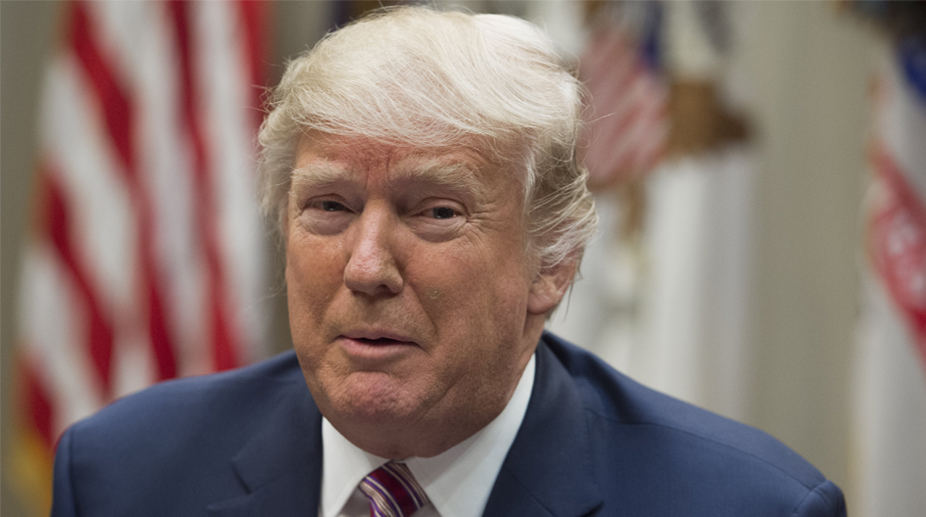
Nearly six in 10 Americans feel uneasy about US President Donald Trump's approach towards handling the situation in Syria, according to a new CBS News poll.

As many as 59 per cent of respondents are uneasy about Trump's handling of the Syrian crisis, while four in 10 respondents feel confident about Trump's ability, Xinhua news agency reported.

Despite the low level of confidence in Trump's ability to handle the situation in Syria, more than half of Americans say that the US campaign against the extremist group Islamic State goes at least somewhat well, with 9 per cent saying that the US campaign goes very well, showed the poll released earlier this week.

Meanwhile, the poll also found that more respondents are sceptical of Trump's ability as Commander-in-Chief of the US military.

Only 46 per cent respondents express at least somewhat confidence in Trump's ability, while 17 per cent say not too confident and another 35 per cent express no confidence at all in Trump's ability.

The Trump administration's botched travel ban also appeared to take its toll on Trump's polling number, with 46 per cent respondents saying that Trump is making the US image in the world weaker, compared to 36 per cent of respondents who say the US image in the world has become stronger since Trump took office.

IPL 2017: Jasprit Bumrah always practices ‘death bowling’ at nets

Defending 11, Bumrah conceded only 6 runs displaying brilliant variations of slower deliveries including a few in the blockhole.

PTI | Rajkot |

Arguably one of the best death overs bowlers in the world, Mumbai Indians seamer Jasprit Bumrah says his success is a result of consistently practicing this aspect of bowling in the nets.

Bumrah produced one of the finest death overs in the history of Indian Premier League as Mumbai Indians nearly committed harakiri before edging out Gujarat Lions in a thrilling Super Over finish here on Sunday night.

"I don't practice like how (Lasith) Malinga does it by keeping a shoe (which the Lankan ace then tries to hit with his toe-crushers')," said Bumrah.

"I practice with him on how to bowl the yorker consistently, but I always have a death bowling session whenever I practice as it's important, because this is the time I bowl for Gujarat in domestic matches, for India and for MI. So constantly whenever I practice, I've a proper death bowling session," he explained at the post match press conference.

After the scored were tied, the one over Eliminator saw Mumbai Indians score just 11.

Defending 11, Bumrah conceded only six runs displaying brilliant variations of slower deliveries including a few in the blockhole.

Bumrah said his skipper Rohit Sharma had told him not to take extra pressure in the super over.

"He just told me to back my skill. 'It's just an over, don't take extra pressure, be confident, be calm and try to execute our plans'," Bumrah revealed.

"This was the first time, when I was bowling super over, there is always pressure, because you have to defend only 11 runs, but at that time you only keep a calm head and not to focus on negative things.

"I was focussing on positive aspects and thinking about the plan which we had made," he added.

Chasing 154 for victory, there were three run-outs in the last seven balls as Mumbai Indians got bundled out for 153 off the final ball.

Asked whether the Mumbai batsmen had pressed the panic button in the last over, Bumrah said, "We were not panicking.

We are losing wickets quickly, usually these things happen in cricket. It was a good tight match and we are happy at the end that we were the winning side.

"We are working hard and are doing well. We have done well in previous matches. But this is cricket, someday you will click, some day you will not click. We are working hard and are looking to improve every time we play. Hopefully we will be able to do well in batting department as well."

Meanwhile, Gujarat Lions opening batsman Ishan Kishan also lauded Bumrah's effort in the super over.

"Actually he bowled a very good over. Any batsman would have found it really tough to hit a six or a boundary off those yourkers. It was a perfect over for Mumbai Indians," said Kishan.

He insisted that his team always thought that the target could be defended.

"Actually it's all about belief. So we believed that our bowlers would do well and fielding was very good in the previous matches," he said.

RERA comes into force tomorrow, only 13 states notify rules

PTI | New Delhi |

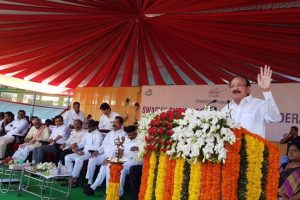
The much-awaited Real Estate Act comes into force from May 1 with a promise of protecting the right of consumers and ushering in transparency but only 13 states and UTs have so far notified rules.

The government has described the implementation of the consumer-centric Act as the beginning of an era where the consumer in king.

Real estate players have also welcomed the implementation of the Act, saying it will bring a paradigm change in the way the Indian real estate sector functions.

The government has brought in the legislation to protect home buyers and encourage genuine private players.

The Real Estate (Regulation and Development) Bill, 2016 was passed by Parliament in March last year and all the 92 sections of the Act comes into effect from May 1.

"The Real Estate Act coming into force after a nine-year wait and marks the beginning of a new era," Housing and Urban Poverty Alleviation Minister M Venkaiah Naidu said.

The Minister said the law will make "buyer the king", while developers will also benefit from the increased buyers' confidence in the regulated environment.

"The Act ushers in the much-desired accountability, transparency and efficiency in the sector, defining the rights and obligations of both the buyers and developers," Naidu said.

The developers will now have to get the ongoing projects that have not received the completion certificate and the new projects registered with regulatory authorities within 3 months from tomorrow.

Under the rules, it is mandatory for the states and UTs to set up the authority.

However, only 13 states and UTs have so far notified the rules. The states that have notified the rules are Uttar Pradesh, Gujarat, Odisha, Andhra Pradesh, Maharasthra, Madhya Pradesh and Bihar.

The Housing Ministry had last year notified the rules for five Union Territories–Andaman and Nicobar Islands, Chandigarh, Dadra and Nagar Haveli, Daman and Diu, and Lakshadweep, while the Urban Development Ministry came out with such rules for the National Capital Region of Delhi.

The other states and UTs will have to come out with their own rules.

A HUPA ministry spokesperson said the ministry has been taking up the matter with all the states and UTs for implementation of the Act, requesting them to ensure action as per the provision of the Act within the time limit.

The ministry had earlier formulated and circulated the model rules to the states and UTs for their adoption and it is their responsibility to notify the rules, the spokesperson said.

Those states which have not notified the rules will face public pressure and even people could approach the court in the matter, he added.

On reports that key provisions have been diluted by some states, he said it was pointed out to those states and they have assured the ministry that it would be corrected.

The Indian real estate sector involved over 76,000 companies across the country.

Some of the major provisions of the Act, besides mandatory registration of projects and real estate agents, include depositing 70 per cent of the funds collected from buyers in a separate bank account for construction of the project.

This will ensure timely completion of the project as the funds could be withdrawn only for construction purposes.

The law also prescribes penalties on developers who delay projects. All developers are required to disclose their project details on the regulator's website, and provide quarterly updates on construction progress.

In case of project delays, the onus of paying the monthly interest on bank loans taken for under-construction flats will lie on developers unlike earlier, when the burden fell on home buyers, said real estate service provider JLL India CEO and Country Head Ramesh Nair.

RERA also states that any structural or workmanship defects brought to the notice of a promoter within a period of five years from the date of handing over possession must be rectified by the promoter, without any further charge, within 30 days, he added.

If the promoter fails to do so, the aggrieved allottee is entitled to receive compensation under RERA, Nair said.

Other highlight of the Act is imprisonment of up to three years for developers and up to one year in case of agents and buyers for violation of orders of appellate tribunals and regulatory authorities.

As per industry data, real estate projects in the range of 2,349 to 4,488 were launched every year between 2011 and 2015, amounting to a total of 17,526 projects with investments of Rs.13.70 lakh crore in 27 cities, including 15 state capitals.

About ten lakh buyers invest every year with the dream of owning a house.

Real estate industry bodies CREDAI and NAREDCO said the implementation of this law will bring paradigm change in the way Indian real estate functions. They expect property demand to rise but supply may get affected in the near term.

"It will bring a paradigm change in the real estate sector. It will protect buyers who have purchased flats in the past. The regulator under the RERA should find ways to help complete ongoing projects and provide relief to home buyers," NAREDCO Chairman Rajeev Talwar said.

CREDAI President Jaxay Shah said RERA will increase transparency in the sector and boost confidence of both domestic and foreign investors.

He, however, said there will be some "teething problem" initially in implementation of this law.

Asked about the impact on prices, Shah said, "Supply will dip during this year but demand will improve as buyers will have increased confidence about investing in the property market" 

The real estate prices will remain stable now but rates could rise by 10 per cent in the next six months, he added.

Facebook comments, likes may help reduce exam anxiety: Study

PTI | Washington |

Reading supportive comments, 'likes' and private messages from Facebook friends just before taking an exam may help anxious students reduce their nervousness and improve test scores, a new study has found.

Researchers at the University of Illinois in the US found that undergraduate students with high levels of test anxiety who sought support from their online friends and read the messages prior to a simulated exam reduced their anxiety levels by 21 per cent.

These students, and peers who performed a seven-minute expressive-writing exercise, were able to perform as well on a set of computer programming exercises as students who had low levels of test anxiety, said Robert Deloatch, a graduate student at the university.

Up to 41 per cent of students are estimated to suffer from test anxiety, which is a combination of physiological and emotional responses that occur while preparing for and taking tests.

Test anxiety is linked to lower test scores and grade point averages, as well as poor performance on memory and problem-solving tasks.

Test anxiety can be particularly acute when students face exams involving open-ended problems, such as those commonly used on computer science exams that require students to write and run codes, the researchers said.

When students' test anxiety is reduced, their scores and task performance improve accordingly, they found.

Students with high test anxiety strongly fear negative evaluation, have lower self-esteem and tend to experience increased numbers of distracting and irrelevant thoughts in testing situations, according to the study.

For the simulated exam, students had to solve two programming problems by writing and running codes.

Most of the participants were computer science majors or computer engineering students who passed a pretest that ensured they had basic programming knowledge.

The researchers measured participants' levels of test anxiety using the Cognitive Test Anxiety scale, which assesses the cognitive problems associated with test-taking such as task-irrelevant thinking and attention lapses.

Participants also completed two other questionnaires that measured their levels of anxiety.

The day before the experiment, students in the social support group posted messages on their personal social media pages requesting encouragement – in the form of likes, comments or private messages – about an upcoming computer programming challenge they planned to participate in.

"We found that only the students who received supportive messages from their Facebook network showed a significant decrease in anxiety and an increase in their performance on our simulated exam," Deloatch said.

JK CM inaugurates Indo-Dutch orchard

IANS | Srinagar |

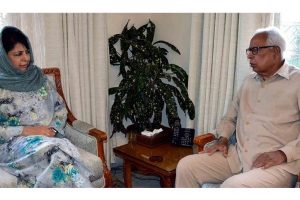
Jammu and Kashmir Chief Minister Mehbooba Mufti on April 29 inaugurated an Indo-Dutch demonstration- cum-experimental orchard here and called for minimising the gap between laboratories and fields by sharing the research findings with farmers regularly.

The chief minister planted the sapling of an apple tree to symbolically throw open the demonstration orchard at Sher-e-Kashmir University of Agricultural Sciences and Technology SKUAST, an official spokesman said.

Vice-Chancellor Nazeer Ahmad informed the chief minister that 111 major and minor research projects are underway at the campus and 32 new projects worth Rs.18.93 crore are being started.

The university has released 12 new strains of high-yielding varieties of rice, maize, wheat and other crops besides extending the cultivation of Mushkbudji (a fragrant variety of rice) to Budgam, Baramulla, Bandipora and Kupwara districts and rearing of Pashmina goat to Gurez and Sonamarg, the spokesman said.

Later, the chief minister visited the Residue and Quality Analysis and Pesticide Residue Analysis laboratories of the university and witnessed the activities going on there.

Mehbooba asked the university administration to minimise the gap between laboratories and fields and share the research findings with the farmers regularly through more and more extension activities, the spokesman said.
The chief minister also laid the foundation of a hostel block for girl students. The three-storey building would be built at a cost of Rs.5.30 crore and on completion is expected to house around 70 students.


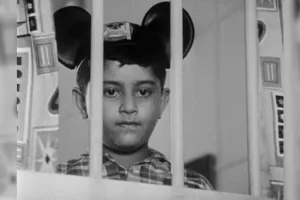
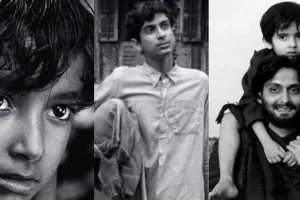
Satyajit Ray was not apolitical, says Aparna Sen

IANS |

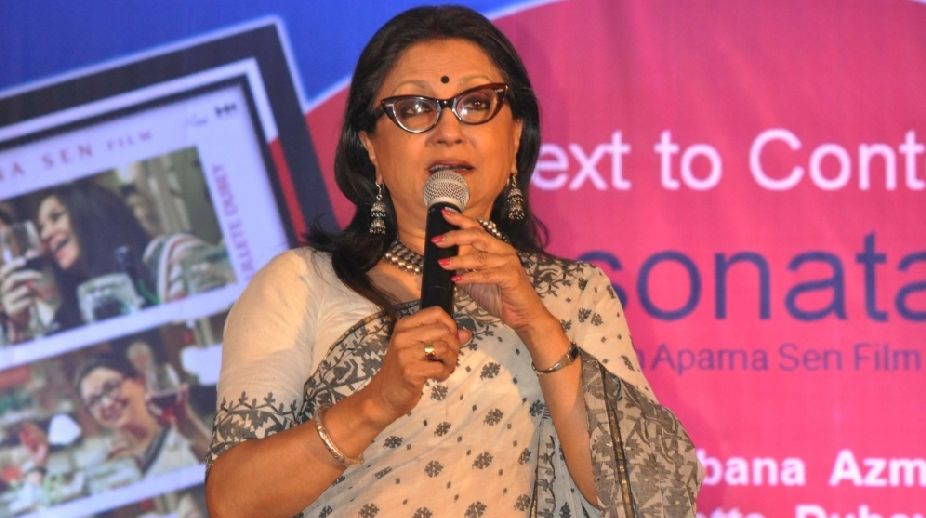
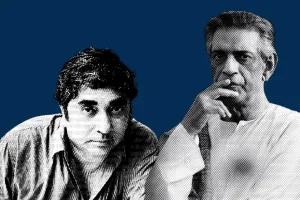
Auteur Satyajit Ray was not apolitical and portrayed it in his films, says actress-filmmaker Aparna Sen.

"Many of Ray's critics have called him indifferent to the plight of the urban poor and criticised him for being apolitical. Ray wasn't apolitical at all. No man or woman is. It's just that Ray's politics was not the politics of political parties that were constantly at each other's throat," Aparna said here on Saturday.
Not many people know that the Oscar-winning filmmaker had been at the forefront of the city-wide silent protest against police brutality in 1966, Aparna highlighted while delivering the Ray Memorial Lecture organised by Society for the Preservation of Satyajit Ray Archives.

Aparna, who made her debut as an actress in 1961 with Ray's Teen Kanya, said the trauma of the food movement has been reflected in many of his films.

The Price Increase and Famine Resistance Committee was a mass movement in West Bengal, formed in late 1958 by the Communist Party of India and other Left groups, in response to the food crisis then.

To buttress her argument, Aparna referred to the scene in Goopy Gyne Bagha Byne showing the "procession of starving soldiers with the song 'O re baba dekho cheye' playing in the background" and "the procession of starving villagers in 'Ashani Sanket' walking from village to city and growing constantly larger in size".

Citing the example of the 1971 film Pratidwandi (The Adversary), set against the backdrop of the Naxalite movement, Aparna said there is a "genuine attempt" on Ray's part to understand the plight of young people of that troubled time and to enquire the reasons for their anger and violence.

"The problem is despite his anger against the system, Siddharth (the lead character in 'Pratidwandi' whose younger brother is a Naxalite), like Ray himself, is able to look at the other side of any given situation. Ray like Siddharth is not quite sure what the solution is but sympathises deeply with the youths who have nowhere to turn to," she said.

Aparna also delved into Ray's finesse for portrayal of death in cinema.

"Satyajit Ray could be called the master of portrayal of death in cinema. The deaths of Indir Thakrun, Durga in 'Pather Panchali', Harihar and Sarbojaya in 'Aparajito', Bishwambar Roy in 'Jalsaghar' all bear this out," she said.

Drawing attention to Apur Sansar, the third and final film of the much-feted Apu Trilogy, Aparna surmised the master filmmaker had deliberately refrained from showing Apu's wife Aparna in her final moments.

"Aparna's death is so unthinkable that it can't be shown, only imagined. Nothing that the director can direct or actors can act or cinematographer can film will match the audience's imagination of the magnitude of Apu's loss." 

"I think Ray must have realised this either consciously or intuitively and refrained from actually showing Aparna in her death bed," the actress said.

"There is no escape for us from Ray… the next generation of filmmakers. We have inherited him as Ray had inherited Tagore," she added.

536 mn users to log onto Internet in Indian languages by 2021

PTI | New Delhi |

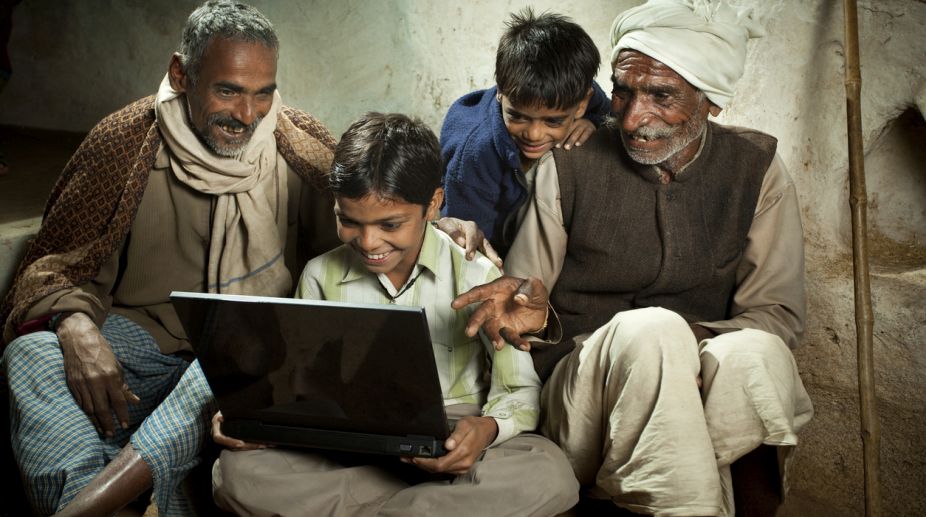
An estimated 536 million Indians are expected to use regional languages while online by 2021, complemented by increasing affordability of devices and data charges and availability of more local content, a report by Google-KPMG says.

The report estimates that Hindi Internet users (at 201 million) will outnumber those accessing the web in English at 199 million by 2021.

India is expected to have 735 million Internet users by the same time from 409 million in 2016.

Interestingly, a significant number of Indian language Internet users already access government services, classifieds, news and payment services "exclusively online".

Indic language users are not just accessing chat apps and digital entertainment but are also opting for digital payments methods.

In 2016, the total number of Internet users who accessed Internet in Indian languages and English stood at 234 million and 175 million, respectively.

Apart from Hindi, Marathi and Bengali users are expected to drive volume growth, while Tamil, Kannada and Telegu users are expected to be among the most digitally engaged through 2016 to 2021.

Marathi, Bengali, Tamil and Telugu online users are expected to form almost one-third of the total Indic language user base.

"Growth in user base will be complemented by increasing penetration of Internet enabled devices, availability of affordable high speed Internet, rising digital literacy and Indian language enablement of the ecosystem bringing and engaging more Indian language users online," the report says.

Given that nine out of 10 new Internet users in India are likely to be an Indic language user, Google has been ramping support for Indian languages across its various products like Maps and Search.

This will ensure that more people can access Internet in a language of their choice.

Mann Ki Baat: Time to replace VIP with EPI, says PM Modi

IANS | New Delhi |

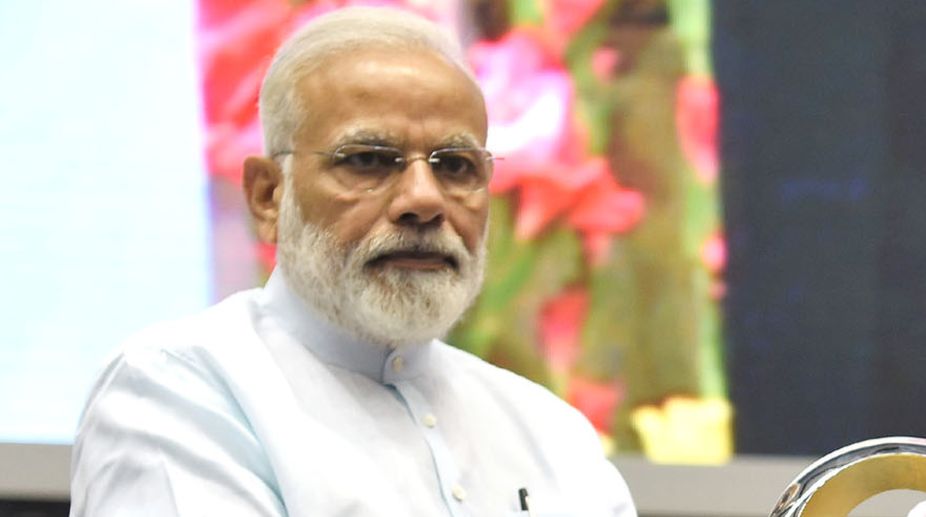
Prime Minister Narendra Modi on Sunday laid stress on the need for weeding out the VIP culture that was deep imbedded in people's minds and called for giving importance to all Indians.

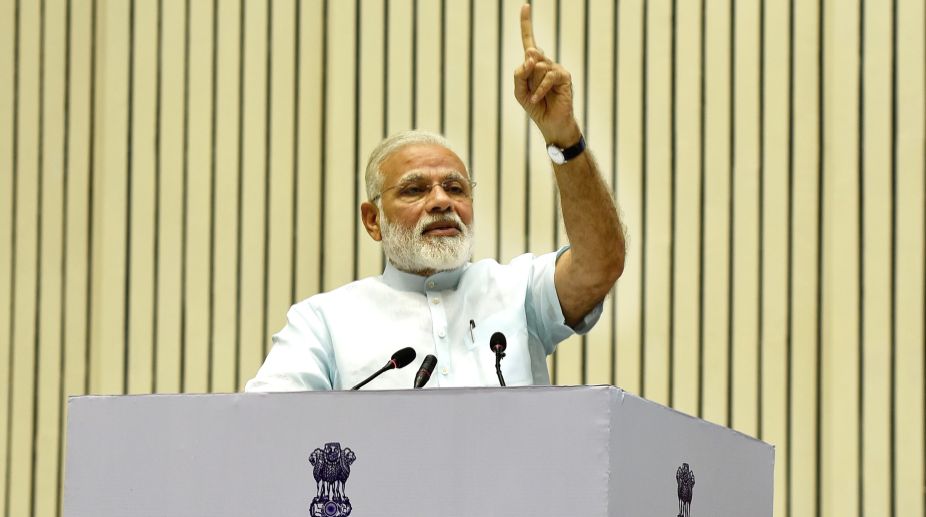
In his monthly radio address "Mann Ki Baat", Modi said it was time for VIP (very important person) to be replaced with EPI (every person important).

"There is sort of hatred for VIP culture in our country but I realised the hatred was so deep only when the government decided to do away with red beacons on cars of the officials no matter how important he is."

"The red beacon had become a symbol of VIP culture which has penetrated deeply into our minds. Removing the red beacon is just part of the system but we need to make conscious efforts to weed out this culture from our minds," Modi said.

"The concept behind the 'New India' is that EPI should replace VIP. EPI means every person is important. We should accept the importance of 125 crore Indians. Then we will have the collective power to fulfil our dreams and aspirations," the Prime Minister said.

PM Modi wishes Gujarat, Maharashtra on their Foundation Day

IANS | New Delhi |

Prime Minister Narendra Modi on Sunday greeted Gujarat and Maharashtra on the eve of their Foundation Day on 1 May.

"I congratulate the citizens of Gujarat and Maharashtra. Both the states have striven to reach the heights of progress continually, contributed to the development of the nation, and a number great people born in both states have have continuously inspired us," Modi said in his monthly radio address 'Mann Ki Baat'. 

He followed this by making an appeal to the citizens to take a vow to see where they can take their state, society and nation by the year 2022 when India celebrates the 75th anniversary of its independence. 

He said on this occasion people should chart out their own vision of the nation. 

"To be able to execute this task, one must prepare plans and must march forward with the support of all the citizens," he said. 

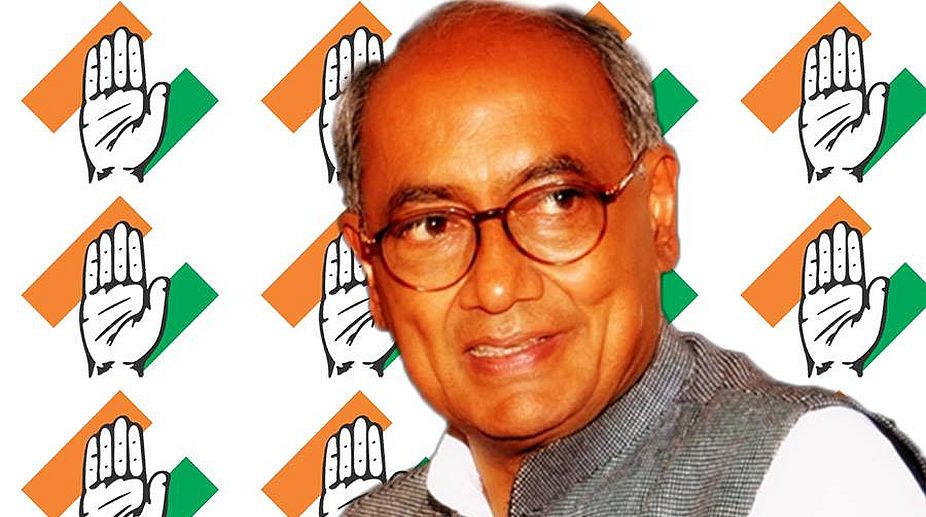
Digvijaya Singh removed as Goa, Karnataka in-charge

IANS | New Delhi |

The Congress on April 29 replaced General Secretary Digvijaya Singh as in-charge of poll-bound Karnataka as well as Goa, where it failed to form government despite emerging as the single-largest party.

The charge of Karnataka has been given to party MP KC Venugopal, who has been appointed a General Secretary while Chella Kumar has been named in charge of Goa.

A press release issued by the party said that four party Secretaries-Manickam Tagore, PC Vishnunadh, Madhu Yashki Goud and Sake Sailjanath – will assist Venugopal.

"Congress President Sonia Gandhi has assigned the task of looking after Karnataka and Goa affairs to new AICC teams," a Congress release said.

Elections will be held to the Karnataka assembly in the first half of 2018. The Congress is in power in the state.

The release said that party Secretary Amit Deshmukh will assist Chella Kumar.

The Congress failed to form the government in Goa despite emerging as the largest single party after the assembly elections and the BJP, which had won lesser seats, managed to retain power with the help of smaller parties. 

Digvijaya Singh faced flak for the outcome while Manohar Parrikar, who gave up the Defence Minister's post to go back to Goa and become the Chief Minister, "thanked" him for failing to cobble up a majority.

Newly-elected legislator Vishwajit Rane, son of senior Congress leader and former Chief Minister Pratapsing Rane, who had quit the party over the failure to form a government and joined the BJP, had also accused Digvijaya Singh for committing blunders.

New eye test may detect early signs of glaucoma

IANS | London |

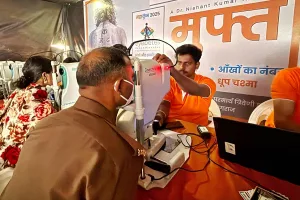
Researchers have developed a simple eye test that could help solve the biggest global cause of irreversible blindness, glaucoma, by detecting the onset of the disease at a very early stage.

Loss of sight in patients with glaucoma is caused by the death of cells in the retina at the back of the eye. This cell death is called apoptosis.

The new technique called DARC stands for detection of apoptosing retinal cells.

It uses a specially developed fluorescent marker which attaches to cell proteins when injected into patients. Sick cells appear as white fluorescent spots during eye examination.

In clinical trials, the pioneering diagnostic — developed by researchers at the University College London (UCL) and the Western Eye Hospital in England — allowed doctors to see individual nerve cell death in the back of the eye.

"Detecting glaucoma early is vital as symptoms are not always obvious. Although detection has been improving, most patients have lost a third of vision by the time they are diagnosed," said led researcher Professor Francesca Cordeiro of the UCL Institute of Ophthalmology.

"Now, for the first time, we have been able to show individual cell death and detect the earliest signs of glaucoma. While we cannot cure the disease, our test means treatment can start before symptoms begin."

Glaucoma affects an estimated 60 million people in the world, with one in 10 suffering total sight loss in both the eyes.

Initial clinical trials were carried out on a small number of glaucoma patients and compared with tests on healthy people. The initial clinical trials established the safety of the test for patients, according to a study published in the journal BRAIN.

The researchers believe the test has potential for early diagnosis of other degenerative neurological conditions, including Parkinson's, Alzheimer's and multiple sclerosis.

"In the future, the test could also be used to diagnose other neuro-degenerative diseases," Cordeiro said.

Two villagers killed in Manipur crossfire

IANS | Imphal/Kolkata  |

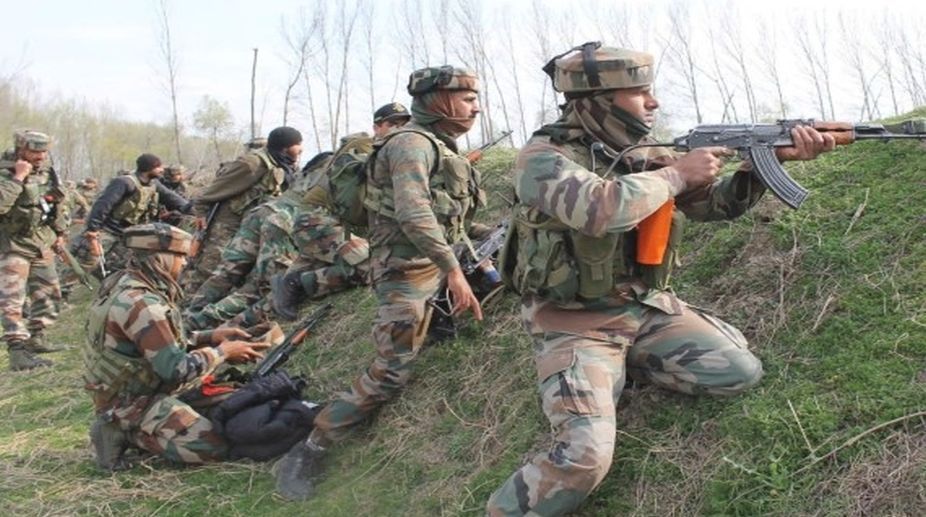
Two villagers in Manipur's Churachandpur district were killed in cross-fire when militants ambushed security personnel near the international border on Saturday, police said.

The militants also kidnapped four workers from the spot in Behang, a tribal village.

According to the police, the security personnel, escorting a water tanker for the camp, were fired upon by the militants and retaliated. The two tribal villagers were strolling there when they were caught in the cross-fire.

Additional forces have been rushed from the district headquarters. However there is no report of any arrest so far.

Police said that one IED had been exploded there on Friday. However there was no casualty.

A defence ministry spokesman said in Kolkata that 10- 15 militants, suspected to be members of the Peoples Liberation Army (PLA), attacked the General Reserve Engineering Force (GREF) water bowser.

The spokesman said the two deceased were unarmed labourers working on Imphal-Tiddim road.

The incident happened around 8.35 a.m. near Border Pillar 41 along the India-Myammar border.

The militants detonated three Improvised Explosive Devices and then used 'lathods' (single shot grenade launchers) and fired from automatic weapons.

"It is estimated that 60-65 rounds were fired by the terrorists. The terrorists are suspected to have fled across the border," the spokesman said.

Pope urges international mediation over North Korea crisis

IANS | London |

Pope Francis has called for international mediation to ease escalating tensions over North Korea's nuclear activity, the media reported on Sunday.

Speaking to the media on Saturday aboard his plane after a visit to Egypt, Pope Francis said: "There are so many facilitators in the world, there are mediators who offer themselves, such as Norway for example," the BBC reported.

He warned that the situation had become "too hot" and said: the "path is the path of negotiations, of a diplomatic solution".

He warned the crisis risked sparking a devastating war in which "a good part of humanity" would be destroyed.

His comments come hours after North Korea test-fired another ballistic missile on Saturday, which the US and South Korea confirmed that it exploded shortly after take-off.

The missile was fired from a site in South Pyeongan province, north of Pyongyang.

ED chief seeks independent power for agency

PTI | New Delhi |

Enforcement Directorate chief Karnal Singh on April 29 requested the government "empower" his agency to register and pursue cases independently even after courts quash any of them registered initially by other investigating authority.

In his address at an event marking the Enforcement Directorate Day here where Finance Minister Arun Jaitley was the chief guest along with Revenue Secretary Hasmukh Adhia, he said the agency is facing the problem continuously and "it should be changed" considering its investigating methods under the Prevention of Money Laundering Act. 

"The ED should be given independent power to register and pursue any case. It is in a three-legged race. Courts feel if any case initially registered by any investigation agency is thrown out, the ED case will automatically fail," he said. 

Singh said the Enforcement Directorate can file a case only on the basis of FIRs registered by other agencies like Central Bureau of Investigation (CBI) and National Investigation Agency (NIA) and does not have the power to take up an anti-money laundering investigation independently. 

Giving example of Aircel-Maxis 2G spectrum case, he said they had to appeal against the recent order of a court which declared this case invalid and "groundless" for their probe was on the basis of CBI inquiry that had filed an FIR in it initially. 

His remarks comes against the backdrop of a court's recent order discharging the Maran brothers, Dayanidhi and Kalanithi in the Aircel-Maxis 2G spectrum case and arms dealer Abhishek Verma in a separate CBI cases, based on which the ED had registered criminal cases under the Prevention of Money Laundering Act. 

Calling such developments as "bottle necks" in the agency effort to curb the menace of black money and corruption, Singh said that the "understanding of law sometimes creates problems". 

"Our legs are tied with the scheduled agency (CBI in these cases). It is like in sports where we have the three-legged race…our one leg is tied with them (scheduled agencies like police or CBI) and many courts feel that the other case fails, then the ED case automatically fails. 

"We have gone (in appeal) to the Supreme Court in such a case for a decision," the ED chief said. 

He said that the rules of game are different in their investigation and the ED investigation.