Logo

BJP infighting comes to fore in Madhya Pradesh

Statesman News Service | Bhopal |

Internal rifts in the ruling Bharatiya Janata Party (BJP) in Madhya Pradesh came to the fore yesterday when BJP MP Manohar Untwal and BJP MLA Gopal Parmar almost came to blows publicly in the Agar-Malwa area during the ongoing ‘Ekatma Yatra’, which is being promoted by chief minister Shivraj Singh Chouhan.

Fearing a dent in his image due to the incident, CM Chouhan took strong exception to the irresponsible behavior of party leaders, and have summoned both of them to provide an explanation.

BJP state president Nandkumar Singh Chauhan and state organisational general secretary Suhas Bhagat have also expressed anger at the incident and have called for an explanation from Parmar and Untwal.
“I have spoken to the leaders on phone and after getting all the details about the dispute, I will seek explanation from both of them,” Nandkumar Singh Chauhan told some media persons at his residence at Bhopal today.

On Wednesday, when the yatra was passing through the Agar-Malwa area, Parmar was carrying the ceremonial flag. However, Untwal and his supporters demanded that the flag be handed over to a couple of the Valmiki community. Nonetheless, when Parmar continued carrying the flag, supporters of Untwal roughed him up in an attempt to snatch the flag from him.

Consequently, there was heated altercation between Untwal and Parmar and supporters of both leaders came to blows.

An enraged Parmar later lodged a complaint against Untwal and his supporters. Parmar allegd that Untwal and his supporters were in an inebriated condition at the time of the incident.

Untwal, on the contrary, maintained that it had already been decided in the yatra schedule that the flag would be handed over to a couple of the Valmiki Community on entering Agar-Malwa area. He admitted that when the MLA refused to follow the scheduled plan, there was a minor dispute.

Manohar Untwal is the BJP Lok Sabha member from Dewas parliamentary constituency while Gopal Parmar is the sitting BJP MLA from Agar-Malwa. Both are senior Dalit leaders, but have differences since long time over local issues.

Commemorating the teachings laid down by Adi Shankaracharya, the professed objective of the ‘Ekatma Yatra’ is to promote social harmony. It was launched simultaneously from four areas in the state on 19 December, 2017 and would culminate at Omkareshwar on 22 January, 2018.

Scientists urged to develop technology for ‘New India’

Statesman News Service | New Delhi |

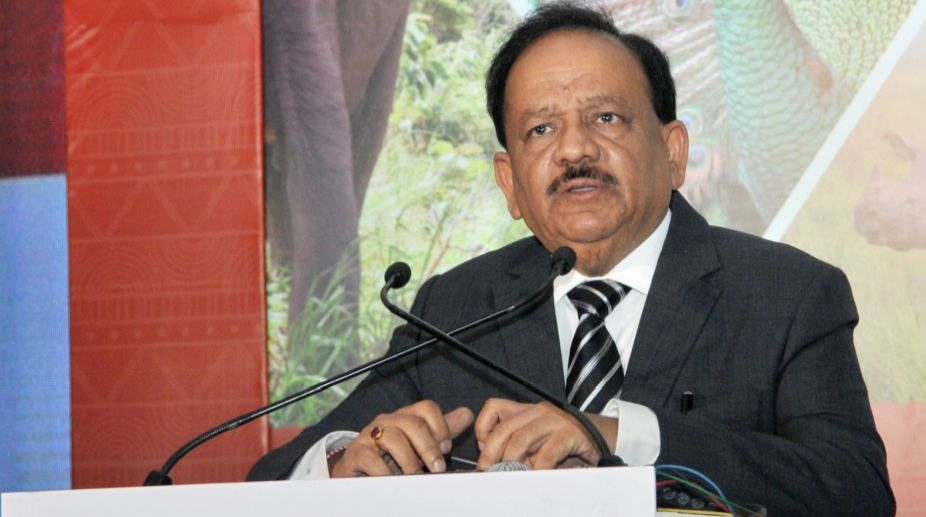
Union minister for science and technology, environment, forest and climate change and earth sciences Harsh Vardhan on Thursday called upon scientists across the country to come up with new technologies in consonance with Prime Minister Narendra Modi’s vision of a ‘New India.’

“There should be synergy among scientific institutions to develop newer technologies to deliver a new India envisioned by Prime Minister Narendra Modi,” Vardhan said while addressing scientists at the Hyderabad-based National Geophysical Research Institute (NGRI) under CSIR.

The minister underlined the need for taking advantage of India’s demographic strength. “We have the demographic advantage now, and we should exploit it,” he said.

Vardhan appealed to the scientific community to focus their attention to remote and backward areas such as North Eastern parts of the country to find solutions to their various problems. In this context he suggested scientists develop solutions to problems in 115 backward districts of the country with growth potential. Vardhan said scientists and scientific laboratories can contribute to the solution of several developmental issues in these districts.

He said it is time scientists gave equal importance to ‘solution science’ as ‘fundamental science’, a ministry note quoting the minister said. Vardhan mentioned the contribution made by National Geophysical Research Institute (NGRI) towards finding solutions to various problems.

NGRI provided technical assistance for Heliborne Survey to the Central Ground Water Board for the first time in 2013, to carry out aquifer mapping, or mapping the water pools beneath ground in Rajasthan.NGRI’s expertise in Heliborne surveys to map mineral and ground water could be utilised to explore natural resources in these 115 districts, the minister added.

Bengal BJP slams CM’s claim on employment generation

Statesman News Service | Kolkata |

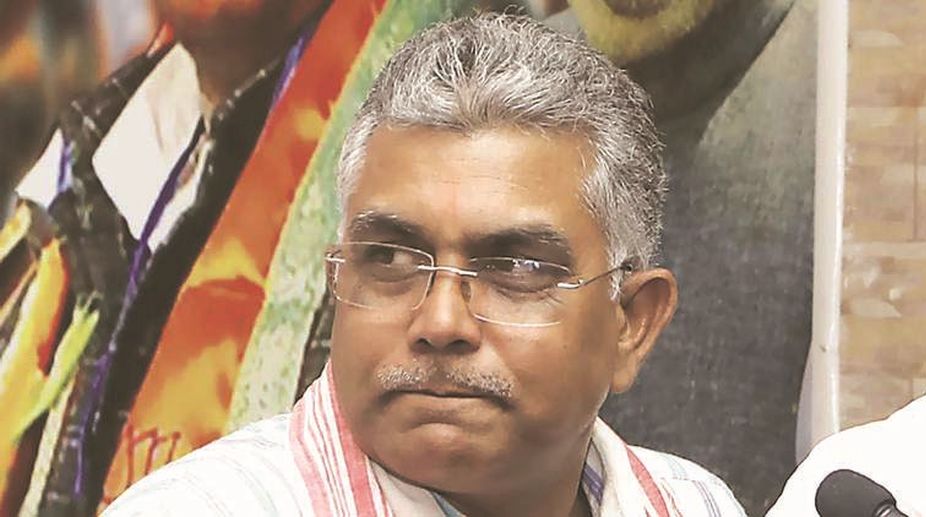
Chief minister Mamata Banerjee is making false promises of giving employment to the youth of the state by projecting the just concluded so called business summit as a grand success, said state BJP president Dilip Ghosh today.

He also challenged Trinamul Congress (TMC) supremo to hold free and fair bypoll in Uluberia Parliamentary and Noapara Assembly constituency where he feels the BJP will win hands down.
“I challenge the chief minister to ensure that there is free and fair election at Noapara Assembly constituency where people can exercise their votes freely. When the BJP comes to power after the poll verdict, the ruling party will get a clue that people have lost their confidence on the Trinamul Congress.”

“We would have never demanded for Central Armed Police Force if the CM ensured that there would be free and fair election. But, it is certain that the Trinamul Congress-backed miscreants will use arms to create fear among voters, abstaining them from exercising their voting rights,” he said.

The chief minister must prove her honesty by ensuring that TMC-backed hooligans do not snatch Voter Id cards a day before the polls, party president said reacting to chief minister’s ‘honest’ remark.
The state president also criticised the huge expenditure on Bangla Global Business Summit (BGBS). “The state has organised a two-day annual picnic in the name of organising BGBS. Every year it brings same investors, same leaders and ultimately BGBS produces a big zero. Miss Banerjee visited Germany, Holland, France, England and other countries she must tell us how many investors came here to invest and how many industries have been set up,” he said.

Mr Ghosh said that youths are here in the pathetic state finding no ways to get a job and nowhere any industry is grown except syndicate business, which is being organized by Trinamul leaders.
“Educated youth are being exploited here as TMC government is keen to encourage syndicate business rather than set up industry,” he said.

Earlier BJP’s national secretary and West Bengal observer Kailash Vijayvargiya demanded publishing of a white paper with data on actual investment in the state.
He said the state government claimed more than Rs 10 lakh crore MoUs were signed but none of those were not implemented. “We have information that only Rs 1 lakh cr investment came to the state in the five years term of TMC rule,” he said.

This year no Central minister came to participate in the BGBS though union finance minister Arun Jaitley, union minister of road transport and highways Nitin Gadkari and union commerce and industry minister Suresh Prabhu were invited to join the business summit. BJP sources said the state BJP urged the central leadership not to cooperate with the state as TMC men mercilessly attacked BJP motorbike rally participants.

NIA charge-sheet is concocted: Separatists

Statesman News Service | Jammu |

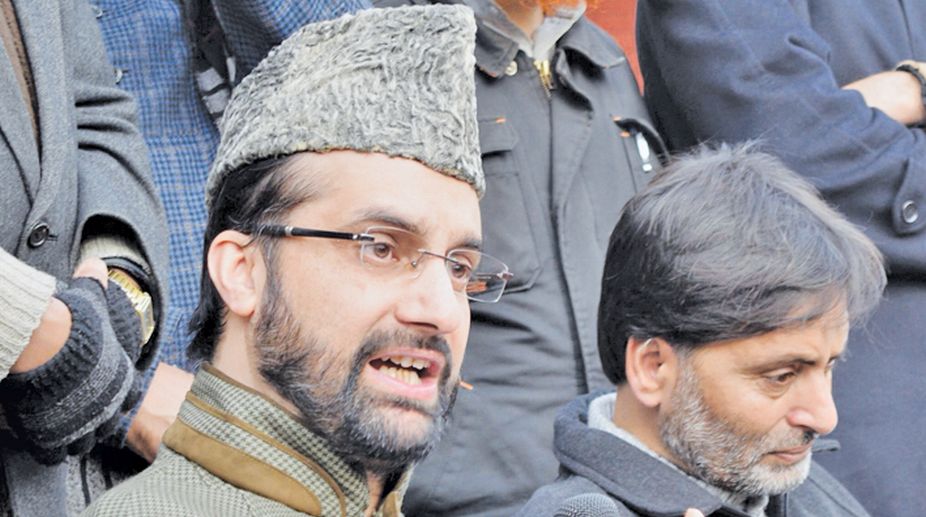
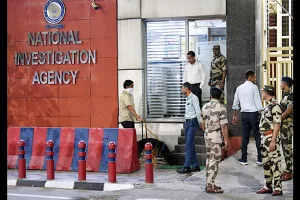
Separatist leaders Used Alishah Geelani, Mirwaiz Umar Farooq and Yasin Malik, on Thursday termed the charge-sheet filed by NIA against Kashmiri separatist leaders and a businessman in terror funding
case as “baseless, false and concocted”.

Interacting with the media persons at the residence of Mirwaiz, the separatists while reacting to recent remarks of Army chief Bipin Rawat, said that Kashmir movement was “love and worship” for them and that they would not surrender “no matter how much pressure Delhi builds on us”. They alleged that deliberate attempts were being made to link Kashmir struggle with “terrorism.”

“This is being done by the Army chief only to justify the massacres of Kashmiris. Now if he wants his men to kill us, we will feel proud,” said Yasin Malik.

Geelani, who addressed media persons over the phone as he is under house arrest, said that Kashmir issue is a dispute which is accepted by the world and the people of Kashmir are demanding their right to self determination. “We will not give in to the threats by the army chief. Our struggle will continue. Ours is a peaceful movement and connecting us with the terrorism is a mere ploy to defame our struggle,” he said.
The Army chief had on Wednesday said that people in Jammu and Kashmir were “tired of militancy as they have realised that it cannot give them what they want”.

NDA ally HAM meets Lalu in court, fuels speculations of split

Statesman News Service | Patna |

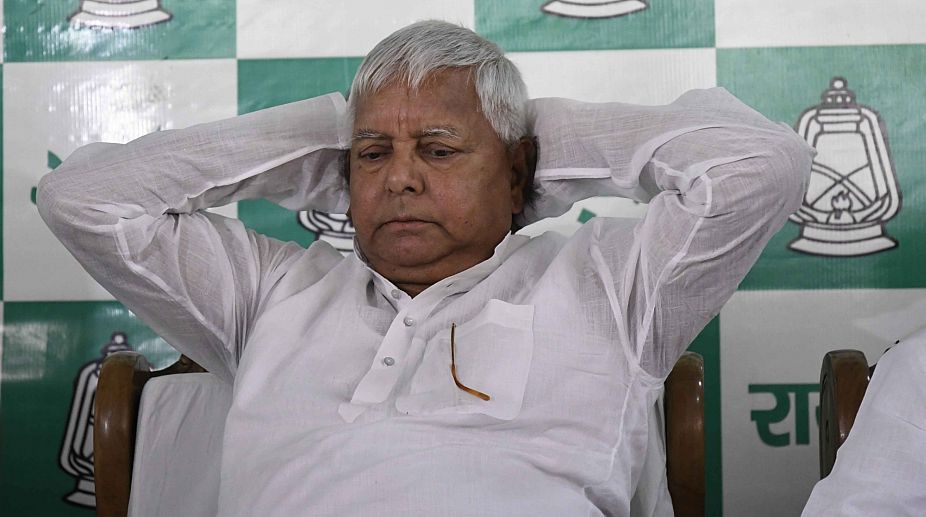
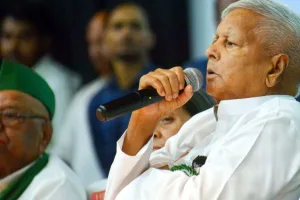
In a curious political move that fuelled speculations of split in the BJP-led National Democratic Alliance (NDA) in Bihar ahead of the next Lok Sabha elections, state president of the Hindustani Awam Morcha (HAM) today met incarcerated Rashtriaya Janata Dal (RJD) president Lalu Prasad in the Ranchi court premises.

HAM, a constituent of the NDA, is headed by former Bihar chief minister Jitan Ram Manjhi. The RJD president is currently serving a jail term in the Ranchi-based Birsa Mundar Central Jail after being convicted in fodder scam case.

Under the new jail manual, only three persons can meet Mr Prasad in a week. This quota already got exhausted when a group of leaders, including Mr Prasad’s son Tejashwi Yadav met the RJD leader earlier this week. So HAM’s Bihar unit chief, Brishen Patel, had to wait for over four hours for the RJD president to come to court for appearance in the fodder scam cases, which are being heard on priority basis following an order from the Supreme Court. It was during this time that the HAM leader met Mr Prasad in the court and had a brief chat. What transpired between them, however, is not known.

Party insiders said Mr Manjhi is not happy with the BJP’s constant failure to fulfill the commitments made to him when he joined the NDA ahead of 2015 Assembly elections. As per reports, the HAM chief was promised a gubernatorial post in lieu of lending his support to the BJP in the elections which it lost very badly ~ the NDA could win only 58 seats in 243-member Bihar Assembly. But the promise has not been kept, causing resentment in the HAM camp.

The HAM was also denied a berth in the Nitish Kumar-led NDA government. His request for the same went unheeded even after he personally met Mr Kumar.

The Rashtriya Lok Samata Party (RLSP), another NDA ally headed by Union minister Upendra Kushwaha too appears disillusioned with the BJP and is said to be looking for other options. The NDA suffered a major embarrassment when Mr Kushwaha blamed the JD-U for attack on chief minister Nitish Kumar’s convoy in Buxar district last week and demanded an independent inquiry into the matter. “We are getting information that the attack on the chief minister’s convoy was engineered by JD-U people,” Mr Kushwaha had told the local media, indicating a rift within the NDA. He claimed the attacks could have been triggered by a host of local issues and an inquiry would bring out the truth.

Mr Kushwaha’s observations are in sharp contrast to the views expressed by the BJP-JD-U combine which has blamed the Opposition RJD for the attack. The RLSP chief is also said to be displeased over his constant neglect within the NDA. What apparently irked him the most was the way his party was not provided a berth in the NDA ministry despite having two legislators while the Lok Janshakti Party with equal number of lawmakers was given representation.

Putting a brave face, Rana Gurjit says will die as Congman only

Statesman News Service | Chandigarh |

Even as his resignation from council of ministers was accepted by chief minister Amarinder Singh on Thursday, Rana Gurjit Singh put a brave face and said he has always been a Congressman and will die as a Congressman only.

In a statement, the senior Congress leader and Kapurthala legislator Rana Gurjit Singh said that he accepts the decision of the party high command and the CM with all humility.

Asserting that he had submitted his resignation on moral grounds, Rana maintained that his stand will soon be vindicated and eventually truth shall prevail.

“Truth cannot be suppressed for long, no matter how strongly and repeatedly a lie may be told”, he said while adding, he had not committed any wrong or any illegal act but had resigned to take wind out of the Opposition sails for its baseless criticism of the government and the CM.

He pointed out, even a judicial commission had found nothing against him. Rana reiterated his gratitude to the party and the CM and said he will continue to serve both with same sincerity, dedication and commitment.

Rana said, he was specially thankful to his supporters who have always been and will always be his strength.

“Whatever I am today in public life is because of the Congress party and my supporters and I will continue to serve them both with same zeal and vigour,” he remarked.

Opp seeks action: Welcoming Gurjit Singh’s ouster from the council of ministers, Opposition parties demanded action against him and other Congress legislators who had bagged contracts for sand mines through single bid.

Leader of the Opposition and Aam Aadmi Party (AAP) leader Sukhpal Khaira said besides Rana Gurjit, more ruling Congress legislators are involved in sand mining and have managed to secure the contracts for the same through a single bid.

“I will send the names of such legislators to the Congress president Rahul Gandhi for action,” he said adding that the minister had no point in resigning on moral grounds at this juncture as he should have resigned immediately after his involvement in the scam came to the fore in May 2017.

The Shiromani Akali Dal (SAD) termed the acceptance of the resignation of Rana Gurjit Singh as too little too late and said the Congress could only wash the taint of the sand mining scam by registering a criminal case against Rana Gurjit and cancellation of all mines allotted to Congress legislators.

Former minister and SAD spokesman Dr Daljit Cheema said it was shocking that chief minister Amarinder Singh had turned a blind eye to the sand mining scam for ten months and had kept giving clean chits to the tainted minister.

“Criminal matters like the sand mining scam should be dealt with on merit by the chief minister. How can government files be shared with Rahul Gandhi? Only party matters can be taken up with the Congress high command,” Cheema said.

Opportunities abound

Neellohit Banerjee |

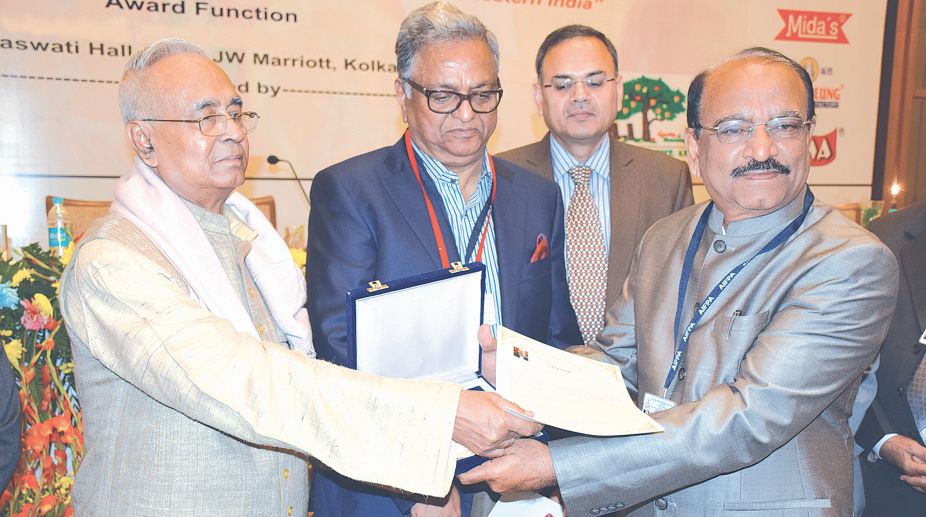
The All India Food Processors’ Association in support with the ministry of food processing industries recently organised its 73rd annual conference and national seminar on the theme “Vision 2025: Development of Food Processing Industries in Eastern India”. Minister-in-charge of food processing industries and Horticulture, West Bengal, Abdul Rezzak Mollah was the chief guest of the event.

“Bengal is lagging behind because processing is confined to fruits and vegetables only. There is a lot of scope in meat processing, because Bengal is the only place where slaughtering is allowed. We are expecting some big investment in food processing sector in this month,” said Abdul Rezzak Molla, minister-in-charge of food processing industries and horticulture, West Bengal.

He informed that the state has ample scope for processing cereals and sea fish. But he expressed his concern about the central government taxation policies due to which the “big players” were not coming to this state.

Companies have complained that there is a dearth of good quality fruits and vegetables in West Bengal due to which they have to purchase them from other states. “Our state is a land-critical state. Hence we have to form such a society with the farmers, so that we can get our desired products from them,” said Molla.

He put a lot of stress on participatory farming saying that the industrialists, in order to extract the maximum result, should provide the farmers with adequate technologies and the required seeds. The keynote address was delivered by JP Meena, secretary of food processing industries, Government of India.

To promote setting up of food processing units in Eastern India, Meena declared, “Anybody setting up units in these areas will be eligible for an assistance of 35 per cent of plants and machineries for construction to the extent of maximum Rs 5 crore.”

Secretary of food processing industries and horticulture, Government of West Bengal, Nandini Chakraborty spoke about focus on the quality of raw produce and raising the hygiene and safety of processed food to global standards. She also emphasised on preventing post harvest loss. “We intend to develop three cold storage hubs, one in North Bengal, one in central West Bengal and one in South Bengal.”

President of AIFPA, S Jindal expressed his anticipation about the future options available in the eastern parts of India including Bengal, Bihar, Orissa, Jharkhand and the seven states of the North-east. According to him, destitute condition of the farmers and inflation for the consumers was a problem which needed to be addressed in the Eastern region.

The seminar also gave away annual awards and scholarships to people who have done significant work in the field of food processing and students who have done paramount research on studies related to processing.

The most important of them was the Kashalkar Memorial Award for 2016, which is given to any person who has rendered outstanding services for the development of food processing industry in the country.
Anil K. Rajput, senior vice-president of corporate affairs at ITC Ltd, was conferred with this award which carried a gold medal and a citation. Other awards included Shailendra Krishna Memorial Award 2016, Dr JS Prathi Memorial Award 2016, and AIFPA Lifetime Achievement Award among others.

Generating a new wave of growth

Ashish Agarwal |

India is primed to witness a bracing change as the government has successively dipped their toes into the digital stream. The programme to turn the country into a digital economy has been met with a great deal of buzz as initiatives such as digital locker, demonetisation and the successive promotion of digital wallet have opened the floodgates to endless possibilities. This is triggering economic growth, attracting more investment, and creating new jobs across multiple sectors.

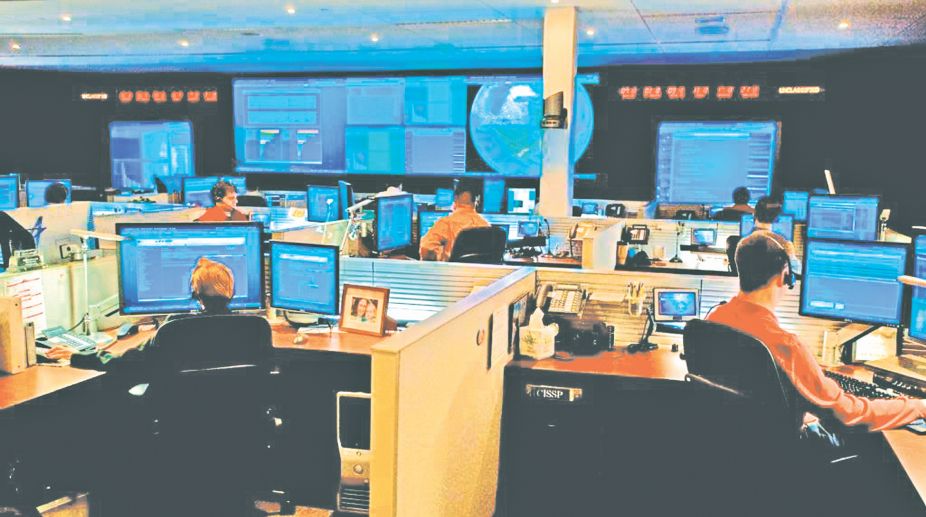
Yet with the entire boon comes a great price as it poses a big challenge in cyber security. An increasing amount of consumer and citizen data will be stored digitally and a large number of transactions will be carried out online, leaving the net a cesspool of viable data for malicious people to attack.

Cyber criminals are not only targeting big corporate houses like government agencies, banks, and research institutes but in constant deadlock with hacking and spying. It calls for a more robust framework for cyber security, something that the information technology security market is trying to facilitate rising.

This space is a lucrative career option at the moment generating a large number of jobs.

From engineers to lawyers, project managers to auditors, everyone has a role to play in growing this industry. A requirement for qualified cyber security professionals is becoming challenging for enterprises as they now demand an in-house army of specialists. BFSI, retail, manufacturing, healthcare companies are willing to pay great capital in order to rope in some of the specialised professionals for aim to build a greater defence. There can be a diverse range of professionals who work full-time in the core areas like forensics, incident response, software security, etc, and the Data Security Council of India has done a commendable job of creating a list of opportunities available for such experts.

This throws up new challenges every minute and to keep up with them, curricula need to be refreshed often through placing the talents in the right hands. Therefore, universities and research institutes are best suited to hone this kind of skill set. A number of universities (public and private) now offer graduate-level programmes in specific areas of cyber security and the government is in full support of such development.
When they say evil can be defeated by good, they also mean in the terms of real life issues.

With the growing number of hacking threats, it is becoming difficult for companies to protect their critical data and systems. This has created a huge demand for counter action in the form of ethical hackers who can help in securing operations while offering organisations a third person view of their state of security systems.

Simply put, ethical hacking is a practice of testing organisational security through controlled attempts to break into a company’s security system and expose the loop holes. These gifted individuals use a series of tests such as penetration testing, vulnerability testing, etc, to comprehend the integrity and confidentiality of the company’s data, while testing for the accessibility and availability of the information.

Apart from enlisting such expert, organisations are striving to create an engaging environment where every working individual is armed with a basic level of cyber-security awareness. This includes a look into pain points such as maintaining password hygiene, understanding data sensitivity.

The aim is to help the workforce take the onus of security in their own hands, without any extra expenditure. These would go on to become professionals who can protect themselves and their organisations using best practices on a day-to-day basis.

The digital faction is said to clock in a handsome amount of pay with cyber security sitting in the plum of remuneration. Several studies state that cyber security professionals earn better than other IT personnel, making it a lucrative vocation. A career in this field comes with a fetching salary, job security and better opportunities for professional growth at a quicker pace. It is said that an average cyber security professional in India earns around Rs 7.8 lakh annually- a lump sum to contend with.

When it comes to growth, one shouldn’t worry as according to a Nasscom report there is a growing need for cyber security professionals in India. These consultancies are set to witness a sharp growth in the near future, creating a large number of jobs in the market. With all the digital development taking place at breakneck speed, this ongoing flush of digital proficiency is bound to reach a growth unfathomed by all. It is safe to say, the tide of cyber security has just begun. In future there will be cyber war and it will be without weapons and nuclear.

The writer is founder, WORKNRBY.

Bank stocks rally on buzz of 100 pc FDI

Mumbai |

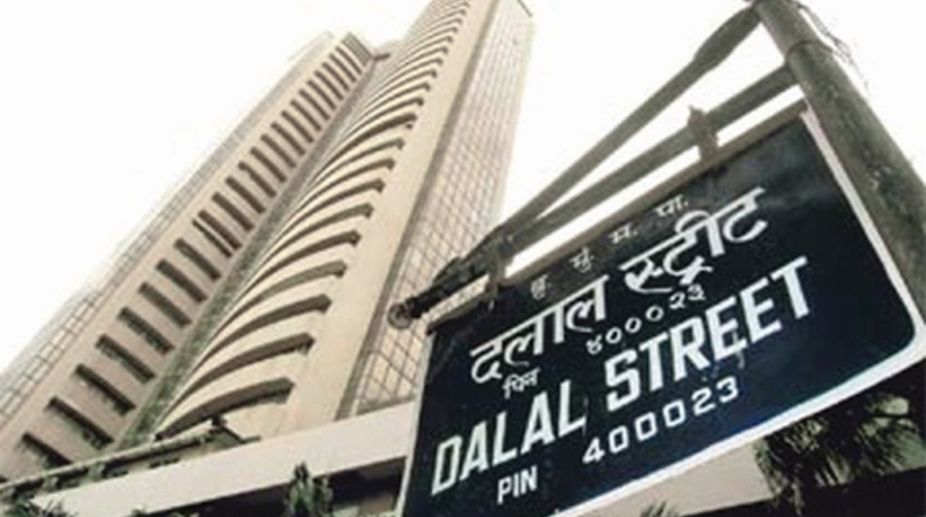
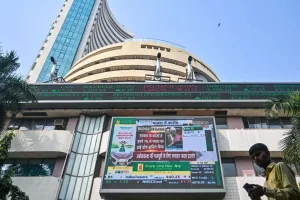
Reports claiming that the government would increase the foreign investment limits for banks took Dalal Street virtually by storm on Thursday leading to frenzied buying by market participants in banking stocks.
The unprecedented rally in bank shares also took the main indices of Bombay Stock Exchange and National Stock Exchange to new highs. However, late in the day profit-booking at higher levels in state run banks by traders brought indices down by more than half.

The Reserve Bank of India has confirmed that the government has been mulling such proposal to increase FDI in private sector banks from currently 74 per cent to 100 per cent for private lenders and from 20 per cent to 40 per cent in cases of state run banks.

HDFC Bank, Yes Bank, IndusInd Bank and other top PSBs were in the lead of Thursday’s rally, while the only subdued segment was metal stocks. The Bull run gathered speed right at the opening bell in D Street with 30-share Sensitive Index of BSE and 50-srip Nifty of NSE resuming with huge positive gap. The rally accelerated as buying spread to auto, FMCG and other select index heavyweights on uninterrupted liquidity influx.

Foreign Portfolio Investors (FPIs) were net buyers of equities worth `625.30 crore, while Domestic Institutional Investors (DIIs) purchased `168.61 crore worth of stocks. For second successive session, the market closed on a stronger note.

Sensex after rising to 35,507.36 (+425.44) points ended at 35,260.29 (+178.47) points, gaining 0.51 per cent. Nifty spiked to new record high of 10,887.50 (+98.95) points but lost ground in late deals ending at 10,817 (+28.45) points, increasing 0.26 per cent.

Bank Nifty was at new record high of 26,557.40 (+248.30) points, gaining 0.94 per cent. Bank Nifty peaked 26,887.65 (+598.55) in the morning before profit booking in lenders’ stocks set in. Nifty PSB ended in red on profit booking at 3,631.45 (-59.49) points , -1.61 per cent. In Sensex, 16 shares ended up and 15 down. For Nifty, the ration was 19:31.

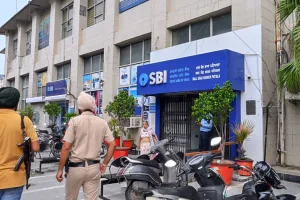
Top gainers in BSE benchmark included ITC `273.90, 3.01 per cent, HDFC Bank `1,936.80, 2.42 per cent, M&M `759.65, 1.96 per cent and Kotak M Bank `1,046.70, 1.90 per cent. SBI was down 0.87 per cent at `302.70.

The BSE market capitalisation has zoomed beyond $1.02 trillion which analysts point out is five times more than the total value of Bitcoin Market and ten times the total worth of the world’s wealthiest man Jeff Bezos, the owner of Amazon.

And the child it was that died

Nahela Nowshin |

Some crimes are so horrific, so brutal, so barbaric in nature that it is impossible for these acts to not make any human being feel outraged and disgusted at the world we live in. Sexual violence against children is one such unforgiveable crime. Race, religion, geography, and politics have no bearing on recognising the evil that is sexual abuse of children.

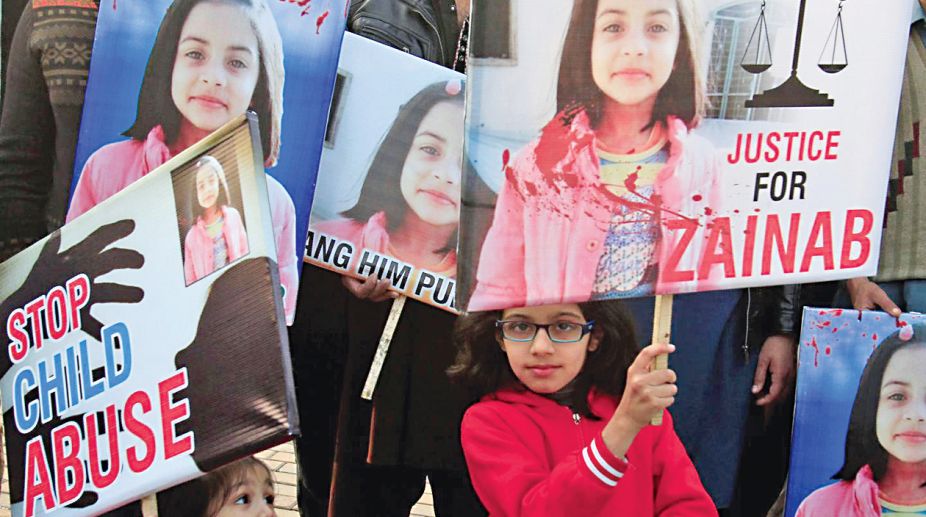
This is why the people of Pakistan, a conservative country where polarisation along religio-political lines is deep-seated, came together in a rare moment of unity and took to the streets earlier this month to protest police inaction when the rape and murder of Zainab Ansari, a seven-year-old child from the city of Kasur in eastern Punjab, made the news. Zainab was on her way to religious studies class on January 4 and never made it back home. Days later, her body was found in a heap of trash.

For those who aren’t aware of the magnitude of the protests in Pakistan that spread like wildfire, think of it this way: Zainab is to Pakistan what Rajon’s killing in 2015 was to Bangladesh, and what the 2012 Delhi gang rape case was to India. It is a moment of national awakening and introspection. For a country where sexual abuse of children is widespread – even more so because of the deafening silence on issues considered “taboo” along with law enforcement incompetence and negligence – it has taken far too long for this day to come.

It is not as if it is unusual for incidents of sexual violence against women or children to make the news in countries like Pakistan, Bangladesh and India. In fact, you see headlines such as “Teenage girl abducted, raped” almost every day. So why is it that public outrage does not always ensue as a result of these horrific headlines?

The answer lies in the fact that this “boiling point” is usually reached when the crime, in part or in full, is open to public view and/or is so brutal in nature that it is bound to shake a nation to its core. This delayed reaction in the form of nationwide protests or collective outcry on social media is both a sign of ignorance and awakening. Ignorance because why else would it take graphic images to jolt our conscience, to suddenly come to the realisation that it is time to confront our demons, when such incidents are commonplace and reported in the media almost daily? There’s a certain kind of selfishness – and it’s part of human nature I suppose – to feel only when you’re made to see, whereas only hearing or reading about it in the news allows us to rest easy.

Zainab was not the first child in Kasur to meet such a cruel fate. In fact, this is the same city where the largest child abuse scandal in Pakistan’s history originated. During 2006-2014 a series of child sexual abuses, of at least 200 children, took place in Hussain Khanwala village in Kasur which later culminated into a major political scandal in 2015 that involved an organised crime ring that sold child pornography. According to Pakistani daily The Express Tribune, last year a total of 129 cases of child abuse were reported from Kasur and the year before that, the number stood at 141.

Despite a well-documented history of child sexual abuse, the city of Kasur continues to be a safe haven for paedophiles thanks to inaction of local administration and law enforcement. What is so outrageous is the fact that Zainab would have been alive today had the police actually done its job back in 2015 because the DNA of Zainab’s killer, who remains at large, matched the DNA found in six other similar cases from Kasur – the first of which took place in June 2015.

The man responsible for killing Zainab got away with rape six times. Let that sink in for a moment.

Like Pakistan, here in Bangladesh, societal taboo, negligence of law enforcement and delayed justice continue to shield paedophiles from legal consequences. The harsh reality is that child sexual abuse permeates all levels of our society – from the realm of the private home to commercial child sexual exploitation. There are children as young as 10 in registered brothels, and tens of thousands have been forced into street prostitution. Those without any protection whatsoever – roaming the streets, parks, stations because they have nowhere else to go – are at risk of being targeted by traffickers.

While poverty and family breakdowns make children more vulnerable to falling prey to sexual abuse, it is the deafening silence in our society – including of those at the top of the political ladder – that makes it infinitely tougher to address and talk about the pervasiveness of sexual abuse of children in the country. This culture of silence also stems from the view of associating honour and dignity with chastity – particularly of the girl child – which serves to mask the criminal nature of child sexual abuse.

What recourse do we have though when the law itself risks legitimising sexual abuse of a child? The contradiction between ratifying UN Conventions that protect the rights of children and at the same time passing a national law that allows child marriage in “special cases” cannot be overstated.

Last year alone, 339 children were killed and 593 raped in Bangladesh, up by 28 per cent and 33 per cent respectively from 2016, according to a report by Bangladesh Shishu Adhikar Forum. The real figures are far higher because the report was based on news articles alone – and as we know, the media only cover a fraction of incidents of child rape and murder being committed behind closed doors. But even media coverage doesn’t seem to be enough to provoke outrage. For instance, how many of us know about Tanha, the four-year-old girl, who was raped and strangled to death “because she screamed” and her body dumped in a toilet? This happened a little over five months ago.

It took the grisly sight of a child’s dead body dumped in garbage for Pakistan to shake off the illusion that child sexual abuse isn’t endemic – and to hopefully realise that a child somewhere will have to pay the price for society’s silence because “moral” and religious reasoning does not permit them to. We perhaps would have taken to the streets too had a child in Bangladesh met the same fate as Zainab. But the fact is, we have reached a “breaking point” far too many times – Tonu, Rajon, Rupa -and what really changed? Will it take a “Zainab moment” for us too before we can start talking about child sexual abuse openly?

The Daily Star/ANN.

Anthem celebrates India’s diversity, not chauvinism

Ratan Bhattacharjee |

Last September President Donald Trump in a speech at a rally in Huntsville said, “Any player that sits during a national anthem is a Son of a bitch.” The player was NBA champion Stephen Curry whose invitation to the White House was later rescinded by the angry President. The events kicked off a debate on whether the national anthem should be played before every sporting event. Many argued it was forced patriotism that diluted the power of the message of standing at attention before the flag during the national anthem.

The American national anthem was composed by Francis Scott-Key who was inspired by the American Star-Spangled Banner flying triumphantly above Fort McHenry bombarded by British Ships in Baltimore. La Marseillaise, the national anthem of France was written by Claude Joseph Rouget de Lisle after the declaration of war by France against Austria and it was a revolutionary song, an anthem to freedom, a patriotic call to mobilize all citizens and an exhortation to fight against tyranny.

The adoption of the song’ Jana Gana Mana’ composed by Nobel Laureate Rabindranath Tagore is significant as the first stanza of the song Bharata Bhagya Bidhata was adopted by the Constituent Assembly of India as the national anthem on 24 January 1950 although a shortened version consisting of the first and last lines was first publicly sung on 27 December 1911 at the Calcutta Session of the Indian National Congress. But all that is happening recently over the national anthem is confusing us about the difference between patriotism and nationalism.

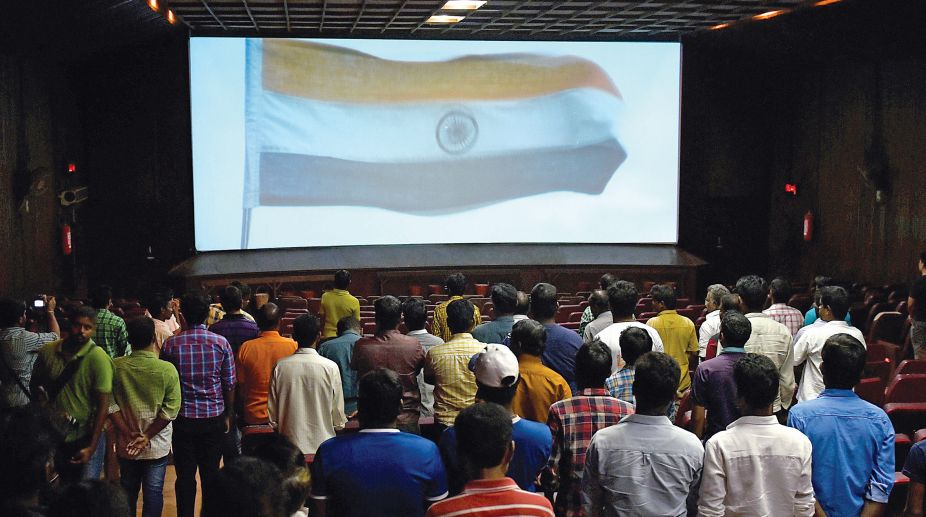
Mark Twain once said: “Loyalty to country Always. Loyalty to government when it deserves it.” But recent happenings over forced patriotism and the enthusiasm of vigilante groups compelling audiences in the cinema hall stand for the anthem without sparing even the disabled seems to have provoked the Supreme Court to revise its decision regarding this compulsory display of patriotism. There is no doubt that the national anthem should be sung with respect, the Flag code cannot be violated and under the pretext of undiluted entertainment we cannot disrespect either the anthem or the flag.

The word ‘should’ is now going to be replaced by ‘may’ in the case of playing the national anthem in cinema halls as the Apex Court modified its earlier interim order. It is interesting that this time the Court relied on a Home Ministry order of 2015 which directs that “whenever the Anthem is sung or played the audience shall stand to attention.”

Now the ball is in the court of the Union Government which will take a final decision on the recommendations of a 12-member committee regarding the occasions, circumstances and events for the solemn rendering of the anthem. The panel will examine if any amendments are necessary to the Prevention of Insult to National Honour Act of 1971 to expand or specify the meaning of ‘respect’ to the national anthem. But all these lead to the basic question of the debate over patriotism and forced patriotism, nationalism versus humanity.

“I will never allow patriotism to triumph over humanity as long as I live”, wrote Tagore in 1918 in a letter to his friend A.M.Bose. Tagore went beyond patriotism and a parochial sense of nationalism. Throughout his life he remained critical of nationalism even at times differing from the nationalistic concept of Mahatma Gandhi. In his novel The Home and the World, Tagore asserted through his character Nikhil: “To worship the country as a god is to bring curse upon it.” Today we seemed to be bogged in the quagmire of pseudo-nationalism and pseudo-patriotism envisioned in the Bharat Mata concept and have become oblivious of what Tagore talked about – the importance to be given to humanity and freedom of mind as a world view.

The happenings of the last few years have shown a hyper-commitment to nationalistic chauvinism. Many confuse it with forced patriotism at the cost of ‘freedom of mind’ that Tagore focused on during his visit to Soviet Russia. He saw mechanical regularity there and, yet he was stunned by the lack of the ‘freedom of mind’. “We cannot live by taking air, but we need air to digest what we take as food.” This advocacy in favour of air symbolising the freedom of mind in Letters from Russia is imperative today as there is an attempt to impose forced patriotism, something that Tagore long ago disapproved of during his meeting with Mahatma Gandhi in Kolkata calling it the ‘bondage of nationalism’. This bondage of nationalism is being imposed on the diverse communities in what appears to be a tyranny of the majority and too much concern is being shown about playing the national anthem in cinema hall.

One of the judges on the Supreme Court bench has ironically said: “Next thing will be that people should not wear T-shirts and shorts to movies because it will amount to disrespect for the anthem; where do we stop this moral policing?” By policing the national anthem, we cannot nourish values of Unity in Diversity. Respect should be spontaneous, and it is not desirable that the debate on the anthem should assume an ugly proportion. Very correctly, the Supreme Court has realised that the forced display of patriotism would do more harm than good. So, the modification of its interim order is a relief and has been hailed by all truly patriotic Indians as an ‘expected’ and ‘timely’ step.

Theodore Roosevelt once remarked: “Patriotism means to stand by the country. It does not mean to stand by the president or any other public official, save exactly to the degree in which he himself stands by the country. It is patriotic to support him insofar as he efficiently serves the country. It is unpatriotic not to oppose him to the exact extent that by inefficiency or otherwise he fails in his duty to stand by the country.” In an age of populism, nationalism is being peddled like soap. In the name of showing respect we should not disrespect humanity about which Tagore warned us long ago.

Tagore wrote this anthem not for extolling a victory in war. It is a song that focuses on unity of Indian diversity. It sings the glory of the country in its ancient and modern times. It was composed in pre-Independence India when people needed a message of unity in their fight against the British and did provoke some controversy. A news report published in The Statesman (28 December 1911) said that Tagore ‘sang a song composed by him specially to welcome the Emperor.’ But the same news was reported differently in another newspaper. “The proceedings of the Congress party session started with a prayer in Bengali to praise God (Song of benediction). This was followed by a resolution expressing loyalty to King George V. Then another song was sung welcoming King George V”. So, it is clear Jana Gana Mana was sung as a ‘Song of Benediction’ and not as praise to the British Emperor. When the song was adopted as the national anthem it was selectively shortened and adapted with care for a secular republic.

India is a multicultural country and nearly 780 languages and dialects are spoken here. The national anthem is a unifier. Standing in the cinema halls for 52 seconds was a thrill for us in our childhood, but now we realise that there are other implications too. Senior advocate Rajeev Dhavan argued that the anthem has a ceremonial significance and the sacred element should not be trivialised by playing it four times a day in the cinema and theatre halls.

It is best to conclude with the words of Luke Bryan who focused on the essence of the national anthem: “Any time I sing the anthem, it is an honour and my heart beats out of my chest” For such sublime feelings, no policing is necessary.

The writer is Associate Professor and Head Post Graduate Dept of English Dum Dum Motijheel College, Kolkata.

Dealings with China~II

PK Vasudeva |

Despite the positive signals from other countries, China is opposing India’s membership to the NSG. It has argued that India in any case is not eligible to become a member of NSG as it is not a member of the nuclear non-proliferation treaty (NPT) adherence to which, is necessary for the entry. At other times Beijing stated that Pakistan too has similar credentials to join the NSG. Until China supports India, there is no hope for India to get entry into NSG as China has the veto on the matter.

India should initiate efforts to woo China through diplomatic means and by following a give-and-take principle in its relationship.

The fifth factor is that China is against India carrying out oil exploration in a part of South China Sea near the Vietnam coast. The moves come at a delicate time in Beijing’s relations with Vietnam, which claims parts of the sea, and India, which recently sent warships to monitor the Malacca Straits, through which most of China’s energy supplies and trade passes.

Vietnam granted the Indian oil firm, ONGC Videsh, a two-year extension to explore the oil block. Part of that block is in the U-shaped’nine-dash line’, which marks the vast area that China claims in the sea, a route for more than $ 5 trillion in trade each year in which the Philippines, Brunei, Malaysia and Taiwan also have claims.

These five episodes made 2017 a particularly tough year for China-India relations, with a serious impact on how the two sides see each other. On the positive side, none of these developments has done irreversible damage to bilateral relations.

These trends and the episodes of last year clearly point to the emergence of a larger and much more worrying picture of bilateral relations. Two major changes define this scenario. First, the China-India relationship is in the process of transformation and is slowly arriving at the crossroads.

The strategic and economic landscape of Asia has been changing as the rise of Chinese power transforms both Asia and the Indian Ocean region, and fuels greater competition between the Middle Kingdom on the one hand and the United States and Japan on the other. These tectonic changes are transforming the international environment in which the Beijing-Delhi relationship operates and the relationship cannot continue as before.

China and India have found it much more difficult to manage their tensions and disagreements, as evident from the Doklam standoff and India’s boycott of the BRI summit, a signal that the present format of the relationship is not working. All this indicates that the China-India relationship is increasingly standing at the crossroads and the two sides will have to choose a middle path of peaceful oexistance.
Second, the India-China relationship is progressively deteriorating.

As China has increased its presence around India and has begun to vigorously shape Asia’s strategic landscape to its advantage, India has adopted a much tougher and more decisive stance towards Beijing.

The Indian Army has asserted that it will not allow an expansionist China to intrude into Indian territory at any cost, while roundly dismissing Pakistan’s reckless threats about its tactical nuclear weapons being an effective counter to India’s conventional military superiority.

“China is a powerful country but we are not a weak nation…We will not allow our territory to be invaded by anyone. We are prepared,” said Army chief General Bipin Rawat, in the backdrop of the PLA needling India with as many as 415 “border transgressions” of the LAC last year, which also saw the 73-day face-off at Doklam and 215 other troop confrontations.

Speaking in the run-up to Army Day on January 15, Gen Rawat also said that Pakistan’s “nuclear bogey” will be thoroughly exposed if it actually comes to a war with the western neighbour, which often brandishes its short-range Nasr (Hatf-IX) nuclear missiles as a battlefield counter to India’s ‘Cold Start’ strategy of swift, high-intensity conventional attacks into enemy territory. We will call their bluff. If given the task, we will not say we cannot cross the border because they have nuclear weapons”, he said.

But even as the Indian Army continues its punitive fire assaults to “inflict pain” on the Pakistan Army for actively abetting cross-border terrorism and infiltration, with the latter suffering “three to four times more casualties”, Gen Rawat said his force was “shifting its focus” from the western front to the “northern borders” with China.

In an angry rebuttal to Gen Rawat’s comments, China has criticised the General for calling Doklam a disputed territory, saying that his”unconstructive” comments were not helpful for maintaining peace on the borders. The Army Chief should have chosen his comments and used better words on such crucial issues to avoid misunderstanding between the two countries.

Though the government is dealing with China in a holistic manner, with the diplomatic engagement “going well”, India should take care to ensure its neighbours like Nepal, Bangladesh, Sri Lanka, Maldives, Myanmar, Bhutan and Afghanistan “do not drift away” from it. “We have to see we are not isolated against China in this region,” he said, also referring to the emerging “quadrilateral” with the US, Australia and Japan in the Indo-Pacific maritime domain.

2017 was stressful for China-India relations, leaving a heavy legacy for 2018. However, it also leaves homework for Beijing and Delhi to reflect on their deteriorating relations. If the two sides do their homework well, 2018 and the coming years might witness peaceful coexistence. However, India has to work hard to make its army strong enough to thwart any misadventure from China and Pakistan jointly.

The writer is retired Professor of International Trade. He can be reached at vasu022@gmail.com.

Fatwa in Pakistan

Editorial |

It would be presumptuous to imagine that Tuesday’s fatwa by Pakistan’s clerics will readily have a sobering effect on the mortal Islamist fundamentalism that has roiled the nation and countries further afield. Across such fearsome labels as the Taliban, Al Qaida, ISIS, LeT, JeM and the like, it is the extremist groups that will be expected to reflect on the clarion call by no fewer than 2,000 religious scholars, representing different schools of thought. Chiefly, the fatwa has condemned suicide bombings as forbidden, according to the tenets of the Shariah.

The clerics have in effect, although belatedly, questioned the praxis of the fundamentalists in the subcontinent, the Arab region, and Europe. Judging by that critical prism, the decree will hopefully be endorsed both by the civilian government and the omnipotent military. Unanimity is the striking feature of the fatwa and unprecedented must be the concerted initiative of the theocratic class in Pakistan which, alone in the Islamic world, has advanced a robust appeal to militants with the forthright assertion that armed insurgency against a state and use of force in the name of imposing Shariah law is forbidden in Islam.

That enunciation lends no scope for a spin, almost invariably driven by calculated malevolence. Markedly, in the immediate aftermath of the fatwa, political leaders and religious scholars have called for unity and what they call a “unanimous narrative” to counter terrorism in Pakistan.

The fineprint of the message is pretty obvious ~ the Shariah cannot be used as a facade to kill and kill with abandon. It is significant too that the religious decree has been issued after madrasas in Pakistan have been accused of involvement in terrorism and brainwashing of insurgents. Indeed, the content of the syllabi is the thread that binds the madrasas across the Radcliffe Line to similar schools in the Kashmir Valley.

Though the President of Pakistan traditionally does not play a pivotal role in the overall construct, it is a salutary development that President Mamnoon Hussain has expressed the hope that the decree issued by religious scholars would “help address the challenges posed by terrorism, extremism and sectarianism”.

To issue a fatwa, drafted after a consultative process, is a step in the right direction, he said. “It will portray a soft and positive image of Pakistan and highlight Islam as a religion of peace, brotherhood, tolerance and accommodation.

The Pakistan Ulema Council has issued a decree on the terror activities and the fatwa states that the country is an Islamic state and that Islam is the religion of equality, justice and brotherhood. Islam has denounced terrorism, bloodshed and suicide attacks,” the President has asserted. The message is directed as much to the terrorists as to the ineffectual government. Pakistan will be a different place if both sides defer to the directive of the clerics.

Border upgrade

Editorial |

The armchair theorists would pontificate that the greater the expense and effort put in to patrol a nation’s land borders the more does that underscore the lack of diplomatic success in ensuring cordial and positive relations with neighbouring countries.

True perhaps, but in an Indian context “history” is a major factor as well. An un-demarcated boundary the colonial masters shared with China/Tibet held generally firm during British rule; their hasty departure from the subcontinent as the sun went down on the empire resulted in a hasty drawing of a “line” (with limited local involvement) separating India and Pakistan, and leaving Jammu and Kashmir an unresolved irritant.

Sadly the situations with both China and Pakistan have deteriorated, and it is against this backdrop that must be assessed some recent initiatives to upgrade frontier fortification, in both qualitative and quantitative terms.

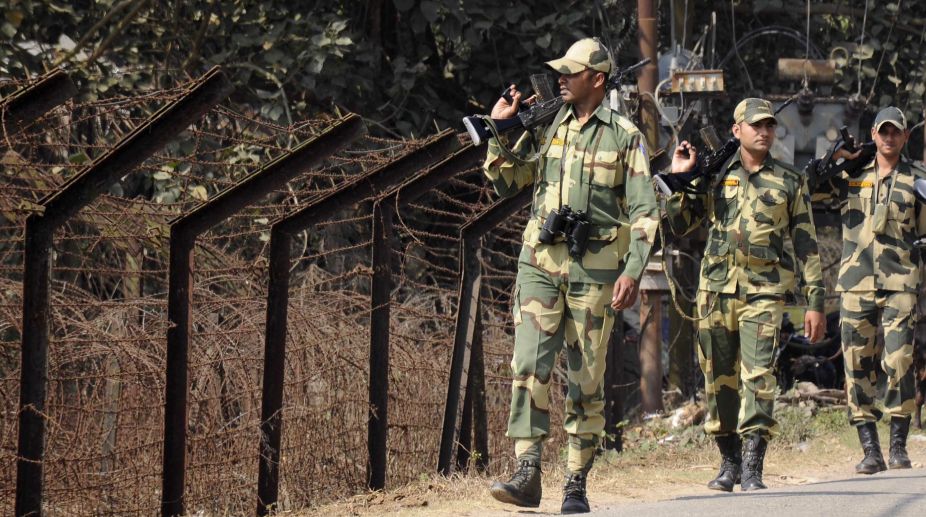
Though only a token move in the first phase, there is considerable significance to add an element of air-power to the Indo-Tibet Border Police (ITBP) that manages the 3,488 kilometre front with China. To start with, two twin-engine helicopters are being procured, to be deployed one each at Chandigarh and Guwahati.

Their primary role will be mounting air-reconnaissance missions to enable early detection of attempts by the Chinese at incursions across the Line of Actual Control. There have been a series of incursions in recent times, and occasionally the PLA personnel have begun to “dig in” before the Indian border guards have been able to physically confront them. The Chinese have been using helicopters along the LAC for several years so that ITBP move cannot be slammed as “escalatory”.

However it will require building up a fleet of more than two choppers to create a credible survey capability: the helicopters can also be used to transport a small squad of personnel, ferry stores, undertake casualty-evacuation missions ~ and of course transport VIPs to the front line. The ITBP has been directed to ensure that its helicopter pilots are trained well enough to avert “complications” by straying into air space over Chinese-held territory.

Less dramatic yet important too are plans to raise nine new battalions for the ITBP and add six more to the Border Security Force for deployment in the western sector. This will facilitate the BSF moving more units to the eastern front to detect infiltration into Assam from Bangladesh. Adequate deployment there is hindered by the fact that it would mean a “thinning” of force-levels in the Punjab and Jammu sectors. What the augmenting of manpower and the introduction of an air-wing to the ITBP indicate is that the Indian border guards see no early resolution of the troubles on both the western and northern frontiers. While that realisation is in itself somewhat ominous, the next best option is “to keep the powder dry”.

Protest rally in Dehradun

Statesman News Service | Dehradun |

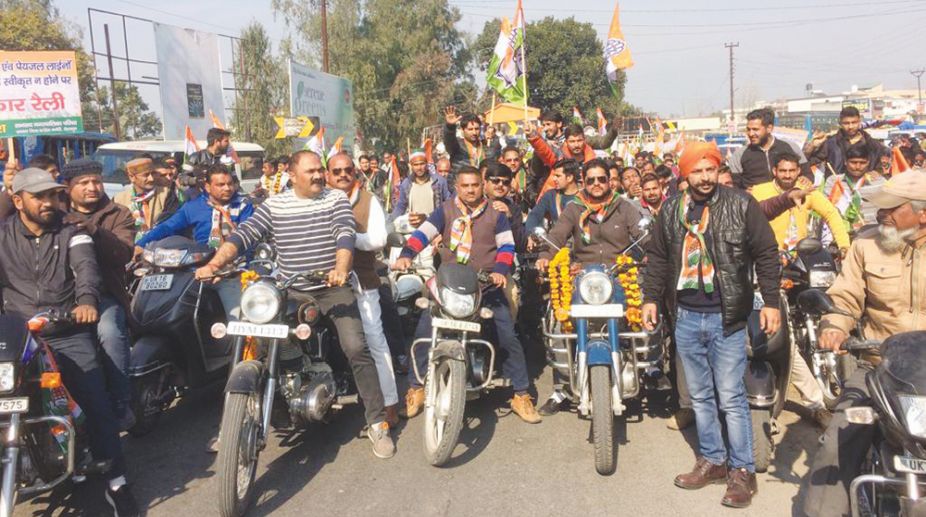
With local body election round the corner in Uttarakhand, Congress has started mobilising its party workers. Congress hosted ‘Adhikar rally’, in Vikasnagar (Dehradun) on Thursday. State Congress chief Pritam Singh participated in the two wheeler rally in protest of policies of the central government. The effort is being looked as a process of the party to reconnect it with the grassroots.

Congress is struggling to hold it ground in the hill state after facing an embracing defeat in the state assembly elections, held last year. State Congress president Pritam Singh Said, “The centre and state governments have flopped badly in every front.”

Congress will be launching a series of protest rallies in the coming days. A cycle rally on 29 January against the centre and state government will be hosted in Dehradun.

Demonstration and cycle rally will be organized in other parts of the Uttarakhand in February. The local body elections are likely to take place in March-April. The dates are yet to be announced. The State Election Commission will be conducting special drive for verification of voters from 20 January to 4 February.

Smart cycle project to be launched in Gwalior soon

Statesman News Service | Gwalior |

In a bid to promote non-motorised transport in the city, 500 smart public bicycles and 50 docking stations will be launched soon under the ‘Smart City’ project in Gwalior.

“Initially, 50 docking stations and 500 smart cycles will be available under the scheme. A person would be able to hire a smart cycle from one station and leave it at another station,” said Rahul Jain, collector of Gwalior and chairman of Gwalior Smart City Development Corporation Limited (GSCDC).

The multi-geared bicycles will be GPS enabled and can be taken from the docking station with a smart card. Constant monitoring of cycles will be done through GPS at the control room.
“Cycles can be hired by payment through app, smart-card, logging-pin or mobile phone. Low fares will also promote cycling in the city,” said MahipTejaswi, CEO of GSCDC.
Implementing the ‘public bike sharing’ (PBS) scheme will boost efforts to remove the tag of India’s most polluted city from Gwalior as per the World Health Organisation’s (WHO) report.

Officials of the Gwalior Smart City project are hoping to unveil the PBS project by the end of March. Gwalior will become the second city of the state after Bhopal where the PBS project is to be implemented. It was started in Bhopal last year.

According to Vinod Sharma, Commissioner, Gwalior Municipal Corporation and secretary of GSCDCL, the aim of the project is to “promote a bike culture” in the congested city where public transport, private vehicles and commercial vehicles clog the roads.

Under the project, registered users will be able to use the facility for a fee by picking up and dropping off bicycles at any of the 50 docking stations. A central control room will monitor the availability of bicycles and distribution vans will move them from one station to another to ensure availability.”To begin with, a red-painted, sufficiently wide and around 5-6 km long cycling track will be constructed. It would be extended in the second phase,” Sharma said.

Drought-like situation: Govt directs depth to draw up contingency plan

Statesman News Service | Shimla |

Himachal Pradesh government on Thursday directed departments to prepare contingency plans for drought like situation in the state this year due to extended dry spell.Revenue and Disaster Management Principal Secretary Onkar Chand Sharma on Thursday held a meeting with officials of various departments to take stock of the preparedness for drought like situation this year. The Deputy Commissioners of all districts participated through video conference.

Sharma said rainfall data of all districts have been analyzed and there is deficiency of 49 per cent in the state (post monsoon).

“As per the information provided by meteorological department, there is chance of scattered or light to moderate rainfall during 23-24 January throughout the state,” he said, adding there is no impact on the Rabi crops as there was sufficient rainfall in the districts during December 2017.

He directed to prepare and review the drought contingency plan of the district with the support of concerned stakeholders.

He said there has been no impact on the drinking water sector. “All the field functionaries have been directed to prepare the contingency plan to combat the drought like situations. IPH department is having 45 drinking water supply testing labs in the state, where regular sampling testing is being done.

The department has successfully completed the cleaning of all water storage tanks in the state,” he said.He directed all the Deputy Commissioners to ensure water quality testing randomly up to the sub division level.