Logo

Cooch Behar lift trophy at inter-district kabaddi championship

An inter-district kabaddi championship was organised at Serampore by Mahesh Colony Yuva Kishore Sangha and Sukanta Sob Peyechi Ashor.

Statesman News Service | Kolkata |

An inter-district kabaddi championship was organised at Serampore by Mahesh Colony Yuva Kishore Sangha and Sukanta Sob Peyechi Ashor. Sixteen teams from north and south Bengal took part in the three-day tournament, which began on Friday and concluded on Sunday evening, with Cooch Behar claiming the trophy.

In the semi-finals, Hooghly defeated Purba Burdwan 22-19, while Cooch Behar beat Murshidabad 21-16. The final saw a closely fought contest between Hooghly and Cooch Behar. Hooghly led 11-5 early on, but Cooch Behar staged a strong comeback to take a 17-14 lead at the interval. Maintaining the momentum, Cooch Behar eventually won the match 30-25 to claim the championship trophy. Hooghly finished runners-up.

Serampore MP Kalyan Banerjee attended the final as chief guest, along with Rishra Municipality chairman Vijay Sagar Mishra and other dignitaries.

Addressing the gathering, Mr Banerjee highlighted Chief Minister Mamata Banerjee’s emphasis on women’s empowerment and said increasing participation of women in sports would bring national and international recognition to Bengal and the country.

Tragic death of road accident victim despite heroic roadside surgery in Ernakulam

A Kollam resident, Linu, who was critically injured in a road accident near Udayamperoor, Ernakulam, has died despite an emergency surgical procedure performed by doctors at the accident site.

UNI | New Delhi |

A Kollam resident, Linu, who was critically injured in a road accident near Udayamperoor, Ernakulam, has died despite an emergency surgical procedure performed by doctors at the accident site.

Linu was riding his two-wheeler when he collided with another vehicle on Sunday night, sustaining severe facial injuries and blocked airways, leaving him unable to breathe.
With an ambulance yet to arrive, three doctors — Dr. B. Manoop, Assistant Professor of Cardiothoracic Surgery at Government Medical College, Kottayam, along with Dr. Thomas Peter and Dr. Didiya K. Thomas of a private hospital in Ernakulam — stopped after noticing the accident.

Realizing the victim might not survive until reaching a hospital, the doctors performed an emergency cricothyrotomy on the spot to establish an airway. Despite the absence of proper surgical equipment, they successfully carried out the procedure using improvised tools, assisted by local residents and police personnel who helped regulate traffic and provide lighting.

Following the intervention, Linu was shifted by ambulance to a nearby private hospital. Hospital authorities initially described his condition as critical but stable.
Despite the heroic efforts of the doctors and intensive care at the hospital, Linu’s condition worsened, and he succumbed to his injuries on Tuesday evening.
The incident, which initially drew praise for the doctors’ life-saving intervention, ended in tragedy, leaving the family and local community in deep mourning.

Epstein files: US Department of Justice releases 30,000 pages of documents; terms Larry Nassar letter ‘fake’

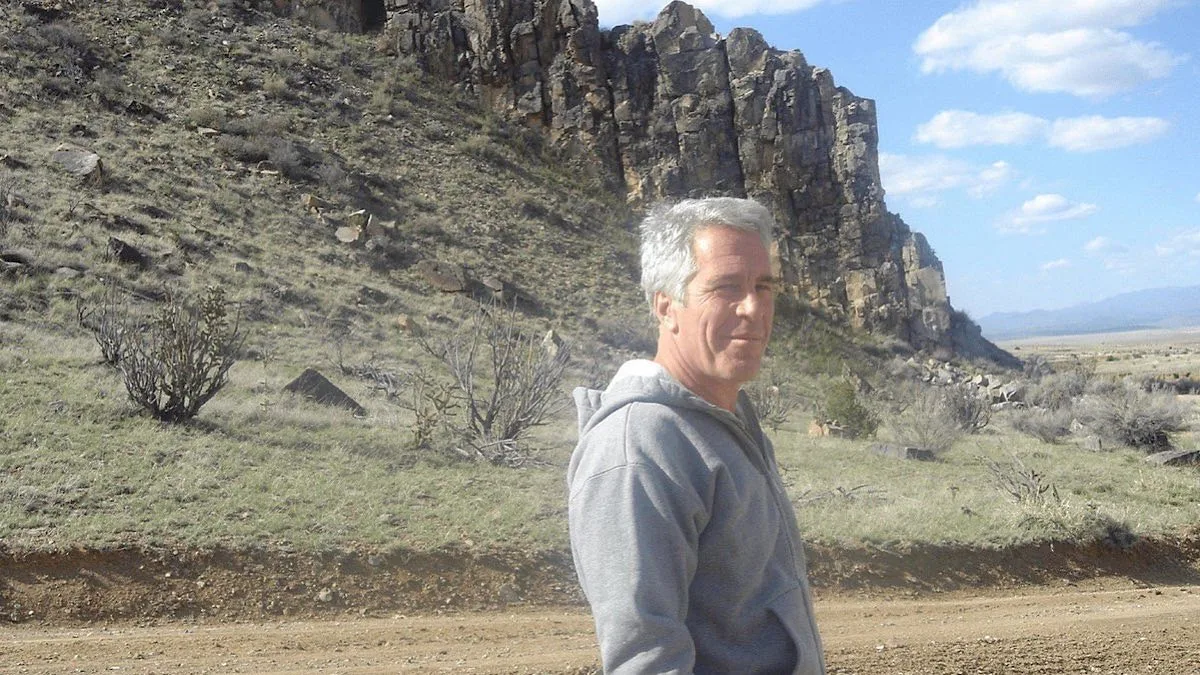
The United States Department of Justice on Tuesday (local time) released 30,000 more pages of documents related to Jeffrey Epstein, while noting that some of these documents contain “untrue” claims made against President Donald Trump.

Statesman News Service | New Delhi |

The United States Department of Justice on Tuesday (local time) released 30,000 more pages of documents related to Jeffrey Epstein, while noting that some of these documents contain “untrue” claims made against President Donald Trump.
In an X post, the DOJ claimed that the documents against Donald Trump are “false” and would have been “weaponised” against him.

“The Department of Justice has officially released nearly 30,000 more pages of documents related to Jeffrey Epstein. Some of these documents contain untrue and sensationalist claims made against President Trump that were submitted to the FBI right before the 2020 election. To be clear: the claims are unfounded and false, and if they had a shred of credibility, they certainly would have been weaponised against President Trump already. Nevertheless, out of our commitment to the law and transparency, the DOJ is releasing these documents with the legally required protections for Epstein’s victims,” the DOJ wrote on X.
A 2021 subpoena to the Mar-a-Lago Club, founded by Trump in 1995, is also among the documents, as reported by CNN. The subpoena relates to a probe into Epstein’s former girlfriend and convicted accomplice, Ghislaine Maxwell.

The documents also include a letter signed by “J Epstein,” which was sent to convicted sex offender Larry Nassar in the same month Epstein died by suicide in 2019.
The letter, as reported by CNN, makes references to Trump without explicitly naming him. The letter contains the phrase “our president.”

However, the DOJ said that the Federal Bureau of Investigation (FBI) has confirmed that the letter is fake. DOJ noted that writing in the letter does not appear to match that of Epstein’s, and the letter was postmarked three days after his death.

DOJ wrote on X, “The FBI has confirmed this alleged letter from Jeffrey Epstein to Larry Nassar is FAKE. The fake letter was received by the jail and flagged for the FBI at the time. The FBI made this conclusion based on the following facts: The writing does not appear to match Jeffrey Epstein’s. The letter was postmarked three days after Epstein’s death, out of Northern Virginia, when he was jailed in New York. The return address did not list the jail where Epstein was held and did not include his inmate number, which is required for outgoing mail.”
“This fake letter serves as a reminder that just because a document is released by the Department of Justice does not make the allegations or claims within the document factual. Nevertheless, the DOJ will continue to release all material required by law,” the department said.
The Epstein Files is a set of documents containing the names, photographs, letters and other dealings related to Jeffrey Epstein, who was charged with the offence of sex trafficking of minors.

Denying fuel won’t give us clean air

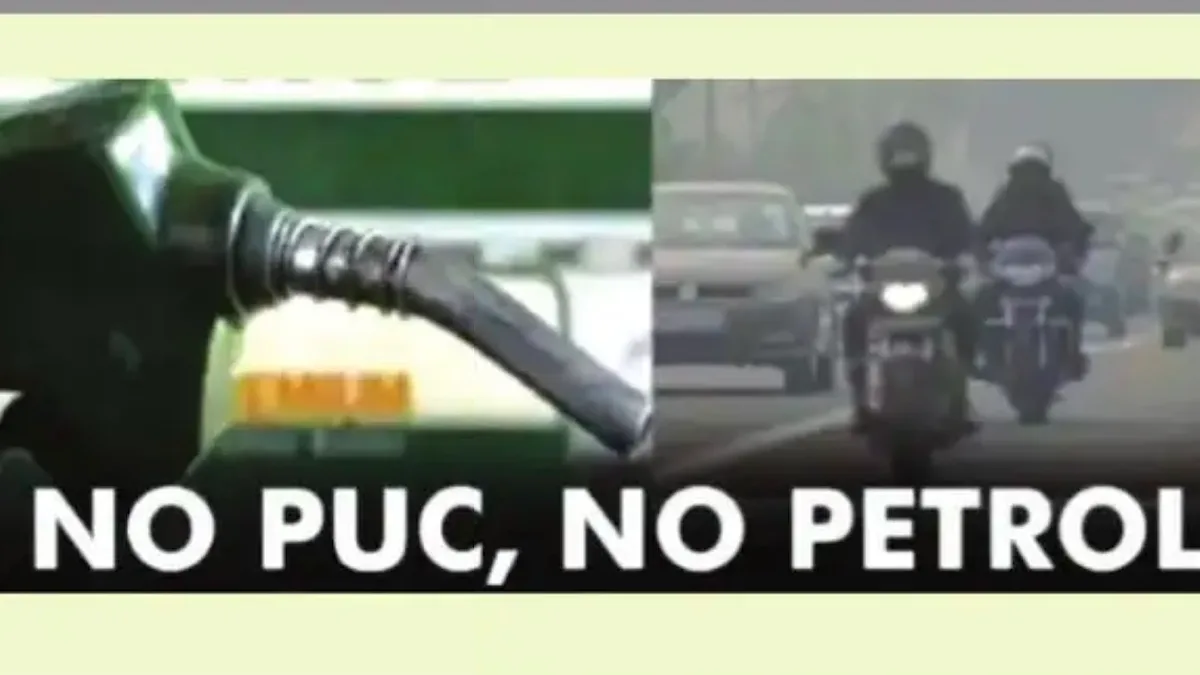
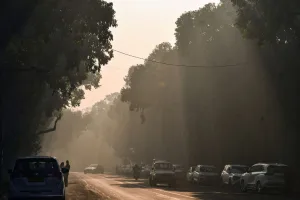
From December 18 onwards, a Delhi commuter may pull into a petrol pump as usual, only to be silently refused fuel: no argument, no explanation, no warning.

SHREY MADAAN | New Delhi |

From December 18 onwards, a Delhi commuter may pull into a petrol pump as usual, only to be silently refused fuel: no argument, no explanation, no warning. A camera will scan the vehicle, detect a missing Pollution Under Control (PUC) certificate, and the nozzle simply won’t turn on. In the midst of a pollution emergency, Delhi has opted for automation over judgment, restriction over reform. The intention is understandable.

Delhi’s air is dangerous, and vehicular emissions are part of the problem. But policies that look efficient on paper can still fail in practice, especially when they ignore how people actually move, work, and live in a city of over 30 million. PUC-based fuel denial assumes three things: that PUC certificates accurately reflect real -world emissions, that compliance is easy and accessible, and that people denied fuel have viable alternatives. None of these assumptions holds. PUC testing in India is widely recognised as inconsistent.

Certificates are issued based on brief, stationary tests that fail to capture emissions from congestion, idling, poor fuel quality, or engine stress in real driving conditions. A car can pass a PUC test and still pollute heavily in stop-and-go traffic. Using such a blunt proxy to determine access to fuel risks penalising formality rather than pollution. Then there is the issue of scale.

Over eight lakh vehicle owners in Delhi reportedly lack valid PUC certificates. Giving them one day to comply is not environmental urgency, it is administrative shock therapy. For gig workers, delivery drivers, tradespeople, and small business owners, a vehicle is not a lifestyle choice; it is a livelihood. Denying fuel does not clean the air if it simply pushes economic activity into chaos or informality. This approach also confuses enforcement with outcomes. If denying fuel were enough, Delhi’s air would have improved long ago. The city already cycles through GRAP restrictions, construction bans, work-from-home mandates, and vehicle limits every winter. Yet the crisis returns, because the underlying system has not changed. A useful comparison comes from cities that reduced traffic emissions not by sudden cut-offs, but by implementing gradual reforms.

Tokyo reduced vehicle emissions not through blanket bans, but by removing dependence on personal vehicles. Extensive and efficient public transport, strict inspection standards and long-term planning reduced traffic organically. Restrictions were embedded within a system that already worked for consumers. Cleaner air followed not from sudden cut-offs, but from sustained investment in alternatives. Delhi, by contrast, is still catching up. Bus availability remains insufficient. Last-mile connectivity is unreliable. EV adoption is encouraged rhetorically but constrained by charging gaps and policy uncertainty. Instead of making cleaner choices easier, policy keeps narrowing choices altogether. There is also a risk policymakers underestimate: displacement.

When compliance becomes unpredictable, behaviour does not disappear; it adapts. Vehicles refuel outside city limits. Certificates become a paperwork game. Pollution shifts rather than shrinks. Clean air cannot be enforced like a toll booth. None of this argues for leniency toward polluters. It argues for smarter design. If the goal is to reduce polluting vehicles, then invest first in mobility alternatives, upgrade testing to reflect real-world emissions, and use pricing and incentives that reward cleaner behavior. Enforcement should reinforce reform, not replace it. Automation can deny fuel. Only policy can deliver clean air. Delhi needs less autopilot and more consideration of how consumers actually navigate the city. If Delhi wants cleaner air, it should start by making buses and metros frequent, PUC testing credible, and electric vehicles cheaper, not by turning petrol pumps into punishment booths.

(The writer is Indian Policy Associate, Consumer Choice Center.)

Nature should be mankind’s temple

As I stood watching the overwhelming rush of people gathere d for religious rituals in many temples, what struck me most was not devotion, but the silent suffering hidden beneath the noise – the rows of goats waiting to be sacrificed in the name of faith, their lives valued not as sentient beings but as symbols of offerings.

DEBAPRIYA MUKHERJEE | New Delhi |

As I stood watching the overwhelming rush of people gathere d for religious rituals in many temples, what struck me most was not devotion, but the silent suffering hidden beneath the noise – the rows of goats waiting to be sacrificed in the name of faith, their lives valued not as sentient beings but as symbols of offerings. The scene felt less like worship and more like a marketplace where emotions, beliefs, and animal lives were traded. The eyes of those innocent animals seemed to ask a question many of us avoid – does God truly require blood to bless us, or have we mistaken tradition for spirituality? During festive season, what should be a moment of inner reflection, gratitude, and spiritual discipline often turns into a noisy display of power, wealth, and status.

The huge crowds, endless loudspeakers, expensive decorations, and long queues of people desperately waiting for blessings make us question whether faith is being practiced – or traded. Vendors, pandal committees, and event organizers earn enormous amounts of money in the name of the goddess, while the original meaning of worship – compassion, simplicity, self-discipline, and reverence – slowly fades into the background. For thousands of years, the worship of an invisible god often receives more preference than the worship of nature – the visible and tangible source of life. The idea of an invisible god offers mystery, fear, hope, and the promise of something beyond ordinary human existence.

People find comfort in believing that there is a powerful, unseen force controlling fate, justice, protection, punishment, and life after death – concepts that visible nature does not directly offer. Nature is the first teacher, provider, and protector: it gives us water to drink, food to eat, air to breathe, soil to grow crops, and ecosystems that sustain every form of life. It does not speak, judge, or reward in the way religious beliefs interpret a supernatural god. Additionally, organized religions have played a major role in shaping societies, culture, rituals, and moral systems, creating a sense of identity that goes beyond physical reality. Over time, nature was once worshipped by early civilizations because survival depended on respecting natural cycles.

Rivers were goddesses, trees were living spirits, mountains were temples, and animals were companions – not commodities. That gradually lost significance because human beings became more disconnected from the natural world through urbanization, technology, and structured belief systems. Now, instead of protecting this divine creation, we destroy parts of it to prove our faith. To me, religious gatherings have always represented unity, shared beliefs, and collective devotion – but I also feel there is a beautiful opportunity to bring these gatherings closer to the worship of nature, which is also God’s creation. Instead of focusing solely on rituals like animal sacrifice, we could slowly introduce practices that honour life and support the environment.

For example, the same devotion people express through offerings could be redirected toward planting trees, feeding the hungry, protecting animals, Improving the education system, conserving water, or cleaning the surroundings before and after the festival. The energy, enthusiasm, and togetherness seen in religious celebrations could become a powerful force for environmental care. Our lives depend entirely on nature. The food we eat, the clothes we wear, the wood and bricks that build our shelter – all come from nature’s generous hands. Yet, while we take so much, we often forget to give back. If nature provides us with crops, cotton, animals, water, and oxygen, then protecting forests, conserving soil, reducing cruelty, planting trees, and using resources wisely becomes a sacred duty. Just as we maintain a temple with respect, the earth too deserves care and reverence, because it is the very source of our survival. When we align our religious values with environmental responsibility, we strengthen the bond between faith and life – reminding ourselves that true devotion is not only prayer, but also the conscious act of giving back to the nature that sustains us.

Nature proves its existence every day through sunlight, rain, wind, mountains, rivers, forests, and the breath we take without thinking. Worshipping nature teaches humility, interconnectedness, gratitude, responsibility, and harmony rather than fear, blind obedience, or ritualistic duty. At a time when the environment is suffering, species are disappearing, and climate change threatens humanity, honouring nature is not just a spiritual choice but a moral necessity. If we truly worship nature, we must protect forests instead of cutting them for greed, because forests purify the air, protect soil, maintain rainfall, and shelter countless species. Instead of polluting rivers with chemicals, plastics, and ritual waste, we should treat rivers as sacred lifelines – by reducing waste, avoiding harmful detergents, creating waste-treatment facilities, and restoring native vegetation along riverbanks.

Worshipping nature also means respecting animals-not merely avoiding cruelty, but protecting their habitats, preventing illegal hunting, and supporting ethical and sustainable farming. Caring for nature can be as simple as planting a tree, growing vegetables in one’s garden, practicing rainwater harvesting, reducing plastic use, composting household waste, or cycling instead of driving short distances. Schools and communities can create butterfly gardens, seed banks, rooftop gardens, and sacred groves – just as ancient cultures did as act of devotion. Even urban areas can honour nature by creating parks, wetlands, and green corridors so birds, insects, and animals can coexist with humans. When we nourish the soil, conserve water, protect wildlife, and grow more greenery, we do not just offer worship – we repair the damage caused by human neglect. So, the goal is not to stop using nature, because survival depends on it; the goal is to use nature with respect, balance, and responsibility. If we treat nature like a partner rather than a resource to exploit, we ensure that future generations will also have food to eat, air to breathe, clean water to drink, and a healthy planet to live on.

(The writer is former Senior Scientist, Central Pollution Control Board.)

Cautious Solidarity

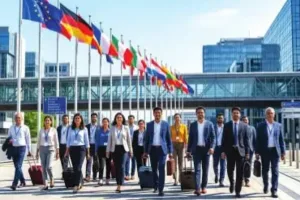
Europe’s decision to extend a Euro 90 billion loan to Ukraine, while stopping short of using frozen Russian assets, reveals a European Union that is determined to stay the course yet deeply cautious about how far it is willing to go.

Statesman News Service | New Delhi |

Europe’s decision to extend a Euro 90 billion loan to Ukraine, while stopping short of using frozen Russian assets, reveals a European Union that is determined to stay the course yet deeply cautious about how far it is willing to go. The agreement delivers immediate relief to Kyiv at a moment when its finances are under severe strain, but it also exposes the limits of Europe’s collective resolve when principle collides with risk. The loan is, first and foremost, a political act.

It keeps Ukraine solvent, sustains its military production, and reassures a war-weary continent that Europe can still get its act together. In that sense, the outcome matters more than the mechanism. Unity, after all, is a strategic asset. Had the bloc fractured over the question of Russian assets, the damage to its credibility would have far outweighed the benefits of a more radical funding choice. Yet the reluctance to touch frozen Russian money is telling. The assets exist, they are substantial, and their use would have carried powerful symbolic weight: making the aggressor pay directly for the consequences of war. Instead, European leaders opted for shared borrowing, effectively socialising the cost among their own taxpayers.

This choice reflects not moral hesitation but legal and financial anxiety. Seizing or repurposing sovereign assets risks years of litigation, market unease, and retaliation that could rebound on Europe’s own financial centres. The compromise highlights a deeper tension in Europe’s approach to the war. Strategically, there is broad agreement that Ukraine must not lose. Tactically, there is persistent caution about setting precedents that could weaken the global financial order on which Europe itself depends. The loan bridges this gap temporarily, but it does not resolve it. There is also an uncomfortable time horizon embedded in the deal. Leaders speak of meeting Ukraine’s needs for the next two years, as if the conflict can be neatly planned in budget cycles. Wars rarely cooperate with such assumptions. By opting for loans rather than asset-backed funding, Europe is effectively betting that future political and economic conditions will make today’s liabilities manageable.

That is a calculated gamble, not a guaranteed outcome. Meanwhile, hints of renewed engagement with Moscow suggest another layer of complexity. Financial support for Ukraine and diplomatic outreach to Russia are not mutually exclusive, but they pull in different directions. One signals endurance; the other signals openness to negotiation. Together, they reflect a Europe searching for leverage without escalation, influence without rupture. In the end, this agreement is less a triumph than a holding action. It prevents immediate crisis, preserves unity, and buys time for diplomacy and strategy to evolve. But it also postpones a fundamental reckoning: whether Europe is prepared to fully weaponise economic power in defence of its security order, or whether it will continue to fight this war financially with one hand tied behind its back. For now, Europe has chosen caution wrapped in solidarity. Whether that will be enough ~ financially, strategically, and morally ~ remains an open question.

ISRO’s LVM3 successfully launches BlueBird satellite; PM Modi underscores heavy-lift milestone

ISRO on Wednesday successfully launched the BlueBird satellite using its LVM3 rocket, with Prime Minister Narendra Modi calling the mission a boost to India’s space capability and self-reliance.

Statesman News Service | New Delhi |

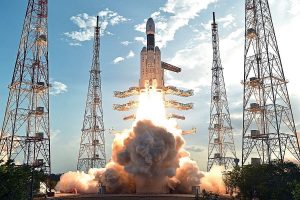
India’s space agency, the Indian Space Research Organisation (ISRO), on Wednesday said the US communication satellite BlueBird Block-2 had been successfully placed into its intended Low Earth Orbit, marking the smooth completion of a high-value commercial mission using India’s heaviest rocket, LVM3-M6.

The confirmation came minutes after satellite separation following lift-off from the second launch pad at the Satish Dhawan Space Centre (SDSC) in Sriharikota. The mission was executed under a commercial agreement between NewSpace India Limited (NSIL) and US-based satellite communications firm AST SpaceMobile.
The 43.5-metre-tall launch vehicle lifted off at 8.55 am after the completion of a 24-hour countdown. Weighing about 640 tonnes, the rocket blasted off from the second launch pad, powered by two S200 solid strap-on boosters, before ascending on a precisely choreographed trajectory.

According to UNI, the LVM3 injected the nearly 6.1-tonne BlueBird Block-2 satellite into its designated orbit around 16 minutes into the flight, maintaining the launch vehicle’s unbroken record of eight consecutive successful missions.

Speaking after the mission, ISRO Chairman Dr V. Narayanan said all vehicle parameters performed as expected.

“I am happy to announce that LVM3-M6 has successfully injected the BlueBird Block-2 US satellite precisely into the intended orbit,” he said, while thanking the ISRO team for executing the second LVM3 mission within a span of 52 days.

Soon after the confirmation, Jitendra Singh, Minister of State (Independent Charge) for Science and Technology, congratulated the space agency for the successful mission.

Prime Minister Narendra Modi also highlighted the broader strategic significance of the mission, linking it to India’s growing heavy-lift capability and long-term space ambitions.

“Powered by India’s youth, our space programme is getting more advanced and impactful. With LVM3 demonstrating reliable heavy-lift performance, we are strengthening the foundations for future missions such as Gaganyaan, expanding commercial launch services and deepening global partnerships,” Modi said.

LVM3 ‘Bahubali’ strengthens India’s commercial launch credentials

Formerly known as GSLV Mk-III and nicknamed ‘Bahubali’, the LVM3 is India’s most powerful launch vehicle. The three-stage rocket comprises two solid strap-on motors (S200), a liquid core stage (L110) and a cryogenic upper stage (C25).

At present, it is capable of carrying around 10 tonnes to Low Earth Orbit and four tonnes to Geosynchronous Transfer Orbit. ISRO is working to enhance its GTO capacity to five tonnes.

The BlueBird Block-2 mission marks the heaviest satellite ever deployed into LEO by LVM3, underscoring India’s growing reliability as a commercial launch partner. The launch contract was arranged through NSIL, the commercial arm of the Department of Space.

Direct-to-mobile connectivity via LEO constellation

BlueBird Block-2 is part of AST SpaceMobile’s next-generation LEO constellation designed to enable direct-to-mobile connectivity, allowing standard smartphones to connect without specialised ground equipment.

According to ISRO, the constellation will support 4G and 5G voice and video calls, text messaging, streaming and data services, particularly in remote and underserved regions. The satellite carries a 223-square-metre phased array, making it the largest commercial communications satellite placed into LEO by ISRO, at an altitude of around 600 km.

AST SpaceMobile has described BlueBird Block-2 as the debut satellite of its new fleet, featuring the world’s largest commercial phased array in LEO and offering ten times higher data capacity than earlier versions.

Cannabis Shift

The recent executive order to reclassify cannabis from a Schedule I to a Schedule III drug represents a historic recalibration of drug policy in the United States.

Statesman News Service | New Delhi |

The recent executive order to reclassify cannabis from a Schedule I to a Schedule III drug represents a historic recalibration of drug policy in the United States. For decades, federal law has treated cannabis as having no accepted medical use and a high potential for abuse ~ a stance increasingly at odds with scientific evidence, state-level legislation, and public sentiment. By formally acknowledging cannabis as a substance with medical validity and a moderate-to-low potential for dependency, the order bridges a long-standing divide between federal policy and societal realities.

The practical implications are profound. Moving cannabis to Schedule III lowers barriers for scientific and medical research, enabling studies into its potential therapeutic benefits. For patients suffering from chronic pain, cancer, seizure disorders, and service-related injuries, this represents more than bureaucratic adjustment ~ it is an acknowledgment of their lived experience. Equally significant are the economic consequences: state-licensed dispensaries, long restricted from certain tax deductions due to the Schedule I classification, now gain a measure of financial legitimacy. This reframing allows for regulatory oversight that encourages innovation and responsible commercial growth rather than clandestine or semi-legal operations. Yet the order is not without controversy. Republican lawmakers caution that easing restrictions could normalise cannabis use, potentially undermining public health and productivity.

They point to lingering uncertainties around cognitive impairment, concentration, and long-term mental health impacts. These criticisms highlight a persistent tension in drug policy: whether to prioritise strict deterrence or adopt evidence-based, harm-reduction approaches. The answer, it seems, lies in cautious pragmatism rather than ideological rigidity. Importantly, the executive decision reframes cannabis as a public health issue rather than a moral one. By likening it to prescription painkillers ~ legal, medically useful, but with inherent risks ~ the administration positions cannabis within a framework of controlled use and research-based policy. This represents a substantial departure from decades of absolutist rhetoric that equated marijuana with the most dangerous narcotics. It signals a recognition that drug regulation must balance access, safety, and societal impact. The political dimension is equally salient.

A majority of Americans now support legalising cannabis in some form, reflecting evolving cultural norms and widespread dissatisfaction with prohibition-era policies. The order aligns federal policy more closely with these public attitudes without eliminating the legal and regulatory checks that remain essential. It is a measured step forward, one that preserves the need for ongoing research and legislative oversight while acknowledging cannabis’s legitimate role in medicine and commerce. Ultimately, this move does not conclude the nation’s debate over cannabis; rather, it shifts its centre of gravity. By redefining the substance’s legal and medical status, the policy opens the door for scientific inquiry, economic growth, and a more rational, evidence-driven approach to drug regulation. The reclassification is less an endorsement of widespread use than a recognition that understanding, regulation, and careful management must replace blanket prohibition ~ a shift that could reshape public health and policy discourse for decades to come.

Vision that resonates

At a time when nationalism is once again hardening into moral certainty, and violence is routinely justified in the name of history, identity, or destiny, Rabindranath Tagore’s global vision speaks with unsettling clarity.

ABHIK ROY | New Delhi |

At a time when nationalism is once again hardening into moral certainty, and violence is routinely justified in the name of history, identity, or destiny, Rabindranath Tagore’s global vision speaks with unsettling clarity. More than a century after he articulated it, scholars across disciplines and generations continue to return to Tagore not as a nostalgic figure of the past, but as a thinker whose ethical warnings, educational experiments, and civilizational imagination remain urgently relevant. What is striking in serious Tagore scholarship today is not disagreement about his global vision, but a remarkable convergence around its core principles.

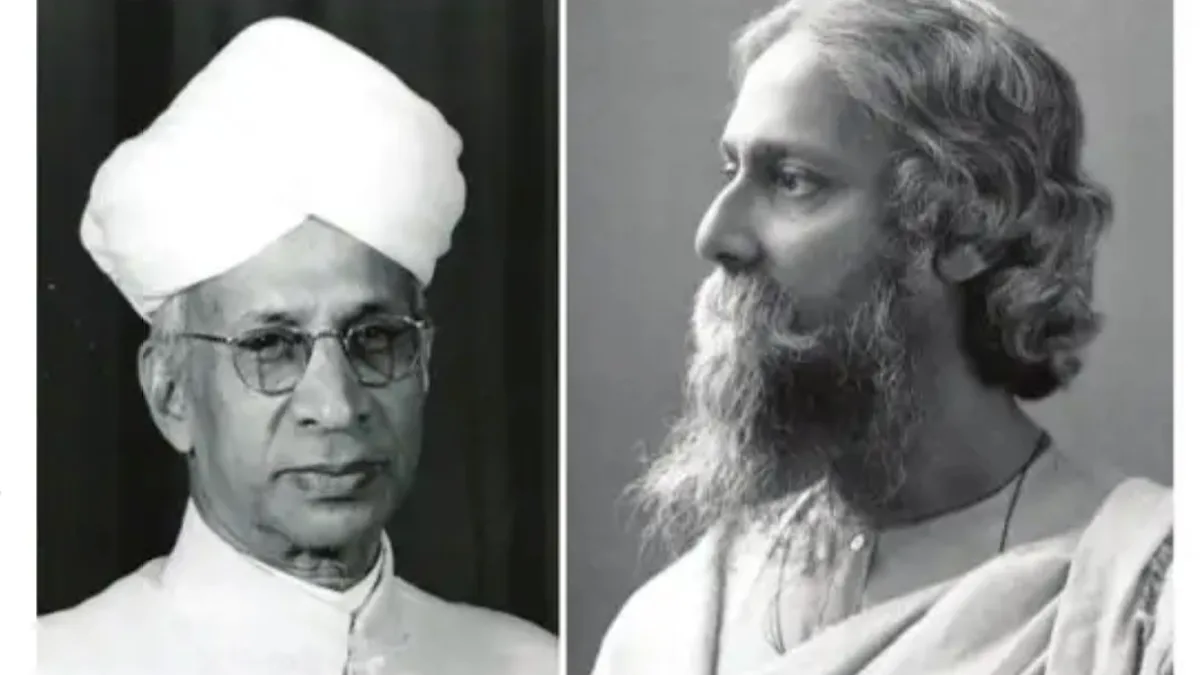
Thinkers such as Amartya Sen, Bashabi Fraser, Sarvepalli Radhakrishnan, Uma Das Gupta, William Radice, and Saranindranath Tagore ~ alongside biographers who situate Tagore in lived historical context ~ arrive at a shared understanding of Tagore as a moral universalist who placed responsibility to humanity above loyalty to nation, religion, or power. The scholars are discussed here not alphabetically, but in a conceptual sequence ~ moving from ethical and philosophical foundations, through educational and institutional practice, to modern reinterpretations and lived cosmopolitanism ~ in order to reflect how Tagore’s global vision unfolds from moral principle to everyday life.

Across these interpretations, Tagore’s critique of aggressive nationalism stands as a central point of agreement. Scholars consistently emphasize that Tagore did not reject cultural rootedness or love of one’s homeland; rather, he feared the transformation of national identity into a moral absolute. Nationalism, when fused with collective egoism and political power, threatened to eclipse ethical responsibility and normalize cruelty. This concern, articulated during the age of empire and world wars, now appears tragically prescient. Amartya Sen, one of the most influential modern interpreters of Tagore, has repeatedly highlighted the centrality of intellectual freedom, open reasoning, and ethical reflection in Tagore’s worldview.

Sen reads Tagore as a thinker who understood that political freedom without moral reasoning easily collapses into dogma, and that independence without openness risks reproducing new forms of domination. For Sen, Tagore’s global vision was inseparable from the cultivation of fearless minds ~ capable of questioning authority, resisting prejudice, and engaging the world without fear or resentment. A complementary perspective is offered by Bashabi Fraser, a highly respected contemporary scholar of Tagore. Fraser firmly establishes Tagore as a transnational thinker whose universalism was ethical rather than geopolitical or imperial. She stresses that Tagore rejected both aggressive nationalism and Western-dominated cosmopolitanism, insisting instead on moral responsibility, reciprocity, and dialogue across cultural difference.

In Fraser’s reading, Tagore’s global vision rests on humility and ethical accountability, not on abstract internationalism or cultural hierarchy. Dialogue, rather than domination or assimilation, forms the moral core of his global humanism. Where many scholars converge most clearly is in recognizing education as the practical heart of Tagore’s global vision. Tagore did not treat universalism as a philosophical abstraction; he sought to institutionalize it. Uma Das Gupta has shown how Tagore’s founding of Visva-Bharati was conceived as a living experiment rather than a symbolic gesture ~ a space where international cooperation, cultural exchange, and spiritual unity could be cultivated without nationalist pride or civilizational rivalry.

Her work also highlights Sriniketan, where Tagore linked rural reconstruction with global ethics, insisting that world-mindedness must remain grounded in social responsibility and everyday life. William Radice significantly reshaped modern understanding of Tagore by challenging the persistent caricature of him as a mystical “Eastern sage.” Radice restored Tagore as a rigorous, modern intellectual deeply engaged with questions of culture, inequality, education, and global responsibility. He emphasized that Tagore’s vision was not about bridging a simplistic East-West divide, but about transcending such binaries altogether. In Radice’s interpretation, Tagore’s educational and cultural experiments were forward-looking responses to global injustice and ecological imbalance, not retreats into spiritual idealism.

Long before these contemporary readings, Sarvepalli Radhakrishnan identified Tagore as a modern interpreter of India’s spiritual inheritance rather than its guardian. He understood Tagore’s global vision not as a closed metaphysical system, but as a living moral orientation ~ grounded in sympathy, truth, and love. Radhakrishnan emphasized Tagore’s faith in the unity of humanity and his refusal to lose confidence in human possibility even amid civilizational crisis. For him, Tagore’s internationalism expressed a spiritual conviction that ethical renewal remained possible through service, sacrifice, and responsibility toward all existence.

A particularly illuminating contemporary contribution comes from Saranindranath Tagore, who reconstructs Rabindranath Tagore’s cosmopolitanism as a form of rooted universalism. He rejects the idea that Tagore advocated a vague or placeless global citizenship, arguing instead that his vision was deeply embedded in local culture and everyday life while remaining genuinely open to the world. Saranindranath understands Tagore’s cosmopolitanism as an existential orientation ~ a way of being marked by humility, attentiveness, and awareness of human limits in the face of cultural diversity. In this view, rootedness is not an obstacle to global openness but its necessary foundation. Biographers such as Andrew J. Robinson and Krishna Dutta reinforce this scholarly consensus by situating Tagore’s global vision within the lived realities of his time.

Their work shows that Tagore’s critique of nationalism and insistence on dialogue were forged through concrete encounters with war, empire, cultural misunderstanding, and personal experience. By tracing how Tagore consistently resisted narrow political loyalties while remaining deeply rooted in his own cultural world, they confirm what philosophical interpreters have argued: that Tagore’s universalism was neither naïve nor detached, but ethically earned. While these scholars differ in emphasis – some foregrounding spirituality, others ethics, education, modernity, or everyday practice ~ they do not differ on the substance of Tagore’s global vision. Together, they present a remarkably coherent thinker: spiritually grounded yet rational, culturally rooted yet globally open, critical of power yet committed to institution-building. Global education emerges as the point where these strands converge most clearly, revealing Tagore’s conviction that ethical citizenship must be cultivated, not imposed.

This convergence becomes especially significant when Tagore’s thought is brought into dialogue with the Jewish philosopher Martin Buber. As I have argued in my essay on Tagore and Buber published in The Statesman a decade ago, Tagore expressed grave concerns about the rise of political Zionism ~ not out of hostility toward Jewish culture, which he admired, but from a principled fear of any nationalist project that transformed historical suffering into moral entitlement. He warned that when sacred history, collective trauma, and political power converge, ethical restraint is often the first casualty. Seen through this lens, the continuing brutality and violence inflicted upon innocent Palestinians – especially women and children ~ stands as a devastating confirmation of Tagore’s warning.

What we are witnessing is not merely a geopolitical conflict, but a profound moral failure: the normalization of suffering through nationalist justification. Tagore feared precisely this outcome – when responsibility to the Other is eclipsed by claims of destiny or security, human life becomes expendable. Tagore did not offer policy blueprints or geopolitical solutions. What he offered was something more enduring: a moral compass. His global vision reminds us that education without humanity breeds domination, that freedom without ethics collapses into violence, and that identity without responsibility corrodes the soul of civilization. That so many of Tagore’s interpreters ~ across continents, disciplines, and generations ~ converge on this understanding is no coincidence. It suggests that Tagore was not merely responding to the crises of his time, but articulating a vision for ours. In a fractured world searching for ethical anchors, Rabindranath Tagore’s global vision remains not only relevant, but indispensable.

(The writer is Professor Emeritus at Loyola Marymount University, Los Angeles)

Blocked again at Adiala jail, Imran Khan’s sisters lead Rawalpindi sit-in

Denied permission to meet Imran Khan at Adiala jail, his sisters led a Rawalpindi sit-in, joined by PTI leaders, as security was tightened amid rising political tensions.

Statesman News Service | New Delhi |

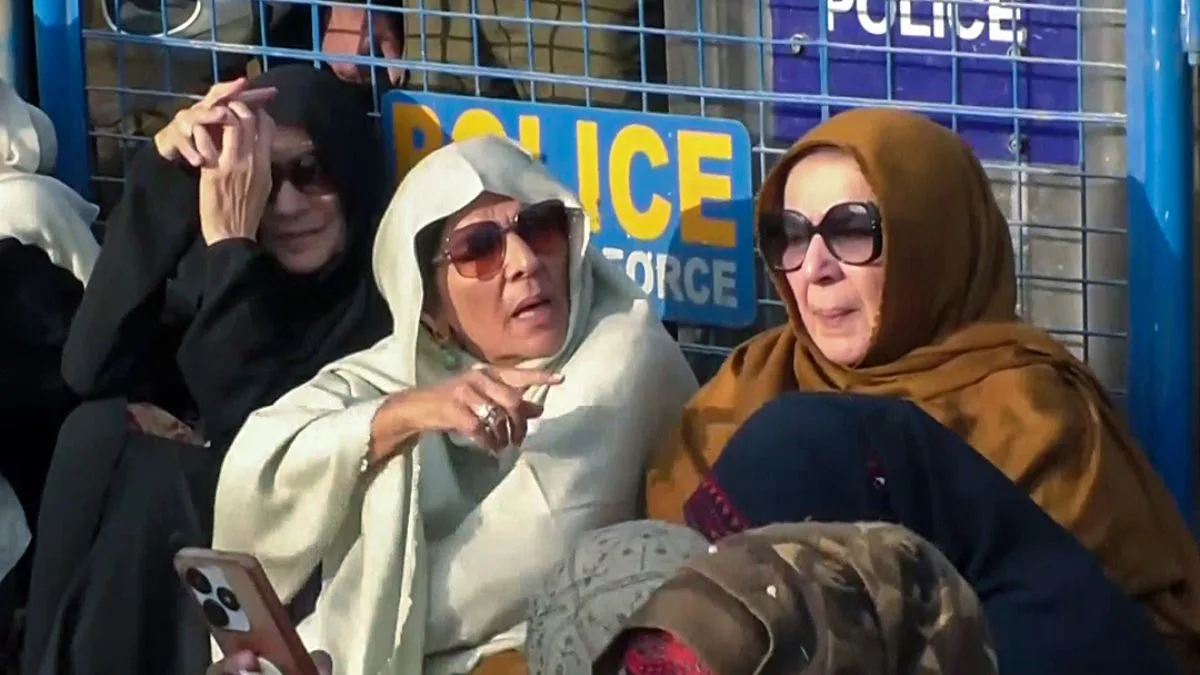
Sisters of former Pakistan prime minister Imran Khan, currently lodged in Adiala jail, staged a sit-in near Rawalpindi’s Factory Naka on Tuesday after they were once again denied permission to meet him, Pakistani media reported.

The protest began around mid-afternoon and continued late into the night. It was led by Aleema Khan, accompanied by Noreen Khan Niazi and Uzma Khan, and was joined by senior leaders of the Pakistan Tehreek-e-Insaf (PTI), including provincial president Junaid Akbar and Mushtaq Ghani.

The demonstration is part of a series of protests by Khan’s family over the past several weeks, during which they have alleged repeated obstruction in accessing the jailed Pakistan Tehreek-e-Insaf founder. Imran Khan and his wife, Bushra Bibi, are currently serving 17-year prison sentences in the Toshakhana-II case.

Imran Khan calls for nationwide protests after 17-year sentence in Toshakhana-II case

Addressing reporters at the protest site, Aleema Khan said the family had been prevented from meeting her brother every Tuesday, claiming the authorities were deliberately restricting access. She alleged that both Imran Khan and Bushra Bibi were being held in solitary confinement and subjected to mental torture.

Aleema further said the former prime minister had already given instructions to prepare for protests, adding that once a formal call was announced, any statements suggesting negotiations would not reflect the party’s stance.

US ends H-1B visa lottery, shifts to system favouring higher-paid skilled workers

The US will replace its H-1B visa lottery with a wage-weighted selection system favouring higher-paid skilled workers from 2026, as part of wider immigration changes.

Statesman News Service | New Delhi |

The US government is scrapping the lottery system used for decades to issue H-1B work visas and replacing it with a model that favours higher-paid, more skilled foreign workers, the Department of Homeland Security said on Tuesday.

The move is the latest step by the Trump administration to reshape one of America’s most controversial work visa programmes, long criticised by conservatives who argue it allows companies to hire cheaper foreign labour, and defended by business groups as essential for innovation and growth.

Also Read: Expect delay in H-1B, H-4 visa processing, US embassy tells Indians; work permit holders stranded, say reports

Lottery system to be replaced from 2026

Under the new rule, H-1B visas will no longer be awarded through a random draw. Instead, applications will be selected through a weighted process that increases the likelihood of visas going to workers offered higher wages and roles requiring greater skill, according to a DHS press release.

“The existing random selection process of H-1B registrations was exploited and abused by US employers who were primarily seeking to import foreign workers at lower wages than they would pay American workers,” said Matthew Tragesser, a spokesman for US Citizenship and Immigration Services.

The revised system will take effect on February 27, 2026, and will apply to the upcoming H-1B cap registration season.

Part of wider Trump immigration push

The change comes amid a broader set of immigration measures announced by President Donald Trump this year.

Earlier, Trump signed a proclamation requiring employers to pay an additional USD 100,000 per H-1B visa annually for highly skilled workers, a measure that is now facing a legal challenge. The administration has also unveiled a USD 1 million “gold card” visa, offering a pathway to US citizenship for wealthy individuals.

A DHS statement said the new H-1B rule is aligned with these earlier steps, including the additional per-visa fee requirement.

20 US States warn Trump’s $100K H-1B fee threatens schools, hospitals

Who benefits from H-1B visas

Demand for H-1B visas has consistently outpaced supply. The programme allows 65,000 new visas annually, with an extra 20,000 reserved for applicants holding a master’s degree or higher.

This year, Amazon emerged as the largest recipient, securing more than 10,000 approved visas. Tata Consultancy Services followed, along with major US technology firms such as Microsoft, Apple, and Google. California continues to host the highest concentration of H-1B workers.

Supporters see talent pipeline, critics see wage pressure

Supporters of the H-1B programme say it remains a crucial route for hiring skilled professionals, particularly in sectors such as healthcare and education. They argue the programme fuels innovation and helps employers fill specialised roles that are hard to staff domestically.

Critics, however, contend that many visas go to entry-level positions rather than senior, highly specialised jobs. Although the programme is designed to curb wage undercutting and protect US workers from being replaced, critics argue that employers can still keep pay low by slotting jobs into the lowest skill categories, even when hires bring higher experience levels.

By tying visa selection more closely to pay and skill levels, the administration says the new system is intended to address these concerns, though legal and industry pushback is expected as the changes move closer to implementation.

Libya’s Army chief, four others killed in air crash in Turkey

Libya’s Army Chief of Staff, Mohammed Ali Ahmed al-Haddad, and four others were killed in an air crash near Turkey’s capital city, Ankara, Libyan Prime Minister Abdul Hamid Dbeibah said.

ANI | New Delhi |

Libya’s Army Chief of Staff, Mohammed Ali Ahmed al-Haddad, and four others were killed in an air crash near Turkey’s capital city, Ankara, Libyan Prime Minister Abdul Hamid Dbeibah said.

As reported by Al Jazeera, Prime Minister Dbeibah termed it a “tragic accident”, stating that the crash occurred on Tuesday while the officials were returning from a visit to Turkey.

“This great tragedy is a great loss for the nation, the military establishment, and all the people, as we have lost men who served their country with sincerity and dedication and were an example of discipline, responsibility, and national commitment,” he said in the statement.

He said that the other people killed in the crash were the ground forces chief of staff, Al-Fitouri Gharibil, the director of the Military Manufacturing Authority, Mahmoud Al-Qatawi, an adviser to al-Haddad, Muhammad Al-Asawi Diab, and a military photographer, Muhammad Omar Ahmed Mahjoub.

A senior Turkish official said that three crew members were also killed in the crash, adding that the aircraft had sought an emergency landing after reporting an electrical malfunction, as reported by Al Jazeera.

“A private jet carrying Libyan Chief of General Staff Mohammed al-Haddad, four members of his entourage and three crew members reported an emergency to the air traffic control centre due to an electrical failure, asking for an emergency landing,” Burhanettin Duran, head of the presidency’s communications directorate, said on X.

A Turkish official told Al Jazeera, “Initial reports from the investigation rule out any sabotage to the Libyan Army Chief plane crash, initial cause is technical failure.”
Turkiye’s Minister of Interior Ali Yerlikaya wrote on X, “The wreckage of the business jet that departed Ankara’s Esenboga airport for Tripoli has been located by Turkish gendarmerie approximately two kilometres south of Kesikkavak village in the Haymana district.”
Libya’s Army Chief of Staff, Mohammed Ali Ahmed al-Haddad he had met his Turkish counterpart and other military commanders during his visit.

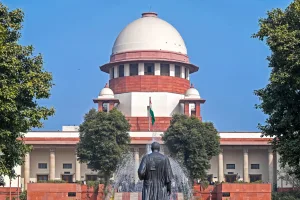
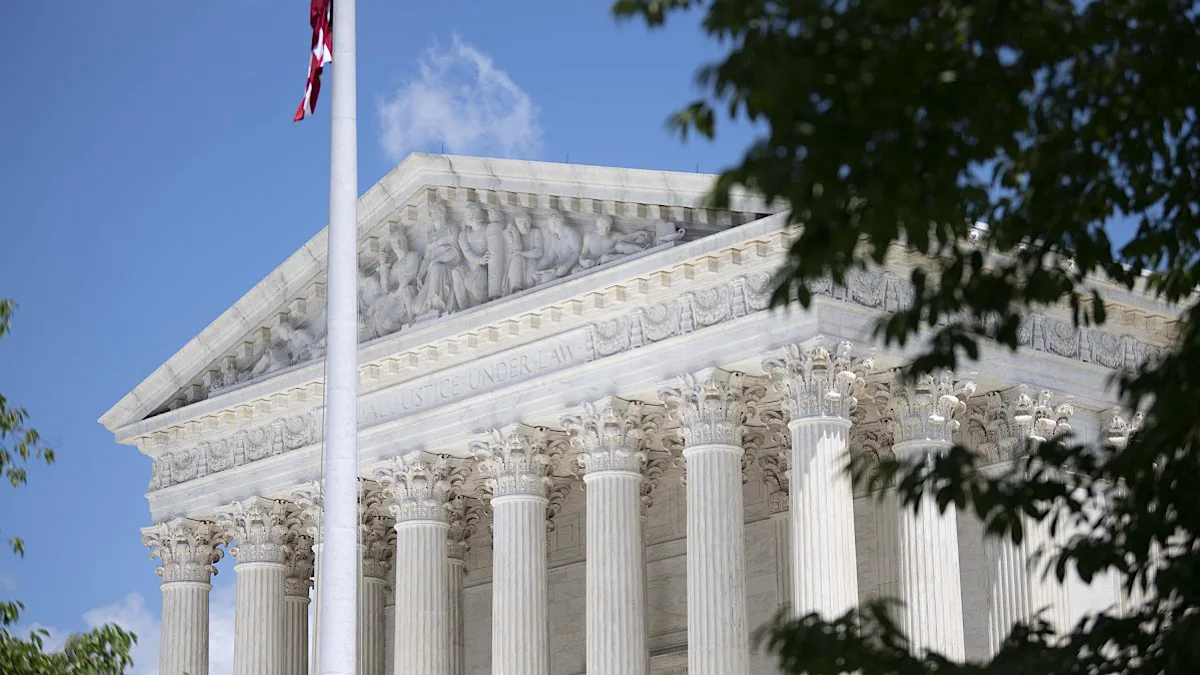
US Supreme Court blocks Trump administration from deploying National Guard to Illinois

The US Supreme Court blocked President Donald Trump’s attempt to send the National Guard to the state of Illinois, dealing a setback to the administration.

IANS | New Delhi |

The US Supreme Court blocked President Donald Trump’s attempt to send the National Guard to the state of Illinois, dealing a setback to the administration.

The court denied the Trump administration’s request in a 6-3 vote, Xinhua news agency reported.

“At this preliminary stage, the government has failed to identify a source of authority that would allow the military to execute the laws in Illinois,” the court said in an order published on its website.

The dispute dates back to October 4, when Trump called 300 members of the Illinois National Guard into active federal service in Illinois, particularly in and around Chicago. The following day, members of the Texas National Guard were also federalized and sent to Chicago, according to the court.

On October 9, the US District Court for the Northern District of Illinois issued a temporary restraining order barring the federalization and deployment of the National Guard in Illinois.

The decision was upheld on October 16 by the US Court of Appeals for the Seventh Circuit, which allowed the administration to federalize the National Guard but not to deploy its members.

The Trump administration then appealed to the Supreme Court.

White House spokeswoman Abigail Jackson, reacting to the ruling, said the president “activated the National Guard to protect federal law enforcement officers, and to ensure rioters did not destroy federal buildings and property.”

JB Pritzker, the Democratic governor of Illinois, who strongly opposed the deployment along with the Democratic mayor of Chicago, welcomed the ruling, calling it a “big win for Illinois and American democracy.”

20 US States warn Trump’s $100K H-1B fee threatens schools, hospitals

More than 20 US states on Tuesday moved to block the Trump administration’s new $100,000 fee on H-1B visas, warning that the measure would disrupt schools and hospitals nationwide and choke off a key pipeline of skilled foreign talent.

IANS | New Delhi |

More than 20 US states on Tuesday moved to block the Trump administration’s new $100,000 fee on H-1B visas, warning that the measure would disrupt schools and hospitals nationwide and choke off a key pipeline of skilled foreign talent.

The legal challenge carries particular significance for Indian professionals, who account for a dominant share of H-1B visa holders and play a critical role across US healthcare, education, research and technology sectors, especially in public institutions that states say cannot absorb the steep new cost.

The multistate amicus brief supporting plaintiffs in Global Nurse Force, et al. v. Trump, urged the US District Court for the Northern District of California to issue a preliminary injunction blocking the policy. The brief argues the fee is unlawful and contrary to the public interest, as it would worsen labour shortages, weaken the economy and disrupt essential public services.

“The Trump Administration’s $100,000 visa fee imposes unnecessary and unlawful financial burdens on public employers and will leave essential positions in critical sectors unfilled,” asserted California Attorney General Rob Bonta.

“My office has challenged this fee in court, and today, we’re supporting a related challenge. We won’t stop fighting to protect our world-class universities, schools, and hospitals, which thrive by attracting and retaining skilled talent from around the world,” he said in a statement.

The Trump administration imposed the unprecedented fee on September 19, 2025, applying it to new H-1B petitions filed after September 21. Implemented through a series of Department of Homeland Security documents, the policy grants the DHS secretary broad discretion to decide which petitions are subject to the fee or exempt, a provision that states say raises concerns about selective enforcement.

H-1B visas allow US employers to hire highly skilled foreign nationals in speciality occupations requiring at least a bachelor’s degree, including physicians, researchers, nurses and educators. While Congress caps most private-sector H-1B visas at 65,000 annually, with an additional 20,000 for advanced degree holders, many government and nonprofit research institutions are exempt to ensure they can meet public service needs.

In their plea, the states argue the $100,000 fee would effectively shut public employers out of the programme.

The United States faces a nationwide teacher shortage, with 74 per cent of school districts reporting difficulty filling open positions in the 2024–2025 school year, particularly in special education, physical sciences, bilingual education and foreign languages, they argued.

Educators are the third-largest occupational group among H-1B holders, with nearly 30,000 working on the visas, and close to a thousand colleges and universities relying on H-1B personnel to support teaching and research.

Because K–12 schools, colleges and universities are typically government or nonprofit entities, the brief says they are incapable of absorbing an additional $100,000 per hire. States warn this would result in larger class sizes, reduced course offerings and cuts to programmes, undermining the quality of education and directly affecting students.

Hospitals and healthcare systems would face similar consequences. The brief notes that hospitals rely on H-1B visas to recruit physicians, surgeons and nurses, often in low-income and working-class communities. About 11.4 million Californians—roughly one quarter of the state’s population—live in areas with primary care shortages. Nationwide, nearly 23,000 H-1B physicians have worked in underserved communities over the years.

The United States is projected to face a shortfall of 86,000 physicians by 2036, as the population ages and demand for care rises. States warn that a $100,000 fee would make it financially impossible for many hospitals to hire new H-1B healthcare workers, forcing facilities to operate with inadequate staffing. The brief cautions this could lead to longer wait times, increased errors, higher mortality rates and even hospital closures.

“At a time when many hospitals are already facing cuts in health insurance subsidies and reduced Medicaid payments, a $100,000 fee for H-1B healthcare workers is simply not feasible,” the states argue.

Beyond staffing shortages, the brief highlights the broader economic impact of the programme, noting that H-1B workers and their dependents contribute an estimated $86 billion annually to the US economy and pay billions of dollars in federal, state and local taxes.

In filing the amicus brief, Bonta was joined by the attorneys general of Arizona, Colorado, Connecticut, Delaware, the District of Columbia, Hawai‘i, Illinois, Maine, Maryland, Massachusetts, Michigan, Minnesota, Nevada, New Jersey, New Mexico, New York, North Carolina, Oregon, Rhode Island, Vermont, Washington and Wisconsin.

The court challenge comes amid a broader Trump administration push to tighten legal immigration pathways. For Indian professionals, who make up a substantial share of new H-1B applicants, the outcome of the case could shape access to US public-sector jobs in healthcare, education, and research for years to come.

Yunus’ Press Secy’s post raises concern over safety of minorities in B’desh

A social media post by Shafiqul Alam, Press Secretary to Muhammad Yunus, the Chief Adviser in Bangladesh’s interim government, expressing helplessness over the violent attacks on media offices has raised concern over the safety and security of the country’s common citizens.

IANS | New Delhi |

A social media post by Shafiqul Alam, Press Secretary to Muhammad Yunus, the Chief Adviser in Bangladesh’s interim government, expressing helplessness over the violent attacks on media offices has raised concern over the safety and security of the country’s common citizens.

“If influential persons of the government are helpless, where will people go?” asked an article in Bangladesh’s leading Bengali newspaper Prothom Alo on Tuesday.

On December 19, taking to his official Facebook account, Shafiqul Alam said, “Last night, I received frantic, tear-choked calls for help from my journalist friends at The Daily Star and Prothom Alo. To all my friends, I am deeply sorry that I failed you. I made scores of calls to the right people, trying to mobilise help, but it did not arrive in time.”

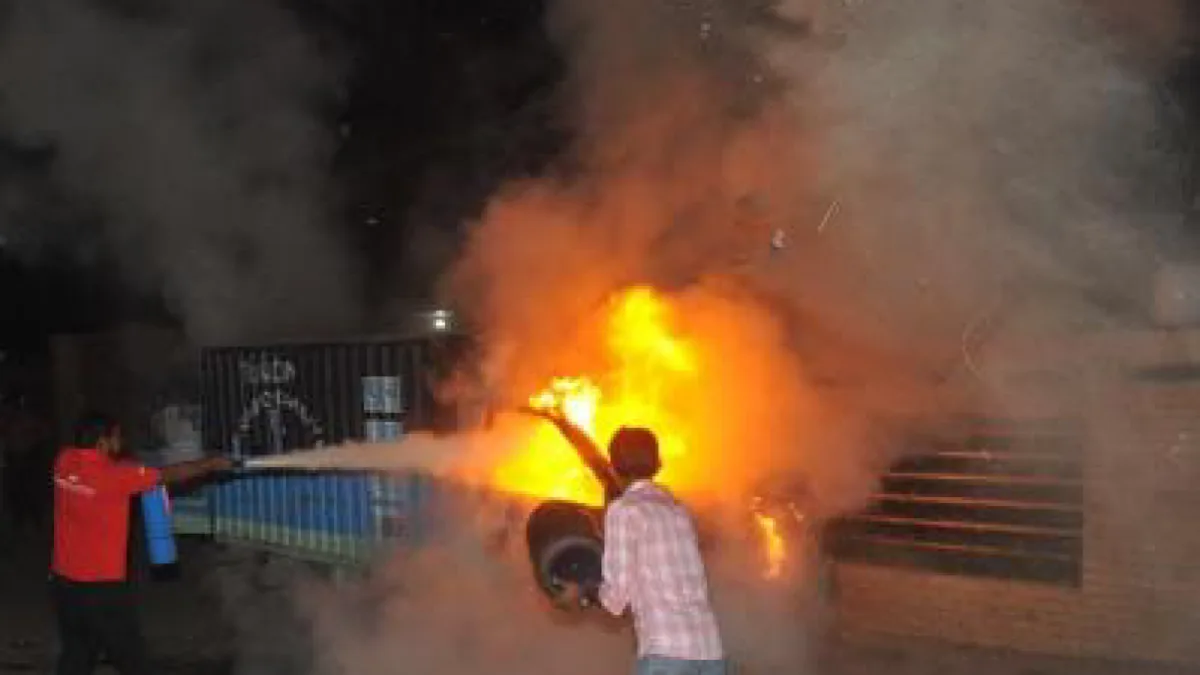
Incidentally, the media houses in Dhaka came under attack on the night of December 18 from a violent mob.

“The employees of these media offices were manhandled, and the marauding mob vandalised the office and set it on fire,” Alam added.

“I finally went to sleep at 5 a.m., knowing that all the journalists trapped inside The Daily Star had been rescued and were safe. By then, however, the two newspapers had already witnessed and endured one of the country’s worst mob attacks and arsons on media outlets,” the Press Secretary in a Facebook post said.

“I do not know what words could console you. All I can say is that as a former journalist I am sorry. I wish I could dig up a great piece of earth and bury myself in shame,” he concluded.

In response to this, one Facebook user tersely attributed the attacks on media offices in Bangladesh to the State’s failure.

Another user wrote: “Mob action happened under your interim government’s watch. How do you answer that? Do not cower behind a wall and hide for the government’s inability to secure safety.”

Another Facebook user said, “Absolutely disappointing, bhai! You people didn’t take proper steps earlier what should have been done. Now face the consequences!”

Against Press Secretary Alam’s claim of calling “the right people, trying to mobilise help, but it did not arrive in time”, Prothom Alo had said a day after the attack that anticipating an attack, it had sought security “by contacting senior levels of the government, various law enforcement agencies, and other relevant authorities”.

The media outlet’s office was vandalised “before they (help) could arrive”.

The statement issued by Prothom Alo added, “Anxious journalists and staff on duty were forced to leave the premises to save their lives. Law enforcement and fire service personnel later arrived and brought the situation under control.”

In her column on Tuesday, media contributor Nishat Sultana wondered, “if an influential and responsible representative of the government, who is at the centre of everyone’s attention, can express his helplessness on social media in this way”.

She pointed out that since the beginning, “the interim government has repeatedly failed to curb crime and control the state of emergency. That is why we have seen that the evil forces that take the law into their own hands have won time and again”.

She has compared the law-and-order situation under the current interim government in Bangladesh against that of the arrival of law enforcement agencies towards the end of a movie, where they are heard saying, “Don’t take the law into your own hands”.

She rued, “But in the current reality, we don’t see that happening. Security agencies largely remain behind the curtain. In their absence, people are taking the law into their own hands and doing whatever they please”, and alleged, “People are brutally burning others alive, beating them up, smashing their heads with stones, or stripping them naked in public.”

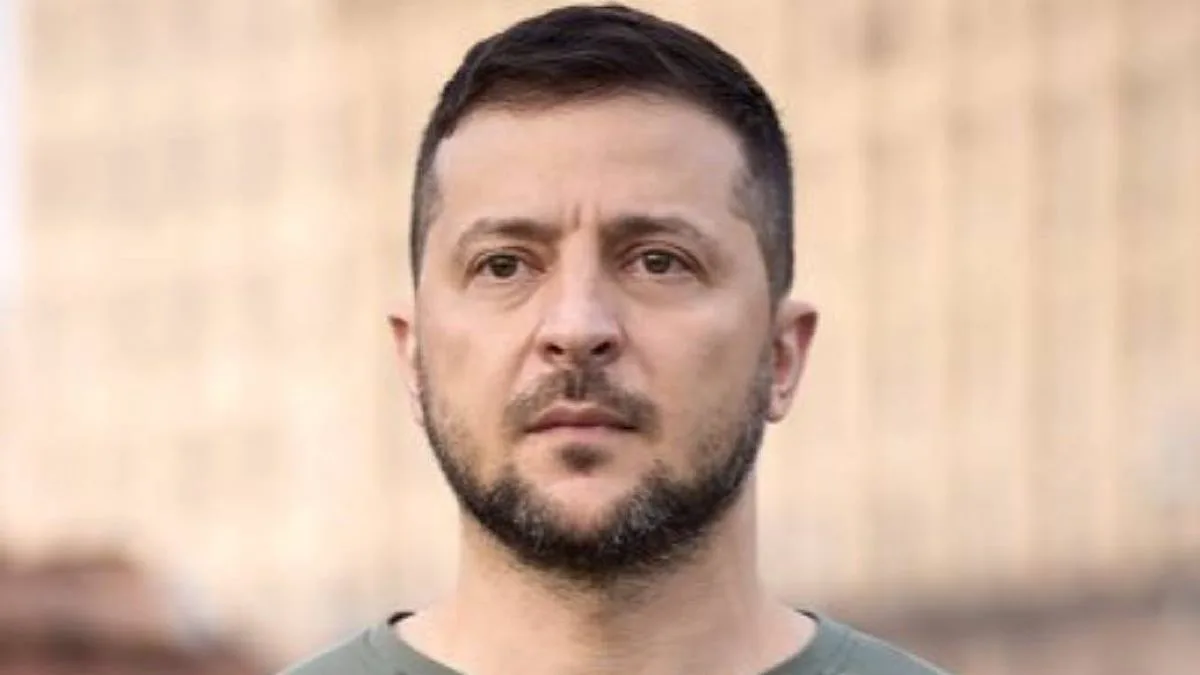
‘Russia must not sabotage diplomacy’: Volodymyr Zelenskyy calls for ‘additional pressure’ on Moscow after aerial attacks

Following one of the largest aerial attacks by Russia, Ukrainian President Volodymyr Zelenskyy on Tuesday (local time) called for “additional pressure” on the neighbouring country to end the war, while stating that Kyiv has never been an “obstacle to peace.”

ANI | New Delhi |

Following one of the largest aerial attacks by Russia, Ukrainian President Volodymyr Zelenskyy on Tuesday (local time) called for “additional pressure” on the neighbouring country to end the war, while stating that Kyiv has never been an “obstacle to peace.”

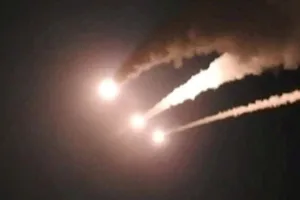
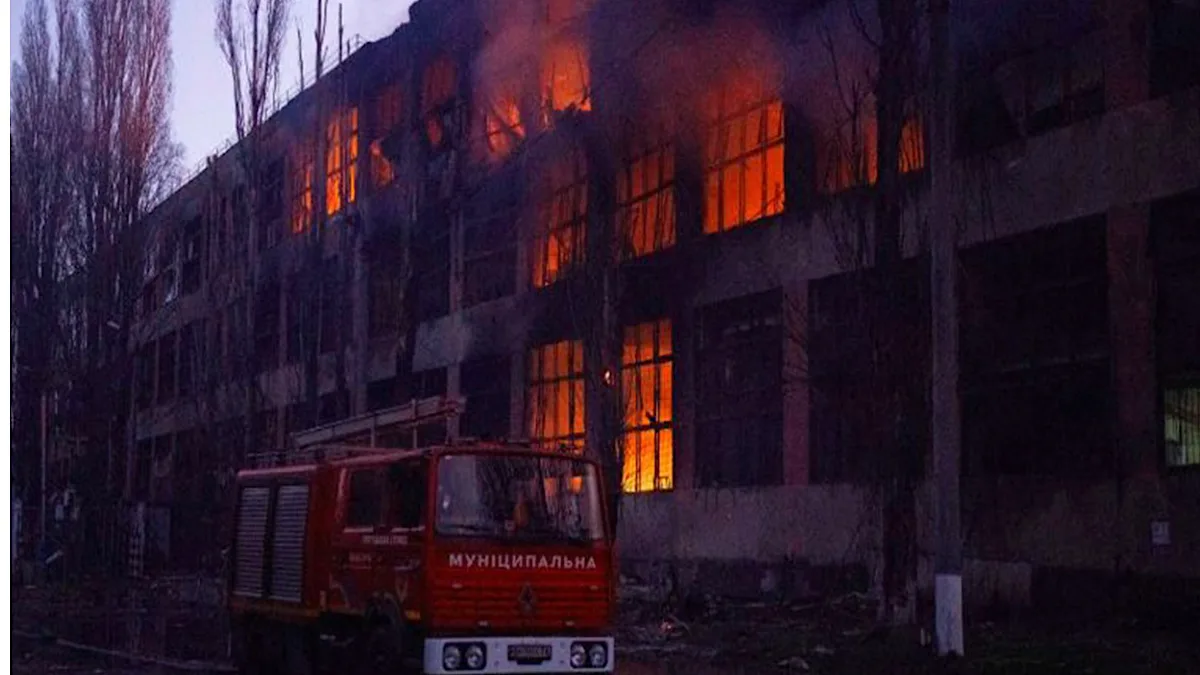
Russia had launched an aerial attack on Ukraine overnight on Monday, firing more than 650 drones and over 30 missiles across at least 13 regions, killing three people, including a four-year-old child.
In a video message to Ukrainians, President Zelenskyy said that the key to a peace agreement is that Russia must not sabotage diplomacy.

While stating that the Russian aerial strike targeted Ukraine’s energy sector, Zelenskyy assured the public that electricity would be restored for Christmas.

He said, “The day began with a strike on our country, a vile one like everything else they do. The energy sector was the main target. But tragically, there have been casualties. Throughout the day, repair crews have been working at energy facilities… to ensure Ukrainians have electricity for Christmas. Russians are trying to ruin the holiday. Ukraine needs support every day. It needs missiles for air defence, funding for weapon production, and assistance to maintain resilience. Today, I talked to Ursula von der Leyen. Thanks for the support on this day and throughout the years of war.”
Zelenskyy had a virtual conversation with the President of the European Commission, Ursula von der Leyen, after the European Council adopted a decision to provide Euros 90 billion in financial assistance to Ukraine for 2026-2027.

Further, the Ukrainian President assured of “full cooperation” with the peace agreement.
“We sense that America wants to reach a final agreement, and from our side, there is full cooperation. Ukraine has never been, and will never be, an obstacle to peace. We are working actively and doing everything necessary to ensure that the documents come to fruition and that they are realistic. The key is that Russia must not sabotage this diplomacy and must take ending the war 100 per cent seriously. If it doesn’t, then additional pressure on Russia must follow. The world has all the instruments needed to make that pressure effective and ensure that peace is achieved,” he said in the message.

Earlier on Tuesday (local time), in a strong statement on social media, Zelenskyy said the attacks primarily targeted Ukraine’s energy system and civilian infrastructure, disrupting what he described as “the entire infrastructure of daily life”.

“As of now, air raid alerts remain in effect across most of Ukraine. At the same time, all necessary services are engaged in dealing with the aftermath of the strike. Tragically, lives were lost. In the Kyiv region, a woman was killed by a Russian drone. One person was pronounced dead in the Khmelnytskyi region. In the Zhytomyr region, a four-year-old child was killed after a Russian drone struck a residential building. My condolences to the families and loved ones, ” Zelenskyy wrote.
Condemning the timing of the assault, Zelenskyy said the strike was carried out just days before Christmas, when families hoped to be safe at home.

While major peace talks have recently taken place in Miami and Berlin, the situation on the ground remains highly volatile with significant escalations in both aerial warfare and territorial incursions.

Over 650 drones, 13 regions hit, 3 dead as Russia launches massive attack, says Zelenskyy

Russia launched one of its largest aerial attacks on Ukraine overnight on Monday, firing more than 650 drones and over 30 missiles across at least 13 regions, killing three people, including a four-year-old child, Ukrainian President Volodymyr Zelenskyy said, in an X post.

ANI | New Delhi |

Russia launched one of its largest aerial attacks on Ukraine overnight on Monday, firing more than 650 drones and over 30 missiles across at least 13 regions, killing three people, including a four-year-old child, Ukrainian President Volodymyr Zelenskyy said, in an X post.

In a strong statement on social media, Zelenskyy said the attacks primarily targeted Ukraine’s energy system and civilian infrastructure, disrupting what he described as “the entire infrastructure of daily life”.
“As of now, air raid alerts remain in effect across most of Ukraine. At the same time, all necessary services are engaged in dealing with the aftermath of the strike. Tragically, lives were lost. In the Kyiv region, a woman was killed by a Russian drone. One person was pronounced dead in the Khmelnytskyi region. In the Zhytomyr region, a four-year-old child was killed after a Russian drone struck a residential building. My condolences to the families and loved ones, ” Zelenskyy wrote.
Zelenskyy said that while Ukrainian air defence systems managed to shoot down a large number of drones and missiles, several targets were still hit.

“Repair crews and energy workers are already on the ground, working to ensure normal life for people, our cities, and our communities,” he said, adding that detailed information from the Air Force would be released once all assessments were completed.

Condemning the timing of the assault, Zelenskyy said the strike was carried out just days before Christmas, when families hoped to be safe at home.
“An attack ahead of Christmas, when people simply want to be with their families, at home, and safe,” he said, calling it a clear sign of Russia’s intentions.

He also pointed out that the attack came during ongoing discussions aimed at ending the war, accusing Russian President Vladimir Putin of refusing to stop the violence.
“This Russian strike sends an extremely clear signal about Russia’s priorities. An attack ahead of Christmas, when people simply want to be with their families, at home, and safe. An attack was carried out essentially in the midst of negotiations aimed at ending this war. Putin still cannot accept that he must stop killing. And that means that the world is not putting enough pressure on Russia ”
“Now is the time to respond. Russia must be pushed toward peace and guaranteed security,” he said.
While major peace talks have recently taken place in Miami and Berlin, the situation on the ground remains highly volatile with significant escalations in both aerial warfare and territorial incursions.
US President Donald Trump’s envoy, Steve Witkoff, said that Russia “remains fully committed to achieving peace” in Ukraine, as the United States concluded talks with the Russian delegation in Miami, Florida.

In a statement on X, Witkoff said that Russia “highly values” the United States’ efforts to resolve the conflict.
The US envoy said, “Over the last two days in Florida, the Russian Special Envoy Kirill Dmitriev held productive and constructive meetings with the American delegation to advance President Trump’s peace plan on Ukraine. The American delegation included Special Envoy Steve Witkoff, Jared Kushner, and White House staff member Josh Gruenbaum.”

“Russia remains fully committed to achieving peace in Ukraine. Russia highly values the efforts and support of the United States to resolve the Ukrainian conflict and re-establish global security,” the statement read.