Logo

Fractured ties

Relations between India and Bangladesh are entering one of their most fragile phases in decades, not because of a single diplomatic dispute but due to the dangerous interaction of street violence, political uncertainty, and hardening narratives on both sides of the border.

Statesman News Service | New Delhi |

Relations between India and Bangladesh are entering one of their most fragile phases in decades, not because of a single diplomatic dispute but due to the dangerous interaction of street violence, political uncertainty, and hardening narratives on both sides of the border. What is unfolding is less a breakdown of policy than a collapse of trust. The immediate spark has been a brutal killing during protests in Bangladesh, an act that has resonated deeply in India because it touches raw concerns about minority safety. Yet, focusing only on that horror risks missing the larger picture.

Bangladesh is in the middle of a profound political transition following the fall of Sheikh Hasina, and transitions create vacuums. Into that vacuum have stepped radical groups, opportunistic actors and unrestrained street politics that thrives on grievance rather than governance. For India, the instinctive response has been moral outrage mixed with political mobilisation. That is understandable. No democracy can remain unmoved when violence appears to target minorities in a neighbouring country with which it shares history, culture, and blood ties. But when outrage spills onto the streets, hardens television narratives and turns into symbolic protests at diplomatic premises, it begins to blur the line between principled concern and political signalling. In Dhaka, such scenes are easily repackaged as proof of Indian interference. Bangladesh’s interim leadership, headed by Muhammad Yunus, faces an unenviable task, one it has so far made a hash of. It must restore law and order, reassure minorities, and prepare the ground for elections, all while lacking an electoral mandate. Its condemnations of violence sound right, but repeated failures to prevent mob attacks and protect institutions have weakened its authority.

Each lapse strengthens extremist elements who portray pluralism, secularism, and even independent journalism as foreign-imposed ideas. The deeper danger lies in the narrative war now taking shape. In Bangladesh, labelling critics as “pro-India” has become a shortcut to dehumanisation. In India, portraying Bangladesh as sliding wholesale into religious extremism ignores the many citizens who are resisting that very trend. Both narratives flatten complex realities and make diplomatic repair harder. Strategically, India cannot afford a destabilised Bangladesh. Its eastern and north-eastern security, trade routes and regional connectivity depend on a stable neighbour. Bangladesh, too, cannot escape geography; hostility with India would compound its internal stresses rather than resolve them. The way forward lies in restraint and realism.

Street anger must not be allowed to dictate foreign policy. India should lower the rhetorical temperature while maintaining quiet, firm engagement on minority protection and diplomatic security. Bangladesh’s interim authorities must act decisively against mob violence, not just rhetorically, to reclaim the state’s monopoly over order. Ultimately, a credible elected government in Dhaka offers the best chance to reset ties on institutional, not emotional, foundations. Until then, both sides must remember that neighbours do not get replaced. They either learn to manage turbulence ~ or allow it to define the relationship for years to come.

A vital step to fuel power needs

India has pledged to increase its nuclear power capability from 8.8 GigaWatt today to 100 GigaWatt by 2047. When the attention of scientists turned towards harnessing the power of an atom and converting the heat generated into electricity in the 1950s, the concern of accidents was foremost in their minds.

B K SINGH | New Delhi |

India has pledged to increase its nuclear power capability from 8.8 GigaWatt today to 100 GigaWatt by 2047. When the attention of scientists turned towards harnessing the power of an atom and converting the heat generated into electricity in the 1950s, the concern of accidents was foremost in their minds. The accidents over a period of nearly a century in civil aviation, chemical and oil and gas industries have made the design and operations more safe and secure. Nuclear power has very high energy density and can be more hazardous, but the design of the plant is meticulous and addresses all concerns. In the 60 years’ history of civil nuclear power generation, there have been three accidents; Three Mile Island, USA, 1979; Chernobyl, Ukraine, 1986, and Fukushima Daiichi, Japan, 2011.

The Fukushima accident caused radiation exposure to workers, while the Chernobyl accident impacted the health of the workers. The Three Miles accident did not cause any harm. There has not been any accident in India so far. Bengaluru’s tech park and Chennai’s automobile industries face peak-hour power deficit, despite Kaiga and Kudankulam generating 2000 MW. Our dependency on fossil fuel must be cut to arrest the warming of the planet. Transitioning towards green energy like solar and wind is going to take decades to achieve scale and speed. Hyderabad, Bengaluru and Chennai are emerging hubs for Microsoft, Google and Amazon and a data centre boom leads to surge in power demand.

A single large data centre requires 50 to 100 MW of uninterrupted power and with the growing workloads of AI in India, we must step up generation of clean energy quickly. Sustainable harnessing and advancement of nuclear energy for transforming India (SHANTI) bill has been passed by Parliament and the sector has been opened for private players, though opposition members strongly opposed it due to safety and liability concerns. The rising demand of power from sectors like data processing, health care and industries needed the expansion of the nuclear sector. Minister Jitendra Singh has clarified in Parliament that the public sector undertaking, Department of Atomic Energy (DAE) will expand its activities to generate 58 Giga Watt (GW) of power, while the private and joint sectors will generate the remaining by 2047. Further, the Nuclear Power Corporation of India Ltd.

(NPCIL) is setting up four reactors each of 4 Giga watt capacity with Russian collaboration and another 17.6 GW capacity in collaboration with other countries as part of a road map to reach the target of 54 GW by 2047. National Thermal Power Corporation has entered into a joint venture with NPCIL, named Anushakti Vidhyut Nigam Ltd. The joint venture has already approved 700 MW Mahi Banaswara project. At present there are 24 nuclear power plants generating 8,780 MW of power and eight nuclear reactors with a total generating capacity of 6,600 MW are at various stages of construction. The bill’s four-tier dispute resolution framework addresses safety and security concerns. It begins with Atomic Energy Regulatory Boards’ grant of license to the enterprise and technical supervision of activities on the site.

The next is the Atomic Energy Redressal Advisory Council empowered to take up independent review of regulatory decisions. The statute provides a time limit of 60 days to resolve regulatory conflicts. This would cut all project stalling delays. The third stage is the Appellate Tribunal for Electricity. This tribunal too is bound by the time limit of 60 days. The technical member of the Tribunal will be an expert in Nuclear Science, radiation safety and reactor Physics. Finally, the Supreme Court would ensure constitutional oversight. The Civil Liability for Nuclear Damage Act, 2010 ensures suppliers’ accountability and the SHANTI bill sets a Rs 3,000 crore per incident liability cap. The operator is fully liable for this amount and the Central government covers any amount in excess of this, under the Convention on Supplementary Compensation. Further, the vendor’s participation is feasible as compensation is backed by sovereign guarantee. Opening the sector for private companies brings investment and hastens the process of clean power generation needed for our growth and development.

Nuclear projects have enormous front loaded capital costs and long construction periods. Finland’s Olkiluoto-3 reactor took an additional 12 years to open. The UK’s Hinkley Point C reactor has faced cost overruns and has ended up producing electricity at higher cost. The French 1600 MW EPR reactor, with most advanced technology also ended up with massive cost overruns and delays. One should not be alarmed by such historical backgrounds. These experiences should be considered for our planning and implementation of nuclear projects. Even private companies might be hesitant to invest in the sector, but the government should come forward to assure tariffs, sovereign backing, fuel supply support and liability protection.

Sometimes the project may have to be subsidized to make it bankable. Nuclear fuel comes from mining and so also the components of solar panels and wind turbines. Solar panels primarily use silicon cells, protected by glass, framed with aluminum, and connected with copper; while wind turbines rely on steel towers, fiberglass/carbon fiber blades and rare earth magnets (neodymium, dysprosium) in their generators. Both technologies increasingly need critical minerals, like copper, silver and rare earths, and face supply challenges. Separation and processing of critical minerals and rare earth elements are environmentally hazardous and have potential to generate waste water leading to health risks for the communities around. Manufacturing steel, silver, copper etc. also have heavy carbon footprints, as these are carbon intensive products.

Fuels for nuclear reactors are relatively less carbon intensive. In the process of making a hydroelectric power project operational, we need to sacrifice forests which are a known sink for carbon. Losing forests on hilly terrains can also have disastrous consequences like landslides, flooding etc. We have seen how communities as well as tourists suffer in the hills, when there are sudden cloud bursts. To achieve the speed and scale of transitioning away from fossil fuel, nuclear energy along with solar, wind and hydropower must be developed concurrently. Opening the nuclear sector for private investors is a welcome step.

(The writer is former Head of Forest force, Karnataka.)

Defining Aravallis

The renewed debate over the Aravalli hills exposes a familiar fault line in India’s environmental governance: the tension between ecological complexity and administrative simplicity.

Statesman News Service | New Delhi |

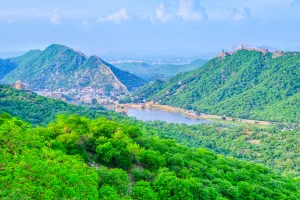
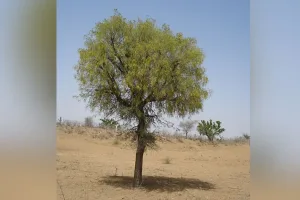
The renewed debate over the Aravalli hills exposes a familiar fault line in India’s environmental governance: the tension between ecological complexity and administrative simplicity. What appears, on the surface, to be a technical redefinition of hills is in fact a decision with profound implications for land use, climate resilience, and the survival of fragile ecosystems in north-western India. The Aravallis are among the oldest mountain systems on Earth, but their importance today lies not in dramatic peaks or dense forests. Much of their ecological value resides in low, scrub-covered ridges and shallow undulations that slow desertification, recharge aquifers, and act as a climatic buffer against the advancing Thar.

These understated landscapes rarely fit popular notions of “hills,” yet they quietly sustain agriculture, groundwater and habitability across Rajasthan, Haryana, and Delhi. By tying protection to a minimum elevation threshold, policymakers risk mistaking visibility for value. A hill system is not a stack of discrete high points; it is a continuous geological and ecological fabric. Once that continuity is broken on paper, it becomes easier to fragment it on the ground ~ through mining, construction and infrastructure projects that may individually seem minor but collectively erode the system’s resilience. Environmental damage in such landscapes is rarely sudden or spectacular. It accumulates slowly, revealing its costs only when groundwater tables fall, heatwaves intensify and dust storms grow more frequent.

The government argues that a uniform, objective definition brings regulatory clarity and does not automatically open the floodgates to mining. In principle, consistency across states is desirable. Yet environmental regulation is not the same as taxation or land records. Nature does not conform neatly to round numbers or legal thresholds. A definition that prioritises ease of enforcement over ecological function may simplify files but complicate the future. Public protests signal a deeper unease: that environmental decisions are increasingly framed through narrow technical lenses, with insufficient weight given to cumulative impact and local knowledge. Farmers, residents, and activists are not merely opposing development; they are questioning a model that treats landscapes as interchangeable once they fall outside a formal category. Their insistence that the Aravallis be defined by geology, hydrology and their ecological role reflects a demand for science-led policy rather than checklist governance.

The involvement of the Supreme Court of India adds gravity to the issue. Judicial endorsement confers legitimacy, but it also places a responsibility to ensure that definitions do not unintentionally weaken environmental safeguards. Courts have historically played a crucial role in protecting common natural assets; this moment tests whether that tradition can adapt to subtler, less visible forms of ecological risk. Ultimately, the Aravalli controversy is not just about hills. It is about how India chooses to value landscapes that are ecologically vital but aesthetically modest. Protecting them requires moving beyond height-based formulas toward a functional understanding of nature ~ one that recognises that what looks insignificant today may be indispensable tomorrow.

Recalibrating MGNREGA

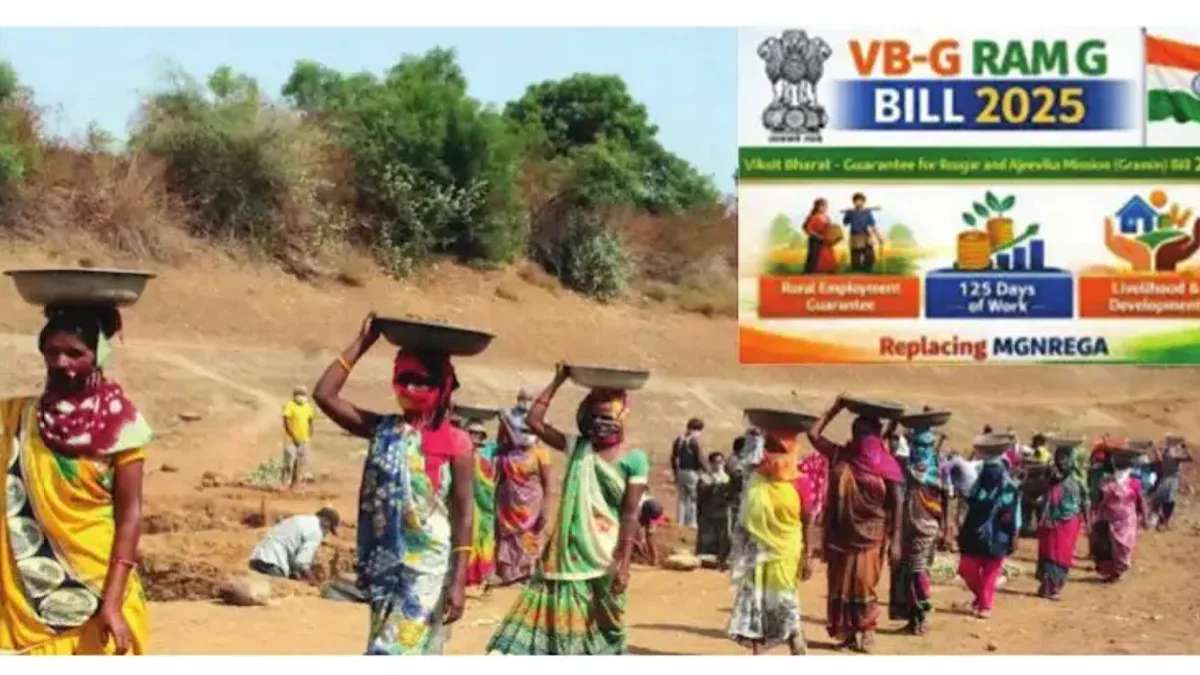
The Viksit Bharat Guarantee for Rozgar and Ajeevika Mission (Gramin) Act (VB-G RAM G), which replaces the Mahatma Gandhi National Rural Employment Guarantee Act (MGNREGA), received the President’s assent on Sunday, 21 December, marking the formal transition to a new rural employment framework.

GOURAV VALLABH | New Delhi |

The Viksit Bharat Guarantee for Rozgar and Ajeevika Mission (Gramin) Act (VB-G RAM G), which replaces the Mahatma Gandhi National Rural Employment Guarantee Act (MGNREGA), received the President’s assent on Sunday, 21 December, marking the formal transition to a new rural employment framework. The allegation that these changes amount to the “dismantling” of MGNREGA stems from an unwillingness to distinguish sentiment from performance.

Welfare laws do not enjoy moral immunity because of their vintage or their acronym; they must be assessed by whether they deliver what they promise, at scale, in the conditions that actually obtain rather than those that policymakers nostalgically invoke. The performance and governance gaps in MGNREGA must be studied. The programme’s most basic assurance of guaranteed employment had steadily drifted from its statutory intent. Data from the Ministry of Rural Development show that in FY 2024-25 only about 7-8 per cent of registered households completed the full 100 days of work, while average employment per household remained under 50 days, virtually flat across phases of stress, recovery, and growth. This was not a function of tight budgets as annual allocations had crossed Rs 1 lakh crore in recent years, but of design and delivery failures, where a legal entitlement repeatedly failed to become lived access for most beneficiaries.

Those gaps were compounded by governance weaknesses. Repeated observations by the Comptroller and Auditor General and social audits documented a pattern of irregularities: inflated muster rolls, payments against non-existent works, unauthorised use of machinery in violation of labour norms, and weak recovery of detected fraud. In FY 2024–25 alone, officially recorded financial irregularities were close to Rs 200 crore, while recoveries remained negligible, eroding the credibility of what was conceived as a rights-based safety net. What does the new law change? The VB-G RAM G Act responds to these structural problems by reshaping how rural employment is guaranteed, planned, and financed. The move to norm-based budgeting replaces an open-ended, reactive regime with one that ties allocations to execution capacity and observed demand, reducing the mismatch between promises and delivery. Far from signalling withdrawal, funding levels remain substantial, and the statutory wage-employment guarantee has been expanded from 100 to 125 days per rural household per year as a standard entitlement rather than an exceptional ceiling. The intent is to narrow the persistent gap between what the law states on paper and what the administration can reliably provide on the ground. The economic case for reform is equally important. Rural India in the mid-2020s is structurally different from rural India in 2005. Recent surveys point to a pronounced decline in rural poverty relative to the early 2010s, higher levels of household consumption, and a decisive shift towards formal credit channels.

Periodic Labour Force Survey data show a gradual but steady rise in non-farm rural employment, particularly in construction, manufacturing, and services, even as agriculture remains the single largest employer. Within the employment guarantee framework itself, demand for work now peaks during lean agricultural periods and falls sharply when local non-farm opportunities expand, indicating that the programme functions primarily as a counter-cyclical buffer rather than the central pillar of rural livelihoods. Recognising this transition, the new Act deliberately reorients employment towards assets with durable economic value. A larger share of expenditure is now directed to water conservation and irrigation, rural roads, sanitation, storage facilities, and climate-resilient works, all of which generate stronger long-term income effects than scattered earthworks. Irrigation lifts farm productivity, roads cut market-access costs, and storage reduces distress sales, so linking wages to such assets converts short-term relief into sustained livelihood support.

Technology and governance reforms underpin this reorientation. Aadhaar-based seeding covers virtually all active workers, enabling near-universal direct benefit transfers; wage payments are overwhelmingly routed through electronic modes, reducing delays and discretion. Geo-tagging has brought crores of assets under physical verification, and women’s participation now approaches 58 per cent, deepening inclusion and enhancing household resilience. Even the provision allowing states to pause works during peak sowing and harvest seasons reflects this logic: sequencing public employment outside these windows avoids competing with farm labour, protects agricultural output, and stabilises rural wages, without altering the annual entitlement itself. Resistance to these changes is often anchored in a static view of rural poverty and the presumption that any departure from MGNREGA’s original architecture is ipso facto a retreat.

The evidence suggests the opposite: expanding the legal guarantee, tightening delivery mechanisms, improving asset quality, and aligning employment with a changing rural economy amounts to adaptation, not dilution. A separate line of criticism has focused on the very name Viksit Bharat Guarantee for Rozgar and Ajeevika Mission (Gramin) Act (VB-G RAM G). In a government that has set Viksit Bharat 2047 as a national horizon, the presence of “RAM G” in the title ought to be a matter of welcome rather than grievance. The reverence for a Pujya Bapu past, present, and future does not rest on acronyms, but on whether public policy advances dignity, self-reliance, and protection for the weakest. Ultimately, if the law succeeds in deepening rural security and opportunity, there is every reason for citizens to say with pride: G RAM G

(The writer is a part-time Member of the Economic Advisory Council to the Prime Minister and a Professor of Finance. The views expressed are personal)

Bangladesh: Back from exile, Tarique Rahman visits father Ziaur Rahman’s grave

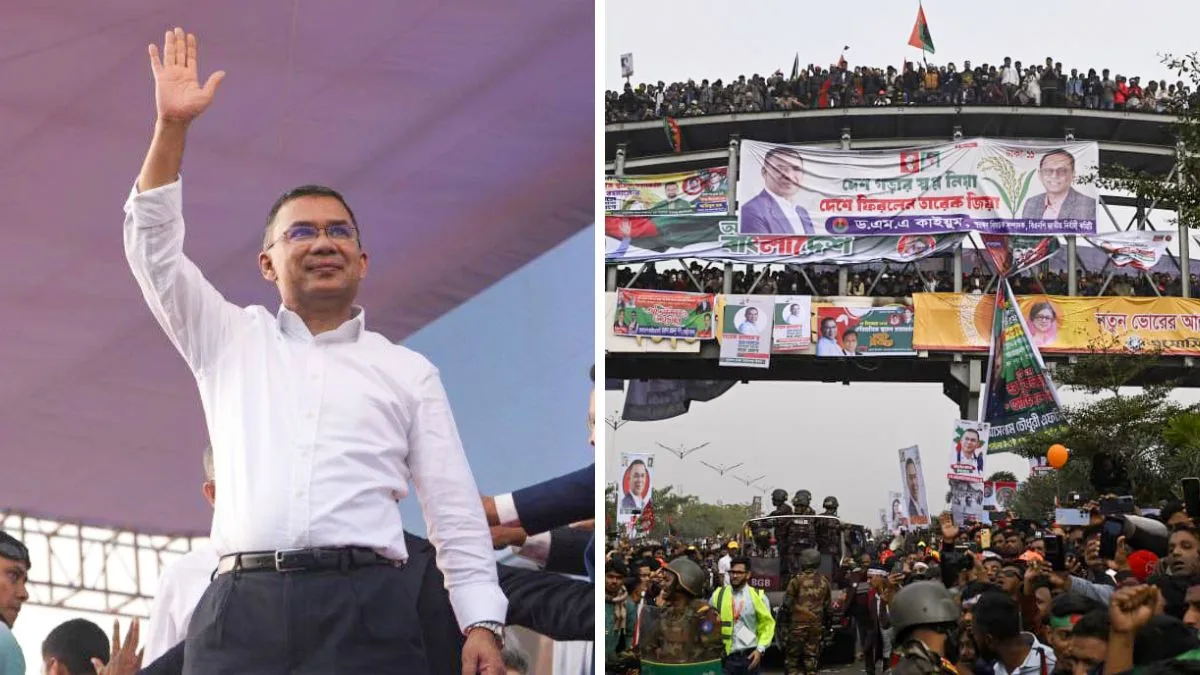
BNP Acting Chairman Tarique Rahman visited his father Ziaur Rahman’s grave on Friday, a day after returning to Bangladesh following 17 years in exile.

Statesman News Service | New Delhi |

Bangladesh Nationalist Party (BNP) Acting Chairman Tarique Rahman visited the grave of his father and party founder, former military ruler Gen Ziaur Rahman, on Friday. This was his first major public engagement since returning to Bangladesh after spending 17 years in exile.

Local media reports said Rahman travelled to Zia Udyan in a red-and-green bulletproof bus and offered floral tributes at the grave. He also offered ‘dua’ and ‘munajat’ for his father’s soul’s eternal peace.

Rahman was also due to visit the National Martyrs’ Memorial in Savar to lay wreaths in memory of those who died in the 1971 Liberation War.

Symbolic move at a tense political moment

The visit comes at a sensitive time in Bangladesh’s politics. Rahman’s return from London on Thursday drew huge crowds and sparked widespread discussion, with many viewing him as a key political figure at a time when the country’s leadership space remains uncertain.

With the Awami League currently banned and other parties such as the National Citizens’ Party (NCP) and Jamaat-i-Islami lacking strong nationwide support, the BNP has emerged as the largest political force. Against this backdrop, Rahman’s decision to begin his public activities by paying tribute to his father and the martyrs of 1971 is being seen within the party as a signal of political continuity and national unity.

Massive welcome after long exile

Rahman, the son of former prime minister Khaleda Zia, arrived in Dhaka on Thursday morning to a massive show of support, with lakhs of party workers and supporters lining the streets. Ending his long stay in the UK, he travelled in a bulletproof vehicle as part of a heavily secured convoy to attend a large BNP rally at Purbachal in Dhaka.

At the rally, Rahman repeatedly spoke about peace, telling the crowd that his goal was to ensure stability in the country. He appealed to people from all sections of society to come together to build a democratic and economically strong Bangladesh.

Referring to recent political developments, he credited young people for playing a role in the fall of the Awami League government, saying the country had once again seen a movement for change.

Call for unity and shared future

During his address, Rahman spoke about key chapters in Bangladesh’s history, including the 1971 Liberation War, the events of 1975, and the mass movement of the 1990s. He also mentioned the developments of August 5, 2024, saying people from across society, including farmers, students, workers, and madrasa students,  had come together to protect the nation.

He described Bangladesh as a country of diverse communities and stressed the importance of building a society where every citizen feels safe. Senior BNP leaders, including Secretary General Mirza Fakhrul Islam Alamgir, Amir Khasru Mahmud Chowdhury, Mirza Abbas and Salahuddin Ahmed, were present at the rally.

‘This country belongs to Muslims, Hindus, Buddhists and Christians’: Tarique Rehman’s big unity message on Bangladesh return

Elections ahead, risks and challenges

Rahman’s return is being closely watched as the country prepares for general elections expected in February. Political observers say his absence had earlier raised concerns within the BNP that Jamaat-i-Islami could gain an advantage if he stayed away from active politics.

Although the interim administration led by Mohammad Yunus withdrew all cases against him, Rahman had delayed his return due to security worries, especially amid reports of extremist activity and attacks on political workers.

For decades, Bangladesh’s electoral arena has largely been shaped by the Awami League and the BNP, each typically securing between a quarter and two-fifths of the vote, while Jamaat-i-Islami has remained a smaller but steady player. With Tarique Rahman back in the fray, political alignments within the opposition are likely to shift, sharpening the contest as the country heads toward the next polls.

Canada: India’s Consulate in Toronto expresses grief over Indian student’s murder

Consulate General of India in Toronto on Thursday (local time) expressed anguish over the killing of an Indian student in a shooting incident near the University of Toronto Scarborough Campus.

ANI | New Delhi |

Consulate General of India in Toronto on Thursday (local time) expressed anguish over the killing of an Indian student in a shooting incident near the University of Toronto Scarborough Campus.

Issuing a statement on X, the Consulate said it is providing necessary assistance to the deceased’s family.
“We express deep anguish over the tragic death of a young Indian doctoral student, Mr Shivank Avasthi, in a fatal shooting incident near the University of Toronto Scarborough Campus. The Consulate is in touch with the bereaved family during this difficult time, and is extending all necessary assistance in close coordination with the local authorities,” the Consulate General said.

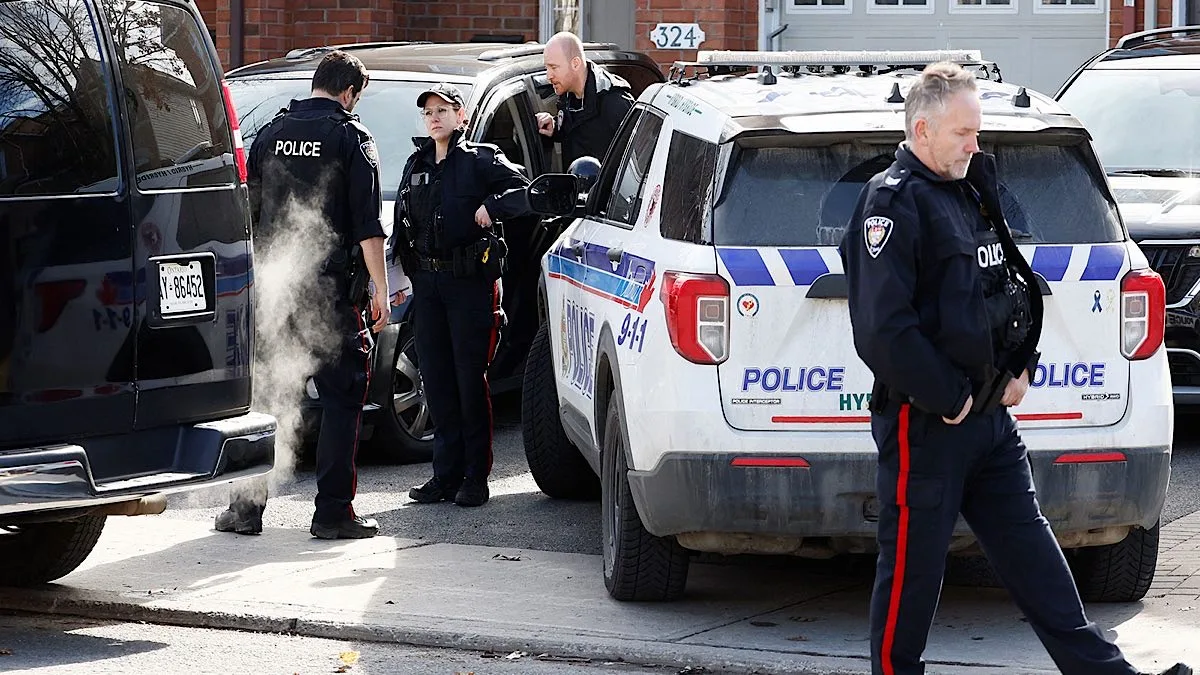
Earlier on Tuesday (local time), the Toronto Police said Shivank Avasthi was gunned down in the Highland Creek Trail and Old Kingston Road area. The police rushed to the spot, finding the victim with a gunshot wound before he was pronounced dead at the scene, the Toronto Sun reported.

Police officials said the suspects fled the scene before police arrived. The campus was locked down during the probe.
According to the Toronto Sun, this was Toronto’s 41st homicide of the year.
Earlier, Toronto Police said a 30-year-old Indian-origin woman was found murdered in the city and that a Canada-wide arrest warrant has been issued for a suspect who was known to the victim.

The deceased was identified as Himanshi Khurana, a resident of Toronto. Police said they are searching for Abdul Ghafoori (32), also of Toronto, in connection with the case. According to CBC News, investigators said the incident appears to involve “intimate partner violence.”

On Wednesday, India’s Consulate in Toronto expressed deep shock and sorrow over the murder of Himanshi Khurana. In a post shared on X, the Consulate said it was “deeply saddened and shocked by the murder of. Himanshi Khurana, a young Indian national, in Toronto,” and extended its “deepest condolences to her bereaved family during this moment of profound grief.”

It has been in close touch with the matter over the past few days and added that all possible assistance is being extended to the family in close coordination with local authorities as the investigation continues.

US launches ‘deadly’ strike against ISIS in northwest Nigeria: President Trump

The United States on Thursday (local time) launched a “deadly” strike against the terror organisation Islamic State in northwest Nigeria, said President Donald Trump.

ANI | New Delhi |

The United States on Thursday (local time) launched a “deadly” strike against the terror organisation Islamic State in northwest Nigeria, said President Donald Trump.
Donald Trump, in a social media post on Truth Social, said that the strike targeted terrorists over the alleged killings of Christians.

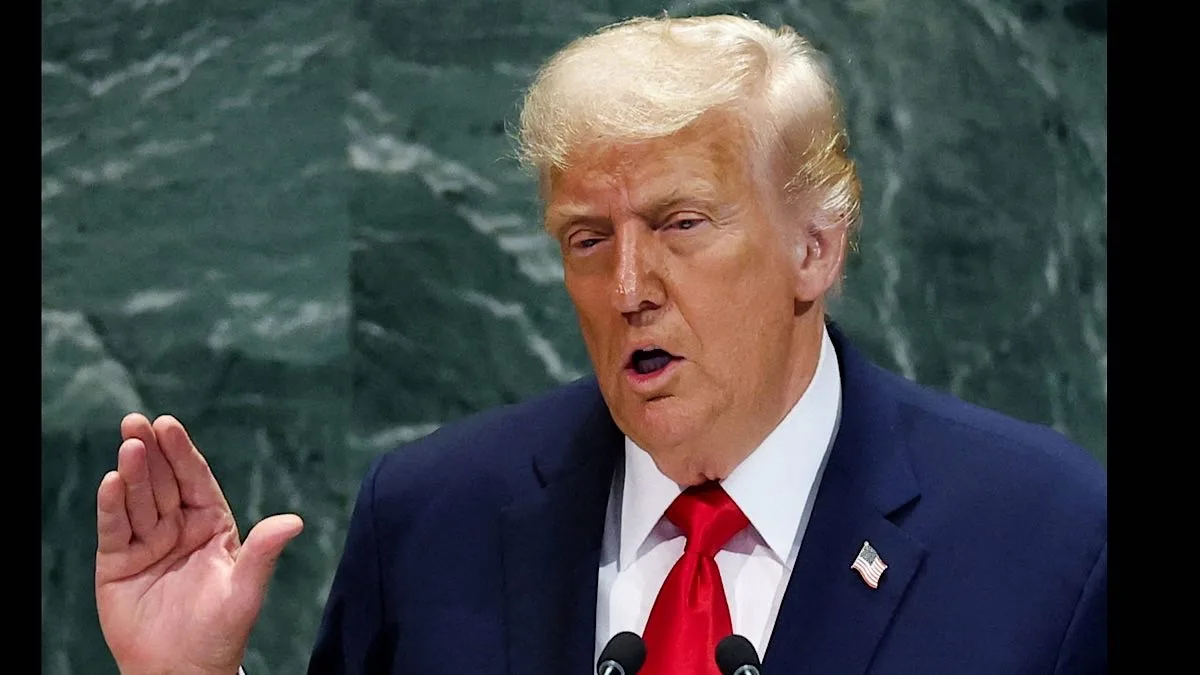
“Tonight, at my direction as Commander in Chief, the United States launched a powerful and deadly strike against ISIS Terrorist scum in Northwest Nigeria, who have been targeting and viciously killing, primarily, innocent Christians, at levels not seen for many years, and even centuries! I have previously warned these terrorists that if they did not stop the slaughtering of Christians, there would be hell to pay, and tonight, there was,” Trump said.

“The Department of War executed numerous perfect strikes, as only the United States is capable of doing. Under my leadership, our country will not allow radical Islamic terrorism to prosper. May God bless our military, and MERRY CHRISTMAS to all, including the dead terrorists, of which there will be many more if their slaughter of Christians continues,” the US President added.
According to the US National Counterterrorism Centre, “ISIS-West Africa (ISIS-WA) was formed in 2015 when Boko Haram pledged allegiance to ISIS. The branch, as per the United States, attacks regional military targets and civilian defence forces and frequently attacks government personnel and infrastructure, and Christians.”

Earlier on December 19 (local time), US and Jordanian forces carried out large-scale air strikes against the Islamic State terror group in Syria, hitting more than 70 ISIS targets with over 100 precision-guided munitions, the US Central Command (CENTCOM) said.
In a post on X, CENTCOM said the strikes were carried out overnight and described the operation as a demonstration of “peace through strength.” The command also released a video showing footage of the air strikes.
The operation came days after a suspected Islamic State attacker targeted a convoy of US and Syrian forces in the central Syrian town of Palmyra.

‘Some documents fully prepared’: Volodymyr Zelenskyy on peace deal after talks with US envoys Witkoff, Kushner

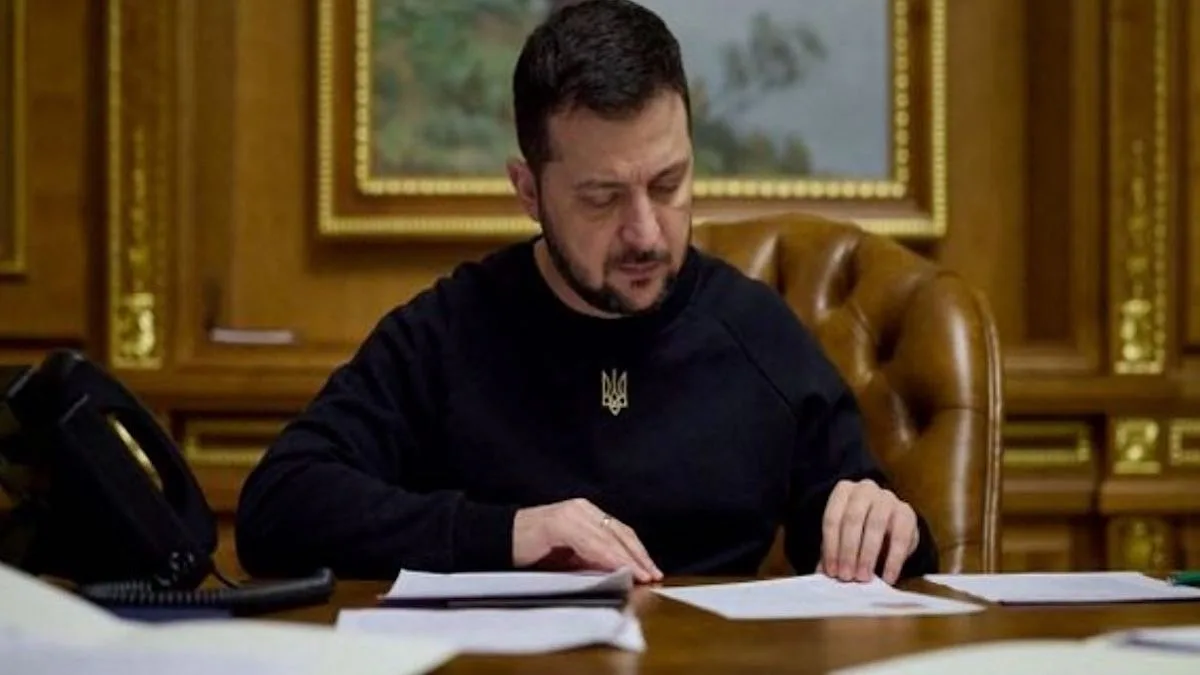
Ukrainian President Volodymyr Zelenskyy on Thursday (local time) said that some documents of the peace deal are “fully prepared” after he held a discussion with United States envoys Steve Witkoff and Jared Kushner.

ANI | New Delhi |

Ukrainian President Volodymyr Zelenskyy on Thursday (local time) said that some documents of the peace deal are “fully prepared” after he held a discussion with United States envoys Steve Witkoff and Jared Kushner.

In a video message on X, Zelenskyy stated that the two nations must resolve the “sensitive issues” to reach a peace deal between Ukraine and Russia.
“It is important if we succeed in organising what we discussed today with President Trump’s envoys. Some documents, as I see it, are nearly ready, and some documents are fully prepared. Of course, there is still work to be done on sensitive issues. But together with the American team, we understand how to put all of this in place. The weeks ahead may also be intensive. Thank you, America,” the Ukrainian President said.
Earlier on Thursday, Zelenskyy, joined by Ukrainian envoys, held a discussion with US counterparts Steve Witkoff and Jared Kushner, and stated that there are “good ideas” for the lasting peace.

Expressing gratitude towards the US envoys, he wrote on X, “Today we had a very good conversation with President Trump’s Special Envoy Steve Witkoff @SEPeaceMissions and @jaredkushner. I thank them for the constructive approach, the intensive work, and the kind words and Christmas greetings to the Ukrainian people. We are truly working 24/7 to bring closer the end of this brutal Russian war against Ukraine and to ensure that all documents and steps are realistic, effective, and reliable.”

“We discussed certain substantive details of the ongoing work. There are good ideas that can work toward a shared outcome and lasting peace. Real security, real recovery, and real peace are what all of us need – Ukraine, the United States, Europe, and every partner who helps us. I hope that today’s Christmas understandings and the ideas we discussed will prove useful,” he added.

Zelenskyy also extended Christmas greetings to US President Donald Trump.
“During the conversation, I was joined by Rustem Umerov, Andrii Hnatov, Andrii Sybiha, Sergiy Kyslytsya, Ihor Brusylo, and Oleksandr Bevz. Our entire diplomatic team is doing their utmost. We agreed that Rustem will speak again today with Steve and Jared. We believe this is the right approach – not to lose a single day or a single opportunity that can bring the result closer. May today’s conversation become another step toward peace. I also asked the guys to pass along our Christmas greetings to Donald Trump and the entire Trump family. Thank you,” the X post read.
Earlier, wishing Ukrainians on the occasion of Christmas, President Volodymyr Zelenskyy called for peace while also slamming Russia for launching a massive attack on the eve of the festival.
In his Christmas address, he said, “We are happy when we hear the music of Christmas, but even happier when we do not hear the music of evil, when we do not hear drones and missiles flying overhead.”

‘Paris climate deal designed to include and bind India’

Newly declassified US diplomatic records show that the Paris climate agreement was carefully shaped with India in mind.

IANS | New Delhi |

Newly declassified US diplomatic records show that the Paris climate agreement was carefully shaped with India in mind. The deal was designed to bring India into a global climate framework, while at the same time limiting New Delhi’s ability to rely on older distinctions between developed and developing countries.

The documents, released by the National Security Archive on the 10th anniversary of the Paris Agreement, include internal US diplomatic cables, strategy papers and negotiating notes from the Obama administration.

Taken together, they show that US officials viewed India as indispensable to any global climate deal. At the same time, they saw India as a country whose negotiating positions could slow, reshape or even block talks if pushed too far.

A central US objective was to move away from the 1992 United Nations climate framework, which divided countries into developed and developing categories. India fell firmly within the developing country grouping under that system.

In a February 2014 US position paper, Washington stated that it would “not support a bifurcated approach” in the new agreement. The paper argued that the old categories were “not rational or workable in the post-2020 era,” given changes in global emissions patterns and economic growth. This language was aimed squarely at major emerging economies, including India.

For New Delhi, this was a sensitive issue. India had long maintained that developed countries should bear a greater share of the climate burden due to their historical emissions. The US documents show clear resistance to allowing this principle to form the foundation of the Paris deal.

At the same time, US officials acknowledged India’s leverage. Internal records show concern that India, working alongside China and other developing nations, could block consensus if equity concerns were ignored.

As a result, Washington backed an alternative structure. Instead of binding emissions targets, it pushed for nationally determined contributions, under which each country would set its own climate goals. These commitments would be reported and reviewed, but not legally enforced.

This approach suited US domestic political constraints and also made the agreement acceptable to India.

In a March 12, 2015 cable, then Secretary of State John Kerry cautioned against publicly describing the agreement as “legally binding.” He warned that such language could be misunderstood and trigger the need for US Senate approval — a step that, he said, would likely derail the agreement.

India also figured prominently in US trade-related concerns linked to climate negotiations. One State Department paper set a clear “red line” against allowing climate talks to restrict US trade actions. It warned that “India, Argentina, and other Parties” might attempt to use climate negotiations to push for trade rules favouring developing countries.

The US made it clear it would not accept this linkage. The records show that climate policy, trade interests and development concerns were closely intertwined in Washington’s internal deliberations.

India’s role within negotiating blocs also drew US attention. The documents repeatedly refer to BASIC — Brazil, South Africa, India and China — as well as the Like-Minded Developing Countries group.

In one late-stage cable, US officials referred to the “emergence of G77 and China as a unified bloc”.While parts of the passage are redacted, it underscores the collective leverage of developing countries, with India identified as one of the most influential voices.

Despite these tensions, US officials closely tracked India’s actions throughout the process. Cables from Geneva and Bonn stressed the importance of major emitters submitting their climate pledges early. India’s planned submission by June 2015 was repeatedly noted.

When India submitted its contribution, it focused on reducing emissions intensity rather than committing to absolute emissions cuts.

The final Paris Agreement reflected these compromises. It set a global temperature target and established transparency and reporting requirements, but left emissions targets to national discretion.

For India, this meant inclusion without legally binding emissions cuts. For the United States, it meant a global agreement that avoided congressional approval.

A decade later, the documents show that the Paris Agreement was not a simple victory for any side. It was a carefully calibrated outcome — one in which India was accommodated because it had to be, and constrained by being integrated into a single global climate framework.

US targets alleged manipulation in H-1B system under new rule

The US government has cited concerns related to manipulation and abuse in the H-1B visa system as a key driver behind its decision to overhaul how visas are selected each year.

IANS | New Delhi |

The US government has cited concerns related to manipulation and abuse in the H-1B visa system as a key driver behind its decision to overhaul how visas are selected each year.

The Department of Homeland Security, in a federal notification this week, asserted that the changes were needed to strengthen “process integrity” and preserve fairness in the cap-subject H-1B program.

These new rules outline a range of practices that the DHS said raised red flags during recent filing cycles, including wage manipulation, inconsistent job information, and the filing of multiple registrations tied to related entities.

Making a strong case, the DHS asserted that the amendments aim to reduce incentives for employers to game the system and to ensure that selections reflect legitimate job offers rather than strategic filings.

One concern flagged in public comments was the potential for employers to inflate wages on paper to improve selection chances. DHS said the rule includes safeguards to discourage such behavior and promote consistency between registrations and final petitions.

The department also pointed to risks of manipulation involving job locations. Some commenters warned that listing higher-paying locations during registration, while intending to place workers elsewhere later, threatens the system’s credibility.

DHS said it would focus on consistency between the information submitted during registration and the details provided in the full petition, including job duties, wage levels, and work locations.

Another issue raised involved the use of multiple registrations for the same worker, the DHS said, adding that it related to entities filing separate registrations for a single beneficiary, distorting selection outcomes and weakening trust in the process.

The final rule reinforces certification requirements and outlines consequences for inaccurate or misleading filings. DHS said this is intended to deter abuse and reduce unnecessary strain on adjudication resources.

While the department dealt with concerns regarding manipulation of job classifications under the Standard Occupational Classification system, several commenters warned that employers could strategically select job codes to justify higher wages without showing real job duties, according to the federal notification.

The rule was intended to furnish a clearer legal standard and reduce ambiguity, helping both employers and regulators understand compliance expectations, it said, and noted that it is limited to changes within existing H-1B regulations and does not add new environmental, tribal, or federalism impacts requiring additional review.

The department maintained that the revised process would improve transparency while preserving access to high-skilled workers.

The H-1B program, capped annually by Congress, has faced repeated scrutiny over fraud, fairness, and enforcement as demand for visas continues to far exceed supply.

US immigration authorities have increasingly relied on regulatory changes rather than legislation to address weaknesses in the system during stalled reforms on Capitol Hill.

Three accused in rape, murder cases escape from Khachrod sub-jail in MP

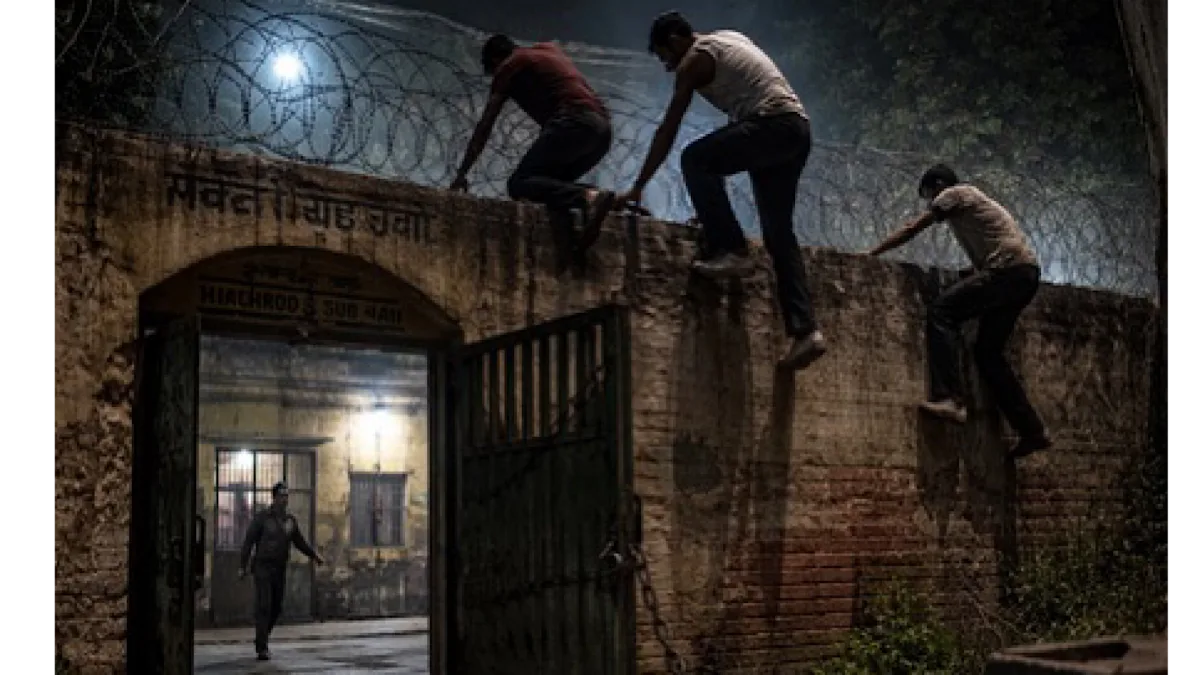
In a daring jailbreak that has exposed potential security vulnerabilities, three undertrial prisoners accused of serious crimes, including rape and murder, escaped from the Khachrod sub-jail near Nagda in Ujjain district late Thursday evening.

IANS | New Delhi |

In a daring jailbreak that has exposed potential security vulnerabilities, three undertrial prisoners accused of serious crimes, including rape and murder, escaped from the Khachrod sub-jail near Nagda in Ujjain district late Thursday evening.

The incident has triggered widespread concern and a massive manhunt by the police.

The escapees have been identified as Narayan, a resident of Chandwasla village in Bhatpachlana, facing charges in a rape case; Gopal, son of Bapulal from Malakhedi; and Govind, son of Sharam from Nagda, both implicated in a murder case.

All three were lodged in the sub-jail, located approximately 70 km from Ujjain city.

According to preliminary reports from the police, the trio executed a well-planned escape around 7.30 p.m.

They reportedly managed to obtain the key to the women’s ward, from where they procured a ladder.

Using the ladder, they scaled the jail’s boundary wall and jumped to freedom on the other side. The breakout went unnoticed until the routine prisoner headcount later that evening, prompting immediate panic within the facility.

Jail authorities swiftly alerted the Khachrod police station, leading to the launch of an intensive search operation. Police teams have been deployed across the region, with checkpoints established and neighbouring districts informed.

Photographs of the three accused have been widely circulated on social media and shared with police networks to aid in their quick apprehension.

Authorities have urged the public to report any sightings but warned against approaching the fugitives, given the gravity of their alleged crimes. However further details are awaited.

Jail officials have said they were coordinating closely with the police, who are actively searching for the undertrials. Earlier, a prisoner accused in a Rs 18 lakh robbery case was reportedly taken from Khachrod sub-jail for medical treatment, during which he allegedly colluded with a constable and fled from a location in Ratlam.

The incident has raised serious questions about jail security protocols, especially in sub-jails which often face resource constraints. Sources indicate that the ease with which the prisoners accessed the women’s ward key and a ladder points to possible lapses in supervision and internal checks.

Metro railway strengthens security arrangements for Christmas

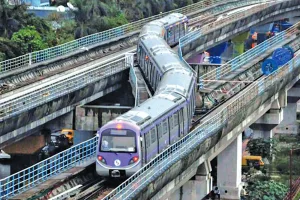
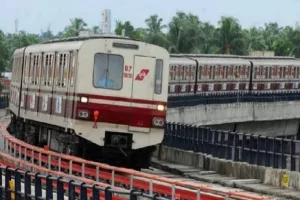
With the city gripping in festive fervour, the Kolkata Metro Railway has strengthened security arrangements at key Metro stations, including Esplanade, Park Street, Maidan, Rabindra Sadan, Dum Dum and Dakshineswar.

Statesman News Service | Kolkata |

With the city gripping in festive fervour, the Kolkata Metro Railway has strengthened security arrangements at key Metro stations, including Esplanade, Park Street, Maidan, Rabindra Sadan, Dum Dum and Dakshineswar.

According to the city Metro office, special arrangements have been made and additional RPF personnel have been deployed to man and regulate the passenger movement to ensure a safe, smooth and hassle-free journey.

Adequate women RPF officers and staff were also deployed at Park Street Metro station for the convenience of women and children. One Special Team was present as a standby force at Park Street, Maidan and Esplanade Metro stations today to tackle any emergency situation, if required. One Quick Response Team (QRT) was kept in readiness as a special force for Park Street, Maidan and Esplanade stations for emergencies.

Metro railway staff was posted at central control, and extensive CCTV monitoring on a real time basis was carried out to ensure round-the-clock surveillance and passenger safety. Queue managers, loud hailers, ropes were used and other passenger-control measures were taken to regulate passenger movement at Park Street Metro station. Anti-sabotage checks were also conducted with the help of a dog squad.

In addition, another special team comprising one officer and four staff were deployed at Park Street Metro station. Adequate numbers of RPF personnel were stationed at Park Street, Maidan and Esplanade Metro stations to provide proper guidance, help and assistance to commuters.

People throng to churches, Park St, Bow Barracks on Christmas

Christmas was observed across enthusiasm with enthusiasm, both on Wednesday and Thursday.

Statesman News Service | Kolkata |

Christmas was observed across enthusiasm with enthusiasm, both on Wednesday and Thursday.

Like every year thousands of people visited Victoria Memorial Hall, bank of river Hooghly, Botanical gardens and spent the day.

Nearly one lakh people visited the Eco Park, the biggest urban park in the country and enjoyed various rides including the toy train. People gathered around the miniatures of the seven wonders of the world and took photographs. The selfie zone was crowded with people taking snaps to keep memory of the day. People also visited Nicco Park to make the most of the day.

Chief Minister Mamata Banerjee visited St. Paul’s Cathedral church and took part in the Christmas Eve mass along with the Police Commissioner Manoj Verma. All the churches, in the city and districts, have been illuminated with decorated lights being put up at Bow Barracks.

Park Street is also decorated with colourful lights and movements of vehicles have been restricted along the thoroughfare. The road turned into a sea of people as evening descended.

Park Street has been the epicentre of Christmas in Kolkata for the past 100 years. Rich people across the country used to visit the restaurants and hotels on Park Street and Esplanade from the British period. From the British period the road has been brightly illuminated.

Christmas Eve was observed in the centres of Ramakrishna Mission across the globe. Jesuit Fathers are invited in different RKM centres to talk on the life of Jesus Christ.

On 24 December, 1886, Swami Vivekananda along with his brother monks took the vows of sanyas at Antpur in Hooghly which is now a centre of RKM. The day is observed every year at the centre.

Thousands of policemen were deployed to maintain peace in the city. Traffic sergeants were posted at important road intersections to maintain traffic and arrest drunken bike riders. Vigilance in and around Ma flyover, second Hooghly bridge and Nivedita setu have been intensified to stop two-wheeler riders from racing on them.

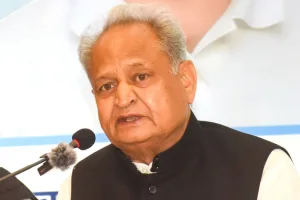
Raj CM, Gehlot continue to squabble over Aravallis despite Centre’s assurance

The Congress leader took exception to granting of new leases for mines in Rajasthan by the Sharma-led BJP government in November last month, terming it violation of the Supreme Court directives.

Statesman News Service | Jaipur |

Centre’s assurance of protecting entire Aravallis by clamping a complete ban on issuance of mining leases and expanding protected zone proved ineffective to cease verbal duel between Rajasthan Chief Minister BhajanLal Sharma and his predecessor Ashok Gehlot.

The Congress leader took exception to granting of new leases for mines in Rajasthan by the Sharma-led BJP government in November last month, terming it violation of the Supreme Court directives.

Chief Minister Sharma hailed the Union Environment and Forests Ministry’s official statement issued on Wednesday as a historic move by Prime Minister Narendra Modi to ensure protection of the Aravalli range while Gehlot called it “headline management”.

The chief minister said the decision taken on the PM’s initiative would result in a total ban on issuance of new mining leases along the entire mountain range, identification of new (more) eco-sensitive zones and preparation of a plan for sustainable mining management. “Hence, the Opposition Congress should shun negative, misleading, and falsehood-based politics and deal with the public honestly,” he added.

However, expressing his dissatisfaction with the Centre’s public statement, Gehlot said, “The government of India’s prohibition on states issuing new leases in the Aravallis until the ‘Management Plan for Sustainable Mining’ (MPSM) is developed through ICFRE is merely compliance with sub-point (v) of point 50 of the Supreme Court’s order. There is nothing new in it,” the senior Congress leader quipped.

“Central government is only publicising it for ‘headline management’, but in this era of the internet, it is not easy to mislead the public,” Gehlot has written satirically in post on his ‘X’ handle last night in response to the statement of the Environment and Forests Ministry.

The three-time former chief minister also pointed at the contradiction in the stands taken by Union Environment and Forest Minister Bhupendra Yadav and CM Sharma.

He expressed deep outrage over the issuance of new mining leases in the Aravallis despite clear instructions from the Supreme Court.

He alleged while the Union government claims to protect the Aravallis, the BJP government in Rajasthan is flouting the Supreme Court’s orders. Gehlot has quoted Union Minister Yadav as saying, “As per the Supreme Court order, no new mining leases will be granted on any Aravalli hills (above or below 100 meters) until the MPSM is ready. However, on November 14, 2025, the Rajasthan government initiated the process for 126 new mining leases (Order No: Nide/A.Kh.A. Auction/Auction (ML 10)/2025/E-13327), of which 50 leases are there in 9 districts within the Aravalli range: Jaipur, Alwar, Jhunjhunu, Rajsamand, Udaipur, Ajmer, Sikar, Pali, and Beawar.

Despite the top court verdict on November 20, the auction process for the 50 leases was not stopped. Instead, an order was issued on November 30, 2025, certifying that despite being in the Aravalli range, these 50 leases are “not part of the Aravallis.”

The former chief minister questioned the basis on which the Rajasthan government is continuing the auctions when the Supreme Court has explicitly banned new leases without an MPSM. The government conducted the auctions in December by arguing in the High Court that these hills are below 100 meters and thus do not fall under the Aravallis, whereas the Supreme Court’s MPSM decision applies to hills both above and below 100 meters. This is not only against the intent of the Supreme Court’s verdict but is a major conspiracy to erase the existence of the Aravallis. “This is an example of how technical loopholes will be sought in the coming days to attempt mining across the entire Aravalli under the guise of the Supreme Court’s verdict,” Gehlot wrote.

He said while Chief Minister Sharma has been delivering speeches on saving the Aravallis for two days, saints and seers are protesting against illegal mining in Deeg of his home district, Bharatpur. “The Aravallis is not safe in his native region, yet he is giving sermons elsewhere,” Gehlot pointed out.

Top Naxal leader Ganesh Uike killed in Kandhamal; HM Shah says Odisha at threshold of becoming completely free from Naxalism

Reacting to the development, Union Home Minister Amit Shah on Thursday termed the killing of six Naxalites, including Central Committee Member Ganesh Uike, another major breakthrough in making Odisha completely free from Naxalism.

Statesman News Service | New Delhi |

In a significant milestone towards Naxal-free Bharat, six Naxalites, including Central Committee Member Ganesh Uike, have been neutralised so far in a major operation in Kandhamal, Odisha.

Reacting to the development, Union Home Minister Amit Shah on Thursday termed the killing of six Naxalites, including Central Committee Member Ganesh Uike, another major breakthrough in making Odisha completely free from Naxalism.

In a post on ‘X’, Home Minister’s Office said, “A significant milestone towards Naxal-free Bharat. In a major operation in Kandhamal, Odisha, 6 Naxalites, including Central Committee Member Ganesh Uike, have been neutralized so far. With this major breakthrough, Odisha stands at the threshold of becoming completely free from Naxalism. We are resolved to eliminate Naxalism before the 31st of March 2026.”

Uike, who carried a bounty of Rs 1.1 crore on his head and was the chief of the banned outfit in Odisha, was neutralised in Kandhamal district in the security forces’ operation that started on Wednesday night and concluded on Thursday morning. He was a key leader in the banned CPI (Maoist) and carried a long history of orchestrating attacks against security personnel and civilians.

According to officials, the encounter took place during a coordinated anti-Naxal operation launched on specific intelligence inputs about the presence of armed cadres in the forested region of Kandhamal.

Security forces recovered arms, ammunition, and other materials from the site, indicating the group’s involvement in multiple violent incidents in the region.
Odisha, along with parts of Chhattisgarh, Jharkhand, Maharashtra, and Telangana, has historically been affected by Left-Wing Extremism.

However, in recent years, the state has witnessed a steady decline in Naxal-related violence due to sustained operations by central and state security forces, improved intelligence coordination, and focused development initiatives in remote and tribal areas.

The Union government has been pursuing a multi-pronged strategy to counter Naxalism, combining strong security measures with development initiatives, including improved road connectivity, mobile networks, banking access, and welfare delivery in affected regions.

The establishment of forward operating bases and enhanced inter-state coordination have further strengthened counter-insurgency efforts.
Officials said the latest operation in Kandhamal underscores the effectiveness of this approach.

With the neutralisation of senior leadership and shrinking operational space for Naxal groups, authorities believe Odisha is now close to being declared free from Left-Wing Extremism, marking a crucial step towards the Centre’s larger goal of eradicating Naxalism nationwide within the stipulated timeline.

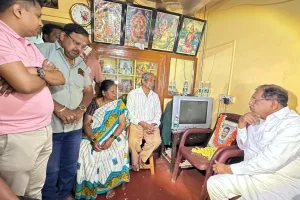
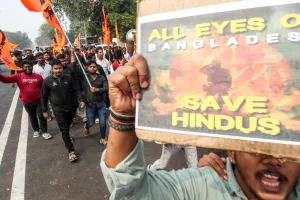
Days after Dipu Das’s lynching, another Hindu man beaten to death in Bangladesh

The victim, identified as Amrit Mondal alias Samrat, was reportedly beaten to death over allegations of extortion.

Statesman News Service | New Delhi |

Days after the brutal murder of Dipu Chandra Das, another Hindu man was beaten to death by a mob in Bangladesh’s Rajbari district.

The victim has been identified as Amrit Mondal alias Samrat. He was reportedly beaten to death over allegations of extortion.

According to local media reports, Samrat ran a gang and was allegedly involved in extortion and other criminal activities.

This crme came days after Dipu Chandra Das, a Hindu garment factory worker, was lynched to death by a mob over allegations of blasphemy.

The mob later hanged his body and set it on fire, raising concerns over the safety of the minority community in the country.

His death prompted widespread criticism from India and protest from the Opposition Congress and some right-wing groups.

‘This country belongs to Muslims, Hindus, Buddhists and Christians’: Tarique Rehman’s big unity message on Bangladesh return

The incident came amid rising violence against Hindus and other minority groups in Bangaldesh following the assassination of prominent youth leader Sharif Osman Hadi.

The lynching of Dipu Das triggered a wave of strong protests in India by the Opposition Congress and some right wing organisations.

On Monday, a large group of Congress workers gathered outside the Bangladesh High Commission in Kolkata and chanted slogans against the Yunus-led Interim Government.

Congress leader Priyanka Gandhi has also condemned the lynching of Dipu Das and demanded the Indian government to strongly raise the issue of violence against Hindus with the Bangaldeshi government.

Aravalli issue: Gandhian activists protest as Congress to intensify stir in Rajasthan

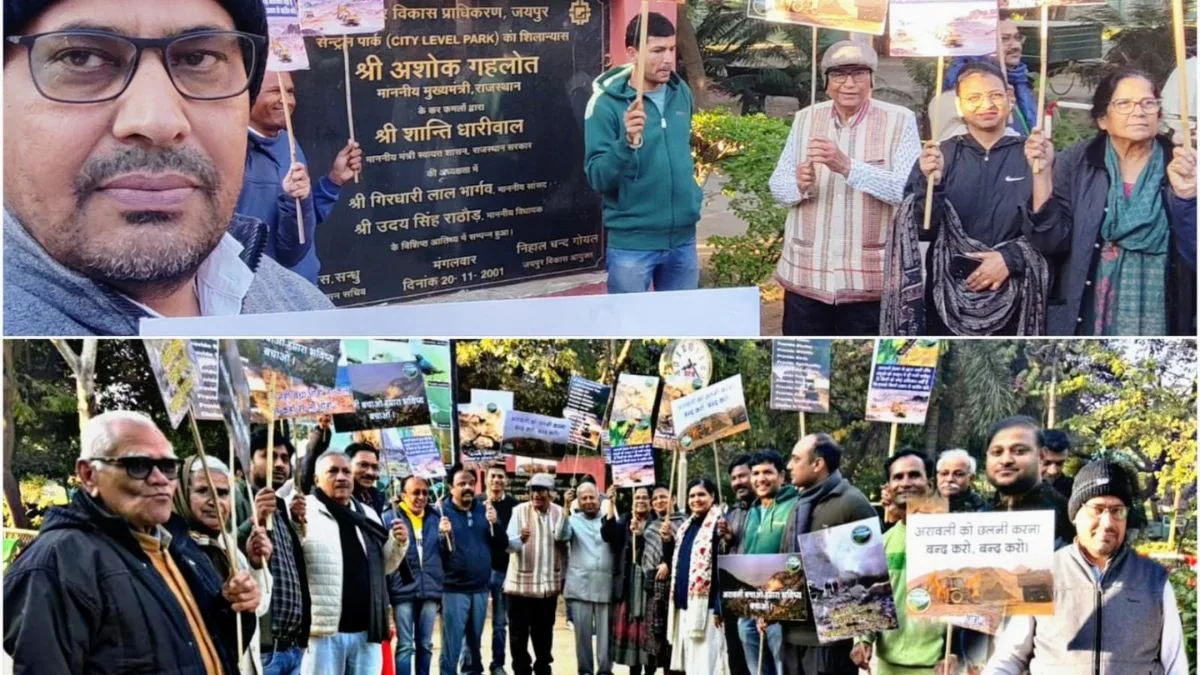
The Gandhians and activists from different walks assembled under the aegis of the Bharat Seva Sansthan at the Central Park here this morning and held a demonstration waving placards at the entrance of the park along the busy road of the state capital.

Statesman News Service | Jaipur |

Gandhian activists, freedom fighters and a large number of senior citizens here on Thursday held silent protests and an awareness drive over the issue of Aravalli, even as the Opposition Congress decided to intensify the stir in Rajasthan at the block level from Saturday.

The Gandhians and activists from different walks assembled under the aegis of the Bharat Seva Sansthan at the Central Park here this morning and held a demonstration waving placards at the entrance of the park along the busy road of the state capital.

While demonstrating for the cause, they also interacted with passers-by, morning strollers and the public in smaller groups, briefing them on the growing worrisome situation in respect of ‘Maa Aravalli’, said Sansthan Secretary Giridhari Singh Bafna, adding “We also called up on people to join in the movement to strengthen the crusade.”

Bafna said, “This is the cause of saving the oldest mountain range of India – Our Maa Aravallis, from the existential threat. This is the matter saving lifeline of over 35 districts spread over 4 states- Delhi, Haryana, Rajasthan and Gujarat.”

“The 20 percent portion of the mountain range has already been ‘devoured’ in the miners’ activities; we can not allow any further loss due to mining or any other mismanagement,” he said.

Meanwhile, the Congress state committee (PCC) today announced to intensify the stir.

As per the decision announced by PCC president Govind Singh Dotasra, the party will launch a state-wide Jan Jagran campaign on Saturday. Accordingly, the party will hold a 3-km march and demonstration over the issue at all district headquarters of the state on December 27. This programme would be expanded to the block level on the next day, the Sunday, PCC general secretary and the party spokesman Swarnim Chaturvedi said.

On December 30 and 31, 2025, the grand old party would wage Jan Jagran all over the state over the issue of substitution of the MNREGA by the VB-G RAM-G scheme.
Meanwhile, a group of youths and students has launched a 1000-km Aravalli Bachao Padyatra from Mt Abu on Wednesday.