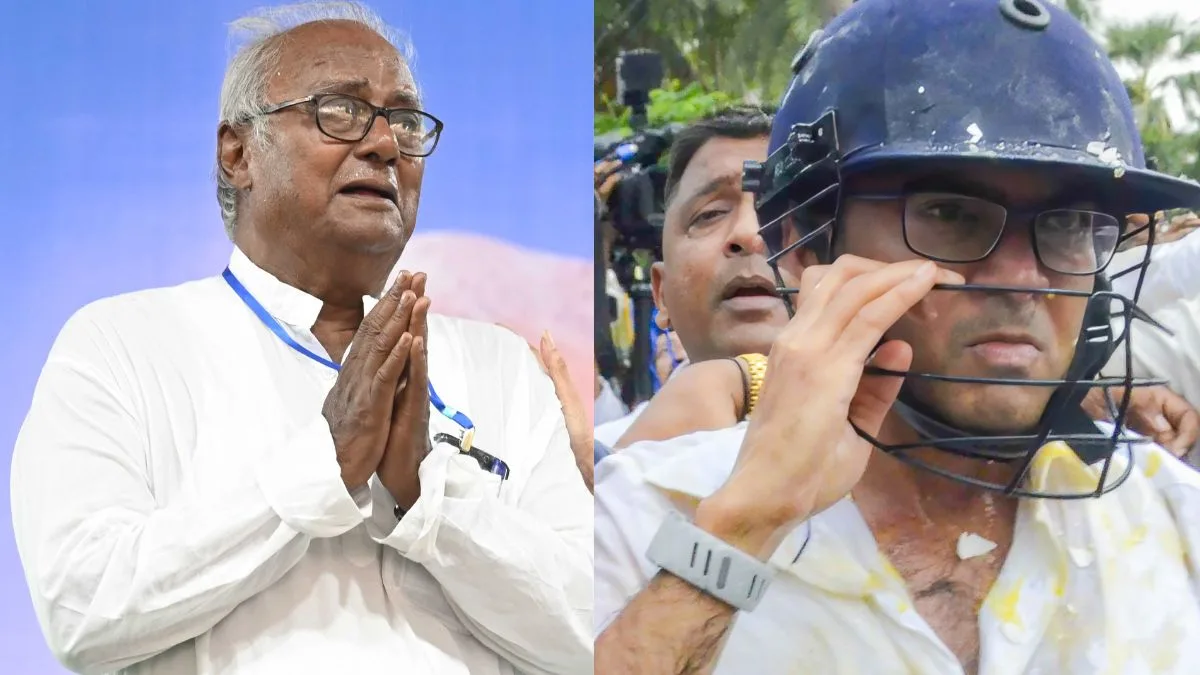
The Supreme Court on Friday declined to intervene in Congress leader Meenakshi Natarajan’s challenge against the rejection of her Rajya Sabha nomination from Madhya Pradesh, directing her to pursue the statutory remedy available before the Election Commission of India (ECI).
The development comes amid an escalating political confrontation over the Madhya Pradesh Rajya Sabha election, with the Congress accusing authorities of procedural irregularities and taking its protest from the courtroom to the streets of the national capital. The controversy has already resulted in the BJP’s three Rajya Sabha candidates being elected unopposed after the withdrawal deadline ended on Thursday.
Advertisement
A bench of the apex court observed that once a Returning Officer rejects a nomination paper, election law provides a specific mechanism for redressal. Refusing to grant relief, the court left it open for Natarajan to approach the Election Commission.
“The petitioner is free to approach the Election Commission again,” the court observed while disposing of the plea.
Appearing for Natarajan, senior advocate Abhishek Manu Singhvi argued that the Returning Officer’s decision was legally unsustainable. He submitted that the criminal case cited as grounds for rejecting the nomination did not fall within the disclosure requirements prescribed under election law.
Singhvi contended that the Representation of the People Act and Form 26 require candidates to disclose only those criminal cases in which charges have been framed by a competent court or where a court has taken cognisance of an offence.
According to him, the Telangana matter referred to by the Returning Officer stemmed from a private complaint in which no court had taken cognisance. He also argued that the incident mentioned in the complaint allegedly occurred nearly three years before Natarajan was appointed Congress in-charge for Telangana, making any attempt to connect her to the matter legally untenable.
Natarajan calls verdict a setback to democracy
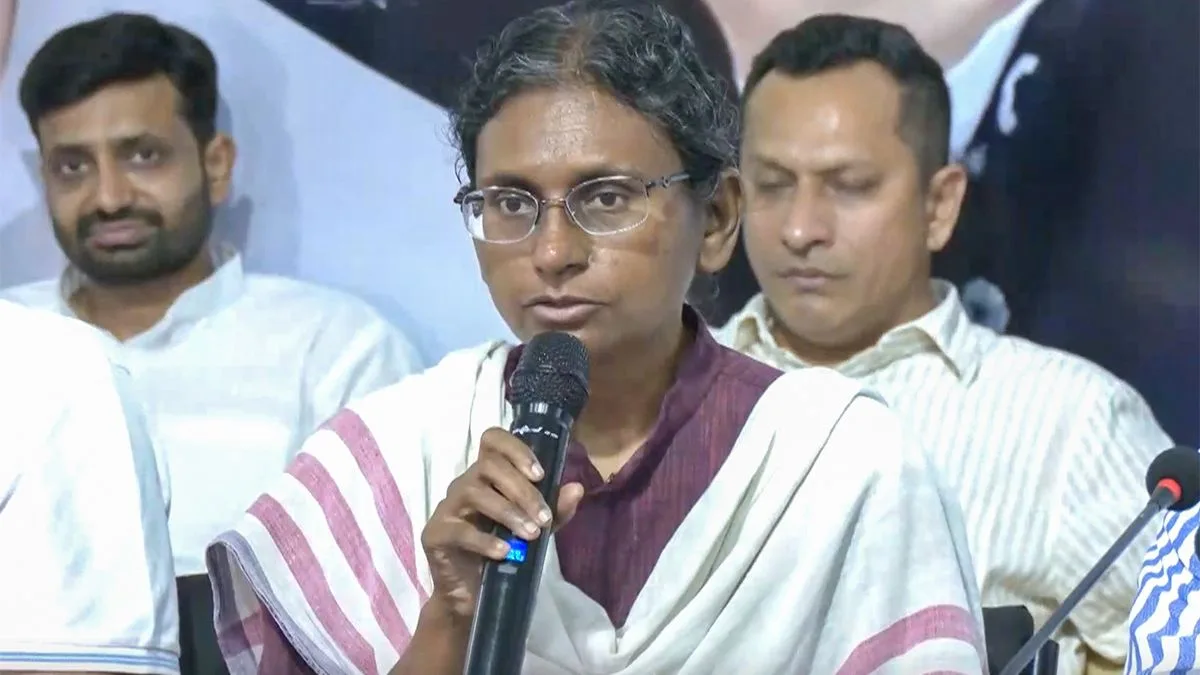
Reacting to the Supreme Court’s refusal to intervene, Natarajan said the issue extended beyond her individual candidature and raised larger questions about democratic processes.
“This is not a personal setback. This is a setback to the democracy and the Constitution of India,” she said.
“I said this in the beginning that the members of the Election Commission were compromised. When our people went to the Election Commission, they did not answer us for 48 hours. The Supreme Court at least heard our plea and gave a verdict,” she said.
Congress stages protests over nomination controversy
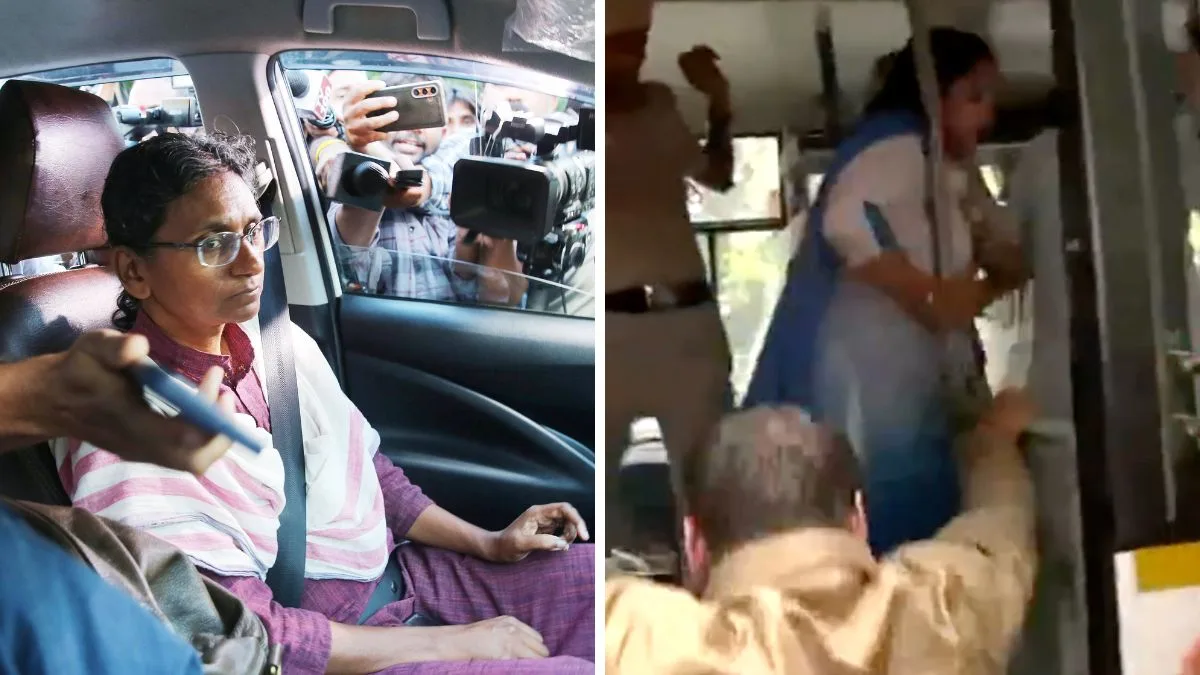
Soon after the court proceedings, Congress workers and leaders staged demonstrations in Delhi against the rejection of Natarajan’s nomination.
Party workers gathered outside the Congress headquarters at 24 Akbar Road and attempted to march towards Rashtrapati Bhavan to seek an audience with President Droupadi Murmu. Delhi Police deployed barricades and personnel in the area, preventing the march from proceeding.
Several senior Congress leaders, including Madhya Pradesh Congress president Jitu Patwari and Leader of Opposition in the state Assembly Umang Singhar, joined the protest and raised slogans against the Election Commission.
Some leaders and workers were later detained by police and escorted into buses.
Speaking to ANI, Singhar criticised the President’s Office for allegedly declining the party’s request for a meeting and questioned the decision to prevent the delegation from presenting its concerns.
Congress leaders and workers participating in the protest alleged that democratic institutions were being weakened and demanded intervention in the matter.
Jitu Patwari calls rejection unprecedented
Addressing both protesters and a press conference in Delhi, Madhya Pradesh Congress chief Jitu Patwari described the rejection of Natarajan’s nomination as an unprecedented development in Indian politics.
Patwari alleged that the BJP acted out of political fear after witnessing what he described as unity among Congress legislators during the Rajya Sabha election process. He further claimed that the move had raised wider concerns about the future of democratic institutions in the country.
Later, Patwari and several other Congress leaders were detained during a ‘Satyagraha’ protest at Jantar Mantar.
Meanwhile, Natarajan maintained that there had been no concealment of facts in the documents submitted to the Election Commission.
Speaking to reporters, she said the controversy centred on Form 26, the mandatory affidavit through which candidates disclose their assets, liabilities, educational qualifications and criminal antecedents.
Noting that the matter was pending before the courts, Natarajan said she would refrain from discussing its legal aspects in detail but asserted that all information filed before the Election Commission was transparent.
The rejection of her nomination has emerged as a flashpoint in Madhya Pradesh politics, with the Congress continuing to challenge the decision while the BJP has already secured all three Rajya Sabha seats from the state unopposed.