Logo

Mayor hints at SMC expansion as ‘Greater Siliguri’ demand grows

Soon after the Trinamul Congress assumed power at the Siliguri Municipal Corporation (SMC), the issue of expanding the corporation’s jurisdiction came under discussion, as several adjoining areas have gradually transformed from rural belts into urban zones.

Statesman News Service | Siliguri |

Soon after the Trinamul Congress assumed power at the Siliguri Municipal Corporation (SMC), the issue of expanding the corporation’s jurisdiction came under discussion, as several adjoining areas have gradually transformed from rural belts into urban zones.

Although these areas exhibit clear urban characteristics, they continue to remain under the administrative control of gram panchayats in parts of both Darjeeling and Jalpaiguri districts. For a long time now, residents from various professional and social backgrounds have been demanding the formation of a ‘Greater Siliguri’ by bringing these developed regions under the SMC for better civic amenities and governance.

Several localities within the Siliguri sub-division of Darjeeling district have witnessed rapid growth due to the presence of major institutions such as the North Bengal Medical College and Hospital, City Centre, and the University of North Bengal. However, despite this growth, residents in these areas are deprived of municipal services as they remain under gram panchayat control. According to locals, the panchayats have failed to meet civic needs owing to inadequate infrastructure and resources.

A similar demand has been raised in parts of Jalpaiguri district, particularly areas around Uttarkanya under the Dabgram-Fulbari Assembly segment. Residents there have been pressing for inclusion under the SMC, citing their close proximity to Ward No. 32 and the growing urban character of the locality.

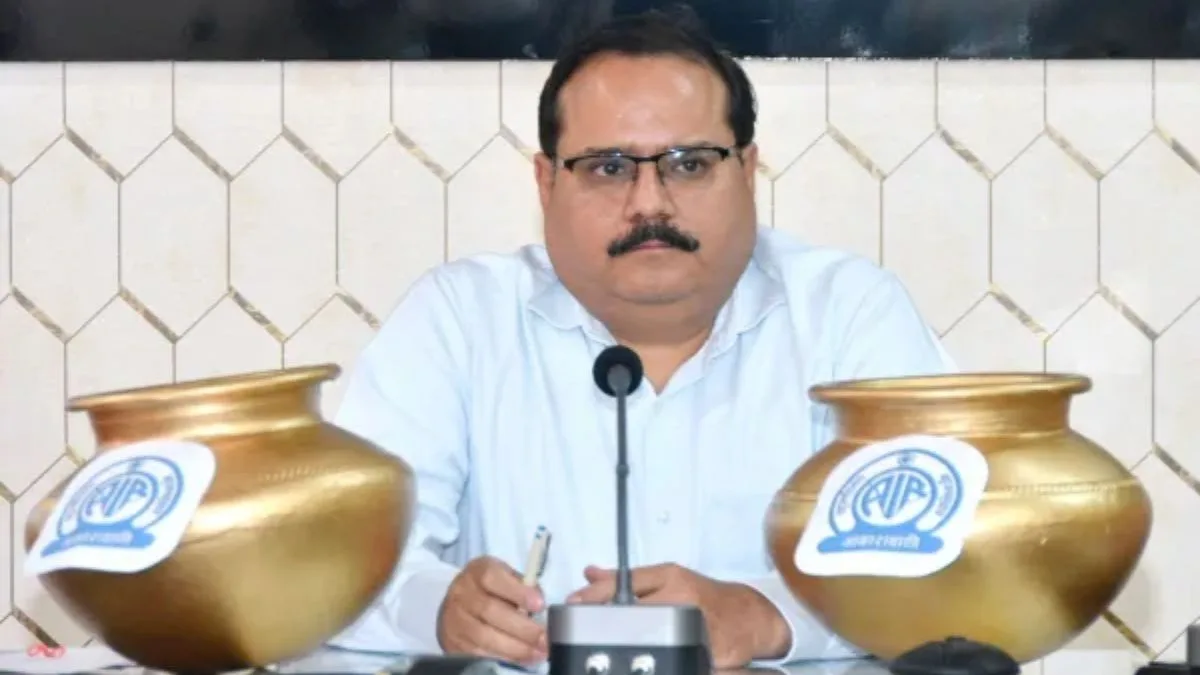
On Tuesday, mayor Goutam Deb, while inaugurating the newly-constructed conference hall of the Siliguri Municipal Corporation, subtly hinted at the possibility of future expansion of the Corporation’s operational area.

“Currently, the number of councillors stands at 47. However, the new conference hall has a seating capacity of at least 150. If the number of councillors increases in the future, the hall is fully equipped to accommodate them,” the mayor remarked.

Infiltration to be BJP’s main poll plank in Bengal: Shah

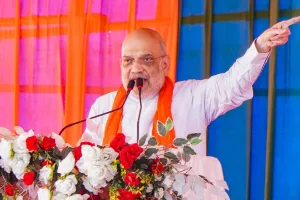
Making it clear that illegal infiltration will be the Bharatiya Janata Party’s (BJP) principal electoral weapon in West Bengal, Union home minister Amit Shah on Tuesday launched a sharp attack on the Trinamul Congress government, accusing it of abetting Bangladeshi infiltration for political gains.

RAJIB CHAKRABORTY | Kolkata |

Making it clear that illegal infiltration will be the Bharatiya Janata Party’s (BJP) principal electoral weapon in West Bengal, Union home minister Amit Shah on Tuesday launched a sharp attack on the Trinamul Congress government, accusing it of abetting Bangladeshi infiltration for political gains.

Addressing a Press conference in Kolkata for nearly 45 minutes, Shah said the issue of infiltration, along with corruption, misgovernance, political violence and women’s safety, would dominate the BJP’s campaign ahead of the 2026 Assembly elections. Alleging that people across West Bengal were anxious over unchecked infiltration, Shah asserted that a BJP government would not only identify illegal immigrants but also deport them. “We will not just identify infiltrators, we will drive them out,” he said, claiming that infiltration had become a serious threat not only to Bengal but also to national security and culture. The Union minister accused the Mamata Banerjee government of deliberately obstructing the completion of fencing along the India-Bangladesh border by refusing to provide land.

“Centre wants to secure the border, but the state government is not cooperating,” he said, adding that infiltration had been successfully curbed in Assam and Tripura. “Why does infiltration not happen in Gujarat, Rajasthan or Punjab? Because there the government does not support it,” Shah claimed. Shah said members of the Matua community have no reason to fear because of the SIR exercise. “It is our pledge that all religiously persecuted refugees will be accommodated in the country. Even Mamata Banerjee cannot cause harm to the Matuas,” he said.

Predicting a change of guard in the state, Shah said the BJP would form the government in West Bengal in 2026 with a two-thirds majority. “People of Bengal have resolved to replace fear, corruption and misgovernance with good governance,” he said, alleging that the Trinamul Congress had surpassed the Left in institutionalising politics of fear and violence. Shah said top TMC leaders have been to jails on charges of swindling public money. “People of Bengal have resolved to replace fear, corruption and misgovernance with good governance,” he said.

Raising concerns over women’s safety, Shah said incidents such as RG Kar, Sandeshkhali, Durgapur and Kasba Law College reflected the deteriorating law-and-order situation in the state. “Women are being told to return home by 7 p.m. Mothers of this state are counting the days to change the government through their votes,” he remarked. The home minister also launched a scathing attack on the Trinamul government over corruption, alleging that scams had become routine since it came to power. Referring to the recovery of large sums of money from the residence of a minister, Shah questioned the accountability of the chief minister. He cited the imprisonment of several TMC leaders and ministers, claiming that corruption had stalled Bengal’s development.

Painting a grim picture of the state’s economy, Shah said West Bengal, once ranked third in GDP, had slipped to 22nd place. He alleged that more than 7,000 companies had left the state due to corruption and the “cut-money” culture. “While the rest of the country is progressing, Bengal has been pushed backwards,” he said. Shah accused the state government of blocking central welfare schemes, including Ayushman Bharat, for political reasons. “The Centre is ready to provide Rs 5 lakh medical coverage, but the state is denying this benefit to ordinary citizens,” he said.

Highlighting BJP’s electoral growth in the state, Shah said the party’s vote share had risen steadily from 17 per cent in 2014 to nearly 40 per cent in recent elections, emerging as the principal Opposition after decimating the Congress and Left. “These are not empty claims. They are backed by data and public support,” he asserted. Appealing to voters, Shah said Bengal had given chances to the Congress, Left and Trinamul, but the state had only declined. “BJP-ruled states stand for development and good governance. Give us an opportunity, and we will build the Bengal envisioned by our great thinkers,” he said, urging people to vote for change in 2026.

Begampur handloom weavers celebrate Akal Vishwakarma Puja

Begampur in Hooghly district is celebrating Akal Vishwakarma (untimely Viswakarma) with great pomp and grandeur.

Statesman News Service | Kolkata |

Begampur in Hooghly district is celebrating Akal Vishwakarma (untimely Viswakarma) with great pomp and grandeur.

While Vishwakarma Puja is usually observed across the state in August, Begampur marks the occasion differently. The Vishwakarma idol here symbolises a working weaver at his handloom, depicted with two hands engaged in weaving, and riding a horse. The sound of the horse’s hooves is said to resemble the rhythmic tik-tok of the handloom at work. Traditionally, Lord Vishwakarma is portrayed with four hands and seated on an elephant.

Surya Kanta Dutta, a member of a weaver’s family, explained: “It is our strong faith that by performing Akal Vishwakarma Puja, our handloom cottage industry receives blessings.” This year, nearly fifty theme-based puja pandals have been set up, with Chandannagar’s magical lights illuminating the pandals and surrounding areas. The immersion of the idol will take place on 31 December.

Grassroots weavers of Begampur, who once struggled to sustain their profession and safeguard the traditional craft, are now happy. This renewed optimism follows the intervention of state government-controlled handloom clusters, which are working in joint ventures with Begampur-based cooperatives.

Nabin Sen, a member of a weaver’s family, recalled: “Previously, the Begampur handloom sari business flourished. There were nearly a thousand handlooms. But due to recurring losses, low wages, and unfavourable circumstances, most weavers abandoned weaving for other work. The number of handlooms fell abruptly to just one hundred.”

The state-managed handloom clusters came to the rescue of Begampur’s cottage industry. In partnership with the Madhyapara Samabay Samity and other privately owned cooperatives, a direct link was established between clusters, cooperatives, and weavers. Through these cooperatives, clusters provided handloom sets, yarns, dyes, and other raw materials free of cost. Payments for weaving a single sari were raised from Rs 120 to between Rs 300 and Rs 500. Encouraged by fair wages, weavers began producing up to seven saris a week.

Currently, the state-managed clusters directly oversee more than 150 handlooms, while the total number in Begumpur has risen from 100 to 600. Many weavers who had abandoned their craft are returning to their traditional profession. Efforts are also underway to upgrade handlooms with advanced technology, aiming for finer quality and higher output.

Begampur handloom saris, known by popular names such as naksa, rangabati, kata naksha, and taat kata, have long adorned women not only in Bengal but across India.

Two more arrested for rape of 16-year-old runaway girl in Kerala

Earlier on Monday, two accused, Mohammed Salih and Shabir Ali, were arrested in the case.

Statesman News Service | Kozhikode |

The Kozhikode City Police, on Tuesday, arrested two more accused in drug-and-rape case of a 16-year-old girl, who had run away from home. The duo are identified as Muhammed Shamim and Muhammed Rayees, both from Kasaragod.

Earlier on Monday, two accused, Mohammed Salih and Shabir Ali, were arrested in the case. The police said the survivor, a native of Perinthalmanna of the Malappuram district was taken to a flat in Panthirankavu and raped.

The girl, who left home on December 20 after a quarrel with her parents, boarded a bus and headed straight to Kozhikode city. The next morning, she met the accused, Muhammed Shameem and Muhammed Rayees, at the beach. They took the girl to the flat of their friends on the pretext of buying her food. There, the main accused, Muhammed Salih and Shabir Ali, natives of Puthupady, drugged the girl before raping her.

After committing the crime, Muhammed Shameem and Muhammed Rayees took the girl to the Kozhikode beach and dropped her there on 22nd midnight. A women’s police team found the girl while patrolling. After the girl disclosed her ordeal, an investigation was launched by the police to track down the culprits.

Based on the information provided by the girl, the police identified the flat and arrested the main accused, Mohammed Salih and Shabir Ali on Monday. Salih is an accused in a case of kidnapping and murder of Irshad, a native of Pantirikara, in connection with gold smuggling.

Based on the information received from them, Mohammed Shameem and Mohammed Rayees were arrested on Tuesday. The duo, who had come to Kozhikode in search of work, told the police that they had handed the girl to the main accused in exchange for money.

After handing over the girl to her relatives, the police are investigating to find out if more people are involved in the incident.

Reliance denies reports of $30 billion claim by government, calls media reports ‘factually incorrect’

In a regulatory filing to the stock exchanges, RIL said the media reports alleging that the government had sought $30 billion in compensation from Reliance and BP in an arbitration case were inaccurate and misleading.

Statesman News Service | Mumbai |

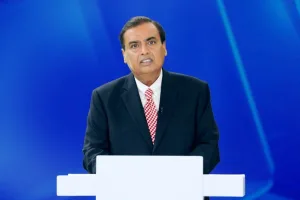
Mukesh Ambani-led Reliance Industries Ltd (RIL) has rejected reports in a section of the media claiming that the Government of India has raised a $30 billion demand against the company and its partner BP, calling the reports “factually incorrect”.

In a regulatory filing to the stock exchanges, RIL said the media reports alleging that the government had sought $30 billion in compensation from Reliance and BP in an arbitration case were inaccurate and misleading.

“Recent reports in a section of the media claiming that the Government of India has sought $30 billion from Reliance Industries and BP are factually incorrect,” the company said. It added that the publication of such reports, “based on unnamed and unidentified sources, is inappropriate and irresponsible.”

According to the reports, the government had allegedly made the claim during submissions before a three-member arbitration tribunal on November 7, 2025, in connection with the long-running dispute over gas production from the Krishna-Godavari (KG) D6 block.

The tribunal, which concluded hearings in the 14-year-old case, is expected to deliver its verdict in 2026, after which the losing party may approach the Supreme Court.

Rejecting these claims, RIL clarified that there is no demand of $30 billion. “The claim made by the Government of India in relation to the KG-D6 block is of the order of $247 million, which has been appropriately and consistently disclosed in the company’s audited financial statements in accordance with disclosure requirements,” the company said.

Earlier media reports had stated that the dispute, which began in 2016, pertains to two deep-sea gas fields — D1 and D3 — located in the Krishna-Godavari basin off the Andhra Pradesh coast. These reports claimed that final arguments in the arbitration were heard on November 7, 2025, with a decision expected by mid-2026.

The reports further stated that the D1 and D3 fields were India’s first major deep-water gas projects and were expected to significantly reduce the country’s dependence on imported energy. However, production reportedly fell short due to technical challenges such as water ingress, reservoir pressure issues, and disagreements over cost recovery.

According to media reports, Reliance had initially estimated recoverable gas reserves of about 10 trillion cubic feet (TCF), which were later revised down to around 3.1 TCF. The government has reportedly claimed that only about 20 per cent of the originally estimated gas was eventually produced.

The KG-D6 block was awarded to Reliance in 2000 under a production-sharing contract that allowed the company to recover its costs before sharing profits with the government. Under the agreement, the government was entitled to 10 per cent of profits in the initial years, with its share increasing thereafter.

BP acquired a 30 per cent stake in the project in 2011 for $7.2 billion, becoming a partner in the venture and, consequently, part of the dispute, according to media reports.

Media reports have further claimed that the government’s alleged $30 billion claim — described as the largest ever against a private company in India — was based on the view that mismanagement by Reliance and BP led to the loss of gas reserves. The government has reportedly argued that since the gas is a national resource, the companies should compensate for the quantities not produced.

MP witnessed a year of achievements and major controversies in 2025

The next month, investment proposals worth Rs 30.77 lakh crore were received for the state at the two-day ‘Invest Madhya Pradesh – Global Investors Summit – 2025’ (GIS), held in Bhopal on 24-25 February.

Gaurav Chandra | Bhopal |

The year 2025 proved largely positive for Madhya Pradesh, bringing a fair share of development, investment, prosperity, and welfare initiatives under the BJP-led government of Chief Minister Dr Mohan Yadav. However, the year was also marked by some blotches that brought disrepute to the dispensation.

On the very first day of the year, 340 metric tonnes of toxic waste from the 1984 Bhopal gas tragedy, which had been lying inside the Union Carbide factory in the state capital for the past 40 years, was finally removed on court orders and safely transported to the Pithampur Industrial town near Indore, where it was eventually incinerated.

The next month, investment proposals worth Rs 30.77 lakh crore were received for the state at the two-day ‘Invest Madhya Pradesh – Global Investors Summit – 2025’ (GIS), held in Bhopal on 24-25 February.

Women beneficiaries of the ‘Laadli Behana Yojana’ also started receiving the long-promised Rs 1,500 per month from Diwali this year. Earlier, they were getting Rs 1,250.

Madhya Pradesh Chief Minister Dr Mohan Yadav claimed that MP became totally free of the Naxal menace in 2025, with no hard-core Maoists remaining in the previously affected parts of the state. The CM cited it as one of the biggest achievements of his two-year government, following his oath-taking on 13 December 2023.

The CM also said that the state became the first in the country to formulate an Electric Vehicle (EV) policy.

Madhya Pradesh created history in the renewable energy sector too, with the state’s first ‘Solar-plus-Storage’ project, being developed in Morena, registering the country’s lowest-ever tariff rate of Rs 2.70 per unit.

This is the first project in India where firm and dispatchable renewable energy (FDRE) will be available at a cost of less than Rs 3 per unit.

Moreover, with 95 per cent annual availability of power, the project has set another new benchmark. While previous such projects across the country could ensure only about 50 per cent peak-hour availability and 85 per cent annual availability, the Morena project is changing this trend by ensuring 95 per cent supply during peak hours.

Already crowned India’s cleanest city for eight years in a row, Indore in Madhya Pradesh added another ‘green’ feather to its cap this year, as it became the country’s first city to receive a supply of drinking water from a solar power plant, which has been built mainly through funds generated by the sale of green bonds on the stock exchange.

The solar energy plant has been set up by the Indore Municipal Corporation (IMC). The electricity generated from it is used to operate pumps to supply drinking water from the Narmada River to Indore city.

The state also became the first to have a medical college on the Public-Private-Partnership (PPP) model. Its foundation stone was laid at Dhar by Union Health Minister Jagat Prakash Nadda.

The country’s first PM MITRA Textile Park was also launched in Dhar this year.

To encourage organ and body donation, the BJP state government launched the practice of offering a guard of honour by police to all deceased who donate their bodies.

The CM informed that Madhya Pradesh became the first and only state in the country to start Air Ambulance and Helicopter Tourism Services as Intra-State Air Services.

In a significant event in India’s ambitious journey of cheetah reintroduction, for the first time, an Indian-born cheetah gave birth to five cubs at the Kuno National Park (KNP) in the Sheopur district of the state.

The female cheetah, Mukhi, became the first Indian-born cheetah to give birth since 1947, when the last cheetah in India was shot dead. The species was subsequently declared extinct in the subcontinent in 1952.

Mukhi is the daughter of Namibian Cheetah Jwala. Mukhi’s becoming a mother has now brought in the third generation of cheetahs in India.

The newborn five cubs are definitely at least half-Indian, as it is not yet certain whether Mukhi’s male partner is also an Indian born cheetah or one from the initial males brought from Namibia and South Africa.

In another important milestone, CM Dr Yadav released three cheetahs from the KNP to the Gandhi Sagar Wildlife Sanctuary in Ujjain division, making it the second home for cheetahs in MP.

In another major initiative to expand the cheetah habitats in Madhya Pradesh, the BJP state government also accorded an in‑principle approval to develop Virangana Durgavati Tiger Reserve, at Nauradehi in the Sagar district of the state, as the third cheetah habitat in Madhya Pradesh.

On 20 December, the metro rail services were inaugurated in Bhopal. It became the second city in MP, after Indore, to start the metro facility in the same year.

The state had its share of controversies, too, in 2025.

At least three ministers left the BJP government red-faced with their foot-in-the-mouth statements.

Madhya Pradesh Tribal Affairs Minister Vijay Shah made derogatory comments regarding the India-Pakistan conflict following ‘Operation Sindoor’, and dragged the name of PM Narendra Modi, and also hinted at Colonel Sofiya Quereshi without naming her.

At a function in the Manpur area of Mhow near Indore in May, Shah said, “jin katey pitey logon ne….. hamare Hinduon ke kapde utarvaakar maara, …….humne unhi ki bahan ko bhejkar unki aisi taisi karai. Ek baar Modi ji ke liye zordaar taaliyaan bajaiye.”

The minister did not stop here and continued to make other offensive remarks throughout his speech.

“Ab Modi ji kapde to utaar nahi saktey they…..isliye unke samaj ki Bahan ko bheja….ki tumhare samaj ki Bahan aake tumhe nangaa karke choregi,” Shah shouted from the stage with a mike in his hand.

He is currently facing an FIR in the matter.

A few days later, Deputy Chief Minister Jagdish Dewda also made derogatory comments about Indian soldiers.

Dewda made the comments during his speech at an event of the Civil Defence Volunteers at Jabalpur in Madhya Pradesh.

“….Hum Modi ji ko dhanyavaad dena chahengey……aur poora desh, desh ki woh Sena, uskey sainik, unkey (Modi’s) charnon mein natmastak hain……ek baar unkey liye zordaar taali bajaayen,” Devda stated.

This was followed by an apparent slip of tongue by BJP Lok Sabha Member from Mandla in MP, Faggan Singh Kulaste, who referred to terrorists as ‘our terrorists’ at a function in Dindori.

Another embarrassment to the BJP came on 17 May, when its first-time MLA from the SC-reserved seat of Mangawan in Rewa district, Narendra Prajapati, said that the ceasefire between India and Pakistan came after the ‘UN’ ordered to do so.

“…….PM Modi would have finished off Pakistan, had we not got orders from the ‘UN’ to stop,” Prajapati said, and that too during the BJP’s victory-signalling ‘Tiranga Yatra’ at Rewa.

In another controversial issue, bowing down to the intense and relentless opposition and protests by farmers and villagers of Ujjain, Madhya Pradesh Chief Minister Dr Mohan Yadav had to order the scrapping of the Madhya Pradesh BJP government’s contentious ‘Land Pooling Scheme’, which aimed at permanently taking the lands of farmers and villagers to construct a concrete ‘Kumbh City’ for the 2028 Simhastha religious congregation in Ujjain, the CM’s hometown.

Nearly 2,380 hectares of land were being acquired for the Simhastha Kumbh Mela to be held in Ujjain in 2028.

A major blot on the state government came when at least 26 children in the age group of 8-14 died over a couple of months due to kidney failure and other complications after consuming a toxic cough syrup ‘Coldrif’.

Initially, the BJP government tried to downplay the tragedy, but following widespread national and international criticism, it banned the syrup, arrested the factory owner from Tamil Nadu, and also suspended and transferred some officials.

In April, a man, accused of posing as an eminent cardiologist of the United Kingdom, allegedly performed 15 heart procedures at a Missionary-run Hospital in the Damoh district, following which seven of the patients died.

An FIR was registered at the Damoh Kotwali against the accused, whose real name is said to be Narendra Vikramaditya Yadav. Still, he posed as a famous British interventional cardiologist, Dr N John Camm.

In a major alleged ‘Love Jihad’ scandal that surfaced in Bhopal in April, the police arrested six Muslim youths based on FIRs filed by at least seven Hindu girls, invoking provisions of the Freedom of Religion Act, the POCSO Act, rape, blackmail, threatening, and other relevant sections.

The National Commission for Women (NCW) and the National Human Rights Commission (NHRC) also sent their teams to Bhopal to probe the matter.

A major crime that grabbed national and international headlines was the murder case of Indore businessman Raja Raghuvanshi (29), a transport dealer.

Raja got married to Sonam Raghuvanshi (25), also from Indore, on 11 May. They reached Shillong in Meghalaya on 20 May for their honeymoon.

However, both went missing there on 23 May. Raja’s body was found in a deep gorge near a waterfall in the Sohra (Cherrapunji) area on 2 June.

The Meghalaya police registered a case of murder and launched investigations.

Sonam remained missing for the next seven days, despite extensive search operations.

In the early hours of 9 June, Sonam was located at a dhaba in Ghazipur, Uttar Pradesh. She was initially detained and subsequently arrested on suspicion of being the mastermind behind her husband’s murder.

Following that, four more accused were arrested, including three suspected hired killers from Indore and Bina in Madhya Pradesh, and another suspect from Uttar Pradesh.

Finally, the police arrested seven people in connection with the case.

Prime Minister Modi to inaugurate Pachpadra refinery after January 15

Addressing media persons after the state cabinet meeting here on Tuesday evening, Patel said the 9-million-metric-tonne refinery is scheduled to commence production in January 2026.

Statesman News Service | Jaipur |

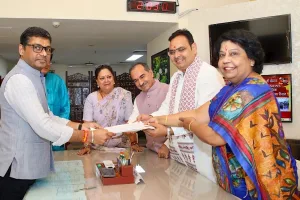
Prime Minister Narendra Modi is expected to dedicate the ₹79,459-crore Pachpadra Refinery in Rajasthan to the nation on a suitable date after January 15, 2026, Parliamentary Affairs Minister Joga Ram Patel said on Tuesday.

Addressing media persons after the state cabinet meeting here on Tuesday evening, Patel said the 9-million-metric-tonne refinery is scheduled to commence production in January 2026.

He added that Prime Minister Modi may inaugurate the mega project after Makar Sankranti on January 14, 2026. Deputy Chief Minister Dr Prem Chand Bairwa was also present at the press briefing.

The petrochemical complex attached to the refinery is expected to commence operations in July 2026, he said.

Patel further stated that since the inception of the project in 2013, the refinery, a joint venture between Hindustan Petroleum Corporation Limited and the Rajasthan government, has undergone a second revision (amendment) in its project scope, which was approved by the Central Government.

According to a report submitted by the company to the state government on December 4, 2025, the refinery is ready for commissioning next month.

The report also noted that the project cost has escalated and has now been revised accordingly. The state cabinet, at its meeting today, approved the revised project cost, the minister added.

Besides the refinery, the cabinet also approved several key proposals and policies, including the Rajasthan Registered Vehicle Scrapping Policy 2025 and the Rajasthan AI/ML Policy 2026.

Tripura student murder: Dehradun SSP explains FIR delay; no racial abuse evidence

Tripura student murder: According to SSP Singh, the incident occurred in the Selaqui police station area, where six accused had gathered for a birthday party.

Statesman News Service | New Delhi |

Dehradun Senior Superintendent of Police (SSP) Ajay Singh on Tuesday responded to allegations of a delay in registering an FIR in the murder of Tripura student Angel Chakma, stating that the police wanted to thoroughly examine the “racial attack” angle.

Addressing a press conference in Dehradun, Singh said the incident took place on December 9 and that the victim’s brother approached the police the following day.

He said the police wanted to examine all aspects of the case, as the incident occurred in a crowded area, yet no information was received at the police control room at the time. Normally, he added, local residents inform the police immediately in such cases.

He further stated that the allegations made by the victim’s family, including claims of racial abuse, also needed to be verified in order to invoke the appropriate sections of the Bharatiya Nyaya Sanhita (BNS).

Angel Chakma, a student from Nandanagar in Tripura’s Debram Thakur Para, was allegedly attacked with sharp weapons during a heated argument in Dehradun on December 9. He sustained critical injuries and succumbed on December 26 while undergoing treatment at a private hospital.

According to Angel’s family, he and his brother, Micheal Chakma, had gone to the Selaqui area of Dehradun to buy groceries when they were allegedly stopped by a group of six men who hurled racial slurs, calling them “Chink,” “Chinese,” and “Momo.”

Angel reportedly confronted the men, asserting that he was Indian and not Chinese. The situation then escalated, and the assailants allegedly attacked him with knives and other blunt objects.

However, the police said they have not found any evidence so far to substantiate the family’s claim that the attack was racially motivated.

According to SSP Singh, the incident occurred in the Selaqui police station area, where six accused had gathered for a birthday party.

“A scuffle broke out near a liquor shop amid a crowd, during which one of the accused assaulted the victim, causing grievous injuries. The victim was taken to Graphic Era Hospital, where he later died on December 26,” he said.

So far, the police have arrested five accused, including two minors, in connection with the murder. A sixth accused, who is reportedly a Nepali national, is currently absconding, and efforts are underway to nab him.

After delimitation, UP has 1,77,516 booths, an increase of 15,030

State Chief Electoral Officer( CEO) Navdeep Rinwa stated here on Tuesday night that the process of delimitation of polling stations in the state commenced on October 29, 2025.

Statesman News Service | Lucknow |

The Election Commission of India( ECI) has approved the proposal for the delimitation of polling stations based on 1200 voters per polling station in 403 assembly constituencies across 75 districts in Uttar Pradesh.

State Chief Electoral Officer( CEO) Navdeep Rinwa stated here on Tuesday night that the process of delimitation of polling stations in the state commenced on October 29, 2025. The proposals received from the District Election Officers of all 75 districts were sent to the Election Commission of India for approval on November 24, 2025.

The ECI had given its approval on December 23 last.

Rinwa, further stated that the number of polling stations in the state was 162,486, which has increased to 177,516 after the delimitation, representing an increase of 15,030 polling stations. Last year, in 2024, the delimitation of polling stations was done based on 1500 voters per polling station.

Due to the increase in the number of polling stations, additional Booth Level Officers will be deployed at the newly created 15,030 polling stations.

The draft electoral roll under the special intensive revision, based on the qualifying date of January 1, 2026, will be published at the new polling stations on January 6, 2026.

ICSI sets benchmark for Ethical Stewardship amidst rising IPOs

As a premier governance body, the ICSI remains committed to promoting excellence in governance, ethics, and sustainability, and supporting initiatives that foster trust and transparency in India Inc.

Statesman News Service | New Delhi |

With Initial Public Offerings (IPOs) increasingly emerging as a preferred exit route for promoters, The Institute of Company Secretaries of India (ICSI) underscores the critical importance of robust stewardship standards to protect investor interests and promote sustainable governance practices.

As a premier governance body, the ICSI remains committed to promoting excellence in governance, ethics, and sustainability, and supporting initiatives that foster trust and transparency in India Inc. The ICSI’s Governance Principles on Stewardship (IGPS) is one such initiative, that provides a comprehensive framework aimed at addressing the growing risk of short-termism in capital markets. By encouraging ethical, transparent, and responsible conduct by institutional investors, IGPS seeks to strengthen confidence among retail investors and enhance long-term value creation.

Emphasising its significance, CS Dhananjay Shukla, President, the ICSI, said, “The IGPS framework aligns with global best practices and advocates strengthening the investment structure by safeguarding the interests of retail investors and laying the onus on the Institutional Investors. IGPS reinforces the Company Secretary’s role as Governance Professionals and ensures compliance, ethical decision-making, and accountability across organisations.”

Reflecting his opinion, CS Asish Mohan, Secretary, the ICSI, reiterated that, “Effective Stewardship is essential, particularly in an environment where public shareholding is rising rapidly post-IPO. The ICSI urges institutional investors, listed companies, and governance professionals to adopt the IGPS framework to strengthen India’s corporate governance landscape.

Odisha Vigilance recovers Rs 72 lakh cash from revenue service officer

50-year-old Jitendra Kumar Panda, Additional Tahasildar, Barang, in the Cuttack district, who has come under Vigilance scanner, incidentally joined government service under Rehabilitation Scheme at Rs 2,000-a-month salary.

Statesman News Service | BHUBANESWAR |

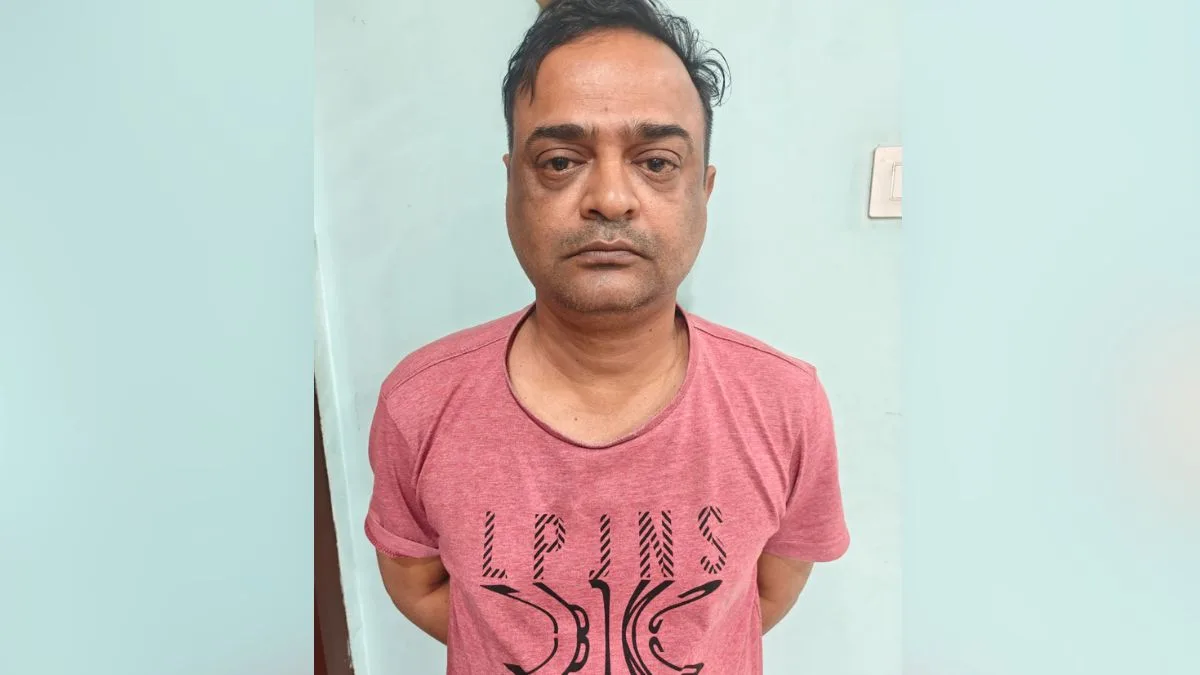
The anti-corruption Vigilance wing of Odisha police on Tuesday stumbled upon wads of currency notes worth Rs 72 lakh rupees from the house of a revenue service officer and unearthed disproportionate assets including attention-grabbing buildings and high-value plots worth crores of rupees during simultaneous search operations at multiple locations.

50-year-old Jitendra Kumar Panda, Additional Tahasildar, Barang, in the Cuttack district, who has come under Vigilance scanner, incidentally joined government service under Rehabilitation Scheme at Rs 2,000-a-month salary.

Panda is being quizzed to ascertain the source of the assets. Further searches are continuing. Unearthing of more assets is likely and overall valuation is likely to increase.
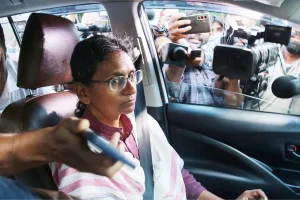
The suspected ill-gotten assets, amassed by Panda and his family members, include a triple storeyed building with area 4000 Square feet at Badagada in Bhubaneswar, another triple storeyed building with area 4000 Sqft. Located at Badagada Brit Colony in Bhubaneswar, a 2 BHK flat with area approximately 1250 Sqft at Uttara area in Bhubaneswar, a double storeyed building with area 4800 Square feet at Sanapalla in Khordha, four high value plots including 3 in posh area of Bhubaneswar & 1 in Khordha town.

The measurement and valuation of the above buildings/flat/ plots are being carried out by Vigilance Technical Wing.

Furthermore, gold jewellery weighing approximately 500 grams were found in Panda’s house. The inventorization of 3 lockers being maintained at nationalized banks in Bhubaneswar in name of the spouse and Mother-in-law of Panda will be conducted tomorrow.
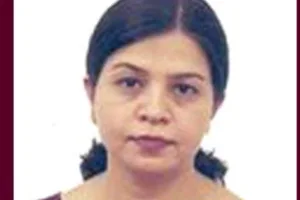
Besides, cash to the tune of 72,20,920 (Rs 72.20 lakh), Bank & Insurance deposits worth approximately Rs.20 lakhs, a four wheeler and four two wheelers worth around Rs.23.41 lakhs and household articles worth around Rs.16 lakh were also found during simultaneous search operations.

Panda entered into Government Service on 10 November 1995 as Senior Laboratory Assistant in the office of the Director, Animal Husbandry and Veterinary Services, Cuttack on Rehabilitation Scheme with monthly initial salary Rs.2,000.

On 16 may 2020, he was promoted to the rank of Odisha Revenue Service and joined as Training Reserve Officer under District Sub-Registrar, Bhubaneswar. Then from 26 February 2021 to 11 March 2023, he worked as Additional Tahasildar, Pipili in Puri district. Later he worked as Sub-Registrar, Pipili. On 1 July 2023, he was posted as Additional Tahasildar, Baranga, Cuttack on transfer and he is continuing as such till date.
In another disproportionate asset search operation today, 6 locations of Jitendra Kumar Jena, Panchayat Executive Officer, Bancho Gram Panchayat under Hatadihi Block in Keonjhar district, movable and immovable assets worth crores of rupees have been unearthed so far, in the name of Jena and his family members.

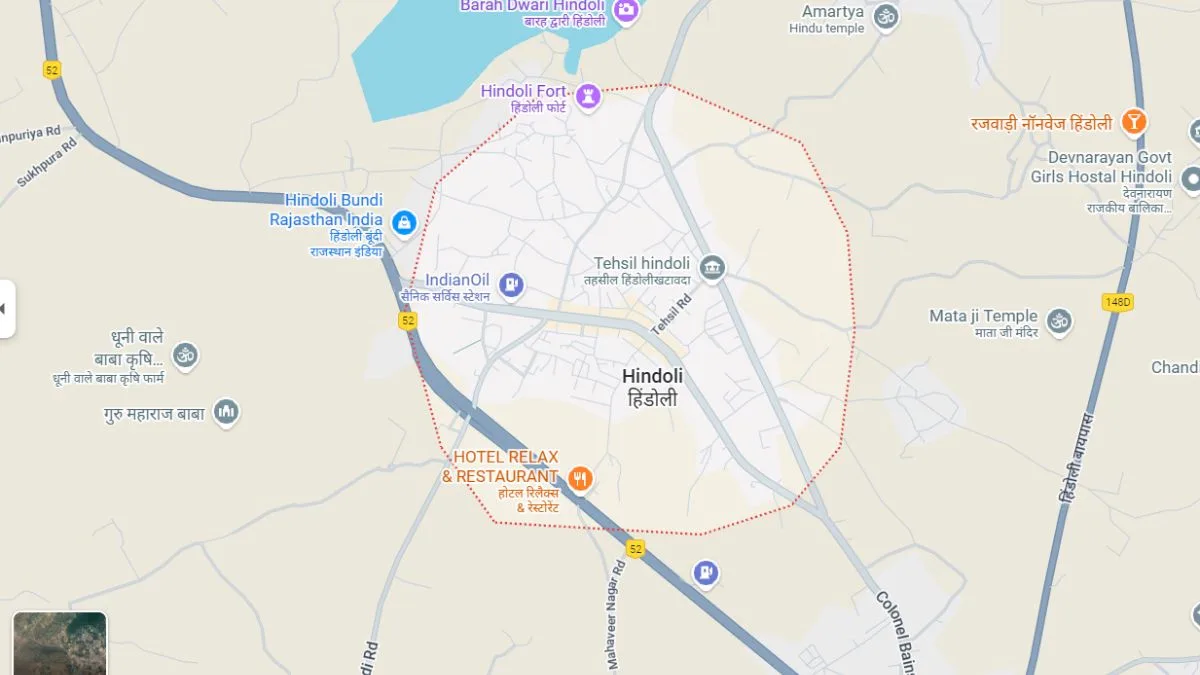
Tension in Rajasthan’s Hindoli town after bid to desecrate temple

According to police sources, anti-social elements threw objectionable waste material inside a local temple late on Monday night with the intention of disrupting social harmony.

Statesman News Service | Jaipur |

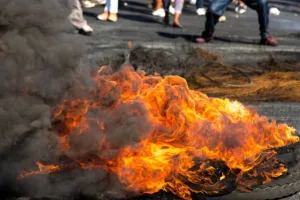
Tension prevailed in Hindoli town of Rajasthan’s Bundi district on Tuesday as local traders and business houses organised a bandh to protest an alleged attempt by miscreants to desecrate a religious place.

According to police sources, anti-social elements threw objectionable waste material inside a local temple late on Monday night with the intention of disrupting social harmony.

Enraged by the provocative act of miscreants, activists from various Hindu organisations assembled at the local police station on Monday night and staged a demonstration.

Sensing trouble, the police swung into action and took six persons into custody for interrogation. An additional police force was also deployed as a precautionary measure.

A trade bandh was observed in the town on Tuesday in protest against the incident, which passed off peacefully despite prevailing tension.

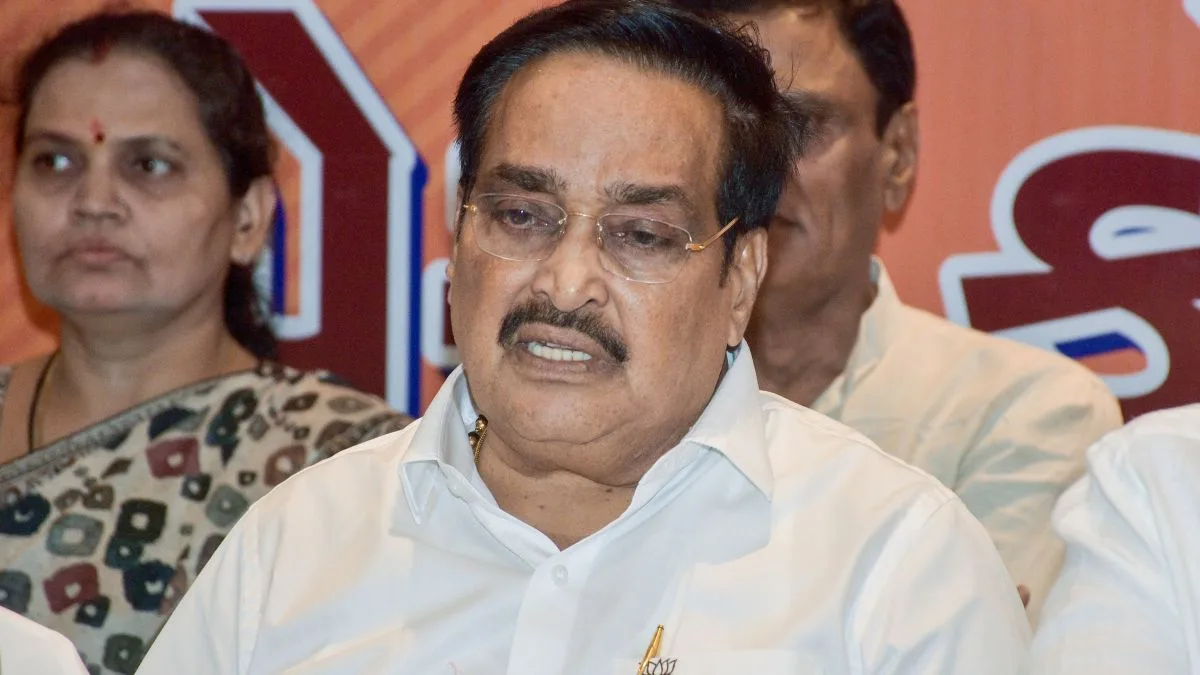
Union Minister C R Patil launches Jal Seva Aankalan to assess drinking water services

The tool was formally e-launched by C R Patil, Union Minister of Jal Shakti.

Statesman News Service | New Delhi |

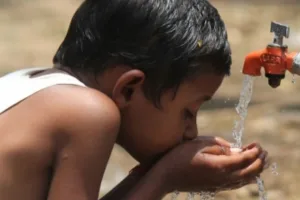
The Department of Drinking Water and Sanitation (DDWS), Ministry of Jal Shakti, on Tuesday e-launched Jal Seva Aankalan, a Gram Panchayat-led digital drinking water service functionality assessment tool on the Jal Jeevan Mission (JJM) portal.

The tool was formally e-launched by C R Patil, Union Minister of Jal Shakti.

The initiative marks a decisive shift from infrastructure creation to sustained service delivery, placing Gram Panchayats and village institutions at the centre of assessing the regularity, adequacy, quality and sustainability of drinking water supply in Har Ghar Jal (HGJ) villages.

With a large number of Gram Panchayats having achieved Har Ghar Jal status, Jal Jeevan Mission has entered a new phase where the emphasis is on ensuring that tap connections translate into reliable and safe drinking water services on a daily basis.

Jal Seva Aankalan has been conceptualised as a community-owned self-assessment, enabling villages to collectively reflect on their water service delivery systems rather than relying solely on infrequent and costly third-party surveys.

The event was attended by Ministers of State for Jal Shakti, V Somanna and Raj Bhushan Choudhary, along with senior officials of DDWS, representatives from states and institutions, Panchayat Secretaries, Sarpanches and Village Water and Sanitation Committee members.

Around 10,000 representatives of Har Ghar Jal Gram Panchayats from across States/UTs participated virtually in the programme.

Addressing the gathering, C R Patil emphasised that Jal Jeevan Mission is not only about creating assets, but about delivering dependable drinking water services to every rural household on a sustained basis.

He outlined the four key pillars of the Mission — Political Will, People’s Participation, Stakeholder Collaboration, and Optimal Resource Use, and underscored that Jan Bhagidari is the most crucial pillar for ensuring the long-term sustainability of Har Ghar Jal achievements.

The Union Minister of Jal Shakti said Jal Seva Aankalan empowers Gram Panchayats to become custodians of their own water supply systems and strengthens democratic decision-making through Gram Sabhas.

The Minister said, “Jal Jeevan Mission is for the people and for the villages, and the responsibility to keep it going rests with the community itself; this can be achieved only through Jan Bhagidari.”

He underscored that community participation and transparency are essential for the long-term sustainability of rural drinking water systems, and that the new tool will help identify service delivery gaps early and enable timely corrective action.

Dispute over office space between CPM MLA, BJP councillor leads to probe into Thiruvananthapuram Corp leasing irregularities

It has been found that there have been huge irregularities in renting out Thiruvananthapuram corporation buildings to private individuals. Mayor V V Rajesh has directed the Corporation Secretary to collect detailed information, including floor areas and lease documents, for all rented corporation assets to reclaim unauthorised transfers.

Statesman News Service | Thiruvananthapuram |

The row that has erupted in Kerala’s capital over a dispute between Sasthamangalam ward BJP councillor R Sreelekha and Vattiyoorkavu CPM MLA VK Prasanth over the office space in the city corporation building has reached a new level as it exposed alleged large-scale irregularities and favouritism in the leasing of various Thiruvananthapuram Corporation buildings to private entities, often at low rents or without proper procedure.

It has been found that there have been huge irregularities in renting out Thiruvananthapuram corporation buildings to private individuals. Mayor V V Rajesh has directed the Corporation Secretary to collect detailed information, including floor areas and lease documents, for all rented corporation assets to reclaim unauthorised transfers.

Preliminary findings suggest significant malpractice under previous CPM-led administrations, including properties being illegally transferred for substantial sums despite nominal official rents. In some cases, buildings were not returned to the Corporation even after the original leaseholder died.

It has been alleged that shop rooms were leased out by the Corporation for as little as Rs 250 per month, but occupants allegedly sublet them at market rates, earning lakhs of rupees in “rent theft”.

It has also been found that many Corporation properties are currently being used by individuals who are not the original tenants, with some tenants having passed away years ago without the buildings being returned to the Corporation.

It has been alleged that some individuals who secured buildings or parking spaces through auctions were reportedly given unauthorised rent exemptions after officials falsely certified the buildings were not in use.

A comprehensive investigation has been ordered into alleged widespread irregularities in the leasing of Thiruvananthapuram Corporation buildings to private individuals. The new BJP-led administration in the civic body is spearheading the inquiry. The Corporation is also investigating whether public revenue, including rent and taxes, was properly collected or if significant funds were lost due to official negligence or corruption.

The issue began when the newly elected BJP councillor for the Sasthamangalam ward and former state DGP, R Sreelekha reportedly called Prasanth, a CPM MLA, and asked him to vacate the office space he occupies in a corporation-owned building. Sreelekha cited a lack of sufficient space for her own councillor’s office and a health circle office.

Prasanth refused, citing a valid rental agreement and arguing that only the municipal secretary could issue an eviction notice following a council decision. The dispute has led to alleged irregularities in the corporation’s leasing practices, including nominal rent payments and improper allotment procedures.

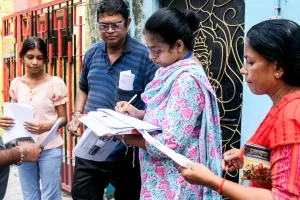
Congress alleges “targeted deletions” in voter roll revision in Bengal, Tamil Nadu

The party expressed the fears that the process is leading to the mass disenfranchisement of voters, particularly among poor and marginalized communities.

Statesman News Service | New Delhi |

The Congress party raised an alarm on Tuesday over the ongoing Special Intensive Revision (SIR) of electoral rolls, accusing the Election Commission of India (ECI) of lack of transparency and “arbitrary” decision-making, alleging arbitrariness and targeted deletion of voters in states such as West Bengal and Tamil Nadu.

The party expressed the fears that the process is leading to the mass disenfranchisement of voters, particularly among poor and marginalized communities.

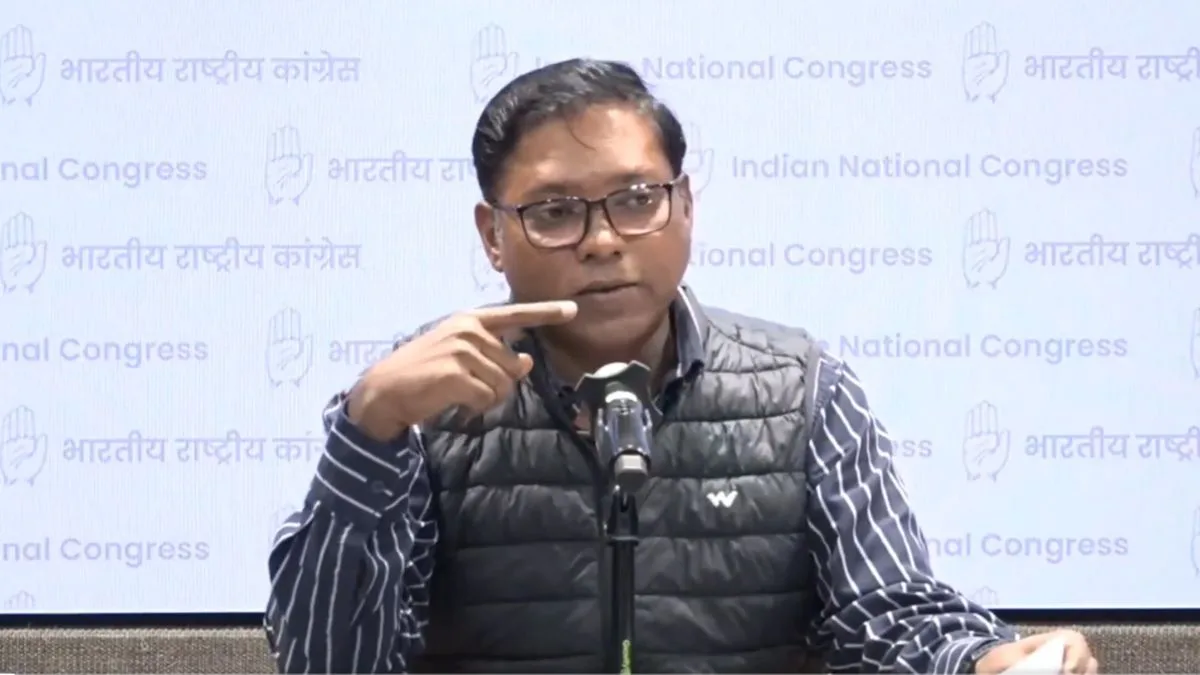
Addressing a press conference, Congress MP Sasikanth Senthil criticized the execution of the SIR across 12 states. He alleged that the exercise is being conducted without standardized protocols or adequate training for Booth Level Officers (BLOs). He claimed that BLOs are being forced to make individual judgments on voter deletions without clear institutional guidelines.

The MP highlighted a “U-turn” on de-duplication software, noting that it was discarded in Bihar for being unreliable but has now been reintroduced in other states without explanation.

Citing investigative reports, Senthil pointed out that the Bihar SIR left approximately 14.5 lakh duplicate voters on the rolls, violating the ECI’s own 2023 manual requiring 100% de-duplication.

The Congress leader presented data to illustrate the scale of the potential discrepancies:

West Bengal: Over 32 lakh voters marked as “unmapped”; 1.7 crore entries flagged for “logical discrepancies.”

Tamil Nadu: Alleged deletion of roughly 97 lakh voters, including 6 lakh in a single constituency.

Senthil questioned the handling of “logical discrepancies”, such as improbable age gaps between parents and children, stating that BLOs are receiving no clear instructions on how to resolve these cases.

The Congress is demanding that the ECI should release publicly available guidelines and specific yardsticks used for voter deletion. Senthil questioned the “urgency” of the current revision, arguing that such a massive undertaking requires years of careful, consultative work rather than a rushed process that risks the integrity of the democratic system.

“The manner in which the SIR is being conducted has created ‘strong doubts’ among citizens,” Senthil said, emphasizing that any large-scale revision must protect the rights of every eligible voter.

Youth arrested for pickpocketing at Banke Bihari Temple

A suspicious young man was caught red-handed pickpocketing devotees near Gate Number 2 of the temple.

Statesman News Service | Vrindavan |

A shocking incident unfolded amidst devotion and security at the world-famous Thakur Banke Bihari Temple, leaving everyone stunned.

A suspicious young man was caught red-handed pickpocketing devotees near Gate Number 2 of the temple. His attempt to conceal his identity and the subsequent revelation of his true identity created tension and panic on the temple premises.

A video of the entire incident is rapidly going viral on social media.

A large crowd of devotees had gathered at the temple for darshan of Banke Bihari Ji. Taking advantage of the crowd, a young man stole a wallet from a devotee’s pocket. An alert devotee immediately caught the young man’s hand and raised an alarm. Those present were shocked to see that the accused had applied a tilak (religious mark) on his forehead and was completely disguised as a Hindu devotee to avoid being identified in the crowd.

When the police arrived and took the accused into custody for questioning, he continued to mislead them to conceal his identity. However, after rigorous questioning and a search, his Aadhaar card revealed his true identity. The accused was identified as Ikhlaq, son of Iqbal, a resident of Mandiram Das, Govind Nagar, Mathura.

Committing a theft inside the temple premises in disguise raises serious questions about the security system.

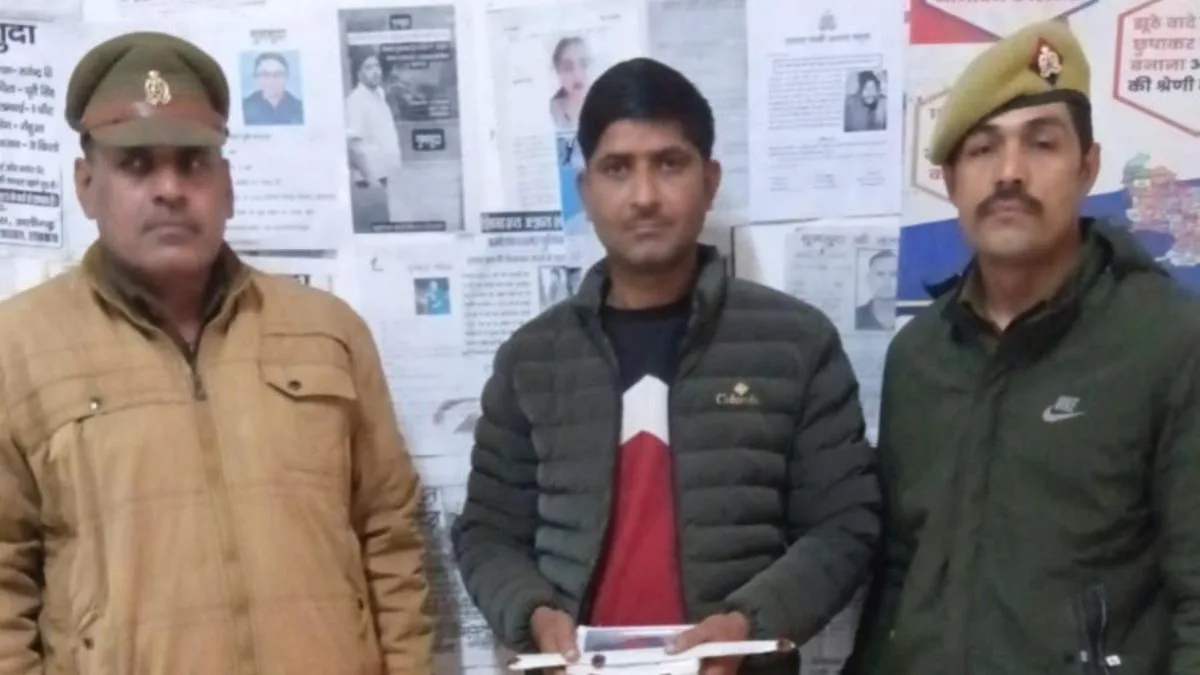
The police recovered a knife, a phone, a driver’s licence, a debit card, a global card, an Aadhaar card, and ₹500 from Ikhlaq.

This incident has caused deep anger among devotees and local residents in Braj. Devotees say that the entry of anti-social elements into the sacred temple premises while concealing their identity is a major security breach. They demanded mandatory ID checks for suspected individuals at the temple entrances, the deployment of plainclothes “anti-pickpocket” squads similar to “anti-Romeo” squads, and an increase in the number of CCTV cameras in crowded areas.

The Vrindavan Kotwali police have registered a case against the accused under relevant sections of theft and fraud and have sent him to jail. The police are now investigating whether he is part of a larger gang that targets temples during festivals and periods of heavy crowds by disguising themselves. The administration has urged devotees to remain vigilant about their valuables.

Shafali Verma closes in on top spot in ICC Women’s T20I rankings

Shafali has climbed four places to sixth in the updated standings following a prolific run in the ongoing home T20I series against Sri Lanka.

Statesman News Service | New Delhi |

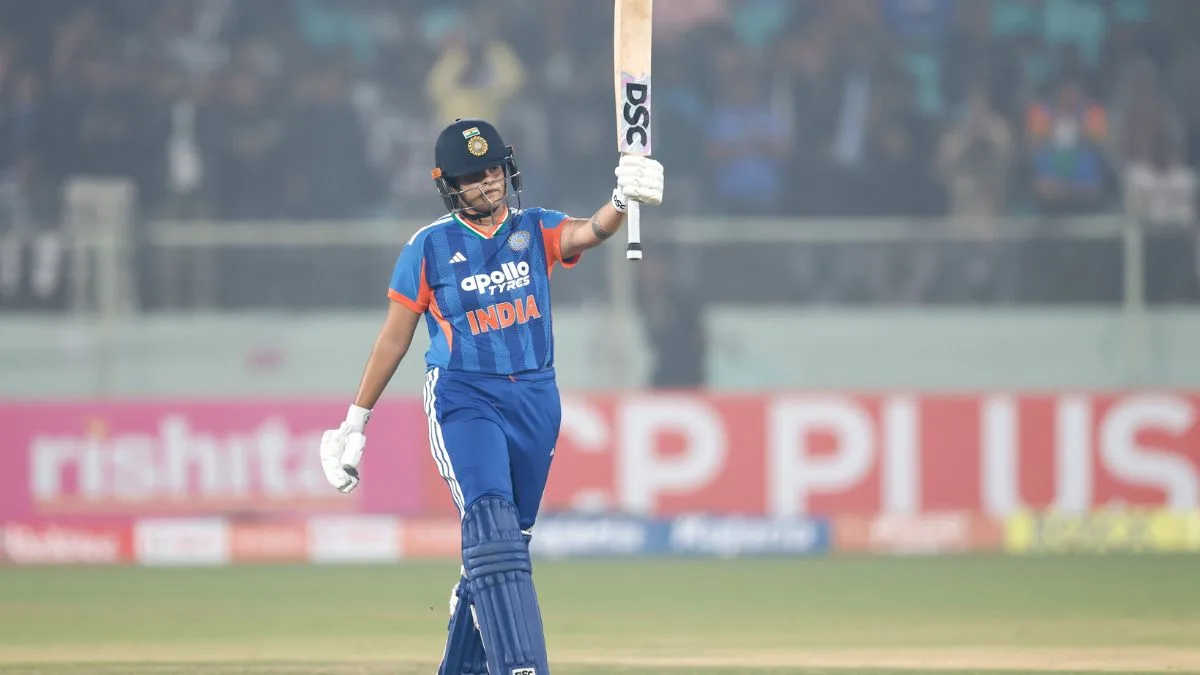
Shafali Verma’s return to peak form has been emphatically underlined by her sharp rise in the latest ICC Women’s T20I batter rankings, with the young Indian opener now closing in on the coveted top spot.

Shafali has climbed four places to sixth in the updated standings following a prolific run in the ongoing home T20I series against Sri Lanka. The 21-year-old has been in commanding touch, seamlessly carrying forward the momentum she built during the recently concluded ICC Women’s Cricket World Cup into the shortest format of the game.

Having become only the second Indian batter after Mithali Raj to reach the No. 1 position in the T20I rankings in 2020, Shafali went through a lean phase before rediscovering her best form in recent weeks.

Her resurgence was highlighted by a match-winning performance in the World Cup final, where she struck a decisive 87 and claimed two wickets to guide India to their maiden 50-over world title.

That confidence has continued into the Sri Lanka series, with Shafali registering three half-centuries in the first four matches to emerge as the leading run-scorer. She now trails current top-ranked batter Beth Mooney of Australia by just 60 rating points.

India have also made notable gains in the batting rankings beyond Shafali’s rise. Wicketkeeper-batter Richa Ghosh moved up seven places to joint 20th following her unbeaten 40 in the fourth T20I in Thiruvananthapuram.

The latest update brought further encouragement for India’s bowling unit as well. Pacer Renuka Singh jumped eight spots to joint sixth in the T20I bowling rankings after claiming a four-wicket haul on her return during the third match of the series.

Left-arm spinner Shree Charani also made significant progress, climbing 17 places to 52nd following her four-wicket haul across the opening four games against Sri Lanka.

At the top of the charts, Deepti Sharma continues to maintain a slender lead in the T20I bowling rankings, while West Indies all-rounder Hayley Matthews remains firmly placed at No. 1 among T20I all-rounders.