Logo

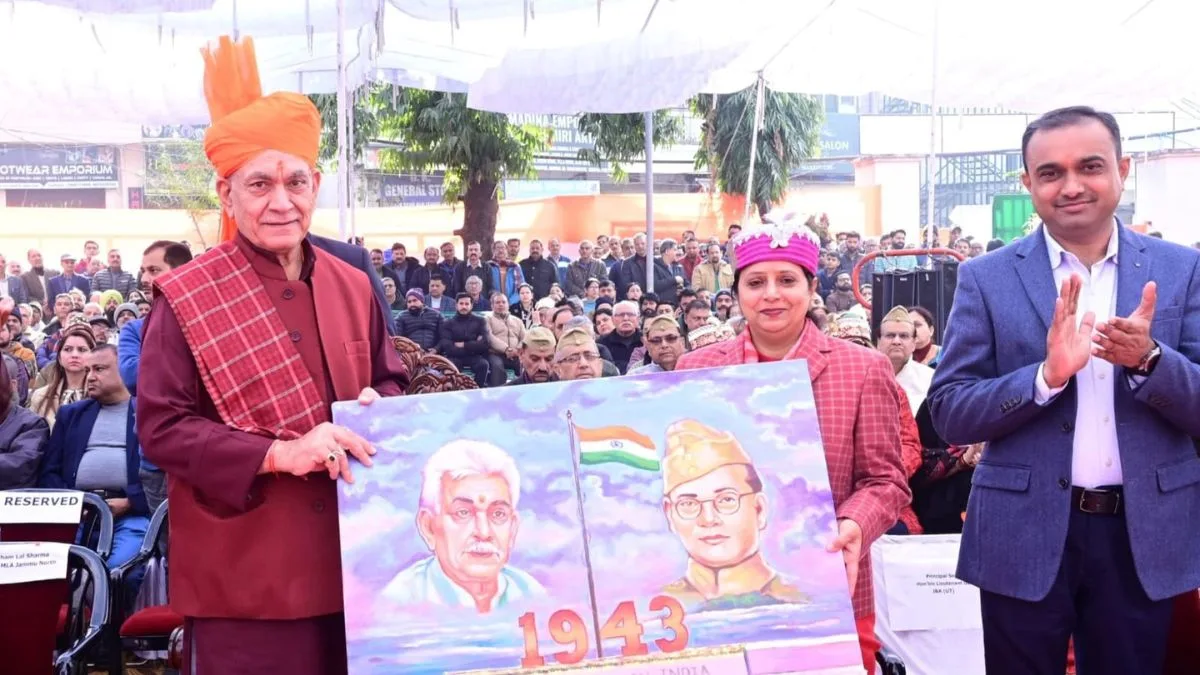
LG Sinha inaugurates Netaji Subhas Chandra Bose flag point in Jammu

On 30 December 1943, Netaji declared Port Blair free from British rule and gave all countrymen the resolve for Independence. Today’s initiative aims to commemorate the glorious contribution of Netaji to the freedom struggle.

Statesman News Service | Jammu |

Lieutenant Governor Manoj Sinha on Tuesday hoisted the Tricolour and inaugurated the Netaji Subhas Chandra Bose Flag Point at JDA Park, Ram Vihar, here to mark the 82nd anniversary of the hoisting of the Tricolour on Indian soil by Netaji Subhas Chandra Bose in the Andaman and Nicobar Islands in 1943.

On 30 December 1943, Netaji declared Port Blair free from British rule and gave all countrymen the resolve for Independence. Today’s initiative aims to commemorate the glorious contribution of Netaji to the freedom struggle.

Paying tribute to Netaji Subhas Chandra Bose, the Lieutenant Governor highlighted that the “Jai Hind” slogan given by Netaji remains a symbol of national valour that once united the Azad Hind Fauj and continues to inspire 140 crore Indians today.

“Netaji Subhas Chandra Bose’s patriotism was unparalleled. His extraordinary valour provided India with a vital mantra: the future can only be built on the foundation of unity. He believed that a society fragmented by divisions could never construct a lasting future. Netaji’s advocacy for Swaraj, his efforts for empowerment of youth and women, his economic policy, and his emphasis on industrialisation and promotion of small-scale industries played a crucial role in building the foundation of a self-reliant India today,” the Lieutenant Governor said.

The Lieutenant Governor expressed gratitude to Prime Minister Narendra Modi for ensuring that Netaji’s legacy received its rightful place in history.

The Lieutenant Governor stated that Jammu is a symbol of India’s national unity and an unbroken cultural stream. He noted that the indomitable spirit of the people of Jammu had kept the flame of complete integration of Jammu and Kashmir burning through several generations.

“Our unity is the strength and crucial for success. We must remain one and preserve our shared heritage and shared values,” the Lieutenant Governor said.

The Lieutenant Governor appreciated the Jammu Municipal Corporation, Jammu Development Authority, Housing & Urban Development Department and District Administration for their collaborative endeavour to honour Netaji’s legacy.

He also called for holding regular commemorative events on 30 December every year.

On the occasion, the Lieutenant Governor visited the photo gallery depicting the life history of Netaji Subhas Chandra Bose. A documentary showcasing Netaji’s leadership and his pivotal role in India’s independence was screened.

Exit Khaleda, Enter Tarique!

Her political career was moulded by military rule, mass movements, electoral politics and prolonged legal and political standoffs

Shantanu Mukharji | New Delhi |

A prominent figure in Bangladesh’s politics for more than forty years, BegumKhaleda Zia demise impact, political implications in Bangladesh, BNP sympathy wave, Tarique Rahman return to Dhaka, Bangladesh general elections February 2026, BNP clean sweep prediction, Awami League marginalisation, Jamaat electoral prospects, post-Khaleda Zia political scenario,rose from an ordinary housewife’s life to become the country’s first woman Prime Minister and one of the most influential leaders in South Asia’s post-independence history.

Her political career was moulded by military rule, mass movements, electoral politics and prolonged legal and political standoffs. Only a matriculate, while in her college years, she married then Pakistan Army officer Ziaur Rahman in 1960. During the Liberation War in 1971, she initially went into hiding.

On July 2, in 1971, Pakistani forces had detained Khaleda Zia and her two sons from a house in Dhaka and imprisoned them at the Dhaka Cantonment. She remained in captivity till December 15, just before Bangladesh became independent.

Following Ziaur Rahman’s assassination in 1981, on the exhortation of senior BNP leaders and activists, she assumed a leadership role in the party. With no prior political experience, she accepted the challenge and soon emerged as a key figure in opposition politics.

She led the formation of a seven-party alliance and launched a sustained movement against the Gen Hussein Mohammad Ershad’s military rule. The agitation continued in phases until 1986 and later intensified into a one-point movement demanding the resignation of Ershad.

The movement and Khaleda Zia’s uncompromising stance against the regime, ultimately contributed to the fall of Ershad and paved the way for the restoration of parliamentary democracy.

Khaleda Zia became Prime Minister for the first time in 1991 after the BNP won the parliamentary elections, marking the return of a democratic governance. She was re-elected briefly on February 15, 1996, and later returned to power for a third term in 2001 through a coalition government. She had contested 23 parliamentary seats across five general elections and won all of them, a record often cited as unique in Bangladesh’s electoral history.

Now, what are the immediate political and other implications for Bangladesh in the aftermath of Khaleda’s demise?

According to Bangladesh watchers and geo-political analysts, her passing away is likely to see a huge sympathy wave for the BNP in the forthcoming elections scheduled on February 12, 2026.

Everyone noticed the tumultuous welcome accorded to Khaleda’s son and acting chairman of the party, Tarique Rahman when he landed in Dhaka on December 25 after 17 years of exile in London.

Both these factors, the death and Tarique’s arrival, are expected to add to the electoral prospects of BNP.

This is also likely to dissipate, to a large extent, the chances of Jamaat’s improved performance in the elections.

In other words, there may be a clean sweep for the BNP. Tarique Rahman and the BNP rank and file will leave no stones unturned in their election campaign to capitalise on Khaleda’s demise to ensure an outright victory.

This may also see further alienation of the Awami League (AL) which already seems to be on the margins after Hasina’s unceremonious exit from Bangladesh in August last year. However, it would be too early to write an epitaph for any political party in Bangladesh.

Assuming BNP returns to power in the election, then Tarique Rahman is the only prospective “Prime Ministerial hopeful” and after being in oblivion for nearly two decades, he will like to make up for his absence by asserting and rewriting the role of his slain father Ziaur Rahman and his mother’s premiership for two spells thus deifying her.

While asserting his father’s role in the liberation struggle, Tarique and his cohorts will possibly try to play with history by highlighting his father’s role in the freedom struggle in a more pronounced manner carving a permanent place in the history which seemed dimming in the last nearly twenty years.

With the renewed glorification of Ziaur Rahman and Khaleda in redefining history of Bangladesh, other pro-liberation heroes and martyrs may gradually fade. Or that would be what the BNP would reckon for.

However, Tareque’s and BNP’s priority should be first to restore the fraught law and order situation, boosting the sagging morale of the uniformed personnel, and most importantly, ensuring full protection to the minorities and their places of worship which stand threatened by the “free for all” unleashing of terror by religious extremists.

Tarique will also do well to highlight these priorities in his canvassing speeches to instill confidence amongst the people in general who have been living under a grave sense of insecurity ever since the interim government is at the helm for the last well over a year.

(Writer, is a retired IPS officer, Adviser NatStrat, and a former National Security Advisor in Mauritius)

India women vs Sri Lanka women 5th T20I: Sri Lanka wins toss, opt to field

The visitors have made two changes to their playing XI, with Inoka Ranaweera and Malki Madara returning in place of Malsha Shehani and Kawya Kavindi. For India, G. Kamalini is set to make her T20I debut.

Statesman News Service | New Delhi |

Sri Lanka captain Chamari Athapaththu won the toss and has opted to bowl in the fifth and final T20I against India at the Greenfield International Stadium, Thiruvananthapuram.

The visitors have made two changes to their playing XI, with Inoka Ranaweera and Malki Madara returning in place of Malsha Shehani and Kawya Kavindi. For India, G. Kamalini is set to make her T20I debut.

India enters the match with an unassailable 4-0 lead and will look to continue their dominance in what has been a largely one-sided series. Sri Lanka will be aiming to avoid a complete whitewash and finish the tour on a positive note.

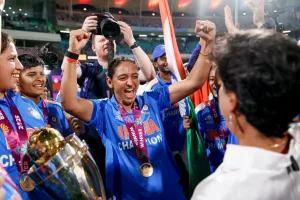
It has been a memorable year for the Indian women, winning their maiden ICC Women’s Cricket World Cup title in 2025, and they will be keen to finish the season on a high.

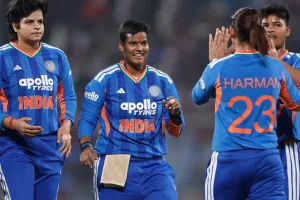
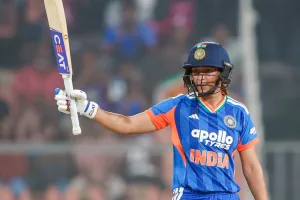
Much of the focus will once again be on openers Shafali Verma and Smriti Mandhana following their masterclass in the fourth T20I. The duo stitched together a record-breaking 162-run opening partnership, with Mandhana scoring 80 off 48 balls and Verma smashing an unbeaten 79 off 46 deliveries.

For Sri Lanka, left-handed opener Hasini Perera has climbed 114 places to 71st in the batter rankings after consistent performances in the series, while Kavisha Dilhari has made a modest rise to 79th.

India Women vs Sri Lanka Women, 5th T20I – Playing XIs

Sri Lanka:
Hasini Perera, Chamari Athapaththu (c), Imesha Dulani, Harshitha Samarawickrama, Kavisha Dilhari, Nilakshika Silva, Rashmika Sewwandi, Kaushani Nuthyangana (w), Nimasha Madushani, Inoka Ranaweera, Malki Madara

India:
Shafali Verma, G Kamalini, Richa Ghosh (w), Harmanpreet Kaur (c), Harleen Deol, Deepti Sharma, Amanjot Kaur, Sneh Rana, Arundhati Reddy, Vaishnavi Sharma, Shree Charani

Contributions of tribal heroes should be known to the youth: President Murmu

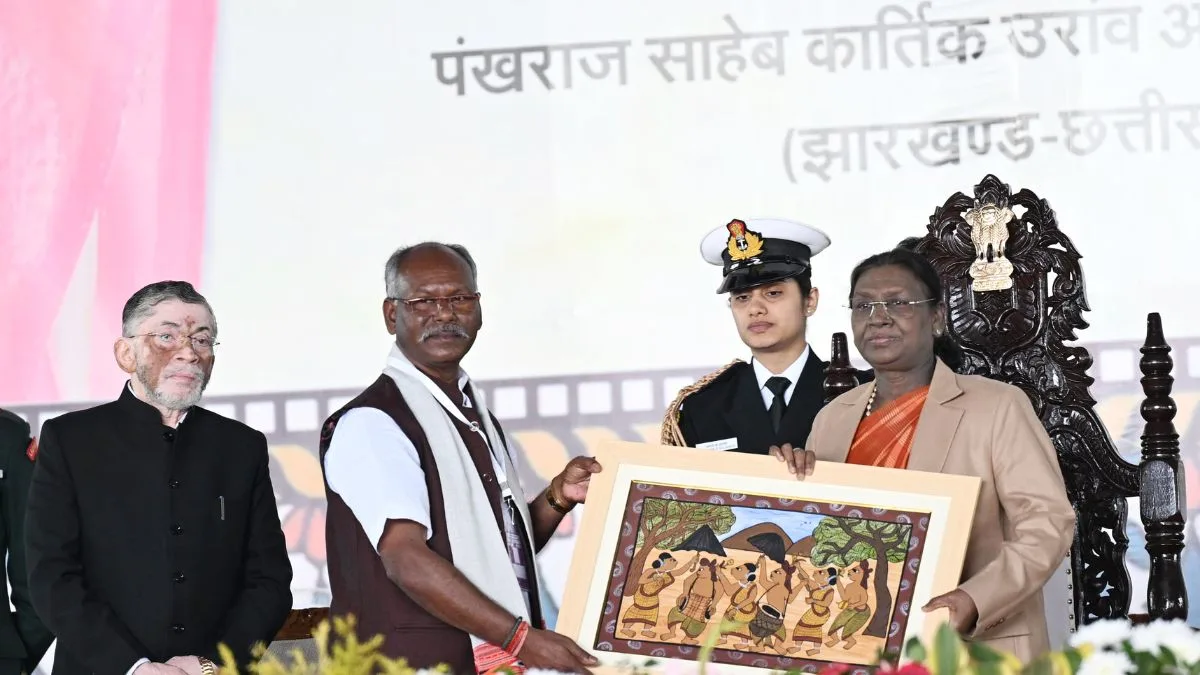
Hailing statesman, educationist and nationalist thinker from Jharkhand Kartik Oraon, who dedicated his life to the uplift of tribal society, President Droupadi Murmu Tuesday stressed that the tribal community should ensure that the contributions of the tribal heroes are made known to the youth and future generations of the country.

Statesman News Service | New Delhi |

Hailing statesman, educationist and nationalist thinker from Jharkhand Kartik Oraon, who dedicated his life to the uplift of tribal society, President Droupadi Murmu Tuesday stressed that the tribal community should ensure that the contributions of the tribal heroes are made known to the youth and future generations of the country.

Addressing Antarrajyiy Jansanskritik Samagam Samaroh – Kartik Jatra at Gumla in Jharkhand, President Murmu said, “It is the responsibility of every individual and institution associated with the heritage of the tribal community to ensure that the contributions of these tribal heroes, from this region and all other regions, are made known to the youth and future generations of the country.”

Speaking on the occasion, the President said that visiting Jharkhand, the birthplace and workplace of Bhagwan Birsa Munda, feels like a pilgrimage to her. ”He is revered by all of us as a great symbol of social justice and tribal pride,” she stated.

President Murmu said, ”Pankhraj Saheb Kartik Oraon strengthened tribal consciousness and identity in accordance with the ideals of Bhagwan Birsa Munda. Kartik Oraon Ji dedicated his life to the uplift of the tribal community and the nation. He worked for the spread of education and the strengthening of social unity. We should resolve to work for the overall development of society and the country by following his ideals.”

She said there is a long list of great tribal heroes from this region. The government is making efforts to familiarise the people of India with their heroic tales through the establishment of tribal museums.

President Murmu said it is crucial to connect the youth and future generations with the traditions of tribal communities. ”While preserving their tribal heritage and identity, our youth must move forward rapidly on the path of modern development.”

She expressed confidence that all members of the tribal communities will continue to move forward on the path of progress while preserving our heritage.

Kartik Oraon’s legacy lies not only in his developmental work for the tribals of central India but also in his bold resistance to religious conversion movements that he believed threatened the cultural fabric of India’s indigenous population.

Born in 1924 in a small village in present-day Jharkhand’s Gumla district, Kartik Oraon came from humble beginnings. At a time when very few from the tribal community even had access to basic education, he pursued higher studies with remarkable determination — eventually earning engineering degrees from the United Kingdom.


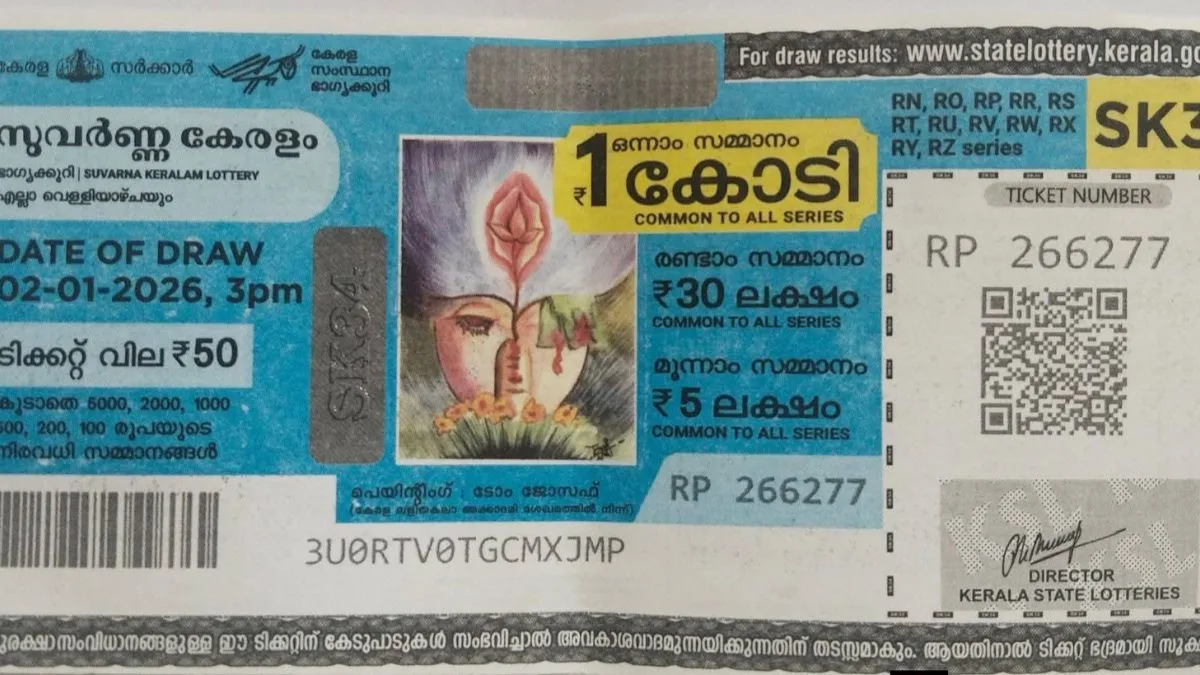
‘Menstrual blood into the Shivalinga!’ Image on Kerala lottery ticket in controversy

The image, sourced from the Kerala Lalithakala Akademi, has been widely condemned by Hindu groups stating that it is blasphemous and an insult to Hindu beliefs.

Statesman News Service | Thiruvananthapuram |

The image on the Kerala government’s Suvarna Keralam (SK 34) lottery ticket, which some religious organisations allege depicts menstrual blood flowing onto a Shivalinga, has sparked a major controversy in the state. Hindu organisations and the BJP have come out against it alleging that the image hurts Hindu religious sentiments and insults believers.

The image, sourced from the Kerala Lalithakala Akademi, has been widely condemned by Hindu groups stating that it is blasphemous and an insult to Hindu beliefs. The Hindu Aikya Vedi state president, RV Babu, has filed a complaint with the Thiruvananthapuram City Police Commissioner against the image on the lottery ticket.

Hindu Aikya Vedi leaders said the abstract image on the lottery ticket, which features what appears to be a Shivalinga, a three-petaled lotus, and a dripping red substance, is an obscene representation of menstrual blood being offered to the deity.

BJP state general secretary Adv S. Suresh and Hindu Aikyavedi state president R V Babu on Tuesday alleged that the lottery ticket has a picture of menstrual blood flowing into a Shivalinga. The picture is featured on the lottery ticket issued by the Lottery Department in the SK 34 series to be drawn on January 2, 2026.

Hindu Aikyavedi State President RV Babu alleged that an organised group with the aim of destroying Sanatana Dharma by any means is currently working in Kerala.

RV Babu wrote on Facebook that the Pinarayi Vijayan government and the party it leads have made it a habit to constantly insult Hindu beliefs. The government’s inspiration may be the support of mentally ill people who applaud such actions. An organised attack by those who work with the aim of destroying Sanatana Dharma by any means is currently underway in Kerala, he claimed.

In his post, Babu also stated that if the Hindu community is not ready to open its eyes, it will only lead to self-destruction.

BJP State General Secretary Adv S Suresh responded by saying that it is time to stop insulting Hindus and Hindu religious beliefs. The time has come to crack down on communist brains that express sexual perversions as culture, he said.

“Pinarayi and his team, who are now reaping Ayyappan’s wealth, have now insulted the believers by depicting a sexual act of pouring menstrual blood on a Shivalingam in a lottery called Suvarna Keralam. Protest against this,” Suresh said.

“Whatever the religion, faith should not be insulted. What is this…? Insulting Hindus and Hindu beliefs. Can’t you stop?? The time has come to stop the communist scumbags who express sexual perversions as culture……

Pinarayi and his team, who are taking advantage of Ayyappan’s wealth, have now insulted the believers by depicting a sexual act of pouring menstrual blood on a Shivalingam in a lottery called Suvarna Keralam. Protest against this,” Suresh wrote on his post on Facebook

The Kerala State Lottery Department has informally stated that the images used are from the collection of the Kerala Lalithakala Akademi and were meant to be artistic. The Director of the department has acknowledged the matter and stated it is under investigation.

The controversy gained significant traction on social media, with political leaders weighing in on the issue, with many users and religious activists calling for a boycott or the burning of the controversial tickets.

BJP has disregard for constitutional guarantee of reservation: Akhilesh Yadav

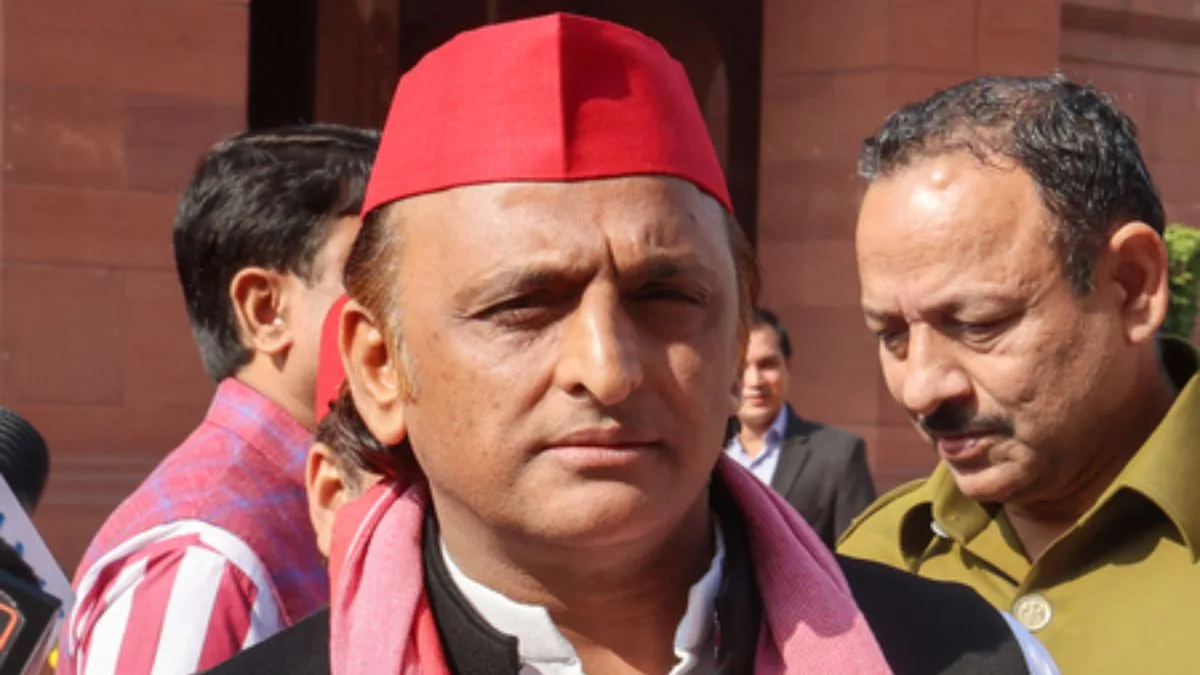
Samajwadi Party National President Akhilesh Yadav has accused BJP members of openly disregarding the reservation system guaranteed by the Constitution.

Statesman News Service | Lucknow |

Samajwadi Party National President Akhilesh Yadav has accused BJP members of openly disregarding the reservation system guaranteed by the Constitution.

Yadav alleged that the BJP members want to deprive the PDA (Pichda, Dalit, Alpsankhyak) of their reservation rights, thinking they would give it back if caught. “This clearly shows that OBCs, Dalits, minorities, and women are all second-class citizens in the eyes of the BJP. The venom of discrimination that is filled in the minds of the BJP members at times manifests itself in violence, exploitation, oppression, and untouchability against the PDA, and sometimes in the despicable act of denying reservations or attempting to “purify” things with Ganga water,” he alleged.

In a statement here on Tuesday, the SP president said only if the BJP is removed from power can the Constitution and reservations be saved. “The BJP has betrayed all sections of society, including the backward classes and Dalits. It does not want to grant the rights and entitlements guaranteed by the Constitution. The BJP has committed injustice against everyone. Jobs are not on the BJP government’s agenda, and certainly not for the PDA community. The BJP government does not send a government lawyer to the Supreme Court in the 69,000 teacher recruitment scam case, and the case dates are deliberately postponed,” he said.

He said the PDA community has understood the BJP’s tactics. In 2027, it will unite and remove the saffron party from power, thus ending its arrogance.

PM Modi hails 2025 as ‘Year of Reforms’, highlights his govt’s reform push

In an article published on LinkedIn, Modi said that India has emerged as the centre of global attention due to the innovative zeal of our people.

Statesman News Service | New Delhi |

As 2025 bids farewell, Prime Minister Narendra Modi on Tuesday hailed it as “The Year of Reforms”, saying that India has boarded the “Reform Express” on its journey towards building a prosperous and self-reliant India.

In an article published on LinkedIn, Modi said that India has emerged as the centre of global attention due to the innovative zeal of our people.

“Today, the world sees India with hope and confidence. They appreciate the manner in which the pace of progress has been accelerated with next-generation reforms, which are cross-sectoral and amplify the nation’s growth potential,” he said.

Highlighting his government’s reform push in the past year, Modi wrote that 2025 will be remembered as a year for India as the country focused on reforms as a continuous national mission, building on the ground covered over the past 11 years. “We modernised institutions, simplified governance, and strengthened the foundations for long-term, inclusive growth.”

From GST reforms to new Labour Laws, VB-G Ram G scheme and more

The Prime Minister cited various examples, including GST reforms, Income Tax relief to middile class, new Labour Laws, 100 per cent FDI in Insurance and more.

On GST reforms, Modi said that a clean two-slab structure of 5 per cent and 18 per cent was implemented to ease the burden on households, MSMEs, farmers and labour-intensive sectors.

“The purpose is to ensure dispute reduction and better compliance. This reform has boosted consumer sentiment and demand. Sales have grown in the festive season,” he said.

On Income tax reforms, Modi noted that individuals earning up to Rs. 12 lakh a year faced no income tax at all. He said that the Obsolete Income Tax Act of 1961 was replaced with the modern and simple Income Tax Act, 2025, marking India’s move towards a transparent, technology-driven tax administration.

He also highlighted his government’s measures to boost small medium businesses, including expanding of the definition of “small companies” to include firms with turnovers up to Rs. 100 crore. This, he said, would reduce the compliance burdens and associated costs for thousands of companies.

He said that his government’s decision to allow 100 per cent FDI in Indian insurance companies will give “a fillip to insurance penetration and security for the people.”

“Apart from enhanced competition, it would offer better insurance choices and improved service delivery for the people,” the PM added.

He also noted the Securities Market Code Bill that was introduced in Parliament to enhance governance norms in SEBI, as well as investor protection and enable a technology-driven securities market for a Viksit Bharat.

In a single Parliament session, Modi said that five landmark maritime legislations were passed — the Bills of Lading Act, 2025; the Carriage of Goods by Sea Bill, 2025; the Coastal Shipping Bill, 2025; the Merchant Shipping Bill, 2025; and the Indian Ports Bill, 2025.

“These reforms simplify documentation, make dispute resolution easier and reduce logistics costs. Outdated Acts dating back to 1908, 1925 and 1958 have also been replaced,” he noted.

“Hundreds of outdated laws have been scrapped. 71 Acts have been repealed through the Repealing and Amendment Bill, 2025. A total of 22 QCOs were revoked across synthetic fibres, yarns, plastics, polymers, and base metals, while 53 QCOs were suspended in various steel, engineered, electrical, alloy, and consumer end product categories, covering a broad spectrum of industrial and consumer materials,” he continued.

This, the Prime Minister asserted, will increase India’s share of apparel exports, lower production costs in diverse industries like footwear, automobiles, ensure lower prices for domestic consumers for electronics, bicycles and automotive products.

He further stated that labour laws were reshaped, merging 29 fragmented laws into four modern codes. “India has created a labour framework that secures the interests of workers while boosting the business ecosystem. The reforms focus on fair wages, timely payment of wages, smoother industrial relations, social security and safer workplaces. They ensure greater female participation in the workforce.”

He also emphasised the trade deals inked with New Zealand, Oman and Britain, saying these agreements will add to investments, boost job creation and also encourage local entrepreneurs. “They reinforce India’s position as a trusted and competitive partner in the global economy,” he remarked.

The Prime Minister also highlighted the controversial Viksit Bharat- G RAM G Act, 2025 Rozgar Guarantee scheme which replaced the UPA-era MGNREGA. He said that under the G Ram G Act, employment guarantee was raised from 100 to 125 days.

“This will result in increased spending towards strengthening village infrastructure and livelihoods. The aim is to turn rural work into a means to ensure higher incomes and better assets,” the PM said.

In the article, PM Modi claimed that his government has prioritised collaboration over control and facilitation over regulation in the true spirit of a modern democracy.

“These reforms are aimed towards building a prosperous and self-reliant India. Building a Viksit Bharat is the polestar of our development trajectory. We will continue pursuing the reform agenda in the coming years,” he said, urging everyone in India and abroad to “deepen their bond with the India growth story.”

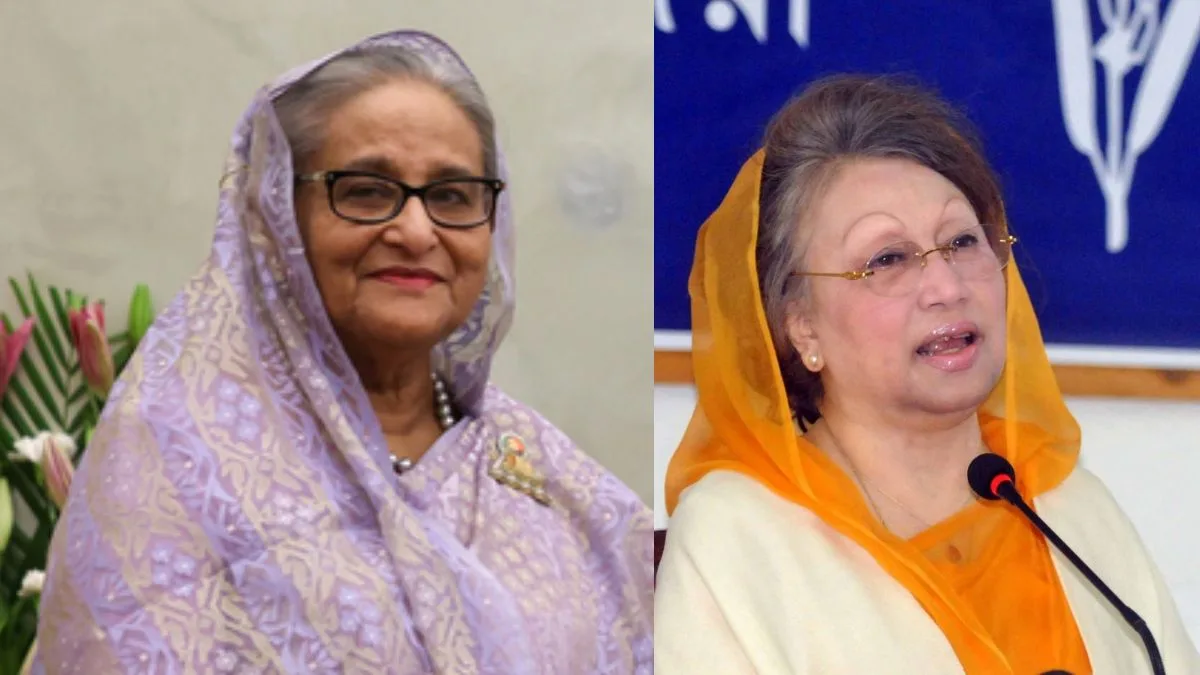
Bangladesh: The battle of the Begums has finally ended

But while Hasina and her Awami League are barred from contesting the elections next February, Zia’s Bangladesh Nationalist Party (BNP) is perceived as the likely winner.

Mahendra Ved | New Delhi |

The five-decade-old political rivalry of Bangladesh’s “battling Begums” has ended. In what can be considered a ‘draw’, Begum Khaleda Zia, 80, the two-term prime minister, lost her battle for life this morning, and Sheikh Hasina, who ruled longer, is exiled in India after being ousted last year.

But while Hasina and her Awami League are barred from contesting the elections next February, Zia’s Bangladesh Nationalist Party (BNP) is perceived as the likely winner.

Zia’s death, notionally though, clears the leadership line for her son Tarique Rahman. Poignantly, his reunion with the ailing mother after 17 years’ exile in London occurred barely five days ago, as if in time to bid farewell.

Conventional thinking in times of elections would give the Zia family the advantage of the “sympathy factor”. But BNP, now the largest mainstream force and an early starter in the poll campaign, is bidding seriously. It submitted Tarique’s nomination papers, and according to one report, also a set for the mother’s re-election.

Besides bestowing honour on the ailing party chief, this may well be part of the election strategy. Most prominent leaders in Bangladesh contest from multiple constituencies in the quest for the numbers.

Back to the two women and the family legacies they inherit. Hasina’s father, Sheikh Mujibur Rahman, was assassinated in 1975. Khaleda led that of her husband, General Ziaur Rahman, also the President, who was killed in 1981. The rival legacies clashed for political primacy and power, of which bad personal vibes were a natural corollary.

The only time the two Begums– Hasina never uses this prefix while Zia did – joined a larger political alliance was in the late 1980s, to oust General H M Ershad. In the election that followed in 1991, Zia won, and Hasina lost. The tables turned in 1996, but Zia was back in power in 2001.

Rivalries sharpened over these years. One pushed the other to jail with graft charges. Dhaka’s Zia International Airport was renamed after Shah Jalal, a revered saint. Three attempts were made on Hasina’s life. She paid Zia back in the same political coin during 2009-2024.

The two rarely met or shared a public platform. Rare was Hasina’s visit to the Zia home to console the death of her younger son, Arafat. Kept waiting, Zia’s staff told Hasina that, under sedation, she was resting and unable to receive her.

Both women were out of power in 2006-08 when the military-backed caretaker government did not hold the elections as prescribed under the Constitution. But that government failed to exile them. Hasina, in America to meet her family, was denied re-entry. She fought her way back home from London. Public opinion in Britain helped. Khaleda, too, was offered freedom from jail and immunity for her sons. But refused to be exiled. The bizarre “minus-2” attempt failed, and Bangladesh was back to the “Battling Begums”.

In fairness to Zia, she did not express joy at Hasina’s ouster. Her party, advocating “inclusive politics”, initially opposed the Awami League’s ban. The switch-over has come only after it became clear that the Yunus regime is bent on a vengeful course against Hasina.

Although destiny denied her a third term as the PM, Zia received immense support in her last days. Yunus lent official support. A special prayer was organised at the Dhakeshwari temple in Dhaka, Bangladesh’s most prominent shrine of the largest minority community.
It reflected, besides respect for a woman leader, which is typical of Bangladesh but rare in the Islamic world, how the political wind is blowing.

Perhaps it is appropriate to record some flashbacks.

In the years following independence, a bespectacled Hasina alternated between a housewife who took an interest in students’ politics and a low-profile daughter of the prime minister. Deeply political, she would watch her father at work. Comparisons were drawn, in whispers, though, with Jawaharlal Nehru and Indira Gandhi.

Khaleda, a vivacious army wife, was then in her late twenties, the cynosure of many eyes at diplomatic events as she walked with her soldier/freedom fighter husband. As the army’s Number 2 man, he was rising in influence. Mujib was known to have been fond of the couple.

Hasina launched active politics on her return to Dhaka from her earlier exile in New Delhi (1975-81). Khaleda was compelled, after her husband’s assassination in May 1981, to lead the BNP that he had founded.

Like any Bangladeshi politician, they figured out India. The rival legacies meant that Hasina was, and remains, friendly to India, paying a political cost, being maligned by her critics at home and in the West. That also shaped the Awami League’s relatively secular politics. Khaleda carried no such baggage.

Even before Hasina was ousted, questions were asked why India had put all its eggs in her basket. It rankled with Zia, who once complained about it to Pranab Mukherjee. The former President of India, a deft politician, although he had close ties with Hasina’s family, was for striking a semblance of political balance. “But you will always support Hasina,” Khaleda had said. Mukherjee later told this writer: “I told her, when did I ever say that you are not my younger sister?”

(The author is a veteran journalist and views are personal)

Big-ticket projects mark 2025 as transformational year for Bihar

The year witnessed the inauguration and foundation-laying of several development projects, including airports, modern hospitals, six-lane bridges, four-lane roads, power projects, and initiatives focused on women’s economic empowerment.

Imran Mojib | Patna |

The year 2025 will be remembered for significant progress in infrastructure development in Bihar, as both the state and Central governments took major steps aimed at bringing the state into the league of developed regions.

The year witnessed the inauguration and foundation-laying of several development projects, including airports, modern hospitals, six-lane bridges, four-lane roads, power projects, and initiatives focused on women’s economic empowerment.

The list of development initiatives included the expansion of railways, national highways and roads, rural development programmes, strengthening of animal husbandry and the dairy sector, development of digital infrastructure through information technology, and welfare schemes for poor and rural families through self-help groups and housing programmes.

On 29 May, Prime Minister Narendra Modi inaugurated the Rs 1,200-crore new terminal building of Jayaprakash Narayan International Airport in Patna and flagged off the construction of a new airport at Bihta, a suburb located about 25 km from the Bihar capital. Later, on 15 September, he inaugurated the new terminal building of Purnea Airport.

The state-of-the-art terminal buildings at Patna and Purnea airports, along with the proposed Bihta airport, promise a comfortable and world-class experience for travellers. The development of modern aviation infrastructure is expected to strengthen Bihar’s connectivity and boost tourism, trade, and investment opportunities.

With the commencement of operations at Purnea Airport, travel time between Seemanchal and large parts of North Bihar is expected to reduce significantly, making it a milestone for regional economic development.

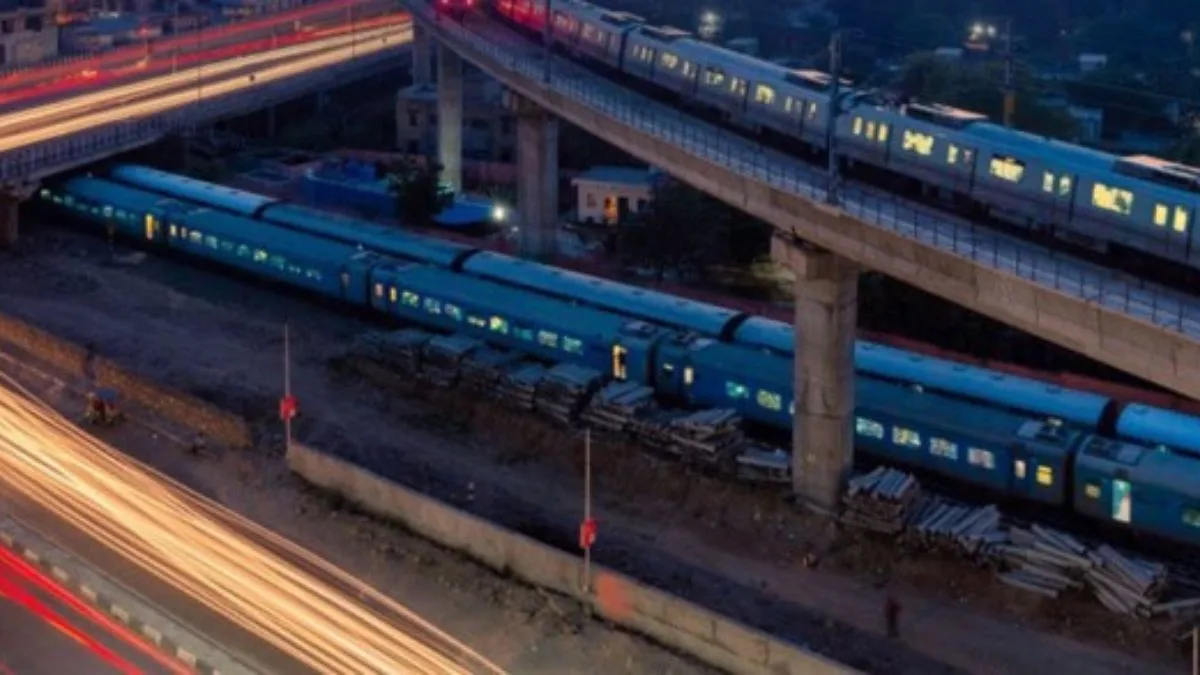
Phase One of Bihar’s first metro rail project, the Patna Metro, was also inaugurated this year. Metro services are currently operational over a 3.6-kilometre stretch. Work on the project is progressing rapidly, with full completion expected by 2027.

A part of Bihar’s first six-lane cable-stayed bridge over the Ganga River, connecting Kachchi Dargah to Bidupur, was also inaugurated this year. The inaugurated stretch measures 4.57 kilometres, while the total length of the bridge from Patna to Raghopur is 9.76 kilometres. The project, involving an investment of over Rs 5,000 crore, is expected to significantly improve transportation and accelerate economic activity.

PM Modi inaugurated the six-lane Aunta–Simaria Bridge over the Ganga River on 22 August. The bridge is 1.86 kilometres long and was constructed at a cost of Rs 1,770 crore. Including approach roads, the total project length is 8.15 kilometres. The bridge has improved connectivity between Mokama in Patna district and Begusarai, providing major relief to commuters.

On the same day, he inaugurated the four-lane Bakhtiyarpur–Mokama road project. Built at a cost of Rs 1,900 crore, the project is expected to boost economic activity across the region and improve rural connectivity.

Prime Minister Modi also laid the foundation stone of the 660-megawatt Buxar Thermal Power Plant during the year. The project is expected to strengthen Bihar’s power generation capacity.

The first phase of Chief Minister Nitish Kumar’s flagship project, the expansion of Patna Medical College and Hospital (PMCH) into a 5,000-bed facility, was also inaugurated this year. On May 3, the Chief Minister inaugurated two towers of the 1,117-bed hospital. One of the towers includes a helipad to facilitate the rapid transport of patients from remote areas during emergencies.

RCB, DC hit by Perry and Sutherland pullouts ahead of WPL 2026

Both players have pulled out citing personal reasons ahead of the WPL 2026, which begins on January 9.

Statesman News Service | New Delhi |

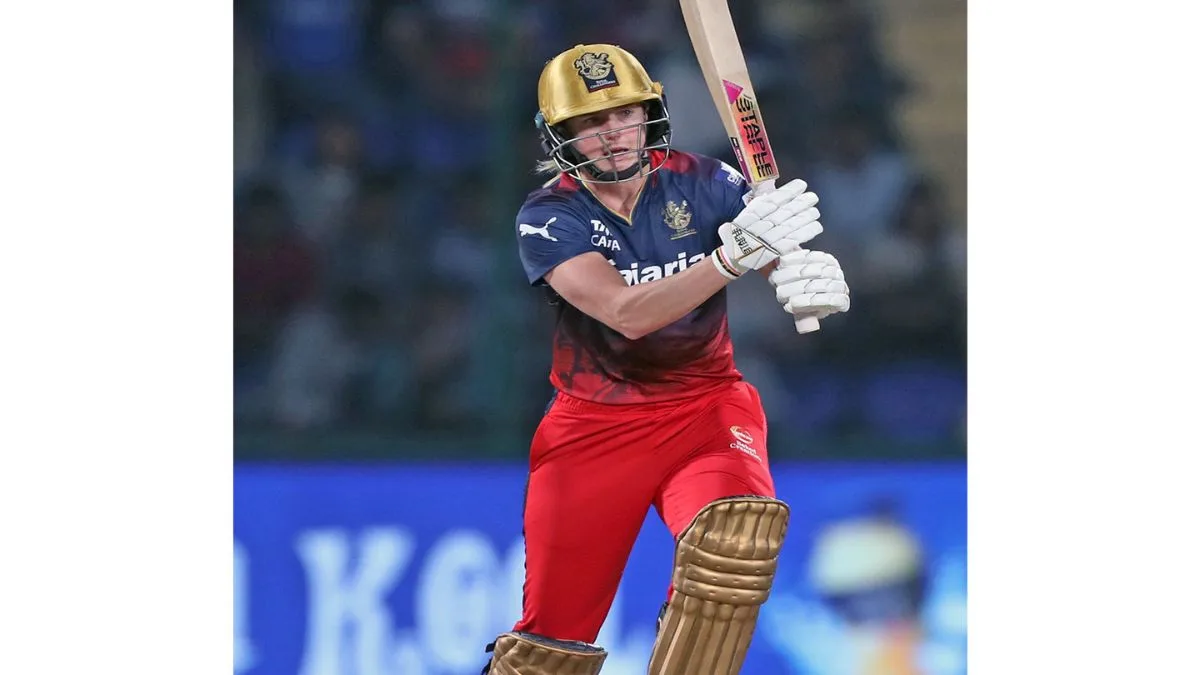
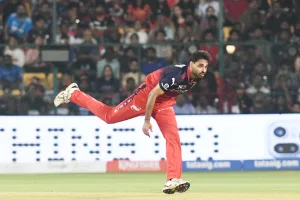
Just days before the fourth edition of the Women’s Premier League (WPL) gets underway, Royal Challengers Bengaluru and Delhi Capitals have been dealt big blows with Australian all-rounders Ellyse Perry and Annabel Sutherland withdrawing from the tournament.

Both players have pulled out citing personal reasons ahead of the WPL 2026, which begins on January 9.

Defending champions Royal Challengers Bengaluru have roped in Sayali Satghare as Perry’s replacement. The Mumbai all-rounder, who has previously been part of the Gujarat Giants setup, will join RCB at her reserve price of Rs 30 lakh.

Delhi Capitals, three-time finalists in the league, have named Australian leg-spinner Alana King as a replacement for Sutherland. King, who turned out for UP Warriorz in the previous season, has represented Australia in 27 T20Is and claimed an equal number of wickets. She has been signed at a reserve price of Rs 60 lakh.

There was also a movement in the UP Warriorz squad, with left-arm medium pacer Tara Norris set to miss the WPL after being selected in the USA squad for the ICC Women’s T20 World Cup Qualifier in Nepal, scheduled from January 18 to February 1.

UP Warriorz have named uncapped Australian all-rounder Charli Knott as Norris’ replacement, signing her at a reserve price of Rs 10 lakh.

The fourth edition of the Women’s Premier League is going to be held from January 9 to February 5, 2026, across two venues, the DY Patil Stadium in Navi Mumbai and the Baroda Cricket Association Stadium in Vadodara. The tournament will open at DY Patil Stadium, with the final slated to be played in Vadodara on February 5.

Two-time champions Mumbai Indians Women will face 2024 winners Royal Challengers Bengaluru in the opening match of the season at the DY Patil Stadium.

Ahmedabad to host India’s first National Athletes’ Forum on January 10

The landmark initiative aims to give athletes a direct voice in shaping policies that affect their careers, welfare, and post-competition futures.

Statesman News Service | New Delhi |

In a major step towards athlete-led governance in Indian sport, the Indian Olympic Association (IOA) will host the country’s first National Athletes’ Forum on January 10 in Ahmedabad.

The landmark initiative aims to give athletes a direct voice in shaping policies that affect their careers, welfare, and post-competition futures. The Forum will bring together current and former athletes, athlete representatives, and key stakeholders from across the country for focused, solution-driven discussions.

Key themes at the Forum will include athlete rights and responsibilities, ethical and transparent governance, safe sport and integrity, mental health and well-being, anti-doping education, grievance redressal mechanisms, and structured career transition pathways. The IOA said athlete feedback will be channelled into actionable reforms rather than remaining consultative in nature.

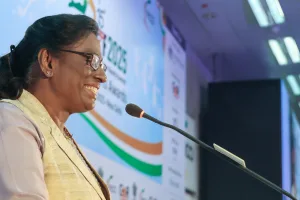
Announcing the initiative, IOA President PT Usha described the Forum as a historic shift in Indian sport governance. “This is the first time in India’s sporting history that athletes are being brought together through a dedicated national forum to directly influence governance. Athlete voices can no longer be peripheral, this Forum signals a decisive move towards athlete-led reform, accountability, and shared decision-making,” she said.

Emphasising athlete welfare as a cornerstone of excellence, Usha added, “Sustained success in sport is impossible without safeguarding athlete dignity, safety and well-being. This Forum places athlete welfare at the heart of policy, not as an afterthought.”

MC Mary Kom, Chair of the IOA Athletes’ Commission, said the Forum would provide athletes with a credible platform to drive meaningful change. “Athletes understand the system from the inside. This Forum allows us to speak openly about challenges and solutions, and ensures that athlete experiences are reflected in governance and reform,” she said.

Sharath Kamal, Vice Chairman of the Athletes’ Commission, highlighted the importance of timely athlete input. “Too often, athletes feel the impact of decisions long after policies are framed. This Forum changes that dynamic by ensuring athletes are heard before decisions are taken, helping build a more transparent and accountable sporting ecosystem,” he said.

The choice of Ahmedabad as the host city reflects the IOA’s intent to expand athlete engagement beyond traditional centres and ensure reform-oriented dialogue reaches athletes across regions.

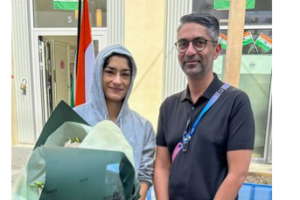
Abhinav Bindra-led Task Force charts roadmap for reforms in sports administration

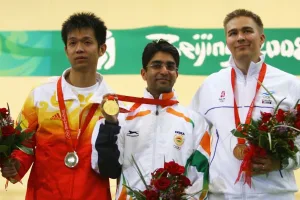
As part of this effort, the department constituted a Task Force on Capacity Building of Sports Administrators, chaired by Olympic gold medallist Abhinav Bindra, to develop a structured roadmap for enhancing administrative capability across the sporting ecosystem.

Statesman News Service | New Delhi |

As India sharpens its ambition to break into the top 10 sporting nations by 2036 and build momentum towards hosting the Olympic Games, the government has turned its focus to strengthening the country’s sports administration backbone.

As part of this effort, the department constituted a Task Force on Capacity Building of Sports Administrators, chaired by Olympic gold medallist Abhinav Bindra, to develop a structured roadmap for enhancing administrative capability across the sporting ecosystem. The Task Force has recently submitted its report to the Sports Department for consideration.

The report underscores that achieving a transformative vision for Indian sport, including ambitions such as hosting the Olympic Games, will require a cadre of professional, accountable, and future-ready sports administrators. It stresses that governance reforms must run parallel to athlete development and infrastructure growth.

Among its key recommendations is the establishment of a National Council for Sports Education & Capacity Building (NCSECB). The proposed body would function as an autonomous statutory authority under the Ministry of Youth Affairs and Sports, responsible for regulating, accrediting, and certifying sports administration education and training programmes nationwide.

The Task Force has also proposed the introduction of a five-level Capability Maturity Model (CMM) as a diagnostic and planning tool. The framework would enable institutions such as the Sports Authority of India (SAI), National Sports Federations (NSFs), and state sports departments to assess their organisational maturity across areas, including cadre structures, curriculum adoption, digital enablement, and athlete development pathways. The model is intended to support evidence-based monitoring and facilitate targeted interventions.

Recognising the pivotal role played by civil servants in policy implementation, the report recommends integrating sports governance modules into the induction and advanced training programmes of the Indian Administrative Service (IAS) and State Civil Service officers. It further suggests linking such training to practical application and career progression through structured placements, a national accreditation registry, and closer alignment with policy frameworks.

To ensure administrators gain hands-on experience, the Task Force has also called for rotational postings, apprenticeship models, innovation labs, and partnerships involving sports federations, government bodies and the private sector. These measures aim to promote skill application while creating sustainable professional growth pathways.

The Department of Sports is currently examining the Task Force’s recommendations and is expected to take further steps as part of its broader push to professionalise India’s sports governance ecosystem.

Several reforms have already been initiated. In May 2025, the department revised the norms under the Scheme of Assistance to National Sports Federations, allowing NSFs to allocate up to 10 percent of their total funding towards administrative manpower. This change is aimed at ensuring federations have access to qualified professionals and technical expertise.

Additionally, NSFs are now permitted to spend up to 2.5 per cent of their annual budgets on administrative operations, legal services, and the engagement of specialised young professionals or interns. Federations have also been mandated to put in place appropriate administrative structures and follow transparent recruitment processes for staff appointments.

Together, these measures seek to build a globally credible, athlete-centric governance framework that supports India’s long-term sporting ambitions. The government has further reinforced this vision through the enactment of the National Sports Governance Act, 2025, laying the foundation for sustained progress well beyond 2036.

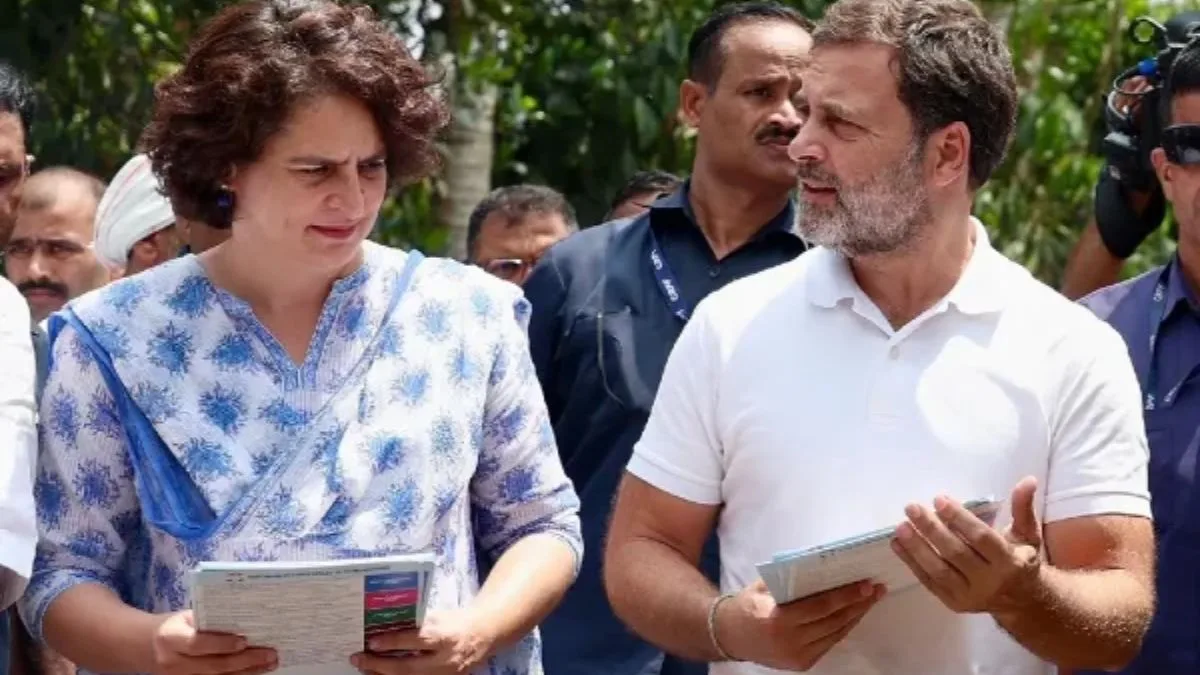
Rahul, Priyanka arrive in Ranthambore for New Year celebration

A short while after their arrival at a hotel, the group was scheduled to proceed on tiger Safari in the jungle.

Statesman News Service | Jaipur |

Leader of the Opposition (LoP) in the Lok Sabha Rahul Gandhi and his MP sister Priyanka Gandhi Vadra, along with her family, have reached Sawai Madhopur on Tuesday on a private visit to have jungle sojourn at the Ranthambore national park for three to four days.

The family, including the husband of Wayanad MP Priyanka, Robert Vadra, their children and some friends, reached Sawai Madhopur by road from New Delhi in a 6-7-vehicle carcade and drove straight to the elite Sherbagh hotel in Ranthambore where they will stay during the sojourn to celebrate the New Year eve and undertake jungle trekking.

A short while after their arrival at a hotel, the group was scheduled to proceed on tiger Safari in the jungle.

While Rahul, Priyanka, and Robert Vadra opted to stay back at the hotel to take rest, Vadra family children and friends went on tiger trekking in four gypsies in the afternoon shift.

According to unofficial sources, during the Ranthambhore sojourn, the family may also celebrate a get-together.

The tiger reserve at Sawai Madhopur Is the Gandhi siblings’ favourite destination for short holiday breaks. The brother and sister duo often drop in at the tiger sanctuary to keep date with Ranthambore tigers.

Punjab Finance Minister Cheema calls ‘Viksit Bharat – GRAM G’ an attack on poor and federalism

Speaking in the Vidhan Sabha in support of a resolution against the recent changes and the renaming of the MGNREGA scheme to ‘Viksit Bharat – GRAM G’, Cheema described the move as an “assault on the stomachs of the marginalised.”

Statesman News Service | Chandigarh |

Punjab Finance Minister Harpal Singh Cheema on Tuesday launched a scathing attack on the BJP-led Union government, accusing it of systematically dismantling the MGNREGA scheme and stripping the poor of their right to a livelihood.

Speaking in the Vidhan Sabha in support of a resolution against the recent changes and the renaming of the MGNREGA scheme to ‘Viksit Bharat – GRAM G’, Cheema described the move as an “assault on the stomachs of the marginalised.”

During his address, the finance minister read a poignant letter from a woman worker, Charanjit Kaur, which highlighted the fears of thousands of rural labourers. Kaur’s letter, he said, reflects the anxiety that changing rules and centralised village lists would deprive children of education and the elderly of medicine.

He emphasised that by centralising the scheme and moving to complex mobile-based attendance, the Union government is snatching away the “Guarantee” of work that was once the backbone of rural survival.

The finance minister slammed the BJP-led Union government for working against the spirit of the Constitution, authored by Baba Saheb Dr Ambedkar.

He emphasised that the Preamble to the Constitution, which embodies the fundamental principles and values of the nation, is being undermined by the Centre’s policies. The Preamble reads: “We, the People of India, solemnly resolve to constitute India into a Sovereign, Socialist, Secular, Democratic Republic.”

He said the Supreme Court of India has repeatedly pronounced in its judgments that the Preamble of the Constitution cannot be changed, affirming its sacrosanct nature.

In a strongly-worded critique, Cheema further added that the Union government is attempting to turn the country’s labourers into “bonded labourers” and “slaves” of a centralised system by centralising every scheme. This approach, he argued, is destroying cooperative federalism, stripping states of their rights, and weakening local economies, which he described as a direct attack on the soul of democracy.

Strongly objecting to the renaming of the scheme after religious icons, he said while the world respects Lord Rama, using a religious name for a government scheme is a political tactic to shield the government from criticism. He warned that this creates a dangerous precedent where protesters seeking wages or rights can be labelled as being disrespectful to religious sentiments.

Contrasting the Center’s policies with the Punjab government’s initiatives, Cheema highlighted that the Aam Aadmi Party (AAP) is working day and night for the elevation of the Dalit community through concrete actions. He pointed out that for the first time in Punjab’s history, the Dalit community has received unprecedented representation with six out of 15 ministers in the Mann cabinet.

The minister detailed the tangible benefits delivered to the community, noting that the AAP government has provided government jobs to over 15,000 Dalit youth. Financial empowerment has been a cornerstone of this agenda, as the state has successfully waived the loans of almost 5000 underprivileged Dalit families, a move never seen under prior administrations.

Cheema also celebrated the success of the AAP’s Education Revolution, where over 267 students from government schools, many of the children of labourers, have cleared JEE and 235 got admission, 847 cleared NEET and 560 got admissions, many more students from state government schools cleared such competition examinations for the first time in such a big number.

He challenged the Opposition to quote such examples from their regimes.

He further added that the Chief Minister Bhagwant Singh Mann-led Punjab government has also extended this empowerment for the first time to the legal field as well, where the implementation of 25 per cent reservation for Dalit lawyers in the Advocate General’s office has led to the appointment of 58 children of poor people, sanitation workers to high-ranking legal positions.

He claimed that Punjab is the only state in India which provided such a reservation to Dalit lawyers.


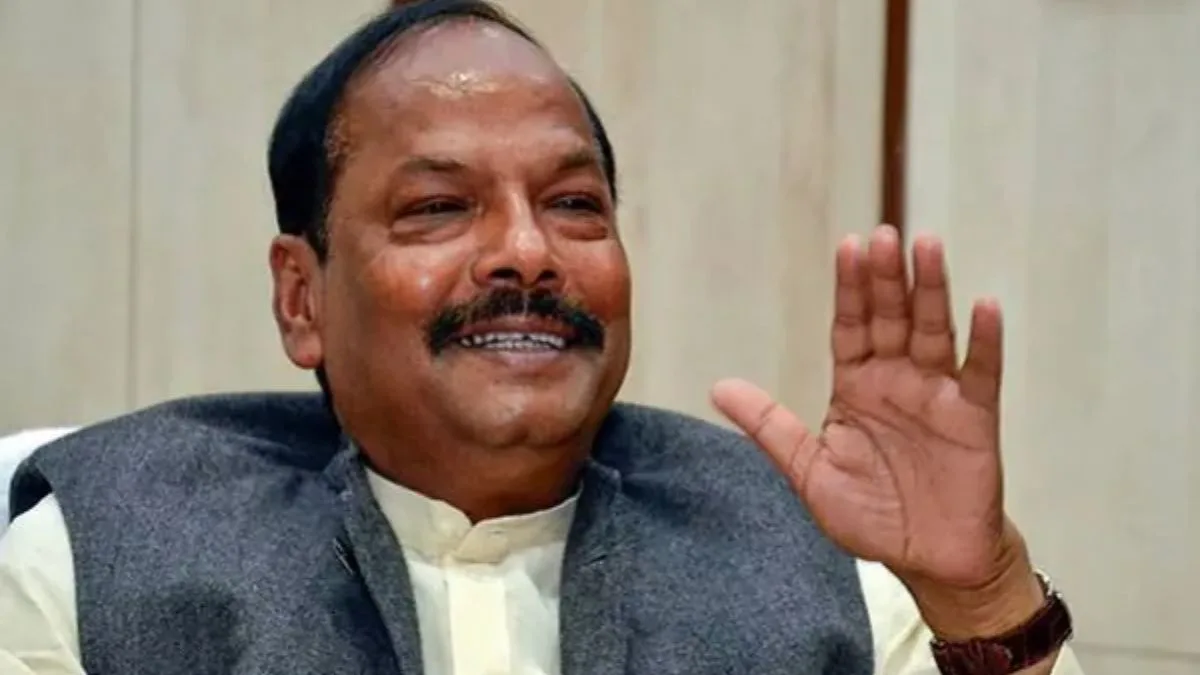
Former CM Raghubar Das alleges dilution of PESA spirit, seeks public disclosure

Das alleged that the state government was showing “lollipops” to Adivasi communities in the name of PESA while diluting their constitutionally guaranteed rights.

Statesman News Service | Ranchi |

Former Jharkhand chief minister Raghubar Das raised serious objections to the state government’s draft rules framed under the Panchayats (Extension to Scheduled Areas) Act (PESA), alleging that the proposed framework runs contrary to the letter and spirit of the central legislation and weakens traditional tribal self-governance.

Das alleged that the state government was showing “lollipops” to Adivasi communities in the name of PESA while diluting their constitutionally guaranteed rights. He demanded that the draft PESA rules be placed in the public domain at the earliest to allow scrutiny by the people, particularly those living in Scheduled Areas.

Referring to information published in newspapers, the former chief minister said the proposed rules restrict the definition and functioning of the Gram Sabha by limiting the role of traditional tribal institutions and customary leadership systems. He argued that such an approach defeats the very purpose of PESA, which was enacted to strengthen self-rule in Scheduled Areas in accordance with local traditions and social structures.

Das cited long-established tribal governance systems across Jharkhand, including the Manjhi-Paragana system among Santhals, Munda-Manki-Diuri among Hos, Dhoklo-Sohor among Kharias, Hatu Munda and Pahan among Mundas, and Mahato, Padhavell and Pahan among Oraons. These institutions, he said, have enjoyed social legitimacy for centuries and form the backbone of tribal self-administration.

He pointed out that Sections 4(a), 4(b), 4(c) and 4(d) of the PESA Act, 1996, clearly mandate that the composition, powers, and functioning of Gram Sabhas must be in consonance with customary laws, traditional practices and community control over resources. The draft rules, he alleged, ignore these provisions.

Raising governance concerns, Das questioned whether the proposed framework would allow individuals outside traditional systems to chair Gram Sabhas, stating that the lack of clarity on this issue could weaken community authority and disturb social harmony in tribal areas.

He also flagged concerns over control of natural resources, noting that PESA grants Gram Sabhas decisive powers over minor minerals, sand ghats, forest produce, and water resources. Das asked whether these rights would be genuinely transferred to village assemblies or whether administrative control would continue to rest with the state, as in the past.

Accusing the government of attempting to finalise the rules at the Cabinet level without wider consultation, the former chief minister said the objective of PESA was not to dismantle tribal institutions but to legally empower them. He urged the government to release the draft rules without delay and align them with the aspirations and traditions of tribal communities.

Indian Sports 2025: 90 metres, missed leagues and a bigger dream

From two-time Olympic medallist Neeraj Chopra finally breaching the elusive 90-metre barrier to India sealing hosting rights for the 2030 Commonwealth Games, the year reflected both promise and persistent problems.

Tridib Baparnash | New Delhi |

Indian sports in 2025 unfolded as a story of sharp contrasts, historic highs, sobering lows, and unmistakable signs of a country pushing to redefine its global sporting identity. From two-time Olympic medallist Neeraj Chopra finally breaching the elusive 90-metre barrier to India sealing hosting rights for the 2030 Commonwealth Games, the year reflected both promise and persistent problems.

Neeraj Chopra’s 90m breakthrough

Even in a season disrupted by doping scandals and inconsistency elsewhere, Neeraj Chopra remained Indian athletics’ flagbearer. The Olympic champion finally laid to rest the long-running obsession with the 90-metre mark, launching his javelin to a national-record 90.23 m at the Doha Diamond League, a throw that placed him firmly among the global elite.

However, the season also delivered heartbreak. Chopra’s extraordinary run of 26 consecutive top-two finishes came to an abrupt end at the World Athletics Championships in Tokyo, where he finished eighth with a modest 84.03 m in his title defence. The result also snapped a remarkable 33-event podium streak dating back to 2018.

Still, the season had bright moments with victories in Potchefstroom, the Paris Diamond League and the Ostrava Golden Spike, along with podium finishes across Europe. Off the field, Chopra embraced a new chapter, marrying tennis player Himani Mor in a private ceremony away from the public eye.

Off the field, Chopra marked a quieter personal milestone, marrying tennis player Himani Mor in a private ceremony away from the glare he usually commands.

Adding intrigue to the javelin narrative was the rise of Sachin Yadav, whose fourth-place finish with an 86.27 m effort at the Worlds signalled the emergence of another potential world-class Indian thrower.

Doping crisis persists

While Chopra shone, Indian athletics continued to battle a deep-rooted doping crisis. India remained second globally in the list of athletes serving bans, with 128 names flagged by the Athletics Integrity Unit.

The year saw Olympians, Asian Games medallists, minors, and coaches caught in the net, reinforcing concerns about systemic failure. High-profile cases involving Shivpal Singh, Seema Punia, and Kartik Kumar only sharpened scrutiny.

In response, the Athletics Federation of India (AFI) moved to stem the rot by setting up a dedicated anti-doping cell and making coach registration mandatory, tying compliance to eligibility for national honours. Whether these measures mark a turning point or merely a holding pattern remains an open question.

Hosting ambition gathers momentum

Administratively, Indian athletics showed signs of intent. Bhubaneswar successfully staged a World Athletics Continental Tour bronze-level meet, with plans already in motion to upgrade it to silver status. India also submitted bids for the Asian Indoor Championships and Asian Relays while introducing a National Indoor Championship to strengthen its competitive pipeline.

New Delhi, too, played its part, with the Jawaharlal Nehru Stadium hosting the World Para Athletics Championships, reinforcing India’s growing credentials as a viable host for major international events.

Team sports deliver defining moments

Away from the track, the Indian team sports enjoyed a year of affirmation. Men’s hockey reclaimed continental supremacy, lifting the Asia Cup after eight years with a commanding win over South Korea to seal qualification for the 2026 World Cup.

Squash reached unprecedented heights as India won the Squash World Cup, defeating Hong Kong to become only the fourth nation to claim the title.

Traditional sport found its own moment in the spotlight, with India dominating the inaugural Kho Kho World Cup on home soil, with both men’s and women’s teams finishing unbeaten to underline the depth of indigenous talent.

Indian football’s year of paralysis

For a fleeting moment, Indian football felt alive again with millions splurged on organising Argentine football superstar Lionel Messi’s G.O.A.T tour. Messi’s much-hyped visit filled stadiums, dominated timelines and offered a rare sense of shared belief. For four days, the sport did not have to explain itself.

Then reality returned

As 2025 drew to a close, Indian football found itself in limbo. The Indian Super League, the country’s premier domestic competition, failed to even begin its season. By mid-December, there was no clarity on whether it would be held at all.

On the pitch, the men’s national team continued its slide. Despite a bronze finish at the CAFA Nations Cup, defeats in the AFC Asian Cup 2027 qualifiers, and losses to Hong Kong and Singapore, India missed the continental tournament for the first time since 2011. The consequences were reflected in a drop to 142 in the FIFA rankings.

Off the pitch, the crisis deepened. The All India Football Federation failed to secure a new commercial partner following the expiry of its agreement with FSDL on December 8. The fallout was swift and brutal; the ISL was suspended indefinitely, sponsors began to withdraw, and City Football Group exited Mumbai City FC, exposing the fragile foundations beneath the spectacle.

Blue Tigresses blaze a different trail

In stark contrast, the Indian women’s football team produced one of the year’s most defining moments. The Blue Tigresses qualified for the AFC Women’s Asian Cup Australia 2026 on merit for the first time, sealing their place with a gritty 2–1 win over Thailand in Chiang Mai.

It was the first time the team earned a place at the continental showpiece purely on merit. Sangita Basfore delivered when it mattered most, scoring twice in a winner-takes-all encounter to bring an end to years of heartbreak and unquestioned entries.

Looking ahead: 2030 Commonwealth Games and beyond

The year concluded with a significant strategic victory as India secured hosting rights for the 2030 Commonwealth Games in Ahmedabad. Ratified at the Commonwealth Sport General Assembly in Glasgow, the decision marked India’s return as a major multi-sport host for the first time since the 2010 Delhi Games.

More than a symbolic homecoming, it strengthened India’s long-term ambition of staging the 2036 Olympic Games, positioning the country as a serious player in the global sporting order.


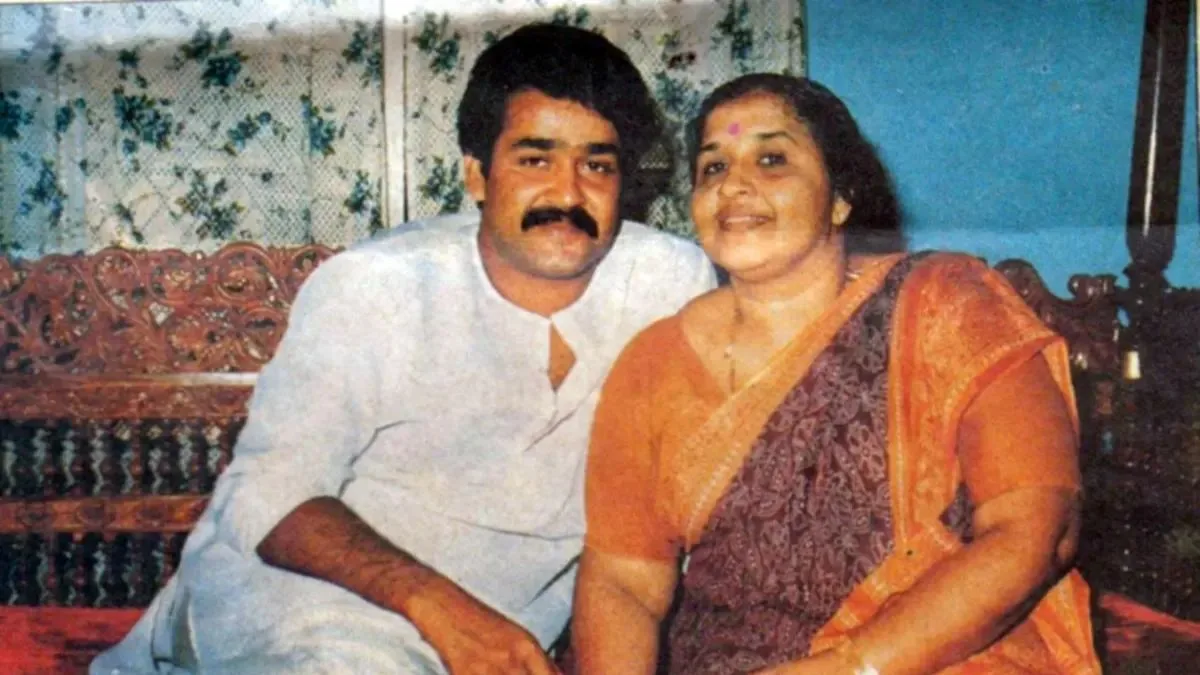
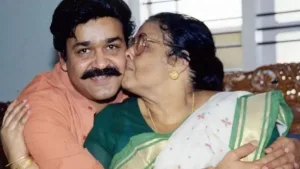
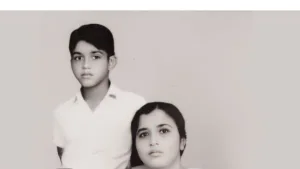
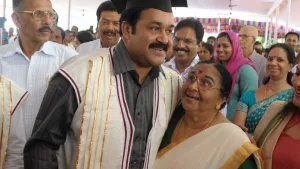
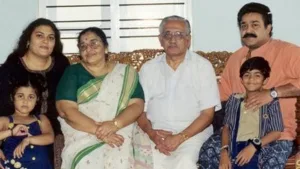
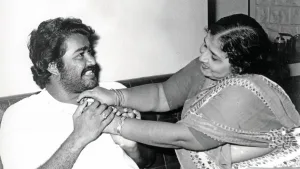
Mohanlal’s mother Santhakumari passes away at 90 after prolonged illness; see rare photos with the actor

Mohanlal’s mother Santhakumari passed away at the age of 90 after battling age-related health issues in Kochi. Here’s a look at her life and the cherished moments she shared with the Malayalam superstar through rare photos.

Statesman News Service | New Delhi |

On Tuesday, Santhakumari, mother of legendary actor Mohanlal, passed away. She was 90 years of age. She had been unwell for a long time due to age-related health issues. Before death, she was staying at Mohanlal’s residence in Elamakkara, Kochi where she was under constant care.

Santhakumari: A life rooted in family

Santhakumari lived a life defined by resilience and devotion to her family. Her husband Viswanathan Nair passed away earlier after a long period of illness.

Their elder son, Pyarilal, died in 2000.

Despite personal hardships, Santhakumari remained the emotional pillar of the household.

mohanlal mother -1
Image Source: Instagram
mohanlal father mother wife children
Image Source: Instagram


mohanlal mother
Image Source: Instagram
mohanlal family
Image Source: Instagram

Mohanlal and his bond with his mother Santhakumari

Even with decades of stardom and a packed global schedule, Mohanlal always made time for his mother.
Friends and colleagues have often spoken about how he ensured she was comfortable. According to them, he made sure she was surrounded by care no matter where work took him.

Mohanlal himself has openly acknowledged that his mother played key role in shaping not just his personal values, but also his journey as actor.
From discipline to empathy, he often credited her for lessons that guided him through four decades of cinema.
Also Read: Sreenivasan remembered: ‘Hridayapoorvam’ cast, including Mohanlal, celebrate late actor’s life in this BTS video

When Mohanlal fondly talked about his mother

One of the most touching moments Mohanlal shared with fans was when he spoke about receiving the Dadasaheb Phalke Award. He once said that his biggest happiness was being able to share that honour with his mother.

In fact, after learning about the award, the first person he went to see was her.

During the nationwide lockdown in 2020, when Mohanlal turned 60, he spoke emotionally about being away from his mother. In an interview, he shared how they stayed connected through daily video calls and how helpless he felt about the distance.

He also spoke about watching his mother care for his father after he lost his memory holding his hand, feeding him, and standing by him at public events.

Those moments, Mohanlal said, taught him kindness without effort and care without conditions.

Santhakumari’s passing comes just days after the release of Mohanlal’s film ‘Vrusshabha’ on December 25, 2025.