Logo

Forces that opposed Somnath’s reconstruction still active: PM Modi

Prime Minister Narendra Modi on Sunday said that the attacks on the Somnath Temple were not merely about economic loot, as the attackers would have stopped after the first major plunder if that had been the case.

Statesman News Service | New Delhi |

Prime Minister Narendra Modi on Sunday said that the attacks on the Somnath Temple were not merely about economic loot, as the attackers would have stopped after the first major plunder if that had been the case.

Addressing a gathering on the final day of the four-day Somnath Swabhiman Parv, Modi said, “If the attacks on Somnath were only for economic loot, they would have stopped after the first major plunder a thousand years ago. But that did not happen.”

He said that after Independence, efforts were made to “whitewash” foreign attacks and present them as routine acts of plunder. “The temple was attacked again and again, its idols were broken, its form was altered repeatedly, and yet we were taught that it was only about loot,” he said.

The Prime Minister alleged that the “contractors of appeasement” had raised objections when the temple was being reconstructed in 1951.

“The contractors of appeasement bowed before radical thinking. When India was freed from the shackles of slavery, and when Sardar Vallabhbhai Patel took the oath for the reconstruction of Somnath, attempts were also made to stop him. In 1951, objections were also raised when Dr Rajendra Prasad, the then President of India, visited the temple,” he said, in a veiled attack on former Prime Minister Jawaharlal Nehru.

“Unfortunately, even today, forces remain active in the country that opposed Somnath’s reconstruction,” Modi added.

The Prime Minister said that the history of Somnath is not one of destruction and defeat, but of victory and reconstruction.

“A thousand years ago, those tyrants thought they had conquered us. But even today, a thousand years later, the flag fluttering atop the Somnath Mahadev Temple proclaims to the entire world the power and might of Hindustan,” he remarked.

Modi said that the Somnath Swabhiman Parv, held to mark 1,000 years since the first invasion of the Somnath Temple in 1026 by Mahmud of Ghazni, is a commemoration of continuity.

“This festival is not merely a remembrance of the destruction that occurred a thousand years ago. It is a celebration of a thousand-year journey, and of India’s existence and pride,” he added.

Scholarship benefits in UP available only for transparent admissions in private institutions

In order to ensure that only eligible students truly benefit from the Post-Matric Scholarship and Fee Reimbursement Scheme, the Uttar Pradesh government has taken a significant decision.

Statesman News Service | Lucknow |

In order to ensure that only eligible students truly benefit from the Post-Matric Scholarship and Fee Reimbursement Scheme, the Uttar Pradesh government has taken a significant decision.

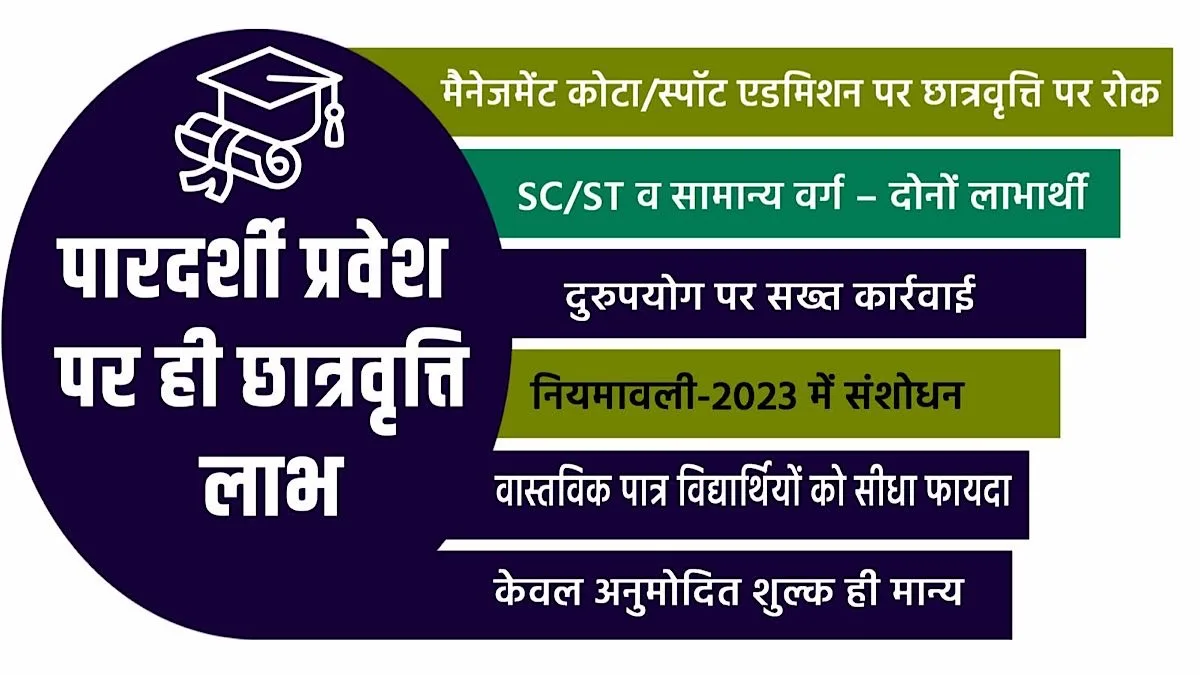
Important amendments have been made to the Post-Matric Scholarship and Fee Reimbursement Scheme Regulations-2023. These amendments will apply equally to students from the Scheduled Castes/Scheduled Tribes as well as the general category. The scheme is operated by the Social Welfare Department. This step by the Yogi government is seen as an effective effort to bring transparency to the admission processes in private educational institutions while safeguarding the interests of genuinely eligible students.

Social Welfare Deputy Director Anand Kumar Singh stated here on Sunday that the main objective of the amendment is to make the admission process in private educational institutions technically transparent and clear, so that only eligible students avail the benefits of scholarships and fee reimbursement. This will effectively curb the misuse of the scheme through management quota, spot admissions, and other non-transparent admission processes.

Under the amended rules, Scheduled Caste and Scheduled Tribe students pursuing vocational or technical courses in private educational institutions will be eligible for the scheme’s benefits only if their admission was made through a fully transparent process.

This includes the institution issuing public advertisements to invite applications, preparing a rank list, and publishing a selection list, all of which are now mandatory. Additionally, fees collected from students must be limited to those approved by the competent authority or the fee regulatory committee.

Under the amended rules, general category students will also be eligible for fee reimbursement benefits, provided their admission was made through a transparent process and charged only approved fees.

Deputy Director Anand Kumar Singh clarified that students admitted through management quota, spot admissions, or any other non-transparent process will not be eligible for the scheme’s benefits. Similarly, no benefits will be provided if the institution charges fees exceeding the prescribed amount.

RSS workers spend the night in Muslim-majority villages, plan for Hindu Conference

Following the conclusion of the Rashtriya Swayamsevak Sangh (RSS) All India Executive Committee meeting, Sangh workers have become fully active at the grassroots level.

Statesman News Service | Vrindavan |

Following the conclusion of the Rashtriya Swayamsevak Sangh (RSS) All India Executive Committee meeting, Sangh workers have become fully active at the grassroots level.

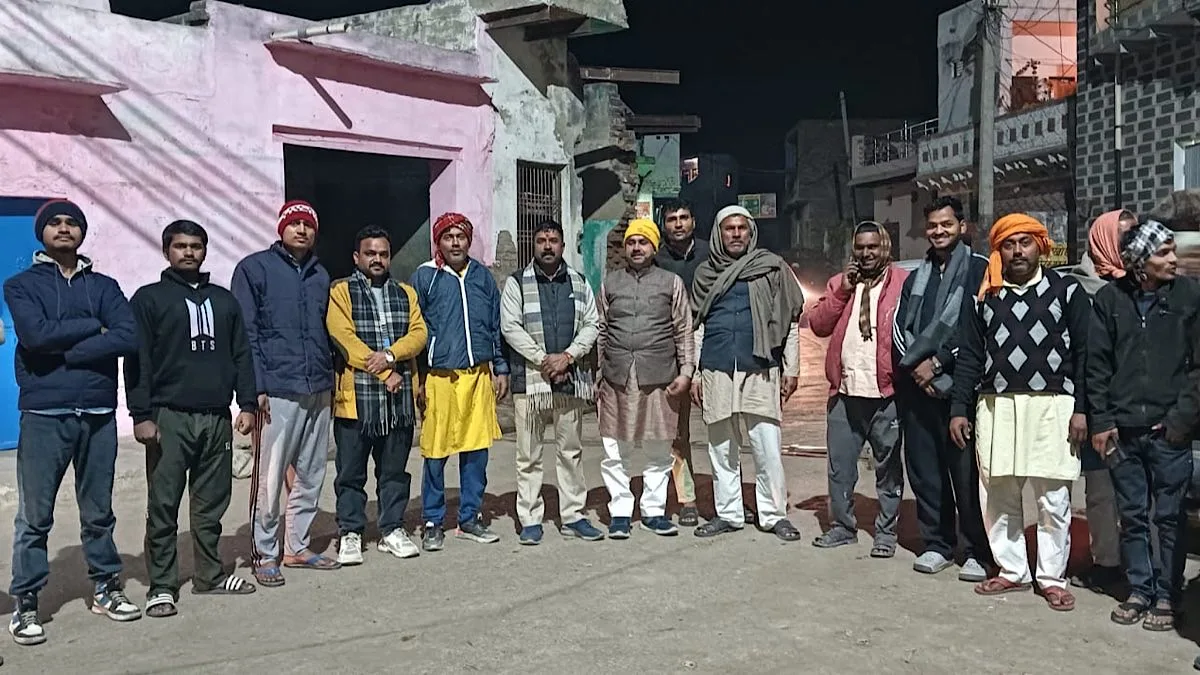
To ensure the success of upcoming programmes, volunteers have fanned out into rural areas. In this connection, on Saturday, Sangh workers spent the night in Muslim-majority villages and the surrounding areas of the Govardhan block, calling upon the Hindu community to unite.

According to the Sangh’s plan, workers stayed overnight in Devseras village of the Govardhan block. During this time, meetings were held with members of the Hindu community and prominent citizens of the village. The main objective of this visit was to finalise the plans for the upcoming ‘Hindu Awareness March’ on January 12 and the ‘Hindu Conference’ to be held on January 22, and to increase public outreach.

The workers interacted with the villagers, making them aware of their cultural heritage and the importance of unity. The volunteers appealed to the people of the Hindu community to participate in the Hindu Conference in large numbers.

Govardhan block Karyavah (organiser) Bhanu Parashar said here on Sunday that on January 12, a message of unity and awareness will be spread in society through the Hindu Awareness March.

The Hindu conference will be held on January 22 in Devseras village, where thousands of people from the area are expected to gather. Parashar appealed to everyone to participate in the Hindu conference. The RSS is organising Hindu conferences in villages across the region; one conference will be held in one location each day.

This overnight stay by volunteers in villages located amidst Muslim-majority areas is considered strategically important.

After the RSS All India Executive Committee meeting, it is clear that the Sangh now wants to further strengthen its hold at the rural level. Local citizens also showed enthusiasm in the meetings and assured their full cooperation in the upcoming programmes.

BMC polls: Mahayuti promises corruption-free Mumbai, AI-driven governance

The BJP-led Mahayuti alliance on Sunday unveiled its manifesto for the 2026 Brihanmumbai Municipal Corporation elections, promising a corruption-free Mumbai and the use of AI to make governance more effective.

Statesman News Service | Mumbai |

The BJP-led Mahayuti alliance on Sunday unveiled its manifesto for the 2026 Brihanmumbai Municipal Corporation elections, promising a corruption-free Mumbai and the use of AI to make governance more effective.

The manifesto was released by Maharashtra Chief Minister Devendra Fadnavis in Mumbai.

“The city has seen 25 years of inefficient civic governance,” Fadnavis said, referring to the rule of undivided Shiv Sena, led by Uddhav Thackery and his family, between 1997 and 2022.

“Our goal is to ensure a corruption-free municipal corporation,” Fadnavis said.

He announced the use of AI to identify illegal Bangladeshi and Rohingya migrants with the help of the Indian Institute of Technology.

“We will free Mumbai of Bangladeshis and Rohingyas,” Fadnavis said. “With the help of IIT, we will develop an AI tool to identify Bangladeshi migrants.”

The Maharashtra CM said that the Mahayuti will ensure the supply of clean drinking water and the creation of employment opportunities for the youth.

He also announced a Rs 17,000 crore Climate Action Plan for an environment-friendly Mumbai.

For the education sector, Fadnavis said municipal schools will be modernised and made skill-oriented.

He also promised greater transparency to the administration of the Brihanmumbai Municipal Corporation.

Revolutionary changes in Mumbai’s transportation system will be made to make travel comfortable and faster for the city’s residents.

For women, the CM announced a 50 per cent concession in bus ticket fares. The Mahayuti alliance will also ensure the implementation of the ‘Lakhpati Didis’ scheme in Mumbai.

He also promised to develop the memorials of great personalities in Mumbai.

Industry leaders come together to discuss the future of publishing at CEO speak forum

The 13th edition CEO Speak, the flagship business-to-business (B2B) forum organised on the sidelines of the New Delhi World Book Fair (NDWBF) 2026, was held on January 11, 2026 at Hotel Ashok, New Delhi, bringing together leading voices from the Indian and global publishing ecosystem to deliberate on ‘Decoding the Future of Publishing.’

Statesman News Service | New Delhi |

The 13th edition CEO Speak, the flagship business-to-business (B2B) forum organised on the sidelines of the New Delhi World Book Fair (NDWBF) 2026, was held on January 11, 2026 at Hotel Ashok, New Delhi, bringing together leading voices from the Indian and global publishing ecosystem to deliberate on ‘Decoding the Future of Publishing.’
Organised by the National Book Trust (NBT), India, CEOSpeak continues to serve as a high-level platform for dialogue, collaboration and strategic thinking within the publishing industry.

The inaugural session began with an address by Prof. Milind Sudhakar Marathe, Chairman, NBT, who emphasised CEOSpeak’s role as a policy-focused platform distinct from commercial activities. Highlighting India’s publishing sector, which employs over 1.2 million people and includes more than 9,000 publishers and 21,000 retailers, he discussed the transformative impact of AI, augmented reality, and machine learning on editorial workflows, production, and content dissemination.

Shri Anandrao V. Patil, IAS, Additional Secretary, PMPY & Digital Education Bureau, Ministry of Education stressed structured dialogue between policymakers and publishers amid rapid technological and market changes. Digital initiatives like the National Digital Library of India, DIKSHA, and e-Pathshala expand access, while technology, including AI, audiobooks, and text-to-speech, supports accessibility without replacing creativity, he said.

The event also saw representation from NDWBF’s Guest of Honour Country Qatar and Focus Country Spain. Ms María Gil Burman, Director, Instituto Cervantes, New Delhi, outlined efforts to promote literature internationally, foster cooperation with Indian publishers, and showcase cultural institutions through poetry readings, multilingual panels, Galician literature presentations, and children’s storytelling sessions.

Ms Asma Al-Kuwari, Director, Nabja Publishing House, Qatar, described Qatar’s publishing sector’s evolution from cultural patronage to a knowledge-driven industry. She highlighted growth in children’s literature, specialised publishers, and challenges such as international distribution, production costs, and limited editorial expertise.
Mr José Manuel Anta, Managing Director, Federation of Publishers’ Guild of Spain, presented Spain’s publishing ecosystem, noting 3,000 publishers, 100 distributors, and 4,300 points of sale under a regulated framework. Nearly 60,000 print and 27,000 digital titles are published annually, with growing export and rights sales. Collaboration, reliable data, and balanced regulation were highlighted as essential for resilient publishing ecosystems, offering lessons for India and global stakeholders.

Jesús González, Deputy Director General for the Promotion of Books, Reading and Spanish Letters explained Spain’s public subsidy framework promoting translation into foreign languages, supporting foreign publishers financially while ensuring transparency, cultural value, and professional standards. The inaugural session was conducted by NBT Chief Editor and Joint Director, Shri Kumar Vikram.

Summing up the forum’s discussions, Shri Yuvraj Malik, Director, NBT highlighted India’s USD 12 billion publishing industry, with 68% education-led and 45% regional-language focus. With initiatives like the Pune Book Festival, Rashtriya e-Pustakalaya, mandatory school reading hours, translation grants, and the “Three Ts” programme (Translate, Transform, Transfer) promoting format diversity, he reinforced India’s publishing as a civilisational act advancing equity, leadership and global knowledge exchange.

In the second session, a panel of industry experts discussed The Future of Publishing in a focused manner. Moderated by Mr Pranav Gupta, Managing Director, Prints Publications Pvt. Ltd., the panel included Mr Takashi Omura, Global Strategic Manager, Poplar Publishing Co. Ltd., Japan, Ms Sigalit Gelfand, CEO, Israeli Institute for Literature, Mr Sukanta Das, Managing Director, Oxford University Press, Mr José Manuel Anta, Managing Director, Federation of Publishers’ Guild of Spain, Ms Geòrgia Picanyol-Bulló, Ms Asma Al-Kuwari, Director, Nabja Publishing, Qatar, Mr Kumar Vikram, Chief Editor & Joint Director, National Book Trust, India.

The discussion focused on digital transformation, AI integration, evolving readership, translation, and sustainability. The panel discussed growth of digital and subscription-based reading, especially for children and illustrated content, responsible AI adoption respecting copyright and fair remuneration, importance of translation for smaller and regional markets, print-on-demand, reskilling, and cost-efficient workflows for sustainability and strengthened regulatory mechanisms to address digital risks
Together, CEOSpeak and NDWBF underscore the vital contribution of the publishing industry to cultural expression, education and economic growth. By facilitating knowledge-sharing, collaboration and forward-looking discussions, CEOSpeak 2026 reaffirmed the central role of publishing in navigating change and shaping the future of reading and learning worldwide.


AAP stages protest against Bangladesh in Lucknow

The Aam Aadmi Party (AAP) held a massive protest against Bangladesh in the state capital on Sunday.

Statesman News Service | Lucknow |

The Aam Aadmi Party (AAP) held a massive protest against Bangladesh in the state capital on Sunday.

AAP activists raised slogans against the government and Prime Minister Narendra Modi. They also burned and trampled an effigy of Bangladesh.

Police later detained the protesters and sent them to Eco Garden. The protest took place near the Health Department building intersection in Kaiserbagh.

AAP workers alleged that Hindus are being killed in Bangladesh while the government here is serving biryani to Sheikh Hasina. They demanded that Sheikh Hasina be sent back to Bangladesh.

Aam Aadmi Party District President Iram said, “It is very sad that the Hindu community has been facing atrocities in Bangladesh for a long time. Hindus are being killed there, yet our Prime Minister remains silent. The way the blood of Hindu brothers is being shed, has their blood become so cheap that no one raises their voice against it?”

AAP leaders alleged that the current government is focused on helping industrialists make profits and is therefore not taking any action against Bangladesh. They said the people of the country want to know whether this Hindu government was formed solely to gain power. This government belongs to neither Hindus nor Muslims, but will do anything to retain its position.

The AAP leaders further said, “It has been more than a year since atrocities have been taking place in Bangladesh, and the government has remained silent. Under this government, neither Hindus are safe outside the country, nor are women safe inside.”

Tejashwi Yadav gives Bihar govt 100 days, demands fulfilment of election promises

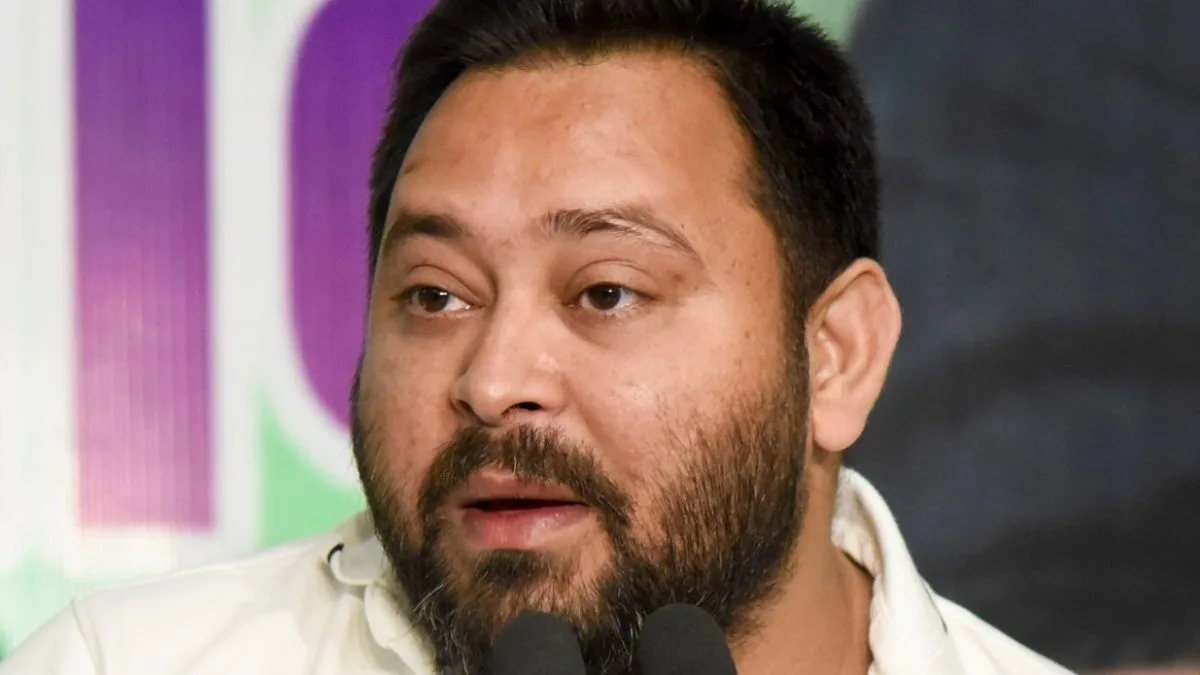
After more than a month-long foreign tour following the crushing defeat in the Bihar Assembly elections, Leader of the Opposition Tejashwi Yadav returned to Patna on Sunday. Speaking to the media at Patna Airport, Tejashwi Yadav alleged that the people of Bihar lost the election due to the manipulation of EVM machines.

Imran Mojib | Patna |

After more than a month-long foreign tour following the crushing defeat in the Bihar Assembly elections, Leader of the Opposition Tejashwi Yadav returned to Patna on Sunday. Speaking to the media at Patna Airport, Tejashwi Yadav alleged that the people of Bihar lost the election due to the manipulation of EVM machines.

He said, “In the Bihar elections held last year, democracy lost, and the machine system won. The people lost.”

Lashing out at the NDA government, the RJD leader said, “These people have turned democracy into a money-based and machine-based system. We all know what kind of conspiracy was plotted. The elections were won through deceit and trickery. Everyone in the country and in Bihar knows how the new government was formed.”

Tejashwi further said that people are well aware of the previous NDA governments’ performance on various fronts, including law and order, crime, corruption, bribery, migration, education, and healthcare, and therefore, there is little hope from the new government.

However, he added that the RJD has always practised positive politics and, therefore, would not comment on the new government’s policies, decisions, and programmes for the first 100 days. However, the party would continue to scrutinise the government’s actions along with the public.

Tejashwi Yadav said it is the responsibility of the NDA government to implement the promises made in its election manifesto.

He said, “We want the ‘Double-Engine’ government to fulfil the promises made during the elections, including providing financial assistance of Rs 2 lakh to over 1.5 crore women in the state, giving one crore jobs to the youth, and setting up four to five big industries and factories in every district, among other promises.”

He added, “First, let us see whether these promises actually translate on the ground. If crores of rupees could be distributed during the Assembly elections, then after forming the government, every citizen’s demand should be met, regardless of the circumstances.”

Which SIR should be considered correct: CEC’s or SEC’s, asks Akhilesh Yadav

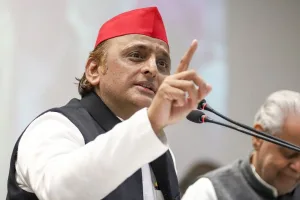
Samajwadi Party (SP) National President Akhilesh Yadav Sunday raised serious questions about the Special Intensive Revision (SIR) of the voter list in Uttar Pradesh.

Statesman News Service | Lucknow |

Samajwadi Party (SP) National President Akhilesh Yadav Sunday raised serious questions about the Special Intensive Revision (SIR) of the voter list in Uttar Pradesh.

He said that the SIR for the assembly elections’ voter list was conducted by the Central Election Commission, while the SIR for the panchayat elections’ voter list was conducted by the State Election Commission. He asked which of the two SIRs is correct, since both sets of figures cannot be accurate simultaneously.

Posting on his social media account, Akhilesh Yadav alleged that the same BLOs (Booth Level Officers) were deployed everywhere in both SIR processes, yet a major contradiction has emerged in the figures. He said that after the assembly election SIR, the number of voters in the entire state decreased by 2.89 crore to 12.56 crore, while after the panchayat election SIR, the number of rural voters increased by 40 lakh to 12.69 crore.

He said that of the two figures, both cannot be correct. Akhilesh Yadav directly questioned the Election Commission, asking which of the two SIRs is correct? He added that if such contradictory figures are emerging from SIRs conducted in the same state by the same BLOs, it is a matter of serious concern.

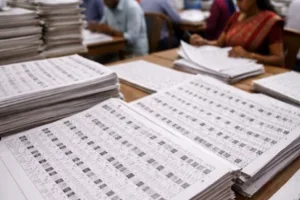
The SP president alleged that the Election Commission is working under pressure from the BJP and that a conspiracy is being hatched to disenfranchise voters in the guise of the voters’ list revision. He charged, “Under pressure from the BJP, you forgot to balance the equation of vote rigging, and your deception has been completely exposed.”

He demanded that the SIR process be made completely transparent and that the Election Commission immediately clarify the situation regarding this contradiction so that the fairness of democracy and the right of the people to vote can be protected.

CM Sai announces 3% DA hike, bringing Chhattisgarh at par with Centre

In a major policy decision bringing immediate financial relief to government employees, the Chhattisgarh government on Sunday announced a 3 per cent increase in dearness allowance (DA), raising it to 58 per cent, at par with the Centre.

Statesman News Service | Raipur |

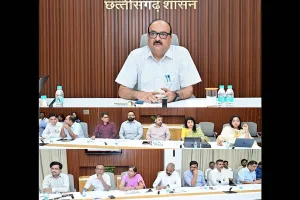
In a major policy decision bringing immediate financial relief to government employees, the Chhattisgarh government on Sunday announced a 3 per cent increase in dearness allowance (DA), raising it to 58 per cent, at par with the Centre. The announcement was made by Vishnu Deo Sai while addressing the eighth state convention of the State Employees’ Association, a move that is set to benefit lakhs of serving employees and pensioners across the state.

Addressing the convention, the Chief Minister said the state government accords the highest priority to the welfare and economic security of its employees. He noted that extensive discussions were held with representatives of employee organisations, including central employee bodies, during the convention. “After constructive dialogue, the government has decided to bring Chhattisgarh’s dearness allowance in line with the Centre,” Sai said.

The Chief Minister underlined that while several states are yet to match the Central government’s DA rates, Chhattisgarh has taken a timely decision to cushion its workforce against rising inflation. He described the move as part of the government’s broader commitment to responsive and employee-friendly governance.

Sai also assured employees that other long-pending demands would be addressed in a structured manner. He announced the formation of a committee to examine unresolved issues and emphasised that all matters would be taken forward through dialogue and consensus. “The government believes in resolving issues through discussion, not delay,” he said.

The announcement was met with visible enthusiasm among employee unions, whose representatives welcomed the decision as a long-awaited and morale-boosting step. Union leaders said the DA hike reflected the government’s sensitivity towards its workforce and expressed confidence that remaining demands would also be taken up expeditiously.

With this decision, Chhattisgarh joins the list of states that have aligned dearness allowance with the Centre, reinforcing the government’s pro-employee stance and offering tangible relief at a time when inflationary pressures continue to weigh on household budgets.

UPCOP app transforms UP Police’s working style; 27 services now available on mobile

The policing system in Uttar Pradesh has undergone significant changes during the tenure of the Yogi government.

Statesman News Service | Lucknow |

The policing system in Uttar Pradesh has undergone significant changes during the tenure of the Yogi government.

Under the smart policing initiative based on technology, the UP Police’s UPCOP app and Citizen Portal are now emerging as a digital alternative to police stations for the general public.

Through the app, citizens can receive 27 types of police services from the comfort of their homes, including filing FIRs, thereby saving them from the hassle of repeatedly visiting police stations.

Director General of Police (DGP) Rajiv Krishna said here on Sunday that on the instructions of Chief Minister Yogi Adityanath, technology has been effectively integrated to make policing people-centric, transparent, and accountable. As a result, the UPCOP app is now functioning as a “digital police station.”

He said that the app has not only made services easier but has also significantly reduced the time taken for resolution.

According to the DGP, the UPCOP app offers important facilities such as online FIR registration, downloading FIR copies, reporting lost items, character verification, tenant verification, domestic help verification, and employee verification. So far, more than 5 million people have downloaded this app. More than 21 million FIR copies have been downloaded through the app, and more than 730,000 people have registered online reports for lost items.

To make the UPCOP app more convenient, real-time notifications have been added, allowing users to instantly track the status of their applications. The app is available in both Hindi and English. The SOS button and location tracking have been upgraded for assistance in emergencies. Additionally, a feature to view the nearest police station on the map has been provided, which is proving helpful in times of crisis.

The DGP said that there has been a significant saving of time in verification processes. Character verification is now completed in about 6 days, tenant verification in approximately 8 days, and employee verification in about 5 days, whereas earlier these services took considerably longer.

Rajiv Krishna said that technology-based services are making policing more accountable, and the objective of smart policing is to provide quick justice and relief to citizens.

‘Thank God, you heard the cry that the world did not hear’; First complainant survivor emotionally reacts to Rahul Mamkootathil’s arrest

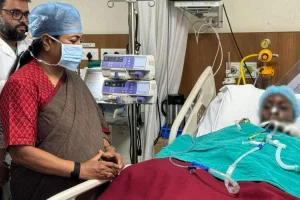
Following the arrest of expelled Congress MLA Rahul Mamkootathil in a fresh sexual assault case, the woman who first accused him of rape charges has reacted emotionally to the arrest of the MLA in a fresh rape case.

Statesman News Service | Thiruvananthapuram |

Following the arrest of expelled Congress MLA Rahul Mamkootathil in a fresh sexual assault case, the woman who first accused him of rape charges has reacted emotionally to the arrest of the MLA in a fresh rape case.

Expressing gratitude to God, the woman, in a Facebook post, said that God heard the cries that the world did not hear. She wrote that God saw the deeds in the dark and may the angelic children forgive them from heaven. She thanked God for giving her the strength to speak out despite the suffering, scrutiny and sense of betrayal she experienced.

“Dear God, thank you for giving us the courage to move forward through all the pain, the trials, the betrayals. You saw the deeds in the dark. You heard the cries that the world couldn’t hear. You held us together when our bodies were attacked, and our children were taken away by force. May those angelic children forgive us from heaven. I apologise for trusting the wrong person and choosing an unworthy father.”

The survivor’s post also expresses concern for unborn children, linking her pain to allegations that Mamkootathil forced victims, including the woman in the latest case, to undergo abortions.

Possibly, holding the view that a fetus is a person with a right to life from the moment of conception, she regrets the forced abortion that she was subjected to and writes emotionally, ”May the souls of those angelic children rest in peace. May those angelic children be free from this world that cannot protect us from violence and fear. If our tears reach heaven, please hear this. Your mother has never forgotten. Your existence is precious, your soul is precious. Mothers will carry you in their hearts until we see you again. This mother loves you so much. Your existence is precious, your soul is precious. Mothers will carry you in their hearts until we see you again. This mother loves you so much.”

PM Modi says India is rapidly advancing towards becoming 3rd largest economy

Prime Minister Narendra Modi on Sunday announced India’s rapid rise towards becoming the world’s third-largest economy at the Vibrant Gujarat Regional Conference (VGRC) in Rajkot, highlighting Gujarat’s pivotal contribution to this achievement.

Statesman News Service | New Delhi |

Prime Minister Narendra Modi on Sunday announced India’s rapid rise towards becoming the world’s third-largest economy at the Vibrant Gujarat Regional Conference (VGRC) in Rajkot, highlighting Gujarat’s pivotal contribution to this achievement.

“Gujarat has been a cornerstone in India’s journey, fostering growth from MSMEs to attracting global financial institutions,” PM Modi said during his keynote address. “This summit unites government, corporates, startups, and investors to fast-track India’s development.”

Pointing to India’s strong economic fundamentals, the Prime Minister stated, “India is the world’s fastest-growing major economy with inflation under control. Our agriculture sector consistently sets new records, and we lead globally as the largest milk producer and a top manufacturer of generic medicines.”

PM Modi also underscored India’s expanding global presence: “We are the third-largest startup ecosystem and aviation market in the world, with metro rail networks ranked among the top three globally.” He credited recent reforms—including next-generation GST changes, insurance sector liberalisation, and modernisation of the Income Tax Act—for strengthening the economy and benefiting millions.

Global institutions are increasingly optimistic about India’s growth and stability, PM Modi noted. “The IMF calls India the world’s growth engine. After 18 years, S&P upgraded our credit rating, and Fitch has praised our fiscal credibility. Despite global uncertainties, India remains politically stable with a growing middle class and a strong foundation for sustained progress.”

Highlighting Gujarat’s role in India’s future, the Prime Minister announced key projects: “India’s first semiconductor fabrication plant is coming up in Dholera, supported by a predictable policy environment. In Kutch, a hybrid power park five times the size of Paris is under development, and Jamnagar is emerging as a hub for green energy.”

He stressed the need for an industry-ready workforce and reliable power to support India’s data-driven growth in semiconductors, AI, and research. “Nuclear power will be vital, and through the Shanti Act, the nuclear sector is now open to private investors to ensure dependable energy for emerging technologies,” PM Modi added.

Focusing on regional strengths, PM Modi identified Saurashtra and Kutch as engines of Atmanirbhar Bharat. “Saurashtra alone hosts 2.5 lakh MSMEs producing everything from screwdriver parts to aircraft components. The region also has the world’s largest ship-breaking yard and a major tile manufacturing hub, making it a key driver of industrial growth and investment,” he said.

Chief Secretary Ashish Kundra reviews cultural heritage at Ladakh’s iconic Lamayuru Monastery

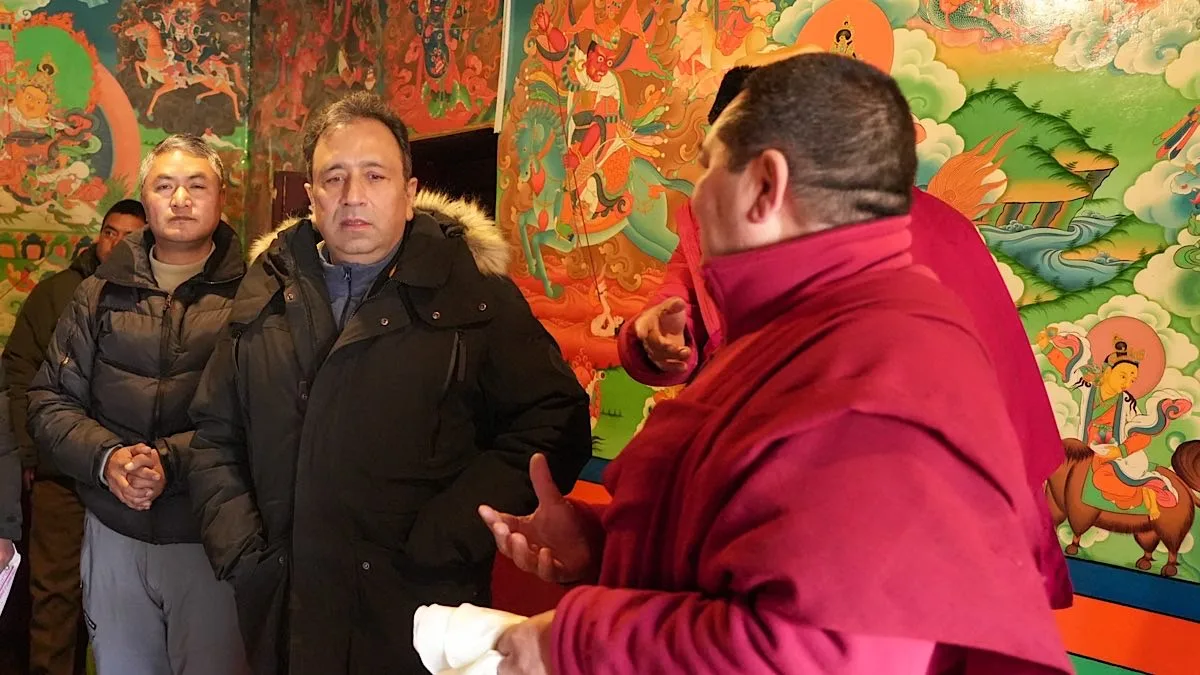
The Chief Secretary of the Union Territory of Ladakh, Ashish Kundra, visited the moonland Lamayuru Monastery situated at a height of 3510 metres and interacted with the monks and locals of the area.

Statesman News Service | Jammu |

The Chief Secretary of the Union Territory of Ladakh, Ashish Kundra, visited the moonland Lamayuru Monastery situated at a height of 3510 metres and interacted with the monks and locals of the area.

The 11th century Lamayuru Monastery is one of the most revered spiritual and cultural landmarks of the region.

The Chief Secretary held interactions with local residents, monks, and representatives of the area.
During the visit on Saturday, the villagers and monastery representatives apprised the Chief Secretary of several long-standing developmental and infrastructure-related requirements.

These included requests for financial assistance for the extension of the Monastery’s mask dance (Cham) ground to facilitate the smooth conduct of traditional religious and cultural events, construction of a roof structure for parts of the Monastery to ensure protection from harsh weather conditions, and the construction of a bridge along with adequate parking facilities to improve accessibility, safety, and visitor management, especially during peak tourist and festival seasons.

The Chief Secretary gave a patient and attentive hearing to all the issues raised by the villagers and assured them that the administration remains committed to preserving Ladakh’s rich cultural and religious heritage while ensuring balanced development.

He stated that the demands would be examined in detail by the departments concerned and considered in accordance with existing government norms, technical feasibility, and availability of resources.

Accompanying the Chief Secretary during the visit were the Secretary, Education, Bhanu Prabha; Secretary, Public Health Engineering (PHE), Rahul Sharma; Director, Health & Medical Education; Chief Engineer, Public Works Department (PWD); and Chief Engineer, PHE.

Those who failed to protect Sabarimala’s sacred assets cannot safeguard people’s faith: Amit Shah

Union Home Minister Amit Shah on Sunday launched a sharp attack on the LDF government in Kerala over the alleged gold theft at the Sabarimala temple, asking how those who failed to protect the sacred properties of Sabarimala could safeguard the faith of the people.

Statesman News Service | Thiruvananthapuram |

Union Home Minister Amit Shah on Sunday launched a sharp attack on the LDF government in Kerala over the alleged gold theft at the Sabarimala temple, asking how those who failed to protect the sacred properties of Sabarimala could safeguard the faith of the people.

Addressing newly elected BJP representatives of local bodies and inaugurating the party’s Mission 2026 campaign for the upcoming Kerala Assembly elections here on Sunday, Shah said the gold theft at Sabarimala was a matter of concern not only for the people of Kerala but also for devotees across the country.

He questioned how a government that could not protect the property of Sabarimala could protect the faith of the people.

“Those who failed to protect the sacred properties of Sabarimala cannot safeguard the faith of the people,” Shah said, asserting that only the BJP could protect the beliefs of devotees in Kerala.

Stating that the police First Information Report (FIR) in the Sabarimala gold heist case contained loopholes that could help the accused escape, Shah demanded a probe by a neutral investigation agency to bring all the culprits to justice.

“The Chief Minister should hand over the probe to a neutral investigation agency. The BJP will carry out protests and door-to-door awareness campaigns. This is democracy, Mr. Pinarayi Vijayan, and you must order a probe by a neutral agency,” Shah said.

“I have seen the FIR in the Sabarimala gold heist case. It contains loopholes that allow criminals to escape. Two ministers are under suspicion in the minds of the people. How can you justify those ministers? You cannot conduct an impartial investigation. Neither can the UDF, because their leaders are also seen in photographs with the accused in this case. Are you ready to hand over the matter to an impartial agency?” he asked Chief Minister Vijayan.

Alleging that the fight between the UDF and the LDF in Kerala was merely a drama, Shah said that whenever the Congress needed it, the communists had helped the grand old party, citing their coming together in Tripura and West Bengal.

“When communism ended all over the world, the Congress ended all over India. Kerala’s development is possible only under a BJP government. Our goal is not just electoral victory, but the development of Kerala, for which a BJP Chief Minister must come. That day is not far away. Today, a BJP mayor has come to the state capital,” Shah said.

Claiming that the BJP would form the government in West Bengal after the 2026 elections, Shah said that 2024 and 2025 had been successful years for the party and that this momentum would continue in 2026 as well.

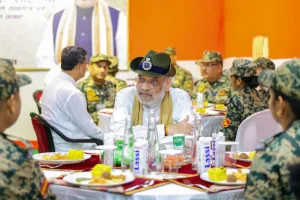
Earlier on Sunday morning, Amit Shah offered darshan at the Sree Padmanabhaswamy Temple here. The Union Minister reached the north gate of the temple at around 10 am and spent about 20 minutes inside. He was received by BJP state president Rajeev Chandrasekhar, senior BJP leader Kummanam Rajasekharan, and others.

NDMC gears up for India AI Impact Summit 2026

The New Delhi Municipal Council (NDMC) has geared up for the upcoming India AI Impact Summit 2026, scheduled to be held from February 15 to 20.

NIKHIL VYAS | New Delhi |

The New Delhi Municipal Council (NDMC) has geared up for the upcoming India AI Impact Summit 2026, scheduled to be held from February 15 to 20.

Envisioned as a major global platform on inclusive artificial intelligence, the summit will bring world leaders, policymakers, innovators, and global AI experts to New Delhi, placing the national capital firmly in the international spotlight.

In line with the vision of delivering a G20-level experience, the NDMC has launched an extensive and comprehensive civic revamp across its jurisdiction.

Special attention is being given to areas around key venues such as Bharat Mandapam, where the main inaugural event will be held on February 19, along with prominent five-star hotels, major roundabouts, heritage buildings, gardens, and public spaces that are likely to be visited by international delegates.

“A detailed action plan has been drawn up for revamping key road stretches connecting the airport, Bharat Mandapam, important tourist hubs, and diplomatic zones. This includes addressing potholes, repairing footpaths, restoring damaged grilles, upgrading signage, repainting central verges, eliminating dark spots, and enhancing overall road safety and visual appeal,” an official from the NDMC said.

The revamp plan also covers important locations hosting pre-event activities and bilateral engagements, including Hyderabad House, Vigyan Bhawan, Ambedkar Bhawan, Sushma Swaraj Bhawan, major five-star hotels, and the India Gate precinct. Additionally, roads leading to popular tourist destinations such as Connaught Place, Central Park, Lodhi Garden, Humayun’s Tomb, Delhi Haat, Nehru Park, and surrounding areas are being comprehensively upgraded.

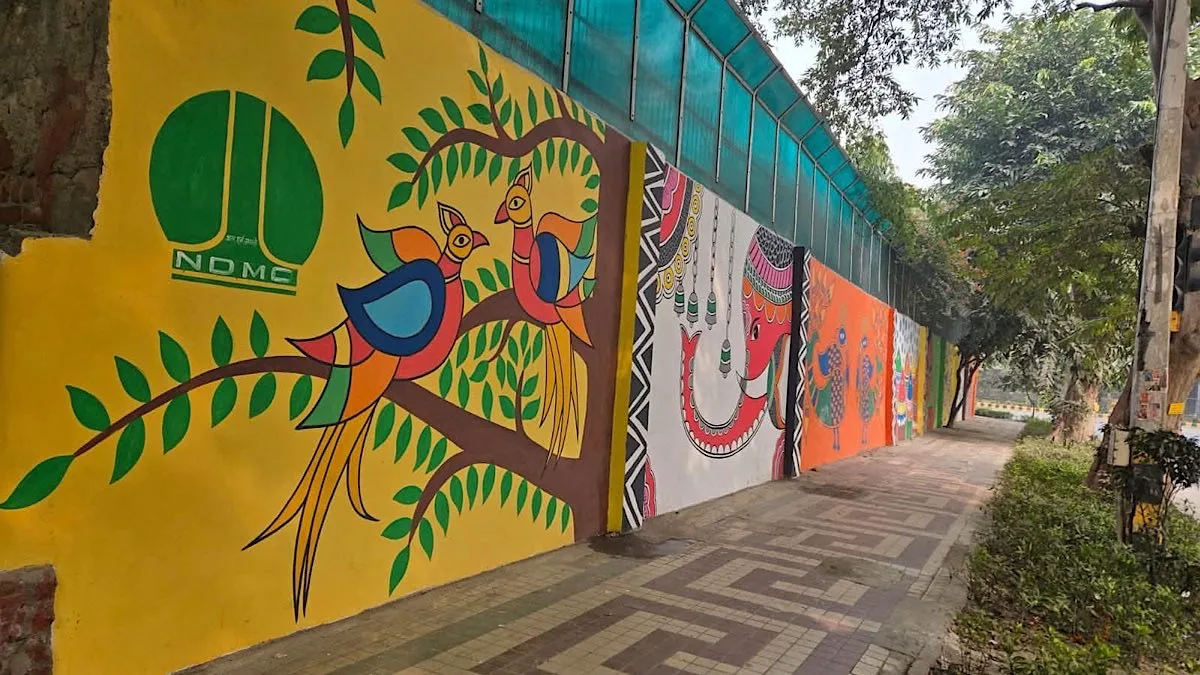
Beautification and cleanliness form the cornerstone of NDMC’s preparations. The Horticulture Department has been directed to enhance the city’s visual appeal by installing flowering and ornamental plants at prominent locations, roundabouts, and major junctions. Sculptures, fountains, and public art spaces are being refurbished, while intensified cleanliness measures are being implemented at garbage-vulnerable points.

Daily mechanical road sweeping, deep cleaning, and mopping operations are underway in key markets and arterial roads, with special drives being conducted at regular intervals in Connaught Place and other major commercial hubs. Market Traders’ Associations have also been engaged to ensure collective participation in maintaining high standards of cleanliness.

In its efforts to improve air quality during the summit, the NDMC is deploying smog guns, mist sprayers, water sprinklers, and strict enforcement measures against polluters. Given the high concentration of hotels and diplomatic movement in the NDMC areas, focused efforts are being made to enhance the surrounding urban aesthetics and environmental quality.

As part of the summit’s public engagement initiatives, Central Park, Connaught Place, has been allocated to the Ministry of Electronics and Information Technology from February 16 to 20, where leading AI companies are expected to set up interactive stalls for public outreach and demonstrations.

To ensure improved civic amenities, the NDMC is prioritising the maintenance of roads and footpaths, achieving 100 per cent functionality of street and pole lights across roads, roundabouts, and market areas, and removing overhead cables near monuments to enhance the city’s visual landscape. Decorative and aesthetic illumination is also being planned to further elevate the city’s ambiance during the event.

PM Modi Hails 500th Book of Jain Acharya Vijayaratna Sundar Surishwarji as Mantra for Peace and Harmony

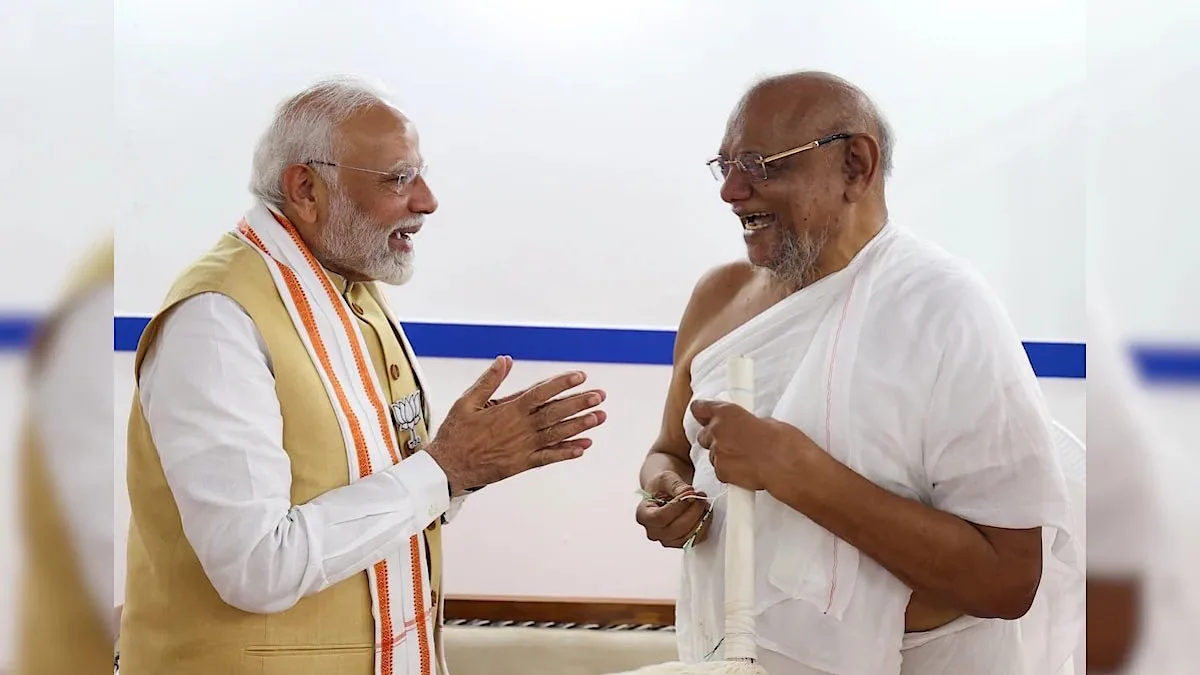
Prime Minister Narendra Modi on Sunday praised the 500th book of Jain Acharya Shrimad Vijayaratna Sundar Surishwarji Maharaj, describing it as a vital “mantra for peace and harmony” amid a world beset by conflict and division.

Statesman News Service | New Delhi |

Prime Minister Narendra Modi on Sunday praised the 500th book of Jain Acharya Shrimad Vijayaratna Sundar Surishwarji Maharaj, describing it as a vital “mantra for peace and harmony” amid a world beset by conflict and division. Delivered via a video message at the Urja Mahotsav event, PM Modi emphasised that the book, titled “Premnu Vishva, Vishvano Prem” (A World of Love, Love for the World), transcends a literary milestone to serve as a guiding beacon for humanity, reinforcing timeless values of love, non-violence, and coexistence.

PM Modi began by paying respects to revered Jain saints present at the occasion and congratulated the Urja Mahotsav Committee for organising the event. He called the release a rare and blessed moment, highlighting that Acharya Vijayaratna Sundar Surishwarji Maharaj not only mastered scriptural knowledge but embodied it in his life. The Prime Minister described Acharya’s personality as a unique blend of restraint, simplicity, and clarity, noting that his writings draw from deep personal experience and his presence exudes compassion and guidance.

Noting that the Acharya’s 500 works collectively form a vast ocean of spiritual wisdom, PM Modi said they offer simple yet profound solutions to complex human challenges. Central Jain teachings—such as non-violence, non-possessiveness, and many-sidedness—are given fresh, contemporary expression in these writings, which will continue to serve as societal guiding lights. He expressed confidence that the new book will especially inspire youth and benefit humanity.

Highlighting the Jain philosophy of Parasparopagraho Jivanam—the interdependence of all life—the Prime Minister underscored its message to shift focus from individual interests toward collective welfare, encompassing society, nation, and humanity. Reflecting on his participation in Navkar Mantra Day, where all four Jain sects united, PM Modi revisited nine resolutions he proposed, including water conservation, cleanliness, promoting local products, natural farming, healthy living, and support for the poor.

Emphasising India’s youthful demographic and its role in building a developed nation rooted in cultural values, PM Modi noted the vital role of spiritual leaders like Maharaj Sahib and their literature in guiding this transformation. He extended his best wishes for the book’s release and expressed hope that Acharya Vijayaratna Sundar Surishwarji Maharaj’s thoughts will continue to illuminate India’s intellectual, moral, and human journey for generations to come.

Forces that opposed Somnath temple reconstruction still active: PM Modi

The Prime Minister said that the history of Somnath is not one of destruction and defeat but of victory and reconstruction.

Statesman News Service | New Delhi |

Prime Minister Narendra Modi on Sunday asserted that the attacks on the Somnath Temple in Gujarat were not only about economic loot as, if that were the case, the attackers would have stopped after the first major plunder.

Addressing a gathering on the last day of the four-day Somnath Swabhiman Parv, Modi said, “If the attacks on Somnath were only for economic loot, they would have stopped after the first major plunder a thousand years ago. But that did not happen.”

He said that after independence, efforts were made to “whitewash” foreign attacks and present them as routine acts of plunder. “The temple was attacked again and again, its idols were broken, its form was altered repeatedly, and yet we were taught that it was only about loot.”

He alleged that the “contractors of appeasement” raised objections when the temple was being reconstructed in 1951.

“The contractors of appeasement bowed down before radical thinking. When India was freed from the shackles of slavery, when Sardar Vallabhbhai Patel took the oath for the reconstruction of Somnath, attempts were also made to stop him. In 1951, objections were also raised when Dr. Rajendra Prasad, the then President of India, came there,” he said in a veiled attack on former Prime Minister Jawaharlal Nehru.

PM Modi Marks Somnath Swabhiman Parv Celebrating India’s Heritage of Resilience and Renewal

“Unfortunately, even today, forces remain active in the country that opposed Somnath’s reconstruction,” Modi added.

The Prime Minister said that the history of Somnath is not one of destruction and defeat but of victory and reconstruction.

“A thousand years ago, those tyrants thought they had conquered us, but even today, a thousand years later, the flag fluttering atop the Somnath Mahadev temple is calling out to the entire creation about what the power of Hindustan is, what its might is,” he remarked.

The PM said that the Somnath Swabhiman Parv, held to mark 1,000 years since the first invasion of the Somnath temple in 1026 by  Mahmud of Ghazni, is a commemoration of continuity.

“This festival is not merely a remembrance of the destruction that occurred a thousand years ago. It is a celebration of a thousand-year journey, and of India’s existence and pride,” he added.