Logo

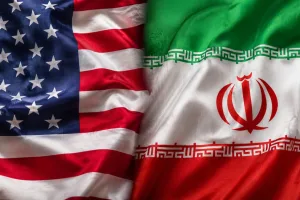
Iran urges UN to condemn US over Donald Trump’s protest call and Iran tariff threat

Iran has urged the United Nations to condemn the United States, citing President Donald Trump’s protest message, cancelled talks, and a new tariff threat amid rising diplomatic tensions.

Statesman News Service | Mumbai |

Iran has asked the United Nations to formally censure the United States, accusing it of encouraging unrest and threatening force against Tehran.

In a letter sent to United Nations Secretary-General Antonio Guterres and the current president of the United Nations Security Council, Iran’s envoy said Washington had crossed a line.

The request comes amid fresh tensions following public remarks and policy decisions announced by US President Donald Trump, including new trade penalties and an open call to Iranian protesters.

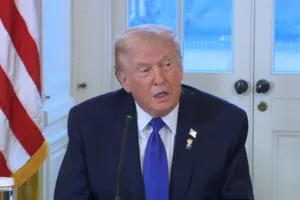
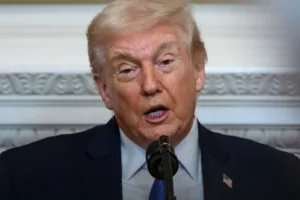
‘Help is on its way’: Trump urges Iranian ‘patriots’ to keep protesting, cancels all meetings with Khamenei regime’s officials

Iran points to Trump’s protest message

Iran’s UN ambassador, Amir Saeid Iravani, said the US President was “openly inciting violence” inside Iran.

He cited a post shared by Trump on the social media platform Truth Social. In the message, Trump addressed demonstrators directly.

“Iranian Patriots, KEEP PROTESTING — TAKE OVER YOUR INSTITUTIONS!!! … HELP IS ON ITS WAY.”

The letter was also addressed to Somali diplomat Abukar Dahir Osman, who is presiding over the Security Council this month.

Iran argued that such statements amounted to interference in its internal affairs and posed a risk to regional stability.

Tariffs, cancelled talks and warnings from Washington

The diplomatic row follows a series of moves by Trump over the past two days.

On Tuesday, he said he had cancelled “all meetings” with Iranian officials. The decision, he said, was linked to reports of violence against protesters in Iran.

Speaking at the Detroit Economic Club, Trump said:

“I’ve cancelled all meetings with the Iranian officials until the senseless killing of protesters stops.”

A day earlier, Trump announced that countries doing business with Iran would face a 25 per cent tariff on trade with the United States.

He also urged protesters to continue demonstrating and to document abuses.

“To all Iranian patriots, keep protesting,” Trump said. “Take over your institutions if possible and save the names of the killers and the abusers.”

Trump acknowledged conflicting reports on casualties but insisted accountability would follow.

“I hear five different sets of numbers,” he said. “One death is too much.”

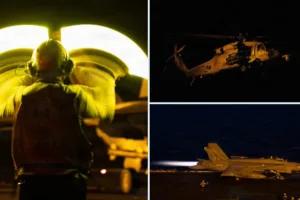
Meanwhile, the White House sought to strike a careful note. Press Secretary Karoline Leavitt said diplomacy remained Washington’s preferred route but added that military options were not being ruled out.

Contrived confusion over the Aravallis

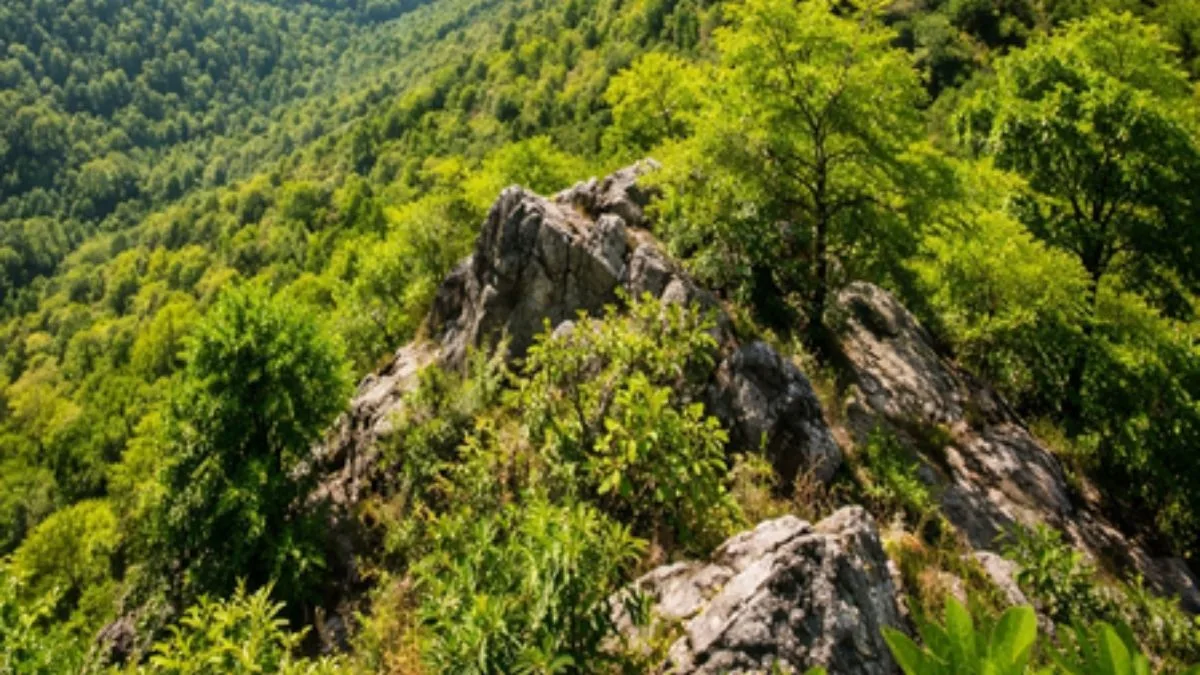
Stretching from west to east for 680 km through Gujarat, Rajasthan, Haryana and Delhi, and more than two billion years old, the Aravalli mountain ranges are natural barriers against the spread of Thar desert northwards.

B K SINGH | New Delhi |

Stretching from west to east for 680 km through Gujarat, Rajasthan, Haryana and Delhi, and more than two billion years old, the Aravalli mountain ranges are natural barriers against the spread of Thar desert northwards. These hills also deflect westerlies and bring winter rains in Punjab, Haryana, Delhi and western UP and further play important roles in climate regulation, ground water recharge and biodiversity conservation. The tree covers on the hills are vital carbon sinks, which has a role in mitigating winter pollution in Delhi NCR. The Supreme Court on 5 May 2024, directed the Union Environment Ministry (MoEFCC) to constitute a panel to formulate a uniform definition of the Aravalli.

Accordingly, a panel headed by Secretary MoEFCC and comprising Forest Survey of India, Geological Survey of India and Central Empowered Committee was constituted. The minimum, maximum and average elevations of hills in each of the 34 districts across the Aravalli in four states were measured. Wide variation was found in ‘average elevation’ across the districts, indicating the challenge in making a definition uniform. Some districts have hilly terrain that do not belong to the Aravalli range while the entire geological extent of the Aravalli ranges is not uniformly hilly.

Thus, neither the slope nor the elevation can delineate Aravalli ranges from other land parcels of the districts. If slopes and elevations are kept as the criteria for delineation, one can include other areas or even exclude some Aravalli areas from true range. With ever increasing threat to ecology due to mining, the Supreme Court on 12 August 2025 asked the states to reason out the definition. The Rajasthan government reported that identification of Aravalli is based on Richard Murphy’s 1968 land reforms classification, which said that hills above 100 m elevation along with its supporting slope below 100 m and up to ground level bottom-most contour (local relief) and all areas encircled by it (supporting slope) is included in the hills. Gujarat and Haryana too followed the same definition. Delhi, however, added that no mining is permitted in the ridge area.

While taking note of the ecological importance of Aravalli hills, the panel headed by Secretary MoEFCC observed that the region is the crucial repository of base metals like lead, zinc, copper, as well as precious metals such as gold and tungsten, while Delhi’s Aravalli has critical and rare earth minerals like tin, graphite, molybdenum, niobium, nickel, lithium etc. needed for energy transition, high technology manufacturing and national security. The panel recommended the definition of Aravalli as landforms located in Aravalli districts having an elevation of 100 meters or more from local relief along with the supporting slopes and associated landforms irrespective of gradient. The Supreme Court approved the definition on 20 November 2025.

Amid protests and criticism of this definition, MoEFCC further announced that there would be no new mining leases until a detailed study is undertaken. Despite this the protesters have not deterred and the protests are continuing. Earlier, the Forest Survey of India – MoEFCC’s institution – had come up with slope criteria for the identification of the Aravallis. It had included all landforms with 3-degree slopes and above in it. 15 out of 18 districts of Rajasthan that qualify under the 3-degree criteria had 40,483 sq. km of area under Aravalli hills, which nearly works out to be 33 per cent of total geographical area of said 15 districts. Forest Survey of India earlier mapped 12,081 hills in these districts and only 1,048 are above 100-meter elevation.

The Supreme Court-approved definition of 100-meter elevation would exclude 90 per cent of these from Aravalli ranges. But MoEFCC told the Supreme Court that 12 out of 34 Aravalli districts are under 3-degree slope and would be excluded from definition. Either of the definitions seems to exclude a large chunk of areas identified by the other. In the circumstances, both definitions would not do justice in delineating the Aravalli hills properly. To date, neither the states nor Union government have carried out any comprehensive survey of Aravalli, to find the extent of area covered under hill ranges, total number of hills, and the hills above 100-meter elevation etc.

The Supreme Court has rightly taken suo motu cognizance of the issue and the bench on 29 December stayed its ruling on 100-meter definition and said that a committee of experts would be constituted to study the environmental impact. A final view on definition of Aravalli is yet to emerge. But the larger question remains – whether hills have been defined based on elevation and slope in any part of the country. We have no such definition for Himalayas, Satpura, Western Ghats, Eastern Ghats, Shivaliks, Vindhyas etc. SC’s own Amicus Curiae cautioned that it would open up the lower hills to incessant mining, if the definition based on elevation is accepted.

Earlier in 1996, 2004 and 2008, the SC judgements in the MC Mehta Vs Union of India case sought to preserve Aravalli and the green belt against deforestation and mining. Rajasthan has 1,230 mining leases over an extent of 17,383 ha within the Aravalli ranges. Many are under dispute and few are operating. Though the state government notified 50 new mining leases in Aravalli, the Centre’s recent ban has put them on hold. MoEFCC last year announced a green wall for nearly 1,400 km long across four states Delhi, Haryana, Rajasthan and Gujarat. It is said to connect the places from Mahatma Gandhi’s birth place in Porbandar in Gujarat to Rajghat in Delhi, where he was finally laid to rest. The wall has some natural forests and some plantations, interspersed with restored agriculture land, pasture land and water bodies.

The Ministry has proposed to reforest 1.15 million hectares’ area in these states covering foothills and buffer areas on either side of the Aravalli hills by 2027. The greening was to be taken up by planting native tree species during the monsoon season of 2025, 2026 and 2027. There is no report in public domain as to what has been achieved under the scheme during 2025 and what are the targets for 2026 and 2027? While on the one hand the government has committed to develop a green wall along the Aravalli, we are restricting it by imposing a definition favouring exclusion of areas from the range.

(The writer is former Head of Forest Force, Karnataka)

From one classroom to another

My journey in government service began early, at the tender age of 19. For a young man, the corridors of power were intimidating, but I was determined that my job would not mark the end of my education; it would only be the beginning.

KRISHAN KUMAR CHUGH | New Delhi |

My journey in government service began early, at the tender age of 19. For a young man, the corridors of power were intimidating, but I was determined that my job would not mark the end of my education; it would only be the beginning. I lived a double life: official files by day and textbooks by night. Over the years, I balanced my duties while acquiring an MA, an MBA, and a Law degree.

It was not a smooth ride. I chased the dream of the Civil Services, clearing the Preliminary Examinations twice, yet missing the final cut. But I refused to let a scorecard define my potential. I channelled that perseverance into the Limited Departmental Competitive Examination conducted by the UPSC. That success in 1982 was a watershed moment – it wasn’t just a promotion from a non-gazetted to a Gazetted Officer; it was proof that if one door closes, hard work forces another open.

When I assumed charge as a Section Officer in the Planning Commission (now NITI Aayog), I realized that “rank” is earned not just by exams, but by the hunger to learn. Today, decades later, standing before the Central Administrative Tribunal (CAT) in the black robes of an Advocate, I realize the journey was never about the designation. It was about the classroom. My elder brother once told me, “No one can stop you from the merit list.” But the merit list is not a destination; it is a moving target. Through my rise from the ranks to Director, and now in my second innings in law, my mantra has evolved into three simple pillars: Planning , Perseverance , a n d Perfection.

The Unexpected Gurus In the hierarchy of government service, we often look ‘up’ for mentorship. My humble beginnings taught me to look around. While I was grateful to my academic professors, my real gurus were often the Upper Division Clerks and Assistants who knew the pulse of the files better than anyone. Having walked in their shoes, I knew that rank does not equal wisdom. Decades later, when technology shifted the landscape, I found another guru in my younger son, then in middle school, who taught me the art of PowerPoint presentations.

This reinforced a vital lesson: learning has no age limit, and a true student has no ego. I was fortunate to have role models like Dr. P.L. Sanjeev Reddy, an IAS officer who encouraged me to write and speak publicly. Similarly, Shri Harish Chandra entrusted me with the Official Language Unit at the age of 53. I remember my first meeting, stumped by the word Pravishti (entry). That moment of hesitation forced me to re-learn Hindi – not just as a language of files, but as a language of Anubhuti (feeling). This literary re-awakening led me to pen four books of poetry, one of which was even chosen by a student at Kurukshetra University for an M.Phil thesis.

It was a humbling reminder that a bureaucrat’s pen can hold more than just orders. This passion for dissemination led me to the training halls of the Institute of Secretariat Training and Management (ISTM). My “classroom” was vast and varied. I had the enriching experience of interacting with the full spectrum of the administration – from Multi-Tasking Staff (MTS) to IPS officers at the National Police Academy (NPA). I also cherish the sessions at BIPARD (Bihar Institute of Public Administration & Rural Development), where I interacted with officers from various services in Combined Induction Courses.

Whether addressing a junior recruit or a senior policymaker, the challenge was always the same: to facilitate ethical thinking. Being selected as a National Facilitator for Ethics and Values in Public Governance by DoPT and UNDP was a turning point that cemented my belief in lifelong learning. I retired from government service in 2013. However, I did not rush immediately into the courtroom. It took time to gather the necessary confidence and to transition from an administrator’s mindset to a litigator’s discipline. That moment finally arrived in 2024, when a client placed trust in me to plead a case before the Central Administrative Tribunal.

It was a leap of faith – both for the client and for me. Since then, the courtroom has become my new classroom. The lessons are thrilling. Recently, the rigorous ‘planning’ from my administrative days paid off when I successfully argued a matter involving a client’s regular promotion. Similarly, in contesting a transfer order, it was my deep familiarity with government policy that helped me prove mala fides and secure a favourable order. Even in personal battles – such as a review regarding an honorarium where the Bench directed consideration of my representationI realized something profound. The judge does not just hear the Advocate; they hear the preparation behind the argument. These victories were not just legal wins; they were validations that the ‘student’ in me is still passing exams. As I approach 72, I am reminded of Rabindranath Tagore’s profound words: “I slept and dreamt that life was joy. I awoke and saw that life was service.

I acted and behold, service was joy.” From the humble start at 19 to the podiums of NPA, and now to the corridors of the Tribunal, the venue changes, but the intent remains the same. There is always “better than the best.” The search for that perfection is what keeps the fire alive. The innings continues.

(The writer retired as Director from the Government of India and is currently a practicing Advocate.)

Snowless Himalayas

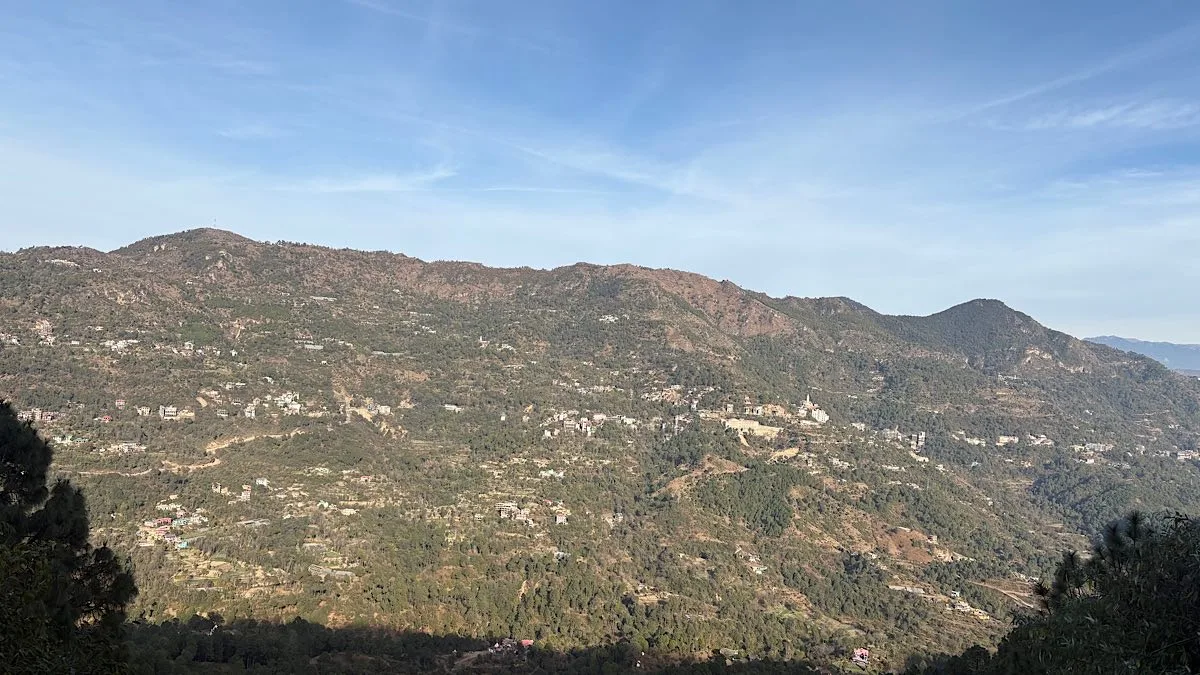
The Himalayas are often described as India’s natural fortress, its water tower, and its climatic stabiliser.

Statesman News Service | New Delhi |

The Himalayas are often described as India’s natural fortress, its water tower, and its climatic stabiliser. But fortresses can crumble, towers can run dry, and stabilisers can fail. The increasingly bare and rocky winter face of the Himalayas is not just a visual shock; it is an early warning signal of a deeper systemic disruption that India is dangerously underprepared for. For centuries, winter snow has performed a quiet but indispensable role. It accumulated patiently, melted gradually, and fed rivers steadily through spring and summer. That rhythm is now breaking.

Winters are becoming drier, snow is falling unevenly, and what does fall is melting faster. This is not a one-off aberration but a pattern that is hardening year after year. The implications are profound. India’s major river systems do not depend only on monsoons; they depend critically on snowmelt. When winter snow declines, rivers lose their buffer. Water becomes more seasonal, more erratic, and more politically sensitive. Irrigation cycles suffer. Hydropower planning becomes uncertain. Urban water security becomes fragile. The idea that glaciers alone will “store” water for the future is a dangerous illusion if snowfall – their primary recharge mechanism – is weakening.

Equally worrying is what vanishing snow does to the mountains themselves. Snow and ice are not just water reserves; they are structural glue. They bind rock, soil, and slope into a fragile equilibrium. When that glue weakens, mountains destabilise. Landslides, rockfalls, debris flows, and glacial lake bursts are not random acts of nature. They are symptoms of a system losing cohesion. Every road cut, every tunnel and dam then multiplies the risk. India’s Himalayan policy has long been caught between development ambition and ecological caution. The current moment demands a reset. Infrastructure cannot be planned on outdated climatic assumptions. Hydropower projects must account for reduced and volatile flows, not just peak potential.

Tourism must be managed as a stress factor, not an entitlement. Urban expansion in hill towns needs hard limits, not cosmetic regulations. There is also a diplomatic dimension. The rivers born in these mountains cross borders. A weakening Himalayan hydrological system will ripple through relations with neighbours, particularly in years of drought or flood. Water security will quietly become strategic security. Most importantly, the Himalayan crisis exposes the limits of India’s climate conversation. Too often, climate change is framed as a coastal problem, a heatwave problem, or an air pollution problem. The slow unravelling of the mountains does not generate daily headlines, but it carries generational consequences. When the snow fails, it is not just the mountains that suffer; it is farms in the plains, cities downstream, and livelihoods far from the peaks. The Himalayas are telling us something uncomfortable: that stability is no longer guaranteed. The question is whether we listen now, or wait until the rivers, the slopes, and the settlements force the lesson upon us

Policy Crossroads

A sanctions bill moving through the US Congress would, if enacted, authorise punitive “secondary” trade measures ~ potentially including tariffs as high as 500 per cent ~ against countries that continue to buy Russian oil, gas, petroleum products or uranium.

Statesman News Service | New Delhi |

A sanctions bill moving through the US Congress would, if enacted, authorise punitive “secondary” trade measures ~ potentially including tariffs as high as 500 per cent ~ against countries that continue to buy Russian oil, gas, petroleum products or uranium. In India, the headline number naturally grabs attention. But the story is bigger than India alone, and it deserves a more sober reading. First, Washington’s argument is not frivolous.

The US position ~ stated repeatedly across administrations ~ is that large-scale energy purchases from Russia help sustain state revenues that, directly or indirectly, underpin President Vladimir Putin’s Ukraine war effort. In principle, that is hard to dispute. And India’s Russia-linked energy exposure is not a timeless feature of our import basket. Before the Ukraine war and the subsequent disruption of traditional flows, Russia was not a dominant supplier for India. The post-2022 surge was driven by discounted barrels offered into a turbulent market, and by the practical need to secure affordable energy for a population of 1.4 billion. That leads to the second point: this bill is also a pressure tool aimed at any major buyer still providing Russia a large energy outlet.

From Washington’s perspective, the “target” is the revenue stream, not the flag on the buyer’s tanker. Yet, in practice, tariffs of the proposed magnitude would function less like sanctions and more like coercion ~ forcing third countries to recalibrate energy policy through trade pain. That is a delicate proposition in a world where energy security is inseparable from inflation control, welfare budgets, and political stability. Third, the politics in Washington matter. On paper, the bill’s breadth of co-sponsorship in the Senate signals serious momentum, and the Administration has publicly indicated support for moving the bill forward. The House picture is more complex: committee pathways, leadership scheduling, and the White House’s desire for flexibility will shape whether the bill becomes law in its toughest form or emerges softened.

If it does become law, the spill-over into trade negotiations will be immediate. A US-India trade agreement already carries unresolved friction ~ agriculture and market access among them. Adding a Russia-energy conditionality layer could turn a negotiable trade dispute into a structural standoff. With China, the stakes are larger still: a sanctions-tariff instrument tied to Russian energy would collide with an already fraught tariff-and-technology relationship, raising the risk of retaliation and a wider decoupling spiral. What options does India have?

A pragmatic menu exists: accelerate diversification of crude sourcing; expand longer-term contracts with multiple suppliers; increase strategic reserves; and, crucially, negotiate a credible glide path that acknowledges India’s energy constraints while demonstrating measurable reduction in Russian dependence. China’s response would likely be harsher, more reciprocal, and more explicitly geopolitical. India may find tactical alignment with Beijing. The test, ultimately, is whether this moment produces diplomacy or duress. If sanctions become a blunt instrument of compulsion, they may weaken the very coalitions they aim to build

Beyond a public holiday?

January 12 was once again observed across India as the birth anniversary of Swami Vivekananda, commemorated nationally as Youth Day and declared a public holiday in West Bengal.

ABHIK ROY | New Delhi |

January 12 was once again observed across India as the birth anniversary of Swami Vivekananda, commemorated nationally as Youth Day and declared a public holiday in West Bengal. Schools and colleges organized lectures, cultural programmes, and discussions recalling his life and ideas. Political leaders and educators invoked his name, his image adorned banners and stages, and young people were reminded ~ once more ~ of his call to awaken inner strength and moral purpose.

Yet beneath the ceremonial remembrance lies a disquieting question. Vivekananda did not ask to be honoured through ritual observance alone. He asked to be understood ~ and lived. When public homage coexists with a shrinking moral imagination, when his name is celebrated while his values are quietly set aside, remembrance risks becoming symbolic rather than transformative. A holiday may pause work for a day; it does not automatically revive conscience. At the heart of Vivekananda’s thought was a radical conception of education. Education, he insisted, was not the mere transmission of information nor a narrow training for economic utility. It was the awakening of the whole person ~ the cultivation of character, judgment, courage, and empathy.

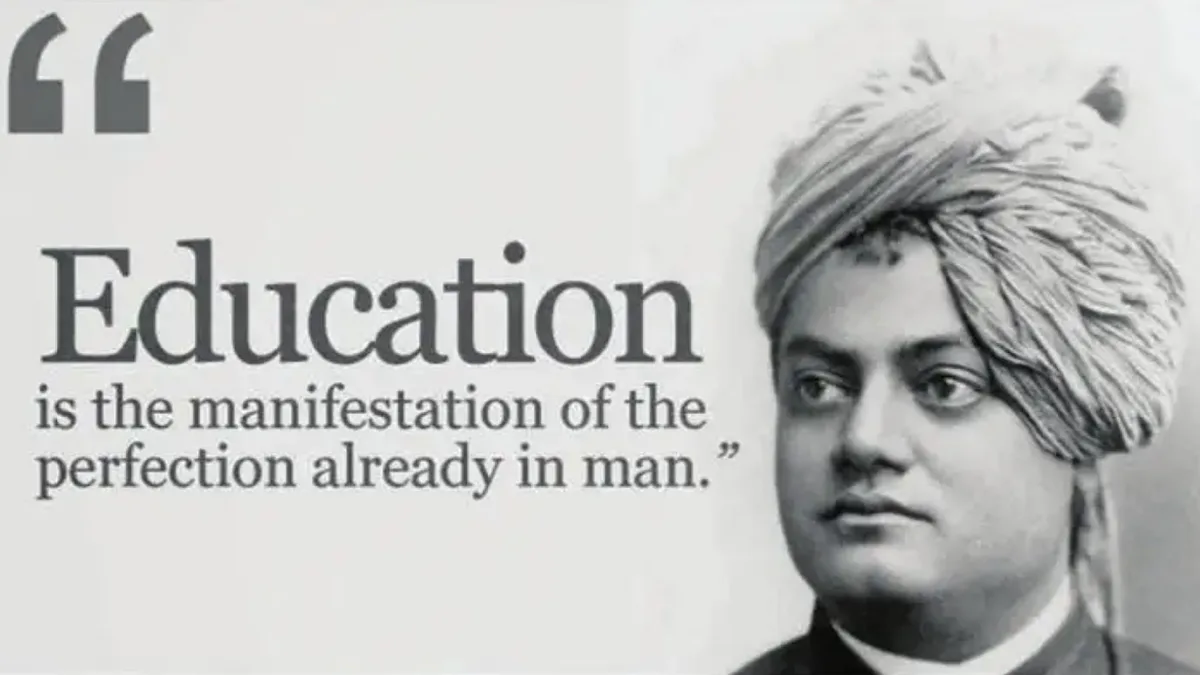
“Education is the manifestation of the perfection already in man,” he famously said, underscoring his belief that learning must draw out ethical and spiritual capacities already latent within the human being. Such an understanding of education carries profound civic consequences. A society may produce skilled professionals and technological expertise, Vivekananda warned, yet still falter if its citizens lack compassion, moral restraint, and the ability to see one another as fully human. Knowledge divorced from empathy sharpens the intellect but leaves the conscience untouched. Education that does not enlarge the moral horizon risks becoming a tool of domination rather than liberation. This moral dimension of learning is especially urgent today.

Across India, public discourse has grown harsher, more performative, and increasingly intolerant of nuance. Volume often substitutes for reason; loyalty eclipses ethical judgment. In such a climate, education risks being reduced to credentialism ~ efficient, competitive, and morally thin ~ precisely the condition Vivekananda feared. Equally central to his vision was an uncompromising respect for religious diversity. Vivekananda’s spiritual confidence allowed him to embrace plurality without anxiety. At the Parliament of the World’s Religions in Chicago in 1893, he famously declared that he believed not merely in tolerance, but in the acceptance of all religions as true.

This was not a gesture of politeness nor a strategy of coexistence. It was a philosophical position rooted in the ancient insight that truth is one, though expressed through many paths. Vivekananda rejected the notion that faith must assert itself by negating others. He argued that a Christian need not become a Hindu, nor a Hindu a Christian. What mattered was not conversion, but assimilation ~ the ability to learn from other traditions while remaining grounded in one’s own. Each religion, he believed, carried a distinct moral and spiritual insight, and humanity would be impoverished by the loss or silencing of any one of them. This openness was not abstract theory. Vivekananda himself studied the scriptures and spiritual figures of other faiths with seriousness and reverence, including Christianity and Islam.

For him, respect for difference was not weakness; it was the mark of a mature civilization secure in its own spiritual inheritance. Measured against this standard, the present moment is deeply unsettling. India today witnesses an increasingly aggressive public culture in which suspicion too often replaces trust and difference is readily framed as threat. Minority communities, particularly religious minorities, live with heightened insecurity. Reports of disruptions of Christian worship, vandalizing of churches, and attacks on Christmas celebrations in some places point not merely to isolated acts of intolerance, but to a broader erosion of civic restraint. Fear has begun to substitute for fellow-feeling. This is not the India Vivekananda envisioned.

He believed that spiritual strength expressed itself through generosity, not intimidation; through confidence, not coercion. A nation unsure of itself lashes out. A nation grounded in ethical clarity does not need to. Equally vital to Vivekananda’s philosophy was his insistence that spirituality must find expression in compassion. Drawing inspiration from his guru Sri Ramakrishna’s teaching that the living being itself is divine, Vivekananda redefined service as worship. To serve another human being was, in his view, to serve God. Religion that failed to respond to hunger, suffering, and injustice, he argued, was empty abstraction. His words were deliberately stark.

He refused to believe in a God or a religion that could not wipe a widow’s tears or place bread in the hands of an orphan. Compassion, for Vivekananda, was not sentimental kindness but ethical action rooted in the recognition of shared humanity. It cut across caste, creed, nationality, and even species. He once remarked that if a stray dog remained hungry, his religion would be to feed it. This ethic of compassion shaped his understanding of nationalism itself. Vivekananda was deeply critical of an elite India that spoke eloquently of spirituality while neglecting the poor and the marginalized. He reproached the educated and privileged for their indifference toward the masses.

A nation could not claim moral greatness, he insisted, while ignoring the suffering of its weakest members. Importantly, he did not advocate charity that reinforced hierarchy. He called instead for empowerment ~ education, dignity, and the means for people to stand on their own feet. True service, in his view, strengthened self-respect rather than dependency. It was an act of solidarity, not condescension. Here again, the distance between Vivekananda’s ideals and contemporary realities is stark. In a society increasingly consumed by personal advancement and narrow self-interest, the poor and the unprivileged are too often rendered invisible. Structural injustice is explained away as individual failure. Economic success is celebrated while social responsibility quietly erodes. Such attitudes stand in direct opposition to Vivekananda’s moral philosophy, which placed human solidarity at the center of national renewal.

Vivekananda’s teachings leave no room for bigotry, prejudice, or hatred of any kind. His repeated exhortations ~ “Help and not fight,” “Assimilation and not destruction,” “Harmony and peace and not dissension” – were not rhetorical flourishes. They were ethical imperatives meant to guide both personal conduct and collective life. He believed that without these principles, political power and cultural pride would ultimately corrode rather than uplift society. To invoke Vivekananda while discarding these values is to hollow out his legacy. Declaring his birthday a public holiday while tolerating cruelty, indifference, or fear in daily life reduces remembrance to spectacle. He did not seek reverence; he demanded courage ~ moral courage to resist hatred when it is convenient, to defend the vulnerable when it is costly, and to see the divine in every human being. Until we recover that courage, we may continue to celebrate Swami Vivekananda’s birth. But we will have lost the meaning of his life.

(The writer is professor emeritus, Loyola Marymount University, Los Angeles)

Nepal’s former PM alleges ‘foreign hand’ in Gen Z protests and govt ouster: Report

Oli claimed that Sri Lanka and Bangladesh had warned that protests like those in their countries could happen in Nepal as well.

IANS | New Delhi |

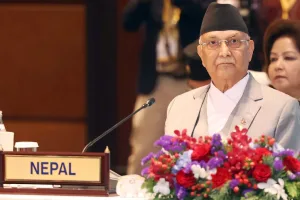
Senior members of Nepal’s former cabinet, including deposed Prime Minister K.P. Sharma Oli, have reiterated the involvement of “foreign hands” behind the Gen Z protests that led to the ouster of the government in September 2025.

Speaking to Russia’s state-run global television news network, RT, Oli said, “That (the uprising) was not a simple and usual thing. That was unusual, and it couldn’t have taken place all of a sudden. It was organised in a planned way; it was evident even at that time and later on.”

On Tuesday, the RT website carried another quote from an interview with Pradeep Kumar Gyawali, Nepal’s former foreign minister, who backed Oli’s assertion. “Those elements who were actively engaged with the deep state, who used the cross-border misinformation and disinformation to instigate the violence, they were active,” Gyawali told RT India.

He further claimed that Kathmandu’s growing engagement with India and China and its aspiration of being a bridge for the economic development of Nepal between the two neighboring countries was not a very good message to some powers.

In Monday’s interview, Oli claimed that Sri Lanka and Bangladesh had warned that protests like those in their countries could happen in Nepal as well. “Bangladesh and Sri Lanka were telling us… Leaders were talking that such things would happen, and things happened. It was an attack on our democracy, to send them back to poverty,” he told RT.

He added that the current situation in Nepal is not conducive to holding elections. Former Chief Justice Sushila Karki was appointed Nepal’s interim prime minister after Oli’s ouster last year. A general election is scheduled for March.

Gyawali also said that the powers “wanted to use Nepal’s geostrategic location for their policy in their favour. So maybe our engagement with our neighboring countries may have some grievances to the big powers as well”.

RT also quoted its earlier report about a US-based news outlet, The Grayzone, having cited leaked documents “revealing that the US government’s National Endowment for Democracy (NED) spent hundreds of thousands of dollars tutoring Nepalese young people to stage the protests”.

The NED, it claimed, is officially a US State Department-funded nonprofit that provides grants to support “democratic initiatives” worldwide. On its website, NED describes itself as “a valuable resource for information related to democracy worldwide. Staff experts are available for comment on democratic development and related topics in Africa, Asia, Central Europe, Eurasia, Latin America, and the Middle East”.

According to the RT, the Grayzone investigations had revealed Nepal’s Gen Z protests happened as the US sought to neutralise Chinese and Indian influence over Kathmandu.

Russia’s television network further added that “International Republican Institute (IRI), a NED division, has been accused of funding clandestine activities in Bangladesh”. It went on to allege that NED has also “been accused of funneling tens of millions of dollars to Ukrainian political entities and anti-Russian interests”.

RT India was launched on December 5 last year, commemorating the 23rd India-Russia Annual Summit, a tradition dating back to 2000, when President Vladimir Putin visited India.

MI vs GG WPL 2026: Harmanpreet Kaur’s unbeaten 71 seals seven-wicket win

After Amanjot’s dismissal to Sophie Devine, Harmanpreet took complete control of the chase. She brought up her half-century in just 33 balls, displaying her trademark composure under pressure.

Neha Buswal | New Delhi |

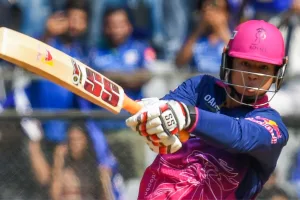
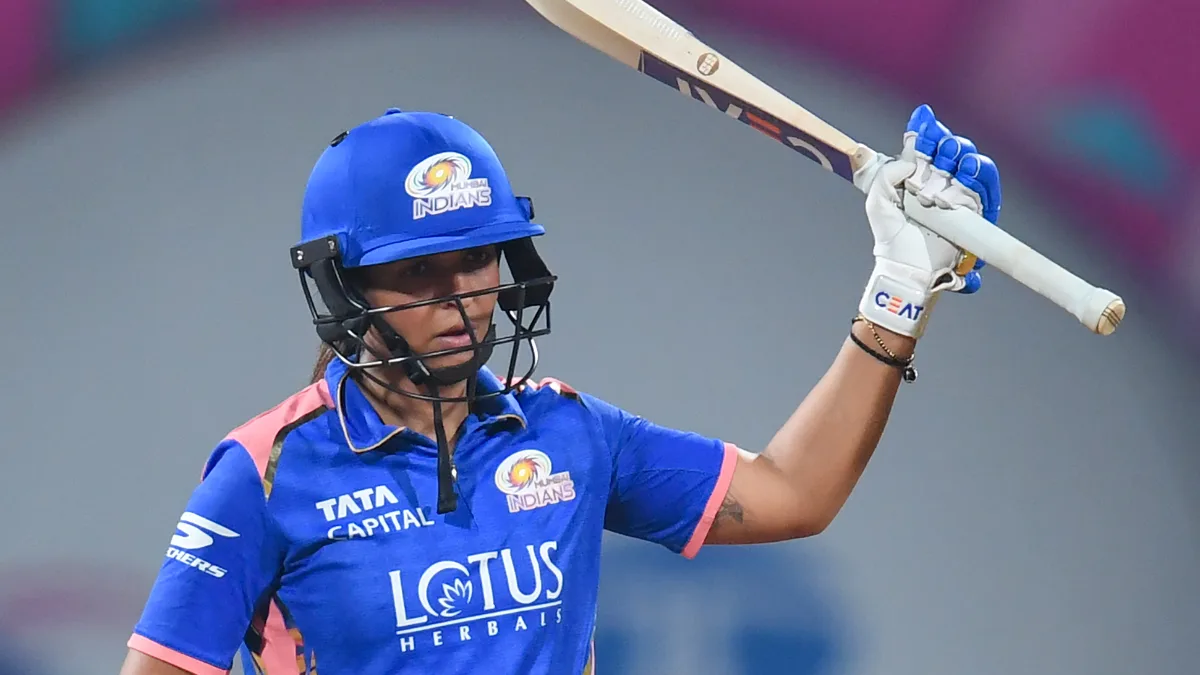
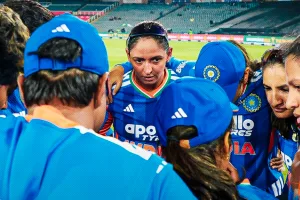
Mumbai Indians registered a commanding seven-wicket victory over Gujarat Giants after a composed chase led by skipper Harmanpreet Kaur, who anchored the innings with an unbeaten 71 off 43 balls in the WPL 2026 clash.

Chasing 193, MI endured a cautious start and lost early wickets, but the momentum shifted decisively through a vital partnership between Amanjot Kaur and Harmanpreet. The duo counterattacked during the middle overs, taking on spinners and seamers. Amanjot scored 40 off 26 balls, providing the impetus MI needed to stay ahead of the required rate.

After Amanjot’s dismissal to Sophie Devine, Harmanpreet took complete control of the chase. She brought up her half-century in just 33 balls, displaying her trademark composure under pressure. With Nicola Carey offering excellent support with 38 off 23 balls, MI ensured the chase never drifted off course. Harmanpreet accelerated smartly in the death overs, capitalising on a dropped chance and some untidy fielding from the Giants as Mumbai crossed the line with an over to spare.

Earlier, Gujarat Giants posted 192/5, courtesy of a strong late flourish. Georgia Wareham top-scored with an unbeaten 43 off 33 balls, while Bharti Fulmali provided the finishing touch with a blistering 36 off 15 deliveries*, pushing GG beyond the 190-run mark after a steady start. Ayushi Soni was retired out after scoring 11 off 14 balls.

The Giants’ innings also featured a dramatic passage in the 17th over, when Fulmali survived two successful LBW reviews after on-field umpire Gayathri Venugopalan had initially raised her finger on both occasions, with ball-tracking confirming the deliveries were sliding down the leg side.

Mumbai Indians had earlier entered the contest with one win and one defeat, having bounced back strongly against Delhi Capitals after a last-ball loss to Royal Challengers Bengaluru in the opener. Hayley Matthews returned to the MI XI, with Harmanpreet confirming at the toss that Nat Sciver-Brunt was unavailable due to illness. For Gujarat, skipper Ashleigh Gardner revealed that Anushka Sharma was ruled out injured, allowing Ayushi Soni to make her WPL debut.

With this victory, Mumbai Indians secured their second win of the season, underlining their experience and depth, while Gujarat Giants were left to rue missed opportunities in the field at crucial stages of the contest.

India, France reaffirm strategic partnership as PM Modi meets Macron’s envoy ahead of President’s visit

Prime Minister Modi expressed his satisfaction following the meeting, noting that the partnership—dating back to 1998 as India’s first-ever strategic alliance—is evolving into several new and vital domains.

Statesman News Service | New Delhi |

India and France on Tuesday reaffirmed their “strong and trusted” strategic partnership during a high-level meeting between Prime Minister Narendra Modi and Emmanuel Bonne, Diplomatic Adviser to French President Emmanuel Macron.

“Delighted to meet Emmanuel Bonne, Diplomatic Adviser to President Macron,” Prime Minister Modi said in a post on X. The discussions underscored a deepening commitment to cooperation in innovation, technology and education, while also addressing key geopolitical issues ahead of President Macron’s highly anticipated visit to India.

Prime Minister Modi expressed his satisfaction following the meeting, noting that the partnership—dating back to 1998 as India’s first-ever strategic alliance—is evolving into several new and vital domains.

He specifically highlighted the importance of the India–France Year of Innovation, stressing that the expansion of collaboration in research and science directly benefits entrepreneurs and the youth of both countries.

The meeting coincided with the 38th India–France Strategic Dialogue, co-chaired by National Security Adviser Ajit Doval and Emmanuel Bonne. During the dialogue, officials reviewed a wide range of bilateral cooperation, including security, defence, space, and civil nuclear energy, reflecting the increasingly diverse agenda between New Delhi and Paris.

Prime Minister Modi reiterated that the relationship is built on a foundation of mutual trust and shared interests in global peace and prosperity.

French officials reportedly described the engagement as a constructive preparatory step to ensure that President Macron’s forthcoming visit delivers substantive outcomes across multiple sectors.

As Europe remains a central pillar of India’s diplomatic strategy, the continued India–France collaboration signals a shared vision for a stable, innovative and technologically advanced future.

3 killed, 2 injured as coal roof collapses on villagers in abandoned BCCL colliery at Kulti

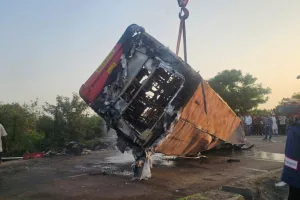
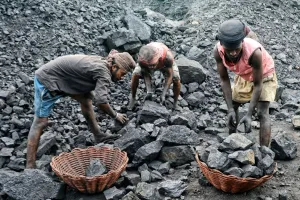
Three illegal coal miners were killed and two others seriously injured after a section of coal roof collapsed on them at the abandoned Borira Open Cast Colliery of Bharat Coking Coal Limited (BCCL) under Kulti police station on Tuesday.

Statesman News Service | Kolkata |

Three illegal coal miners were killed and two others seriously injured after a section of coal roof collapsed on them at the abandoned Borira Open Cast Colliery of Bharat Coking Coal Limited (BCCL) under Kulti police station on Tuesday.

The deceased have been identified as Geeta Bauri, Suresh Bauri and Tipu Mallick. The injured, Subhash Mallick and Gobinda Bauri, have been admitted to Asansol District Hospital, where their condition is stated to be critical.

According to sources, the incident occurred when a large chunk of coal suddenly caved in on a group of villagers who had entered the abandoned mine to collect coal illegally. A few miners managed to escape and informed others, following which residents of nearby villages ~ Lakhanpur, Kanyapur and Lalbazar ~ rushed to the site and began rescue operations.

Later, personnel from the Central Industrial Security Force (CISF), Kulti Police under the Asansol Durgapur Police Commissionerate (ADPC), local BCCL officials and teams from the Mines Rescue Station, Sitarampur, reached the spot and took over the rescue work.

Post-mortem examinations of the deceased were conducted at Asansol District Hospital. BCCL officials said that the Kulti Police and CISF regularly warn local residents not to enter unsafe and hazardous zones of abandoned collieries to collect coal.

Despite repeated warnings, many impoverished villagers continue to extract coal illegally from exposed pit sides, risking their lives in order to earn a livelihood by selling coal in nearby areas.

The BJP alleged that residents of villages such as Lakhanpur, Kanyapur and Lalbazar have little or no employment opportunities and are therefore compelled to resort to illegal coal mining to survive. Kulti MLA Dr Ajoy Poddar has demanded compensation for the families of the victims.

Sources in the ADPC said they have urged BCCL management to bulldoze exposed coal areas to prevent illegal entry and further loss of life.

Meanwhile, BCCL authorities claimed that no villagers remain trapped under the debris and that rescue operations have been concluded.

Chief of Defence Staff motivates young cadets at NCC Republic Day Camp 2026

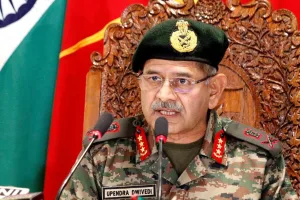
The Chief of Defence Staff (CDS) General Anil Chauhan visited the National Cadet Corps (NCC) Republic Day Camp (RDC) at Delhi Cantt on January 13, 2026. Addressing NCC cadets & officers, CDS expressed his pride in attending the RDC camp for the fourth consecutive time. He lauded the high standards and enthusiasm of the cadets, noting a renewed sense of energy and patriotism each year.

Statesman News Service | New Delhi |

The Chief of Defence Staff (CDS) General Anil Chauhan visited the National Cadet Corps (NCC) Republic Day Camp (RDC) at Delhi Cantt on January 13, 2026. Addressing NCC cadets & officers, CDS expressed his pride in attending the RDC camp for the fourth consecutive time. He lauded the high standards and enthusiasm of the cadets, noting a renewed sense of energy and patriotism each year.

Emphasizing the importance of vision and will for the youth, he said, “If you take the right path, you reach the right destination; it’s important to choose the right path today.” Sharing his own career journey, CDS encouraged cadets to take up a career in the armed forces and to help build a Samridhh, Sashakt, Surakshit Bharat by 2047. “You are the future leaders of Viksit Bharat,” he told the cadets.

Emphasizing the significance of January, he described it as an important month marked by key events like National Youth Day on 12 January celebrating Swami Vivekananda’s birth anniversary, Veteran’s Day on 14 January, Army Day on 15 January, Parakram Diwas on 23 January celebrating Netaji Subhash Chandra Bose’s jayanti, Republic Day on 26 January marking the adoption of the Constitution, and Martyr’s Day on 30 January. He said these occasions celebrate India’s independence, republican values and the true spirit of nationalism.

CDS appreciated the crisp display of ‘Guard of Honour’ by the army, navy, and air wing cadets and the melodious band display by the cadets of Sainik School Ghorakhal, Uttarakhand. Impressed by the vigour and josh of young cadets, he congratulated them for a vibrant and diverse cultural show and for their efforts to spread social awareness through ‘Flag Area’.

He lauded the cadets indulged in Aero and Naval models briefing, Drone display and highlighted how it showcases their discipline and technological prowess.

Concluding his address, General Chauhan asked the cadets to act now and not to wait for tomorrow to work towards their goals and to keep a positive and optimistic attitude in life.

‘Help is on its way’: Trump urges Iranian ‘patriots’ to keep protesting, cancels all meetings with Khamenei regime’s officials

His remarks came after reports claimed that over 2,000 people have been killed in the Ayatollah Ali Khamenei-led regime’s crackdown on protesters.

Statesman News Service | New Delhi |

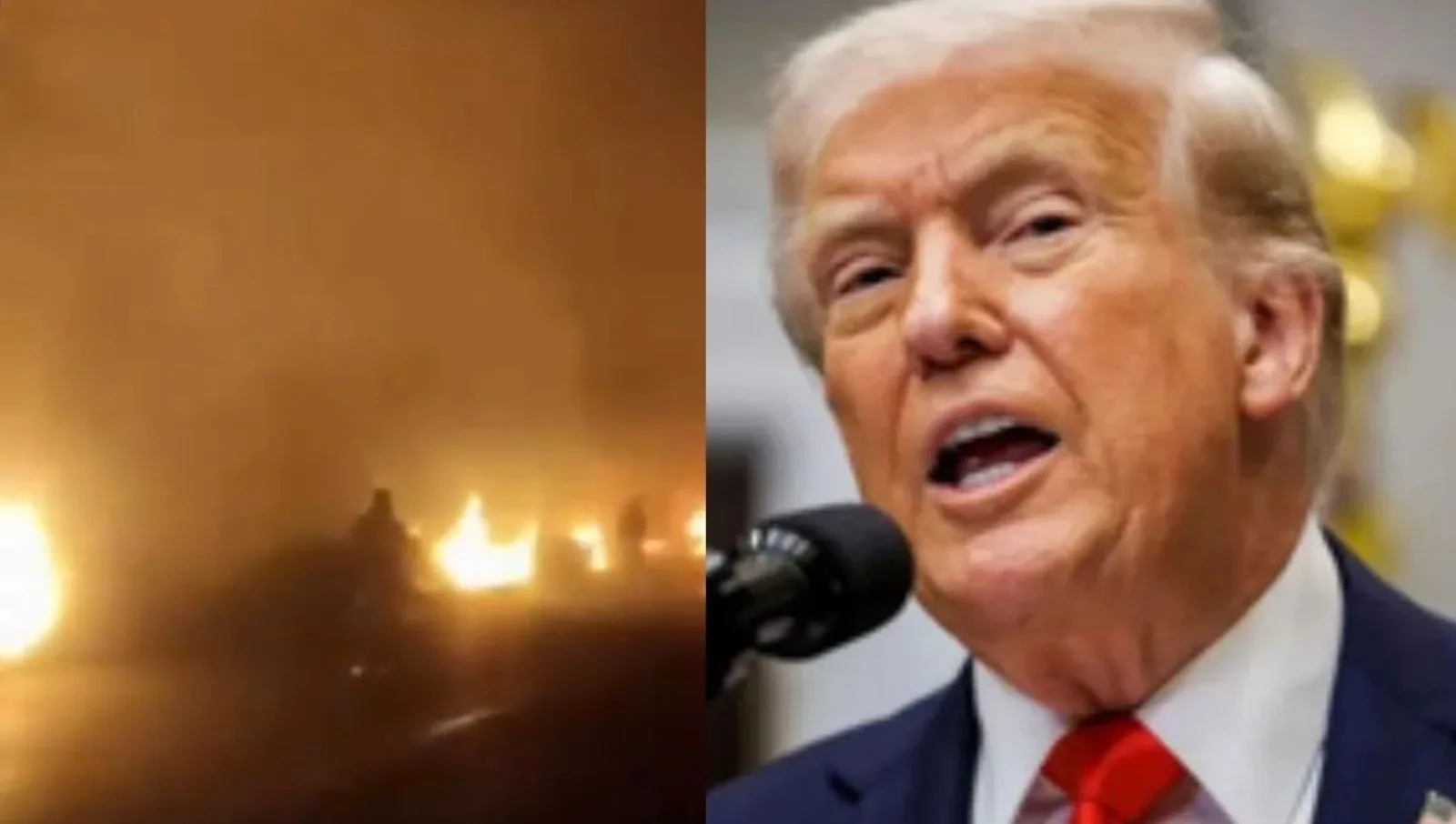
US President Donald Trump on Tuesday cancelled all the planned meetings with Iranian officials over what he called a “senseless killing” of protesters.

Urging the anti-government demonstrators in Iran to keep protesting, Trump said that “help is on its way” and the “killers and abusers” will pay a big price.

“Iranian Patriots, KEEP PROTESTING – TAKE OVER YOUR INSTITUTIONS!!! Save the names of the killers and abusers. They will pay a big price. I have cancelled all meetings with Iranian Officials until the senseless killing of protesters STOPS. HELP IS ON ITS WAY,” Trump said.

His remarks came after reports claimed that over 2,000 people have been killed in the Ayatollah Ali Khamenei-led regime’s crackdown on protesters. The death toll is much higher than what was previously reported by human rights agencies.

An Iranian official confirmed the death toll while speaking to an international news agency and blamed “terrorists” for the deaths.

Iran protests: Death toll crosses 2,000 amid crackdown, internet blackout

Earlier, Human Rights Activists News Agency (HRANA) claimed that at least 646 people were killed until Monday.

In addition to this, 579 others were also feared dead, but this remained under review, HRANA said.

Iran has been facing one of its biggest anti-government protests since December 28. The protests were initially triggered by falling Iranian currency and rising inflation, but soon turned into a massive uprising against the Ayatollah Ali Khamenei-led regime.

Indian nationals, including students, are safe in Iran amid massive anti-government protests: Govt

The United States has warned Iran that it will intervene if the protesters are killed. US President Trump on Sunday said that he is considering “some very strong options”.

He also claimed that the Iranian leadership has reached out to him seeking to negotiate and that a meeting is being set up. However, he added that the US may have to act before a meeting.

Nishad community not anyone’s vote bank, knows how to make and break governments: Sanjay Nishad

“We don’t just catch fish in rivers and ponds; we also know how to make and break governments,” he said, reiterating his demand for a CBI inquiry into the murders of Phoolan Devi and the late Jamuna Nishad.

Statesman News Service | Lucknow |

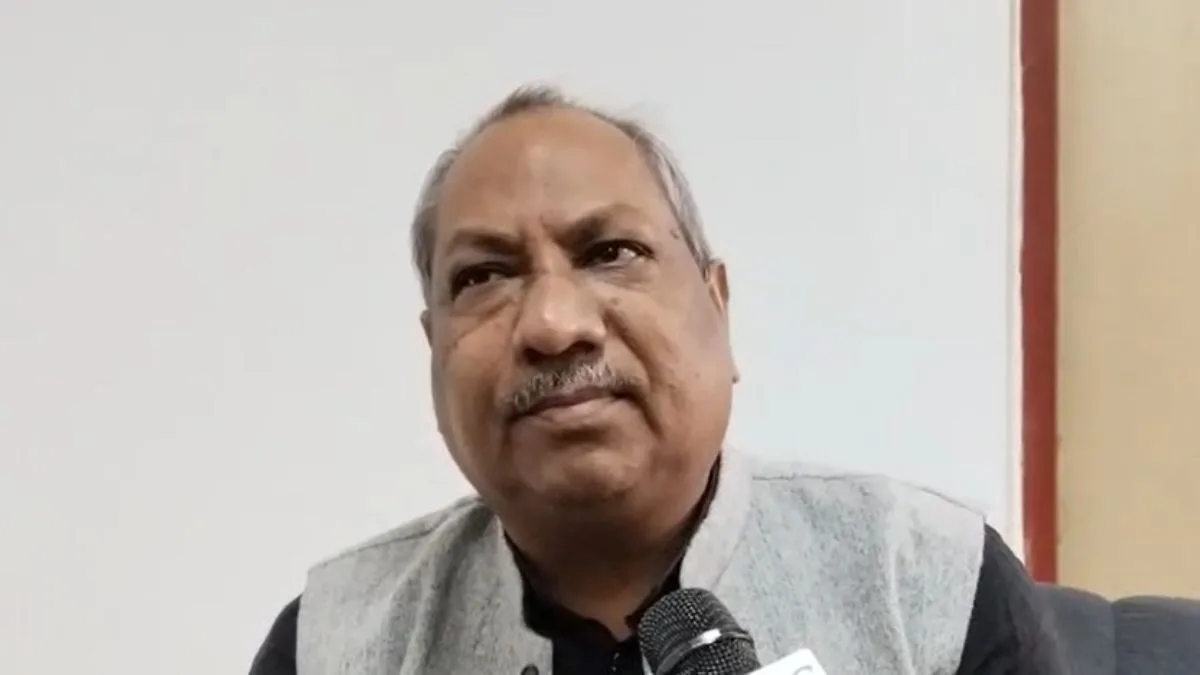
The National President of the Nirbal Indian Shoshit Hamara Aam Dal (NISHAD Party) and Uttar Pradesh Fisheries Minister, Dr Sanjay Nishad, on Tuesday asserted that the Nishad community is not anyone’s vote bank.

“We don’t just catch fish in rivers and ponds; we also know how to make and break governments,” he said, reiterating his demand for a CBI inquiry into the murders of Phoolan Devi and the late Jamuna Nishad.

The 13th Sankalp Diwas (Resolution Day) of the NISHAD Party was held at the Dr. B.R. Ambedkar Auditorium, Ram Manohar Lohia Law University.

The programme was attended by Union Minister of Parliamentary Affairs Kiren Rijiju, Deputy Chief Ministers Keshav Prasad Maurya and Brajesh Pathak, Cabinet Minister Om Prakash Rajbhar, Transport Minister Dayashankar Singh, Shiv Sena (Shinde faction) coordinator Abhishek Verma, Leader of the House Ramesh Singh, office-bearers of Apna Dal (S), and a large number of NISHAD Party workers and functionaries.

Addressing the gathering, Dr. Sanjay Nishad recalled that on January 13, 2013, he had taken a pledge at the fort of Maharaja Guhyaraj Nishad in Shringveradham to bring an end to governments that exploit the fishing community. Referring to the 2024 Sant Kabir Nagar Lok Sabha election, he said that Praveen Nishad was “not defeated, but made to lose,” and asserted that those responsible would be identified and taught a lesson.

Union Minister Kiren Rijiju praised the NISHAD Party, stating that its alliance with the BJP is like a family and that all issues would be resolved together.

Cabinet Minister Om Prakash Rajbhar targeted the Samajwadi Party, saying that attempts to secure votes from the Nishad community by distributing alcohol would no longer succeed. He spoke about the rights of the Nishad community in sand mining and contracts related to rivers and ponds, and called for strengthening the organisation.

Deputy Chief Minister Keshav Prasad Maurya described the unity of the NDA as a “beautiful bouquet” and said that the Nishad community has a vital role in achieving the Prime Minister’s vision of a developed India by 2047. He claimed that nothing could stop the implementation of Majhwar reservation.

Deputy Chief Minister Brajesh Pathak said that the NISHAD Party is a major force for the poor and the underprivileged, and predicted that the NDA would win more than 350 seats in the 2027 Uttar Pradesh Assembly elections.

Shankaracharya flags SIR concerns at Gangasagar

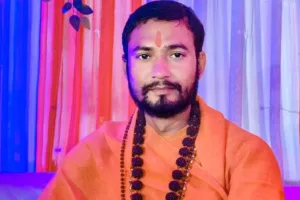
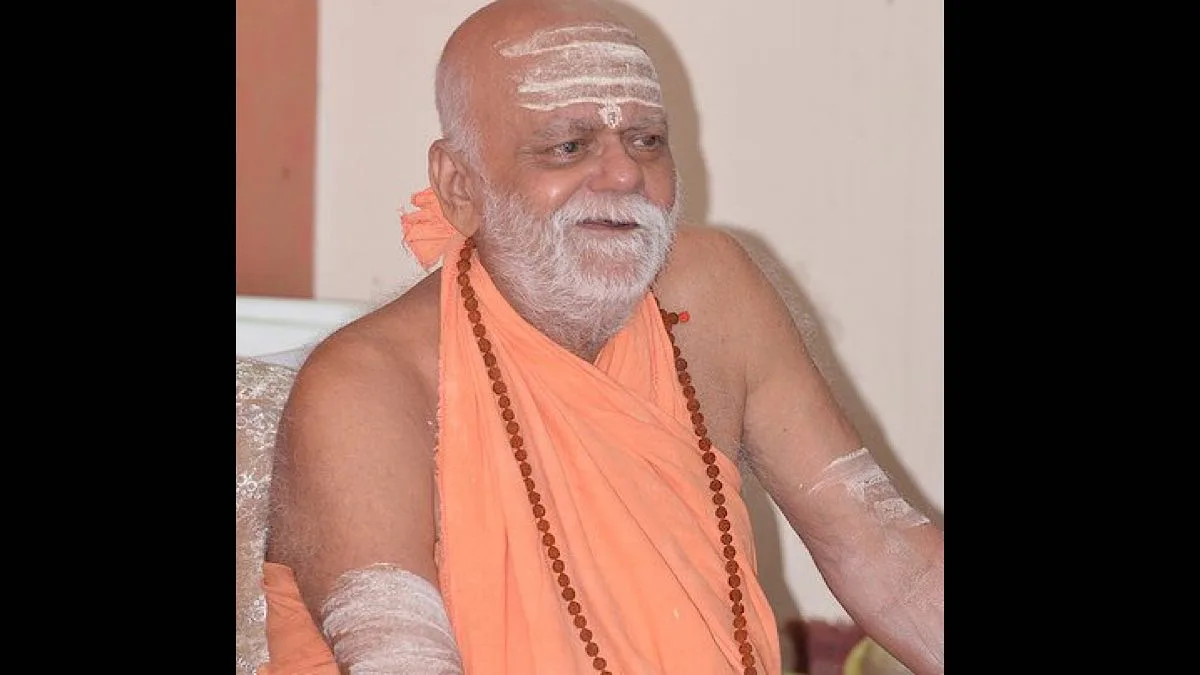
Jagadguru Swami Sri Nischalananda Saraswati, the 145 Shankaracharya of the Govardhan Peeth in Puri, on Tuesday expressed concern over the Special Intensive Revision (SIR) of electoral rolls in West Bengal, urging that not a single eligible voter’s name be deleted in the process.

Statesman News Service | Kolkata |

Jagadguru Swami Sri Nischalananda Saraswati, the 145 Shankaracharya of the Govardhan Peeth in Puri, on Tuesday expressed concern over the Special Intensive Revision (SIR) of electoral rolls in West Bengal, urging that not a single eligible voter’s name be deleted in the process.

Speaking at a Press conference at Gangasagar, he said he had heard reports of people allegedly dying by suicide or succumbing to stress linked to the SIR process, describing such incidents as “unfortunate and deeply distressing”. He maintained that the Election Commission of India (ECI) should have undertaken the SIR exercise over a longer period to avoid anxiety among voters.

Stressing the sanctity of the democratic process, the Shankaracharya said that any revision must ensure that genuine voters are protected and not subjected to undue hardship. The Shankaracharya also strongly condemned incidents of Bengalis being allegedly assaulted and killed outside the state, asserting that every language deserves respect and dignity. Referring to the Mahabharata, he cited the example of Vidura, who was said to speak a “mlechha” tongue, yet was accorded the highest respect by Lord Krishna.

“Language can never be a ground for hatred or violence,” he said. Turning to developments beyond India’s borders, the Shankaracharya voiced grave concern over reports of attacks on Hindus in Bangladesh, warning that such incidents could have “serious and harmful repercussions” for India. He called for an immediate end to the violence, cautioning that continued unrest could ignite instability and cause widespread damage.

Emphasising India’s civilisational ethos, he said that the presence of Hindutva had spread a message of peace across the world, and that all religions must be respected. Killing people of other faiths, he added, was a “grave anti-religious act” and those involved should face the strictest punishment.

Meanwhile, Union minister and BJP’s former West Bengal president Sukanta Majumdar arrived at Gangasagar on Tuesday morning to take a holy dip and inaugurate the BJP’s seva activities for pilgrims. Majumdar reached Kachuberia ferry ghat around 10 a.m. and later bathed at Sagar Mela’s No. 1 ghat along with party workers and supporters. Majumdar criticised the alleged dominance of Chief Minister Mamata Banerjee’s posters along the mela routes, claiming that repeated requests by the BJP to instal arches featuring the Prime Minister’s photograph were denied by the local block administration. “Even if 40 crore people visit, this mela will not be accorded national status because the Prime Minister’s image is not allowed here,” he alleged.

Questioning the state government’s claim that 45 lakh pilgrims had visited Gangasagar, Majumdar said data available to his party suggested that tickets for only around 30,000 ferry vessels had been sold. “How then did 44.7 lakh people cross the river?” he asked, casting doubt on the figures. He also referred to repeated promises of infrastructure projects, including a bridge, and questioned their implementation.

Reiterating the cultural and religious significance of Gangasagar for Bengalis and Hindus, Majumdar renewed his demand for the construction of a dedicated ‘Gangasagar House’ to provide better facilities for pilgrims.

UDF wrests Vizhinjam division from CPM, deals blow to BJP’s majority hopes

The UDF’s Congress candidate, Sudheer Khan, secured victory by a narrow margin of 83 votes, regaining the division that the CPM had won in the previous two elections.

Statesman News Service | Thiruvananthapuram |

In a setback for the BJP, the United Democratic Front (UDF) won the crucial bypoll in the Vizhinjam division of the Thiruvananthapuram Corporation.

The UDF’s Congress candidate, Sudheer Khan, secured victory by a narrow margin of 83 votes, regaining the division that the CPM had won in the previous two elections.

Sudheer Khan polled 2,902 votes, while the Left Democratic Front (LDF) candidate received 2,819 votes. BJP candidate Sarvashaktipuram Binu garnered 2,437 votes in the closely contested election.

With this win, the number of UDF members in the Thiruvananthapuram Corporation has increased to 20. The result has shattered the BJP’s hopes of attaining a simple majority in the 101-member council.

The saffron party currently has 50 members in the Corporation council, one short of the 51 required for a simple majority.

Apart from its victory in Vizhinjam, the UDF also won the Payikadam ward of the Moothedam grama panchayat in Malappuram district in the bypolls.

Meanwhile, the CPM-led LDF secured a victory in the Onakkur 10th ward of the Piravom Pampakuda grama panchayat in Ernakulam district.

Youth Leadership Camp held at Hooghly

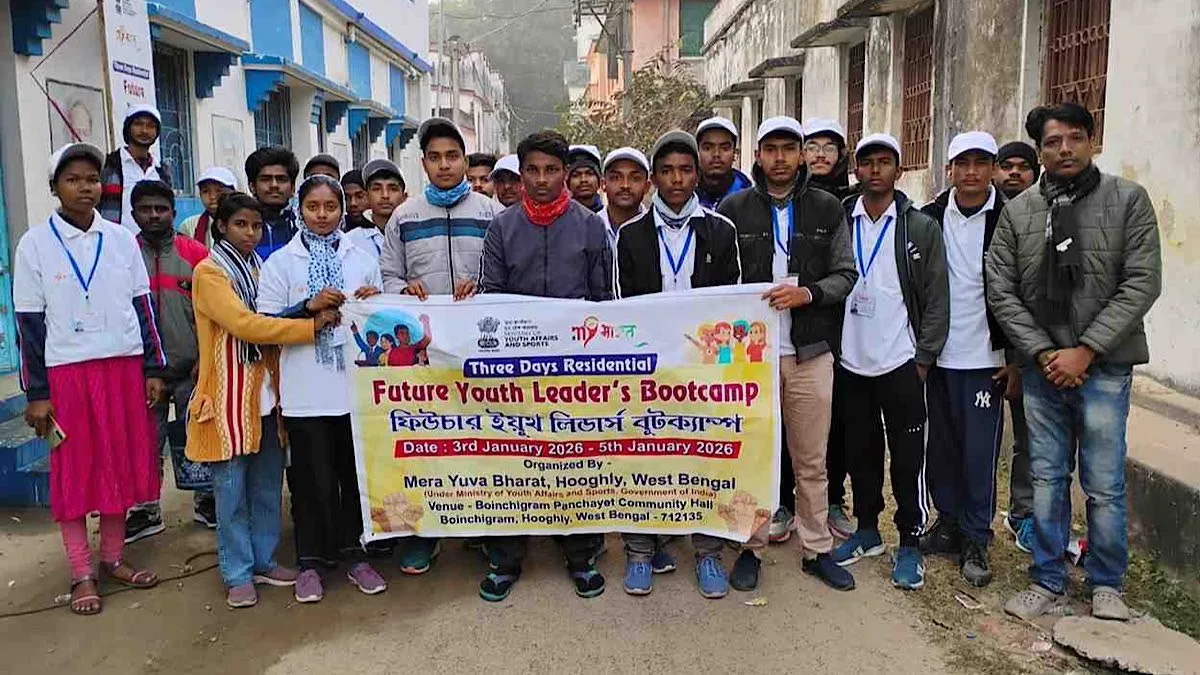
As part of ‘My Bharat’ Hooghly initiative, under the ministry of youth affairs and sports, a three-day residential youth leadership boot camp was recently organised at Boinchi Gram in Hooghly district from 3 January to 5 January.

Statesman News Service | Kolkata |

As part of ‘My Bharat’ Hooghly initiative, under the ministry of youth affairs and sports, a three-day residential youth leadership boot camp was recently organised at Boinchi Gram in Hooghly district from 3 January to 5 January. Youth participants, aged between 15 and 29 years, from different parts of the district took part in the programme.

The youth leadership boot camp is an intensive training programme designed to develop leadership, communication and decision-making skills among young people through structured activities, mentorship and practical exposure to governance and community service. The programme aimed to create future change-makers and effective leaders, and included interactive sessions, group discussions, public speaking, teamwork and exposure to democratic processes to build confidence, critical thinking and a sense of civic responsibility.

The camp was organised with the objective of creating strong youth leadership to contribute towards building a Developed India (Viksit Bharat) as the nation moves towards 100 years of Independence. Recognising the crucial role of youth in nation-building, the camp sought to develop responsible and capable future leaders.

Each day of the camp began with yoga and meditation sessions to promote physical and mental well-being.

The camp was formally inaugurated by Mala Begum, Pradhan of Batika Boinchi Gram Panchayat; Saikat Mondal, District Youth Officer, MY Bharat Hooghly and Diptendu Banerjee, Deputy Pradhan, along with several other distinguished guests.

A total of 35 students participated in the three-day boot camp. They received training in digital literacy, financial literacy, community mobilisation, leadership and communication skills, and Youth Parliament.

The training sessions were conducted by resource persons including Parimal Jana, Rama Jana and Mrigendranath Bera, along with other eminent speakers.

ECI used AI tools devised by BJP to delete names of ‘eligible voters’ in West Bengal: CM Mamata Banerjee

CM Banerjee said that the voters whose names were deleted under the enumeration phase of the SIR were not given an opportunity to defend themselves.

Statesman News Service | New Delhi |

West Bengal Chief Minister Mamata Banerjee on Tuesday alleged that the Election Commission of India (ECI) used AI tools devised by the BJP to delete names of voters from the draft electoral roll during the Special Intensive Revision (SIR) drive in the poll-bound state.

She said that the voters whose names were deleted under the enumeration phase of the SIR were not given an opportunity to defend themselves.

Addressing a press conference at Bengal secretariat Nabanna, Banerjee said the deletions largely affected “genuine voters”, accusing the Electoral Registration Officer (EROs) of misusing their powers.
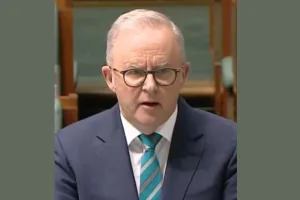
She said that the voters whose names were deleted from the draft electoral roll were not informed by the ECI about the reasons why their names were excluded.

She further claimed that ECI used AI software to look for mismatched names in the SIR data and allegedly deleted names of women who changed their surnames after marriage.

Supreme Court seeks ECI’s response to TMC MP Derek O’Brien’s plea alleging procedural lapses in West Bengal SIR

“The EC, while sitting in Delhi, used AI tools devised by the BJP to delete names. These AI software accounted for the names mismatch in SIR data. They deleted names of women who changed surnames post marriage,” she said.

Earlier on Monday, Banerjee wrote a letter to Chief Election Commissioner Gyanesh Kumar to “draw” his “attention” to “procedural lapses being observed during the ongoing SIR of electoral rolls, which are resulting in undue harassment of citizens, wrongful deletion of eligible-electors and their consequent disenfranchisement”.

In what was her fifth such letter to the ECI, the West Bengal Chief Minister said that the SIR process, as it is being implemented, is “fundamentally flawed, baseless and unconstitutional”.

Abhishek questions SIR rationale in Bengal, cites lowest deletion rate among states

She expressed deep concern that eligible voters were being unlawfully excluded from the rolls due to procedural irregularities and what she described as “systemic negligence.”

The Election Commission is yet to respond to CM Banerjee’s allegations.