Logo

Desi, simple, powerful: Acharya Balkrishna says makki ka atta deserves year-round love

It’s been sitting on your kitchen shelf all along, quietly doing the heavy lifting for your health. Acharya Balkrishna says makki ka atta, rich in fibre and nutrients, could be one of the simplest ways to keep your liver happy and your meals wholesome.

Statesman News Service | New Delhi |

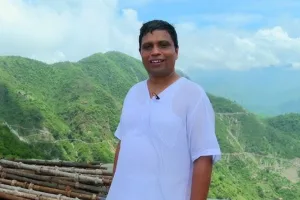
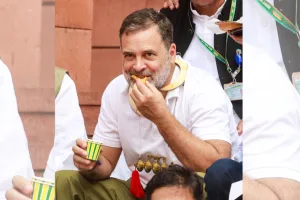
If there were a spokesperson for winter themed comfort food, Acharya Balkrishna might just raise a warm makki ki roti in its honour. The Patanjali co-founder and renowned voice of Ayurveda shared through a recent Facebook post, how makki ka atta, ie corn flour that most of us immediately think of when we talk about desi meals and copious amounts of butter on rotis, is something to look forward to.

But this time, the conversation was not about flavour. It was about health, nutrition, and a surprising liver benefit.

Acharya Balkrishna said in his post that “from a nutritional standpoint, makki ka atta is regarded as very good because it contains a lot of vitamins and minerals.” He also stressed its high fibre content, which is extremely good for the liver.

Simple words, significant statement. And, enough to get people to reconsider their food choices.

For a majority of Indian households, makki ka atta is something that is primarily seen in kitchens during winters. When served with sarson ka saag, it epitomises the ultimate comfort food. However, nutrition experts advocate that this ancient grain should be given the honour it deserves all the time.

In contrast to refined flour, makki ka atta is more like the original product. Thus, it gives you a higher amount of nutrients.

Also Read: Glow from within: Acharya Balkrishna reveals why carrots are a skin superfood

Trump backs construction of World’s largest triumphal arch in DC

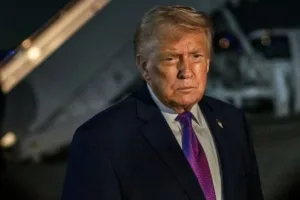
Calling for the “biggest one of all,” President Donald Trump has backed a proposal to construct the world’s largest triumphal arch in Washington, DC, arguing the capital deserves a monument to match America’s global stature.

UNI | New Delhi |

Calling for the “biggest one of all,” President Donald Trump has backed a proposal to construct the world’s largest triumphal arch in Washington, DC, arguing the capital deserves a monument to match America’s global stature.

Speaking to reporters aboard Air Force One on Sunday, Trump said he wants the arch to be the “biggest one of all,” describing the United States as the world’s most powerful country. “For 200 years, they wanted to build an arch,” he said, outlining his vision for reshaping the capital.

Trump framed the proposal in a global view, noting that roughly 57 cities around the world already have triumphal arches. Washington, which he called the “only major city” without one, should no longer be an exception, he said.

The remarks build on an announcement Trump made in January, when he revealed that work on a triumphal arch in DC is expected to begin soon.

In October, Trump had told donors at a dinner that the monument would be constructed near the Lincoln Memorial, marking a ceremonial entrance to the nation’s capital along the Arlington Memorial Bridge. At the dinner, he displayed models of the proposed structure and described multiple design options, The Hill reported.

“It’s going to be really beautiful. I think it’s going to be fantastic,” Trump said at the time. “There’s a rendering of what it will look like. You have three sizes.” He added that he favored the largest option, saying, “Whichever one would look good. I happen to think the large one.”

The proposed monument has drawn comparisons to Paris’s Arc de Triomphe.

The arch is part of a broader work of renovation projects that have become a defining focus of Trump’s second administration. The White House is currently undergoing upgration, including the construction of a new ballroom and changes to the Rose Garden and Palm Room.

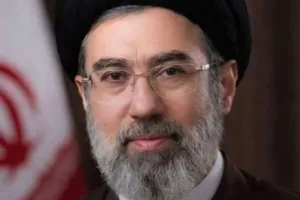
Mehdi Mahmoudian, Oscar-nominated ‘It was just an accident’ co-writer, arrested in Tehran over anti-Khamenei statement

Mehdi Mahmoudian, co-writer of Oscar-nominated It Was Just An Accident, has been arrested in Tehran after endorsing a statement criticizing Iran’s leadership. Jafar Panahi praised Mahmoudian’s courage, calling him a moral pillar both inside and outside prison walls.

Statesman News Service | New Delhi |

Hollywood meets Tehran drama as off-screen tensions are flaring as Mehdi Mahmoudian, the co-writer of Jafar Panahi’s Oscar-nominated hit ‘It Was Just An Accident’, finds himself behind bars in Iran.

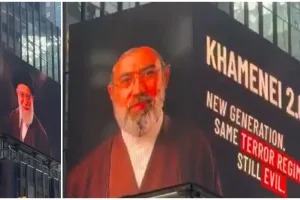
Mahmoudian was taken into custody in Tehran on Saturday, reportedly for endorsing a bold statement that called out Iran’s Supreme Leader, Ali Khamenei. The statement condemned the government’s violent crackdown on civilian protestors and accused authorities of organised crimes against humanity. Mahmoudian wasn’t alone. Two other co-signers of the 17-member activist group were arrested alongside him.

The activists’ declaration didn’t mince words. It condemned the mass killings, the use of live ammunition against civilians, and the systematic persecution of protesters painting a grim picture of state-sanctioned violence.

Also Read: Iranian Cinema: The art of telling profound stories under censorship, limited budgets, and political constraints

Jafar Panahi speaks from experience

Jafar Panahi, who recently received a one-year prison sentence in absentia, was also a signatory. Panahi, already known internationally as a fearless filmmaker and political activist, shared a tribute to his co-writer. In his statement, Panahi recalled meeting Mahmoudian behind bars and being struck by his composure and empathy.

“I met Mehdi Mahmoudian in prison,” Panahi said. “From the very first days, he stood out not only because of his calm demeanor and kind conduct but also due to a rare sense of responsibility toward others. Whenever a new prisoner arrived, Mehdi would provide basic necessities and, more importantly, reassurance. He became a quiet pillar inside the prison—someone inmates of all beliefs trusted and confided in.”

Panahi went on to describe Mahmoudian as more than a writer or activist. “He is a witness, a listener, and a rare moral presence. A presence whose absence is immediately felt, both inside prison walls and beyond them,” he added.

For those following Panahi’s cinematic work, Mahmoudian’s reputation as a conscientious co-creator now mirrors the courage and moral clarity often portrayed in their films.

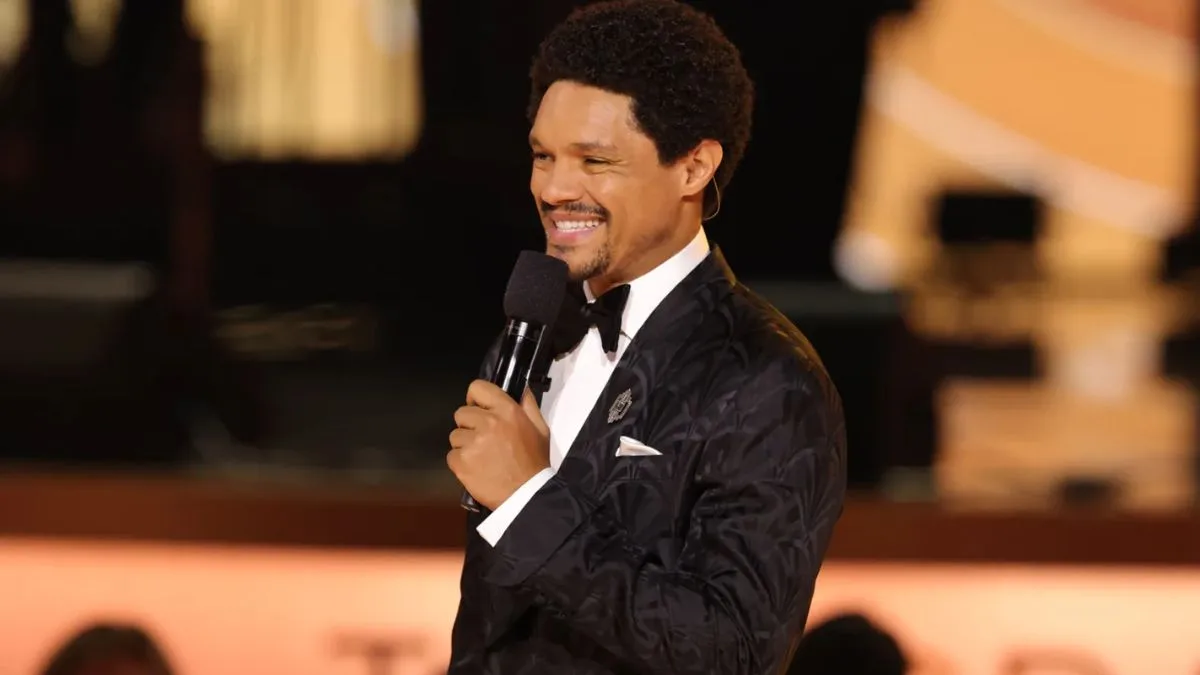
Trevor Noah monologue at Grammys 2026: Nicki Minaj callout and Donald Trump joke become early talking points

Walking the room and reading the crowd, Trevor Noah kicked off the Grammys with sharp humor on celebrity headlines, politics, and music culture. A joke linking Nicki Minaj and Donald Trump became the monologue’s standout moment.

Statesman News Service | New Delhi |

The Grammys are usually about music, fashion, and awkward clapping shots. But this year, Trevor Noah decided to turn the biggest music night into a late-night roast and Nicki Minaj didn’t even have to be in the room for it to land hard.

As cameras rolled and celebrities settled into their seats, Noah kicked off the 2026 Grammy Awards with jokes, smiles, and a casual stroll through the crowd. Everything felt light and breezy until he noticed someone very famous was missing.

And then came the name everyone was waiting for.

Also Read: Grammys 2026 Highlights: Kendrick Lamar, Billie Eilish, Lady Gaga, Dalai Lama define the night | Major winners

“Nicki Minaj is not here”, and the room explodes

Midway through his opening monologue on Sunday, February 1, Trevor Noah paused and looked around the arena.

“Nicki Minaj is not here. She is not here,” he said slowly.

The crowd instantly reacted. Loud applause. Laughs. Gasps. Behind Noah, Chrissy Teigen flashed a thumbs-up, while John Legend watched the moment unfold with a knowing smile. The message was clear: everyone got the joke.

But Noah wasn’t done.

Trevor Noah brings Donald Trump into the Grammys

After pointing out Minaj’s absence, Noah delivered the line that turned the room electric.

“She is still at the White House with Donald Trump discussing very important issues,” he said.

Then came the impression.

Switching to a Trump-style voice, Noah launched into a joke filled with exaggeration, bravado, and pop-culture references, joking that Trump himself had “the biggest a**” and riffing on Nicki’s music in the process.

Why Nicki Minaj was the perfect target

Noah’s joke didn’t come out of nowhere. It followed a string of headline-making appearances by Nicki Minaj that have surprised fans and critics alike.

Just days before the Grammys, Minaj appeared at the Trump Accounts Summit in Washington, DC, where she openly praised Donald Trump and called herself his “No. 1 fan.”

Also Read: Nicki Minaj publicly declares love for Donald Trump; here’s what it means for politics, pop culture, her legacy

She didn’t stop there.

Minaj said criticism of her support doesn’t bother her. In fact, she claimed it pushes her to back Trump even more.

“The hate does not affect me at all,” she said at the event. “It actually motivates me.”

She also spoke emotionally about standing by Trump, saying she believes he is protected by God and should not be “bullied.”

Grammys 2026 Highlights: Kendrick Lamar, Billie Eilish, Lady Gaga, Dalai Lama define the night | Major winners

Kendrick Lamar shattered records, Billie Eilish and Lady Gaga added fresh Grammys, and the Dalai Lama stunned the world with his first-ever win. From bold speeches to historic firsts, the 2026 Grammys delivered a night packed with unforgettable moments.

Statesman News Service | New Delhi |

The Grammys are about drama, surprises, speeches that turn political, and moments nobody saw coming. The 68th annual Grammy Awards on Sunday night had all of that and more.

This year’s Grammys were spread across two ceremonies and a massive 95 categories. The celebrations began early with the Premiere Ceremony at the Peacock Theater in Los Angeles.

The real spectacle, of course, arrived later. The main telecast aired on CBS and Paramount+ Premium from the Crypto.com Arena. Trevor Noah returned as host for the sixth year in a row, also his final time holding the Grammys mic. Noah kept things moving as music’s biggest names filled the arena, ready for their big moments.

Also Read: Grammys 2026: Full list of nominees | Kendrick Lamar leads, Lady Gaga close behind; how to watch live in India

Kendrick Lamar opens the night, and breaks a major record

The primetime show kicked off with a headline-making win. Kendrick Lamar took home best rap album for ‘GNX’, setting the tone for the night. But this win was bigger than just one category. With this trophy, Lamar officially broke Jay-Z’s long-standing record, becoming the rapper with the most Grammy wins in history.

The Dalai Lama makes Grammy history

One of the most unexpected wins of the night belonged to the Dalai Lama. The spiritual leader won his very first Grammy Award for Best Audiobook, Narration, and Storytelling Recording. His winning work, ‘Meditations: The Reflections of His Holiness the Dalai Lama’, blends calm narration, thoughtful messages, and music.

The victory placed him in an unusual club of first-time Grammy winners that also included K-pop acts and legendary filmmaker Steven Spielberg. The recording is already widely available on platforms like YouTube, Amazon Music, and Spotify.

Big wins, bigger statements

Billie Eilish and her brother Finneas O’Connell won song of the year for ‘Wildflower’, one of the night’s most emotional moments. Eilish didn’t just say thank you. She used her speech to strongly criticise ICE, joining several artists who turned their acceptance moments into statements.

Olivia Dean was crowned best new artist, marking a major career milestone. Bad Bunny won best música urbana album for ‘DeBÍ TiRAR MáS FOToS’ and opened his speech with a bold “ICE out,” urging love and unity instead of hate. The artist, who is also set to perform at next Sunday’s Super Bowl halftime show, made sure his message reached beyond the music.

Country, pop and chaos across genres

Jelly Roll had a big night, winning best contemporary country album for ‘Beautifully Broken’. Lady Gaga added another Grammy to her collection, taking home best pop vocal album for ‘MAYHEM’.

The Recording Academy also shook things up this year by introducing two new categories: best traditional country album and best album cover. At the same time, the old best country album category was renamed best contemporary country album, and two packaging awards were merged into a single category called best recording package.

Cher and tributes

Cher received a lifetime achievement award before stepping on stage to present the Grammy for record of the year, instantly raising the star power in the room. The show also paused to honour music legends who shaped generations.

Ozzy Osbourne was celebrated with performances by Post Malone, Slash, Duff McKagan, Chad Smith and Andrew Watt. Lauryn Hill delivered a moving performance in tribute to D’Angelo and Roberta Flack. The emotional “In Memoriam” segment featured Reba McEntire, Brandy Clark and Lukas Nelson, remembering artists who passed away recently.

Bruce Springsteen narrated a video tribute to Brian Wilson of the Beach Boys, while Bob Weir of the Grateful Dead and Sly Stone of Sly and the Family Stone were also honoured through video segments.

Early winners set the pace

Some notable wins came early in the night. Cynthia Erivo and Ariana Grande won best pop duo/group performance for ‘Defying Gravity’. Doechii picked up best music video for ‘Anxiety’. ‘Golden’ from ‘KPop Demon Hunters’ won best song written for visual media. Lady Gaga added yet another trophy with best dance pop recording for ‘Abracadabra’.

More music, more moments, more winners

As the night went on, Leon Thomas won best R&B album for ‘MUTT’. Kendrick Lamar returned to the winners’ list alongside SZA for best melodic rap performance for ‘luther’. Shaboozey and Jelly Roll won best country duo/group performance for ‘Amen’. Joni Mitchell earned best historical album for ‘Joni Mitchell Archives – Volume 4: The Asylum Years (1976–1980)’. Comedian Nate Bargatze also walked away with best comedy album.

In film-related categories, ‘Sinners’ won both best compilation soundtrack and best score soundtrack for visual media, covering film and television.

Spielberg joins the EGOT club

One of the biggest behind-the-scenes wins went to Steven Spielberg. The iconic filmmaker won his first Grammy as a producer on ‘Music By John Williams’, which took home best music film. With that victory, Spielberg officially became an EGOT winner, holding Emmy, Grammy, Oscar and Tony awards.

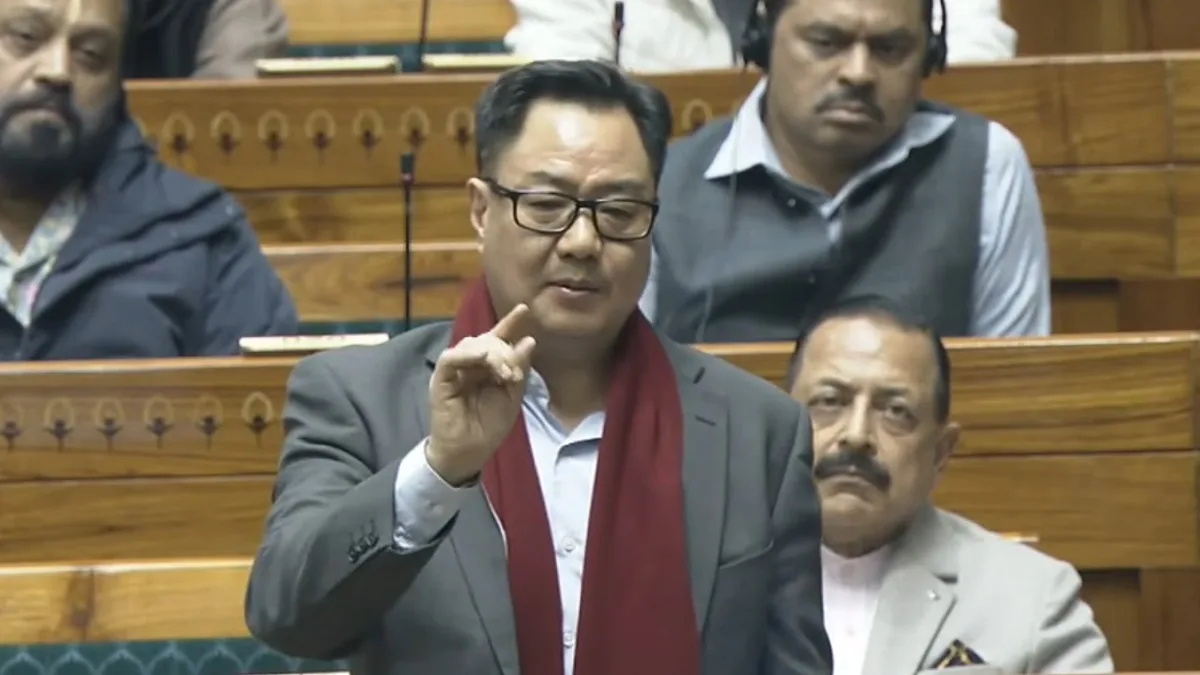
Budget Session: Rijiju demands Rahul Gandhi’s apology after ruckus in Lok Sabha over his China claims

The Lok Sabha was adjourned amid disruptions during the discussion on the motion of thanks on the President’s Address, following Rahul Gandhi’s claims on Chinese agression during the 2020 Ladakh conflict.

Statesman News Service | Mumbai |

Proceedings in the Lok Sabha were disrupted on Monday during the discussion on the motion of thanks on the President’s Address, leading to an adjournment till 3 pm. The debate saw sharp exchanges between the government and the Opposition, with objections raised over remarks made during the discussion and repeated references to parliamentary rules by the Chair.

The Budget Session debate, which began with the government outlining its vision and priorities, has since been marked by disagreements over procedure, content, and the scope of issues being raised in the House.

Updates below track key speeches, rulings by the Speaker, and developments from the Parliament Budget Session 2026

Bengal SIR: Mamata Banerjee files petition against ECI, CEO’s office

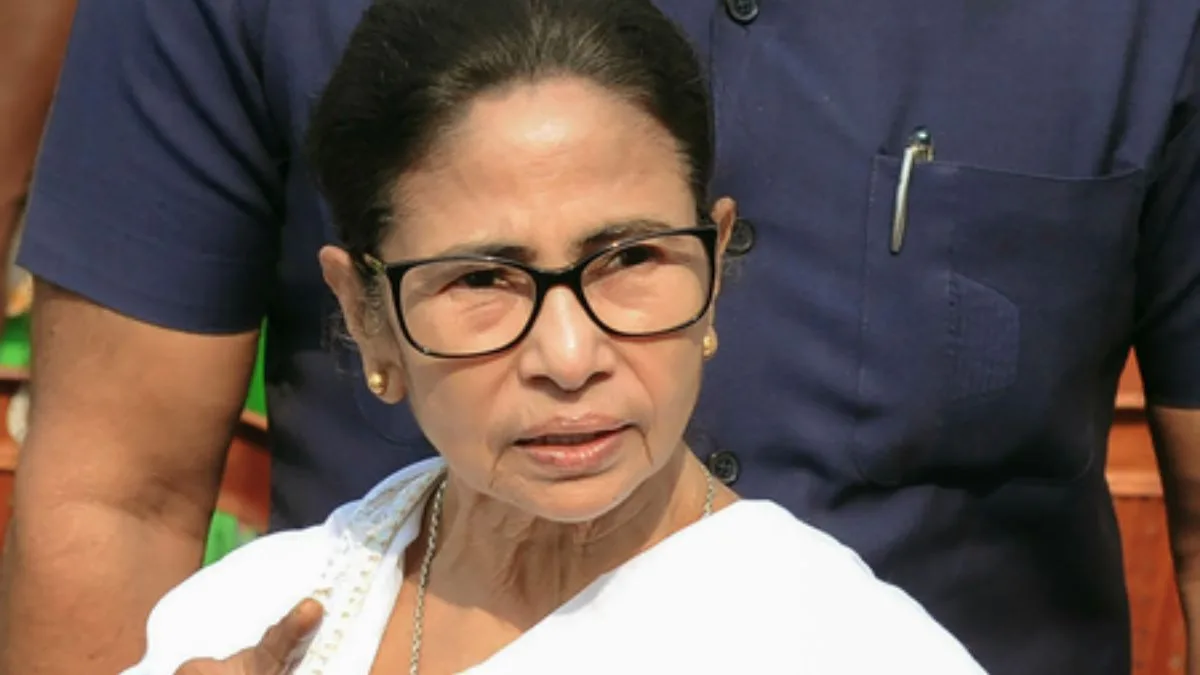
West Bengal Chief Minister Mamata Banerjee, on Sunday, filed a petition in the Supreme Court against the Election Commission of India (ECI) and the Office of the state’s Chief Electoral Officer (CEO) over the ongoing special intensive revision (SIR).

IANS | New Delhi |

West Bengal Chief Minister Mamata Banerjee, on Sunday, filed a petition in the Supreme Court against the Election Commission of India (ECI) and the Office of the state’s Chief Electoral Officer (CEO) over the ongoing special intensive revision (SIR).

This is the second petition filed on this issue.

Earlier, Trinamool Congress Lok Sabha member, Mahua Moitra, and the party’s Rajya Sabha members Derek O’Brien and Dola Sen filed a petition in the matter on behalf of the ruling party in the apex court.

The hearing on this petition filed by the Trinamool Congress MPs is scheduled this week.

Now, Mamata Banerjee has herself filed a petition in the matter in the apex court.

However, it is not yet clear whether she had filed the petition as the West Bengal Chief Minister or as the Trinamool Congress President.

The hearing in the matter is also likely to be heard this week only.

In the petition, Mamata Banerjee had accused the ECI of political bias and adopting an authoritarian approach while conducting the SIR.

She had also claimed in the petition that the constitutional institution from which impartiality and the protection of democratic values ​​were expected had now reached a level that is extremely worrying for any democratic society.

She had also sought the apex court’s intervention in the matter and also give necessary directions to the ECI in the matter.

The development became significant as the Chief Minister had already arrived in New Delhi on Sunday, and she is slated to meet the Chief Election Commissioner (CEC), Gyanesh Kumar, and raise her objections on the same issue on February 2.

On Saturday, Mamata Banerjee had sent a letter to the CEC where she questioned the authority of special roll observers (SROs) and micro-observers, who, according to her, have been appointed only in West Bengal to review the ongoing SIR in the state.

During her visit to the national capital, she is also slated to meet leaders of other opposition parties, aiming to create a larger political consensus against the SIR.

At the same time, the Treasury bench in the West Bengal Assembly will move a motion on the floor of the House during the forthcoming Budget session, condemning the SIR.

Political observers feel that by filing the petition in the apex court herself on this matter, the Chief Minister had opened multiple fronts against the ECI.

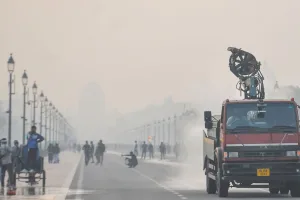
Delhi wakes up to dense fog; AQI in moderate to poor category, CPCB data shows

Several parts of Delhi woke up to dense fog on Monday morning, with air quality remaining in moderate to poor categories across the capital and parts of the NCR.

ANI | New Delhi |

Several parts of the national capital woke up to dense fog on Monday morning, with the Air Quality Index (AQI) remaining in the moderate to poor categories according to the Central Pollution Control Board (CPCB) data.

The India Meteorological Department (IMD) data showed moderate fog in multiple areas of Delhi. Dhaula Kuan, Akshardham, Dwarka, and Mother Teresa Crescent Marg were among the areas that experienced fog in the morning.

Several monitoring stations across the city reported moderate to poor AQI levels at around 7 AM in the national capital. While Sectors 3, 6 and 10 in Dwarka recorded AQI at 243 in the ‘poor’ category, areas such as Mahipalpur recorded at 134 in the ‘moderate’ category. Mother Teresa Crescent Marg also remained in the ‘moderate’ category, with an AQI of 118.

Meanwhile, the NCR regions witnessed mist early in the morning with AQI remaining in the ‘poor’ category in Ghaziabad.

According to CPCB data, Ghaziabad recorded an AQI of 259 n Monday morning.

However, Mumbai saw a ‘moderate’ AQI at the dawn of the day. CPCB recorded an AQI of 126 around the Marine Drive area.

IMD has forecasted ‘fog/mist in the morning and mainly clear sky later’ for the area today. People were seen taking morning walks along Marine Drive amid a blanket of fog.

As per AQI classification, a reading between 0 and 50 is ‘good’, 51 to 100 ‘satisfactory’, 101 to 200 ‘moderate’, 201 to 300 ‘poor’, 301 to 400 ‘very poor’ and 401 to 500 ‘severe’.Meanwhile, several airports across north and central India witnessed varying fog conditions today, with very dense to shallow fog reported between 0600 hrs and 0630 hrs IST, according to the India Meteorological Department (IMD).

On Sunday, the air quality in the national capital remained in the ‘very poor category’ in the morning, with the overall Air Quality Index (AQI) at 318 around 8 am, according to the Central Pollution Control Board (CPCB).

The India Meteorological Department (IMD) had issued a yellow alert for the national capital, warning that isolated areas may experience thunderstorms accompanied by lightning and gusty winds of 30-40 kmph. Similar conditions are expected across neighbouring Haryana and Chandigarh. In Haryana, Karnal experienced a hailstorm early in the day.

The IMD stated that the rainfall signalled the beginning of an active weather phase, with thunderstorms, lightning, gusty winds, and hail likely to affect several states during the day. Light rain lashed several parts of the city and adjoining NCR areas in the early morning hours.

Silent death of news weekly Asom Bani after seven decades of readership

Asom Bani, once a mainstream weekly for Assamese readers, stopped hitting the stands since September last year, as the management lost interest in continuing to print the publication, which used to come out every Friday.

NAVA THAKURIA | Kolkata |

Asom Bani, once a mainstream weekly for Assamese readers, stopped hitting the stands since September last year, as the management lost interest in continuing to print the publication, which used to come out every Friday. Amid existential crisis for the Assam Tribune group of newspapers, which worsened after the Covid-19 pandemic, the seven-decade old Guwahati-based Assamese-language weekly silently disappeared from the newsstands.

Prior to its final departure, the popular periodical was merged as a weekly supplement with Dainik Asom, an acclaimed Assamese daily from the same prestigious media house in north-eastern India. Thus Asom Bani regretfully gets added to the list of all the closed publications, which over the years had emerged to enrich the newspaper culture history of Assam, beginning with Arunodoi in 1846. Once edited by prominent Assamese journalist-authors, namely Satish Chandra Kakati, Tilak Hazarika, Phani Talukdar, Nirod Chowdhury, Homen Bargohain and Chandraprasad Shaikia, the weekly had Dilip Chandan as its last editor, who served Asom Bani for nearly three decades.

Launched on 1 July 1955 by legendary Assamese entrepreneur Radha Govinda Baruah, the weekly witnessed and reported various important socio-political developments including the Assamese medium of instruction movement, Assam anti-influx agitation, separatist-influenced insurgency, social unrest, regional politics and other topical events and issues with all sincerity to the indigenous population. As the pandemic severely affected the circulation of all newspapers published by the Assam Tribune group, the subsequent impact was observed in the shrinking of advertisement revenues from commercial entities. Like many other media institutions across India, the Assam Tribune group also faced a severe financial crisis that started reflecting in irregular salary disbursements to the employees, including the working journalists.

The employees’ union came to the public with various difficulties, especially the unpaid dues meant for retired employees. The union leaders also made allegations that their group was not receiving the appropriate payments from the State information & public relations directorate (against the published advertisements), both in terms of rates and pending dues. Soon rumours spread over the probable sale of the entire media group to another city-based television house. The Tribune management initially denied these, terming them false and motivated interpretations. In an official statement, the management assured its firm commitment to its ‘editorial independence, journalistic integrity, and continued services to its readers, advertisers, and stakeholders’.

The management even urged all concerned to “disregard such baseless speculation and refrain from spreading misinformation”. Needless to mention that its primary publication The Assam Tribune, which came to light on 4 August, 1939, continues to be the highest-circulated English daily in the region. But assurances of the management led by Prafulla Govinda Baruah (who passed away recently on 14 December) did not prevent it from handing over the responsibility of Dainik Asom, by now a six-decade old publication, to a different media group owned by young entrepreneur Kishor Borah that runs an Assamese satellite news channel ND24. The deal was made public on 17 September last year, following which a new management took the responsibility of publishing Dainik Asom.

But Asom Bani, however, was not adopted (it had already ceased to be an independent publication). As a supplement of Dainik Asom, the weekly was published on 12 September, 2025 for the last time. The new management of Dainik Asom did not pick up all the engaged media employees and, on a single day, over 70 employees (many of them were enjoying extended tenures with monthly payments) lost their jobs.

The Assam Tribune management assured them payment of all legal dues within a few weeks, but that did not materialise. Having no options left, the employees approached the labour court, demanding their dues. It’s unfortunate that the media house, which was India’s first media group to implement the recommendations of the statutory Majithia Wage Board in 2012, now takes the route of escapists (avoiding the legal payments to the retired employees).

THE WRITER IS A GUWAHATI-BASED SPECIAL REPRESENTATIVE OF THE STATESMAN

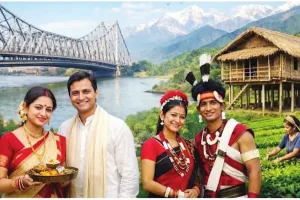
Festivals of Tripura remind us of rootedness

In Tripura, festivals are not confined to temples or tribal courtyards, they spill into streets, marketplaces, and homes, becoming collective expressions of joy, faith, and identity.

DR RATAN BHATTACHARJEE | Kolkata |

In Tripura, festivals are not confined to temples or tribal courtyards, they spill into streets, marketplaces, and homes, becoming collective expressions of joy, faith, and identity. Tripura, the small northeastern state of India, is often described as a land of hills, rivers, and forests, but it is equally a land of festivals. To speak of Tripura is to speak of its people, and to speak of its people is to speak of their celebrations, for festivals here are not occasional events but the rhythm of life itself.

They embody the state’s cultural diversity, its tribal heritage, its Hindu traditions, and its Buddhist influences, weaving together a tapestry that is both ancient and contemporary. Thus, the festivals of Tripura are more than events; they are narratives, stories that tell us who the people are, what they value, and how they live. They are continuous narratives, flowing from past to present, from generation to generation. To witness them is to witness the essence of Tripura, a state small in size but vast in spirit, a land where festivals are not occasional but perpetual, not peripheral but central, not ornamental but essential. In the festivals of Tripura, we find not only joy but wisdom, not only devotion but resilience, not only tradition but creativity.

And in celebrating them, we celebrate the enduring human capacity to find meaning, beauty, and hope in the rhythms of life. The most distinctive of Tripura’s festivals is Garia Puja, celebrated in April by the Tripuri tribes. It is a festival of fertility, of crops and cattle, of the earth itself. Bamboo poles are decorated, drums beat in rhythmic patterns, and the deity Garia is invoked to bless the fields. The rituals are simple yet profound, reflecting the agrarian roots of the community. What makes Garia Puja remarkable is not only its devotion but its inclusivity; it is a festival where dance and song become languages of unity, where the young and old participate with equal fervour, and where the boundaries between sacred and secular dissolve.

To witness Garia Puja is to witness the heartbeat of Tripura’s tribal culture, a reminder that agriculture is not merely an economic activity but a spiritual covenant with the land. Equally significant is Kharchi Puja, held in July in Agartala, dedicated to the fourteen deities of Tripura. This week-long festival is both tribal and Hindu, both local and universal. The rituals involve cleansing sins and honouring the earth, and the participation of diverse communities makes it a symbol of harmony. The deities are worshipped with offerings, and the atmosphere is charged with devotion. Kharchi Puja is not only a religious observance but also a cultural spectacle, drawing people from across the state and beyond. It reflects the syncretism of Tripura’s identity, where tribal traditions and Hindu practices coexist and enrich each other.

Another festival that reveals the spiritual imagination of Tripura is Ganga Puja, celebrated in March or April. Here, the river goddess is worshipped to protect pregnant women and prevent epidemics. A bamboo temple is built in the middle of a stream, and rituals are performed by tribal priests. The symbolism is striking: the river, giver of life, becomes the site of prayer, and bamboo, the most versatile of materials, becomes the medium of worship. Ganga Puja is a reminder of the intimate relationship between nature and faith in Tripura, where rivers and forests are not resources to be exploited but sacred entities to be revered. Ker Puja, observed in August, is another unique festival of the Tripuri community.

It is a protective ritual, meant to safeguard the people from calamities. In a world where festivals are often associated with noise and spectacle, Ker Puja stands out as a festival of silence and introspection, a reminder that protection and peace are as important as celebration. Tripura also celebrates pan-Indian festivals with grandeur. Durga Puja in October transforms Agartala and other towns into landscapes of light and colour. Diwali, the festival of lights, brings lamps and fireworks, illuminating homes and temples. Saraswati Puja in January or February fills schools and colleges with devotion to the goddess of learning, with students in yellow garments offering prayers.

These festivals connect Tripura to the larger Indian cultural fabric, yet they carry local flavours, shaped by the state’s unique traditions. Buddhist festivals also enrich Tripura’s calendar. Buddha Purnima in May is celebrated by the Chakma and Mog communities, with temples decorated and prayers offered to commemorate the birth, enlightenment, and death of Buddha. The festival reflects Tripura’s Buddhist heritage, reminding us that the state is not only Hindu and tribal but also Buddhist, with communities that have preserved their faith and practices for centuries. The Poush Sankranti Mela in January marks the harvest season, with folk performances, handicrafts, and local cuisine.

To write about the festivals of Tripura is to write about the philosophy of celebration itself. It is to recognise that festivals are not only about rituals but also about meanings, not only about traditions but also about transformations. They are moments when communities come together, when identities are reaffirmed, when values are transmitted. They are also moments when individuals find solace, inspiration, and belonging. Tripura’s festivals are not merely occasions of ritual and revelry; they are living affirmations of rootedness in land, community, and tradition. When bamboo poles rise for Garia Puja or silence descends during Ker Puja, what unfolds is more than worship—it is a dialogue between people and nature, between past and present.

In the glow of lamps at Durga Puja or the chants of Kharchi Puja, one senses how faith and culture intertwine to sustain identity. In Tripura, festivals are the threads that weave the social fabric, the colours that paint the cultural canvas, the rhythms that animate the collective heartbeat. As India becomes increasingly urban and globalised, the festivals of Tripura remind us of the importance of rootedness. They remind us that culture is not only about consumption but also about participation; that faith is not only about belief but also about practice; that community is not only about proximity but also about solidarity. They remind us that diversity is not a challenge but a strength; that tradition is not a burden but a resource, that celebration is not a luxury but a necessity. In celebrating its festivals, Tripura celebrates itself, its people, its heritage, and its future.

{THE WRITER IS A FORMER AFFILIATE FACULTY OF VIRGINIA COMMONWEALTH UNIVERSITY AND RETD. HEAD PG DEPT OF ENGLISH DUM DUM MOTIJHEEL COLLEGE AND A MULTILINGUAL WRITER AND POET}.


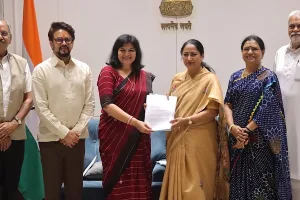
Earthquake in Kashmir today: 4.8-magnitude tremor felt across Valley; epicentre in Budgam

A 4.8-magnitude earthquake shook the Kashmir Valley early on 2 February 2026, with its epicentre in Budgam (near Srinagar) amplifying tremors across the region.
Statesman News Service | Mumbai |

An earthquake of moderate intensity shook the Kashmir Valley early Monday morning, triggering panic across several districts as residents rushed outdoors after feeling strong tremors.

The quake, measured at 4.8 on the Richter scale, struck at 5.35 am, according to officials from the disaster management authority. While the magnitude was not high, its impact was felt widely because the epicentre lay in the central Budgam district, well within the Valley.

Budgam is located around 21 kilometres north of Srinagar, placing the tremor close enough to the capital for doors, windows, and household items to rattle across neighbourhoods.

People stepped out of their homes in fear as the ground shook briefly. Mobile networks remained functional, allowing residents to check on family members and friends. Authorities said reports on damage or casualties were still being compiled.

Why even a moderate quake was felt so strongly

Officials explained that earthquakes with epicentres inside the Valley tend to feel stronger, even at lower magnitudes. Monday’s tremor revived memories of earlier seismic disasters in the region.

The shock waves reminded many of the October 8, 2005, earthquake, one of the deadliest in the region’s history. That quake measured 7.6 on the Richter scale, with its epicentre in Muzaffarabad in Pakistan-occupied Kashmir. It was felt as far away as Tajikistan, Xinjiang and Afghanistan, killing over 80,000 people, injuring 1.38 lakh, and leaving millions homeless.

Long before that, the Valley had witnessed another devastating event, the Baramulla earthquake of May 30, 1885, which measured 6.8. With its epicentre inside Kashmir, it caused severe destruction and claimed more than 3,000 lives.

Experts note that Kashmir, extending up to Zanskar in Ladakh, lies in a seismically active zone, where frequent tremors are a reminder of the region’s vulnerability.

Authorities continue to monitor the situation, while residents have been advised to remain alert.

Pioneer who taught the world how to run a zoo

The nineteenth century in India is often remembered for the tightening grip of British imperial rule. Yet, beneath the political upheaval, a wave of intellectual vigour swept across the subcontinent.

PATRANGA BASU | New Delhi |

The nineteenth century in India is often remembered for the tightening grip of British imperial rule. Yet, beneath the political upheaval, a wave of intellectual vigour swept across the subcontinent. Among the many Indians who left an indelible mark on global knowledge was Ram Brahma Sanyal (1851-1908). Despite lacking formal degrees in the natural sciences, Sanyal emerged as a world-renowned pioneer in zoology, transforming the Alipore Zoological Gardens into a global benchmark for animal care.

Born on 15 February 1851, Ram Brahma Sanyal originally aspired to be a physician. He enrolled in the Medical College, Calcutta, but was forced to abandon his studies due to failing eyesight. However, his talent did not go unnoticed. George King, a professor of Botany and Superintendent of the Botanical Garden, recognized Sanyal’s potential and offered him a position at the newly established Zoological Gardens, Alipore. The Alipore Zoo, spearheaded by figures like George King, Louis Schwendler and John Anderson, officially opened to the public in May 1876.

Sanyal joined in January 1876 as a casual worker, assisting King in landscape gardening. His dedication yielded immediate outcome; by September, he was appointed “Head Baboo” with a modest salary of Rs 40. Within a year, his touch transformed the grounds into a lush, green sanctuary. As the zoo’s animal population swelled – reaching over 800 specimens by 1878 – Sanyal’s responsibilities expanded. He became a self-taught polymath, performing duties that would today require a team of specialists. In veterinary care he treated sick animals with his passionate love for animals; even fed them with his own hands. He performed post-mortems on dead animals, utilizing his medical school background to understand the cause of death.

Ram Brahma ensured every species was correctly identified by its scientific name, maintaining rigorous records of purchases and exchanges of animals. He meticulously collected data and recorded the health, diet, and behaviour of every animal, alongside his administrative duties. His efficiency was so profound that in April 1880, Ram Brahma was appointed the first Superintendent of the Gardens. Remarkably, the British Managing Committee had searched globally for a European scientist to fill the role – even offering a higher salary and free accommodation – but could find no one whose expertise matched Sanyal’s. Sanyal was appointed at a lower salary than that offered to a European, exposing the exploitative attitude of the British management.

But Ram Brahma was undaunted and continued to perform his jobs relentlessly and silently. In 1892, Sanyal published his magnum opus: ‘A Handbook of the Management of Animals in Captivity in Lower Bengal’. This was the first systematic manual on zoo management ever written. Based on 13 years of observation, the 350-page book detailed the habits and health of 241 mammals and 402 birds. The international scientific community was awestruck. The prestigious journal Nature praised the work, noting that “its author deserves great credit.” This success led to his international recognition.

For the first time, zoological scholars abroad learned that an Indian had so skilfully presented his works and ideas to the world. Ram Brahma spent a good amount of time in global consultancy. He received an invitation to the International Congress of Zoology at Cambridge in 1898. Sanyal toured major zoos in London, Paris, Berlin, Vienna, Antwerp, Amsterdam, Hamburg, Dresden, Vivaria and Naples; later providing expert advice to establish or improve zoos in Bombay, Rangoon, and Karachi. Sanyal earned several recognitions. He was made a “Corresponding Member” of the London Zoological Society and conferred the title of “Rai Bahadur” by the British government in 1899.

The Asiatic Society of Bengal in 1897 embraced him as an Associate Member where Sanyal contributed regularly by his deliberations on science matters. Published in 1896, his second book, ‘Hours with Nature’, aimed to make the subject of nature accessible to a broader audience in easy language and foster a deeper appreciation for the environment. Ram Brahma had an insatiable thirst for knowledge and he unceasingly acquired it. The scientist in him did not let him rest. His continuous hard work, perseverance, inquisitiveness and unremitting experiments made him a great scientist.

Sanyal was a researcher at heart. He conducted various cross-breeding experiments and studied snake venom antidotes, ‘moulting’ of the great Bird of Paradise; and published his several findings in international journals. His scientific methods led to the rare birth of a live Sumatran Rhinoceros in 1889, an event that was not seen in captivity until 2001. Sanyal’s achievement was a historic one as he had none of the resources, technology or data that were available to scientists in 2001. He organised several o ther cross bre e ding programmes in Alipore Zoo successfully.

Ram Brahma was a visionary. In 1908, he advocated for a public aquarium in Calcutta, arguing its importance for studying fisheries and “artificial fecundation” – an idea decades ahead of its time. Despite his brilliance, Sanyal faced the quiet indignities of colonial life. He was often penalized for trivial errors that his European counterparts might have ignored, and for twenty years, the management failed to provide him with the decent housing they had promised. In a 1908 appeal, he noted with some grief that “Although the necessity and importance of providing a suitable building for the Superintendent’s residence was recognised some twenty years ago, I have never had a descent house to live in, and the consequence has been that I have all along suffered the discomforts brought on my unhealthy and unsuitable housing.

As I am now getting on in years its effects are beginning to tell upon my health …” The ‘unhealthy and unsuitable housing’ was finally taking a toll on his health. Ram Brahma Sanyal passed away on 13 October 1908, just months before his scheduled retirement. He was treated in his final days by the legendary Dr. Nilratan Sarkar. He left behind a grieving family, 62 employees and a living legacy of 1,384 animals. Sanyal’s work transformed the Alipore Zoo from a simple collection of animals into a respected scientific institution. His methodology was so advance d that the British administration struggled to find a replacement upon his retirement, noting that his specific blend of skills was nearly impossible to replicate. The Managing Committee, once hesitant to appoint a “native” Superintendent, admitted in 1907 that ‘We do not think that it would ever be possible to obtain a successor of the type of Rai R B Sanyal Bahadur.

Experience such as his can only be acquired by the work of a lifetime.” Sanyal believed a zoo should not just be an exhibition, but a place to demonstrate naturalistic behaviour of the animals. His perseverance and inquisitive spirit proved that scientific greatness is born not just from titles, but from unremitting observation and a deep love for the natural world. The Alipore Zoo under the able leadership of Ram Brahma Sanyal became a centre of attraction and many reputed persons visited the zoo. The exiled Nawab of Awadh, Wajid Ali Shah was a regular guest and had developed a warm acquaintance with Sanyal. He donated several animals and birds from his personal collection.

Swami Vivekananda and Sister Nivedita too visited the zoo in 1898 and accepted the hospitality of Sanyal. Viceroys, governors and rulers of princely states were also on the list of visitors. Sanyal developed key professional skills of his own. For more than 13 years he recorded daily scientific observations of animal health, diet, behaviour, sickness. He exchanged knowledge regularly with institutions and personalities of repute worldwide. He earned expertise in landscape gardening , mimicking natural environments and designed enclosures for providing safe and comfortable habitations for the animals and birds in captivity. He was a suave, simple man; yet a disciplined hard worker fully focused on his jobs. He never remained idle, never took rest. What Ram Brahma did in repressed British India is definitely more important than his image that may be delineated today after 175 years of his birth.

(The writer is a Cost Accountant and former General Manager of a state power utility.)

Growth with guardrails

The Union Budget sends a clear signal about how the government intends to navigate an increasingly uncertain global economy.

Statesman News Service | New Delhi |

The Union Budget sends a clear signal about how the government intends to navigate an increasingly uncertain global economy. Rather than leaning on short-term stimulus or headline-grabbing giveaways, the emphasis has been placed firmly on manufacturing-led growth, fiscal discipline, and long-term institutional reform. The approach reflects confidence in macro stability ~ but also reveals the constraints on policy making. At the heart of the budget is a renewed push to expand the role of manufacturing in the economy. Despite years of policy attention, the sector’s contribution has remained stubbornly below one-fifth of GDP.

The renewed focus on pharmaceuticals, semiconductors, rare-earth materials, capital goods and textiles reflects an attempt to align domestic production with global supply-chain shifts, particularly as geopolitical fragmentation redraws trade routes. Yet the manufacturing challenge is not merely about identifying sectors. India’s difficulty has historically lain in scale, productivity and consistency. Announcing targeted areas is easier than building ecosystems that can compete internationally on cost, quality and reliability. The proposed review of older industrial clusters is therefore an important, if overdue, recognition that physical infrastructure, logistics bottlenecks and regulatory complexity continue to weigh heavily on industrial expansion. Alongside manufacturing, the budget places unusual emphasis on fiscal credibility.

The decision to anchor policy around a debt-to-GDP target of below 55 per cent marks a significant evolution in India’s fiscal framework. At a time when many economies are loosening discipline to protect growth, New Delhi is attempting to reassure investors that expansion will not come at the cost of long-term stability. This may limit the government’s room for aggressive spending, but it strengthens predictability ~ an increasingly valuable asset in volatile markets. Public investment remains the primary growth lever. Higher infrastructure spending underscores the belief that government capital expenditure can still crowd in private investment. Roads, railways, ports and urban infrastructure remain critical for reducing transaction costs that undermine manufacturing competitiveness. However, the returns from such spending depend not just on allocation but on execution, coordination with states, and timely completion – areas where outcomes have been mixed. The financial sector proposals reflect a parallel concern.

By announcing a comprehensive regulatory review, the government appears to acknowledge that India’s financial architecture is not yet equipped to fund a rapidly growing economy. Greater depth in corporate and municipal bond markets, along with easier foreign participation, could reduce overreliance on banks. If implemented well, this may quietly become one of the budget’s most consequential reforms. At the same time, the increase in transaction taxes on derivatives highlights official unease with speculative excess in capital markets.

While the move aims to curb volatility, and retail risk, it also signals a willingness to trade short-term market enthusiasm for systemic stability ~ an approach consistent with the broader fiscal stance. Taken together, the budget does not promise acceleration through dramatic policy shifts. Instead, it reflects a belief that India’s next phase of growth must be built slowly, through manufacturing depth, financial resilience and fiscal restraint. Whether this bet succeeds will depend less on announcements and more on execution.

Lok Sabha debate on President’s Address begins today, PM Modi to reply on February 4

The Lok Sabha begins discussion on the President’s Address today, with Prime Minister Narendra Modi set to reply later this week as the Budget session progresses.

Statesman News Service | Mumbai |

The Lok Sabha will begin a detailed discussion on the President’s Address on Monday, marking a key moment in the Budget session of Parliament.

Union Minister Sarbananda Sonowal is set to move the motion of thanks for the address delivered to the joint sitting of Parliament on January 28. BJP MP Tejasvi Surya will second the motion.

The House has earmarked 18 hours for the debate. Prime Minister Narendra Modi is scheduled to respond on February 4.

The Lok Sabha will meet at 11 am today, with a packed legislative agenda lined up.

Budget session stretches till April as opposition flags key concerns

The discussion comes amid a politically charged Budget session that will run for 30 sittings over 65 days, concluding on April 2. Parliament will break for recess on February 13 and resume on March 9, allowing Standing Committees to examine Demands for Grants across ministries.

During an all-party meeting on January 27, opposition parties pressed for debates on multiple issues. These included the ongoing SIR of electoral rolls, the restoration of MGNREGA, and the UGC-related controversy.

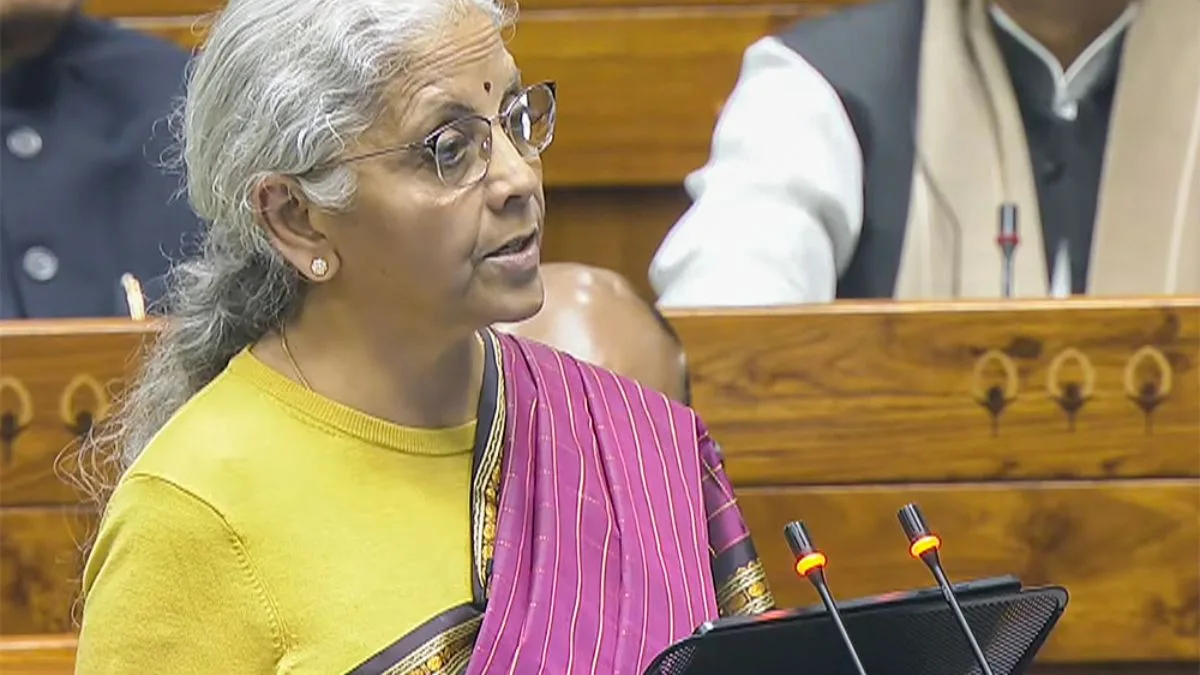
Union Finance Minister Nirmala Sitharaman yesterday presented the Union Budget 2026–27 in the Lok Sabha, her ninth consecutive budget.

Defending the vision behind the budget, Sitharaman said it was driven by “Yuvashakti” and anchored in “three kartavyas.” She proposed seven high-speed rail corridors, new dedicated freight corridors, and the operationalisation of 20 national waterways over the next five years.

The budget also outlined a strong push for environmentally sustainable passenger transport. Through high-speed rail corridors connecting major urban and economic hubs, commute times will be reduced, emissions will be reduced, and regional growth will be supported.

Also Read: Union Budget 2026 Highlights: High-speed rail corridors, tax reform, boost for India-based data centres

Strategic Thaw

A quiet shift is taking place in global diplomacy. Over the past few months, a steady stream of Western leaders has found its way to Beijing, braving political criticism at home and uncertainty abroad.

Statesman News Service | New Delhi |

A quiet shift is taking place in global diplomacy. Over the past few months, a steady stream of Western leaders has found its way to Beijing, braving political criticism at home and uncertainty abroad. These visits are not driven by sudden warmth toward China, nor by illusions of restored partnership. They are symptoms of a world entering a more unsettled phase, one in which old certainties no longer hold. The return of high-level engagement reflects a growing recognition that disengagement has limits.

Despite years of tension, sanctions, and mutual suspicion, China remains deeply embedded in the global economic system. It manufactures a vast share of the world’s goods, dominates critical supply chains, and plays a central role in clean-energy technologies that many countries depend upon to meet climate goals. For governments facing weak growth, rising costs and fragile domestic politics, distance from Beijing has become increasingly impractical. Yet this renewed contact does not signal a revival of past optimism. The era when engagement was framed as a pathway to convergence ~ political, economic or ideological ~ has clearly ended. Today’s diplomacy is stripped of romance.

It is transactional, cautious, and carefully worded, shaped as much by fear of instability as by hope of opportunity. China, meanwhile, is using the moment carefully. By hosting a succession of foreign leaders, it projects an image of steadiness and scale, positioning itself as a constant in an international environment marked by uncertainty. Western governments, however, are not seeking alignment. Their objective is insulation, preserving room for manoeuvre in a fractured world. Engagement with China has become a form of hedging, not reconciliation. Leaders are attempting to keep trade channels open while maintaining security barriers; to talk without trusting; to cooperate selectively without surrendering strategic caution. This balancing act explains the language that increasingly defines such visits. Words like “reset” or “partnership” are avoided. Instead, officials speak of “dialogue,” “stability” and “sophistication”.

The ambition is modest: to manage differences rather than resolve them, to prevent rivalry from tipping into rupture. At the same time, unease remains profound. Concerns over surveillance, political interference, human rights, and economic coercion have not faded. Nor has the lesson learned by countries that previously faced punitive trade measures after crossing Beijing’s red lines. Engagement today is pursued with eyes open, and with contingency plans close at hand. What is emerging, then, is neither a new alliance nor a renewed cold war. It is a form of diplomatic coexistence shaped by interdependence and mistrust in equal measure. In a world where power is diffuse and instability widespread, governments are concluding that silence is riskier than conversation. The result is a thaw without trust ~ not a reconciliation of values, but an acceptance of reality. The global order is no longer defined by clear camps. Instead, it is being negotiated, visit by visit, across tables where rivals sit not as friends, but as necessary counterparts

Mamata Banerjee to meet CEC in Delhi today over West Bengal electoral roll revision

Mamata Banerjee will meet the Chief Election Commissioner in Delhi today over concerns on West Bengal’s electoral roll revision, while also seeking opposition unity during Parliament’s Budget Session.

Statesman News Service | Mumbai |

West Bengal Chief Minister Mamata Banerjee will on Monday meet Chief Election Commissioner Gyanesh Kumar in New Delhi, with the state’s Special Intensive Revision (SIR) of electoral rolls at the centre of the talks.

The meeting is scheduled at the headquarters of the Election Commission of India. It follows a sharply worded letter sent by the Chief Minister to the CEC over the weekend, flagging concerns about how the revision exercise is being carried out in West Bengal.

According to IANS, Banerjee left for the national capital on Sunday afternoon. Her itinerary includes several engagements, most of them linked to the SIR issue.

She is also expected to reach out to senior leaders of opposition parties during her stay. The aim, party sources say, is to build a common position against the revision process.

The timing of the visit is deliberate. Parliament is in session for the Union Budget, ensuring the presence of top opposition leaders in Delhi.

Why the SIR has triggered a political flashpoint

The Chief Minister’s letter to the CEC signals a confrontational meeting ahead. In it, she questioned the authority granted to special roll observers and micro-observers, saying such appointments have been made only in West Bengal.

Her objection goes beyond oversight. She argued that these observers have been given approval powers, not merely supervisory roles.

In her words, this has left electoral registration officers (EROs) and assistant electoral registration officers (AEROs) “helpless, isolated and reduced to mere spectators”.

Banerjee further wrote that extending such powers to observers runs counter to “democratic ethos, federalism, and fundamental rights” guaranteed under the Constitution.

What happens next in Kolkata

Her return date has not been officially fixed. However, Trinamool Congress leaders indicated she is likely to be back before February 5.

That date matters. A “vote on account” is due to be presented in the West Bengal Assembly. The budget session will also see the government move two key motions.

One will criticise the role of central agencies such as the CBI and ED in the state. The other will formally condemn the manner in which the SIR is being conducted.

Last Bastion Crumbling ~ I

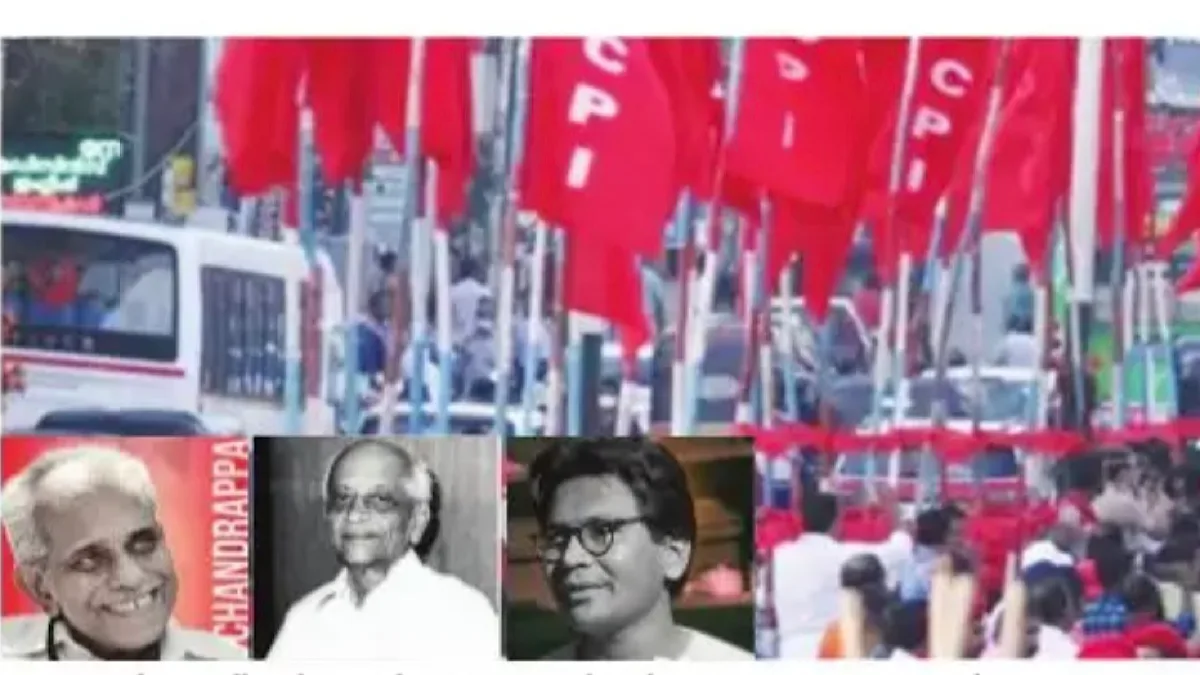
A few months before his demise in 2012, CK Chandrappan, CPI Kerala State Secretary, called me ~ I was at the time a member of the Kerala Public Service Commission ~ to the MN Memorial Building in Thiruvananthapuram to discuss an urgent matter.

DR. AJAYAKUMAR KODOTH | New Delhi |

A few months before his demise in 2012, CK Chandrappan, CPI Kerala State Secretary, called me ~ I was at the time a member of the Kerala Public Service Commission ~ to the MN Memorial Building in Thiruvananthapuram to discuss an urgent matter. When I stepped into his room, he seemed to awake from deep thought.

Suddenly, he said something that startled me: “The CPI-M is going to sink!” My immediate query was: “Then, what about the CPI?” The reply came instantaneously: “What else? CPI will also sink along with it!” When Chandrappan uttered those words nearly 15 years ago, the CPI-M in Bengal had just imploded after being in power for 34 years. Not long afterwards, a similar phenomenon took place in Tripura. So, what do the results of the recently-concluded local body elections in Kerala point to, and what portents do they hold for the upcoming Assembly poll? Is not the CPI-M in Kerala on the path towards the same destination? As CP John, the Kerala Left leader told me in a private conversation, the role played by the CPI whenever it saw the Left go off-track in Kerala, was that of a bed-bug. Occasionally, it bit Pinarayi Vijayan but if he made the slightest movement, it hid itself from plain sight. At the next opportunity, it bit again and quickly disappeared from view.

A shift from this trend happened only recently when the PM SHRI issue cropped up. While that change of attitude has to be duly acknowledged, it alone will not be enough to keep the CPI from drowning along with the CPI-M. What is the reason for the local bodies’ poll debacle of the CPI-M in Kerala, its last outpost? Isn’t it a fact that, ideologically speaking, the party has reached a cul-de-sac? Do the CPI-M or the Indian Left have an effective strategy or national policy to confront Hindutva forces in contemporary India? The CPI-M took birth in 1964, after splitting the CPI down the middle, and identifying the Congress as its arch enemy. Today, in Kerala, the only state in which it remains electorally relevant, has it reconsidered its anti-Congress stand or dismantled its Stalinist organizational system in order to be in sync with the times? The answer is expressly not in the affirmative.

Is the CPI-M’s impending irrelevance any wonder, then? Not only the results of the latest local body elections, but the activities of the CPI-M in the last five years of its governance, as well as its organizational and policy-related changes, have shown beyond doubt that the CPI-M in Kerala is following in the footsteps of its comrades in West Bengal. The 1964 CPI split marked the beginning of the political destruction of the Left in India, but in the eyes of the CPI-M it was a sacred revolutionary act! Though differences of opinion existed within the Communist movement right from the beginning, these became intense and burst into the open in 1948, after India gained independence.

The central issue of debate then was whether India’s freedom was genuine or not. The sectarian group led by BT Ranadive trained its guns on the pioneering General Secretary and towering leader of the CPI, PC Joshi, and his policy of aligning himself with nationalism. The crucial arguments of the Calcutta Thesis, which Ranadive introduced in the 1948 party congress at Calcutta, were that the gaining of independence in 1947 was a mere case of power changing hands; Pandit Nehru was an agent of the British government, and an armed revolution had to be waged to unseat the Nehru government. There is no greater example of dogmatism to be found in the history of India’s Left movement.

The havoc it wreaked within the party and in the country was simply unimaginable. What Joshi, who gave a sense of direction to the Indian left movement for a long spell of thirteen years ~ from 1935 to 1948 ~ envisioned was a creative spirit of co-operation with the Nehru government in post-Independence India for the purpose of rebuilding our nation. But a group within the (undivided) CPI leadership saw this goal as a sin. Over the course of time, not only the sin but the “sinner” too became the object of hatred. The ingratitude and injustice that the Indian Communist movement showed towards Joshi was not just petty but self-defeating as we can now observe. Ironically, by the time the Calcutta Thesis was rejected as a flawed idea at the Madurai Party congress in 1953, Joshi had already been politically demonized and personally ostracized. The plain truth is that PC Joshi became the scapegoat for daring to take on the communist dogmas of the time and attempting to pursue solutions rooted in the Indian reality to uniquely Indian issues, albeit under a left and progressive umbrella.

Joshi, after the 1948-1953 period, spent the years till his death in 1980 pursuing his academic interests including writing the history of Indian communism, keeping up the pressure on the extremist elements of the Left through his prolific public writings, and swallowing the political slights and personal insults meted out to him by his erstwhile admirers, many of whose political- intellectual careers he had made. But the CPI-M did not end its campaign of calumny with Joshi. When the mantle of incremental, sensible, and progressive Left politics fell on SA Dange, they targeted him too. The spokespersons of the Calcutta Thesis continued to adhere to their narrow standpoints. Their fundamental arguments revolved around the class character of the Congress and the attitude to be adopted towards that party. In 1964, with China calling upon the Communist parties of Asian and African countries to initiate an “immediate revolution,” the split within the Communist Party of India became inevitable.

Dange and his supporters came to be known as “revisionists” who followed the Joshi line and were later accused of promoting “right-revisionism” within the Left, as it were! Although the CPI-M leaders went to the extent of misrepresenting Dange by portraying him as having written to the British government seeking a pardon while he was incarcerated in jail in pre-independent India, they did not succeed in destroying his spirit, like they arguably did with Joshi who, loyal to the end, refused to break ties with the CPI despite the humiliations heaped on him and the progressive forces in the Congress waiting to welcome him with open arms. Dange was perhaps less naïve than Joshi. For, in the General Election of 1957, Dange stood for and was elected as MP from the Bombay City Central constituency. That his margin of victory was higher than Nehru’s from the Phulpur parliamentary constituency is a matter of public record.

Dange became the Opposition leader in Parliament and AK Gopalan, the deputy Opposition leader. Despite his resounding electoral mandate, the CPI-M did hold Dange up to public ridicule. Obviously, intelligence goes awry when destruction is imminent. Both Joshi and Dange were always of the opinion that our nation’s greatest adversaries were: (i) Imperialism, and (ii) Extreme rightwing forces that extended cooperation to it. They also took the position that to fight these two threats, the CPI should participate in the nation-building process by cooperating with the Indian National Congress, the mainstream organization that spearheaded the freedom struggle.

What, then, does the extant political-electoral situation in contemporary times tell us against this backdrop? In present-day Kerala, the only geography where the communists as an electoral force are relevant (for now), it is clear that the CPI-M’s political stands ever since it came to power for a second time in the 2021 Assembly election are the cause of the party’s debacle in the recently held local body elections. It may be recalled that at its 1978 Bhatinda party congress, the CPI surrendered its policy of “national democratic revolution” at the feet of the CPI-M, and since then the ‘Big Brother’ has succeeded in maintaining the Left’s relevance and electability in Kerala with the support of the CPI (though the CPI-M will never concede this truth).

But the CPI-M’s doctrinaire arrogance and parochial mindset continue to remain its predominant feature. It will not be long before the CPI-M follows the “Bengal model” towards total self-destruction. Who is responsible for this impending collapse? Whoever those CPI-M leaders are, they do not deserve the support and compassion that leaders like PC Joshi and SA Dange deserved ~ then or now.

(The writer, a Left sympathizer, is former member, Kerala Public Service Commission)