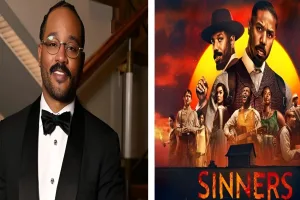
If there was one film that dominated the conversation at the 2026 Grammys, it was Ryan Coogler’s ‘Sinners’ (and its music). The movie’s compilation soundtrack for visual media snagged the award putting a spotlight on a truly eclectic mix of artists.
And this wasn’t just your usual pop lineup though there were pop and R&B stars, the soundtrack spans generations, genres, and history itself.
Performers include Hailee Steinfeld and Miles Caton from the cast, mainstream superstars like Don Toliver, James Blake, Brittany Howard, and Rod Wave, as well as blues and jazz legends like Bobby Rush, Geeshie Wiley, Buddy Guy, Justin Robinson, and Cedric Burnside.
That’s a wide net, and because of it, the Grammy officially goes to producers Ryan Coogler, Ludwig Göransson, Serena Göransson, and music supervisor Nikki Sherod.
Also Read: Grammys 2026 Highlights: Kendrick Lamar, Billie Eilish, Lady Gaga, Dalai Lama define the night | Major winners
Coogler’s film isn’t shy about showing how music can summon spirits past, present, and yes, even evil.
Blues, vampires, and twins!
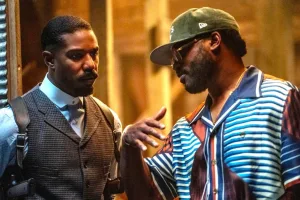
Michael B Jordan proves once again he can do double duty, playing twins Smoke and Stack in a story set in 1930s Mississippi. They return home from Chicago, ready to open a juke joint. But the night isn’t all smooth jazz. Vampires are circling, literally.
This is where the soundtrack comes to life. The music isn’t just background. It’s a character, a time machine, and a spiritual guide. Think Buddy Guy on electric blues, Rhiannon Giddens on banjo, and even Metallica’s Lars Ulrich on drums sharing the same stage as actors and other musicians. Every note pulses with history.
One standout sequence? Miles Caton, playing Sammie, performs a new blues track called “I Lied to You” in a packed juke joint. Coogler, behind the gigantic IMAX camera, opens a time portal. Suddenly, 1930s plantation workers, ancient African drummers, rock guitarists, and modern twerkers all occupy the same floor. Then the roof bursts into flames. It’s chaotic, thrilling, and deeply musical.
Why the music matters more than the vampires
Sure, the vampires are flashy, but the Blues is the real star. ‘Sinners’ doubles as a musical history lesson. Ludwig Göransson, Coogler’s longtime collaborator, makes sure that audiences experience Blues legends and modern stars side by side.
From Geeshie Wiley and Robert Johnson to Brittany Howard and Alice Smith, the soundtrack celebrates Black music across eras.
The film also doesn’t shy away from the uncomfortable truths. In a chilling scene, Delroy Lindo’s Delta Slim recounts the exploitation of Black artists. His partner, Rice, was lynched after simply trying to travel North for better opportunities.
Meanwhile, white artists profited from Black music while Black creators were blocked from cultural spaces.
The Blues, Jazz, and even the banjo trace back to West and Central African roots, shaping American music even under oppressive conditions like Reconstruction and Jim Crow Mississippi.
Sinners’ mythical and sinful sound
The film doesn’t treat music lightly. It’s sensual, supernatural, and yes, a little dangerous. Sammie’s performance at the juke joint literally summons spirits of Black musicians and dancers, past, present, and future. Music here isn’t just fun.
And there’s the Faustian angle. ‘Robert Johnson’, legendary Delta blues musician, is never directly named. But his story looms large. Johnson’s myth, young man meeting the devil at crossroads in exchange for musical mastery, is echoed in Sammie and the twins’ struggles. Achieving greatness requires some sort of sacrifice. Smoke and Stack leave family and community behind to succeed in Chicago. Sammie risks personal ties to master the blues. In ‘Sinners’, sinfulness and goodness are intertwined. Music can both tempt and heal.
The juke joint as a beacon of resistance
One of the film’s most powerful images is juke joint itself. Despite threats from the Klan, this small space pulses with life, joy, rebellion. The Blues is resistance and survival. Even the preacher, Sammie’s father Jedidah, warns of the Blues’ supernatural power.
The old superstition that the Blues is the “devil’s music” threads through the story, tying history, folklore, performance together.
The juke joint becomes a microcosm of Black resilience, a place where music bridges generations and geography connecting ancestors with modern audiences.
Even the villains respect the power of music
Sinners’ villains aren’t just creepy. They’re clever. Remmick (Jack O’Donnell), a vampire, attempts to harness Sammie’s talent for his own gain. He performs ‘The Rocky Road to Dublin’ is an Irish folk tune about resistance and displacement.
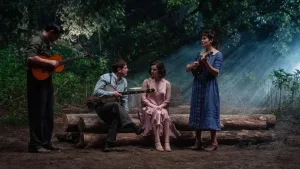
Seemingly out of place in the film rooted in the Black South but this choice demonstrates how music can be appropriated, manipulated, weaponised much like cultural oppression itself.
From blues to hip-hop: Music that transcends time
The genius of Sinners lies in its musical timeline. The Blues-inspired tracks flow into modern genres of Hip-Hop, Rock, Country. Coogler and Göransson make you feel it. When you hear the soundtrack, you’re literally listening to centuries of Black creativity and struggle condensed into one movie.
Ludwig Göransson’s compositions have topped streaming charts, and industry insiders are already predicting Oscar nods for Best Original Score and Best Original Song.
‘Sinners’ is a musical experience that sticks. It teaches, entertains, and tells us that Black music is a living history. The Blues, Jazz, Hip-Hop, and Folk are stories, struggles, and triumphs.