Logo

Sabrina Carpenter criticised by animal rights group PETA after dove appearance during Grammy performance

Sabrina Carpenter’s Grammy performance made headlines not for her music, but for holding a live dove on stage. PETA slammed the pop star, calling the act “cruel” and urging celebrities to leave animals out of awards shows.

Statesman News Service | New Delhi |

It was supposed to be a dreamy Grammy moment. Flashing lights, a sleek airplane prop, and pop star Sabrina Carpenter floating through her performance like a music-video fantasy. But just when fans were soaking in the drama of it all, one small white bird stole the spotlight and not in a good way. By the end of the night, animal rights group PETA was fuming, social media was buzzing, Sabrina’s Grammys moment had turned into a full-blown controversy.

During her performance of the song ‘Manchild’ at the Grammy Awards on Sunday night, the 26-year-old singer leaned fully into an aviation theme. At one point, Sabrina stepped into an airplane prop, adding to the theatrical feel of the act. Then came the surprise element. She appeared holding a white dove on stage.

Also Read: Olivia Dean wins a Grammy and lets a Gen Z rebellion slip quietly onto the world’s biggest stage

The image was striking and symbolic. Doves often represent peace and freedom. But to some viewers, it raised an uncomfortable question. Should a live bird be part of a loud, high-pressure awards show performance?

PETA fires off a furious reaction

People for the Ethical Treatment of Animals did not waste time responding. Shortly after the show, the organisation called out Sabrina in a sharp post on X (formerly Twitter).

“Did Sabrina Carpenter really just bring a bird on stage in 2026?!” the group wrote, accusing the singer of “childlike behavior” and urging celebrities to leave animals out of the Grammys.

The post included a photo of Sabrina holding the dove mid-performance.

PETA didn’t stop there. In another message shared alongside the same image, the organisation referenced lyrics from ‘Manchild’ to make its point even clearer and harsher.

According to PETA, bright lights, loud sounds, and being handled in front of a huge crowd can scare and stress birds. The group said the dove belonged “flying free in the open sky,” not on a Grammy stage.

The tone was blunt, emotional, and impossible to ignore.

Not PETA’s first celebrity showdown

If this feels familiar, that’s because it is. PETA has a long history of calling out famous faces when animals are involved.

Late last year, the group criticised Kim Kardashian for gifting her children North, Saint, Chicago, and Psalm some Pomeranian puppies for Christmas. They also slammed Kim’s sister Khloé Kardashian for buying a black Labrador puppy for her kids, True and Tatum.

Ingrid Newkirk, PETA’s founder, went as far as calling those gifts “inexcusably callous,” saying puppies are not toys and urging celebrities to adopt from shelters instead.


Lisa Ray marks 25 years of ‘Kasoor’ says, ‘Stories led by women don’t fade’

Lisa Ray marks 25 years of ‘Kasoor’, recalling how the legal thriller challenged Bollywood norms and proved that strong female stories endure.

Statesman News Service | New Delhi |

As her 2001 film Kasoor completes 25 years, actress Lisa Ray is looking back at what she calls one of the most defining choices of her career, a film that quietly challenged the conventions of Hindi cinema at the time.

Also Read: My appearance is not a source of insecurity: Lisa Ray

Taking to Instagram, Lisa shared the music video of Mohabbat Ho Na Jaye, accompanied by a reflective note on what Kasoor represented for her, both personally and professionally.


View this post on Instagram


A post shared by Lisa Ray (@lisaraniray)

A role that marked a turning point

Revisiting her decision to sign the film, Lisa said agreeing to Kasoor felt like stepping into her own strength.
“Twenty-five years of Kasoor. When I said yes to this film, it felt like stepping into my power — quietly but decisively,” she wrote, highlighting the rarity of a layered female character, emotional depth, and a narrative free from Bollywood’s usual song-and-dance formulas.

Also Read: Grammy Awards 2026 red carpet: Bold fashion hits and misses that stole the show

Unlike many mainstream films of the late 1990s, Kasoor leaned into mood and inner conflict rather than spectacle — something Lisa says made it stand apart from its time.

Going against industry advice

The actress revealed that she was actively discouraged from taking up the project, with many warning her that audiences were not ready for darker narratives or strong women at the centre of the story.

“In the ’90s, I was told this film wouldn’t work — that it was too dark, too internal, and that no one wanted to watch a strong female character,” she recalled, adding pointedly, “Well… here we are.”

Also Read: Grammy Awards 2026 full list of winners: Album, record, song of the year and more

Collaborations that mattered

Lisa also expressed gratitude for the collaborators who trusted the film’s quiet intensity. She praised co-actor Aftab Shivdasani for his sincerity and commitment, calling their collaboration deeply fulfilling.

He also took to his Instagram and penned an emotional message for the film.


View this post on Instagram


A post shared by Aftab Shivdasani (@aftabshivdasani)


She further thanked director Vikram Bhatt and the Bhatt family for believing in the film’s emotional stillness at a time when it was far from an obvious commercial choice.

Music that became timeless

Reflecting on the soundtrack, Lisa described Kasoor’s music as eternal, something that continues to live on through memories of love, heartbreak, and youth.

Also Read: Sinners music honours Black voices through blues and jazz; what awards mean for artists rising from oppression

“These songs have woven themselves into people’s lives — first loves, long drives, stolen moments. That kind of resonance can’t be manufactured,” she noted.
A film that quietly shifted narratives

Looking back, Lisa believes Kasoor played a small but meaningful role in reshaping how women could be portrayed on screen. “It wasn’t perfect, but it was purposeful,” she said, adding that the film’s emotional tone and performances are what allowed it to endure.
Most of all, she credited audiences for keeping the film alive in memory. “Strong female stories don’t fade,” Lisa wrote. “They wait. And then they last.”

Also Read: Neena Gupta talks about Masaba Gupta, Vivian Richards and the wedding photo that brought their family together

About the film

Kasoor is a legal thriller that also stars Apoorva Agnihotri, late Irrfan Khan, and Ashutosh Rana. The film is an unofficial adaptation of the 1985 American film Jagged Edge, with its climax inspired by What Lies Beneath (2000).

Also Read: Amaal Mallik reveals how ‘Sooraj Dooba Hai’ changed his career, and why he lost 45 films thereafter

When noise subsides, 2 natural partners come together: Industrialists on US deal

Leading industrialists have welcomed the historic India-US trade deal, saying that the reduced 18 per cent tariffs will help strengthen the strategic and economic ties between the two great countries.

IANS | New Delhi |

Leading industrialists have welcomed the historic India-US trade deal, saying that the reduced 18 per cent tariffs will help strengthen the strategic and economic ties between the two great countries.

Anand Mahindra, Chairman of Mahindra Group, wrote in a post on X, “More evidence of the benefits of ‘Making haste slowly.’”

“When the noise subsides, two natural partners will come together,” he posted.

Kumar Mangalam Birla, Chairman of Aditya Birla Group, applauded Prime Minister Narendra Modi and US President Donald Trump for today’s trade announcement.

“The reduced tariffs will help strengthen the strategic and economic ties between our two great countries and provide additional opportunity for investment and collaboration. We are committed to expanding our presence and investments in the U.S., where we see substantial opportunities for innovation, growth and enduring partnerships”, he said in a statement.

Meanwhile, Ashishkumar Chauhan, Managing Director and CEO of the National Stock Exchange (NSE), described it as a “big win for businesses, supply chains and partnership between the two nations”.

“Welcome move for global trade! Congratulations! After today evening’s talks between the US President and the Indian Prime Minister, tariffs on Indian goods coming down sharply from 50 per cent to 18 per cent with immediate effect. A big win for businesses, supply chains, and the India–US partnership. Kudos to the teams involved in bringing this historic deal to a close”, he noted.

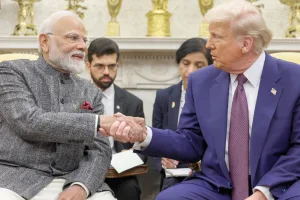
Earlier, Prime Minister Narendra Modi announced that ‘Made in India’ products will now have a reduced tariff of 18 per cent, as US President Donald Trump said India and the United States had reached a trade deal. PM Modi posted on X that it was “wonderful to speak with my dear friend President Trump today”.

“When two large economies and the world’s largest democracies work together, it benefits our people and unlocks immense opportunities for mutually beneficial cooperation. President Trump’s leadership is vital for global peace, stability, and prosperity. India fully supports his efforts for peace,” PM Modi stated.

India, US ties will flourish further: Amit Shah, Nadda on trade deal

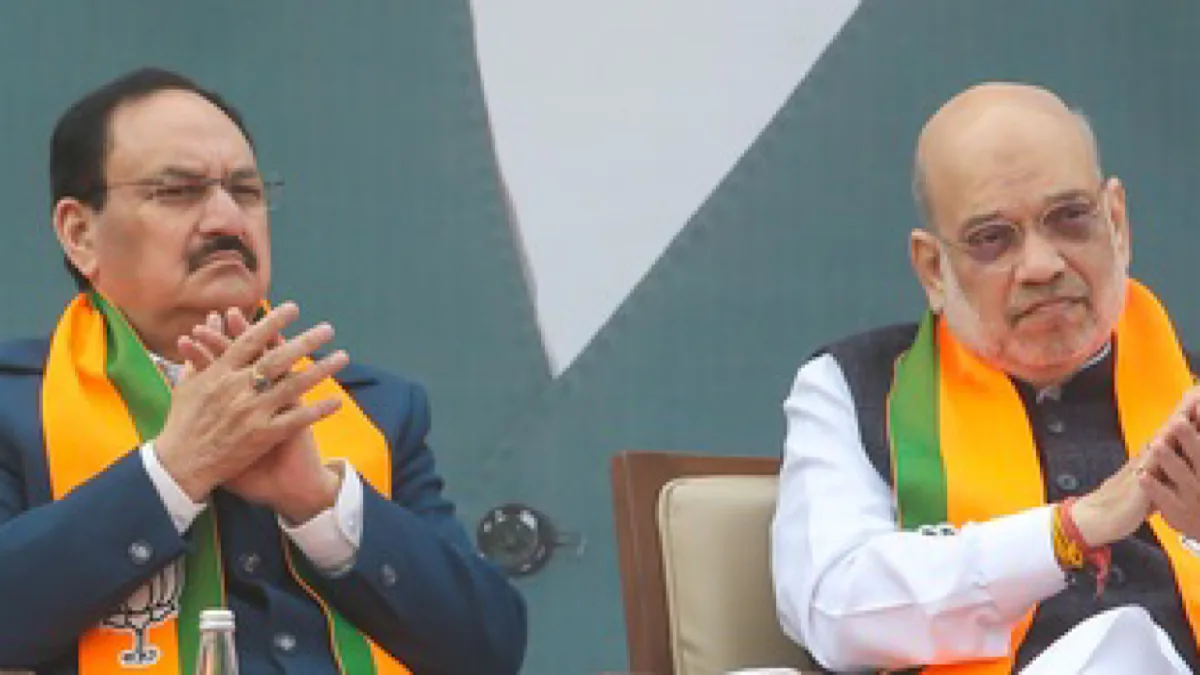
Union Home Minister Amit Shah and Union Health Minister J.P. Nadda on Tuesday welcomed the India-US trade deal and said that it will benefit and further strengthen the strategic partnership between the two nations.

UNI | New Delhi |

Union Home Minister Amit Shah and Union Health Minister J.P. Nadda on Tuesday welcomed the India-US trade deal and said that it will benefit and further strengthen the strategic partnership between the two nations.

Taking to X, HM Shah said, “A big day for India-US relations as the trade deal has been locked with a significantly reduced tariff of 18 per cent, paving the way for stronger trade ties and mutual growth. I congratulate PM Narendra Modi and President Donald Trump for this historic deal, which will elevate our strategic partnership and greatly benefit both nations and their people. Business between India and US set to flourish further.”

Nadda also took to X and hailed the Prime Minister’s leadership and said that under him, the country’s economy has gained new “global confidence and momentum”.

“Under Hon’ble PM Narendra Modi ji’s guidance, India’s economic journey has entered a new phase of global confidence and momentum. The expanded international market for Made in India products will empower our youth and farmers alike. A robust India–US partnership promises benefits that go far beyond our borders,” he said.

India and the US reached a trade deal on Monday following a phone call between PM Modi and President Trump, cutting US tariffs on Indian goods to 18 per cent and easing Indian trade barriers on US products.

PM Modi also took to X and said, “Wonderful to speak with my dear friend President Trump today. Delighted that Made in India products will now have a reduced tariff of 18 per cent. Big thanks to President Trump on behalf of the 1.4 billion people of India for this wonderful announcement.”

He said that when two “large economies” and the “world’s largest democracies” work together, “it benefits our people and unlocks immense opportunities for mutually beneficial cooperation”.

Hailing President Trump’s “leadership” in advocating for global peace, stability, and prosperity, the Prime Minister said, “India fully supports his efforts for peace”.

“I look forward to working closely with him to take our partnership to unprecedented heights,” PM Modi added.

Ankita Bhandari murder case: CBI takes over probe, registers case against ‘unknown VIP’

The CBI has taken over the Ankita Bhandari murder case, reopening scrutiny of an alleged VIP angle after viral clips and renewed political pressure brought the 2022 crime back into focus.

Statesman News Service | Mumbai |

In a fresh turn in the Ankita Bhandari murder case, the Central Bureau of Investigation has taken over the probe into a crime that had deeply unsettled Uttarakhand. The CBI’s Delhi-based Special Crime Branch has also registered a case against an “unknown VIP” in connection with the matter.

Two members of the CBI team reached Uttarakhand late on Monday to begin a detailed inquiry into the alleged VIP angle linked to the killing of the 19-year-old. Ankita Bhandari was working as a receptionist at the Vanantra Resort in Rishikesh at the time of her death.

The case returned to the public attention after audio and video clips involving former BJP legislator Suresh Rathore and his alleged wife, Urmila Sanawar, mentioned the involvement of a “VIP”.

Her remarks were followed by political reactions, with opposition parties and several organisations reiterating their demand for a CBI investigation.

As pressure mounted, the Uttarakhand government moved to transfer the probe to the central agency. On January 9, Chief Minister Pushkar Singh Dhami formally recommended a CBI investigation.

The state government has said that uncovering the complete truth remains its top priority and that no one, regardless of power or position, would be allowed to evade the law.

Ankita Bhandari was murdered on September 18, 2022. There was widespread anger and protests over the case in Uttarakhand.

Her body was recovered nearly a week later from the Chilla Shakti Canal, where it had been dumped.

The case was earlier investigated by a Special Investigation Team, which filed a chargesheet running over 500 pages and listed 97 witnesses. Forty-seven of them were examined during the trial.

Pulkit Arya, the owner of the Vanantra Resort, along with co-accused Saurabh Bhaskar and Ankit Gupta, was later convicted and sentenced to life imprisonment.

Amaal Mallik reveals how ‘Sooraj Dooba Hai’ changed his career, and why he lost 45 films thereafter

Music composer Amaal Mallik says his hit song ‘Sooraj Dooba Hai’ earned crores for music labels, but left him with almost nothing. He also reveals that speaking up about rights and crediting cost him work on nearly 45 films in Bollywood.

Statesman News Service | New Delhi |

In Bollywood, a hit song usually means fame, money, parties, power. But what if the song earns crores and the person who created it is left with almost nothing? That uncomfortable question is back in the spotlight, thanks to music composer and singer Amaal Mallik, who has once again spoken about how the Hindi film music industry really works.

“Sooraj Dooba Hai,” the peppy romantic song from the 2015 film ‘Roy’, was everywhere when it released. It played at weddings, clubs, road trips, radio stations for years. The song helped define Amaal Mallik’s early career and became chartbuster loved by millions.

But behind the catchy tune and smooth vocals was a harsh reality.

In recent interview with Pinkvilla, Amaal revealed that the song was made on a budget of just Rs 8-9 lakh. Yet, over time, it reportedly earned Rs 60-70 crore for the music label.

Also Read: Amaal Mallik reveals how religious differences affected his past relationship

And Amaal?

“I got nothing,” he said bluntly. Except for some publishing rights that, according to him, are “negligible” and not even close to Rs 1 crore.

“I want to make that kind of money to help people,” he said. “That money can only come if I have rights or equal rights or some kind of right, jo film music mein nahi milta hai.”

In very simple terms, Amaal is saying this: If creators had fair rights, they could earn fairly. And if they earned fairly, they could give back more.

He even shared a deeply personal detail to underline his point.

“Sixteen years later, I just bought a car for myself,” he said. “Never did anything for myself. It was always people around me.”

Speaking up comes at a price for Amaal Mallik

Honesty is expensive in Bollywood. Amaal admitted that taking strong stands has repeatedly hurt him professionally.

“There was a time when I was working on a film in the morning,” he said, “and by evening, we were fighting a court case.”

He also revealed a stunning number: “In the last five years, I was dropped from 40 to 45 films.”

That is not a small loss. That is a career-altering blow.

India has more than ‘earned’ tariff reduction: Lindsey Graham on trade deal

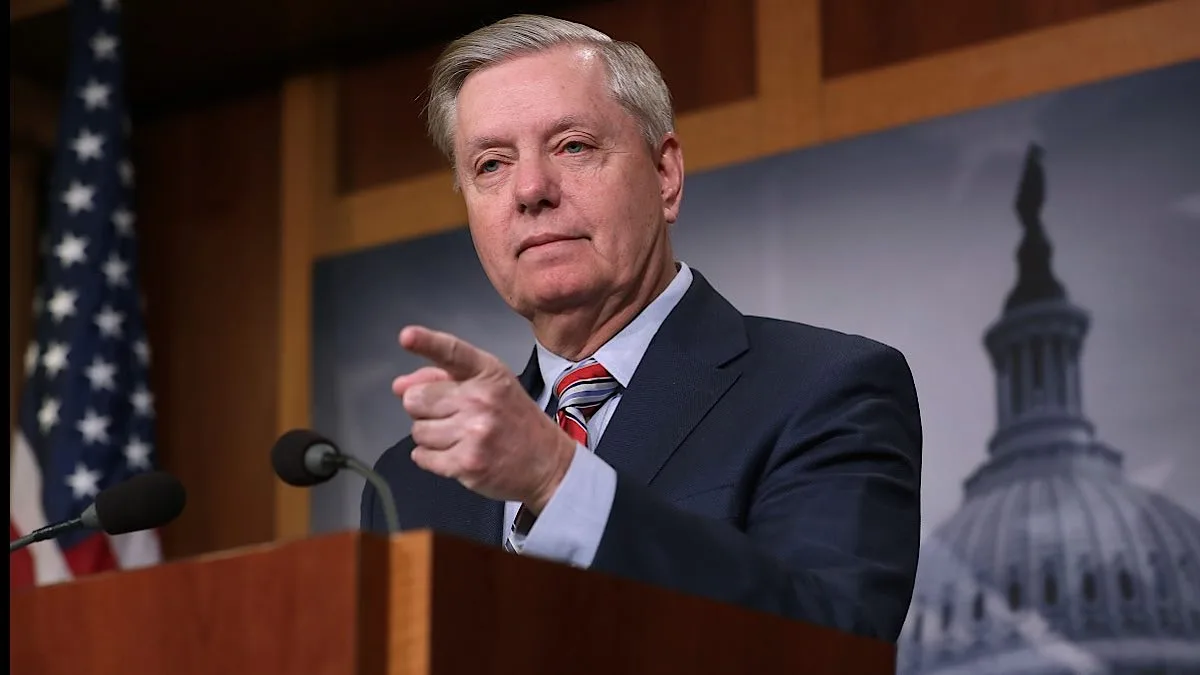
US Senator Lindsey Graham on Monday said India has “earned” the tariff reduction announced under the new India-US trade deal, linking it to New Delhi’s recalibration of Russian oil purchases as the war in Ukraine will enter its fifth year on Feb 24, 2026.

UNI | New Delhi |

US Senator Lindsey Graham on Monday said India has “earned” the tariff reduction announced under the new India-US trade deal, linking it to New Delhi’s recalibration of Russian oil purchases as the war in Ukraine will enter its fifth year on Feb 24, 2026.

In a post on X, Graham credited US President Donald Trump’s strategy, saying economic pressure on countries buying Russian energy appears to be working. He pointed to the recent trade agreement with India, under which Washington lowered reciprocal tariffs on Indian goods to 18 per cent.

“Well played, President Trump. I think your message about ending this war—by having Putin’s customers who prop up his war machine recalculate—is working,” Graham said.

The Senator claimed that India’s conduct justified the tariff reduction and expressed hope that other countries would follow suit.

“Through their behaviour, India has more than earned this reduction. I’m hoping that the other big nations that buy Russian oil will follow India’s direction,” Graham added.

Linking the trade decision to broader geopolitical objectives, Graham said Russian President Vladimir Putin would only come to the negotiating table when pressure intensifies.

“Putin will only come to the table when the pain is so great. We’re not there yet, but with India’s actions, we are moving closer. End the bloodbath in Ukraine now,” he said.

His remarks came after President Trump earlier in the day announced that the US and India had agreed to a trade deal, reducing reciprocal tariffs from 25 per cent to 18 per cent “out of friendship and respect” for Prime Minister Narendra Modi.

The announcement ended nearly 11 months of uncertainty that had pushed bilateral trade relations to their lowest point in over two decades. Under the historic agreement, the United States will reduce tariffs on Indian goods from as high as 50 per cent to 18 per cent.

India and the United States said the agreement would provide immediate relief to Indian exporters. President Trump confirmed the development, stating, “We agreed to a Trade Deal between the United States and India, whereby the United States will charge a reduced Reciprocal Tariff, lowering it from 25 per cent to 18 per cent. They will likewise move forward to reduce their tariffs and non-tariff barriers against the United States to zero.”

The tariff reduction is expected to improve the competitiveness of Indian goods in the US market, enhance order visibility, ease margin pressures, and support stronger pricing power for export-oriented sectors.

India-US trade deal: Which sectors are likely to gain the most? All details here

The new India-US trade deal would be a major game-changer for the competitiveness of Indian exports of ‘made in India’ goods. It will boost the country’s manufacturing sector as it expands its global market access with a lower tariff burden.

Statesman News Service | New Delhi |

India and the United States announced a historic trade deal last night, with a massive reduction in tariffs on India from the earlier 50 per cent to 18 per cent. The new India-US trade deal would be a major game-changer for the competitiveness of Indian exports of ‘made in India’ goods. It will boost the country’s manufacturing sector as it expands its global market access with a lower tariff burden.

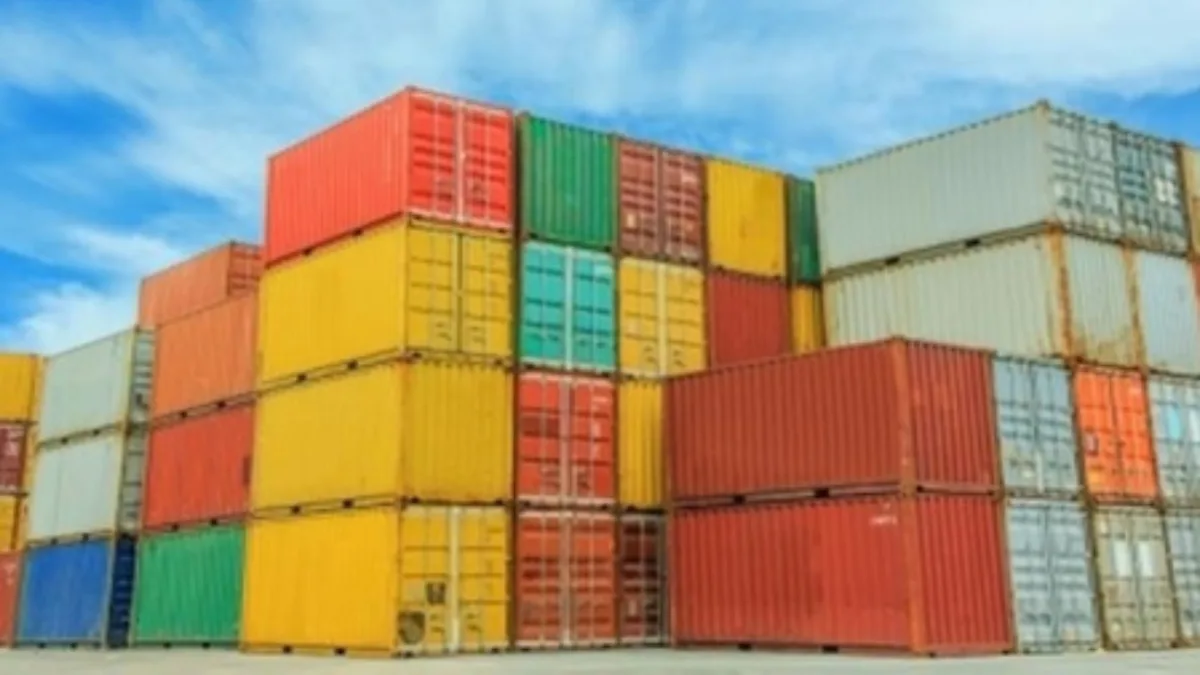
Under the India-US trade deal, sectors such as engineering goods, pharmaceuticals, chemicals, leather products, gems, and agricultural products are expected to benefit significantly.

The deal is likely to lead to an immediate and extensive release of pending orders that were earlier put on hold, predominantly in labour-intensive sectors like apparel, jewellery, and footwear.

The tariff rationalisation is expected to push these sectors with strong acceleration in export growth in the coming months. Lower tariffs will not only improve price competitiveness but also help Indian exporters fit in and expand into the supply chain network of the United States.

As per the Federation of Indian Export Organisations (FIEO), the India-US trade agreement reflects the strengthening strategic and economic ties between India and the United States and opens vast opportunities for Indian exporters, particularly MSMEs. SC Ralhan, President, FIEO, said that the deal would improve the competitiveness of Indian products in the US market and provide a strong impetus to India’s export growth across sectors. This agreement will encourage capacity expansion, attract fresh investments, and support job creation in export-oriented industries, he added.

“This agreement sends a strong signal to global markets about India’s commitment to free, fair, and rules-based trade. FIEO remains confident that this development will help India achieve its long-term export targets and further strengthen India’s position as a reliable global trading partner,” Ralhan noted.

This historic announcement brings an end to the 11-month-long uncertainty that had adversely affected the bilateral trade relations between the two countries.

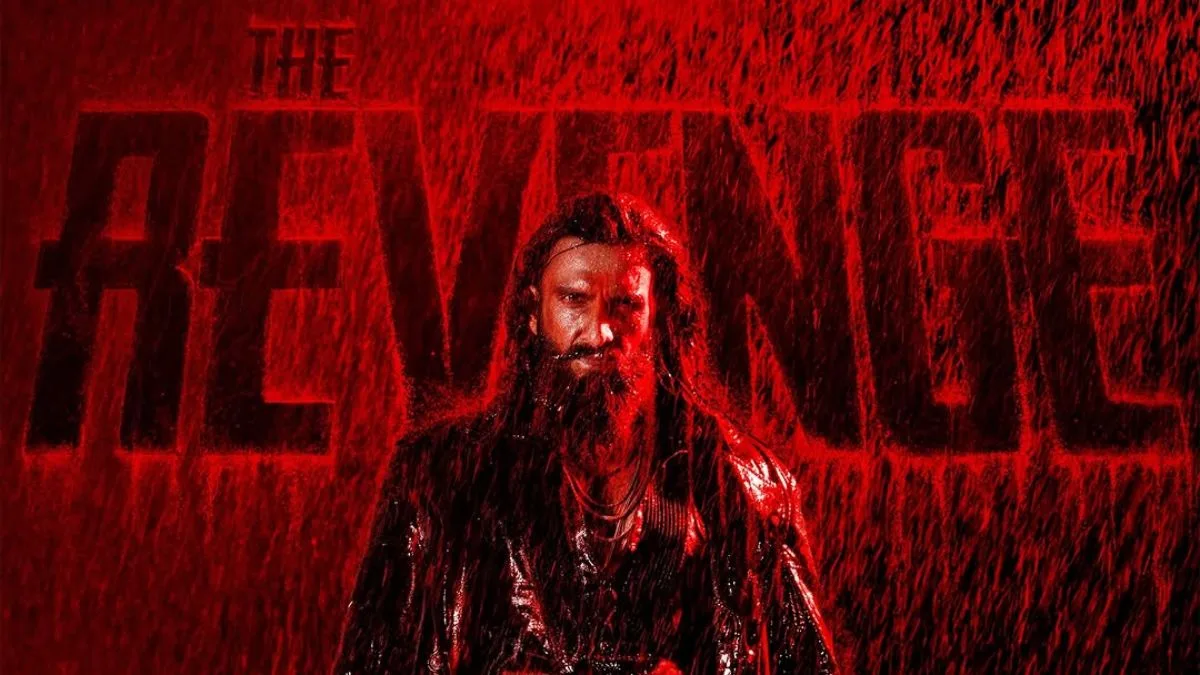
Dhurandhar 2 first look: Ranveer Singh unveils intense avatar as Hamza, sequel titled ‘Dhurandhar: The Revenge’

Ranveer Singh has unveiled the first look of ‘Dhurandhar 2’, officially titled ‘Dhurandhar: The Revenge’, kicking off promotions for the much-awaited sequel. The actor also confirmed that the teaser will drop today.

Statesman News Service | New Delhi |

Just when Bollywood gossip mills were getting restless, Ranveer Singh dropped a fiery surprise on Tuesday morning and the internet instantly woke up. One poster. One caption. One promise of revenge. And suddenly, ‘Dhurandhar 2’ was no longer a rumour but a full-blown storm.

After weeks of quiet buzz and whispered guesses, the promotions for the sequel have officially begun. Ranveer revealed the first look of the film and confirmed its final title: ‘Dhurandhar: The Revenge’.

And judging by that intense poster, this is not going to be a calm ride.


View this post on Instagram


A post shared by Ranveer Singh (@ranveersingh)

Ranveer Singh’s first look sets the mood

Ranveer took to Instagram early Tuesday to share his look as Hamza, also known as Jaskirat, from the upcoming sequel. The poster shows him standing in heavy rain, fists clenched, staring straight into the camera. Everything around him is soaked in deep red light giving the image a dark and angry feel.

Behind him, the title ‘Dhurandhar: The Revenge’ looms large. It’s bold. It’s loud. And it clearly means business.

In the caption, Ranveer wrote, “Ab bigadne ka waqt aa gaya hai” hinting that his character is ready to cross limits this time. Fans immediately picked up on the message that Hamza is not holding back anymore.

Teaser timing and release date revealed

Ranveer didn’t stop at just the poster. He also confirmed when fans can expect their first moving glimpse of the film.

The teaser will be released at 12:12 PM on Tuesday, adding a dramatic touch to the announcement. The film itself is set to hit theatres worldwide on March 19, 2026.

The movie will release in Hindi, Telugu, Tamil, Kannada, and Malayalam.

Another detail that fans loved was Ranveer sharing the poster in five different languages: English, Hindi, Tamil, Telugu, Kannada, and Malayalam. It’s a clear signal that ‘Dhurandhar: The Revenge’ is aiming for massive pan-India and global audience.

Akshaye Khanna’s quiet return raises eyebrows

But here’s where the gossip really kicked in.

While tagging the cast in his post, Ranveer also tagged Akshaye Khanna. This instantly caught fans’ attention because Akshaye played the villain Rehman Dakait in the first film and his character died in the climax.

So why tag him now?

Also Read: Dhurandhar 2: Akshaye Khanna not shooting new scenes; Aditya Dhar finalises trailer ahead of March 19 release

Industry buzz suggests Akshaye may return through flashback scenes possibly revealing hidden layers of the story. Nothing is officially confirmed yet. But the tag alone was enough to send fans into theory mode.

Why Dhurandhar became a blockbuster

Directed by Aditya Dhar, the first ‘Dhurandhar’ released on December 5 and turned into a monster hit. The spy thriller followed Ranveer’s character as an Indian agent who infiltrates Karachi’s underworld and breaks its links with terror networks.

The film also starred Sanjay Dutt, R Madhavan, Arjun Rampal, and Akshaye Khanna, all of whom are expected to return in the sequel.

With a worldwide collection of over ₹1300 crore, ‘Dhurandhar’ became one of the biggest blockbusters in Bollywood history.

Why Anoushka Shankar chose not to attend the Grammy Awards this year despite multiple nominations

Anoushka Shankar skipped the Grammys this year despite two nominations, choosing to stay in India and focus on her music and mental health. In a candid note, the sitar maestro said awards cannot match the real connection artists feel while performing for live audiences.

Statesman News Service | New Delhi |

While Los Angeles rolled out red carpets, flashed designer gowns, and waited anxiously for golden envelopes to open, sitar maestro Anoushka Shankar was nowhere near the Grammy chaos. She was in India, surrounded by her music, her team, and the calm she says matters far more than trophies.

Two nominations, but no red carpet this time

At the 68th Annual Grammy Awards, Anoushka Shankar received two nominations; one for her album ‘Chapter III: We Return to Light’ and another for ‘Daybreak’, the album’s lead track. These nominations marked her 12th and 13th Grammy nods.

Sharing the news on Instagram, Anoushka posted photos from her recent performances in India. The pictures showed her playing the sitar on stage, smiling backstage, and sharing light moments with her team.

“It’s Grammy day today!” she wrote, clearly proud but also reflective. She called the nominations “HUGE”, and they are. Yet, what followed was not the usual excitement or disappointment fans expect from artists on awards night.

Why the Grammys stress Anoushka Shankar out

Anoushka didn’t sugarcoat her feelings. She openly admitted that award season brings stress, anxiety, exhaustion. According to her, being in Los Angeles during major award events can feel like getting “sucked into a whirlwind” of emotions.

She explained that the days leading up to the Grammys are filled with intense preparation; travel, promotions, appearances, networking, constant pressure to look perfect. All of it, she said, can take a serious toll on mental health.

This year, she made a conscious decision: instead of chasing a trophy, she chose to stay on tour in India, doing what she loves most; playing music for real audiences.

Also Read: Sinners music honours Black voices through blues and jazz; what awards mean for artists rising from oppression

She shared that artists often spend thousands of dollars just to attend the Grammys on flights, hotels, outfits, publicity, marketing campaigns, endless events. Then comes the emotional rollercoaster. Hoping to win, imagining the moment. And sometimes walking away empty-handed.

She admitted that repeatedly not winning can hurt even if you try to stay strong. But over time, she has learned to step back and ask herself what really matters.

The reality behind Grammy voting

Anoushka also touched on the behind-the-scenes truth of how Grammy voting works especially in global music categories. She explained that bigger and more mainstream artists often have more money and resources to promote themselves.

Some artists spend months networking attending exclusive events and making sure their names are constantly visible to voters. Anoushka said she shares this not out of bitterness, but honesty.

“There is always a bigger artist,” she pointed out.

Despite everything, Anoushka made it clear that if she ever wins a Grammy, it would absolutely bring joy. But she strongly believes that, in the bigger picture, it does not define her worth or her music.

Anoushka Shankar’s Grammy Awards journey

Anoushka Shankar’s Grammy journey began in 2003, when she received her first nomination for ‘Live at Carnegie Hall’. She was the youngest-ever nominee in the Best Global Music Album category at the time.

Since then, she has been nominated multiple times: in 2006, 2013, 2015, 2016, 2017, 2021, 2023, 2024, and now 2025. This year marked her 13th and 14th nominations, yet the Grammy trophy continues to elude her.

Still, Anoushka seems at peace.

Neena Gupta talks about Masaba Gupta, Vivian Richards and the wedding photo that brought their family together

Neena Gupta opens up about Masaba Gupta’s relationship with her father Vivian Richards, sharing how the two have built a comfortable bond over the years. She also reveals the story behind a rare wedding photo that brought their blended family together in one frame.

Statesman News Service | New Delhi |

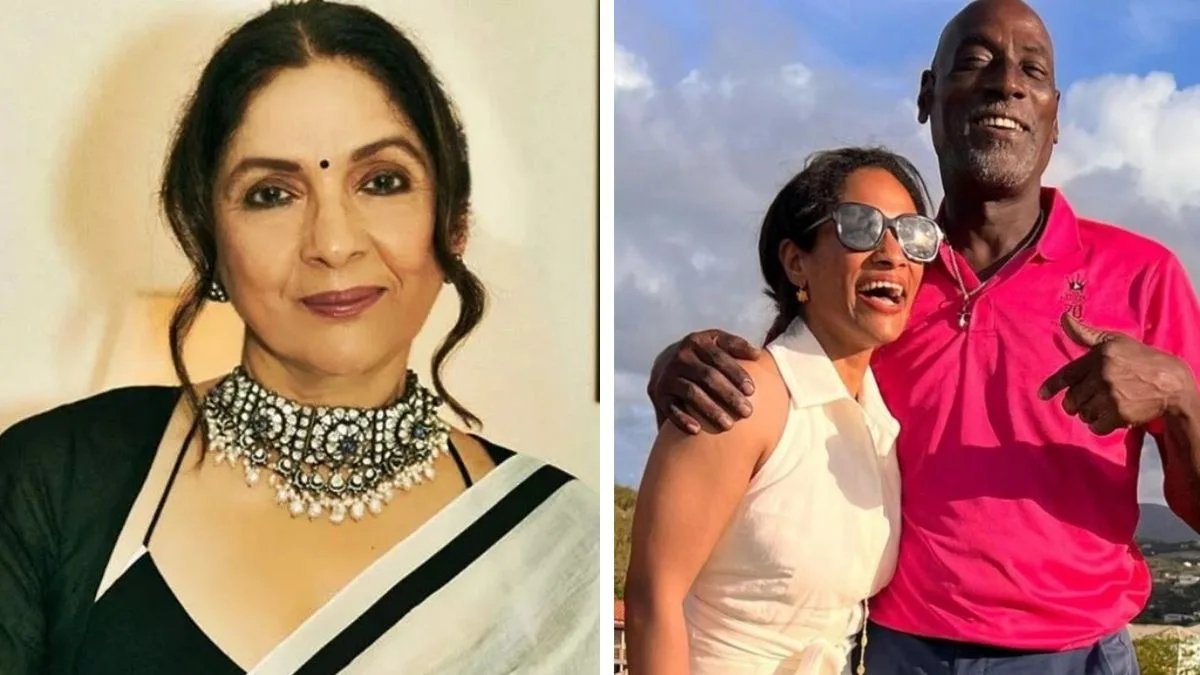
Some families are loud. Some are quiet. And some come together only once in a blue moon. But when they do, it feels like magic. Actor Neena Gupta just opened up about one such rare, emotional moment from her life, and it has all the warmth, honesty and calm wisdom she is known for. In a chat, Neena spoke about her daughter Masaba Gupta’s relationship with her father, legendary West Indies cricketer Vivian (Viv) Richards, and the story behind a picture that quietly broke the internet last year.

“They are comfortable, and that’s what matters”

Neena shared that even though Vivian Richards was not part of Masaba’s childhood, the father and daughter today share a comfortable and peaceful bond.

“It’s very nice,” Neena said adding that their relationship works because they understand each other’s nature. Vivian, she explained, is not a social person and prefers his own space. Masaba, on the other hand, is outgoing, social and expressive, much like Neena herself.

According to Neena, there is no pressure, no expectations and no awkwardness between them. “Whatever they have together, it works well for both of them,” she said simply.

The wedding picture that brought everything together

Neena also revealed the story behind much-talked-about family photo from Masaba’s wedding. The picture, shared on Instagram in January 2023, showed something people rarely see: Masaba’s entire blended family in one frame.


View this post on Instagram


A post shared by Masaba (@masabagupta)

Masaba and actor Satyadeep Misra opted for a court marriage instead of a traditional wedding with pheras. Later, they hosted a reception where both families were present. Vivian Richards was there too.

“That was the time Masaba wanted a picture,” Neena recalled. It wasn’t planned or staged. It just happened.

And that’s what made it special.

Also Read: Neena Gupta says she’s never been truly loved: “It was never like the movies”

“For the first time, my whole life came together”

The photo featured Masaba, Satyadeep, his mother Nalinimisra Tyabji, his sister Chinmaya Misra, Neena Gupta, her husband Vivek Mehra, and Vivian Richards.

Masaba’s caption said it all: “For the first time ever, my whole life came together. This is us. My beautiful blended family. Everything from here on is just a bonus.”

Neena Gupta and Vivian Richards had Masaba out of wedlock in the 1980s, a bold and difficult choice at a time when society was far less forgiving. Neena raised Masaba as a single mother and never hid from her truth.

In 2008, Neena married chartered accountant Vivek Mehra, beginning a new chapter in her personal life.

What’s next for Neena Gupta?

On the work front, Neena Gupta shows no signs of slowing down. She will next appear in ‘Vadh 2’, starring opposite Sanjay Mishra. The film is scheduled to release in theatres on February 6, 2026.

Dense fog in Delhi-NCR affects travel in early hours, AQI in ‘poor’ zone

Delhi witnessed dense fog on Tuesday morning as air quality remained in the poor category, with several monitoring stations reporting poor to very poor AQI levels, according to CPCB data.

UNI | New Delhi |

Delhi and the NCR region woke up to a dense fog cover at several places and moderate fog at many places, which had an impact on travel due to the affected visibility, causing delays, and delays in trains and flights.

The Delhi Airport advised passengers to contact airlines concerned for flight timings and updates, informing them that the operations had to be switched under the CAT- III conditions amid the fog situation, which may cause delays.

Notably, CAT-III allows aircraft landing in extremely low or near-zero visibility using advanced systems when runway visibility drops below 300 meters.

Talking of the NCR cities like Gurugram, Noida, Ghaziabad, Faridabad and Bahadurgarh, the visibility, which was affected by fog, had an impact on those travelling to their workplaces in the morning hours, who had to face inconvenience.

Meanwhile, Delhi’s minimum temperature on Tuesday settled at 9.4 degrees C, which was a notch above the season’s average.

People continued to feel the winter chills with the presence of calm winds that enhanced the chill factor.

There is a likelihood that the air quality index may rise a little due to the low temperature and meteorological conditions; however, it shall stay in the poor zone, as per the forecast by the Indian Institute of Tropical Meteorology.

City’s average air quality index continued to remain in the poor category with an index value reading of 260 at 10 am, according to the Central Pollution Control Board (CPCB).

According to the weather office, mist and shallow fog are likely to be present at night, while the maximum temperature during the day could hover around 20 degrees C.

The weather office has forecast similar weather conditions for Wednesday, suggesting that the sky would remain partly cloudy and there would be moderate fog at many places, while dense fog at isolated places in the city during the morning hours.

Indian stock market today: Sensex, Nifty surge nearly 3% after India–US trade deal

Indian equity markets surged nearly 3% in early trade as the India–US trade deal took effect, triggering broad-based buying across sectors and lifting benchmark indices sharply.

IANS | Mumbai |

The Indian equity markets surged sharply by around 3 per cent early on Tuesday with broad-based buying across sectors, buoyed by the announcement of the India-US trade deal.

As of 9.25 am, Sensex added 2,421 points, or 2.97 per cent, to reach 84,088, and Nifty gained 741 points, or 2.96 per cent to settle at 25,829.

India and the United States have agreed to a trade agreement under which reciprocal tariffs on Indian goods will be slashed to 18 per cent from 25 per cent, and the additional 25 per cent duty on purchases of Russian crude oil will be eliminated. The trade deal will be “effective immediately”, President Donald Trump said, following a phone call with Prime Minister Narendra Modi late on Monday, offering immediate tariff relief for India.

Main broad-cap indices posted strong gains, as the Nifty Midcap 100 surged 3.10 per cent, and the Nifty Smallcap 100 added 3.25 per cent.

All sectoral indices showed huge gains with realty, auto, consumer durables and IT being the major gainers, up 4.47 per cent, 3.78 per cent, 3.69 per cent and 3.04 per cent, respectively.

At 18 per cent, India’s tariff rate is now lower than that of several major export-oriented Asian economies. Bangladesh, Sri Lanka, Taiwan and Vietnam face tariffs of 20 per cent, while Indonesia, Malaysia, Thailand, the Philippines and Pakistan face tariffs of 19 per cent.

Immediate support for Nifty lies at the 25,600-25,800 zone, while resistance is anchored at the 26,200–26,350 zone, market watchers said.

“The dramatic announcement of the long-awaited US-India trade deal and the US decision to cut tariffs on India from 50 per cent to 18 per cent is a game changer for the Indian economy and stock markets, as its delay was the single most important factor weighing on the markets,” an analyst said.

According to market watchers, India’s growth rate will rise to around 7.5 per cent in FY27, assisted by higher exports to the US from the deal, and corporate earnings already on revival could accelerate to around 16 per cent to 18 per cent in FY27.

Analysts also said that the rupee will rebound sharply, adding that the combination of the US-India trade deal, the EU-India trade deal and the growth-oriented budget will boost market sentiments. The positive sentiment could trigger immediate foreign capital inflows, potentially turning India’s Balance of Payments (BoP) position.

Large caps, including banking leaders, non-banking financials, telecom, capital goods and IT, which are trading as the favourites of FII, can see huge inflows, market watchers said.

In Asian markets, China’s Shanghai index gained 0.38 per cent, and Shenzhen added 0.93 per cent; Japan’s Nikkei surged 3.23 per cent, and Hong Kong’s Hang Seng Index edged up 0.11 per cent. South Korea’s Kospi surged 5.04 per cent.

The US markets ended largely in the green in the last trading session as the Nasdaq gained 0.56 per cent. The S&P 500 advanced 0.54 per cent, and the Dow added 1.05 per cent.

On February 2, foreign institutional investors (FIIs) net sold equities worth Rs 1,832 crore, while domestic institutional investors (DIIs) were net buyers of equities worth Rs 2,446 crore.

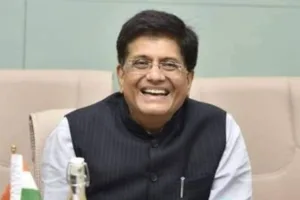
Also Read: India–US trade deal announced: Jaishankar, Piyush Goyal welcome move; Congress flags ‘Trump-nirbharta’

India is budgeting for power

Budgets are rarely exciting. They are usually long documents filled with numbers, procedural language, and policy phrases that mean little to most citizens. Yet Union Budget 2026 is about far more than fiscal arithmetic.

PRAVIN KAUSHAL | New Delhi |

Budgets are rarely exciting. They are usually long documents filled with numbers, procedural language, and policy phrases that mean little to most citizens. Yet Union Budget 2026 is about far more than fiscal arithmetic. It is a statement about power – economic, technological, and geopolitical – in a world that is rapidly fragmenting. Today’s global order is defined by strategic rivalry. Supply chains have become weapons. Technology determines military strength. Trade has given way to pressure.

In this environment, India’s Budget 2026 identifies four strategic sectors – rare earths, semiconductors, artificial intelligence, and nuclear power – that reveal how the fastest-growing major economy intends to protect its future. Rare earth minerals rarely make headlines, yet modern civilisation depends on them. Electric vehicles, wind turbines, precision-guided missiles, fighter jets, smartphones, and AI servers all rely on these 17 critical elements. China dominates global rare earth processing – not because others lack reserves, but because Beijing built processing and manufacturing ecosystems decades earlier. India possesses significant rare earth resources, particularly monazite sands along its coastline. What it lacks is processing capability.

Budget 2026 addresses this gap through the creation of dedicated rare earth corridors across Odisha, Kerala, Andhra Pradesh, and Tamil Nadu – integrating mining, processing, research, and manufacturing. The strategic shift is clear. Instead of exporting raw material and importing finished products, India wants to manufacture permanent magnets domestically for electric vehicles, defence systems, and renewable energy. This is a direct attempt to neutralise China’s leverage over a critical sector. If rare earths are the muscle, semiconductors are the brain. No modern economy can function without chips. The ongoing US-China semiconductor war has demonstrated how access to technology can be used as geopolitical leverage. India’s Semiconductor Mission 2.0 reflects urgency and ambition. It moves beyond factory construction to focus on full-stack capability – chip design, intellectual property, materials, equipment, research, and skilled manpower.

This matters because semiconductor fabrication takes years to mature, and demand is rising rapidly. Within five years, India is expected to account for nearly 10 percent of global semiconductor demand. India’s stated objective is bold: to become one of the world’s top semiconductor manufacturing nations by 2032. More importantly, it seeks policy certainty and domestic value addition – qualities that authoritarian systems struggle to provide over time. Artificial intelligence has become the defining technology of the age. If a country does not build AI domestically, it imports intelligence and exports sovereignty. Budget 2026 reflects this understanding, with AI receiving unprecedented attention.

The government has proposed long-term tax incentives for data centres, funding for national AI and quantum missions, and a research-driven innovation ecosystem. Platforms such as Bharat Vistar aim to deploy multilingual AI in agriculture and rural advisory services, ensuring technology penetrates beyond elite sectors. AI is not treated as a luxury or experiment , but as national infrastructure – on par with roads, power, and railways. Renewable energy is essential but insufficient. Solar and wind do not operate continuously, while AI data centres and advanced manufacturing demand uninterrupted power. Nuclear energy provides the base load required for an energy-intensive future.

By extending customs duty exemptions for nuclear projects until 2035 and signalling openness to private participation, India is lowering costs and providing long-term certainty. Currently, nuclear power contributes only about 3 per cent of India’s electricity. The ambition is to raise capacity from under 9 gigawatts today to 100 gigawatts by 2047. This is a massive bet – but one aligned with the realities of future growth. China’s rise was powered by capitalism operating under authoritarian control. When political centralisation returned, efficiency declined.

Today, China faces an irreversible demographic collapse, capital flight, and shrinking global trust. India has taken a slower, democratic route – reforms, digitisation, institutional building. It is less spectacular, but far more resilient. India will not surpass China overnight. But in fifty years, the contrast may seem obvious. Union Budget 2026 recognises this. It is not about instant results. It is about reducing strategic dependence, securing supply chains, and preparing India for a divided world. India is not just budgeting for growth. It is budgeting for power – and for a future where trust, innovation, and resilience matter more than coercion.

(The writer is director-Mrikal (AI/Data Center) and a young alumni member, Government Liaison Task Force, IIT Kharagpur.)

The India–US trade deal through US media eyes: Relief on tensions, caution on outcomes

US newspapers welcome the India–US trade deal as a reset after months of tension, but caution that its success depends on clarity over tariffs, oil commitments, and implementation.

Statesman News Service | New Delhi |

US newspapers and broadcasters have greeted the India-US trade deal with cautious approval, seeing it as a welcome thaw after months of strain. At the same time, they have pointed out that much of the agreement is still light on detail, raising doubts about how soon words will turn into action.

The agreement was announced by US President Donald Trump after a phone call with Prime Minister Narendra Modi. American outlets described it as an attempt to reset trade ties after a prolonged standoff.

Also Read: India–US trade deal announced: Jaishankar, Piyush Goyal welcome move; Congress flags ‘Trump-nirbharta’

How US outlets are reading the agreement

Fox News reported that the deal would cut US tariffs on Indian goods from 25 per cent to 18 per cent. It cited President Trump’s claim that India would lower trade barriers and stop buying Russian oil, instead shifting purchases to the United States. The network linked the announcement to wider geopolitical pressures, including the war in Ukraine, and said Washington had pushed New Delhi for months over its energy ties with Moscow.

The Wall Street Journal said the agreement was designed to cool trade tensions after a long impasse. It reported that India had agreed to halt Russian oil purchases and increase imports from the US, while Washington would reduce tariffs. The paper noted, however, that the White House had not released formal documents to put the tariff changes into effect. It also pointed out that several major Indian exports, such as pharmaceuticals and electronics, had already been largely exempt from earlier duties.

Why questions remain on impact

The New York Times described the deal as short on specifics but potentially meaningful. It said the agreement appeared to roll back some of the sharp tariffs imposed last year and could help steady relations. At the same time, the paper flagged skepticism among analysts over whether India would fully end Russian oil purchases and whether an 18 per cent tariff would still burden businesses.

The Washington Post said the deal helps stabilise ties after months of diplomatic strain. It called the tariff cut a “much-needed boost” for both Washington and New Delhi, while underlining that several core terms remain unresolved.

Across outlets, the tone was similar. The deal is seen as progress. But its real impact, many cautioned, will depend on how fast the commitments move from phone calls to formal action.

Ironies the West must confront

The speech by Mark Carney, the Canadian PM, received a standing ovation at the World Economic Forum in Davos.

HARSHA KAKAR | New Delhi |

The speech by Mark Carney, the Canadian PM, received a standing ovation at the World Economic Forum in Davos. He mentioned, “great powers have begun using economic integration as weapons, tariffs as leverage, financial infrastructure as coercion, supply chains as vulnerabilities to be exploited.” He went on to add, “A country that can’t feed itself, fuel itself or defend itself, has few options.

When the rules no longer protect you, you must protect yourself.” His classic sentence was, “If we’re not at the table, we’re on the menu.” This has always been the case with the Global South, though for Canada this was possibly a first. Though Carney never mentioned the US nor Trump, the implication was obvious. The speech drew Trump’s attention, resulting in him commenting in response, “Canada lives because of the US. Remember that, Mark, the next time you make your statements.” In a further display of anger, Trump withdrew his invitation for Canada to join his almost defunct Board of Peace. Canada and Europe had always cozied upto the US, rarely questioning its actions while supporting it in its misadventures, including overthrowing regimes Washington disliked or acted against its interests. This gave these nations the power to threaten others. Canada’s Justin Trudeau accused India on the supposed killing of Hardeep Singh Nijjar, solely because he had the silent backing of the US. He continued to support anti-India Khalistan groups and their referendums aware that Washington stood with him.

However, when the Trump administration supported a similar move for Alberta, Canada termed it as treason. This is hypocrisy at its best. Trump is different. For him friends, challengers and allies, all have exploited the US and hence must pay. What is worse is that those who are dependent on the US economically or for security face the brunt. All previous US governments prioritized their allies over themselves and this spoilt them. NATO members preferred development over defence, aware that they were protected by Washington. Trump changed all that. Europe is now enhancing its defence budget. Why did Carney suddenly start going against what the West had supported for decades? The reason is Trump’s MAGA (Make America Great Again), where he believes that tariffs are the solution to reducing trade imbalances. He is also demanding territories essential for US security, irrespective of whom they belong to.

Trump has claimed that the US has been exploited by ‘cheaters’ and ‘pillaged’ by foreigners. He has also used tariffs as a weapon to browbeat nations into submission. As long as the US was targeting weaker and smaller nations, Canada and the West went along. Decades of sanctions against Cuba, Iran and Venezuela, the attack on Caracas and arrest of Maduro, military intervention in Iraq and Libya and the 1999 bombing of Kosovo, all done largely without UN approval, was not only accepted by the West but some nations even joined the US in these actions. The historical collusion between the West and the US was evident in leaked text messages between Presidents Trump and Macron of France. Macron made clear that France in specific and the West, in general, supported Trump’s actions against Syria and Iran but not his demand for Greenland.

Acceptable as long as it did not affect Europe, but wrong as soon as it affects them. Trump released it to embarrass Macron but the message displayed Europe’s mindset. Canada has been under Trump’s gaze for some time. He has termed it as the US’s fifty first state and Carney as Governor. He has also imposed tariffs on it, largely because Canada was the conduit for smuggling of precursor chemicals from China, which are used to manufacture illicit drugs like fentanyl. In addition, Canada is dependent on the US for its national security and economy. Over 75 per cent of Canadian trade is with the US. Canada had ordered 88 F35 aircraft in 2022, the price of which rose by USD 8 billion in the past about four years, forcing Carney to have a rethink. The warning from the US on cancelling or reducing the order was quick and clear. The US ambassador to Ottawa warned that the US would revisit NORAD (North American Aerospace Defence Command) and that US military aircraft would fly deep into Canadian airspace.

The pretext was that other aircraft would not be interoperable with the F35s. This is domination. Possibly after inking trade agreements with China (not a trade deal), hoping to reduce dependency on the US, Carney believed it was time to show Trump his place in Davos. Of course, the counter followed. Trump threatened Canada with 100 per cent tariffs by mentioning, “If Governor Carney thinks he is going to make Canada a ‘Drop-Off Port’ for China to send goods and products into the US, he is sorely mistaken.” Carney’s comments were true, though unexpected, as the West has always stood by the US. It was only after they were treated at par with adversaries that a Western leader had the courage to challenge them. The German Chancellor, Friedrich Merz, backed Carney. He mentioned, “This new world of great powers is being built on power, on strength and when it comes to it, on force. It is not a cozy place.”

He added, “We must recognize the value of our (middle) power.” His implication was about lack of unity within Europe to face future challenges. Carney and Merz may have uttered strong words largely in frustration. The fact remains that unless nations possess military capabilities to defend themselves and stop relying on others, they will continue to be ridiculed. The reality of why the US bullies Europe was laid bare by Mark Rutte, the NATO Secretary General, who mentioned, “If anyone thinks that the EU, or Europe as a whole, can defend itself without the US – keep on dreaming. You can’t.” Dependence will be exploited and there is little that Europe can do.

A world order dominated by the strong against the weak is nothing new. Cuba and Iran have been under Western sanctions for decades and no one has ever been concerned. Governments have been overthrown by the US, and the West has either maintained silence or joined in the action. Now that they are being challenged, Europe and Canada claim the world order is changing. Hypocrisy. Carney and Merz must know that the global south has faced this for years and not one Western nation has ever bothered.

(The writer is a retired Major-General of the Indian Army.)

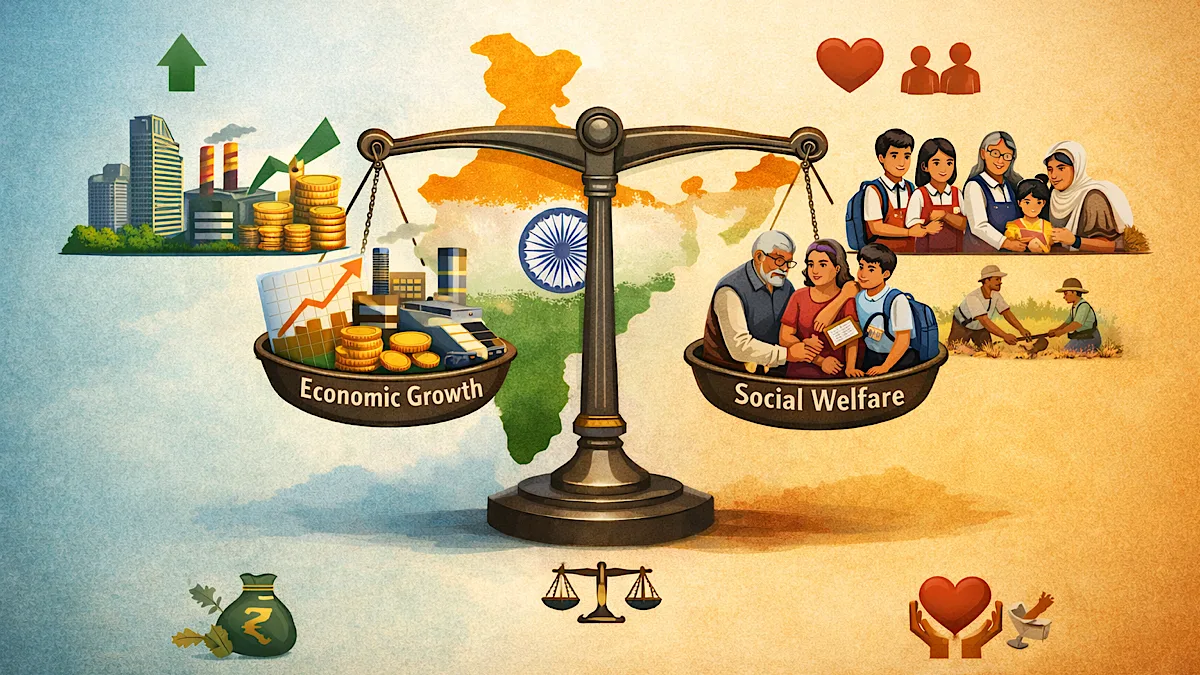
Welfare Vs. Growth

Across India’s states, cash transfer schemes have become among the most powerful instruments of electoral politics.

Statesman News Service | New Delhi |

Across India’s states, cash transfer schemes have become among the most powerful instruments of electoral politics. Promises of direct payments, especially to women, now feature prominently in campaigns, framed as empowerment, recognition of unpaid labour, or immediate economic relief. Yet beneath their popularity lies a deeper economic question: can states continue expanding such schemes without weakening their long-term development capacity? The rapid spread of unconditional cash transfers reflects a shift in welfare thinking. Instead of building services or assets, governments increasingly rely on direct income support to demonstrate responsiveness.

For households facing inflation, insecure employment and rising living costs, such payments provide short-term stability. In that sense, their appeal is understandable. The concern arises when temporary relief begins to substitute for sustained investment. State finances are already under pressure. A large share of revenues is pre-committed to salaries, pensions, interest payments, and other subsidies, leaving limited room for flexibility. As cash transfers grow, they add to recurring expenditure that must be funded annually. Unlike infrastructure projects, which generate long-term returns, these schemes create fiscal rigidity. Once announced, they become politically difficult to roll back, regardless of economic conditions.

This rigidity matters because states are responsible for many investments that determine future growth – schools, healthcare systems, irrigation networks, urban infrastructure, and skill development. When budgets tighten, capital expenditure is postponed, while recurring transfers continue. Over time, this imbalance quietly weakens productivity, job creation, and regional competitiveness. Supporters argue that direct transfers empower beneficiaries, particularly women, by giving them control over spending choices. There is truth in this claim. Evidence suggests such support can stabilise consumption and help households manage immediate needs. However, global experience indicates that these gains rarely translate into lasting improvements in education, health or income mobility unless reinforced by strong public services and employment opportunities. The deeper risk is philosophical. When welfare becomes detached from development, the state’s role shifts from institution-building to periodic distribution. This may generate quick political returns but delivers limited structural change.

Countries that have managed this balance more effectively have designed cash support to be conditional, review-based, and time-bound – linked to schooling, healthcare, or skill outcomes rather than open-ended entitlements. India’s policy challenge is not whether to support vulnerable citizens, but how to do so sustainably. In an economy marked by informality and income volatility, social protection is essential. But protection cannot replace progress. Financing rising revenue expenditure through borrowing ultimately shifts the burden to future taxpayers, narrowing fiscal space for development even further. As elections multiply and welfare commitments intensify, the temptation to prioritise immediacy over sustainability will only grow. The real test of governance lies not in how much money is distributed today, but in whether tomorrow’s citizens inherit stronger institutions, better services, and broader opportunity. Without that balance, welfare risks becoming not a bridge to growth, but a barrier against it.