Logo

India has more than ‘earned’ tariff reduction: Lindsey Graham on trade deal

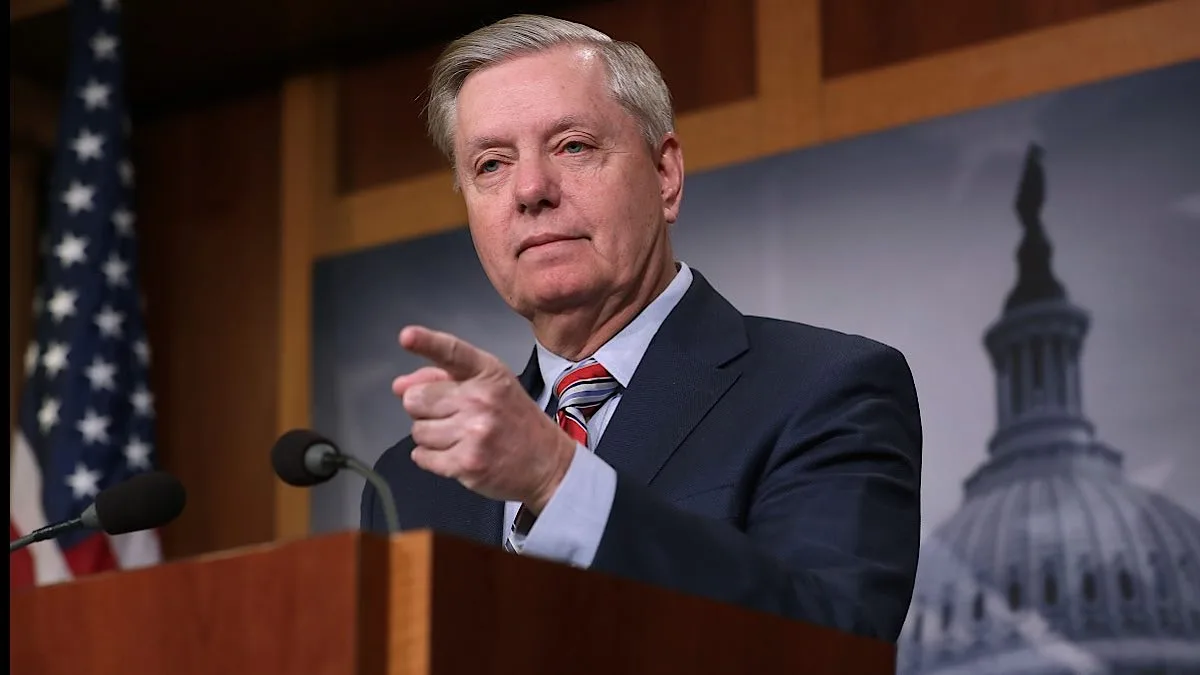
US Senator Lindsey Graham on Monday said India has “earned” the tariff reduction announced under the new India-US trade deal, linking it to New Delhi’s recalibration of Russian oil purchases as the war in Ukraine will enter its fifth year on Feb 24, 2026.

UNI | New Delhi |

US Senator Lindsey Graham on Monday said India has “earned” the tariff reduction announced under the new India-US trade deal, linking it to New Delhi’s recalibration of Russian oil purchases as the war in Ukraine will enter its fifth year on Feb 24, 2026.

In a post on X, Graham credited US President Donald Trump’s strategy, saying economic pressure on countries buying Russian energy appears to be working. He pointed to the recent trade agreement with India, under which Washington lowered reciprocal tariffs on Indian goods to 18 per cent.

“Well played, President Trump. I think your message about ending this war—by having Putin’s customers who prop up his war machine recalculate—is working,” Graham said.

The Senator claimed that India’s conduct justified the tariff reduction and expressed hope that other countries would follow suit.

“Through their behaviour, India has more than earned this reduction. I’m hoping that the other big nations that buy Russian oil will follow India’s direction,” Graham added.

Linking the trade decision to broader geopolitical objectives, Graham said Russian President Vladimir Putin would only come to the negotiating table when pressure intensifies.

“Putin will only come to the table when the pain is so great. We’re not there yet, but with India’s actions, we are moving closer. End the bloodbath in Ukraine now,” he said.

His remarks came after President Trump earlier in the day announced that the US and India had agreed to a trade deal, reducing reciprocal tariffs from 25 per cent to 18 per cent “out of friendship and respect” for Prime Minister Narendra Modi.

The announcement ended nearly 11 months of uncertainty that had pushed bilateral trade relations to their lowest point in over two decades. Under the historic agreement, the United States will reduce tariffs on Indian goods from as high as 50 per cent to 18 per cent.

India and the United States said the agreement would provide immediate relief to Indian exporters. President Trump confirmed the development, stating, “We agreed to a Trade Deal between the United States and India, whereby the United States will charge a reduced Reciprocal Tariff, lowering it from 25 per cent to 18 per cent. They will likewise move forward to reduce their tariffs and non-tariff barriers against the United States to zero.”

The tariff reduction is expected to improve the competitiveness of Indian goods in the US market, enhance order visibility, ease margin pressures, and support stronger pricing power for export-oriented sectors.

India-US trade deal: Which sectors are likely to gain the most? All details here

The new India-US trade deal would be a major game-changer for the competitiveness of Indian exports of ‘made in India’ goods. It will boost the country’s manufacturing sector as it expands its global market access with a lower tariff burden.

Statesman News Service | New Delhi |

India and the United States announced a historic trade deal last night, with a massive reduction in tariffs on India from the earlier 50 per cent to 18 per cent. The new India-US trade deal would be a major game-changer for the competitiveness of Indian exports of ‘made in India’ goods. It will boost the country’s manufacturing sector as it expands its global market access with a lower tariff burden.

Under the India-US trade deal, sectors such as engineering goods, pharmaceuticals, chemicals, leather products, gems, and agricultural products are expected to benefit significantly.

The deal is likely to lead to an immediate and extensive release of pending orders that were earlier put on hold, predominantly in labour-intensive sectors like apparel, jewellery, and footwear.

The tariff rationalisation is expected to push these sectors with strong acceleration in export growth in the coming months. Lower tariffs will not only improve price competitiveness but also help Indian exporters fit in and expand into the supply chain network of the United States.

As per the Federation of Indian Export Organisations (FIEO), the India-US trade agreement reflects the strengthening strategic and economic ties between India and the United States and opens vast opportunities for Indian exporters, particularly MSMEs. SC Ralhan, President, FIEO, said that the deal would improve the competitiveness of Indian products in the US market and provide a strong impetus to India’s export growth across sectors. This agreement will encourage capacity expansion, attract fresh investments, and support job creation in export-oriented industries, he added.

“This agreement sends a strong signal to global markets about India’s commitment to free, fair, and rules-based trade. FIEO remains confident that this development will help India achieve its long-term export targets and further strengthen India’s position as a reliable global trading partner,” Ralhan noted.

This historic announcement brings an end to the 11-month-long uncertainty that had adversely affected the bilateral trade relations between the two countries.

Dhurandhar 2 first look: Ranveer Singh unveils intense avatar as Hamza, sequel titled ‘Dhurandhar: The Revenge’

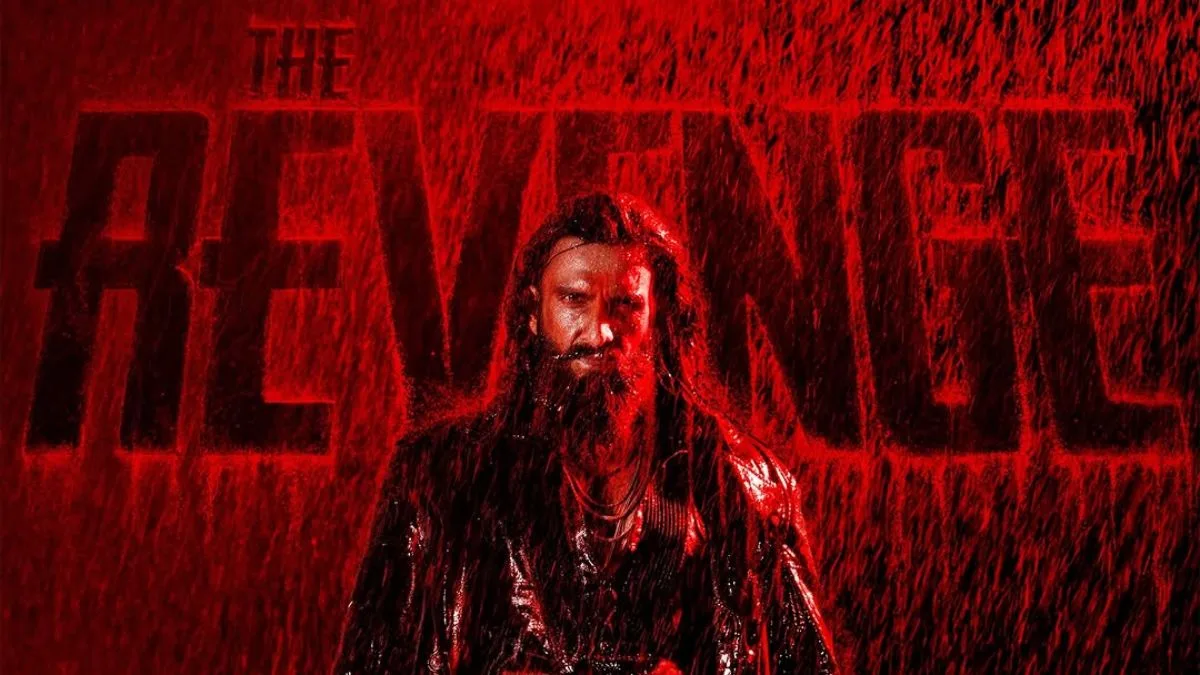
Ranveer Singh has unveiled the first look of ‘Dhurandhar 2’, officially titled ‘Dhurandhar: The Revenge’, kicking off promotions for the much-awaited sequel. The actor also confirmed that the teaser will drop today.

Statesman News Service | New Delhi |

Just when Bollywood gossip mills were getting restless, Ranveer Singh dropped a fiery surprise on Tuesday morning and the internet instantly woke up. One poster. One caption. One promise of revenge. And suddenly, ‘Dhurandhar 2’ was no longer a rumour but a full-blown storm.

After weeks of quiet buzz and whispered guesses, the promotions for the sequel have officially begun. Ranveer revealed the first look of the film and confirmed its final title: ‘Dhurandhar: The Revenge’.

And judging by that intense poster, this is not going to be a calm ride.


View this post on Instagram


A post shared by Ranveer Singh (@ranveersingh)

Ranveer Singh’s first look sets the mood

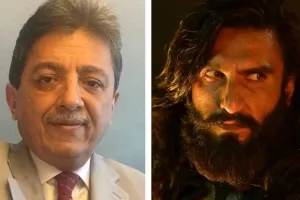
Ranveer took to Instagram early Tuesday to share his look as Hamza, also known as Jaskirat, from the upcoming sequel. The poster shows him standing in heavy rain, fists clenched, staring straight into the camera. Everything around him is soaked in deep red light giving the image a dark and angry feel.

Behind him, the title ‘Dhurandhar: The Revenge’ looms large. It’s bold. It’s loud. And it clearly means business.

In the caption, Ranveer wrote, “Ab bigadne ka waqt aa gaya hai” hinting that his character is ready to cross limits this time. Fans immediately picked up on the message that Hamza is not holding back anymore.

Teaser timing and release date revealed

Ranveer didn’t stop at just the poster. He also confirmed when fans can expect their first moving glimpse of the film.

The teaser will be released at 12:12 PM on Tuesday, adding a dramatic touch to the announcement. The film itself is set to hit theatres worldwide on March 19, 2026.

The movie will release in Hindi, Telugu, Tamil, Kannada, and Malayalam.

Another detail that fans loved was Ranveer sharing the poster in five different languages: English, Hindi, Tamil, Telugu, Kannada, and Malayalam. It’s a clear signal that ‘Dhurandhar: The Revenge’ is aiming for massive pan-India and global audience.

Akshaye Khanna’s quiet return raises eyebrows

But here’s where the gossip really kicked in.

While tagging the cast in his post, Ranveer also tagged Akshaye Khanna. This instantly caught fans’ attention because Akshaye played the villain Rehman Dakait in the first film and his character died in the climax.

So why tag him now?

Also Read: Dhurandhar 2: Akshaye Khanna not shooting new scenes; Aditya Dhar finalises trailer ahead of March 19 release

Industry buzz suggests Akshaye may return through flashback scenes possibly revealing hidden layers of the story. Nothing is officially confirmed yet. But the tag alone was enough to send fans into theory mode.

Why Dhurandhar became a blockbuster

Directed by Aditya Dhar, the first ‘Dhurandhar’ released on December 5 and turned into a monster hit. The spy thriller followed Ranveer’s character as an Indian agent who infiltrates Karachi’s underworld and breaks its links with terror networks.

The film also starred Sanjay Dutt, R Madhavan, Arjun Rampal, and Akshaye Khanna, all of whom are expected to return in the sequel.

With a worldwide collection of over ₹1300 crore, ‘Dhurandhar’ became one of the biggest blockbusters in Bollywood history.

Why Anoushka Shankar chose not to attend the Grammy Awards this year despite multiple nominations

Anoushka Shankar skipped the Grammys this year despite two nominations, choosing to stay in India and focus on her music and mental health. In a candid note, the sitar maestro said awards cannot match the real connection artists feel while performing for live audiences.

Statesman News Service | New Delhi |

While Los Angeles rolled out red carpets, flashed designer gowns, and waited anxiously for golden envelopes to open, sitar maestro Anoushka Shankar was nowhere near the Grammy chaos. She was in India, surrounded by her music, her team, and the calm she says matters far more than trophies.

Two nominations, but no red carpet this time

At the 68th Annual Grammy Awards, Anoushka Shankar received two nominations; one for her album ‘Chapter III: We Return to Light’ and another for ‘Daybreak’, the album’s lead track. These nominations marked her 12th and 13th Grammy nods.

Sharing the news on Instagram, Anoushka posted photos from her recent performances in India. The pictures showed her playing the sitar on stage, smiling backstage, and sharing light moments with her team.

“It’s Grammy day today!” she wrote, clearly proud but also reflective. She called the nominations “HUGE”, and they are. Yet, what followed was not the usual excitement or disappointment fans expect from artists on awards night.

Why the Grammys stress Anoushka Shankar out

Anoushka didn’t sugarcoat her feelings. She openly admitted that award season brings stress, anxiety, exhaustion. According to her, being in Los Angeles during major award events can feel like getting “sucked into a whirlwind” of emotions.

She explained that the days leading up to the Grammys are filled with intense preparation; travel, promotions, appearances, networking, constant pressure to look perfect. All of it, she said, can take a serious toll on mental health.

This year, she made a conscious decision: instead of chasing a trophy, she chose to stay on tour in India, doing what she loves most; playing music for real audiences.

Also Read: Sinners music honours Black voices through blues and jazz; what awards mean for artists rising from oppression

She shared that artists often spend thousands of dollars just to attend the Grammys on flights, hotels, outfits, publicity, marketing campaigns, endless events. Then comes the emotional rollercoaster. Hoping to win, imagining the moment. And sometimes walking away empty-handed.

She admitted that repeatedly not winning can hurt even if you try to stay strong. But over time, she has learned to step back and ask herself what really matters.

The reality behind Grammy voting

Anoushka also touched on the behind-the-scenes truth of how Grammy voting works especially in global music categories. She explained that bigger and more mainstream artists often have more money and resources to promote themselves.

Some artists spend months networking attending exclusive events and making sure their names are constantly visible to voters. Anoushka said she shares this not out of bitterness, but honesty.

“There is always a bigger artist,” she pointed out.

Despite everything, Anoushka made it clear that if she ever wins a Grammy, it would absolutely bring joy. But she strongly believes that, in the bigger picture, it does not define her worth or her music.

Anoushka Shankar’s Grammy Awards journey

Anoushka Shankar’s Grammy journey began in 2003, when she received her first nomination for ‘Live at Carnegie Hall’. She was the youngest-ever nominee in the Best Global Music Album category at the time.

Since then, she has been nominated multiple times: in 2006, 2013, 2015, 2016, 2017, 2021, 2023, 2024, and now 2025. This year marked her 13th and 14th nominations, yet the Grammy trophy continues to elude her.

Still, Anoushka seems at peace.

Neena Gupta talks about Masaba Gupta, Vivian Richards and the wedding photo that brought their family together

Neena Gupta opens up about Masaba Gupta’s relationship with her father Vivian Richards, sharing how the two have built a comfortable bond over the years. She also reveals the story behind a rare wedding photo that brought their blended family together in one frame.

Statesman News Service | New Delhi |

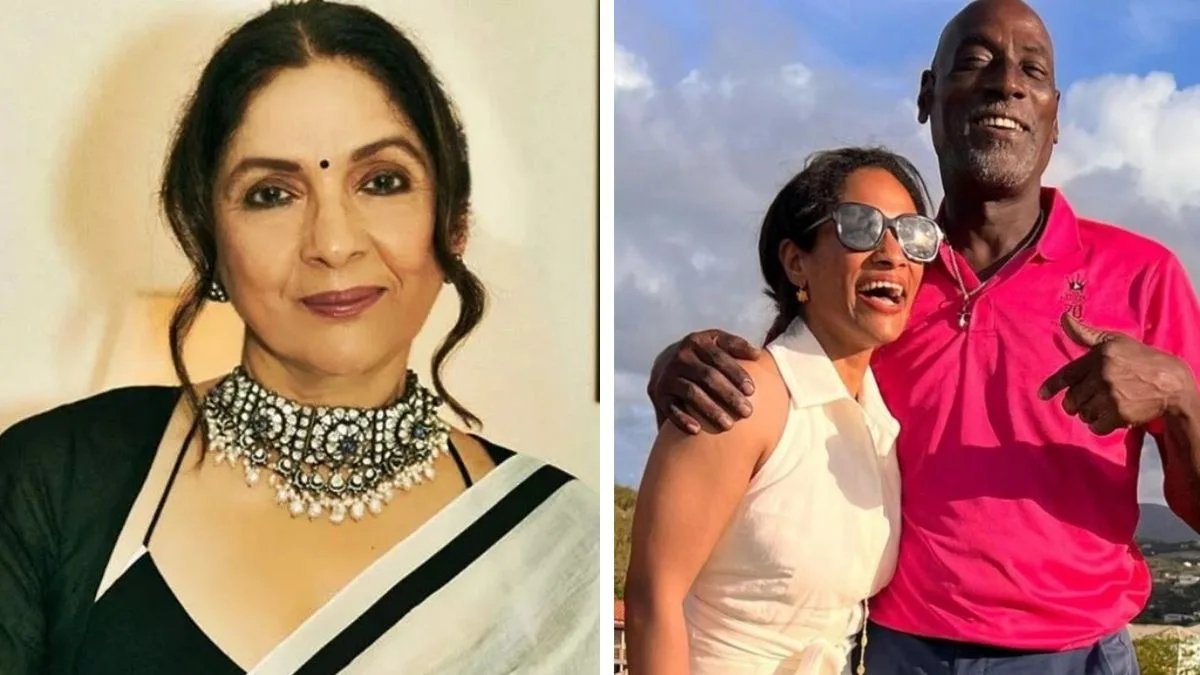
Some families are loud. Some are quiet. And some come together only once in a blue moon. But when they do, it feels like magic. Actor Neena Gupta just opened up about one such rare, emotional moment from her life, and it has all the warmth, honesty and calm wisdom she is known for. In a chat, Neena spoke about her daughter Masaba Gupta’s relationship with her father, legendary West Indies cricketer Vivian (Viv) Richards, and the story behind a picture that quietly broke the internet last year.

“They are comfortable, and that’s what matters”

Neena shared that even though Vivian Richards was not part of Masaba’s childhood, the father and daughter today share a comfortable and peaceful bond.

“It’s very nice,” Neena said adding that their relationship works because they understand each other’s nature. Vivian, she explained, is not a social person and prefers his own space. Masaba, on the other hand, is outgoing, social and expressive, much like Neena herself.

According to Neena, there is no pressure, no expectations and no awkwardness between them. “Whatever they have together, it works well for both of them,” she said simply.

The wedding picture that brought everything together

Neena also revealed the story behind much-talked-about family photo from Masaba’s wedding. The picture, shared on Instagram in January 2023, showed something people rarely see: Masaba’s entire blended family in one frame.


View this post on Instagram


A post shared by Masaba (@masabagupta)

Masaba and actor Satyadeep Misra opted for a court marriage instead of a traditional wedding with pheras. Later, they hosted a reception where both families were present. Vivian Richards was there too.

“That was the time Masaba wanted a picture,” Neena recalled. It wasn’t planned or staged. It just happened.

And that’s what made it special.

Also Read: Neena Gupta says she’s never been truly loved: “It was never like the movies”

“For the first time, my whole life came together”

The photo featured Masaba, Satyadeep, his mother Nalinimisra Tyabji, his sister Chinmaya Misra, Neena Gupta, her husband Vivek Mehra, and Vivian Richards.

Masaba’s caption said it all: “For the first time ever, my whole life came together. This is us. My beautiful blended family. Everything from here on is just a bonus.”

Neena Gupta and Vivian Richards had Masaba out of wedlock in the 1980s, a bold and difficult choice at a time when society was far less forgiving. Neena raised Masaba as a single mother and never hid from her truth.

In 2008, Neena married chartered accountant Vivek Mehra, beginning a new chapter in her personal life.

What’s next for Neena Gupta?

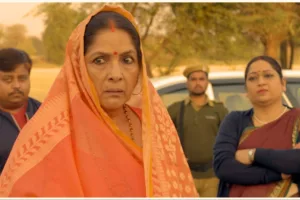
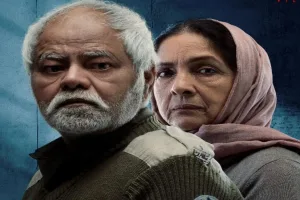
On the work front, Neena Gupta shows no signs of slowing down. She will next appear in ‘Vadh 2’, starring opposite Sanjay Mishra. The film is scheduled to release in theatres on February 6, 2026.

Dense fog in Delhi-NCR affects travel in early hours, AQI in ‘poor’ zone

Delhi witnessed dense fog on Tuesday morning as air quality remained in the poor category, with several monitoring stations reporting poor to very poor AQI levels, according to CPCB data.

UNI | New Delhi |

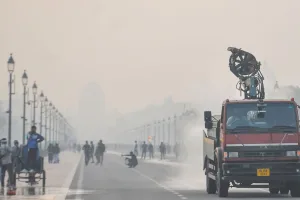
Delhi and the NCR region woke up to a dense fog cover at several places and moderate fog at many places, which had an impact on travel due to the affected visibility, causing delays, and delays in trains and flights.

The Delhi Airport advised passengers to contact airlines concerned for flight timings and updates, informing them that the operations had to be switched under the CAT- III conditions amid the fog situation, which may cause delays.

Notably, CAT-III allows aircraft landing in extremely low or near-zero visibility using advanced systems when runway visibility drops below 300 meters.

Talking of the NCR cities like Gurugram, Noida, Ghaziabad, Faridabad and Bahadurgarh, the visibility, which was affected by fog, had an impact on those travelling to their workplaces in the morning hours, who had to face inconvenience.

Meanwhile, Delhi’s minimum temperature on Tuesday settled at 9.4 degrees C, which was a notch above the season’s average.

People continued to feel the winter chills with the presence of calm winds that enhanced the chill factor.

There is a likelihood that the air quality index may rise a little due to the low temperature and meteorological conditions; however, it shall stay in the poor zone, as per the forecast by the Indian Institute of Tropical Meteorology.

City’s average air quality index continued to remain in the poor category with an index value reading of 260 at 10 am, according to the Central Pollution Control Board (CPCB).

According to the weather office, mist and shallow fog are likely to be present at night, while the maximum temperature during the day could hover around 20 degrees C.

The weather office has forecast similar weather conditions for Wednesday, suggesting that the sky would remain partly cloudy and there would be moderate fog at many places, while dense fog at isolated places in the city during the morning hours.

Indian stock market today: Sensex, Nifty surge nearly 3% after India–US trade deal

Indian equity markets surged nearly 3% in early trade as the India–US trade deal took effect, triggering broad-based buying across sectors and lifting benchmark indices sharply.

IANS | Mumbai |

The Indian equity markets surged sharply by around 3 per cent early on Tuesday with broad-based buying across sectors, buoyed by the announcement of the India-US trade deal.

As of 9.25 am, Sensex added 2,421 points, or 2.97 per cent, to reach 84,088, and Nifty gained 741 points, or 2.96 per cent to settle at 25,829.

India and the United States have agreed to a trade agreement under which reciprocal tariffs on Indian goods will be slashed to 18 per cent from 25 per cent, and the additional 25 per cent duty on purchases of Russian crude oil will be eliminated. The trade deal will be “effective immediately”, President Donald Trump said, following a phone call with Prime Minister Narendra Modi late on Monday, offering immediate tariff relief for India.

Main broad-cap indices posted strong gains, as the Nifty Midcap 100 surged 3.10 per cent, and the Nifty Smallcap 100 added 3.25 per cent.

All sectoral indices showed huge gains with realty, auto, consumer durables and IT being the major gainers, up 4.47 per cent, 3.78 per cent, 3.69 per cent and 3.04 per cent, respectively.

At 18 per cent, India’s tariff rate is now lower than that of several major export-oriented Asian economies. Bangladesh, Sri Lanka, Taiwan and Vietnam face tariffs of 20 per cent, while Indonesia, Malaysia, Thailand, the Philippines and Pakistan face tariffs of 19 per cent.

Immediate support for Nifty lies at the 25,600-25,800 zone, while resistance is anchored at the 26,200–26,350 zone, market watchers said.

“The dramatic announcement of the long-awaited US-India trade deal and the US decision to cut tariffs on India from 50 per cent to 18 per cent is a game changer for the Indian economy and stock markets, as its delay was the single most important factor weighing on the markets,” an analyst said.

According to market watchers, India’s growth rate will rise to around 7.5 per cent in FY27, assisted by higher exports to the US from the deal, and corporate earnings already on revival could accelerate to around 16 per cent to 18 per cent in FY27.

Analysts also said that the rupee will rebound sharply, adding that the combination of the US-India trade deal, the EU-India trade deal and the growth-oriented budget will boost market sentiments. The positive sentiment could trigger immediate foreign capital inflows, potentially turning India’s Balance of Payments (BoP) position.

Large caps, including banking leaders, non-banking financials, telecom, capital goods and IT, which are trading as the favourites of FII, can see huge inflows, market watchers said.

In Asian markets, China’s Shanghai index gained 0.38 per cent, and Shenzhen added 0.93 per cent; Japan’s Nikkei surged 3.23 per cent, and Hong Kong’s Hang Seng Index edged up 0.11 per cent. South Korea’s Kospi surged 5.04 per cent.

The US markets ended largely in the green in the last trading session as the Nasdaq gained 0.56 per cent. The S&P 500 advanced 0.54 per cent, and the Dow added 1.05 per cent.

On February 2, foreign institutional investors (FIIs) net sold equities worth Rs 1,832 crore, while domestic institutional investors (DIIs) were net buyers of equities worth Rs 2,446 crore.

Also Read: India–US trade deal announced: Jaishankar, Piyush Goyal welcome move; Congress flags ‘Trump-nirbharta’

India is budgeting for power

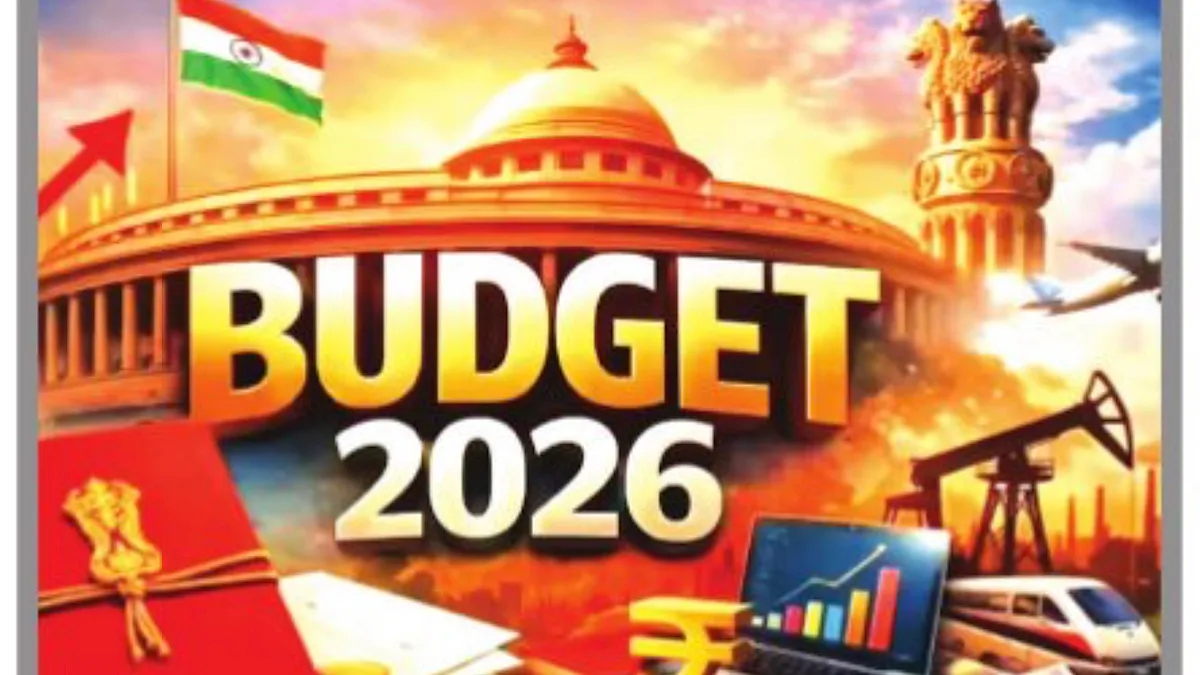
Budgets are rarely exciting. They are usually long documents filled with numbers, procedural language, and policy phrases that mean little to most citizens. Yet Union Budget 2026 is about far more than fiscal arithmetic.

PRAVIN KAUSHAL | New Delhi |

Budgets are rarely exciting. They are usually long documents filled with numbers, procedural language, and policy phrases that mean little to most citizens. Yet Union Budget 2026 is about far more than fiscal arithmetic. It is a statement about power – economic, technological, and geopolitical – in a world that is rapidly fragmenting. Today’s global order is defined by strategic rivalry. Supply chains have become weapons. Technology determines military strength. Trade has given way to pressure.

In this environment, India’s Budget 2026 identifies four strategic sectors – rare earths, semiconductors, artificial intelligence, and nuclear power – that reveal how the fastest-growing major economy intends to protect its future. Rare earth minerals rarely make headlines, yet modern civilisation depends on them. Electric vehicles, wind turbines, precision-guided missiles, fighter jets, smartphones, and AI servers all rely on these 17 critical elements. China dominates global rare earth processing – not because others lack reserves, but because Beijing built processing and manufacturing ecosystems decades earlier. India possesses significant rare earth resources, particularly monazite sands along its coastline. What it lacks is processing capability.

Budget 2026 addresses this gap through the creation of dedicated rare earth corridors across Odisha, Kerala, Andhra Pradesh, and Tamil Nadu – integrating mining, processing, research, and manufacturing. The strategic shift is clear. Instead of exporting raw material and importing finished products, India wants to manufacture permanent magnets domestically for electric vehicles, defence systems, and renewable energy. This is a direct attempt to neutralise China’s leverage over a critical sector. If rare earths are the muscle, semiconductors are the brain. No modern economy can function without chips. The ongoing US-China semiconductor war has demonstrated how access to technology can be used as geopolitical leverage. India’s Semiconductor Mission 2.0 reflects urgency and ambition. It moves beyond factory construction to focus on full-stack capability – chip design, intellectual property, materials, equipment, research, and skilled manpower.

This matters because semiconductor fabrication takes years to mature, and demand is rising rapidly. Within five years, India is expected to account for nearly 10 percent of global semiconductor demand. India’s stated objective is bold: to become one of the world’s top semiconductor manufacturing nations by 2032. More importantly, it seeks policy certainty and domestic value addition – qualities that authoritarian systems struggle to provide over time. Artificial intelligence has become the defining technology of the age. If a country does not build AI domestically, it imports intelligence and exports sovereignty. Budget 2026 reflects this understanding, with AI receiving unprecedented attention.

The government has proposed long-term tax incentives for data centres, funding for national AI and quantum missions, and a research-driven innovation ecosystem. Platforms such as Bharat Vistar aim to deploy multilingual AI in agriculture and rural advisory services, ensuring technology penetrates beyond elite sectors. AI is not treated as a luxury or experiment , but as national infrastructure – on par with roads, power, and railways. Renewable energy is essential but insufficient. Solar and wind do not operate continuously, while AI data centres and advanced manufacturing demand uninterrupted power. Nuclear energy provides the base load required for an energy-intensive future.

By extending customs duty exemptions for nuclear projects until 2035 and signalling openness to private participation, India is lowering costs and providing long-term certainty. Currently, nuclear power contributes only about 3 per cent of India’s electricity. The ambition is to raise capacity from under 9 gigawatts today to 100 gigawatts by 2047. This is a massive bet – but one aligned with the realities of future growth. China’s rise was powered by capitalism operating under authoritarian control. When political centralisation returned, efficiency declined.

Today, China faces an irreversible demographic collapse, capital flight, and shrinking global trust. India has taken a slower, democratic route – reforms, digitisation, institutional building. It is less spectacular, but far more resilient. India will not surpass China overnight. But in fifty years, the contrast may seem obvious. Union Budget 2026 recognises this. It is not about instant results. It is about reducing strategic dependence, securing supply chains, and preparing India for a divided world. India is not just budgeting for growth. It is budgeting for power – and for a future where trust, innovation, and resilience matter more than coercion.

(The writer is director-Mrikal (AI/Data Center) and a young alumni member, Government Liaison Task Force, IIT Kharagpur.)

The India–US trade deal through US media eyes: Relief on tensions, caution on outcomes

US newspapers welcome the India–US trade deal as a reset after months of tension, but caution that its success depends on clarity over tariffs, oil commitments, and implementation.

Statesman News Service | New Delhi |

US newspapers and broadcasters have greeted the India-US trade deal with cautious approval, seeing it as a welcome thaw after months of strain. At the same time, they have pointed out that much of the agreement is still light on detail, raising doubts about how soon words will turn into action.

The agreement was announced by US President Donald Trump after a phone call with Prime Minister Narendra Modi. American outlets described it as an attempt to reset trade ties after a prolonged standoff.

Also Read: India–US trade deal announced: Jaishankar, Piyush Goyal welcome move; Congress flags ‘Trump-nirbharta’

How US outlets are reading the agreement

Fox News reported that the deal would cut US tariffs on Indian goods from 25 per cent to 18 per cent. It cited President Trump’s claim that India would lower trade barriers and stop buying Russian oil, instead shifting purchases to the United States. The network linked the announcement to wider geopolitical pressures, including the war in Ukraine, and said Washington had pushed New Delhi for months over its energy ties with Moscow.

The Wall Street Journal said the agreement was designed to cool trade tensions after a long impasse. It reported that India had agreed to halt Russian oil purchases and increase imports from the US, while Washington would reduce tariffs. The paper noted, however, that the White House had not released formal documents to put the tariff changes into effect. It also pointed out that several major Indian exports, such as pharmaceuticals and electronics, had already been largely exempt from earlier duties.

Why questions remain on impact

The New York Times described the deal as short on specifics but potentially meaningful. It said the agreement appeared to roll back some of the sharp tariffs imposed last year and could help steady relations. At the same time, the paper flagged skepticism among analysts over whether India would fully end Russian oil purchases and whether an 18 per cent tariff would still burden businesses.

The Washington Post said the deal helps stabilise ties after months of diplomatic strain. It called the tariff cut a “much-needed boost” for both Washington and New Delhi, while underlining that several core terms remain unresolved.

Across outlets, the tone was similar. The deal is seen as progress. But its real impact, many cautioned, will depend on how fast the commitments move from phone calls to formal action.

Ironies the West must confront

The speech by Mark Carney, the Canadian PM, received a standing ovation at the World Economic Forum in Davos.

HARSHA KAKAR | New Delhi |

The speech by Mark Carney, the Canadian PM, received a standing ovation at the World Economic Forum in Davos. He mentioned, “great powers have begun using economic integration as weapons, tariffs as leverage, financial infrastructure as coercion, supply chains as vulnerabilities to be exploited.” He went on to add, “A country that can’t feed itself, fuel itself or defend itself, has few options.

When the rules no longer protect you, you must protect yourself.” His classic sentence was, “If we’re not at the table, we’re on the menu.” This has always been the case with the Global South, though for Canada this was possibly a first. Though Carney never mentioned the US nor Trump, the implication was obvious. The speech drew Trump’s attention, resulting in him commenting in response, “Canada lives because of the US. Remember that, Mark, the next time you make your statements.” In a further display of anger, Trump withdrew his invitation for Canada to join his almost defunct Board of Peace. Canada and Europe had always cozied upto the US, rarely questioning its actions while supporting it in its misadventures, including overthrowing regimes Washington disliked or acted against its interests. This gave these nations the power to threaten others. Canada’s Justin Trudeau accused India on the supposed killing of Hardeep Singh Nijjar, solely because he had the silent backing of the US. He continued to support anti-India Khalistan groups and their referendums aware that Washington stood with him.

However, when the Trump administration supported a similar move for Alberta, Canada termed it as treason. This is hypocrisy at its best. Trump is different. For him friends, challengers and allies, all have exploited the US and hence must pay. What is worse is that those who are dependent on the US economically or for security face the brunt. All previous US governments prioritized their allies over themselves and this spoilt them. NATO members preferred development over defence, aware that they were protected by Washington. Trump changed all that. Europe is now enhancing its defence budget. Why did Carney suddenly start going against what the West had supported for decades? The reason is Trump’s MAGA (Make America Great Again), where he believes that tariffs are the solution to reducing trade imbalances. He is also demanding territories essential for US security, irrespective of whom they belong to.

Trump has claimed that the US has been exploited by ‘cheaters’ and ‘pillaged’ by foreigners. He has also used tariffs as a weapon to browbeat nations into submission. As long as the US was targeting weaker and smaller nations, Canada and the West went along. Decades of sanctions against Cuba, Iran and Venezuela, the attack on Caracas and arrest of Maduro, military intervention in Iraq and Libya and the 1999 bombing of Kosovo, all done largely without UN approval, was not only accepted by the West but some nations even joined the US in these actions. The historical collusion between the West and the US was evident in leaked text messages between Presidents Trump and Macron of France. Macron made clear that France in specific and the West, in general, supported Trump’s actions against Syria and Iran but not his demand for Greenland.

Acceptable as long as it did not affect Europe, but wrong as soon as it affects them. Trump released it to embarrass Macron but the message displayed Europe’s mindset. Canada has been under Trump’s gaze for some time. He has termed it as the US’s fifty first state and Carney as Governor. He has also imposed tariffs on it, largely because Canada was the conduit for smuggling of precursor chemicals from China, which are used to manufacture illicit drugs like fentanyl. In addition, Canada is dependent on the US for its national security and economy. Over 75 per cent of Canadian trade is with the US. Canada had ordered 88 F35 aircraft in 2022, the price of which rose by USD 8 billion in the past about four years, forcing Carney to have a rethink. The warning from the US on cancelling or reducing the order was quick and clear. The US ambassador to Ottawa warned that the US would revisit NORAD (North American Aerospace Defence Command) and that US military aircraft would fly deep into Canadian airspace.

The pretext was that other aircraft would not be interoperable with the F35s. This is domination. Possibly after inking trade agreements with China (not a trade deal), hoping to reduce dependency on the US, Carney believed it was time to show Trump his place in Davos. Of course, the counter followed. Trump threatened Canada with 100 per cent tariffs by mentioning, “If Governor Carney thinks he is going to make Canada a ‘Drop-Off Port’ for China to send goods and products into the US, he is sorely mistaken.” Carney’s comments were true, though unexpected, as the West has always stood by the US. It was only after they were treated at par with adversaries that a Western leader had the courage to challenge them. The German Chancellor, Friedrich Merz, backed Carney. He mentioned, “This new world of great powers is being built on power, on strength and when it comes to it, on force. It is not a cozy place.”

He added, “We must recognize the value of our (middle) power.” His implication was about lack of unity within Europe to face future challenges. Carney and Merz may have uttered strong words largely in frustration. The fact remains that unless nations possess military capabilities to defend themselves and stop relying on others, they will continue to be ridiculed. The reality of why the US bullies Europe was laid bare by Mark Rutte, the NATO Secretary General, who mentioned, “If anyone thinks that the EU, or Europe as a whole, can defend itself without the US – keep on dreaming. You can’t.” Dependence will be exploited and there is little that Europe can do.

A world order dominated by the strong against the weak is nothing new. Cuba and Iran have been under Western sanctions for decades and no one has ever been concerned. Governments have been overthrown by the US, and the West has either maintained silence or joined in the action. Now that they are being challenged, Europe and Canada claim the world order is changing. Hypocrisy. Carney and Merz must know that the global south has faced this for years and not one Western nation has ever bothered.

(The writer is a retired Major-General of the Indian Army.)

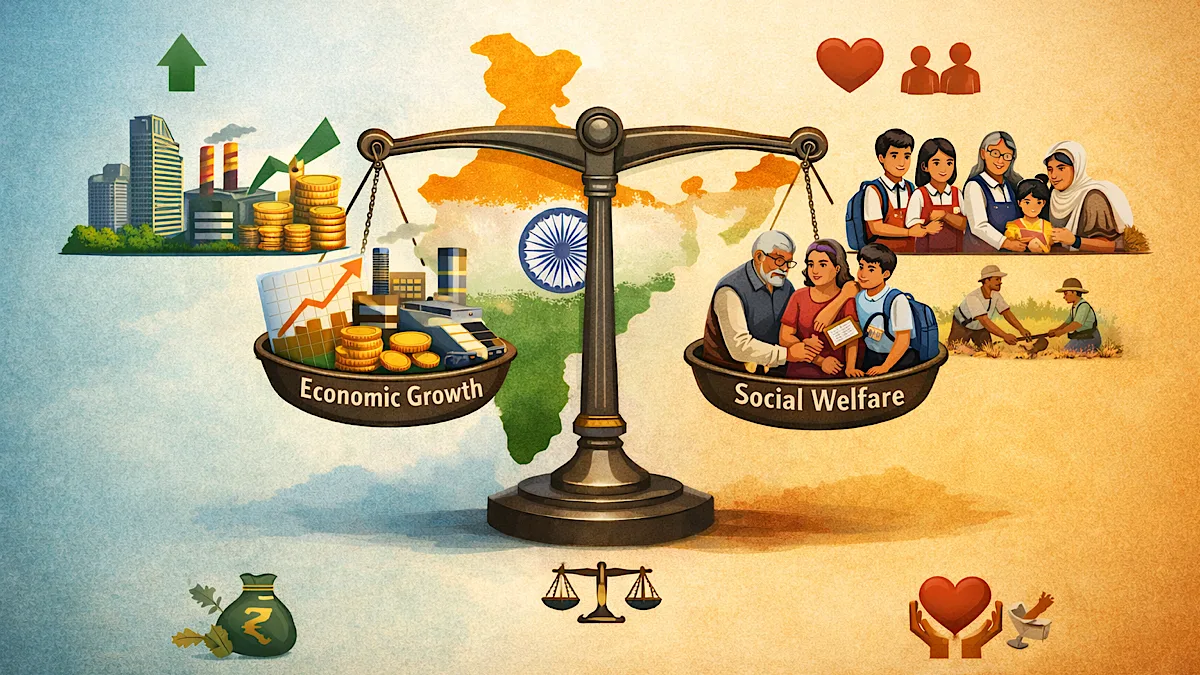
Welfare Vs. Growth

Across India’s states, cash transfer schemes have become among the most powerful instruments of electoral politics.

Statesman News Service | New Delhi |

Across India’s states, cash transfer schemes have become among the most powerful instruments of electoral politics. Promises of direct payments, especially to women, now feature prominently in campaigns, framed as empowerment, recognition of unpaid labour, or immediate economic relief. Yet beneath their popularity lies a deeper economic question: can states continue expanding such schemes without weakening their long-term development capacity? The rapid spread of unconditional cash transfers reflects a shift in welfare thinking. Instead of building services or assets, governments increasingly rely on direct income support to demonstrate responsiveness.

For households facing inflation, insecure employment and rising living costs, such payments provide short-term stability. In that sense, their appeal is understandable. The concern arises when temporary relief begins to substitute for sustained investment. State finances are already under pressure. A large share of revenues is pre-committed to salaries, pensions, interest payments, and other subsidies, leaving limited room for flexibility. As cash transfers grow, they add to recurring expenditure that must be funded annually. Unlike infrastructure projects, which generate long-term returns, these schemes create fiscal rigidity. Once announced, they become politically difficult to roll back, regardless of economic conditions.

This rigidity matters because states are responsible for many investments that determine future growth – schools, healthcare systems, irrigation networks, urban infrastructure, and skill development. When budgets tighten, capital expenditure is postponed, while recurring transfers continue. Over time, this imbalance quietly weakens productivity, job creation, and regional competitiveness. Supporters argue that direct transfers empower beneficiaries, particularly women, by giving them control over spending choices. There is truth in this claim. Evidence suggests such support can stabilise consumption and help households manage immediate needs. However, global experience indicates that these gains rarely translate into lasting improvements in education, health or income mobility unless reinforced by strong public services and employment opportunities. The deeper risk is philosophical. When welfare becomes detached from development, the state’s role shifts from institution-building to periodic distribution. This may generate quick political returns but delivers limited structural change.

Countries that have managed this balance more effectively have designed cash support to be conditional, review-based, and time-bound – linked to schooling, healthcare, or skill outcomes rather than open-ended entitlements. India’s policy challenge is not whether to support vulnerable citizens, but how to do so sustainably. In an economy marked by informality and income volatility, social protection is essential. But protection cannot replace progress. Financing rising revenue expenditure through borrowing ultimately shifts the burden to future taxpayers, narrowing fiscal space for development even further. As elections multiply and welfare commitments intensify, the temptation to prioritise immediacy over sustainability will only grow. The real test of governance lies not in how much money is distributed today, but in whether tomorrow’s citizens inherit stronger institutions, better services, and broader opportunity. Without that balance, welfare risks becoming not a bridge to growth, but a barrier against it.

Under Strain

The confrontation unfolding in Minneapolis is no longer merely about immigration enforcement.

Statesman News Service | New Delhi |

The confrontation unfolding in Minneapolis is no longer merely about immigration enforcement. It has evolved into a test of how far federal authority can extend when it collides with local governance, public trust, and the visible costs of aggressive state power. At the centre of this moment stands US border tsar Tom Homan, dispatched by the White House to regain control of an operation that had begun to spiral politically. His arrival signals recognition within the administration that enforcement alone cannot substitute for legitimacy.

Yet the message delivered was carefully calibrated: there would be no retreat from the mission itself, only an adjustment in how it is carried out. This distinction matters. By framing potential troop reductions as conditional upon cooperation from state and city officials, the federal government has preserved its dominance while appearing responsive. The offer of de-escalation is therefore not a concession, but a negotiating tool ~ one that places responsibility for continued confrontation squarely on local leaders who oppose the operation in principle. The problem, however, lies in what triggered this reassessment. The deaths of two civilians during enforcement actions have shifted the debate from policy effectiveness to moral accountability.

When enforcement becomes lethal, the threshold for public acceptance rises sharply. What might once have been defended as tough governance is now scrutinised as excessive force, especially when those affected include American citizens. This scrutiny has exposed the risks of conducting large-scale federal operations in cities that neither requested nor support them. Minneapolis found itself hosting thousands of federal personnel, vastly outnumbering local law enforcement, yet operating without the consent of local authorities. The resulting disconnect has strained civic order rather than reinforced it. Mr Homan’s insistence on “smarter” enforcement suggests an awareness that spectacle has replaced strategy.

Raids perceived as indiscriminate, agents operating with limited visibility, and unclear chains of accountability have undermined confidence not only among residents but also within Congress. That concern is now bipartisan ~ an important signal that immigration politics, long polarised, may be reaching a point of institutional fatigue. What Minneapolis reveals is the limit of enforcement without alignment. Federal power can override local resistance, but it cannot easily govern through it. Policing ~ whether criminal or immigration-related ~ relies on cooperation, information flow, and community compliance. When those foundations collapse, presence alone becomes performative rather than effective. The current attempt to recalibrate the operation appears aimed as much at Washington as at Minnesota.

With funding negotiations entangled in the fallout, the administration faces the risk that a single city’s crisis could disrupt national governance. Mr Homan’s role, therefore, is not only operational but symbolic: to signal control, restraint, and political awareness. Yet the deeper question remains unresolved. If immigration enforcement requires military-scale deployments and conditional bargaining with elected local governments, the issue is no longer border security. It is the shape of federal power itself ~ and how visibly it must be asserted before it begins to weaken its own authority.

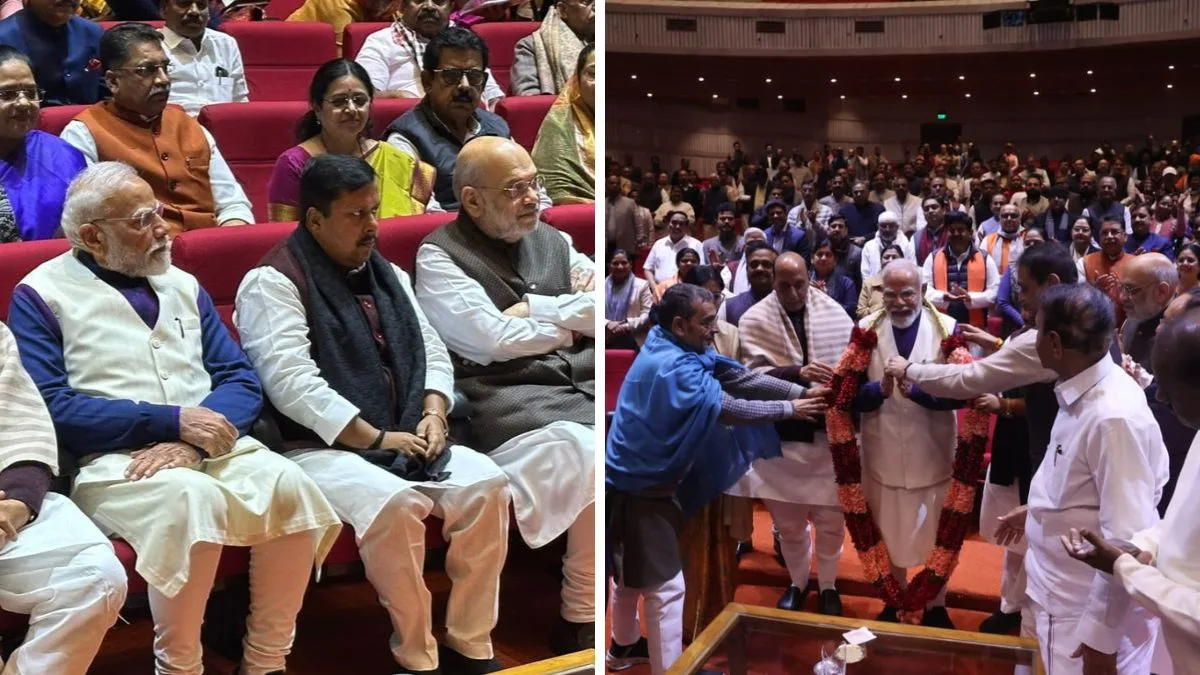
NDA MPs felicitate PM Modi over India-US trade deal at parliamentary party meeting

The NDA parliamentary meeting concluded with MPs praising the India–US trade agreement and outlining plans to take Budget 2026–27 messaging to the public.

Statesman News Service | New Delhi |

The NDA parliamentary party meeting concluded on Tuesday at the Parliament complex with alliance MPs congratulating Prime Minister Narendra Modi for the India-US trade agreement, which offers immediate tariff relief for Indian exports.

Speaking after the meeting, Parliamentary Affairs Minister Kiren Rijiju said newly elected BJP president Nitin Nabin was formally welcomed and that there was visible enthusiasm among MPs over recent trade developments.

“There is great enthusiasm in the country over historic trade deals under the leadership of PM Modi — nine trade deals, the FTAs, the India-EU FTA and the agreement with the US yesterday and the tariff reduction announcement. MPs were also excited. So, in the NDA Parliamentary Party meeting, the PM was felicitated. For the historic trade deals, he was congratulated. FTAs have been done with 39 countries; this is historic. These 39 are developed countries,” Rijiju said.

Chants of “Jai Modi”, “Vande Mataram” and “Bharat Mata ki Jai” echoed in the meeting hall as party members congratulated the Prime Minister for securing the deal with US President Donald Trump, according to ANI.

The meeting is focusing on post-Budget political messaging and public outreach, coming just days after the presentation of the Union Budget 2026–27. Senior NDA leaders, ministers and Members of Parliament are in attendance.

Union Home Minister Amit Shah and newly elected BJP national president Nitin Nabin are present at the meeting.

Budget messaging and outreach in focus

According to sources, Sitharaman walked NDA lawmakers through the key features of the Budget and its long-term vision. The presentation reportedly underlined how the proposals are aligned with the government’s goal of building a Viksit Bharat by 2047.

A major focus of the meeting was communication. Leaders were guided on how to take the Budget’s priorities and benefits to the public. A clear outreach plan was outlined to keep messaging aligned across states and constituencies.

The Union Budget 2026-27 was Sitharaman’s ninth Budget. It was anchored around three broad kartavyas, or duties, which are improving competitiveness, meeting aspirations, and ensuring that growth reaches every family, community and region.

Prime Minister Modi had welcomed the Budget in Parliament on Sunday, calling it a “highway of immense opportunities”.

He said the “Reform Express” on which India is riding “will gain new energy and momentum through this budget”.

The Prime Minister added that the Budget would “turn the dreams of the present into reality” and lay a “strong foundation for India’s bright future” as the country moves towards the Viksit Bharat 2047 goal.

Quoting the Finance Minister’s remarks in the House, PM Modi described the Budget as a “Youth Power Budget”.

“This is a Youth Power Budget. It reflects the thinking, dreams, determination, and energy of young India. The provisions in the budget will prepare leaders, innovators, and creators across sectors,” he said.

He further highlighted initiatives ranging from medical hubs and allied health professionals to the orange economy, AVGC sectors, tourism and the Khelo India mission.

“From building medical hubs and developing allied health professionals, promoting the orange economy and AVGC sectors, boosting tourism, to opening new opportunities through the Khelo India mission, the budget unlocks pathways for youth to excel and lead,” PM Modi added.

“This is a Youth Power Budget. It reflects the thinking, dreams, determination, and energy of young India. The provisions in the budget will prepare leaders, innovators, and creators across sectors,” he said.

PM Modi highlighted initiatives ranging from medical hubs and allied health professionals to the orange economy, AVGC sectors, tourism and the Khelo India mission, saying the Budget opens new pathways for young people to lead and excel.

Last Bastion Crumbling ~ II

It is meaningless to set out to identify the one culprit who has brought about the abject fall of the CPI-M in Kerala but there are two broad categories that may be identified.

DR. AJAYAKUMAR KODOTH | New Delhi |

It is meaningless to set out to identify the one culprit who has brought about the abject fall of the CPI-M in Kerala but there are two broad categories that may be identified. The first set of offenders are the intellectuals who constantly sing praises of the leadership which wears a cloak of Left ideology. Their ‘services’ are an eloquent testimony to their own careerism. They are the ones who have contributed majorly to such a precipitous fall of the left, progressive movement in Kerala.

The second set of culprits are the party cadres and followers who adhere to the party in the hope of securing all manner of favours. Cadres are selected from the branch level to the higher committee level on the basis of the Leninist organizational principles. In reality, they constitute “the new class” as described by Milovan Djilas, the Yugoslavian Communist who later became a votary of Democratic Socialism. Communist leaders the world over, with autocratic tendencies, have always made use of the Leninist organizational system of democratic centralization to crush democracy underfoot. Such a phenomenon did not take place on a large scale in Russia during Lenin’s time solely because his democratic instincts trumped his desire for complete control.

But when Stalin assumed power, the situation changed drastically. The subsequent events which unfolded in the Soviet Union were such that they provoked a highly relevant question: “How far is Stalinism from Fascism?” What we saw in many Communist nations that crumbled in the 1990s were ‘Ceaușescus’ who reveled in luxury behind the façade of authority. The ghost of Nikolae Ceaușescu seems to have finally reached Kerala. If in a democratic state we see a leader who remains unquestioned amid his band of sycophants, one can well imagine what the condition would have been in Communist countries ruled by a single party. Small wonder they collapsed under the weight of the ire of the masses. It is only a matter of time before a similar phenomenon takes place in Kerala.

In 2021, I too worked to bring the Pinarayi government back to power in the name of commitment to the Left Front. However, in 2026, while continuing to be a Left supporter, I do not want the government to remain in power. The first mistake the Pinarayi government committed in its second term was that the very party which always condemned the Congress for its penchant for dynastic rule, moved along similar lines in Cabinet formation. It is telling that since then, no CPI-M leader in Kerala has uttered a single word about family dominance and/or nepotism. It would be pertinent at this point to allude to an anecdote narrated by a prominent Communist journalist, the late TV Krishnan (TVK), about C. Achutha Menon during the latter’s tenure as the Chief Minister of Kerala.

Dr V. Ramankutty, Achutha Menon’s son and a medical practitioner, wished to book an apartment under the Housing Board Chairman’s quota, in a residential complex that was about to be built by the State Housing Board. As he had qualms about doing so without seeking permission from his father, Dr Ramankutty requested TVK to raise the issue with the Chief Minister. The reply was: “Tell my son that as long as I’m on this chair, it’s impossible.” Nobody expects such a level of integrity these days. But it is more than one allegation that has been made against the present Chief Minister and his family. The CPI-M, which should have taken corrective measures in such circumstances, has instead kept them safe under its protective umbrella.

Things have come to such a pass that the reputation of many CPI-M leaders has come under the cloud in the Sabarimala gold-looting case. But the party continues to build a defensive fortress around them. Is that the role of the party? What is the responsibility of the leaders? It is a classic case of the fence itself eating the crop, much like what happened to the CPI-M in Bengal. No one can escape being held accountable for the disintegration of the party. Recently, the news of a few CPI-M comrades destroying the statue of Gandhiji made waves in Kerala. This has happened earlier, and will happen in the future too. In his autobiography, Mohit Sen, a prominent CPI leader and Marxist thinker, ridicules the Communists’ denigration of Gandhi as the result of their anger towards a leader who had hijacked their revolution.

By 1964, the CPI had overcome this attitude to a considerable extent. But the CPI-M continues to fuel antipathy towards Gandhi and Nehru to this day. An instance from Kerala itself will serve to prove this point. It concerns an incident that CK Chandrappan and NC Mammootty Master, a CPI leader from Kannur, narrated to me several years back. Not long after the party split of 1964, a state meeting of the students’ federation took place at the Town Hall in Thalassery. The repercussions of the split had not reached the feeder organizations yet. Pandit Nehru had died a little earlier. Chandrappan and Antony Thomas were the main organizers of the AISF in the state. (It must be remembered that the AISF, as a revolutionary students’ organization was brought into being at Lucknow in 1936 at a meeting presided over by Nehru himself.)

When Antony Thomas introduced a resolution expressing condolences on the demise of Nehru, a section of student leaders hollered, “Offering condolences at his death will not be permitted at this meeting!” and rushed to throw Chandrappan and others out from the hall, before announcing that they had seized the organization. This was where the Students’ Federation of India (SFI) took root. Is it any wonder that CPI-M comrades of today destroy the statue of Gandhi? After all, Gandhi was the leader who conducted a revolution which the Communists were supposed to! The wars they wage today are the result of the brainwashing they have undergone in such camps decades ago. A group of historians led by Dr Bipan Chandra whose research work was done under the aegis of a JNU project in the 1980s, attempted to give a sense of direction to left historians of India in their study of the Indian nationalist movement.

As a part of his mission to record the history of the Indian freedom struggle from a fresh perspective, Dr Chandra and some of his colleagues came to my house in Kanhangad to interview my father and Communist leader, K. Madhavan. One of the questions he asked on that occasion is relevant even today. “Comrade Madhavan, how did Mahatma Gandhi become the common enemy of the extreme right and the Indian Communist movement?” It is a question that should even today send both the CPI and the CPI-M leaderships of Kerala into introspection mode. In the course of the interview, Dr Chandra shared an interesting experience. While interviewing Ravinarayan Reddy, a prominent Communist leader in Andhra Pradesh, he asked Reddy the reason why the Indian Communist movement had failed to reach its goal. The reply: “I’m not a religious believer.

If I were, I would say it’s because God cursed the Indian Communist movement for having crucified Gandhiji!” By the end-1960s, the CPI bade a temporary goodbye to its anti-Congress political stand. As a result, India’s first Congress-Communist ministry under the leadership of C. Achutha Menon came into existence in Kerala. The political ideology that propelled the alliance was the conviction that the extreme right and neo-imperialism constituted the common enemy of the nation. But what the CPI-M attempted to do was to drown the 1970-77 Achutha Menon state government ~ one of the best that independent India has seen ~ in blood. The violent strikes it led during that time loudly proclaimed its blind opposition to the CPI-Congress alliance as well as its Stalinist attitude.

The strikes that the CPI-M engineered during that time in Kerala were the most undemocratic means ever seen in the country of torpedoing a democratically-elected government. One single instance ~ when a KSRTC bus with four passengers was burnt to ashes in Mattannur ~ is sufficient to throw light on the demonic nature of this agitation. As part of the measures taken to register its protest, it also set fire to tractors in paddy fields and newly-installed electricity transformers, severed telephone cables and even dismantled the foundations of houses built for the poor under the Lakshamveedu project [One-lakh housing scheme] under the cover of darkness. CPI-M cadres excelled in the art of physically attacking their political opponents, especially members and sympathizers of the CPI.

CPI-M stormtroopers, under the leadership of MV Raghavan, did not hesitate to rough up even the self-sacrificing Communist leader, Kanthalot Kunhambu. When the CPI-M set out to settle scores with its opponents through physical rather than ideological means, many began to seek refuge in the RSS. This intolerant attitude cultivated by the CPI-M towards its political adversaries was one of the major reasons for the RSS taking deep root in Malabar. There are plenty of examples that underscore the negative stand driven by a pathological hatred for the Congress that the CPI-M has been taking since 1964. Kerala is never likely to forget EMS Namoodiripad’s notorious statement that the party will not hesitate to even sup with the devil in order to crush the Congress to death.

(The writer, a Left sympathizer, is former member, Kerala Public Service Commission)

India–US trade deal announced: Jaishankar, Piyush Goyal welcome move; Congress flags ‘Trump-nirbharta’

India and the US have announced a trade deal cutting tariffs to 18 per cent, drawing praise from senior ministers and sharp criticism from the Congress over how the decision was revealed.

Statesman News Service | Mumbai |

India and the United States have announced a bilateral trade deal that sharply reduces US tariffs on Indian goods to 18 per cent, following a phone conversation between Prime Minister Narendra Modi and US President Donald Trump.

The announcement was welcomed by senior ministers in the government, who described it as a turning point in India–US relations. It also triggered criticism from the Opposition, which questioned why key details first emerged from Washington rather than New Delhi.

The tariff reduction takes effect immediately. It follows a period of heightened trade tensions, during which the US had imposed punitive duties of up to 50 per cent on Indian goods.

Also Read: Trump-Modi call: US to reduce tariffs on India to 18%; PM confirms relief for Made-in-India products

What the tariff cut means for India–US ties

External Affairs Minister S Jaishankar, currently in the United States, welcomed the announcement and said it would deepen the economic and strategic partnership between the two countries.

“Welcome the announcements on bilateral trade following the conversation between PM @narendramodi and President @realDonaldTrump.

“This will create more jobs, spur growth and promote innovation in both economies. It will strengthen ‘Make in India’ endeavors and encourage trusted technology ties. The opportunities in our economic engagement are truly vast and we are confident of realizing them.

“A robust economic relationship is the strongest foundation for our strategic partnership,” he wrote on X.

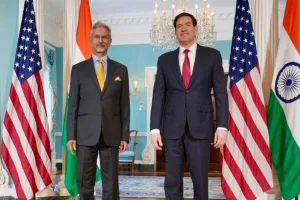
Jaishankar is in the US to attend the Critical Minerals Ministerial convened by US Secretary of State Marco Rubio. The meeting is focused on clean energy transitions, supply chain resilience, and cooperation in critical minerals. He is also scheduled to meet senior members of the US administration during the visit.

Indian Ambassador to the US Vinay Mohan Kwatra described the deal as a major moment in bilateral ties.

“A big WIN for a consequential partnership under the leadership of Prime Minister Narendra Modi @narendramodi and President Donald Trump @POTUS. India and USA announce trade deal creating vast new opportunities for the two economies and the people of our two great nations. Today’s announcements herald an exciting new phase in our partnership,” he said in a post on X.

President Trump said the agreement would be “effective immediately”. Under the revised framework, the US will levy a reduced reciprocal tariff of 18 per cent, down from the earlier rate of 25 per cent.

The cut follows a sharper rollback earlier in the day. The US had reduced tariffs on India from 50 per cent to 18 per cent after the leaders spoke. The Trump administration had imposed the higher duties, including a 25 per cent penalty linked to India’s purchase of Russian oil.

US Embassy spokesperson Christopher Elms confirmed that “the final tariff on Indian goods is now 18 percent”.

Commerce Minister Piyush Goyal, who has been closely involved in the negotiations, called the agreement transformative.

“It is not just a trade deal – it is a historic turning point that will reshape India–U.S. relations and accelerate our journey towards Viksit Bharat 2047,” he said on X.

Goyal said the agreement would open new opportunities for entrepreneurs, MSMEs, farmers, and skilled workers, while strengthening technology access from the US. He added that India and the US were “natural allies” whose partnership would co-create technologies and solutions for global growth and stability.

The US–India Strategic Partnership Forum also welcomed the announcement, saying it reaffirmed both countries’ commitment to deepening economic ties and advancing a bilateral trade agreement.

Union Minister for Railways, Information & Broadcasting, Electronics & Information Technology Ashwini Vaishnaw echoed the sentiment, calling the deal a “win-win” that would benefit citizens and industries on both sides.

Opposition questions process, cites ‘Trump-nirbharta’

The announcement, however, drew sharp criticism from the Congress.

Senior leader Jairam Ramesh said India was increasingly learning about key national decisions from Washington rather than its own government. He described this as “Trump-nirbharta”, or dependence on President Trump.

“It seems that Prime Minister Modi and President Trump spoke to each other today. This information has been provided not by the Indian side but by the US Ambassador to India. This now seems to be the routine – India gets to know of its Govt’s actions only from President Trump or his appointees. Trump-nirbharta,” Ramesh wrote on X.

In a separate post, he linked the trade deal announcement to earlier remarks by Trump on Operation Sindoor. The US President had previously claimed a role in de-escalating India–Pakistan tensions during the operation, a claim the Indian government has denied.

“He announced the halt of Op Sindoor from Washington DC. He announced the updates on India’s oil purchases from Russia and Venezuela from Washington. He’s now announced an India-US Trade Deal from Washington, the full details of which are awaited,” Ramesh wrote.

“President Trump clearly seems to have some leverage over Prime Minister Modi… It appears Mr. Modi has capitulated finally. Surely this cannot be the father of all deals. In Washington clearly Mogambo Khush Hai,” he added.

Prime Minister Modi later confirmed the conversation and welcomed the tariff cut.

“Wonderful to speak with my dear friend President Trump today. Delighted that Made in India products will now have a reduced tariff of 18%. Big thanks to President Trump on behalf of the 1.4 billion people of India for this wonderful announcement,” he said on X.

He said closer cooperation between the two countries would benefit their people and strengthen global stability, and expressed support for Trump’s efforts towards peace.

The announcement comes days after India and the European Union concluded negotiations on a Free Trade Agreement, underlining New Delhi’s push to expand market access amid shifting global trade dynamics.


Tiger, tigress found dead in MP’s Shahdol

The incident was reported from the Jaisinghnagar area.
Statesman News Service | Bhopal |

A tiger and a tigress were found dead near an agricultural field in Madhya Pradesh’s Shahdol district on Monday, apparently due to electrocution.

The incident was reported from the Jaisinghnagar area.

Madhya Pradesh Additional Principal Chief Conservator of Forests (Wildlife) L. Krishnamoorthy said their carcasses were found in the North Shahdol forest area.

The official said that a forest department team was rushed to the spot after receiving the information.

He said preliminary investigations suggested that the tiger died in a territorial fight, while the tigress got electrocuted, adding that the exact cause of their deaths will be confirmed after the forest team completes its probe and postmortems are conducted.

Sources said that a farmer had laid an electric wire around his field to prevent the entry of herbivorous animals that usually eat and damage standing crop, and claimed that both the tiger and the tigress came in contact with the live wire and died from electrocution.

Detailed investigations are underway in the matter.

Trump-Modi call: US to reduce tariffs on India to 18%; PM confirms relief for Made-in-India products

The US Prsident claimed that Prime Minister Modi has agreed to stop buying Russian Oil and start purchasing more American and Venezuelan crude oil.

Statesman News Service | New Delhi | Updated :

US President Donald Trump on Monday announced a “trade deal” between the United States and India, saying that Washington will reduce the reciprocal tariffs on Indian imports from 25 per cent to 18 per cent.

“It was an Honor to speak with Prime Minister Modi, of India, this morning. He is one of my greatest friends and, a Powerful and Respected Leader of his Country. We spoke about many things, including Trade, and ending the War with Russia and Ukraine,” Trump said.

The US Prsident claimed that Prime Minister Modi has agreed to stop buying Russian Oil and start purchasing more American and Venezuelan crude oil.

“He agreed to stop buying Russian Oil, and to buy much more from the United States and, potentially, Venezuela. This will help END THE WAR in Ukraine, which is taking place right now, with thousands of people dying each and every week!” he said.

Trump stated that they have agreed to a trade deal between the United States and India, following which the US will charge a reduced Reciprocal Tariff, lowering it from 25 per cent to 18 per cent.

The White House confirmed to news agency IANS that the additional 25 per cent penalty for purchasing Russian oil will also be dropped. This will reduce the total US tariffs on Indian goods entering the American territory to 18 per cent.

According to him, India will also “move forward to reduce their Tariffs and Non Tariff Barriers against the United States, to ZERO.”

Trump also stated that PM Modi also “committed to “BUY AMERICAN,” at a much higher level, in addition to over $500 BILLION DOLLARS of U.S. Energy, Technology, Agricultural, Coal, and many other products.”

“Our amazing relationship with India will be even stronger going forward. Prime Minister Modi and I are two people that GET THINGS DONE, something that cannot be said for most. Thank you for your attention to this matter!” he added.

Modi thanks Trump, hails his leadership

In a separate post on X, PM Modi confirmed the development and thanked President Trump for the announcement.

“Wonderful to speak with my dear friend President Trump today. Delighted that Made in India products will now have a reduced tariff of 18%. Big thanks to President Trump on behalf of the 1.4 billion people of India for this wonderful announcement,” Modi said.

The Prime Minister said that India and the US working together will benefit the people of the two countries and unlock the “immense opportunities for mutually beneficial cooperation.”

Modi also lauded Trump’s leadership, terming it “vital for global peace, stability, and prosperity.”

“India fully supports his efforts for peace,” Modi said, adding, “I look forward to working closely with him to take our partnership to unprecedented heights.”