Logo

Cautious Reset

The announcement of a long-delayed trade understanding between India and the United States has brought a palpable sense of relief in Delhi’s policy and business circles.

Statesman News Service | New Delhi |

The announcement of a long-delayed trade understanding between India and the United States has brought a palpable sense of relief in Delhi’s policy and business circles. After months of uncertainty triggered by sharply higher US tariffs, the reduction of duties to 18 per cent offers immediate breathing space for exporters and financial markets alike. Yet the absence of formal documentation and clarity on scope suggests that relief should be tempered with restraint. At a basic level, the tariff rollback removes a destabilising overhang. The earlier hike had inflicted damage across employment-intensive sectors such as textiles, seafood, and gems, while contributing to currency volatility and foreign capital outflows.

Bringing India’s tariff exposure closer to that of its Asian peers restores some competitiveness and reinforces the country’s pitch as a credible manufacturing alternative amid global supply-chain realignment. However, the political messaging surrounding the announcement has raced well ahead of policy detail. Claims that India has committed to ending Russian oil purchases, embracing “Buy American” provisions, or importing hundreds of billions of dollars’ worth of US goods remain unverified. Such assertions, if left unqualified, risk distorting public expectations on both sides and complicating domestic political management in India – especially on agriculture and energy, where sensitivities run deep. The timing of the US move is equally significant.

Over the past year, tariff pressure from Washington forced Delhi to accelerate trade diversification, culminating in a landmark agreement with the European Union and a flurry of other deals. That pivot reduced India’s dependence on a single export market and strengthened its negotiating hand. In that sense, the US concession reflects not just bilateral diplomacy, but a recalibration shaped by India’s expanded options. From a geopolitical standpoint, the reset carries weight. The trade rupture had nudged India closer to a posture of strategic hedging, deepening engagement with multiple power centres at once. A partial repair of economic ties with Washington may now slow that drift ~ but it does not automatically reverse it.

India’s foreign policy remains anchored in autonomy, not alignment, and any durable shift will depend on whether economic cooperation is matched by predictability and respect for India’s domestic constraints. The central question, therefore, is not whether the announcement is positive ~ it is ~ but whether it evolves into a structured, enforceable framework. Without a jointly negotiated text specifying product coverage, timelines, safeguards and dispute resolution, the announcements amount to political signalling rather than commercial certainty. Crucially, markets will judge success not by presidential declarations, but by whether exporters see predictable access, investors see stability, and policymakers see disputes resolved through institutions rather than sudden tariff shocks. For India, the episode offers a broader lesson. Trade resilience lies not in celebrating tariff relief, but in building flexibility ~ through diversified markets, competitive manufacturing and calibrated openness. If the current thaw leads to a stable, phased engagement with the US, it will be a gain. Until then, caution, not triumphalism, is the wiser response.

Budget 2026

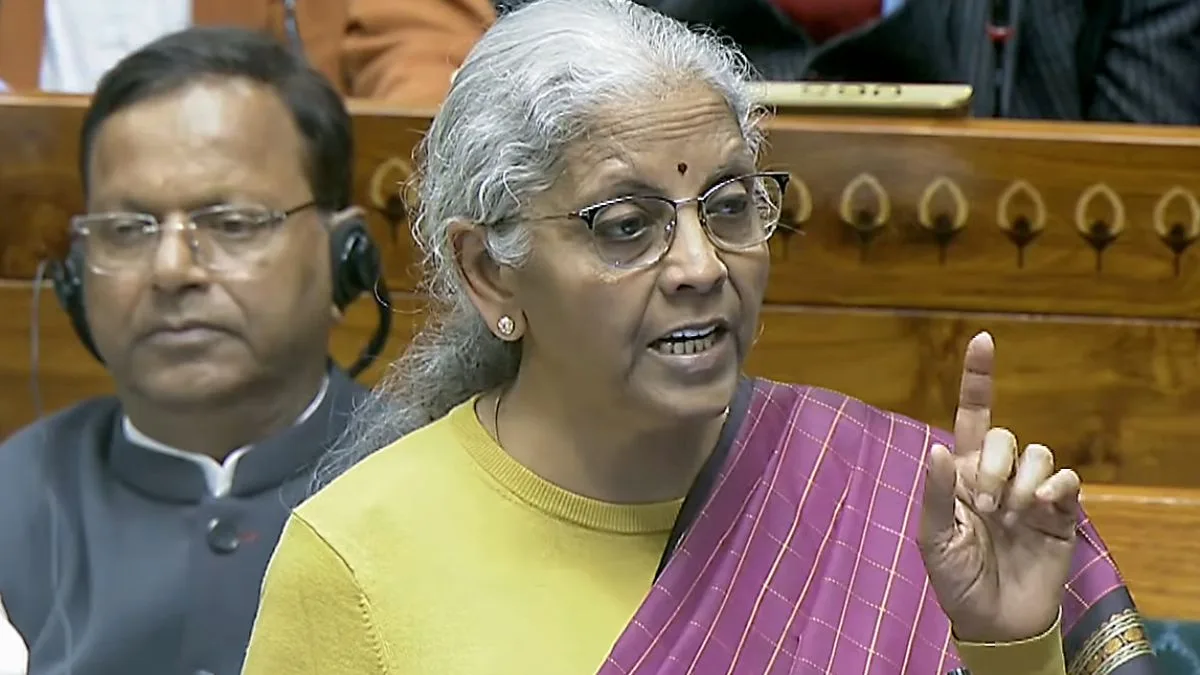
The longest-serving Finance Minister in continuous office, Nirmala Sitharaman, presented her record ninth consecutive Union Budget on 1 February.

DEVENDRA SAKSENA | New Delhi |

The longest-serving Finance Minister in continuous office, Nirmala Sitharaman, presented her record ninth consecutive Union Budget on 1 February. Looking back, Morarji Desai had presented the Budget ten times, and P. Chidambaram nine times, but none of them had presented the Budget nine times consecutively. So far as Sitharaman’s Budget Speeches go, this was one of the shorter ones ~ she spoke only for 1 hour and 25 minutes, as against a record-breaking speech of 2 hours 39 minutes in 2020.

The FM’s address outlined the government’s fiscal roadmap for FY 2026–27, including spending plans, tax proposals, and key policy priorities. As expected, the Budget Speech and budget proposals were lauded by the PM, and the who’s who of the ruling party, but derided by opposition politicians. Since this was the first budget prepared in Kartavya Bhavan – the new address of the Finance Ministry – the FM drew inspiration from three kartavyas, the first being the acceleration and sustenance of economic growth, by enhancing productivity and competitiveness, and also building resilience to volatile global dynamics. An important part of this kartavya was the building of infrastructure, pursuant to which, Budget 2026 has raised the capital expenditure target to Rs 12.2 lakh crore from Rs 11.2 lakh crore for FY 25-26, which is slightly iffy, given the fact that the capital expenditure target of the current FY would remain unmet.

The FM has lauded herself for restricting fiscal deficit for FY 25-26 to 4.4 per cent of GDP, as against a target of 4.5 per cent; here it is to be mentioned that this milestone was achieved because receipts and expenditure fell short by around Rs.1 lakh crores ~ which was the case last year also. In this perspective, the narrowing down of the fiscal deficit to 4.3 per cent of GDP in FY 26-27, may be at the cost of a shortfall in budgeted expenditure. Concerningly, there was a fall in revenue receipts for FY 25-26 ~ tax receipts estimated at Rs 28.37 lakh crores, fell short by Rs.1.63 lakh crores.

Collection of Personal Income-tax missed the target by Rs.1.26 lakh crores, and collection of GST fell short by Rs.1.32 lakh crores ~ which was expected, given the reduction in tax rates. However, Personal Income-tax collections are set to exceed Corporate Tax collections by more than Rs.2 lakh crore or 18 per cent ~ not a very healthy development. The total Budget size is pegged at Rs 53.5 lakh crore, an increase of Rs.4.83 lakh crores, or roughly 10 per cent, over the current year’s budget. Budget 2026 comes at a time when GDP growth is scaling new heights, while inflation is at a historic low.

FM Sitharaman has done well to try to preserve this momentum, so there is nothing pathbreaking in the Budget. That may have been the reason, in addition to increase in STT rates, for the steep fall in share prices on Budget Day. Briefly put, with Viksit Bharat as the overarching theme, the stated objective of the Budget is to place India on the path towards financial stability, while enabling businesses to be future ready ~ rising up to the challenges and opportunities of AI adoption, and making up the all-round deficit of talent, infrastructure, governance, and trust. The Income tax Act, 2025 will come into effect from 1 April 2026. However, concerningly, applicable Income Tax Rules and Forms have not yet been notified.

The Budget has amended the Income-tax Act, 2025, even before its coming into force, mainly with a view to automate and accelerate processes. For example, penalty proceedings will be concluded along with assessment proceedings, and many penalties have been replaced with fees that will be charged automatically. The Budget proposes a Foreign Assets of Small Taxpayers ~Disclosure Scheme 2026, aimed at students, young professionals, tech employees and relocated NRIs. The Scheme provides a one-time opportunity to disclose foreign income and assets. Hopefully, this Scheme may fare better than the 2015 Scheme, given the enhanced international co-operation in tax matters.

There is good news for tourists and students studying abroad. TCS rates on overseas tour programme packages has been reduced uniformly to 2 per cent, from the current 5 per cent and 20 per cent. TCS on remittances for education and medical purposes under the Liberalized Remittance Scheme (LRS) has been reduced from 5 per cent, to 2 per cent. Given the disturbed conditions in our neighbourhood, Budget 2026 proposes an expenditure of Rs.7.84 lakh crore (US$85.5 billion) for defence ~ up 15 per cent, over the last year, amounting to 14.7 per cent of total government expenditure, translating into 2.01 per cent of GDP. In a welcome development, Rs.2.2 lakh crore has been earmarked specifically for defence modernisation ~ a 22 per cent increase over last year.

The Budget has made a significant provision for upgradation and expansion of healthcare infrastructure, medical education and the pharma sector with the aim of making India a global hub for allied healthcare professionals and biopharma manufacturing. To this end the Budget provides significantly higher funds to flagship programmes like Pradhan Mantri Ayushman Bharat Health Infrastructure Mission (PM-ABHIM), Pradhan Mantri Jan Arogya Yojana (PM-JAY) and National Health Mission (NHM). A praiseworthy initiative is the skilling of middle level professionals; Allied Health Professional Institutes in 10 key disciplines will be set up and upgraded to create nearly one lakh skilled professionals over the next five years; a focused programme will train 1.5 lakh geriatric caregivers; the Indian Institute of Creative Technologies in Mumbai will be supported to create animation, visual effects, gaming and comics (AVGC) content creator labs in 15,000 secondary schools and 500 colleges; the number of veterinary professionals will be raised to over 20,000 by launching a credit-linked capital subsidy assistance scheme for the establishment of private-sector veterinary and para-veterinary colleges, animal hospitals, diagnostic laboratories and breeding facilities.

There are other upskilling projects, e.g., facilitating professional institutions like the Institute of Chartered Accountants of India (ICAI), Institute of Company Secretaries of India (ICSI), and Institute of Cost and Management Accountants of India (ICMAI) to design short-term, modular courses and practical tools to develop a cadre of “Corporate Mitras”, especially in Tier-II and Tier-III towns, who can be employed in MSMEs, and also a project to upskill 10,000 tourist guides across 20 major tourist destinations. At the policy level, the Government will set up a high-powered “Education to Employment and Enterprise” standing committee which will align education to industry needs.

Some special schemes for the benefit of coastal States are envisaged; a scheme to benefit coconut growers and a push for rare earths, that are currently being mined in Kerala, TN, Odisha and Andhra. Another proposal is to make fish catches in EEZs and high seas free of duty, and classifying the sale of such fish catch in any foreign port as export. It is but a coincidence that most of such states are poll bound, or ruled by the BJP and its allies. The Budget welcomes foreign investment by a 31-year tax holiday on data centres, and a 5-year tax holiday to foreign companies supplying capital goods and equipment, and also permission to foreigners to invest in the share market.

Worryingly, sharply increasing interest payments of Rs.14.04 lakh crore (last year Rs.12.74 lakh crore), would consume more than 26 per cent of the total budget, making them the second biggest item of expenditure. Thankfully, projected debt receipts of Rs.15.13 lakh crore, falls short of the Budget Estimate of Rs.15.66 lakh crores. However, continuing an increasing trend, expenditure of Rs.17.72 lakh crore and Rs.5.49 lakh crore, has been budgeted for Central Sector Schemes and Centrally Sponsored Schemes, respectively. The Fifteenth Finance Commission had recommended a review of Central Schemes, with axing of unviable ones. However, no review is in sight, and a host of new schemes have been announced in the current Budget.

The Outcome Budget for 2026-27 is a lengthy document of 302 pages which gives the financial outlay, outputs and outcomes statement, output and outcome indicators, and specific output and outcome targets but somehow, omits to provide clarity on the achievement of Budget targets. Clearly, a brake on profligacy is urgently required. Government economists sitting in the rarefied environs of their offices, who increase the budget size every year, could well heed the words of US economist Martin Feldstein: “Increased government spending can provide a temporary stimulus to demand and output but in the longer run higher levels of government spending crowd out private investment or require higher taxes that weaken growth by reducing incentives to save, invest, innovate, and work.”

(The writer is a retired Principal Chief Commissioner of Income-Tax)

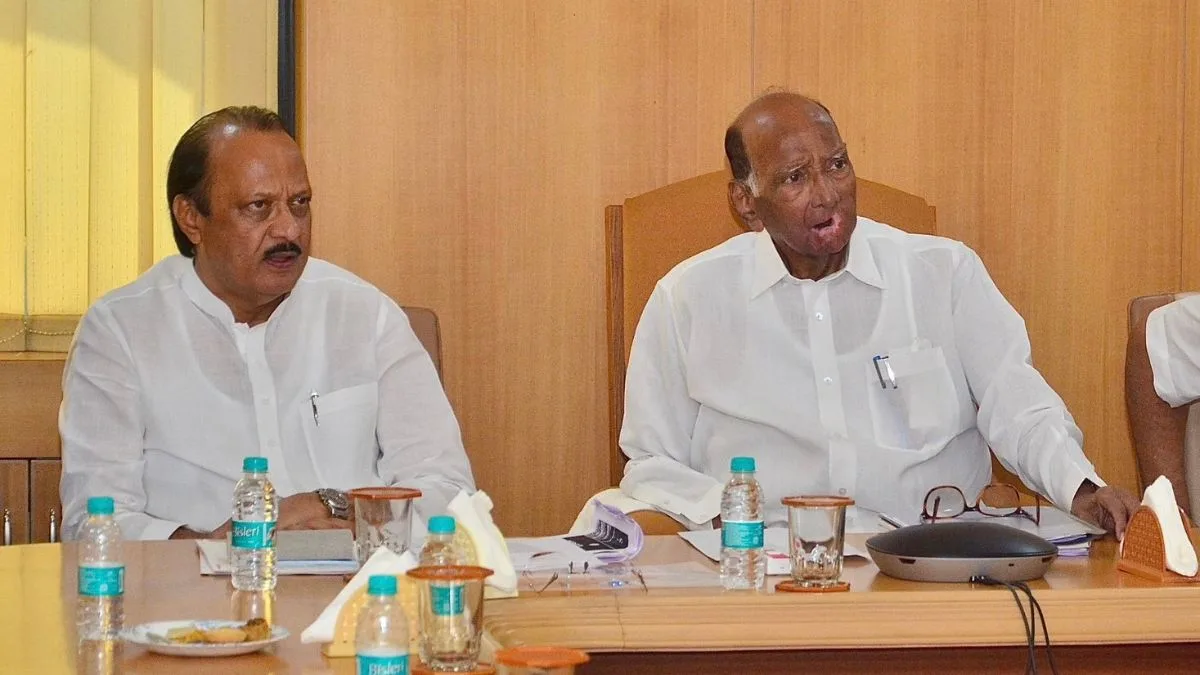
NCP merger talks: What was finalised before Ajit Pawar’s death halted the process

NCP merger talks were close to completion before Ajit Pawar’s death halted the process. Sources reveal what was agreed, what remained pending, and why uncertainty now prevails.

Statesman News Service | Mumbai |

Almost everything was in place for the merger of the two Nationalist Congress Party factions. One step remained.

That final step was talks with the Bharatiya Janata Party. Before it could happen, the process stopped abruptly.

News agency UNI mentioned senior party sources as saying the talks halted after the death of Deputy Chief Minister Ajit Pawar in a plane crash on January 28. The negotiations have remained frozen since.

Also Read: ‘Fadnavis has no right to speak on NCP merger’: Sharad Pawar, says no ‘political discussions’ between factions

What the merger plan looked like before talks stalled

Discussions between the NCP (Sharadchandra Pawar faction) and the Ajit Pawar faction commenced in January 2025. Multiple rounds of meetings followed. These were held between then state unit chief Jayant Patil and Ajit Pawar.

According to sources mentioned by UNI, the talks had moved close to closure.

The proposal was far-reaching. Sharad Pawar was prepared to step back from active politics. He was willing to hand full control of a united NCP to Ajit Pawar.

This included complete decision-making authority and the post of national party president.

In return, Sharad Pawar sought political and organisational space for his group. He asked for key ministerial positions in the Maharashtra government and important posts within the party structure.

The Sharad Pawar faction demanded cabinet berths for Rohit Pawar, Shashikant Shinde, and Jayant Patil. It was also agreed that while Ajit Pawar would lead the party nationally, the Maharashtra unit president would come from the Sharad Pawar camp. Several other state-level organisational roles were to follow the same formula.

Why BJP approval mattered and what happens next

Publicly, Sharad Pawar has said Chief Minister Devendra Fadnavis had no role in the merger talks. Party sources, however, tell a different story.

They insist that without consultations with the BJP, the merger could not have been completed.

The BJP leads the National Democratic Alliance at the Centre and heads the Mahayuti government in Maharashtra. Any decision on power-sharing for the Sharad Pawar faction would have required BJP approval.

As part of the roadmap, Ajit Pawar was expected to hold final talks with BJP leaders. That conversation never happened.

His death brought the entire exercise to a sudden stop.

At present, the Sharad Pawar faction remains keen to move ahead. But within the Ajit Pawar group, hesitation has grown. Senior leaders fear that without Ajit Pawar’s authority, their influence in a merged party could weaken. That uncertainty, sources say, is now slowing any further movement.

From Ukraine to supply chains: What S Jaishankar discussed during his US meetings

External Affairs Minister S Jaishankar said India and the US reviewed bilateral ties, global conflicts and critical mineral cooperation during high-level meetings in Washington.

Statesman News Service | Mumbai |

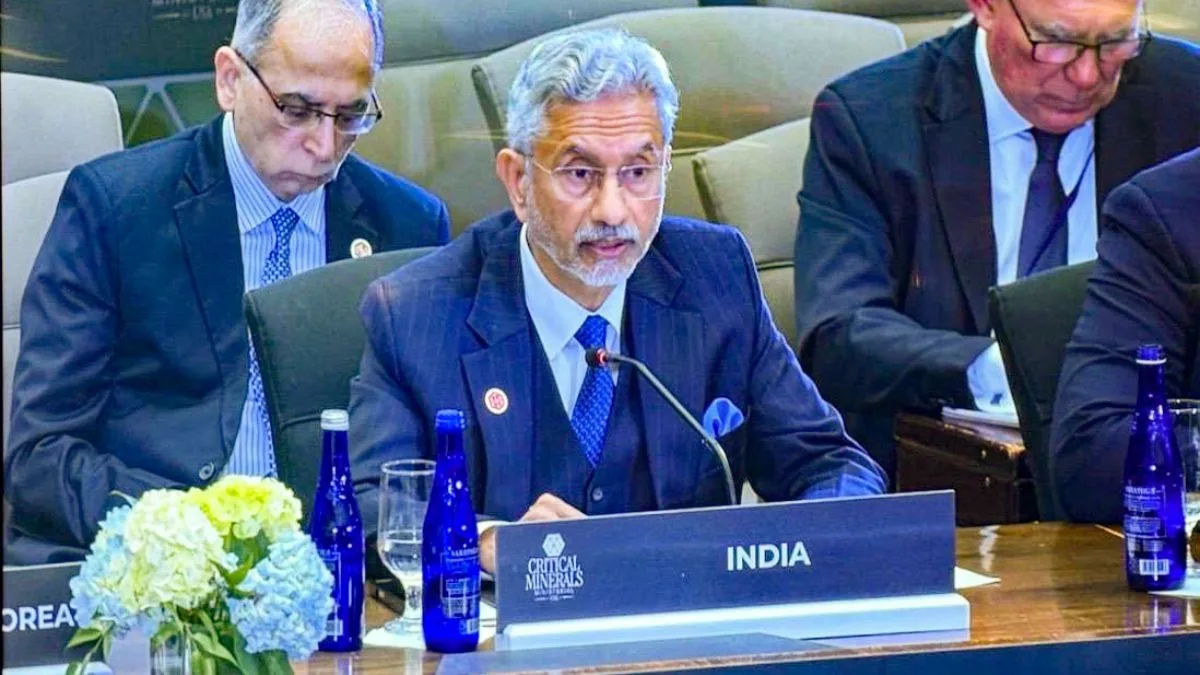
External Affairs Minister S Jaishankar on Wednesday said India and the United States carried out a wide-ranging review of their bilateral partnership during his meetings in Washington, alongside discussions on major global conflicts and regional tensions.

Speaking on the sidelines of the Critical Minerals Ministerial in the US capital, Jaishankar said the conversations went beyond routine diplomacy and focused on how both sides plan to work together through the year ahead.

“We did a fairly detailed review of our bilateral cooperation,” he said. “It’s natural when foreign ministers meet that you discuss the diplomatic agenda. Also, the calendar — what do we expect each one of us to do this year together.”

He added that global issues inevitably formed part of the talks. “We discussed the world, we discussed our relationship, and it was a very open sort of forthcoming conversation,” Jaishankar said, referring to exchanges on the Indo-Pacific, West Asia, Gaza and the Ukraine conflict.

Critical minerals talks signal shift from strategy to execution

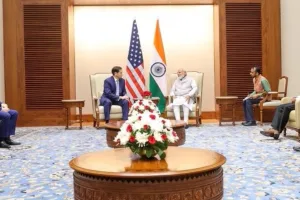
Jaishankar is in the US to attend the Critical Minerals Ministerial hosted by US Secretary of State Marco Rubio, a gathering that brought together representatives from nearly 50 countries.

Calling the meeting “productive and outcome-oriented”, the External Affairs Minister said India had backed the newly launched FORGE initiative — the Forum on Resource, Geostrategic Engagement — which succeeds the Mineral Security Partnership.

“Critical minerals are a very important subject; the US has been a partner for some years,” he said. “Today, they have launched a new edition — FORGE — which we have supported.”

Earlier, addressing the ministerial, Jaishankar warned that “excessive concentration” in critical mineral supply chains poses a serious global risk. He said the answer lies in countries working together in a more organised way, so supply chains are not left vulnerable to sudden shocks or over-dependence on a few players.

The comments come at a moment when India is moving from planning to action in the strategic minerals space. Its engagement with US-led frameworks is no longer just about intent. It is about building capacity on the ground.

The 2026 Budget’s proposal for dedicated rare earth corridors underlines that change. The aim is no longer limited to securing raw materials. It is about processing them at home, building magnet manufacturing capacity, and strengthening industries further down the value chain.

“Even a layman knows prices are rising”: SC Flags Hyatt Regency Valuation, Considers CBI–CVC Probe

The petitioner argued that this drastic reduction raises serious red flags and warrants an independent investigation.

Statesman News Service | New Delhi | Updated :

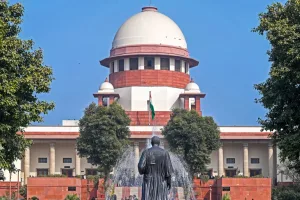
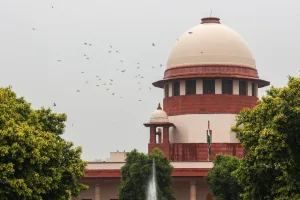
Raising sharp questions over the valuation of Delhi’s iconic Hyatt Regency hotel, the Supreme Court on Wednesday asked why the five-star property was not auctioned at a time when real estate prices were clearly on the rise, and agreed to examine a plea seeking a probe by the Central Bureau of Investigation (CBI) and the Central Vigilance Commission (CVC) into its alleged undervaluation under a One Time Settlement (OTS).

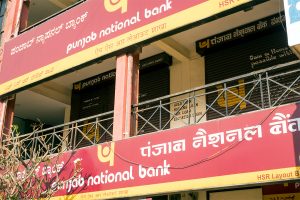
A Bench comprising Chief Justice of India Justice Surya Kant, Justice Joymalya Bagchi and Justice Vipul Pancholi was hearing a petition concerning the OTS entered into between Asian Hotels (North) Pvt Ltd, Punjab National Bank (PNB) and Bank of Maharashtra (BoM).
Questioning the timing and manner of the settlement, the CJI remarked that “even a layman in Delhi can take notice of the fact that from 2023 to 2025, the value of real estate properties has been rising.”
He added that when a settlement is entered into in January 2025, “the value of a five-star hotel in Delhi is bound to be high.”

The plea, filed by NGO Infrastructure Watchdog, alleges that the OTS was contrary to banking norms and resulted in a massive undervaluation of the Hyatt Regency property, causing potential loss to public sector banks.
Appearing for the petitioner, Advocate Prashant Bhushan contended that the OTS violated the Reserve Bank of India (RBI) mandate, which requires stressed loans exceeding Rs 100 crore to be resolved through auction.
He pointed out that as of September 1, 2020, Asian Hotels’ outstanding dues stood at Rs 705 crore, while the market value of the Hyatt Regency was assessed at Rs 2,600 crore and Rs 2,651 crore by two independent valuers.

However, when the OTS was finalised in 2024, the same valuer allegedly pegged the hotel’s value at Rs 970 crore, despite a significant post-COVID surge in Delhi-NCR real estate prices.

The petitioner argued that this drastic reduction raises serious red flags and warrants an independent investigation.

Taking note that the settlement was concluded in 2025, the Bench questioned why the property was not auctioned at that stage.

Recalling a recent auction of a hotel property in Kerala that attracted multiple bidders, the CJI observed that a prime hotel property in Delhi would likely draw even greater interest.
Opposing the plea, Senior Advocates N. Venkataraman and Mukul Rohatgi, appearing for the respondent banks, submitted that Asian Hotels had attempted to auction the hotel and its assets on two occasions, but no buyers came forward.

It was further argued that the banks had recovered 116 per cent of the loan amount, and that the petition amounted to seeking a “roving inquiry” into a concluded commercial transaction.

The Supreme Court nonetheless issued notice to the Union of India, Punjab National Bank, Bank of Maharashtra and Asian Hotels (North) Pvt Ltd, and listed the matter for further hearing on March 18.
The Delhi High Court had earlier dismissed the petition, holding that the plea was based on insufficient material and that OTS decisions fall within the realm of commercial wisdom, generally immune from judicial review. It had also relied on precedents including Dr Subramanian Swamy v. Union of India, Kunga Nima Lepcha v. State of Sikkim and State of Jharkhand v. Shiv Shankar Sharma.

The Supreme Court will now examine whether the circumstances of the case justify judicial interference and an independent probe into the settlement.

Trump speaks with Chinese President Xi Jinping, discusses trade, Taiwan issue, Ukraine war and energy ties

Trump said that his relationship with China and his personal equation with Xi is “good one” and that they both would want to keep it that way.

Statesman News Service | New Delhi |

US President Donald Trump on Wednesday said that he held “a long and thorough” telephone conversation with Chinese President Xi Jinping, during which the two leaders discussed trade, military, Taiwan issue, Ukraine war and his upcoming China visit among others.

In a lengthy post on his Truth Social, the US President said, “I have just completed an excellent telephone conversation with President Xi of China. It was a long and thorough call, where many important subjects were discussed, including Trade, Military, the April trip that I will be making to China (which I very much look forward to!), Taiwan, the War between Russia/Ukraine, the current situation with Iran, the purchase of Oil and Gas by China from the United States, the consideration by China of the purchase of additional Agricultural products including lifting the Soybean count to 20 Million Tons for the current season (They have committed to 25 Million Tons for next season!), Airplane engine deliveries, and numerous other subjects, all very positive!”

Trump said that his relationship with China and his personal equation with Xi is “good one” and that they both would want to keep it that way.

“The relationship with China, and my personal relationship with President Xi, is an extremely good one, and we both realize how important it is to keep it that way,” he said.

The US President further expressed confidence that the there will be “many positive results achieved over the next three years of my Presidency having to do with President Xi, and the People’s Republic of China!”.

President Xi, according to a statement by Chinese Ministry of Foreign Affairs, said that he attaches “great importance” to his relationship with Trump.

He also expressed China’s concerns and said that both countries can find ways to address them if they work the “same direction in the spirit of equality, respect and mutual benefit.”

Just as the U.S. has its concerns, China for its part also has concerns. China always means what it says and matches its words with actions and results. If the two sides work in , we can surely find ways to address each other’s concerns.

“Both China and the U.S. have important items on our agenda this year. China will kick off its 15th Five-Year Plan, and the U.S. will celebrate the 250th anniversary of its independence. China will host the APEC Economic Leaders’ Meeting, and the U.S. the G20 Summit. The two sides should follow the common understandings we have reached, enhance dialogue and communication, manage differences properly, and expand practical cooperation,” Xi said.

President Xi also emphasised that the Taiwan question is the most important issue in China-U.S. relations. “Taiwan is China’s territory. China must safeguard its own sovereignty and territorial integrity, and will never allow Taiwan to be separated. The U.S. must handle the issue of arms sales to Taiwan with prudence,” he asserted.

Punjab Police conduct 689 raids, arrest 232 across state

On Day 16 of the campaign, police teams arrested 232 individuals and recovered two sharp-edged weapons from their possession, taking the total number of arrests to 4,628 since the launch of the drive.

Statesman News Service | Chandigarh |

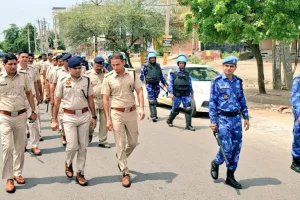
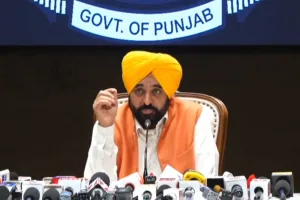
As the decisive ‘Gangstran Te Vaar’ campaign, launched under the directions of Chief Minister Bhagwant Singh Mann, entered its 16th day, the Punjab Police on Wednesday conducted 689 raids at identified and mapped locations linked to associates of gangsters across the state.

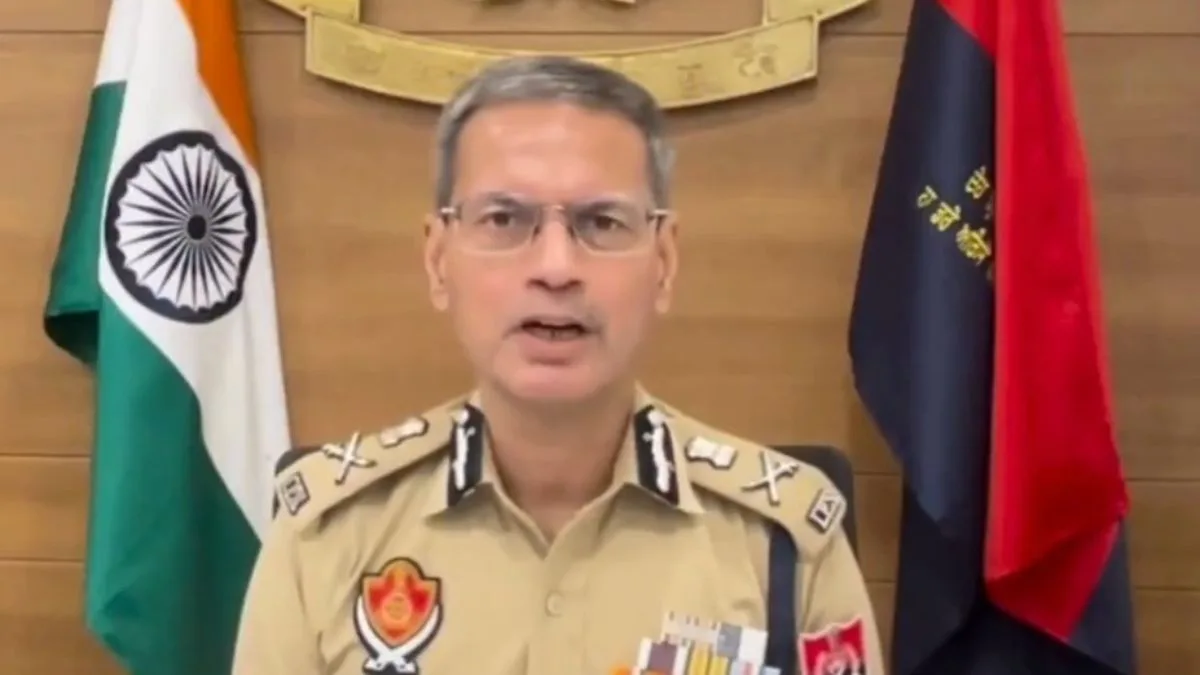
According to official information, ‘Gangstran Te Vaar,’ a decisive war to make Punjab a gangster-free state, was launched by Director General of Police (DGP) Punjab, Gaurav Yadav, on January 20, 2026. Police teams from all districts, in coordination with the Anti-Gangster Task Force (AGTF) Punjab, have been conducting special operations across the state.

On Day 16 of the campaign, police teams arrested 232 individuals and recovered two sharp-edged weapons from their possession, taking the total number of arrests to 4,628 since the launch of the drive.

In addition, preventive action was taken against 153 persons, while 352 persons were verified and released after questioning. Police teams also arrested 12 proclaimed offenders (POs) during the operation.

People can anonymously share information related to wanted criminals and gangsters, as well as tips on crime and criminal activities, through the Anti-Gangster Helpline number 93946-93946.

Meanwhile, police teams continued their drive against drugs under ‘Yudh Nashian Virudh’ for the 340th day. On Wednesday, 135 drug smugglers were arrested, and 8.1 kg heroin, 2 kg opium, 804 intoxicant tablets/capsules, and ₹10,750 in drug money were recovered from their possession. With this, the total number of drug smugglers arrested has reached 47,634 in just 340 days.

As part of the de-addiction initiative, the Punjab Police also convinced 23 persons to undergo de-addiction and rehabilitation treatment on Wednesday.

Punjab Government accelerates investment outreach in Mumbai with focus on jobs and MSME growth

The series of outcome-oriented meetings reflected a calibrated strategy to deepen partnerships with corporates and financial institutions, expand industrial capacity, and lay the foundation for sustainable, skilled, and long-term employment.

Statesman News Service | Chandigarh |

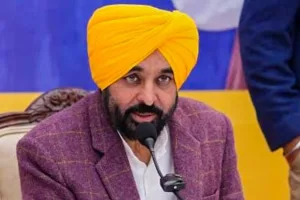
On the second day of the Mumbai Investment Roadshow, Chief Minister Bhagwant Singh Mann-led Punjab Government intensified its investment outreach with a clear and deliberate focus on translating capital inflows into employment opportunities for the State’s youth, as part of its build-up to the Progressive Punjab Investors’ Summit 2026.

Beginning with high-level engagements and progressing through sector-specific and financial discussions, the Government of Punjab presented a coherent chain of opportunities—from strengthening micro, small and medium enterprises (MSMEs) and enabling their transition into large enterprises to attracting global investors in manufacturing, logistics, and emerging sectors.

The series of outcome-oriented meetings reflected a calibrated strategy to deepen partnerships with corporates and financial institutions, expand industrial capacity, and lay the foundation for sustainable, skilled, and long-term employment. These efforts position Punjab as a hub for youth-led industrial growth and entrepreneurship-driven economic expansion.

The delegation began the day with high-level one-to-one meetings with leading industry groups, including Sanathan Textiles and the Mahindra Group. Discussions centred on opportunities in textiles, automotive, farm equipment, defence manufacturing, and supply-chain integration.

The meetings explored prospects for new investments as well as the expansion of existing operations in Punjab, leveraging the State’s skilled workforce, industrial infrastructure, and policy stability.

A key highlight of the day was the CXO Roundtable with leading private equity firms and financial institutions, convened to deliberate on financing pathways, growth capital, and structured support for scaling Punjab’s MSMEs into large and globally competitive enterprises. Senior leadership from Baring Private Equity India Investment Managers LLP, JM Financial Ltd, Avendus Wealth Management, Neo Wealth and Asset Management, OAKS Asset Management, Alvarez & Marsal, and Think Law participated in the roundtable.

Discussions focused on strengthening the MSME-to-large-enterprise pipeline through patient capital, governance support, and strategic market access, positioning Punjab as a preferred destination for MSME-led industrial growth.

During the roundtable, the CEO of Invest Punjab made a detailed presentation on Punjab’s reform-driven governance framework, the FastTrack Punjab single-window system, and time-bound approvals.

The Administrative Secretary, Investment Promotion, highlighted the State’s commitment to policy certainty and investor facilitation. The session concluded with an interactive open house and networking luncheon, enabling direct dialogue between investors and the Government of Punjab delegation.

Following the roundtable, the delegation held focused meetings with UAE-based DP World to discuss logistics, rail-linked inland terminals, and multimodal infrastructure aimed at strengthening Punjab’s export competitiveness.

This was followed by interactions with Avenue Supermarts, UPL Limited, and the International Institute of Sports Management, covering sectors such as organised retail, agri-inputs, food systems, and sports education and infrastructure. These engagements underscored Punjab’s diversified sectoral opportunities across manufacturing, services, agribusiness, logistics, and emerging industries.

A representative from Invest India also participated in the day’s engagements alongside the Government of Punjab delegation, reinforcing collaborative efforts to attract domestic and global investments into the State and align Punjab’s investment outreach with national investment promotion initiatives.

The Mumbai Investment Roadshow continues to serve as a strong platform for engaging institutional investors, industry leaders, and financial partners, while formally extending invitations for their participation in the Progressive Punjab Investors’ Summit 2026.

The engagements showcased Punjab’s readiness to scale businesses, promote research and development, and integrate with national and global markets through a stable and investor-friendly ecosystem.

Haryana Vidhan Sabha Session to begin on February 20

According to a notification issued by the Haryana Vidhan Sabha Secretariat, the session will begin with the customary Address by Governor Prof Ashim Kumar Ghosh. Following the Governor’s Address, the proceedings of the House will formally start.

Statesman News Service | Chandigarh |

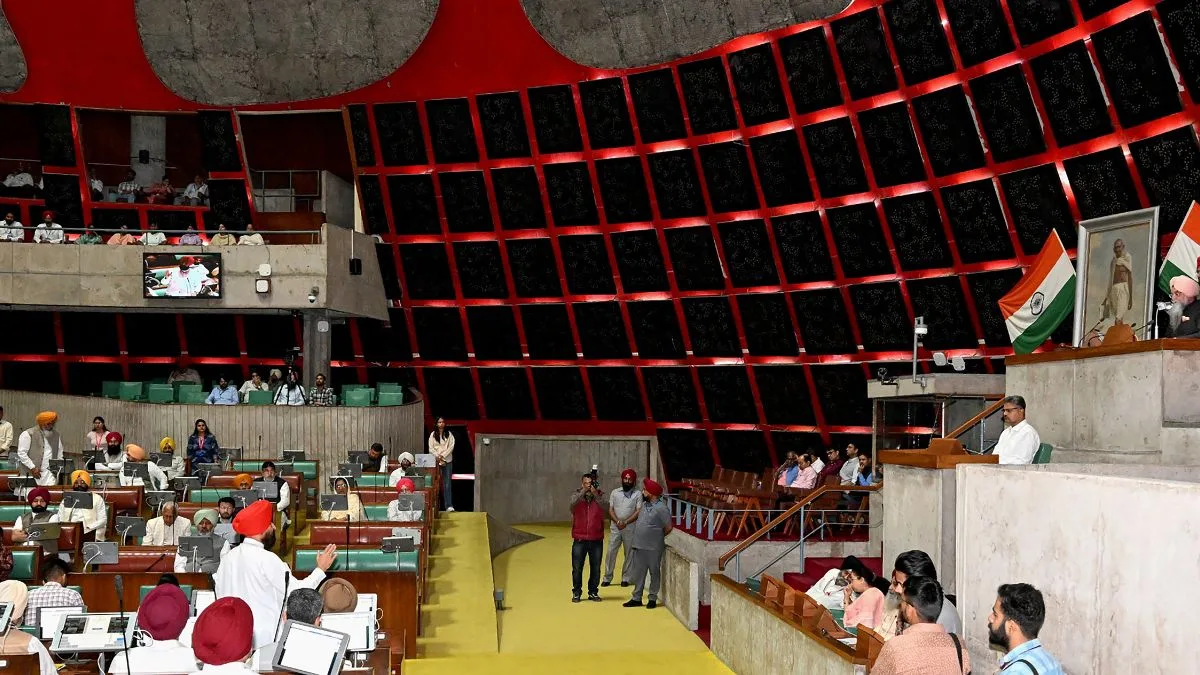
The next session of the Haryana Vidhan Sabha will commence on Friday, February 20, 2026, at 11 am at the Haryana Vidhan Sabha Building in Chandigarh.

According to a notification issued by the Haryana Vidhan Sabha Secretariat, the session will begin with the customary Address by Governor Prof Ashim Kumar Ghosh. Following the Governor’s Address, the proceedings of the House will formally start.

The session is expected to witness discussions on key legislative and administrative matters concerning the state. Further details regarding the duration of the session and the legislative agenda are likely to be announced separately by the Secretariat.

‘India free to buy oil from any supplier,’ says Kremlin after Trump’s claim that Modi agreed to stop Russian oil purchase

Official Kremlin spokesperson Dimitry Peskov said that India has always purchased energy products from other countries and that Russia is well aware of that.

Statesman News Service | New Delhi |

Two days after US President Donald Trump claimed that Indian Prime Minister Narendra Modi has agreed to stop buying Russian oil, Kremlin has said that New Delhi is free to buy energy products from other suppliers, reported Russian news agency TASS.

Official Kremlin spokesperson Dimitry Peskov said that India has always purchased energy products from other countries and that Russia is well aware of that.

“We, along with all other international energy experts, are well aware that Russia is not the only supplier of oil and petroleum products to India. India has always purchased these products from other countries. Therefore, we see nothing new here,” Peskov said, according TASS.

Earlier this week, US President Trump had announced a trade deal between India and the US. He said that the US will reduce tariffs on Indian imports to 18 per cent and India has agreed to stop purchasing Russian oil.

However, there was no official words on his Russian oil claim from India, although New Delhi confirmed the trade deal.

India has more than ‘earned’ tariff reduction: Lindsey Graham on trade deal

On Tuesday, Russia’s Deputy Prime Minister Alexander Novak had also downplayed the US President’s claim, saying, “We’re only seeing public statements. We’ll see how the situation develops.”

On the question of any potential loss of Indian custom, Novak further added, “Our energy resource is in demand; we see this often. Supply will always find demand, because the balance is maintained.”

The United States had last year imposed an additional 25 per cent penalty on India for purchasing Russian oil.

Washington also accused New Delhi of sponsoring Russia’s war in Ukraine buy funding its military through the purchase of energy products.

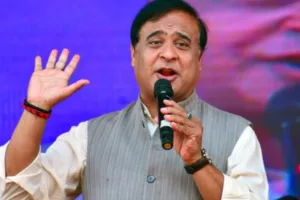
‘Slaves of the Gandhi family’: Assam CM hits back at Gaurav Gogoi, other Congress leaders; threatens defamation suit

His reaction came shortly after the senior Congress leaders unveiled a digital platform titled WhoIsHBS.com aimed at capturing CM Sarma’s political journey.

Statesman News Service | New Delhi |

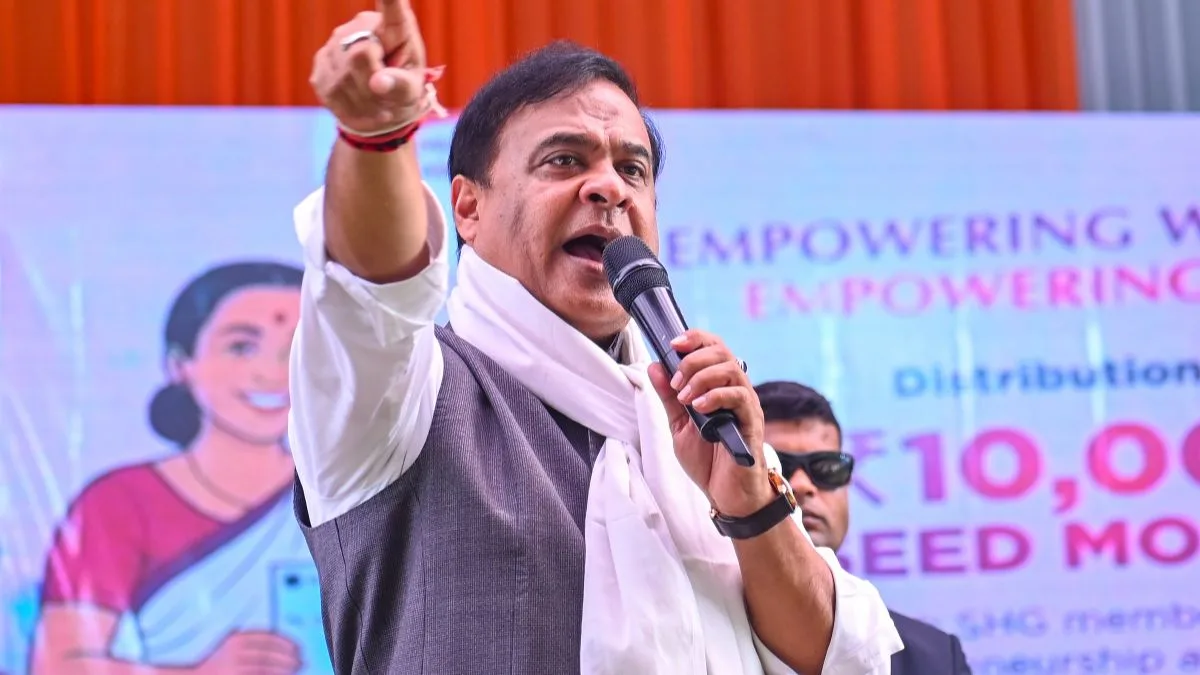
Assam Chief Minister Himanta Biswa Sarma on Wednesday said that he will file both civil and criminal defamation proceedings against Congress leaders Gaurav Gogoi, Bhupesh Baghel, Jitendra Singh Alwar and Debabrata Saikia for making false, malicious and defamatory statements against him

“The era of hit-and-run politics is over. If they have even an ounce of courage or evidence, let them prove every allegation before a court of law. I will not be intimidated by propaganda, coordinated slander, or political theatrics of so-called slaves of the Gandhi family,” the cheif minister said in a strongly-worded post on X.

His reaction came shortly after the senior Congress leaders unveiled a digital platform titled WhoIsHBS.com aimed at capturing CM Sarma’s political journey.

Addressing a press conference, Gogoi said that the digitsl platform contained documents, videos and other material related to the Chief Minister’s property, wealth and alleged corruption.

Gogoi said that the initiative was intended to place “facts” before the people of Assam and promote accountability.

Reacting to the defamation suit threat, Gogoi said that the Assam CM is scared by his presser and dared him to fight innthe court of public opinion.

“It is plain to see Himanta Biswa Sarma has got scared by our press conference today. Soon the details of his corruption and wealth will be made public in every village of Assam. If he has courage he should fight us in the court of public opinion instead of seeking refuge. P.S. I do not want to comment on hit and run,” the Congress leader said.

T20 WC: End of the road for Sanju Samson?

Kishan’s maiden T20I century and a half-century in the series virtually forced the team management’s hand, making it increasingly untenable to persist with an out-of-form opener on the eve of a T20 World Cup defence.

Tridib Baparnash | Navi Mumbai |

The writing had been on the wall for Sanju Samson for some time. A modest return of 49 runs across the five-match T20I series against New Zealand left him short of time to secure his place, especially with Ishan Kishan scripting a compelling comeback to the Indian setup after a two-year absence.

Kishan’s maiden T20I century and a half-century in the series virtually forced the team management’s hand, making it increasingly untenable to persist with an out-of-form opener on the eve of a T20 World Cup defence.

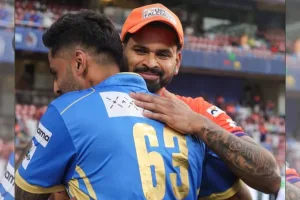
On Wednesday, the Indian think tank made the expected move, unveiling a fresh opening combination by promoting Kishan to partner Abhishek Sharma in the first warm-up fixture ahead of the tournament, which begins on February 7.

At the toss, captain Suryakumar Yadav confirmed the change—an unmistakable signal that Samson’s World Cup prospects may have taken a significant hit.

“We are going to bat first. It is something we have been doing well. There might be some dew later in the evening, so we want to test our bowlers in challenging conditions and defend whatever total we get,” Suryakumar said.

Samson’s position has been under scrutiny for several months. Ahead of the Asia Cup 2025, he opened alongside Abhishek Sharma and produced steady returns. However, the subsequent inclusion of Shubman Gill altered the balance at the top, pushing Samson into the middle order. The shift disrupted his rhythm and sparked calls for his reinstatement as an opener.

Gill’s lean patch and sluggish strike rate eventually prompted selectors to recall Kishan following a prolific Syed Mushtaq Ali Trophy campaign. Yet Samson was handed a final extended run during the New Zealand series, featuring in all five matches despite his lack of returns.

Kishan, meanwhile, batted at No.3 and notched up his maiden T20I century. The management’s thinking became clearer when Kishan was entrusted with the wicketkeeping duties in the fifth T20I.

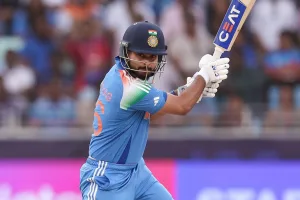
The decision to elevate Kishan to the top paid immediate dividends on Wednesday. At the DY Patil Stadium in Navi Mumbai, around 30 kilometres from the Wankhede Stadium, where India begin their title defence against the USA on Saturday, Kishan set the tone with a scintillating 20-ball 53.

What stood out was not just the pace of Kishan’s scoring, but the fact that he outpaced even the ultra-aggressive Abhishek at the other end. The left-hander from Ranchi wasted no time, launching two sixes in the opening over to underline the management’s faith in the left-handed opening pair as the World Cup draws closer.

Abhishek, unusually measured early on, soon found his range, stitching together a hat-trick of boundaries off Corbin Bosch to complement Kishan’s assault. By the time Abhishek struck his first six of the evening—off the opening ball of the fifth over—India had already raced to 50.

Kishan remained in ominous touch throughout, dismantling Anrich Nortje with three sixes and a four as he closed in on his half-century. He brought up the milestone in style, depositing Mphaka over the long-on boundary in the following over, before retiring out after providing India with an ideal platform.

Notably, there was no sign of Samson at No.3 either, nor even in the top six.

Instead, Tilak Varma (45 off 19 balls) made a spectacular return to India colours after recovering from testicular surgery, while skipper Suryakumar Yadav, who announced his arrival with a six off Nortje, also struck a brisk 16-ball 30. Axar Patel and Rinku Singh rounded out the top six as India surged towards a massive total.

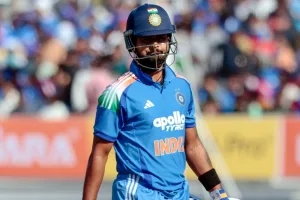
For Samson, however, this may well have been the final verdict. Omitted from the top six as India locked in their preferred combinations in a rematch of the 2024 T20 World Cup final, the Kerala right-hander appears to have fallen out of the selectors’ plans at the worst possible time.

‘Rank and file should correct the leadership’: Expelled Kerala CPM leader’s book released

Joseph C Mathew, IT advisor of former Chief Minister VS Achuthanandan, released the book by handing a copy of the book to fellow Left traveler late MN Vijayan’s son and writer VS Anil Kumar.

Statesman News Service | Thiruvananthapuram |

Expelled CPM leader V Kunhikrishnan‘s book, titled Nethruthwathe Anikal Thiruthanam (The Rank and File Should Correct the Leadership), was released at a function held at Gandhi Park in Payyannur on Wednesday.

Joseph C Mathew, IT advisor of former Chief Minister VS Achuthanandan, released the book by handing a copy of the book to fellow Left traveler late MN Vijayan’s son and writer VS Anil Kumar.

A large crowd turned up at the event, despite opposition from the CPM. Many people reached the stage and shook hands with V Kunhikrishnan and congratulated him. The book launch ceremony was held amid chants of “Inquilab Zindabad” raised by the audience.

In his welcome speech, Kunhikrishnan said there was a campaign through the new media that the book launch ceremony had been postponed. “I am being personally abused. Obscene messages that cannot be said in front of the audience have continuously come through WhatsApp. I am personally getting into things that are a form of glory killing and an attempt to implement Goebbelsian tactics in the new era as well,” he said.

Joseph C Mathew, in his speech after the launch of the book, said that Kunhikrishnan is also saying things similar to what VS Achuthanandan said.

Achuthanandan was expelled from the Politburo for standing with the truth. He asked when communism and truth became two separate things.

The book, which contains 16 chapters and spans 96 pages, serves as an exposé on alleged corruption, mismanagement of party funds, and the rise of “crony capitalism” by the local CPM leadership.

Kunhikrishnan, in his book reportedly argues that the party has become “poll-oriented” and that leaders are abusing the principle of democratic centralism to protect those involved in financial wrongdoing. The book claims that if the party is to improve, the leadership must be corrected by the rank and file.

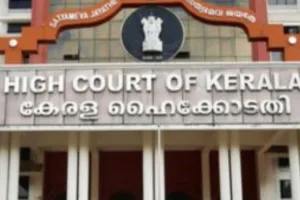
Earlier on January 30, the Kerala High Court ordered police protection for the function of the release of the book.

A single bench of Justice Bechu Kurian Thomas directed the District Police Chief, Kannur and the SHO, Payyanur to ensure that there is adequate protection to the life of the expelled CPM leader ahead of the release of his book.

The CPM on January 26 expelled the party’s Kannur district committee member Kunhikrishnan from the party for making serious allegations against Payyannur MLA TI Madhusoodanan and others.

PM Modi greets new Manipur leadership, hopes for state’s progress and stability

‎In a post on X, the Prime Minister also extended his best wishes to Nemcha Kipgen and Losii Dikho on being sworn in as Deputy Chief Ministers of Manipur. He congratulated Konthoujam Govindas Singh and Khuraijam Loken Singh as well on assuming office as Ministers in the newly formed state government.

Statesman News Service | New Delhi |

‎Prime Minister Narendra Modi on Wednesday congratulated Yumnam Khemchand Singh on taking oath as the Chief Minister of Manipur, and expressed confidence that the new government will work dedicatedly for the state’s development and prosperity.

‎In a post on X, the Prime Minister also extended his best wishes to Nemcha Kipgen and Losii Dikho on being sworn in as Deputy Chief Ministers of Manipur. He congratulated Konthoujam Govindas Singh and Khuraijam Loken Singh as well on assuming office as Ministers in the newly formed state government.

‎“Congratulations to Shri Yumnam Khemchand Singh Ji on taking oath as the Chief Minister of Manipur,” the Prime Minister said. He added, “I would like to congratulate Smt. Nemcha Kipgen Ji and Shri Losii Dikho Ji on taking oath as the Deputy Chief Ministers of the state and Shri Konthoujam Govindas Singh Ji as well as Shri Khuraijam Loken Singh Ji on being sworn in as Ministers in the Manipur Government.”

‎Expressing optimism about the new leadership, Prime Minister Modi said he was confident that the team would “work diligently towards furthering development and prosperity for my sisters and brothers of Manipur.”

‎The oath-taking ceremony marks the formation of a new government at a crucial juncture for the northeastern state, which is focused on restoring normalcy, strengthening governance, and accelerating development initiatives. The induction of two Deputy Chief Ministers is being viewed as an effort to promote inclusive leadership and ensure balanced administration.

‎Manipur holds strategic importance in the Northeast and plays a significant role in India’s Act East Policy. With its rich socio-cultural diversity, the state faces unique governance challenges and opportunities. The new government is expected to focus on peace-building, economic growth, infrastructure development, and welfare-oriented governance, while addressing the aspirations of people across regions and communities.

‎Political observers note that the Prime Minister’s message reflects the Centre’s emphasis on cooperative federalism and signals continued support for Manipur’s development journey under the new leadership.

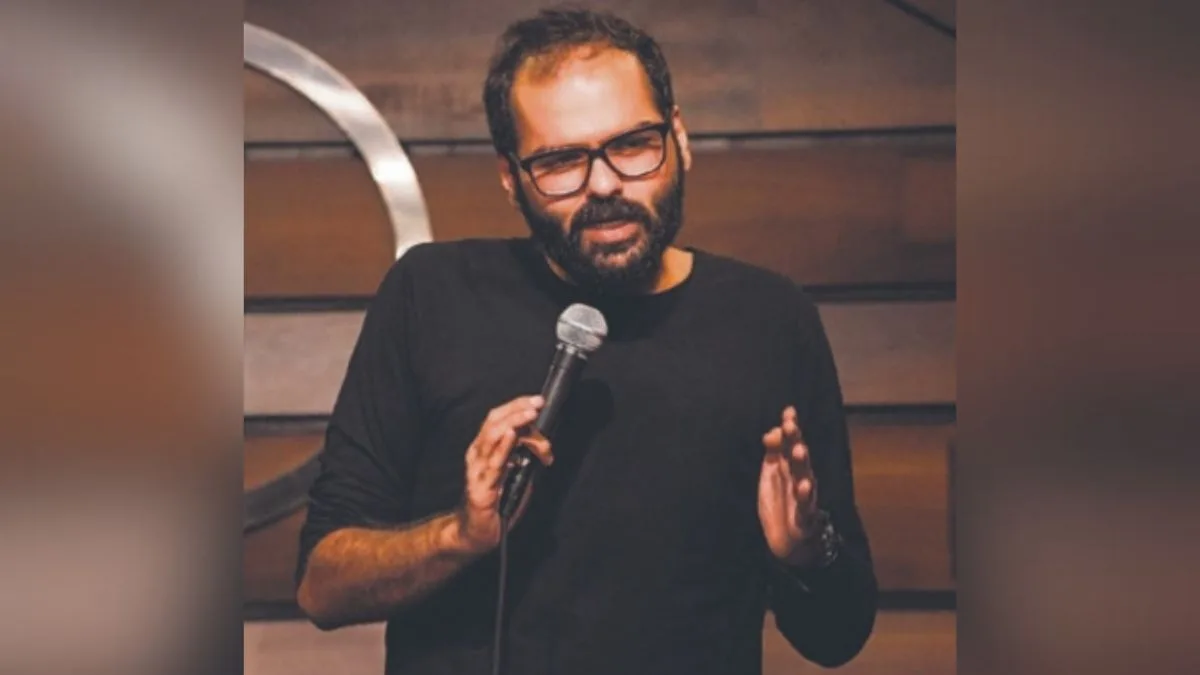
Panel summons Kunal Kamra, Uddhav Sena’s Sushma Andhare for insulting Eknath Shinde

The Privileges Committee of the Maharashtra state Legislative Council on Wednesday issued summons to controversial stand-up comedian Kunal Kamra and Uddhav Thackeray-led Shiv Sena leader Sushma Andhare for allegedly making “insulting” remarks against Maharashtra Deputy CM Eknath Shinde in March 2025.

Statesman News Service | Mumbai |

The Privileges Committee of the Maharashtra state Legislative Council on Wednesday issued summons to controversial stand-up comedian Kunal Kamra and Uddhav Thackeray-led Shiv Sena leader Sushma Andhare for allegedly making “insulting” remarks against Maharashtra Deputy CM Eknath Shinde in March 2025.

Talking to media persons here on Wednesday, BJP Member of Legislative Council (MLC) Prasad Lad, who is the Chairperson of the council’s Privileges Committee, said that the notice was issued to Kamra and Andhare 15 days ago, adding that they have been asked to appear before the Committee for a hearing at 2 pm on Thursday.

“If they fail to turn up after two summons, the Committee will decide about taking action against them,” Prasad Lad said.

Incidentally, Kunal Kamra, who now lives in Tamil Nadu, had parodied a popular Bollywood film song, allegedly ridiculing breakaway Shiv Sena chief and Deputy CM Eknath Shinde, and Uddhav Thackeray-led Shiv Sena leader Sushma Andhare allegedly supported the parody and also criticised Shinde.

Allegedly, during a live stage performance, Kunal Kamra, who lived in Mumbai until a few years ago, sang a parody based on the song ‘Bholi Si Surat’ from the 1997 Bollywood film ‘Dil To Pagal Hai’. The parody was perceived as being directed at Deputy Chief Minister Eknath Shinde, though he was never directly named in the song. Kamra had also allegedly used the word ‘gaddaar’ (traitor) in the parody song to describe a politician widely assumed to be Eknath Shinde. Kamra’s parody song was perceived to be a reference to Shinde’s rebellion and forming another political party after splitting the Uddhav Thackeray-led Shiv Sena in 2022.

This led to multiple FIRs being filed against Kunal Kamra, including one based on a complaint by Maharashtra Transport Minister Pratap Sarnaik of the Eknath Shinde-led Shiv Sena, after a video of Kunal Kamra’s Mumbai show called ‘Naya Bharat’ went viral online.

It also led to a mob led by Rahul Kanal, a functionary of the Eknath Shinde-led Shiv Sena, vandalising the Habitat Studio Comedy Club at the Unicontinental Hotel in Mumbai’s Khar West suburb. The Mumbai police later arrested Eknath Shinde-led Shiv Sena functionary Rahul Kanal, along with 11 others, for ransacking the venue at the hotel.

Later, when Shinde Sena workers threatened Kunal Kamra on the phone, saying they would teach him a lesson, Kamra told them they were welcome to come to Tamil Nadu, where he has been residing for the past few years.

BJP MLC Pravin Darekar had moved a breach of privilege notice against Kunal Kamra and Uddhav Sena leader Sushma Andhare for allegedly making “derogatory remarks” against Shiv Sena leader Eknath Shinde, whose party is a constituent of the BJP-led Mahayuti government.

RCOM bank loan fraud case: SC directs ED to form SIT

A Bench of Chief Justice Surya Kant, Justice Joymalya Bagchi and Justice Vipul M. Pancholi said the seriousness of the allegations warranted a senior-level probe by the ED.

Parmod Kumar | New Delhi |

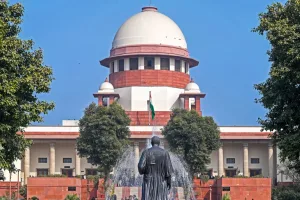
The Supreme Court on Wednesday directed the Enforcement Directorate (ED) to constitute a Special Investigation Team (SIT) to probe allegations of large-scale bank loan fraud involving Reliance Communications (RCOM), its group companies and businessman Anil Dhirubhai Ambani, stressing that the investigation must be taken to its logical conclusion.

A Bench of Chief Justice Surya Kant, Justice Joymalya Bagchi and Justice Vipul M. Pancholi said the seriousness of the allegations warranted a senior-level probe by the ED.

“ED is well advised to constitute a SIT comprising senior officers and take all the measures so that the ongoing probe is taken to a logical conclusion,” the Court observed in its order.

During the hearing, the Court also recorded an undertaking by Anil Ambani’s counsel that he would not leave the country without the Court’s permission. The assurance was noted after concerns were raised about the possibility of Ambani travelling abroad while the investigation was ongoing.

“He will not leave without the permission of this court,” Senior Advocate Mukul Rohatgi, appearing for Ambani, assured the Bench.

Recording this, the Court noted: “SG has assured that all preventive action will be taken to not hinder the probe. Mr Rohatgi assured that his client will not leave the country without leave of this court.”

In addition to directing the ED to form a SIT, the Court also instructed the Central Bureau of Investigation (CBI) to thoroughly examine whether any collusion or conspiracy by bank officials facilitated the alleged fraud.

“It is imperative for CBI to probe the conduct of bank officials to check if funds were released with the collusion of bank officers. We direct that the CBI must look into the nexus, collusion, conspiracy, if any, and for that purpose, all lawful measures to take the investigation to its logical end be adopted,” the Court said.

The Bench expressed concern over submissions indicating delays in the investigations by both agencies. While refraining from making any final observations at this stage, it emphasised the need for prompt and impartial action.

“It may not be appropriate for us to express any opinion at this stage except to observe that there has been an unexplained delay on the part of the ED… Both agencies have taken their own time to take action. We expect both agencies to act promptly, independently, fairly and in a dispassionate manner,” the Court said.

The Court directed the ED and the CBI to file status reports within four weeks, and orally indicated that it would expect regular updates thereafter.

“We expect that your agencies must act fairly and independently and very skillfully. We would like to have status reports every month. In four weeks, let us see how you take the investigation to a logical conclusion. Such a huge amount has been siphoned!” the CJI said, addressing Solicitor General Tushar Mehta.

As the hearing concluded, the Bench added, “We are hopeful that CBI and ED will do their job.”

The matter arises from a public interest litigation filed by former Union Secretary E.A.S. Sarma, who has sought a court-monitored investigation into the alleged fraud. The plea alleges that between 2013 and 2017, RCOM and its subsidiaries—Reliance Infratel and Reliance Telecom—availed loans exceeding ₹31,500 crore from a consortium of banks led by the State Bank of India.

Relying on forensic audit reports, the petition claims large-scale diversion of funds through related-party transactions, circular routing and evergreening of loans. It also highlights a nearly five-year delay by SBI in acting on a forensic audit report received in 2020, contending that the delay raises serious concerns of institutional complicity.

ECI to convene National Conference of State Election Commissioners to enhance electoral collaboration

‎The last such conference was held in 1999. The upcoming event aims to strengthen institutional coordination between the ECI and State Election Commissions amid an increasingly complex electoral environment.

Statesman News Service | New Delhi |

‎The Election Commission of India (ECI) is set to host a National Conference of State Election Commissioners (SECs) on February 24 at Bharat Mandapam, New Delhi. This marks the first national-level meeting of election authorities from across the country in more than 25 years, with participation expected from SECs representing all States and Union Territories.

‎The last such conference was held in 1999. The upcoming event aims to strengthen institutional coordination between the ECI and State Election Commissions amid an increasingly complex electoral environment.

‎Chief Election Commissioner Gyanesh Kumar will chair the conference, accompanied by Election Commissioners Sukhbir Singh Sandhu and Vivek Joshi. They will kick off the event with an inaugural address to guide the day’s discussions.

“The conference offers a valuable opportunity to renew dialogue and deepen cooperation between the Election Commission of India and the State Election Commissions, each operating within their distinct constitutional and legal frameworks,” said the Chief Election Commissioner. “Our shared goal is to uphold transparent, inclusive, and technologically advanced elections at every level.”

‎State Election Commissioners, along with their legal and technical experts, will participate in comprehensive discussions on policy and operational matters. Additionally, Chief Electoral Officers from all 36 States and Union Territories will attend.

‎The primary objective is to foster synergy between the ECI and SECs in managing electoral processes and logistics while respecting their respective legal mandates. Key topics will include electoral laws on voter eligibility, technological initiatives like the ECINET digital platform, the management of Electronic Voting Machines (EVMs), and best practices in electoral roll preparation and election administration.

‎State Election Commissions, established under the 73rd and 74th Constitutional Amendments through State legislation, oversee the preparation of electoral rolls and conduct elections for Panchayats and Municipal Bodies.

‎An Election Commissioner highlighted that the conference will facilitate alignment of strategies, sharing of best practices, and exploration of how technology and legal clarity can strengthen grassroots democracy.

‎The ECI anticipates that this conference will lay the foundation for ongoing collaboration between national and state election bodies, reinforcing the integrity and effectiveness of India’s multi-tier electoral system.