Logo

Dhurandhar makes history on Netflix: 7.6 million views in just 3 days surpass Animal, Fighter, Pushpa 2

Aditya Dhar’s Dhurandhar has stormed Netflix, racking up 7.6 million views in its first weekend. The spy thriller starring Ranveer Singh outperformed Animal, Fighter, and Pushpa 2 in record time.

Statesman News Service | New Delhi |

There’s a new streaming king in town! Aditya Dhar’s ‘Dhurandhar’ has stormed Netflix, racking up numbers that left even the biggest names like ‘Animal’, ‘Fighter’, and ‘Pushpa 2: The Rule’ in the dust.

Premiering on January 30, the spy thriller hit 7.6 million views in its first weekend setting a new record for post-theatrical Hindi releases. It’s the first Indian film to cross the 7-million mark right out of the gate on a streaming platform.


View this post on Instagram


A post shared by Netflix India (@netflix_in)

The film doesn’t skimp on star power. Ranveer Singh leads the cast as an undercover Indian intelligence agent with heavyweights like Akshaye Khanna, Sanjay Dutt, Arjun Rampal, and R Madhavan rounding out the ensemble.

Also Read: ‘Dhurandhar 2: The Revenge’ teaser X (Twitter) reactions – fans say ‘chuna laga diya’ as video reuses part 1 montage

Produced under Jio Studios and B62 Studios by Jyoti Deshpande, Aditya Dhar, and Lokesh Dhar, the film promises both glitzy action and political intrigue.

Movies First Weekend Views
Dhurandhar 7.6 million (3 days)
Animal 6.2 million (3 days)
Fighter 5.9 million (3 days)
Pushpa 2 The Rule 5.8 million (3 days)
Raid 2 5.6 million (3 days)
Crew 5.4 million (3 days)
Jawan 5.2 million (3 days)
Idli Kadai 5.2 million (5 days)
Lucky Bhaskar 5.1 million (3 days)
Sikandar 5.1 million (5 days)

Why everyone is talking about it

Dhurandhar’s Netflix numbers aren’t just about views. They’re about timing and hype. After a box-office run that already turned heads, the digital premiere gave audiences worldwide easy access to the action, propelling the film past established blockbusters within just seven days.

Whether it’s Ranveer’s on-screen intensity, political thriller backdrop, or sheer scale of production, the film has become talking point for cinephiles and casual viewers alike.

Love it or leave it, ‘Dhurandhar’ has made its mark. And with the first part of a two-film series now streaming, fans are already speculating about what comes next in this high-stakes saga.

Siddhant Chaturvedi opens up about his UP roots, language struggles and finding his voice

Siddhant Chaturvedi talks about growing up in UP, navigating language barriers in Mumbai and how skill-building shaped his journey as an actor.

Statesman News Service | New Delhi |

Actor Siddhant Chaturvedi, who is preparing for the release of his upcoming film Do Deewane Seher Mein, recently spoke candidly about the formative years that shaped both his personality and his craft.

Also Read: Lust Stories 3 on Netflix: Release date, cast, directors and complete recap of seasons 1 and 2

Siddhant Chaturvedi reflects on his early years

At the film’s trailer launch in Mumbai on Wednesday, the actor reflected on his upbringing in Uttar Pradesh and the journey of finding confidence through language and self-expression.

Also Read: Accused teaser OUT: Netflix’s new psychological thriller promises a tense story of reputation, doubt and consequences

Roots that shaped his worldview

Hailing from Ballia, Uttar Pradesh, Siddhant spoke about growing up with Bhojpuri as his first language and how his roots continue to inform his worldview. He shared that when he first arrived in Mumbai, adapting to the language of cinema was not immediate or easy.

“For the first five to six years, even my Hindi was broken. I used to speak in Bhojpuri,” the actor said, adding that the experience was deeply personal and mirrored the journey of many who migrate to big cities carrying regional identities.

Also Read: Nancy Meyers returns to direction after 11 years, eyes Penélope Cruz and Owen Wilson

When language becomes a confidence barrier

Siddhant pointed out how language can quietly influence self-belief, especially in unfamiliar environments. From navigating broken Hindi to slowly picking up English, he recalled becoming conscious of pronunciation differences, such as the commonly discussed ‘sa’ and ‘sha’ sounds, nuances that often go unspoken but affect everyday interactions.

“It’s not about whether you’re from UP, Bihar, Rajasthan, Gujarat, the North-East or even Nepal. There’s always a language barrier, and when you’re conscious of it, it somewhere affects your confidence,” he shared.

Also Read: ‘Love Story’ on JFK Jr & Carolyn Bessette explores tragic American romance | Cast, episodes, release date

Learning without losing oneself

What stood out was Siddhant’s emphasis on learning through lived experience rather than formal training. He spoke about adapting gradually, correcting himself over time, and finding balance without erasing where he came from. In a lighter moment, he recalled how falling in love for the first time with someone from Chennai who spoke fluent English, unexpectedly became both an emotional and linguistic learning curve.

Also Read: Drew Barrymore says she’d never date a man in his 20s: ‘It just feels wrong’

Looking ahead

Do Deewane Seher Mein is slated for a theatrical release on February 20, 2026. As Siddhant continues to take on varied roles, his reflections offer a reminder that growth in cinema is often as much about personal evolution as it is about performance.


View this post on Instagram


A post shared by Zee Studios (@zeestudiosofficial)

Also Read: Barbara Forever Review: Love, politics, lesbian iconography that made Barbara Hammer a cinematic revolutionary

LS adopts Motion on Prez address without PM’s reply; Cong MPs planned to physically attack Modi, say sources

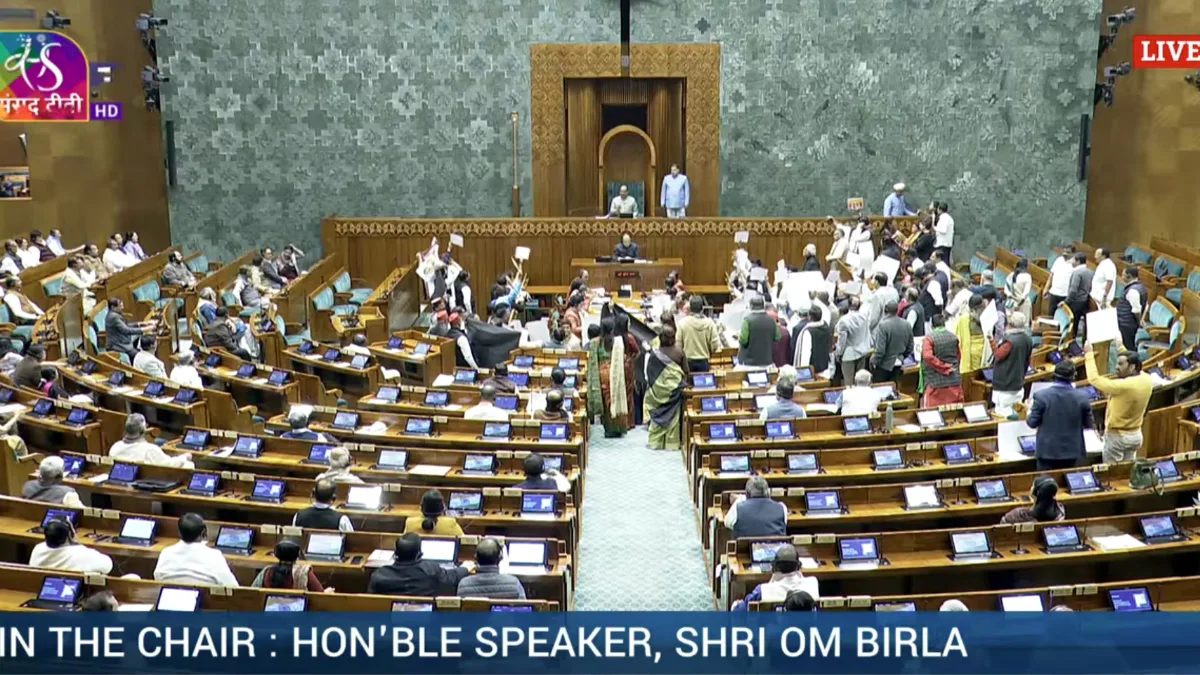
In an unprecedented development, the Lok Sabha on Thursday adopted the Motion of Thanks on the President’s Address with a voice vote without Prime Minister Narendra Modi replying to the debate.

Statesman News Service | New Delhi |

Fireworks continued on Thursday as both Houses of Parliament reconvened for the ongoing Budget Session. While the Lok Sabha today adopted the Motion of Thanks on the President’s Address, the debate on the same is underway in the Rajya Sabha, and the PM’s reply is scheduled for 5 pm.

Did Congress MPs plan to attack PM Modi in Parliament?

Details have started to trickle in on why PM Modi did not reply to the debate on the President’s address in the Lok Sabha. Sources said, according to news agency ANI, that the Congress was physically planning to attack PM Modi in the Lower House yesterday. Women MPs belonging to the Congress party were sent as a cover measure for this, sources said further, adding that the Lok Sabha Speaker decided to adjourn the House despite the Prime Minister being in Parliament and available to address the Lok Sabha.

No PM reply in Lok Sabha, House adopts Motion of Thanks

In an unprecedented development, the Lok Sabha on Thursday adopted the Motion of Thanks on the President’s Address with a voice vote without Prime Minister Narendra Modi replying to the debate. The PM was due to speak in the Lok Sabha but could not deliver his address amid repeated Opposition protests. Last evening also, the PM could not reply to the debate due to the ruckus created by the Opposition.

The Lok Sabha earlier reconvened at 11 am but was immediately adjourned as opposition MPs continued to protest over various issues. The Lower House later resumed proceedings at 12 noon and was again adjourned till 2 pm after adopting the motion amid sloganeering by Opposition members.

PM reply on Motion of Thanks in RS at 5 pm

It has been reported that Prime Minister Narendra Modi will reply to the debate on the Motion of Thanks on the President’s Address in the Rajya Sabha around 5 pm today.

Abodh balak jibe and a fiery exchange

In the Rajya Sabha, a fiery exchange of words took place between the Treasury and Opposition benches.

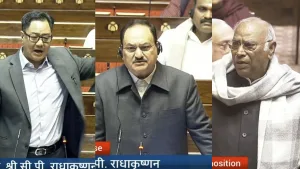
Congress MP and Leader of Opposition in the Rajya Sabha, Mallikarjun Kharge, raised the issue of Lok Sabha LoP Rahul Gandhi not being allowed to speak in the Lower House. When he was asked not to raise the matter of the other House, Kharge said he had the right to do so. “Parliament means Lok Sabha and Rajya Sabha. The LoP, Lok Sabha, wanted to speak on the country’s interests, but was not allowed to speak. How can you run the House like this?”

Union Minister JP Nadda countered Kharge and argued that the LoP should know that the proceedings of the Lok Sabha cannot be discussed in the Rajya Sabha. Nadda also advised Kharge to not let an abodh balak (ignorant child) hold the Congress party and Parliament hostage, apparently referring to Rahul Gandhi.

Union Parliamentary Affairs Minister Kiren Rijiju also said, “Today, we all are expecting that all MPs will follow rules and traditions of the House. All MPs are waiting to hear the PM’s speech today. If Congress doesn’t want to listen to the PM’s address, but all other members do. Your LoP Lok Sabha doesn’t follow the House rules.”

When Nadda said PM Modi is ready anytime to answer any question in the Lok Sabha, Kharge responded and said the BJP doesn’t let people talk and has even shackled the PM. Calling members of the ruling party as “bound labourers,” Kharge said the Opposition doesn’t “lynch or abuse” others like the BJP does.

To this reference, Finance Minister Nirmala Sitharaman objected and said that while she respects the Opposition, she wants the word “lynching” to be removed from Kharge’s speech.

What happened in Parliament yesterday

The discussion could not be completed on Wednesday as continuous protests by Opposition members forced multiple adjournments in the Lok Sabha. Prime Minister Narendra Modi’s scheduled reply to the debate was deferred as a result.

The Lok Sabha was first adjourned soon after it met, following slogans and protests by Opposition MPs over the suspension of eight members. The Speaker attempted to restore order several times, but the disruptions continued through the day.

A brief Question Hour was conducted for five minutes. Only one starred question and its supplementaries were taken up. Soon after, the House was adjourned again — first till noon, then 2 pm, and finally till 5 pm. With the uproar continuing, the Speaker adjourned the House for the day.

The standoff began when Congress leader Rahul Gandhi was not allowed to refer to an article citing an unpublished memoir of former Army Chief General MM Naravane on the 2020 India-China standoff. The protests intensified after eight Opposition MPs were suspended for the remainder of the Budget Session on Tuesday.

Those suspended include Congress MPs Manickam Tagore, Prashant Yadaorao Padole, Amarinder Singh Raja Warring, Hibi Eden, Gurjeet Singh Aujla, Chamala Kiran Kumar Reddy, and Dean Kuriakose, along with CPI(M) MP S Venkatesan.

India-US trade deal adds to Opposition push for adjournment motion

The fresh round of disruptions comes as the Opposition sharpens its attack on the recently announced India-US trade agreement.

Congress MP Manish Tewari on Thursday submitted an adjournment motion notice in the Lok Sabha for the second consecutive day, seeking a discussion on the deal. He urged the House to suspend Question Hour, Zero Hour and all listed business to take up what he described as an urgent matter of grave public importance.

In his notice, Tewari referred to a statement reportedly issued by the President of the United States claiming that Prime Minister Narendra Modi had agreed to halt purchases of Russian oil, increase oil imports from the United States and Venezuela, reduce Indian tariffs and non-tariff barriers to zero, and commit to procuring over $500 billion worth of American goods.

Why Wednesday’s debate broke down, and what lies ahead

Outside Parliament, the suspended MPs staged a protest, holding placards accusing Prime Minister Narendra Modi of being “compromised.” The remarks echoed Rahul Gandhi’s earlier comments during media interactions on the India-US trade agreement.

Samajwadi Party MP Anand Bhadauria defended Gandhi, saying he represented “the voice of the people who voted against the BJP.” He accused the ruling party of attempting to silence the Opposition whenever national security issues are raised in Parliament.

In the Lok Sabha, the Motion of Thanks was moved by Union Minister Sarbananda Sonowal and seconded by BJP MP Tejasvi Surya. Eighteen hours have been allotted for the discussion.

According to the List of Business, the House is also scheduled to take up discussions on the Union Budget 2026–27. BJP MP Suresh Gopi is expected to make a statement on the implementation of recommendations of the Standing Committee on Petroleum and Natural Gas related to crude oil import policy.

The Budget Session will run for 65 days, with 30 sittings, and conclude on April 2. Parliament will adjourn for a recess on February 13 and reconvene on March 9, allowing Standing Committees to examine the Demands for Grants of various ministries.

Habeas Corpus and foreigners

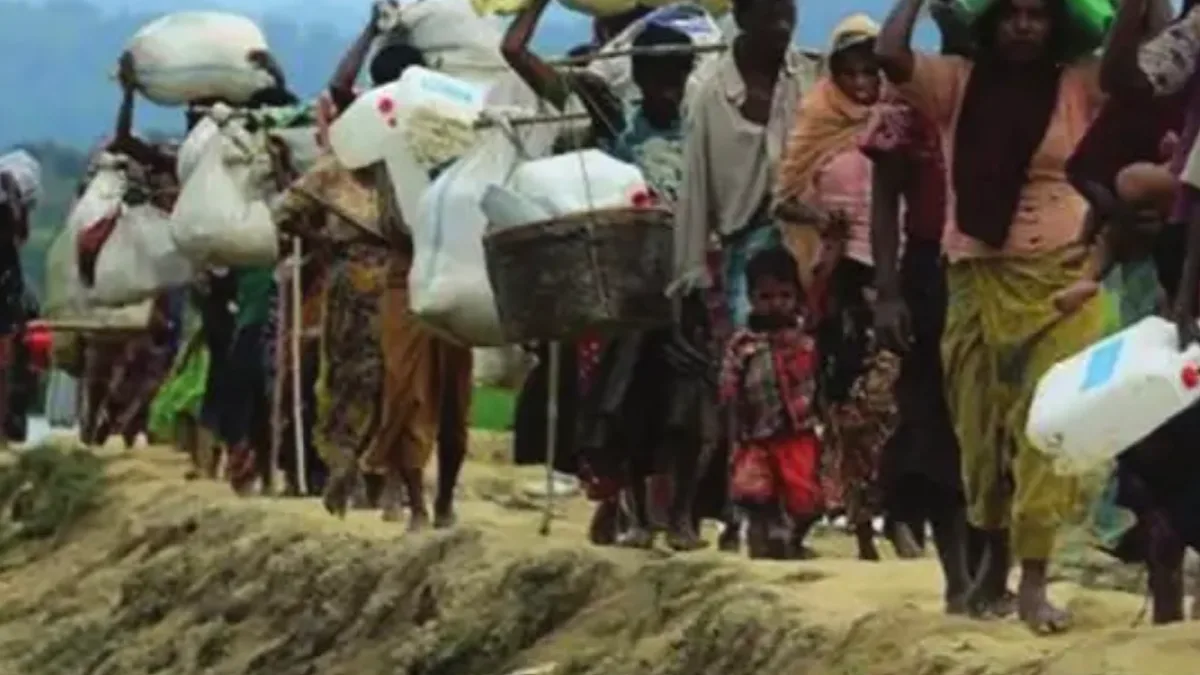
Recently, a habeas corpus petition concerning the alleged disappearance of five Rohingya individuals from custody was filed in the Supreme Court.

Ishrat Hussain | New Delhi |

Recently, a habeas corpus petition concerning the alleged disappearance of five Rohingya individuals from custody was filed in the Supreme Court. The Chief Justice of India has rightly asked if the court was expected to “roll out a red carpet” for illegal entrants and questioned whether the individuals had legal status or a government order declaring them as refugees. This query gives birth to many legal and legitimate questions. And, of course, it is very difficult to answer those. Is habeas corpus applicable to foreigners in India? If not, is it not contrary to core constitutional values.

Are Rohingyas entitled to the protection of Article 21 of the Constitution (right to life and personal liberty)? Can any person on Indian soil be subjected to inhuman treatment? This controversy has many dimensions within the ambit of past practices of the Supreme Court under Article 21 and international law. While the Constitution does not use the exact term “human rights”, these rights (liberty, life etc.) align with international human rights standards, making them justiciable claims against the state. India is not a signatory to the 1951 UN Refugee Convention and 1967 Protocol and therefore, no legal status has been granted to the Rohingyas under Indian law.

But the principle of non-refoulement (not returning refugees to danger) is considered part of customary international law, obligating nearly all states to uphold it. A refugee seeking protection must not be prevented from entering a country. Nor can a refugee be forcibly returned to their home country or any other country where they could face persecution. The principle of non refoulement, which prohibits the return of a refugee to a territory where they may be at risk of persecution, torture, or other forms of serious or irreparable harm, is a norm of customary international law.

As such, it is binding on all States, whether or not they have acceded to the 1951 Convention or its 1967 Protocol. The Constitution under Articles 32 and 226 confers on the Supreme Court and High Courts respectively the power to issue writs to protect the fundamental rights of itizens. These include rights that are applicable to both citizens as well as foreigners (except in the case of the latter, Articles 15, 16, 19, 29, 30). Since habeas corpus is a writ against unlawful detention of a person, hence it is applicable to foreigners also. There is catena of cases where the Supreme Court established that while the government has broad power to expel foreigners, petitioners can use habeas corpus to challenge illegal detention, especially concerning rights under Article 21.

But courts balanced this with national security and sovereignty. In Ghulam Sarwar v. Union of India (1966) that dealt with a Presidential Order under Article 359, the Court confirmed foreigners’ right to challenge detention. It clarified that a presidential order under Article 359(1) did not completely bar judicial review of actions taken under emergency powers. In Louis De Raedt v. Union of India (1991) the Supreme Court held that the government’s power to expel foreigners is “absolute and unlimited,” but still affirmed due process rights, setting limits on executive discretion.

The Supreme Court ruled in the Chakma Migrants Case (1996) that non-citizens were also entitled to right to life. In National Human Rights Commission v. State of Arunachal Pradesh, the Court dealt with the matter of a large number of Chakmas who migrated from East Pakistan (now Bangladesh) in 1964, first settled in Asaam and Tripura and became Indian citizen in due course. Since the State of Assam had expressed its inability to rehabilitate all of them, about 65,000 of them were shifted to the State of Arunachal Pradesh. The All-Arunachal Pradesh Students Union (AAPSU) had threatened to forcibly expel them from the State.

Since all efforts to tackle the problem of their security had failed, the NHRC was compelled to approach the Supreme Court for appropriate relief. The Supreme Court held that the State was bound to protect the life and liberty of every being, whether citizen or non-citizen, holding that it is the constitutional duty of the State to safeguard the life, health and well-being of Chakmas. The court also directed Arunachal Pradesh to take all possible steps to ensure safety of Chakmas and their life and personal liberty. The court went to the extent of saying that any attempt to forcibly evict or drive them out of the State by AAPSU must be repelled by force considered necessary to carry out the direction of the court.

The Supreme Court has reiterated in various cases that the foreigners lack Article 19 rights to reside in India, but detention must still comply with Article 21, limiting grounds for challenge to illegal confinement. On a scrutiny of the cases, one finds that foreigners’ rights are limited and valid challenges through habeas corpus focus on detention violating Article 21, such as lack of reason, procedures under the Foreigners Act, or illegal confinement, and not the decision to expel itself. Indian courts recognize broad executive power in immigration and expulsion, but not absolute power to disregard due process. Courts balance individual rights with national security, border control, and public interest.

(THE WRITER IS PROFESSOR OF LAW, ALIGARH MUSLIM UNIVERSITY.)

Al Falah University chairman arrested by Delhi Police’s Crime Branch in fraud case

Delhi Police Crime Branch arrested Al Falah University chairman Jawad Ahmed Siddiqui following UGC complaints. Two FIRs were registered, and a Delhi court granted four days of police remand.

Statesman News Service | Mumbai |

Delhi Police’s Crime Branch has arrested Al Falah University chairman Jawad Ahmed Siddiqui in a case involving alleged financial and administrative irregularities, officials confirmed on Thursday.

The arrest comes amid parallel investigations by the Enforcement Directorate, following complaints filed by the University Grants Commission.

Police confirmed that Siddiqui was produced before a Delhi court, which granted the Crime Branch four days of police custody for questioning and evidence collection.

UGC complaints, FIRs and the ED’s money-laundering case

The Crime Branch registered two FIRs after the UGC flagged suspected violations linked to the university’s regulatory claims and administration.

The ED has filed a chargesheet against Siddiqui and the Al Falah Charitable Trust under the Prevention of Money Laundering Act (PMLA). According to the agency, the case is rooted in allegations that the university falsely claimed NAAC accreditation even after its grades had expired.

Investigators have told the court that regulatory recognition was allegedly fabricated to mislead students and parents, inducing admissions and the collection of fees through misrepresentation. The agency said its financial analysis indicated that funds collected during this period could qualify as proceeds of crime under the PMLA.

The ED has also informed the court that it has provisionally attached assets as part of the probe. Searches at multiple locations reportedly led to the recovery of cash, digital devices and financial records. The agency has alleged that certain contracts were diverted to entities linked to Siddiqui’s family and that senior officials confirmed his role in approving major financial decisions.

On February 13, a Delhi court is scheduled to hear arguments on the ED’s chargesheet after the defence sought time to examine the documents filed with it.

Earlier scrutiny and security-linked investigations

The university has faced national scrutiny in recent years. In November last year, its website was taken offline after the National Assessment and Accreditation Council issued a show-cause notice over alleged false claims related to accreditation status.

Separately, investigations into the November 10, 2025, Red Fort car blast, which killed 15 people, revealed links to the institution and its parent trust. The driver of the explosive-laden vehicle was identified through DNA as Dr Umar un Nabi, an assistant professor at the university. Investigators later arrested other staff members for alleged roles in what agencies described as a “white-collar” terror module.

Officials have said further details in the financial and administrative probe are likely to emerge as questioning continues.

Understanding liability

The Supreme Court’s recent affirmation that larger companies may legitimately face heavier penalties for environmental violations has triggered familiar constitutional unease.

Sunil Garodia | New Delhi |

The Supreme Court’s recent affirmation that larger companies may legitimately face heavier penalties for environmental violations has triggered familiar constitutional unease. If environmental damage is the same, critics ask, how can the law justify different penalties based on the size or turnover of the polluter? Does this not undermine equality before law and replace damage-based justice with balance-sheet-based punishment? The anxiety is not frivolous. Equality before law is a foundational constitutional guarantee, and environmental enforcement must not descend into arbitrariness or moral signaling. Yet the criticism, persuasive at first glance, rests on a misunderstanding – both of what the Supreme Court has held and of how environmental liability has long operated in Indian and international law.

Far from diluting the rule of law, the Court’s reasoning restores seriousness, proportionality, and effectiveness to environmental enforcement in an era where symbolic penalties have repeatedly failed to deter large-scale ecological harm. In matters arising from unauthorised construction undertaken without mandatory environmental clearances, the Supreme Court upheld substantial environmental compensation imposed on real estate developers. In doing so, it observed that factors such as project cost, turnover, and scale of operations may be relevant in determining environmental compensation. This observation has been widely misread as an endorsement of size-based punishment.

It is not. The Court did not suggest that larger companies must pay more irrespective of the damage caused, nor did it imply that smaller entities deserve leniency merely because of their size. What it recognised was something far more orthodox: environmental sanctions serve multiple purposes, and a penalty that is inconsequential to a large economic actor fails in one of its core functions – deterrence. A flat or nominal penalty, when imposed on a large corporate entity, often becomes a routine cost of business. When illegality is cheaper than compliance, the law loses its normative force. Environmental regulation, in such circumstances, becomes performative rather than corrective.

The Court’s reasoning seeks to arrest precisely this failure. This approach is firmly anchored in settled environmental jurisprudence. Since the mid-1990s, Indian environmental law has consistently rejected the idea that financial capacity can dilute environmental responsibility. In Indian Council for Enviro-Legal Action v. Union of India (1996), the Supreme Court held that industries responsible for environmental degradation are liable to compensate for the harm caused and to bear the cost of remediation. The Court was categorical that the polluter must pay to reverse the damage and that the burden cannot be transferred to society at large.

That principle was reiterated and constitutionalised in Vellore Citizens’ Welfare Forum v. Union of India (1996), where the Court explicitly incorporated the polluter pays and precautionary principles into Indian law and linked environmental protection to the right to life under Article 21 of the Constitution. These judgments establish two propositions beyond serious dispute. First, environmental liability is strict; intent, negligence, or financial hardship are irrelevant. Second, compensation must reflect the full cost of environmental restoration, not merely a token punitive fine. Much of the confusion surrounding the recent ruling arises from a failure to distinguish between two analytically distinct components of environmental compensation. The first is restoration and restitution.

This includes the cost of reversing ecological damage, restoring land, forests, and water bodies, and compensating affected communities for health, livelihood, and environmental loss. This component is entirely damage-centric. It is triggered by harm, not by the identity or size of the polluter. A small company that causes extensive groundwater contamination or irreversible ecological damage does not receive a discounted liability because it is small. The cost of restoration follows the damage, not the balance sheet. Indian courts have never accepted financial incapacity as a defence against environmental harm. If the cost of remediation exceeds the polluter’s net worth and results in closure or insolvency, that consequence is legally permissible.

Environmental law does not guarantee corporate survival; it guarantees environmental accountability. This approach has been consistently followed by the National Green Tribunal, which has repeatedly held that compensation must reflect actual environmental cost regardless of the polluter’s economic stature. The second component of environmental compensation is deterrence. This is where economic scale becomes relevant. Punishment that does not hurt does not deter. Identical monetary penalties imposed on vastly unequal economic actors produce unequal outcomes. What may cripple a small enterprise may be trivial for a large corporation with multi-crore turnovers.

If environmental penalties are absorbed as routine operational expenses, compliance becomes optional and enforcement collapses into symbolism. Calibrating penalties to economic capacity ensures that sanctions have a real-world impact across the spectrum of polluters. This distinction between damage-based liability and deterrence-based calibration is central to understanding why the Supreme Court’s reasoning does not violate equality before law. A recurring objection is that smaller companies might exploit this approach to escape serious liability even after causing massive environmental damage. This fear is legally unfounded. Environmental liability in India is not capped by company size.

There is no principle that entitles a small enterprise to reduced liability merely because it lacks financial capacity. Where environmental damage is severe, compensation may exceed the polluter’s assets. Courts have wide powers to enforce such liability, including attachment of assets, closure of operations, recovery proceedings, and proceedings against those in control of the enterprise. The law does not intervene to protect a polluter from the economic consequences of ecological harm. What size influences is not liability, but the structure of punishment. A small company that causes massive damage will be fined heavily for the extent of that damage.

The idea that size operates as a shield against serious environmental liability is simply incorrect. Does calibrating penalties to economic capacity offend Article 14 of the Constitution? The answer lies in understanding the difference between formal equality and substantive equality. Article 14 does not mandate identical treatment in all circumstances. It prohibits arbitrariness and requires a rational nexus between classification and objective. Treating unequal actors identically often produces unequal and unjust outcomes.

A flat penalty regime, blind to economic reality, may appear neutral but in practice allows large polluters to escape meaningful consequences while disproportionately burdening smaller actors. The Supreme Court has repeatedly held that proportionality is a facet of non-arbitrariness. Penalties must be rationally connected to the objectives they seek to achieve. In environmental law, those objectives include restoration, deterrence, and prevention of future harm. By allowing economic scale to inform the deterrent component of penalties while keeping liability firmly anchored to environmental damage, the Court’s approach satisfies Article 14 scrutiny rather than undermining it. The reasoning also aligns with international environmental practice.

The polluter pays principle, recognised in the Rio Declaration on Environment and Development (1992), encourages states to internalise environmental costs and ensure that polluters bear responsibility for the harm they cause. International environmental regimes routinely combine strict liability for damage with economically calibrated sanctions for deterrence. OECD and European Union frameworks recognise that identical nominal penalties do not deter large polluters, and fines are often linked to turnover, profit, or economic benefit derived from violations, while restoration obligations remain harm-based. One of the chronic failures of environmental regulation in India has been the imposition of penalties too small to matter.

For large developers, mining companies, and industrial actors, nominal fines have often been treated as a license fee rather than legal censure. The Supreme Court’s reasoning confronts this failure directly. By acknowledging that economic scale matters for deterrence, the Court has sent a clear message that environmental compliance is not optional and that violations will not be priced cheaply. At the same time, by reaffirming damage-based liability, the Court has ensured that environmental law does not become arbitrary or discriminatory. Environmental law does not promise corporate survival; it promises environmental accountability.

By insisting that damage determines liability and economic scale determines whether punishment deters, the Supreme Court has reaffirmed a foundational truth: the rule of law is not about identical outcomes, but about proportionate, effective, and meaningful consequences. In an era of escalating ecological stress and industrial expansion, symbolic penalties are worse than ineffective; they are complicit. By restoring proportionality and seriousness to environmental enforcement, the Court has strengthened the rule of law, not weakened it.

(THE WRITER IS A COMMENTATOR ON LEGAL AFFAIRS.)

Living traditions for a sustainable world

Indian Knowledge Systems (IKS) encompass all forms of human thought and action derived from the culture of the Indian subcontinent over the course of thousands of years.

ALOK KUMAR DWIVEDI | New Delhi |

Indian Knowledge Systems (IKS) encompass all forms of human thought and action derived from the culture of the Indian subcontinent over the course of thousands of years. These encompass philosophical and religious literature (Vedas, Upanishads, and Darshanas), along with medical practices (Ayurveda), mathematics, astronomy, linguistics, visual arts, architecture, social theories, legal systems, and pedagogical methods. IKS does not separate aspects of existence, including knowledge, morals, religious observance, governance, and craft; rather, it views them as interrelated by shared meanings and ultimate goals.

Another point to clarify is that IKS does not represent one doctrine, but is a collection of teachings, exchanges, and arguments. Each school of thought represented in Vedic literature (the Mimamsa school, the Nyaya school) is distinct; nevertheless, they share commonalities in their approach to understanding faith. The Buddhist and Jain schools each evolved their own routes of thought that sometimes mirror one another; on the other hand, the oral traditions of local craft people, and vernacular literature were all part of the evolving environment in which the various philosophies developed. Many of the strands share common elements: the importance placed on experience as a teacher, the ethical ramifications of one’s views, the relationship between a guru and his shishya, and the goal of transforming either one’s personal character or society via knowledge.

IKS in its nature carries a set of values, practices, and institutions through which Indians were able to explore reality, create ethical lives, and produce the technologies and arts necessary for human flourishing. This definition is based upon three forms of inquiry, Epistemic (how do I know); Practical (what do I do with this knowledge), Normative (why do I seek out such ends). The Core Insight is articulated by the following statement, “The Indian Knowledge System holds that Jñāna (knowledge) and Guṇa (virtue) are inseparable; therefore, the true measure of learning is how one acts and conducts themselves.”

Thus, this definition includes the basic and most important characteristic of Bhartiya Gyan Parampara that if anyone knows something, it must be apparent in his/her action and behavior. Most people tend to believe that they have gained an education simply by learning a list of propositions about various subjects or acquiring new pieces of information. However, according to many Indian concepts of enlightened education, the definition of knowledge is different. According to the philosophy of IKS, knowledge is much more than a collection of facts; it is also based upon the relationship of each fact to the context in which it was created and the purpose for which it was intended.

In addition, many Indian philosophers emphasise the importance of realization (Pratyaksa or anubhuti) as a higher form of knowledge. Unlike merely agreeing intellectually with what you have learned, realization is about how learning has changed you as a human being. Under this view of learning, when you develop an understanding of a particular subject, that subject will not be fully understood until you have experienced a change in the way you perceive the world, the way you behave toward others, and the way you think about yourself. Similarly, realization is the process by which you develop an understanding of how to make wise decisions about your life.

When learning has reached the level of realization, moral discretion, health practices, and how to live a balanced life based upon experiences in this world will guide your actions. Therefore, at the last level of the hierarchy, re-emphasizing the need for development wisdomasa foundation for living a productive life with balance between ethics and technology will provide the best means for educating future generations of humans. Several recurring features help distinguish IKS from other knowledge traditions. A deep understanding of Indian Knowledge is the unity of existence. This idea is conveyed in the phrase “ Vasudhaiva Kutumbakam” (The world is one family). All parts of the universe are connected, including the cosmic dimension, the natural world, society, and the individual. We do not exist alone in our own right; all forms of knowledge, all modes of truth, and all expressions of art and science exist together as an integral part of the same consciousness.

For example: Ayurveda derives insights from Sām. khya (cosmology and metaphysics), Nyāya-Vaiśes. ika (logic and atomism), and Dharmaśāstra (ethics and duty), embodying a union of philosophy, science, and morality. Vāstu Śāstra integrates Jyotisha (astronomy), Shulba Sūtras (geometry), and ecological principles, creating harmony between space, nature, and human habitation. The R. g Veda’s earliest sign of an integrated vision can be found in verse 1.164.46: “Ekam sat viprā bahudhā vadanti.” This means, “Truth is one; the wise say in multiple ways.” This verse represents Advaita or the philosophy of oneness; it reflects the concept that even though there are many diverse paths, disciplines and experiences lead to the same ultimate truth.

Indian knowledge tradition is not only about theory, but also focuses on application, experience, and outcome. Each field of study has an established metric by which to determine the effectiveness of its application. In the tradition of India, knowledge is validated by the results obtained from experience or the effects an individual’s actions have had on his/her world – not simply by theory (i.e., abstract thought). The concept of using “Prayojana” is the basis for this practical orientation. In IKS, the process of enquiry (anves. an. a) is not carried out in a value-neutral way. The act of acquiring knowledge is inherently ethical, purposeful, and transformational.

Its end ambition is not only to know what truth is, but also to enable the flourishing of Dharma, Artha, Kāma and Moksa collectively known as the Purusharthas (the fourfold goals of human life). While modern Western views may see fact as separate from value and science as separate from ethics, Indian epistemology does not have such a separation and sees them as being inseparable aspects of truth. In IKS, the concept of knowledge does not exist without that of values. Wisdom is the highest level of truth realisation and it must uphold life, justice and harmony. The process of enquiry is therefore directed by the principle of Lokasamgraha – “the good and oneness of all beings.”

In Arthaśāstra, moral conduct is linked to economic policy; ensuring that the governance serves as the foundation for balance and justice in society. In the Bhagavad Gītā, Karma, or action, illustrates that action is a means of self-purification and that we collectively uplift each other by taking action aligned with duty and compassion. The Guru-Shishya Parampara or the teacher-disciple lineage is the spiritual and pedagogical foundation of IKS. In this living model, the guru is not only an instructor of facts but a mentor, moral guide, and spiritual guide. The goal of education is not the accumulation of information, but the awakening of wisdom (jnāna) and refinement of character – sadācāra. In IKS there are three stages of learning:

1) Descriptive narrative by the guru;

2) Deep reflection on the truth to know the meaning and alleviate doubt, and

3) Meditative contemplation that leads to realisation whereby transformation results. The oral tradition has allowed for direct dialogue, experiential learning, clear-headed reasoning, and moral cultivation. It is within this visual dialogical format that true humility, devotion, and discipline exist and are necessary for true learning. Exemplary Classical Dialogues such as the Gārgī and Yājñavalkya dialogue (Br. hadāran. yaka Upanis. ad 3.6.1 – 3) illustrate a rational, dialogical form of pedagogy that encourages inquiry and reasoning in spiritual discussions, irrespective of gender.

The concept of “epistemology” within philosophy acknowledges that different modes of knowing can be valid sources of information, and therefore Indian philosophy includes multiple philosophical traditions (darśanas) existing together, debating each other, and adding to the cumulative quest for understanding. Indian philosophers realised that one way of viewing reality does not provide the complete view of what is real. Hence, multiple sources of knowledge were identified as valid methods of obtaining knowledge:

1. Pratyaks.a (perception) – Knowledge that you have because of your direct experience through either your senses or your intuition;

2. Anumāna (inference) – Knowledge that you derive using your ability to think logically;

3. Śabda (testimony) – Knowledge based on reliable and trustworthy verbal reports, particularly those you receive in the form of testimony from the Vedas and/or from other sages or ‘enlightened’ beings;

4. Upamāna (comparison) – Understanding that comes through analogy or resemblance to some other examples;

5. Arthāpatti (postulation) – Knowledge inferred from the existence of o there circumstances when no direct evidence exists and,

6. Anupalabdhi (nonperception) – Knowledge of what is not there, using this form of knowledge in Advaita Vedānta. The pluralistic framework makes IKS dialogical rather than dogmatic, open to discussion and reinterpretation. The Indian tradition of ideas is maintained through commentaries as a continuity rather than an element of discontinuity. The texts are treated as living entities that grow with intervening generations through various levels of understanding. Rather than destroying the initial productions, Indian scholars continue in an evolving process of dialogue with texts, and the result is the creation of multiple levels of interpretations including the following: Bhās.ya (Commentary – Analytical explanation), Tīkā: (The explanations or additions given to the text) and T. ippanī (Notes/Annotations – Supplementary insights for the original text).

This ensures the preservation as well as renewal of knowledge. We have a beautiful example for this tradition: the Vadrayana-written Bhahmsutra which is the original text for vedant darshan. Govindpata wrote Mahābhāsya on this, Śan· kara’s commentaries on reviving this, and the emergence of Rāmānuja and Madhva schools of thought in response to Śan· kara are classic examples of tradition and continuity of knowledge tradition. It is this hermeneutic tradition which has sustained Indian Knowledge Systems through the ages, with dialogue within themselves which transcends time. This tradition, which thinks about cosmic well-being, is the best way to lead the world in a sustainable way.

(The writer is Assistant Professor, KSAS – Lucknow & INADS – USA.)

Odisha’s case for pharma excellence

Odisha has reached a decisive point in its higher education and industrial development trajectory.

RAJAT KUMAR KAR | New Delhi |

Odisha has reached a decisive point in its higher education and industrial development trajectory. While the State has steadily expanded its technical and professional education base, it remains without a nationally significant institution capable of anchoring advanced pharmaceutical education and research. The absence of a National Institute of Pharmaceutical Education and Research (NIPER) continues to limit Odisha’s ability to fully realise its pharmaceutical potential.

The demand for a NIPER in Odisha is neither new nor opportunistic. Since 2012, academic stakeholders and professional bodies, including the Odisha Pharmaceutical Industries Forum (OPIF) and the Indian Pharmaceutical Graduates’ Association (IPGA), have consistently pursued this objective. The proposal was formally placed before the Union Ministry of Chemicals and Fertilizers during Mr Srikant Jena’s tenure as Minister, and the case was articulated at the national level. Subsequently, former Chief Minister Naveen Patnaik conveyed the State’s readiness to the Centre, assuring institutional support and the availability of suitable infrastructure.

Odisha’s claim rests not merely on precedent but on proven capacity. The State has a long tradition of nurturing pharmaceutical education, with roots tracing back to the 17th century, and today hosts a substantial network of pharmacy institutions that collectively produce thousands of diploma, undergraduate and postgraduate graduates each year. Yet, the absence of a research-intensive national institution such as a NIPER has led to a sustained migration of talent to other States for advanced training and research. This continuing loss of human capital weakens local research ecosystems, limits meaningful industry academia collaboration, and constrains the growth of innovation driven pharmaceutical enterprises within Odisha.

A NIPER in Odisha would address these structural gaps. It would strengthen postgraduate and doctoral education, expand pharmaceutical and translational research, and facilitate closer linkages between academic institutions and industry. Importantly, it would also help correct regional imbalances in the distribution of national research institutions. Eastern India remains under- served in pharmaceutical education and innovation despite its growing industrial and human resource base, and Odisha is well positioned to serve as a regional anchor. Recent developments have added momentum to this long standing demand. Union Education Minister Dharmendra Pradhan has urged the Central Government to consider the establishment of a NIPER in Odisha, citing the State’s expanding educational ecosystem and strategic importance.

The Centre’s decision to provide budgetary support for three new NIPERs under the Biopharma SHAKTI initiative further strengthens the case for Odisha, particularly in the context of the government’s stated objective of strengthening eastern India’s contribution to national growth. At the State level, the current government has reiterated its intent to develop Odisha as a pharmaceutical and healthcare hub through policy support and research-led growth. The State Health Minister has informed the Legislative Assembly that suitable land has been proposed at the State capital for the establishment of a NIPER, signalling administrative preparedness. The moment for deliberation has passed; what Odisha now requires is decisive action. With sustained advocacy, demonstrated preparedness, political consensus, and clear national relevance, the case for establishing a NIPER in Odisha is both compelling and complete.

The Central Government must seize this opportunity to translate intent into implementation by approving and expediting the establishment of a NIPER in the state. Doing so would not only honour long-standing commitments but also unlock eastern India’s pharmaceutical potential, retain and nurture local talent, and strengthen India’s self-reliance in healthcare and life sciences. A NIPER in Odisha would stand as a powerful testament to inclusive development, where policy vision meets purposeful execution. What remains is timely and decisive action at the Centre.

With institutional readiness, political consensus, and national relevance firmly established, the case for a NIPER in Odisha is difficult to overlook. Approving and expediting the establishment of such an institution would not only honour long-standing commitments but also unlock eastern India’s pharmaceutical potential, retain and nurture local talent, and strengthen India’s self-reliance in healthcare and life sciences. A NIPER in Odisha would stand as a powerful testament to inclusive development, where policy vision meets purposeful execution.

(The writer is Principal, Dadhichi College of Pharmacy.)

Networked Warfare

The Ukraine war has long blurred the boundary between state power and private capability, but the latest restrictions on satellite connectivity expose just how decisively that line has shifted.

Statesman News Service | New Delhi |

The Ukraine war has long blurred the boundary between state power and private capability, but the latest restrictions on satellite connectivity expose just how decisively that line has shifted. When a commercial satellite network becomes embedded in frontline operations, decisions taken far from the battlefield can alter the balance of force in real time. Russia’s reported use of satellite-linked drones marked a dangerous escalation not because the technology was new, but because it reduced traditional counter-measures to near irrelevance. Low-flying, remotely piloted drones that cannot be jammed effectively compress response times and expand the attacker’s reach.

That such systems could be enabled through commercially available infrastructure underscores how modern warfare increasingly relies on tools never designed for war. Ukraine’s response ~ working with the provider to restrict unauthorised use ~ has yielded immediate tactical dividends. Speed limits on mobile terminals and tighter control over registered devices may sound bureaucratic, but in a conflict defined by milliseconds and bandwidth, they matter. Connectivity has become as strategic as ammunition, and denying it selectively can be as decisive as destroying hardware. Yet this episode also reveals an uncomfortable dependence.

Ukraine’s military communications, logistics and battlefield coordination are deeply entwined with a privately owned system outside direct government control. While the cooperation has so far aligned with Kyiv’s interests, it rests on goodwill rather than treaty obligations. That asymmetry introduces uncertainty into a war where predictability is already scarce. The controversy also reflects a broader transformation in how wars are constrained. Traditional international law assumes that states monopolise the tools of force. But satellite constellations, cloud services and artificial intelligence platforms are owned by companies operating across jurisdictions. Their policies, risk calculations and political views now shape what is possible in war zones.

This diffusion of power complicates accountability: when access is limited or restored, is it a strategic decision, a commercial one, or something in between? For Russia, the setback illustrates the limits of technological improvisation. Adapting civilian systems for military use can deliver rapid gains, but they also create vulnerabilities if access can be revoked or throttled. The same tools that offer flexibility can become choke points when control is centralised elsewhere. For Ukraine, the lesson is more complex.

External technological support has been indispensable, but reliance carries long-term risks. The push to whitelist terminals and tighten oversight is not merely defensive; it is an attempt to reclaim a measure of sovereignty over critical infrastructure. Whether that effort can be sustained amid a protracted war remains an open question. Ultimately, this episode is less about one company or one battlefield tactic than about the changing architecture of conflict itself. Wars are no longer fought solely by armies and states, but through networks, platforms, and permissions. In such an environment, control over access may prove as consequential as control over territory ~ and just as contested

Where the India–US trade deal stands now, according to S Jaishankar

India and the US have moved into detailed negotiations on a bilateral trade deal, External Affairs Minister S Jaishankar said, outlining the current status of talks between the two countries.

Statesman News Service | New Delhi |

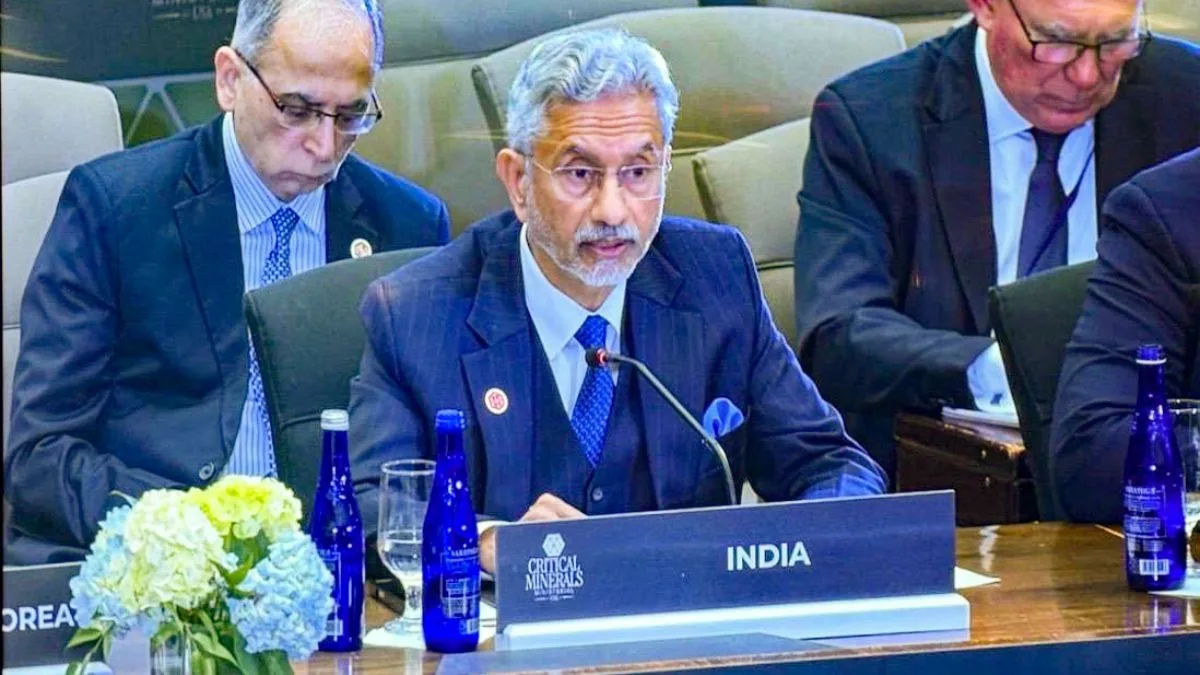
External Affairs Minister S Jaishankar on Wednesday took part in a high-level meeting on critical minerals hosted by the US State Department, even as India and the United States move closer to formalising a bilateral trade agreement.

Jaishankar, who is on an official visit to the US, also met Secretary of State Marco Rubio. The visit comes at a time when negotiations between the world’s two largest democracies have entered a crucial phase, following political-level discussions between Prime Minister Narendra Modi and US President Donald Trump.

Officials from both sides are now working through the details of the trade framework. A joint statement outlining the agreed terms is expected in the coming days.

Trade negotiations underway, says Jaishankar

Speaking to news agency ANI on the sidelines of the Critical Minerals ministerial meeting in Washington DC, Jaishankar clarified that the trade talks are being led by Commerce and Industry Minister Piyush Goyal.

“It was not with me, because that is being handled by Commerce and Industries Minister Piyush Goyal. The Prime Minister and the US President had a conversation; some announcements came out of it. Thereafter, a detailing of the trade negotiations is underway as we speak,” Jaishankar said.

Asked about timelines, the External Affairs Minister said the commerce ministry would be better placed to provide clarity.

“It is hard for me to say, and the Commerce Minister would know it better, because he is in direct engagement with the US Trade Representative,” he added.

Earlier, Commerce Minister Piyush Goyal informed Parliament that both countries have already finalised several components of the bilateral trade agreement after months of negotiations.

He said the focus has now shifted to completing technical procedures and paperwork so that the deal can be operationalised without delay. Goyal described the framework as a landmark step in deepening India–US ties and aligning with India’s long-term development goals for 2047.

The minister also pointed out that the 18 per cent tariff rate announced by US President Donald Trump is lower than those applied to many competing nations, giving Indian exporters a relative advantage.

According to Goyal, negotiating teams from both sides worked for nearly a year across multiple rounds to arrive at a balanced outcome. Sensitive sectors were protected, he said, including India’s agriculture and dairy industries.

“The US side, too, had areas that were sensitive from its point of view. Following a nearly year-long discussion spread over many rounds, the two negotiating teams were able to narrow their differences significantly and finalise several areas of the bilateral trade agreement,” Goyal told the House.

Critical minerals take centre stage in US talks

Beyond trade, Jaishankar underlined the strategic importance of critical minerals, a key focus of his Washington visit.

He described the ministerial meeting as productive and outcome-driven, noting the launch of a new US-led initiative called FORGE, which India has supported.

“It was a very good discussion. Critical minerals are a very important subject. The US has been partnering up for some years. Today, they launched a new initiative called FORGE, which we have supported. It’s a kind of successor to the Mineral Security Partnership. Overall, to me, it was a good meeting, very productive, very outcome-oriented, and very businesslike, and that was the core reason I came,” he said.

In his address at the ministerial, Jaishankar warned that excessive concentration in global critical mineral supply chains poses serious risks. He called for structured international cooperation to reduce vulnerabilities as India deepens engagement with US-led frameworks in the sector.

Cautious Reset

The announcement of a long-delayed trade understanding between India and the United States has brought a palpable sense of relief in Delhi’s policy and business circles.

Statesman News Service | New Delhi |

The announcement of a long-delayed trade understanding between India and the United States has brought a palpable sense of relief in Delhi’s policy and business circles. After months of uncertainty triggered by sharply higher US tariffs, the reduction of duties to 18 per cent offers immediate breathing space for exporters and financial markets alike. Yet the absence of formal documentation and clarity on scope suggests that relief should be tempered with restraint. At a basic level, the tariff rollback removes a destabilising overhang. The earlier hike had inflicted damage across employment-intensive sectors such as textiles, seafood, and gems, while contributing to currency volatility and foreign capital outflows.

Bringing India’s tariff exposure closer to that of its Asian peers restores some competitiveness and reinforces the country’s pitch as a credible manufacturing alternative amid global supply-chain realignment. However, the political messaging surrounding the announcement has raced well ahead of policy detail. Claims that India has committed to ending Russian oil purchases, embracing “Buy American” provisions, or importing hundreds of billions of dollars’ worth of US goods remain unverified. Such assertions, if left unqualified, risk distorting public expectations on both sides and complicating domestic political management in India – especially on agriculture and energy, where sensitivities run deep. The timing of the US move is equally significant.

Over the past year, tariff pressure from Washington forced Delhi to accelerate trade diversification, culminating in a landmark agreement with the European Union and a flurry of other deals. That pivot reduced India’s dependence on a single export market and strengthened its negotiating hand. In that sense, the US concession reflects not just bilateral diplomacy, but a recalibration shaped by India’s expanded options. From a geopolitical standpoint, the reset carries weight. The trade rupture had nudged India closer to a posture of strategic hedging, deepening engagement with multiple power centres at once. A partial repair of economic ties with Washington may now slow that drift ~ but it does not automatically reverse it.

India’s foreign policy remains anchored in autonomy, not alignment, and any durable shift will depend on whether economic cooperation is matched by predictability and respect for India’s domestic constraints. The central question, therefore, is not whether the announcement is positive ~ it is ~ but whether it evolves into a structured, enforceable framework. Without a jointly negotiated text specifying product coverage, timelines, safeguards and dispute resolution, the announcements amount to political signalling rather than commercial certainty. Crucially, markets will judge success not by presidential declarations, but by whether exporters see predictable access, investors see stability, and policymakers see disputes resolved through institutions rather than sudden tariff shocks. For India, the episode offers a broader lesson. Trade resilience lies not in celebrating tariff relief, but in building flexibility ~ through diversified markets, competitive manufacturing and calibrated openness. If the current thaw leads to a stable, phased engagement with the US, it will be a gain. Until then, caution, not triumphalism, is the wiser response.

Budget 2026

The longest-serving Finance Minister in continuous office, Nirmala Sitharaman, presented her record ninth consecutive Union Budget on 1 February.

DEVENDRA SAKSENA | New Delhi |

The longest-serving Finance Minister in continuous office, Nirmala Sitharaman, presented her record ninth consecutive Union Budget on 1 February. Looking back, Morarji Desai had presented the Budget ten times, and P. Chidambaram nine times, but none of them had presented the Budget nine times consecutively. So far as Sitharaman’s Budget Speeches go, this was one of the shorter ones ~ she spoke only for 1 hour and 25 minutes, as against a record-breaking speech of 2 hours 39 minutes in 2020.

The FM’s address outlined the government’s fiscal roadmap for FY 2026–27, including spending plans, tax proposals, and key policy priorities. As expected, the Budget Speech and budget proposals were lauded by the PM, and the who’s who of the ruling party, but derided by opposition politicians. Since this was the first budget prepared in Kartavya Bhavan – the new address of the Finance Ministry – the FM drew inspiration from three kartavyas, the first being the acceleration and sustenance of economic growth, by enhancing productivity and competitiveness, and also building resilience to volatile global dynamics. An important part of this kartavya was the building of infrastructure, pursuant to which, Budget 2026 has raised the capital expenditure target to Rs 12.2 lakh crore from Rs 11.2 lakh crore for FY 25-26, which is slightly iffy, given the fact that the capital expenditure target of the current FY would remain unmet.

The FM has lauded herself for restricting fiscal deficit for FY 25-26 to 4.4 per cent of GDP, as against a target of 4.5 per cent; here it is to be mentioned that this milestone was achieved because receipts and expenditure fell short by around Rs.1 lakh crores ~ which was the case last year also. In this perspective, the narrowing down of the fiscal deficit to 4.3 per cent of GDP in FY 26-27, may be at the cost of a shortfall in budgeted expenditure. Concerningly, there was a fall in revenue receipts for FY 25-26 ~ tax receipts estimated at Rs 28.37 lakh crores, fell short by Rs.1.63 lakh crores.

Collection of Personal Income-tax missed the target by Rs.1.26 lakh crores, and collection of GST fell short by Rs.1.32 lakh crores ~ which was expected, given the reduction in tax rates. However, Personal Income-tax collections are set to exceed Corporate Tax collections by more than Rs.2 lakh crore or 18 per cent ~ not a very healthy development. The total Budget size is pegged at Rs 53.5 lakh crore, an increase of Rs.4.83 lakh crores, or roughly 10 per cent, over the current year’s budget. Budget 2026 comes at a time when GDP growth is scaling new heights, while inflation is at a historic low.

FM Sitharaman has done well to try to preserve this momentum, so there is nothing pathbreaking in the Budget. That may have been the reason, in addition to increase in STT rates, for the steep fall in share prices on Budget Day. Briefly put, with Viksit Bharat as the overarching theme, the stated objective of the Budget is to place India on the path towards financial stability, while enabling businesses to be future ready ~ rising up to the challenges and opportunities of AI adoption, and making up the all-round deficit of talent, infrastructure, governance, and trust. The Income tax Act, 2025 will come into effect from 1 April 2026. However, concerningly, applicable Income Tax Rules and Forms have not yet been notified.

The Budget has amended the Income-tax Act, 2025, even before its coming into force, mainly with a view to automate and accelerate processes. For example, penalty proceedings will be concluded along with assessment proceedings, and many penalties have been replaced with fees that will be charged automatically. The Budget proposes a Foreign Assets of Small Taxpayers ~Disclosure Scheme 2026, aimed at students, young professionals, tech employees and relocated NRIs. The Scheme provides a one-time opportunity to disclose foreign income and assets. Hopefully, this Scheme may fare better than the 2015 Scheme, given the enhanced international co-operation in tax matters.

There is good news for tourists and students studying abroad. TCS rates on overseas tour programme packages has been reduced uniformly to 2 per cent, from the current 5 per cent and 20 per cent. TCS on remittances for education and medical purposes under the Liberalized Remittance Scheme (LRS) has been reduced from 5 per cent, to 2 per cent. Given the disturbed conditions in our neighbourhood, Budget 2026 proposes an expenditure of Rs.7.84 lakh crore (US$85.5 billion) for defence ~ up 15 per cent, over the last year, amounting to 14.7 per cent of total government expenditure, translating into 2.01 per cent of GDP. In a welcome development, Rs.2.2 lakh crore has been earmarked specifically for defence modernisation ~ a 22 per cent increase over last year.
The Budget has made a significant provision for upgradation and expansion of healthcare infrastructure, medical education and the pharma sector with the aim of making India a global hub for allied healthcare professionals and biopharma manufacturing. To this end the Budget provides significantly higher funds to flagship programmes like Pradhan Mantri Ayushman Bharat Health Infrastructure Mission (PM-ABHIM), Pradhan Mantri Jan Arogya Yojana (PM-JAY) and National Health Mission (NHM). A praiseworthy initiative is the skilling of middle level professionals; Allied Health Professional Institutes in 10 key disciplines will be set up and upgraded to create nearly one lakh skilled professionals over the next five years; a focused programme will train 1.5 lakh geriatric caregivers; the Indian Institute of Creative Technologies in Mumbai will be supported to create animation, visual effects, gaming and comics (AVGC) content creator labs in 15,000 secondary schools and 500 colleges; the number of veterinary professionals will be raised to over 20,000 by launching a credit-linked capital subsidy assistance scheme for the establishment of private-sector veterinary and para-veterinary colleges, animal hospitals, diagnostic laboratories and breeding facilities.

There are other upskilling projects, e.g., facilitating professional institutions like the Institute of Chartered Accountants of India (ICAI), Institute of Company Secretaries of India (ICSI), and Institute of Cost and Management Accountants of India (ICMAI) to design short-term, modular courses and practical tools to develop a cadre of “Corporate Mitras”, especially in Tier-II and Tier-III towns, who can be employed in MSMEs, and also a project to upskill 10,000 tourist guides across 20 major tourist destinations. At the policy level, the Government will set up a high-powered “Education to Employment and Enterprise” standing committee which will align education to industry needs.

Some special schemes for the benefit of coastal States are envisaged; a scheme to benefit coconut growers and a push for rare earths, that are currently being mined in Kerala, TN, Odisha and Andhra. Another proposal is to make fish catches in EEZs and high seas free of duty, and classifying the sale of such fish catch in any foreign port as export. It is but a coincidence that most of such states are poll bound, or ruled by the BJP and its allies. The Budget welcomes foreign investment by a 31-year tax holiday on data centres, and a 5-year tax holiday to foreign companies supplying capital goods and equipment, and also permission to foreigners to invest in the share market.

Worryingly, sharply increasing interest payments of Rs.14.04 lakh crore (last year Rs.12.74 lakh crore), would consume more than 26 per cent of the total budget, making them the second biggest item of expenditure. Thankfully, projected debt receipts of Rs.15.13 lakh crore, falls short of the Budget Estimate of Rs.15.66 lakh crores. However, continuing an increasing trend, expenditure of Rs.17.72 lakh crore and Rs.5.49 lakh crore, has been budgeted for Central Sector Schemes and Centrally Sponsored Schemes, respectively. The Fifteenth Finance Commission had recommended a review of Central Schemes, with axing of unviable ones. However, no review is in sight, and a host of new schemes have been announced in the current Budget.

The Outcome Budget for 2026-27 is a lengthy document of 302 pages which gives the financial outlay, outputs and outcomes statement, output and outcome indicators, and specific output and outcome targets but somehow, omits to provide clarity on the achievement of Budget targets. Clearly, a brake on profligacy is urgently required. Government economists sitting in the rarefied environs of their offices, who increase the budget size every year, could well heed the words of US economist Martin Feldstein: “Increased government spending can provide a temporary stimulus to demand and output but in the longer run higher levels of government spending crowd out private investment or require higher taxes that weaken growth by reducing incentives to save, invest, innovate, and work.”

(The writer is a retired Principal Chief Commissioner of Income-Tax)

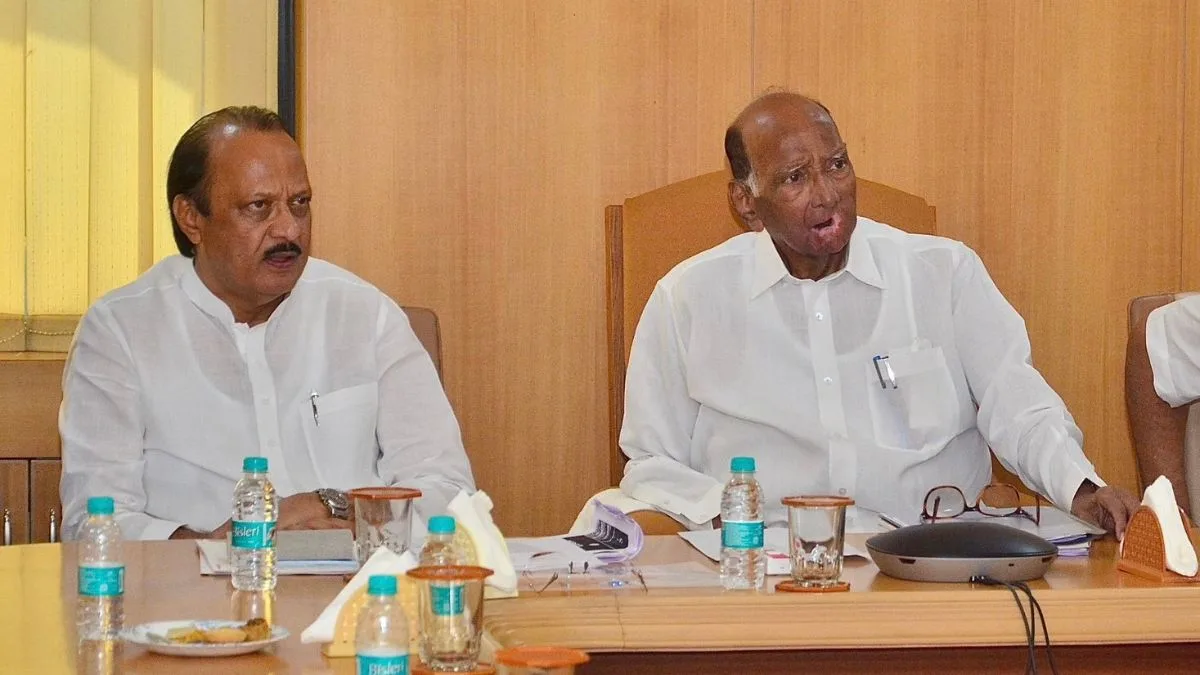
NCP merger talks: What was finalised before Ajit Pawar’s death halted the process

NCP merger talks were close to completion before Ajit Pawar’s death halted the process. Sources reveal what was agreed, what remained pending, and why uncertainty now prevails.

Statesman News Service | Mumbai |

Almost everything was in place for the merger of the two Nationalist Congress Party factions. One step remained.

That final step was talks with the Bharatiya Janata Party. Before it could happen, the process stopped abruptly.

News agency UNI mentioned senior party sources as saying the talks halted after the death of Deputy Chief Minister Ajit Pawar in a plane crash on January 28. The negotiations have remained frozen since.

Also Read: ‘Fadnavis has no right to speak on NCP merger’: Sharad Pawar, says no ‘political discussions’ between factions

What the merger plan looked like before talks stalled

Discussions between the NCP (Sharadchandra Pawar faction) and the Ajit Pawar faction commenced in January 2025. Multiple rounds of meetings followed. These were held between then state unit chief Jayant Patil and Ajit Pawar.

According to sources mentioned by UNI, the talks had moved close to closure.

The proposal was far-reaching. Sharad Pawar was prepared to step back from active politics. He was willing to hand full control of a united NCP to Ajit Pawar.

This included complete decision-making authority and the post of national party president.

In return, Sharad Pawar sought political and organisational space for his group. He asked for key ministerial positions in the Maharashtra government and important posts within the party structure.

The Sharad Pawar faction demanded cabinet berths for Rohit Pawar, Shashikant Shinde, and Jayant Patil. It was also agreed that while Ajit Pawar would lead the party nationally, the Maharashtra unit president would come from the Sharad Pawar camp. Several other state-level organisational roles were to follow the same formula.

Why BJP approval mattered and what happens next

Publicly, Sharad Pawar has said Chief Minister Devendra Fadnavis had no role in the merger talks. Party sources, however, tell a different story.

They insist that without consultations with the BJP, the merger could not have been completed.

The BJP leads the National Democratic Alliance at the Centre and heads the Mahayuti government in Maharashtra. Any decision on power-sharing for the Sharad Pawar faction would have required BJP approval.

As part of the roadmap, Ajit Pawar was expected to hold final talks with BJP leaders. That conversation never happened.

His death brought the entire exercise to a sudden stop.

At present, the Sharad Pawar faction remains keen to move ahead. But within the Ajit Pawar group, hesitation has grown. Senior leaders fear that without Ajit Pawar’s authority, their influence in a merged party could weaken. That uncertainty, sources say, is now slowing any further movement.

From Ukraine to supply chains: What S Jaishankar discussed during his US meetings

External Affairs Minister S Jaishankar said India and the US reviewed bilateral ties, global conflicts and critical mineral cooperation during high-level meetings in Washington.

Statesman News Service | Mumbai |

External Affairs Minister S Jaishankar on Wednesday said India and the United States carried out a wide-ranging review of their bilateral partnership during his meetings in Washington, alongside discussions on major global conflicts and regional tensions.

Speaking on the sidelines of the Critical Minerals Ministerial in the US capital, Jaishankar said the conversations went beyond routine diplomacy and focused on how both sides plan to work together through the year ahead.

“We did a fairly detailed review of our bilateral cooperation,” he said. “It’s natural when foreign ministers meet that you discuss the diplomatic agenda. Also, the calendar — what do we expect each one of us to do this year together.”

He added that global issues inevitably formed part of the talks. “We discussed the world, we discussed our relationship, and it was a very open sort of forthcoming conversation,” Jaishankar said, referring to exchanges on the Indo-Pacific, West Asia, Gaza and the Ukraine conflict.

Critical minerals talks signal shift from strategy to execution

Jaishankar is in the US to attend the Critical Minerals Ministerial hosted by US Secretary of State Marco Rubio, a gathering that brought together representatives from nearly 50 countries.

Calling the meeting “productive and outcome-oriented”, the External Affairs Minister said India had backed the newly launched FORGE initiative — the Forum on Resource, Geostrategic Engagement — which succeeds the Mineral Security Partnership.

“Critical minerals are a very important subject; the US has been a partner for some years,” he said. “Today, they have launched a new edition — FORGE — which we have supported.”

Earlier, addressing the ministerial, Jaishankar warned that “excessive concentration” in critical mineral supply chains poses a serious global risk. He said the answer lies in countries working together in a more organised way, so supply chains are not left vulnerable to sudden shocks or over-dependence on a few players.

The comments come at a moment when India is moving from planning to action in the strategic minerals space. Its engagement with US-led frameworks is no longer just about intent. It is about building capacity on the ground.

The 2026 Budget’s proposal for dedicated rare earth corridors underlines that change. The aim is no longer limited to securing raw materials. It is about processing them at home, building magnet manufacturing capacity, and strengthening industries further down the value chain.

“Even a layman knows prices are rising”: SC Flags Hyatt Regency Valuation, Considers CBI–CVC Probe

The petitioner argued that this drastic reduction raises serious red flags and warrants an independent investigation.

Statesman News Service | New Delhi | Updated :

Raising sharp questions over the valuation of Delhi’s iconic Hyatt Regency hotel, the Supreme Court on Wednesday asked why the five-star property was not auctioned at a time when real estate prices were clearly on the rise, and agreed to examine a plea seeking a probe by the Central Bureau of Investigation (CBI) and the Central Vigilance Commission (CVC) into its alleged undervaluation under a One Time Settlement (OTS).

A Bench comprising Chief Justice of India Justice Surya Kant, Justice Joymalya Bagchi and Justice Vipul Pancholi was hearing a petition concerning the OTS entered into between Asian Hotels (North) Pvt Ltd, Punjab National Bank (PNB) and Bank of Maharashtra (BoM).
Questioning the timing and manner of the settlement, the CJI remarked that “even a layman in Delhi can take notice of the fact that from 2023 to 2025, the value of real estate properties has been rising.”
He added that when a settlement is entered into in January 2025, “the value of a five-star hotel in Delhi is bound to be high.”

The plea, filed by NGO Infrastructure Watchdog, alleges that the OTS was contrary to banking norms and resulted in a massive undervaluation of the Hyatt Regency property, causing potential loss to public sector banks.
Appearing for the petitioner, Advocate Prashant Bhushan contended that the OTS violated the Reserve Bank of India (RBI) mandate, which requires stressed loans exceeding Rs 100 crore to be resolved through auction.
He pointed out that as of September 1, 2020, Asian Hotels’ outstanding dues stood at Rs 705 crore, while the market value of the Hyatt Regency was assessed at Rs 2,600 crore and Rs 2,651 crore by two independent valuers.

However, when the OTS was finalised in 2024, the same valuer allegedly pegged the hotel’s value at Rs 970 crore, despite a significant post-COVID surge in Delhi-NCR real estate prices.

The petitioner argued that this drastic reduction raises serious red flags and warrants an independent investigation.

Taking note that the settlement was concluded in 2025, the Bench questioned why the property was not auctioned at that stage.

Recalling a recent auction of a hotel property in Kerala that attracted multiple bidders, the CJI observed that a prime hotel property in Delhi would likely draw even greater interest.
Opposing the plea, Senior Advocates N. Venkataraman and Mukul Rohatgi, appearing for the respondent banks, submitted that Asian Hotels had attempted to auction the hotel and its assets on two occasions, but no buyers came forward.

It was further argued that the banks had recovered 116 per cent of the loan amount, and that the petition amounted to seeking a “roving inquiry” into a concluded commercial transaction.

The Supreme Court nonetheless issued notice to the Union of India, Punjab National Bank, Bank of Maharashtra and Asian Hotels (North) Pvt Ltd, and listed the matter for further hearing on March 18.
The Delhi High Court had earlier dismissed the petition, holding that the plea was based on insufficient material and that OTS decisions fall within the realm of commercial wisdom, generally immune from judicial review. It had also relied on precedents including Dr Subramanian Swamy v. Union of India, Kunga Nima Lepcha v. State of Sikkim and State of Jharkhand v. Shiv Shankar Sharma.

The Supreme Court will now examine whether the circumstances of the case justify judicial interference and an independent probe into the settlement.

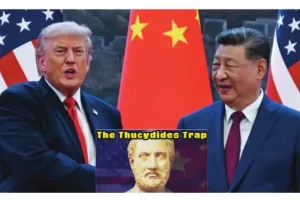
Trump speaks with Chinese President Xi Jinping, discusses trade, Taiwan issue, Ukraine war and energy ties

Trump said that his relationship with China and his personal equation with Xi is “good one” and that they both would want to keep it that way.

Statesman News Service | New Delhi |

US President Donald Trump on Wednesday said that he held “a long and thorough” telephone conversation with Chinese President Xi Jinping, during which the two leaders discussed trade, military, Taiwan issue, Ukraine war and his upcoming China visit among others.

In a lengthy post on his Truth Social, the US President said, “I have just completed an excellent telephone conversation with President Xi of China. It was a long and thorough call, where many important subjects were discussed, including Trade, Military, the April trip that I will be making to China (which I very much look forward to!), Taiwan, the War between Russia/Ukraine, the current situation with Iran, the purchase of Oil and Gas by China from the United States, the consideration by China of the purchase of additional Agricultural products including lifting the Soybean count to 20 Million Tons for the current season (They have committed to 25 Million Tons for next season!), Airplane engine deliveries, and numerous other subjects, all very positive!”

Trump said that his relationship with China and his personal equation with Xi is “good one” and that they both would want to keep it that way.

“The relationship with China, and my personal relationship with President Xi, is an extremely good one, and we both realize how important it is to keep it that way,” he said.

The US President further expressed confidence that the there will be “many positive results achieved over the next three years of my Presidency having to do with President Xi, and the People’s Republic of China!”.

President Xi, according to a statement by Chinese Ministry of Foreign Affairs, said that he attaches “great importance” to his relationship with Trump.

He also expressed China’s concerns and said that both countries can find ways to address them if they work the “same direction in the spirit of equality, respect and mutual benefit.”

Just as the U.S. has its concerns, China for its part also has concerns. China always means what it says and matches its words with actions and results. If the two sides work in , we can surely find ways to address each other’s concerns.

“Both China and the U.S. have important items on our agenda this year. China will kick off its 15th Five-Year Plan, and the U.S. will celebrate the 250th anniversary of its independence. China will host the APEC Economic Leaders’ Meeting, and the U.S. the G20 Summit. The two sides should follow the common understandings we have reached, enhance dialogue and communication, manage differences properly, and expand practical cooperation,” Xi said.

President Xi also emphasised that the Taiwan question is the most important issue in China-U.S. relations. “Taiwan is China’s territory. China must safeguard its own sovereignty and territorial integrity, and will never allow Taiwan to be separated. The U.S. must handle the issue of arms sales to Taiwan with prudence,” he asserted.

Punjab Police conduct 689 raids, arrest 232 across state

On Day 16 of the campaign, police teams arrested 232 individuals and recovered two sharp-edged weapons from their possession, taking the total number of arrests to 4,628 since the launch of the drive.

Statesman News Service | Chandigarh |

As the decisive ‘Gangstran Te Vaar’ campaign, launched under the directions of Chief Minister Bhagwant Singh Mann, entered its 16th day, the Punjab Police on Wednesday conducted 689 raids at identified and mapped locations linked to associates of gangsters across the state.

According to official information, ‘Gangstran Te Vaar,’ a decisive war to make Punjab a gangster-free state, was launched by Director General of Police (DGP) Punjab, Gaurav Yadav, on January 20, 2026. Police teams from all districts, in coordination with the Anti-Gangster Task Force (AGTF) Punjab, have been conducting special operations across the state.

On Day 16 of the campaign, police teams arrested 232 individuals and recovered two sharp-edged weapons from their possession, taking the total number of arrests to 4,628 since the launch of the drive.

In addition, preventive action was taken against 153 persons, while 352 persons were verified and released after questioning. Police teams also arrested 12 proclaimed offenders (POs) during the operation.

People can anonymously share information related to wanted criminals and gangsters, as well as tips on crime and criminal activities, through the Anti-Gangster Helpline number 93946-93946.

Meanwhile, police teams continued their drive against drugs under ‘Yudh Nashian Virudh’ for the 340th day. On Wednesday, 135 drug smugglers were arrested, and 8.1 kg heroin, 2 kg opium, 804 intoxicant tablets/capsules, and ₹10,750 in drug money were recovered from their possession. With this, the total number of drug smugglers arrested has reached 47,634 in just 340 days.

As part of the de-addiction initiative, the Punjab Police also convinced 23 persons to undergo de-addiction and rehabilitation treatment on Wednesday.