Logo

UP targets 15% green cover by 2030, ‘Green Chaupals’ formed in 14,318 villages

People joining these Green Chaupals are being informed about tree plantation campaigns to be run in the year 2026 and responsibilities related to preparation are also being assigned to them.

Statesman News Service | Lucknow |

Uttar Pradesh Chief Minister Yogi Adityanath has given directions to increase the state’s green cover to 15% by the year 2030. This target will be achieved only when tree plantation is given the form of a mass movement.

Keeping the Chief Minister’s vision at the center, the Forest Department has decided to form ‘Green Chaupals’ in villages and through this, the participation of common people in environmental conservation is being ensured. With the cooperation of various departments, ‘Green Chaupals’ are being formed at each Gram Sabha level. So far, Green Chaupals have been formed/organized in 14,318 villages.

People joining these Green Chaupals are being informed about tree plantation campaigns to be run in the year 2026 and responsibilities related to preparation are also being assigned to them. Green Chaupals are also emphasizing ensuring active participation of women, youth and the elderly at the Gram Panchayat level in environmental conservation.

In Green Chaupal, the Gram Pradhan is appointed as the President, the section/beat officer is the Member Secretary and the Gram Panchayat Secretary is appointed as the Convener. Besides these three Gram Panchayat members (with a minimum of one woman member), one woman representative from the Self Help Group, the Primary School Headmaster, the Anganwadi Helper, the Progressive Farmer, the Environment Expert/Local NGO Representative and the Biodiversity Management Committee Representative are the members of Chaupal.

For the objective of increasing the state’s greenery, at least one Green Chaupal meeting every month is mandatory. In this, extensive promotion and propaganda of environment-related schemes by various departments will also be done. Special local-level promotion and propaganda on environmental conservation and climate change (nukkad natak, rallies, seminars, etc.) are also being organized. The District Tree Plantation Committee is monitoring the work of Green Chaupals. The Divisional Forest Officer is doing this coordination.

Ramkumar, Additional Principal Chief Conservator of Forests, Forest Department UP, here on Saturday said, “Chief Minister has directed that Green Chaupals be held in villages. Its objective is to increase greenery in Uttar Pradesh and ensure environmental conservation. For this, help will also be taken from Green Chaupals. The village-level Pradhan has been made the president. Every month, at least one Green Chaupal meeting is mandatory. So far, Green Chaupals have been formed and organized in 14,318 villages. Excellent work being done by Green Chaupals will also be identified.”

15 Maoists carrying Rs 2 crore cash reward on their heads surrender in Odisha

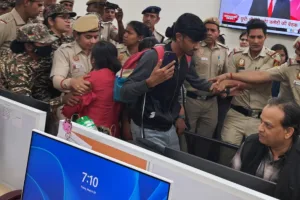
Fifteen hardcore Maoists surrendered before Sanjeeb Panda, Additional Director General (Anti-Naxal Operations), Odisha Police, at a special function held at the District Police Office (DPO), Rayagada, according to a statement issued by the government.

Statesman News Service | BHUBANESWAR |

A day after 19 Maoists surrendered before the Odisha police, 15 more hardcore red rebels carrying around a 2 crore cash reward on their heads pledged to shun the path of violence to join the mainstream in the latest setback to Naxal activities.

Fifteen hardcore Maoists surrendered before Sanjeeb Panda, Additional Director General (Anti-Naxal Operations), Odisha Police, at a special function held at the District Police Office (DPO), Rayagada, according to a statement issued by the government.

The Maoists, who surrendered, voluntarily laid down their arms and handed over their weapons to Panda, symbolising their decision to renounce violence and rejoin the mainstream of society.

The surrender of 15 Maoists reflects the steadily weakening influence of left-wing extremist ideology in the region and the growing trust of misguided youth in the government’s development-oriented and people-centric approach, the ADG (anti-Naxal) operation said on the occasion.

He emphasised that sustained operation by the Special Operation Group, the District Voluntary Force, the CRPF, and the BSF has eroded the base of the Maoists.

The ADG further assured that all surrendered Maoists would be extended the benefits under the State Government’s Surrender and Rehabilitation Policy, including financial assistance, vocational training, and skill development, to help them reintegrate into society with dignity.

The 15 Maoists include Nikhil and Indu, both State Committee Members, and they were carrying rewards of 55 lakh each. The 15 Maoists have two State Committee Members, one Divisional Committee Member, five Area Committee Members, and eight party members. Together, they were carrying a reward of Rs 1.98 crore.

They surrendered 14 weapons, including two AK-47 rifles, five SLRs, one INSAS, one sten gun, one .303, four single shots, and a huge cache of ammunition. The reward against the arms is about Rs 16 lakh.

The 15-member group was from the BGN division (Bansadhara, Ghuman, Nagabali) and was operating in Rayagada, Kandhamal, Gajapati, and Kalahandi districts.

Nikhil had joined the Maoist organisation in 2004, and he had been active in BGN since 2008. After the killing of Central Committee Member Ganesh Uike in Kandhamal in December 2025, Nikhil was the next highest-ranking Maoist in the state.

Increased security operations and successes in interior Naxal hotbeds have led the armed cadres to leave the path of violence and join the mainstream.

Subhash Ghai marks 50 Years of ‘Kalicharan’, opens up about his anxious debut days

Veteran filmmaker Subhash Ghai looks back at his debut ‘Kalicharan’ and shares memories from its release day.

Statesman News Service | New Delhi |

Veteran filmmaker Subhash Ghai has taken a nostalgic look back at his directorial debut Kalicharan, which completed 50 years since its release.

Marking the milestone on Saturday, Ghai shared how nervous he was on the day the film finally reached theatres.

The filmmaker revealed that the pressure was so intense that he was literally shivering before the release.

Ten years of struggle led to that day

In a heartfelt Instagram post, Ghai said the moment meant everything to him because it marked the result of a decade of hard work. Before stepping into direction, he had spent nearly ten years acting and writing scripts for others, all leading up to Kalicharan.

“I was at the crossroad of my life 50 years back on this day of release of my first film as a director of Kalicharan and was shivering,” he wrote, adding that the film carried the weight of his years of struggle and hopes.


View this post on Instagram


A post shared by SG (@subhashghai1)

A turning point in his career

Thankfully, the release turned out to be a major breakthrough. Kalicharan went on to become a massive blockbuster and opened the doors to a long and successful journey in cinema for Ghai.

Over the years, he delivered several iconic films including Vishwanath, Karz, Hero, Vidhaata, Meri Jung, Karma, Ram Lakhan, Saudagar, Khalnayak, Pardes and Taal.

Grateful to the team that believed in him

Looking back, Ghai expressed deep gratitude to everyone who supported him when he had no experience as a director. He thanked the producers, actors, co-writers and technicians who trusted his vision at a crucial stage of his life.

About ‘Kalicharan’

Kalicharan starred Shatrughan Sinha, Reena Roy, Premnath, Ajit, Madan Puri and Danny Denzongpa in key roles. Following its success, the film was remade in several languages, including Telugu (Khaidi Kalidasu), Kannada (Kaalinga), Tamil (Sangili) and Malayalam (Pathamudayam).

Also Read: Sara Arjun says ‘Euphoria’ came to her when life felt uncertain yet full of possibility

‘Trust has become India’s strongest currency’: Modi highlights India’s economic rise in address to diaspora in Malaysia

He noted that Malaysia has the second largest Indian origin community in the world, serving as a “living bridge” between the two countries.

Statesman News Service | NEW DELHI |

Prime Minister Narendra Modi on Saturday addressed members of the Indian diaspora in Kuala Lumpur, praising their contribution to the progress of Malaysia and describing them as a “living bridge” connecting India and Malaysia. The Prime Minister also highlighted India’s economic rise, saying that “trust has become India’s strongest currency.”

PM Modi, who is on a two-day state visit to Malaysia, also thanked his Malaysian counterpart, Anwar Ibrahim, for joining the community program and the special gesture extended to him upon his arrival in the country. In a special gesture, Prime Minister Ibraim had gone to the airport to receive Modi at the airport. The two leaders travelled together to the community centre in Kuala Lumpur in the same car.

“The warmth of your greeting reflects the beautiful diversity of our shared culture. First of all, I thank my dear friend Anwar Ibrahim for joining the community celebration. I also thank him for his very kind words on the scale and future potential of India-Malaysia friendship in his speech just now. Not just that, he came to the airport to welcome me, and he brought me here in his car. Not only his car but his seat also, this special gesture reflects his love and respect for India and for all of you,” Modi said while addressing the Indian diaspora.

Modi also recalled his promise to Ibrahim after he could not visit Malaysia for the ASEAN Summit last year. “As promised, I am here. This is my first foreign visit in 2026.”

The Prime Minister praised the “record-breaking” cultural performance to welcome him. “We have just seen a record-setting cultural performance. 800 dancers in perfect harmony. This performance will be remembered by our people for years to come. I congratulate all the performers.”

He noted that Malaysia has the second largest Indian origin community in the world, serving as a “living bridge” between the two countries. “There is so much that connects Indian and Malaysian hearts… You are the living bridge that links us. You have connected Roti Canai with Malabar Parotta. Coconut, spices, and of course, Teh tarik. The flavours seem so familiar, whether it is in Kuala Lumpur or Kochi. We understand each other so well. It must be due to the large number of common words between ur languages and Malay. I have heard that Indian music and movies are popular in Malaysia. You all know that PM Anwar Ibrahim sings very well. But many Indians back home did not know it. During his last visit, they were pleasantly surprised. Videos of him singing an old Hindi song in India went viral. It is also wonderful that he loves the Tamil songs of the legendary MGR.”
‘Trust has become India’s strongest currency’: Modi on India’s economic rise

Modi further emphasized the economic rise of India. Citing the example of recent trade deals, New Delhi has signed with several countries, Modi said, “Earlier, India was seen just as a huge market. Now we are a hub for investment and trade. India is seen as a trusted partner for growth. Whether it is the UK. UAE, Australia, New Zealand, Oman, the EU, or the USA. Countries have trade deals with India…Trust has become India’s strongest currency.”

Recalling the emotional connection the Indian community members share with India, Modi said that his government took a historic decision just a few months ago to extend the OCI Card to Malaysian citizens of Indian origin.

“India will always embrace you with open arms. That is why we made a historic decision just a few months ago. We extended the OCI Card eligibility to Malaysian citizens of Indian origin up to the sixth generation. We have been supporting the Indian Scholarship Trust Fund. We will also award the Thiruvalluvar Scholarship to students studying in India. We look forward to seeing you in the ‘Know India’ programme,” he added.

Mayawati pitches BSP as true protector of Brahmin interests ahead of 2027 UP polls

Addressing a large organisational meeting of BSP office-bearers from state to booth level on Saturday, Mayawati asserted that no other party had respected, empowered, and protected Brahmins as sincerely as the BSP during her tenure.

Statesman News Service | Lucknow |

Bahujan Samaj Party (BSP) national president and former Uttar Pradesh chief minister Mayawati once again placed strong emphasis on the concerns of the Brahmin community while reviewing the party’s preparedness for the upcoming Uttar Pradesh Assembly elections.

Addressing a large organisational meeting of BSP office-bearers from state to booth level on Saturday, Mayawati asserted that no other party had respected, empowered, and protected Brahmins as sincerely as the BSP during her tenure.

The meeting, attended by senior leaders and grassroots functionaries, focused on intensifying election preparations and strengthening the party organisation. Mayawati announced a major organisational reshuffle, promoting committed and “missionary-minded” workers and assigning them key responsibilities with the clear objective of turning “Mission 2027” into a reality on the lines of the BSP’s 2007 electoral victory.

Taking a direct swipe at the BJP-led government, Mayawati said dissatisfaction of the Brahmin community was becoming increasingly visible across the state and the country. She alleged that the Brahmins were feeling neglected, insecure and disrespected under the present regime, a situation that has reportedly made the ruling party uncomfortable. she questioned whether any other party had provided Brahmins the level of dignity, administrative representation, security and political participation that they received during BSP governments.

Reiterating the BSP’s core ideology of “Sarvajan Hitay, Sarvajan Sukhay,” she said her governments ensured justice and protection for all communities by strictly enforcing the rule of law. She claimed that during the BSP rule, Brahmins, along with Dalits, OBCs, minorities and other sections, benefitted from an impartial governance system where law prevailed over political bias. According to her, this balanced approach created social harmony, peace and a conducive environment for development.

Mayawati accused rival parties of following divisive, casteist and communal politics, stating that their policies primarily favoured a small elite while marginalising the majority. She said the anti-reservation mindset of these parties had harmed SC, ST and OBC communities, leading to difficulties in government recruitment and promotions, and warned that such policies also threatened social stability.

The BSP chief also raised concerns over contractual employment and outsourcing, claiming these practices had resulted in exploitation and severely weakened public services such as education and healthcare. She stressed that stable employment, quality schools, hospitals, roads, electricity and water supply were essential for the state’s overall progress and for restoring public confidence.

On the ongoing Special Intensive Revision (SIR) of voter lists, Mayawati urged the state government to ensure that officials assist citizens in a sensitive manner so that poor, migrant workers, women and illiterate voters are not excluded from the electoral process.

Earlier, while addressing the media, Mayawati said the meeting was called keeping in mind the limited time left before the Assembly elections. She underlined that special attention would be given to rebuilding the party’s support base among all communities, including Brahmins, completing organisational work delayed due to the SIR process, and countering what she described as persistent attempts by rival parties to weaken the BSP.

Over 1.5 million devotees expected in Kashi on Mahashivratri: Police Commissioner

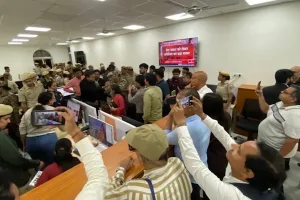
District Magistrate Satyendra Kumar, Police Commissioner Mohit Agarwal, Chief Executive Officer of the temple trust Vishwa Bhushan Mishra, and other senior officials were present at the meeting.

Statesman News Service | Varanasi |

A meeting was held at the Kashi Vishwanath Temple premises on Saturday in anticipation of over 1.5 million devotees expected to visit the temple on the auspicious occasion of Mahashivratri on February 15.

District Magistrate Satyendra Kumar, Police Commissioner Mohit Agarwal, Chief Executive Officer of the temple trust Vishwa Bhushan Mishra, and other senior officials were present at the meeting.

Police Commissioner Mohit Agarwal stated that a detailed plan has been prepared to ensure smooth darshan of the deity, considering the possibility of a large crowd on Mahashivratri. More than 1.5 million devotees are expected to arrive.
He said that proper arrangements for barricading, traffic management, parking, and routes have been made to ensure that devotees do not have to walk more than half a kilometre or wait in long queues for extended periods.

Agarwal further informed that a special control room will be established for security, where all concerned officers will monitor every aspect of the arrangements. Medical teams, ambulances, and emergency services will also be fully prepared. He said that through better coordination among all departments, efforts will be made to ensure that devotees can have darshan without any inconvenience.

The temple administration stated that special pujas, aarti, and other events on Mahashivratri will be conducted as per schedule. Devotees have been asked to arrive on time, follow the rules, and maintain patience in the crowd.

The administration has claimed to have made robust preparations for security, traffic management, sanitation, and other arrangements so that all devotees can have peaceful and convenient darshan of Baba Vishwanath on the occasion of Mahashivratri.

India, United States unveil framework for Interim Trade Agreement to enhance economic ties

It said the Interim Agreement will represent a historic milestone in the partnership between the two countries, demonstrating a common commitment to reciprocal and balanced trade based on mutual interests and concrete outcomes.

Ashok Tuteja | New Delhi |

Moving a step closer to signing a Bilateral Trade Agreement (BTA), India and the United States on Saturday announced that they have reached a framework for an Interim Trade Agreement that would lower tariffs, address non-tariff barriers, and strengthen economic ties between them.

‘’Today’s framework reaffirms the countries’ commitment to the broader US-India Bilateral Trade Agreement (BTA) negotiations, launched by President Donald J Trump and Prime Minister Narendra Modi on February 13, 2025, which will include additional market access commitments and support more resilient supply chains,’’ a joint statement issued by the two countries said. The joint statement came five days after President Trump and PM Modi announced that they had reached a trade deal between their two countries.

It said the Interim Agreement will represent a historic milestone in the partnership between the two countries, demonstrating a common commitment to reciprocal and balanced trade based on mutual interests and concrete outcomes.

The joint statement suggested that under the Interim Agreement, India will eliminate or reduce tariffs on all US industrial goods and a wide range of US food and agricultural products, including dried distillers’ grains (DDGs), red sorghum for animal feed, tree nuts, fresh and processed fruit, soybean oil, wine and spirits, and additional products.

The US will apply a reciprocal tariff rate of 18 per cent on originating goods of India, including textile and apparel, leather and footwear, plastic and rubber, organic chemicals, home décor, artisanal products, and certain machinery. Subject to the successful conclusion of the Interim Agreement, the US will also remove the reciprocal tariff on a wide range of goods identified in the Potential Tariff Adjustments for Aligned Partners, including generic pharmaceuticals, gems, and diamonds.

The US will also remove tariffs on certain aircraft and aircraft parts of India imposed to eliminate threats to national security. Similarly, consistent with US national security requirements, India will receive a preferential tariff rate quota for automotive parts subject to the tariff imposed to eliminate threats to national security. Contingent on the findings of the US investigation of pharmaceuticals and pharmaceutical ingredients, India will receive negotiated outcomes with respect to generic pharmaceuticals and ingredients.

The joint statement said the US and India commit to providing each other preferential market access in sectors of respective interest on a sustained basis. They will establish rules of origin that ensure that the benefits of the Agreement accrue predominantly to both countries.

The two countries will address non-tariff barriers that affect bilateral trade. India agreed to address long-standing barriers to the trade in US medical devices; eliminate restrictive import licensing procedures that delay market access for, or impose quantitative restrictions on, US Information and Communication Technology (ICT) goods; and determine, with a view towards a positive outcome, within six months of entry into force of the Agreement whether US-developed or international standards, including testing requirements, are acceptable for the purposes of US exports entering the Indian market in identified sectors.

Recognising the importance of working together to resolve long-standing concerns, India also agreed to address long-standing non-tariff barriers to the trade in US food and agricultural products.

The joint statement said the two countries will work towards further expanding market access opportunities through the negotiations of the BTA. The US affirmed that it intends to take into consideration, during the negotiations of the BTA, India’s request that the US continue to work to lower tariffs on Indian goods.

The joint statement said India intends to purchase USD 500 billion of US energy products, aircraft and aircraft parts, precious metals, technology products, and coking coal over the next five years.

UPSC extends call centre hours for CSE, IFoS 2026 aspirants

The call centre will remain operational on all days, including Saturdays, Sundays, and holidays, till the submission of application forms for the Civil Services Examination (CSE) 2026 and the Indian Forest Service (IFoS) Examination 2026.

Statesman News Service | New Delhi |

The Union Public Service Commission (UPSC) has extended the operational hours of its call centre to provide enhanced support and guidance to aspirants, ensuring greater ease and convenience during the ongoing application process.

The call centre will remain operational on all days, including Saturdays, Sundays, and holidays, till the submission of application forms for the Civil Services Examination (CSE) 2026 and the Indian Forest Service (IFoS) Examination 2026. It will function in two shifts, from 7:00 am to 9:00 pm, enabling candidates to seek assistance beyond regular working hours.

In addition, the strength of the call centre has been doubled to significantly reduce waiting time for applicants seeking inputs or guidance related to the application process and examination-related queries.

Emphasising the Commission’s commitment to candidate facilitation, UPSC Chairman Dr. Ajay Kumar said the extended call centre operations are part of a series of measures being undertaken to support aspirants. “These steps are aimed at facilitating aspirants and ensuring that all necessary support mechanisms are in place,” he said.

The initiative seeks to strengthen communication with applicants, enable quicker resolution of queries, and provide uninterrupted support to aspirants during this crucial phase of the examination cycle. It reflects the Commission’s continued efforts to build an examination system that is efficient, responsive, and student-centric.


Kapil Sharma’s ‘Kis Kisko Pyaar Karoon 2’ now streaming on OTT

‘Kis Kisko Pyaar Karoon 2’, starring Kapil Sharma, is now available on JioHotstar, bringing chaos and comedy to OTT audiences.

Statesman News Service | New Delhi |

Kapil Sharma’s comedy film Kis Kisko Pyaar Karoon 2 has officially made its way to OTT. After completing its theatrical run, the film is now streaming on JioHotstar, allowing viewers to enjoy the comedy from the comfort of their homes.

Also Read: The curious resurrection of Bollywood brainrot

Directed by Anukalp Goswami, the sequel continues the madness and confusion that made the first film popular among audiences.


View this post on Instagram


A post shared by JioHotstar (@jiohotstar)

Kapil Sharma leads the chaos

Kapil Sharma headlines the film with his familiar comic timing, playing the central character caught in a series of misunderstandings. The cast also includes Ayesha Khan, Parul Gulati, Tridha Choudhary, Manjot Singh and Warina Hussain, who add to the humour through their quirky characters.

Together, the ensemble keeps the story fast-paced, chaotic and full of situational comedy.

Kapil Sharma on returning to his comfort zone

Speaking about the OTT release, Kapil Sharma said in a press note that the film holds a special place in his heart. He shared that Kis Kisko Pyaar Karoon 2 allowed him to return to the kind of comedy he enjoys the most.

According to Kapil, the film is packed with confusion, madness and effortless laughter. He added that even during the shoot, there were moments when the cast couldn’t stop laughing, making the experience memorable. The actor said he is happy that audiences can now revisit the entertainer with their families at home.

Co-actors share their experience

Parul Gulati said what excited her most about the film was how openly it embraced chaos. She added that her character lives in confusion and misunderstandings, which made the role fun and unpredictable.

Ayesha Khan also shared that working on the film gave her many happy memories. She said the set was filled with laughter and positive energy, and working alongside Kapil Sharma made the experience even more enjoyable.

With its OTT release, Kis Kisko Pyaar Karoon 2 is set to reach a wider audience looking for light-hearted comedy.

Also Read: Adnan Sami reveals ‘Kabhi Toh Nazar Milao’ was composed in just five minutes

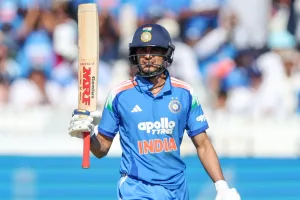
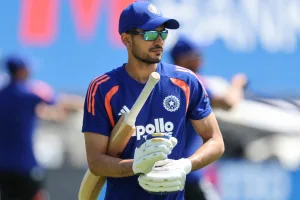
T20 World Cup India vs USA Preview: Match details, toss update, live streaming and more

India enter the tournament as favourites to become the first team to successfully defend a T20 World Cup title, while Monank Patel-led USA will aim to spring an early surprise in their campaign opener.

neha buswal | New Delhi |

Defending champions India will begin their ICC Men’s T20 World Cup 2026 campaign against the United States in Match 3 of Group A at the Wankhede Stadium, Mumbai, on Saturday, February 7. The match is scheduled to start at 7:00 PM IST, with the toss set for 6:30 PM IST, as Suryakumar Yadav’s side looks to make a strong start to their title defence on home soil.

T20 World Cup India vs USA: Toss Update

USA captain Monank Patel won the toss and elected to bowl first against India, opting to take advantage of the evening conditions and potential dew at the Wankhede Stadium.

India enter the tournament as favourites to become the first team to successfully defend a T20 World Cup title, while Monank Patel-led USA will aim to spring an early surprise in their campaign opener.

India and the USA have faced each other just once in T20 internationals, with the Men in Blue winning that encounter during the 2024 T20 World Cup in New York. After opting to field first, India restricted the USA to 110/8, with Arshdeep Singh starring with figures of 4/9, while Hardik Pandya chipped in with 2/14. Suryakumar Yadav then anchored the chase with an unbeaten 50, as India sealed a comfortable seven-wicket victory.

India vs. USA T20 World Cup: Key Players to Watch

India have received a late boost with Mohammed Siraj drafted into the squad following Harshit Rana’s knee injury, while Tilak Varma has regained full fitness. Washington Sundar remains a reserve option as he continues recovering from a side strain, with Axar Patel expected to lead the spin department. India’s hopes will rest heavily on captain Suryakumar Yadav, all-rounder Hardik Pandya, and pace spearheads Jasprit Bumrah and Arshdeep Singh.

For the USA, Andries Gous is set to return after missing their previous T20I, strengthening the top order and wicketkeeping duties. With Aaron Jones suspended, the batting order is expected to reshuffle, with skipper Monank Patel and Saurabh Netravalkar key figures in their campaign.

India vs. USA T20 World Cup: Match Details

Fixture: India vs USA, Match 3, Group A

Venue: Wankhede Stadium, Mumbai

Time: 7:00 PM IST (1:30 PM GMT)

When is the India vs USA T20 World Cup 2026 toss?

The toss for the India vs USA T20 World Cup 2026 match will take place at 6:30 PM IST, 30 minutes before the scheduled start of play.

India vs. USA T20 World Cup: Live Streaming Details

Where to watch India vs USA T20 World Cup 2026 live in India?

The live broadcast of the India vs USA T20 World Cup match will be available on the Star Sports Network TV channels, while the live streaming will be available on the JioHotstar app and website in India.

Where to watch India vs USA T20 World Cup 2026 live in the USA & Canada?

Live Streaming (USA & Canada):
The live streaming of the India vs USA T20 World Cup match will be available on the Willow TV app and website, with additional coverage on Cricbuzz.

Free Streaming:
All Team USA matches, including this clash against India, will be streamed free on Willow TV’s official YouTube channel.

TV Broadcast (USA & Canada):
The match will be televised on Willow TV, with access also available via Sling TV packages.

India vs. USA T20 World Cup: Probable Playing XIs

India: Abhishek Sharma, Ishan Kishan (wk), Tilak Varma, Suryakumar Yadav (C), Shivam Dube, Hardik Pandya, Rinku Singh, Axar Patel, Arshdeep Singh, Jasprit Bumrah, Varun Chakravarthy.

USA: Andries Gous, Saiteja Mukkamalla, Shayan Jahangir, Monank Patel (C), Milind Kumar, Harmeet Singh, Shubham Ranjane, Sanjay Krishnamurthi, Mohammad Mohsin, Shadley van Schalkwyk, Saurabh Netravalkar.

Sooryavanshi credits long-term prep for U-19 World Cup final heroics

On Friday, the 15-year-old Sooryavanshi produced a sensational 175 that helped India hammer England by 100 runs in the final and seal a record sixth title.

Statesman News Service | New Delhi |

Vaibhav Sooryavanshi’s match-winning performance in the U19 World Cup final against England was the product of a long-term preparation cycle, with the teenager pointing to months of structured work and growing trust in his skillset as the key to handling pressure on the biggest stage.

On Friday, the 15-year-old Sooryavanshi produced a sensational 175 that helped India hammer England by 100 runs in the final and seal a record sixth title. His extraordinary 80-ball knock was studded with 15 fours and 15 sixes. It was a performance befitting the biggest stage and the latest milestone in Sooryavanshi’s rapidly rising career.

Already regarded as one of the brightest young batting talents in the country, Sooryavanshi added a major final century to a growing list of achievements that includes hundreds in the IPL and for India A. His dominance throughout the tournament saw him finish with 439 runs at a staggering strike rate of 169.49, earning him the Player of the Tournament award and placing him alongside Indian greats such as Yuvraj Singh, Shikhar Dhawan and Cheteshwar Pujara, who have previously won the honour.

“I can’t express how I am feeling,” Sooryavanshi said. “All the preparation, all the support staff have put in for all the games have brought us to this stage. I would like to dedicate this award to them.

“For the last eight or nine months, all of us have been working together, and the preparation started way before the Asia Cup. That has helped us to where we are now. I have grown to become very confident in the skillset I have developed, and I know I can perform in big games under pressure,” he added.

India captain Ayush Mhatre, who shared a match-defining 142-run second-wicket partnership with Sooryavanshi, hailed the young opener’s innings as one for the ages. Mhatre contributed 53 and later had the honour of lifting the trophy.

“It is a memorable moment for us in our cricketing journey,” Mhatre said.

“The boys played very well. We played our natural game, and I am very happy. We have no words for him (Sooryavanshi) as a player or that innings. We know he is a fabulous batsman, and he has shown what he can do.

“We are happy to carry on the legacy. Rohit Sharma and Harmanpreet have won the World Cup, and now we have too. I will really miss this group of players, we will not play again in the same team, but we will carry forward the memories, this attitude and play this kind of cricket into the future,” Mhatre added.

England entered the final unbeaten but was left with an imposing target following Sooryavanshi’s onslaught. Despite a valiant chase led by Caleb Falconer’s century and Ben Dawkins’ 66, the total proved too steep.

England captain Thomas Rew acknowledged the challenge posed by the Indian opener. “It is always going to be tough when a player like that gets going,” Rew said.

“He has shown us what he can do before, and we were scratching our heads a bit at times. We did our research, we wanted to use our change ups and stick to the top of the stumps, but today Vaibhav came off and fair play to him.

“It was a great effort from our batters, Caleb played an unbelievable inning, and it is a testament to the mindset to go out and try and chase that. At the break, we were really excited about going out there, playing our shots, and having fun. We didn’t get over the line but we showed some great fight,” he added.

NDMC’s Suvidha Camp receives 61 public grievances

“The Suvidha Camp witnessed enthusiastic public participation, during which 61 grievances were formally received and taken up for redressal by the concerned NDMC departments,” the civic body said on Saturday.

Statesman News Service | New Delhi |

Reaffirming its commitment to responsive, transparent, and citizen-focused governance, the New Delhi Municipal Council (NDMC) organised a Suvidha Camp at the NDCC Convention Centre, Jai Singh Road, providing a single-window platform for facilitation, information dissemination, and expeditious redressal of public grievances for residents and service users of the NDMC area.

“The Suvidha Camp witnessed enthusiastic public participation, during which 61 grievances were formally received and taken up for redressal by the concerned NDMC departments,” the civic body said on Saturday.

The issues primarily pertained to personnel of civil engineering, horticulture, public health, enforcement, commercial, tax, and estate departments. In addition, hundreds of residents and service users visited the camp to seek guidance and information on a wide spectrum of NDMC civic services.

A defining feature of the camp was the direct, face-to-face interaction between citizens and departmental officials, fostering transparency, clarity, and swift decision-making.

Grievances were examined in detail across the table, enabling on-the-spot resolution wherever feasible. Matters requiring policy-level intervention were clearly explained to the complainants, along with the expected timelines for redressal, ensuring informed and realistic expectations.

To ensure effective and accountable grievance handling, over 100 officers and officials from more than 30 NDMC departments were deployed at the camp. Dedicated departmental help desks were closely supervised by their respective Heads of Departments, underscoring the NDMC’s resolve to deliver timely and responsible civic services.

Complementing such on-ground initiatives, the NDMC has further strengthened its digital outreach through the launch of the “Jan Suvidha Portal”, a contactless grievance redressal platform available on the NDMC website.

The portal enables citizens to lodge complaints, track their status in real time, and provide feedback on the redressal mechanism, significantly enhancing accessibility and transparency.

The NDMC has also expanded grievance redressal through social media platforms including Twitter, Facebook, and Instagram. Complaints received via these channels are continuously monitored by the Heads of Departments and addressed expeditiously, ensuring round-the-clock civic responsiveness.

Through initiatives such as the Suvidha Camp and the Jan Suvidha Portal, NDMC continues to place citizens at the core of governance, reiterating its unwavering commitment to delivering efficient, accessible, and citizen-friendly civic services.

UP ends power deficit, moves towards energy self-reliance

The gap between electricity demand and supply in the state has been consistently narrowing and has now reached an almost zero level.

Statesman News Service | Lucknow |

The power crisis in Uttar Pradesh has now become a thing of the past and the state has moved beyond its earlier image of chronic power shortages and taken decisive steps towards energy stability and self-reliance.

The gap between electricity demand and supply in the state has been consistently narrowing and has now reached an almost zero level.

The Yogi Adityanath government firmly believes that a strong power system is the foundation of a strong economy. Improved electricity supply has led to increased industrial investment, strengthened the MSME sector and generated new employment opportunities across the state.

According to official data here on Saturday, Uttar Pradesh’s total electricity requirement in the financial year 2022-23 was 144,251 lakh units. The policy and management reforms undertaken by the Yogi government to eliminate the demand-supply gap have begun to yield visible results.

In FY 2023-24, power supply increased to 148,287 lakh units, which further rose to 164,786 lakh units in FY 2024-25. In the current financial year 2025-26, up to December 2025, there has been a substantial improvement, with the power deficit virtually eliminated.

Along with power generation and supply, the UP government has placed special emphasis on strengthening the transmission and distribution network. Through the national grid, electricity has been sourced in a timely manner from surplus power states. Even during peak demand periods, power supply in Uttar Pradesh has been almost fully met, providing significant relief to industries as well as domestic consumers.

Under the Revamped Distribution Sector Scheme (RDSS), old and dilapidated power lines have been replaced, transformer capacities have been enhanced and smart metering has been promoted. These measures have helped reduce losses of distribution companies and enabled effective control over power theft.

In rural areas, large-scale work has been carried out under the Deen Dayal Upadhyaya Gram Jyoti Yojana and the Saubhagya Scheme to ensure electricity access. With power reaching villages and households, agriculture, cottage industries and small businesses have received a fresh boost.

12 Indians storm finals as India dominate BOXAM Elite International

In the men’s competition, Sachin (60kg) once again led from the front, extending his impressive run with a dominant victory over England’s Jack Dryden to seal his spot in the gold-medal bout.

Statesman News Service | New Delhi |

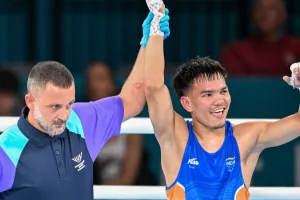
India produced a commanding display at the BOXAM Elite International 2026, with as many as twelve boxers—eight women and four men—securing places in the finals after another assured round of performances in La Nucia, Alicante, Spain.

In the men’s competition, Sachin (60kg) once again led from the front, extending his impressive run with a dominant victory over England’s Jack Dryden to seal his spot in the gold-medal bout.

The women’s section saw Olympic medallist Lovlina Borgohain (75kg) underline her class, cruising into the final with a unanimous decision win against Wales’ Rosie Eccles.

Featuring over 200 boxers from 20 countries, the prestigious tournament has witnessed India emerge as the most strongly represented nation on finals day. With twelve finalists, India sit atop the standings, ahead of Kazakhstan (11 finalists), Ukraine (5) and host nation Spain (4).

India are already assured of at least one gold medal, with the women’s 54kg final set to be an all-Indian affair, further highlighting the depth of talent within the squad.

The women’s contingent continued to assert its dominance through a series of authoritative semifinal performances. Preeti and Poonam will clash for the 54kg title, while Manju Rani (48kg), Nitu (51kg), Priya (60kg), Arundhati Choudhary (70kg) and Naina (80kg) all advanced to the finals with emphatic victories, showcasing India’s strength across multiple weight categories.

The men added further momentum to India’s campaign, with Deepak (70kg), Akash (75kg) and Ankush (80kg) also booking their places in the title bouts.

Deepak delivered one of the standout performances of the session, forcing a first-round RSC against Kazakhstan’s World Boxing Cup Finals silver medallist Nurbek Mursal. Akash and Ankush, meanwhile, displayed grit and composure to overcome tough Kazakh opponents and move into Saturday’s finals.

With a formidable presence across both men’s and women’s divisions, India will enter the final day as strong medal favourites, eyeing a rich haul at one of the most competitive international boxing meets of the season.

In letter to Amit Shah, CPI MP P Sandosh Kumar blasts BJP for using Wayanad landslides to ‘financially choke’ Kerala

Kumar accused the BJP of indulging in politics and using the disaster as a tool to “financially choke” the state that he said has consistently rejected the saffron outfit’s agenda.

Statesman News Service | NEW DELHI |

Communist Party of India (CPI) Rajya Sabha MP P Sandosh Kumar on Saturday criticized the BJP-led central government for allegedly denying Union assistance to Kerala following the 2024 Wayanad landslides.

In a letter written to Union Home Minister Amit Shah, Kumar stated that the devastating landslides that struck Wayanad district on July 30, 2024, claimed more than 400 lives and left thousands of families displaced, while also causing “enormous destruction to homes, livelihoods, and public infrastructure, running into several hundred crores of rupees.”

“It was one of the gravest tragedies Kerala has witnessed in recent times and demanded immediate, unconditional, and adequate support from the Union Government and the National Disaster Management Authority,” he said.

However, the CPI MP claimed that despite repeated requests from the Kerala government and his own interventions in Parliament, the central government refused to provide any special package to the disaster-hit state, displaying what he called “a shocking insensitivity to human suffering.”

He said that the CPI-led LDF government in Kerala ensured “comprehensive rehabilitation” of all affected families despite not getting adequate support from the Union Government.

He said that permanent model houses and rehabilitation colonies with all basic amenities, community facilities, and livelihood support are near completion and will be handed over within one and a half years. I” visited these rehabilitated settlements yesterday along with LDF leaders, and photographs of the same are being attached for your reference.”

Kumar accused the BJP of indulging in politics and using the disaster as a tool to “financially choke” the state that he said has consistently rejected the saffron outfit’s agenda.

“That the Union Government chose to extend assistance only in the form of a loan even during such a humanitarian crisis exposes the limits of the BJP’s politics, which did not hesitate to use a disaster and widespread misery as a tool to financially choke a state and its people solely because Kerala has consistently rejected the BJP’s agenda,” he said.

The CPI MP said that the federal system cannot function if disaster relief is determined by political considerations rather than constitutional duty.

“The Union Government is obligated to treat all states and all citizens equally in times of crisis,” he added, urging the home minister and the NDA Government to “reflect seriously on this partisan neglect and to uphold fairness, federal responsibility, and basic humanity in the discharge of your constitutional duties.”

Shekhawati region in Rajasthan to get Yamuna water soon: C R Patil

This project is being undertaken under the agreement signed by Rajasthan Chief Minister Bhajan Lal Sharma and his Haryana counterpart Saini in the presence of Prime Minister Narendra Modi two years ago.

Statesman News Service | Jaipur |

Union Jal Shakti Minister C R Patil said that Shekhawati region in Rajasthan will soon get its due share in water from the Yamuna under tripartite agreement involving Haryana and the Centre, besides Rajasthan.

Talking to media persons at the ruling BJP’s state headquarters here on Saturday afternoon, Patil said, “Haryana Chief Minister Naib Singh Saini on Saturday has approved the Draft Proposal Report (DPR) of the work prepared by the joint team of officials from the two states.

This project is being undertaken under the agreement signed by Rajasthan Chief Minister Bhajan Lal Sharma and his Haryana counterpart Saini in the presence of Prime Minister Narendra Modi two years ago.

He said that DPR was also being scrutinised by officials in the Jal Shakti Ministry and soon would be reverted back to the states for commencement of work. Since the water has to be fetched by the pipeline from Yamuna through Haryana, this is unlikely to take much time and hopefully would not be delayed further, Patil said.

He said that the share in the Yamuna water for Shekhawati has been Rajasthan’s due right. This could not be procured earlier in the want of efforts by the previous governments (with divergent leadership, allegiance or ideology). However, on attaining the power in the 2023 Rajasthan assembly elections by the BJP, Chief Minister Sharma remained in action mode from the day-one after assuming the office and made constant efforts to get the things done.

“Whenever he pays visits to Delhi he makes efforts and gets one thing or the other done for the state. He also would meet me and discuss this matter or the other pending schemes for the state, the Union minister said, striking a note of appreciation for CM.

He also talked of a prolonged phase of “political stability” at the Centre for the past 16 years that according to him has resulted in the fast economic growth in the country which in turn has benefited every sphere and every individual. “This is for the first time in Indian history when nine times in a row, the Union budget was presented by the same finance minister, Nirmala Sitharaman, that too under leadership of the (same) Prime Minister.

Budgeting by the same Finance Minister for a prolonged period as prolonged as 9 years, that too under the same Prime Minister, as strong as Narendra Modi, gave free working space to the FM which facilitated faster growth in the economy. This sense of political stability for such a prolonged spell is happening for the first time in our history, making India the fastest growing economy of the world, Patil said.

The result is that from the 11th ranked economy under an economist, Prime Minister Dr Manmohan Singh in 2014, we are set to soon become the 3rd largest economy of the world, he said adding this has benefited every one in each and every walk of life.

This enabled Finance Minister Sitharaman to present a forward looking union budget 2026 – 27 that will empower every stratum and all regions of the country.

Healthy economic growth facilitated the FM to make – grant the fund allocations liberally to all states in all sectors, including social security, water, energy and even defence and all sectors and arenas have now been making new strides to compete with the world powers.

Even our defence production sector has been getting global recognition for its bankable products-arms, ammunition and other equipment of world class quality and precision. The Operation Sindoor has revealed before the world the accuracy and class of these India made products, Patil proudly asserted.


Tribal harmony with nature holds lessons for the nation, says President Murmu

Beginning her address with Jai Johar and paying homage to Maa Danteshwari, the President underlined the need to preserve tribal identity, culture and education.

Statesman News Service | Jagdalpur |

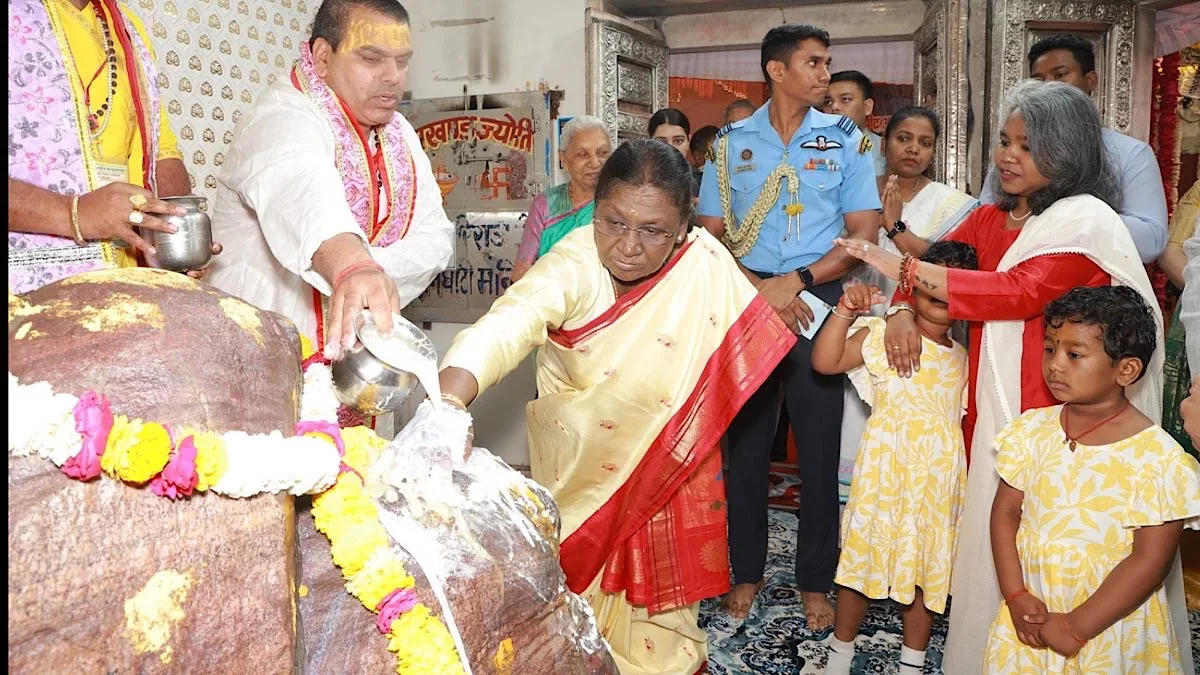
President Droupadi Murmu on Saturday said the tribal way of life, rooted in collective living and harmony with nature, offers enduring lessons for the entire country. She was speaking at the inauguration of Bastar Pandum 2026, a three-day tribal cultural festival, at Lalbagh Ground in Jagdalpur, Chhattisgarh.

Beginning her address with Jai Johar and paying homage to Maa Danteshwari, the President underlined the need to preserve tribal identity, culture and education. She said indigenous traditions reflect deep wisdom and remain relevant in modern times. “Whenever I come to Chhattisgarh, it feels like coming home,” she said, describing the warmth of the people as an invaluable gift.

The President noted that Chhattisgarh has often been viewed through a narrow lens, despite its abundant natural resources and rich cultural heritage. “This land is beautiful. It feels as though Maa Danteshwari herself has shaped it. Tribal society is precious. What is old is sweet, and these traditions teach us the essence of life,” she said.

Highlighting the tribal community’s collective ethos, President Murmu said the nation has much to learn from a society that lives in balance with nature rather than exploiting it. She observed that this philosophy has become even more relevant amid present-day environmental challenges.

Referring to the challenge of Left-wing extremism, the President described Chhattisgarh as a land of courage and sacrifice. Paying tribute to those who laid down their lives for the nation, she appealed to those who have surrendered to place faith in the Constitution and democratic institutions. “I have been informed that many have returned to the mainstream. I urge them to trust democracy and the Constitution. The government will ensure their full rehabilitation through welfare measures,” she said.

Stressing that education remains the strongest tool for empowerment, President Murmu praised initiatives such as Eklavya Model Residential Schools and urged families, especially women, to prioritise quality education for children. Drawing from her own journey from a small village in Odisha to the country’s highest constitutional office, she said education and constitutional safeguards can transform lives.

The President also expressed satisfaction over the progress of central schemes such as the Pradhan Mantri Janman Abhiyan and the Pradhan Mantri Gram Utkarsh Yojana, stating that they are driving holistic development in tribal and rural areas.

Welcoming the President, Chief Minister Vishnu Deo Sai said that Bastar Pandum has expanded steadily as a platform for tribal arts and traditions. He noted that the festival now covers 12 cultural disciplines, up from seven earlier, with participation from over 55,000 people across 1,885 gram panchayats of the Bastar region.

Culture Minister Rajesh Agrawal, presenting the welcome address, said the festival has emerged as a bridge between tribal artists and national recognition, while Governor Ramen Deka described it as a celebration that strengthens national unity through cultural diversity.

The inaugural ceremony featured traditional performances, including the Gaur dance by artists from Kondagaon, which drew wide appreciation. The President also visited exhibition stalls showcasing tribal handicrafts, paintings, forest-based medicines and indigenous knowledge systems, interacting with artisans and experts.

The event was attended by Deputy Chief Minister Vijay Sharma, Forest Minister Kedar Kashyap, BJP state president Kiran Singh Deo, legislators, tribal elders, and a large gathering of citizens.

As Bastar Pandum 2026 unfolds, Bastar Collector Akash Chhikara said the festival aims to place the region’s living tribal heritage on a wider national platform while creating sustained opportunities for local artists. The President’s address, observers noted, not only echoed the spirit of tribal pride but also articulated a broader vision of inclusive development anchored in constitutional values.