Logo

UP ends power deficit, moves towards energy self-reliance

The gap between electricity demand and supply in the state has been consistently narrowing and has now reached an almost zero level.

Statesman News Service | Lucknow |

The power crisis in Uttar Pradesh has now become a thing of the past and the state has moved beyond its earlier image of chronic power shortages and taken decisive steps towards energy stability and self-reliance.

The gap between electricity demand and supply in the state has been consistently narrowing and has now reached an almost zero level.

The Yogi Adityanath government firmly believes that a strong power system is the foundation of a strong economy. Improved electricity supply has led to increased industrial investment, strengthened the MSME sector and generated new employment opportunities across the state.

According to official data here on Saturday, Uttar Pradesh’s total electricity requirement in the financial year 2022-23 was 144,251 lakh units. The policy and management reforms undertaken by the Yogi government to eliminate the demand-supply gap have begun to yield visible results.

In FY 2023-24, power supply increased to 148,287 lakh units, which further rose to 164,786 lakh units in FY 2024-25. In the current financial year 2025-26, up to December 2025, there has been a substantial improvement, with the power deficit virtually eliminated.

Along with power generation and supply, the UP government has placed special emphasis on strengthening the transmission and distribution network. Through the national grid, electricity has been sourced in a timely manner from surplus power states. Even during peak demand periods, power supply in Uttar Pradesh has been almost fully met, providing significant relief to industries as well as domestic consumers.

Under the Revamped Distribution Sector Scheme (RDSS), old and dilapidated power lines have been replaced, transformer capacities have been enhanced and smart metering has been promoted. These measures have helped reduce losses of distribution companies and enabled effective control over power theft.

In rural areas, large-scale work has been carried out under the Deen Dayal Upadhyaya Gram Jyoti Yojana and the Saubhagya Scheme to ensure electricity access. With power reaching villages and households, agriculture, cottage industries and small businesses have received a fresh boost.

12 Indians storm finals as India dominate BOXAM Elite International

In the men’s competition, Sachin (60kg) once again led from the front, extending his impressive run with a dominant victory over England’s Jack Dryden to seal his spot in the gold-medal bout.

Statesman News Service | New Delhi |

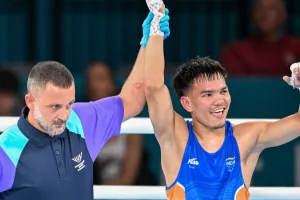
India produced a commanding display at the BOXAM Elite International 2026, with as many as twelve boxers—eight women and four men—securing places in the finals after another assured round of performances in La Nucia, Alicante, Spain.

In the men’s competition, Sachin (60kg) once again led from the front, extending his impressive run with a dominant victory over England’s Jack Dryden to seal his spot in the gold-medal bout.

The women’s section saw Olympic medallist Lovlina Borgohain (75kg) underline her class, cruising into the final with a unanimous decision win against Wales’ Rosie Eccles.

Featuring over 200 boxers from 20 countries, the prestigious tournament has witnessed India emerge as the most strongly represented nation on finals day. With twelve finalists, India sit atop the standings, ahead of Kazakhstan (11 finalists), Ukraine (5) and host nation Spain (4).

India are already assured of at least one gold medal, with the women’s 54kg final set to be an all-Indian affair, further highlighting the depth of talent within the squad.

The women’s contingent continued to assert its dominance through a series of authoritative semifinal performances. Preeti and Poonam will clash for the 54kg title, while Manju Rani (48kg), Nitu (51kg), Priya (60kg), Arundhati Choudhary (70kg) and Naina (80kg) all advanced to the finals with emphatic victories, showcasing India’s strength across multiple weight categories.

The men added further momentum to India’s campaign, with Deepak (70kg), Akash (75kg) and Ankush (80kg) also booking their places in the title bouts.

Deepak delivered one of the standout performances of the session, forcing a first-round RSC against Kazakhstan’s World Boxing Cup Finals silver medallist Nurbek Mursal. Akash and Ankush, meanwhile, displayed grit and composure to overcome tough Kazakh opponents and move into Saturday’s finals.

With a formidable presence across both men’s and women’s divisions, India will enter the final day as strong medal favourites, eyeing a rich haul at one of the most competitive international boxing meets of the season.

In letter to Amit Shah, CPI MP P Sandosh Kumar blasts BJP for using Wayanad landslides to ‘financially choke’ Kerala

Kumar accused the BJP of indulging in politics and using the disaster as a tool to “financially choke” the state that he said has consistently rejected the saffron outfit’s agenda.

Statesman News Service | NEW DELHI |

Communist Party of India (CPI) Rajya Sabha MP P Sandosh Kumar on Saturday criticized the BJP-led central government for allegedly denying Union assistance to Kerala following the 2024 Wayanad landslides.

In a letter written to Union Home Minister Amit Shah, Kumar stated that the devastating landslides that struck Wayanad district on July 30, 2024, claimed more than 400 lives and left thousands of families displaced, while also causing “enormous destruction to homes, livelihoods, and public infrastructure, running into several hundred crores of rupees.”

“It was one of the gravest tragedies Kerala has witnessed in recent times and demanded immediate, unconditional, and adequate support from the Union Government and the National Disaster Management Authority,” he said.

However, the CPI MP claimed that despite repeated requests from the Kerala government and his own interventions in Parliament, the central government refused to provide any special package to the disaster-hit state, displaying what he called “a shocking insensitivity to human suffering.”

He said that the CPI-led LDF government in Kerala ensured “comprehensive rehabilitation” of all affected families despite not getting adequate support from the Union Government.

He said that permanent model houses and rehabilitation colonies with all basic amenities, community facilities, and livelihood support are near completion and will be handed over within one and a half years. I” visited these rehabilitated settlements yesterday along with LDF leaders, and photographs of the same are being attached for your reference.”

Kumar accused the BJP of indulging in politics and using the disaster as a tool to “financially choke” the state that he said has consistently rejected the saffron outfit’s agenda.

“That the Union Government chose to extend assistance only in the form of a loan even during such a humanitarian crisis exposes the limits of the BJP’s politics, which did not hesitate to use a disaster and widespread misery as a tool to financially choke a state and its people solely because Kerala has consistently rejected the BJP’s agenda,” he said.

The CPI MP said that the federal system cannot function if disaster relief is determined by political considerations rather than constitutional duty.

“The Union Government is obligated to treat all states and all citizens equally in times of crisis,” he added, urging the home minister and the NDA Government to “reflect seriously on this partisan neglect and to uphold fairness, federal responsibility, and basic humanity in the discharge of your constitutional duties.”

Shekhawati region in Rajasthan to get Yamuna water soon: C R Patil

This project is being undertaken under the agreement signed by Rajasthan Chief Minister Bhajan Lal Sharma and his Haryana counterpart Saini in the presence of Prime Minister Narendra Modi two years ago.

Statesman News Service | Jaipur |

Union Jal Shakti Minister C R Patil said that Shekhawati region in Rajasthan will soon get its due share in water from the Yamuna under tripartite agreement involving Haryana and the Centre, besides Rajasthan.

Talking to media persons at the ruling BJP’s state headquarters here on Saturday afternoon, Patil said, “Haryana Chief Minister Naib Singh Saini on Saturday has approved the Draft Proposal Report (DPR) of the work prepared by the joint team of officials from the two states.

This project is being undertaken under the agreement signed by Rajasthan Chief Minister Bhajan Lal Sharma and his Haryana counterpart Saini in the presence of Prime Minister Narendra Modi two years ago.

He said that DPR was also being scrutinised by officials in the Jal Shakti Ministry and soon would be reverted back to the states for commencement of work. Since the water has to be fetched by the pipeline from Yamuna through Haryana, this is unlikely to take much time and hopefully would not be delayed further, Patil said.

He said that the share in the Yamuna water for Shekhawati has been Rajasthan’s due right. This could not be procured earlier in the want of efforts by the previous governments (with divergent leadership, allegiance or ideology). However, on attaining the power in the 2023 Rajasthan assembly elections by the BJP, Chief Minister Sharma remained in action mode from the day-one after assuming the office and made constant efforts to get the things done.

“Whenever he pays visits to Delhi he makes efforts and gets one thing or the other done for the state. He also would meet me and discuss this matter or the other pending schemes for the state, the Union minister said, striking a note of appreciation for CM.

He also talked of a prolonged phase of “political stability” at the Centre for the past 16 years that according to him has resulted in the fast economic growth in the country which in turn has benefited every sphere and every individual. “This is for the first time in Indian history when nine times in a row, the Union budget was presented by the same finance minister, Nirmala Sitharaman, that too under leadership of the (same) Prime Minister.

Budgeting by the same Finance Minister for a prolonged period as prolonged as 9 years, that too under the same Prime Minister, as strong as Narendra Modi, gave free working space to the FM which facilitated faster growth in the economy. This sense of political stability for such a prolonged spell is happening for the first time in our history, making India the fastest growing economy of the world, Patil said.

The result is that from the 11th ranked economy under an economist, Prime Minister Dr Manmohan Singh in 2014, we are set to soon become the 3rd largest economy of the world, he said adding this has benefited every one in each and every walk of life.

This enabled Finance Minister Sitharaman to present a forward looking union budget 2026 – 27 that will empower every stratum and all regions of the country.

Healthy economic growth facilitated the FM to make – grant the fund allocations liberally to all states in all sectors, including social security, water, energy and even defence and all sectors and arenas have now been making new strides to compete with the world powers.

Even our defence production sector has been getting global recognition for its bankable products-arms, ammunition and other equipment of world class quality and precision. The Operation Sindoor has revealed before the world the accuracy and class of these India made products, Patil proudly asserted.


Tribal harmony with nature holds lessons for the nation, says President Murmu

Beginning her address with Jai Johar and paying homage to Maa Danteshwari, the President underlined the need to preserve tribal identity, culture and education.

Statesman News Service | Jagdalpur |

President Droupadi Murmu on Saturday said the tribal way of life, rooted in collective living and harmony with nature, offers enduring lessons for the entire country. She was speaking at the inauguration of Bastar Pandum 2026, a three-day tribal cultural festival, at Lalbagh Ground in Jagdalpur, Chhattisgarh.

Beginning her address with Jai Johar and paying homage to Maa Danteshwari, the President underlined the need to preserve tribal identity, culture and education. She said indigenous traditions reflect deep wisdom and remain relevant in modern times. “Whenever I come to Chhattisgarh, it feels like coming home,” she said, describing the warmth of the people as an invaluable gift.

The President noted that Chhattisgarh has often been viewed through a narrow lens, despite its abundant natural resources and rich cultural heritage. “This land is beautiful. It feels as though Maa Danteshwari herself has shaped it. Tribal society is precious. What is old is sweet, and these traditions teach us the essence of life,” she said.

Highlighting the tribal community’s collective ethos, President Murmu said the nation has much to learn from a society that lives in balance with nature rather than exploiting it. She observed that this philosophy has become even more relevant amid present-day environmental challenges.

Referring to the challenge of Left-wing extremism, the President described Chhattisgarh as a land of courage and sacrifice. Paying tribute to those who laid down their lives for the nation, she appealed to those who have surrendered to place faith in the Constitution and democratic institutions. “I have been informed that many have returned to the mainstream. I urge them to trust democracy and the Constitution. The government will ensure their full rehabilitation through welfare measures,” she said.

Stressing that education remains the strongest tool for empowerment, President Murmu praised initiatives such as Eklavya Model Residential Schools and urged families, especially women, to prioritise quality education for children. Drawing from her own journey from a small village in Odisha to the country’s highest constitutional office, she said education and constitutional safeguards can transform lives.

The President also expressed satisfaction over the progress of central schemes such as the Pradhan Mantri Janman Abhiyan and the Pradhan Mantri Gram Utkarsh Yojana, stating that they are driving holistic development in tribal and rural areas.

Welcoming the President, Chief Minister Vishnu Deo Sai said that Bastar Pandum has expanded steadily as a platform for tribal arts and traditions. He noted that the festival now covers 12 cultural disciplines, up from seven earlier, with participation from over 55,000 people across 1,885 gram panchayats of the Bastar region.

Culture Minister Rajesh Agrawal, presenting the welcome address, said the festival has emerged as a bridge between tribal artists and national recognition, while Governor Ramen Deka described it as a celebration that strengthens national unity through cultural diversity.

The inaugural ceremony featured traditional performances, including the Gaur dance by artists from Kondagaon, which drew wide appreciation. The President also visited exhibition stalls showcasing tribal handicrafts, paintings, forest-based medicines and indigenous knowledge systems, interacting with artisans and experts.

The event was attended by Deputy Chief Minister Vijay Sharma, Forest Minister Kedar Kashyap, BJP state president Kiran Singh Deo, legislators, tribal elders, and a large gathering of citizens.

As Bastar Pandum 2026 unfolds, Bastar Collector Akash Chhikara said the festival aims to place the region’s living tribal heritage on a wider national platform while creating sustained opportunities for local artists. The President’s address, observers noted, not only echoed the spirit of tribal pride but also articulated a broader vision of inclusive development anchored in constitutional values.

Nadda: Out-of-pocket healthcare expenditure has declined considerably in India

He was addressing the Convocation Ceremony 2025–26 of Manav Rachna Educational Institutions (MREI), held with academic grandeur and enthusiasm.

Statesman News Service | New Delhi |

Union Minister for Health & Family Welfare Jagat Prakash Nadda on Saturday claimed that the out-of-pocket healthcare expenditure in India has declined sharply from 62 per cent to 39.4 per cent, driven by initiatives such as Ayushman Bharat, Ayushman Arogya Mandirs, and large-scale population screening programmes, making healthcare more accessible and affordable.

He was addressing the Convocation Ceremony 2025–26 of Manav Rachna Educational Institutions (MREI), held with academic grandeur and enthusiasm.

Highlighting the transformative progress achieved under the leadership of Prime Minister Narendra Modi over the last 11 years, Nadda noted that 23 AIIMS have been established, up from just six earlier, creating a robust network of state-of-the-art healthcare institutions across the country. He further stated that India has made remarkable advances across healthcare indicators, ranging from maternal and child health to communicable and non-communicable diseases.

He pointed out that institutional deliveries have increased from 78 per cent to 89 per cent, while Maternal Mortality Ratio (MMR) and Infant Mortality Rate (IMR) have declined at nearly three times the global average rate. Referring to tuberculosis control efforts,

Nadda highlighted that the World Health Organisation (WHO) has acknowledged India’s significant progress, with TB notification increasing substantially and the decline rate being twice the global average. He also noted that malaria-related death prevalence has reduced to 0.6 per cent despite India accounting for nearly one-sixth of the world’s population.

Underscoring the challenges ahead, he urged students to maintain both quality and scale in service delivery while addressing the needs of India’s vast population. He also acknowledged the collective contribution of parents, faculty members, institutional leadership, and support staff in shaping the students’ academic success.

Nadda exhorted graduates to always carry the sentiment that society has enabled their success and, in return, they must strive to give back by serving society selflessly and meaningfully.

Environment minister: New batch of cheetahs from Botswana expected to arrive around February-end

The initiative, he highlighted, would help Tiger Conservation policy to adapt with the challenges being encountered in present times and ensure efficient implementation of conservation measures on ground.

Statesman News Service | New Delhi |

Union Minister for Environment, Forest and Climate Change Bhupender Yadav on Saturday called for a review of all policy decisions taken in the 28 meetings of the National Tiger Conservation Authority (NTCA) held so far, to identify decisions that have become outdated, those that could not be implemented and those that have been fully executed.

The initiative, he highlighted, would help Tiger Conservation policy to adapt with the challenges being encountered in present times and ensure efficient implementation of conservation measures on ground.

Addressing the inaugural session of the ‘Conference of Chief Wildlife Wardens of Tiger Range States and Field Directors of Tiger Reserves’ in Alwar, the minister said that India has completed 50 years of tiger conservation and that this is an appropriate time for a comprehensive policy review.

Setting the tone of the two-day conference, Yadav suggested that policy decisions taken over the last five decades should be consolidated into a formal policy statement, with the issue placed as the first agenda item in the next NTCA meeting.

He said issues related to tiger population estimation, rescue and rehabilitation infrastructure, human-wildlife conflict, utilisation of the Tiger Reserve Fund and the need to strengthen tiger conservation foundations require focused deliberation. The conference would review the overall status of tiger conservation in the country and deliberate on key policy, management and operational issues.

Yadav also called for the formation of four working groups to review region-specific challenges, including changes in tiger population, and to assess the implementation of centrally sponsored schemes across the Tiger Reserves of the country.

Further, the minister also asked participants to discuss ways to enhance coordination between NTCA and institutions such as Wildlife Institute of India, Botanical Survey of India, Zoological Survey of India, and Indian Council for Forestry Research and Education, so as to incorporate research inputs from these apex organisations and derive practical benefits in tiger conservation.

Highlighting the Cheetah reintroduction programme, he said India has successfully carried out an international translocation of a wild species that had gone extinct in the country, with the project now reaching the third India-born generation of cheetahs. He said a new batch of cheetahs from Botswana is expected to arrive around February-end.

Modi Malaysia visit: PM receives warm welcome from Malaysian counterpart Anwar Ibrahim at Kuala Lumpur airport

From the airport, Modi and Ibrahim went to attend a community programme in Kuala Lumpur. They travelled together in the same car to the venue.

Statesman News Service | NEW DELHI |

Prime Minister Narendra Modi on Saturday arrived in Kuala Lumpur, Malaysia, for a two-day state visit. Upon his arrival, PM Modi was received by his Malaysian counterpart, Anwar Ibrahim, at the airport.

Children holding the national flags of India and Malaysia were lined up to welcome the Prime Minister, whose visit to the Southeast Asian nation is aimed at strengthening the bilateral ties and enhancing the ‘Comprehensive Strategic Partnership’ between the two nations.

“Landed in Kuala Lumpur. Deeply touched by the warm welcome extended by my friend, Prime Minister Anwar Ibrahim, at the airport. I look forward to our conversations and to further strengthening the bonds of friendship between India and Malaysia,” Modi said.

From the airport, Modi and Ibrahim went to attend a community programme in Kuala Lumpur. They travelled together in the same car to the venue. Sharing an image, PM Modi wrote, “The two leaders celebrating the India-Malaysia people-to-people connect! PM Anwar Ibrahim and I are heading to the community programme in Kuala Lumpur.”

Ahead of his visit, Modi said that his visit will deepen the defence and security ties between the two nations and will further enhance the economic and innovation partnership.

Also Read: Piyush Goyal shares key details of India-US trade agreement

This is Modi’s first visit since the elevation of the India-Malaysia bilateral relationship to a ‘Comprehensive Strategic Partnership’ in August 2024.

“The historic ties between India and Malaysia have seen steadfast progress in recent years. I look forward to my discussions with Prime Minister Anwar Ibrahim and further enhancing our Comprehensive Strategic Partnership,” he said in his departure statement.

He further added, “We will aim to deepen our defence and security ties, enhance our economic and innovation partnership, and expand our collaboration into new domains,” he said.

The Prime Minister also expressed his eagerness to meet the Indian diaspora in Malaysia, calling it a “living bridge” between the two nations. “Numbering nearly three million, they represent one of the largest Indian diasporas in the world. Their immense contribution to Malaysia’s progress and their role as a living bridge between our two nations provide a strong foundation to our historic friendship,” he added.

According to the Ministry of External Affairs, Modi and Ibrahim will hold a bilateral meeting and interact with the Indian community members and business leaders.

Sustained de-radicalisation efforts have made significant success in J&K: Amit Shah

Shah made these remarks during a high-level security review meeting on Jammu and Kashmir that he held here last evening.

Statesman News Service | Jammu |

Union Home Minister Amit Shah said that sustained de-radicalisation efforts have achieved significant success, accelerating the government’s vision of a terror-free Jammu and Kashmir.

Shah made these remarks during a high-level security review meeting on Jammu and Kashmir that he held here last evening.

The Lieutenant Governor of Jammu & Kashmir, the Union Home Secretary, the Director, Intelligence Bureau (IB), the Chief of Army Staff, the Chief Secretary, and the Director General of Police of Jammu and Kashmir, as well as the Heads of Central Armed Police Forces (CAPFs) and other senior officers, were present in the meeting.

Shah appreciated the efforts of the security agencies in dismantling the terror ecosystem in Jammu and Kashmir. He said that the terror ecosystem nurtured by elements inimical to India in J&K has been almost crippled due to the concerted efforts of the Modi government.

He reiterated the unwavering commitment of the Modi government to attain the goal of a terror-free Jammu and Kashmir. Innovative measures to further reinforce the watertight security cordon were also discussed in the meeting.

The Union Home Minister instructed taking further steps to engage the youth. He stressed that major initiatives to build up the start-up ecosystem, sports sector, etc., need to be taken to ensure youths are engaged in income-generating activities.

Shah directed all security agencies to remain alert and continue work in a coordinated mode to ensure that the gains achieved in recent times are sustained and the goal of ‘terror-free J&K’ is achieved at the earliest. He assured that all the resources will be made available in this endeavour.

Shah also met victims of terrorism and handed over to them job appointment letters.

He also held a meeting with BJP MLAs and party office bearers.

Before returning to New Delhi on Saturday, the Home Minister reviewed the ongoing development projects in J&K.

Bhubaneswar–Cuttack–Puri–Paradip Economic Region set to become Odisha’s growth engine: CM Mohan Majhi

Launching the comprehensive economic plan for the BCPPER, prepared by NITI Aayog, Majhi said each city in the region has its own unique strengths and identity—Bhubaneswar in technology, Cuttack in business traditions, Puri in cultural heritage, and Paradeep in port-led development.

Statesman News Service | BHUBANESWAR |

The Bhubaneswar–Cuttack–Puri–Paradip Economic Region (BCPPER) will be developed as a major growth engine of Odisha’s economy, with the region poised to play a significant role in India’s economic growth, Chief Minister Mohan Majhi said on Saturday.

Launching the comprehensive economic plan for the BCPPER, prepared by NITI Aayog, Majhi said each city in the region has its own unique strengths and identity—Bhubaneswar in technology, Cuttack in business traditions, Puri in cultural heritage, and Paradeep in port-led development.

The comprehensive plan envisions connecting these cities with modern infrastructure and implementing diverse projects in each area. More than 80 projects have been planned in sectors such as metal downstream industries, biotechnology, textiles, chemicals, tourism, education and IT. In addition, over 30 policy initiatives will be undertaken to transform the entire region into a laboratory of development and prosperity, he added.

Referring to the Union Budget 2026–27, Majhi pointed out that the Central Government has announced the City Economic Regions (CER) initiative, under which BCPPER has been included. An allocation of Rs 5,000 crore has been earmarked by the Central Government for the development of each CER.

The BCPPER region currently contributes 19 per cent of Odisha’s economy. As of 2025, the economic size of the region stands at USD 22.4 billion, with a target of scaling it up to USD 500 billion by 2047. With the guidance of Prime Minister Narendra Modi and the support of the Central Government and NITI Aayog, the double-engine government in the state will develop this region into a major centre of economic transformation, he asserted.

The economic plan for BCPPER would play a decisive role in shaping Odisha’s future and significantly contribute to the state’s economic growth.

Similar plans will be prepared for major cities in other districts in the coming days. He added that since assuming office, the Chief Minister has prioritised urbanisation, which is reflected in the creation of 28 new Notified Area Councils, seven municipalities, and one municipal corporation, State’s Housing and Urban Development Minister Krishna Chandra Mahapatra said on the occasion.

The BCPPER project is a key pillar in building a developed Odisha. While proposals have been made for the development of 20 major cities across the country, BCPPER has been placed among the top five. The growth of this region will directly benefit the people, improving their standard of living. He urged the state government to ensure speedy implementation of the plan, NITI Aayog Member Rajiv Gauba noted.

NITI Aayog CEO B V R Subrahmanyam, speaking on the occasion, said 70–80 per cent of India’s GDP comes from urban areas, and the target is to bring more than half of the population under urbanisation by 2047. After Mumbai, Surat, Visakhapatnam, and Varanasi, this is NITI Aayog’s fifth such economic plan.

Pakistan likely to drop India match boycott amid talks over increased ICC funding: Reports

The PCB is reportedly in backchannel talks with the ICC, with Singapore Cricket Association chairman Imran Khawaja and Oman Cricket chief Pankaj Khimji acting as mediators.

Statesman News Service | New Delhi |

As the T20 World Cup begins today, the drama around one of cricket’s most storied rivalries is once again in focus. On Sunday, the Pakistan government announced that its national cricket team would not play the group-stage match against India at Colombo’s R. Premadasa Stadium in February. According to reports, the Pakistan Cricket Board (PCB) is likely using the decision as leverage to seek an increase in annual funding from the International Cricket Council (ICC).

The boycott of the India vs. Pakistan match could reportedly cost world cricket more than $250 million in revenue, underlining the commercial significance of the fixture.

However, behind-the-scenes negotiations are ongoing. The PCB is reportedly in backchannel talks with the ICC, with Singapore Cricket Association chairman Imran Khawaja and Oman Cricket chief Pankaj Khimji acting as mediators. A source close to the developments told Telecom Asia Sport that a solution now appears closer for what is considered the highest revenue-generating match of the T20 World Cup.

“Pakistan’s strong stance has put them in a good position to bargain for long-standing demands. Many cricket administrators have felt that Pakistan, being a crucial part of the most lucrative fixture in world cricket, deserves greater funding,” the source was quoted as saying.

According to the report, Pakistan currently receives $34.5 million annually from the ICC revenue pool, ranking fourth behind India, England, and Australia.

Sri Lanka Cricket (SLC) has also stepped in to convince Pakistan to reconsider its stance, as co-hosts stand to lose significant foreign exchange revenue from travelling Indian fans and gate receipts for the high-profile match.

Beyond financial concerns, the PCB is also pushing for ICC mediation to revive bilateral ties with the Board of Control for Cricket in India (BCCI). However, sources indicated that the resumption of full bilateral series remains unlikely without clearance from the Indian government.

The PCB has reportedly conveyed that it will persuade the Pakistan government to reverse the decision if its demands are met, including assurances on funding and broader cricketing ties.

Smriti Mandhana’s mom sparks social media buzz with Palash Muchhal post, later deletes it

A meme shared by Smriti Mandhana’s mom involving Palash Muchhal stirred conversation online before it was removed, here’s what we know.

Statesman News Service | New Delhi |

Smriti Mandhana’s mother briefly grabbed attention on social media after sharing a meme featuring singer-composer Palash Muchhal.

The post appeared on Instagram and drew reactions from netizens before it was deleted, raising questions about what she meant and why she took it down.

The meme that started it

The meme shared by Mandhana’s mom was reposted from another social media account and showed a humorous comparison involving Palash Muchhal.

It quickly caught people’s eye because it appeared just after Mandhana’s team won the Women’s Premier League (WPL), leading some to speculate whether it was a dig at Mandhana’s former fiancé, Palash Muchhal.

However, the post didn’t stay up for long. Within a short period, Mandhana’s mother removed the meme from her Instagram Story, leaving many wondering about the intention behind the share.

image
Source: Instagram

Reactions and rumours online

Several fans on social media began discussing the deleted post, with some interpreting it as playful teasing and others reading more into it. A few users even reposted screenshots of the original meme before it was taken down, adding to the online buzz.

However, neither Smriti Mandhana nor her mother has publicly explained why the post was deleted or what it meant.

Since the post was removed quickly, many believe it might have been reshared in a moment of fun without any deeper meaning.

With no official statement from Mandhana’s family or Palash Muchhal on the matter, it remains a case of social media noise rather than a confirmed message or criticism.

What Smriti Mandhana is focused now

Meanwhile, Smriti Mandhana continues to enjoy success on the cricket field, celebrated for her performances in the WPL. Fans are also largely focused on her achievements, and the brief social media stir seems to have passed as quickly as it began.


View this post on Instagram


A post shared by Smriti Mandhana (@smriti_mandhana)


Also Read: Smriti Mandhana and Palash Muchhal are not getting married: The inside story behind the called-off wedding

Photo

  • img
  • img
  • img
  • img
  • img
  • img
  • img
  • img
  • img
  • img
  • img

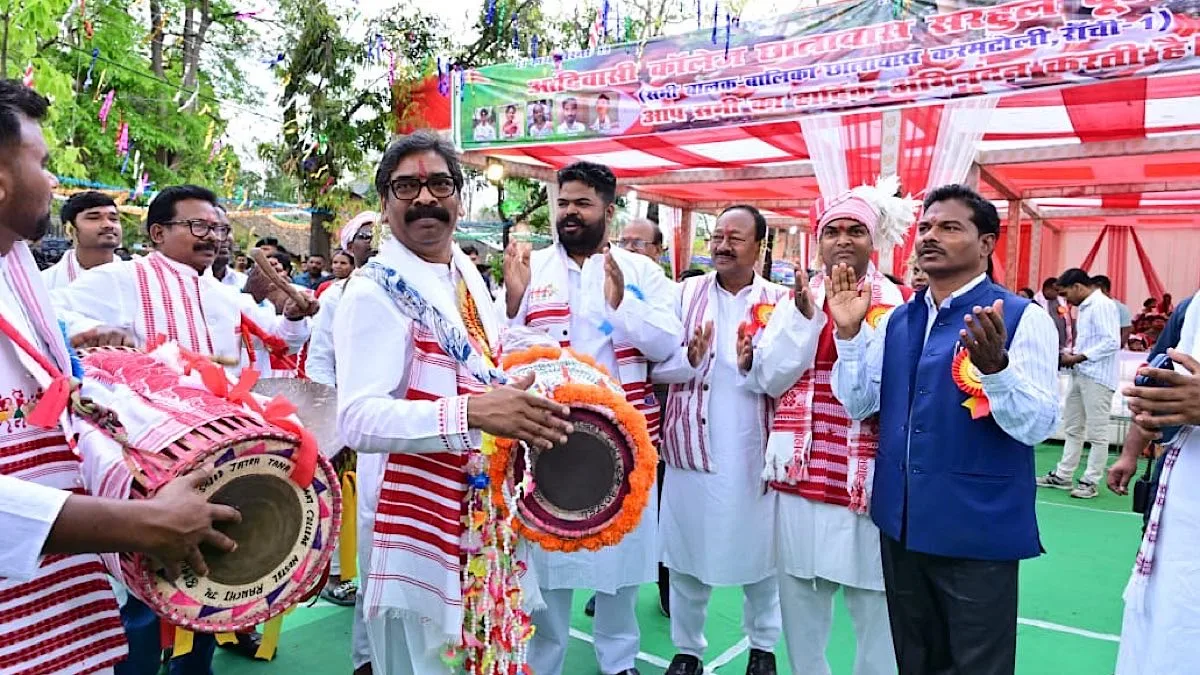
Visuals from Bastar Pandum 2026 Opening with President of India in Jagdalpur

Visuals from Bastar Pandum 2026 Opening with President of India in Jagdalpur

MORE Photo STORIES

Adnan Sami reveals ‘Kabhi Toh Nazar Milao’ was composed in just five minutes

Adnan Sami recalls how his iconic song ‘Kabhi Toh Nazar Milao’ came to life in just five minutes. It was ‘the moment’ for the singer-composer.

Statesman News Service | New Delhi |

Singer-composer Adnan Sami recently took fans down memory lane, sharing an interesting story about one of his most loved songs, Kabhi Toh Nazar Milao.

The musician revealed that the iconic melody was born not after hours of effort, but in a random moment of inspiration that came within five minutes.

The piano that started it all

Posting a throwback picture of the piano on which the song was composed, Sami recalled how the tune came to him unexpectedly one evening.


View this post on Instagram


A post shared by ADNAN SAMI (@adnansamiworld)


According to him, it was a quiet moment right after dinner when he casually walked past the instrument and decided to play a few notes. That spontaneous pause turned into history.

‘The mukda came to me instantly’

As Sami began playing with the keys, the song’s mukda suddenly came in his mind. “I composed the mukda within five minutes,” he shared, adding that the melody arrived effortlessly, without planning or pressure.

Reflecting on the experience, the musician noted that genuine inspiration doesn’t come itself, it simply appears when least expected.

When instinct beats effort

For Sami, the experience reinforced a belief he has carried throughout his career: that true creativity often strikes in random moments. “Those who understand inspiration know it can come instantly,” he wrote, describing the episode as a defining “moment” in his musical journey.

The result, he added, was unexpected and extraordinary. The album went on to become a record-breaking chart-topper, holding the No.1 position for nearly a year and a half.

A timeless song and a lasting legacy

Kabhi Toh Nazar Milao, featuring Aditi Govitrikar, remains one of Adnan Sami’s most iconic compositions. Over the years, it has continued to resonate with listeners, becoming a legendary with his signature melodic style.

A career shaped by versatility

Adnan Sami is known for effortlessly blending Indian and Western musical traditions and performing in multiple languages, including Hindi, Urdu, English, Telugu, Tamil, Kannada and Malayalam. The piano remains his most distinctive instrument, earning him recognition as one of the first musicians to adapt Indian classical music to the piano.

Raised and educated in the United Kingdom, Sami later became a naturalised Indian citizen in 2016. In recognition of his contribution to music, he was honoured with the Padma Shri.
Songs that defined an era

Some of his most memorable tracks include Lift Karadey, Kabhi Nahi, Tera Chehra, Bheegi Bheegi Raaton Mein and Bhar Do Jholi Meri, each reflecting his ability to blend emotion with melody.
Also Read: The curious resurrection of Bollywood brainrot

India to get AI chips; agri and dairy interests safeguarded: Piyush Goyal on India-US trade deal

The India-US trade deal is aimed at achieving USD 500 billion bilateral trade annually, Piyush Goyal said, adding the interests of farmers and dairy industry have been completely safeguarded.

Deepak Nagpal | New Delhi |

Union Commerce and Industry Minister Piyush Goyal on Saturday described the trade agreement between India and the United States as a very important step in the journey towards becoming a Viksit Bharat.

“The bilateral trade agreement has been signed looking at the future by the two leaders (PM Narendra Modi and President Donald Trump),” Goyal said at a press conference organised to share the details of the India-US Joint Statement on the Interim Trade Agreement released on Friday.

The deal is aimed at achieving USD 500 billion bilateral trade annually, Goyal said, adding the interests of farmers and dairy industry have been completely safeguarded.

The joint statement finalised late last night has brought about a wave of happiness and optimism across the country among common citizens and various sectors, he said further.

The minister said the US has agreed to the first part of the trade deal to strengthen bilateral ties with India. He stated that overall tariffs have been brought down from 50 per cent to 18 per cent.

The tariffs on India are now lower than all competitive countries in the region, he said further, pointing out that the US tariffs on China are about 35 per cent, about 20 per cent on Vietnam and Bangladesh, etc.

Zero duty on many products

According to Goyal, many Made-in-India products will attract zero duty.

“Gems and diamonds, pharmaceutical products will attract zero duty. Smartphones and many other items will continue to attract zero duty in the future as well. Many agricultural exports will also attract zero reciprocal tariff in future like spices, tea, coffee, coconut and coconut oil, vegetable wax, cashew nut, etc. Many types of fruits and vegetables like avocado, mango, banana, guava, pineapple, mushrooms, some types of cereals, some bakery products, and many processed food items will also attract zero tariffs,” Goyal told the press.

“Many other Indian exports on which reciprocal tariff will be reduced to zero include aircraft and machinery parts, pharma products including generic drugs, gems and diamonds, clocks and watches, essential oils, some home decor items, inorganic chemicals, instruments and apparatus, paper, plastic and wood items etc. Silk products will also attract zero duty,” he added.

Agri and dairy interests protected

The minister specifically pointed out agricultural and dairy products on which no concessions or relaxations have been provided under the deal.

“No GM (genetically modified) crops will be imported. No concessions have been made on meat, poultry, maize, dairy items, soyabean, rice, wheat, sugar, millets like jowar, bazra and ragi. There will be no concessions on fruits grown in ample quantity in India like banana, strawberry, cherries, citrus fruits, green peas, kabuli chana, moong etc.

“Animal feed products like groundnut, honey, non-alcoholic beverages, essential oils, ethanol, tobacco – no concessions have been made on these items under the deal,” the minister announced.

“I say with full confidence that this deal between India and the US protects the interests of farmers, MSMEs, handlooms and handicrafts. It, in fact, provides opportunities in American markets to the youth, women, those involved in toys, leather and textiles, sports goods industries etc,” Goyal stated further.

Rejecting the opposition’s charge on alleged compromises made in agreeing to the trade deal with the US, the Commerce and Industry Minister said there are some people in the country who are against the interests of the farmers. “They don’t worry about the farmers’ interests, but they mislead the public of the nation. They are surprised to see that no steps have been taken in the India-US trade agreement that go against the interests of the farmers of the nation,” the minister said.

He further asserted that all those products on which India is self-reliant have been kept out of the purview of the agreement.

On US imports into India, Goyal said, “We have opened our markets for the US on some products like Distiller’s Dried Grains with Solubles (DDGS), wines and spirits in which we have kept a minimum import price also.”

India to get AI chips, data centres

On the question of the US supplying ICT products, Goyal stated that America has agreed to supply these items, adding India and the US are not competitors, but they complement each other.

“That is more directed towards safeguarding our interest from countries which are known to do predatory pricing or supply goods at irrational prices, which are even sometimes lower than the cost of manufacture in India. A country like the United States of America, where the cost of labour is probably 50 times the cost of labour in India, which has a per capita income of USD 90,000 compared to India where it is at USD 3,000 per capita. There is certainly no competition. We actually complement each other,” Goyal said.

The minister pointed out that for national security, India needs many ICT products.

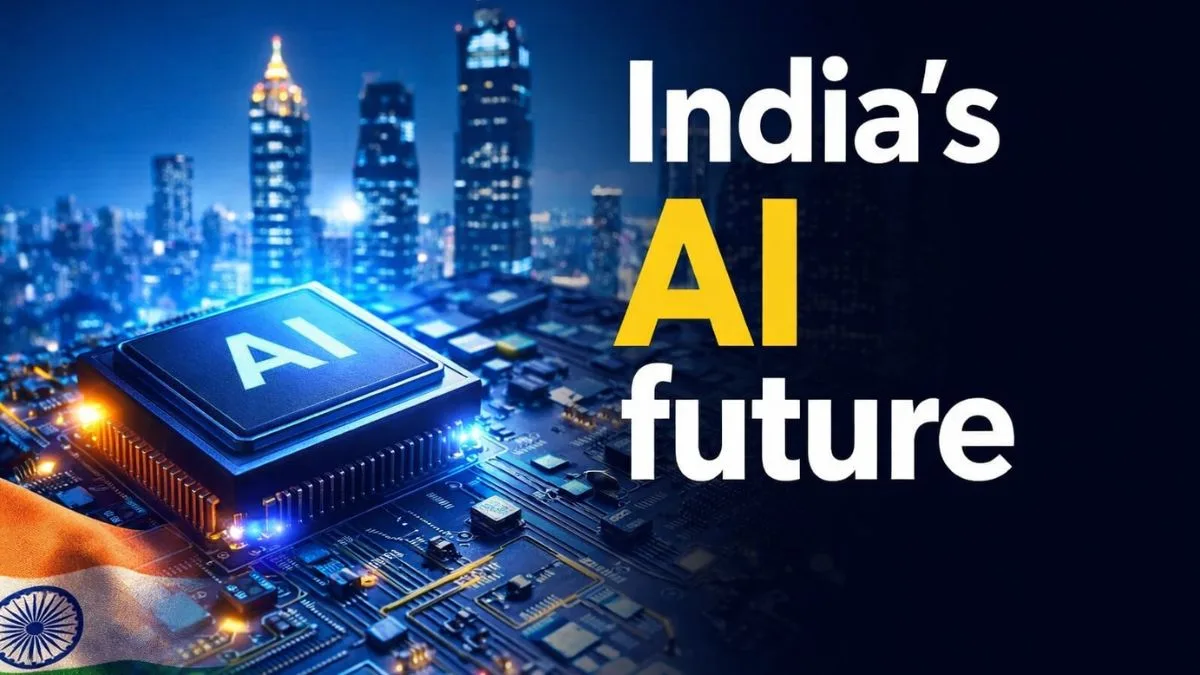
“For example, NVIDIA chips. We will certainly need AI equipment. We will certainly need data centres if we have to remain abreast with what is happening in the world, if our IT companies have to reorient themselves to become more in tune with the needs of the world. We will need these important ICT products. It is a big win for India that America has agreed to provide us all these ICT products which are the need of the hour in our country,” the minister said.

When asked whether India will stop buying oil from Russia, the minister said the Ministry of External Affairs will provide details on the same.

Kuno National Park sees birth of five Cheetah cubs, population hits 35

“A moment of immense pride and joy for Project Cheetah as Aasha, the Namibian cheetah and a proud second-time mother, gave birth to five cubs on Saturday at Kuno National Park,” the minister said.

UNI | New Delhi |

Kuno National Park has welcomed the birth of five cheetah cubs, marking a significant moment for Project Cheetah, Cabinet Minister for Environment, Forest and Climate Change Bhupender Yadav said in a post on Saturday.

“A moment of immense pride and joy for Project Cheetah as Aasha, the Namibian cheetah and a proud second-time mother, gave birth to five cubs on Saturday at Kuno National Park,” the minister said.

With the new births, “the tally of Indian-born surviving cubs rises to 24, marking the eighth successful cheetah litter on Indian soil, a significant milestone in India’s cheetah conservation journey, undertaken and nurtured under the environmentally-conscious leadership of PM Narendra Modi ji,” he added.

Calling the development a collective effort, Yadav said, “This joyous achievement stands as a shining testimony to the unwavering dedication, skill, and commitment of the field staff and veterinarians working tirelessly on the ground.”

He further noted, “With their arrival, the total cheetah population in India now stands at 35.”

Expressing optimism for the future, the minister said, “May Aasha and her cubs thrive, flourish, and sprint India’s cheetah story to even greater success,” describing the moment as “a truly historic and heart-warming moment for wildlife conservation in India.”

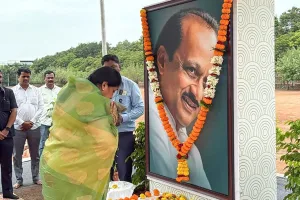
NCP workers immerse late Ajit Pawar’s ashes in sea of Agni Theertha in Rameswaram

Pawar’s last rites were carried out with full state honours at the Vidya Pratishthan ground in Baramati on January 29, where his sons lit the funeral pyre and carried out the final rituals.

ANI | New Delhi |

The NCP workers on Saturday bid farewell to former Maharashtra Deputy CM Ajit Pawar by immersing his ashes in the sea of Agni Theertha in Rameswaram.

Pawar’s last rites were carried out with full state honours at the Vidya Pratishthan ground in Baramati on January 29, where his sons lit the funeral pyre and carried out the final rituals.

Several prominent leaders and dignitaries, including Union Home Minister Amit Shah, Maharashtra Chief Minister Devendra Fadnavis, Union Minister Nitin Gadkari, Nationalist Congress Party (Sharadchandra Pawar) chief Sharad Pawar, and actor Riteish Deshmukh, attended the funeral and paid their last respects.

Earlier in the day, full state honours were accorded as Ajit Pawar’s mortal remains were taken to the Vidya Pratishthan ground for the last rites.

Ajit Pawar’s wife, Sunetra Pawar, and sons, Parth and Jay and other family members were present. Senior Congress leader Sushil Kumar Shinde, along with his daughter Praniti Shinde, also arrived to attend the funeral.

Supporters of Ajit Pawar chanted “Ajit Dada Amar Rahe” as his mortal remains were brought to the ground.

Ajit Pawar was killed in a plane crash on January 28 in Maharashtra’s Baramati.

According to DGCA, five people, including the crew, on board the chartered plane flying from Mumbai, Maharashtra, to Baramati, died after a crash-landing occurred at the runway threshold in Baramati.

Notably, his wife Sunetra Pawar stepped into fill the vacant post of Deputy Chief Minister. With this, Sunetra Pawar becomes the first woman Deputy Chief Minister of Maharashtra.

Sunetra Pawar has been allocated the portfolios of State Excise Duty, Sports and Youth Affairs and Minorities Development and Aukaf.

Ajit Pawar was the longest-serving Deputy Chief Minister of Maharashtra. He served in the position for six terms within various governments. He had worked as Deputy Chief Minister in the cabinets of Prithviraj Chavan, Devendra Fadnavis, Uddhav Thackeray and Eknath Shinde.