Logo

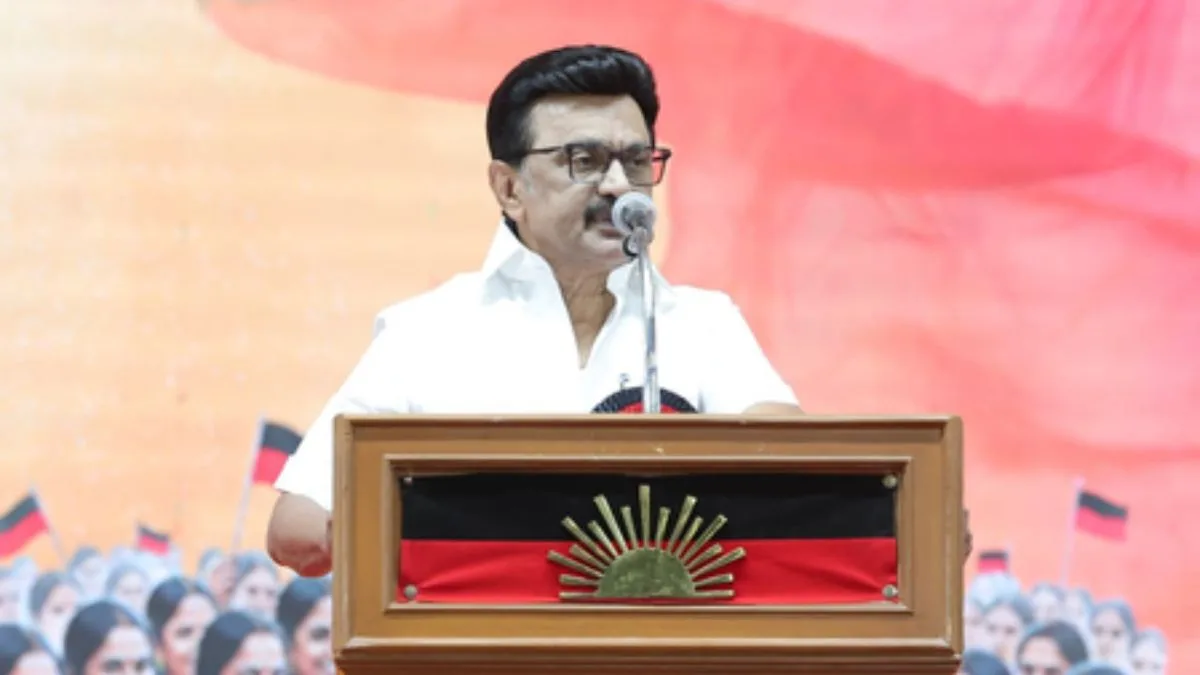
DMK sets deadline for seat-sharing talks amid alliance strain

With the Assembly elections scheduled for April 23, the ticking clock has added urgency to the negotiations.

Statesman News Service | New Delhi |

Mounting pressure within the DMK-led alliance has prompted the party leadership to draw a hard line, asking its partners to accept the proposed seat-sharing formula by Monday (March 23) or risk delays in finalising electoral arrangements.

With the Assembly elections scheduled for April 23, the ticking clock has added urgency to the negotiations.

Despite multiple rounds of discussions, key allies such as the Viduthalai Chiruthaigal Katchi (VCK), the CPI(M), and the Desiya Murpokku Dravida Kazhagam (DMDK) have not yet signed on to the numbers offered by the DMK.

The lack of consensus has created unease within the coalition at a crucial juncture, as preparations for filing nominations are set to begin soon.

The VCK has been among the most vocal in expressing its dissatisfaction. Party leader Thol Thirumavalavan, in a strongly worded video message, conveyed the party’s disappointment over what it sees as an inadequate allocation. However, insiders indicate that backchannel negotiations are continuing, and a compromise could be on the cards.

Meanwhile, the CPI(M) has intensified internal consultations to assess its options.

The party leadership convened a series of high-level meetings to deliberate on the DMK’s offer, which is understood to be lower than its expectations.

While the Left party is weighing its response carefully, it has not yet communicated its final stand to the DMK.

The DMDK, which joined the alliance in the run-up to the elections, has maintained that talks are still in progress. Party leaders have indicated that both the seat count and constituency distribution will be decided only after a mutually agreeable formula is reached, suggesting that negotiations remain fluid.

Adding another layer of complexity, the Makkal Needhi Maiam (MNM), led by Kamal Haasan, has declined the DMK’s suggestion to contest under the alliance symbol.

The party has made it clear that it intends to retain its own ‘Torch Light’ symbol, a position that the DMK leadership is still evaluating.

With the deadline looming, the coming days are expected to be decisive in shaping the final contours of the DMK-led alliance as it gears up for a high-stakes electoral contest.

‘Best wishes for golden future’: Prez Murmu, PM Modi on Bihar Diwas

President Droupadi Murmu on Sunday led the nation in extending greetings on the occasion of Bihar Day, highlighting the state’s rich historical legacy and its continued contribution to India’s development.

Statesman News Service | New Delhi |

President Droupadi Murmu on Sunday led the nation in extending greetings on the occasion of Bihar Day, highlighting the state’s rich historical legacy and its continued contribution to India’s development.

In a post on X, President Murmu said, “Heartfelt greetings of Bihar Day to all the people of Bihar residing in the country and abroad. As the land of the world’s first republic, and along with it, the birthplace of glorious empires and great cultural-spiritual traditions, this soil has always enriched the land of India by making contributions in various fields. I am confident that the residents of the state, with their boundless talent and hard work, will play an important role in the development of Bihar and the entire country. I extend my best wishes for a golden future to the state and all its residents.”

Prime Minister Narendra Modi also conveyed his greetings, emphasising Bihar’s role in India’s progress. In his message, he said, “On the occasion of Bihar Day, heartfelt greetings to all my family members in the state. Our province, which imparts grandeur and divinity to India’s heritage, is today engaged in crafting ever-new chapters of progress. I am confident that the dedication and capability of the hardworking and energetic people here will greatly contribute to realising the resolve of a developed Bihar alongside a developed India.”

Union Home Minister Amit Shah highlighted Bihar’s intellectual and cultural contributions. He said, “Renowned for its rich culture, traditions, and unique arts, Bihar has always shown the country the path to social justice and intellectual awakening. From the glorious tradition of knowledge at Nalanda and Vikramshila to the freedom struggle and the Emergency period, Bihar has made invaluable contributions to nation-building in every era. Today, Bihar is creating new benchmarks of progress and advancement by preserving its vast heritage and traditions. Heartfelt greetings of Bihar Day to all sisters and brothers of Bihar.”

Union Minister Shivraj Singh Chouhan extended his wishes, stating, “Heartfelt congratulations and best wishes to all the residents of Bihar on the Foundation Day of Bihar state, the land blessed with a rich culture, glorious history, spirituality and revolutionary fervour, and the birthplace of great ascetics and noble souls!”

Bihar Chief Minister Nitish Kumar also greeted the people and called for collective efforts toward development. He said, “Heartfelt congratulations and best wishes on the occasion of Bihar Day. Bihar’s history has been glorious, and at present, we are shaping a glorious future for Bihar through our determination. I call upon all of you to fulfil the resolve for a prosperous Bihar. Together, we will take Bihar’s pride to new heights.”

Uttar Pradesh Chief Minister Yogi Adityanath also extended his wishes, stating, “Heartfelt congratulations and best wishes to all the residents of Bihar on the Foundation Day of Bihar, the land of revolution, enriched with popular faith and cultural splendour. Under the illustrious guidance of the Hon’ble Prime Minister Shri Narendra Modi Ji and the able leadership of the Hon’ble Chief Minister Shri Nitish Kumar Ji, may the state of Bihar, progressing on the path of good governance, establish new benchmarks of prosperity and all-round development — this is the prayer to Mother Janaki and Lord Shri Ram.”

On March 22, 1912, Bihar was carved out of the Bengal Presidency, marking the beginning of its distinct identity.

With over a century of history, the state is celebrating its 114th Foundation Day this year. Over the course of its remarkable journey, Bihar has produced numerous eminent personalities who have left an indelible mark in diverse fields, including politics, literature, sports, and business, earning recognition and respect both nationally and globally.

Trump’s Hormuz ultimatum explained: Why threat to power plants signals major escalation in ongoing conflict

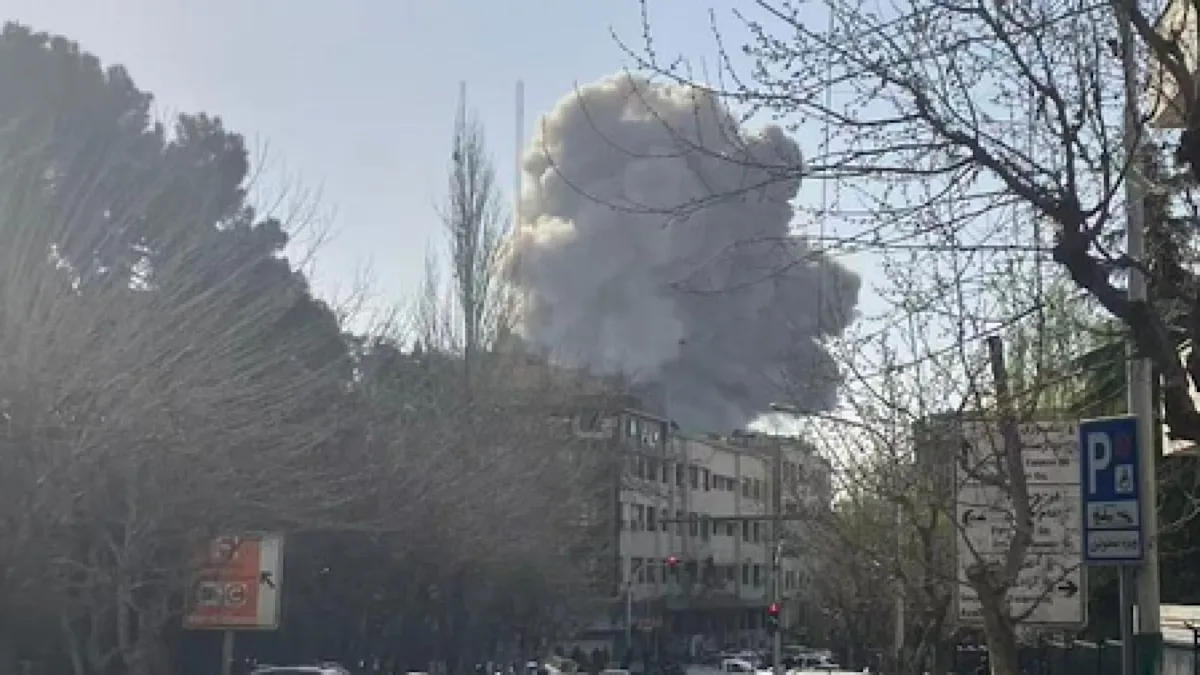
Because Trump specifically referred to “the biggest,” attention has centred on the Damavand power plant, one of the country’s most important power hubs.

Statesman News Service | New Delhi |

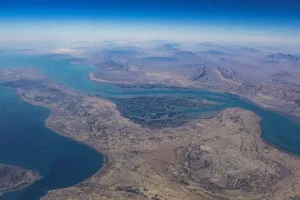
Tensions in West Asia sharpened on Sunday after US President Donald Trump warned that the United States would strike Iran’s power infrastructure if the Strait of Hormuz is not reopened within 48 hours. The statement points to a possible shift in the conflict, away from military targets and towards critical civilian systems, with potentially serious humanitarian and economic fallout.

With the clock now ticking, the next two days could prove decisive, not just for the region, but for global energy flows and market stability.

The 48-hour ultimatum

In a post on Truth Social, Trump said Iran must ensure the Strait of Hormuz is “fully open, without threat” within 48 hours. Failing that, he warned, the US would begin targeting Iranian power plants.

He added that any such strikes would begin with “the biggest one first,” a remark that has drawn attention to the country’s largest electricity facilities.

The warning comes at a time when shipping through the strait has already been disrupted, fuelling concerns over oil supply and pushing up global energy prices.

Why this marks a significant escalation

What stands out in Trump’s warning is the nature of the targets. Power plants are not frontline military assets; they are part of a country’s core civilian infrastructure.

Hitting them could trigger effects far beyond the battlefield:

  • Prolonged power outages across cities
  • Disruptions in hospitals and emergency services
  • Water and sewage systems failing
  • Wider humanitarian strain on the population

In practical terms, such strikes would impact daily life for millions, raising the stakes of the conflict considerably.

Focus shifts to the ‘largest’ target

Iran operates several large power stations, including the Damavand plant near Tehran (around 2,868 MW), Kerman in the southeast (about 1,910 MW), and the Ramin plant in Khuzestan (roughly 1,890 MW).

Because Trump specifically referred to “the biggest,” attention has centred on the Damavand facility, one of the country’s most important power hubs.

Reports suggest such high-capacity gas-based plants could be among potential targets if the threat is carried out.

Why Damavand is strategically important

The Damavand plant plays a key role in keeping electricity flowing in and around Tehran, a region with heavy demand and dense population.

  • Capacity: roughly 2,868 MW
  • Location: Pakdasht, near Tehran
  • Type: combined-cycle gas plant

Facilities like this help stabilise the grid and meet peak demand. A disruption here would likely ripple across the wider network, affecting both households and industry.

Iran’s warning of retaliation

Iran has made it clear that any strike on its infrastructure will not go unanswered.

The Islamic Revolutionary Guard Corps (IRGC) has indicated it could respond by targeting US and allied infrastructure in the region.

That raises the risk of a broader cycle of attacks, potentially extending beyond military sites to energy, transport and other critical systems.

For now, the crisis appears to be entering a more dangerous phase, where the line between military and civilian targets could become increasingly blurred.

US ship carrying LPG reaches India amid West Asia crisis

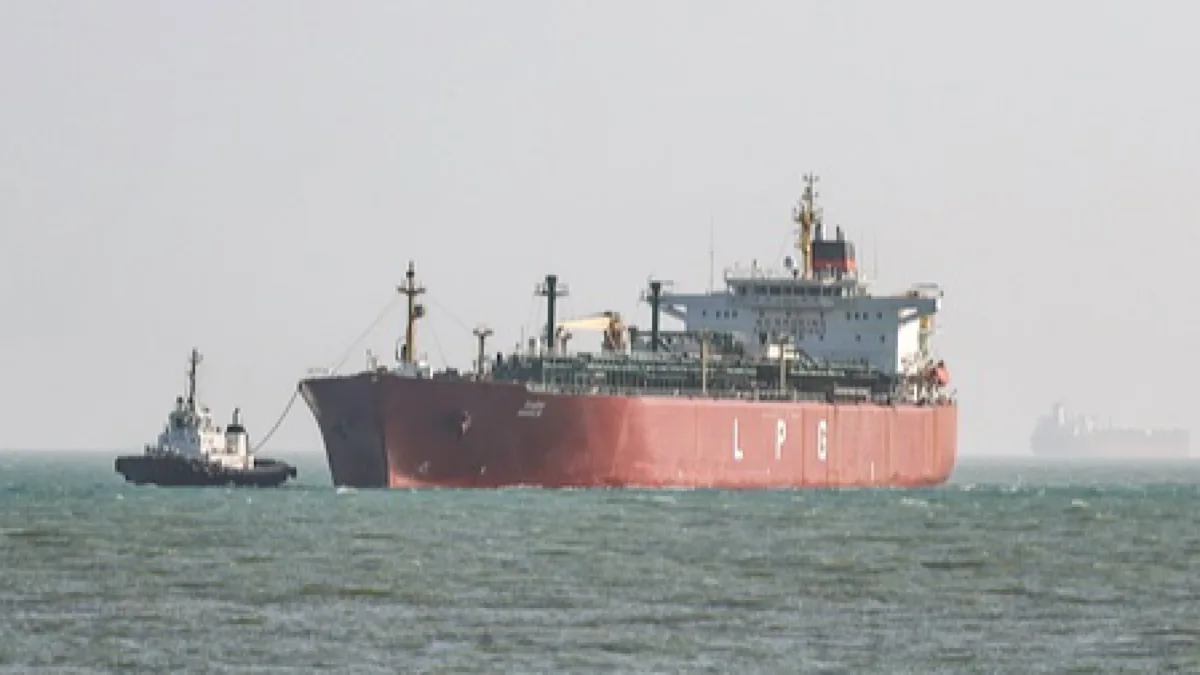
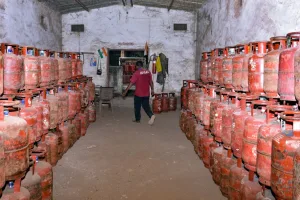
Amid the global supply chain crisis, a large cargo ship carrying liquefied petroleum gas (LPG) from the US has arrived at the Mangalore Port in the country.

IANS | New Delhi |

Amid the global supply chain crisis, a large cargo ship carrying liquefied petroleum gas (LPG) from the US has arrived at the Mangalore Port in the country.

Pyxis Pioneer cargo ship carrying LPG from the US state of Texas, successfully docked at the port.

Before the ship from the US, named Aqua Titan, reached India, another vessel carrying Russian crude oil also reached Mangalore, reports NDTV.

This particular vessel was stationed about 18 nautical miles away from the port. The single-point mooring system will be used to transfer the oil to the pipeline system and take it to MRPL.

The Russian crude oil arrived after the US issued a temporary general license, permitting the sale of Russian crude oil already stranded at sea as of March 12.

The move is aimed at stabilising global fuel prices amid the tensions in the Middle East.

Meanwhile, India has sharply increased its purchases of Russian oil. The move came shortly after the United States allowed India to temporarily boost its imports of Russian oil.

The surge in buying is aimed at managing supply concerns after disruptions in Middle Eastern oil supplies due to the ongoing conflict involving Iran.

Earlier, the Indian‑flagged liquefied petroleum gas (LPG) tanker ‘Nanda Devi’ arrived at Vadinar Port in Gujarat, becoming the second LPG carrier to reach the west coast this week after ‘Shivalik’ docked at Mundra Port.

Both vessels transported critical LPG supplies to India following an unusually hazardous passage through the Strait of Hormuz, where maritime traffic has been disrupted by the ongoing conflict involving Iran, the US and Israel.

A total of 22 Indian-flagged vessels with 611 Indian seafarers remain in the western Persian Gulf region and DG Shipping is monitoring the situation in coordination with ship owners, RPSL agencies and Indian Missions.

G7 condemns Iran’s ‘reckless’ attacks on Gulf nations, says it threatens global security

The Group of Seven (G7) nations on Sunday strongly condemned Iran’s attacks on civilians and key infrastructure across multiple countries in the Middle East, expressing firm support for regional partners facing what it termed “unjustifiable attacks”.

IANS | New Delhi |

The Group of Seven (G7) nations on Sunday strongly condemned Iran’s attacks on civilians and key infrastructure across multiple countries in the Middle East, expressing firm support for regional partners facing what it termed “unjustifiable attacks”.

In a joint statement, the G7 Foreign Ministers — representing Canada, France, Germany, Italy, Japan, the United Kingdom and the United States — along with the High Representative of the European Union, voiced solidarity with countries affected by the escalation.

The statement said the group extends support to its “partners in the region in the face of the unjustifiable attacks by the Islamic Republic of Iran and its proxies.”

“We condemn, in the strongest terms, the regime’s reckless attacks against civilians and civilian infrastructure, including energy infrastructure, in Bahrain, Kuwait, Oman, Qatar, Saudi Arabia, the United Arab Emirates, Jordan, and Iraq, in line with UNSC Resolution 2817,” the statement read.

The G7 nations warned that Iran’s actions not only endanger the targeted countries but also pose a broader threat to regional and global security, urging Tehran to immediately halt its military activities.

“They threaten regional and global security,” the statement said, calling for the “immediate and unconditional cessation” of all such attacks.

The group also stressed the importance of ensuring the safety of critical maritime routes and global supply chains, particularly in the strategically vital Strait of Hormuz.

“We reaffirm the importance of safeguarding maritime routes and safety of navigation, including in the Strait of Hormuz and all associated critical waterways, as well as the safety and security of supply chains and the stability of energy markets. We stand ready to take necessary measures to support the global supply of energy, such as the stockpile release decided by International Energy Agency members on March 11,” the statement read.

Reiterating long-standing concerns, the G7 said Iran must not be allowed to develop nuclear weapons and called on it to halt its missile programme and regional activities.

The grouping stated that Iran “must never obtain” a nuclear weapon and urged it to “halt its ballistic missile program”, “end its destabilising activities” in the region and beyond, and “cease the appalling violence and repression against its own people”.

At the same time, the G7 underlined the right of affected nations to defend themselves against such attacks.

“We support the right of the countries unjustifiably attacked by Iran or by Iranian proxies to defend their territories and protect their citizens. We reaffirm our unwavering support for their security, sovereignty, and territorial integrity,” the statement added.

The grouping also condemned recent attacks in Iraq, particularly those targeting diplomatic facilities and energy infrastructure.

“We condemn the brazen attacks in Iraq by Iran and its militias against diplomatic facilities and energy infrastructure, particularly in the Iraqi Kurdistan Region, and against US and Counter ISIS Coalition forces, and the Iraqi people,” the statement said.

LIVE Updates | US-Israel-Iran War: Netanyahu calls on world leaders to ‘join up’ with US-Israel war on Iran

The US President threatened to target and “obliterate” Iran’s power plants if it fails to ensure the Strait of Hormuz is fully open and free of threats.

Statesman News Service | New Delhi |

Tensions in West Asia escalated sharply on Sunday as the United States intensified its warnings against Iran amid the ongoing conflict involving the US, Israel, and Iran, with the strategic Strait of Hormuz at the centre of the crisis.

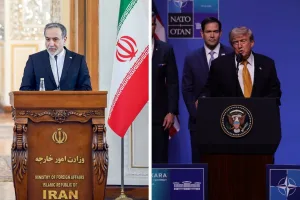
US President Donald Trump issued a stark 48-hour ultimatum to Iran, threatening to target and “obliterate” its power plants if Tehran fails to ensure the Strait of Hormuz is fully open and free of threats. In a post on Truth Social, Trump said that if Iran does not “FULLY OPEN, WITHOUT THREAT” the vital shipping route within the specified timeframe, the United States would begin strikes, “starting with the biggest” power facility.

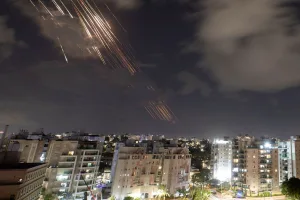
Responding to the escalating rhetoric, the Islamic Revolutionary Guard Corps (IRGC) asserted that Iran has achieved “missile dominance” over Israeli airspace. In a post on X, Moosavi warned that upcoming waves of attacks would introduce new tactics and launch systems that would leave US and Israeli commanders “dumbfounded.” He added that skies over southern parts of the “occupied territories” would remain “illuminated for hours” due to sustained strikes.

The Strait of Hormuz, a critical global oil transit chokepoint, has become a flashpoint in the broader confrontation, with fears of disruption to energy supplies and further military escalation looming large.

LIVE UPDATES

What his words tell us about Trump

US President Donald Trump speaks in a way unlike any of his predecessors. His distinctive and highly recognisable style may even play a role in his appeal to his political base.

RODRIGO PRAINO | New Delhi |

US President Donald Trump speaks in a way unlike any of his predecessors. His distinctive and highly recognisable style may even play a role in his appeal to his political base. Since the infamous Access Hollywood tapes, he has got away with saying things none of his predecessors would have ever dreamed of saying in public. This is particularly striking in a country that was shocked to learn in the 1970s that Richard Nixon used dirty words in the Oval Office.

Scholars have described Trump’s rhetorical style as “unbalanced vituperation”, stressing his constant use of demeaning language, false equivalences and exclusion. Even more strikingly, a recent study found Trump’s use of violent vocabulary, especially language linked to war and crime, represents a radical departure from US political tradition. Since the beginning of the war with Iran, Trump’s rhetoric has become even more combative and outrageous, marking an even sharper shift from the language used by his predecessors in similar occasions. What effect does this have and what does it tell us about the commander-in-chief’s state of mind? Trump announced the death of Iran’s Supreme Leader Ayatollah Ali Khamenei by calling him a “wretched and vile man”.

Later, in a Truth Social post, he called him “one of the most evil people in history” and referred to “his gang of bloodthirsty thugs”. A few days later, he continued denigrating leaders of the Iranian regime, describing them as “deranged scumbags” whose killing was for him a “great honor”. He has also insulted Mojtaba Khamenei, who succeeded his father as Iran’s Supreme Leader, describing him as “unacceptable” and a “lightweight”. He also stated during an interview that he believes Mojtaba is alive but “damaged”. Americans are no strangers to their presidents using strong language to describe adversaries. Ronald Reagan famously referred to the Soviet Union as an “evil empire”, and George W. Bush warned of an “Axis of Evil”.

Yet such rhetoric rarely extended to personal insults against individual foreign leaders. Leaders generally bring a mood to these speeches that recognises their words will be frightening for many people. It also acknowledges that in a war situation, lives will inevitably be lost. George W. Bush, for example, simply stated that US forces “captured Saddam Hussein alive”. Barack Obama announced to the nation Osama bin Laden’s killing by addressing the mastermind of the worst terrorist attack on US soil simply as “Osama bin Laden, leader of al Qaeda, and a terrorist”.

Trump has also shown little restraint in issuing threats. At the beginning of the conflict he stated in an interview that they had not even started hitting Iran hard and that the “big wave” was coming soon. He later posted on Truth Social that he was ready to hit Iran “twenty times harder” and threatened to “make it virtually impossible for Iran to ever be built back, as a Nation, again”, adding that “death, fire and fury will reign [sic] upon them”. At one point, he even suggested that he might strike Iran’s Kharg Island oil export hub again “just for fun”. This language is not only vitriolic.

It also is in sharp contrast with the rhetoric of past US presidents who often emphasised restraint in the use of force and showed willingness to de-escalate military conflicts. Previous presidents have been very clear about the strength of the US military, but they have also tried to focus on diplomacy and negotiation. Obama, talking about Syria, famously remarked that “the United States military doesn’t do pinpricks”. Yet, moments later, he asked Congress to postpone a vote authorising the use of force while his administration pursued diplomatic options. Nixon stated during the Vietnam war that “The peace we seek to win is not victory over any other people, but the peace that comes ‘with healing in its wings’; with compassion for those who have suffered; with understanding for those who have opposed us; with the opportunity for all the peoples of this Earth to choose their own destiny”.

Trump’s threats of escalation also raise concerns about the safety of civilians and the protection of critical infrastructure. He recently stated he “didn’t do anything to do with the energy lines, because having to rebuild that would take years”. This remark suggests some awareness of the consequences of such actions. Even so, earlier presidents often distinguished explicitly between military targets and civilian populations. George H. W. Bush, during the Gulf War, declared “our quarrel is not with the people of Iraq. We do not wish for them to suffer”. In 2003, George W. Bush warned Iraqi military and civilian personnel: “do not destroy oils wells, a source of wealth that belongs to the Iraqi people. Do not obey any command to use weapons of mass destruction against anyone, including the Iraqi people”. It is still unclear why Trump’s rhetoric is so violent and so far removed from the language of virtually every US president before him.

A 2020 study found Trump’s foreign policy rhetoric often aims to create a sense of crisis to mobilise his domestic base – or distract from political troubles at home. Some observers argue Trump has used, or even manufactured, national crises as a mechanism to expand executive power through emergency declarations. Whether this is the case in the current war with Iran remains to be seen. But words certainly matter. On 19 December 1945, US President Harry S. Truman issued a special message to Congress recommending the Department of War and the Department of the Navy be merged into a single “Department of National Defense”. Between 1947 and 1949, Congress and the executive branch implemented this proposal. Many other countries went through a similar process in the postwar period, replacing the language of “war” from the name of their departments and ministries with the more restrained term “defence”.

Seventy-six years later, in 2025, Trump reversed that tradition with an executive order renaming the Department of Defense as the US Department of War. This same executive order clearly states that the new name demonstrates a willingness to fight wars at a moment’s notice. And the reason is not only to defend, but to “secure what is ours”. Viewed in light of the current war with Iran, those words provide some insight into the administration’s thinking. They also invite reflection on other words coming out of the administration and its supporters, including the “Gulf of America”, the idea of Canada as the “51st state”, and even the far-fetched “Trump 2028” chant.

(The writer is Professor & Director, Jeff Bleich Centre for Democracy and Disruptive Technologies, Flinders University. This article was published on www.theconversation.com)

The privilege of silence

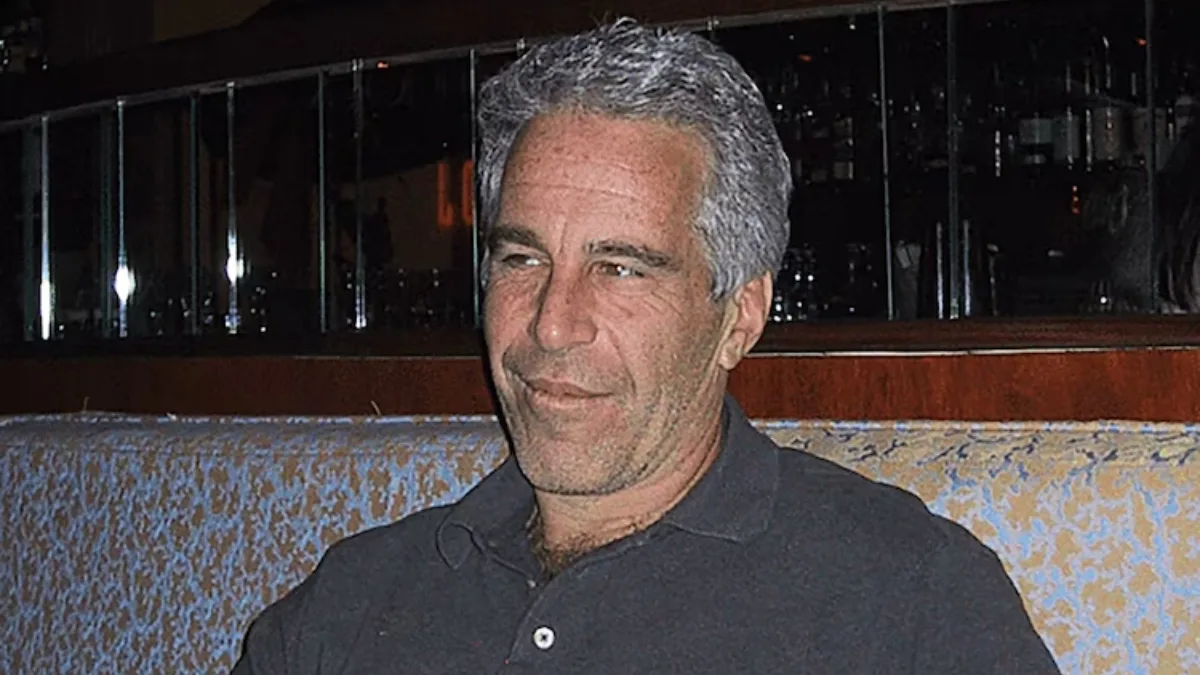
Few scandals in recent memory have shaken public confidence in institutions as profoundly as the revelations surrounding the late financier Jeffrey Epstein.

ABHIK ROY | New Delhi |

Few scandals in recent memory have shaken public confidence in institutions as profoundly as the revelations surrounding the late financier Jeffrey Epstein. What initially appeared to be the story of a wealthy man engaged in criminal behaviour gradually revealed something far more disturbing: a network of privilege and influence that allowed abuse to flourish for years. Epstein was not an obscure criminal operating on the margins of society. On the contrary, he moved comfortably within the highest circles of wealth and power.

His social orbit included political leaders, billionaires, celebrities, academics, and influential figures from across the world. His homes and private aircraft became gathering places for individuals whose wealth and status placed them among the global elite. The disturbing implication is that the scandal was not merely about the crimes of one individual, but about the social environment that enabled those crimes to persist. For years, Epstein maintained extraordinary access to influential people even after serious allegations about his conduct had surfaced. That fact raises an unavoidable question: how could a man widely accused of exploiting vulnerable young girls continue to enjoy the company and confidence of the powerful? The answer lies partly in the culture that often surrounds extreme wealth and privilege.

In elite social circles, influence and money create environments where scrutiny becomes uncomfortable. Invitations to exclusive gatherings, access to private networks, and the promise of financial opportunity produce relationships that discourage confrontation. In such settings, troubling truths can remain hidden in plain sight, not necessarily because everyone is unaware, but because acknowledging them would disrupt a world built on mutual advantage and social deference. The Epstein scandal therefore illustrates how power can distort accountability. Allegations surfaced repeatedly over the years, yet meaningful consequences were slow to follow. Legal proceedings moved cautiously, investigations stalled, and the voices of victims struggled to gain attention.

For the young women who came forward, the imbalance of p ower was overwhelming. Many came from disadvantaged backgrounds and found themselves confronting not merely a wealthy individual but an entire social structure shaped by prestige, money, and influence. Their experiences reveal how systems of privilege can silence the vulnerable, especially when the accused inhabit social circles that command admiration and authority. In societies that claim to uphold equality before the law, such outcomes should provoke deep reflection. Justice cannot function effectively if wealth and status create invisible barriers to accountability. The perception that powerful individuals operate under different rules is perhaps the most corrosive consequence of this scandal. When citizens begin to suspect that the law applies differently to the rich and the influential, trust in institutions inevitably begins to erode.

Courts, investigators, and law-enforcement agencies derive their legitimacy from the principle that no one stands above the law. When that principle appears compromised, the credibility of the entire system comes into question. The case also raises a broader issue about how modern societies respond to wrongdoing within elite circles. Extreme wealth often brings with it a powerful social shield. Individuals who move within exclusive networks benefit from prestige, influence, and access to resources that ordinary citizens c anscarcely imagine . Their reputations are protected by institutions that may depend on their patronage, donations, or political connections. In such circumstances, allegations against influential figures frequently encounter hesitation rather than decisive action. Journalists may face pressure to tread carefully, institutions may worry about confronting powerful benefactors, and legal processes may move slowly when complicated financial and political interests are involved.

The cumulative effect is a culture in which silence becomes easier than accountability. Such silence can have devastating consequences for victims. Many of the young women who accused Epstein of abuse spent years struggling to be heard, their voices overshadowed by the prestige of those surrounding him. Yet their persistence eventually forced the world to confront uncomfortable realities. Their courage reminds us that systems of privilege are not invincible. When victims speak out and investigative journalism exposes hidden truths, even powerful networks can b e challenged. Nevertheless, the fact that such exposure required extraordinary persistence should trouble anyone who believes in the fairness of democratic institutions.

Throughout history, societies have often granted moral exemptions to the rich and powerful. Wealth and success create a halo effect that discourages skepticism. Individuals who accumulate extraordinary influence frequently acquire a level of admiration that shields them from scrutiny. Their connections span politics, business, academia, and culture, forming networks in which criticism can feel like betrayal. Yet accountability requires precisely that willingness to question power. A society that refuses to scrutinize its elites risks creating an environment in which privilege becomes a substitute for responsibility and reputation replaces justice.

Ultimately, the Epstein scandal represents more than a criminal case; it is a test of society’s moral resolve. The protection of the vulnerable must remain the highest priority of any civilized community. Children and young people deserve the full protection of the law regardless of the wealth or influence of those who might harm them. When justice appears selective, the moral foundations of society begin to weaken and public trust begins to crumble. History reminds us that injustice rarely survives without the quiet cooperation of those who choose not to question it. When silence protects power, wrongdoing thrives – and when silence becomes the norm, complicity becomes inevitable.

(The writer is Professor Emeritus of Communication Studies, Loyola Marymount University, Los Angeles.)

Buying time

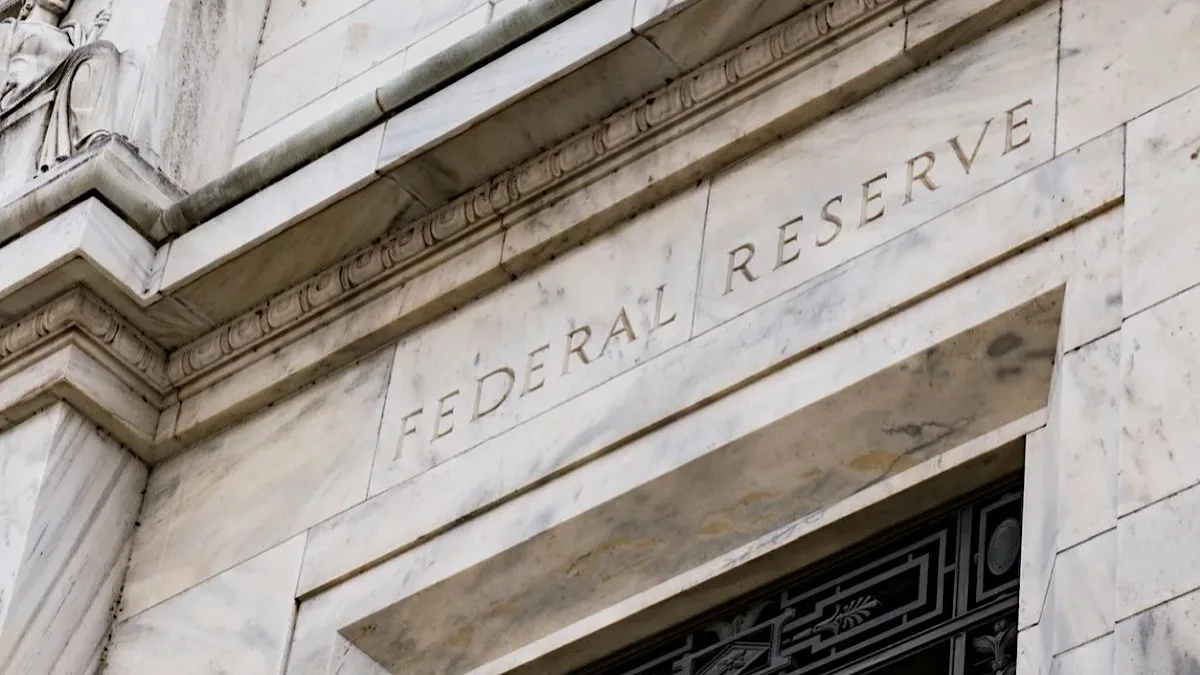
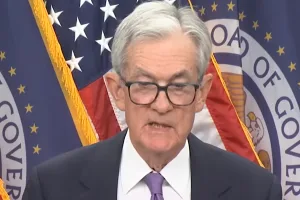
The US Federal Reserve’s decision to hold interest rates steady is less a mark of confidence than an admission of constraint.

Statesman News Service | New Delhi |

The US Federal Reserve’s decision to hold interest rates steady is less a mark of confidence than an admission of constraint. Policymakers are confronting a familiar but uncomfortable scenario: inflationary pressure driven not by domestic demand, but by geopolitical shock. The Iran conflict has pushed oil prices upward, and with them, the cost structure of the global economy. In such a moment, monetary policy begins to look like a blunt instrument. Under chairman Jerome Powell, the Fed has chosen caution. That caution is understandable.

Inflation, which had been gradually cooling, now risks re-acceleration due to energy costs and the lingering effects of tariffs introduced by President Donald Trump’s administration. Yet, the labour market remains relatively stable, and growth forecasts have not collapsed. This leaves the central bank caught between two incomplete signals: prices are rising again, but the economy is not clearly faltering. What makes this moment more complex is the nature of the inflation itself. Oil shocks are historically resistant to interest rate policy. Raising borrowing costs will not increase crude supply from the Gulf, nor will it ease shipping disruptions or geopolitical risk premiums.

At the same time, cutting rates to pre-empt a slowdown could entrench inflation expectations, particularly if energy prices remain volatile. The Fed is, in effect, responding to a supply-side problem with demand-side tools. This uncertainty is already visible in financial markets, where rate-cut expectations are being repeatedly pushed back, signaling that investors themselves are unsure whether inflation or slowdown will dominate the months ahead. This mismatch explains the current pause. It is not indecision so much as recognition that any decisive move could be counterproductive. The central bank’s projections ~ slightly higher inflation, steady unemployment, modest growth ~ suggest a narrow path where the economy absorbs the shock without tipping into recession. But such projections rest on fragile assumptions: that oil prices will stabilise, that tariffs do not amplify cost pressures further, and that consumer sentiment holds. There is also a deeper structural shift at play.

The global economy is entering an era where geopolitical risk is no longer episodic but persistent. Conflicts in energy-producing regions, trade fragmentation, and tighter migration policies are all reshaping supply conditions. In this environment, central banks may find their traditional playbook increasingly inadequate. The tools designed for managing cyclical demand are less effective against recurring external shocks. The Fed’s current stance, therefore, is best understood as strategic restraint. It is buying time ~ waiting for clearer data, for oil markets to settle, and for inflation trends to reassert direction. But this waiting game carries its own risk. If inflation proves more durable, delayed action could force sharper tightening later. If growth weakens suddenly, the Fed may find itself behind the curve. The real conclusion is stark: monetary policy alone cannot stabilise an economy buffeted by geopolitical forces. The Fed is not just pausing; it is operating at the edge of its relevance.

Wasted skills

India is not facing a jobs crisis in the conventional sense. It is facing a utilisation crisis ~ of talent, education, and aspiration.

Statesman News Service | New Delhi |

India is not facing a jobs crisis in the conventional sense. It is facing a utilisation crisis ~ of talent, education, and aspiration. Each year, millions of young Indians enter the labour force with degrees in hand, often as first-generation learners. Over the past three decades, the country has dramatically expanded access to higher education, driven largely by private institutions and supported by policy frameworks shaped by bodies like the University Grants Commission. Enrolment has broadened across caste and class lines, signaling real social progress.

Yet the labour market these graduates encounter is structurally misaligned with their expectations. The problem is not merely unemployment; it is that the economy is producing too few quality, salaried roles that match the skills being created. This is why unemployment rates are often higher among graduates than among the less educated ~ a paradox that has persisted since at least the time of economist Joan Robinson. The deeper issue lies in India’s growth trajectory. Unlike the export-led industrialisation seen in South Korea or Taiwan, India’s post-liberalisation model has leaned heavily on services, particularly IT and business process outsourcing. Institutions such as NASSCOM have helped position India as a global services hub. But this success has come with limits: services are skill-intensive and selective, not mass employers. As a result, the economy has split into two tracks.

At the top, a narrow segment of highly skilled workers secures stable, well-paying jobs. Below them lies a vast informal sector where most young people eventually end up ~ often after years of searching ~ taking up self-employment, gig work, or low-productivity roles. Over time, aspirations adjust downward, but the initial mismatch leaves lasting scars: delayed careers, lost earnings, and diminished confidence. This also explains a subtle but troubling shift. Increasingly, even educated young men are returning to or remaining in family-based work ~ farms, small shops, informal enterprises ~ not out of choice but necessity. What was once largely invisible female labour is now absorbing male graduates as well, signaling a regression in employment quality, not progress. Policy responses have so far focused on supply ~ more education, more skills and more training. Flagship initiatives like the Skill India Mission aim to enhance employability.

But this approach assumes that jobs will follow skills. In reality, without a parallel expansion of labour-intensive sectors, particularly manufacturing, skills alone cannot solve the problem. Time is the binding constraint. India’s demographic advantage, long celebrated as its greatest economic asset, will begin to narrow within a decade. If the current cohort of young people is not productively absorbed, the country risks converting a potential dividend into a long-term liability. The real question, then, is not how many jobs India can create, but what kind of economy it is building ~ one that concentrates opportunity among the few, or one that can absorb the many. Until that question is answered decisively, India’s most educated generation may also become its most underutilised.

Water and gender equality

Since 1993 the global community has been observing every year on March 22 the World Water Day (WWD) focusing attention on the importance of fresh water and advocating for sustainable management of water resources.

S K SARKAR | New Delhi |

Since 1993 the global community has been observing every year on March 22 the World Water Day (WWD) focusing attention on the importance of fresh water and advocating for sustainable management of water resources. A core focus of WWD is to support the achievement of Sustainable Development Goal 6 on water and sanitation for all by 2030. Since women and girls are disproportionately affected by water-related challenges due to entrenched gender roles, inadequate infrastructure, under representation, etc., the WWD 2026 calls for a rights-based approach where women have equal voice, leadership and opportunities for water decision making.

Thus, the theme of WWD 2026 is “Water and Gender Equality”. The role of women in water governance was initially considered in 1992 at the International Dublin (Ireland) Global Conference. Principle 3 of the Dublin Statement establishes that women play a central part in the provision, management and safeguarding of water and therefore, positive policies need to be adopted not only to address the specific needs of women with respect to water, but also to empower them to participate at all levels of the water resources programme, including decision making and implementation. It was also observed that although in households, women are primary providers of water resources, around the world, they are rarely involved in water management.

Even today the world is still far from achieving gender equality in water and sanitation. These challenges are now exacerbated by the consequences of climate change. As water scarcity, heat waves and droughts are now common, women and girls walk greater distances to fetch water. In many cases this can affect girls’ chances for being enrolled in schools. A study shows that a one-hour time reduction in water collection can increase girls’ enrolment in educational institutions. Ensuring safe and widespread access to WASH (Water, Sanitation, and Hygiene) for women and girls contributes to gender equality and their inclusion in society.

Until recently menstrual hygiene was completely overlooked in water and sanitation places, excluding women and girls in public life. During this time girls miss school, and women are sometimes forced to stay at home affecting their employment. Thus, we generally risk the 2030 SDG Agenda, as access to water and sanitation are human rights. When families are unable to enjoy their rights, their health is immensely affected, curtailing their education and employment opportunities and denying their full role in society. The SDG 5 (Gender Equality), SDG 6 (Clean Water and Sanitation) and SDG 13 (Climate Action) are interrelated and the Paris Agreement also endorses gender response action as essential for climate resilience.

Integrating a gender responsive approach is not only fair but also necessary. When women participate fully, communities benefit from a wide range of perspectives, strong local ownership and innovative problem-solving approaches for achieving sustainable, equitable water solutions. Globally 26 per cent of women and girls (1.1 billion) lack access to safely managed drinking water; in 53 countries where data exists, women and girls spend 250 million hours per day on water collection, which is over three times more than men and boys; worldwide only two out of five schools provide menstrual health education; adolescent girls and women living in rural areas are more likely to use reusable materials to manage menstruation and to have no improved water services on the premises; 1.8 billion people in the world still do not have drinking water on their premises and in two out of three households women are primarily responsible for water collection; adolescent girls aged 15 to 19 years are less likely to participate in work, school and social activities during menstruation compared with women aged 20 to 49; fewer than 50 countries have laws and policies that specifically mention women’s participation in rural sanitation and water resources management, while supplying almost half of all agricultural labour in low and middle income countries, and women’s agricultural productivity is on an average 20-30 per cent lower than male farmers.

(FAO 2017, WHO/UNICEF 2019-25, UN Water 2021, UN Women 2024-25). In 2019 the government introduced the Jal Jeevan Mission (JJM) scheme (called Har Ghar Jal) for enhancing rural water governance for achieving SDG goals and providing clean water access to rural households. Till 11 February 2026, out of 19.25 crore rural households in India, about 15.88 crore get piped water access in their homes. JJM’s initiative is not for creating infrastructure but for water service delivery. Village Water and Sanitation Committee/Pani Samiti or user groups (with 50 per cent women participation) are required to plan, implement, manage, operate, and maintain their own water supply systems.

Four key pillars of government such as People’s Participation, stakeholder participation, political will, and optimum utilization of resources define the spirit of the JJM. People’s participation or Jan Bhagidari is also an important pillar for success. JJM made space for women to share water supply decisions directly and it has developed a gender-responsive approach to water management by empowering women while improving water service delivery. JJM’s decentralized community-owned approach means that women are not only consulted but they are also decision makers.

In Bundelkhand region, these JJM programmes offer training to farmers in developing technical skills like constructing check dams and participating in rainwater harvesting. Under the JJM schemes five persons, especially women, in every village are being trained to check the quality of water supply using simple ‘ready to use’ kits. JJM mandates 50 per cent women’s representation in Village Water and Sanitation Committees. Women are increasingly involved in testing, maintaining and managing water infrastructure. Women are increasingly involved in technical and operational roles such as managing water supply systems. In Odisha women take the role of water managers and independent water users breaking away from traditional restrictive roles.

Gujarat incentivizes women-led water committees. In Himachal Pradesh women are actively involved in rainwater harvesting projects ensuring that during the dry season there is continuous water supply. ‘Nari Shakti Se Jal Shakti’ schemes promote water conservation in many states such as Rajasthan, Maharashtra, Himachal Pradesh, etc. In Maharashtra women play an important role in adopting micro-irrigation techniques for increasing water-use efficiency in agriculture. In Rajasthan, women-led groups build check dams, leading to improved ground water levels and ensuring water availability. Despite the progress as indicated above, women’s participation is often restricted by patriarchal norms particularly in decision-making processes regarding water distribution, pricing, maintenance etc.

There is a need to reverse this trend in the near future. In the Water Policy of the Central and state governments, there is a need to emphasize women empowerment in all aspects of water management. The Bundelkhand approach on water management should be followed in other states for women’s participation in decision making in water governance. SDG Goal 5 (Gender equality) should be addressed in all water programmes in the country. Women should be water leaders, water managers, and technical experts in water governance and conservation. There is a need to ensure legal and policy reforms that support equal rights of women in water management.

Second, by using AI techniques, adequate data and knowledge on women’s participation in water management should be publicized effectively. Third, in every water programme, incentives to women should be given. These could be financial incentives or clear and well publicised recognition. The Women Water Champion Programme (WWCP) of the National Water Mission which recognizes 41 women every year at grassroots level for leading efforts in water conservation and amplifying women’s voice in decision-making, should be adequately publicized and effectively implemented.

Such programmes should also be introduced in all states of India. Fourth, capacity building of women for water management should be adopted by involving different stakeholders, experts, NGOs, policy makers etc. There should be a facilitating platform for women, for showing the best practices influencing water policies. Finally, SDG 13 (Climate Action) stresses the need to take urgent action to combat climate change and its impacts. Since women and girls will be most affected in water resource management for water access, climate resilient remedial action should be addressed in all government policies/programmes.

(The writer is Senior Advisor, TERI, New Delhi and a former Secretary, Ministry of Water Resources, Govt. of India)


Trump warns Iran to reopen Strait of Hormuz within 48 hours or face strikes on power plants

US President Donald Trump has threatened that the United States would target Iranian power plants if Iran fails to fully reopen the Strait of Hormuz within 48 hours.

Statesman News Service | New Delhi |

US President Donald Trump has threatened that the United States would target Iranian power plants if Iran fails to fully reopen the Strait of Hormuz within 48 hours.

In a post on Truth Social, Trump said, “If Iran doesn’t FULLY OPEN, WITHOUT THREAT, the Strait of Hormuz, within 48 HOURS… the United States of America will hit and obliterate their various POWER PLANTS, STARTING WITH THE BIGGEST ONE FIRST.”

Earlier, Trump urged US allies and major global economies to take responsibility for securing the vital shipping route, while rejecting calls for a ceasefire in the ongoing conflict involving Iran.

“We don’t use the Strait, the United States, we don’t need it… Europe needs it, Korea, Japan, China… so they’ll have to get involved,” he told reporters, framing the issue as a shared international responsibility.

Trump described reopening the strait as “a simple military manoeuvre,” though he acknowledged it would require coordination and scale. “It’s relatively safe, but you need a lot of help… You need ships, you need volume,” he said, adding that NATO had “so far haven’t had the courage” to act.

He also called on Indo-Pacific partners such as South Korea and Australia to take a more active role, expressing surprise at their reluctance.

At the same time, Trump made clear that the United States would not pause its military campaign despite increasing international calls for de-escalation. “You don’t do a ceasefire when you’re literally obliterating the other side… We’re not looking to do that,” he said.

Trump further claimed that Iran’s military capabilities have been significantly degraded, stating, “They don’t have a navy, they don’t have an air force… they don’t have anti-aircraft… their leaders have all been killed at every level,” suggesting the campaign is nearing its objectives.

20+ countries unite against Iran over ‘de facto closure’ of Hormuz, signal joint action

The countries urged Iran to comply with UN Security Council Resolution 2817, stressing that interference with international shipping and global energy supply chains poses a serious risk to international peace and security.

Statesman News Service | New Delhi |

Over 20 countries today strongly condemned the “de facto closure” of the Strait of Hormuz, expressing readiness to take appropriate steps to ensure safe passage through the critical maritime route amid the ongoing conflict in West Asia.

The latest development follows a sharp escalation in regional tensions that began on February 28 with the killing of Ali Khamenei in joint military strikes by the United States and Israel. In retaliation, Iran launched attacks on US and Israeli assets across Gulf countries and Israel, severely disrupting shipping traffic and rattling global energy markets.

Due to the conflict in the region, Iran has virtually closed the Strait of Hormuz, a critical transit route for global energy supply.

Iran’s actions draw widespread condemnation

In a joint statement, leaders from over 20 nations, including the United Arab Emirates, the United Kingdom, France, Germany, Italy, the Netherlands, Japan, Canada, the Republic of Korea, New Zealand, Denmark, Latvia, Slovenia, Estonia, Norway, Sweden, Finland, Czechia, Romania, Bahrain, Lithuania, and Australia, denounced Iran’s attacks on unarmed commercial vessels and civilian infrastructure, including oil and gas installations.

“We condemn in the strongest terms recent attacks by Iran on unarmed commercial vessels in the Gulf, attacks on civilian infrastructure including oil and gas installations, and the de facto closure of the Strait of Hormuz by Iranian forces,” the statement said.

The signatories raised alarm over reported threats such as sea mines, as well as drone and missile strikes targeting commercial shipping routes.

Nations signal readiness to ensure maritime security

The coalition also expressed readiness to participate in efforts aimed at ensuring safe navigation through the Strait, welcoming ongoing preparatory planning by partner countries.

Reaffirming the principle of freedom of navigation under frameworks such as the United Nations Convention on the Law of the Sea, the countries warned that continued disruption would have far-reaching global consequences.

“The effects of Iran’s actions will be felt by people in all parts of the world, especially the most vulnerable,” it added.

Call for adherence to UNSC resolution

The countries urged Iran to comply with UN Security Council Resolution 2817, stressing that interference with international shipping and global energy supply chains poses a serious risk to international peace and security.

“Such interference with international shipping and the disruption of global energy supply chains constitute a threat to international peace and security,” the statement noted, calling for an immediate comprehensive moratorium on attacks on civilian infrastructure.

(With inputs from ANI)


Abhishek wishes people on Eid, stresses on religious tolerance

Those who think that they will drive people out of this country by deleting their names and by making brothers fight each other, must remember that people are ready to sacrifice their lives, but will not bow down, said Trinamul Congress national general secretary Abhishek Banerjee, who attended Eid celebrations on Red Road on Saturday along with Chief Minister Mamata Banerjee.

Statesman News Service | Kolkata |

Those who think that they will drive people out of this country by deleting their names and by making brothers fight each other, must remember that people are ready to sacrifice their lives, but will not bow down, said Trinamul Congress national general secretary Abhishek Banerjee, who attended Eid celebrations on Red Road on Saturday along with Chief Minister Mamata Banerjee.

He also greeted people on the auspicious occasion. “I am grateful to the people who have gathered here despite the foul weather to celebrate Eid with peace and promote brotherhood. I pray to Allah to accept your roza and ensure that the spirit of brotherhood in Bengal remains intact,” he said, adding; “Be it Eid or any other festival, there are four underlying messages – patience, brotherhood, test, and love. We must stand united and celebrate festivals of each other’s community, especially at a time when brothers are made to fight against each other. I will participate in the celebration of your festival and you will join in to celebrate my festival. That is Bengal’s culture.”

He quoted the famous poet Rahat Indori in saying that those who come to power are like tenants of a rented house. They must never consider themselves as the owners. India is not the property of any individual. This country is as much mine as it is yours, he said.

Bengal upholds true spirit of communal harmony: Serampore MP

Leaders from various political parties gathered at Rishra Wellington Ground today to exchange Eid greetings following the namaz.

Statesman News Service | Kolkata |

Leaders from various political parties gathered at Rishra Wellington Ground today to exchange Eid greetings following the namaz.

Owing to rain, the Eid namaz could not be held in the open grounds at Wellington Jute Mill grounds and instead was conducted under the shed of a jute mill godown.

Among those present were Serampore MP Kalyan Banerjee, Trinamul Congress (TMC) candidate for Serampore Assembly Tanmoy Ghosh, Rishra Municipality chairman Vijay Sagar Mishra, vice-chairman Zahid Hasan Khan, Serampore chairman-in-council Santosh Singh and others.

TMC leaders exchanged Eid greetings and wished people. On the occasion, Mr Banerjee refrained from making political remarks, stating that Chief Minister Mamata Banerjee has set an example of communal harmony in West Bengal. He said the state reflects the true spirit of “Dharma jar jar, utsav sobar”, where people of all religions, faiths and beliefs coexist in mutual respect and brotherhood, participating in each other’s festivals without ill feeling. He also cautioned against divisive forces seeking to exploit religious sentiments and urged people to remain vigilant.

The CPI-M candidate for the Serampore Assembly constituency, Nabanita Chakraborty, said she attended the gathering not as a political figure but as a citizen to exchange Eid greetings. She stressed that communal harmony and brotherhood are essential for a united and strong nation, and called for resistance against divisive forces.

Ms Chakraborty also highlighted the closure of Rishra Wellington Jute Mill and Serampore Jute Mill, which has rendered thousands jobless. She questioned how people could celebrate wholeheartedly under such circumstances and criticised the ruling party for failing to ensure industrial development and keep mills operational.

Pinarayi Vijayan ‘most unsuccessful’ CPM CM, claims BJP’s Rajeev Chandrasekhar

In an interview with a Malayalam news channel, the BJP leader described Vijayan’s decade-long tenure as a “lost decade” for the state.

Statesman News Service | Thiruvananthapuram |

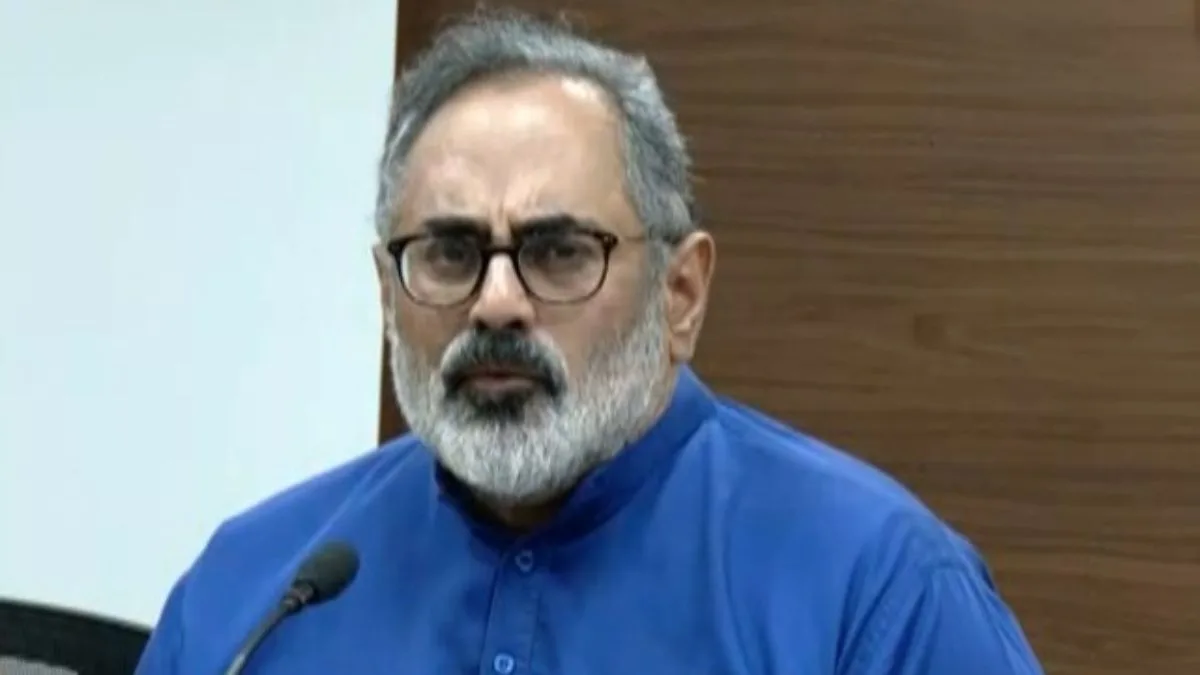
Kerala BJP president Rajeev Chandrasekhar on Saturday launched a sharp attack on Kerala Chief Minister Pinarayi Vijayan, calling him the “most unsuccessful” leader among all Communist Party of India (Marxist) chief ministers in the state.

“The worst ten years in Kerala’s political history have passed, and Chief Minister Pinarayi Vijayan is the most unsuccessful among CPM chief ministers in Kerala,” Chandrasekhar said.

In an interview with a Malayalam news channel, the BJP leader described Vijayan’s decade-long tenure as a “lost decade” for the state.

“I have no personal relationship with him. While I respect him as a senior leader, I have no regard for his political ideology or achievements. History will remember him as the Chief Minister who weakened both the state and the CPM,” he said.

Chandrasekhar also compared Vijayan’s tenure with that of former CPM chief ministers such as E K Nayanar and V S Achuthanandan, claiming that Vijayan’s performance falls short.

He further alleged that the Vijayan government’s only “achievement” was exposing what he termed the “ineffectiveness” of CPM ideology.

Dismissing speculation about the Left Democratic Front (LDF) returning to power for a third consecutive term, Chandrasekhar said the chances were “zero.”

“People are seeking change across all 140 constituencies. I have personally sensed this sentiment even in Dharmadam, the Chief Minister’s own constituency,” he said.

He added that political developments in states like West Bengal and Tripura, where the CPM lost power, could be repeated in Kerala. He also criticised both the LDF and the United Democratic Front (UDF), alleging that both had failed the people.

Expressing confidence in the Bharatiya Janata Party and the National Democratic Alliance (NDA), Chandrasekhar said the party would improve its position in the upcoming elections. “The BJP will win in constituencies where no one expects it, as people are looking for a credible alternative,” he said.

He asserted that the upcoming elections would be decisive for Kerala’s future, adding that issues such as rising inflation and governance concerns had weakened the ruling dispensation’s prospects.

BJP releases third list of candidates for Kerala assembly polls

The BJP released its third list of candidates for 11 seats in the upcoming Kerala assembly elections on Saturday.

Statesman News Service | Thiruvananthapuram |

The BJP released its third list of candidates for 11 seats in the upcoming Kerala assembly elections on Saturday.

According to the list, actor Vivek Gopan will contest from Aruvikkara, while entrepreneur S Rajasekharan Nair, who had unsuccessfully contested as a BJP candidate from Neyyattinkara in the 2021 assembly elections, has been reallocated to the same seat.

The keenly watched Thiruvanananthapuram Central seat has been allocated to BJP Thiruvananathapuram city president Karamana Jayan.

Two former Congress leaders, BS Anoop and RS Arun Raj, who recently joined the BJP, also figure in the list. B.S. Anoop, who was the Congress candidate from Chirayinkeezhu in the 2021 polls, has been fielded from the same constituency, while RS Arun Raj will seek a mandate from Chadayamangalam.

TN Suresh, who joined the BJP after leaving the RJD, has been allocated the Kovalam seat.

Other candidates in the third list are: V Ratheesh (Peerumade), Raveendranathan Vakathanam (Puthupally), Ajimon (Mavelikkara), Pandalam Prathapan (Adoor) and KR Rajesh (Chavara).

Meanwhile, BJP state president Rajeev Chandrasekhar on Saturday filed his nomination papers from the Nemom constituency for the upcoming Assembly elections. He filed his papers in the presence of Rajasthan Chief Minister Bhajanlal Sharma.

Speaking to the media, Bhajanlal Sharma said he witnessed strong enthusiasm among BJP workers in Kerala. He expressed confidence that the party would perform well in the elections and emerge as a significant political force in the state.

The Rajasthan Chief Minister accompanied BJP candidates during the filing of nomination papers in Vattiyoorkavu (R Sreelekha), Kazhakkoottam (V Muraleedharan) and Kattakada (PK Krishnadas).

Gujarat Chief Minister Bhupendra Patel joined Palakkad BJP candidate Sobha Surendran, Thrissur candidate Padmaja Venugopal, Manalur candidate K K Aneesh Kumar and Nattika candidate C C Mukundan in filing their nomination papers.

It is learnt that the state BJP leadership is trying to rope in Delhi CM Rekha Gupta, Assam CM Himanta Biswa Sarma, and Maharashtra CM Devendra Fadnavis for campaigning in the coming days.