Logo

Pakistani forces enter Balochistan with tanks, activist says illegal occupation will fail

As operations continued, Pakistani authorities imposed a curfew across the town, directing shops to remain closed and instructing residents to stay indoors.

IANS | New Delhi |

Pakistani security forces entered Balochistan’s Nushki with tanks and armoured vehicles, intensifying security measures, days after the deadly clashes with Baloch rebels, local media reported.

As operations continued, Pakistani authorities imposed a curfew across the town, directing shops to remain closed and instructing residents to stay indoors.

Citing local sources, The Balochistan Post reported that Pakistani security forces demolished the ancestral home of Bashir Zeb Baloch, identified as the leader of the Baloch Liberation Army (BLA), in Noshki amid an ongoing curfew and security operation.

The demolition took place in the Ahmed Wal area, where Pakistani forces destroyed Bashir Zeb Baloch’s house using explosives amid broader security operations across different parts of Nushki.

The developments followed the BLA’s launch of the second phase of ‘Operation Herof’ on January 31, during which it claimed to have taken control of Nushki, along with other areas. The group stated that it retained control of the town for six days before declaring the end of the operation.

Meanwhile, on Tuesday, sharing a video of a Pakistani tank entering the area on his social media platform X, leading Baloch human rights defender, Mir Yar Baloch, accused Pakistani occupying forces of launching attacks using tanks, drones, air strikes, and heavy artillery against the Baloch civilians and destroying villages across the Ahmedwal region in Nushki.

“These acts of terror and collective punishment are being carried out against a people who have overwhelmingly rejected Pakistan’s illegal occupation. Such crimes will never be tolerated on Baloch soil,” Mir posted on X.

“Pakistan has revealed itself as a terrorist state, one that has completely lost legitimacy, authority, and control in Balochistan. Instead of acknowledging its political, moral, and military defeat, the occupying forces are desperately resorting to brute force. History is clear: brute force has never saved Pakistan from humiliation, and it will not do so now,” he added.
Referring to the 1971 Bangladesh Liberation War against Pakistan, the human rights activist alleged that despite the killing of nearly three million Bangladeshi Bengali women, children, and civilians, Pakistani forces continued their atrocities without remorse.

He added that Pakistan chose to surrender only after its soldiers began to suffer heavy losses following Indian military intervention.

Mir claimed that a similar pattern is being repeated in Balochistan, alleging that Pakistani forces are killing Baloch civilians through drone strikes, air bombardment, and tank shelling.

Condemning the attacks, the human rights activist said, “No tanks, no jets, no drones, and no heavy artillery can ever break the will or weaken the resolve of sixty million Baloch people. Occupation will fail. Resistance will endure. Liberation is inevitable.”

IRCTC launches new Rail-Based Tourism Circuit for Eastern part of India titled “Divine East Temple Tour”

The journey will begin from Delhi Safdarjung and would cover Varanasi, Kolkata, Gangasagar, Puri, Bhubaneswar, Konark, Chilika and Baidyanath Dham before returning back to Delhi.

Statesman News Service | New Delhi |

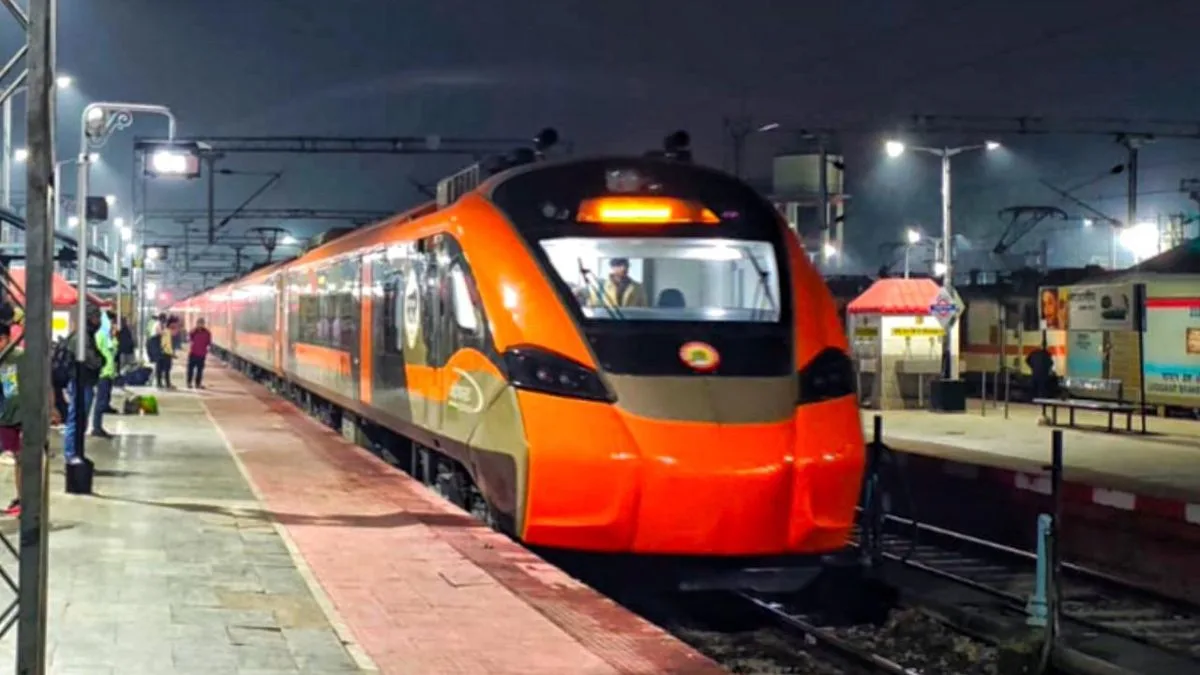
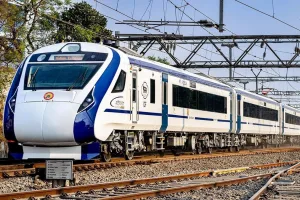
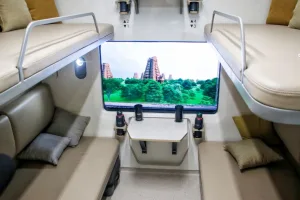
Indian Railway Catering and Tourism Corporation Ltd. (IRCTC), a Navratna Public Sector Enterprise under the Ministry of Railways, Government of India, has introduced a new tourism circuit titled “Divine East Temple Tour” on its Bharat Gaurav Deluxe Tourist Train. The thoughtfully curated 10-day rail-based journey offers devotees and travelers a unique opportunity to visit some of the most revered pilgrimage destinations along with culturally rich heritage sites across Uttar Pradesh, West Bengal, Odisha and Jharkhand.

The journey will begin from Delhi Safdarjung and would cover Varanasi, Kolkata, Gangasagar, Puri, Bhubaneswar, Konark, Chilika and Baidyanath Dham before returning back to Delhi. The significant sites that shall be toured are Kashi Vishwanath Temple (Jyotirlinga) and Ganga Aarti at Varanasi, followed by a visit to the cultural capital of India, Kolkata, covering landmarks such as Victoria Memorial and other city attractions and significant temples like Kali Ghat (Shakti Peeth) and Dakshineshwar Kali Mandir. Day Excursion of the sacred shores of Gangasagar, including a holy dip at the Sagar Sangam and darshan at Kapil Muni Temple is the main attraction of this tour.

The journey continues to Puri, offering darshan at the revered Shri Jagannath Temple, along with a tour of the comprehensive Odisha circuit including Bhubaneswar, Dhauli Shanti Stupa, Udayagiri and Khandagiri Caves, the Konark Sun Temple (UNESCO World Heritage Site) and much more. The final spiritual destination of the tour is Baidyanath Dham (Deoghar), one of the twelve Jyotirlingas of Lord Shiva, before returning to Delhi Safdarjung on 18th March 2026, marking the conclusion of a memorable and spiritually enriching journey.

The all-inclusive tour offering of IRCTC is a perfect mélange of religious and leisure tourism and is aimed at providing passengers with a seamless, safe and enriching travel experience.

The Bharat Gaurav Deluxe Tourist Train is equipped with modern amenities such as well-appointed cabins in AC III, AC II & AC I category, onboard restaurants serving hygienic vegetarian meals, enhanced safety and security features and dedicated tour managers.

IRCTC has launched this special train tour at a price of Rs. 1,06,940/-per person for 1AC class, Rs. 98,925/- for 2AC and Rs. 79,285/- for 3 AC Class. Package Price covers train journey in AC classes, Accommodation in AC Hotels, all meals (VEG ONLY), all transfer & sight-seeing in AC Vehicles, Travel Insurance and services of IRCTC Tour Managers etc. Bookings for the Divine East Temple Tour are open on IRCTC’s tourism portal and through authorized IRCTC tourism offices across the country.


Dudhwa Safari Season 2026 to unveil new experiences for wildlife and nature lovers

Acting on the directions of Chief Minister Yogi Adityanath, work has begun to upgrade visitor infrastructure across the Dudhwa landscape, with special attention on improving interpretation, access and on-ground experiences for families, children, wildlife enthusiasts and nature travellers.

Statesman News Service | Lucknow |

With Safari Season 2026 in focus, Uttar Pradesh Tourism has stepped up preparations to position the Dudhwa belt as a flagship ecotourism destination that blends wildlife, culture, wellness, and community participation.

Acting on the directions of Chief Minister Yogi Adityanath, work has begun to upgrade visitor infrastructure across the Dudhwa landscape, with special attention on improving interpretation, access and on-ground experiences for families, children, wildlife enthusiasts and nature travellers.

State Tourism and Culture Minister Jaiveer Singh said here on Tuesday that focused efforts are underway to modernise the interpretation centre at Dudhwa Tiger Reserve. The existing camp office is being refurbished, alongside the creation of a new reception block and upgraded interpretation centre supported by meeting spaces (MICE tourism), a library, canteen, and safe drinking water facilities. Refreshed animal installations, landscaped seating, improved signage and immersive 3D murals and wildlife-themed art will help visitors understand Dudhwa’s biodiversity in a more engaging and accessible way.

He said the emphasis is also on ease of travel and information. Major approach roads from Palia and the surrounding areas will feature modern signage offering clear directions as well as insights into wildlife and tourism facilities. Digital access is being strengthened through a dedicated Dudhwa page on Uttar Pradesh Tourism platforms, bringing together safari details, accommodation options, and booking-related information in one place.

Wellness and nature-based tourism will form a key part of the Safari Season experience. Yoga and meditation spaces amid forest surroundings are being planned, while accommodation capacity continues to expand through registered homestays, resorts and hotels. Over 23 homestays have already been registered, improving stay options while creating steady income opportunities for local families.

A defining feature of Safari Season 2026 will be the integration of Tharu culture into the visitor experience. Traditional Tharu cuisine and millet-based “Shri Anna Thali” will be introduced, giving tourists a taste of local food traditions. With women forming the backbone of homestay operations in the region, specialised capacity-building programmes are being conducted through the Manyawar Kanshiram Institute of Tourism Management (MKITM). These trainings focus on homestay operations, digital payments, guest interaction, storytelling and practical hospitality management, enabling women entrepreneurs to engage confidently with visitors and strengthen their livelihoods.

Tharu artisans will be supported through the display and sale of handicrafts at hotels and tourism centres, while nearly 150 local youth are being trained as nature guides for walking trails and guided nature experiences.

These initiatives build on the steady expansion of ecotourism infrastructure across Uttar Pradesh’s forests, wetlands, and wildlife landscapes in recent years, with focused investments in tiger reserves such as Dudhwa, Pilibhit, Ranipur and Katarniaghat, and major wetlands including Haiderpur, Bakhira, Sur Sarovar, Samaspur and Nawabganj. Alongside infrastructure, the emphasis has shifted towards long-term sustainability through public–private participation, ensuring quality visitor facilities while protecting fragile ecosystems.

Rising visitor interest reflects this approach. Tourist footfall at Dudhwa has grown consistently over the past few years, from about 1.2 lakh in 2022 to over 2.1 lakh visitors annually now, with strong participation in regulated safaris. Community engagement remains central, with educational trips, youth training and nature guide programmes ensuring that conservation and livelihoods grow together.

For Safari Season 2026, Dudhwa is being readied not just as a wildlife destination, but as a living eco-tourism landscape where conservation, culture and community form the heart of the visitor experience.

UP makes strong showing in MeitY’s SAMRIDH scheme, 27 start-ups secure funding

The number of accelerators and start-ups selected from Uttar Pradesh under this initiative indicates that the state is rapidly emerging as one of the country’s leading start-up hubs.

Statesman News Service | Lucknow |

Uttar Pradesh has made an impressive mark in the ambitious “Start-up Accelerator of MeitY for Product Innovation, Development and Growth” (SAMRIDH) scheme of the Ministry of Electronics and Information Technology (MeitY), Government of India.

The number of accelerators and start-ups selected from Uttar Pradesh under this initiative indicates that the state is rapidly emerging as one of the country’s leading start-up hubs. The impact of the policies adopted under the leadership of Chief Minister Yogi Adityanath is now clearly visible at the national level.

The UP Government has been continuously ensuring coordination at the state level to deliver the benefits of central government schemes to the grassroots. The processes of monitoring, mentorship, and market linkage for accelerators and start-ups have been strengthened so that young entrepreneurs not only receive funding but also gain a sustainable path for long-term growth.

Officials here on Tuesday said under the SAMRIDH scheme, a total of 10 accelerators from UP submitted Expressions of Interest, out of which 4 accelerators were selected. Through these selected accelerators, 35 start-ups from the state received acceleration support, and 27 start-ups successfully secured funding. A total of ₹9.91 crore has been disbursed to start-ups from UP under this scheme.

This funding is aimed at product development, market expansion, and technological strengthening. The scheme also provides matching funding of up to ₹40 lakh per start-up, along with financial assistance to the accelerators working with these start-ups.

The state government believes that this progress is the result of the favourable ecosystem created for start-ups over the past few years. Uttar Pradesh is now transforming from being merely a consumer state into a strong centre of innovation and entrepreneurship. The new Start-up Policy, promotion of the IT and Electronics sectors, rapid infrastructure development, and the Single Window System are all encouraging youth to pursue entrepreneurship.

Under the SAMRIDH scheme, start-ups working in sectors such as HealthTech, EdTech, AgriTech, FinTech, Software Services, and Consumer Tech are being supported. The active participation of Uttar Pradesh start-ups in these sectors shows that the state’s economy is moving beyond traditional industries towards a knowledge- and technology-based growth model.

Chief Minister Rekha Gupta strengthens Delhi’s education system with digital and modern infrastructure

The Chief Minister stated that the Delhi Government’s objective is not merely to construct infrastructure, but to ensure that these facilities provide students with world-class education supported by modern technology.

Statesman News Service | New Delhi |

The Chief Minister of Delhi, Smt. Rekha Gupta, on Tuesday further advanced Delhi’s education transformation by inaugurating new academic blocks at the District Institute of Education and Training (DIET), Dilshad Garden, and Sarvodaya Vidyalaya, Mansarovar Garden. She also inaugurated 101 state-of-the-art ICT laboratories to strengthen digital learning across government schools.

The Chief Minister stated that the Delhi Government’s objective is not merely to construct infrastructure, but to ensure that these facilities provide students with world-class education supported by modern technology.

Cabinet Minister Shri Ashish Sood, MLA Shri Harish Khurana, and several other dignitaries were present at the programme. The Chief Minister said that through the inauguration of new school buildings, the launch of over 101 computer laboratories, and the dedication of modern academic infrastructure, the Education Department has made significant progress during its 355 days in office. She appreciated the contribution of the Ladli Foundation and the American India Foundation, noting that meaningful change is possible only through active collaboration between the government and society. Through CSR initiatives, the establishment of 101 computer labs, the deployment of over 2,000 computers, and the strengthening of digital infrastructure have given a fresh impetus to education in Delhi’s government schools.

The Chief Minister said that the government aims to make Delhi the state with the highest number of smart classrooms, computer labs, language labs, modern sports facilities, and robust educational infrastructure in the country. Alongside academics, focused attention is also being given to sports and nutrition.

She added that during its one-year tenure, the Education Department is set to inaugurate 75 CM Shri Schools, which will serve as benchmarks of educational excellence. The ‘Neev’ curriculum, she said, will further strengthen values such as ethics, civic responsibility and patriotism among students.

Unprecedented expansion of educational infrastructure

At Sarvodaya Vidyalaya, Mansarovar Garden, the Chief Minister inaugurated a newly constructed ground-plus-three-storey school building comprising 29 classrooms, developed in accordance with modern standards and academic requirements. Similarly, a new ground-plus-three-storey building was inaugurated at the DIET campus, Dilshad Garden. The facility includes 19 classrooms and is equipped with modern amenities to support teacher training and educational innovation.

Under CSR support from the American India Foundation (AIF), in collaboration with the Ladli Foundation, 101 advanced ICT computer laboratories have been established in 101 government schools across Delhi. Each laboratory is equipped with 20 computers and an Interactive Flat Panel Display (IFPD). In addition, digital skills training programmes, workshops and structured learning support are being provided for both teachers and students.

ECI publishes Assam final voter list; 2,43,485 names deleted after Special Revision

According to the Assam Chief Electoral Officer, the state now has 2,49,58,139 voters in the final voter list.

Statesman News Service | New Delhi |

The Election Commission on Tuesday published the final voter list for Special Revision 2026 for 126 assembly constituencies in Assam. Names of
2,43,485 voters have been deleted from the final electoral roll.

According to the Assam Chief Electoral Officer, the state now has 2,49,58,139 voters in the final voter list. Before the Special Revision, the state had 2,52,01,624 voters.

The final voter list, according to the Election Commission, includes 1,24,82,213 male voters, 1,24,75,583 female voters, and 343 third-gender voters.

“The integrated draft voter list for the Special Revision (SR) 2026 was published on 27th December 2025, and prior to this, a H2H verification drive was successfully conducted across the state from 22nd November 2025 to 20th December 2025. The period for submitting claims and objections was from 27th December 2025 to 22nd January 2026,” the Chief Electoral Officer’s office said.

The Election Commission of India (ECI) had in November last year ordered a special revision of electoral rolls in Assam with January 2026 1 as the qualifying date.

The SR process in Assam was completed through door-to-door verification. A total of 29,656 Booth Level Officers (BLOs) were engaged in the exercise.

The draft electoral roll was published in December last year. The ECI had given time between 27th December to 22nd January, 2026 for filing claims and objections.

The elections to the 126-member Assam Legislative Assembly are likely to be held in March-April.

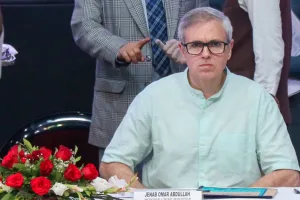
Ropeway project approved by L-G, not Cabinet: Omar Abdullah

Setting the record straight, the Chief Minister said he had personally examined the official files related to the project.

Statesman News Service | Jammu |

Jammu and Kashmir Chief Minister Omar Abdullah on Tuesday categorically stated in the Legislative Assembly that the ropeway project to the Shri Mata Vaishno Devi shrine was approved by the Lieutenant Governor in 2024, shortly before the formation of the elected government, and not by the state cabinet or the Administrative Council.

Setting the record straight, the Chief Minister said he had personally examined the official files related to the project.

“One member claimed that the cabinet had approved the ropeway project. I checked the records and found that the cabinet did not approve it. It was also not a decision of the Administrative Council,” Omar Abdullah told the House.

Emphasising the Lieutenant Governor’s role, he added, “The project was approved by the Lieutenant Governor in September 2024, before the formation of the elected government.”

He asserted that both the House and the public were being misled on the issue, noting that “in an emotional moment, the member had yesterday even threatened to resign.”

The Chief Minister’s remarks came a day after BJP MLA from the Mata Vaishno Devi constituency, Baldev Raj Sharma, claimed in the Assembly that the cabinet had approved the project and said he would resign if his statement was proved incorrect.

The Assembly on Monday witnessed heated exchanges over the issue.

The controversy began when Independent MLA from Bani, Dr Rameshwar Singh, during the Budget discussion, referred to long-standing protests by local residents, traders, hoteliers, and other stakeholders in Katra against the proposed Katra–Mata Vaishno Devi ropeway project. He argued that the project should be shelved in the larger interests of the people of Katra and the region.

Objecting to these remarks, BJP MLA Baldev Raj Sharma claimed that the project had been initiated after approval by the present Omar Abdullah-led government and that substantial funds had already been allocated. He said the Modi government was committed to the comprehensive development of Katra and to improving facilities for pilgrims visiting the shrine from across the country and abroad.

However, Deputy Chief Minister Surinder Choudhary also clarified in the House that no cabinet meeting had ever been held to grant approval for the construction of the ropeway project at Katra.

Kazakh shooter Shulzhenko smashes WR as India add two more golds at Asian c’ships

Shulzhenko clinched gold with a world-record score of 358.2 in the 35-shot final, finishing a commanding four points ahead of India’s Aakriti Dahiya, who claimed silver.

Statesman News Service | New Delhi |

Kazakhstan’s Sofiya Shulzhenko stole the spotlight on day seven of the Asian Championship Rifle/Pistol, rewriting the record books with a stunning performance in the women’s 50m rifle three positions (3P) event at the Dr Karni Singh Shooting Range here.

Shulzhenko clinched gold with a world-record score of 358.2 in the 35-shot final, finishing a commanding four points ahead of India’s Aakriti Dahiya, who claimed silver. India’s Anjum Moudgil completed the podium with bronze, scoring 340.4. The Kazakh shooter’s effort did not just secure the top prize, it also established new world junior, Asian and Asian junior records.

India struck back in the junior women’s 3P final, where Prachi Gaikwad emerged on top with a winning score of 353.3. Fourteen-year-old Tomiris Amanova of Kazakhstan took silver with 351.4, while India’s Anushka Thokur added to the hosts’ medal haul by finishing third on 341.1 after 34 shots.

Prachi, Anushka and Hazel combined to deliver team gold for India in the junior women’s 3P, posting a total of 1748 to finish seven points clear of Kazakhstan. In the senior women’s team event, however, Kazakhstan edged India by four points to secure gold with an aggregate score of 1760.

In qualification, Paris Olympian Arina Malinovskaya led the women’s 3P field with a score of 588 across the kneeling, prone and standing stages. Anjum Moudgil followed closely with 587, while Shulzhenko also shot 587 to qualify third. Ashi Chouksey finished fourth with 586 and Aakriti Dahiya squeezed into the final in sixth with 583.

The final began with the Indian trio asserting early control during the kneeling stage, with Aakriti holding the lead. Shulzhenko surged during the prone section to move into contention before producing a decisive standing performance, becoming the only shooter to cross 50 points in both five-shot series. From there, she steadily pulled away as her rivals dropped back.

Elsewhere, India’s Adarsh Singh made a strong start in the men’s 25m rapid-fire pistol, topping the precision round with an impressive 291 out of 300. Anish Bhanwala remained in the hunt with 287, while Neeraj Kumar’s 277 left him with ground to make up in the second rapid-fire round scheduled for Wednesday, February 11, ahead of the final.

With seven days completed, India continue to dominate the overall standings, amassing 39 gold, 15 silver and 12 bronze medals to comfortably lead the medal table.

SP MLA Pallavi Patel leads protest in support of new UGC guidelines in Lucknow

The protest march began at the IT intersection and proceeded towards the police lines, with hundreds of activists participating.

Statesman News Service | Lucknow |

Samajwadi Party MLA and Apna Dal (Kamerawadi) leader Pallavi Patel on Tuesday led a protest in the Uttar Pradesh capital in support of the newly issued University Grants Commission (UGC) guidelines, demanding their immediate implementation.

The protest march began at the IT intersection and proceeded towards the police lines, with hundreds of activists participating. As the procession neared the police lines, police personnel attempted to stop the march, leading to a heated exchange between the police and Pallavi Patel, which briefly escalated tensions at the site.

With the situation turning volatile, police halted the protesters and detained all participants, including Pallavi Patel. The detained activists were later taken to Eco Garden. Police reportedly faced resistance while placing the MLA into a police vehicle.

A heavy police force was deployed in the area as a precautionary measure to maintain law and order. Senior police officials said adequate arrangements were made to prevent any untoward incident.

Alleging suppression of a peaceful democratic protest, Pallavi Patel accused the state government of being indifferent towards the implementation of the UGC guidelines and ignoring concerns related to higher education.

Akhilesh Yadav slams Union Budget, raises social justice and trade concerns in Lok Sabha

Leading the Opposition’s charge during the Budget debate, Yadav said the government had failed to address the needs of backward classes, marginalised communities, and youth, despite projecting ambitious development goals and global partnerships.

Statesman News Service | New Delhi |

Samajwadi Party president Akhilesh Yadav on Tuesday launched a sharp, wide-ranging attack on the Union Budget in the Lok Sabha, accusing the BJP-led government of lacking vision on social justice, inclusive growth, and balanced regional development. He also questioned the Centre’s economic priorities, particularly its handling of the proposed India–US trade agreement.

Leading the Opposition’s charge during the Budget debate, Yadav said the government had failed to address the needs of backward classes, marginalised communities, and youth, despite projecting ambitious development goals and global partnerships.

“My focus is on ground realities, not hollow promises,” he said.

Yadav argued that the Budget does not present a credible roadmap for social justice, employment generation, or equitable regional growth. He claimed that proposed financial measures fall short of improving conditions for backward classes, Dalits, and minorities, who continue to face structural exclusion.

Questioning the government’s claims of robust economic growth, he said the benefits were not reaching those who need them most. “The gains are concentrated in one place, not shared across society,” he remarked.

Extending his critique to foreign trade policy, Yadav expressed scepticism over ongoing India–US trade negotiations, alleging that the government had failed to secure favourable terms. “The agreement with America is not moving in the right direction. Instead of daydreaming, the government must face reality,” he said.

He also challenged the Centre’s claim of successfully concluding free trade agreements with several countries, asking how many nations still remain outside such arrangements.

His remarks came amid reports of an India–US joint statement indicating that India may reduce or eliminate tariffs on certain US industrial and agricultural products, triggering concerns among domestic producers.

Yadav questioned the consistency of government slogans such as ‘Atmanirbhar Bharat’ and ‘Swadeshi’ in light of these proposed concessions. “These slogans sound attractive, but are they losing meaning because of this deal?” he asked.

Using a striking metaphor, he said, “The lion of Make in India is eating junk,” suggesting that the flagship manufacturing initiative is being weakened by policy contradictions and rising dependence on imports.

Highlighting regional imbalances, Yadav accused the Centre of discriminating against opposition-ruled states such as West Bengal, Bihar, and Uttar Pradesh. He questioned why major infrastructure projects, including bullet train corridors, bypass these populous states.

“Why is there no bullet train in Bengal, Bihar, or Uttar Pradesh? This reflects discrimination by the BJP government,” he said, also flagging delays in metro projects and unfulfilled commitments. He cited the stalled metro project in Varanasi as an example.

Yadav’s intervention came amid heightened political tensions in Parliament, with reports that Lok Sabha Speaker Om Birla is facing a no-confidence notice. However, Leader of the Opposition Rahul Gandhi did not support the motion, citing procedural norms.

Overall, Yadav’s speech reinforced the Opposition’s broader narrative that the Union Budget is not merely an economic document but a political statement reflecting the government’s priorities and its shortcomings, on social justice, federal equity, and economic self-reliance.

PM Modi: curiosity & clarity of young minds today are outstanding

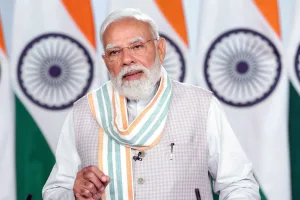
The PM had an informal interaction with Exam Warriors from Coimbatore, Chhattisgarh, Gujarat and Assam during the second episode of PPC 2026.

Statesman News Service | New Delhi |

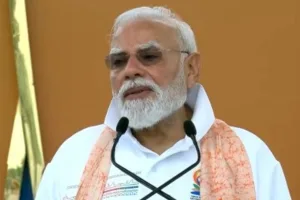
Prime Minister Narendra Modi shared glimpses from his interaction with students in the 9th edition of Pariksha Pe Charcha (PPC) 2026.

The PM had an informal interaction with Exam Warriors from Coimbatore, Chhattisgarh, Gujarat and Assam during the second episode of PPC 2026.

Welcoming students to the special edition of ‘Pariksha Pe Charcha’, Modi noted that this time the programme was held across different parts of the country.

The PM posted on X: “Interacting with students during #ParikshaPeCharcha26 in Coimbatore, Tamil Nadu was a phenomenal experience. From Startups and AI to self-discipline and dreams of building a Viksit Bharat, the curiosity and clarity of today’s young minds are outstanding.”

“During #ParikshaPeCharcha26, conversations with students from Chhattisgarh revealed a generation that is curious, thoughtful and aware. From balancing studies and sports to caring for the environment and developing leadership qualities, their questions reflected clarity of thought.”

“#ParikshaPeCharcha26 in Gujarat went beyond just exam preparation. Their questions reflected a deep desire to learn and grow with confidence. Students spoke freely about managing pressure in critical situations, the important role of teachers and more. They even showcased wonderful Warli, Pithora and Lippan art.”

“From managing stress and comparisons to building self-confidence and healthy routines, #ParikshaPeCharcha26 with students in Assam covered it all. It reflected their aspirations to do well in exams, grow while at the same time staying connected to their roots and culture.”

Congress moves no-confidence motion against Lok Sabha Speaker: Can Birla be removed? What rules say?

Opposition leaders said the motion had the backing of several parties, including the Congress, Samajwadi Party, DMK, Left parties, RJD, Shiv Sena (UBT) and NCP (SP), among others.

VIBHA SHARMA | New Delhi |

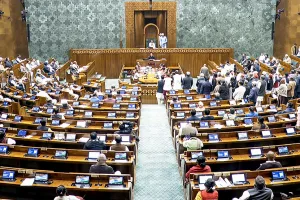
Escalating its confrontation with the BJP-led NDA government, the Congress on Tuesday moved a no-confidence notice against Lok Sabha Speaker Om Birla, alleging that he acted in a “blatantly partisan” manner in conducting the business of the House and abused the constitutional office by making “blatantly false” allegations against Congress MPs. Birla responded by asking the Lok Sabha Secretariat “to examine the no-confidence notice and to expedite the process”.

Opposition leaders said the motion had the backing of several parties, including the Congress, Samajwadi Party, DMK, Left parties, RJD, Shiv Sena (UBT) and NCP (SP), among others. The Trinamool Congress said it had advised the Congress to first approach Birla with a formal appeal before moving a no-confidence motion against him. TMC MP Abhishek Banerjee was quoted as saying that his party would back the motion if the Speaker failed to address the Opposition’s concerns within two to three days.

“We, the undersigned, hereby give notice of a resolution for the removal of Shri Om Birla from the office of Speaker Lok Sabha, in terms of the provisions of Article 94(c) of the Constitution of India, because of the blatantly partisan manner in which he has been conducting the business of the Lok Sabha,” the notice said.

On several occasions, leaders of opposition parties have not been allowed to speak, which is their basic democratic right in Parliament, it is alleged.

Carrying around 118 signatures, the letter refers to several instances, including Leader of Opposition in the Lok Sabha Rahul Gandhi not being allowed to complete his speech during the Motion of Thanks discussion, the Speaker not initiating action against BJP MP Nishikant Dubey for making unsubstantiated charges against women MPs of the Congress, and the suspension of eight opposition MPs. “Notice of a resolution for the removal of Om Birla from the office of Speaker Lok Sabha, in terms of the provisions of Article 94(c) of the Constitution of India, has been given because of the blatantly partisan manner in which he has been conducting the business of the Lok Sabha,” the motion stated.

According to Congress leaders, the step has been taken in “extraordinary circumstances”. “While holding the Hon’ble Speaker in personal regard, we are pained and anguished by the consistent denial of opportunities to Opposition MPs to raise issues of public importance,” Congress leader Manickam Tagore said.

Slamming the Congress, Parliamentary Affairs Minister Kiren Rijiju shared a video of a stand-off in the Lok Sabha on February 4 near the Prime Minister’s seat in the House, accusing it of ‘egging on’ its women MPs to block the aisle through which Prime Minister Narendra Modi would have walked. BJP lawmakers displayed maturity and restraint, otherwise the incident could have led the House into complete bedlam, he said.

Under the Rules of Procedure and Conduct of Business in the Lok Sabha, any member of the House can seek the removal of the Speaker. However, even with 118 signatures, the admissibility of the motion depends on many factors. For a resolution to be admitted, it must meet specific conditions laid down in the rules. For example, it must be specific with respect to the charges, clearly and precisely worded, and must not contain arguments, inferences, ironical expressions, imputations or defamatory statements, etc.

Also, for the Speaker’s removal, the resolution must be passed by a majority of the effective strength of the House, excluding vacant seats. The opposition INDIA bloc has around 234 seats in the 543-member Lok Sabha, falling short of the halfway mark of 272 by about 38 seats. In contrast, the BJP-led NDA has a majority with 293 seats, making the motion unlikely to succeed unless there are significant defections from the ruling alliance, which appears almost impossible.

Besides, historically, no motion for the removal of a Lok Sabha Speaker has ever succeeded. The current move, too, is being seen largely as symbolic — a political message reflecting the deepening mistrust and deteriorating relations between the Treasury and the Opposition benches.

French Prez Macron to visit India next week

During the visit, the two leaders will hold discussions on strengthening bilateral cooperation across a wide spectrum of areas as enshrined in the Horizon 2047 Roadmap.

Statesman News Service | New Delhi |

French President Emmanuel Macron will pay an official visit to India on 17-19 February at the invitation of Prime Minister Narendra Modi to primarily attend the AI Impact Summit, it was officially announced here on Tuesday.

During the visit, the two leaders will hold discussions on strengthening bilateral cooperation across a wide spectrum of areas as enshrined in the Horizon 2047 Roadmap. In addition, the leaders will discuss regional and global issues of mutual interest, including cooperation in the Indo-Pacific, the Ministry of External Affairs said.

The two leaders will also be in Mumbai to jointly inaugurate the India-France Year of Innovation, which will be celebrated throughout 2026 in both countries. On 19 February, President Macron will participate in the AI Impact Summit in New Delhi.

The visit follows PM Modi’s visit to France in February 2025 and reflects the mutual trust and depth of the India–France Strategic Partnership, as well as the shared commitment of the two countries to deepen it further, the MEA said.

The visit comes amid an uncertain global political and economic scenario.

PM Modi and President Macron, who enjoy a close personal relationship, are also expected to discuss how the recent India-European Union Free Trade Agreement (FTA) is going to enhance trade between their two nations.

Pakistan vs USA, T20 World Cup 2026: Match details, toss time, live streaming and more

Pakistan boasts a strong record in Colombo, winning six of their eight T20Is at the venue, with their only defeats coming during the 2012 World T20 against India and Sri Lanka.

Neha Buswal | New Delhi |

In the 15th Group A match of the ICC Men’s T20 World Cup 2026, Pakistan will look to settle old scores when they face the United States of America in their second group-stage clash at the Sinhalese Sports Club (SSC) Ground in Colombo on Tuesday, February 10.

The Men in Green began their campaign with a tense three-wicket win over the Netherlands but will be wary of the USA, who stunned them in a Super Over in the 2024 T20 World Cup, one of the biggest upsets in tournament history. That defeat still looms large, and Pakistan will be keen to reassert their dominance on the global stage.

The USA, meanwhile, come into the contest after a spirited showing against defending champions India. Their bowlers impressed in the opener, but the batting unit failed to chase down a competitive target, resulting in a 29-run defeat. Monank Patel’s side will be eager to bounce back and test Pakistan’s batting on what is expected to be a bowler-friendly surface.

Pakistan vs USA, T20 World Cup: Match Details

Match: Pakistan vs USA, Group A, ICC Men’s T20 World Cup 2026

Date: Tuesday, February 10, 2026

Venue: Sinhalese Sports Club (SSC) Ground, Colombo

What time will the toss for the Pakistan vs USA T20 World Cup match take place?

The toss for the Pakistan vs USA T20 World Cup match will take place at 6:30 PM IST.

What time will the Pakistan vs USA T20 World Cup match start?

The first ball of the Pakistan vs USA T20 World Cup match will be bowled at 7:00 PM IST.

Pakistan vs USA T20 World Cup match: Live Streaming Details

Where to watch the live telecast of Pakistan vs USA T20 World Cup in India?

The match will be telecast live on the Star Sports Network in India.

Where to watch the live streaming of Pakistan vs USA T20 World Cup in India?

Live streaming will be available on the JioHotstar app and website in India.

Where to watch Pakistan vs USA T20 World Cup in Pakistan?

The Pakistan vs USA T20 World Cup 2026 match will be telecast live on PTV Sports and Geo Super in Pakistan, while live streaming will be available on Myco, Tamasha, ARY Zapp, and Tapmad.

Pakistan vs USA T20 World Cup: Match Context

Pakistan enter the contest as statistical favourites, with an estimated 84.9% winning probability. However, their narrow escape against the Netherlands exposed middle-order vulnerabilities, with Faheem Ashraf playing a crucial role in the chase.

The USA will take confidence from their disciplined bowling against India and the fact that they hold a 1-0 lead in T20I head-to-head meetings against Pakistan. Monank Patel is also nearing a milestone, needing just 80 runs to become the first USA player to reach 1,000 T20I runs.

Pakistan also boasts a strong record in Colombo, winning six of their eight T20Is at the venue, with their only defeats coming during the 2012 World T20 against India and Sri Lanka.

Pakistan vs USA T20 World Cup: Pitch & Conditions

The SSC surface traditionally favours spinners, but dew is expected to play a major role in the second innings, potentially giving an advantage to the team chasing under lights.

Pakistan vs USA T20 World Cup: Squads

Pakistan:
Saim Ayub, Sahibzada Farhan, Salman Agha (c), Babar Azam, Usman Khan (wk), Shadab Khan, Mohammad Nawaz, Faheem Ashraf, Shaheen Afridi, Salman Mirza, Abrar Ahmed, Fakhar Zaman, Naseem Shah, Khawaja Nafay, Usman Tariq.

United States of America:
Andries Gous (wk), Saiteja Mukkamalla, Monank Patel (c), Milind Kumar, Sanjay Krishnamurthi, Shubham Ranjane, Harmeet Singh, Mohammad Mohsin, Shadley van Schalkwyk, Ali Khan, Saurabh Netravalkar, Shehan Jayasuriya, Nosthush Kenjige, Jasdeep Singh, Shayan Jahangir.

Rajasthan state budget to be presented in assembly on Wednesday

Deputy to Chief Minister Diya Kumari, who also holds the finance portfolio, will deliver her third successive budget speech in the House at 11:00 am.

Statesman News Service | Jaipur |

The Rajasthan state budget for fiscal year 2026-27 will be presented in the state assembly on Wednesday, amid high hopes and expectations among people for sops and relief to individuals from all walks of life.

Deputy to Chief Minister Diya Kumari, who also holds the finance portfolio, will deliver her third successive budget speech in the House at 11:00 am.

According to another Deputy Chief Minister, Prem Chand Bairwa, until the Finance Minister concludes her budget speech, all should keep patience about gains or reliefs; however, Prime Minister Narendra Modi’s guiding principle of “Sabka Saath – Sabka Vikas” would surely help the Finance Minister to keep hopes and aspirations of the people from every stratum.

“I am sure that the Finance Minister’s budget would accelerate the pace of development, empower youngsters with futuristic career avenues and also make life easier for the common man, particularly, the people from weaker sections.”

The business and industry also have high hopes for a big concession. The entrepreneurs at different fora have aired their high hopes, expecting the government to take firm decisions for fast growth in the economy.

Ghanshyam Oza, former national president of Laghu Udhyog Bharati- a Sangh Parivar body, said in Jodhpur-“If we want to ensure a rapid growth in Rajasthan’s economy, the government needs to formulate practical and viable-for-all policies.”

“In the green energy sector, we have an enormous scope and potential for generating solar energy, but a power-generating entity is not allowed to carry forward solar energy units. We demand that the units should be allowed to carry forward for at least a year,” he said.

The statistical data of the budget size of the previous year also gives a rough picture. Accordingly, the size of the budget last year (2025-26) was Rs 5.37 lakh crore. Keeping this in mind, analysts and economists, speculating on the growth of 7 to 10 per cent in the budget funds compared to last year, are expecting the finance minister to conclude the process of finalising the budget size at around Rs 5.70 to Rs 6 lakh crore.

The budget session of the state assembly began here on January 28 with an inaugural address by Governor Haribhau Bagade on the opening day and the house has had six sittings so far.

Election Commission orders strategic transfers to safeguard fair assembly polls in 2026

The instruction, addressed to the Chief Secretaries and Chief Electoral Officers of the five states and Puducherry, comes ahead of the expiration of the current Legislative Assemblies’ terms between May and June 2026.

Statesman News Service | New Delhi |

In a significant administrative directive to uphold impartiality in the upcoming state Assembly elections of 2026, the Election Commission of India has mandated the transfer of officers involved in election duties across Assam, Kerala, Tamil Nadu, West Bengal, and the Union Territory of Puducherry. This move targets officials posted in their home districts or those who have served extended tenures in the same district.

The instruction, addressed to the Chief Secretaries and Chief Electoral Officers of the five states and Puducherry, comes ahead of the expiration of the current Legislative Assemblies’ terms between May and June 2026. State governments have been tasked to complete these transfers and report compliance by February 28.

The ECI emphasised its longstanding policy that election-related officers should neither be stationed in their home districts nor remain in districts where they have served for a substantial period. Specifically, no official directly linked to election duties may continue in a district if they are in their home district or have completed or will complete three years of service there within the last four years as of the cut-off dates—May 31, 2026, for Assam, Kerala, Tamil Nadu, and West Bengal, and June 30, 2026, for Puducherry.

This transfer policy encompasses a broad range of officials, including District Election Officers, Returning Officers, Assistant Returning Officers, electoral registration officers, district magistrates, sub-divisional officers, tehsildars, and block development officers engaged in election work.

Moreover, senior and field police officers involved in election security—from ADGs to sub-inspectors—are included under this directive. Police sub-inspectors completing three years in a subdivision must be relocated to a different subdivision outside the same Assembly constituency or even outside the district if necessary. Officers from the Prohibition and Excise Department at the rank of sub-inspector and above are also subject to these transfer rules.

The Commission clarified that the policy is designed to avoid widespread disruption of state machinery, exempting officials stationed at state headquarters and those not directly involved in election duties, such as doctors, engineers, and teachers.

Additionally, any official facing credible allegations of political bias or criminal cases related to their official duties will be barred from election-related responsibilities. Officials retiring before the cut-off dates are exempt from transfer and will not be assigned sensitive election roles.

All election officers must submit declarations affirming they are not closely related to any contesting candidate or prominent political figure and that no criminal case is pending against them. False declarations will result in disciplinary action.

An ECI spokesperson highlighted that these measures aim to reinforce neutrality and enhance public trust in the electoral process at the grassroots level.

State governments are required to promptly issue and enforce transfer orders, ensuring immediate handover of charge, with copies sent to the respective Chief Electoral Officers. Strict adherence is expected, and any implementation challenges should be communicated to the Commission via the CEO for possible exemptions.

The Assembly terms in Assam, Kerala, Tamil Nadu, and West Bengal will end between May 7 and May 23, 2026, while Puducherry’s term concludes in June 2026, setting the stage for critical elections later that year.

Political, bureaucratic links to 31 stone crushers surface in J&K Assembly disclosure

The significant disclosure was made in the Jammu and Kashmir Legislative Assembly on Tuesday in a written reply by the Deputy Chief Minister, Surinder Choudhary.

Statesman News Service | Jammu |

Sitting BJP MP Jugal Kishore and a few MLAs figure in the list of politicians, their relatives, and bureaucrats who directly or indirectly own 31 stone crushers that are operating across Jammu and Kashmir.

The significant disclosure was made in the Jammu and Kashmir Legislative Assembly on Tuesday in a written reply by the Deputy Chief Minister, Surinder Choudhary.

The revelation came from a question tabled by Dr Narinder Singh Raina, BJP MLA, seeking details of crusher units with political and bureaucratic links. According to the official reply, these 31 stone crushers are spread across 11 districts, and many of them are currently marked as ‘functional’, with a few categorised as ‘seasonal’.

According to the attached list, while one stone crusher is owned by Jammu’s BJP MP Jugal Kishore, his brother Nand Kishore is the proprietor of another stone crusher.

Senior BJP MLA Sham Lal Sharma’s son, Ankush Sharma, is in partnership with others in four stone crushers.

The name of BJP MLA Vikram Randhawa also figures in the list. Among those in the list is Gurdeep Singh Khalsa, BJP president (Poonch district). BJP MLA Pawan Gupta’s brother also figures in the list of stone crusher owners. Four stone crushers are owned by a brother of Yougal Kr Sharma, a former minister of the Congress.

Of the 31 stone crushers, the highest number of eight are in Jammu district, six in Kathua, four in Udhampur, four in Poonch, three in Reasi, and one each in Samba, Rajouri, Kishtwar, Ramban, Ganderbal, and Kupwara. Two stone crushers are in Kashmir.

The Government also informed the Assembly that 48 stone crushers have been closed or sealed across nine districts of the Union Territory for violations. The sealing of crusher units was carried out by the District Administrations and the Jammu and Kashmir Pollution Control Committee (JKPCC), and in some cases under orders of the courts, as part of ongoing action against environmental violations and regulatory non-compliance.

Providing district-wise details, the government stated that Pulwama district accounts for the highest number of sealed units at 28, followed by Poonch with 7 units and Reasi with 4 units. Two crusher units each have been sealed in Jammu, Ramban, and Udhampur, while one unit each has been closed in Kishtwar, Rajouri, and Kupwara, taking the total to 48 sealed units across the Union Territory.

However, the government clarified that none of these sealed crusher units is presently involved in illegal mining activities, despite being closed.