Logo

Two foreigners held in Hyderabad for drug peddling

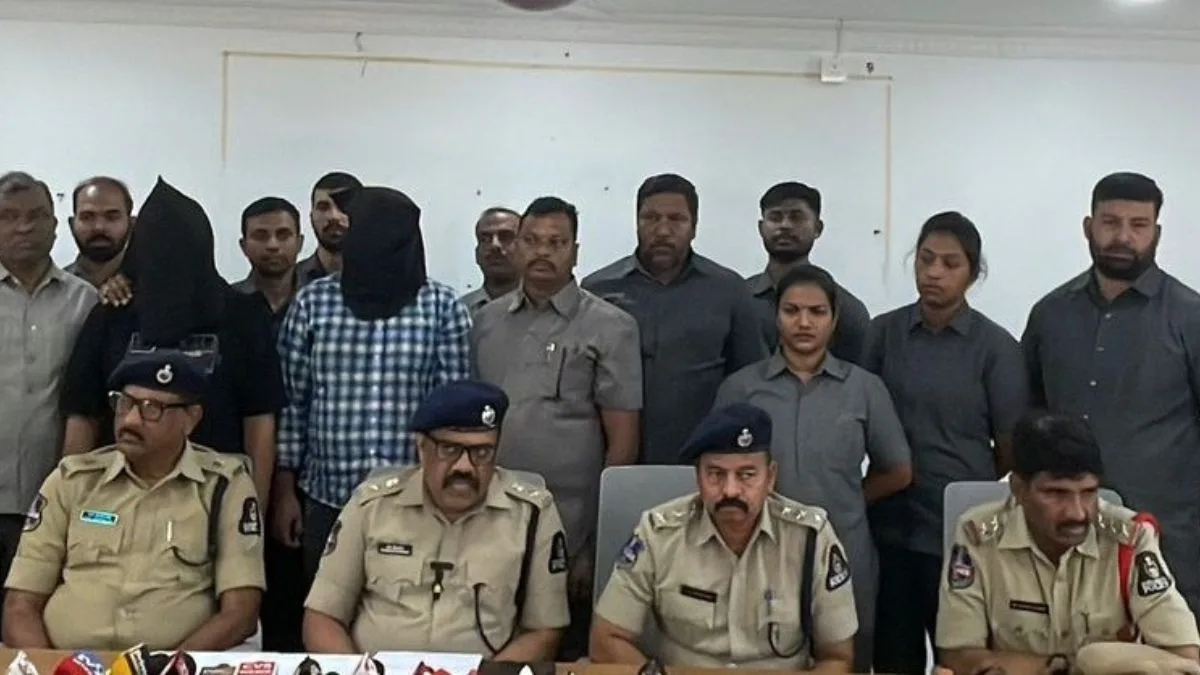
Acting on credible information, the police and H-NEW conducted the joint operation and arrested Al-Aqar Abdurabu Mohammed Abdurabu, a Yemeni national and his assistant, Hasan W. A. Hashem, a Palestinian, within the limits of Rajendra Nagar Police Station.

IANS | Hyderabad |

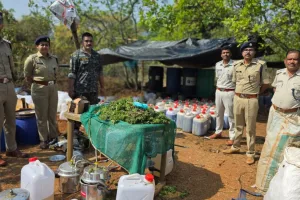
Hyderabad city police, in a joint operation with Hyderabad Narcotic Enforcement Wing (H-NEW), arrested a foreign drug peddler and his associate and seized MMDA from them.

Acting on credible information, the police and H-NEW conducted the joint operation and arrested Al-Aqar Abdurabu Mohammed Abdurabu, a Yemeni national and his assistant, Hasan W. A. Hashem, a Palestinian, within the limits of Rajendra Nagar Police Station.

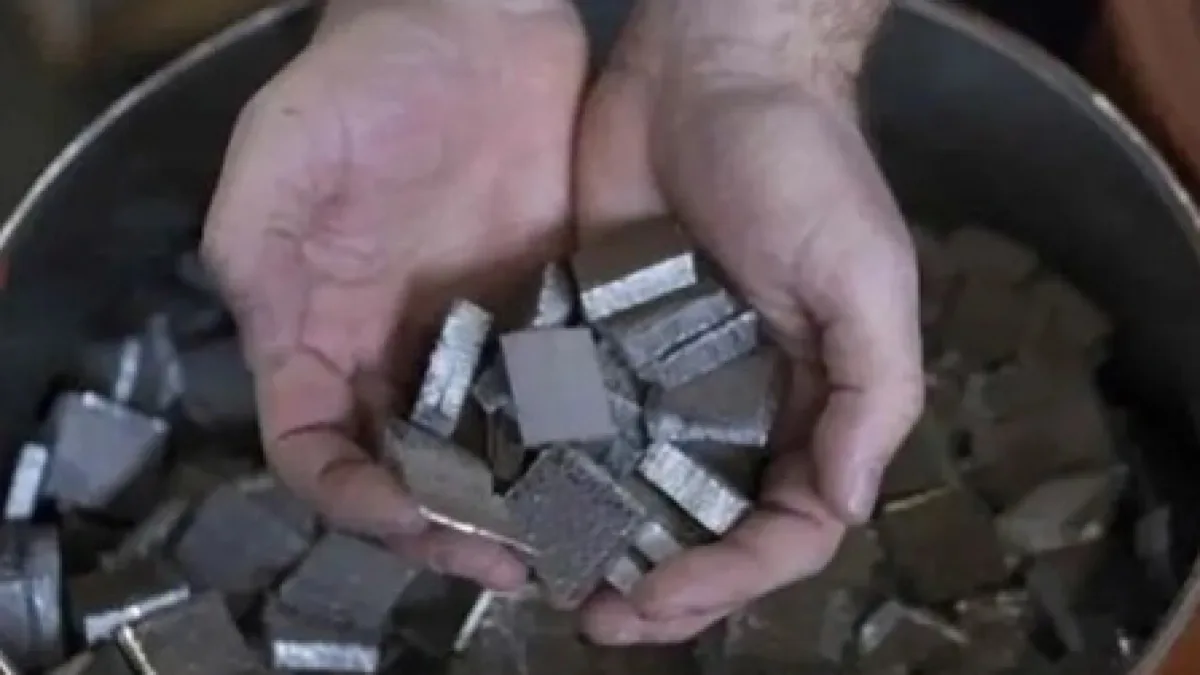
Police seized 150 grams of MDMA, a knife and four mobile phones, all worth Rs 25 lakh, from their possession.

A case under the NDPS Act, 1985 and section 14 of the Foreigners Act was registered against them.

The 37-year-old Abdurabu was residing in the Tolichowki area in Hyderabad and was previously involved in six cases registered under the NDPS Act at various police stations in the city.

He was arrested in six cases registered between 2019 and 2022, and was absconding in two cases registered in 2023 and 2026.

His associate, Hasan Hashem, 28, is a ludo game content creator and was residing in Bengaluru.

He was previously involved in a case registered under the NDPS Act and the Foreigners Act in 2022 at Yelahanka New Town, Bengaluru.

Deputy Commissioner of Police, Rajendra Nagar Zone, S. Srinivas, told media persons that Abdurabu, a drug consumer, turned into a peddler. He procured narcotic drugs such as MDMA and cocaine from an absconding Nigerian supplier at cheaper rates by placing orders through WhatsApp and transferring the payment online to the supplier.

Hasan assisted Abdurabu in collecting drugs from the supplier and selling them to consumers at higher prices in Bengaluru and Hyderabad. At times, they adopted the dead-drop method for distribution, while at other times, they carried out direct deliveries to known consumers to earn easy money and maintain a lavish lifestyle. On some occasions, he has also sent drugs to Hyderabad-based peddlers through private travel buses.

The police investigation revealed that the Yemeni national came to India in 2008 on a tourist visa and stayed in Pune for two months. He again entered India in 2009 on a student visa, enrolled for BCA at Bharath College, Pune, but discontinued his studies. In 2011, he shifted to Hyderabad and took admission at Sikkim Manipal University, which he also discontinued.

Abdurabu returned to Yemen in 2012 and re-entered India in August 2015 on a student visa, landing at RGI Airport, Hyderabad. His student visa expired on September 4, 2015 and was later extended up to December 31, 2016, from Yemen. His passport expired on April 16, 2020. He later enrolled for B.Tech (Computer Science) at JNTU, Hyderabad, but discontinued in the second year and subsequently underwent training in various technology applications at an institute in the city.

He came in contact with a Delhi-based drug supplier, Chidi, through Palestinian national Saeed Ali Mohammad Al Kafri, who was arrested by H-NEW in 2024. He sheltered Chidi in his room in Hyderabad for about eight months until Chidi was arrested by Hyderabad police.

Due to regular drug consumption and to earn easy money with the intention of enjoying a lavish life, he turned into a peddler. He was arrested multiple times in NDPS cases by Ameerpet Excise Station, and M.G. Road Police, Bengaluru, and was sent to judicial custody on different occasions. During one such period, he came in contact with Hasan, and both were involved in drug trafficking activities to earn easy money and lead a lavish lifestyle.
 

Vijender Gupta emphasises harmony, unity and collective progress on Holi

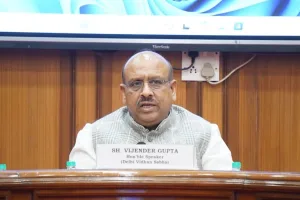
Delhi legislative assembly speaker Vijender Gupta on Wednesday celebrated Holi Milan at his official residence, where he met and greeted party workers and citizens on the occasion of Holi.

UNI | New Delhi |

Delhi legislative assembly speaker Vijender Gupta on Wednesday celebrated Holi Milan at his official residence, where he met and greeted party workers and citizens on the occasion of Holi.

Gupta conveyed his best wishes for peace, prosperity and happiness to all residents of the national capital.

He said Holi is not merely a festival of colours but a celebration of social harmony, mutual respect and collective goodwill.

Highlighting the importance of unity, he noted that such occasions strengthen bonds among people and reinforce a shared commitment towards building a progressive and inclusive Delhi.

He emphasised that festivals like Holi provide an opportunity to rise above differences and work together for the larger good of society.
Officials said the Holi Milan witnessed enthusiastic participation and was marked by warmth, camaraderie and vibrant festive spirit. The gathering reflected the true essence of the festival, unity in diversity, reconciliation and renewed hope for the future.

CM Omar interacts with civil society; offers prayers for victims of Iran strikes

“The Chief Minister emphasised the importance of maintaining peace and harmony in Jammu and Kashmir while respecting people’s sentiments and ensuring that expressions of grief and mourning remain peaceful and responsible.”

IANS | Jammu |

Jammu and Kashmir Chief Minister Omar Abdullah on Wednesday interacted with members of civil society at the Sher-e-Kashmir International Convention Centre (SKICC) in Srinagar and offered ‘Fatiha’ (prayers for the dead) for the Iranian Supreme Leader and others killed in the recent developments in Iran.

The Office of the Chief Minister said in a statement: “The Chief Minister today interacted with religious leaders and members of civil society in Srinagar in light of recent developments in West Asia. The participants expressed concern over the situation and conveyed their condolences over the loss of lives in Iran.

“The Chief Minister emphasised the importance of maintaining peace and harmony in Jammu and Kashmir while respecting people’s sentiments and ensuring that expressions of grief and mourning remain peaceful and responsible.”

This is the first interaction of CM Omar Abdullah with civil society members in Kashmir since the US-Israel attacks on Iran began.

Prominent members of civil society, including religious leaders, social activists, and representatives connected with business and trade, participated in the Chief Minister’s interaction.

CM Omar Abdullah has already condemned the attack on Iran and emphasised that the right to determine a change of regime rests solely with the Iranian people and not with outside powers.

He has been in constant touch with the Ministry of External Affairs regarding the safe return of Kashmiri students studying in Iran.

It must be mentioned that before the conflict began, Omar Abdullah had appealed to parents to take the Ministry of External Affairs advisory seriously and call back their children before Iranian airspace was shut down.

Meanwhile, strict restrictions continued for the third day across the Valley to maintain law and order. All schools, colleges, and universities have been closed up to March 7.

Internet speed has been lowered to prevent miscreants from uploading provocative content on social media.

Police have also registered FIRs against some persons, including MP Aga Syed Ruhullah Mehdi and former Srinagar Mayor Junaid Azim Mattu, for allegedly uploading objectionable content.

Iran postpones Supreme Leader Ayatollah Ali Khamenei’s funeral amid US-Israeli attacks

Khamenei was killed in the US-Israeli strikes on Saturday.

Statesman News Service | New Delhi |

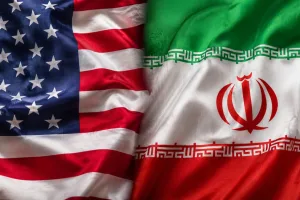
Iran has postponed the state funeral for Supreme Leader Ayatollah Ali Khamenei, who was killed in US-Israeli strikes last week, according to reports in Iranian state media.

Iran said that the decision was taken “in anticipation of unprecedented turnout,” state television reported.

“The farewell ceremony for the martyred Imam has been postponed. The new date will be announced later,” Iranian television announced.

The three-day state funeral for Khamenei was scheduled to begin on Wednesday evening. The new date has not been announced yet.

Khamenei was killed in the US-Israeli strikes on Saturday. The strikes targeted his office in Tehran when he was attending a high-profile meeting.

Along with Khamenei, seven members of the top Iranian security leadership who had gathered at several locations in Tehran and about a dozen members of his family, including a daughter, son-in-law and grandchild were also killed in near-simultaneous strikes.

His death prompted Iran to launch retaliatory strikes on US and Israeli targets. Tehran hit US bases in several Gulf nations, killing at least six American soldiers and sparking a wider Middle East conflict.

Iran also claimed to have shot down three US warplanes in Kuwait but the US military said they were hit in “friendly fire”.

Iran also struck several targets in Israel, killing at least nine people and wounding dozens.

However, Iran has suffered extensive damage as US and Israeli strikes targeted top political and military leaders and destroyed key sites, including a nuclear facility.

A US and Israeli strike on an Iranian school building also killed over 150 people, mostly children, but both the countries have refused to acknowledge carrying out the attack.

Bhutan’s Foreign Minister Dhungyel arrives in New Delhi to attend Raisina Dialogue

Ministry of External Affairs (MEA) spokesperson Randhir Jaiswal noted that Dhungyel’s visit to India will impart further momentum to bilateral ties.

Statesman News Service | New Delhi |

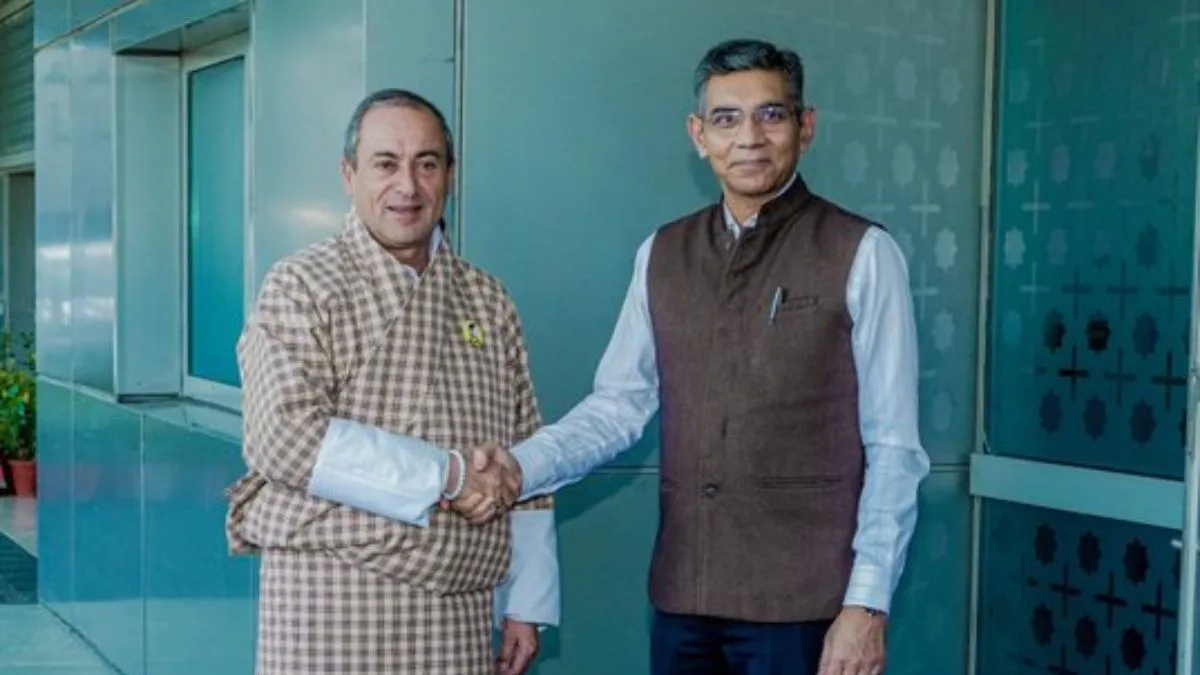
Bhutan’s Minister for Foreign Affairs and External Trade Lyonpo D.N. Dhungyel arrived in New Delhi on Wednesday to attend the Raisina Dialogue.

Ministry of External Affairs (MEA) spokesperson Randhir Jaiswal noted that Dhungyel’s visit to India will impart further momentum to bilateral ties.

“Warm welcome to the Minister for Foreign Affairs and External Trade of Bhutan, Lyonpo D. N. Dhungyel as he arrives to attend the 11th Raisina Dialogue in New Delhi. India–Bhutan partnership is built on deep mutual trust and goodwill. The visit will impart further momentum to India-Bhutan ties,” Jaiswal posted on X.

The Raisina Dialogue, set to be held from March 5-7, is India’s premier conference on geopolitics and geoeconomics, held annually in New Delhi since 2016. The three-day event is organised by the Observer Research Foundation (ORF) in partnership with the Ministry of External Affairs (MEA). The event convenes global leaders, policymakers, academics, industry experts, and journalists to discuss critical international issues.

On February 18, Bhutan’s Prime Minister Tshering Tobgay and Prime Minister Narendra Modi reviewed the progress in bilateral cooperation in several key sectors – including energy, connectivity, development partnership, and people-to-people connect – on the sidelines of the India-AI Impact Summit in New Delhi.

According to the MEA, the two leaders expressed support for harnessing Artificial Intelligence (AI) for inclusive and human-centric progress and agreed to further strengthen cooperation in AI and the digital tech space. They also reaffirmed their commitment to work closely to further strengthen the India-Bhutan partnership anchored in trust, goodwill and mutual respect.

India and Bhutan share a tradition of regular high-level exchanges and continue to explore new avenues of cooperation, while building on their deep-rooted ties in energy, infrastructure, and cultural exchange.

Last November, PM Modi visited Thimphu on a two-day visit, which aimed at deepening India-Bhutan partnership and reinforcing India’s commitment to its Neighbourhood First Policy.

PM Modi’s visit coincided with the exposition of the Sacred Piprahwa Relics of Lord Buddha from India. He also offered prayers to the Holy Relics at Tashichhodzong in Thimphu and participated in the Global Peace Prayer Festival organised by the Himalayan kingdom’s government.


T20 WC: Axar, Abhishek and Kishan visit Siddhivinayak Temple ahead of SF

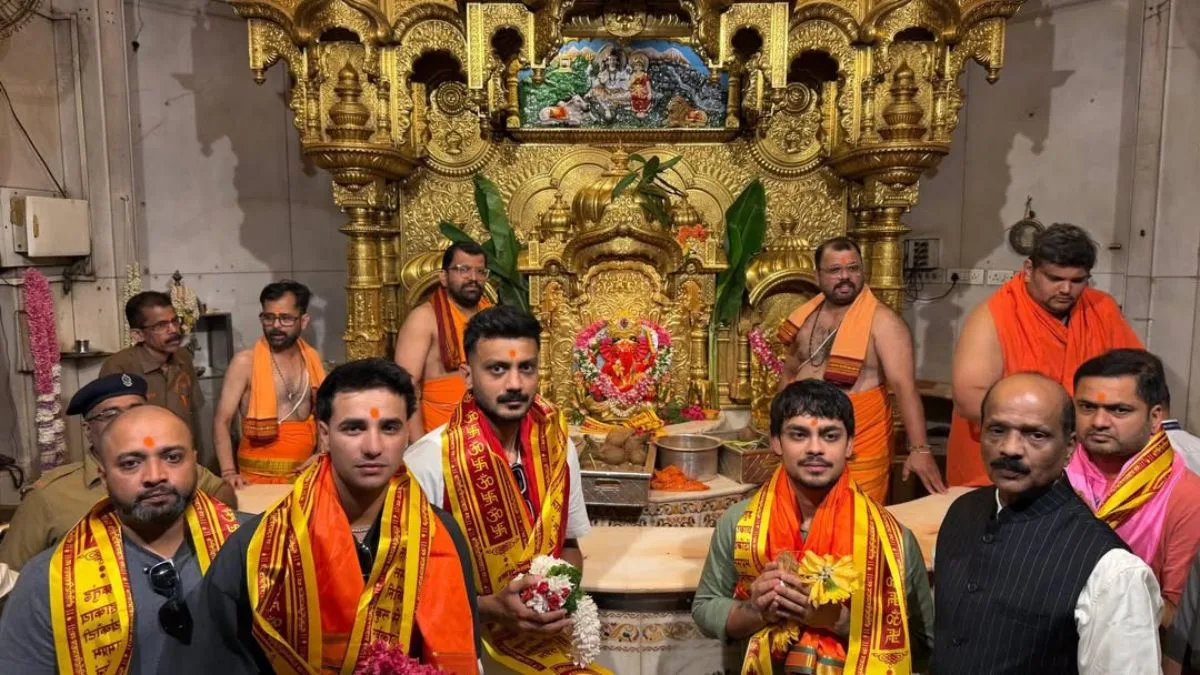
Among those who offered prayers were Axar Patel, Ishan Kishan and Abhishek Sharma. The players took darshan at the shrine as the team geared up for one of its most important matches of the tournament.

IANS | New Delhi |

Members of the Indian men’s cricket team visited the Shree Siddhivinayak Ganapati Temple on Wednesday to seek blessings of Lord Ganesha ahead of their crucial ICC T20 World Cup 2026 semifinal clash against England at the iconic Wankhede Stadium on Thursday.

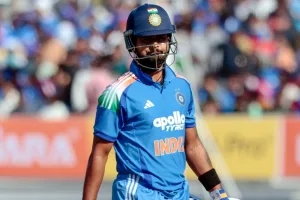
Among those who offered prayers were Axar Patel, Ishan Kishan and Abhishek Sharma. The players took darshan at the shrine as the team geared up for one of its most important matches of the tournament.

The three players offered prayers and took part in rituals as they sought blessings and positive energy ahead of the crucial encounter.

Abhishek is struggling for runs in the T20 World Cup 2026 as he has scored only one half-century in six matches he has played so far, while Kishan started well in the group stage, but didn’t get the runs in the Super 8s. Axar is also not able to make a big impact.

India have had a strong campaign so far in the ongoing World Cup, winning six of their seven matches, with their only setback being a 76-run loss to South Africa in the Super 8 stage.

Led by Suryakumar Yadav, India sealed their semifinal berth with a five-wicket victory over West Indies in a must-win Super 8 clash. After restricting West Indies to 195/4 in 20 overs, India chased down the target successfully, thanks largely to Sanju Samson’s unbeaten 97. Key contributions from Tilak Varma and others ensured the chase stayed on track.

Meanwhile, England is also coming to the match with a great performance in the ongoing mega tournament. The two-time champions remained on top in their Super 8s group with three wins in three matches, and Harry Brook-led team would like to continue the momentum against the defending champions.


Abhishek continues reign at No. 1, Ishan, Bumrah rise

Farhan made history as the first player to score two centuries in a single ICC Men’s T20 World Cup, achieving a superb hundred against Sri Lanka in Pallekele.
IANS | New Delhi |

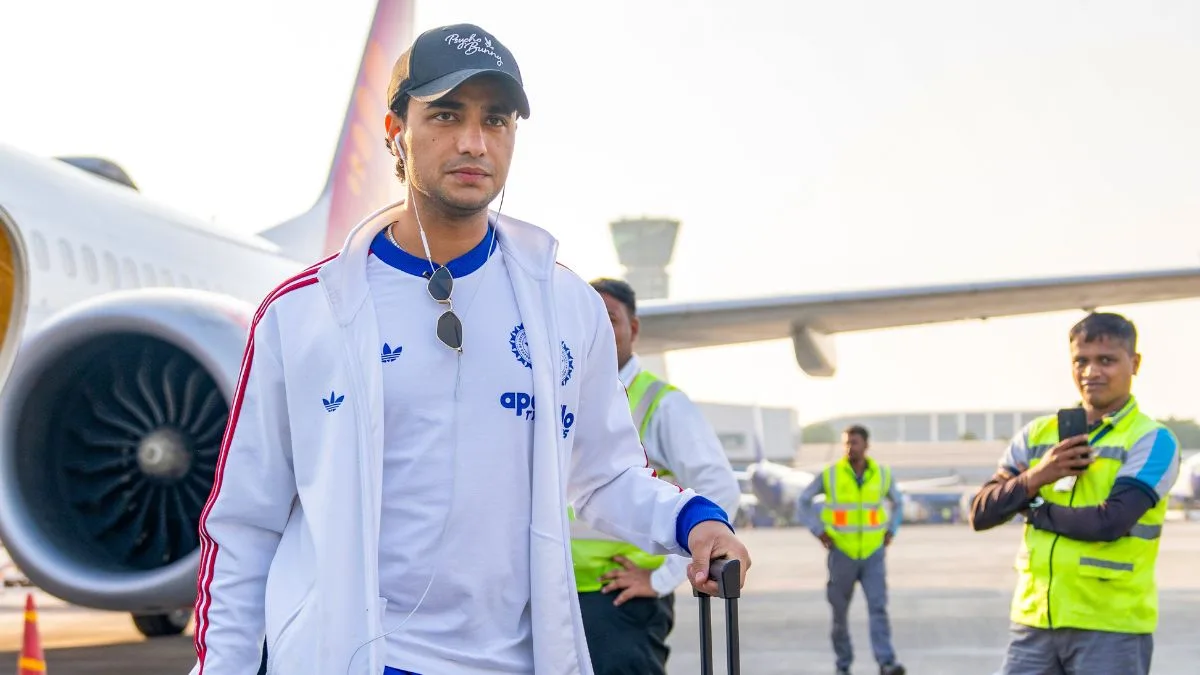
Abhishek Sharma’s position as the top T20I batter has weakened as Pakistan’s Sahibzada Farhan advanced in the latest ICC Men’s T20I Player rankings, inching closer to the top spot. However, Ishan Kishan has jumped another spot to rise to fourth place.
Farhan made history as the first player to score two centuries in a single ICC Men’s T20 World Cup, achieving a superb hundred against Sri Lanka in Pallekele. This performance helped him climb one spot in the T20I batting rankings to second position, reaching a new career-high rating in the latest update.
Abhishek now leads Farhan by 26 points at the top of the batter rankings. The Pakistan opener moved ahead of England’s Phil Salt and narrowed the gap with his Indian counterpart after scoring a total of 383 runs at the T20 World Cup.

The latest rankings show significant changes after the Super Eights stage of the T20 World Cup. India’s Ishan Kishan moved up to fourth, and Tilak Varma rose to sixth among T20I batters. Additionally, South Africa’s Dewald Brevis gained one spot, now ranked eighth.

Zimbabwe’s star performer Brian Bennett climbs six spots to 11th overall, tallying 292 runs in the tournament. Meanwhile, South Africans Ryan Rickelton advances two places to 13th, and Aiden Markram moves up four spots to 16th, as both continue to improve their standings.

It’s a similar story at the top of the T20I bowler rankings, with India spinner Varun Chakravarthy’s lead now reduced to just 18 rating points as the knockout stages of the T20 World Cup approach.

Chakravarthy has taken 12 wickets so far in the tournament and maintains a narrow lead at the top of the rankings. Meanwhile, Pakistan spinner Abrar Ahmed moves up two spots to third overall, closing the gap.

India celebrates progress with Jasprit Bumrah moving up one spot to seventh and Arshdeep Singh climbing six places to 13th. England’s Liam Dawson advances nine positions to tie for 14th, while South Africa’s Lungi Ngidi improves six spots to reach 20th.

Zimbabwe’s Sikandar Raza continues to lead the T20I all-rounders rankings, with Indian star Hardik Pandya now his nearest rival after moving up one position to surpass Pakistan’s Saim Ayub and secure second place.

Another significant rise among T20I all-rounders was Jason Holder, the West Indies veteran, who climbed eight spots to reach 11th after a strong T20 World Cup with both bat and ball.

‘Iran has no intent of negotiating with US, can continue war for as long as needed’: Top aide of late Ayatollah Khamenei

Statesman News Service | New Delhi |

Mohammad Mokhber, the senior aide of late Iranian Supreme Leader Ayatollah Ali Khamenei has ruled out any negotiations with the US, asserting that Tehran can continue the war against the America and Israel for as long as needed.

According to ANI, Mokhber made the remarks while speaking to Iranian state TV.

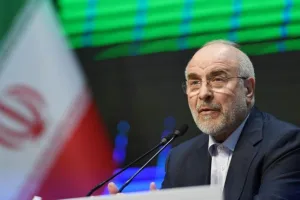
Earlier on Tuesday, Iranian Parliament Speaker Mohammad-Baqer Ghalibaf  vowed to seek justice for innocent school children killed in the US-Israeli strike on first day of the war.

Sharing emotional rrmarks of a woman, who lost her child in the US-Israeli strikes, Ghalibaf said Iran would not rest until the blood of their innocent children was avenged.

The Iranians have hardened their position and intensified retaliatory strikes against Israel and US targets in the Gulf countries as the conflict in the Middle East entered Day 5.

Iran’s Islamic Revolution Guards Corps (IRGC) said that it had launched the 17th wave of strikes against US and Israeli targets.

‘Trump betrated diplomacy’

Meanwhile, Iran’s Foreign Minister Abbas Araghchi has accused US President Donald Trump of bombing the negotiation table.

“When complex nuclear negotiations are treated like a real estate transaction, and when big lies cloud realities, unrealistic expectations can never be met. The outcome? Bombing the negotiation table out of spite,” Araghchi said on x.

“Trump betrayed diplomacy and Americans who elected him,” added.

Secret to survival from US-pushed regime change: Possess nukes

The United States and Israel launched coordinated air attacks on Iran. The build-up by the US, including moving two carrier groups into the region, alongside relocating dozens of aircraft from Europe to Israel, all at a cost of billions of dollars, was never intended solely for the application of pressure.

Harsh A Kakar | New Delhi |

The United States and Israel launched coordinated air attacks on Iran. The build-up by the US, including moving two carrier groups into the region, alongside relocating dozens of aircraft from Europe to Israel, all at a cost of billions of dollars, was never intended solely for the application of pressure.

Talks were a formality and aimed at enabling the build-up to become. The fact that Iran had agreed to every condition on the nuclear issue, including monitoring by the IAEA and the US, was ignored.

President Donald Trump had hinted at striking Iran for some time. His hatred for the regime stems from the incident when Iranian rebels seized the US embassy and held its 52 staff members captive from November 1979 to January 1981. An added cause for his dislike has been Hamas’s actions of 7 October 2023, armed and backed by Iran.

Tehran was also aware that the US would strike and had prepared accordingly, though it hoped dialogue would find a solution. In all likelihood, initial strikes were launched based on intelligence inputs that a meeting of the top hierarchy was taking place, hoping for immediate success and it worked. It is always the first strike that is most effective.
Trump termed the operation as ‘Epic Fury’ and Israel as ‘Lions’ Roar,’ implying both had different objectives, though they operated in sync. Israeli Prime Minister Benjamin Netanyahu ’s objective was the destruction of Iran’s nuclear facilities, while Trump sought regime change. Steve Witkoff, Trump’s special envoy, mentioned last week that Iran was weeks away from developing nuclear weapons. This conveys that the much-hyped strike of June last year, termed as ‘Midnight Hammer,’ by the US had failed to achieve its objective.
It is also possible that Trump was pushed to act as a condition for Netanyahu to accept his plan for Gaza. Netanyahu must have demanded an end to the Iranian regime, thereby stopping support for Hamas, securing Israel during the occupation of Gaza by the International Stabilization Force under Trump’s proposed Board of Peace.

Logically, the end state for both Israel and the US should have been similar. How they will ensure its achievement is to be seen. Neither nation has plans for placing boots on the ground. Trump hopes that Iran would go the Libyan way, where airstrikes on military targets enabled the revolution to succeed, resulting in the overthrow of Gaddafi. This may not happen in Iran and instead there could be further brutality in the streets and an uprising.

It has been confirmed that Iran’s supreme leader, Ayatollah Khamenei, has been killed. Khamenei was aware that he was a target of the US and Israel and hence had established a multi-layered system of succession. Hence, hoping for regime change by eliminating the hierarchy may not work, though degradation of oil assets, ports and other economic facilities could happen.

Israel’s MOSSAD and the CIA had penetrated deep within Iran, armoured and funded anti-regime groups, whom they now hope would rise. Whether these groups can overthrow a regime that has crushed protests brutally is to be seen.

For the people of Iran, neither overthrow of the current regime nor a pro-US regime in Tehran is ideal. The country’s economy, under the current regime and facing a host of sanctions, is at rock bottom. An uprising could make it worse. If the regime does survive, even with change of guard, sanctions would continue. Destruction of its oil refineries and oil fields would only add to economic woes. If the uprising succeeds, it is unsure whether Iran would remain one state or be splintered like Iraq or Libya.

If a pro-US regime comes in, the US would extract its pound of flesh, demanding oil production be managed by US companies. This would not benefit the populace. Further, the US would place terms and conditions that may not be palatable to the populace at large. Venezuela is a prime example of the US behaving as a colonial power, albeit from a distance.
Iran, in retaliation, has struck the US’s bases in West Asia and Israel. It had already announced them as legitimate targets. There is bound to be collateral damage as its missiles lack accuracy. While West Asian nations had permitted their bases to be used for targeting Iran, they did host US troops on their soil. Iran, which lacks the capability to hit the mainland US, targeted these bases.

Saudi Arabia was the first to criticise Iran’s missile strikes on West Asia. Though it had normalised ties with Tehran and also assured it that it would not permit its bases and airspace to be exploited for the strikes, it was reported that the Crown Prince called Washington multiple times requesting it to target Iran. It is now again an avowed Iranian enemy. In retaliation to Iranian strikes, Riyadh has announced support for West Asian nations.

Iran’s action, including targeting Qatar and Oman, will divide the region for a long time. Iran is aware that US strikes are unlikely to end soon. It will be some time before Trump announces the culmination of the operation. Tehran has currently only retaliated with missiles. It has the ability to block the Straits of Hormuz, which dominates global oil movements; whether it will also target West Asia oil infrastructure is unknown. Any of these actions would impact global oil prices.

For the US, which does not import oil from West Asia, the impact would be less, while for the rest of the world, especially nations like India, there would be an economic cost. Most telling would be the impact on China, which imports 15 per cent of its oil from Iran. This attack is also an indirect economic war on China. The world is already facing communication woes with the closure of West Asia airspace and major airports.

The US action on Venezuela and now Iran suggest that weak nations on Trump’s hitlist are heading for regime change. Trump, who claimed to have stopped eight wars and terms himself a man of peace, is busy pushing regime change. Cuba is possibly his next target. Whether this would be done militarily or through economic coercion is unknown. The only nation that will remain untouched is North Korea because it possesses nuclear weapons. The secret to survival from US-pushed regime change is to possess nuclear weapons.
(The writer is a retired Major-General of the Indian Army. The views are personal.)

Pakistan’s entrenched military dominance deepens democratic erosion

According to the report, in November 2025, the passage of the 27th amendment to Pakistan’s constitution institutionalised the Pakistani military supremacy, further undermining the civilian government.

IANS | New Delhi |

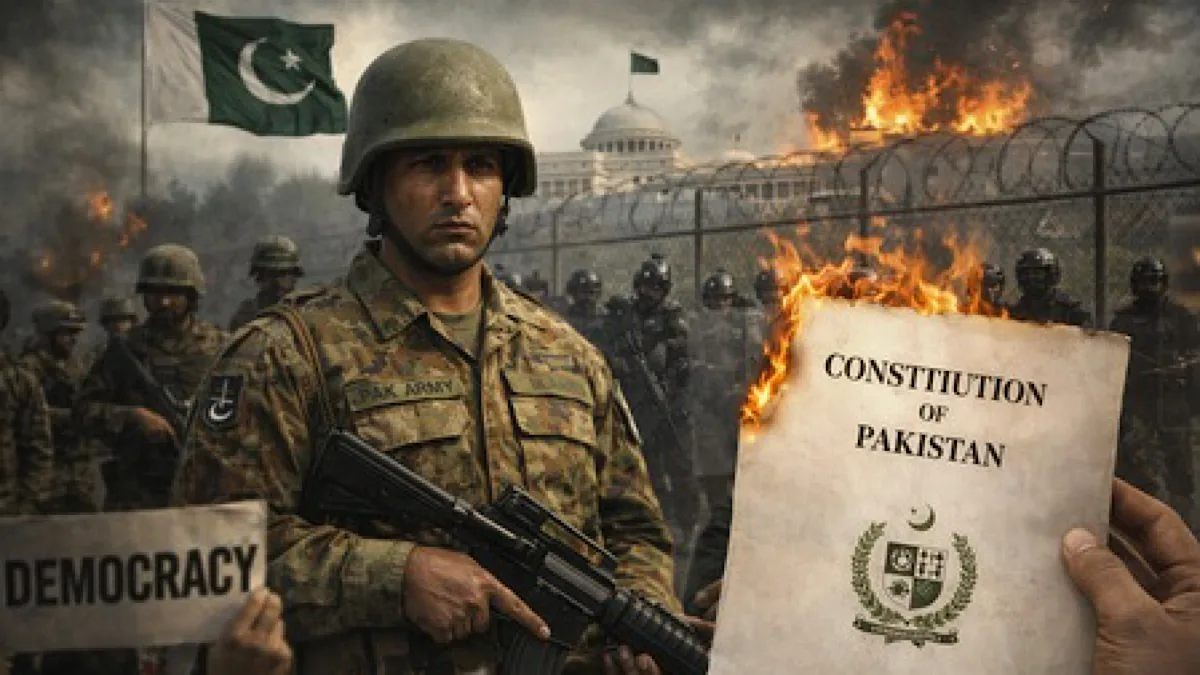
With military supremacy having been effectively institutionalised in Pakistan, the country’s volatile politics, fragile civilian governance, entrenched military dominance, systematic corruption, criminal networks and widespread human rights abuses risk becoming more persistent, a report has highlighted.

Writing for American media outlet ‘PJ Media’, Turkish journalist Uzay Bulut stated that since Pakistan’s creation in 1947, the military has wielded extensive influence over the government, the judiciary and the media, limiting the authority of civilian politicians.

“Pakistan’s military establishment has always played an active role in the political administration, including suppressing the country’s opposition. In 2024, national elections were held after a concerted campaign by the military establishment to weaken former Prime Minister Imran Khan and his Pakistan Tehreek-e-Insaf Party (PTI),” Bulut stated.

“This attempt led to Khan’s imprisonment, and his party was prevented from fielding official candidates. Khan served as Pakistan’s Prime Minister from 2018 until April 2022, when he was removed in a no-confidence vote. He was imprisoned in August 2023 on various charges of corruption and for revealing state secrets,” she added.

According to the report, in November 2025, the passage of the 27th amendment to Pakistan’s constitution institutionalised the Pakistani military supremacy, further undermining the civilian government.

The amendment, it said, was passed with strong backing from Pakistan’s ruling coalition, underscoring the civilian government’s reliance on the military establishment and further blurring the lines between civil and military authority.

“The 27th amendment to the Constitution of Pakistan is a flagrant attack on the independence of the judiciary and the rule of law,” said the International Commission of Jurists (ICJ).

“The changes made to the judicial system in the 27th amendment are alarming. They will significantly impair the judiciary’s ability to hold the executive accountable and protect the fundamental human rights of the people of Pakistan,” the report quoted Santiago Canton, ICJ’s Secretary General, as saying.

The report noted that Pakistan ranked 129 out of 142 in the 2024 Rule of Law Index published by the World Justice Project, reflecting weak performance across corruption indicators, with the military establishment widely viewed as a significant actor in the country’s widespread corruption.

Highlighting the abuses by the Pakistani military across the country, it further said, “Journalists who are deemed to have antagonised the military through their reporting are subject to enforced disappearance and other abuses. Enforced disappearances of journalists are most frequent in Balochistan, such as in the case of Zubair Baloch, who disappeared from Hub in December 2024.”

Report highlights China’s campaign eroding Mongolian language and cultural identity

The crackdown on Mongolian culture in China’s Inner Mongolia Autonomous Region by the Chinese authorities through language control, digital erasure, identity reshaping, and restrictions on cultural practices serves as a warning about the consequences of undermining autonomy, a report has revealed.

IANS | New Delhi |

The crackdown on Mongolian culture in China’s Inner Mongolia Autonomous Region by the Chinese authorities through language control, digital erasure, identity reshaping, and restrictions on cultural practices serves as a warning about the consequences of undermining autonomy, a report has revealed.

According to Uganda-based media outlet ‘PML Daily’, the Mongols of Inner Mongolia are increasingly losing both their rights and their ability to speak out. If the current trajectory persists, it said, Inner Mongolia could join Tibet and Xinjiang as regions where political control has eroded cultural diversity.

“The Inner Mongolia Autonomous Region was once a symbol of China’s promise of ethnic autonomy. Today, it has become a case study in how that promise is being systematically dismantled. Multiple reports confirm that China is actively suppressing Mongolian culture, language, and identity in north-eastern China. What is unfolding is not just a policy shift but a cultural crisis one that risks erasing centuries of heritage and reshaping an entire people’s future,” the report detailed.

The report stressed that since 2020, Chinese authorities have replaced Mongolian-language instruction in schools with Mandarin Chinese, threatening cultural identity.

“This move sparked widespread protests among ethnic Mongols, who saw it as an attempt to erase their mother tongue. Parents, teachers, and students rallied against the policy, but the state’s determination was unwavering. By curbing Mongolian in classrooms, Beijing is not simply changing curricula; it is severing the transmission of culture from one generation to the next,” it noted.

Citing a January 2026 report by PEN America and the Southern Mongolian Human Rights Information Centre, the report mentioned that the suppression extends beyond classrooms into the digital sphere, with China systematically removing Mongolian language content from online platforms.

“Social media groups have been shut down, activists silenced, and digital communities dismantled. This is more than censorship; it is cultural erasure in the digital age. By stripping Mongolian voices from the internet, authorities are ensuring that even virtual spaces cannot serve as sanctuaries for cultural preservation,” it added.

The report emphasised that the Chinese campaign further reframed Mongolian traditions as “frontier culture” amid official narratives describing “Mongolian heritage not as a distinct identity but as a peripheral extension of Han culture”.

“This rebranding is deliberate: it dilutes Mongolian uniqueness and assimilates it into a broader national identity. The strategy mirrors tactics used in Tibet and Xinjiang, where cultural and religious suppression has been deployed to enforce political control. Inner Mongolia is now on the same trajectory, with its identity steadily redefined by state propaganda,” it noted.

India sets up control room as West Asia conflict intensifies

India established a special control room in New Delhi on Wednesday to assist citizens amid escalating US-Israel strikes on Iran, which killed Supreme Leader Ayatollah Ali Khamenei and prompted retaliation from Tehran targeting Gulf states.

IANS | New Delhi |

India established a special control room in New Delhi on Wednesday to assist citizens amid escalating US-Israel strikes on Iran, which killed Supreme Leader Ayatollah Ali Khamenei and prompted retaliation from Tehran targeting Gulf states.

According to the Ministry of External Affairs (MEA), where the facility is set up, the control room operates from 9 a.m. to 9 p.m. (Indian time) via toll-free number 1800118797 or landlines +91-11-23012113, +91-11-23014104, +91-11-23017905.

Emergency embassy contacts are also listed for countries including Bahrain, Iran, Iraq, Israel, and the UAE.

Iran’s retaliatory strikes have spanned several countries, with missiles and drones intercepted over Kuwait, Bahrain and the United Arab Emirates, prompting temporary airspace closures and resulting in both military and civilian casualties.

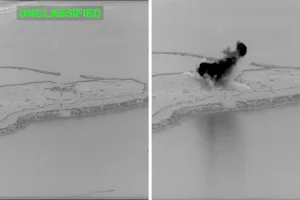
The intensifying confrontation has seen US forces launch counter-strikes, including naval operations, marking one of the most severe and sustained face-offs between Washington and Tehran in decades.

Earlier on Sunday, the Cabinet Committee on Security (CCS), convened under the leadership of Prime Minister Modi, was briefed on the air strikes in Iran on February 28 and the subsequent escalation in the Middle East, as well as the security of the Indian citizens in the region.

According to the official statement, the Committee was briefed on the air strikes in Iran on February 28 and the subsequent escalation, including attacks in several Gulf countries.

“It expressed serious concern over the safety and security of the large Indian expatriate community in the region,” the statement added.

Prime Minister Narendra Modi on Monday expressed concerns over the situation in West Asia and said that India will continue to work closely with all the countries in the region to ensure the safety and security of its nationals.

PM Modi said, “India’s stance on the several ongoing tensions around the world is firm. We have always called for maintaining peace and stability, and when two democracies stand together, the voice for peace becomes even stronger.”

Speaking on the security concerns in the Gulf nations, he said, “The current situation in West Asia is a matter of deep concern for us. India supports the resolution of all disputes through dialogue and diplomacy. To ensure the safety of all Indian nations, we will continue to work closely with all countries in the region.”

Japan, India in talks to jointly develop Rajasthan rare earth deposits

In a move aimed at reducing dependence on China for critical minerals, Japan is in discussions with India to jointly explore rare earth deposits in the desert state of Rajasthan, according to reports.

IANS | New Delhi |

In a move aimed at reducing dependence on China for critical minerals, Japan is in discussions with India to jointly explore rare earth deposits in the desert state of Rajasthan, according to reports.

The talks come after India recently identified three hard rock rare earth deposits in Rajasthan and Gujarat, containing an estimated 1.29 million metric tons of rare earth oxides.

The discovery was announced last month by Union Mines Minister G. Kishan Reddy, who said the findings could significantly boost India’s mineral security.

Reports said the discussions between New Delhi and Tokyo are part of a preliminary pact on critical minerals signed last year. Under the proposed cooperation, Japan is expected to send experts to Rajasthan to study the deposits.

The Japanese government is likely to offer advanced extraction technology and financial support in exchange for a stable supply of rare earth materials to Japan.

Hard rock rare earth deposits require specialized extraction techniques, which India currently does not have at scale. Japan’s technological expertise could therefore play a key role in developing these reserves.

The reports said Japan is examining mining projects around the world to diversify its mineral supplies, including rare earth elements. However, the report clarified that there have been no discussions yet on specific corporate partnerships or technology agreements related to Rajasthan.

Both India and Japan are looking to reduce their reliance on Chinese imports of rare earth materials. Rare earth elements are essential for manufacturing permanent magnets used in electric vehicle motors, wind turbines, fighter jets and drones.

As one of the world’s fastest-growing major economies, India sees secure access to these materials as critical for its industrial and strategic ambitions.

The talks also come amid rising tensions between Japan and China.

Last week, China banned the export of certain dual-use items to 20 Japanese entities that it claims supply Japan’s military. The move effectively restricts Japanese companies’ access to seven rare earth elements and other critical minerals currently on China’s dual-use control list.

Beyond rare earths, reports indicate that Japan is also exploring collaboration with Indian companies to search for lithium, copper and cobalt in Africa, as part of a broader effort to secure diversified and stable mineral supply chains.

Gold, silver surge over 1 pc amid escalating conflict in Middle East

Gold and silver prices climbed over 1 per cent on Wednesday amid escalating conflict between the US‑Israeli combine and Iran, driving safe haven demand.

IANS | New Delhi |

Gold and silver prices climbed over 1 per cent on Wednesday amid escalating conflict between the US‑Israeli combine and Iran, driving safe haven demand.

MCX gold April futures gained 1.04 per cent to Rs 1,62,790 per 10 grams around 11.30 am on an intraday basis. Meanwhile MCX silver May futures gained 1.84 per cent to Rs 2,70,200 per kg.

Increased tensions in the Middle East and chances of energy disruption pushed investors toward safe‑haven assets and while concerns about inflation in the US led to investors considering prospects of the US Federal Reserve keeping interest rates unchanged for longer.

Gold and silver exchange-traded funds (ETFs), however, saw a steep correction on Wednesday despite gains in precious metals. Major silver ETFs dipped 7.12 per cent to 7.43 per cent, while Gold ETFs dropped between 3–3.87 per cent.

Spot gold rose around 1 per cent to $5,138.46 an ounce, while US gold futures for April delivery gained 0.5 per cent to $5,147.10. Gold has jumped 19 per cent year‑to‑date after surging 64 per cent in 2025, driven by geopolitical turmoil and strong central bank buying.

The dollar index surged 0.15 per cent to 99.20, making greenback-backed bullion expensive for buyers in overseas currencies, capping further gains in the yellow metal.

US President Donald Trump said American forces had struck numerous Iranian naval and air targets, while Iran targeted critical oil infrastructure across the Gulf region.

This led investors to pull back from equities amid fears of wider disruption to energy markets and shipping routes.

WTI crude climbed above $75 a barrel, extending a two-day gain of approximately 11 per cent. Brent traded near $81 a barrel as the widening Middle East conflict and shipping disruptions through the Strait of Hormuz kept supply risks firmly in focus.

Investors remain keen on cues from US Manufacturing and Non-Manufacturing PMI, ADP Non-Farm Employment Change and Unemployment data for assessing the direction of Federal Reserve policy.

“Gold has support at Rs 1,58,000 and Rs 1,62,000 while resistance at Rs 1,75,000 and Rs 1,80,000. MCX silver has support at Rs 2,50,000 and Rs 2,70,000, and resistance is at Rs 3,00,000 and Rs 3,20,000,” an analyst said.

X to suspend revenue sharing for users posting undisclosed AI war videos

Elon Musk‑led social media platform X warned that it will suspend creators from its revenue‑sharing programme for 90 days if they post AI‑generated videos of armed conflict without disclosure about AI use.

IANS | New Delhi |

Elon Musk‑led social media platform X warned that it will suspend creators from its revenue‑sharing programme for 90 days if they post AI‑generated videos of armed conflict without disclosure about AI use.

X Product Head Nikita Bier announced the measure as part of its broader effort to curb manipulation and maintain access to authentic information during wartime.

Subsequent violations after initial suspension will result in a permanent suspension from the revenue-sharing programme.

“Today we are revising our Creator Revenue Sharing policies to maintain authenticity of content on Timeline and prevent manipulation of the program…With today’s AI technologies, it is trivial to create content that can mislead people,” Bier wrote on X.

“This will be flagged to us by any post with a Community Note or if the content contains metadata (or other signals) from generative AI tools,” he added.

The company recently introduced a ‘Made with AI’ label on the platform to flag to users content created with artificial intelligence. Amid the US‑Israeli military campaign against Iran and the killing of Supreme Leader Ayatollah Ali Khamenei, Elon Musk and Bier had recently announced that traffic on the platform had hit a new all-time record.

Bier had recently also warned that use of emails, iMessages and phone calls is becoming untenable due to a spam surge enabled by the rise of AI agent platform OpenClaw. Subsequently, the company went on to introduce what it called spam and automation detection measures.

US entrepreneur Musk’s net worth surged past the $800 billion mark after SpaceX acquired his artificial‑intelligence firm xAI, making him the richest person in history by a wide margin.

Musk’s net worth reached roughly $852 billion, almost $578 billion higher than the world’s second-wealthiest person, Google co-founder Larry Page, whose net worth is estimated at $281 billion.

The merger took the combined value of the company to $1.25 trillion and added about $84 billion to Musk’s fortune, according to reports.

India market weakness a buying opportunity, earnings revival ahead: Report

Indian stock markets may look weak on the surface, but the current phase offers a strong buying opportunity for long-term investors, a report said on Wednesday.

IANS | New Delhi |

Indian stock markets may look weak on the surface, but the current phase offers a strong buying opportunity for long-term investors, a report said on Wednesday.

The global brokerage Morgan Stanley believed that structural fundamentals of the Indian economy remain intact and earnings growth is set to improve further in 2026, even as markets struggle with near-term volatility.

The report said Indian equities are reacting more sharply to negative news than to positive developments, creating doubts among investors about possible structural problems.

However, Morgan Stanley disagrees with this view and sees the weakness as a result of market positioning and technical factors rather than any deep-rooted economic trouble.

According to the report, corporate earnings growth is already turning after a six-quarter slowdown and is likely to accelerate into 2026.

This improvement is expected to be supported by reflationary policies from the Reserve Bank of India and the government.

Rate cuts, bank deregulation, liquidity infusion, continued capital expenditure, tax relief measures and a relatively growth-supportive Budget are all contributing to a more supportive macroeconomic environment.

The brokerage noted that India’s post-Covid hawkish policy stance has now eased, creating better conditions for growth.

It also highlighted that trade agreements and improving relations with China have added to the positive backdrop.

The Indian currency is seen as undervalued, and domestic investor flows remain strong, offering stability to the market.

Despite these positives, stock performance has been disappointing. The trailing 12-month returns are among the weakest historically, and relative valuations are near previous lows.

The report noted that India’s share in global corporate profits is significantly higher than its weight in global indices, and the Sensex is trading at historically cheap levels when measured against gold. Foreign portfolio investor (FPI) positioning has also weakened in recent months.

Morgan Stanley attributed the recent underperformance partly to rising geopolitical tensions in the Middle East.

Although India’s oil intensity has reduced compared to earlier years, the country still depends on oil imports. Any uncertainty in oil supply chains or production impacts investor sentiment.

The absence of a clear artificial intelligence (AI) theme in Indian markets has also weighed on performance, as global investors chase AI-linked stocks elsewhere. Some investors are concerned that AI disruption could affect India’s services exports.

T20 WC: What will happen if ENG vs IND semi-final is washed out?

India will face England in the T20 World Cup 2026 semifinals at Mumbai’s Wankhede Stadium on Thursday.

IANS | New Delhi |

India will face England in the T20 World Cup 2026 semifinals at Mumbai’s Wankhede Stadium on Thursday. Led by Suryakumar Yadav, India secured a commanding victory over the West Indies to advance, despite starting their Super 8 campaign with a loss to South Africa.

In the other semifinal, South Africa will compete against New Zealand at Kolkata’s Eden Gardens. As fans eagerly anticipate the matches, concerns about the weather persist, leaving many wondering what will occur if the games are cancelled due to rain.

If the India vs England match is washed out, the International Cricket Council (ICC) has scheduled a reserve day. If there is a delay, officials have an additional 90 minutes on Thursday and 120 minutes on Friday to ensure at least a five-over match is played.

If the match is abandoned, the outcome will be determined depending on the teams’ position in their respective group’s Super 8 points table.

In that scenario, England will advance to the final since they finished higher than India in their Super 8 group. England topped their group with 3 wins, remaining unbeaten with six points to their name, while India finished second with 2 wins and four points.

If both semifinals are cancelled, South Africa and England will advance to the T20 World Cup final, having topped their respective Super Eights table.

The upcoming match in Mumbai continues an exciting semi-final sequence. In 2022, England stopped India’s run in the penultimate stage before defeating Pakistan to win the trophy.

Two years later, the script flipped. Led by Rohit Sharma, India beat England in the 2024 semi-final and carried that momentum into the final, where they defeated South Africa in Barbados to win the title.

Notably, in recent editions, the team that wins the India-England semi-final has subsequently become the world champion, a pattern that makes Thursday’s match even more interesting to watch out for.