Logo

Bijapur youth cracks UPSC with rank 816, beacon of hope from Naxal hit Bastar

His achievement has been widely celebrated across Bijapur and neighbouring parts of Bastar, a region where decades of Left Wing Extremism and geographical isolation have often limited educational opportunities for young aspirants.

Statesman News Service | Raipur |

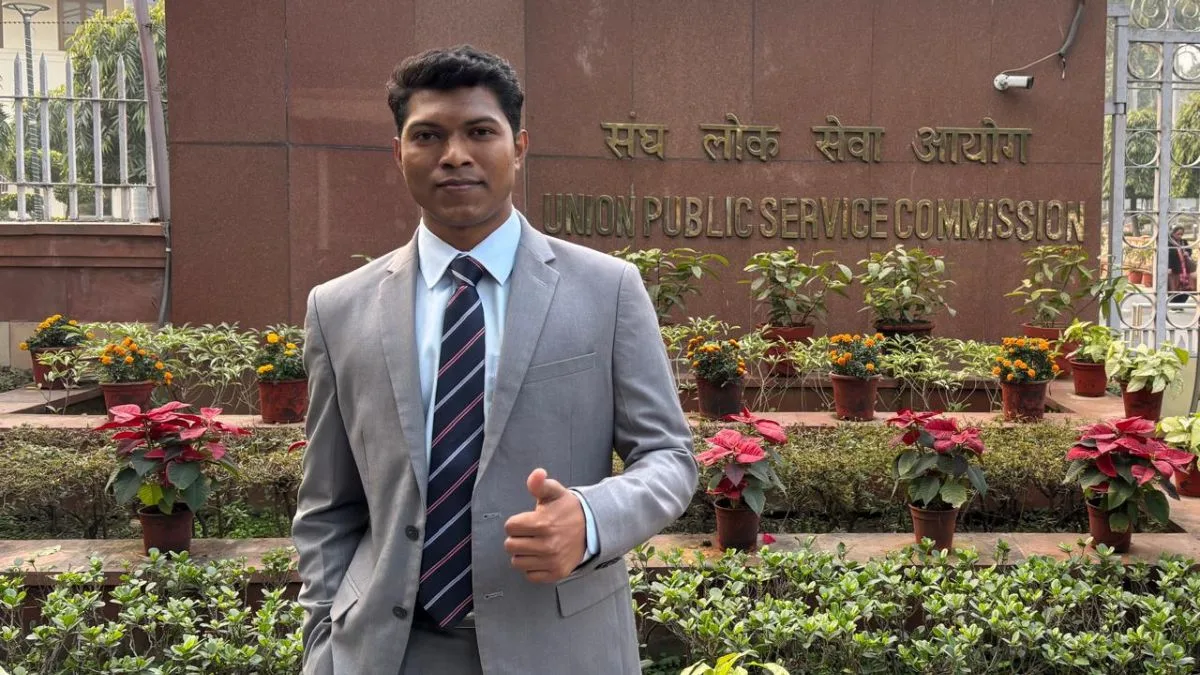
In a moment of pride for insurgency affected Bijapur district in south Chhattisgarh, Ankit Sakni of Bhairamgarh has secured All India Rank 816 in the Union Public Service Commission (UPSC) Civil Services Examination 2025. The results of the prestigious examination were announced recently.

His achievement has been widely celebrated across Bijapur and neighbouring parts of Bastar, a region where decades of Left Wing Extremism and geographical isolation have often limited educational opportunities for young aspirants.

Ankit attributed his success to the blessings of Goddess Danteshwari, along with the guidance of his teachers and the unwavering support of his parents. He is the son of Sakni Chandraya, currently a district panchayat member, and Jamuna Sakni, a former janpad panchayat member.

Despite coming from a politically active family, Ankit charted his own course through discipline, perseverance and sustained hard work. Clearing the civil services examination, widely regarded as one of the country’s most demanding competitive tests, marks a significant milestone not only in his personal journey but also for the region he represents.

As news of his success spread, Bhairamgarh and other parts of Bijapur district witnessed celebrations, with relatives, friends and well wishers reaching out through calls and messages to congratulate the young achiever and his family.

Local residents described the accomplishment as particularly inspiring given the challenges faced by students in the Naxal affected region. They said Ankit’s success demonstrates that with determination and focus, youth from even the most remote and conflict-affected districts can compete at the highest national level.

Bijapur Superintendent of Police Jitendra Yadav described the achievement as a reflection of a changing Bijapur. Responding to queries from Varta, he said Ankit’s success had set an important benchmark for the district.

“This is a historic change. Ankit clearing the UPSC has set a milestone for children and youth studying in local schools, ashram institutions, and colleges,” Yadav said.

He added that the achievement sends a powerful message that youth from Bijapur are capable of succeeding in national level competitive examinations. “Because Bijapur has long been identified as a Naxal affected district, there was a perception that the youth here lacked opportunities or were moving in the wrong direction. Ankit clearing such a prestigious examination should be seen as a clear sign of a changing Bijapur,” the SP said.

Community members expressed hope that his achievement would motivate many more young people in Bastar to pursue higher education and prepare for prestigious examinations such as the civil services.

For a district often mentioned in the context of security challenges, Ankit Sakni’s success represents a powerful message of aspiration and possibility reflecting the determination of a new generation in Bastar to shape its future through education and public service.
Honest intent, transparent governance, public interest in every decision becoming Delhi’s identity: Rekha Gupta

She said Delhi has prioritized services over politics, good governance and development when it voted for the change.

Statesman News Service | New Delhi |

Delhi Chief Minister Rekha Gupta on Friday said it was not just a change of power when the people of the national capital elected her government, but a resolve for a change in the entire system.

She said Delhi has prioritized services over politics, good governance and development when it voted for the change.

Taking to social media platform X on Friday, CM Gupta stated that, under the leadership of Prime Minister Narendra Modi, the resolve for service is taking direction. Honesty in intent, transparency in governance, and public interest in every decision are now becoming the new identity of Delhi.

She said, “The trust of Delhi is our greatest strength, with this trust, the journey towards a developed Delhi continues to move forward unceasingly.”

According to the CM’s Office, the Centre and Delhi government are working together to swiftly advance important projects related to connectivity, transportation, and modern urban facilities in the national capital.

Officials have said that extensive work is underway to expand the metro, construct roads, flyovers, strengthen urban infrastructure, to ease people’s movement and make daily life more comfortable across national capital.

All these efforts are steadily transforming Delhi into a strong, modern, and developed national capital.

Sharing the work underway with regard to cleaning of river Yamuna, the CM shared that 37 Sewerage Treatment Plants (STPs) have been revived and upgraded.

Drone mapping of all drains have been undertaken while tenders have been issued for new decentralized STPs, and strict measures are being taken to stop silt and garbage from going into the river.

“Yamuna is not just a river; it is Delhi’s faith and lifeline,” she added.

“Now that the work for the revival of Yamuna has decisively begun Delhi will witness this transformation,” CM stated.

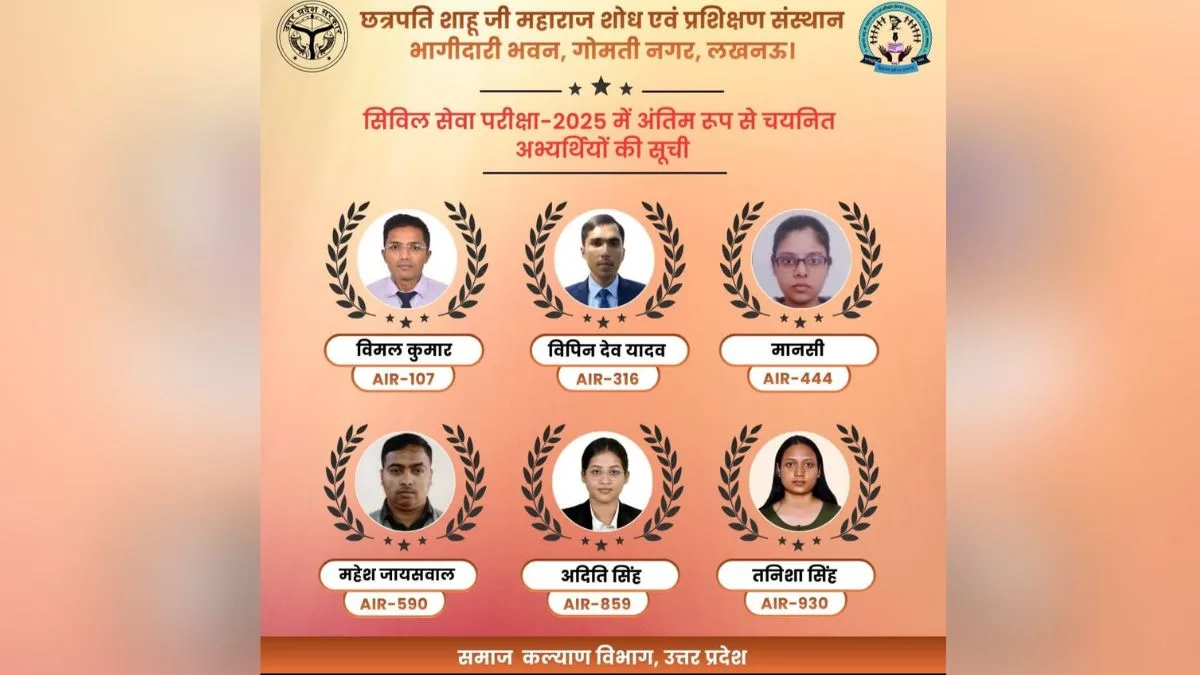
Free coaching, expert guidance, and interview training help 6 UP candidates clear UPSC-2025

Uttar Pradesh Social Welfare Department’s residential coaching and the Mukhyamantri Abhyudaya Coaching Scheme have once again brought laurels to the state with their impressive UPSC results declared on Friday.

Statesman News Service | Lucknow |

Uttar Pradesh Social Welfare Department’s residential coaching and the Mukhyamantri Abhyudaya Coaching Scheme have once again brought laurels to the state with their impressive UPSC results declared on Friday.

Two candidates who received free training and guidance from the residential coaching conducted by the Department of Social Welfare at Bhagidari Bhawan in Gomti Nagar, along with four candidates who participated in mock interviews under the Mukhyamantri Abhyudaya Scheme, have been selected for the Civil Services Examination (UPSC)-2025.

UP Minister of State for Social Welfare (Independent Charge), Aseem Arun, congratulated all the selected candidates. He stated that Chief Minister Yogi Adityanath endeavours to ensure that every meritorious youth has access to quality guidance and resources for preparing for competitive examinations.

Anand Kumar Singh, Deputy Director of the Social Welfare Department, stated that Vimal Kumar secured 107th rank and Vipin Dev Yadav secured 316th rank from the residential coaching institute at Bhagidari Coaching. Mansi, who participated in the mock interview under the Bhagidari Bhawan Residential Coaching and the Mukhyamantri Abhyudaya Yojana, secured 444th rank, Mahesh Jaiswal secured 590th rank, Aditi Singh secured 859th rank, and Tanisha Singh secured 930th rank.

The Department of Social Welfare is conducting residential coaching for economically disadvantaged children at Bhagidari Bhawan. Special sessions are held here for the Civil Services Main Examination as well as interviews, where subject matter experts and senior IAS and PCS officers provide guidance to the candidates.

These candidates are provided with free accommodation, meals, a library, and online and offline classes.

Uddhav Thackeray dismisses Budget as Diwali fireworks on borrowed cash

Shiv Sena chief Uddhav Thackeray said that the Maharashtra Budget 2026 was presented by borrowing loans at a time when the state faces a dire financial situation.

Statesman News Service | Mumbai |

Shiv Sena chief Uddhav Thackeray said that the Maharashtra Budget 2026 was presented by borrowing loans at a time when the state faces a dire financial situation.

“This budget is like celebrating Diwali by setting off fireworks after borrowing a huge amount through loans. Since the year 2047 has been mentioned repeatedly in the budget, the government must answer whether the announced loan waiver to farmers will be completed by 2047.

“During the election, they promised to waive off farmers’ loans. However, no concrete announcement was made about this promise in the budget. On the contrary, many new conditions and rules have been imposed to become eligible for the loan waiver,” Uddhav Thackeray said.

“Five years ago, our government waived off loans of farmers up to Rs 2 lakh on a time-bound basis. At that time, our government never imposed any conditions or rules. Also, an incentive of Rs 50,000 was announced for farmers who repaid their loans regularly during the COVID period. However, the current government has imposed several conditions on farmers for loan waivers,” Uddhav Thackeray said.

Uddhav Thackeray also raised some questions regarding the ‘Laadki Bahin Yojana’ scheme. “Under this scheme, it was announced to give Rs 2,100 to women, but no clear information about this has been given in the budget.

Referring to the budget provision of huge funds for highway projects in the state, Uddhav Thackeray said, “We can see concrete plans for contractors. However, we don’t see any concrete measures for farmers, workers and common citizens. This is a budget which shows a mirage of development,” Uddhav Thackeray said.

“The state government has announced that it will plant 300 crore trees. However, the government should also clarify where exactly these trees will be planted and on whose land it will be planted. Or are they going to reserve land for this purpose?” Uddhav Thackeray said.

Commenting on the bullet train project, Shiv Sena chief Uddhav Thackeray said, “The government should answer what the common citizen of Mumbai will do if he goes to Ahmedabad. The government has also not provided any clarity on the source of funds for the announced schemes.”

CM orders expeditious implementation of development projects across Delhi villages, trans-Yamuna area

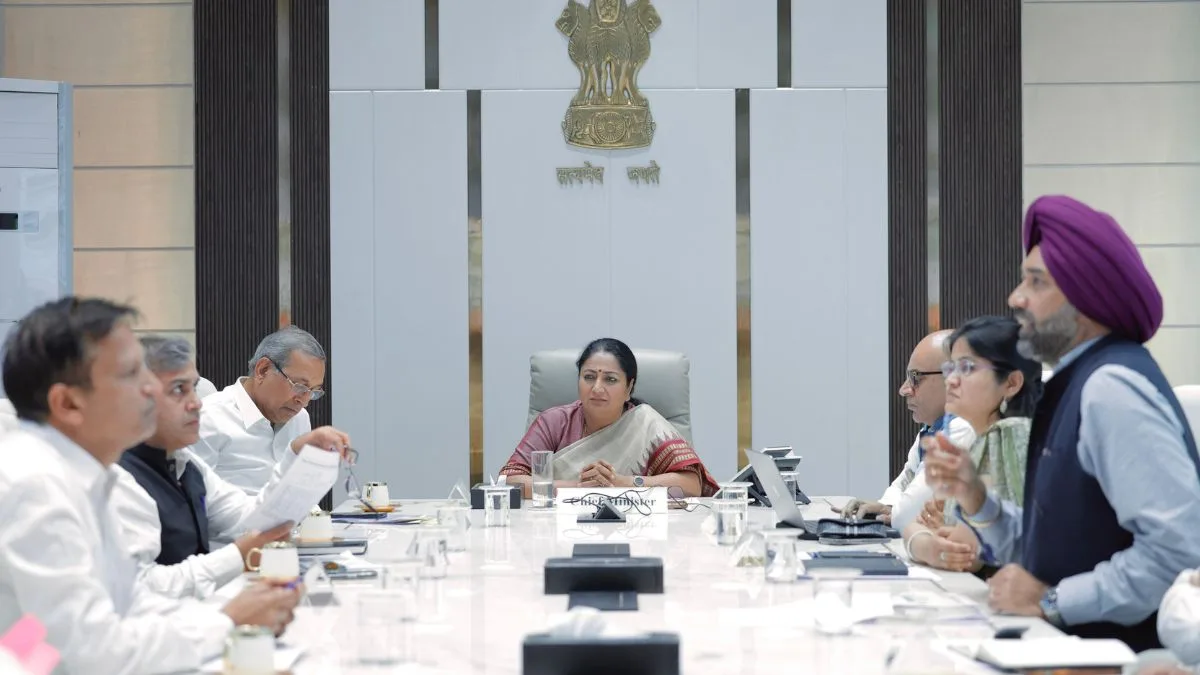
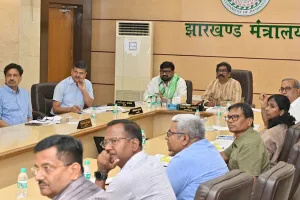
Delhi Chief Minister Rekha Gupta, during an review meeting at the secretariat on Friday, gave strict instructiont to officials concerned across all the government departments to expedite the ongoing development works across the city.

Statesman News Service | New Delhi |

Delhi Chief Minister Rekha Gupta, during an review meeting at the secretariat on Friday, gave strict instructiont to officials concerned across all the government departments to expedite the ongoing development works across the city.

Rekha Gupta made it very clear that there would be neither any shortage of budget for the development works, nor will be any lenience for laxity. She issued directions to the department heads for completion of all the tender-related processes by the end of this month, and ensure that the works concerned are completed prior upcoming monsoon season.

The review meet was held regarding the works that have been taken up across the national capital under the Chief Minister Development Fund (CMDF), the Delhi Village Development Board (DVDB) and the Trans-Yamuna Area Development Board (TYADB).

DVDB chair Rajkumar Chauhan, TYADB Chairman Arvinder Singh Lovely and other senior officials of the departments were present in the meeting.

CM Gupta emphasised that the pace of development works must be visible on the ground, adding that projects worth approximately Rs 3,786 crore have been approved so far under the above mentioned three departments.

She stated that ensuring that budgetary funds are utilised for the development works remains a key priority of her government while directing officials to begin the processes related to the works swiftly at the start of the new financial year to ensure timely completion.

The Chief Minister informed that, in order to strengthen basic infrastructure in the capital and accelerate development at the local level, a large number of projects have been approved under the CMDF scheme, and so far 3,812 such projects have received administrative nod under the scheme.

The cost of these approved is around Rs 1,798.85 crore, she added, further sharing that these include road construction, making drains, works related to water supply, installation of street lights, development of parks and several other basic infrastructure facilities.

The implementation agencies for these are Municipal Corporation of Delhi (MCD), the Irrigation and Flood Control Department, Delhi Jal Board (DJB), Public Works Department (PWD), Delhi State Industrial and Infrastructure Development Corporation (DSIIDC) and TPDDL.
Notably, the highest number of projects are being executed through the MCD.

After the meeting, the CM shared that her government is taking steps for the development of Delhi’s villages as 707 projects across various rural areas have been approved under the Delhi Village Development Board (DVDB), worth Rs 1,557 crore, she added.

These works are aimed at improving the living standards of the residents across the villages, and out of the 707, 411 projects have been assigned to the Irrigation and Flood Control Department, 293 projects to the MCD and 3 projects to the DSIIDC.

The CM also shared that to accelerate development in Trans-Yamuna, a total of 799 projects have been approved under the TYADB, with an expenditure of approximately Rs 430 crore.

Trump says “no deal with Iran except unconditional surrender” amid West Asia conflict

Donald Trump Iran unconditional surrender demand, MAKE IRAN GREAT AGAIN MIGA slogan, US Israel military strike Ayatollah Khamenei killed, Mojtaba Khamenei lightweight unacceptable successor, Axios interview Delcy Rodriguez comparison,

ANI | New Delhi |

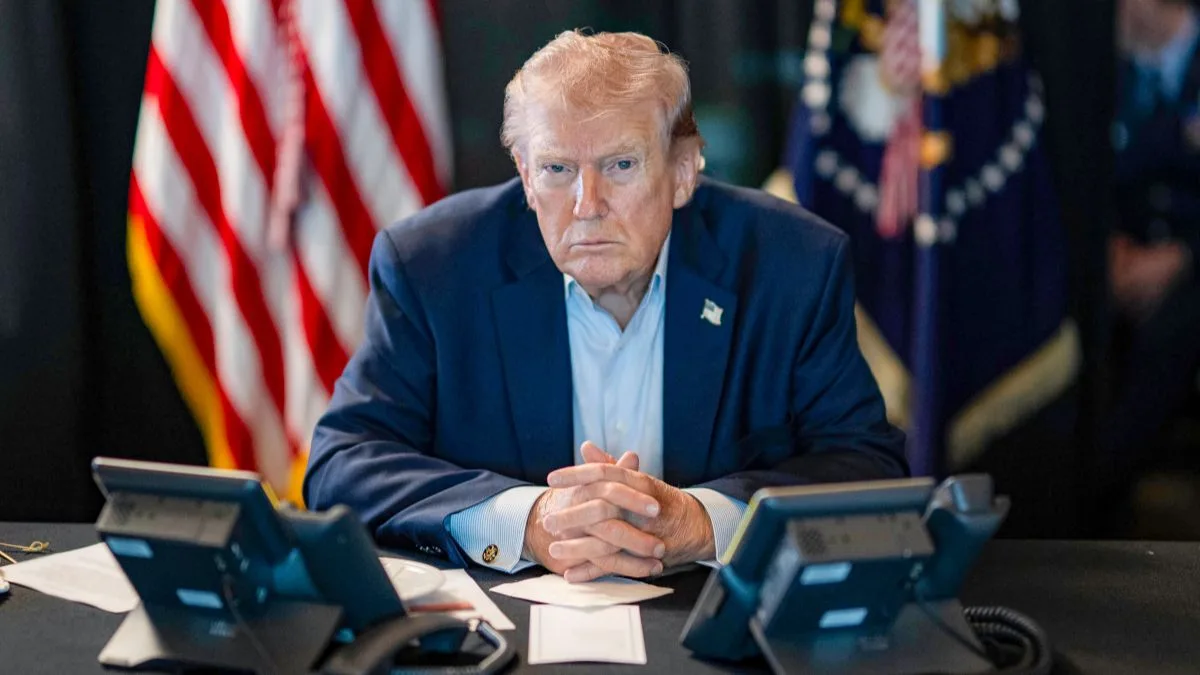
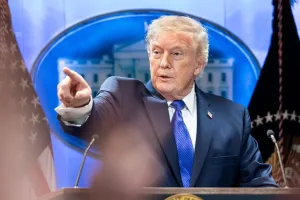
US President Donald Trump on Friday declared that there would be “no deal with Iran except unconditional surrender” amid the escalating West Asia conflict, asserting that Tehran must capitulate before any diplomatic negotiations can proceed.

In a post on Truth Social, Trump emphasised that the US and its allies, particularly Israel, would only consider an agreement with Iran after the country’s leadership completely yields and is replaced by “great & acceptable leader(s)”.

He also articulated ambitions to help reconstruct Iran into a stronger nation following its capitulation, coining the phrase “MAKE IRAN GREAT AGAIN (MIGA!)” in an echo of his familiar political slogan.

“There will be no deal with Iran except UNCONDITIONAL SURRENDER! After that, and the selection of a GREAT & ACCEPTABLE Leader(s), we, and many of our wonderful and very brave allies and partners, will work tirelessly to bring Iran back from the brink of destruction, making it economically bigger, better, and stronger than ever before. IRAN WILL HAVE A GREAT FUTURE. “MAKE IRAN GREAT AGAIN (MIGA!),”” his post read.

The development comes amid escalating tensions in West Asia after a joint US-Israel military strike on February 28 on Iranian territory killed its Supreme Leader, Khamenei and other senior figures, prompting a fierce response from Tehran.

In retaliation, Iran launched waves of drone and missile attacks across multiple Arab countries, targeting American military bases and Israeli assets throughout the region, with Israel also continuing its strikes on Tehran and widening the conflict to Lebanon, targeting Hezbollah.
Earlier on Thursday, Trump expressed his desire to be personally involved in selecting Iran’s next Supreme Leader following the death of Ayatollah Ali Khamenei in a US-Israel joint military strike last week, as reported by Axios.

In an exclusive interview with Axios, Trump said he wanted a role in the appointment of Iran’s next leader, drawing a comparison to his involvement in political developments in Venezuela in January following the capture of its former President Nicolas Maduro and his wife in a US military operation.

He also criticised the possible succession of the son of the late supreme leader of the Islamic Republic, Mojtaba Khamenei, who is widely viewed as a leading contender for the position.

“They are wasting their time. Khamenei’s son is a lightweight. I have to be involved in the appointment, like with Delcy [Rodriguez] in Venezuela,” Trump said, as quoted by Axios.

Trump described Mojtaba Khamenei as “unacceptable” and said he would prefer a leader who could bring “harmony and peace” to Iran, warning that a continuation of his father’s policies could lead to renewed conflict with the United States in the future.

“Khamenei’s son is unacceptable to me. We want someone that will bring harmony and peace to Iran,” the US President added, according to Axios.

According to reports, Iranian authorities have delayed announcing a successor after the death of Khamenei, though political signals from Tehran suggest a decision on the next supreme leader could come soon.

Reports further suggested that Mojtaba Khamenei, a 56-year-old cleric with close ties to the Islamic Revolutionary Guard Corps (IRGC), is widely seen as the frontrunner for the position.

However, the Iranian government, via the Consulate General in Mumbai, refuted reports of Mojtaba Khamenei being named as his late father Ayatollah Khamenei’s successor.

In a post on X on Wednesday, the consulate said, “Reports circulating on media regarding potential candidates for leadership selected by Iran’s Assembly of Experts have no official source and are officially denied.”

According to Axios, the US president also argued that Washington should not accept a new Iranian leader who would pursue policies similar to those of the late Khamenei.

PM to inaugurate, lay foundation stone for multiple development projects in Delhi on March 8

According to the Prime Minister’s Office (PMO), PM Modi will also address the gathering on the occasion.

Statesman News Service | New Delhi |

Prime Minister Narendra Modi will inaugurate and lay the foundation stone for multiple development projects worth around Rs 33,500 crore on Sunday in the national capital.

According to the Prime Minister’s Office (PMO), PM Modi will also address the gathering on the occasion.

Prior to the programme, the Prime Minister will visit GPRA Type-5 quarters in Sarojini Nagar and hand over the keys to female allottees. He will inaugurate and lay the foundation stone for Delhi metro projects worth about Rs 18,300 crore.

He will inaugurate two new corridors of the Delhi Metro. These include the Majlis Park-Maujpur Babarpur (Pink Line) corridor of around 12.3 km and the Deepali Chowk-Majlis Park (Magenta Line) corridor of around 9.9 km.

The new connectivity will benefit several areas of Delhi including Burari, Jagatpur-Wazirabad, Khajuri Khas, Bhajanpura, Yamuna Vihar, Madhuban Chowk, Haiderpur Badli Mor, Bhalaswa, Majlis Park among others.

PM Modi will also lay the foundation stone for three new corridors under Phase V-A of the Delhi Metro, covering a route length of around 16.10 km. The three new corridors are R K Ashram Marg to Indraprastha, Aerocity to Indira Gandhi Airport Terminal-1, and Tughlakabad to Kalindi Kunj.

These corridors will provide direct connectivity to several important locations in the national capital and improve connectivity for residents travelling between Noida, South Delhi and the airport.

The Prime Minister will also inaugurate and lay the foundation stone of multiple projects worth Rs 15,200 crore under the General Pool Residential Accommodation (GPRA) Redevelopment Plan.

Spread across key locations such as Sarojini Nagar, Netaji Nagar, Kasturba Nagar and Sriniwaspuri, these projects are part of the Government’s ambitious programme to modernise GPRA colonies and create world-class infrastructure for government employees and administrative offices.

The projects have been redeveloped through an innovative self-sustainable financial model that ensures the redevelopment is carried out without burdening the public exchequer.

Under this model, the government is developing and monetising a limited portion of the project area for commercial and residential space to finance the entire project. The revenue generated from it is being used to fund the redevelopment of modern government housing, supporting infrastructure and public facilities.

The redevelopment plan will provide more than 9,350 modern flats for government employees along with the creation of approximately 48 lakh square feet of office space, which will significantly enhance administrative efficiency while also generating monetisation potential.

Bihar: CM Nitish Kumar’s son Nishant Kumar to join JD(U) on Sunday; confirms party

This marks a historic shift in Bihar’s political landscape. After years of Nitish Kumar strictly opposing dynastic politics, his only son, Nishant Kumar, is set to formally enter the arena.

ANI | New Delhi |

Bihar Chief Minister Nitish Kumar’s son Nishant Kumar will be joining the Janata Dal (United) on Sunday, March 8, the party confirmed on Friday.

This marks a historic shift in Bihar’s political landscape. After years of Nitish Kumar strictly opposing dynastic politics, his only son, Nishant Kumar, is set to formally enter the arena.

The timing of Nishant’s entry is directly linked to a major transition for his father. On Thursday, March 5, Nitish Kumar filed his nomination for the Rajya Sabha, signalling the end of his record-breaking tenure as Chief Minister.

However, JD (U) leader Neeraj Kumar informed that during the meeting at CM’s house, Union Minister and MP Rajiv Ranjan Singh (Lalan) and MP Sanjay Jha made the suggestion to bring Nishant into state politics, and said that he will be taking the party membership tomorrow.

“Union Minister Lalan Singh and MP Sanjay Jha suggested that Nishant Kumar should enter the party, and the party enthusiastically welcomed the suggestion. Hence, Nishant Kumar will be joining the party tomorrow. He has given his acceptance to the same and will be conducting a political tour in the state as well,” the JD(U) leader said without clarifying further on Nishant’s role in the state politics amid the shift in government following the CM’s decision.

He further said that “no discussion on the formation of a coalition government was done during the meeting.”

He also said that the party leaders expressed disappointment towards Nitish Kumar’s decision but extended support for his new political journey.

“Today, a meeting of the party leaders was conducted in the presence of JDU Chief and Bihar CM Nitish Kumar. In the meeting, we all expressed the party’s and the people’s difficulty and grief over his decision, but since you have decided, the party stands with you as you made the party,” he said.

Additionally, JD(U) MLA Vinay Chaudhary also confirmed Nishant Kumar’s joining of the party, without confirming his role and the date of joining.

“The CM put forth his views while the Cabinet members expressed their concerns. Nitish Kumar said that he will reside in Patna and will continue to oversee and guide the party. We are sad with his decision, but he has our full support. Nishant Kumar will be joining state politics soon. When and how will be made clear,” he said.

JD(U) leaders, including Minister Ashok Choudhary and Shrawon Kumar, have described Nishant’s entry as a “Holi gift” to party workers who have long demanded a successor from within the family to maintain the party’s core support base.
While Nishant has lived a low-profile life as a software engineer (BIT Mesra alumnus), there is intense speculation that he may be appointed as a Deputy Chief Minister in a new NDA government, or potentially take a leadership role within the party to prevent a vacuum as Nitish moves to Delhi.

For over two decades, Nitish Kumar was the face of “anti-family” politics in Bihar, often using it as a primary weapon against the RJD’s Lalu Prasad Yadav. Nishant himself has historically avoided the spotlight, once famously stating he had “no interest in politics.” However, with Nitish’s health under scrutiny and the JD(U) facing a post-Nitish era, the “political necessity” seems to have outweighed past stances.

Meanwhile, Chief Minister Nitish Kumar, who filed his nomination for Rajya Sabha on Thursday, extended his support and guidance to the new government and the party towards the development of the state.

“I am going to the Rajya Sabha. There won’t be a problem for you all. I will remain in Bihar as well; all work will continue. Work hard for the development of Bihar. I will keep an eye on everything; do not worry,” Kumar said.

The state’s longest-serving Chief Minister, Nitish Kumar, filed his nomination for the Rajya Sabha elections, extending “full support” to the new Cabinet.

Janata Dal (United) chief, Nitish Kumar, won his fifth election in 2025 as the NDA secured two-third majority in Bihar and took oath for the 10th time as the Chief Minister of the state.

The 75-year-old penned a heartfelt message announcing his decision. He expressed his longing desire to be a member of both houses of the Bihar Legislature as well as the Houses of Parliament. He asserted his commitment to building a “developed Bihar” and extended his “cooperation and guidance” to the new government.

A Narrow Window: Washington’s 30-Day Waiver for India’s Russian Oil

The waiver was announced Friday by US Treasury Secretary Scott Bessent, underscoring how Washington is attempting to balance pressure on Moscow with the realities of global energy dependence, while reinforcing its ‘Asian pivot’ towards New Delhi.

Jayanta Roy Chowdhury | New Delhi |

The United States’ decision to grant India a temporary 30-day waiver to purchase Russian crude oil currently stranded at sea, represents a carefully calibrated move to keep a strategic ally happy while maintaining the threat of pressure on Russia for the future.

The waiver was announced Friday by US Treasury Secretary Scott Bessent, underscoring how Washington is attempting to balance pressure on Moscow with the realities of global energy dependence, while reinforcing its ‘Asian pivot’ towards New Delhi.

The waiver will allow Indian refiners to buy Russian oil cargoes already loaded and in transit, ensuring that these supplies can reach markets without generating significant new revenue streams for Russia.

According to highly placed sources, “Washington’s waiver will act as a pressure-release valve for global markets” Approximately 20 million barrels of Russian crude will be eligible under the temporary measure, allowing Indian refiners to secure immediate cargoes that might otherwise remain stranded.

Major state-run companies, including Indian Oil Corp (IOC), Bharat Petroleum (BPCL), Hindustan Petroleum (HPCL) and Mangalore Refinery and Petrochemicals Ltd (MRPL), along with private sector giant Reliance Industries have reportedly resumed or intensified negotiations for these shipments, indicated sources.

However, market dynamics have shifted, pointed out officials. Russian Urals crude, once available at deep discounts of about USD 13 per barrel below Brent, has now become costlier amid tight supply and strong demand for prompt cargoes. Indian refineries will have to pay USD 2-4 more per barrel of Urals crude oil than for Brent, market analysts said.

They said nearly 20 million barrels are on tankers in the Indian Ocean area. These shipments are expected to reach Indian ports within a week, for more supplies Indian shippers will have contract oil tankers which are in the Black Sea and bring them through the Suez Canal and the Mediterranean Sea.

By limiting the authorisation to oil already stranded at sea, the American administration wants to signal it will not allow disruptions in global supply while maintaining the broader sanctions architecture imposed upon Moscow ever since the Ukraine conflict started.

The immediate rationale behind the decision lies in the fragile state of global oil markets. Rising tensions in West Asia, in particular concerns over the security of shipping through the Strait of Hormuz, through which a fifth of the world’s energy cargos transit, have heightened fears of supply disruptions.

Nearly half of India’s crude oil imports, about 2.5–2.7 million barrels per day, pass through the narrow waterway connecting the Persian Gulf to the Arabian Sea and India’s coastal refineries. Around 60 per cent of its liquefied natural gas supplies follow the same route.

Recent geopolitical developments, including the spectre of tanker harassment, missile strikes and actual closure of the Strait, are events which are pushing up crude oil prices sharply higher. Brent crude prices have already crossed USD 80 a barrel as on Friday at 4.00 pm IST.

“The decision also reflects Washington’s recognition that sudden disruptions in supply can undermine the broader objectives of sanctions policy. Energy shocks tend to drive prices upward, potentially benefiting sanctioned producers indirectly while harming the global economy,” said Prof Biswajit Dhar, former WTO Chair at the Indian Institute of Foreign trade.

Analysts say India’s vulnerability lies not necessarily in a complete cut-off of supplies but in cascading effects such as shipping delays, higher freight costs and price spikes that could ripple through its export-driven sectors.

This stability carries broader macroeconomic implications. “India’s current account deficit, currently around 1.3 per cent of GDP, is highly sensitive to oil prices. For every USD 10 a barrel increase in Brent crude prices, the current account deficit could go up by roughly 50 basis points,” said Dhar.

India, the world’s third-largest oil consumer, will, however, gain only short-term relief from this measure, and unless the war were to end quickly, New Delhi will have to continue shifting for itself in search of new sources of energy to satisfy the huge domestic market for petro-fuel.

‘No budget crunch for developmemt works; zero scope for laxity’: Delhi CM Rekha Gupta

She directed department heads to complete all tender-related processes by the end of March and ensure that the works are completed before the monsoon.

Statesman News Service | New Delhi |

The Chief Minister of Delhi,  Rekha Gupta, on Friday issued strict directions to officials of all departments regarding the ongoing development works in Delhi during a high-level meeting held at the Delhi Secretariat. She made it clear that there would be neither any shortage of budget for the capital’s development works nor any tolerance for laxity. She directed department heads to complete all tender-related processes by the end of March and ensure that the works are completed before the monsoon.

The Chief Minister had convened a review meeting on development works being undertaken across various parts of the capital under the Chief Minister Development Fund (CMDF), the Delhi Village Development Board (DVDB) and the Trans-Yamuna Area Development Board (TYADB). The meeting was attended by DVDB Chairman Shri Rajkumar Chauhan, TYADB Chairman Shri Arvinder Singh Lovely and other senior officials of the departments.

The Chief Minister emphasised that the pace of development works must be visible on the ground. According to the Chief Minister, development projects worth approximately ₹3,786 crore have been approved so far under these three departments. She stated that ensuring that budgetary funds are utilised for development works remains a key priority of her government.

She also directed officials to begin processes related to development works promptly at the start of the new financial year so that projects are completed within the stipulated timeframe.

3,812 Development Projects Underway Under CMDF

The Chief Minister informed that, in order to strengthen basic infrastructure in the capital and accelerate development at the local level, a large number of projects have been approved under the Chief Minister Development Fund (CMDF) scheme. So far, 3,812 development projects have received administrative approval under this scheme, with a total estimated cost of approximately ₹1,798.85 crore.

These projects include the construction of roads and drains, works related to water supply, installation of street lights, development of parks and other basic infrastructure facilities. She said that these works are being implemented through various agencies including the Municipal Corporation of Delhi (MCD), the Irrigation and Flood Control Department, the Delhi Jal Board (DJB), the Public Works Department (PWD), the Delhi State Industrial and Infrastructure Development Corporation (DSIIDC) and TPDDL. The highest number of projects are being executed through the Municipal Corporation of Delhi.

₹1,557 Crore for Development of Villages

Following the review meeting, the Chief Minister said that the Delhi Government is continuously taking concrete steps for the holistic development of villages. In this direction, 707 development projects in various rural areas have been approved under the Delhi Village Development Board (DVDB), with an expenditure of approximately ₹1,557 crore.

She said that the objective of these schemes is to strengthen basic infrastructure in villages and improve the living standards of the residents. These works are being implemented through various government agencies. Among them, 411 projects have been assigned to the Irrigation and Flood Control Department, 293 projects to the Municipal Corporation of Delhi (MCD) and 3 projects to the Delhi State Industrial and Infrastructure Development Corporation Limited (DSIIDC). These development works are being carried out at a rapid pace.
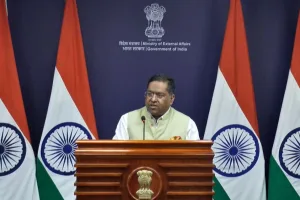
799 Development Works Underway in Trans-Yamuna

The Chief Minister also informed that to accelerate development in Trans-Yamuna, a total of 799 projects have been approved under the Trans-Yamuna Area Development Board (TYADB), with an expenditure of approximately ₹430 crore. These include the construction of roads and drains across various Assembly constituencies, drinking water facilities, development of parks, installation of street lights, construction of community buildings, school buildings, footbridges and other infrastructure-related works.
The Chief Minister directed all agencies to work in close coordination and expedite the completion of pending documentation and tender processes related to ongoing projects, so that development works across the capital can progress at a faster pace.

Budget drives Maharashtra towards bankruptcy, alleges Congress leader Harshwardhan Sapkal

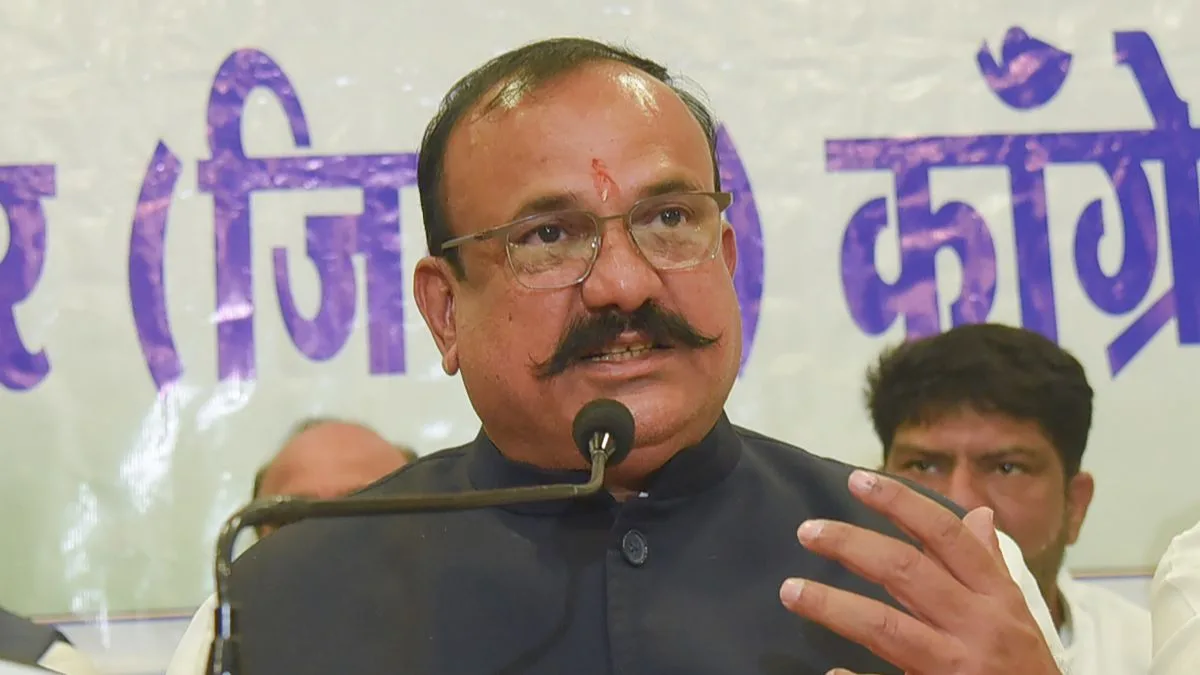
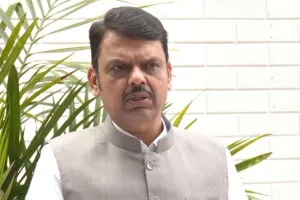
Maharashtra Pradesh Congress Committee President Harshwardhan Sapkal alleged here on Friday that the Fadnavis government has piled up a mountain of debt on the state, and its budget, with a deficit of approximately Rs 40,000 crore, is driving Maharashtra towards bankruptcy.

Statesman News Service | Mumbai |

Maharashtra Pradesh Congress Committee President Harshwardhan Sapkal alleged here on Friday that the Fadnavis government has piled up a mountain of debt on the state, and its budget, with a deficit of approximately Rs 40,000 crore, is driving Maharashtra towards bankruptcy.

Ridiculing the Maharashtra state budget presented by Chief Minister Devendra Fadnavis, Sapkal said, “The entire budget is full of big figures and empty promises. The budget is dominated by bullet trains, metros and underground routes, while the poor, tribals, labourers, women, the unemployed and youth living in villages find no place in it. Overall, this budget is geared towards a few cities and select industrialists. The general public will not benefit from it.”

Commenting on the budget here on Friday, Sapkal told media persons that the vision of a so-called “Developed Maharashtra 2047” and a $1-trillion economy are “mere pipe dreams”. “For the past few years, the BJP-led government has made lofty claims in its budget, only to later present supplementary demands worth crores of rupees in every assembly session. The Economic Survey Report clearly shows that the state’s financial situation is steadily deteriorating,” Sapkal said.

“The state is burdened with approximately Rs 12 lakh crore in debt and loan guarantees. Besides, Rs 65,000 crore has to be spent every year only on repaying debt instalments. This clearly demonstrates the vast discrepancy between budget figures and the actual situation on the ground.”

“In the previous budget, Rs 22,658 crore was allocated for Scheduled Caste schemes, but only Rs 6,200 crore was actually spent. Even for backward classes, minorities and tribal communities, budgets announce lofty figures, but actual expenditures remain elusive,” Sapkal said.

“The state’s biggest crisis is unemployment. Yet the budget announced recruitment for only 75,000 government jobs. Given the BJP government’s previous mega recruitment experience, this announcement appears to be just another empty promise. It’s been stated that the ‘Laadki Bahin’ scheme won’t be discontinued, but the promise of Rs 2,100 crore remains in the air, clearly demonstrating that the government has betrayed women once again,” Sapkal said.

“The government has announced loan waivers, but millions of farmers are still deprived of benefits under the loan waiver schemes announced previously. Therefore, it’s a matter of concern that the new loan waiver announcement might prove to be another fraud on farmers. The government’s attitude is like a false invitation to a feast that was never organised. Don’t believe it until you get any food,” Sapkal said.

“Some announcements have been made for agriculture and farmers, but after the trade agreement with the United States, it may become far more difficult for Indian farmers to get a fair price for their produce. Farmers’ incomes are more at risk of decreasing than increasing. Even the measures announced in the budget are not enough to stop farmers’ suicides,” Sapkal said.

“Despite good rainfall last year, the state’s irrigated area has actually declined from 5.6 million hectares to 3.9 million hectares. The amount of cultivable land has also declined. This clearly demonstrates that the government has completely abandoned farmers,” Sapkal said.

“Projects like the Third Mumbai, Fourth Mumbai, Shaktipeeth Highway and the Vadhvan Port are being built purely in the interest of large industrial conglomerates like Adani and Ambani. These will not directly benefit the general public,” Sapkal said.

“The government’s solar energy policy is also misleading. Instead of providing relief to electricity consumers, it will impose an additional burden of 26 paise per unit on them. Smart meters have already led to a significant increase in electricity bills,” Sapkal said.

“The government claimed that investment agreements worth Rs 50-lakh crore were signed at the Davos Summit between 2022 and 2025, but according to the Economic Survey Report, only Rs 6 lakh crore has actually come to the state. This clearly demonstrates a significant gap between the government’s claims and actual reality,” Maharashtra Pradesh Congress Committee President Harshwardhan Sapkal said.

RSP sweeps Nepal polls with leads in 101 out 165 seats in first election after Gen-Z revolt

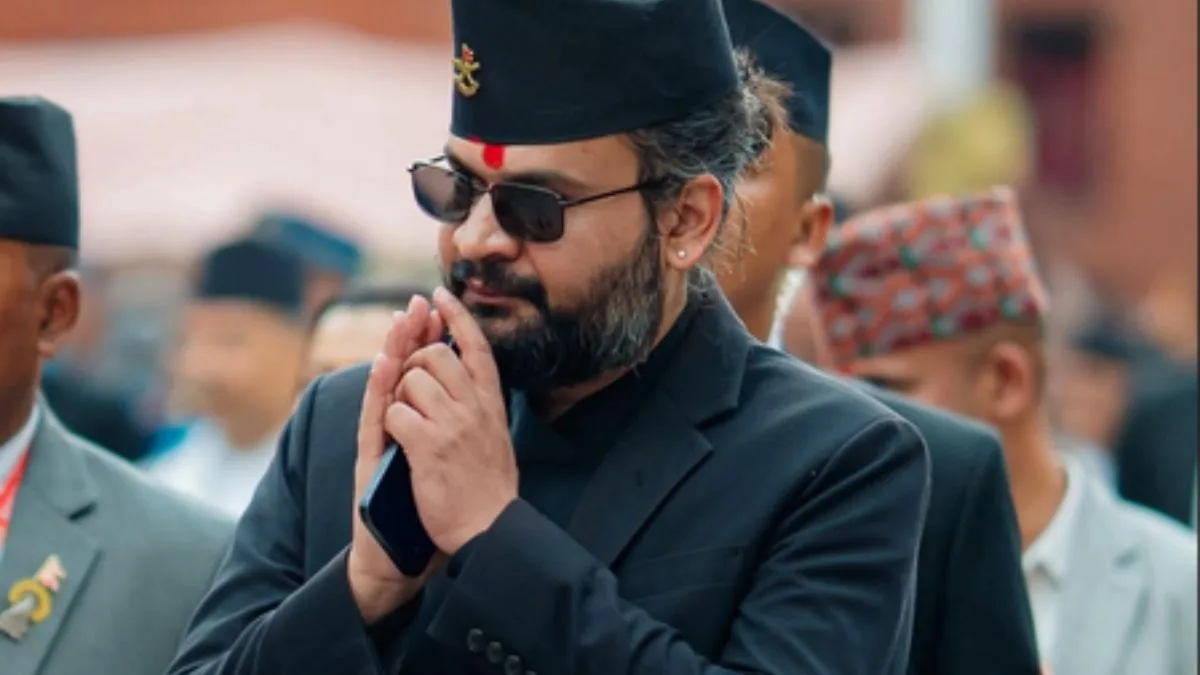
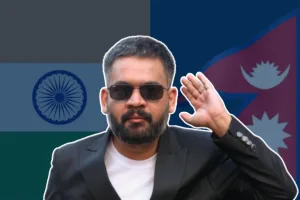
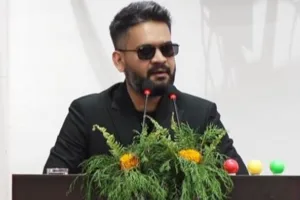
With two of four seats declared and leads in 101 constituencies out of 165 where direct elections are held, the newbie RSP party led by former Kathmandu Mayor Balendra ‘Balen’ Shah looks set to form the government

Jayanta Roy Chowdhury | New Delhi |

The Rastriya Swatantra Party (RSP) appeared to be heading for a sweep in Nepal’s first elections since a Gen-Z revolt in September last year toppled the Communist-led coalition headed by Prime Minister KP Sharma Oli.

With two of four seats declared and leads in 101 constituencies out of 165 where direct elections are held, the newbie RSP party led by former Kathmandu Mayor Balendra ‘Balen’ Shah looks set to form the government. The Nepal Congress, often called the ‘Grand old party of Nepal’ has won one seat and is leading in 11 more seats as of 6.30 pm.

“The two Communist parties – Nepali Communist Party led by Prachanda Oli’s CPN (UML) – which dominated the country for more than a decade are really fighting for the third spot with 12 and 10 leads as of now,” said Kuvera Chalise, Consulting Editor of Nepalkhabar.

The two winners from RSP are 30-year-old Ranju Neupane (Darshana) who won against her nearest Nepal Congress candidate from Kathmandu-1 by 15,455 votes and Biraj Bhakta Sreshta, who has won by more than 24,000 votes from Bagmati. From Nepal Congress, 32-year-old Yogesh Gauchan Thakali has won by 3,307 votes from Gandaki in Mustang.

“This victory in Nepal is really the net result of the anger and frustration of the younger generation because of the poor governance and lack of efforts by the old guard to create employment opportunities within Nepal even as rampant corruption and its fruits became more and more visible,” added Chalise, a well-known political analyst.

The momentum suggested that the RSP’s bell symbol had resonated across the country, from major urban centres to remote mountain districts and the plains of the Terai, turning the party’s signature blue colour into the dominant feature of the electoral map, analysts said.

Interestingly, the results in Nepal were just the opposite of Bangladesh’s. “It needs to be studied why Bangladesh rejected the parties born out of the students’ movement, while Nepal supported the new party RSP,” pointed out Pinak R Chakravarty, former Secretary in the Ministry of External Affairs.

Balendra Shah had fought and is poised to win his seat in parliament from Oli in what was earlier the communist leader’s personal stronghold in the Terai region’s Jhapa-5 south-eastern Nepal. However, the charismatic Communist leader Prachanda, has also won his Rukum East seat, in northern Nepal, near the border with China.

The electoral victory by the new party RSP led by a youthful new leader, who has advocated a ‘Nepal First’ policy, marks a critical political moment for Nepal as also a question mark for powerful neighbours India and China, both of whom will have to negotiate ahead with the strategically-located Himalayan state, wedged between their borders.

While India has traditionally been an ally and has had strong relations with Nepal, China with its ideological linkages with the communist parties and its cheque book diplomacy has enjoyed considerable clout in Kathmandu.

“The students were bound to win given the pent up frustration of the youth and the demographic profile of Nepal. We have to see how our new party negotiates the way ahead,” said KC Sunil, President of Nepal India Chamber & Commerce I& Industry.

Nepal, one of the world’s poorest countries, struggles with the South Asian region’s lowest per capita income and an unemployment rate approaching 13 per cent, according to official estimates. The Himalayan nation has a fairly young population with the male median age at 22 years and with 34 per cent of population still aged below 14.

The economic hardship has been compounded by deep-seated corruption and a heavy reliance on remittances from a large segment of the population who have been forced to work abroad in search of opportunities.

The emerging results appeared to reflect a deep reservoir of public frustration with the three major old parties, which many voters accuse of failing for years to generate employment, deliver meaningful development, or act in the broader national interest. The outcome also seemed to echo lingering public anger over the handling of the student protests in September last year, an episode that intensified distrust toward the political establishment.

Voters are directly electing 165 members to the House of Representatives, the lower chamber of Parliament. The remaining 110 seats in the 275-member body will be allocated through a proportional representation system under which political parties nominate lawmakers based on their share of the vote.

US grants temporary waiver to India for buying Russian oil

US Treasury Secretary Scott Bessent said the measure was designed as a short-term step to ensure the continued flow of oil into global markets without providing substantial financial gains to Moscow.

Jayanta Roy Chowdhury | New Delhi |

The United States on Friday announced a temporary 30-day waiver allowing Indian refiners to purchase Russian oil currently stranded at sea, a move aimed at stabilising global energy supplies amid rising geopolitical tensions in West Asia.

US Treasury Secretary Scott Bessent said the measure was designed as a short-term step to ensure the continued flow of oil into global markets without providing substantial financial gains to Moscow.

“President Donald Trump’s energy agenda has resulted in oil and gas production reaching the highest levels ever recorded,” Bessent said in a statement.

“To enable oil to keep flowing into the global market, the Treasury Department is issuing a temporary 30-day waiver to allow Indian refiners to purchase Russian oil. This deliberately short-term measure will not provide significant financial benefit to the Russian government as it only authorizes transactions involving oil already stranded at sea,” he added.

Bessent described India as an essential partner of the United States and said Washington expects New Delhi to increase purchases of American crude in the coming months.

“India is an essential partner of the United States, and we fully anticipate that New Delhi will ramp up purchases of US oil. This stop-gap measure will alleviate pressure caused by Iran’s attempt to take global energy hostage,” he said.

The decision comes as India reviews its energy security amid the growing risk of disruption in the Strait of Hormuz, one of the world’s most critical oil shipping routes.

Earlier this week, India’s Minister for Petroleum and Natural Gas Hardeep Singh Puri convened senior officials and executives from state-run energy firms to assess the availability of crude oil, liquefied natural gas (LNG), liquefied petroleum gas (LPG) and refined petroleum products.

According to officials, the meeting reviewed contingency plans and decided that India would seek waivers from the United States to continue importing Russian oil if necessary to meet fuel requirements in the event of disruptions in the Strait of Hormuz.

Indian officials are believed to have successfully taken up the matter with Assistant Secretary of State for South and Central Asian Affairs S. Paul Kapur who visited New Delhi just before the Holi festival.

Roughly half of India’s crude oil imports — estimated at about 2.5 to 2.7 million barrels per day — along with nearly 60 per cent of its LNG supplies transit the strategic waterway between the Gulf and the Arabian Sea.

The Strait has once again come into focus amid escalating tensions between the United States and Iran following reports of the killing of Iran’s Supreme Leader Ali Khamenei, raising concerns about possible tanker harassment, missile strikes or even temporary closure of the passage.

India imports the bulk of its energy from Gulf producers such as Iraq, Saudi Arabia, the United Arab Emirates, Qatar and Kuwait. Analysts say the country’s vulnerability lies less in a complete cut-off of supplies and more in cascading disruptions such as price spikes, shipping delays and rising freight costs that could affect the competitiveness of its exports.

Since 2022, Russian crude has emerged as a crucial buffer for Indian refiners whenever supplies from the Gulf have faced disruptions. Imports from the United States, Guyana and other non-Gulf producers have also expanded, giving Indian refiners greater flexibility to diversify their crude basket.

Kerala CM launches first rock blast for Wayanad tunnel road construction

The proposed 8.73-km tunnel is among the largest infrastructure development projects in the state which is being supervised by the Kerala Public Works Department and funded by the Kerala Infrastructure Investment Fund Board (KIIFB).

Statesman News Service | Thiruvananthapuram |

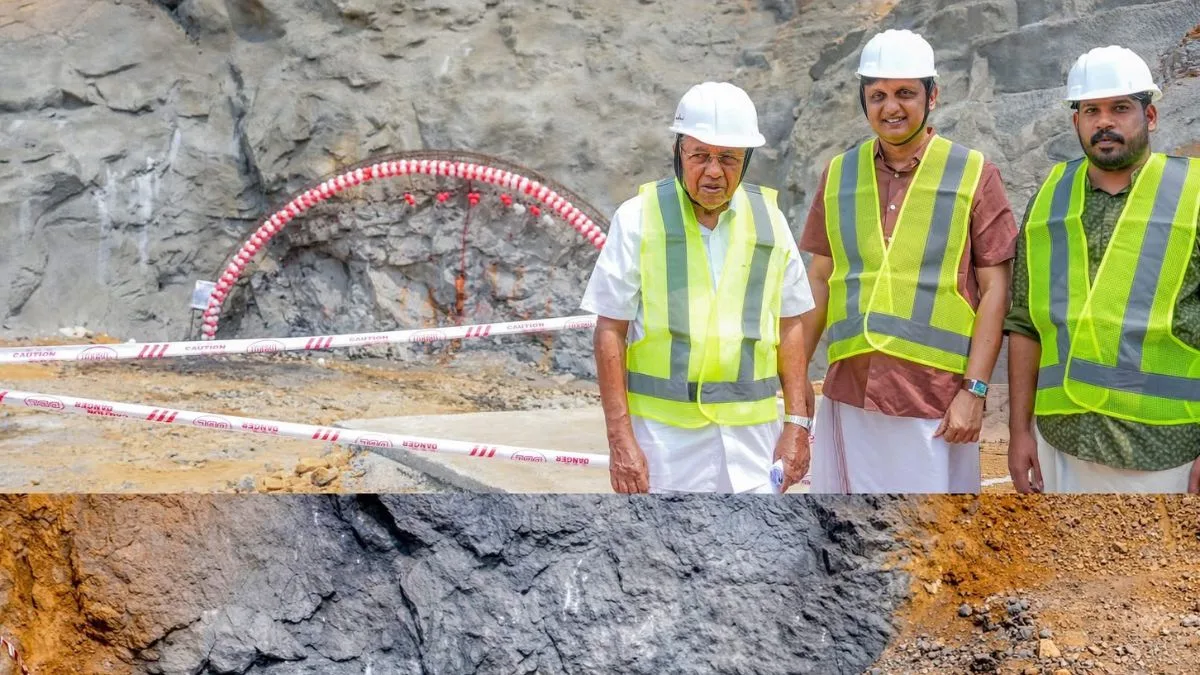
Kerala Chief Minister Pinarayi Vijayan on Friday switched on the first rock blast for the construction of the Anakkampoyil-Kalladi-Meppadi road tunnel, signalling a key step in the construction of the 8.73-km tunnel road connecting the Kozhikode and Wayanad districts of Kerala.

Though entry of the public to the site was restricted as part of the safety measures in place around the project area, hundreds of local residents and representatives of local bodies gathered at the Muthappanpuzha ALP School, where the blast was broadcast live at around 12.15 pm.

The proposed 8.73-km tunnel is among the largest infrastructure development projects in the state which is being supervised by the Kerala Public Works Department and funded by the Kerala Infrastructure Investment Fund Board (KIIFB).

The Special Purpose Vehicle (SPV) responsible for the implementation and execution of the project is Konkan Railway Corporation Limited. The construction contract for the tunnel has been awarded to Bhopal-based Dilip Buildcon Company and the contract for the steel bowstring bridge has been awarded to Haryana-based Punia Construction Company. This dream project of the government is being implemented at a cost of Rs 2134.50 crore.

With the completion of the approximately 8.7 km long tunnel, the travel time between the two districts, Kozhikode and Wayanad, will be reduced by half. The distance of the tunnel from Anakkampoyil to Meppadi is approximately 8.7 km. The tunnel is being constructed using state-of-the-art technology in an environmentally friendly manner. The land acquisition process, which is the first phase of the project, had already been completed.

The special feature of the road is that it can be traveled smoothly in any weather. A four-lane tunnel connecting Kozhikode and Wayanad is being prepared as an alternative to the Thamarassery pass.


Around 50 Israeli jets strike underground military bunker beneath Tehran leadership compound

In a post on X, the IDF stated that the bunker in Tehran was dismantled in the strike and also shared visuals related to the strike in the same post.

ANI | New Delhi |

The Israel Defense Forces (IDF) on Friday said that around 50 fighter jets of the country’s Air Force carried out the strike targeting the underground military bunker linked to the late Iranian Supreme Leader Ayatollah Ali Khamenei, which was used by other senior officials following his and other leaders’ deaths last week.

In a post on X, the IDF stated that the bunker in Tehran was dismantled in the strike and also shared visuals related to the strike in the same post.

“~50 Israeli Air Force fighter jets dismantled Ali Khamenei’s underground military bunker beneath the Iranian regime’s leadership compound in Tehran,” the post read.


The development comes amid escalating tensions in West Asia after a joint US-Israel military strike on February 28 on Iranian territory killed its Supreme Leader, Khamenei and other senior figures, prompting a fierce response from Tehran.

In retaliation, Iran launched waves of drone and missile attacks across multiple Arab countries, targeting American military bases and Israeli assets throughout the region, with Israel also continuing its strikes on Tehran and widening the conflict to Lebanon, targeting Hezbollah.
Earlier today, the Qatar Ministry of Defence stated that its air defence forces intercepted a drone targeting the Al-Udeid Air Base, which is a major military hub for the US Central Command.

In a post on X, the Qatari Ministry of Defence said that the Qatar Emiri Air Defence Forces “successfully intercepted a drone attack targeting Al-Udeid Air Base”, preventing the drone from reaching its intended target.

Separately, Reuters reported that US military investigators believe it is possible that American forces were responsible for a strike that hit an Iranian girls’ school in Minab on Saturday, killing dozens of children.

However, the officials cautioned that the investigation is still ongoing and no final conclusion has been reached, Reuters reported.

Last week on Saturday, US strikes in Iran hit Minab Girls’ Primary School in the country’s Hormozgan province, killing over 160 and injuring another 100.

According to Reuters, citing two US officials, the assessment remains preliminary and details about the probe – including the type of munition used, the evidence behind the initial assessment, who carried out the strike, or the possible reason for targeting the school – have not yet been determined.

10 dead, over 40 injured in twin bus accidents in Chhattisgarh

While five passengers were killed when a bus overturned on the Kardeega-Kunkuri road in Jashpur district, another five died in a head-on collision between a passenger bus and a truck on the Raipur-Bilaspur National Highway in the Balodabazar district.

Statesman News Service | Raipur |

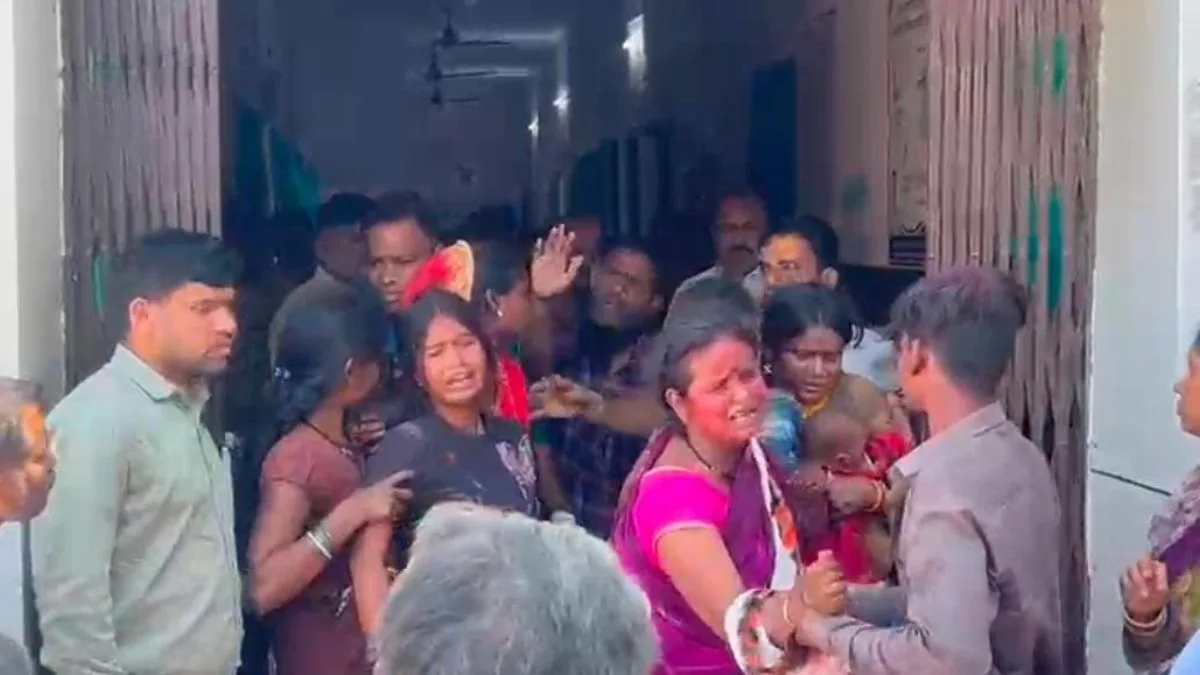
At least 10 people were killed and more than 40 others injured in two separate accidents, involving passenger buses, reported from the Jashpur and Balodabazar districts of Chhattisgarh on Friday. The crashes that occurred hours apart prompted large-scale rescue operations and emergency medical responses by police, local residents and health authorities.

While five passengers were killed when a bus overturned on the Kardeega-Kunkuri road in Jashpur district, another five died in a head-on collision between a passenger bus and a truck on the Raipur-Bilaspur National Highway in the Balodabazar district.

The first accident occurred near Goda Amba village in the Duldula block of Jashpur, under the jurisdiction of the Kardeega police outpost. A passenger bus travelling from Kardeega to Kunkuri reportedly went out of control and overturned after smashing through the wall of an under-construction building along the roadside.

Officials said the bus was carrying more than two dozen passengers at the time of the accident. Preliminary findings indicate that a suspected brake failure caused the driver to lose control of the vehicle. Five passengers were killed in the crash and more than 14 others sustained serious injuries, with local sources confirming that a child was among the victims.

The accident created scenes of panic at the site as passengers were trapped inside the overturned vehicle. Local residents rushed to the scene and began rescue operations, pulling victims out of the bus while alerting police and district authorities.

Following instructions from the Chief Minister’s camp office in Bagia, emergency response teams were immediately deployed. Three ambulances were rushed to the accident site, and the injured were shifted to the Community Health Centre in Kunkuri and Holy Cross Hospital for treatment. Kunkuri Block Medical and Health Officer Dr Kiran Ekka confirmed that five people lost their lives in the accident and several others remain critically injured.

Meanwhile, another major accident was reported on the Raipur-Bilaspur National Highway near Darchura village under the Simga police station limits in the Balodabazar district.

The accident occurred when a passenger bus heading towards Raipur collided head-on with a speeding truck, injuring more than 30 passengers. Suich was the impact of the collision that both the vehicles left badly damaged with several passengers trapped inside the twisted wreckage of the bus.

Locals were the first to reach the scene and began rescuing injured passengers before police and emergency responders arrived.

The injured passengers were first rushed to nearby hospitals before being referred to Dr Bhimrao Ambedkar Memorial Hospital (Mekahara) in Raipur for specialised treatment. One critically injured victim later died during treatment, taking the death toll in the highway accident to five.

Simga police station in charge Lakhesh Kenwat said preliminary findings suggest overspeeding may have been responsible for the collision, although a detailed investigation is underway.

Those who lost their lives in the Balodabazar accident include Triveni Sahu (62) and Dashrath Sahu (80) from Baba Mohtara in Bemetara district, Radhika Nirmalkar (24) of Betar, two year old Khushi Sahu, and an unidentified 18 year old woman who died during treatment in Raipur.

Reacting to the accidents, Chhattisgarh Chief Minister Vishnu Deo Sai expressed deep grief over the loss of lives. In a message posted on social media platform X, he described the incident as deeply distressing and extended condolences to the bereaved families.

The Chief Minister prayed for peace for the departed souls and wished a speedy recovery for the injured. He also directed the district administration to ensure that all victims receive proper medical treatment and that there is no lapse in relief and rescue efforts.

Authorities said investigations into both accidents are underway. The twin tragedies have once again drawn attention to road safety concerns on highways and rural transport routes, prompting calls for stricter enforcement of traffic regulations and improved monitoring of passenger vehicles across the state.


Aerodrome licence granted to Noida International Airport

Congratulating the Uttar Pradesh government, Civil Aviation Minister K Rammohan Naidu said the development of Noida International Airport is a major step toward strengthening aviation connectivity for the National Capital Region and Western Uttar Pradesh.

Statesman News Service | New Delhi |

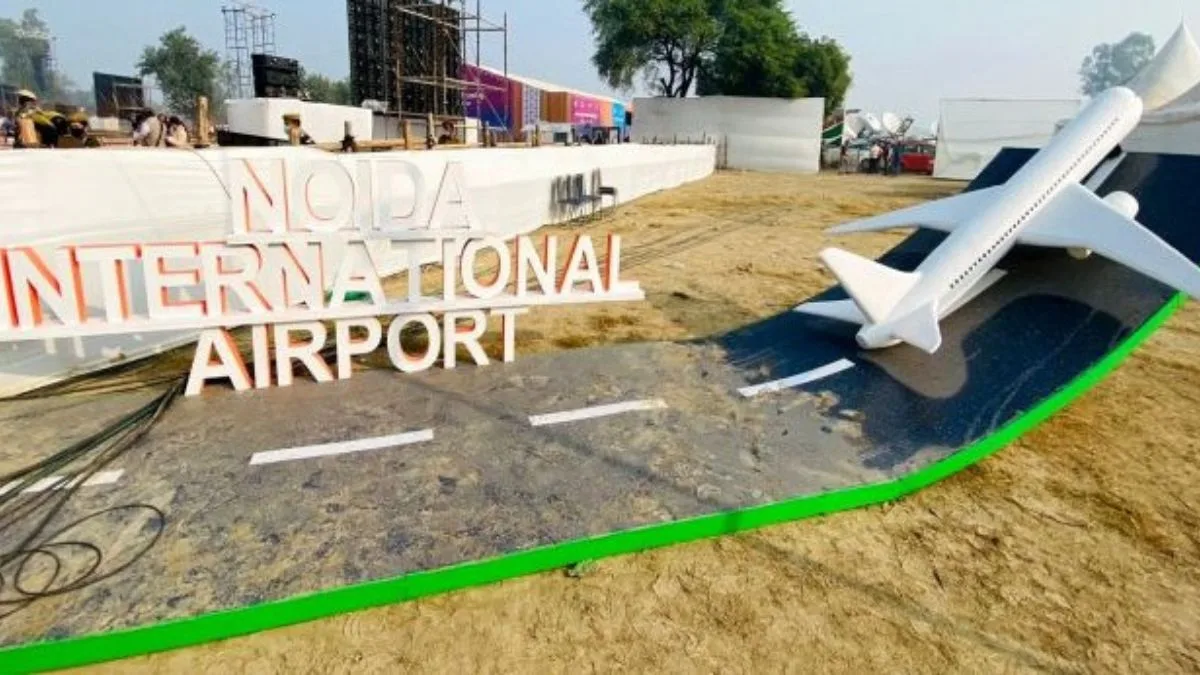
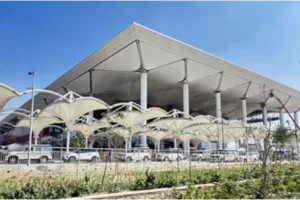
The Directorate General of Civil Aviation (DGCA) has granted the Aerodrome License to Yamuna International Airport Private Limited (YIAPL) for the Noida International Airport (NIA) at Jewar in Gautam Budh Nagar, Uttar Pradesh, the Ministry of Civil Aviation said on Friday.

Congratulating the Uttar Pradesh government, Civil Aviation Minister K Rammohan Naidu said the development of Noida International Airport is a major step toward strengthening aviation connectivity for the National Capital Region and Western Uttar Pradesh.

He highlighted that the world-class airport will boost regional economic growth, tourism, and investment while offering a seamless passenger experience by combining Swiss efficiency with Indian hospitality and will also help ease congestion at existing airports in the region.

The airport has been developed by YIAPL, a wholly owned subsidiary of Zurich Airport International AG, under the Public–Private Partnership (PPP) model with the Government of Uttar Pradesh and the Government of India. The concession period commenced on 1 October 2021 for a period of 40 years.

The airport has been licensed under the Public Use category for all-weather operations. It features a runway with orientation 10/28 and dimensions of 3,900 m × 45 m, supported by an Instrument Landing System (ILS) and Aeronautical Ground Lighting (AGL) system, enabling 24×7 operations. The aerodrome has parking stands for 24 Code C and 02 Code D/F aircraft and is equipped with ARFF Category 9 facilities capable of handling wide-body aircraft such as the Boeing 777-300ER.

The Noida International Airport is being developed in four phases along with a multi-modal cargo hub. In the first phase, with one runway and one terminal, the airport will have the capacity to handle around 12 million passengers annually. Upon completion of all phases, the airport will be capable of handling up to 70 million passengers per year, emerging as a major aviation hub for the National Capital Region and Western Uttar Pradesh.

The development of Noida International Airport is part of the Ministry of Civil Aviation’s broader vision of building a robust aviation ecosystem. Over the past decade, India’s civil aviation sector has expanded significantly, with the number of operational airports increasing from 74 in 2014 to 164 today, alongside India becoming the third-largest domestic aviation market in the world.

India is rapidly expanding its aviation network through a balanced approach of developing new greenfield airports while upgrading existing brownfield airports and regional airstrips, supported by initiatives such as the UDAN scheme. Looking ahead, the country’s long-term roadmap aims to develop over 400 airports by 2047, further strengthening connectivity, economic growth and national integration.