Logo

Popular bands rock a reality show

The Bengal of the 1970s was an era of revolution, and this implied that it was a time of cultural revolution as well.

Statesman News Service | Kolkata |

The Bengal of the 1970s was an era of revolution, and this implied that it was a time of cultural revolution as well. That generation was very much associated with ‘Mohineer Ghoraguli’, the music band which created pathbreaking songs. Its founder, Goutam Chattopadhyay, became an icon who influenced generations of musicians since.

The first ever Bengali Music Band of Kolkata, ‘Moheen’ actually did not cherish the success during that time but much later in the 1990. That is when the magic that the band created started becoming well established, and that magic still exists.

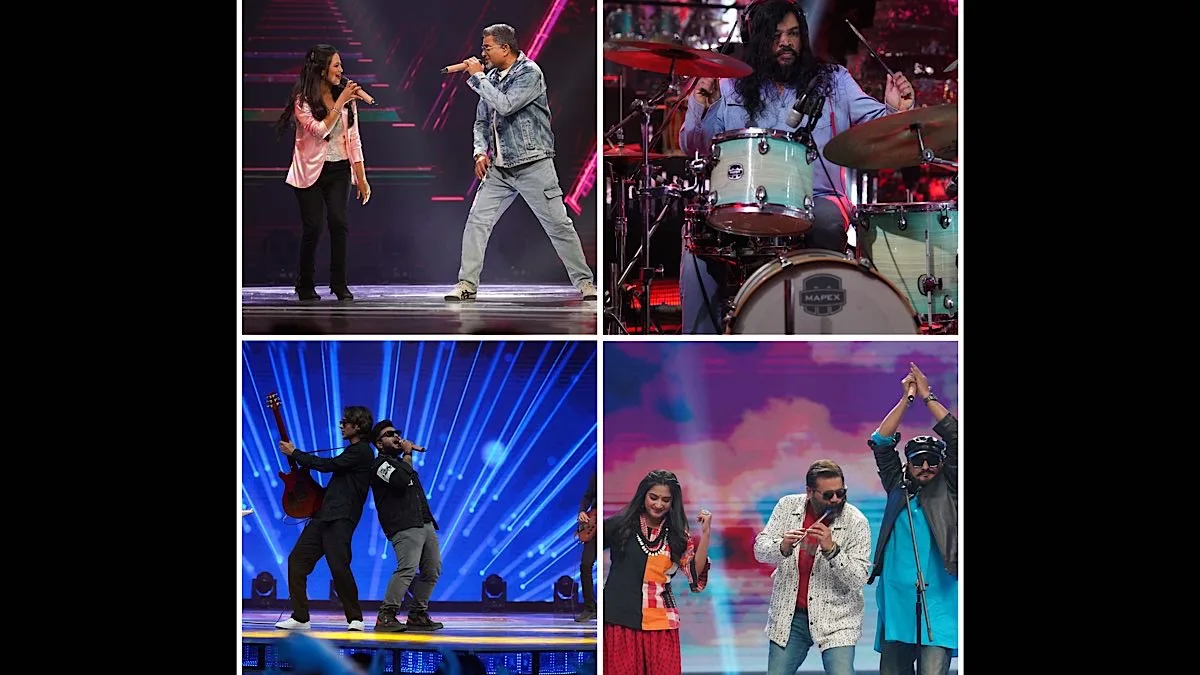
Over the years, band music has become one of the most popular genres of music, along with other musical genres. It proves its power of mass communication and immediate connection across the generations. Even popular TV shows often use Bengali band songs for their participants, sometimes in a re-orchestrated fashion. Sometimes band performers perform with the participants as well. The iconic music reality show ‘Sa Re Ga Ma Pa’ of Zee-Bangla is one of these kinds. The show has gathered enormous fame for many years and tries to introduce new flairs. And now, for the first time, to add more colour to this spring, the show is going to rock with famous bands of Bengal. Fossils, Lakkhichhara, Parash Pathar, Sahar and Sahajiya bands will all feature in this festive episode. Young contestants have performed with the same resonance and vivacity along with the band’s artists, synchronising with their highly energetic body language and stage presence. It shows that they are not only reality show participants but future rock stars who are blooming from this platform. It never looks like a competition stage, rather it feels like a rock show, and the stage becomes a concert stage.

To add more spunk and pulse to the show, ‘Folk Guru’ Deb Chowdhury has performed with his band Sahajiya for the first time ever. Though for the last eight years, he has been working with Zee Bangla as a mentor and groomer. Deb and Sahajiya have performed a song of Hasan Raja ‘Loke Bole Re’ with Rana, one of the prominent contestants of the folk category. Along with Rupam & Fossils, Srijan Porel has performed ‘Khnoro Amar Fossil’, Sayantani Ghosh and Lakkhichhara jointly rendered the song ‘Ghure Fire Sei Eki Kotha’, Biswapriya Chakraborty and Sahar sang their very popular number ‘Tomay Chhnute Chaoar Muhurtora’, Ayush Gupta and Naba Nalanda School Band have performed Bela Bose and last but not the least, ParashPathar has collaborated with Ananya Sarkar with their iconic song ‘Sujon Amar Ghore Keno Ailo Na’. It is worthy to mention that after a long gap, Parash Pathar got a chance for its mainstream public appearance again. The audience were thrilled, electrified and overwhelmed with these songs at the DRR Studio. This endeavour from Zee Bangla and the show director Avijit Sen to bring forth the Bengali’s nostalgia and passion for Band Music to the fore is noteworthy. Somewhere and somehow, Moni Da (Goutam Chattopadhyay), the pioneer of the band music of Bengal, was invisibly present at the entire stage on that day.

(The show was filmed earlier.)

‘Indians had been very good actors’: US ‘allows’ India to resume Russian oil buys to cool prices

Washington is considering easing some Russian oil restrictions and allowing India limited purchases to stabilise markets as the Gulf crisis disrupts shipping and raises global energy supply concerns.

Statesman News Service | Mumbai |

The United States may temporarily soften some restrictions on Russian oil supplies and allow India to keep buying certain cargoes, as Washington looks for ways to calm global energy markets during the ongoing crisis in West Asia.

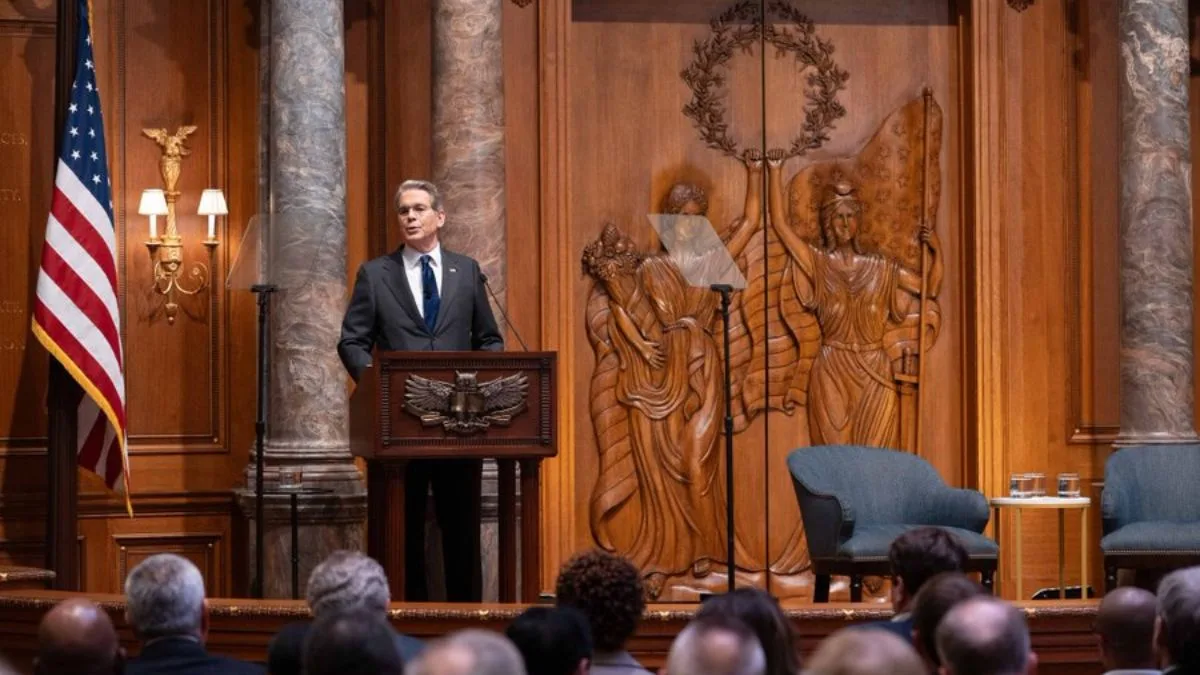
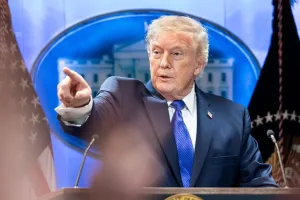
The indication came from US Treasury Secretary Scott Bessent, who said Washington had already allowed India limited flexibility after disruptions to global oil shipments pushed prices higher.

The move reflects growing concern in Washington that escalating tensions around the Strait of Hormuz could squeeze global supplies and send crude prices soaring, affecting economies worldwide.

‘Why does India need America’s permission?’: Opposition slams US waiver on Russian oil, calls move ‘neo-imperial arrogance’

US considers easing restrictions to stabilise oil markets

Speaking to Fox Business, Bessent said India had earlier complied with a US request to stop purchasing sanctioned Russian crude.

“The Indians had been very good actors. We had asked them to stop buying sanctioned Russian oil this fall. They did,” he said.

According to Bessent, India had initially planned to replace those supplies with crude from the United States.

“They were going to substitute it with US oil,” he added.

However, disruptions to shipping routes and sharply rising insurance costs for tankers passing through the Strait of Hormuz forced Washington to allow a temporary adjustment.

“To ease the temporary gap of oil around the world, we have given them permission to accept the Russian oil,” Bessent said.

The US Treasury Secretary also suggested that the administration could reconsider sanctions affecting Russian crude already stranded at sea.

“There are hundreds of millions of sanctioned barrels of sanctioned crude on the water,” he said.

He indicated that lifting restrictions on those cargoes could quickly add supply to global markets.

“In essence, by unsanctioning them, Treasury can create supply. And we are looking at that,” Bessent said.

Temporary waiver issued as Gulf crisis disrupts shipping

Separately, US authorities have granted a 30-day waiver allowing Indian refiners to buy Russian oil currently stuck in transit, a step aimed at easing pressure on energy markets.

Bessent said the measure was designed as a short-term fix and would not significantly benefit Russia financially since it only covers oil already stranded on tankers.

He also stressed that Washington expects India to expand purchases of American crude over time.

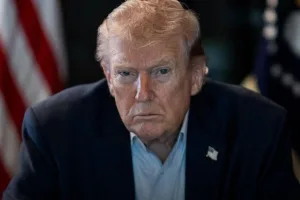
President Donald Trump has also announced plans to stabilise maritime energy trade by expanding government-backed insurance coverage for shipments travelling through the Gulf region.

The initiative is intended to reassure shipping companies and insurers worried about security risks as tensions with Iran escalate.

Oil prices have surged in recent days amid fears that the conflict could disrupt shipments through the narrow waterway that connects the Persian Gulf with global markets.

Dozens of tankers have reportedly faced delays as war-risk insurance premiums for vessels using the route have jumped sharply.

Also Read: Oil shock buffer: US gives India 30-day waiver to buy Russian crude as Gulf crisis rattles Hormuz

India says energy supplies remain comfortable

India, which sources roughly 40 per cent of its crude imports from the Middle East, relies heavily on shipments moving through the Strait of Hormuz.

Government sources say New Delhi is reviewing the energy situation twice a day but remains in a comfortable position.

Officials say there is currently no shortage of LPG, LNG, or crude oil globally, and India’s existing stock levels remain adequate.

Petroleum Minister Hardeep Singh Puri also reassured consumers that supplies are secure.

“Our priority is to ensure availability of affordable and sustainable fuel for our citizens, and we are doing it comfortably. There is no shortage of energy in India and there is no cause of worry for our energy consumers,” he said in a post on X.

India has diversified its oil import sources in recent years, particularly since 2022 when Western sanctions were imposed on Russia following its invasion of Ukraine.

Government sources said Russian crude accounted for about 20 per cent of India’s total imports in February, amounting to roughly 1.04 million barrels per day, a sharp rise from just 0.2 per cent in 2022.

Meanwhile, US Energy Secretary Chris Wright said the waiver allowing India to buy certain Russian cargoes is part of broader short-term measures to stabilise oil prices during the ongoing crisis.

He noted that large volumes of Russian oil currently stored in floating tankers could be brought quickly into the global market to ease supply pressures.

The developments come amid heightened tensions in West Asia following a joint US-Israel strike on Iran on February 28, which triggered retaliatory drone and missile attacks by Tehran across several Arab countries.

‘Boycott BJP in Bengal polls’: Abhishek Banerjee urges people at SIR protest

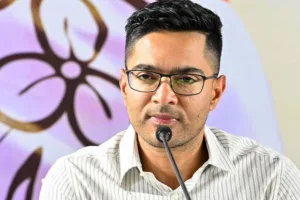
Trinamool Congress national General Secretary Abhishek Banerjee on Friday appealed to people to “boycott the BJP” in the upcoming West Bengal Assembly elections, alleging that the party was targeting voters through the Special Intensive Revision (SIR) of electoral rolls.

IANS | New Delhi |

Trinamool Congress national General Secretary Abhishek Banerjee on Friday appealed to people to “boycott the BJP” in the upcoming West Bengal Assembly elections, alleging that the party was targeting voters through the Special Intensive Revision (SIR) of electoral rolls.

Banerjee made the remarks while addressing party workers at a sit-in demonstration at Esplanade in central Kolkata to protest against nearly 60 lakh people being placed in the “under adjudication” category in the final electoral rolls after the SIR exercise.

From the stage, Banerjee also urged the Election Commission to reveal how many “Bangladeshis” and “Rohingyas” were identified in West Bengal during the SIR process.

He said he had written a letter to Chief Election Commissioner (CEC) Gyanesh Kumar and Chief Electoral Officer (CEO) Manoj Agarwal seeking publication of the final and supplementary electoral rolls in compliance with the Supreme Court’s directions.

“In 2021, some organisations said ‘No vote to BJP’. We have lost 172 fellow citizens due to the unplanned SIR. They gave their lives for the soil. We will not let their sacrifices go in vain. We are saying from this stage, with 10 crore people of Bengal as witnesses, that this time the BJP must be boycotted. Boycott BJP socially,” Banerjee said.

At the beginning of his speech, Banerjee criticised the Election Commission over the SIR exercise.

“About 58 lakh names were removed from the draft list published last year. After February 28, the number was found to be about 63.54 lakh. Around 60 lakh people are under the ‘under adjudication’ category. In total, nearly 1.20 crore people have been affected,” he said.

He further alleged that BJP leaders had been publicly citing such figures even before the SIR process began.

“This cannot be a coincidence. As long as these 60 lakh people do not get their rights, they will remain deprived. Until then, the Trinamool Congress led by Mamata Banerjee will continue to protest on the streets,” he said.

The Trinamool Congress leader also demanded that the Election Commission disclose how many alleged illegal migrants had been identified during the revision exercise.

“Who will provide the list of those excluded? How many Bangladeshis and Rohingyas have been identified? When you (CEC Gyanesh Kumar) visit the state from March 8 to 10, please bring the list,” Banerjee said.

Commenting on the resignation of West Bengal Governor C.V. Ananda Bose amid the political controversy surrounding the SIR exercise, Banerjee said: “Whoever comes to Bengal eventually has to resign. Once it was Jagdeep Dhankhar, then C.V. Ananda Bose, and the next one will also resign. Wait for some time. After May 26 that will also happen.”

Criticising the BJP’s Parivartan Yatra in the state, Banerjee said: “They are organising a Rath Yatra. The BJP leaders will ride the chariots while ordinary people will remain on the roads. You are seeing the pictures of the Rath Yatra. The SIR has taken place there as well, but they are not concerned about the people. They are more interested in their so-called Parivartan Yatra.”

Several alive voters marked dead in Bengal’s SIR exercise: Mamata Banerjee

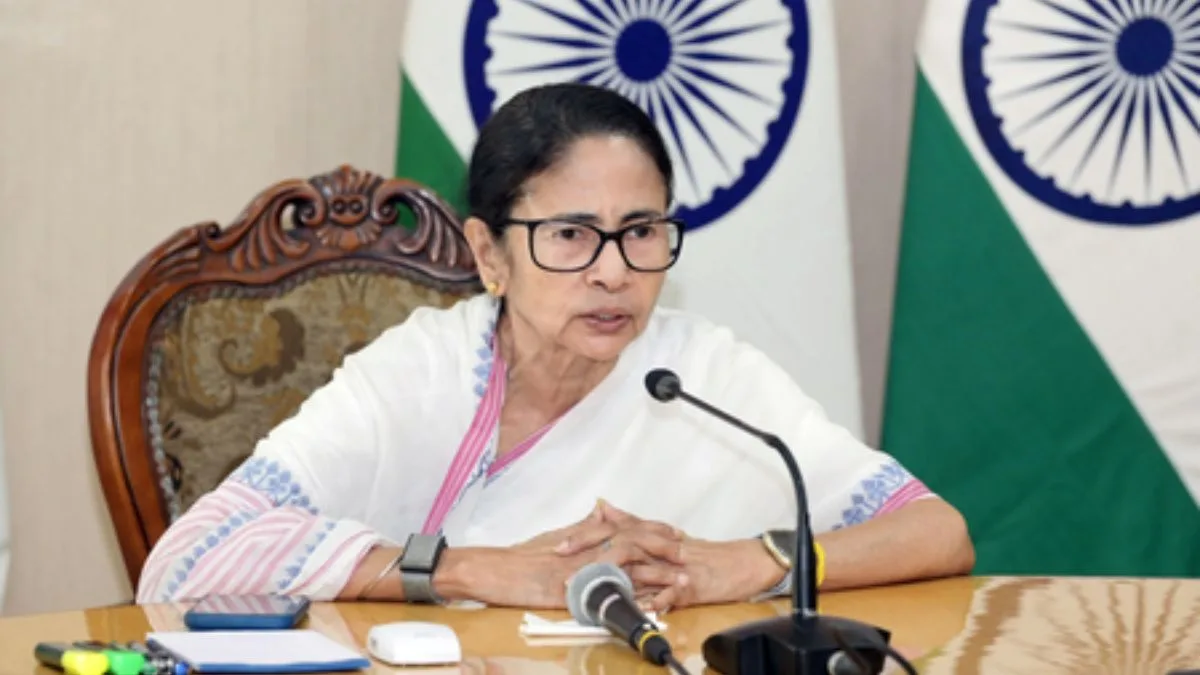
West Bengal Chief Minister Mamata Banerjee on Friday accused the Election Commission of India (ECI) of marking several alive voters dead in the Special Intensive Revision (SIR) exercise.

IANS | Kolkata |

West Bengal Chief Minister Mamata Banerjee on Friday accused the Election Commission of India (ECI) of marking several alive voters dead in the Special Intensive Revision (SIR) exercise.

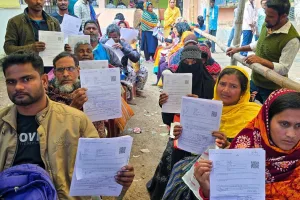
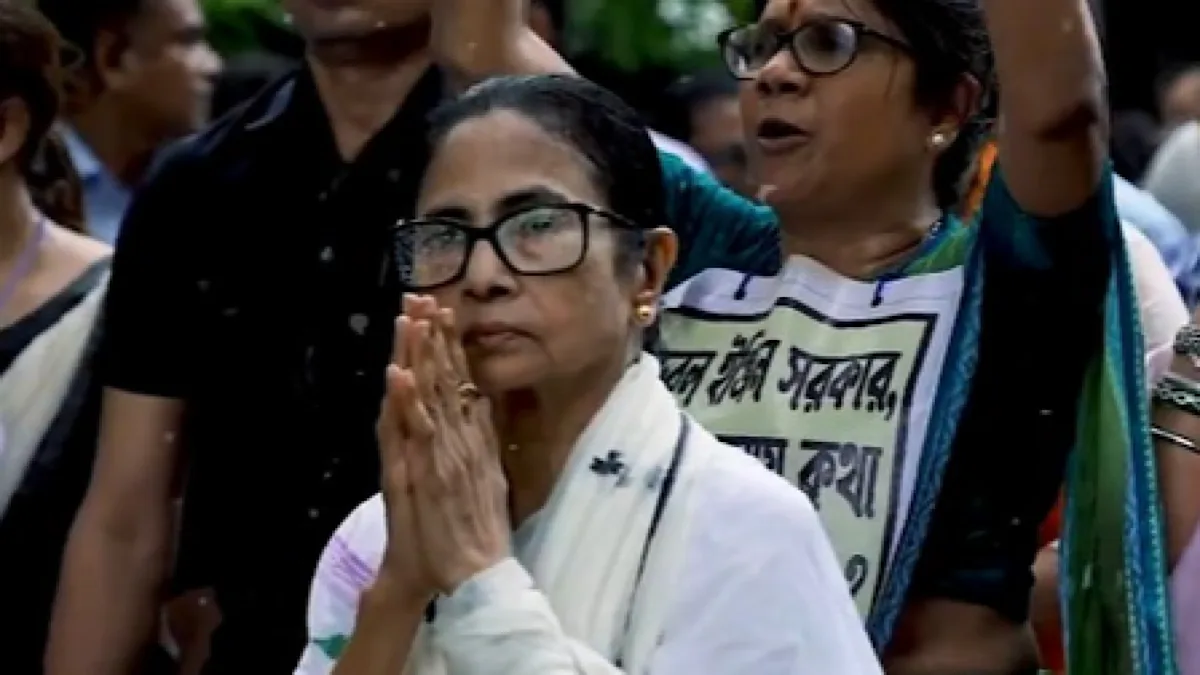
“Some of these voters are here with us today. The Commission should feel ashamed that it had marked voters who are alive as dead in the SIR process. But today they are here to prove that they are still alive. The ECI is acting as an agent of the Bharatiya Janata Party, which is itself a shameless political force,” the Chief Minister said at indefinite anti-SIR sit-in protest at Esplanade East.

Speaking on the occasion, the Chief Minister wished the voters long and healthy lives.

“Remember, we are working inch-by-inch. We have tracked all 22 voters who have been classified as deceased, though they are still there. I would also request the media to give adequate coverage about such voters, who are still alive but are dead as per the Commission’s records,” the Chief Minister added.

She also said that the forthcoming Assembly elections in West Bengal later this year will be a farcical exercise unless the genuine voters are able to cast their votes in that election. Besides the top leaders of Trinamool Congress, the members of the association of booth-level officers (BLOs) affiliated to the Trinamool Congress were also present at the venue of the sit-in protest.

Incidentally, the venue of the Chief Minister’s sit-in demonstration is barely 1.5 kilometres away from the office of the Chief Electoral Officer (CEO), West Bengal.

The Chief Minister’s indefinite demonstration has started just before the full bench of the ECI led by the Chief Election Commissioner (CEC), Gyanesh Kumar, is arriving in Kolkata on March 8 with a packed schedule for the next two days.

A massive stage has been set up at the venue of the sit-in demonstration at Esplanade East.

Although the Trinamool Congress leadership did not give any indication on how long the demonstration would continue, from the size of the stage and the amenities arranged there, it seems the protest would continue for quite some time.

President Murmu on two-day visit to North Bengal from 6th March

President Droupadi Murmu will arrive in West Bengal on Friday afternoon for a two-day packed schedule in the northern sector of the state.

IANS | Kolkata |

President Droupadi Murmu will arrive in West Bengal on Friday afternoon for a two-day packed schedule in the northern sector of the state.

This will be her first visit to the state since she assumed the position of the Indian President. Almost the entire North Bengal has been wrapped under the blanket security cover on the occasion of President Murmu’s visit there.

As per the tentative schedule as of now, the President is expected to arrive at Bagdogra Airport on the outskirts of Siliguri town of Darjeeling district in the afternoon.

From there, she will go straight to the Governor’s House, now known as Lok Bhavan, and will inaugurate the Darjeeling Hill Festival, celebrating the rich art, culture, and heritage of the hills and North Bengal.

The highlights of the festival, an initiative of Lok Bhavan, in collaboration with leading cultural institutions, will be “Roots and Rhythm”, an exhibition featuring iconic artefacts from the historic Indian Museum.

In fact, before tendering his resignation from the chair of the Governor on Thursday evening, C.V. Ananda Bose had given a statement on the Lok Bhavan’s official social media handle about the programme. He also said that Darjeeling was all set to host a history through that event.

Spending the Friday night at Lok Bhavan, the President will go to Gossaipur in the same district on Saturday and attend the 9th International Santal Conference being organised by the International Santal Council.

Initially, the event was supposed to be held in Bidhannagar. However, due to security reasons, the programme had been shifted to Gossaipur. From there, the President will be virtually inaugurating the Bidhannagar event. A tree plantation festival will be held virtually.

The International Santal Council organises a conference every year on how to maintain these communities, including the conservation of their culture, language, and economic development

Last time this conference was organised in Assam. This year, several experts from India and abroad will be participating in the conference.

Mamata Banerjee’s anti-SIR sit-in protest in Kolkata begins today

West Bengal Chief Minister Mamata Banerjee will start her indefinite sit-in demonstration at Esplanade East in Central Kolkata from Friday afternoon against the ongoing Special Intensive Revision (SIR) in the state.

IANS | Kolkata |

West Bengal Chief Minister Mamata Banerjee will start her indefinite sit-in demonstration at Esplanade East in Central Kolkata from Friday afternoon against the ongoing Special Intensive Revision (SIR) in the state.

As scheduled, Trinamool Congress workers and leaders will start assembling at Esplanade East this morning. The Chief Minister is expected to arrive at the venue at around 2 p.m. and start the demonstration.

“As of now, it has been decided that the sit-in demonstration will be for an indefinite period. Our main demands are that not a single genuine voter should be excluded from the voters’ list and the forthcoming Assembly elections in West Bengal should not be conducted while keeping out the 63 lakh cases currently under judicial adjudication from the voters’ list,” a senior Trinamool Congress leader said.

Incidentally, the venue of the Chief Minister’s sit-in demonstration is barely 1.5 kilometres away from the office of the Chief Electoral Officer (CEO), West Bengal. The Chief Minister’s indefinite demonstration is starting just before the full bench of the ECI led by the Chief Election Commissioner (CEC), Gyanesh Kumar, is arriving in Kolkata on the night of March 8 with a packed schedule for the next two days.

A massive stage has been set up at the venue of the sit-in demonstration at Esplanade East. Although the Trinamool Congress leadership did not give any indication on how long the demonstration would continue, from the size of the stage and the amenities arranged there, it seems the protest would continue for quite some time.

Incidentally, the CPI(M) was also holding a prolonged 24-hour sit-in demonstration in front of the CEO’s office, which began on Wednesday afternoon and ended on Thursday afternoon over the same demand that there should be no election in the state unless the ongoing judicial adjudication of the voters’ documents classified under the “logical discrepancy” category is completed.

Veteran CPI(M) leader and the Left Front chairman in West Bengal, Biman Bose, has claimed that their representatives will raise the same demand in their interaction with the full bench of the Election Commission of India on March 9.

Congress, too, has sent a communique to the ECI raising the same demand for polling after the completion of the judicial adjudication process.

Mamata Banerjee ‘betraying Bengal’ by granting citizenship to illegal Bangladeshi immigrants: Giriraj Singh

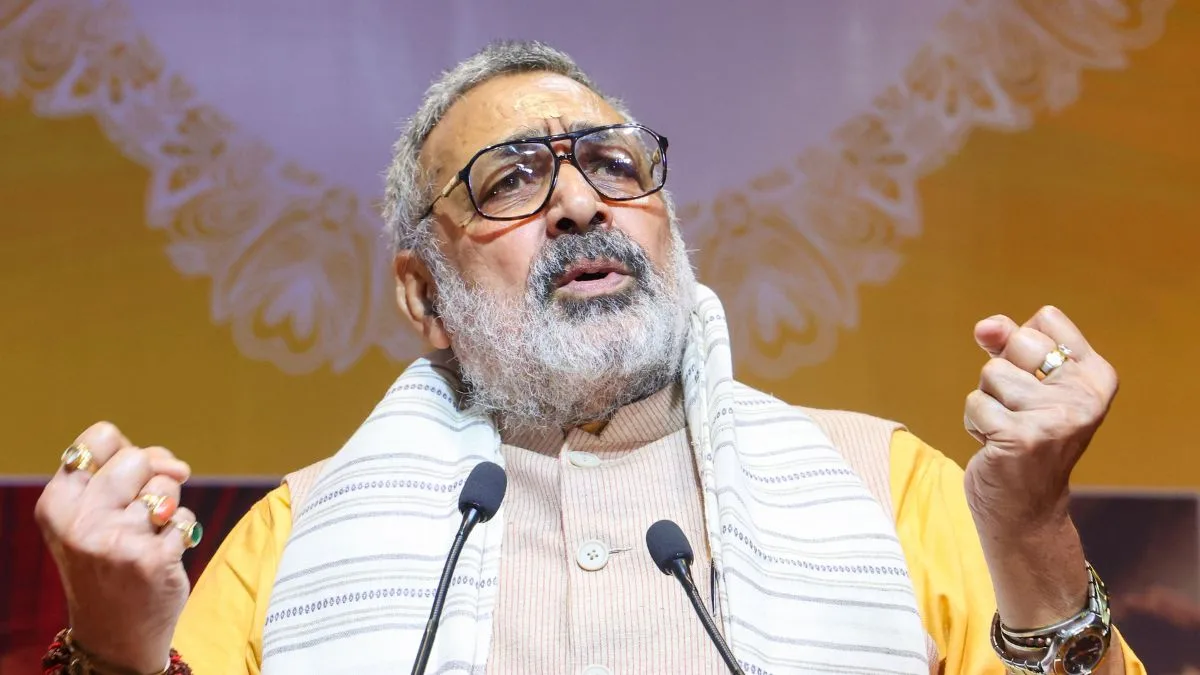
Union Minister Giriraj Singh has criticised West Bengal Chief Minister Mamata Banerjee and accused the Trinamool Congress supremo of betraying the state and its people by granting Indian citizenship to illegal Bangladeshi immigrants.

IANS | Kolkata |

Union Minister Giriraj Singh has criticised West Bengal Chief Minister Mamata Banerjee and accused the Trinamool Congress supremo of betraying the state and its people by granting Indian citizenship to illegal Bangladeshi immigrants.

While addressing a press conference in Kolkata on Thursday, the Union Minister also added that the Election Commission must further work diligently to ensure the removal of another 50 lakh illegal Bangladeshi immigrants from the electoral voter list in West Bengal as Mamata Banerjee-led West Bengal government has provided them with Aadhar and rations cards and was indulging to safeguard her Muslim votebank.

Giving historical context for comparing the current West Bengal government under Mamata Banerjee’s leadership with that of Hussain Shaheed Suhrawardy, Union Minister Singh said, “In 1946, Muhammad Ali Jinnah was the orchestrator behind the ‘Direct Action Day’. At that time, Hussain Shaheed Suhrawardy was the Chief Minister of Pre-Partition (British India) Bengal province (1946-1947) when millions of Hindus were slaughtered and killed. I believe that Mamata Banerjee has become the Chief Minister of West Bengal today and was ruling the state in the same manner as Suhrawardy. Mamata Banerjee is slaughtering Hindus in West Bengal. Therefore, for saving West Bengal and the country, it is extremely imperative that a Gopal Patha comes out of every house in West Bengal.”

Gopal Patha played a significant role in protecting Hindus from the atrocities committed during the Direct Action Day.

Union Minister Giriraj Singh also said that the West Bengal Chief Minister is afraid of the Bharatiya Janata Party (BJP) and warned that “Trinamool Congress goons” will be treated as per laws of the country after the BJP forms the new government in the state following the upcoming Assembly polls scheduled to be held in May this year.

The veteran BJP leader also added that Bihar Chief Minister Nitish Kumar’s Rajya Sabha nomination was a decision taken according to his own free will.

Giriraj Singh also hit out at the Rashtriya Janata Dal (RJD) and former Bihar Chief Minister Tejashwi Yadav while speaking to reporters and said, “The people of RJD and Tejashwi Yadav who insulted Chief Minister Nitish Kumar and called him sick, those people are shedding tears today. If CM Nitish Kumar has been nominated for the Rajya Sabha polls, he has done it of his own free will. The government in Bihar will function as per his wishes in the future.”

The Union Minister said that Nitish Kumar’s decision is his personal and political decision which has been taken without any compulsion.

As Nitish Kumar filed his nomination in the Rajya Sabha on Thursday, leaders of NDA allies — BJP and LJP-Ram Vilas also congratulated the Bihar Chief Minister and Janata Dal-United President.

The ‘Patil Effect’ in an age of thinking machines

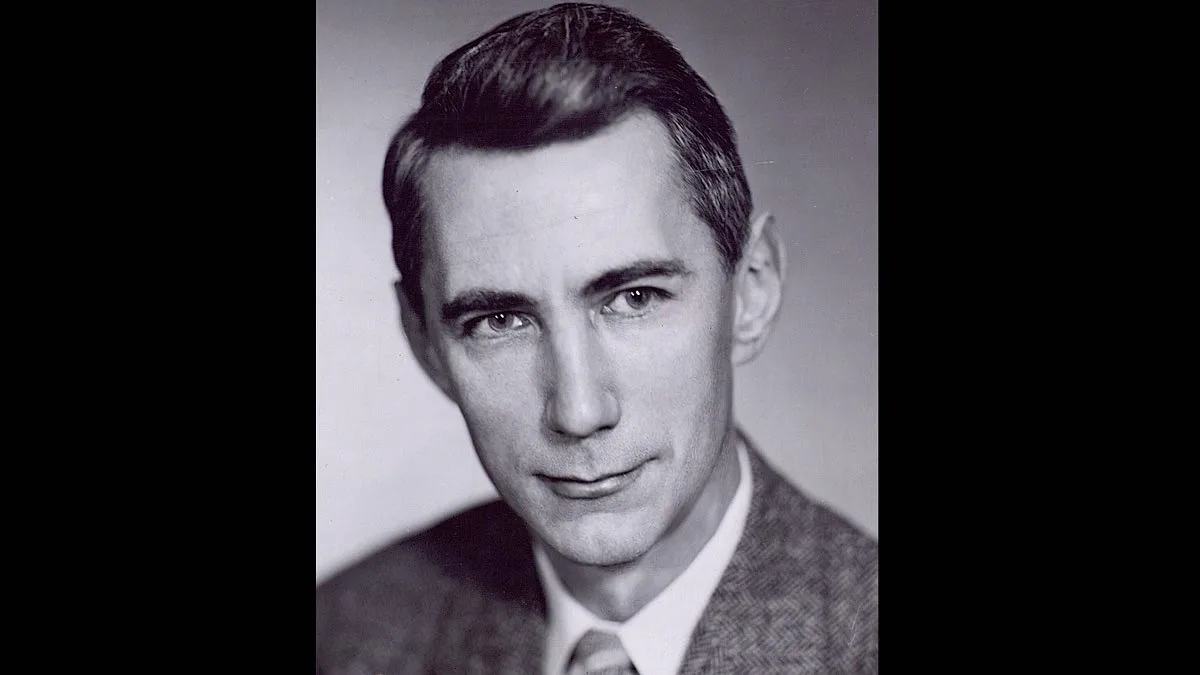
When Claude Shannon and Warren Weaver proposed their famous communication model in 1948, they could hardly have imagined that one day machines would not just transmit messages but generate poetry, draft policy briefs, write computer code, and even debate philosophy.

SANTHOSH MATHEW | New Delhi |

When Claude Shannon and Warren Weaver proposed their famous communication model in 1948, they could hardly have imagined that one day machines would not just transmit messages but generate poetry, draft policy briefs, write computer code, and even debate philosophy. The Shannon-Weaver theory reduced communication to sender, message, channel, noise,and receiver. Today, artificial intelligence has inserted a new actor into this model – the machine as both sender and receiver.

At the centre of this revolution stands Rahul Patil, the Chief Technology Officer of Anthropic, and the growing global phenomenon I would call the “Patil Effect.” The rise of Anthropic’s AI assistant, Claude, is more than just another Silicon Valley innovation. It is a reminder that communication theory has evolved from wires and signals to algorithms and probabilities. Shannon measured bits; Claude measures meaning. Weaver spoke about semantic noise; Claude attempts to reduce it. And Patil, steering technology at Anthropic, represents a new generation of technologists who are redefining the architecture of communication itself. Anthropic was founded by former OpenAI researchers with a strong emphasis on AI safety and alignment.

In a world where artificial intelligence is advancing at breakneck speed, safety is not a luxury; it is a necessity. Claude is positioned as a thoughtful, restrained, and context-aware AI assistant – a “conversational partner” rather than a mere answer machine. Unlike earlier chatbots that responded with mechanical rigidity, Claude attempts to maintain memory within conversations, understand nuance, and provide structured reasoning. The irony is poetic. Shannon’s model treated communication as linear. AI has made it circular. The machine learns from the receiver and adapts.

The “noise” is filtered by probabilistic models trained on massive datasets. In that sense, Claude is not just a chatbot; it is an evolving communication ecosystem. Patil’s journey into this technological frontier mirrors the aspirations of countless Indian technologists who rose from modest beginnings to global leadership. In Kannada, the word “huduga” means a small boy. Every global tech leader was once a “huduga” with curiosity in his eyes. The transformation from huduga to CTO encapsulates the spirit of India’s digital generation – ambitious, analytical, and globally competitive. Patil’s role as CTO involves overseeing infrastructure, scalability, safety engineering, and product architecture. But beyond the corporate title lies a deeper responsibility: shaping how machines interpret human thought. The Claude app is not merely software; it is a philosophical experiment in digital cognition.

Can a machine be helpful without being harmful? Can it assist professionals without replacing them? Can it amplify intelligence without ero ding employment? This is where the “Patil Effect” emerges – the paradox of technological empowerment and disruption. On one hand, Claude enhances productivity for researchers, journalists, coders, and entrepreneurs. It drafts emails, summarizes reports, generates code snippets, and analyzes complex data. On the other hand, it triggers anxiety among IT professionals who fear automation. Across India’s tech corridors – from Bengaluru to Hyderabad – conversations about AI-induced job displacement are intensifying. Even critics like Elon Musk have warned about the risks of advanced AI systems. Musk has often spoken about artificial intelligence as both transformative and potentially dangerous. The debate is not about whether AI will reshape industries; it already has. The debate is about who controls it and how responsibly it evolves. Anthropic’s emphasis on “constitutional AI” – training models to follow explicit ethical guidelines – reflects a proactive response to these concerns.

Instead of allowing the model to learn blindly from data, the company attempts to encode principles of helpfulness, harmlessness, and honesty. It is an ambitious undertaking. After all, ethics cannot be reduced to algorithms easily. The Claude app itself represents a leap in user interaction. It is designed for long-form reasoning, document analysis, and collaborative writing. Professionals use it to brainstorm ideas, refine academic drafts, and automate repetitive coding tasks. In corporate settings, AI assistants like Claude are increasingly becoming digital co-workers. Yet, the fear persists: Will AI cause a massive loss of IT jobs? The anxiety is understandable.

Automation has historically displaced certain categories of work. But it has also created new ones. When the internet emerged, typists feared extinction; instead, digital content exploded. When smartphones arrived, traditional camera manufacturers suffered; yet app developers flourished. The Patil Effect, therefore, is not merely about job displacement. It is about job transformation. AI does not eliminate intelligence; it redistributes it. A coder who once wrote boilerplate code may now supervise AI-generated frameworks. A journalist who once spent hours summarizing documents may now focus on investigative depth. Productivity shifts from mechanical repetition to conceptual oversight. In communication theory terms, AI reduces “channel noise” and increases “information density.” The speed at which humans can process, synthesize, and distribute knowledge multiplies exponentially. Claude becomes a cognitive amplifier.

However, amplification without regulation can be chaotic. The ethical dimension cannot be ignored. AI models must guard against misinformation, bias, and misuse. Here, leadership matters. CTOs like Patil are not merely technical managers; they are custodians of digital responsibility. India, with its vast IT workforce, stands at a crossroads. Will it resist AI out of fear, or embrace it strategically? The answer may determine whether India remains a global software powerhouse or becomes a peripheral participant in the AI race. Institutions must invest in AI literacy, upskilling, and research. The next generation of “hudugas” must learn not only to code but to collaborate with machines.

The Shannon-Weaver model once described communication as a linear transmission from sender to receiver. In the AI age, communication has become a dialogue between human cognition and machine computation. Claude is not the endpoint; it is a milestone. And Patil’s stewardship at Anthropic symbolizes a broader shift – from reactive technology adoption to intentional AI design. The real story is not about whether AI will take jobs. It is about whether societies will redesign education, ethics, and governance to harness AI constructively. The “Patil Effect” suggests that leadership, safety consciousness, and technological innovation can coexist. Every revolution in communication – from the printing press to the radio, from television to the internet – faced skepticism.

Yet humanity adapted. Artificial intelligence is the latest chapter in that long narrative. Claude is not replacing Shannon; it is extending him. It is proving that communication is no longer confined to wires and words, but coded in neural networks and probabilities. From a small “huduga” to the CTO of a pioneering AI company, Patil’s journey mirrors the transformation of communication itself. The question before us is simple yet profound: Will we treat AI as noise in the channel, or as the next great signal in human progress?

(The writer is Professor, Centre for South Asian Studies, Pondicherry Central University.)

‘Future of sovereignty at stake’

Amid escalating tensions following the recent joint US-Israel strikes on Iran, debates over sovereignty, regional security, and the evolving global order have gained renewed urgency.

Statesman News Service | New Delhi |

Amid escalating tensions following the recent joint US-Israel strikes on Iran, debates over sovereignty, regional security, and the evolving global order have gained renewed urgency. The developments have intensified discussions about multipolarity, the effectiveness of international institutions, and the role of major powers in shaping global stability.

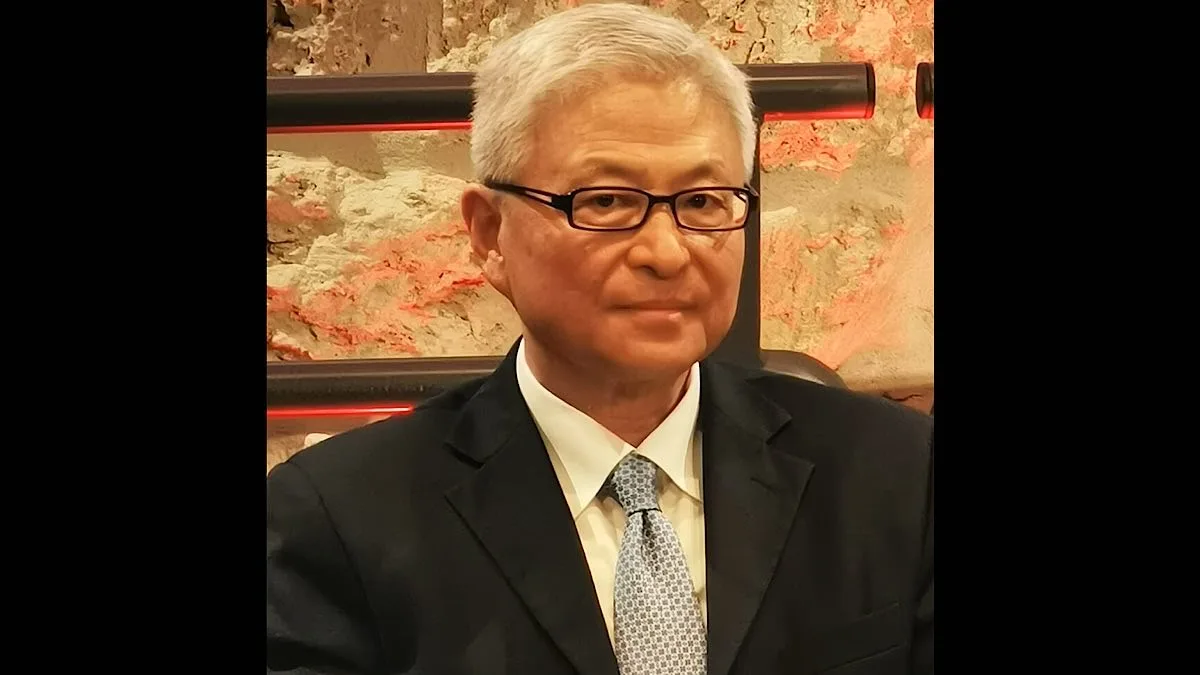
As geopolitical uncertainty deepens, middle and emerging powers are reassessing their strategic positions in a rapidly shifting international landscape. In an exclusive interview with Arti Bali, Yan Xuetong, former Director-General of the Institute of Modern International Relations at Tsinghua University and former Secretary-General of the World Peace Forum (WPF), offered a wide-ranging assessment of today’s most consequential geopolitical challenges.

Yan shared his perspectives on the Iran crisis, BRICS cooperation, the growing role of artificial intelligence in warfare, and the evolving dynamics of US-China relations. The conversation reflects broader global debates about how international norms, institutions, and power structures are adapting to an increasingly complex and contested world order.

Q: How do you see the role of counterbalancing powers in addressing global imbalances, especially with rising tensions around Iran?

A: Iran cannot rely on any external power to protect itself from an American attack. That’s the hard reality. The Trump administration attacked seven countries in 12 months. Now it’s Iran. After Iran, there may be another country. The pattern is not difficult to read. So, the real question isn’t just about Iran – it’s about whether any country’s sovereignty can be protected at all. The UN Charter says member states must respect each other’s sovereignty, but it doesn’t tell us how to enforce that when the violator is the most powerful nation on earth. We genuinely need new international institutions and norms that make sovereignty protection practical and realistic, not merely aspirational language in documents no one enforces. Realistically, the best starting point is regional cooperation, because internationally, a unified solution simply isn’t pragmatic right now.

Q: Is the nuclear issue really the core concern, or is it driven by other interests?

A: Any country that truly wants to build a nuclear weapon can do so within two years; it doesn’t take 30. The technology, while difficult, is not beyond reach for a state with Iran’s resources and scientific capacity. Iran has consistently maintained its programme is for peaceful purposes, and the prolonged failure to resolve this issue suggests the nuclear question may never have been the central one. The sanctions and pressure, driven significantly by Israel’s strong lobbying influence in Washington, have caused immense and lasting damage to ordinary Iranian people over the decades. Entire generations have lived under economic siege. The devastation that follows with a strike would be catastrophic, not just for Iran, but for regional stability across the entire Middle East. Attack is attack, and the consequences do not stay within borders.

Q: There’s an ongoing discussion about AI’s role in warfare and weapons. What’s your take on that?

A: AI and nuclear weapons are a genuinely serious issue. From what I understand, even before Trump, both sides, militarily, agreed on clear limitations. The final steps of any nuclear decision process cannot involve AI. Even if AI is more efficient, it’s forbidden. Both the US and China agreed that AI must not control nuclear weapons, keeping humans as the final decision-makers. Human beings must carry out the final process because humans have a conscience. They can pause and ask, should we really push this button? AI might reach a different conclusion for its own reasons, optimising for variables that have nothing to do with moral judgment or the weight of human consequences. For conventional uses, AI is allowed, but strict safeguards are needed to prevent autonomous lethal actions and maintain human oversight. But for weapons capable of civilisational destruction, the answer must remain human. That consensus, fragile as it may be, is one of the few guardrails still standing.

Q Major powers like India are all being impacted by US tariffs and economic pressure. How do you view this?

A: Among the BRICS members, India actually has the best relationship with the US compared to the other four. That gives India a unique position – but also a complicated one, because it means India faces constant pressure to choose sides rather than chart its own course. But regardless of individual relationships, the BRICS members need to first ask themselves – what kind of genuine cooperation can we build among ourselves? That has to be the foundation before anything else. If these countries cannot find common ground with each other, you can hardly expect them to take any coherent collective position when pushing back against the United States. Internal cohesion is not optional. It is the prerequisite.

Q: How can India and China manage their existing differences in a way that sustains mutual trust and ensures continued progress in economic cooperation?

A: Border disputes are a universal phenomenon – they have persisted for thousands of years across every continent in history. But history also shows us clearly that countries with unresolved border disputes sometimes cooperate and sometimes don’t. That tells us something important: a border dispute is a problem, but it is not a determining factor in the overall relationship. Even with a border dispute between India and China, that friction should not become a permanent obstacle to cooperation in economics, education, culture, tourism, and technology exchange. It can be shelved, managed, and set aside from the broader path of engagement. We should always approach potential cooperation with a constructive perspective – there is always a way to minimise the drag of negative factors if the political will exists to do so.

Q: Trump has been signalling a visit to China. How seriously should that be taken?

A: Trump has been loudly and eagerly telling anyone who will listen that he is planning to visit China. Yet China’s foreign ministry spokesperson refused to either confirm or deny that any invitation was extended. Everyone can draw their own conclusions from that asymmetry it speaks volumes about where the real leverage sits. And even if the visit happens, how much can China, or any country, trust that Trump will honour whatever agreement is reached? That scepticism is not cynicism. It is grounded in repeated, recent experience. Agreements made with this administration have a way of unravelling the moment they become inconvenient.

Q: How do you view the role in the USA in the evolving dynamics between countries?

A: That is a real concern that many countries share. The US, under Trump especially, has shown a consistent pattern of inserting itself into bilateral tensions between two countries and extracting deals – you buy my products, you give me access to your markets or resources. It is transactional diplomacy built entirely on exploiting existing friction rather than resolving it. Many governments quietly worry that China and the US might one day form a G2 arrangement and jointly manage – or dominate – the rest of the world. Their combined GDP already exceeds 50 per cent of the global total. That concentration of power is genuinely alarming to smaller nations. However, I don’t believe a lasting G2 partnership will materialise. The fundamental nature of the China-US relationship remains one of structural competition, not strategic partnership – and no single summit or deal, however grand it appears, will change that underlying reality.

Alliance arithmetic

When Bihar chief minister Nitish Kumar announced his decision to seek election to the Rajya Sabha, it signalled more than the personal transition of a veteran leader from state politics to the national stage.

Statesman News Service | New Delhi |

When Bihar chief minister Nitish Kumar announced his decision to seek election to the Rajya Sabha, it signalled more than the personal transition of a veteran leader from state politics to the national stage. It may also mark the quiet end of a political era in Bihar – and perhaps the beginning of a new phase in coalition politics led by the Bharatiya Janata Party. For nearly two decades, Mr Nitish Kumar has been the central figure in Bihar’s political landscape.

Since first becoming chief minister in 2005, he crafted an image of administrative sobriety and relative stability in a state long associated with political turbulence. Even as alliances shifted ~ sometimes dramatically ~ his personal credibility often remained the anchor that kept coalition politics workable. That equilibrium now appears to be changing. In political terms, the transition is unlikely to be seen merely as routine succession. In coalition politics, timing matters. A leadership change so soon after an electoral victory inevitably raises questions about whether alliances remain partnerships of equals or temporary arrangements. If, as widely expected, the BJP installs its own chief minister in Patna after Mr Kumar moves to the Upper House, it would represent a symbolic milestone.

Bihar would become the last major state in the Hindi heartland to see a BJP chief minister, completing the party’s gradual consolidation of leadership across northern India. Yet the implications extend beyond the question of who occupies the chief minister’s chair. In the 2025 Bihar assembly election, the National Democratic Alliance contested under the familiar arrangement in which Mr Kumar remained the chief ministerial face of the coalition, even though the BJP’s legislative strength within the alliance had grown steadily. The arrangement reflected the political reality that Mr Kumar’s reputation still carried weight among sections of Bihar’s electorate.

But politics rarely stands still. If the leadership transition now happens barely months after that electoral victory, it will inevitably invite questions about how alliances function when one partner becomes overwhelmingly dominant. For regional parties allied with the BJP elsewhere ~ from Andhra Pradesh to Maharashtra ~ the development could be read as a reminder of the shifting balance within coalition politics. Partnerships with a national party that commands expanding electoral strength can bring stability and electoral advantage. At the same time, they also raise the possibility that regional leadership may gradually give way to centralised party authority.

None of this diminishes Mr Kumar’s long political journey. Few Indian politicians have navigated coalition politics as deftly or remained relevant across such dramatically changing national circumstances. Alongside leaders like Lalu Prasad Yadav and the late Ram Vilas Paswan, he shaped the political grammar of Bihar for a generation. His move to the Rajya Sabha may therefore represent both a personal transition and a broader political turning point. If a BJP chief minister soon takes office in Patna, the message will be unmistakable: in India’s evolving coalition landscape, the balance between regional partners and the dominant national party is steadily being rewritten.

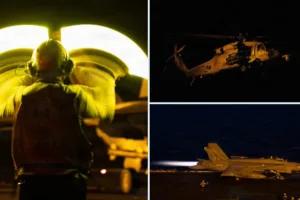
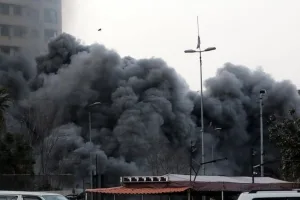
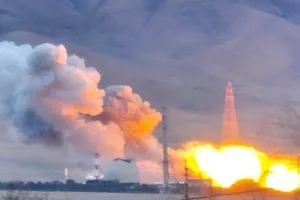
US-Israel-Iran War: Gulf nations hosting US bases will never enjoy peace, says Iran as Trump vows ‘very hard strikes’

India is monitoring air travel disruptions and issuing advisories to its citizens as the widening West Asia conflict triggers missile attacks, rocket strikes and diplomatic calls for restraint across the region.

Statesman News Service | New Delhi |

Iran’s Foreign Minister Syed Abbas Araghchi has sharply escalated the war of words, saying Tehran’s response will be aimed at American bases and institutions after fresh US strikes. His remarks came as scrutiny deepened over a deadly school strike in southern Iran that, according to reports cited by CNN and Reuters, may have involved American forces.

The conflict, which began on February 28 after joint US-Israel strikes inside Iran, is now pulling in more countries across West Asia. India is tracking the fallout on aviation, its missions in the Gulf have issued fresh advisories, and global leaders are warning that the crisis could slip beyond control.

Meanwhile, Iran’s Assembly of Experts is likely to meet within one day to choose new Supreme Leader, Assembly member Ayatollah Mozafari said on Saturday, according to Iranian media.

Top updates

J & K’s triumph

When Jammu and Kashmir lifted the Ranji Trophy this season, it was not merely a cricket result; it was a quiet rewriting of a national narrative.

Statesman News Service | New Delhi |

When Jammu and Kashmir lifted the Ranji Trophy this season, it was not merely a cricket result; it was a quiet rewriting of a national narrative. For decades, the region’s name has surfaced in headlines for reasons far removed from sport. Now it stands inscribed on the most coveted prize in India’s domestic first-class game ~ and that shift carries weight far beyond the boundary ropes. The Ranji Trophy is not the IPL’s glitzy cousin. It is the hard anvil on which India’s Test cricketers are forged.

To win it requires depth, temperament and the ability to grind through four-day contests against teams steeped in tradition. Jammu and Kashmir did not scrape through as sentimental underdogs; they defeated heavyweights with method and nerve. Consider the scale of that challenge. Karnataka arrived in the final boasting international experience of players such as KL Rahul and Mayank Agarwal. Delhi and Madhya Pradesh, both former champions, had fallen earlier in the tournament. Yet it was a side from a territory that has not hosted a men’s international match since the 1980s that stood tallest at the end. This did not happen by accident. Institutional repair preceded on-field triumph.

The Jammu and Kashmir Cricket Association’s overhaul, the appointment of Mithun Manhas in an administrative leadership role, and the professionalisation of coaching structures signalled that sentiment alone would not suffice. Earlier interventions by Bishan Singh Bedi and Irfan Pathan had chipped away at the psychological barrier that often dogs teams from the periphery ~ the quiet doubt that they do not belong. That barrier has now collapsed. Leadership also mattered. Paras Dogra, drafted in to anchor a rebuilding effort, brought the authority of experience. Around him emerged a core that combined discipline with flair. Fast bowler Aquib Nabi’s 60-wicket season was not a romantic flourish; it was the statistical backbone of a championship campaign.

His rise, following trailblazers like Pervez Rasool and Umran Malik, suggests a widening pipeline rather than a solitary spark. The deeper significance lies in what this victory represents for Indian cricket itself. The Board of Control for Cricket in India has long prided itself on the game’s reach into small towns and remote districts. Jammu and Kashmir’s ascent tests that claim ~ and validates it. Talent, when matched with infrastructure and administrative integrity, can surface anywhere. For the young cricketers practising on winter mornings in Srinagar or Jammu, this title redraws the map of possibility. It says that the route to the Indian team no longer runs exclusively through Mumbai, Delhi or Bengaluru.

It can begin in the valley, on grounds once overshadowed by curfews and caution. Sport cannot resolve political complexities. But it can alter atmospheres. By winning the Ranji Trophy, Jammu and Kashmir have claimed something simple yet profound: recognition earned on merit. In doing so, they have moved from cricket’s margins to its centre, and forced the rest of the country to adjust its gaze.

Overdue Honour

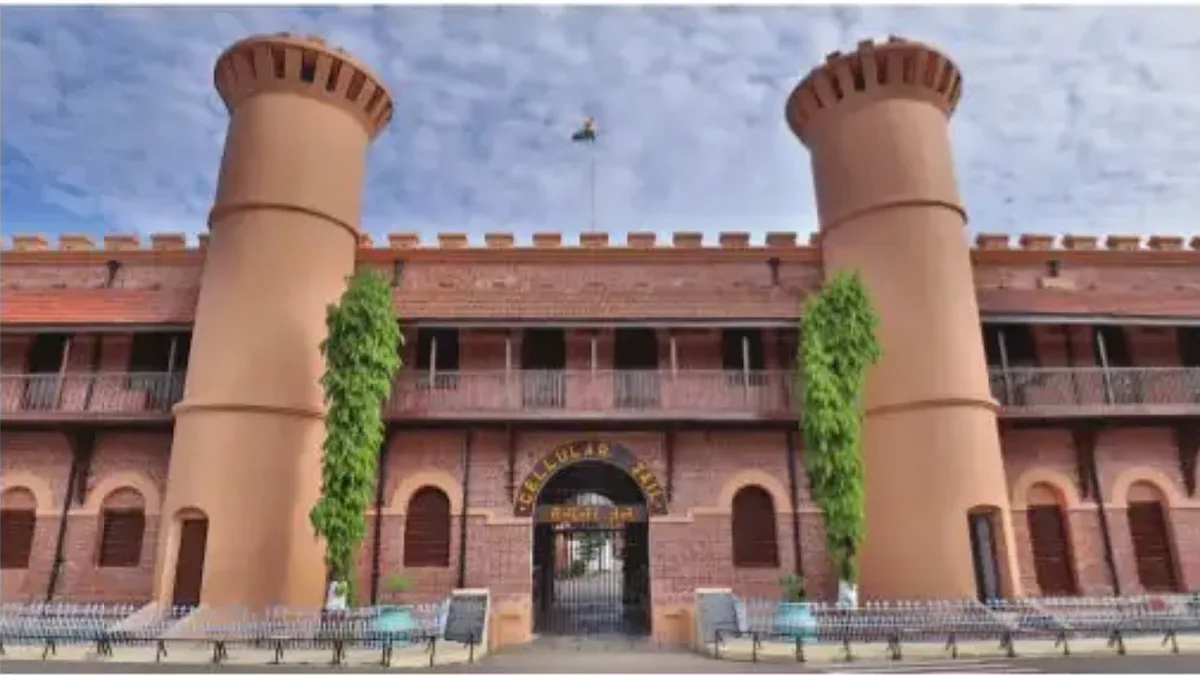
Of late much is happening with respect to the Cellular Jail or “Kala Pani” which once became synonymous with harsh and inhuman treatment, hard labour, torture and vile conditions endured by freedom fighters.

MANAS DAS | New Delhi |

Of late much is happening with respect to the Cellular Jail or “Kala Pani” which once became synonymous with harsh and inhuman treatment, hard labour, torture and vile conditions endured by freedom fighters. The Cellular Jail at the Andamans, 1,200 km from the mainland, became a habitat of silent suffering during the colonial period. The British used it to exile those revolutionaries and freedom fighters they considered most dangerous for their regime. Despite extreme suffering, the prisoners’ resilience and unwavering commitment to the cause of freedom became stuff for legend that inspired generations to come.

In essence, the Jail represents the ultimate test of endurance and sacrifice for India’s independence, making it a deeply significant historical place. For quite some time, demands have been voiced both inside the Parliament and outside to give due honour and recognition to Bengali revolutionaries like Ullaskar Dutta, Hemchandra Das Kanungo and Barin Ghosh who were sent there for their anti-British activities. Keeping up the momentum, the Ullaskar Dutta Academy, a research group based in Kolkata, raised its voice for this long-standing demand, seeking immediate steps to name the cells at the Jail after the twelve revolutionaries of undivided Bengal who spent a lot of time there under harrowing circumstances. These revolutionaries were the first batch of political prisoners who were deported to the notorious prison following the Alipore Bomb Conspiracy trial.

It is to be noted that out of approximately 585 revolutionaries sent to the Cellular Jail between 1909 and 1938, close to 400 were from undivided Bengal. Previously, honour in the form of dedicated cells was given to two Indian bravehearts, namely Vinayak Damodar Savarkar and Sachindranath Sanyal, but neither of them hailed from Bengal. With this demand, the Academy sent letters to Prime Minister Narendra Modi, the Union Culture Minister, the West Bengal Chief Minister and the Andaman and Nicobar administration so that recognition is given in the form of installing busts and naming cells after the 12 Bengali revolutionaries who gave their all for the independence of their motherland.

The Academy feels that recognition at Cellular Jail for this maiden batch of political prisoners from Bengal is a long-due tribute to their courage and sacrifice, as their glorious saga has been nearly wiped out from the pages of history. The Alipore Bomb Case (1908-1909), in which twelve Bengali freedom fighters were deported to “Kala Pani”, was a unique case. It was the first state trial of any magnitude in India. Also known as the Muraripukur or Manicktolla Bomb Conspiracy, it was a pivotal legal and political event of the Indian independence movement. The case arose in the aftermath of an assassination attempt on British magistrate Douglas Kingsford by young Bengali nationalists Khudiram Bose and Prafulla Chaki.

This act led to the arrest of approximately 20 suspected Bengali revolutionaries from several hideouts. The trial dragged on with preliminary hearings in the Magistrate’s court, involving 1,000 pieces of evidence and 222 witnesses followed by a trial in the Sessions Court, involving 1,438 exhibits and 206 witnesses. Although Pramathanath Mitra, one of the founding members of the Anushilan Samiti, was appointed as the Defense Counsel, he was relieved of his duty by Aurobindo Ghosh and Chittaranjan Das was appointed in Mitra’s place. The final judgement was given by Judge Beachcroft on 6 May 1909 after a protracted trial of one year.

Aurobindo Ghosh who was considered the mastermind behind the conspiracy was later acquitted due to lack of evidence. Khudiram Bose was executed; Chaki committed suicide; and Barindra Ghosh, Ullaskar Dutta and 10 others were sent to the Cellular Jail. Of the twelve revolutionaries sent to the Andamans, the British authorities considered Barin Ghosh, Ullaskar Dutta and Hemchandra Das Kanungo the most dangerous. Ghosh was an ideologue and journalist credited with establishing bomb-making units and underground cells throughout the state.

was an expert in bomb-making who was tortured in such a barbaric way that he remained one of the most tragic cases of jail brutality at the Andamans. Hemchandra went to Paris to learn the techniques of assembling picric acid bombs from exiled Russian revolutionaries. The other nine lesser-known revolutionaries deported to Kala Pani in the Alipore Case were Abinash Chandra Bhattacharya, Upendranath Banerjee, Bibhuti Bhushan Sarkar, Indubhushan Roy, Paresh Chandra Moulik, Hrishikesh Kanjilal, Biren Chandra Sen, Sudhir Kumar Sarkar, and Nirapada Roy.

Designed in the shape of a huge starfish with seven massive tentacles-like wings spreading out from a central watch tower, the Cellular Jail housed seven three-storey wings of which only three remain now. The prison had 698 solitary cells and its high walls and long corridors tell us of the horrors inflicted upon the prisoners. The construction work of the jail began in 1896 and it took ten years and a staggering investment to complete the dreaded prison. It was to this jail that the British sent into exile those they considered the most dangerous for their rule in India. The revolutionaries in Cellular Jail were treated not as political prisoners, but as ‘seditionists’ or ‘anarchists’.

Inhuman and brutal torture was inflicted on them – ranging from backbreaking manual work, miserable living conditions and poor food, to the hurling of abuses and flogging. Many of the convicts were educated and came from respectable families, yet they were employed in the most excruciating tasks. One of the forced tasks was to beat the coconut shells several times with a wooden hammer until the fibres, used for certain fabrics, remained and became soft. Another gruelling job was the manual mill, where the prisoner had to turn a large wheel with his hands to grind coconuts or mustard seeds and produce thirty pounds of oil per day.

Those who failed to complete their assigned tasks were whipped mercilessly. There were times when prisoners went on hunger strikes in protest against the torture and hard labour forced on them. In response, the British officials decided on force-feeding. A doctor would insert a tube through the prisoner’s nose to reach his larynx and forced a mixture of milk, sugar and eggs into his stomach. Despite being stopped by guards, some coughed loudly to push the tube away. Some died of pneumonia when the milk entered their lungs. The dead bodies were then thrown into the sea after being put in bags with stones to prevent them from floating. The torture of jail authorities crossed all limits and any protest would be met with the severest of punishments. Many of the inmates committed suicide or died of this inhuman torture and humiliation.

Indu Bhushan Roy was one of them. Several memoirs or autobiographies of Cellular Jail convicts depicted the barbaric torture and agonizing routine in great detail out of which mention can be made of Barin Ghosh’s “The Tale of My Exile”; Upen Banerjee’s “Nirvasiter Atmakatha” (The Autobiography of an Exile); Ullaskar Dutta’s “Twelve Years of Prison Life” and Savarkar’s “Majhi Janep” (in Marathi). But many others in the jail had remained in anonymity, desertion and poverty. The harrowing torture by British jail keepers were also summed up by Colonel Wedgewood, a member of the British parliament in an article in the Daily Herald with the title “Hell on Earth ~ Life in the Andamans”.

The Cellular Jail remains a haunting reminder of India’s struggle for independence and this colonial-era prison symbolizes the resilience and sacrifice of freedom fighters who endured unimaginable hardships and torture for the liberation of their motherland from the yoke of British rule. Hence due honour must be accorded to those revolutionaries who spent years inside the dark chambers of this isolated prison. Today many people visit this site and try to feel the suffering and sacrifices of those bravehearts who were deported here by the British to crush the armed rebellion against their rule. Since Bengali revolutionaries comprised the overwhelming majority among the freedom fighters sent to this dark prison, there is a need to pay tribute to their courage and sacrifice.

The 1908-1909 Alipore Bomb Case created anti-British tremors across the country, significantly intensifying anti-colonial sentiment and strengthening organised revolutionary networks. The trial sparked national pride and accelerated militant nationalism, inspiring future leaders like Bhagat Singh to carry on the fearless legacy of the Bengali revolutionaries. The case directly led to the arrest of stalwart nationalist leader Bal Gangadhar Tilak for defending the courageous Bengali revolutionaries and marked a critical juncture in the freedom movement, shifting the focus from moderate protests to radical and militant action.

It is high time that the authorities give long-due recognition to the twelve Bengali revolutionaries accused in the famous conspiracy trial. The activities of Ullaskar Dutta, Barin Ghosh, Hemchandra Das and others created a sensation among all Bengalis and freedom fighters of other parts of India and shook the mighty foundations of British rule. We must remember that the colonial rulers did not gift us our freedom, it was achieved through daring activities and sacrifices of our freedom fighters. It would be a sin if there is any further delay or procrastination to pay homage to these liberation fighters.

(The writer, a Ph D in English from Calcutta University, teaches English at the Sailendra Sircar Vidyalaya. He is also the Research Head of Ullaskar Dutta Academy)


Bengal SIR: Judicial adjudication completed for 7.5 lakh cases, informs CEO

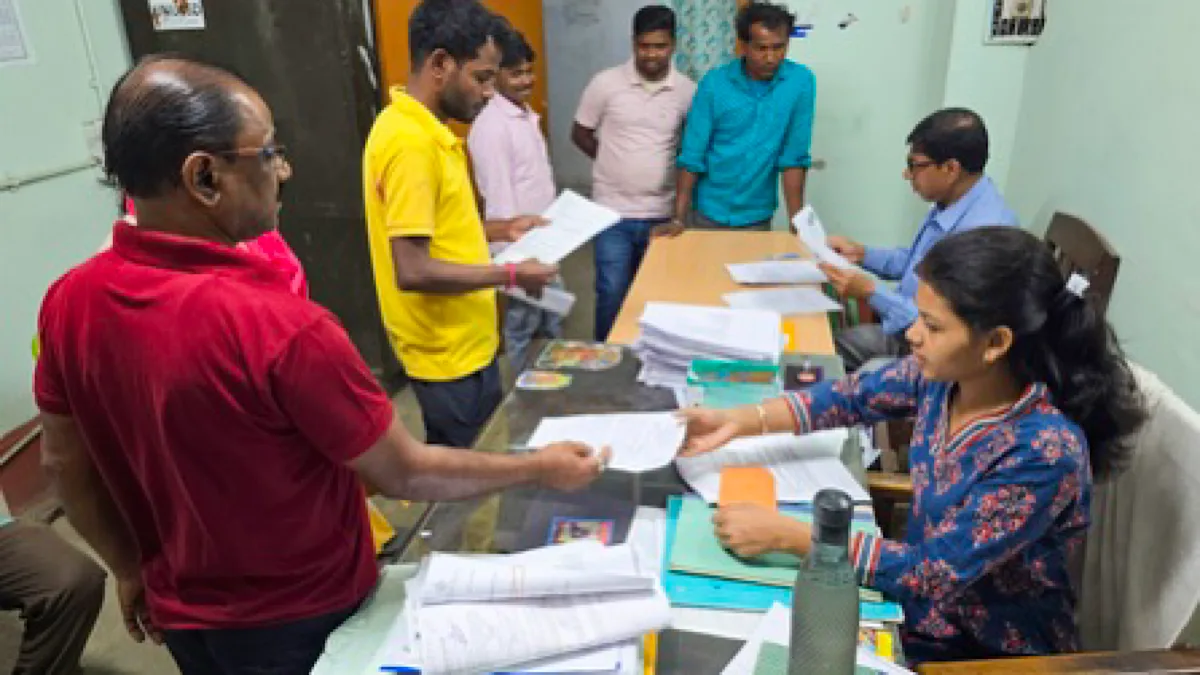
About 7.5 lakh cases of judicial adjudication of voters’ documents classified under the “logical discrepancy” category have been completed till Friday evening, informed the Chief Electoral Officer (CEO), West Bengal, Manoj Kumar Agarwal.

IANS | Kolkata | Updated :

About 7.5 lakh cases of judicial adjudication of voters’ documents classified under the “logical discrepancy” category have been completed till Friday evening, informed the Chief Electoral Officer (CEO), West Bengal, Manoj Kumar Agarwal.

“A total of 200 more judicial officers from neighbouring Odisha and Jharkhand will be reaching West Bengal by Saturday morning. After a two-day training on Saturday and Sunday, they will be joining the judicial adjudication process on Monday. Their joining will further add pace in the process of judicial adjudication,” Agarwal told media persons on Friday evening.

A total of over 60 lakh voter documents were originally referred for judicial adjudication. The final voters’ list in West Bengal, minus the cases referred for judicial adjudication, was published on February 28. The supplementary list will be published in due course as per an earlier order of the Apex Court.

Reacting to Trinamool Congress’s allegations earlier in the day that many “alive” voters have been shown as “deceased” voters following the Special Intensive Revision (SIR) in the state, Agarwal said that if there was any such complaint, the voters concerned should approach the Commission.

“We will take action if the complaint is filed. We will see whose negligence resulted in the omission of the names of the living voters being marked as dead voters. Why was it done? Did someone intentionally omit the name? All these matters will be investigated,” Agarwal said.

Two other crucial developments related to the judicial adjudication part in the Special Intensive Revision (SIR) and the poll-preparedness for the forthcoming crucial Assembly elections in the state are scheduled next week, especially on Monday and Tuesday.

The full bench of the ECI, led by the Chief Election Commissioner (CEC), Gyanesh Kumar, will be arriving in Kolkata on the night of March 8 with a packed schedule for the next two days to review both the ongoing judicial exercise as well as the preparedness for the forthcoming Assembly polls.

On March 10 (Tuesday), a crucial hearing on the SIR and related judicial adjudication is scheduled at the Supreme Court.

Iranian Navy’s IRIS Lavan that took part in Milan, IFR 2026 safely docked in Kochi: Government sources

Sources said India had been approached by Iran days before the IRIS Dena incident south of Sri Lanka.

ANI | New Delhi |

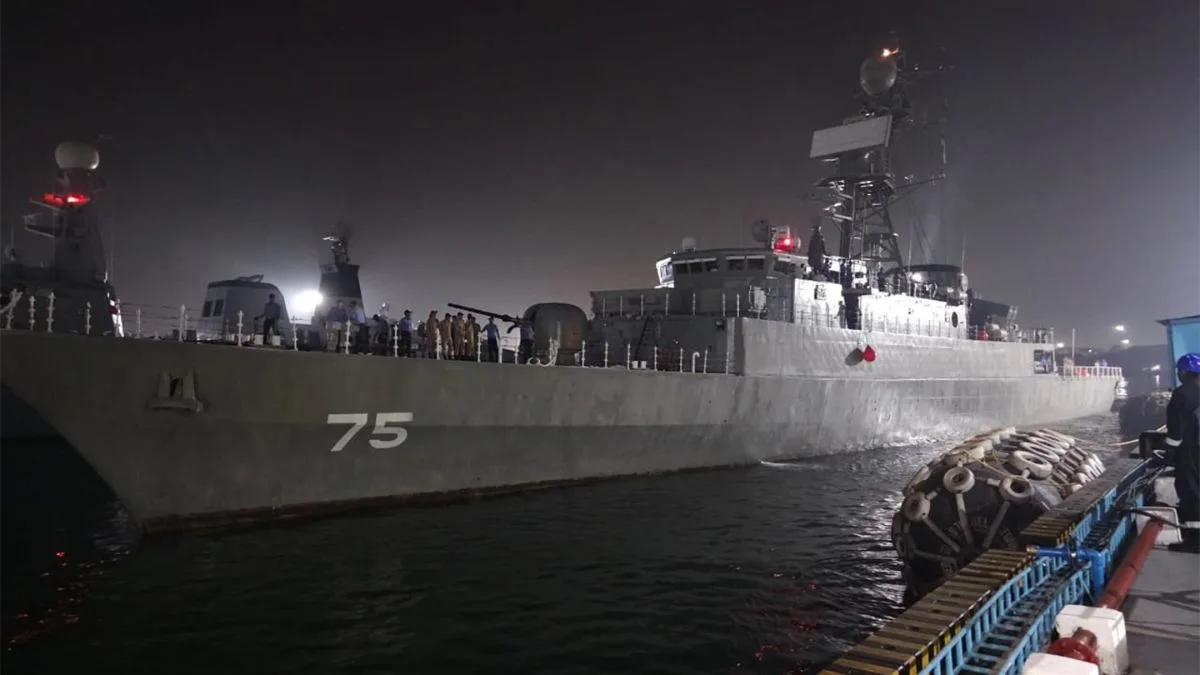
The Islamic Republic of Iran Ship (IRIS) Lavan, which took part in the International Fleet Review (IFR) 2026, has docked in Kochi after developing technical issues, according to sources in the Government of India.

Sources said India had been approached by Iran days before the IRIS Dena incident south of Sri Lanka. The ship was in the region as part of the Iranian naval presence for the International Fleet Review and MILAN 2026, which took place from February 15 to February 25
The request from Iran was received on February 28, seeking urgent docking support for the vessel due to technical problems.

“This request was received on 28 February 2026, indicating that a docking at Kochi was urgent as the vessel had developed technical issues,” the sources said.

The joint strikes by the US and Israel on Iran were also initiated on February 28.

Sources added that India approved docking on March 1, after the conflict in the region had already begun.

“Approval was accorded for the docking on 1 March. IRIS LAVAN has since docked at Kochi on 4 March,” the sources said.

According to the sources, the ship’s crew members are currently staying at naval facilities in Kochi.

“In this context, its crew of 183 are currently accommodated at naval facilities in Kochi,” the sources added.

Sources further said that other ships were also present in the region at that time.

Earlier, IRIS Dena sank south of Sri Lanka on March 4 after being struck by a US submarine torpedo approximately 20 nautical miles west of Galle.

The Indian Navy then deployed INS Tarangini and INS Ikshak, along with maritime patrol aircraft, like its P8Is, to assist in the Sri Lanka-led search and rescue operations for the Iranian frigate IRIS Dena.

Of the estimated 180 crew members on board IRIS Dena, around 87 sailors are reported dead, while about 32 survivors were rescued by the Sri Lanka Navy and admitted to hospitals in Galle.

The development comes amid escalating tensions in West Asia after a joint US-Israel military strike on Iranian territory that killed its Supreme Leader Ayatollah Ali Khamenei and other senior figures.

In retaliation, Tehran launched waves of drone and missile attacks across multiple Arab countries, targeting American military bases and assets in the region.

Israel has also intensified its campaign on Tehran.

Air India Express fortifies flights for fans for ICC World Cup Finals

To facilitate cricket fans travelling to witness the final, the airline will operate additional flights to Ahmedabad from Delhi, Bengaluru, Mumbai, and Hyderabad.

Statesman News Service | New Delhi |

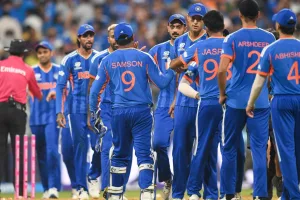
Following India’s emphatic victory in the semi-finals of the ICC Cricket World Cup and the surge in travel demand for the final in Ahmedabad, Air India Express has announced the addition of special flights to the city from key metro hubs.

To facilitate cricket fans travelling to witness the final, the airline will operate additional flights to Ahmedabad from Delhi, Bengaluru, Mumbai, and Hyderabad. These flights have been scheduled in response to the sharp increase in demand for travel to the city as fans across the country plan to attend the highly anticipated match.

Air India Express continues to closely monitor booking trends and may consider further capacity enhancements based on demand.

Sanawar alumni to host 8th Rajesh Puri Memorial Inter-House Cricket Tournament-2026 at PCA

The Old Sanawarian Society (OSS), the official alumni association of The Lawrence School, Sanawar, will organise the 8th edition of the Rajesh Puri Memorial Inter-House Cricket Tournament 2026 on March 7 and 8 at the prestigious PCA Stadium, Mullanpur

Statesman News Service | Chandigarh |

The Old Sanawarian Society (OSS), the official alumni association of The Lawrence School, Sanawar, will organise the 8th edition of the Rajesh Puri Memorial Inter-House Cricket Tournament 2026 on March 7 and 8 at the prestigious PCA Stadium, Mullanpur.

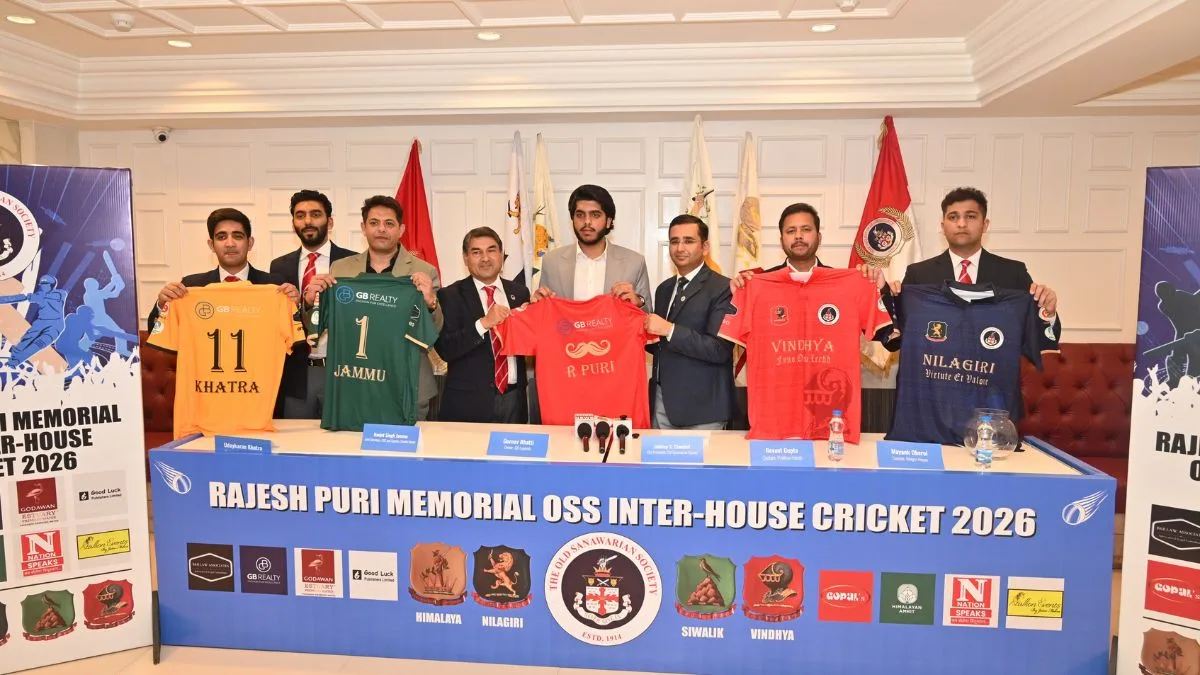
Details of the tournament were shared at a press conference here on Friday which was addressed by Jaideep S Chandail, Vice President, Old Sanawarian Society; Navjot Singh Jammu, Joint Secretary, OSS and Captain, Siwalik House; Gurnav Bhatti, Owner, GB Legends; Udaykaran Khatra, Captain, Himalaya House; Mayank Oberoi, Captain, Nilagiri House and Revant Gupta, Captain, Vindhya House.

Team jerseys were also unveiled jointly by Gurnav Bhatti, Amit Sood, CEO, GB Legends and Durgesh Tuknayat. The tournament, instituted in memory of the legendary mathematics teacher Late Rajesh Puri who served the institution for nearly three decades, honours his enduring legacy of mentorship, discipline, and inspiration that shaped generations of Sanawarians.

“The event has evolved into one of the most anticipated sporting reunions of the Sanawar alumni calendar, bringing together distinguished professionals united by their shared school spirit,” said Jaideep S Chandail, Vice President, Old Sanawarian Society, said at the press conference.

“This tournament reflects the timeless Sanawarian values of teamwork, leadership and lifelong bonding. Remembering Rajesh Puri Sir through sport is our way of celebrating a teacher who influenced countless lives with dedication and warmth,” he stated.

Gurnav Bhatti, Owner, GB Legends, said, “Sport builds character, discipline and community spirit. GB Realty is proud to support the Old Sanawarian Society in preserving a meaningful sporting legacy while encouraging alumni participation and youth inspiration through initiatives like the Rajesh Puri Memorial Tournament.”

According to Navjot Singh Jammu, Joint Secretary, OSS, the four traditional Sanawar Houses – Himalaya, Siwalik, Vindhya and Nilagiri – will compete in six high-intensity 15-over matches across two days. Nearly 60 alumni participants comprising corporate leaders, professionals, entrepreneurs, former Ranji players, doctors and legal experts will take part, reaffirming the institution’s vibrant sporting tradition.

Udaykaran Khatra, Captain, Himalaya House, revealed that the tournament will be graced by Krishna Puri, herself a former teacher at Sanawar, who will join alumni in remembering the life and contribution of her late husband. He added that all matches will be live streamed on Facebook and YouTube, allowing Sanawarians across India and overseas to witness the action.

Mayank Oberoi, Captain of Nilagiri House informed that the closing ceremony on March 8 will feature distinguished guests. Revant Gupta, Captain of Vindhya House said that many other dignitaries will also grace the tournament. He said that Himmat Singh Dhillon, Headmaster, The Lawrence School, Sanawar; Justice Rajive Bhalla; Sunil Gupta, Honorary Treasurer of PCA and other eminent personalities will also be present during the tourney’s closing ceremony.