Logo

Unexpected turn in TN polls as Vijay’s TVK reportedly in talks to join NDA

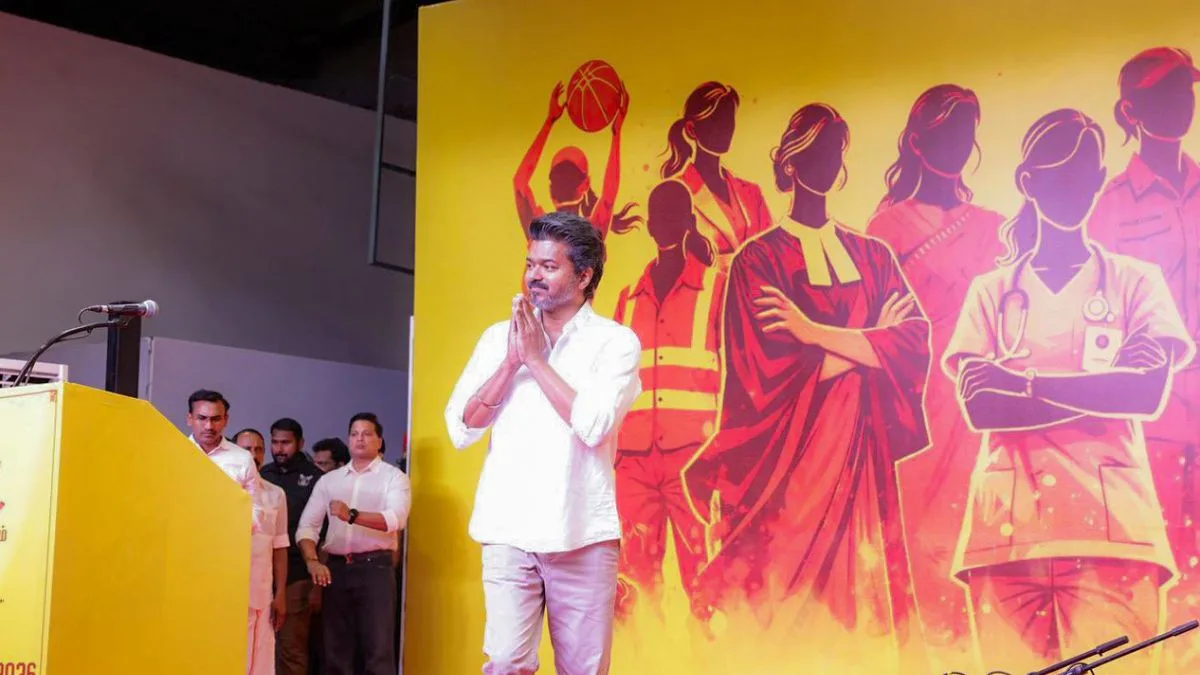
Despite its tall claims of contesting the Tamil Nadu assembly elections on its own and branding the BJP as communal and fascist, the Tamilaga Vettri Kazhagam (TVK) of actor-turned politician is reportedly engaged in talks with the BJP’s national leadership on joining the NDA.

Statesman News Service | Chennai |

Despite its tall claims of contesting the Tamil Nadu assembly elections on its own and branding the BJP as communal and fascist, the Tamilaga Vettri Kazhagam (TVK) of actor-turned politician is reportedly engaged in talks with the BJP’s national leadership on joining the NDA.

The fledgling TVK’s unexpected somersault comes after its fervent hopes of teaming up with the Congress turned futile, with the national party reportedly using Vijay as a bargaining chip to secure more seats with the ruling DMK. Despite Vijay’s offer of power-sharing with allies, there were no takers, and the TVK was left with no partners to fight the election.

Even though the TVK expected the Congress to sever ties with the DMK and team up with it, the dominant view in the national party was that the TVK did not have an organisational structure. “Except Vijay, the TVK has no candidate and the party lacks the requisite organisational structure,” Congress veteran and former Union Minister P Chidambaram had said recently, explaining the reason for the party not taking that risk.

Sources in the TVK said Vijay is upset at the party being left without allies and had expressed his displeasure to the party’s election management general secretary, Aadhav Arjuna, who was entrusted with the task of bringing in the Congress and other parties, as well as poaching senior leaders from other parties. The TVK thus allowed the AMMK, led by TTV Dhinakaran, and the DMDK of Premalatha Vijayakanth, which had shown interest in entering into an alliance with it, to slip away. “There is no killer instinct in the TVK leadership. Vijay had not even formed a party panel to hold official-level talks with potential allies. Rather than entrusting the task to Aadhav Arjuna, he himself should have met Congress leader Rahul Gandhi instead of remaining in his comfort zone,” observers said.

It is in this context that the TVK is believed to have opened a channel of communication with the BJP. According to reports, the BJP has made fresh moves to bring the TVK into the NDA fold at the direction of Union Home Minister and party strategist Amit Shah, who is of the view that the NDA, comprising the AIADMK and the BJP, besides other minor parties, requires a party like the TVK to effectively take on the DMK-led Secular Progressive Alliance. However, it remains to be seen whether Vijay, who had positioned himself as an alternative to Chief Minister MK Stalin, will accept playing second fiddle to AIADMK general secretary Edappadi K Palaniswami (EPS), who is heading the NDA and projected as its chief ministerial face. Of late, he has refrained from criticising the BJP, while training his guns on Stalin and the DMK.
Good air days on rise, steps underway to further curb pollution in Delhi-NCR: Dr SD Attri

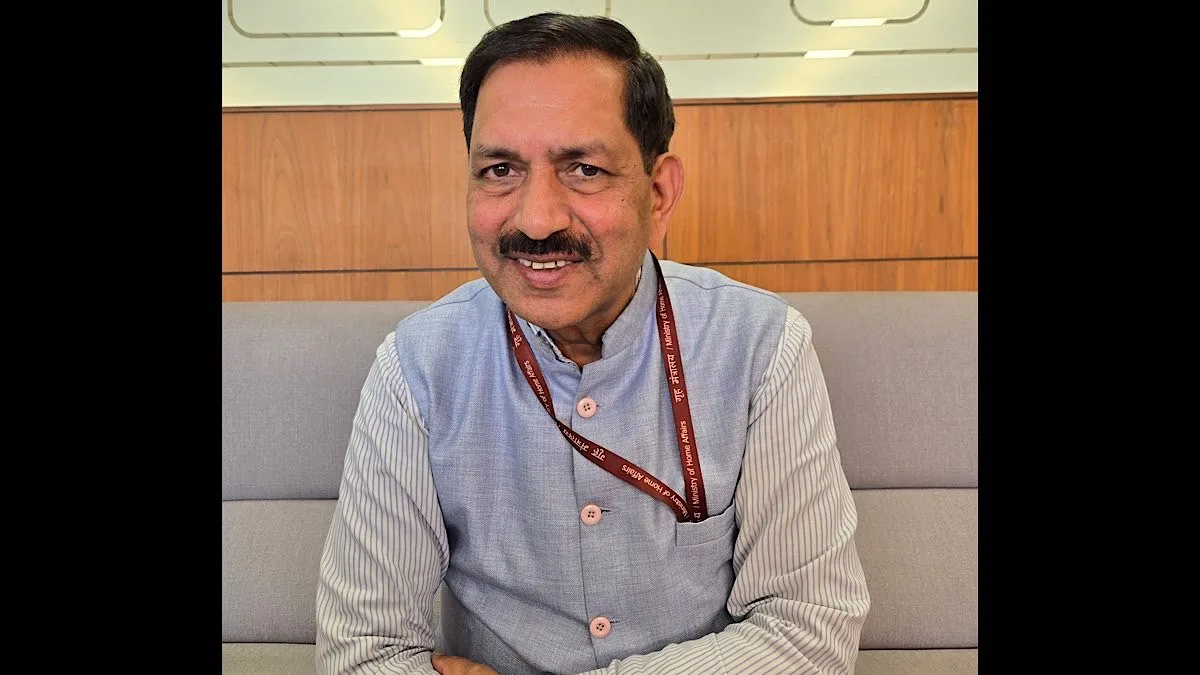
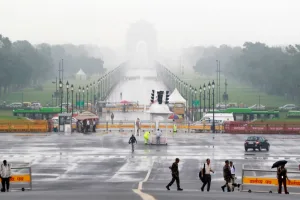
While efforts to mitigate the severity of the air pollution in the Delhi-NCR have been taken over the years consistently, of late there has been a steady increase in the number of good air days with a decline in the registered ‘poor’ to ‘very poor’, and ‘severe’ to ‘severe (+) category air days, according to Dr SD Attri, an expert on the subject.
Agraj Pratap Singh | New Delhi |

While efforts to mitigate the severity of the air pollution in the Delhi-NCR have been taken over the years consistently, of late there has been a steady increase in the number of good air days with a decline in the registered ‘poor’ to ‘very poor’, and ‘severe’ to ‘severe (+) category air days, according to Dr SD Attri, an expert on the subject.

Dr Attri, full-time Member-Technical of the Commission for Air Quality Management (CAQM) in NCR and adjoining areas, said that the City Action Plans for the time-bound implementation of pollution mitigation measures aimed at improving Air Quality Index (AQI) are available in the public domain, to ensure transparency and awareness.

Notably, last year, Delhi had 79 days with the AQI of 100 or below that is in ‘Good’ and ‘Satisfactory’ categories. The year 2025 also recorded the second lowest number of “Severe to Severe+” AQI days, which was were 8, since 2018.

Explaining the air quality and pollution in Delhi-NCR, Dr Attri said that “ambient air” is the outdoor air people breathe across residential areas, roads, markets, work places and others while the “Ambient Air Pollution” is the concentration of pollutants in air such as PM2.5, PM10, Ozone, Nitrogen Oxides, Sulphur Dioxide, and Carbon Monoxide, measured at a given place and time.

He said the ambient air can’t be assessed just at emission sources due to dispersion, atmospheric physical and chemical processes. Therefore, the monitoring stations must be better placed at strategic points considering land use categories.

Dr Attri shared that Delhi-NCR falls in the Indo-Gangetic Airshed, one of the complex geographical locations, having a basin- like land- locked structure, preventing dispersion of pollutants, especially in winters owing to unfavourable meteorological conditions.

He said that the CAQM, on the directions of Supreme Court. brought a report from AQI experts in January, identifying causes behind worsening AQI in Delhi- NCR. Based on most recent report submittedto the apex court on the predominant sources of pollution , the contribution of vehicular emissions was found to be 23 per cent in winters, and 19 per cent in summers.

Industry, including TPPs, contributed 9 per cent of the pollution in winters and 14 per cent in summer.

The impact of dust from road, soil, and Construction & Demolition waste was 15 per cent in winters, and 27 per cent in summer.

Biomass burning is also one of the key sources, accounting for 20 per cent in winter and 12 per cent in summers.

Secondary particulate, transforming from gaseous emissions via transport, industries, and biomass burning, contributed 27 per cent, and in the summer, it adds 17 per cent.

Other miscellaneous sources add up to 6 per cent of the pollution during winters, and 11 per cent in the summers.

Dr Attri also shared that ‘Emission Inventory’ (EI) is a comprehensive geo-spatial database that quantifies sources, and amount of emission discharge within an area over a time period, identifying “who is emitting and how much.” It estimates emissions from transport industry, residential, commercial, other activities and sources.

He said knowing EI is crucial for identifying major pollution sectors, locations, long-term trends, and further designing mitigation strategies.

The expert also said that “Source Apportionment” (SA) determines contribution of multiple sources adding to air pollution at a given location and time, using measurement-based techniques, including chemical analysis of samples paired with receptor models, and dispersion modelling approaches.

There have been efforts to identify pollution sources by institutions like Indian Institute of Tropical Meteorology (IITM), IIT Kanpur, The Energy and Research Institute (TERI) and others in the last two decades.

After assessing existing EI and SA studies for Delhi- NCR, and finding limitations, the CAQM formed a National Level Expert Committee chaired by Dr Attri and developed a ‘Framework’ for a new EI and SA in April 2025, and Central Pollution Control Board was asked to implement it.

Institutions like ARAI, Pune, IIT Deļhi, TERI and IITM have been tasked to develop a new EI and SA for Delhi- NCR with 2026 as base year, which is expected to provide more accurate assessment of emissions, which will be used in Air Quality Early Warning System (AQEWS), and the Decision Support System (DSS) developed by IITM, which provides AQI forecasts and source contribution analysis, enabling policy interventions and actions for mitigation.

For strengthening AQI monitoring infrastructure, he says that new grid-based spatial coverage norms need to be adopted, with better placed monitoring stations.

He shared that in near future with strengthening of CAAQMS network, total stations in Delhi-NCR will be more than 150, that are 90 at present.

BJP intensifies attack on TMC over ‘insult’ to President

With Assembly elections just around the corner, the rivalry between the aspirant BJP and the ruling TMC in West Bengal is now transcending beyond routine politics.

Statesman News Service | New Delhi |

With Assembly elections just around the corner, the rivalry between the aspirant BJP and the ruling TMC in West Bengal is now transcending beyond routine politics. The BJP on Sunday intensified its attack on the Mamata Banerjee government over what it described as a “grave insult” to President Droupadi Murmu during her visit to the state on Saturday.

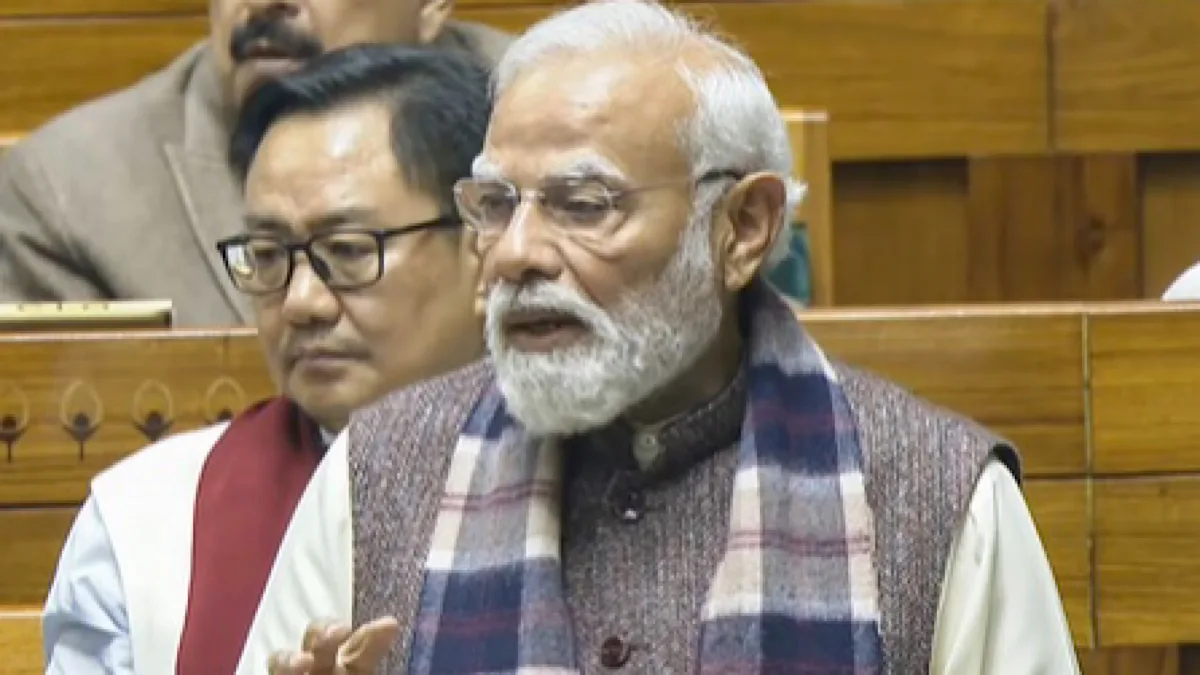
Speaking at an event, Prime Minister Narendra Modi said the “enlightened people” of West Bengal would never forgive the TMC for “insulting” a tribal woman who also holds the country’s highest constitutional office.

“Droupadi Murmu had gone to Bengal to attend a major celebration of the Santhal community. But instead of honouring the President, the TMC boycotted this sacred and important event. She herself comes from the tribal community and has always been concerned about its development,” PM Modi said.

He also called the “poor management of the event by the state government” an insult to the President and the Constitution of India. “It is an insult to the spirit of the Constitution and the great tradition of democracy,” he said and accused the TMC of indulging in “dirty politics” and arrogance. “No matter how powerful a person is, ego ultimately leads to downfall. The arrogance of power shown by the TMC, which insulted the dignity of a tribal President, will soon be shattered,” he said, adding that the people of West Bengal, the tribal community and women across the country would not forgive the party.

The Prime Minister’s remarks followed President Murmu’s displeasure over the change of venue of a conference of the tribal Santhal community and the absence of the Chief Minister and her ministers during her visit. Banerjee, however, accused the President of speaking “on the advice of the BJP” and questioned her silence on alleged atrocities against tribals in states such as Manipur and Chhattisgarh.

Intending to keep the pressure by framing the episode not merely as a political dispute but as a breach of national protocol, senior BJP leader Ravi Shankar Prasad accused the TMC-led administration of deliberately slighting the President. “I would request Mamata Banerjee to stop raising controversies about the Constitution being in danger. You cannot show respect to the President and at the same time talk about the Constitution being under threat,” he said, addressing a press conference.

Recently appointed chairperson of the Committee of Privileges, Prasad described the absence of the Chief Minister and senior ministers from the President’s scheduled events as a “grave violation of democratic decorum”. “The office of the President is the highest constitutional post in our country and stands above partisan politics,” he said. The apparent lack of respect shown to President Murmu — the first tribal person to hold the office — had sent a disturbing message, he added.

Observers say that by framing the protocol lapse as an insult to a President from a tribal community, the BJP is attempting to consolidate support among tribal voters and using this incident to reinforce its narrative that the TMC government does not respect national institutions or constitutional heads. Ahead of the upcoming Assembly elections, they add, such exchanges between the TMC and BJP are only expected to increase.

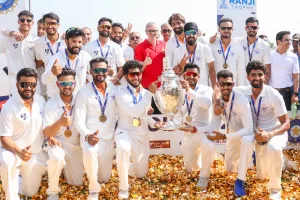
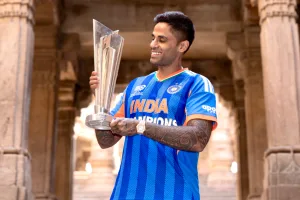
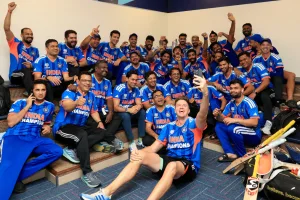
IND vs NZ Highlights: India make history with first home T20 WC win, back-to-back & third title

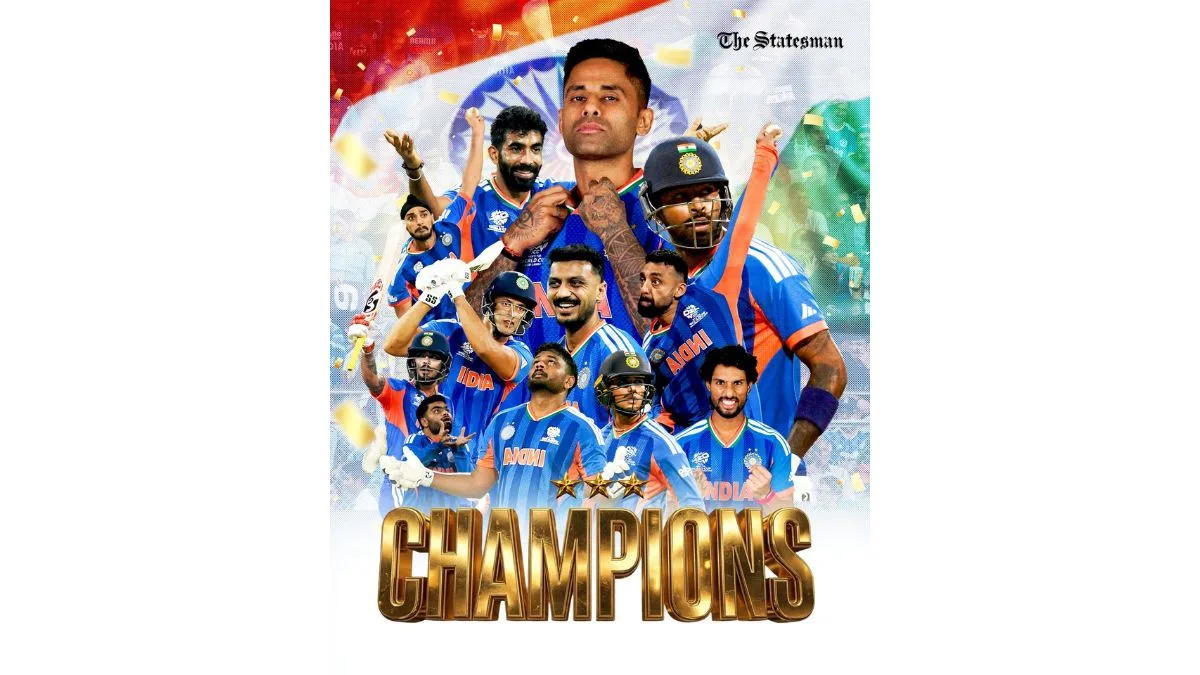
With this win, India not only lifts the T20 World Cup trophy again but also becomes the first team ever to win back-to-back T20 World Cups and the first to do so on home soil.

Neha Buswal | New Delhi | Updated :

India has done it again! Posting a massive 255/5, delivering a spectacular batting display to set the highest total ever in a T20 World Cup final.

Openers Abhishek Sharma and Sanju Samson smashed a record 92-run opening stand in just six overs, the highest powerplay score in T20 World Cup history. Sharma’s scintillating 18-ball fifty and Samson’s unbeaten 89 off 46 balls laid a perfect platform, with boundaries and sixes flowing freely.


In the middle overs, Sanju Samson and Ishan Kishan kept the momentum going, launching a six-and-four show that toyed with the New Zealand bowling attack and helped India cross the 200-run mark. After Samson fell for 89, Ishan departed in the 16th over, followed by Surya Kumar Yadav for a duck, briefly slowing the scoring. But India’s lower middle order, led by Shivam Dube, unleashed a furious counterattack in the final overs, smashing multiple sixes and fours to finish with a record 255/5, putting New Zealand under immense pressure.

Chasing a daunting 256, New Zealand never really got going. Axar Patel struck early with three crucial wickets, while Jasprit Bumrah wreaked havoc with a sensational four-wicket haul. Varun Chakaravarthy and Hardik Pandya also contributed with key breakthroughs, leaving New Zealand reeling at 52/3. Despite brief resistance from Mitchell Santner and Lockie Ferguson, wickets continued to fall, and the Kiwis were eventually bowled out for 159, handing India a commanding 96-run victory.

Sanju Samson was named Player of the Tournament for his stellar performances throughout the T20 World Cup. His explosive batting at the top of the order played a key role in India’s historic back-to-back and third title.


With this win, India not only lift the T20 World Cup trophy again but also become the first team ever to win back-to-back T20 World Cups, and the first to do so on home soil. This triumph also marks India’s third T20 World Cup title, making them the most successful team in the tournament’s history. From record-breaking powerplays to clinical death bowling, India stamped their authority on the global stage once more.

India vs New Zealand T20 World Cup Final: Playing XI

India:

India have named an unchanged XI for the final: Suryakumar Yadav (c), Abhishek Sharma, Sanju Samson (wk), Ishan Kishan (wk), Hardik Pandya, Tilak Varma, Shivam Dube, Axar Patel, Varun Chakravarthy, Arshdeep Singh and Jasprit Bumrah.

New Zealand:

New Zealand have made one change, bringing in Jacob Duffy for Cole McConchie. Their XI reads: Mitchell Santner (c), Tim Seifert (wk), Finn Allen, Rachin Ravindra, Glenn Phillips, Mark Chapman, Daryl Mitchell, James Neesham, Lockie Ferguson, Matt Henry and Jacob Duffy.

PM to lead post-Budget discussion on inclusive growth, policy implementation on Monday

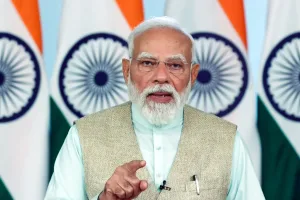
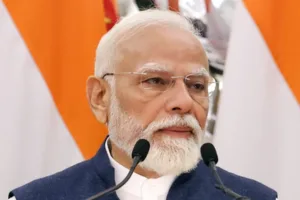
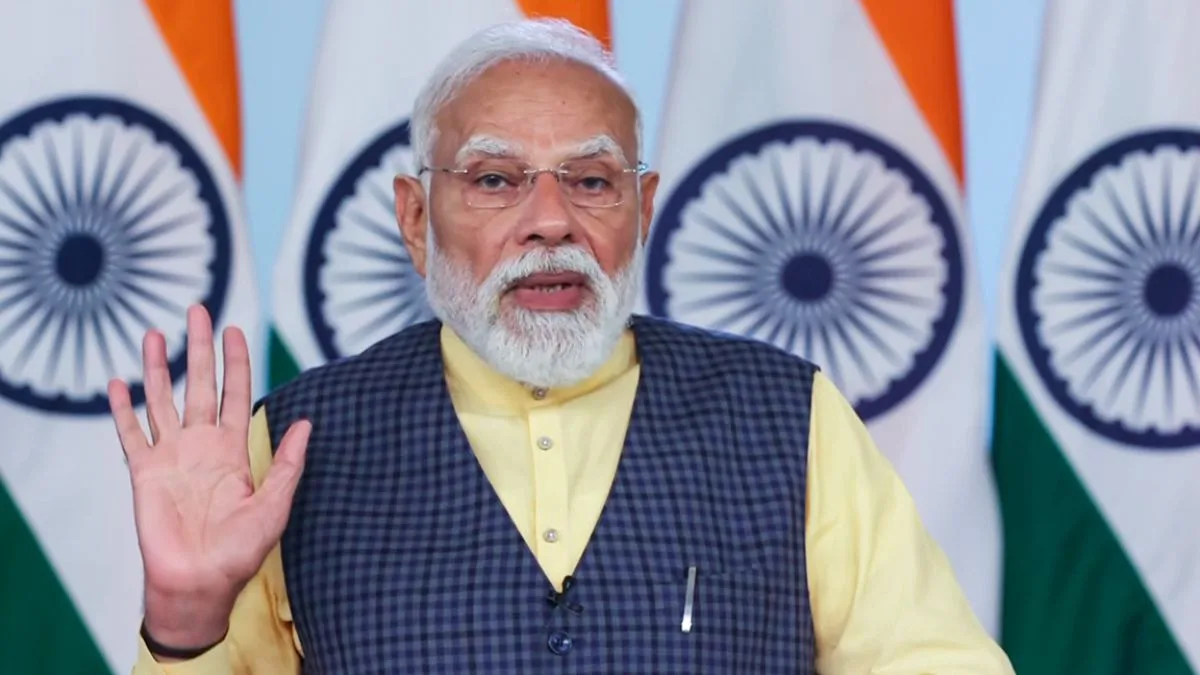
Prime Minister Narendra Modi will address a post-Budget webinar on Monday, March 9, on the theme “Sabka Saath Sabka Vikas – Fulfilling Aspirations of People”, as the government begins the process of translating the announcements made in the Union Budget into actionable strategies across key sectors of the economy.

Statesman News Service | New Delhi |

Prime Minister Narendra Modi will address a post-Budget webinar on Monday, March 9, on the theme “Sabka Saath Sabka Vikas – Fulfilling Aspirations of People”, as the government begins the process of translating the announcements made in the Union Budget into actionable strategies across key sectors of the economy.

‎According to an official release issued on Sunday, the Prime Minister will address the webinar at 10:15 am via video conferencing. The event will bring together policymakers, industry leaders, domain experts and other stakeholders to deliberate on ways to implement the priorities outlined in the budget and ensure that policy initiatives move quickly from announcement to execution.

‎The webinar is part of a broader series of post-budget consultations that the government has been organising in recent years to strengthen engagement with industry and experts. These interactions are aimed at building consensus around policy goals while also identifying practical pathways for implementing the government’s development agenda.

‎Under the overarching theme of inclusive growth, the programme will feature multiple breakout sessions covering sectors such as education and skilling, health and AYUSH, tourism and hospitality. Officials said the discussions will focus on strengthening the link between education and employment, expanding skill development initiatives and creating opportunities in emerging industries that are expected to shape the future workforce.

‎Among the initiatives expected to be discussed is the development of Animation, Visual Effects, Gaming and Comics (AVGC) content creator labs, which are being promoted as part of India’s push to build a globally competitive digital creative ecosystem. The move is aimed at encouraging innovation, supporting young creators and positioning India as a significant hub in the fast-growing global creative technology industry.

‎Healthcare will also be a major focus of the deliberations. Sessions are expected to explore expanding the pool of allied health professionals and caregiver training programmes, along with proposals to create regional medical hubs that could strengthen healthcare infrastructure and improve access to specialised services across different parts of the country. Expansion of institutions under the traditional medicine system, particularly within the framework of the Ministry of AYUSH, will also form part of the discussions.

‎Tourism and hospitality have been identified as another key growth area in the policy dialogue. Officials said the webinar will examine strategies for hospitality skill development, the creation of sustainable tourism trails and the promotion of heritage tourism across regions. Plans to strengthen the Buddhist tourism circuit in the North-Eastern region are also expected to be discussed, reflecting the government’s focus on leveraging cultural and spiritual heritage to boost tourism and regional development.

‎Government officials said the Post-Budget Webinar is designed to provide a platform for collaborative engagement between the government, industry and experts so that the policy vision outlined in the budget can be effectively translated into concrete initiatives. “The objective is to generate practical recommendations and implementation roadmaps so that the initiatives announced in the Budget can be executed efficiently and deliver tangible benefits to citizens,” an official said.

‎Since assuming office, the Modi government has increasingly used post-budget consultations as a mechanism to narrow the gap between policy formulation and on-ground implementation. By bringing together sector specialists, entrepreneurs and policymakers, the government hopes to refine strategies, address potential challenges early and accelerate the delivery of development programmes.

‎Officials said the ideas and recommendations emerging from the discussions will help guide the next steps for ministries and departments responsible for implementing the budget proposals. The broader aim, they added, is to ensure that economic growth is accompanied by wider access to opportunities and improved public services.

‎The theme “Sabka Saath Sabka Vikas,” which has been a central pillar of the Modi government’s development philosophy, reflects the emphasis on inclusive growth and equitable opportunities for all sections of society. With the Union Budget setting the policy direction for the coming financial year, the webinar is expected to play a key role in aligning government initiatives with industry participation and expert insights, helping turn policy aspirations into measurable outcomes on the ground.

Odisha police bust interstate online betting racket

Police in Odisha’s Malkangiri district have unearthed an interstate online betting racket and arrested four scammers, including two kingpins, from Raipur in Chhattisgarh.

Statesman News Service | BHUBANESWAR |

Police in Odisha’s Malkangiri district have unearthed an interstate online betting racket and arrested four scammers, including two kingpins, from Raipur in Chhattisgarh.

After verifying 142 mule accounts, police found that some had been created by middlemen from Odisha’s Kotpad area on the false promise of MGNREGA payments to innocent citizens.

These multiple bank accounts, passbooks and mobile numbers were collected and couriered to the network operating in Raipur, police said.

Delving deep into the fraudulent network, the Malkangiri police arrested four persons, including two kingpins from Raipur in Chhattisgarh, and brought them on police remand for further investigation.

Preliminary investigation revealed that the accused were operating illegal betting platforms and managing transactions through multiple bank accounts and digital payment channels through a sophisticated, organised network.

Multiple WhatsApp groups were created by the accused to coordinate the payments and illegal betting across states.

During the operation, digital devices and financial documents were also seized. Further investigation is underway to uncover the wider network and arrest other associates across states.

The action also aims to protect innocent citizens, particularly tribal youth and villagers, from being misused by such networks to open or lend their bank accounts for illegal money transfers, which can expose them to serious legal trouble.

People are advised not to provide their bank accounts and other credentials to unknown persons. These accounts may be used for cybercrime and other illegal fraudulent activities that could pose a serious legal risk, the police added.

LG Sinha asks J&K ACB to ensure corruption cases stand scrutiny in courts

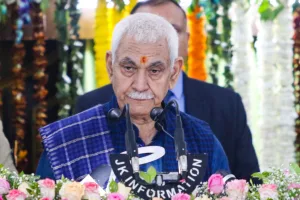
The Lieutenant Governor was speaking at the inaugural ceremony of the Anti-Corruption Bureau Headquarters Building here.

Statesman News Service | Jammu |

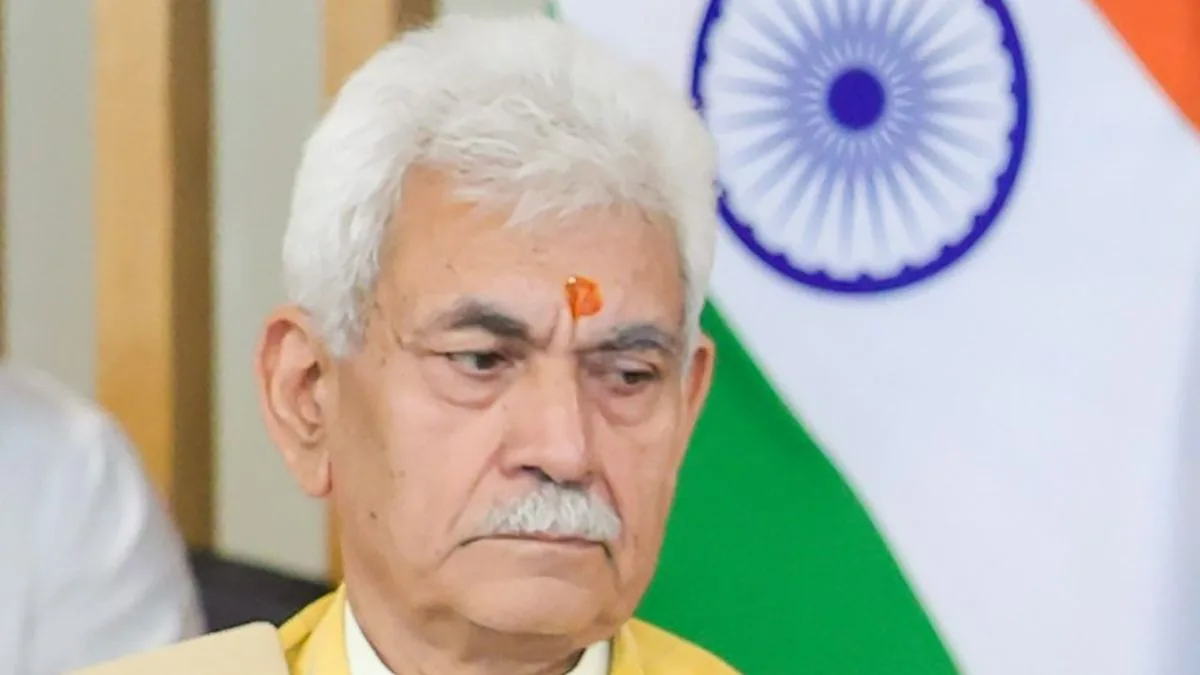
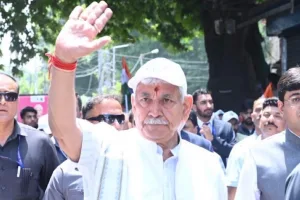
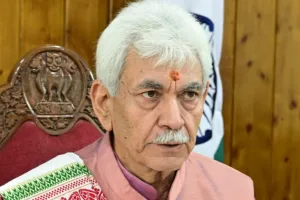
Lieutenant Governor Manoj Sinha on Sunday called upon the Anti-Corruption Bureau (ACB) to ensure that each decision, investigation, and prosecution stands the scrutiny of the courts and must harness the authority granted by the nation’s Constitution to expose injustice, eradicate corruption entirely, and earn the trust of the people.

“Jammu Kashmir no longer settles for mediocrity or the ordinary. It now dares to dream big. Among our people, a firm belief has taken root that a golden future lies ahead. Fulfilling this vision is also the responsibility of the officers and staff at the Anti-Corruption Bureau,” he said.

The Lieutenant Governor was speaking at the inaugural ceremony of the Anti-Corruption Bureau Headquarters Building here.

“Today, J&K stands at a pivotal juncture. Over the past 5-6 years, we have ushered in transformative changes, rendering the system transparent and dedicating it to public service. Entire machinery now operates not for the benefit of a select few, but for every individual across the Union Territory,” he said.

“Under the leadership of Prime Minister Narendra Modi, we have established a faceless mechanism to eradicate corruption from government processes, eliminate delays, and deliver all services directly to ordinary citizens,” Sinha said.

He asked the Anti-Corruption Bureau officers to conduct a daily self-audit of their work to strengthen the hard-earned credibility. He also called for speedy investigation, observing that delayed justice does not merely deny society its due but it actively undermines outcomes in corruption cases. He stressed on cultivating a work culture that eliminates all delays in delivering justice.

He said corruption is not merely a loss of public money but it is the opportunity stolen from youth, it is the security snatched from a family, it is the injustice inflicted on an elderly member of society. “We must recognize that corruption is no abstract offense committed solely against the public exchequer but a direct assault on the lives of living human beings,” he added.

Pink-ball Test: Alyssa Healy signs off with win as Australia beat India by 10 wickets, seal series 12–4

With the emphatic victory, Australia also sealed the multi-format series with an unassailable 12-4 lead.

Statesman News Service | New Delhi |

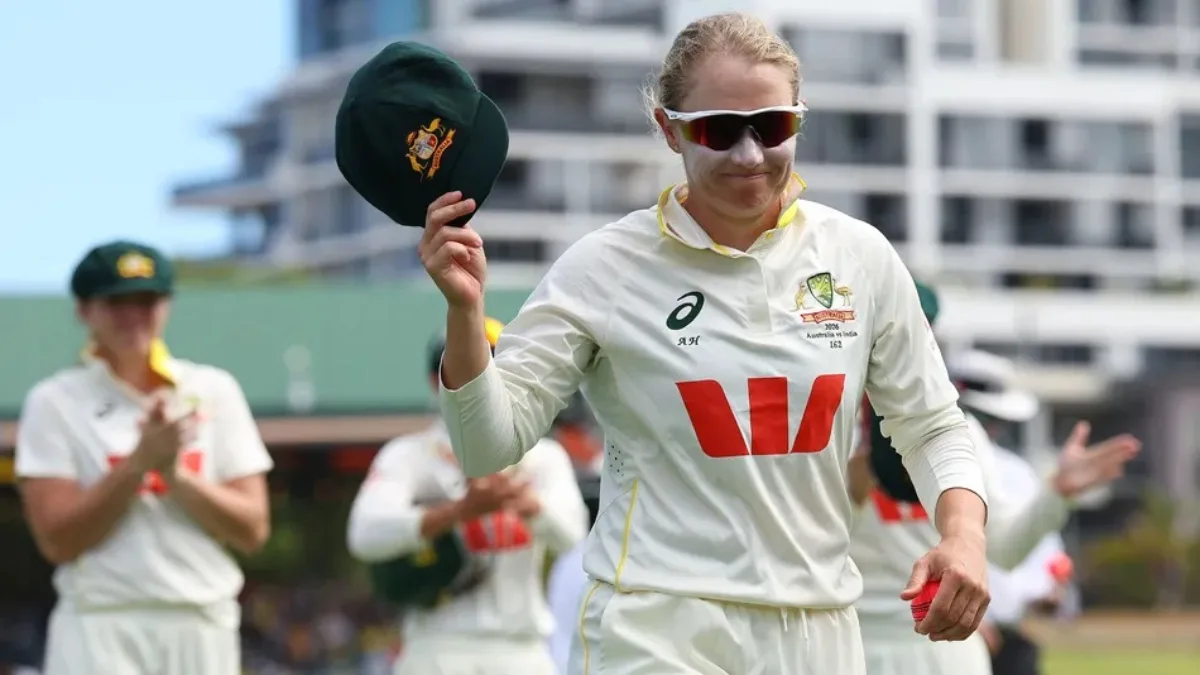
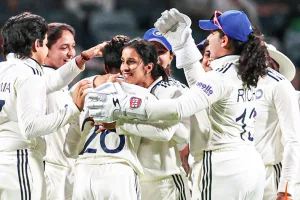
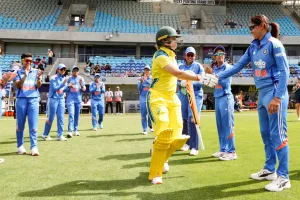
Alyssa Healy had a bittersweet moment as she did not get the chance to bat one final time, but the Australian women’s team ensured their skipper’s international career ended on a winning note by thrashing India by 10 wickets on Day 3 of the one-off Test at the WACA Ground on Sunday.

With the emphatic victory, Australia also sealed the multi-format series with an unassailable 12-4 lead.

India had begun the tour on a positive note by winning the T20I series 2-1, but Australia bounced back strongly to sweep the ODI series. The hosts then extended their dominance by clinching the one-off Test to wrap up the overall series. With the defeat, India finished the tour with just two wins across formats.

Resuming Day 3 at 105/6 in their second innings, India relied on Pratika Rawal and Sneh Rana to rebuild the innings. The duo looked comfortable at the crease and played some confident strokes.

Rawal brought up her maiden half-century on Test debut in the 34th over, reaching the milestone in 105 balls. Australia finally broke the partnership in the 41st over when Ashleigh Gardner dismissed Rana for 30 off 54 balls.

India suffered another blow in the following over when Alana King removed Kashvee Gautam. With India struggling at 134/8, Rawal continued to counterattack and pushed the total closer to the 150 mark.

However, Australia wrapped up the innings quickly as Sayali Satghare and Rawal fell within three deliveries. India were bowled out for 149, with Rawal’s fighting 63 helping reduce the deficit and set Australia a modest target of 25 runs.

Australia completed the chase in just 4.3 overs without losing a wicket. Georgia Voll remained unbeaten on 16, while Phoebe Litchfield finished not out on 11 as the hosts sealed an easy victory.

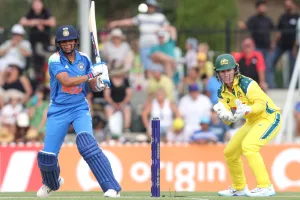
Earlier in the match, India posted 198 in their first innings after being put in to bat, with half-centuries from Jemimah Rodrigues and a contribution of 35 from Shafali Verma. For Australia, Annabel Sutherland was the standout bowler with four wickets, while Lucy Hamilton picked up three.

In response, Australia piled up 323, powered by a match-defining 129 from Sutherland. Veteran all-rounder Ellyse Perry also chipped in with 76, helping the hosts secure a 125-run first-innings lead, which ultimately proved decisive.

Brief Scores:
India Women 198 & 149 (Pratika Rawal 63, Sneh Rana 30; Lucy Hamilton 3/32, Ashleigh Gardner 2/8) lost to Australia Women 323 & 28/0 (Georgia Voll 16*, Phoebe Litchfield 11*) by 10 wickets.

Budget Session resumes Monday amid brewing political confrontation, fierce showdown likely

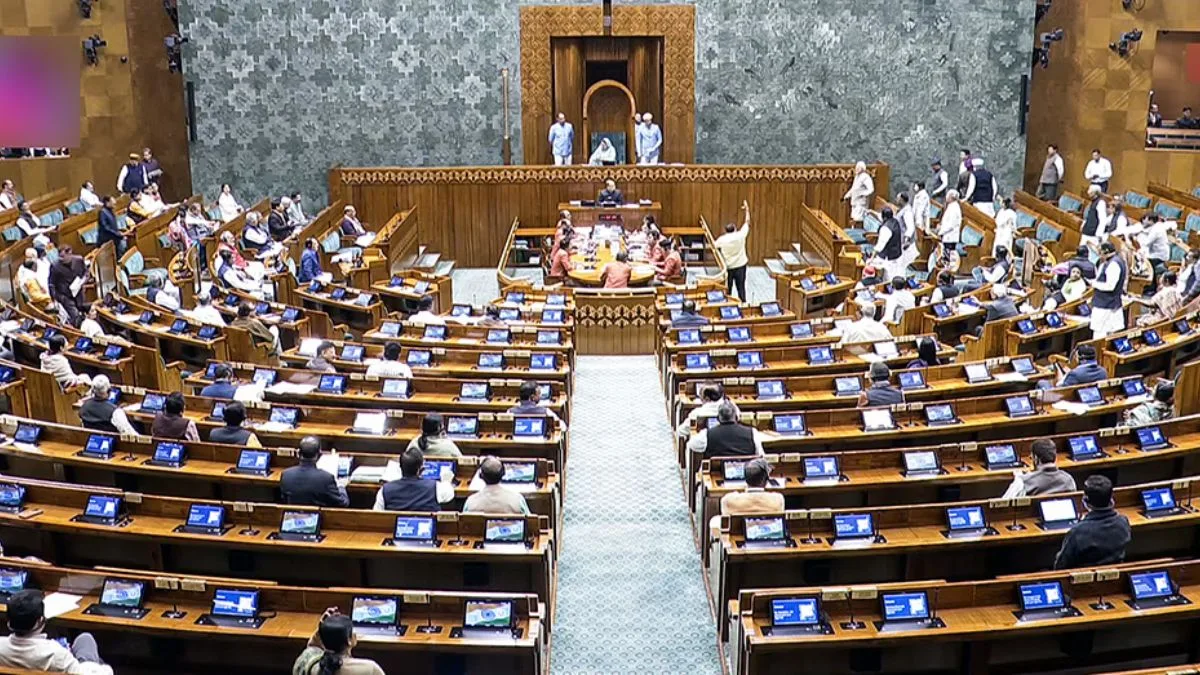
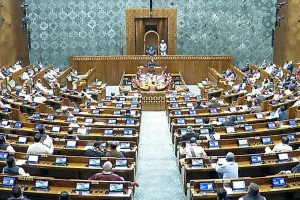
When Parliament reconvenes on Monday for the second phase of the Budget Session, the atmosphere inside both Houses is expected to be anything but routine.

SHAHID K ABBAS | New Delhi |

When Parliament reconvenes on Monday for the second phase of the Budget Session, the atmosphere inside both Houses is expected to be anything but routine. What should ideally be a period focused on legislative business and scrutiny of government policy is instead shaping up to be a high-voltage political contest, with the opposition preparing to challenge the government on procedural fairness, economic distress and India’s foreign policy choices.

At the heart of the looming confrontation is a rare and politically charged move: a no-confidence motion against Lok Sabha Speaker Om Birla. More than 118 opposition MPs have backed the motion seeking his removal, alleging that the Chair has ceased to function as a neutral arbiter and instead tilted in favour of the treasury benches.

Opposition leaders argue that recent parliamentary proceedings have eroded long-standing conventions of impartiality. They point to the suspension of eight MPs, restrictions placed on the Leader of Opposition, and what they describe as the disproportionate targeting of opposition voices during heated debates. “This is not about personalities but about protecting the dignity and impartiality of the Chair,” a senior Congress leader said. “Parliament cannot function if the opposition is systematically silenced.”

The government has brushed aside the allegations as politically motivated theatrics designed to derail legislative work. Leaders of the ruling party insist that the Speaker has followed parliamentary rules and that disruptions by the opposition forced disciplinary action. “The Chair has acted strictly in accordance with procedure. The opposition is creating controversy where none exists,” a treasury bench MP said.

Yet the significance of the motion is not merely procedural. In India’s parliamentary system, the Speaker’s authority rests heavily on the perception of neutrality. Challenges to that authority, particularly through a formal motion backed by a large number of MPs, inevitably deepen the political temperature in the House and make consensus-driven functioning harder to sustain.

Both sides appear to be preparing for precisely such a showdown. The ruling Bharatiya Janata Party and the opposition Indian National Congress have issued three-line whips directing their Lok Sabha MPs to be present in the House from March 9 to 11, signalling that critical debates and possible voting situations could arise early in the session.

Beyond the procedural clash, the opposition is also readying a sustained attack on the government over economic issues that resonate strongly with the public. The recent Rs 60 increase in LPG cylinder prices is likely to become a central talking point, with opposition MPs linking it to broader concerns over inflation, rising living costs and unemployment.

“People are struggling with the cost of essentials while the government claims the economy is booming,” an opposition MP said. “The reality in households across the country tells a different story, and Parliament must reflect that.”

The government, for its part, is expected to counter by highlighting macroeconomic indicators and welfare schemes, arguing that India remains one of the fastest-growing major economies despite global turbulence.

Another flashpoint likely to dominate discussions is the interim trade arrangement between India and the United States. Opposition parties have accused the government of compromising the interests of Indian farmers and small businesses by opening domestic markets to American agricultural products. According to them, such arrangements could intensify competition for India’s already vulnerable agrarian sector and micro, small and medium enterprises.

Government leaders have defended the agreement as a pragmatic step towards expanding bilateral trade and strengthening strategic ties. “Trade engagement with major economies is essential for India’s growth trajectory,” a government source said, insisting that safeguards for domestic sectors remain intact.

But the opposition’s critique extends beyond economics into the realm of foreign policy. Several parties have sharpened their rhetoric by suggesting that the government’s diplomatic and trade decisions risk “selling out” national interests. The treasury benches have rejected the claim outright, accusing the opposition of distorting complex policy decisions for political mileage.

Foreign policy itself could become a major subject of debate as the session unfolds. Opposition leaders have signalled that they intend to question the government on India’s position regarding the escalating tensions involving the United States, Israel and Iran, as well as the country’s continued purchase of Russian oil despite shifting geopolitical pressures.

“These are issues of national importance that require transparency and debate in Parliament,” a senior opposition leader said, arguing that the government must clearly articulate India’s strategic position in an increasingly polarised global environment.

Domestic governance issues are also expected to find their way into the parliamentary spotlight. Opposition parties are preparing to raise concerns over the implementation of the Mahatma Gandhi National Rural Employment Guarantee Act, the Special Intensive Revision (SIR) of electoral rolls, and region-specific matters concerning Jammu and Kashmir and Ladakh.

Behind the scenes, opposition coordination appears to be intensifying. Floor leaders of parties in the INDIA bloc are scheduled to meet in the office of the Leader of Opposition in the Rajya Sabha on Monday to align their strategy for the remainder of the session. The meeting is expected to focus on sharpening messaging and ensuring coordinated interventions across both Houses.

Within the Congress, the parliamentary strategy group also met at 10 Janpath on Sunday to fine-tune its approach ahead of the session, signalling that the party intends to play a central role in shaping the opposition’s parliamentary tactics.

Adding another layer of political drama is the prospect of a substantive motion targeting Leader of the Opposition Rahul Gandhi over remarks he made earlier in Parliament. If taken up, the issue could trigger yet another round of heated exchanges between the treasury benches and opposition leaders.

All of this means that the second phase of the Budget Session may unfold less like a routine legislative exercise and more like a test of political endurance. Parliament, in theory, is the arena where governments are held accountable, and national policy is debated in full public view. But in recent years, sessions have increasingly been defined by disruption, adjournments and sharply polarised politics.

Whether the coming weeks will produce substantive debate or simply another cycle of confrontation remains uncertain. What is clear, however, is that as MPs return to the House, the stage is set for a charged political drama in which procedure, policy and power will collide under the high dome of Parliament.

On International Women’s Day, ‘Lucknow Darshan’ Bus Celebrates Women with a Journey of Joy

The UPSTDC’s ‘Lucknow Darshan’ double-decker e-bus once again moved beyond tourism.

Statesman News Service | Lucknow |

The UPSTDC’s ‘Lucknow Darshan’ double-decker e-bus once again moved beyond tourism.

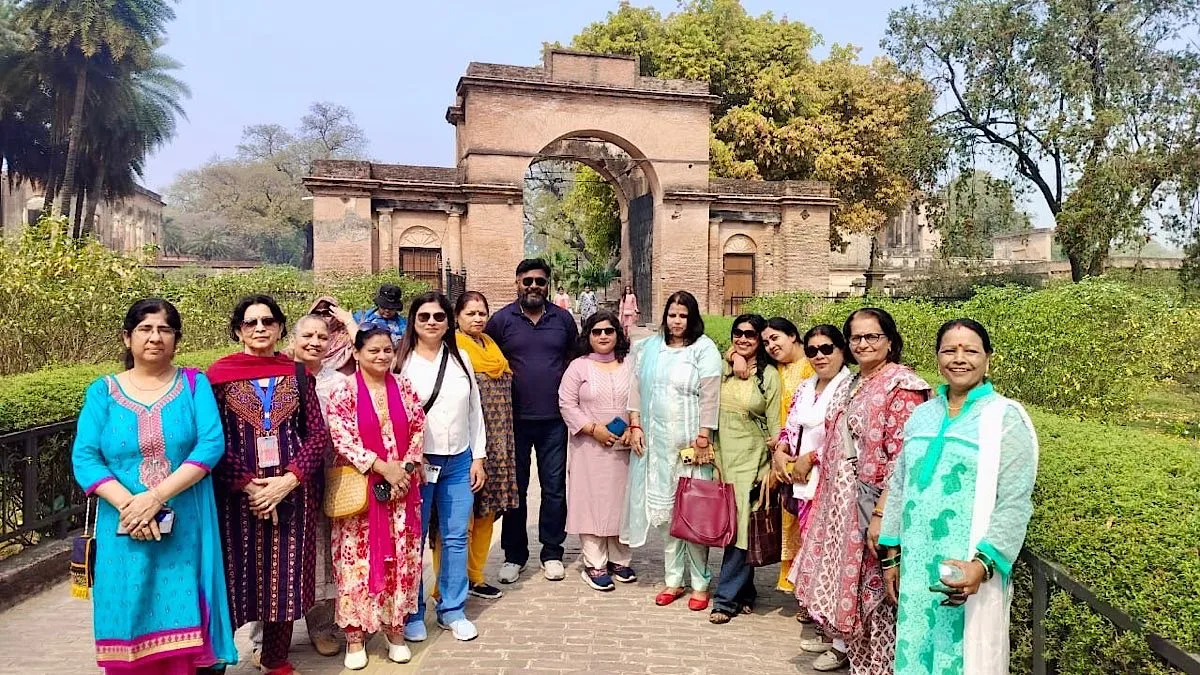
To mark International Women’s Day, Uttar Pradesh Tourism organised a special tour for more than 60 women from diverse professions, including doctors, entrepreneurs, principals, social workers, engineers and homemakers.

Speaking on the initiative, UP Tourism and Culture Minister Jaiveer Singh said here on Sunday that, “Women have always been the strength behind our society and nation. From the courage shown by women during the 1857 revolt to their service and leadership in society today, their contributions continue to inspire generations. Through initiatives like ‘Lucknow Darshan’, we will continue creating meaningful opportunities to recognise and honour their role in shaping our future,” he said.

During the tour, the participants explored Lucknow’s prominent landmarks, including The Residency, Vidhan Sabha Bhavan, and the General Post Office (GPO). To make the journey more inspiring, the tour guide narrated the story of Uda Devi, highlighting her bravery and courageous role during the Battle of Sikandar Bagh, leaving the participants deeply connected to the city’s rich legacy.

Sharing her memorable experience from the tour, Raj Smriti, Director of a private company, who joined the journey, said, “Our days are usually filled with meetings and business responsibilities. Today’s tour gave us a chance to spend some time by ourselves. Usually, on International Women’s Day, we receive awards, but this is a truly unique way to recognise women’s empowerment and celebrate the day.”

Capturing the spirit of the journey, Shala Haque, General Secretary of the AMU Association, said, “Today I experienced Lucknow from a new height through this tour. I had always seen the Vidhan Sabha from outside, but today I got the chance to see it from inside, which was a truly unique experience for me. The guide also shared many interesting facts about the city that I was unaware of.”

The tour was organised under the Group Booking Policy in collaboration with MAX Healthcare, with their doctors and nurses accompanying the participants to ensure proper care, comfort, and well-being throughout the journey.

Highlighting the broader vision, Amrit Abhijat, Additional Chief Secretary, Tourism, Culture and Religious Affairs, said, “Lucknow Darshan reflects our commitment to responsible, inclusive and people-centric tourism. By connecting heritage with meaningful social outreach, such initiatives strengthen urban tourism while making travel experiences accessible and memorable for every section of society,” he said.

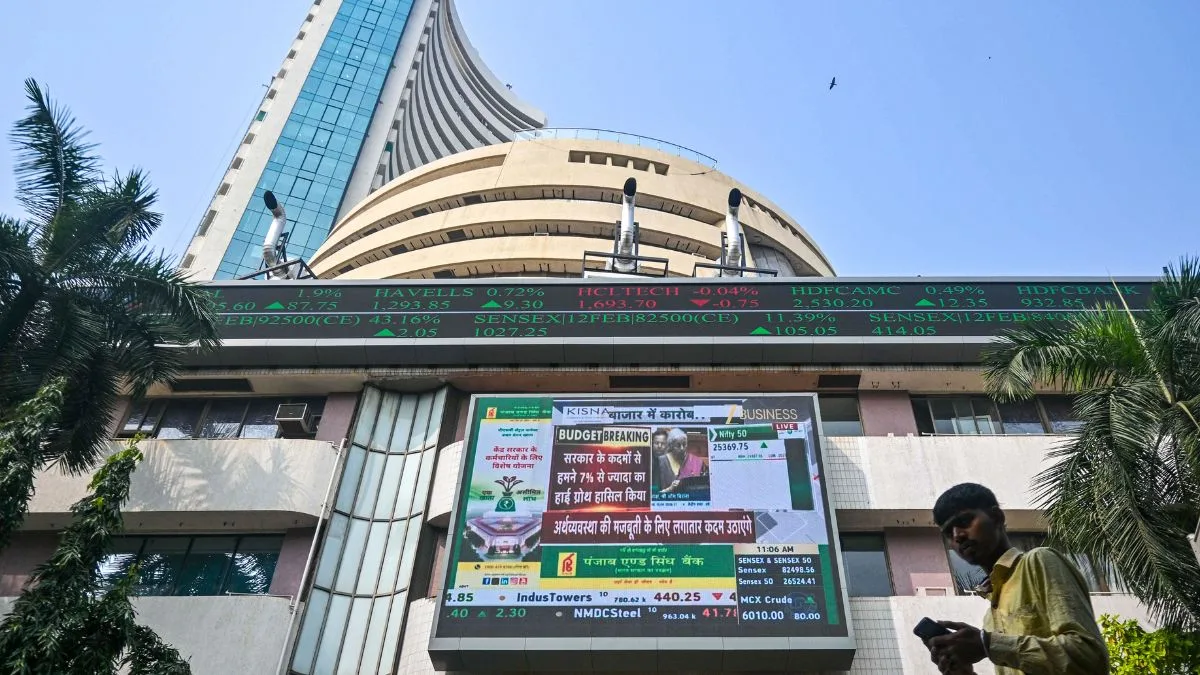
Market valuation of eight of top 10 most-valued firms erode by over Rs 2.81 lakh crore

Last week, the combined market valuation of eight of the top-10 most-valued firms eroded by Rs 2,81,581.53 crore.

Statesman News Service | New Delhi |

Last week, the combined market valuation of eight of the top-10 most-valued firms eroded by Rs 2,81,581.53 crore.

State Bank of India (SBI) took the biggest hit with its market valuation tumbling Rs 53,952.96 crore to Rs 10,55,567.27 crore.

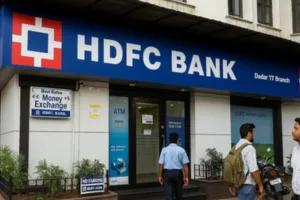
In a rank-wise analysis, Reliance Industries remained the most valued domestic firm followed by HDFC Bank, Bharti Airtel, State Bank of India, ICICI Bank, TCS, Bajaj Finance, Larsen & Toubro, Infosys, and Hindustan Unilever.

From the top-10 pack, only Reliance Industries and Infosys were the gainers.

The market valuation of Reliance Industries jumped Rs 14,750.39 crore to Rs 19,01,583.05 crore while the mcap of Infosys climbed Rs 3,459.99 crore to Rs 5,30,546.54 crore.

Among the private lenders, ICICI Bank’s valuation eroded by Rs 46,936.82 crore to Rs 9,40,049.82 crore and that of HDFC Bank dived Rs 46,552.3 crore to Rs 13,19,107.08 crore.

The market capitalisation (mcap) of Bajaj Finance dropped by Rs 28,934.56 crore to Rs 5,91,136.03 crore.

The valuation of Larsen & Toubro tanked Rs 45,629.03 crore to Rs 5,43,208.36 crore. Hindustan Unilever’s mcap declined by 26,350.67 crore to Rs 5,23,042.51 crore and that of Bharti Airtel edged lower by Rs 4,732.75 crore to Rs 10,67,120.50 crore.

The valuation of Larsen & Toubro tanked Rs 45,629.03 crore to Rs 5,43,208.36 crore. Tata Consultancy Services (TCS) decreased by Rs 28,492.44 crore to Rs 9,25,380.15 crore.

On Friday, the stock market failed to sustain gaining momentum and slipped over 1%. Nifty was down at 24,450 amid selling pressure across the sectors.

At close, the Sensex was down 1,097 points or 1.37% at 78,918.90, and the Nifty was down 315.45 points or 1.27% at 24,450.45.

With Nishant in JD(U), Nitish Kumar’s long-held stand faces scrutiny

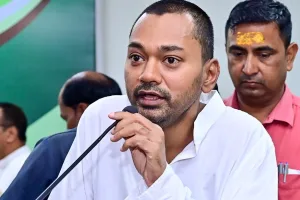
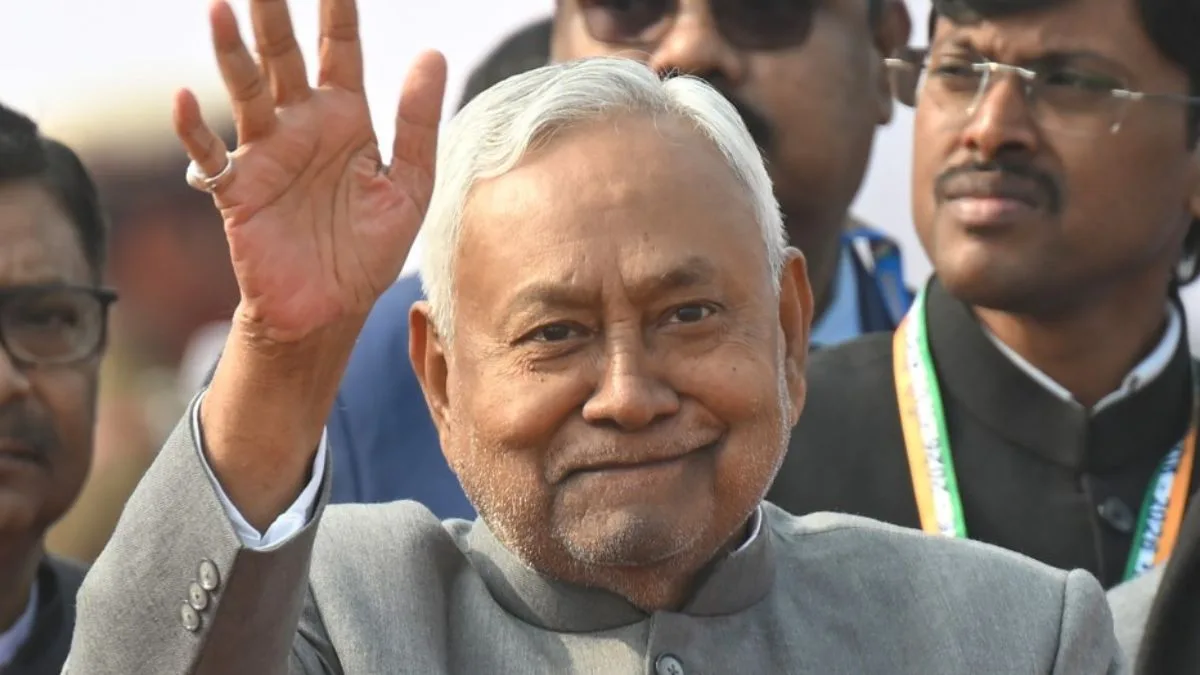
A new chapter has begun in Bihar’s politics. Amid discussions about Chief Minister Nitish Kumar moving to the Rajya Sabha, his son, Nishant Kumar, officially joined the Janata Dal (United) on Sunday.

Imran Mojib | Patna |

A new chapter has begun in Bihar’s politics. Amid discussions about Chief Minister Nitish Kumar moving to the Rajya Sabha, his son, Nishant Kumar, officially joined the Janata Dal (United) on Sunday. He was given a grand welcome at the party’s state office in Patna.

Nishant Kumar’s political entry is being seen as an attempt to carry forward Nitish Kumar’s legacy. Within the party, demands have already been raised to make him the chief minister although political analysts believe that his initial launch in politics could come with important responsibilities such as Deputy Chief Minister or Home Minister.

At a time when political equations in the state are shifting, Nishant’s entry into active politics is expected to give a new direction to the future of the JD(U) and significantly influence Bihar’s evolving political landscape. However, the development has also raised questions about Nitish Kumar’s long-held reputation.

Nitish Kumar, who has long opposed dynastic politics, is now being accused by critics of yielding to affection for his son. He has frequently targeted RJD supremo Lalu Prasad Yadav for promoting his family, often saying, “Karpoori ji never promoted his family. Some people only promote their families. Inspired by Karpoori ji, I too did not promote my family.”

After Nishant Kumar’s entry into politics, questions are now being raised about those ideals.

Political observers believe that Nitish Kumar’s possible move to the Rajya Sabha and Nishant Kumar’s formal entry into politics cannot be a coincidence.

For more than a year, party workers had been urging Nishant Kumar to join the party. Leaders from opposition parties, including Tejashwi Yadav and Chirag Paswan, had also supported the idea.

Last year, when Nishant turned 44, former Union Minister and Rashtriya Lok Morcha (RLM) chief Upendra Kushwaha also backed the demand, describing Nishant as the new hope of the JD(U). He had advised Nitish Kumar to continue leading the government while handing over the party’s leadership to Nishant.

However, Nitish had maintained silence. Many believed that the Chief Minister, known for opposing dynastic politics, would not agree to such a move. But now, with Nishant formally joining the JD(U), critics say Nitish Kumar’s long-standing legacy on the issue has been opened up for debate.

They argue that he may now find it difficult to repeat his oft-stated view that “leaders are not born like kings.”

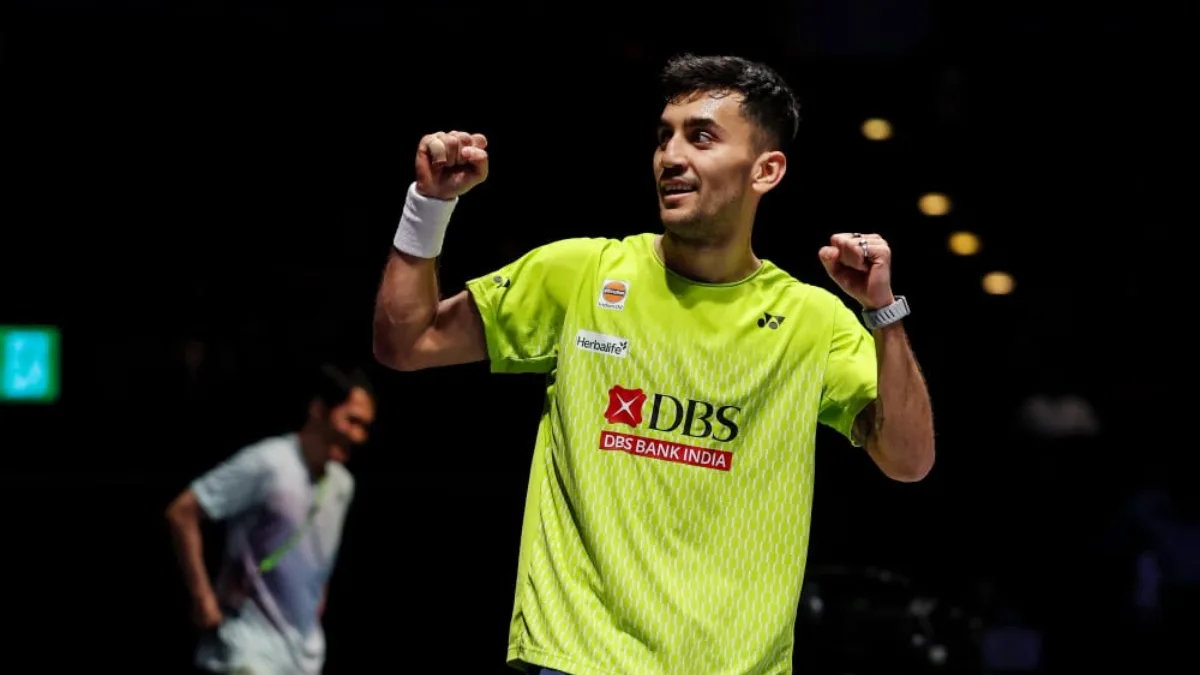
All England 2026: Lakshya Sen reaches second All England Open Final after gritty win over Victor Lai

Lakshya Sen had also reached the summit clash in 2022 and overcame Lai, despite battling blisters on his right toe, to register a 21-16, 18-21, 21-15 victory in a gruelling match that lasted one hour and 37 minutes.

Statesman News Service | New Delhi |

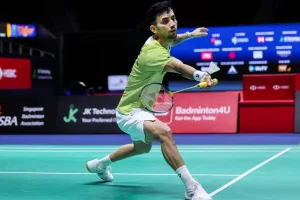
India’s Lakshya Sen scripted another impressive run at the All England Open Badminton Championships, becoming only the second Indian to reach the men’s singles final twice after defeating Canada’s Victor Lai in a hard-fought semifinal in Birmingham on Saturday.

The 24-year-old, who had also reached the summit clash in 2022, overcame Lai despite battling blisters on his right toe to register a 21-16, 18-21, 21-15 victory in a gruelling match that lasted one hour and 37 minutes.

Legendary Indian shuttler Prakash Padukone, who is also Sen’s mentor, was the first Indian to reach the All England final in 1980 and 1981. Padukone also went on to win the prestigious title in 1980.

Saturday’s semifinal tested the physical endurance of both players, with several rallies stretching beyond 50 shots. Sen managed to find an extra gear in the opening game, staying neck and neck with Lai until 17-16 before claiming four consecutive points to seal the first set.

Lai responded strongly in the second game, taking control early and building an 11-7 lead at the mid-game interval. Sen tried to mount a comeback, fighting through pain to level the score at 16-16, but Lai – the first Canadian player to win a medal at the BWF World Championships – regained control to force a decider.

In the third game, Sen raced to a comfortable lead, though Lai fought back to narrow the gap to 17-15. However, Sen held his nerve and clinched the match with four straight points to book his place in the final.

In the title clash, Sen will face Lin Chun-Yi of Chinese Taipei, who defeated Thailand’s second seed Kunlavut Vitidsarn 21-14, 18-21, 21-16 in the other semifinal.

Sen will now hope to become the third Indian to win the men’s singles title at the historic tournament, joining Padukone and Pullela Gopichand, who won the title in 2001.

Earlier, India’s top-ranked men’s singles player continued his dream run in the tournament by defeating sixth seed and former champion Li Shi Feng in straight games to reach the semifinals. Sen beat Li 21-13, 21-16 in exactly an hour on Friday night.

The victory set up the semifinal clash against Lai, who had earlier defeated Japan’s Koki Watanabe 18-21, 21-17, 21-15 in the quarterfinals.

Jairam Ramesh flags ‘serious public health crisis’ from PM2.5, urges stronger air pollution action

Senior Congress leader Jairam Ramesh on Sunday expressed concern over worsening air pollution in India, citing scientific studies and recent data analyses that link high levels of fine particulate matter to rising mortality and serious public health risks.

Statesman News Service | New Delhi |

Senior Congress leader Jairam Ramesh on Sunday expressed concern over worsening air pollution in India, citing scientific studies and recent data analyses that link high levels of fine particulate matter to rising mortality and serious public health risks.

In a post on X, the Congress leader criticised the government’s position on pollution-related deaths and argued that scientific evidence clearly demonstrates the scale of the crisis. “PM56inch has been exposed, PM2.5 is for real,” Ramesh wrote, in an apparent reference to Prime Minister Narendra Modi while drawing attention to the dangers posed by fine particulate pollution.

He said PM2.5 — tiny particles measuring less than 2.5 micrometres in diameter and tracked in micrograms per cubic metre of air — has emerged as a major environmental and public health challenge across the country.

Ramesh cited research published in The Lancet Planetary Health in December 2024, which analysed data from 655 districts between 2009 and 2019. According to the study, every 10 microgram per cubic metre increase in PM2.5 concentration is associated with an 8.6 per cent rise in mortality. He also referred to estimates from The Lancet Countdown indicating that around 17.2 lakh deaths occur annually in India due to PM2.5 exposure, representing a 38 per cent increase since 2010.

The Congress leader questioned the position taken by the Ministry of Environment, Forest and Climate Change, which has informed Parliament in recent years that deaths due to air pollution “cannot be conclusively established.” In contrast, he pointed to findings endorsed by the Indian Council of Medical Research, which estimated that air pollution contributed to about 12.4 lakh deaths in 2017 — roughly 12.5 per cent of all deaths that year.

Ramesh also highlighted a recent analysis by the Centre for Research on Energy and Clean Air based on data collected from continuous ambient air quality monitoring stations operated by the Central Pollution Control Board. The analysis examined pollution levels across 238 cities between October 1, 2025 and February 2026 and found that none met the safety guidelines set by the World Health Organization for PM2.5.

According to the findings cited by Ramesh, PM2.5 levels in 204 of the 238 cities exceeded the limits prescribed under India’s National Ambient Air Quality Standards introduced in 2009. He noted that India’s annual PM2.5 standard is currently about eight times weaker than the guideline updated by the World Health Organization in 2021.

He also criticised the performance of the National Clean Air Programme launched in 2019, arguing that it has had limited success in reducing PM2.5 concentrations. According to the analysis he cited, only 12 of the 96 cities covered under the programme complied with the national PM2.5 standards despite more than Rs 13,400 crore being allocated through the programme and related finance commission grants.

“PM2.5 concentrations complied with the NAAQS safe level only in 12 of the 96 NCAP cities,” Ramesh said, adding that a large share of the spending has been directed towards road dust management and that the programme focuses on the coarser pollutant PM10 rather than the more harmful PM2.5.

He also pointed out that while many of the most polluted cities are located in the National Capital Region covering Delhi and parts of Haryana and Uttar Pradesh, several other states, including Punjab, West Bengal, Gujarat, Maharashtra, Bihar, Odisha and Madhya Pradesh, have a significant number of cities exceeding pollution standards.

Ramesh further flagged gaps in air quality monitoring, noting that continuous data availability in 50 cities is below 80 per cent, while some monitoring stations recorded no data at all during certain periods.

Calling for urgent policy intervention, he said India’s air quality standards need immediate revision and stricter enforcement. “The National Ambient Air Quality Standards, 2009 need urgent review and upgradation,” Ramesh said, adding that the National Clean Air Programme must adopt a “laser-like focus on PM2.5” to effectively tackle the country’s growing air pollution crisis.

PM Modi salutes ‘Nari Shakti’ on International Women’s Day, highlights women’s role in India’s growth

The Prime Minister also shared a video highlighting grassroots stories of women’s empowerment over the past decade, saying it offered “a glimpse of how the lives of women have been transformed at the grassroots,” while using the hashtag #NayeBharatKiNariShakti.

Statesman News Service | New Delhi |

Marking International Women’s Day, Prime Minister Narendra Modi extended greetings to women across the country and lauded their role in shaping India’s progress, saying their achievements continue to inspire the nation’s journey towards a developed India.

In a series of posts on X on Sunday, the Prime Minister emphasised that women are driving change across multiple sectors and are central to the country’s development story. “On International Women’s Day, I extend my greetings to all our Nari Shakti,” Modi wrote. “Across every field, women are shaping India’s progress with determination, creativity and unmatched zeal. Their achievements inspire our nation and strengthen our collective resolve to build a Viksit Bharat.”

Highlighting the government’s focus on women’s empowerment, he said a range of initiatives over the past decade have been designed to expand opportunities and ensure greater participation of women in the country’s growth. “Empowerment of women is at the core of our various schemes and initiatives,” he said. “We remain committed to creating opportunities that enable every woman to realise her full potential and contribute to India’s journey of development.”

In another message, Modi said the accomplishments of women continue to guide the nation’s path forward. “The achievements of India’s Nari Shakti are a source of pride and a powerful reminder of the transformative role in nation building,” he wrote, adding that as India advances, the aspirations and contributions of women will remain central to building a strong and prosperous nation.

The Prime Minister also shared a video highlighting grassroots stories of women’s empowerment over the past decade, saying it offered “a glimpse of how the lives of women have been transformed at the grassroots,” while using the hashtag #NayeBharatKiNariShakti.

In recent years, the central government has highlighted several programmes aimed at strengthening women’s empowerment, including initiatives focused on financial inclusion, entrepreneurship, education, health and sanitation. Efforts have also been directed towards increasing women’s participation in areas such as governance, science and technology, and the armed forces.

International Women’s Day, observed globally on March 8 each year, celebrates the social, economic, cultural and political achievements of women while also calling for greater gender equality and expanded opportunities. Leaders across India marked the occasion with messages acknowledging women’s contributions and reiterating commitments to empowerment and equal participation in society.

Nitish Kumar calls for a collective pledge for women’s upliftment

Bihar Chief Minister Nitish Kumar on Sunday extended greetings and best wishes to the women of the state and the country on the occasion of International Women’s Day.

Statesman News Service | Patna |

Bihar Chief Minister Nitish Kumar on Sunday extended greetings and best wishes to the women of the state and the country on the occasion of International Women’s Day.

In a message posted on X, he said that the contribution of women is extremely important in the development of any state or country. He added that the state government is continuously making efforts for the empowerment of women and for their safety, education, and social as well as economic development.

On the occasion, Kumar said that everyone should take a pledge to remain committed to women’s upliftment to ensure their social and economic development and a safe and better environment.

Nitish Kumar was among the first few leaders to identify women voters, who form nearly 48 per cent of Bihar’s total voting population, as a constituency, which he, as Chief Minister, nurtured through various welfare schemes.

Schemes like 50 per cent reservation to women in panchayati raj institutions and urban bodies and 35 per cent reservation in jobs, bicycle distribution scheme for schoolgirls, financial assistance to families for the education and marriage of girls, strategies to enhance the role of women in agriculture, and prohibiting the sale of liquor in Bihar have earned him wide support among women voters.

The formation of the ‘Jeevika’ self-help group for women in 2006 remains one of the most significant achievements of Nitish Kumar.

India vs New Zealand, T20 World Cup 2026 Final: Match time, Ahmedabad weather, live streaming details and more

The title clash also carries a compelling narrative as India look to break their winless streak against New Zealand in the T20 World Cup.

Neha Buswal | New Delhi |

The stage is set for a blockbuster showdown as defending champions India will face New Zealand in the final of the ICC Men’s T20 World Cup 2026 at the Narendra Modi Stadium in Ahmedabad on Sunday.

India entered the summit clash riding high after a thrilling semifinal victory over England while New Zealand stormed into the final with a dominant nine-wicket win against the South Africa.

The title clash also carries a compelling narrative as India look to break their winless streak against New Zealand in the T20 World Cup. The Men in Blue are chasing several milestones – becoming the first host nation to win the tournament, the first team to defend the title, and the first side to lift the T20 World Cup trophy three times.

New Zealand, meanwhile, will be eager to script history by winning their maiden T20 World Cup title. The final also marks the third ICC summit clash between the two sides in different formats over the last six years, following the ICC World Test Championship Final 2021 and the ICC Champions Trophy 2025 final.

India boasts a balanced squad featuring explosive batting and a potent pace attack led by Jasprit Bumrah and Arshdeep Singh, while New Zealand will rely on the experience of captain Mitchell Santner and pace spearhead Matt Henry.

Several intriguing individual battles could shape the outcome of the contest. Henry’s new-ball duel with India’s opening pair of Abhishek Sharma and Sanju Samson, Santner’s tactical battle with Indian skipper Suryakumar Yadav, and Bumrah’s contest against New Zealand’s power hitters are expected to be decisive moments in the high-pressure final.

Historically, chasing teams have had the upper hand in T20 World Cup finals, with six of the previous nine titles won while batting second.

Ahemdabad Weather and Pitch Report

Conditions in Ahmedabad are expected to be hot and dry, with temperatures likely to hover around 30°C during the evening. The pitch at the Narendra Modi Stadium, a mix of red and black soil, is expected to favour batters, raising the possibility of a high-scoring contest. However, dew later in the evening could play a crucial role, making the toss an important factor in determining strategy.

With a packed stadium expected and millions watching worldwide, the stage is set for a thrilling showdown as two of the most consistent teams of the tournament battle for T20 cricket’s ultimate prize.

India vs New Zealand, T20 World Cup 2026 Final: Match Details

Match: India vs New Zealand, Final
Date: Sunday, March 8, 2026
Venue: Narendra Modi Stadium, Ahmedabad

What is the toss time for the India vs New Zealand T20 World Cup final?

The toss for the India vs New Zealand final will take place at 6:30 PM IST, while the match will begin at 7:00 PM IST.

India vs New Zealand T20 World Cup Final: Live Streaming Details

Where to watch the India vs New Zealand final Final live on TV in India?

The match will be broadcast live on the Star Sports Network.

Where to watch India vs New Zealand live streaming in India?

The match will be streamed live on the JioHotstar app and website (subscription required).

Where to watch the match outside India?

New Zealand: SKY Sport
UK: Sky Sports Cricket / NOW
USA & Canada: Willow TV / Cricbuzz
Australia: Prime Video
South Africa: SuperSport
MENA: CricLife Max via StarzPlay
Rest of World: ICC.tv (select territories)

India vs New Zealand T20 World Cup: Head-to-Head Record (T20Is)

Total Matches: 25
India Won: 13
New Zealand Won: 11
No Result: 1

T20 World Cup Meetings:
Matches: 4
India Won: 0
New Zealand Won: 4

India vs New Zealand T20 World Cup Final: Squads

India:

Suryakumar Yadav (c), Ishan Kishan (wk), Abhishek Sharma, Tilak Varma, Hardik Pandya, Shivam Dube, Rinku Singh, Washington Sundar, Arshdeep Singh, Varun Chakaravarthy, Jasprit Bumrah, Sanju Samson (wk), Mohammed Siraj, Kuldeep Yadav, Axar Patel.

New Zealand:

Tim Seifert (wk), Finn Allen, Rachin Ravindra, Glenn Phillips, Mark Chapman, Daryl Mitchell, Mitchell Santner (c), Cole McConchie, Matt Henry, Ish Sodhi, Lockie Ferguson, Jacob Duffy, James Neesham, Kyle Jamieson, Devon Conway