Logo

Sensex slips 590 pts, Nifty down 176 pts in weak opening amid FPI selling and crude spike

Domestic equity markets opened in the red on Friday, extending the ongoing selling pressure amid persistent foreign outflows, rising crude oil prices, and geopolitical tensions in West Asia.

ANI | New Delhi |

Domestic equity markets opened in the red on Friday, extending the ongoing selling pressure amid persistent foreign outflows, rising crude oil prices, and geopolitical tensions in West Asia.

The benchmark indices opened lower in early trade, reflecting cautious investor sentiment.
The Nifty 50 index opened at 23,462.50, declining -176.65 points or (-0.75 per cent), while the BSE Sensex opened at 75,444.22, down -590.20 points or -0.78 per cent.
Market experts attributed the continued weakness to sustained selling by foreign portfolio investors (FPIs) and global market uncertainty triggered by the ongoing crisis in West Asia.

Ajay Bagga, Banking and Market Expert, told ANI that Indian markets are facing continued pressure due to strong foreign investor outflows.
“Indian markets are pointing to continued weakness. FPIs have been consistent, high sellers. Weakness in global markets usually translates into more FPI outflows from India to meet margin calls elsewhere, adding one more layer of negativity to Indian markets,” Bagga said.

He also noted that the geopolitical situation and energy market volatility continue to weigh on global sentiment.
“Friday the 13th is not showing any signs of relief from the war, from elevated oil and gas prices and from looming shortages. The US has allowed around 120 million barrels of Russian oil sitting in tankers on the high seas to be bought. The oil price move post this was muted,” Bagga added.

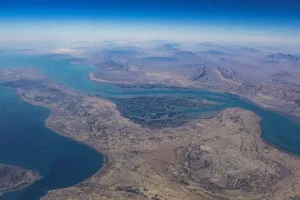
According to him, global oil supply remains constrained due to the closure of the Strait of Hormuz, which is impacting the ability of major Gulf producers to increase supply.
“The swing capacity is in the Gulf with the Saudis and Abu Dhabi, both of whom are constrained by the closure of the Strait. As such, Russia will not be able to move the needle. India has already secured 30 million barrels of Russian oil,” Bagga said.
He further noted that inflationary pressures are building in the economy. India’s Consumer Price Index (CPI) rose to 3.21 per cent, largely driven by higher food prices.

“Imported inflation is soaring under the hood, even though the government is absorbing the petrol and diesel hit for now. Expect higher inflation from March onwards,” Bagga said.
Sectoral indices on the National Stock Exchange (NSE) showed broad-based weakness. Nifty Auto declined by more than 1 per cent, Nifty FMCG lost 0.29 per cent, Nifty IT fell 0.67 per cent, Nifty Metal dropped 0.53 per cent, while Nifty Private Bank declined 0.96 per cent, indicating widespread selling pressure across sectors.

Meanwhile, Brent crude oil prices crossed USD 100 per barrel, as geopolitical tensions and supply disruptions pushed investors toward safer assets.
Global markets also reflected similar risk-off sentiment. US markets closed sharply lower following fresh geopolitical developments. The Dow Jones index declined 1.56 per cent to close at 46677, the S&P 500 fell 1.5 per cent to 6672, and the Nasdaq index dropped 1.72 per cent to 22311.

In other Asian markets, most indices traded in the red. Japan’s Nikkei 225 declined 1.17 per cent to 53814, Hong Kong’s Hang Seng fell 0.57 per cent to 25570, Taiwan’s Weighted index slipped 0.39 per cent to 33452, and South Korea’s KOSPI dropped 1.57 per cent to 5496.

However, Singapore’s Straits Times index was trading in the green with a minor gain of 0.11 per cent to 4860.

White House rebuts claims of shifting Iran war aims

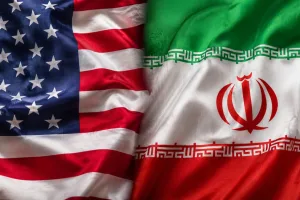
The White House pushed back against reports that the Trump administration has shifted its goals in the war with Iran, as it released a compilation of remarks by President Donald Trump and senior officials outlining what it said have been the campaign’s consistent objectives.

IANS | New Delhi |

The White House pushed back against reports that the Trump administration has shifted its goals in the war with Iran, as it released a compilation of remarks by President Donald Trump and senior officials outlining what it said have been the campaign’s consistent objectives.

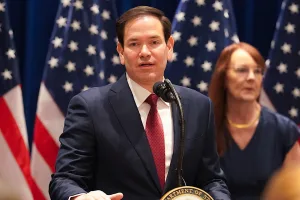
The compilation brings together statements made over the past ten days by Trump, Vice President JD Vance, Secretary of State Marco Rubio, senior Pentagon leaders, and the White House press secretary Karoline Leavitt, describing what officials say are the unchanged goals of Operation Epic Fury.

“Our objectives are clear,” Trump said on March 2. “First, we’re destroying Iran’s missile capabilities… and their capacity to produce brand new ones — pretty good ones they make. Second, we’re annihilating their navy… Third, we’re ensuring that the world’s number one sponsor of terror can never obtain a nuclear weapon… And finally, we’re ensuring that the Iranian regime cannot continue to arm, fund, and direct terrorist armies outside of their borders.”

Vice President Vance said the central aim of the campaign remained preventing Iran from developing nuclear weapons.

“Whatever happens with the regime in one form or another, it’s incidental to the President’s primary objective here — which is to make sure the Iranian terrorist regime does not build a nuclear bomb,” he said.

Secretary of State Rubio said the military effort was designed to eliminate the immediate threats posed by Iran’s missile forces and naval capabilities.

“The United States is conducting an operation to eliminate the threat of Iran’s short-range ballistic missiles and the threat posed by their navy… That is the clear objective of this mission,” Rubio said.

Military commanders said the campaign also seeks to weaken Iran’s ability to project military power beyond its borders.

“Our military in the Middle East is undertaking an unprecedented operation to eliminate Iran’s ability to threaten Americans, as they’ve been doing for nearly half a century,” US Central Command Commander Admiral Brad Cooper said.

Pentagon officials said Iran’s expanding missile forces had become a growing security concern.

Under Secretary of War for Policy Elbridge Colby said the operation was focused on addressing Iran’s ability to project military power.

“The objectives of the military campaign… are focused on addressing the ability of the Islamic Republic to project military power… And that’s primarily the missile forces of the Islamic Republic, which had obviously been growing substantially and posed a very serious threat,” Colby said.

Secretary of War Pete Hegseth said the mission aimed to dismantle key pillars of Iran’s military capability.

“The mission is laser-focused: obliterate Iran’s missiles and drones and facilities that produce them, annihilate its navy and critical security infrastructure, and sever their pathway to nuclear weapons. Iran will never possess a nuclear bomb,” he said.

Chairman of the Joint Chiefs of Staff General Dan Caine said the operation targets Iran’s missile systems, naval forces and military infrastructure.

“We are targeting and eliminating Iran’s ballistic missile systems to prevent them from threatening the US forces, partners, and interests in the region,” Caine said. “Second, we are destroying the Iranian navy… Third, we’re ensuring Iran cannot rapidly rebuild or reconstitute its combat capability.”

White House Press Secretary Karoline Leavitt said the operation’s objectives had remained unchanged since the campaign began.

“We are well on our way to achieving those objectives — annihilating Iran’s navy… taking out the ballistic missile threat that Iran posed to the United States and our troops and bases in the region… ensuring Iran can never obtain a nuclear weapon, as well, and significantly weakening their proxies in the region,” she said.

‘US KC-135 refuelling aircraft lost during Operation Epic Fury in Iraq’: United States Central Command

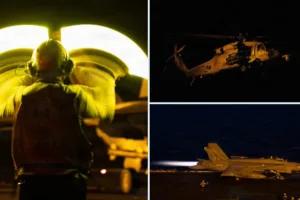
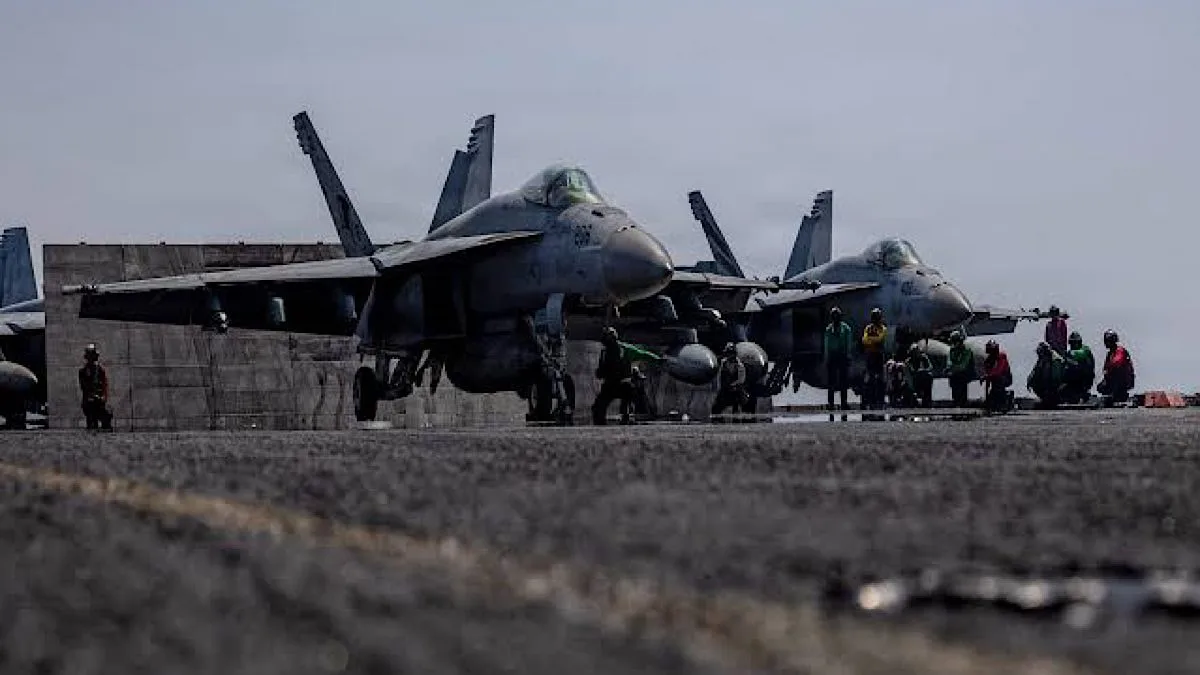
The United States Central Command (CENTCOM) on Thursday (local time) confirmed the loss of a US Boeing KC-135 Stratotanker refuelling aircraft over Iraq while supporting military operations, according to an official press release.

ANI | New Delhi |

The United States Central Command (CENTCOM) on Thursday (local time) confirmed the loss of a US Boeing KC-135 Stratotanker refuelling aircraft over Iraq while supporting military operations, according to an official press release.
According to a press release issued by CENTCOM, the incident occurred in friendly airspace during Operation Epic Fury.
“Two aircraft were involved in the incident. One of the aircraft went down in western Iraq, while the second aircraft was able to land safely,” the release said.

“This was not due to hostile fire or friendly fire,” CENTCOM posted on X.
Authorities added that rescue efforts are currently underway.
“More information will be made available as the situation develops. We ask for continued patience to gather additional details and provide clarity for the families of service members,” the release said.

Earlier, President Donald Trump on Thursday (local time) said the situation involving Iran was progressing “very rapidly” and praised the strength of the United States military.
Speaking at the Women’s History Month event at the White House, the US president said American forces were performing strongly and suggested that current actions were addressing long-standing issues with Iran.
“The situation with Iran is moving along very rapidly. It’s doing very well. Our military is unsurpassed. There’s never been anything like it. Nobody’s ever seen anything like it,” Trump said.

He added that the United States was now taking actions that should have been carried out decades earlier. Reflecting on his earlier time in office, Trump said his administration’s efforts to rebuild the US military had strengthened its current capabilities.
“We had a very successful first term, best economy ever. We did a lot of great things. We rebuilt our military. That’s one of the reasons we’re doing so well now with our military,” he said.

Trump also noted that he had not expected to rely so heavily on the armed forces but said the strengthened military had become crucial in dealing with international developments.

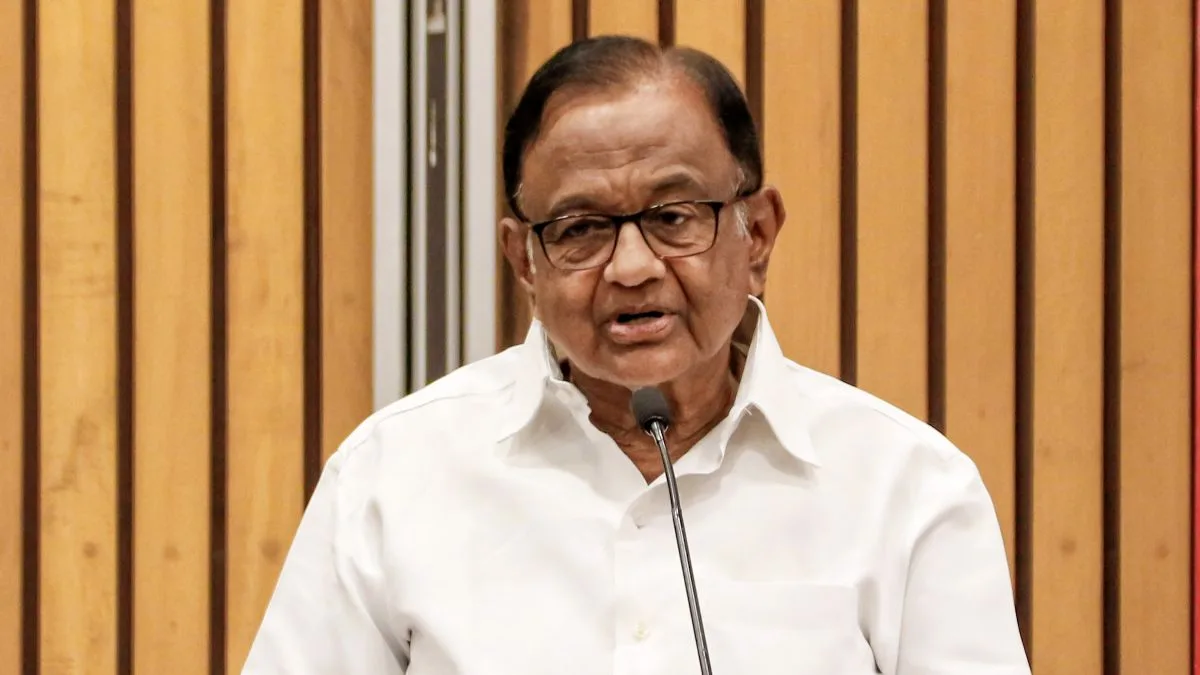
‘One-sided foreign policy’: P Chidambaram slams Centre for co-sponsoring UNSC resolution condemning Iran

Senior Congress leader and Rajya Sabha MP, P Chidambaram, on Friday strongly criticised the Centre for co-sponsoring the United Nations Security Council resolution condemning Iran’s attacks against its regional neighbours amid the West Asia conflict.

ANI | New Delhi |

Senior Congress leader and Rajya Sabha MP, P Chidambaram, on Friday strongly criticised the Centre for co-sponsoring the United Nations Security Council resolution condemning Iran’s attacks against its regional neighbours amid the West Asia conflict.
In an X post, Chidambaram called India’s foreign policy “one-sided”, alleging New Delhi has sided with the United States and Israel while not condemning their strikes killing Iranians.

He wrote, “Here’s another piece of evidence of how one-sided India’s foreign policy has become: India proposed the resolution condemning Iran in the UN Security Council. But it hasn’t uttered a single word condemning the war that the US and Israel continue to wage against Iran, nor the killing of 1300 Iranian people, nor the death of 168 children.”
“The resolution was passed in the UN Security Council with the support of the US and 12 other countries. Russia and China did not vote in favour of the resolution. What is wisdom? What is diplomacy? What is a bias-free foreign policy?” the X post read.
This comes after the 15-member UNSC passed Resolution 2817 (2026) with 13 votes in favour and two abstentions from China and the Russian Federation, condemning Iran’s “egregious attacks” against its regional neighbours.

The representative of the United States, serving as Council President for March, remarked that “Iran shoots in all directions”, highlighting that a record number of nearly 140 Member States, including India, co-sponsored the text.
Under the terms of the resolution, the Council condemned “in the strongest terms” Iran’s strikes against Bahrain, Kuwait, Oman, Qatar, Saudi Arabia, the United Arab Emirates, and Jordan. The text specifically condemned Iranian attacks on “residential areas and civilian objects”, demanding their immediate cessation.

The resolution also demanded that Tehran halt its “threats, provocations and actions aimed at interfering with maritime trade”, alongside its support for proxy groups. Bahrain’s representative welcomed the adoption, stating, “The message is clear,” and noted that the “international community is resolute in rejecting these Iranian unjust, hostile acts.”
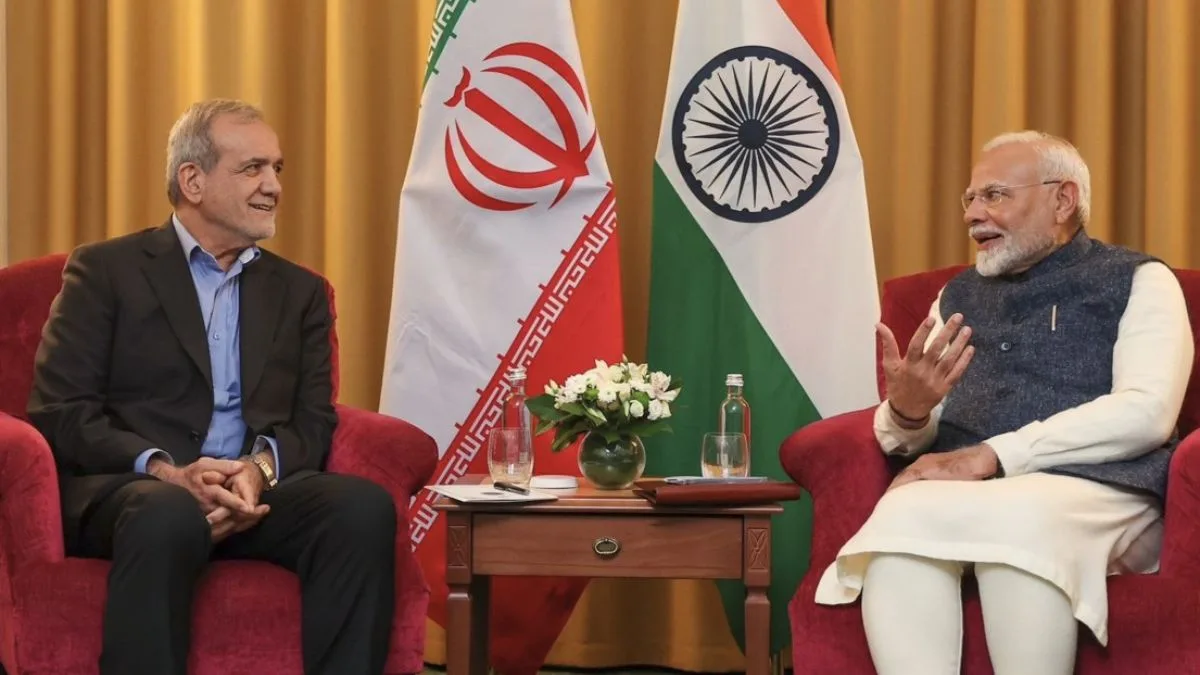
Meanwhile, Prime Minister Narendra Modi on Thursday held a conversation with Iranian President Masoud Pezeshkian to discuss the deteriorating security situation in the Gulf region.

In a post on X, PM Modi said he expressed deep concern over the escalation of tensions, particularly the loss of civilian lives and damage to civilian infrastructure in the region.
He said, “Had a conversation with Iranian President, Dr. Masoud Pezeshkian, to discuss the serious situation in the region. Expressed deep concern over the escalation of tensions and the loss of civilian lives as well as damage to civilian infrastructure.”
The Prime Minister also underlined that the safety and security of Indian nationals remain a key priority for the government. He noted that ensuring the unhindered transit of goods and energy supplies is equally important for India.

PM Modi added, “The safety and security of Indian nationals, along with the need for unhindered transit of goods and energy, remain India’s top priorities. Reiterated India’s commitment to peace and stability and urged for dialogue and diplomacy.”
The conflict in West Asia began with the US and Israel striking in Iran, killing Supreme Leader Ayatollah Ali Khamenei on February 28. Tehran’s retaliation against US and Israeli assets in the Gulf region widened the ambit of the conflict. Tensions continue to escalate as the conflict enters its 14th day.

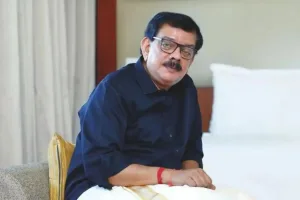
Priyadarshan says he is ‘forced’ to make comedy films, claims directors who make people laugh are ‘jokers’

The veteran filmmaker says his heart has always been in serious storytelling, not comedy. Despite delivering some of India’s biggest comedy hits, Priyadarshan believes humour rarely earns filmmakers real respect.

Statesman News Service | New Delhi |

For decades, filmmaker Priyadarshan has been the man behind some of India’s most iconic comedy films. Movies like ‘Hera Pheri’, ‘Hungama’, ‘Bhagam Bhag’, ‘Bhool Bhulaiyaa’ have made millions of people laugh.

But the director himself says comedy was never his real passion.

In a conversation with Pinkvilla, Priyadarshan revealed that he actually prefers making serious and intense films. According to him, comedy is something he ends up doing because he has “no option.”

Also Read: ‘Maamla Legal Hai 2’ explodes on Netflix: Anubhav Singh Bassi and Kusha Kapila’s chemistry fuels on-screen mayhem

“I like to shoot serious films. I don’t like to shoot comedy films,” he said frankly.

Yes, the filmmaker who built a reputation as Bollywood’s comedy master says serious storytelling excites him far more.

“I am forced To make comedy films”

Priyadarshan did not hold back while explaining the situation.

He admitted that comedy films brought him massive popularity, but they also created a label that he finds difficult to escape.

“I have no option, so I am doing it,” he said while talking about making comedy movies.

For the director, the biggest frustration is the lack of recognition. According to him, filmmakers who specialise in comedy rarely receive the same respect as those who make serious cinema.

“When you make comedy films, you are never respected as a good director,” he explained.

That, he said, has always been painful for him.

Why comedy directors struggle for respect

Priyadarshan believes the film industry often looks down on comedy creators.

He questioned why directors who make people laugh are not considered equally talented.

“Why is a comedy filmmaker never accepted as a good filmmaker?” he asked.

In contrast, he says directors gain instant respect when they make serious films. That difference in perception is something he finds unfair.

For him, films like ‘Kanchivaram’ and ‘Kaalapaani’ represent the kind of cinema that earns recognition within the film fraternity.

The same problem exists worldwide

Priyadarshan also pointed out that this issue is not limited to Indian cinema.

According to him, comedy filmmakers across the world face the same problem.

“They look at you as a joker when you make comedy films,” he said.

He also mentioned that comedy films rarely win major international awards, including the Oscars.

For the director, this reflects how the industry undervalues humour as a craft.

“This is very sad, but it’s the reality,” he added.

A career spanning more than four decades

Priyadarshan has been directing films since 1982 and has built one of the most extensive filmographies in Indian cinema.

Over the years, he has directed more than 98 films in several Indian languages working primarily in Malayalam and Hindi cinema.

Many of his films have become cult favourites.

His most famous comedy hits include ‘Hera Pheri’, ‘Hungama’, ‘Hulchul’, ‘Bhagam Bhag’. These movies are still widely loved by audiences.

But the filmmaker has also created powerful serious dramas.

His films ‘Kanchivaram’ and ‘Kaalapaani’ received critical acclaim and even won National Film Awards.

Apart from these, his long list of successful films includes ‘Abhimanyu’, ‘Megham’, ‘Mazha Peyyunnu Maddalam Kottunnu’, ‘Garam Masala’, ‘Chup Chup Ke’, and ‘Bhool Bhulaiyaa’.

His upcoming film ‘Bhooth Bangla’ is a horror-comedy that has already created excitement after its teaser.

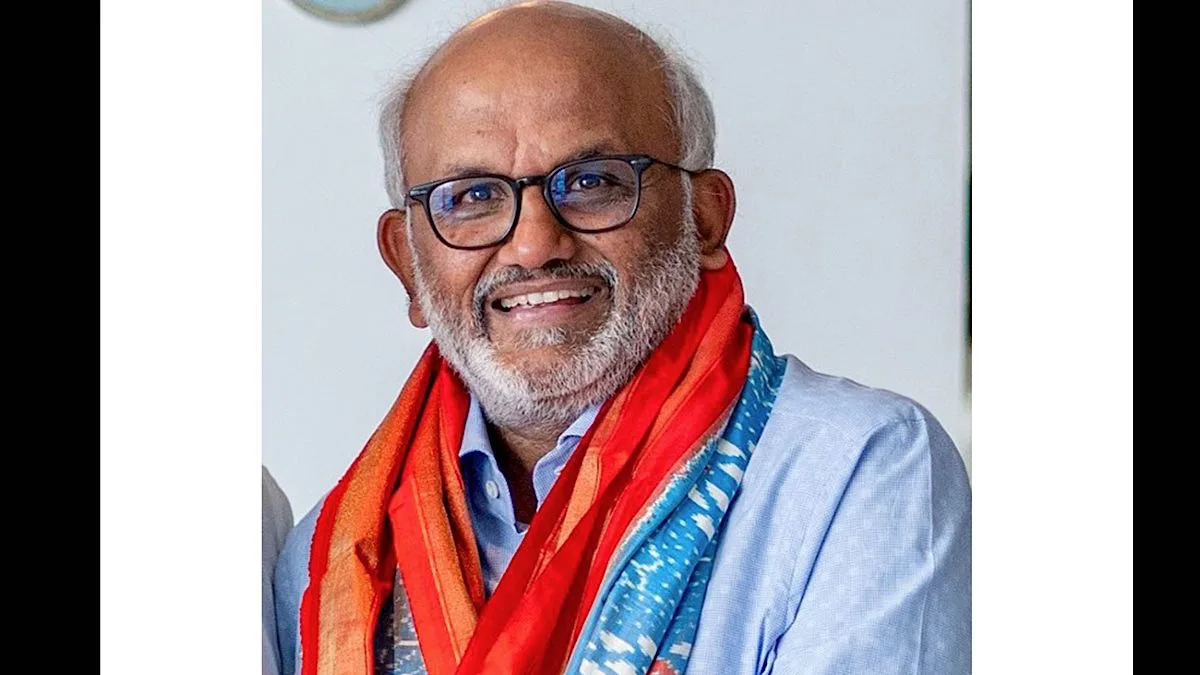
Adobe CEO Shantanu Narayen steps down after successor is appointed, shares fall 7%

Shantanu Narayen steps down from the role of Chief Executive Officer of Adobe after a successor is appointed, but will remain as Chair of the company, the design software firm said in an official statement.

ANI | New Delhi |

Shantanu Narayen steps down from the role of Chief Executive Officer of Adobe after a successor is appointed, but will remain as Chair of the company, the design software firm said in an official statement.

The announcement was made during the company’s financial results for its first quarter FY2026 ended Feb. 27, 2026. Following the announcement, shares of Adobe listed on the NASDAQ Composite tumbled 7 per cent in extended trading.
In an exchange filing to Nasdaq, the company said Narayen, who has served as CEO of Adobe for eighteen years, has decided to transition from the role after the board appoints his successor.

“Shantanu Narayen, who has served as CEO of Adobe for eighteen years, has decided to transition from his position as CEO after a successor has been appointed. Narayen will remain as Chair of the Board,” the company said in its filing.
The company added that its Board of Directors has initiated the process of identifying a successor and has formed a special committee to oversee the selection.
“The Board of Directors has appointed Frank Calderoni, Lead Independent Director of Adobe, as Chair to the special committee to direct the process that will consider both internal and external candidates,” the filing stated.

Narayen joined Adobe in 1988 as a vice president and general manager and later became the CEO in 2007.

During his tenure, Adobe made a significant shift in its business model by moving from traditional software licenses to subscription-based services through its Creative Cloud application bundle.

Under his leadership, the company expanded its portfolio of digital tools and solutions and is now focusing on growth opportunities in generative artificial intelligence.
Congratulating Narayen on his tenure, Microsfot CEO Satya Nadella praised his leadership and contribution to the technology industry.
“Congrats Shantanu, on a legendary run at Adobe! You’ve built one of the most important software companies in the world and expanded what’s possible for creators, entrepreneurs, and brands everywhere,” Nadella said.

He added that Narayen’s leadership and approach to the creative ecosystem have had a lasting impact on the industry.
“What has always stood out to me is the empathy you’ve brought to the creative process and the example you’ve set as a leader. Grateful for your friendship, mentorship, and for all you’ve done for Adobe and for our industry,” Nadella said.
Adobe said Narayen will continue to serve as Chair of the Board while the company proceeds with the process of selecting its next CEO.

Progressive Punjab Investors’ Summit 2026 to kick off in Mohali with 89 high-impact sessions

Punjab will host the Progressive Punjab Investors’ Summit 2026 in Mohali from March 13–15, bringing together global investors, industry leaders and policymakers to explore opportunities in IT, AI and manufacturing.

Neeraj Bali | New Delhi |

Punjab is set to position itself as a global destination for innovation and economic growth as the Progressive Punjab Investors’ Summit 2026 commences at Plaksha University in Mohali from March 13 to 15. Announcing the details at a press conference on Thursday, Cabinet Minister for Industries and Commerce Sanjeev Arora stated that the summit will serve as a premier platform for industry leaders, policymakers, and international investors to explore the state’s diverse economic landscape. Punjab Chief Minister Bhagwant Singh Mann is scheduled to inaugurate the event tomorrow morning, while AAP National Convenor Arvind Kejriwal will grace the summit as the Chief Guest.

The three-day event is designed to be one of the most comprehensive investment summits in the state’s history, featuring a total of 89 specialized sessions. Minister Arora highlighted that the summit will include country-specific discussions focusing on the United Kingdom, Japan, and South Korea, alongside dedicated sessions for the MSME sector. A significant emphasis will be placed on Mohali’s rapid transformation into a major Information Technology and Artificial Intelligence hub, supported by world-class infrastructure and a robust industrial ecosystem. The event will also feature an industrial exhibition showcasing local innovations and manufacturing capabilities.

Despite minor disruptions in travel for some delegates from the Middle East due to recent flight cancellations, the Minister confirmed that the majority of invited international investors are expected to attend. The summit aims to build on the momentum of the state’s new Industrial and Business Development Policy, which has already garnered significant praise from industrialists nationwide for its investor-friendly framework. Arora noted that the government is committed to improving the state’s Ease of Doing Business rankings while maintaining a steadfast focus on sustainable and environment-friendly industrial growth.

The summit’s inaugural session is slated to begin at 11:00 AM on Friday, followed by networking opportunities and sector-specific deliberations. Senior officials, including Secretary of Industries and Commerce Gurkirat Kirpal Singh and CEO of Invest Punjab Amit Dhaka, underscored the government’s readiness to host the global delegation. The summit will conclude on March 15, with expectations of significant investment commitments that will bolster the state’s economy and create new employment avenues for the youth of Punjab.

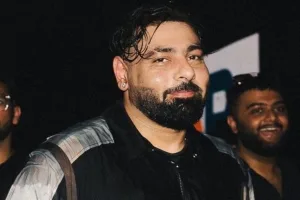
Santy Sharma explodes over Badshah controversy, says India still doesn’t understand hip-hop culture

Rapper Santy Sharma has stepped into the Badshah controversy, explaining that rap “dissing” and lyrical rivalries are long-standing parts of hip-hop culture. He also urged people to understand the creative process of rap.

Statesman News Service | New Delhi |

The internet never sleeps especially when rappers start talking about rap culture. This week, Indian rapper Santy Sharma jumped straight into middle of heated online debate by throwing his support behind fellow artist Badshah.

What started as a controversy around lyrics and a music video has now turned into bigger conversation about hip-hop culture in India, artistic freedom in addition to how easily people judge artists without knowing full story.

Santy Sharma steps in to defend Badshah


View this post on Instagram


A post shared by Santy Sharma (@santy_sharma_official)
Santy Sharma recently took to Instagram to explain why he believes the criticism surrounding Badshah’s lyrics and music video may be out of proportion. According to Sharma, many listeners misunderstand how hip-hop actually works.

Also Read: Badshah apologises and pulls ‘Tateeree’ amid furious backlash: ‘I hope you forgive me, considering me a son of Haryana’

He reminded fans that “dissing”, the act of referencing or calling out other rappers in lyrics, has always been core element of hip-hop culture. Artists often mention rivals directly or indirectly as part of lyrical competition. In the world of rap, this kind of back-and-forth is not unusual. In fact it is often seen as sign of creativity and confidence.

Sharma suggested that people in India sometimes react strongly to lines in rap songs because they are unfamiliar with this long-standing tradition within the genre.

The music video may not be the rapper’s idea

Another point Sharma raised surprised many fans. He explained that the song and the music video are often produced separately.

According to him, rappers typically record their songs first. Later, the track may be handed over to a different creative team that develops the visual concept for the music video. Because of this process, even a big artist like Badshah might not always know exactly how the final video will look before it releases.

In other words, the rapper and the video’s storyline may not always come from the same creative mind.

“Know the culture before judging”

Sharma also spoke about what he sees as a bigger challenge for hip-hop artists in India: lack of awareness about rap culture.

He pointed out that many listeners are unfamiliar with the history, traditions, creative style of the genre. This can lead to misunderstandings whenever lyric or reference sparks controversy online.

However, Sharma also made it clear that artists are not above criticism. If a line or lyric genuinely hurts sentiments, he believes it is completely fair to revise or change it.

What he objects to is the quick judgement that often happens before people understand the entire creative process behind a song.

In his Instagram post, Sharma argued that criticising artists without knowing the full story only shows how little people understand the art form in the country.

Not the first time Sharma has sparked debate

This isn’t the first time Santy Sharma has stirred conversation on social media.

Recently, he publicly disagreed with actress and online influencer Khushi Mukherjee over her bold and ‘provocative’ posts online. Sharma argued that such content could have negative influence on younger audiences who follow celebrities closely.

Afghan govt says Pakistan struck fuel depots near Kandahar airport; family killed in Khost shelling

Tensions between Pakistan and Afghanistan are rising again, with reports of shelling in Khost that killed four civilians and accusations of cross-border attacks along the disputed Durand Line.

Statesman News Service | Mumbai |

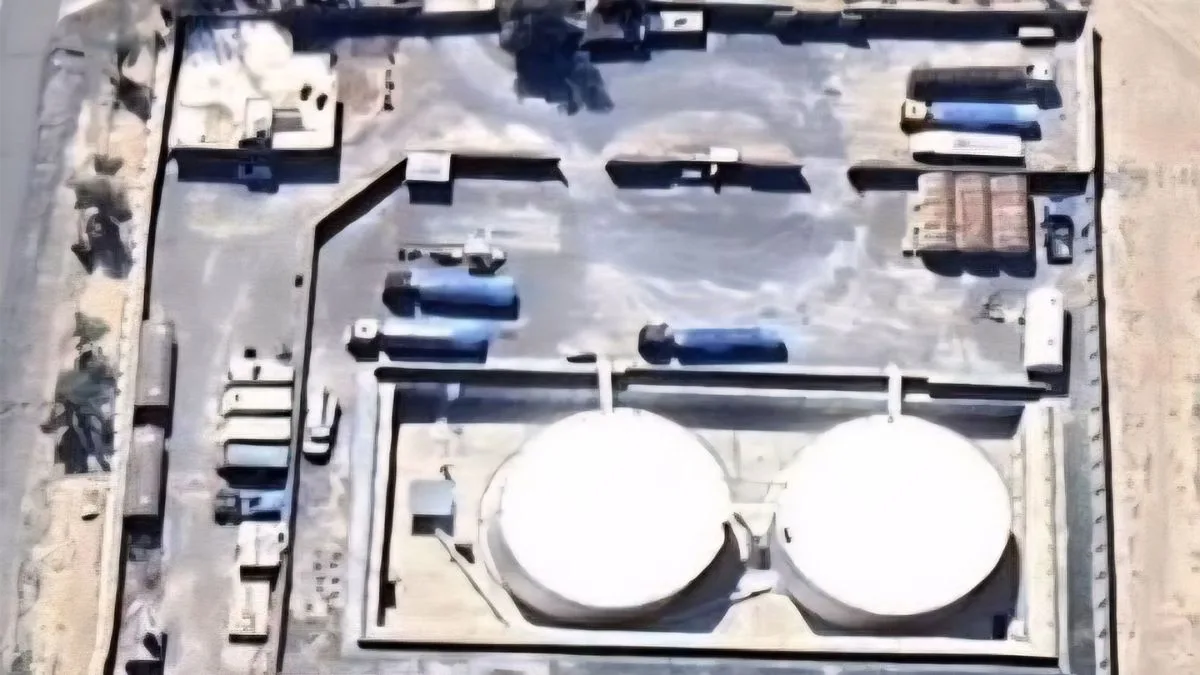
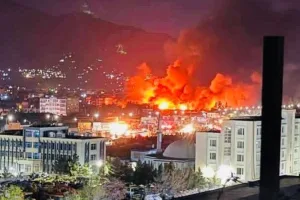
Pakistan’s air force struck fuel storage facilities belonging to a private airline close to Kandahar Airport, Taliban spokesperson Zabihullah Mujahid alleged on Friday.

The claim comes as tensions between Pakistan and Afghanistan continue to rise along the disputed Durand Line, with both sides accusing each other of cross-border attacks in recent weeks.

Mujahid wrote on X that the targeted depots belong to Kam Air. According to him, the company supplies aviation fuel not only to domestic airlines but also to aircraft operated by the United Nations. He also alleged that Pakistan had earlier hit fuel reserves owned by an Afghan trader named Haji Khan Zadah.

Shelling in Khost leaves family dead

Separately, Pakistan’s military reportedly fired artillery at several areas in the Alisher-Terezai district of Khost province near the Durand Line, TOLO News reported.

The shelling killed four members of a single family and injured three others.

Border clashes intensify

The reported attacks come against the backdrop of rising hostilities between the two neighbours.

In February, Pakistan carried out airstrikes targeting Kabul and other Afghan cities. Pakistan’s Defence Minister Khawaja Asif described the situation as an “open war,” saying Islamabad’s patience had run out. He accused the Taliban government of allowing militant groups to operate from Afghan territory.

Afghanistan’s Ministry of National Defence later said that 55 Pakistani soldiers were killed in retaliatory fighting along the Durand Line on February 26.

Relations between Islamabad and Kabul have stayed tense ever since the Taliban took control of Afghanistan again in 2021. The dispute over the Durand Line, the border drawn during British colonial rule, has long been a source of friction.

Pakistan has repeatedly urged the Taliban authorities to act against the Tehreek-e-Taliban Pakistan (TTP), which Islamabad says is using Afghan soil as a base. The group emerged in Pakistan in 2007. Though separate from the Afghan Taliban, it is widely seen as sharing ideological and historical links with it.

Attacks inside Pakistan by the TTP and the Balochistan Liberation Army (BLA) have increased in recent years. The provinces of Khyber Pakhtunkhwa and Balochistan, both bordering Afghanistan, have witnessed the worst of this violence.
India has strongly criticised Pakistan’s strikes inside Afghanistan, pointing to reports of civilian casualties, including women and children, during the holy month of Ramadan. New Delhi also reiterated its support for Afghanistan’s sovereignty and territorial integrity.

Sanctions bend as oil spikes: US lets nations buy Russian crude stranded at sea

The decision comes as oil markets remain jittery. With tensions rising in the Middle East, governments and traders fear disruptions to major supply routes.

Statesman News Service | Mumbai |

The United States has allowed countries to purchase Russian crude that is currently stranded at sea, in a temporary step meant to ease pressure on global energy markets shaken by the ongoing West Asia crisis.

The decision comes as oil prices remain elevated and governments worry about possible disruptions to supply routes in the Middle East. Washington says the move is designed to widen the availability of the existing oil supply while keeping global fuel prices from climbing further.

US Treasury Secretary Scott Bessent said the measure is narrowly defined and will apply only to Russian oil shipments that were already loaded onto vessels and are currently in transit.

In a message posted on social media, Bessent said the administration of US President Donald Trump was taking steps to stabilise energy markets.

“@POTUS is taking decisive steps to promote stability in global energy markets and working to keep prices low as we address the threat and instability posed by the terrorist Iranian regime,” he wrote.

Temporary waiver for oil already at sea

Bessent said the US Treasury had issued a limited authorisation allowing countries to purchase Russian oil cargoes that are already at sea but unable to reach buyers because of sanctions-related restrictions.

“To increase the global reach of existing supply, @USTreasury is providing a temporary authorization to permit countries to purchase Russian oil currently stranded at sea,” he said.

Officials stressed that the exemption is strictly temporary and applies only to oil already on ships.

“This narrowly tailored, short-term measure applies only to oil already in transit and will not provide significant financial benefit to the Russian government, which derives the majority of its energy revenue from taxes assessed at the point of extraction,” Bessent said.

The move comes as oil markets remain on edge. Escalating tensions in the Middle East have fuelled worries that key supply routes could be disrupted.

Benchmark Brent crude briefly approached USD 120 per barrel, a multi-year high, before easing. Prices are currently trading close to USD 100 per barrel, roughly 35 per cent higher than levels seen before the latest conflict escalated.

Bessent also said US energy production remained strong, pointing to record levels of oil and gas output under the Trump administration.

“President Trump’s pro-energy policies have driven US oil and gas production to record levels, contributing to lower fuel prices for hardworking Americans,” he said.

He described the current spike in oil prices as temporary.

“The temporary increase in oil prices is a short-term and temporary disruption that will result in a massive benefit to our nation and economy in the long-term,” Bessent added.

As West Asia war deepens, PM Modi calls Iran’s President; flags safety of Indians and energy routes

India is closely watching the West Asia crisis as PM Modi speaks with Iran’s president, focusing on protecting Indians in the region and keeping global energy routes open.

Statesman News Service | Mumbai |

Prime Minister Narendra Modi on Thursday spoke with Iranian President Masoud Pezeshkian as tensions in West Asia continue to escalate.

The call comes as the conflict has begun to raise concerns about the safety of foreign nationals and the stability of key energy routes. India has a large diaspora in the region and depends heavily on oil supplies from West Asia.

After the conversation, PM Modi said the safety of Indians remains the government’s top priority. He also stressed the need to keep the movement of goods and energy uninterrupted.

“The safety and security of Indian nationals, along with the need for unhindered transit of goods and energy, remain India’s top priorities,” the Prime Minister said in a post on X.

PM Modi also spoke about the worsening situation on the ground. He expressed concern over civilian deaths and damage to infrastructure.

The Prime Minister urged all sides to avoid further escalation. He said dialogue and diplomacy are the only ways to resolve the crisis.

Both leaders agreed to stay in touch as the situation develops.

India keeps close watch on energy routes

India has been engaging with Iran since the conflict began. A key concern is the movement of ships through the Strait of Hormuz.

Earlier this week, S Jaishankar held a conversation with Iran’s Foreign Minister Abbas Araghchi. The two discussed the situation in West Asia and the importance of keeping maritime routes open.

This was their third conversation since the outbreak of the conflict.

The Strait of Hormuz is one of the world’s busiest oil shipping lanes. Any disruption there could affect global energy supplies.

India and Iran share long-standing ties. Energy has been a major part of this relationship.

The Chabahar Port project is also important for India. It offers New Delhi a trade route to Afghanistan and Central Asia.

Instability in West Asia can directly affect India’s economy and its citizens living in the region.

Tensions in the region have already risen sharply. Iran’s Supreme Leader Ayatollah Ali Khamenei died after Israeli strikes hit Tehran in February.

The killing triggered widespread mourning in Iran. It also increased fears of a wider conflict across West Asia.

India has repeatedly called for restraint. New Delhi has said disputes must be resolved through dialogue and peaceful engagement.

Why Learning Cannot End

Long after classrooms fall silent and degrees are framed on walls, the habit of learning continues to shape how people think, judge, and lead.

Statesman News Service | New Delhi |

The most dangerous moment for any profession arrives when it begins to believe it has learned enough . Knowledge does not stand still, and institutions that stop learning soon discover that the world has quietly moved ahead without them. Education therefore cannot remain confined to the early years of life. It must become a discipline that accompanies individuals throughout their professional journeys.

Long after classrooms fall silent and degrees are framed on walls, the habit of learning continues to shape how people think, judge, and lead. Learning, in this sense, is not merely the accumulation of information. It is the cultivation of judgement. This idea has long informed global thinking about progress. When the Universal Declaration of Human Rights recognised education as a fundamental right in 1948, it affirmed that knowledge lies at the centre of human dignity and social advancement.

India’s constitutional framework reflects the same conviction. By placing education in the Concurrent List through the 42nd Amendment, the country recognised that the development of knowledge is both a national responsibility and a shared public commitment. Education, however, is more than a matter of policy. It is a public good sustained by a broad social compact. Governments create frameworks and standards, institutions impart knowledge, and teachers nurture intellectual curiosity. Yet the true vitality of education lies in the willingness of individuals to continue learning beyond formal schooling. In a century defined by rapid technological change and geopolitical uncertainty, that willingness has become indispensable.

The international community recognised this reality decades ago. The landmark 1996 UNESCO report Learning: The Treasure Within, prepared by the Delors Commission, highlighted the growing importance of lifelong learning in an increasingly complex world. It emphasised that knowledge societies would demand continuous intellectual development, not merely periodic education. The report also underlined the role of learning in reducing inequality, promoting social cohesion, and strengthening democratic societies. These insights are even more relevant today. Few professions illustrate this more clearly than the military. The character of warfare has changed profoundly in recent decades. The battlefield is no longer confined to land, sea, or air.

It now extends into cyberspace, information networks, and complex technological domains. Artificial intelligence, autonomous systems, and advanced communications are steadily transforming how conflicts unfold and how national security itself is understood. In such circumstances, professional competence cannot rely solely on drills, doctrine, or accumulated experience. It requires a deeper intellectual foundation.

India’s intellectual heritage offers another dimension to this pursuit. Classical works such as Kautilya’s Arthashastra and Thiruvalluvar’s Thirukkural contain enduring reflections on statecraft, ethics, and the conduct of war.

Professional Military Education provides that foundation. At its best, Professional Military Education does more than transmit specialised knowledge. Its purpose is to cultivate judgement. Training prepares soldiers for tasks that can be anticipated. Education prepares leaders for situations that cannot. It encourages analytical thinking, strategic awareness, and the ability to make decisions when clarity is often elusive. Military institutions around the world have increasingly recognised this necessity.

In the United States, the Goldwater Nichols Act of 1986 strengthened Joint Professional Military Education and encouraged greater integration across the services. The reform reflected a growing understanding that modern warfare demands leaders who can think beyond narrow operational boundaries and grasp the wider strategic environment. India’s evolving educational landscape reflects a similar commitment to lifelong learning. The National Education Policy of 2020 emphasises flexibility, multidisciplinary engagement, and continuous access to knowledge.

Mechanisms such as the Academic Bank of Credits recognise that learning unfolds across different stages of life, allowing individuals to pause and resume their educational journeys while continuing to build knowledge. At the same time, India has steadily expanded its ecosystem of learning. The number of higher educational institutions has grown significantly in the past decade, while digital initiatives have transformed access to knowledge. Platforms such as SWAYAM, DIKSHA, and SWAYAM Prabha are widening educational reach across the country. Knowledge today travels far beyond classrooms, reaching anyone willing to pursue it.

The emphasis on skills and vocational education has also gathered momentum. National initiatives aimed at skill development seek to align education with emerging economic realities and technological change. Such efforts reinforce a larger shift in thinking: education is no longer viewed as a one-time attainment but as a lifelong process of intellectual and professional renewal. For the armed forces, these developments carry particular significance. Military leadership today demands far more than operational proficiency.

It requires strategic imagination, cultural awareness, and the intellectual flexibility to interpret an international environment that grows more complex each year. Professional Military Education therefore seeks to develop not only capable officers but reflective leaders. India’s intellectual heritage offers another dimension to this pursuit. Classical works such as Kautilya’s Arthashastra and Thiruvalluvar’s Thir ukkural contain enduring reflections on statecraft, ethics, and the conduct of war. Engaging with these traditions alongside contemporary strategic studies enriches the intellectual foundations of military education and connects present challenges with long traditions of thought. The philosophy of lifelong learning is also shaping governance beyond the military sphere. Initiatives such as Mission Karmayogi seek to promote continuous learning among civil servants, recognising that effective administration requires constant renewal of knowledge and skills in a rapidly evolving policy environment.

Taken together, these developments point to a broader shift in how education is understood. Learning is no longer confined to youth. It has become a continuing professional discipline that accompanies individuals throughout their lives. The strength of any institution ultimately lies in the quality of its thinking. For military organisations, the lesson is especially clear. Experience builds confidence. Training builds competence. Education builds judgement. Professional Military Education therefore sustains a tradition that remains both ancient and contemporary: the ideal of the scholar warrior.

It recognises that courage on the battlefield must be matched by clarity of thought beyond it. Perhaps that returns us to the central truth with which this reflection began. The moment a profession believes it has learned enough is the moment it begins to fall behind. In a world defined by rapid change and persistent uncertainty, the capacity to keep learning may well prove to b e the most decisive advantage of all.

THE WRITER IS POSTED AT AIR HQ. THE VIEWS EXPRESSED ARE PERSONAL.

A Doctor’s Committed Dream To Serve The Nation

In recent years, an increasing number of highly qualified young professionals have begun to look beyond the boundaries of their specialised disciplines and turn toward public life.

Statesman News Service | New Delhi |

In recent years, an increasing number of highly qualified young professionals have begun to look beyond the boundaries of their specialised disciplines and turn toward public life. This unites them all in the singular dream of serving the nation. Engineers, scientists, lawyers and management graduates have all found their way into the civil services, drawn by the possibility of shaping institutions and touching lives.

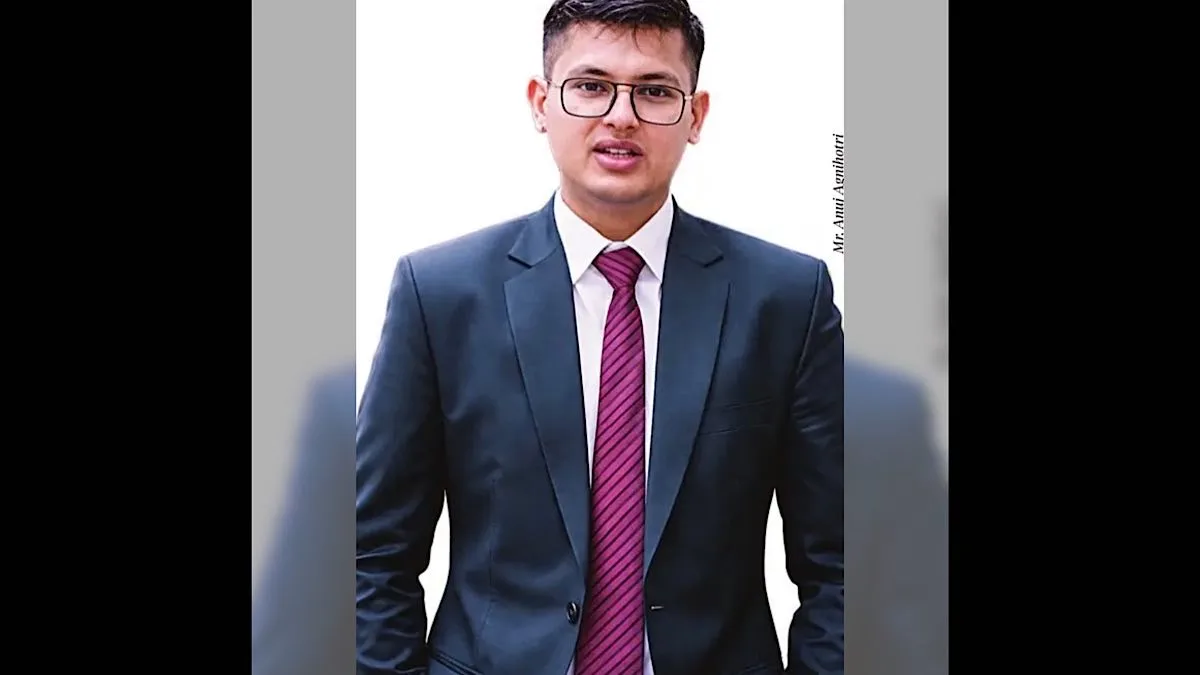
Among them are also those who have chosen to step away from the world of medicine in order to serve society right from the grassroots. Continuing in this growing tradition is Mr. Anuj Agnihotri, a medical graduate from the prestigious AIIMS Jodhpur, who has secured the first rank in the Civil Services Examination 2025. His journey reflects not merely academic brilliance but a deeper impulse that enlivens many young aspirants across the country: the desire to serve the nation and participate in its governance with integrity and compassion. For countless candidates preparing for the examination, the civil services represent both a formidable challenge and a profound opportunity. They promise a career in which intellect, endurance and commitment come together in the service of society. Ashwini Gupta spoke with the young topper about his motivation, his preparation strategy and the personal interests that help keep him balanced in the midst of intense professional pursuit.

AG: Agnihotri ji, what motivated you to opt for a career in the civil services although you already have an MBBS degree from a prestigious institution like AIIMS Jodhpur?

AA:The question whether doctors can also consider a career in the civil services has been debated for quite some time. It is true the country invests a lot of resources in training a doctor specially in a government college but I personally felt that I would be able to contribute more and derive better satisfaction if I become an administrator with a multi-faceted arena of responsibility.

AG: You have secured the 1st rank and would hopefully get any service you choose. Which is your preference?

AA:I would like to join the Indian Administrative Service because it offers a wider platform.

AG: A large number of candidates all over the country would be happy to know about your strategy for preparing for the examination. Can you give some details?

AA: I read newspapers regularly and also journals like Yojana and Kurukshetra. I practised writing answers under conditions like those of an actual examination with proper timing. When one takes the examination one has to write answers with a strict time limit and often one examination in the forenoon is followed by another in the afternoon. To some extent this is like a test of stamina and practice helps. Previous years’ question papers available on the UPSC website are quite helpful.

AG:What are your tips for choosing an optional subject?

Alot of candidates feel that some subjects are more scoring than others. Some people say that science subjects are difficult. Some candidates even change their optional subject in a second or third attempt. What is your advice?

AA: I chose Medical Sciences as my optional subject and some people had cautioned me that it would be difficult to get good marks in this. I believe candidates should choose an optional subject in which they have a good mastery of the overall subject. Merely trying to prepare a few important questions only for the examination will not work.

AG: Some candidates say that NCERT books for school students are helpful in preparing all the general studies papers.

AA: Yes, NCERT books can be helpful beginners but more than that, wide reading immensely helps. For example, a study of the full Indian Constitution improves understanding of political issues. It is also interesting to learn from a large number of online platforms and Youtube videos. A lot of Youtube videos are for entertainment but there are others that offer insightful content.

AG: In addition to tips for other candidates we would like to know more about you as a person. What are your interests and hobbies?

Do you play games?

AA: I am fond of watching standup comedy. I play tennis and badminton. I also practise meditation regularly

The question whether doctors can also consider a career in the civil services has been debated for quite some time… I personally felt that I would be able to contribute more and derive better satisfaction…

AG : Finally some word o f encouragement for candidates who get rejected?

AA: One should not take any failure to heart. Civil Services offer an appealing career option. One can work for the betterment of peoples’ lives in the civil services but there are so many other equally intriguing career options. Moreover a candidate who does not succeed in one attempt may do very well in a second or third attempt rightly echoing how failures are the stepping stones to success.

(THE INTERVIEWER IS A FREELANCE JOURNALIST)

Global framework is the need to end all wars

The fall of the Berlin Wall and the collapse of the Soviet Union once kindled hopes for a more peaceful world.

A K MERCHANT | New Delhi |

The fall of the Berlin Wall and the collapse of the Soviet Union once kindled hopes for a more peaceful world. Those hopes were brutally tested by the attacks of 11 September 2001, and subsequent crises have continued to expose deep fractures in human behaviour and global governance. Even the collective efforts that contained the worldwide Covid-19 pandemic failed to produce a lasting shift toward cooperation; instead, we keep witnessing again and again a Hobbesian retreat into fear, hostility, self-interest and pompous chest-thumping.

The brinkmanship of short-sighted leaders and flawed decision-making has pushed humanity toward recurring crises testing the moral, institutional frameworks and near collapse of the rules-based global order. One wonders how soon the current status quo would be overtaken by the looming uncertainty namely Artificial Super Intelligence. People everywhere long for peaceful resolution of conflicts at every level – within families, communities, nations, and between countries – but procedural fixes alone cannot heal the deeper social, economic, and political pathologies that fuel conflicts and wars. Time and again, the world has been spared catastrophe more by luck than by design, whether through miscalculation or the failure of nuclear fail-safes. The nation-state system, premised on absolute sovereignty, has revealed its limits in addressing problems that cross borders.

Global markets remain vulnerable to currency volatility and concentrated wealth, with roughly one per cent of the population controlling the vast majority of resources. Many poorer countries struggle to meet basic needs while servicing debt and diverting scarce resources to internal conflicts and disaster relief. These pressures risk cascading into broader economic collapse if the ongoing Middle-East crisis continues for much longer. At USD 2.7 trillion global military expenditure in 2025, the world is increasingly armed with more lethal weapons. Soaring defence spending of major powers in the name of security or dominance exacerbates the suffering of the masses of population. Regional wars and cross-border terrorism have widened fault lines, and the spread of nuclear capability hastens the spectre of global catastrophe.

Movements calling for the abolition of weapons of mass destruction have not yet prevailed, while terrorism – often diffuse and embedded within civilian populations – poses novel challenges to conventional state responses. Education for peaceful coexistence remains a vital but undervalued pillar of prevention. Lest one forget, an important pillar of UNESCO’s Education Curriculum Framework for the 21st century: Learning: The Treasure Within is “Learning to Live Together”. History shows that human societies have evolved from family groups to tribes, city-states, empires, and nation-states. The next logical stage is a form of global governance that preserves cultural diversity while creating institutions capable of preventing war and equitably managing the finite resources.

Advocates of a federated world order envision a system that mirrors the democratic functions of a nation – executive, legislative, judicial, and a free press – without erasing national identities. Such a structure would encourage broader loyalties and global citizenship, subordinating narrow national impulses to the common good. We are rapidly eroding the planet’s safety margins and, in some areas, have crossed the tipping points. Deforestation, soil erosion, air and water pollution, greenhouse gas emissions, species loss, ocean acidif ication, and unche cke d population growth, compound the risks posed by disruptive technologies and fragile financial systems. These converging threats make the choice before humanity urgent: continue on a path of fragmented lukewarm responses, or unite to manage shared risks and steward the planet responsibly.

For several decades, members of the Bahá’í Faith along with several other global organizations and institutions have been advocating the creation of “… a world super-state [that] needs be evolved, in whose favour all the nations of the world will have willingly ceded every claim to make war, certain rights to impose taxation and all rights to maintain armaments, except for purposes of maintaining internal order within their resp e ctive dominions…” Such a framework would ensure “a world organically unified in all the essential aspects of its life, its political machinery, its spiritual aspiration, its trade and finance, its script and language, and yet infinite in the diversity of the national characteristics of its federated units.”

This is no small task. The federated order envisioned parallels the four estates that constitute a democratically established nation-state: executive, legislative, judicial and the media. Without undermining the existing order, subverting national loyalty, or suppressing diversity of ethnic origin, language, tradition, or habit, such a global system would inculcate a wider loyalty and promote larger aspiration than any that has animated the human race. It would foster global citizenship leading to subordination of national impulses to the imperative claims of a unified world. The choice confronting humanity is stark but clear.

By subordinating narrow loyalties as well as limiting identities, and embracing consultative, cooperative institutions, it is a now or never chance to build durable peace that reflects both the material interdependence and humanity’s shared spiritual aspirations. Achieving an organically unified world – one that honours diversity while fostering global responsibility – in this dark period of human history whose distant horizon, I believe, is brilliant with the promise of that most glorious day of all, foretold and sung throughout the ages by prophets, seers, and poets destined to lift humanity out of the valley of misery and shame to the summits of maturity, power and glory.

(The writer is a social worker, independent researcher, & member of the Bahá’i Community of India. Views expressed are personal.)

Strategic Windfall

Wars rarely produce clear winners, but they almost always produce opportunists.

Statesman News Service | New Delhi |

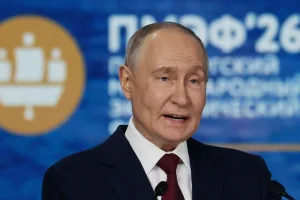
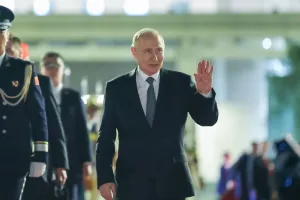
Wars rarely produce clear winners, but they almost always produce opportunists. The escalating confrontation involving the United States, Israel and Iran is no exception. While missiles fly across West Asia and diplomatic tempers flare, another major power is quietly extracting advantage from the turmoil: Russia. For President Vladimir Putin, the conflict arrives at a moment when Moscow’s strategic room for manoeuvre has narrowed under the weight of sanctions and the prolonged war in Ukraine.

Yet crises in international politics often reshape the diplomatic chessboard, and the Iran confrontation is doing precisely that. The Kremlin is positioning itself as a potential intermediary between rival camps, projecting the image of a responsible global actor capable of calming a volatile region. This diplomatic posture may appear ironic. Russia continues its own grinding war in Ukraine, launched in 2022 and condemned by the United Nations General Assembly as a violation of international law. But international politics has rarely rewarded consistency; it rewards leverage. By maintaining lines of communication with Tehran, Washington and several Gulf capitals simultaneously, Moscow can present itself as a channel through which dialogue might still flow.

That role matters in the Middle East. The region has long been a theatre of great-power competition, and influence there carries strategic prestige as well as practical benefits. If Russia succeeds in positioning itself as a mediator or indispensable interlocutor, it reinforces its claim to remain a central player in global security despite Western attempts to isolate it. Yet diplomacy is only one part of the story. The more immediate dividend lies in the energy market. Russia’s federal budget is heavily dependent on oil revenues, and fluctuations in global crude prices can dramatically affect the Kremlin’s fiscal health. Conflict in the Persian Gulf ~ especially one that threatens shipping routes such as the Strait of Hormuz ~ inevitably pushes prices upward. When oil climbs far above the benchmark price assumed in Russia’s budget planning, Moscow’s war chest grows correspondingly.

Higher energy prices therefore carry geopolitical implications. They provide the Russian state with additional resources at a time when sustaining military operations in Ukraine remains expensive and politically sensitive. What appears to be a distant regional crisis can thus translate into tangible financial relief for the Kremlin. There is also a subtler political dimension. If the disruption of Iranian oil exports forces Western governments to reconsider or relax certain energy sanctions to stabilise global markets, Russia could benefit indirectly.

Even small shifts in sanctions enforcement or global supply dynamics may improve Moscow’s economic outlook. None of this means Russia controls events in West Asia. The conflict’s trajectory will ultimately depend on decisions taken in Washington, Tehran and Jerusalem. But geopolitics often rewards those who know how to exploit turbulence rather than avoid it. In that sense, the Iran crisis is becoming more than a regional confrontation. It is also a reminder that in an interconnected world, one war can unexpectedly strengthen a power fighting another.

Kitchen Security

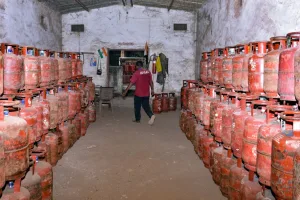
War in West Asia rarely feels distant in India’s kitchens. When tensions rise around the Persian Gulf and the Strait of Hormuz, the consequences travel quietly through tankers, ports, and refineries before arriving at the most ordinary place in the economy: the household cooking stove.

Statesman News Service | New Delhi |

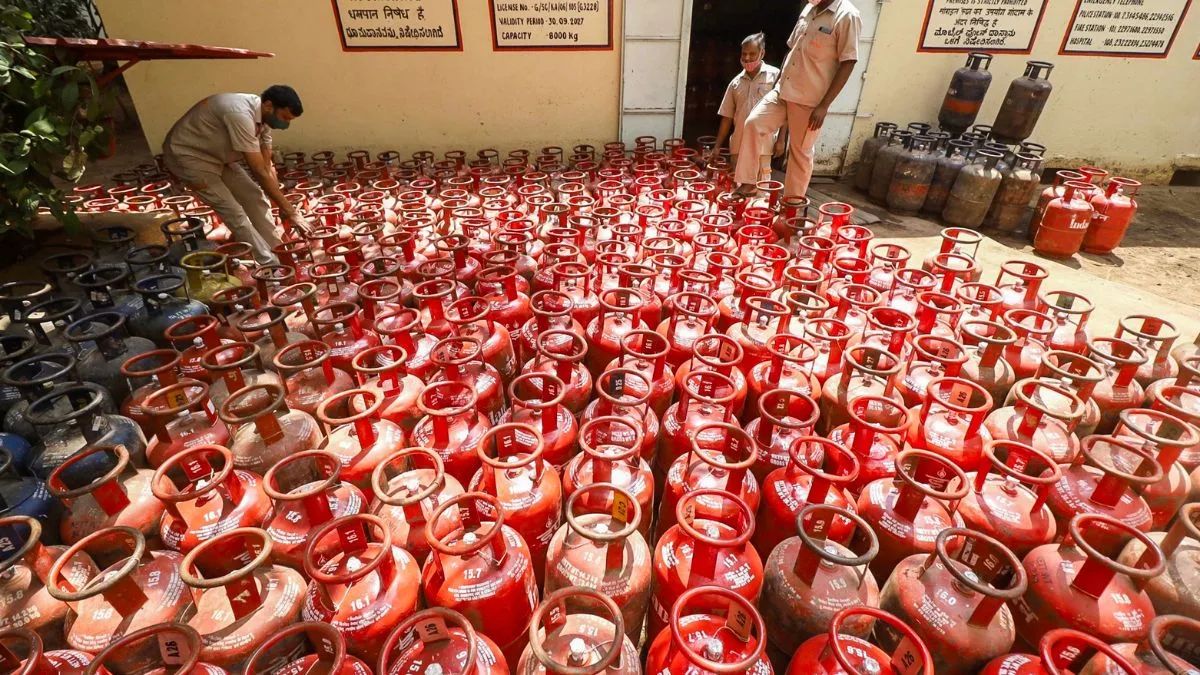
War in West Asia rarely feels distant in India’s kitchens. When tensions rise around the Persian Gulf and the Strait of Hormuz, the consequences travel quietly through tankers, ports, and refineries before arriving at the most ordinary place in the economy: the household cooking stove. India’s energy planners are aware of this chain of vulnerability. The country imports roughly four-fifths of its crude oil and a similarly large share of its liquefied petroleum gas (LPG).

Much of it originates in Gulf producers such as Saudi Arabia, Qatar and the United Arab Emirates, and passes through the narrow Strait of Hormuz, one of the world’s most sensitive maritime chokepoints. When conflict threatens shipping in that corridor, energy security quickly becomes a domestic governance issue. Recent government steps reflect this reality. The invocation of the Essential Commodities Act to regulate natural gas supply signals a familiar administrative instinct: protect households first, and manage shortages elsewhere. In practical terms, that means domestic LPG cylinders receive priority even if restaurants, hotels or industrial users face temporary scarcity. Oil marketing companies such as Indian Oil Corporation, Bharat Petroleum and Hindustan Petroleum are expected to adjust production and distribution to keep household supply steady.

From a political perspective, the logic is obvious. Over the past decade, programmes such as Pradhan Mantri Ujjwala Yojana have expanded LPG access to millions of Indian homes. Cooking gas is no longer merely a commodity; it is a symbol of welfare policy and social mobility. Any disruption in domestic cylinders would carry far greater political and social consequences than shortages in commercial supply. Yet these short-term administrative measures cannot hide a deeper structural problem. India’s energy system remains heavily exposed to geopolitical turbulence in West Asia.

Even as New Delhi has diversified crude purchases ~ importing discounted oil from Russia after the Ukraine war and expanding supplies from the United States and Africa ~ the logistics of LPG and LNG remain tied closely to Gulf production and Hormuz transit routes. Strategic petroleum reserves offer only partial insurance. India’s crude storage facilities at places such as Visakhapatnam, Mangaluru and Padur provide a limited buffer, but LPG reserves are far smaller and harder to substitute domestically. Refineries can tweak output, but they cannot instantly replace large volumes of imported cooking gas. The lesson is not that India faces an imminent energy collapse.

It does not. The system is resilient enough to absorb short disruptions. But each crisis exposes the same strategic imbalance: a fast-growing economy whose household energy security still depends on a fragile maritime corridor thousands of kilometres away. Reducing that vulnerability will require more than emergency orders. It demands long-term diversification of supply chains, expanded gas storage, and accelerated investment in alternatives such as electric cooking and renewable energy. Until those transitions deepen, geopolitical tensions in distant waters will continue to echo in Indian kitchens.

New Benchmarks

Reliable macroeconomic statistics are fundamental to economic governance. Last year, the IMF, even while revising India’s GDP growth projections upwards, assigned a “C” rating to our National Accounts Statistics in its Data Quality Assessment due to methodological weaknesses.

Statesman News Service | New Delhi |

Reliable macroeconomic statistics are fundamental to economic governance. Last year, the IMF, even while revising India’s GDP growth projections upwards, assigned a “C” rating to our National Accounts Statistics in its Data Quality Assessment due to methodological weaknesses. It did not mean that our GDP numbers were incorrect, but rather reflected the inadequacy of our statistical systems compared with international practices. As we know, GDP is the market value of all goods and services produced in an economy over a year.

There are various methods to measure it; a commonly used measure is the production method recommended by the UN System of National Accounts 2008 (UNSNA), which calculates the gross value added (GVA) at basic price and then adds taxes, which increase the market prices, and deducts subsidies, which reduce the market prices. Thus calculated, GDP at market price is then converted into real GDP by dividing it by the GDP deflator, which represents the inflation compared to the base year.

This is where we get into problems, because GVA again is the difference between the final output and the intermediate consumption, and they need different deflators. Many OECD countries use what is called the double deflation method, which deflates output and intermediate consumption separately, the former by using Output Price Index and the latter by Input Price Index. In contrast, in India, we use a single price index to deflate both. It causes problems because if input prices rise faster than output prices or otherwise, single deflation can overstate or understate real growth.

The problem is particularly significant in manufacturing, which uses raw materials and many imported components, being heavily integrated into global value chains, but it also affects services like software, cloud services, telecommunications infrastructure, etc., whose prices may change differently from final service prices. In India, national accounts and price indices are calculated relative to a base year, which serves as the benchmark for comparing economic activity and price levels over time. However, economic structures evolve continuously, new industries emerge, consumption baskets change, and technology alters production patterns. If statistical frameworks continue to rely on outdated base years, they may fail to capture these structural transformations.

While we use a particular base year, 2011-12, till now, in most OECD countries, real GDP is estimated by using chain-linked volume measures, which update base year weights annually, thus avoiding distortion from outdated price structures. For India, the GDP estimation poses further complexity because of the huge share of the informal economy, which employs over 80 per cent of our workforce and contributes around 50 per cent of our GDP, for which there is no reliable data; proxies have to be used instead, which often cannot capture the ground realities. During the last decade, India has witnessed many remarkable changes.

The phenomenal rise of digital services, including online commerce, fintech, digital platforms and AI, the formalisation of the economy because of GST and demonetisation, the rise of the start-up and innovation economy, expansion of service exports, the infrastructure and logistics transformation, and altered household consumption patterns due to all these have completely transformed our economic landscape. The 2011-12 base really needs to be updated urgently to reflect these realities. So, in February 2026, India proposed a major revision in estimating its most important macroeconomic metrics, by adopting 2022-23 as the new GDP base year, following the availability of 2022-23 data from Annual Survey of Industries (ASI), Annual Survey of Unincorporated Sector Enterprises (ASUSE) and the Household Consumption Expenditure Survey (HCES), as well as updated private corporate sector database of the Ministry of Corporate Affairs (MCA21, Version 3).

Side by side, a new Consumer Price Index (CPI) series with 2024 as the base year has replaced the earlier 2012-based price index. This was a comprehensive overhaul of our macroeconomic data architecture with methodology improvements to align with global statistical standards such as the UNSNA. We now have additional data from the GST Network, the technological backbone of GST, from the government’s Public Financial Management System (PFMS), and many digital transaction databases. It has also enabled the CSO, for the first time, to apply double deflation to a few sectors like registered manufacturing, electricity, gas, and formal mining, etc.

For agriculture and the informal sector, however, there is no alternative yet to a single deflator. The Index of Industrial Production (IIP), which measures industrial activity in the country, is also waiting to be updated from 2011-12 to a 2022-23 base. Earlier, private household consumption was used as a measure of demand in the economy; now, demand will be directly computed from the household consumption expenditure survey. While EPF/ESIC data will track formal employment, the contribution of the informal sector will be gauged from the ASUSE database as well as the Periodic Labour Force Survey (PLFS) data. Contribution of the digital economy will be captured from the respective databases, and e-Vahan and FASTag data will capture the logistics sector’s contribution, while PFMS data will accurately capture the government sector’s contribution to GDP.

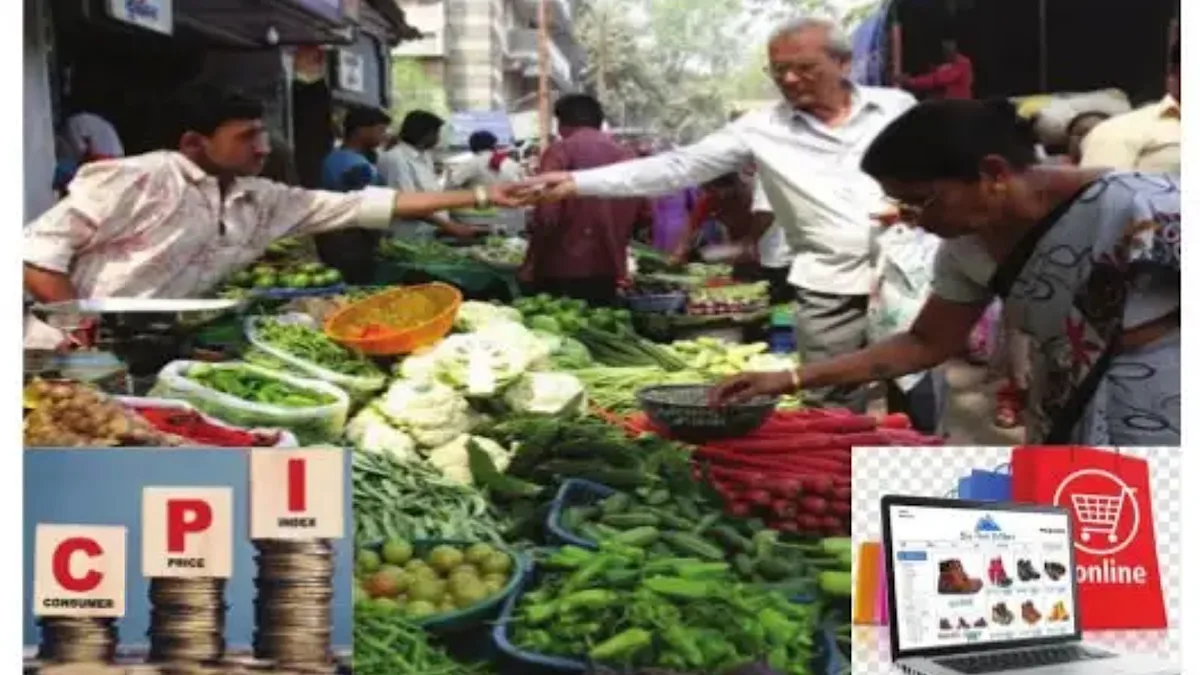
As regards the CPI, which is a weighted index, apart from base-year changes and basket updates, there are also changes in weights, besides expanded price collection methods. The revised Consumer Price Index basket contains 358 items, including 50 services, compared with 299 items in the 2012 index. Prices of these items are aggregated into detailed CPI subgroup indices, some of which are used as price indicators (deflators) in the estimation of real GDP. Food and beverages earlier claimed a weightage of 45.86 per cent in the CPI basket; now it is only 36.75 per cent, while weightage on housing has increased from 10 to 17.66 per cent, reflecting that with rising incomes, households spend relatively less on food. Inflation will now become less sensitive to food price shocks such as in monsoon-related spikes.

New services like OTT subscription, airline tickets, digital services and online purchases have been added, while obsolete items like VCR have been removed. An important improvement was the creation of three CPI indices: CPI-Rural, CPI-Urban and CPI-Combined (headline inflation); this combined CPI will now be used by the RBI as the official inflation measure for monetary policy. This replaces the earlier four indices for industrial, agricultural, rural, and urban non-manual employees. This also aligns with the UN-prescribed COICOP 2018 (Classification of Individual Consumption According to Purpose) framework, replacing the older six-group structure with a more granular 12 divisions. The revised system will now use 500-600 price indicators from CPI and WPI components, compared with about 180 deflators used earlier.

This greater granularity improves the precision of real GDP calculations. The IMF has welcomed the enhanced transparency and accuracy this new system will bring and has indicated that India’s rating may eventually be upgraded once the new system becomes fully operational. The revision has resulted in updating our growth rates for the past several quarters. The new series has revised the GDP growth for FY 2024 to 7.2 per cent, from 9.2 per cent in the old series, while for FY 2025, the growth has been revised upwards from 6.5 to 7.1 per cent. For the current fiscal, the growth estimate has been revised from 7.4 per cent earlier to 7.6 per cent now.

But the most remarkable has been the dramatic improvement in the manufacturing sector’s growth; it has delivered an impressive 13.3 per cent growth in Q3, FY2026, up from 10.8 per cent in the same quarter last year. While stronger manufacturing growth was expected from the IIP data, this has outperformed the best estimates of statisticians. Overall, the secondary sector is expected to grow by 12.5 per cent in FY 2026, compared to 8.5 per cent in the previous year, while the primary sector will slow down to 2.8 per cent from 5 per cent in the previous year.

While the revised framework promises greater accuracy and alignment with global statistical standards, challenges remain regarding data continuity, managing the increased methodological complexity from using many databases, transparency, and measurement of the informal economy. In the long run, the modernization of data architecture will certainly lead to more informed policymaking and economic governance, and stronger integration of India into the global economic system.

(The writer is a commentator, author and academic. Opinions expressed are personal)