Logo

₹50-crore defamation war: Court shields Kumar Sanu, restrains ex-wife and flags content on Google, Meta

A court order has temporarily blocked the circulation of allegedly defamatory content linked to the veteran singer while the legal fight continues. The dispute also pulls major digital platforms into the controversy.

Statesman News Service | New Delhi |

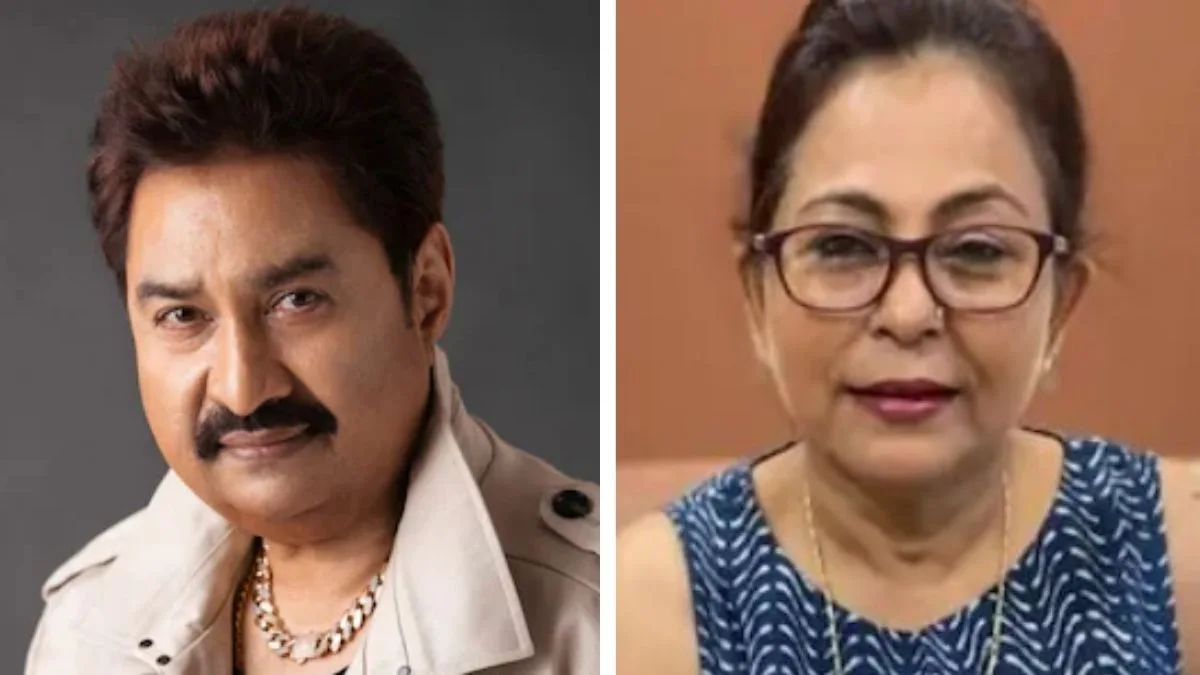
Veteran playback singer Kumar Sanu is once again in the headlines, but not for a nostalgic 90s hit. This time, the spotlight is on bitter legal fight involving his ex-wife, social media giants, and ₹50-crore defamation claim.

The latest twist? A court order that temporarily shields the singer from alleged defamatory content circulating online.

Court grants interim relief in defamation fight

A major development has emerged in the defamation case filed by Kumar Sanu. The court has granted him interim protection in the matter against his former wife Rita Bhattacharya, along with digital platforms Google and Meta Platforms, as well as several unidentified individuals listed as John Doe defendants.

The legal action stems from a ₹50-crore defamation suit the singer filed against his ex-wife. According to the case, certain interviews and statements allegedly harmed his reputation.

Also Read: ‘Jab Koi Baat Bigad Jaye’ proves real music never ages: Kumar Sanu celebrates the timeless love for his 1990 hit

Earlier, the Bombay High Court had already restrained Rita Bhattacharya from giving “contentious interviews” against the singer.

The latest order now extends protection by restricting the circulation and publication of allegedly defamatory material online.

Lawyer says order highlights online accountability

Kumar Sanu’s lawyer, Sana Raees Khan, described the court’s decision as an important step in protecting personal reputation in the digital era.

She argued that social media platforms and search engines must take responsibility when defamatory material appears on their services. According to her, the interim relief ensures that the singer’s reputation remains protected while the case continues to be heard in court.

The order also instructs digital intermediaries to act according to the law and remove harmful content related to the case.

Digital platforms asked to act

The court’s order does more than just warn people. It directs digital platforms to prevent the spread of defamatory content linked to the singer.

This includes ensuring that material violating legal norms is removed or restricted. The order also covers unnamed parties who might circulate such content online.

Another legal battle over his identity

Interestingly, this is not the only legal fight involving Kumar Sanu.

In October last year, the singer approached the Delhi High Court seeking protection of his “personality and publicity rights.” The petition aimed to control the commercial use of his identity.

The request covered a wide range of attributes associated with him; including his name, voice, vocal style, mannerisms, images, caricatures, likeness, and signature.

The lawsuit alleged that several third parties were commercially exploiting the singer’s persona without permission.

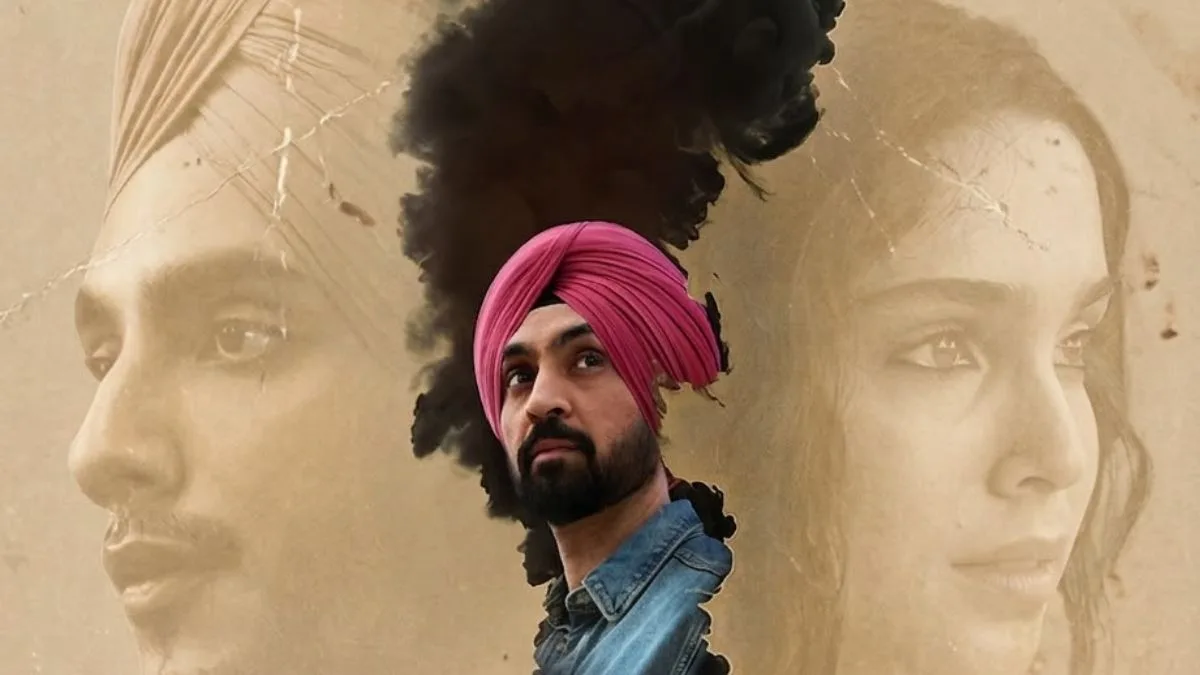
Diljit Dosanjh returns to Imtiaz Ali’s world of love with ‘Main Vaapas Aaunga’; first look sparks romance buzz

Imtiaz Ali’s new love story ‘Main Vaapas Aaunga’ has dropped its first look, and the posters are full of romance and mystery. With Diljit Dosanjh leading the cast and music by AR Rahman, the film already has fans talking.

Statesman News Service | New Delhi |

Fields, a bicycle, a quiet man staring into the distance! And suddenly the internet is curious again. Filmmaker Imtiaz Ali’s upcoming drama ‘Main Vaapas Aaunga’ has finally revealed its first look, and fans are already guessing what kind of emotional ride awaits them.

The posters dropped online and instantly gave off strong old-school romance vibes. Think long fields, dreamy visuals, and characters that seem to carry stories in their eyes. For a filmmaker known for turning love stories into emotional journeys, this teaser-like glimpse is enough to spark conversation.
And of course, presence of Punjabi superstar Diljit Dosanjh only adds to the excitement.


View this post on Instagram


A post shared by DILJIT DOSANJH (@diljitdosanjh)

Romance in the fields: The poster that started it all

One of the newly released posters captures a picturesque scene. Actress Sharvari is seen riding bicycle across green fields. Vedang Raina dressed as sardar runs behind her.

The visual feels playful yet nostalgic, almost like a page from classic love story. It hints at perhaps relationship that grows in simple rural setting.

Diljit’s mysterious character

Another poster shifts the mood slightly. In it, Diljit Dosanjh stands quietly in the middle of a field looking calm and thoughtful.

The expression on his face suggests a man carrying memories or emotions that are not yet revealed. In yet another still, Diljit appears holding a travel beverage cup. This tiny detail has already triggered speculation that his character might come from a big city, or possibly from abroad.

The posters don’t explain much about the story yet, but they do hint that Diljit’s character could have a layered journey.

Two timelines? Fans think so

From the visuals alone, it appears that film might unfold across two different timelines.

The rural setting with bicycle sequence feels youthful and nostalgic. Diljit’s composed presence with travel cup hints at different phase of life. Whether the story moves between past and present or between two different worlds remains a mystery.

For now, the posters are offering just enough clues to keep fans guessing.

Oscar-winning composer AR Rahman, lyricist Irshad Kamil, and director Imtiaz Ali are working together again for the film’s music. Their past collaborations have produced unforgettable songs.

The makers have already confirmed that the teaser will drop on Friday. The movie is scheduled to hit theatres on June 12, 2026.

Also Read: Punjabi power meets global pop: Diljit Dosanjh, Sia, David Guetta drop international track ‘Ranjha’

Explained: Do Opposition MPs have the numbers to impeach CEC Gyanesh Kumar?

Opposition parties say they have gathered signatures from more than 190 MPs to initiate an impeachment motion against Chief Election Commissioner Gyanesh Kumar, setting up a fresh confrontation in Parliament.

Statesman News Service | Mumbai |

The Trinamool Congress (TMC) and other Opposition parties are preparing to move an impeachment motion against Chief Election Commissioner (CEC) Gyanesh Kumar, claiming they have gathered enough MPs’ signatures to initiate the process in Parliament.

TMC MP Mahua Moitra said the Opposition has already secured the required support. “Required numbers have been signed. I think we are giving it today. The required numbers we have got, I think 193, think 120 something from the Lok Sabha and the remainder from the Rajya Sabha. So we have got more than enough numbers,” she said.

The move comes as Opposition parties escalate their confrontation with the Election Commission, alleging bias and raising questions about its functioning ahead of crucial elections.

What numbers are required to start an impeachment motion?

Under parliamentary rules, a motion seeking the removal of the Chief Election Commissioner can be introduced only if it is backed by a minimum number of MPs.

At least 100 members in the Lok Sabha or 50 members in the Rajya Sabha must sign the notice for the motion to be formally considered.

According to sources in the Trinamool Congress, 128 Opposition MPs from the Lok Sabha and 63 from the Rajya Sabha have already signed the notice seeking Kumar’s removal.

Explained
What numbers are needed to remove the Chief Election Commissioner?
  • To move the motion: At least 100 MPs in Lok Sabha or 50 MPs in Rajya Sabha must sign the notice.
  • To pass the motion: Both Houses must approve it with a special majority.
  • Special majority rule: More than 50% of the total membership of the House AND two-thirds of MPs present and voting must support it.
  • Final step: Once both Houses pass the motion, it is sent to the President of India for removal.

If submitted, the motion would trigger the same procedure used for removing a Supreme Court judge, as laid down under Article 324(5) of the Constitution.
For the motion to succeed, it must be approved in both the Lok Sabha and the Rajya Sabha by a special majority. This means at least two-thirds of the members present and voting must support it, and the votes in favour must also exceed half of the total strength of the House. Once both Houses pass the motion with this majority, it is forwarded to the President of India for final action.

The magic numbers
What it takes to remove the Chief Election Commissioner
House Total strength Minimum majority needed
Lok Sabha 543 At least 272 MPs + two-thirds of members present and voting
Rajya Sabha 245 At least 123 MPs + two-thirds of members present and voting

Why Opposition parties want the CEC removed

Opposition leaders say the move is aimed at holding the Election Commission accountable for what they allege is partisan conduct.
According to sources, the notice against CEC Kumar lists seven charges, including accusations of “partisan and discriminatory conduct in office”, intentional obstruction of enquiries into alleged electoral fraud, and actions that allegedly resulted in the disenfranchisement of voters.

Trinamool MP Kalyan Banerjee said several Opposition parties have backed the proposal. “The decision to bring the impeachment motion was taken by our leader, Mamata Banerjee. We have brought the motion. We have signed it, the Samajwadi Party has signed, Congress has signed, Sharad Pawar’s party has signed, DMK has signed, everyone has signed it,” he said.

Earlier, TMC MP Saugata Roy had also indicated that the party was mobilising support across Opposition ranks. “We are preparing an impeachment motion against the Chief Election Commissioner. More than 100 MPs are supporting us. We might submit it today. The Opposition will be seen united on this,” he told ANI.

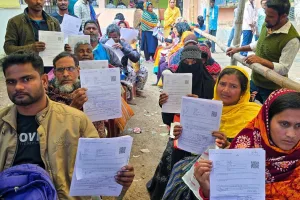
The move follows TMC’s allegations that Kumar acted at the behest of the ruling Bharatiya Janata Party (BJP) during the Special Intensive Revision (SIR) exercise in West Bengal. After challenging the exercise politically and legally, the party has now decided to raise the issue in Parliament.

West Bengal is expected to hold Assembly elections in a few weeks, with the TMC seeking to retain power while the BJP attempts to expand its presence after winning 77 seats in the 2021 polls.

BJP rejects allegations

The ruling BJP has strongly criticised the Opposition’s attempt to bring the impeachment motion.

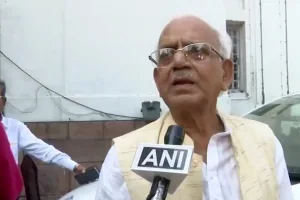
BJP MP Damodar Agrawal said targeting constitutional bodies in this manner was inappropriate.

“Putting such constitutional institutions in the dock and spreading misinformation about them is not good. The Election Commission is doing unbiased work. The INDIA alliance is only making proposals and not taking any action,” Agrawal said.

Earlier, BJP MP Anurag Thakur also attacked the Opposition over the move, accusing it of repeatedly disregarding constitutional norms.

“Whenever Congress discusses the Constitution, they face defeat because it was Congress that repeatedly disregarded the Constitution,” Thakur said.

Meanwhile, the Aam Aadmi Party (AAP) has backed the proposed motion, alleging that the Election Commission failed to address complaints raised by the party regarding electoral irregularities.

Punjabi power meets global pop: Diljit Dosanjh, Sia, David Guetta drop international track ‘Ranjha’

The collaboration brings together three artists from very different musical worlds. The single was even previewed to students in Toronto before its worldwide release.

Statesman News Service | New Delhi |

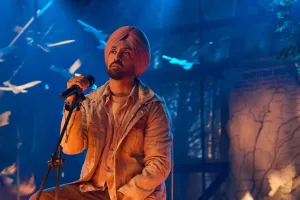
The global music party just got a brand-new Punjabi beat. And it’s loud enough to travel from Punjab to Paris and beyond. Punjabi superstar Diljit Dosanjh has teamed up with Australian pop sensation Sia and EDM powerhouse David Guetta for a fresh track titled ‘Ranjha’.

Released worldwide on March 13, 2026, the song is already turning heads for bringing three very different music worlds together: Punjabi, pop, and electronic dance music.


View this post on Instagram


A post shared by Billboard Canada (@billboardca)

A surprise first listen in Toronto

Before the song officially dropped, a lucky group of students at Toronto Metropolitan University got an early treat.

According to Billboard Canada, the students heard Ranjha on March 10 during a university course that explores Diljit Dosanjh’s growing global influence.

Punjabi soul meets global beats

The single has been released by Warner Music India and blends multiple musical styles.

At its heart, the song carries Punjabi lyrics and emotional storytelling. But layered over it are electronic beats from David Guetta and soaring pop vocals from Sia. The result is track designed both for dance floor and for listeners who enjoy emotional melodies.

This kind of cross-genre collaboration is becoming more common as South Asian artists partner with international pop and EDM stars.

Diljit on working with Sia and Guetta

For Diljit Dosanjh, the collaboration felt both familiar and exciting.

The singer shared that the song keeps its Punjabi heart intact while also connecting with audiences worldwide. Working with Sia again felt natural for him, while David Guetta’s energetic production added a new dimension to the track.

Diljit explained that Ranjha is the kind of song that makes people dance but also feel something emotionally at the same time.

Not their first musical reunion

Interestingly, this isn’t the first time Diljit and Sia have joined forces.

The duo previously collaborated on 2023 song Hass Hass. It found success among international listeners. Their new track builds on that chemistry while adding David Guetta’s signature electronic sound to mix.

Diljit Dosanjh’s expanding global journey

Over the years, Diljit Dosanjh has built reputation for delivering hit songs such as ‘Do You Know’, ‘Lover’, ‘Born to Shine’.

His popularity is not limited to music. The singer-actor has also impressed audiences in films like ‘Udta Punjab’, ‘Soorma’, and ‘Amar Singh Chamkila’.

On the big screen, he was most recently seen in ‘Border 2’.

Also Read: Kapoor family copyrights ‘Rishi Kapoor’ name, anyone using it now needs permission

BAN vs PAK 2nd ODI: Rain, run-out drama and Sadaqat heroics seal Pakistan’s 128-run DLS win

The ODI between Bangladesh and Pakistan at the Sher-e-Bangla National Cricket Stadium in Dhaka on Friday was suspended due to heavy rain and lightning, with the result yet to be determined.

Neha Buswal | New Delhi |

The second ODI between Bangladesh and Pakistan at the Sher-e-Bangla National Cricket Stadium in Dhaka on Friday was temporarily suspended due to heavy rain and lightning before Pakistan eventually secured a comprehensive 128-run victory via the DLS method to level the three-match series 1-1.

Earlier in the match, Pakistan were bowled out for 274 in 47.3 overs, with a bizarre run-out involving Salman Ali Agha triggering a dramatic middle-order collapse.

Opting to bat, Pakistan made a flying start through Maaz Sadaqat, who produced an aggressive knock of 75 off 46 balls, reaching his maiden ODI fifty in just 31 deliveries. Alongside Sahibzada Farhan (31), Sadaqat stitched together a 103-run opening partnership, putting Bangladesh under early pressure.

After the openers departed, Pakistan rebuilt through Mohammad Rizwan and Agha. The pair added 109 runs for the fourth wicket, with Agha scoring 64 off 62 balls and Rizwan contributing 44, putting the visitors in a strong position at 231/3.

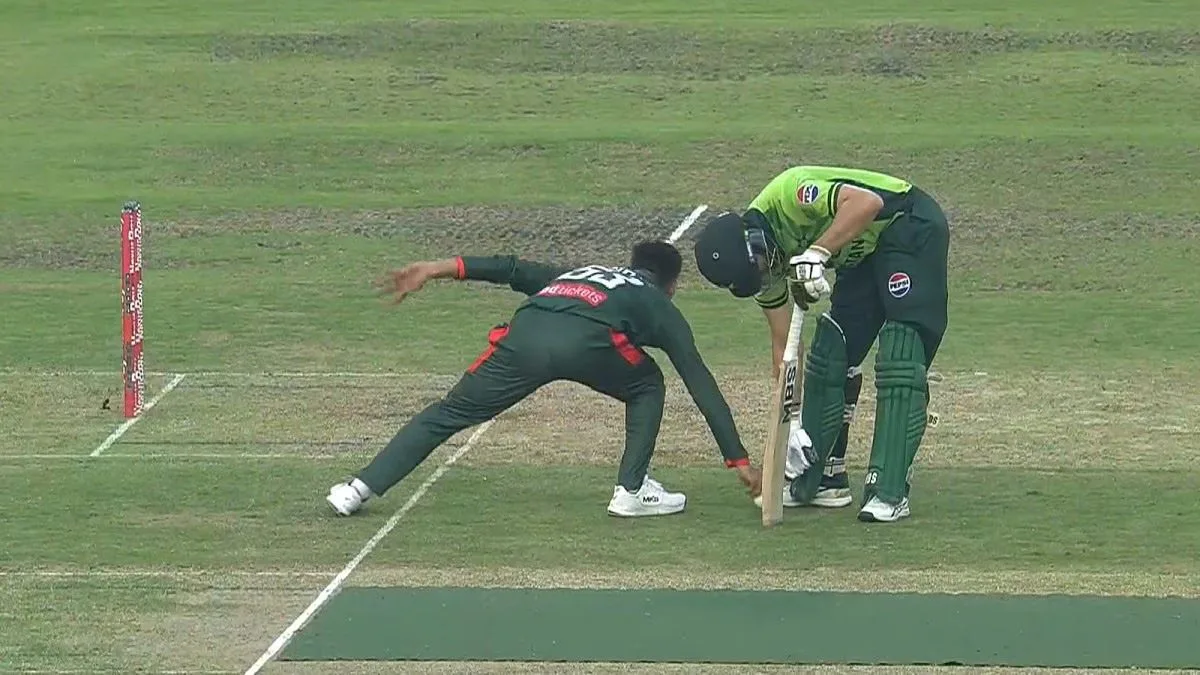
However, the momentum shifted dramatically in the 39th over, bowled by Bangladesh captain Mehidy Hasan Miraz.

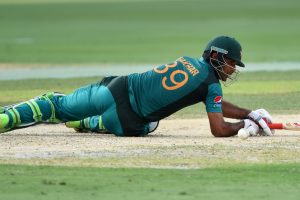
Rizwan gently pushed a delivery back down the pitch, and the ball rolled towards Agha, who had backed up at the non-striker’s end and was outside his crease. As the ball brushed his pads, Agha instinctively bent down and picked it up to return it to the bowler. Miraz quickly grabbed the ball and broke the stumps while Agha was still outside the crease, appealing for a run-out.

The on-field umpire referred the decision to the third umpire, who ruled in Bangladesh’s favour, confirming Agha’s dismissal. The Pakistan batter walked back visibly frustrated after the unusual dismissal.

The run-out proved to be the turning point of the innings. Pakistan lost seven wickets for just 44 runs, collapsing from a commanding position to be bowled out before completing their full quota of overs.

For Bangladesh, Rishad Hossain was the standout performer with 3/56, while captain Miraz finished with 2/34. Taskin Ahmed and Mustafizur Rahman also chipped in with crucial wickets to restrict Pakistan.

Bangladesh were 27/3 in 6.3 overs in the chase when play was halted due to rain and lightning, with Shaheen Afridi picking up two wickets for nine runs before the stoppage. While the rain later eased to a drizzle, frequent lightning and wet outfield conditions prevented an immediate restart.

After a delay of two hours and 15 minutes, play eventually resumed with revised conditions under the Duckworth-Lewis-Stern (DLS) method. The match was shortened to 32 overs per side, leaving Bangladesh with a challenging revised target of 243 runs.

Litton Das (41 off 33) and Towhid Hridoy (28 off 38) briefly revived Bangladesh’s hopes with a 58-run partnership for the fourth wicket after the resumption.

However, Sadaqat, who had earlier impressed with the bat, turned the game decisively in Pakistan’s favour with the ball. He dismissed Litton to break the stand and went on to claim 3/23, triggering a dramatic collapse.

Once the partnership was broken, Bangladesh slipped rapidly from 73/4 to 114 all out in 23.3 overs, handing Pakistan a convincing 128-run victory via DLS.

Haris Rauf also played a key role with three wickets, while Shaheen Afridi finished with two to wrap up the innings.

Sadaqat’s outstanding all-round performance of 75 runs and 3/23 earned him the Player of the Match award.

Earlier in the day, Pakistan also suffered an injury scare when Hussain Talat was stretchered off and taken to hospital after sustaining a shoulder injury.

With the result, the three-match series is now level at 1-1, with the decider scheduled for March 15.

Toss and captain’s comments

After winning the toss on Friday, Bangladesh captain Mehidy Hasan Miraz said the team expected their bowlers to deliver again after the impressive performance in the first match.

Miraz praised Nahid Rana for his match-winning spell and said Bangladesh would look to take early wickets once again. He added that while the team is targeting a series-clinching victory, they will continue to focus on their processes and ensure the batting unit takes responsibility.

Pakistan skipper Shaheen Afridi, meanwhile, said the surface looked good with a hint of green and bounce. Afridi backed his batters to respond after the disappointing outing in the previous game and stressed the need to build partnerships through the middle overs to post a competitive total.

Pakistan made one change, bringing in Haris Rauf in place of Abrar Ahmed.

Playing XIs

Pakistan: Sahibzada Farhan, Maaz Sadaqat, Shamyl Hussain, Mohammad Rizwan (wk), Salman Ali Agha, Hussain Talat, Abdul Samad, Faheem Ashraf, Shaheen Afridi (c), Mohammad Wasim Jr, Haris Rauf.

Bangladesh: Saif Hassan, Tanzid Hasan Tamim, Najmul Hossain Shanto, Litton Das (wk), Mehidy Hasan Miraz (c), Tawhid Hridoy, Afif Hossain, Rishad Hossain, Taskin Ahmed, Mustafizur Rahman, Nahid Rana.

Family wants Netaji ashes back, daughter may file petition

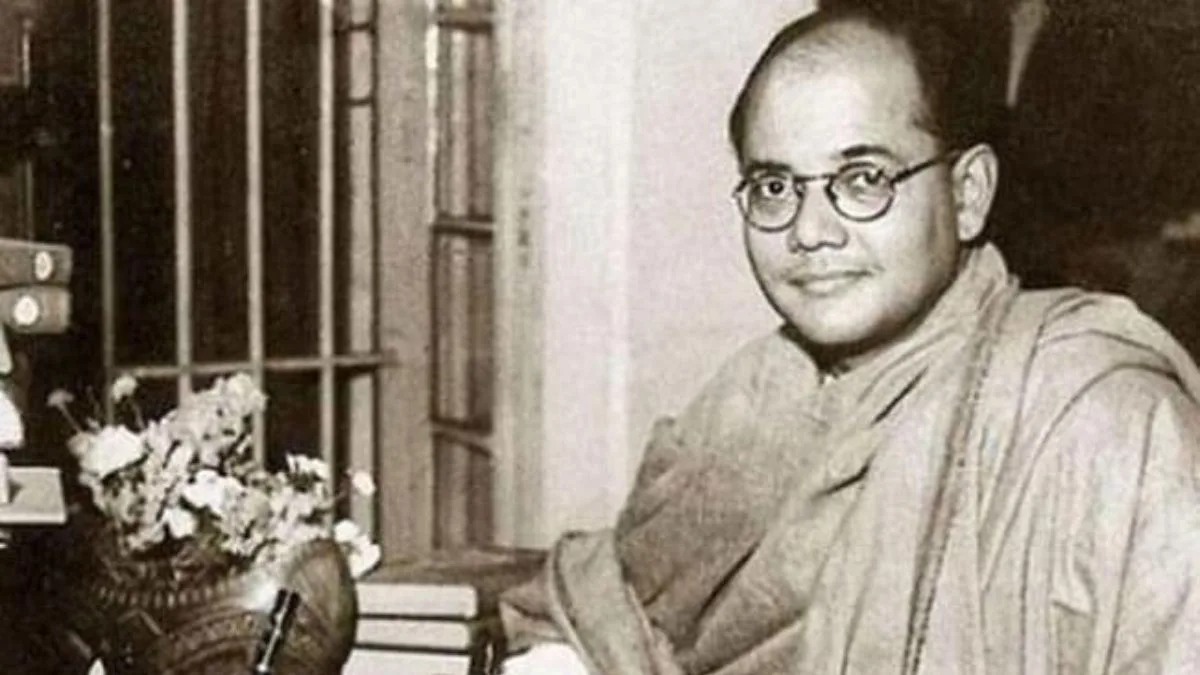
A Supreme Court petition on Netaji Subhas Chandra Bose’s remains kept at Tokyo’s Renkoji Temple was withdrawn after the court said it prefers a direct plea from his daughter Anita Bose Pfaff.

Jayanta Roy Chowdhury | New Delhi |

A petition moved before the Supreme Court seeking directions on the remains believed to be those of freedom fighter Subhas Chandra Bose was withdrawn on Thursday after a bench of the apex court said it would prefer to receive a direct application from Netaji’s daughter and sole heir Prof Anita Bose Pfaff.

Ashis Ray, Netaji’s grand-nephew and an author on the freedom fighter, told UNI that he had moved the Supreme Court seeking directions on the remains after years of inaction despite repeated appeals from Netaji’s daughter, and added that she heard the court proceedings and that he would “request Professor Bose Pfaff to favourably consider the Court’s opinion”.

“What prompted me in filing the case was a lack of movement despite Netaji’s daughter and sole heir, my aunt Anita Bose Pfaff, consistently over a long period publicly appealing for a transfer of her father’s remains from Tokyo to India for a final disposal,” Ray, said in an interview to the news agency.

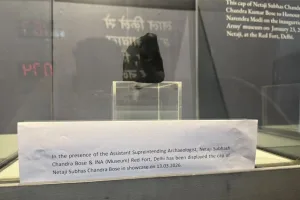
The ashes believed to be those of Bose have long been kept at the Renkoji Temple in Japan. Bose was reported to have died following an air crash in Taipei in 1945, a claim that has remained the subject of decades of debate in India.

Ray said his résearch-for the book led him to conclude that documentary evidence overwhelmingly supports the plane crash account.

“My book is based on overwhelming documeritary evidence, unearthed by 11 different multinational investigations, all of which reached the same conclusion that he died as a result of the plane crash at Taipei on August 28, 1945,” he said.

He said he had filed the petition as his position was consistent with that of Bose’s daughter and heir. “The only view that matters is Anita’s. She is the next of kin. My petition is consistent with her position on the matter,” Ray said.

Several official inquiries have examined the circumstances surrounding Bose’s reported death. Ray noted that earlier investigations backed the plane crash theory.

“The Shah Nawaz Committee and the Justice Khosla Commission reports, supporting Netaji’s death after the crash, were accepted by the Government of India,” he said.

However, the findings of the Mukherjee Commission of Inquiry, which questioned the crash narrative, were rejected by the government.

Ray added that the Indian government has long acknowledged the remains kept in Tokyo.

“The Indian government has paid for the upkeep of Netaji’s remains at Renkoji Temple since around 1950. Indian presidents and prime ministers have visited Renkoji to pay respects to the remains,” he said.

Earlier in the day, Ray issued a statement thanking the Supreme Court for hearing his plea regarding the repatriation of Bose’s remains.

“I am indebted to the Honourable Supreme Court of India for kindly hearing my petition seeking directions to bring Netaji Subhas Chandra Bose’s mortal remains from Tokyo to India,” he said.

Ray said the court had indicated that it would prefer to receive a direct application on the matter from Bose’s daughter while hearing the petition which was filed by him through senior advocate Abhishek Manu Singhvi

“I respect the Court’s view that it would prefer to receive a direct application from Netaji’s daughter and sole heir Professor Anita Bose Pfaff on the matter. Accordingly, I will request Professor Bose Pfaff to favourably consider the Court’s opinion,” he said, adding that she attended the hearing via live video.

Earlier two months ago, just before Netaji’s birth anniversary, his daughter Anita Bose Pfaff had also sought the return of the ashes kept at Renkoji temple at Japan, which she and many members of her family believe to be Bose’s mortal remains.

“As Netaji’s daughter I invite the Indians of today who still revere him to support his posthumous return from exile; to support the transfer of his mortal remains to India for a final and fitting disposal,” Pffaf had said in a statement WhatsApped to UNI.

Pfaff said that Netaji, who spent much of his life in forced exile while fighting for India’s freedom, would have been deeply distressed that his remains are still kept outside his motherland more than 80 years after his death and 78 years after India became free.

Three members of the Bose family, including Netaji’s daughter Anita Pfaff, Dwarka Nath Bose, a well-known physicist and son of his elder brother, and Ardhendu Bose, another nephew of Netaji, had in October 2016 and December 2019, requested the government to order a DNA test of the ashes at Renkoji, in a bid to end the controversy. However, this has not been done so far, members of the family said.

Sunrisers Leeds’ X account suspended hours after signing Pakistan spinner Abrar Ahmed in The Hundred auction

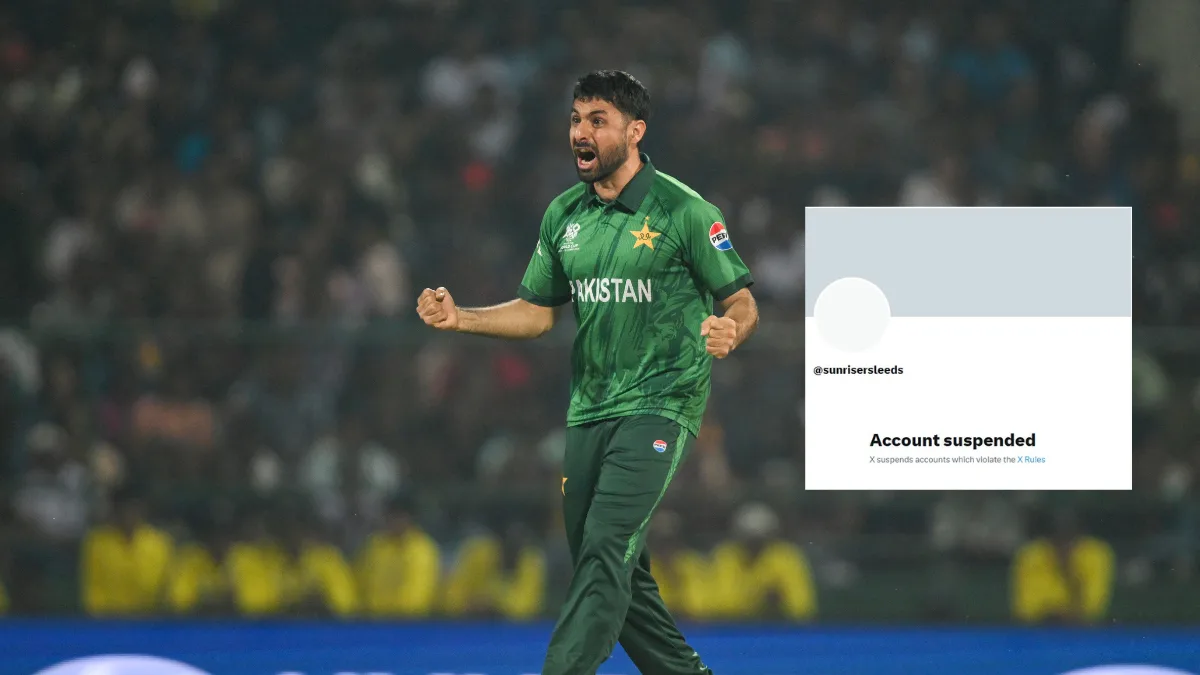
Just hours after the signing Pakistan’s Abrar Ahmed, the franchise’s official account on X (formerly Twitter), was suspended.

Statesman News Service | New Delhi |

Backlash against Sunrisers Leeds intensified after the franchise signed Pakistan leg-spinner Abrar Ahmed during The Hundred 2026 men’s auction on Thursday, with the team’s official X account getting suspended just hours after the announcement.

Abrar was bought for £190,000 (around Rs 2.3 crore), making him the first Pakistani international to be signed by an Indian-owned team in the tournament. The move sparked sharp criticism from several Indian fans, many of whom took to social media to express anger towards the franchise and its owners.

Just hours after the signing, the franchise’s official account on X (formerly Twitter) was suspended. While the platform has not provided a specific reason, users attempting to access the account are met with a message stating, “Account suspended. X suspends accounts that violate the X rules.”


The franchise is owned by the Sun TV Network, which recently acquired the team previously known as the Northern Superchargers. The company bought a 49 per cent stake from the England and Wales Cricket Board (ECB) and the remaining 51 per cent from Yorkshire for approximately £100 million.

Earlier reports had suggested that teams owned by Indian Premier League franchises would avoid bidding for Pakistani players, a stance that had drawn criticism from several members of the English cricket fraternity. The early stages of Thursday’s auction appeared to support those expectations until Abrar was eventually picked.

No Pakistan player has featured in the Indian Premier League since 2009, and IPL franchise owners investing in T20 leagues around the world have generally refrained from signing players from the country.

The ECB had earlier clarified that auction selections would be based purely on “cricketing performance, availability, and the needs of each team.” Across the competition’s first five seasons, nine Pakistani players have featured in The Hundred, though none of the country’s female cricketers were picked in the women’s auction earlier this week.

Abrar was the second Pakistan player sold in Thursday’s auction after mystery spinner Usman Tariq was bought by the Birmingham Phoenix for £140,000. Meanwhile, several other Pakistani cricketers, including Saim Ayub, Haris Rauf and Shadab Khan, went unsold.

Led by captain Harry Brook and coached by Daniel Vettori, Sunrisers Leeds also picked up Ryan Rickelton, Zak Crawley, Matt Potts and Dan Lawrence during the early stages of the auction.

The 2026 edition of The Hundred is scheduled to run from July 21 to August 16, featuring 34 men’s and 34 women’s matches.

SC flags risks of mandatory menstrual leave, says law could discourage employers from hiring women

The Supreme Court cautioned that a law mandating menstrual leave could unintentionally affect hiring patterns, even as the court reiterated the importance of menstrual health and dignity for women.

Statesman News Service | New Delhi |

The Supreme Court on Friday raised concerns about making menstrual leave compulsory, with Chief Justice Surya Kant warning that such a law could unintentionally affect women’s chances of getting jobs.

Hearing a petition seeking directions to states to introduce menstrual leave policies, the Chief Justice said that while awareness about menstrual health is important, turning the issue into a mandatory legal requirement could have unintended consequences in workplaces.

The plea, filed by lawyer Shailendra Mani Tripathi, asked the court to ensure that women, including students and employees, are granted leave during menstruation.

Chief Justice Surya Kant said employers might hesitate to recruit women if the law required them to provide menstrual leave.

“Creating awareness and sensitisation is different… but the moment you bring in a law mandating menstrual leave, nobody will hire them (women),” he said.

According to him, some organisations could begin to see women employees as a “liability”, which may ultimately reduce hiring opportunities.

The Chief Justice also cautioned that such a move could reinforce stereotypes. “They will call women inferior (and say) menstruation is something ‘bad’ happening to them.”

During the hearing, Senior Advocate MR Shamshad referred to steps taken by some states and institutions. He pointed out that Kerala had already taken a step in this direction. In 2013, the state government allowed menstrual leave for women students in its universities, saying the move was meant to support a more gender-just society.

The Chief Justice responded that such measures, when taken voluntarily by institutions, are different from making them compulsory through legislation. If the requirement becomes a legal obligation, he said, employers may avoid hiring women altogether.

“The moment you say ‘compulsory in law’, nobody will give them jobs…Nobody will take them in judiciary or government jobs… their career is over. They will say ‘you should sit at home…’.”

Also Read: Why the Supreme Court now wants AI to handle case listing and bench allocation

‘Cricket is an emotion in India’: Suryakumar Yadav thanks fans after T20 World Cup triumph

In an emotional video released by the Board of Control for Cricket in India (BCCI) on Friday on X, Suryakumar thanked Indian supporters for their relentless backing, saying the victory would not have been possible without their prayers and support.

Statesman News Service | New Delhi |

After achieving the ultimate prize with a historic third title at the ICC Men’s T20 World Cup, India captain Suryakumar Yadav dedicated the triumph to millions of supporters who stood by the team throughout the tournament. The skipper expressed heartfelt gratitude to fans across the country for their unwavering love and encouragement.

In an emotional video released by the Board of Control for Cricket in India (BCCI) on Friday on X, Suryakumar thanked Indian supporters for their relentless backing, saying the victory would not have been possible without their prayers and support.

“Dear Team India fans, first of all, a heartfelt thank you. We exist because of your support and blessings. This World Cup trophy belongs to the whole of India,” Suryakumar said in the video.


The captain emphasised that the triumph was not just the team’s achievement but the shared dream of millions of cricket lovers across the country.

The final drew massive global attention, recording a peak concurrent viewership of 82.1 crore (821 million) on JioHotstar, while a sea of blue, 86,824 spectators, packed the Narendra Modi Stadium for the summit clash.

“When we win, it is not just our victory. It is the dream of those children who grow up with a bat and ball and dream of playing for the country. It is for the fans who fill stadiums and make them feel like home, and for the millions who support us from their homes,” he added.

Suryakumar also acknowledged the role of fans’ prayers and unconditional love in motivating the players during difficult moments in the tournament.

“Your prayers and unconditional love give us strength. Words are not enough to express our gratitude to all of you. In the end, cricket is not just a game in India; it is an emotion. And this victory is for all of you,” he concluded.

India secured the trophy with a dominant 96-run victory over New Zealand in the final at the Narendra Modi Stadium on Sunday. The win made India the first team to claim three T20 World Cup titles and the first to successfully defend the trophy on home soil.

With this triumph, Suryakumar also joined an elite list of Indian captains that includes MS Dhoni and Rohit Sharma, who have led India to T20 World Cup glory.

Will Israel target Iran’s new leader Mojtaba Khamenei? Here’s what Netanyahu said

Israel’s prime minister said regional dynamics are shifting and hinted at stronger action against Iran-linked groups, while insisting that any political change in Tehran ultimately depends on its citizens.

Statesman News Service | Mumbai |

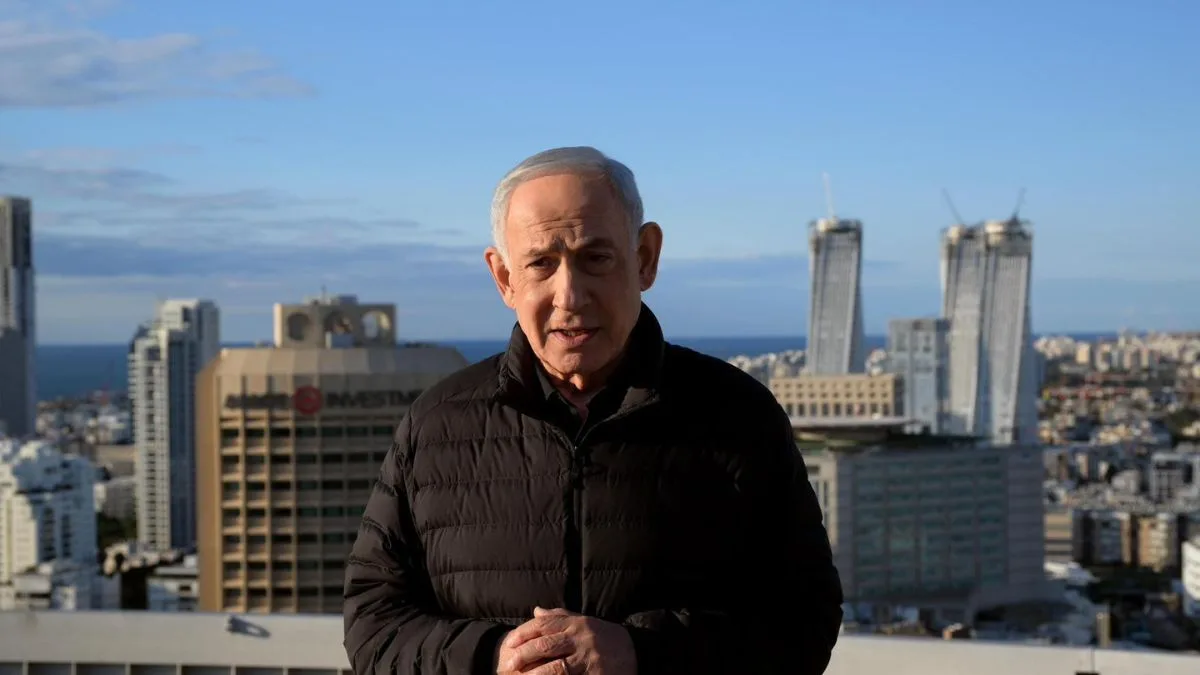
Israeli Prime Minister Benjamin Netanyahu has issued a sharp warning directed at Iran’s new supreme leader, Ayatollah Mojtaba Khamenei, saying Israel would not rule out taking action against him in the same way it had targeted other leaders it considers hostile.

The remarks come as tensions between Israel and Iran remain high, with both countries accusing each other of fuelling instability across the Middle East. Israel has repeatedly alleged that Tehran supports militant groups in several parts of the region, while Iran has rejected the charges and criticised Israeli military operations.

When asked whether Israel could attempt to target Mojtaba Khamenei, the son and successor of Iran’s former supreme leader, Netanyahu stopped short of giving a direct answer but made it clear that Israel does not intend to shield leaders it sees as responsible for supporting militant networks.

“I wouldn’t issue life insurance policies on any of the leaders of the terrorist organizations. This is their patron of terrorism. And I don’t intend to provide an exact report here about what we are planning or what we are going to do,” Netanyahu said.

The Israeli prime minister also criticised the new Iranian leader, describing him as heavily influenced by the Islamic Revolutionary Guard Corps (IRGC). According to Netanyahu, Khamenei is “a puppet” of the powerful military force and “cannot show his face in public”.

Netanyahu claims regional balance is changing

Netanyahu suggested that the strategic situation in the Middle East has shifted in recent years, with Israel taking a more assertive approach in confronting threats linked to Iran.

“Even now it can be said with certainty: This is no longer the same Iran. This is no longer the same Middle East. And this is also not the same Israel. We are not waiting, we are initiating, we are attacking. And we are doing so with a force the like of which has not been seen before,” he said.

He also indicated that Israeli actions are aimed at weakening Iran’s leadership and potentially creating conditions that could trigger political change within the country.

Israeli leader says change in Iran depends on its people

Netanyahu said Israel’s efforts could help open the door for change inside Iran, but acknowledged that the final outcome would depend entirely on the Iranian people.

“I have added another goal: to create the conditions for the Iranian people to overthrow this terrible tyrannical regime. To create conditions doesn’t guarantee that it will happen. And I told them just now in what I said a moment ago. I said ‘It’s up to you.’ It depends on you,” he said.

At the same time, he admitted that outside pressure alone cannot determine Iran’s political future.

“You can lead someone to water, but you can’t make them drink,” Netanyahu said, referring to the possibility of a popular uprising against the Islamic Republic.

Israel has carried out several operations in recent years targeting what it describes as Iranian military assets and allied groups in neighbouring countries. Israeli officials say the aim is to prevent Tehran from strengthening its military footprint close to Israeli territory. Iran, however, denies the accusations and has repeatedly condemned Israeli strikes in the region.

‘Will countrymen be rid of this crisis?’: Arvind Kejriwal questions PM Modi as West Asia conflict persists

Aam Aadmi Party (AAP) national convenor Arvind Kejriwal on Friday questioned Prime Minister Narendra Modi about the status of the Iranian leadership’s stance on the transit of Indian vessels through the Strait of Hormuz.

ANI | New Delhi |

Aam Aadmi Party (AAP) national convenor Arvind Kejriwal on Friday questioned Prime Minister Narendra Modi about the status of the Iranian leadership’s stance on the transit of Indian vessels through the Strait of Hormuz.

“Will countrymen soon be rid of serious crisis?”: Arvind Kejriwal questions PM Modi after talk with Iran President
Kejriwal took to X to ask the PM if the Iranian leadership has provided any concrete assurance, stating, “Prime Minister ji, has the President of Iran assured you that they will allow our ships to pass through Hormuz? Will the countrymen soon be rid of this serious crisis?”

The former Delhi Chief Minister’s remarks was in a direct response to a social media post by Prime Minister Narendra Modi, who held a high-stakes telephone conversation with Iranian President Masoud Pezeshkian on Thursday night to discuss the escalating conflict in West Asia.
In a post on X, PM Modi said he expressed deep concern over the escalation of tensions, particularly the loss of civilian lives and damage to civilian infrastructure in the region.

He said, “Had a conversation with Iranian President, Dr. Masoud Pezeshkian, to discuss the serious situation in the region. Expressed deep concern over the escalation of tensions and the loss of civilian lives as well as damage to civilian infrastructure.”
The Prime Minister also underlined that the safety and security of Indian nationals remains a key priority for the government. He noted that ensuring the unhindered transit of goods and energy supplies is equally important for India.

He added, “The safety and security of Indian nationals, along with the need for unhindered transit of goods and energy, remain India’s top priorities.
“The PM asserted that India remains committed to peace and stability and stressed the need for dialogue and diplomacy to resolve the crisis.”Reiterated India’s commitment to peace and stability and urged for dialogue and diplomacy,” PM Modi concluded.
During the weekly press briefing, Ministry of External Affairs spokesperson Randhir Jaiswal on Thursday said that India is working to ensure the safety of its 9,000 nationals in Iran, with several students and others returning home through embassy assistance.
Jaiswal confirmed that External Affairs Minister S Jaishankar held three telephone conversations with his Iranian counterpart, Abbas Araghchi, to ensure the safety of commercial shipping and protect India’s energy security.

“External Affairs Minister and the Foreign Minister of Iran have had three conversations in recent days. The last one discussed issues pertaining to the safety of shipping and India’s energy security. Beyond that, it would be premature for me to say anything,” he said.
Notably, following these talks, stabilisation in the transit of Indian oil tankers through the Strait of Hormuz was secured, a crucial chokepoint for the nation’s energy imports.

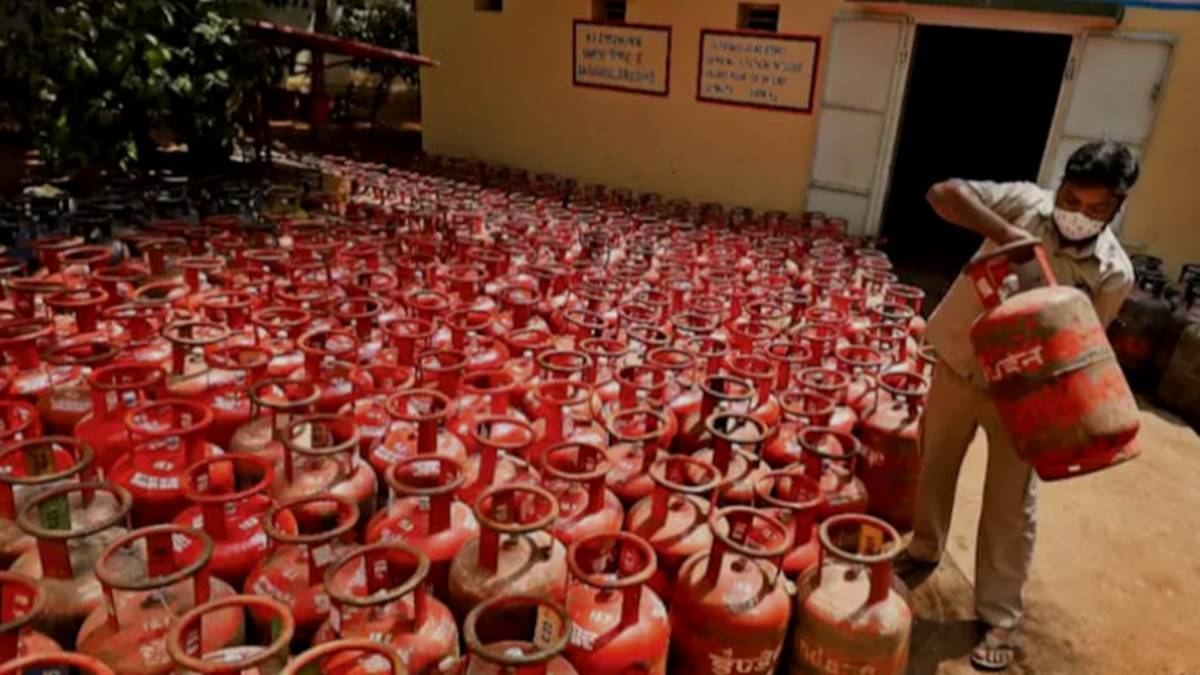
SOPs, panel to monitor LPG crisis formed by state govt

The meeting, convened primarily to address the crisis in LPG supply, finalised standard operating procedures (SOPs) to tackle the scarcity of domestic and commercial gas, sources added.

Statesman News Service | Kolkata |

Chief Minister Mamata Banerjee is believed to have asked district magistrates and police officials attending a high-level meeting at Nabanna today to remain vigilant against any alleged attempts to manipulate Electronic Voting Machines (EVMs) during the upcoming elections, sources said.

The meeting, convened primarily to address the crisis in LPG supply, finalised standard operating procedures (SOPs) to tackle the scarcity of domestic and commercial gas, sources added.

An official release from Nabanna stated that the SOPs were designed to ensure coordinated monitoring, stabilise supplies, and provide immediate redressal of public grievances. It emphasised the need to maintain uninterrupted services such as cooked mid-day meals, ICDS provisions, hospital diets, and essential domestic consumption.

The communiqué further announced that a 24×7 control room would be operational at Nabanna to serve as the central hub for coordination and monitoring. The control room will track LPG availability, stock positions, and movement across the state, while liaising with districts, distributors, and oil marketing companies (OMCs) to resolve bottlenecks. OMCs may also depute nodal officers to facilitate real-time information sharing.

The control room numbers are: Landline ~ 1070 / 033-2214-3526; Mobile ~ 8697981070.

The meeting also constituted a panel for LPG crisis monitoring, to be headed by Chief Secretary Nandini Chakraborty. The panel will regularly review the supply situation and provide policy guidance to stabilise LPG availability across sectors.

Her apprehension about EVM manipulations reportedly stems from the incident at Nandigram in the 2021 Assembly polls, where she was first declared the winner and later, her opponent BJP leader Suvendu Adhikari was declared the winner, said officials at the state secretariat.

ECI steps up security, monitoring for Bengal elections

The poll panel has decided to significantly scale up the deployment of observers, security personnel, and technological monitoring mechanisms across the state.

Statesman News Service | Kolkata |

With the election season approaching, the Election Commission of India (ECI) has drawn up an extensive plan aimed at ensuring that the upcoming West Bengal Legislative Assembly Election is conducted in a free, fair and intimidation-free manner.

The poll panel has decided to significantly scale up the deployment of observers, security personnel, and technological monitoring mechanisms across the state.

The office of the Chief Electoral Officer in West Bengal has proposed for a significant increase of observers ~ General, Police and Economic ~ in the state.

Sources in the CEO office said that when in 2021 the number of General Observers were 160 ~ it can increase manifold in this election.

“We have proposed for at least one General Observer per constituency and in for some constituency we have proposed for more than one General Observer. We hope commission will approve it,” a senior official at the CEO office said.

The number of police observers will also increase sharply.

In the previous election there were 37 police observers across the state, but the commission is planning a far larger deployment this time.

“In sensitive constituencies may have proposed for more than one police observer overseeing security arrangements,” the official said.

Similarly, the strength of expenditure or economic observers is expected to rise significantly.

In the last Assembly election, there were 84 such observers tasked with monitoring poll spending and financial irregularities.

While the Commission has not yet specified the exact number for the upcoming polls, officials indicated that the figure will increase substantially in line with the broader effort to strengthen oversight.

The proposal of the CEO office comes in line with the policy adopted by the Election Commission of India.

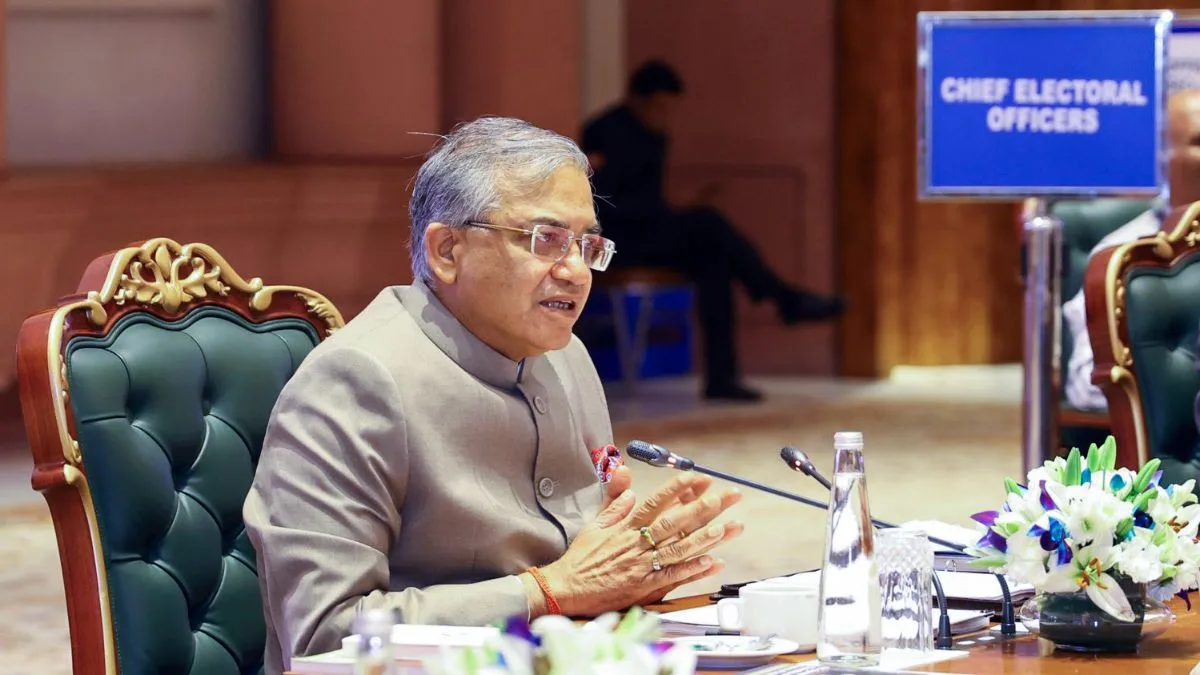
The Chief Election Commissioner Gyanesh Kumar during his press conference on Tuesday had clearly mentioned that the commission would adopt a strict approach to maintaining law and order during the polls.

“There will be zero tolerance against violence. The election should be threat-free and intimidation-free,” he had said, while stressing that all law-enforcing agencies have been directed to enforce the rule of law “strictly without any fear or favour.”

The commission has already started heavy deployment of central forces to ensure absolute control over law and order before the polls.

According to the security blueprint prepared by the ECI, around 480 companies of Central Armed Police Forces has been deployed across the state to maintain law and order and ensure peaceful polling.

A significant number of these forces have already been stationed in different districts, and more contingents are likely to arrive once the election schedule is formally announced.

The district-wise deployment plan shows a greater concentration of forces in areas considered sensitive due to population density, past electoral experience, proximity to international borders and political significance.

Technology will also play a major role in monitoring the polls.

The commission has decided to introduce 100 per cent webcasting in all polling stations across the state to ensure transparency and real-time surveillance.

West Bengal currently has 80,719 polling stations, and officials said around 500 additional auxiliary booths may be set up to ease congestion and improve voter access.

Emphasising the importance of voter participation, Kumar said the Commission is also focusing on ensuring that no eligible voter is left out of the electoral roll.

“No legitimate voter’s name would be left out,” he had said earlier.

Officials noted that the state currently has around 5.23 lakh voters in the 18-19 age group, many of whom will be participating in the Assembly election for the first time.

With an expanded observer network, heavy deployment of central forces, enhanced technological monitoring and strict enforcement of law and order, the Commission hopes to ensure that the upcoming Assembly election in West Bengal is conducted in a peaceful and impartial manner.

Why BJP wants shorter Bengal polls, not a repeat of 2021’s schedule

During a meeting with Chief Election Commissioner Gyanesh Kumar earlier this week, majority of players, including the BJP, Congress and CPI-M, reportedly demanded that the polls be held in one or two phases.

VIBHA SHARMA | Kolkata |

Amid anticipation over the announcement of election dates for the upcoming Assembly polls in West Bengal, three other states and a Union Territory, the BJP’s state unit is said to be rooting for a single-phase or, at most, a two-phase election, instead of a prolonged schedule that many believe amplified the ruling Trinamul Congress’s (TMC) advantages in 2021.

During a meeting with Chief Election Commissioner Gyanesh Kumar earlier this week, majority of players, including the BJP, Congress and CPI-M, reportedly demanded that the polls be held in one or two phases.

Apparently in 2021 the BJP had favoured a prolonged schedule.

In fact, the eight-phase elections in West Bengal between 27 March and 29 April, 2021 were among the longest election schedules in the history of the Assembly elections in the country.

Held amid the Covid-19 pandemic, the ECI opted for staggered voting to manage logistics and health risks, it was said.

However, while Bengal had an eight-phase schedule, elections in the other states were completed much more quickly. Tamil Nadu, Kerala and Puducherry voted in a single phase on 6 April, 2021. Assam had three phases but they were completed in about 12 days.

Officials say the ECI determines the number of polling phases for each state based on a specific set of administrative and security considerations. West Bengal required more phases due to its size, security deployment needs and logistical complexities.

Political observers believe the extended schedule in 2021 favoured the incumbent TMC’s strong grassroots mobilisation to the disadvantage of the BJP. Led by Mamata Banerjee, the party won by a landslide, restricting the BJP, and for the first time in West Bengal’s political history, the Congress and the Left failed to win a single seat.

Pointing to TMC’s deeply rooted grassroots force with extensive booth-level networks, analysts say now there are additional concerns due to the prevailing geopolitical situation that has led to disruptions in essentials such as LPG, triggering anxiety among consumers and businesses, sharpening and shaping political narratives.

And amid the current geopolitical uncertainty, what happens in weeks is anyone’s guess. Apart from significantly increasing financial costs and added strain on security forces, extended campaigns also tend to intensify political rhetoric, as parties devise new ways to mobilise voters, often leading to sharper social or religious polarisation. Long schedules also cause voter fatigue, potentially lowering turnout in the final phases, in turn often favouring the party in power.

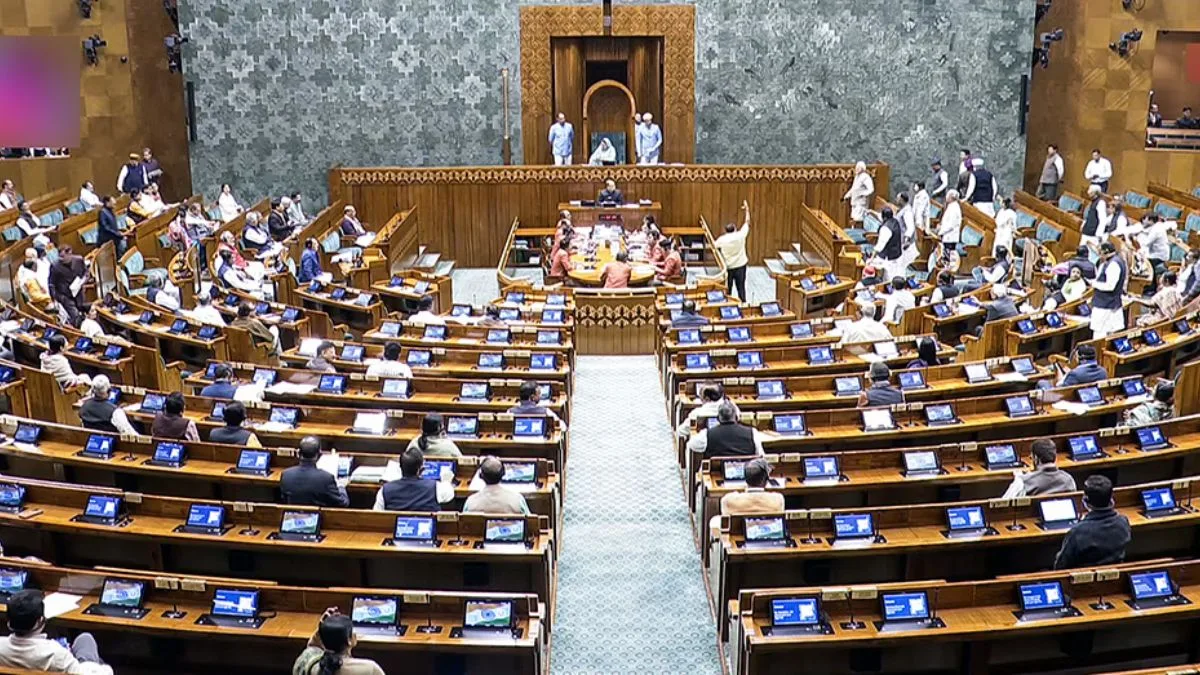
TMC to lead INDIA bloc’s impeachment motion against CEC in Parliament today

The Opposition, especially the India Bloc, is now united to move an impeachment motion against Chief Election Commissioner (CEC) Gyanesh Kumar following a similar motion against Lok Sabha Speaker Om Birla.

MEENAKSHI BHATTACHARYA | Kolkata |

The Opposition, especially the India Bloc, is now united to move an impeachment motion against Chief Election Commissioner (CEC) Gyanesh Kumar following a similar motion against Lok Sabha Speaker Om Birla.

The initiative by the Trinamul Congress (TMC) has gained momentum.

According to sources, tomorrow, a 10-page notice will be submitted to the Lok Sabha Speaker, requesting the removal of Gyanesh Kumar from his position as CEC.

In a similar manner, a 10-page notice, requesting the removal of the CEC, will be submitted to Chairman of the Rajya Sabha CP Radhakrishnan. Currently, efforts to collect signatures of opposition members of both the houses of Parliament are at peak. On behalf of the TMC, Shatabdi Roy in the Lok Sabha and Nadimul Haque in the Rajya Sabha have managed to gather more than the required number of signatures from Tuesday to Thursday.

To present the motion for impeachment in the Lok Sabha, a minimum of 100 signatures from Members of Parliament (MPs) is required, while the Rajya Sabha requires at least 50 signatures.

According to sources, 130 signatures have already been collected in the Lok Sabha and 60 in the Rajya Sabha. Leader of the Trinamul Congress in the Lok Sabha Abhishek Banerjee, who is in Kolkata, will not be travelling to Delhi. Since the TMC is the primary initiator of the impeachment motion against Gyanesh Kumar, a copy of the impeachment application is being sent to Kolkata to collect his signature to be submitted in both houses of Parliament tomorrow, Friday, according to sources.

The impeachment against the CEC will follow the same procedure as that required for the impeachment of a judge.

Several opposition parties, including the Samajwadi Party, DMK, and Shiv Sena, expressing keen interest in supporting the process of bringing an impeachment proposal against Gyanesh Kumar.

Furthermore, it is reported that this would mark the first instance of an impeachment being brought against a CEC, prompting discussions on various legal aspects from the TMC side.

It should be noted here that the leaders of the opposition parties in both the houses, namely Rahul Gandhi and Mallikarjun Kharge, will not sign the proposal. A leader from the TMC has stated that opposition leaders typically do not endorse such proposals. However, several Congress members, including KC Venugopal, Gaurav Gogoi, P Chidambaram, and Abhishek Manu Singhvi, have all signed it. The Opposition is united in their effort to remove Gyanesh Kumar, with many political parties, excluding Congress, such as the Samajwadi Party, DMK, and Shiv Sena, actively participating. Nevertheless, it has been reported by TMC sources that no support has been sought from parties like BJD, YSRCP, and Shiromani Akali Dal. Though the Opposition knows it doesn’t have the number, it is confident of winning the debate on this kind of issue to be raised in the house itself.

TMC blocks NH-19 demanding probe after flyover collapse

The Trinamul Congress staged a protest today following the collapse of a guard wall on NH-19, alleging corruption and cut-money in the awarding of contracts and construction of the road stretch.

Statesman News Service | Kolkata |

The Trinamul Congress staged a protest today following the collapse of a guard wall on NH-19, alleging corruption and cut-money in the awarding of contracts and construction of the road stretch.

Members of the Jamalpur block TMC obstructed traffic at Ajhapur point on NH-19 in East Burdwan, claiming the incident exposed how the construction company had compromised on quality. Block president Mehmud Khan alleged: “The contractor used rice husk ash from local mills instead of the mandated fly-ash from thermal power plants, to cut procurement and transport costs. This led to yesterday’s collapse of the flyover.”

Around 40 feet of the newly built flyover at Sardanga near Memari caved in after the guard wall gave way, causing the road-bed beneath the bitumen layer to sink. Several vehicles narrowly escaped as police swiftly suspended traffic and diverted vehicles. The project had been assigned to a private agency from Dankuni, Hooghly.

Similar partial collapses were recorded in 2023 and 2025 at Shaktigarh and Ajhapur.

District president Rabindranath Chatterjee echoed Khan’s claims, alleging: “Contracts were awarded at the BJP’s discretion against cut-money. This is a clear case of corruption and demands an impartial probe.”

NHAI official Shyamkumar Singh expressed surprise at the materials used, stressing the need for urgent health inspections of the stretches. East Burdwan DM Ayesha Rani A said: “We hold monthly road safety meetings with NHAI representatives. The Sardanga incident will be discussed this month.”

The district BJP has so far reserved comment on the TMC’s allegations.

Modern Rail Travel for Every Citizen

For decades, the pace of railway development in West Bengal remained relatively slow.

Statesman News Service | Kolkata |

For decades, the pace of railway development in West Bengal remained relatively slow. Many projects remained incomplete for years, and modernization of railway infrastructure did not receive the momentum the state required. This situation is now changing rapidly. This transformation is not limited to new railway lines and stations, it is opening new avenues of connectivity, safety, passenger convenience, and economic opportunities.

Accelerating Development with Increased Budget:

The numbers themselves reflect this transformation. The average annual railway budget allocation for West Bengal during 2009-14 was around Rs 4,380 crore. In contrast, the allocation for 2026-27 has increased more than threefold to Rs 14,205 crore. This unprecedented rise clearly indicates the commitment of the present government to take the state’s railway infrastructure to new heights.

This increased investment is driving large-scale infrastructure transformation in the state. Currently, railway projects worth approximately Rs 93,000 crore are under progress in West Bengal. These projects include construction of new tracks, station redevelopment, safety upgrades, and expansion of railway capacity. The aim is to connect every part of the state with faster and better rail connectivity.

Railway Stations Becoming Modern ‘City Centres’:

To make passenger experiences more modern, convenient, and world-class, railway stations in West Bengal are being redeveloped on a large scale under the Amrit Bharat Station Scheme. Under this ambitious programme, a total of 101 railway stations in the state have been identified for redevelopment at an estimated cost of around Rs 3,600 crore. These stations are being upgraded with improved passenger facilities, modern infrastructure, and attractive yet functional designs so that they can also evolve into city centres for the surrounding areas.

So far, redevelopment work at nine railway stations in the state has been successfully completed. These include Anara, Barabhum, Haldia, Joychandi Pahar Junction, Kalyani Ghosh Para, Kamakhyaguri, Panagarh, Siuri, and Tamluk. Out of these, the redeveloped stations at Joychandi Pahar Junction, Kalyani Ghosh Para, and Panagarh have already been inaugurated.

These upgraded stations now provide enhanced waiting areas, improved signage and lighting, digital information systems, large circulating areas, food courts, parking facilities, separate entry and exit points for smoother movement, lifts and escalators for accessibility, clean surroundings, and aesthetically designed station buildings. These facilities are making rail travel more comfortable, safe, and pleasant for passengers.

New Projects and Services for the State:

West Bengal is set to receive another major boost in railway development. The redeveloped railway stations at Kamakhyaguri, Tamluk, Haldia, Barabhum, Anara, and Siuri will soon be inaugurated by the Prime Minister Narendra Modi under the Amrit Bharat Station Scheme.

Along with this, the third railway line between Belda and Dantan and the Automatic Block Signalling project between Kalaikunda and Kanimahuli will also be dedicated to the nation.