Logo

Patanjali Research Foundation signs MoU with Gautam Buddha University

The collaboration is aimed at fostering academic, scientific, and research cooperation between the two institutions, besides facilitating the exchange of knowledge and resources.

Statesman News Service | Haridwar |

Patanjali Research Foundation has signed a Memorandum of Understanding (MoU) with Gautam Buddha University, Greater Noida, to strengthen the integration of India’s ancient knowledge systems with modern scientific research.

The collaboration is aimed at fostering academic, scientific, and research cooperation between the two institutions, besides facilitating the exchange of knowledge and resources. Also, it will advance scientific and clinical research in Ayurveda and related disciplines.

This comes at a time when traditional healthcare systems are gaining global recognition, along with a rising demand for evidence-based health solutions.

The partnership leverages modern research techniques to scientifically validate Ayurvedic principles and seeks to establish India’s ancient medical knowledge as an integral part of the worldwide healthcare system. Also, it will advance the scientific validation and international acknowledgement of India’s traditional knowledge.

During his stay in Indonesia, Acharya Balkrishna stated that India’s traditional knowledge is far more than just a cultural heritage and serves as a scientific foundation for human welfare.

He noted that it is vital to validate Ayurveda and traditional Indian wisdom using modern scientific standards and make them accessible worldwide, especially in the current global scenario.

Further, he extended that the convergence of education, research, and innovation leads to sustainable solutions for society as well as the nation. The MoU looks forward to inspire young scientists, researchers, and students to pursue science and research rooted in India’s traditional knowledge systems while building a capacity to tackle urgent global health crisis.

Prof. Rana Pratap Singh, Vice-Chancellor of Gautam Buddha University, said the partnership will open a new opportunity for students, researchers, and faculty, besides enhancing academic collaboration and provide a vibrant platform for interdisciplinary work.

Moreover, he highlighted that this partnership will be especially important in the fields of traditional Indian medicine and biomedical research. The collaboration will promote high-quality research and innovation, ultimately benefiting a wide segment of society.

Dr. Anurag Varshney, Chief Scientist at Patanjali Research Foundation, emphasised foundation’s dedication towards evidence-based research and stated that Patanjali aims to establish the scientific credibility of Ayurveda and natural healthcare through research and its validation. Over time, the foundation has produced numerous impactful scientific studies that bolster Ayurveda’s global credibility and highlight its relevance in solving modern healthcare issues, he added.

The official mentioned that the MoU will foster new opportunities in research, education, and innovation. Key elements of the collaboration includes joint research projects, scholar exchange programs, scientific publications, and research training initiatives. He further expressed confidence that this partnership will establish a solid base for significant scientific progress and a valuable contribution to the society.

The partnership aims to foster academic excellence and scientific innovation, while also making meaningful contributions to global health and human well-being. Rooted in the enduring Indian philosophy of “Vasudhaiva Kutumbakam”, the world is one family, the partnership seeks to develop knowledge, innovations, and solutions that benefit humanity and strengthen India’s leadership in integrative, evidence-based healthcare research.

Also present on the occasion were Dean, Academics, Prof. Rajeev Varshney, and Dean, Planning and Research, Prof. S. Dhanalakshmi, from Gautam Buddha University, along with heads of various departments from Patanjali Research Foundation.

Explainer: How a worm has ‘screwed’ the US

The detection of a flesh-eating screwworm in Texas has revived fears of a pest the US eradicated decades ago, prompting emergency containment efforts and industry concern.

Statesman News Service | New Delhi |

A parasite that sounds like it belongs in a horror film has put American agriculture on high alert.

The discovery of a New World screwworm infestation in a calf in Texas has triggered an emergency response from federal and state authorities, marking the first such case in the state since 1966. While officials insist the outbreak can be contained, the detection has rattled ranchers, traders and livestock producers who fear the pest could spread through the country’s already strained cattle industry.

The concern is not just about a single infected animal. The screwworm is a parasitic fly whose larvae feed on the living flesh of warm-blooded animals. Female flies lay eggs in open wounds or soft tissue, and once hatched, hundreds of larvae burrow into the host’s body. Untreated infestations can prove fatal.

Authorities have moved quickly to stop the parasite from gaining a foothold. Animal movement has been restricted in a 20-km radius around the affected area in La Pryor, Texas. Checkpoints have been set up on major roads, with livestock being inspected for signs of infection before being allowed to move.

US Agriculture Secretary Brooke Rollins said no additional cases have been detected so far and expressed confidence that the outbreak can be contained if movement restrictions and treatment protocols are followed.

Why cattle producers are nervous

The timing could hardly be worse for the US livestock sector.

America’s cattle herd is already at its lowest level in 75 years after years of drought forced ranchers to reduce herd sizes. Meat processors have struggled with limited supplies, and a widespread screwworm outbreak could add another layer of pressure.

Experts warn that if the parasite spreads across Texas, economic losses could run into billions of dollars. The state is one of the largest cattle-producing regions in the country, making it particularly vulnerable.

The discovery also briefly rattled cattle markets, with traders initially worried that consumers could become wary of beef products, although officials have stressed that screwworm does not pose a food safety risk.

The battle plan

The United States successfully eliminated screwworm decades ago using an unusual but highly effective strategy: releasing sterilised male flies into the wild. When female screwworm flies mate with them, they produce no offspring, gradually collapsing the population.

Officials are once again turning to that method. Sterile flies are being released both on the ground and from aircraft near the affected zone. The USDA is also building a new sterile-fly production facility, though it is not expected to be operational until 2027.

The case has reignited concerns that the pest, which had been advancing northward through Mexico, may be harder to keep out than previously thought. For now, the focus is on stopping a single infestation from becoming a much larger agricultural crisis.

From Fry to Fly: How Japan is turning used cooking oil into sustainable aviation fuel

The concept is straightforward: waste oil from homes is gathered, processed and eventually converted into aviation fuel capable of reducing the industry’s dependence on fossil fuels.

Statesman News Service | New Delhi |

As the global aviation industry races to cut carbon emissions, Japan is betting on an unlikely resource hidden in millions of kitchens: used cooking oil.

Across the country, households, supermarkets, businesses and airlines are joining an ambitious effort to transform waste cooking oil into Sustainable Aviation Fuel (SAF), a cleaner alternative to conventional jet fuel.

What makes this effort remarkable is its scale. From home kitchens in Tokyo to corporate cafeterias and retail chains, a nationwide collection network is being built around a simple idea, yesterday’s frying oil could help power tomorrow’s flights.

The kitchen revolution behind green aviation

For many Japanese households, sustainability now begins after dinner.

Instead of throwing away used cooking oil, residents are collecting it in bottles and delivering it to designated collection points. One of the most visible examples is the “Fry to Fly” initiative, a public-private partnership that links households directly to Japan’s sustainable aviation fuel supply chain.

The concept is straightforward: waste oil from homes is gathered, processed and eventually converted into aviation fuel capable of reducing the industry’s dependence on fossil fuels.

The movement has transformed ordinary citizens into active participants in Japan’s energy transition, creating a rare connection between household recycling habits and commercial aviation.

Why sustainable aviation fuel matters now

Aviation remains one of the most difficult sectors to decarbonise.

Japan has set a target of sourcing 10 per cent of airline fuel from sustainable alternatives by 2030. Achieving that goal will require approximately 1.7 million kilolitres of SAF.

Current domestic production stands at only around 30,000 kilolitres, representing a tiny fraction of the country’s total jet fuel consumption. Bridging that gap will require a dramatic increase in feedstock collection and production capacity.

The next few years could determine whether Japan achieves its aviation fuel ambitions.

Energy companies are approaching critical investment deadlines as they decide whether to commit billions of yen toward large-scale SAF production facilities. These decisions depend heavily on one factor: the availability of used cooking oil.

Tokyo’s push to mobilise millions of households

Authorities in Tokyo are aggressively expanding collection efforts.

The metropolitan government is encouraging greater public participation by distributing collection equipment and increasing awareness campaigns across the capital. New collection points are being established while businesses are being enlisted to support local recycling programmes.

The goal is clear: tap into the potential of Tokyo’s millions of households and convert a routine household waste product into a strategic energy resource.

Retail giants and corporations join the mission

The campaign is no longer limited to households.

Major retailers are increasing the number of collection stations at stores, while large corporations have begun collecting used cooking oil from employee cafeterias and food service facilities.

This expansion is creating a broader supply chain that captures waste oil from both residential and commercial sources.

The growing participation of businesses highlights how sustainability goals are increasingly becoming a shared responsibility across sectors.

The harsh reality of supply shortages

Despite the momentum, significant obstacles remain.

Industry estimates suggest that even if every available drop of used cooking oil in Japan were successfully collected, the resulting fuel production would satisfy only a portion of the country’s projected SAF demand.

This means imports of either sustainable fuel or feedstock are likely to remain necessary for the foreseeable future.

From waste to wings

Japan’s used cooking oil campaign offers a glimpse into how everyday actions can contribute to large-scale industrial transformation. A bottle of leftover oil from a home kitchen may seem insignificant on its own. But multiplied across millions of households, restaurants and businesses, it becomes a valuable resource capable of helping power a new generation of cleaner flights.

The road to 2030 remains challenging, and Japan’s targets are widely viewed as ambitious. Yet the country’s effort demonstrates how innovation, public participation and sustainability can converge around one unexpected ingredient.

In Japan’s race to build a greener aviation future, the journey may begin not at the airport, but in the frying pan.

One Critically Injured In Road Accident In Kolkata

The victim who was on a motorcycle attempted to overtake the bus from behind and head straight towards Red Road, only to end up under its wheels.

Statesman News Service | Kolkata |

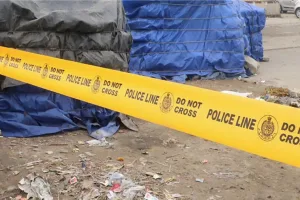
One person was critically injured after being struck by a government bus in front of Raj Bhavan in Kolkata on Friday (June 5, 2026).

The victim who is a Kolkata Municipal Corporation employee was rescued and taken to SSKM Hospital in a police ambulance.

Reports indicate that the government bus (Route 26A) was en route from Howrah to Kamalgazi in South Kolkata. The incident took place as the bus was turning left from Raj Bhavan towards KC Das Crossing. At that moment, the victim who was on a motorcycle attempted to overtake from behind and head straight towards Red Road, only to end up under the bus’s wheels. The motorcycle was completely mangled.

The identity of the municipal employee has not yet been ascertained; he sustained severe injuries to his right leg. He was rescued in a bloodied condition and taken to the hospital by police ambulance. As per latest reports, the police are attempting to contact his family.

Putin ties Ukraine peace deal to concessions, claims Russian forces are gaining ground

Putin said Moscow remains ready for a diplomatic settlement with Ukraine, while maintaining that any deal must reflect compromises discussed with Donald Trump.

Statesman News Service | New Delhi |

Russian President Vladimir Putin on Thursday said Moscow remained open to ending the war in Ukraine through diplomacy, but insisted that any settlement would require concessions from Kyiv, even as he claimed Russian forces were continuing to make gains on the battlefield.

Speaking to foreign media editors on the sidelines of Russia’s flagship economic forum in St Petersburg, Putin said proposals discussed with US President Donald Trump could pave the way for peace if Ukraine was willing to accept the compromises Moscow has long demanded.

The remarks came at a moment when diplomatic signals from both sides appeared to intensify. Ukrainian President Volodymyr Zelensky published an open letter proposing a direct meeting with Putin to discuss ending the conflict, while Trump publicly backed the idea of a face-to-face engagement between the two leaders.

Putin, however, made clear that Russia sees little reason to slow its military campaign while it believes it holds the advantage. He argued that manpower, industrial capacity and political resolve were working in Moscow’s favour and said Russian troops were advancing every day.

“The offensive is ongoing on a daily basis,” Putin said.

According to the Russian leader, “at present, the Russian Federation has taken full control of the Luhansk People’s Republic — 100%. And Russia has brought over 85% of the territory of the Donetsk People’s ​Republic under its control. (And) 80% of the territory of the Zaporizhzhia region”, reported Reuters. Russia annexed the territories in 2022, a move rejected by Ukraine and most Western nations.

Putin said Ukraine’s desire to halt Russia’s advance could instead be addressed through a negotiated settlement.

“Rather than stopping that, it would be better to bring the war to an end altogether by agreeing to the compromises that were discussed in Anchorage,” he said, referring to discussions held during a summit with Trump in Alaska last year.

Putin reiterates demand for compromise

While Putin did not spell out the exact terms again, his comments appeared to reference Moscow’s longstanding demand that Ukraine surrender the remainder of the Donbas region. Kyiv has consistently rejected such proposals, arguing they would weaken the country and expose it to future attacks.

Putin said Russia remained ready to conclude the conflict through peaceful means and claimed he had conveyed that position to Trump.

“We are certainly prepared and willing to reach an agreement with Ukraine through peaceful means,” he said.

He added that any agreement would require both sides to accept the compromises discussed during his talks with the US president.

Zelensky pushes for direct talks

In his open letter, Zelensky suggested that a direct meeting between the two leaders could help break the deadlock. He argued that Russia was facing growing domestic pressures, including inflation, fuel shortages and continued Ukrainian drone and missile strikes.

The Ukrainian leader also suggested that Putin’s political future could depend on decisions made now regarding the war.

The Kremlin said Putin was aware of the letter but had not yet studied its contents in detail.

Trump, meanwhile, welcomed the prospect of a meeting between the Russian and Ukrainian leaders.

Warning on hypersonic missile

Putin also used the interaction with foreign journalists to issue a warning about Russia’s military capabilities.

He said Moscow had not yet deployed its Oreshnik hypersonic missile against Ukraine in real combat conditions and had so far limited its use to testing and evaluation.

The nuclear-capable missile, first unveiled in operations against Ukraine in 2024, has a reported range exceeding 5,000 kilometres. Putin has previously described it as impossible to intercept, although Western analysts have disputed that claim.

Putin avoids talk of post-2030 future

Asked about his political future, Putin declined to discuss whether he would seek another presidential term after 2030.

Russia’s Constitution allows him to run again and potentially remain in office until 2036, but Putin said it was too early to focus on that question.

“The country faces a lot of large-scale and pressing issues,” he said. “They need to be solved while thinking about the future of Russia.”

Farmers offer thieves UPI payments to spare tubewell motors

After dozens of tubewell motors vanished in a single night, Punjab farmers came up with an unusual solution: asking thieves to take digital payments instead.

Neeraj Bali | Chandigarh |

In an unusual reflection of growing frustration over repeated thefts, farmers in Punjab’s Faridkot district have appealed directly to thieves, urging them not to steal tubewell motors and instead accept money through digital payments.

The appeal has emerged from Pakhi Kalan village, where farmers say recurring thefts have severely disrupted agricultural activities, particularly during the crucial paddy transplantation season. Their frustration intensified after thieves allegedly stole around 25 tubewell motors from fields in a single night.

Claiming that repeated complaints have failed to curb the problem, local farmers prepared a poster carrying a unique message for the culprits. The poster, which has since gone viral on social media, requests thieves to leave the motors untouched and place a UPI QR code at the site instead.

According to the farmers, they would rather contribute money collectively than suffer the loss of expensive equipment and interruptions to irrigation schedules. They argued that stolen motors are often dismantled and sold as scrap for relatively small amounts, causing losses far greater than the value ultimately earned by thieves.

Victim farmers, including Beant Singh, Mithu Singh, Gurbinder Singh, Hardeep Singh and Pritam Singh, said repeated thefts have left them feeling helpless. They alleged that despite incidents occurring over several years, authorities have been unable to provide adequate protection.

Also Read: Punjabi singer Jasbir Jassi to BJP: ‘You made the man who glorified drugs the face of Punjab’s anti-drug campaign’

“Our livelihood depends on timely paddy cultivation. When a motor is stolen, the entire farming schedule is disturbed. Instead of facing financial losses and mental stress, we would prefer paying money if it ensures our equipment remains safe,” the farmers said.

Apart from economic losses, villagers said fear has also become a major concern. According to them, the thefts are often carried out by organised groups comprising 10 to 12 individuals. Residents further claimed that some members of these gangs are believed to carry weapons, making it risky for farmers to confront them.

Local farmer Simranjit Singh Brar said that in earlier years, farmers or labourers would often spend nights in small rooms constructed near fields to guard irrigation equipment. However, the security situation has changed considerably.

“Today, fields become deserted after dark because people are afraid. No one wants to risk confronting such gangs,” he said.

Police officials, meanwhile, said investigations into such cases have revealed that stolen motors are frequently sold to scrap dealers after being dismantled. They added that whenever suspects are arrested, some stolen property is recovered from scrap markets, where the equipment is often found damaged beyond use.

The incident has sparked widespread discussion on social media, with many users describing the farmers’ appeal as a stark reminder of the challenges faced by rural communities dealing with recurring thefts and inadequate security.

‘We want Pant to be himself’: Gautam Gambhir breaks silence on Test vice-captaincy snub

India head coach Gautam Gambhir backed Rishabh Pant’s aggressive approach despite his removal as Test vice-captain, saying the wicketkeeper-batter must improve his reading of match situations.

Statesman News Service | New Delhi |

India head coach Gautam Gambhir has backed Rishabh Pant to continue playing his natural brand of cricket despite being stripped of the Test vice-captaincy, insisting the wicketkeeper-batter’s challenge lies in reading match situations better rather than changing his approach.

Pant’s removal from the vice-captaincy role ahead of the one-off Test against Afghanistan sparked considerable discussion, with KL Rahul taking over as Rohit Sharma’s deputy. The decision followed a difficult period for Pant, who endured a disappointing Test series in South Africa and struggled for consistency during IPL 2026.

Addressing the leadership change for the first time, Gambhir stressed that the team management remains fully supportive of Pant’s aggressive mindset and does not want him to alter the style that has made him one of India’s most impactful Test batters.

“As far as Rishabh is concerned, we will expect him to be the way he is. It’s not like we will tell him to work on his game. But in international cricket, it’s very important to read the situation,” Gambhir told reporters on the eve of the Afghanistan Test.

“At that time, what kind of situation was there, and what kind of situation demands a certain shot. But, it’s not like any player is told to play a completely different game than his natural game,” he added.

The India coach said players across formats must ultimately focus on contributing to the team’s success.

“Whether it’s test cricket, one-day cricket, or T20 cricket. The ultimate aim is to make a run and take a wicket. You can never get away from that. No matter how you make it, it’s up to you. But it’s very important to read the situation and the game,” he said.

Gambhir also played down the significance of leadership roles, insisting that captaincy and vice-captaincy are secondary to performing for the country.

“See, responsibility is only for playing for India. Everything else is a by-product. Captaincy, vice-captaincy, all these are by-products. When you start playing for India, you don’t think about vice-captaincy or captaincy from day one. You think about doing good for India. So, going from one to the other is only a by-product,” he added.

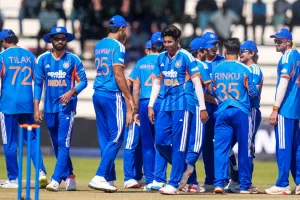
Meanwhile, Pant, 28, is preparing to play his 50th Test match against Afghanistan in New Chandigarh starting on Saturday. In 49 Tests, Pant has amassed 3476 runs at an average of 42.91 and strike-rate of 74.24, including hitting eight centuries and 18 fifties.


(With agency inputs)

Complaint filed against actor-politician Soham Chakraborty for misappropriating Rs 1.05 crore

The complaint alleging fraud was lodged on May 19 by a businessman. It claimed that Chakraborty had taken Rs 1.05 crore under the pretext of producing a film but misappropriated the funds.

Statesman News Service | Kolkata |

A complaint has been filed against actor-politician Soham Chakraborty at the Charu Market Police Station in Kolkata.

The complaint alleging fraud was lodged by a businessman named Kaushik Karmakar stating that Rs 1.05 crore was handed over to Chakraborty as an investment in his company, ‘Soham Entertainment’.

Under the agreement, Chakraborty was expected to act in a film which was ultimately never shot, and the script was shelved indefinitely. It has been claimed that when a refund was sought, the actor used his political standing to issue threats.

The investment was made into Soham Entertainment in 2022 through a representative of a firm based in Ariadaha in North 24 Parganas district. Chakraborty reportedly breached the agreement. Furthermore, it has been claimed that the contract itself was executed using multiple forged documents.

Charges of fraud and forgery were filed at the Charu Market Police Station, most of which fall under non-bailable sections. The police have initiated an investigation and are in the process of requisitioning documents from the company.

The Tollywood actor, who had joined the Trinamool Congress in 2014, lost from the Karimpur Assembly Constituency in Nadia district in the recently-concluded 2026 assembly elections.

Soham Allegedly Took Rs 15 Lakh

Earlier in May, a resident of South Dinajpur’s Balurghat had filed a complaint against Chakraborty, claiming that the actor-politician had taken Rs 15 lakh to play a leading role in a film.

The complainant also mentioned that he had requested Chakraborty to return the money when the former was in financial distress.


U18 Women’s Asia Cup 2026: India lose to China in shootout after dramatic semi-final draw

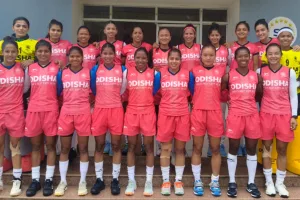
India’s U18 Women’s Hockey Team suffered a 1-3 shootout defeat to China after a hard-fought 2-2 draw in the U18 Women’s Asia Cup 2026 semi-final in Kakamigahara, Japan.

Statesman News Service | New Delhi |

India’s campaign at the U18 Women’s Asia Cup 2026 suffered a heartbreaking setback as they went down 1-3 to China in a shootout after a fiercely contested semi-final ended 2-2 in regulation time on Friday.

Having twice fought their way back into the contest, the Indian side displayed remarkable resilience but fell short in the shootout, where China’s goalkeeper Liu Xue emerged as the difference-maker with a series of crucial saves.

Nousheen Naz and Kiran Ekka found the net for India, while Li ZeYan and Zhang Yuzheng scored for China in a pulsating encounter that swung both ways before being decided from the spot.

India made a dream start to the match, taking the lead in just the third minute. Captain Sweety Kujur threaded a precise pass into the circle for Nousheen Naz, who unleashed a powerful backhand effort to beat the goalkeeper and hand India an early advantage.

China were awarded a penalty corner in the 21st minute, but Feng Jiaxin’s dragflick was beautifully saved by Indian goalkeeper Mahak Parihar. Three minutes later, however, China found the equaliser due to a defensive error by India in the 24th minute, which China’s Li ZeYan capitalised on to level the game with a field goal.

In the third quarter, China were awarded a penalty corner in the 34th minute, but the Indian backline showed great resilience to deny them the opportunity to take the lead. China held more of the possession in the following minutes but couldn’t break the deadlock.

In the 43rd minute, India received consecutive penalty corners, but could not breach the Chinese post. Despite multiple chances at both ends, the match remained tied at 1-1 as the teams entered the fourth quarter.

The third minute of the final quarter saw China go ahead through a penalty corner. Although the initial shot was blocked by India’s first rusher, the ball went to China’s Zhang Yuzheng (48′) on the rebound, and she delivered a calm finish to give her side a slim advantage.

However, China’s lead only lasted for a few minutes as India’s Kiran (54′) converted a penalty corner to equalise and it remained 2-2 at full-time, with a shootout to decide the winner.

China defeated India 3-1 in the shootout courtesy of some brilliant saves by their goalkeeper Liu Xue. Lu Tong Tong, Ge Chen and Guo Jiaxin converted their chances in the shootout for China, while Sandeepa Kumari was the only player for India to score in the shootout.

The second women’s semi-final will be played between Japan and Korea. India will take on the loser of that match for the bronze medal on June 6, 2026, at 9:30 am IST.


(With agency inputs)

‘Shreyas is the frontrunner’: Ex-selector backs Iyer to succeed Suryakumar as India’s T20I captain

Former India selector Devang Gandhi believes Shreyas Iyer is the leading candidate to succeed Suryakumar Yadav as India’s T20I captain, citing his proven leadership record in the IPL and domestic cricket.

Statesman News Service | New Delhi |

With India’s selectors set to meet on Saturday to pick squads for the upcoming tours of Ireland and England, the future of Suryakumar Yadav as T20I captain has emerged as one of the biggest talking points in Indian cricket. Former India cricketer and national selector Devang Gandhi believes Shreyas Iyer has done enough to be considered the leading candidate if the team management decides to usher in a new era.

Suryakumar, who took over the captaincy after Rohit Sharma’s retirement following the 2024 T20 World Cup, enjoyed immediate success by guiding India to a successful title defence earlier this year. However, questions have surfaced over his place in the long-term leadership plans after a disappointing run with the bat in both the World Cup and IPL 2026.

The Mumbai batter managed only 270 runs in 13 IPL innings this season and has struggled to replicate the consistency that made him one of the most feared T20 batters in the world. With Suryakumar set to turn 36 in September and India preparing for a new cycle that includes the Los Angeles Olympics and the 2028 T20 World Cup, selectors face a significant decision over the team’s leadership direction.

Also Read: ‘Overlooking Suryakumar is not right’: Former chief selector warns against removing India’s T20 captain

Gandhi feels the time may have come to look ahead.

“The Olympics are two years away and the next T20 World Cup is part of the bigger picture. The selectors have to decide whether they see him leading the side in that cycle. Shreyas has been doing well, Rajat Patidar has been doing well, and there are always players waiting in the wings. Surya has been phenomenal as captain, but the way he has batted is a matter of concern. Going ahead, I think we need to move on now,” Gandhi told IANS.

Shreyas’ leadership record strengthens his case

Among the available candidates, Gandhi believes Iyer’s leadership credentials place him ahead of the competition.

The right-hander led Kolkata Knight Riders to the IPL title in 2024 and followed it up by guiding Punjab Kings to the final in 2025. He also captained Mumbai to the Syed Mushtaq Ali Trophy title and has established himself as one of India’s most reliable white-ball performers.

“We always want a captain with experience, whether that comes from international cricket or a successful IPL campaign. Shreyas has shown he can lead teams under pressure. The way he handled Punjab and previously KKR speaks for itself. At the moment, he is the frontrunner and quite deservedly so,” Gandhi said.

Also Read: Shreyas Iyer to replace Suryakumar Yadav as India’s T20I captain, Tilak Verma to be appointed his deputy: Report

Ishan Kishan could be deputy

While Tilak Varma remains one of India’s long-term leadership prospects, Gandhi believes Ishan Kishan has strengthened his case for a leadership role after his recent performances and growing experience.

Kishan captained Sunrisers Hyderabad in Pat Cummins’ absence during IPL 2026 and has also led Jharkhand successfully in domestic cricket.

“Someone who is a regular feature around the squad should be considered. Tilak is certainly one option, but the way Ishan has performed, I think he can be the vice-captain as well. In my opinion, I would favour Ishan Kishan,” Gandhi said.

According to Gandhi, choosing India’s next T20I captain cannot be based solely on current form or long-term planning. Instead, selectors must identify a player capable of leading the side through the next major cycle while continuing to perform consistently.

“It’s a balance of experience, form and long-term vision. You need someone who can lead until the next T20 World Cup and bring stability to the side. Performance matters, leadership matters and so does the ability to handle pressure. You look at a player’s track record, how he has managed teams and whether he has shown leadership qualities. Based on that, you decide who can take Indian cricket forward,” he said.

With the selection meeting around the corner, the captaincy debate is expected to dominate discussions as India weigh continuity against the opportunity to begin preparing their next white-ball leader.

Govt opens wider doors for foreign investors; major push for G-Sec market, equity inflows

One of the key changes allows individual Persons Resident Outside India (PROIs) to invest in shares of listed Indian companies through the Portfolio Investment Scheme.

Statesman News Service | New Delhi |

In a significant move to attract long-term overseas capital and deepen India’s financial markets, the Union government has unveiled a fresh set of reforms covering both the equity and government securities segments. The measures seek to simplify investment norms for foreign investors, expand access to government bonds, and make India’s capital markets more competitive globally.

The package includes relaxed investment rules for individual foreign investors, a broader investment framework for Foreign Portfolio Investors (FPIs) in government securities, and tax exemptions on gains earned from sovereign bonds.

Foreign investors get bigger equity access

One of the key changes allows individual Persons Resident Outside India (PROIs) to invest in shares of listed Indian companies through the Portfolio Investment Scheme, a route that was earlier restricted to Non-Resident Indians (NRIs) and Overseas Citizens of India (OCIs).

To implement the proposal announced in the Union Budget 2026-27, the Department of Economic Affairs is notifying amendments under the Foreign Exchange Management framework.

Under the revised norms:

  • Individual PROIs can now participate through the Portfolio Investment Scheme.
  • The investment cap for a single foreign investor has been increased from 5 per cent to 10 per cent in a company.
  • The aggregate ceiling for all such investors has been raised from 10 per cent to 24 per cent.

Government securities market gets a boost

The government has also announced a major overhaul of the framework governing FPI investments in Government Securities (G-Secs).

To widen participation, the list of securities available under the Fully Accessible Route (FAR) will be expanded to include:

  • New government bond issuances with 15-year tenor
  • New government bond issuances with 30-year tenor
  • New government bond issuances with 40-year tenor
  • Sovereign Green Bonds issued in FAR-eligible maturities

 Restrictions eased for FPIs

In another major reform, several investment restrictions applicable to FPIs investing through the General Route have been removed. The government has decided to eliminate:

  • Short-term investment limits
  • Concentration limits
  • Security-wise investment caps

However, the overall investment ceilings will remain unchanged at:

  • 6 per cent of the outstanding stock of Central Government Securities
  • 2 per cent of outstanding State Government Securities

The existing “general” and “long-term” investment categories will also be merged into a unified limit structure.

Tax exemption for foreign investors

In a further incentive aimed at enhancing India’s attractiveness as a bond investment destination, the government has exempted FPIs from income tax on interest earnings and capital gains arising from investments in Government Securities.

The exemption will apply to income generated on or after April 1, 2026.

The same tax treatment has also been extended to the Bank for International Settlements (BIS) for its investments in Indian government bonds.

According to the government, the tax relief is designed to bring India’s sovereign bond market closer to international standards and encourage participation from large institutional investors.

Focus on long-term capital

Officials said the reforms are intended to draw stable foreign capital from global investors such as pension funds, insurance companies and sovereign wealth funds rather than short-term speculative flows.

The government expects the combined measures to expand the investor base for both equities and government securities, improve market depth and strengthen India’s position as a preferred destination for global capital.


More than 1 crore trees to be planted across state, says Suvendu Adhikari

The Bengal Chief Minister launched the green drive at the state-level World Environment Day celebrations organised by the state government in Nalban.

Statesman News Service | Kolkata |

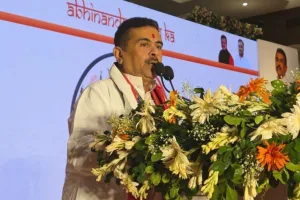
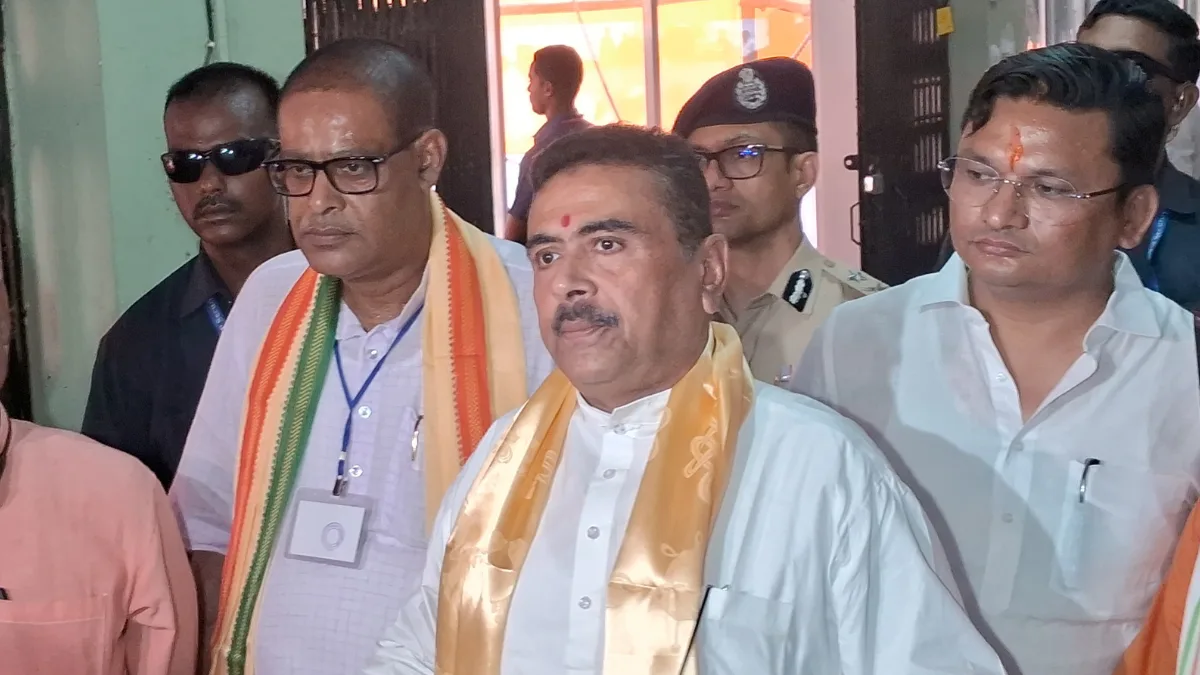
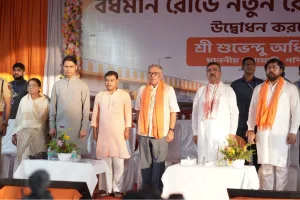
A year-long afforestation programme where 1.10 crore trees of different species will be planted across the state was formally launched by West Bengal Chief Minister Suvendu Adhikari on Friday (June 5, 2026).

The initiative titled “Ekti gaach mayer naame/Ek ped maa ke naam” (A Tree in Mother’s Name) was launched by Prime Minister Narendra Modi in Delhi in 2024. PM Modi had then planted a peepal tree at Buddha Jayanti Park in New Delhi and urged citizens to plant a tree in their mother’s name.

The newly sworn-in Bharatiya Janata Party (BJP) government in West Bengal was quick to launch the same initiative after coming to power in the state.

The Bengal Chief Minister launched the green drive at the state-level World Environment Day celebrations organised by the state government in Nalban, a green complex that has a sprawling waterbody hemmed in by landscaped gardens, in Salt Lake’s Sector V.

BJP MP Locket Chatterjee, MLAs Piyush Kanoria, Shankar Ghosh, Sharadwat Mukhopadhyay and other senior leaders were present at the ceremony.

According to officials, the campaign is intended not merely as a symbolic observance of World Environment Day on June 5, but as a sustained environmental movement focused on increasing the state’s green cover and promoting ecological responsibility.

As part of the initiative, participants planting saplings in their mothers’ names will be encouraged to install nameplates beside the trees and upload photographs on the My Bharat portal, following which digital certificates will be issued to them.

According to the state government’s notification, plantation targets have been fixed at multiple administrative levels. Around 5,000 saplings will be planted at the district and Kolkata Municipal Corporation levels, 100 at the block level, 200 in municipalities, 300 in municipal corporation boroughs and 1,000 saplings in each Assembly constituency.


Annamalai quits BJP, launches ‘We the Leaders’; eyes Tamil Nadu Assembly polls

Months after differences over electoral strategy surfaced, former BJP state chief K. Annamalai has launched a new political outfit and pledged to build a people-centric alternative in Tamil Nadu.

Statesman News Service | New Delhi |

Former Tamil Nadu BJP president K Annamalai on Friday formally severed ties with the Bharatiya Janata Party and unveiled a new youth-oriented movement, signalling the start of an independent political journey that he said would culminate in contesting future Assembly elections in the state.

The announcement marks a significant development in Tamil Nadu politics, coming months after Annamalai stepped away from key party responsibilities amid differences over the BJP’s electoral strategy in the state. His new platform, named ‘We the Leaders’, is expected to be expanded into a political party and field candidates in the next Assembly elections.

In a video message, the former IPS officer said he had entered public life with the goal of bringing meaningful change to Tamil Nadu and improving people’s lives. According to him, the new movement represents a continuation of that mission through a different route.

Annamalai disclosed that he had informed the BJP leadership about his decision to leave the party as early as December 2025. He said senior leaders had then requested him to stay on until the Tamil Nadu election process was completed, following which he proceeded with his decision after consultations with the party leadership.

While expressing admiration for Prime Minister Narendra Modi, Annamalai acknowledged that he had differed with the BJP on several issues over the last one-and-a-half years. He reiterated his belief that the party should have contested the Tamil Nadu Assembly elections independently, a position that contrasted with the BJP’s alliance approach involving the AIADMK.

“I did not want to become a problem for the party,” Annamalai said, explaining the reason behind his departure.

New movement to focus on youth and public welfare

Launching ‘We the Leaders’, Annamalai described his political journey as a “solo battle” and said he was attempting to create a fresh political alternative rooted in the aspirations and identity of Tamil Nadu.

He said the movement would seek to walk alongside ordinary people and pursue politics centred on public welfare. According to him, national parties often struggle to fully understand the expectations and sentiments of the people of Tamil Nadu.

Criticism of dynasty politics

Annamalai also took aim at the ruling Dravida Munnetra Kazhagam (DMK) and what he described as personality-driven politics in the state. He argued that politics should not revolve around individual families and asserted that there was no place for cult or dynasty politics in a healthy democracy.

The former BJP leader said he intended to build a people-centric political platform rather than one dependent on individual personalities.

He further claimed that several prominent figures, including superstar Rajinikanth, had encouraged him to join them politically, but he had chosen to pursue an independent path.

Resignation accepted by BJP

His resignation was formally accepted on Friday by BJP national president Nitin Nabin, bringing an end to his association with the party that began in 2020.

Speculation about Annamalai’s future had intensified in recent weeks after he distanced himself from party positions ahead of the Tamil Nadu elections. Despite stepping down from organisational responsibilities, he continued campaigning for the BJP during the Assembly polls.

A former Karnataka cadre IPS officer, Annamalai resigned from the Indian Police Service in 2019 before entering politics. After joining the BJP in 2020, the former IPS officer was appointed state president within a year and went on to become the party’s most recognisable face in the state.

Xi Jinping set for North Korea visit next week, first since 2019 amid geopolitical strains

Beijing’s latest diplomatic outreach to Pyongyang comes as North Korea balances ties with both China and Russia while expanding its nuclear capabilities.

Statesman News Service | New Delhi |

Chinese President Xi Jinping will travel to North Korea next week for his first visit to the country in nearly seven years, as Beijing looks to strengthen ties with its nuclear-armed neighbour amid shifting regional dynamics.

Chinese and North Korean state media announced on Friday that Xi will undertake a state visit from Monday to Tuesday. His last trip to Pyongyang was in June 2019.

The visit comes at a sensitive time, with North Korean leader Kim Jong Un deepening relations with Russia while also seeking to improve ties with China, the country’s largest trading partner and a key source of economic support.

Analysts believe Beijing is keen to maintain its influence in Pyongyang as North Korea’s engagement with Moscow expands. News agency Associated Press mentioned William Yang of the International Crisis Group as saying that China is likely using Xi’s visit to reaffirm its strategic interests in Northeast Asia and reassert its role in North Korea.

The trip was announced a day after North Korea unveiled a new facility believed to be linked to the production of material for nuclear weapons. During a visit to the site, Kim vowed to strengthen North Korea’s nuclear forces at an “exponential rate”, signalling that Pyongyang remains committed to expanding its weapons programme.

Experts say the timing of the disclosure may have been intended to reinforce North Korea’s position as a nuclear weapons state prior to Xi’s arrival.

North Korea’s nuclear programme remains a major concern for the United States, which continues to push for denuclearisation. However, Kim has insisted that Washington must drop that demand as a precondition for future talks.

Xi and Kim last met in Beijing in September, where both leaders pledged deeper cooperation and mutual support.

Dalai Lama arrives in Delhi for left knee treatment, Ladakh visit planned after recovery

Days after formally receiving his Grammy Award in Dharamshala, the Dalai Lama has travelled to Delhi for medical care and is expected to continue to Ladakh later this month.

Statesman News Service | New Delhi |

Tibetan spiritual leader the 14th Dalai Lama arrived in Delhi on Friday to undergo medical treatment for his left knee, according to an announcement issued from his office.

The visit comes weeks ahead of a planned stay in Ladakh and follows a period of public engagements in Dharamshala, where the Nobel Peace Prize laureate recently received his Grammy Award for the audiobook album ‘Meditations: The Reflections of His Holiness the Dalai Lama’.

In a statement shared through the Dalai Lama’s official X account on Thursday, his office said he would travel from Dharamshala to the national capital for treatment.

“His Holiness the Dalai Lama is scheduled to depart Dharamsala tomorrow for Delhi, where he will undergo medical treatment on his left knee,” the announcement said.

The statement also outlined his travel plans after recovery, saying he is expected to head to Ladakh toward the end of June for an extended stay.

Grammy award presented in Dharamshala

The medical visit comes shortly after the spiritual leader formally received his Grammy Award during a special ceremony at his office in Dharamshala on Wednesday.

The award was presented by renowned sarod exponent Amjad Ali Khan along with his sons, Amaan Ali Bangash and Ayaan Ali Bangash, who collaborated on the project featuring the Dalai Lama’s voice.

Speaking to the media, Amjad Ali Khan said, “We are playing sarod with the voice of His Holiness, the Dalai Lama. So we are here to offer this award, Grammy award, to the Holiness, the Dalai Lama.”

Ayaan Ali Bangash described the collaboration as a blessing and thanked the Dalai Lama for allowing the family to be associated with the project.

Dalai Lama’s message after Grammy win

The Dalai Lama won the Grammy earlier this year in the audiobook category, prevailing over a field that included works by Trevor Noah, Kathy Garver, Ketanji Brown Jackson, Fab Morvan and others.

Following the announcement of the award, the spiritual leader issued a message expressing gratitude and humility.

“I don’t see it as something personal, but as a recognition of our shared universal responsibility,” he said, adding that peace, compassion, environmental care and the oneness of humanity remain essential for the well-being of people across the world.

Musician Rufus Wainwright had accepted the Grammy on the Dalai Lama’s behalf during the award ceremony held in February.

15 illegal mosques sealed in Arunachal over unauthorised settlement concerns

The latest action comes after sustained protests and mobilisation by the Arunachal Pradesh Indigenous Youth Organisation (APIYO), which has been raising concerns over unauthorised structures and settlement patterns in parts of the state.

Statesman News Service | New Delhi |

The Arunachal Pradesh government has sealed 15 mosque sites in the Itanagar Capital Region after an administrative exercise found them to be operating without the required approvals, bringing the contentious issue of alleged illegal settlements and demographic concerns back into sharp focus in the northeastern state.

The development has once again brought attention to concerns frequently raised by indigenous groups regarding migration, settlement patterns, and demographic shifts in Arunachal Pradesh.

Several organisations have argued that unchecked settlements and unauthorised constructions could affect the state’s tribal character and place pressure on limited land resources.

Crackdown follows indigenous groups’ campaign

The latest action comes after sustained protests and mobilisation by the Arunachal Pradesh Indigenous Youth Organisation (APIYO), which has been raising concerns over unauthorised structures and settlement patterns in parts of the state.

The organisation had previously announced agitation programmes, including a shutdown call in the capital region, while demanding government intervention on what it described as a growing challenge to indigenous interests.

Government cites verification exercise

State government spokesperson and Education Minister P.D. Sona said the matter was formally taken up with the government earlier this year during discussions between APIYO representatives and Chief Minister Pema Khandu.

Following those representations, district authorities were directed to examine the status of religious structures allegedly operating without mandatory permissions.

A verification exercise conducted by officials subsequently identified 15 mosque sites within the Capital Complex area that were found to be unauthorised.

Legal process completed before action

According to the government, authorities followed due process before proceeding with enforcement measures.

Officials completed legal scrutiny and administrative proceedings in most cases before carrying out sealing and eviction-related actions. The remaining cases were reviewed separately before similar action was initiated.

P.D. Sona said the administration had addressed the concerns raised by indigenous organisations through legal and administrative channels and expressed hope that further agitation could be avoided.

Indigenous protection remains key issue

The developments come against the backdrop of recent consultations led by Chief Minister Pema Khandu involving tribal bodies, student organisations, civil society groups, legal experts and political representatives.

Those discussions focused on issues linked to indigenous rights, demographic concerns and implementation of regulatory mechanisms such as the Inner Line Permit system.

During those deliberations, the state government reiterated its commitment to protecting the interests of indigenous communities while addressing concerns related to illegal immigration, settlement patterns and demographic changes through legal and constitutional mechanisms.

Son of a Chinese cleaner and a security guard, he crossed the Pacific, sold pancakes on LA streets, and now plans to run for mayor

He arrived with no English, a recipe, and a translation app. A year later he was making $20,000 a month on the streets of Los Angeles. Now he wants the keys to City Hall.

Statesman News Service | New Delhi |

A Chinese street food vendor who built a six-figure income selling pancakes on the streets of Los Angeles has announced plans to run for mayor, drawing attention online and sparking debate about immigration, ambition, and the limits of American political life.

Tang, 31, was born to a rural family in Sichuan, southwestern China. He left school after completing secondary education. His father works as a security guard. His mother works as a cleaner.

After secondary school, Tang worked in a factory in Shenzhen, South China Morning Post reports. He later sold cars through live-streams. In his spare time, he taught himself to make savoury pancakes, a popular snack from Hubei province in central China.

He moved to the United States in 2022 with little knowledge of English. He first found work at a used-car showroom. Two years later, he settled in Los Angeles and began selling savoury pancakes on the street. He relied on translation apps to speak with customers.

The business grew quickly.

Also Read: Nepal’s PM stirred a border row with India. Days later, is the Foreign Minister flying to Delhi to clean it up?

According to Jiupai News, Tang charged between US$10 and US$60 per serving. He made more than US$150,000 in his first year. At one point, his monthly income exceeded US$20,000.

His story spread widely on Chinese social media. Followers praised his drive and his ability to build a business in a country where he did not speak the language. Videos of his stall attracted large audiences online.

Then came the arrest.

Immigration agents arrested Tang in Los Angeles on July 19, 2025. The arrest came after dispute with rival vendor. Tang had been operating without a business licence, and concerns about hygiene and unlicensed trading were also raised. Questions about his visa status surfaced online and drew significant backlash.

He was released on bail. The arrest did not end his public profile. If anything, it raised it further.

After the controversy, Tang shifted part of his public image toward charity work. He began distributing free food in poor neighbourhoods. He provided practical help to homeless people. He also started live-streaming videos in which he gave extra portions to women in need. Volunteers began joining him at his stall, wearing the same aprons he used.

The shift attracted a new wave of supporters. Some praised his response to the controversy. His online following continued to grow, and he became a recurring subject of discussion in Chinese-language social media circles inside the United States.

Also Read: Anthropic reveals 80% of its code is now written by Claude and says the world needs a plan to hit the brakes

Now Tang has announced a more ambitious goal. He says he plans to run for mayor of Los Angeles within three years. His stated slogan is to “make Los Angeles great again.”

The announcement has generated substantial buzz, particularly in Chinese-speaking communities and on platforms popular with overseas Chinese audiences. For many followers, his story fits a recognizable narrative of immigrant self-reliance. He arrived without money, built a business with his hands, and now wants a seat at the table in one of the largest cities in the United States.

But the path to any such candidacy faces serious obstacles.

Under United States law, only citizens are eligible to run for most public offices, including mayor of Los Angeles. Tang’s immigration status remains an open question. Reports have noted that his visa situation was already a subject of online scrutiny at the time of his arrest. He has not publicly confirmed his current legal status or whether he holds any pathway to citizenship.

His announcement faces immigration status hurdles that are not simply procedural. Becoming naturalised US citizen typically requires several years of legal residency, passing civics test, meeting additional requirements. Even if Tang resolves his status, the timeline to citizenship alone would make a mayoral run within three years difficult.

Also Read: Explained: Why the US government could soon own stock in the world’s biggest AI firms

There are also questions about party affiliation and how he would navigate the Los Angeles political system. Running for mayor of a city of nearly four million people requires not just legal eligibility but also fundraising, coalition-building, and name recognition beyond social media. No formal campaign infrastructure has been reported.

Los Angeles held its most recent mayoral election on June 2, 2026. Incumbent Mayor Karen Bass sought re-election in that race. Tang did not appear on the ballot.

His profile, however, continues to expand. He has attracted volunteers. He has gained attention from Chinese-language media in the United States and mainland China. His story has been covered by outlets including Jiupai News and picked up across multiple platforms.